
My wife Audrey grew up hearing about a hotel she’d never seen. Her family lived in Argentina when she was a kid, and somewhere in those years the Llao Llao became a fixture of dinner-table conversation — her parents talking about it the way people talk about a place they’ve promised themselves they’ll get to one day. Decades later, walking through the lobby with our own daughter in tow, she was still catching up to that promise.
A listing photo doesn’t get any of that across. What it also doesn’t get across is that the story behind the building is stranger and better than the marketing copy suggests: a park administrator who put his own brother in charge of designing it, a Parisian decorator who fled a war and ended up furnishing a log cabin at the bottom of the world, and a fire that came within a year and a half of ending the whole project before it had a chance to become anything. We’ve stayed there. We also went back afterward to find out what actually happened before we did.
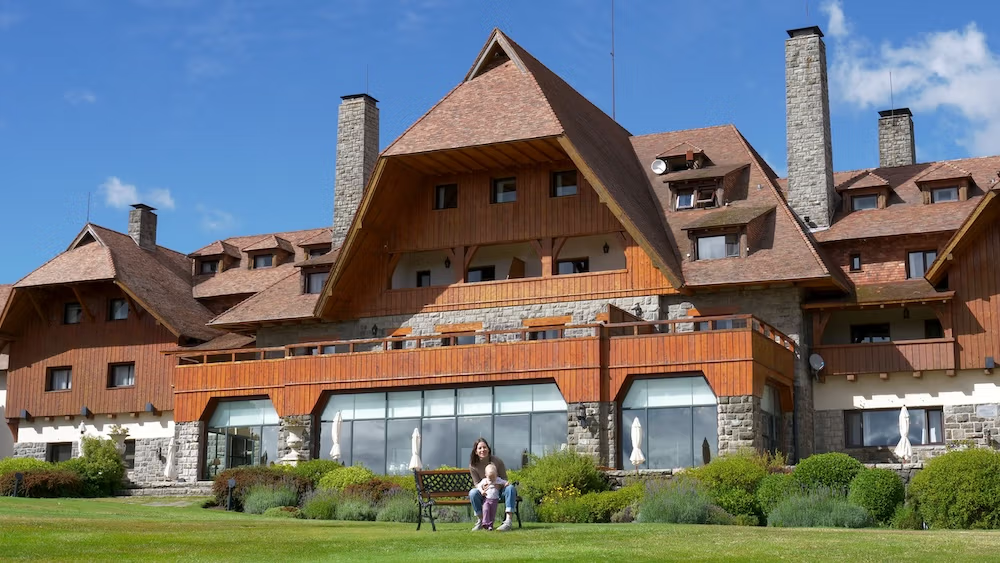
Two Brothers, One National Park, and a Hotel Nobody Was Supposed to Question
The Llao Llao exists because Argentina, in the mid-1930s, wanted Patagonia to matter to the rest of the world. Nahuel Huapi had just become a national park, and the man running the country’s new National Parks Administration — a lawyer named Exequiel Bustillo — wanted a hotel that could pull wealthy travelers down to the edge of it. He scouted the site himself, walking the shoreline near what’s now Puerto Pañuelo and settling on the spot largely because it had a natural port to go with the view.
The architect he chose for the job happened to be his brother.
Alejandro Bustillo won the commission through a public design competition, not a handshake — that part’s on the record. What’s also on the record is that plenty of people at the time noticed the family connection and weren’t shy about saying so, which is a very Argentine footnote to add to an origin story. It probably helped that Alejandro wasn’t some cousin doing his brother a favor. He was already becoming one of the country’s defining architects — the same man behind the grand casino and hotel that reshaped the Mar del Plata waterfront, the long seaside promenade running alongside it, and later the National Flag Memorial in Rosario. This wasn’t a career that started and ended with one lucky family connection in Patagonia; it was a body of work substantial enough on its own that the commission reads less like nepotism and more like Argentina’s most in-demand architect taking on its most ambitious tourism project. Whatever the optics of the appointment, the results didn’t need the family name to carry them.
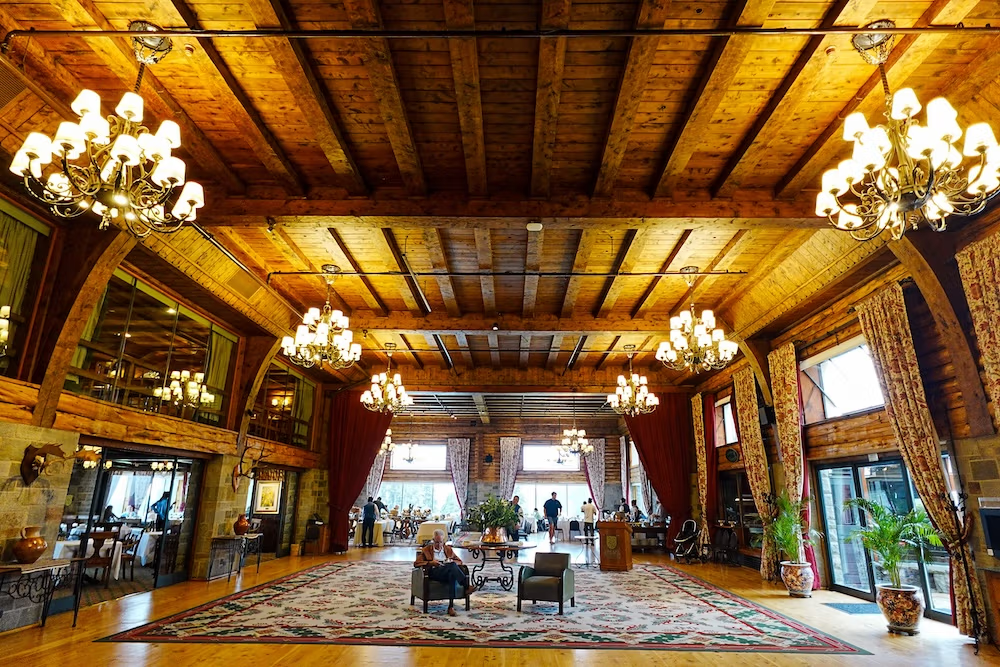
A Cypress Palace, a Parisian Decorator, and a Fire in Under Two Years
What Bustillo built at Puerto Pañuelo was, by design, something that looked like it belonged to a different hemisphere. He modeled it on the great Canadian mountain lodges — cypress logs for the structure, cypress and larch shingles for the roof — consciously rustic in a way that had nothing to do with roughing it. A German landscape architect, Hermann Botrich, handled the grounds separately, tasked with making acres of cleared Patagonian hillside look like they’d always belonged to a mountain lodge rather than a recent construction site.
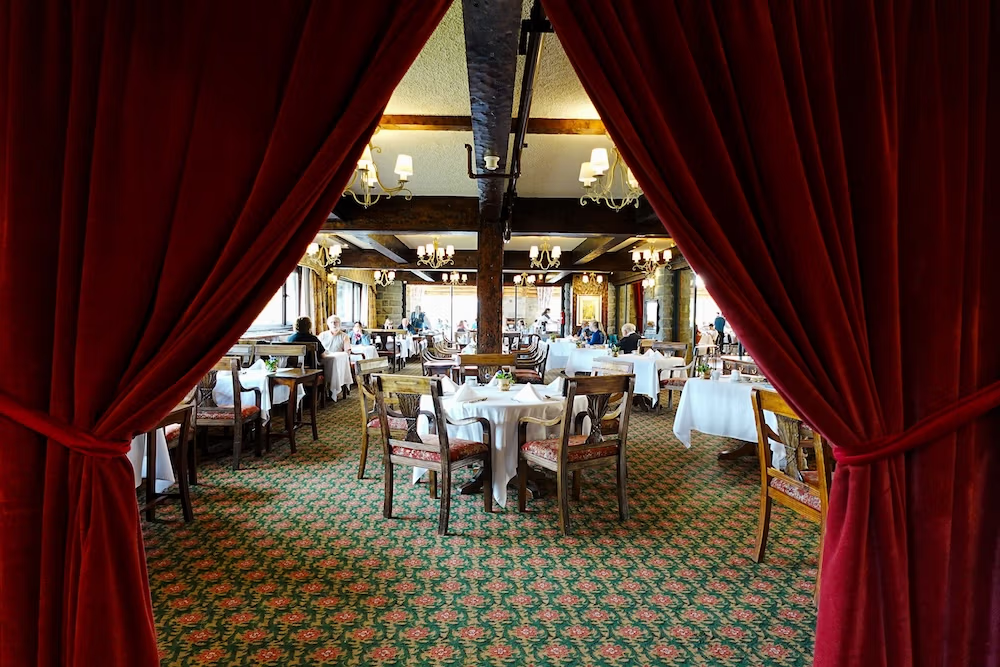
The original hotel opened its doors in January 1938 with roughly 130 rooms, a tea room, a shopping gallery, a five-hundred-seat restaurant, and — because it sat far enough from anything resembling a town that visitors couldn’t simply pop into Bariloche for what they needed — its own post office, telegraph office, bank branch, and pharmacy built directly into the building. It was less a hotel than a small, self-sufficient world someone had dropped into the Andean foothills, built on the bet that the rest of Patagonia’s tourism infrastructure would eventually grow up around it rather than the other way around.
The part almost nobody outside a handful of design historians seems to know is who furnished the inside of it. While Bustillo was raising cypress walls in Patagonia, a French decorator named Jean-Michel Frank was fleeing Nazi-occupied Paris for Buenos Aires, and it was there that he got pulled into the Llao Llao project — designing custom furniture through an Argentine workshop, stripping ornamentation down to raw materials in a style that would later get called rustic modernism. One of the pieces to come out of that commission, a low, deep-set armchair, eventually earned its own nickname: the Elephant Chair. It’s a strange, wonderful detail — a fugitive of the European avant-garde furnishing a log-cabin hotel at the bottom of the world — and it makes the interiors we walked through decades later feel less like generic five-star polish and more like the product of a very specific, deliberate collision of ideas.
Almost none of that first version survives. Sixteen months after opening, on an October night in 1939, the hotel burned to the ground. It went fast — sawdust packed into the walls as insulation and a strong prevailing wind turned it into a total loss in a matter of hours — and Frank’s furniture went with it, along with nearly everything else inside. Nobody ever pinned down exactly what started it, and more than eighty years later, nobody has.
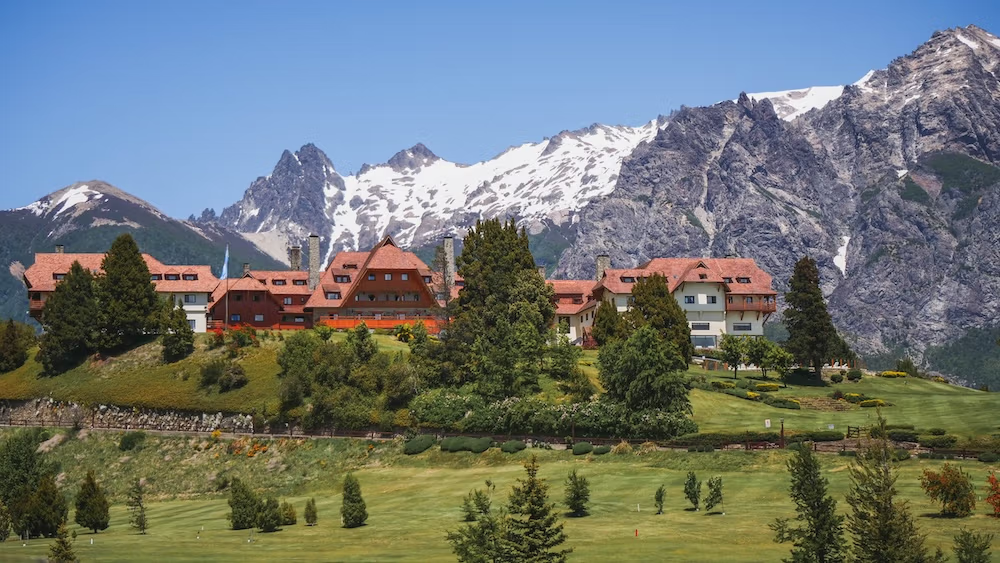
What Rose From the Ashes
The National Parks Administration didn’t let the project die with the building. Bustillo rebuilt on the same site, to essentially the same design, but this time in reinforced concrete and stone instead of raw timber, with a French-style tiled roof standing in for the original cypress shingles. Whatever lesson everyone took from watching the first hotel disappear in an afternoon, it clearly wasn’t “build somewhere else” — it was “build the same thing, just don’t let it burn again.” It reopened in December 1940, and the building that resulted — the one still standing as the historic core of the property today — is a bit of an architectural sleight of hand: fireproofed and structurally modern for its time, but dressed to look exactly like the wooden lodge that had just burned to the ground.
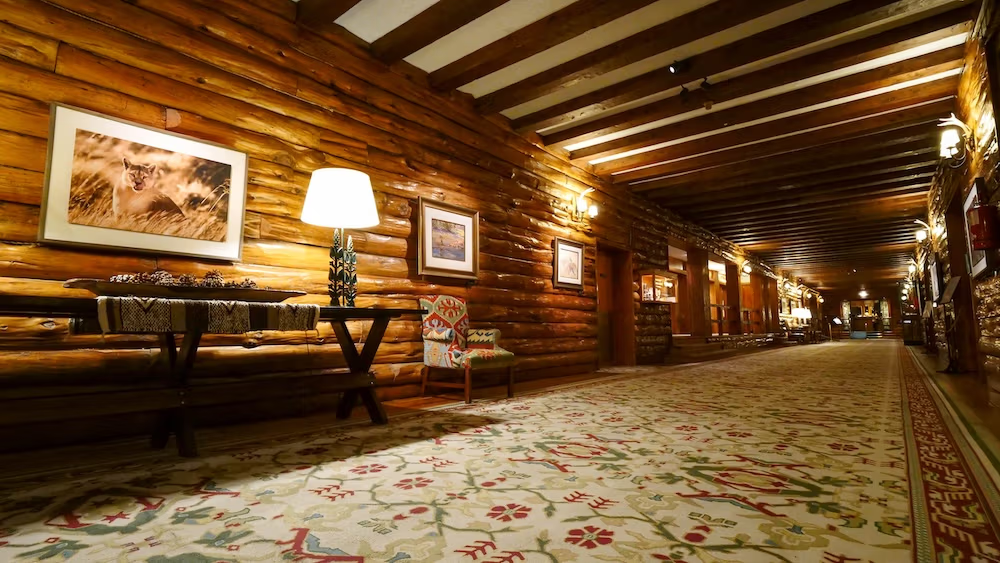
That’s the wing we actually stayed in, and it’s why the log-cabin impression holds up so well in person even though you’re technically standing inside a concrete building. This hotel is enormous, and getting from our room to breakfast required a map on day one. More than once we ended up back at the front desk asking for directions to a room we’d already left — down two floors, across the building, into another elevator, and somehow still not quite there. It’s the kind of disorientation that would just be annoying in a smaller place, and somehow becomes part of the charm in one this size. All of it resolves in the central hallway, a long, grand corridor that genuinely functions as the heart of the building, feeding into the restaurants, the lounges, the reading room, all of it under high ceilings and heavy wood beams that make it obvious why they rebuilt this exact design twice rather than starting over with something easier to construct. If the story’s made you curious to see the results for yourself, you can check current rates and availability for the Bustillo Wing on Booking.com.
From National Landmark to Near-Ruin — and Back
The hotel’s reputation kept growing after that, but its finances didn’t always keep pace. By the late 1970s, with maintenance money drying up, the Llao Llao closed its doors — and stayed closed for roughly a decade and a half. That’s the part of the story that’s easy to skip past, but it’s worth sitting with for a second: a building that had hosted a sitting U.S. president sat empty for most of the 1980s, picked over by vandals, its grand hallways and fireplace rooms going quietly to ruin while nobody with the money to stop it was paying attention. It reopened for good in 1993, after privatization and a renovation that stuck close to Bustillo’s original vision — which is its own small miracle, given how easily a building in that condition could have been torn down and replaced with something forgettable instead.
The recovery held. By 1999 the hotel had joined the Leading Hotels of the World, and that same year the city of San Carlos de Bariloche formally declared it a municipal historical monument — an actual legal designation, not a line borrowed from a brochure. The most recent major addition came in 2007, when the Lago Moreno Wing opened alongside the original Bustillo building — a separate, more contemporary block of roughly forty rooms and suites, linked to the historic wing by a panoramic bridge over the grounds rather than folded into it. It’s a sensible way to handle an old building’s limitations: instead of gutting a 1940 fire-rebuild to fit modern five-star expectations, they built the modern expectations next door and left the original alone.
Eisenhower’s Photograph and a Family’s Inherited Dream
There’s a photograph said to still hang somewhere in the hotel’s public spaces: U.S. President Dwight Eisenhower and Argentine President Arturo Frondizi, meeting at the Llao Llao in 1960, two heads of state posed in front of the same cypress-beamed hallway guests still walk through today. Thirty-five years later, in 1995, the hotel hosted the Ibero-American Summit of presidents, gathering heads of state from across Latin America and the Iberian Peninsula under the same fireproofed roof Bustillo rebuilt in 1940. Somewhere in between and since, it’s quietly become one of those buildings that shows up in the background of a country’s diplomatic history without most visitors ever clocking it. That’s a far more concrete kind of importance than the word “iconic” usually gets stretched to cover — it’s not a marketing adjective, it’s a building with an actual paper trail.
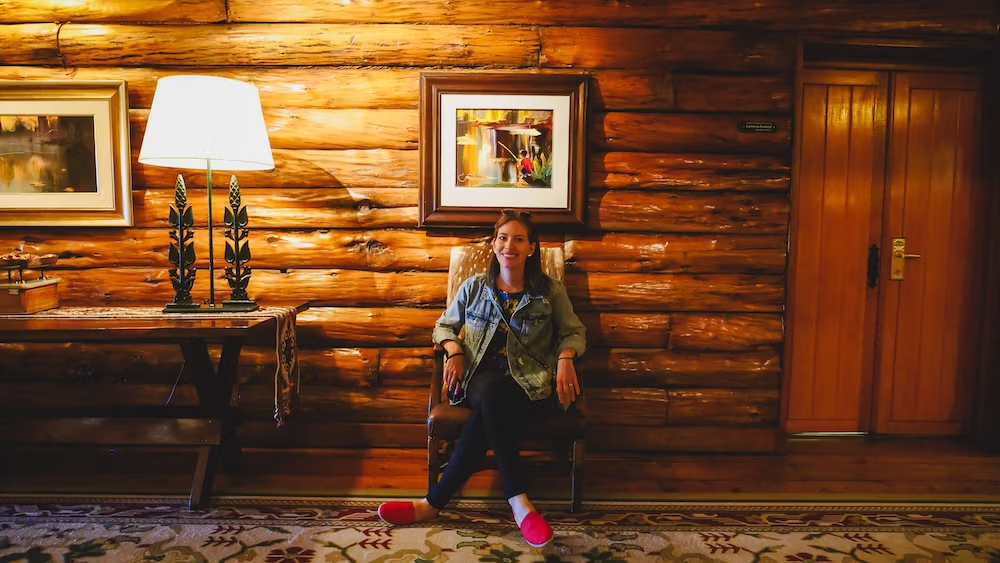
But the version of that status we actually experienced firsthand had nothing to do with presidents. It came from Audrey, standing in a hallway her parents had talked about for years before she was born, finally getting to be the one telling the story instead of just hearing it. A hotel doesn’t earn that through architecture awards or diplomatic summits, however useful those are as evidence. It earns it by lodging itself, generation after generation, in the imagination of a country that has never stopped treating this particular hill between two lakes as somewhere worth dreaming about long before you’ve actually seen it.
Standing Inside the Legend
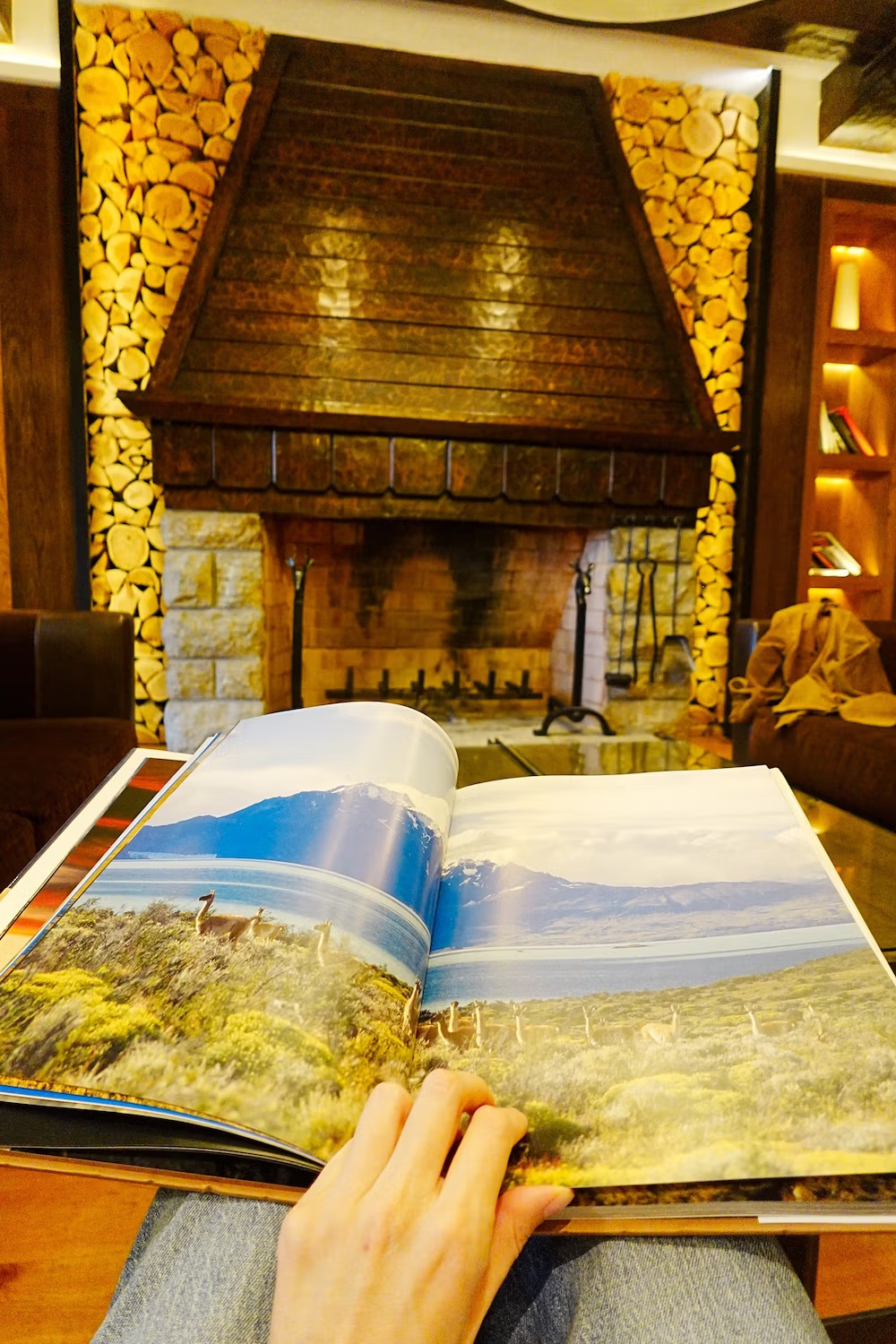
None of the history means much until you’re actually inside it, and the strange thing about the Llao Llao is how well the building still performs the role it was built for eighty-some years ago. The reading room off the main hall is quiet in a way that feels almost accidental in a hotel this size — we found a couple of photography books there, one on fly fishing and one on Patagonian gauchos, and ended up spending longer than planned flipping through them, partly because we’d stayed at a fly-fishing estancia ourselves years earlier and recognized more of the landscape in those pages than we expected to. Nearby, one of the hotel’s fireplaces sits ready for exactly the kind of afternoon collapse into an armchair a mountain lodge is supposed to invite.
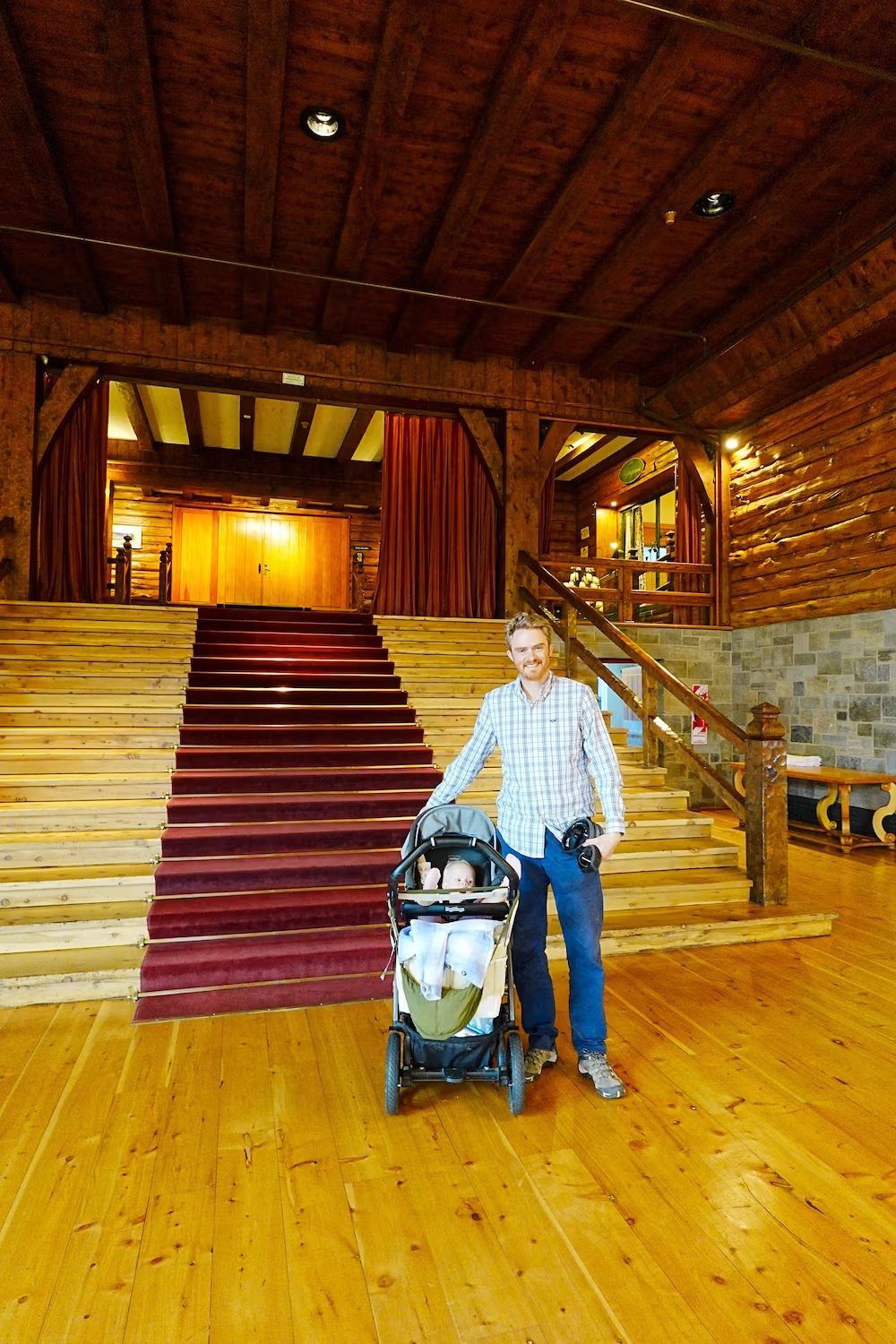
Walk the halls enough times and the Canadian-lodge description stops sounding like marketing copy and starts just sounding accurate — heavy wood, stone, high ceilings, a scale that swallows you a little. It’s easy to forget you’re technically standing inside a fireproofed 1940 reconstruction and not the original 1938 building, and that’s arguably the point. Bustillo and the parks administration behind him rebuilt this place specifically so you’d forget that. Whatever the Llao Llao means to the people who grow up hearing about it from the outside, the building itself has spent eight decades making sure that once you’re standing inside, none of that history feels like history. It just feels like the room you’re standing in.
Frequently Asked Questions
Who designed the Llao Llao Hotel?
Argentine architect Alejandro Bustillo designed the hotel, winning the commission through a public design competition. His brother, Exequiel Bustillo, ran the National Parks Administration that built it, which raised eyebrows at the time even though the competition itself was real.
When did the Llao Llao Hotel first open, and what happened to the original building?
The original hotel opened in January 1938. Sixteen months later, in October 1939, it burned to the ground in a matter of hours after sawdust wall insulation and strong winds turned a fire into a total loss. The cause was never established.
Who furnished the interior of the original Llao Llao Hotel?
French decorator Jean-Michel Frank, who had fled Nazi-occupied Paris for Buenos Aires, designed custom furniture for the hotel through an Argentine workshop. One piece from that commission became known as the Elephant Chair. Almost none of Frank’s original furniture survived the 1939 fire.
Is today’s Llao Llao Hotel the original 1938 building?
No. What stands today is a 1940 reconstruction, rebuilt in reinforced concrete and stone rather than the original raw timber, with a tiled roof replacing the original cypress shingles. It was deliberately built to look like the wooden lodge that burned down.
Why was the Llao Llao Hotel closed for so long in the 20th century?
Maintenance funding dried up by the late 1970s, and the hotel closed for roughly a decade and a half, sitting empty and exposed to vandalism. It reopened for good in 1993 after privatization and a renovation that stayed close to Bustillo’s original design.
Is the Llao Llao Hotel officially recognized as a historic site?
Yes. The city of San Carlos de Bariloche formally declared it a municipal historical monument in 1999, the same year the hotel joined the Leading Hotels of the World.
This article is also available in Spanish. [Leé la versión en castellano: Historia y arquitectura del Hotel Llao Llao: cómo se construyó el ícono de la Patagonia]
This article contains affiliate links. If you book through one of these links, I may earn a commission at no extra cost to you.