
I’m a third-generation diehard Chicago Blackhawks fan. My grandfather brainwashed my dad, my dad brainwashed me, and by the time I was old enough to hold a hockey stick I already knew who I was rooting for before I understood what a power play was. My guy growing up was Jeremy Roenick — all speed, physicality and swagger and a mouth that ran as fast as his skates. I played enough road hockey pretending to be him that I took extra slashes and shoves from friends who’d decided they were Trevor Linden or Pavel Bure that day. Being the lone Roenick guy in a Gold River driveway full of Canucks fans has a specific cost.
So none of what follows comes from someone with a childhood allegiance to Edmonton. I moved there, watched Oilers hockey as an adult, and somewhere in there they became my second team — my favorite Canadian team, then and still now. Which is exactly why I think I can be trusted with this argument. I’m not defending my own team’s history. I’m an outsider who fell for this one specific franchise’s story badly enough that I still lose sleep over it.

Three Eras, Only One of Them Real
I’ve experienced this team three completely different ways, and only one of them was actually watching hockey happen in real time.
I was born in 1981, which means the entire 1980s Oilers dynasty — five Stanley Cups in seven years, the greatest offensive team the sport has ever produced — is something I inherited rather than witnessed. I grew up hearing about Gretzky, Coffey, Kurri, and Messier the way you hear about a great flood: real, permanently embedded in how everyone around me talked about hockey, but not something I have a personal memory of.
The team I actually watched, live, from an Edmonton seat, was a completely different animal. I had a student ticket pack and used it to catch eight or ten games a year at Rogers Place’s predecessor — a team that was decent, likable, entirely lacking a genuine superstar, and a lot of fun anyway. I used to call it the Smyth and Smith era, after Ryan Smyth and captain Jason Smith, the two guys who defined those rosters through the early-to-mid 2000s. That team’s third line — Mike Grier, Todd Marchant, and Ethan Moreau — was, in my opinion, the best third line in the league at the time, even if nobody outside Edmonton noticed. I remember one specific night watching Sergei Fedorov, still in his prime with Detroit, just skate circles around our entire roster like the rest of us were standing still. No Gretzky, no Messier, just solid, likable hockey with a ceiling that never got very high.
And then there’s now. The McDavid era, which I’ve followed from a distance but with real investment — invested enough that I watched Game 7 of the 2024 Stanley Cup Final from a hotel room in Buenos Aires, half a world away from Edmonton, gutted in Spanish-language commentary I could barely follow. Invested enough that I watched the 2025 Final with my dad, who was visiting me in Alberta at the time, both of us watching Florida do it to them again. Three eras, three completely different relationships to the same jersey. Only the middle one is memory. The rest is inheritance and current events.
What an 80s Roster Loaded With Superstars Actually Had
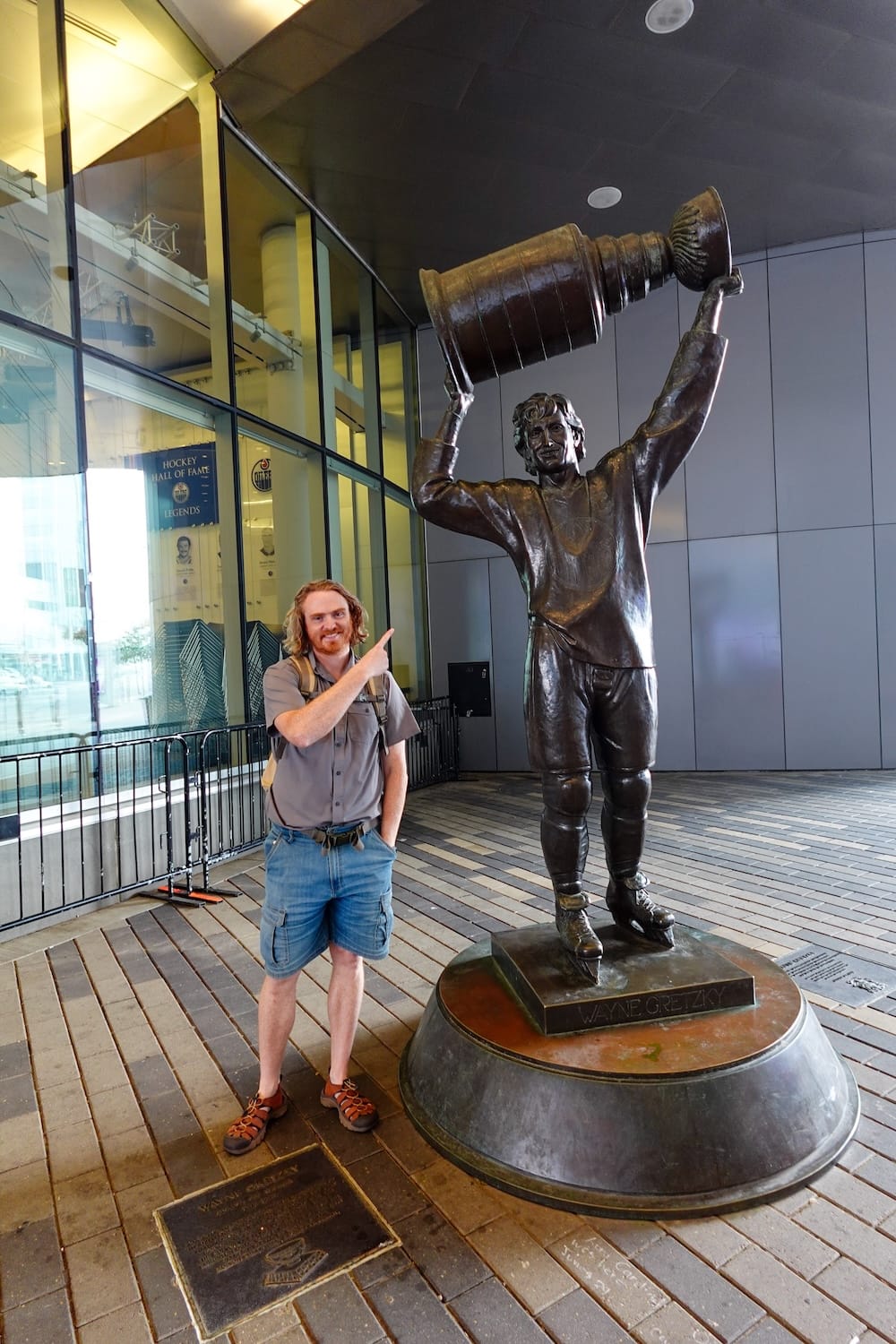
The thing people miss about the 80s Oilers — the thing that makes “what if McDavid played for them” a much better question than it sounds — is that they weren’t a superstar-plus-role-players team. They were a stack of superstars who happened to also have Wayne Gretzky.
Paul Coffey ran the blue line like nobody before or since aside from Bobby Orr, a five-year stretch scoring between 29 and 48 goals a season as a defenseman, still second all-time in career scoring at his position. There’s a real argument that his speed and puck-moving is a big part of why both Gretzky in Edmonton and later Mario Lemieux in Pittsburgh had the best individual seasons of their careers with Coffey on their blue line. Jari Kurri put up over a thousand points in ten seasons as an Oiler and won all five Cups; people who saw him play still call him the most perfect finisher Gretzky ever had. And Mark Messier, who I’ll get back to, was good enough on his own to eventually captain a completely different franchise to a championship. Any one of those three would have been the best player on almost any other team in the league. The 80s Oilers had all three of them plus Gretzky plus Glenn Anderson plus a genuinely dominant goaltending tandem. In 1983-84 they scored 446 goals in an 80-game season — a record that still stands and probably always will.
That’s the roster prime McDavid would be walking into. Not a mediocre team hoping he saves it. An absurdly stacked one, looking for the one thing it didn’t quite have.
Why Prime McDavid Breaks 1980s Hockey
My thesis, and I’m not hedging on it: prime McDavid drops into that era and does things that simply weren’t possible to do to 1980s NHL defenses and goaltending.
The Goaltending Nobody’s Getting Right
People get this wrong in both directions. The popular version of “80s goalies were bad” points at bulky equipment, and that’s backwards — 80s goalies were actually stuck with the worst version of the equipment problem, not the best. Their pads were still built more or less the way goalie pads had been built since the 1920s: heavy leather, stuffed with deer hair or horsehair, soaking up ice water and getting heavier as a game wore on. The equipment that actually let goalies get big — synthetic foam cores, lighter and more protective at once — didn’t show up until the early 90s, right around when Patrick Roy and his goalie coach in Montreal were turning the butterfly from an occasional desperation move into a full-time style. 80s goaltending was working with heavier gear and a less refined technique at the same time. Worst of both worlds. Nobody was the athlete in net that Roy or Dominik Hašek or a young Martin Brodeur would be a decade later.
Nobody Was Playing Defense Yet
Now take away the systems. There was no neutral zone trap in the 1980s — that didn’t exist as a real NHL defensive philosophy until Jacques Lemaire installed it with the Devils in 1994, and it worked so well it nearly strangled the sport’s scoring for the next decade. Before that, NHL defense in the sense we’d recognize today barely existed. Teams skated. That’s it.
Put McDavid — the fastest skater the sport has ever produced, full stop — into that combination: heavy-gloved, technically unrefined goaltending, and defensemen who were never developed with foot speed as a priority the way they are now, playing with zero structured team defense in front of them. It would be like playing Duck Hunt on the NES two inches from the screen. Nothing anyone did in that decade was built to answer a player who skates the way he does.
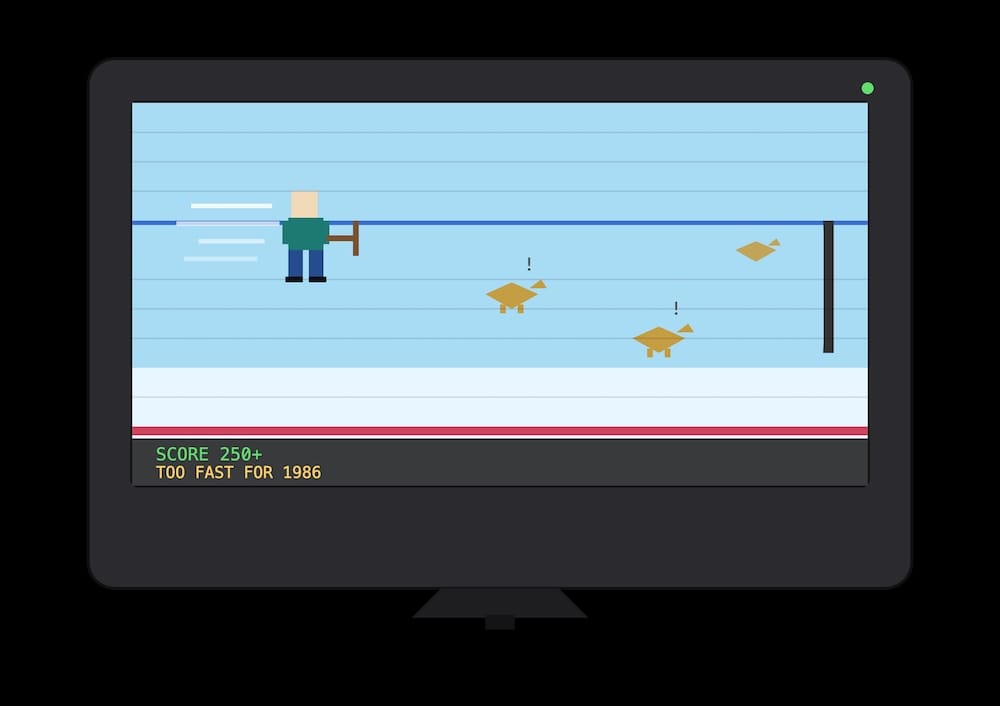
Pair him with Coffey specifically — two players who both generate offense primarily through speed — and that combination is basically impossible for an 80s team to contain. The two-line pass rule of that era would have taken away some of his long stretch-pass breakaways, since you couldn’t pass across both blue lines back then. That’s a real complication and I won’t pretend it isn’t. It just doesn’t change the outcome much, because McDavid doesn’t need a stretch pass to hurt you. He generates his own breakaways off a standing start.
250 Points, and I’m Not Backing Down From It
I’ll go further than most people would be willing to. Prime McDavid, dropped into that exact 1985-86 environment, gets 250-plus points and obliterates Gretzky’s own all-time record of 215 — a number that’s stood since 1986, that no other player in league history has come within 16 points of, that McDavid’s own career-best season, 153 points, in a far more defensively sound modern game, doesn’t come close to touching. That’s a genuinely absurd claim to make about a record most hockey people consider permanently untouchable. I’m making it anyway.
Even Gretzky Needed the 80s Oilers
Here’s the part of my own argument I have to be honest about, because it complicates things: the evidence doesn’t actually say one great player is enough. It says almost the opposite, twice, from two different directions.
In 1988 the Oilers traded Gretzky to Los Angeles — the single biggest trade in hockey history. Two years later, in 1990, Edmonton won the Stanley Cup anyway. No Gretzky. Messier stepped into the void, put up a 129-point season, won the Hart Trophy, and captained a team that still had Kurri, Anderson, Grant Fuhr, Kevin Lowe, and a young Bill Ranford who came out of nowhere to win the Conn Smythe. It wasn’t a superstar-less team. It just didn’t have Gretzky specifically, and it won anyway — the franchise’s fifth Cup in seven years, and to date its last.
Now run the tape forward to 1993. Gretzky, three years into his exile in Los Angeles, gets the Kings to their first Stanley Cup Final in franchise history — the closest he ever came to winning another Cup outside Edmonton. He never did. His opponent that June was Montreal, led by a goaltender named Patrick Roy, who won the Conn Smythe and delivered the franchise’s 24th championship in five games. Gretzky never got to captain two different Cup-winning teams — a distinction Messier claimed instead, four years later, with the Rangers. Montreal’s win in 1993 wasn’t just a loss for Gretzky. It’s still, to this day, the last time a Canadian-based team has won the Stanley Cup. Over thirty years now.
Both halves point the same direction. The team won it without its best player. Its best player never won it again without the team. If you’re looking for proof that the 80s Oilers were a genuinely complete machine and not just a showcase for one generational talent, that’s about as clean a piece of evidence as hockey history is going to hand you.
Why I Feel for McDavid
The Messi Comparison
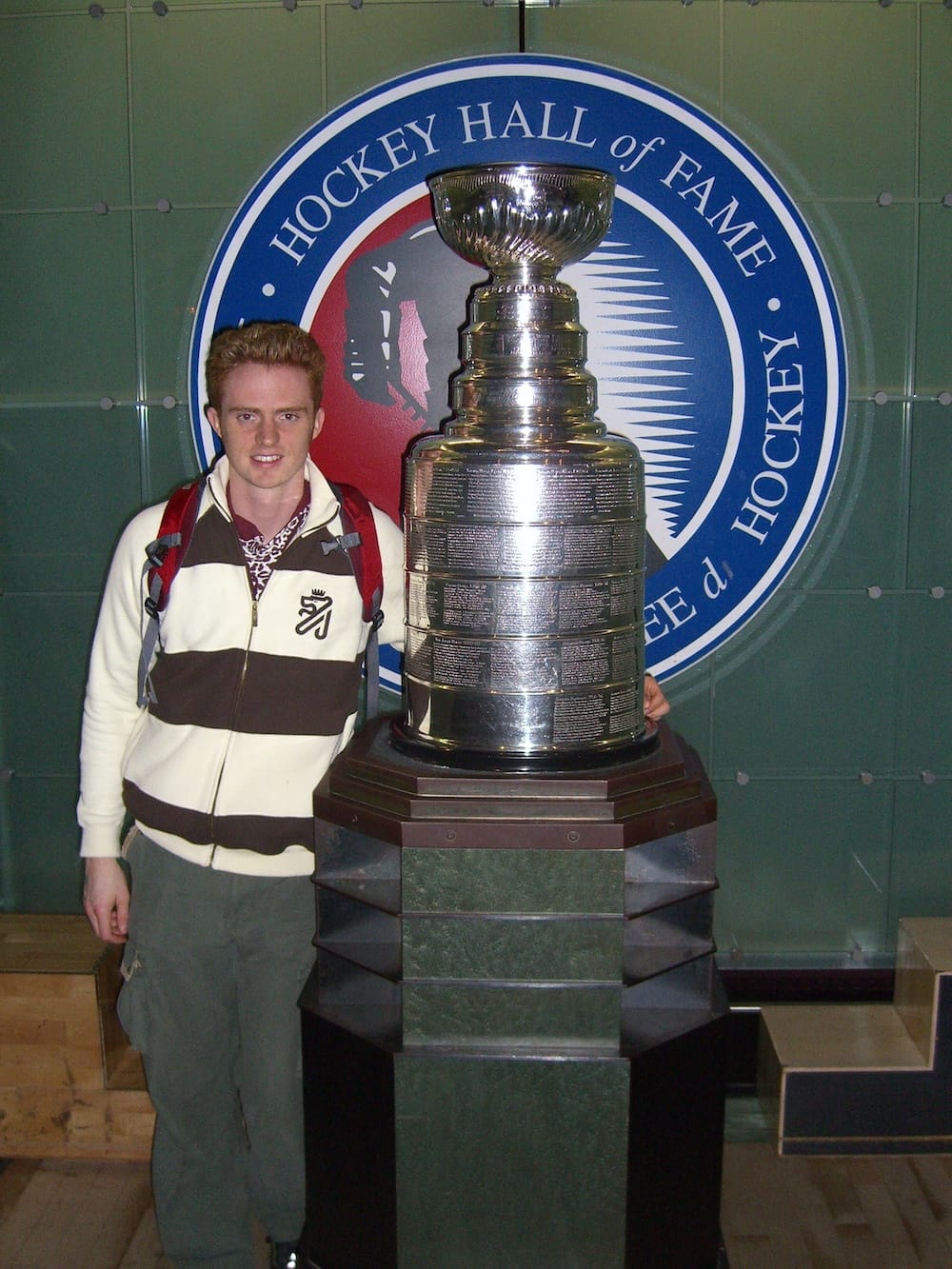
I think McDavid is entering something close to a Messi level of pressure now, and I mean that specifically, not as a lazy comparison. You can see it on his face after a loss — not frustration exactly, something heavier than that. A transcendent individual player carrying a franchise’s history, a country’s drought, and his own reputation all at once, and losing anyway, repeatedly, through no real fault of his own play.
Gretzky had Coffey and Kurri and Messier and a Cup-winning goaltending tandem around him. McDavid has had, by comparison, real and repeated holes — goaltending that’s been shaky exactly when it mattered most, a supporting cast that’s never matched what Edmonton built in the 80s. He’s carrying more of the load individually than Gretzky ever had to, against teams far better coached and far more defensively sound than anything that existed in 1986. And there’s the specific weight of being a Canadian-franchise superstar during a drought now longer than his own life — Montreal’s 1993 win, the one that beat Gretzky, is still the last time a team from this country has lifted the Cup.

My Own Roenick Problem
I know what it looks like when a great player never gets there. Jeremy Roenick, my own guy, played twenty seasons, got Chicago to one Final in 1992, and retired without ever putting his name on the Cup. He made the Hall of Fame anyway, on pure talent and career weight, but I know from being his fan for two decades that it’s a real, permanent ache, not a footnote. I don’t want that for McDavid.
Hoping for the Ovechkin Ending
But I’ve also watched the other version of this story happen, recently, in this exact sport. Alex Ovechkin went thirteen seasons and over a thousand games as the guy openly discussed as the best player never to win it, before Washington finally broke through in 2018 and he won the Conn Smythe on the way. The “but” that follows a great player everywhere just disappeared. Instantly. That happened to a player of McDavid’s caliber less than a decade ago.
McDavid signed a short two-year deal with Edmonton that runs through 2027-28 instead of locking in long-term, which tells you something about what both sides think this window actually is. I hope he gets his Ovechkin ending instead of his Roenick one. One Cup with the Oilers would rewrite the entire story people tell about his career. An Olympic gold with Canada on top of it would rewrite something bigger than that. I hope the second half of his career gives him both, the way it eventually did for Messi and for Ovechkin, and not the way it never did for my guy.

So Would He Have Won More?
I don’t think this thought experiment resolves into a clean yes. That’s what makes it worth thinking about instead of just tweeting.
Prime McDavid, dropped into 1986, breaks that era in half — I stand by the 250 points, I stand by the idea that nothing in that decade’s toolkit was built to slow him down. But the 80s Oilers didn’t win five Cups because they had one unstoppable player. They won because they had four or five players who were each, individually, the best at what they did, wrapped around a genuine system, at a moment when nobody else in the league had figured out how to counter that combination yet. McDavid’s speed would have made that machine even more terrifying than it already was. It probably doesn’t change how many Cups they won, because that number was already close to the ceiling. It might just change the margins — an even more absurd points record, a version of hockey history somehow harder to believe than the one that actually happened.
What that team had, and what McDavid’s actual teams keep almost having, is the part that matters more than any single player’s ceiling: enough talent around the best player that the whole thing doesn’t rest on him alone. Gretzky proved you need that by failing to win without it. Messier proved the reverse by winning without Gretzky. McDavid’s still out there right now, waiting to find out which version of that story is his.
This article is also available in Spanish. [Leé la versión en castellano: ¿Qué pasaría si Connor McDavid en su mejor momento hubiera jugado en los Edmonton Oilers de los 80?]