
The Confluence is a slightly tricky Calgary attraction to recommend because its biggest strength is also the reason some visitors may leave wondering whether they missed something.
It is small.
When Audrey and I visited what was then still widely known as Fort Calgary, we walked over along the Bow River on a hot summer day. People were floating and paddling downstream, which was making the history-museum portion of our afternoon face some stiff competition. We were certainly tempted to join them.
We kept walking.
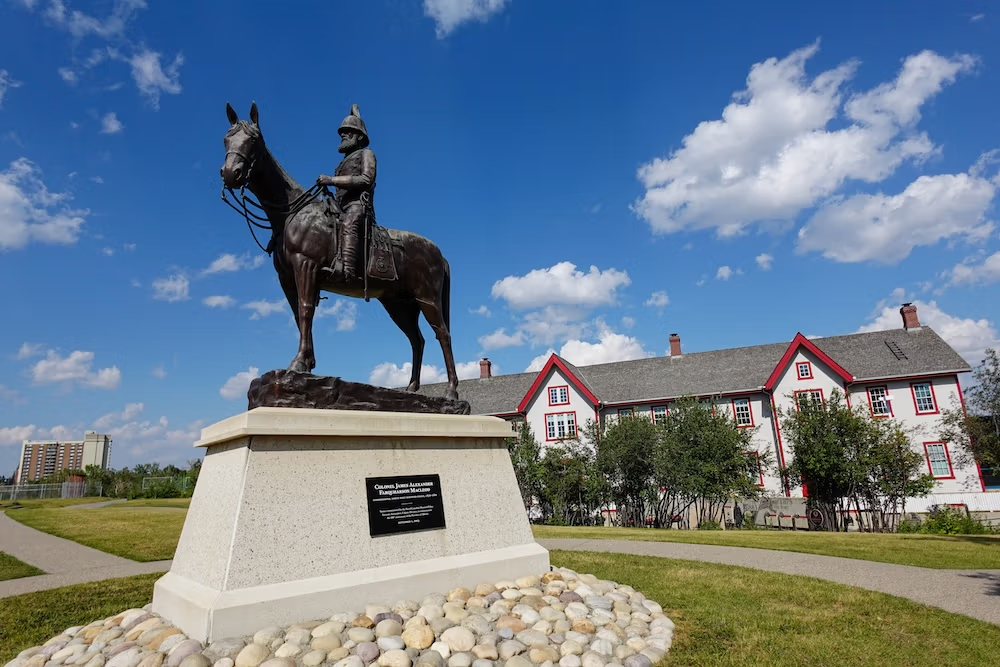
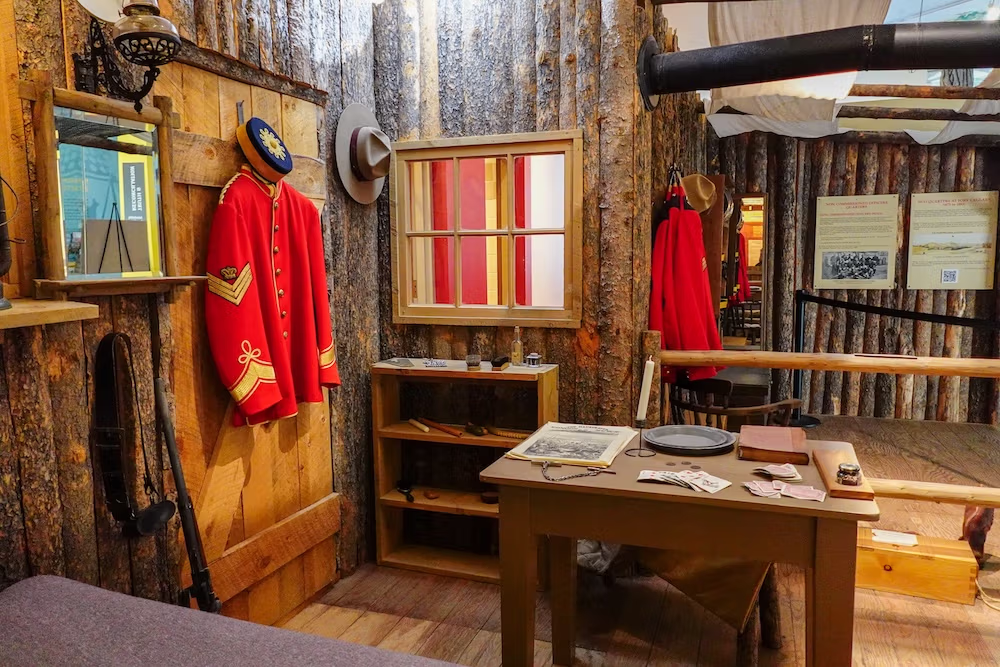
Once inside, my reaction was simple: the museum wasn’t large, but I found it interesting. It gave us a better sense of what life had looked like in this corner of Alberta during the late nineteenth and early twentieth centuries, and I liked that it added historical weight to a part of Calgary we had otherwise been exploring mostly on foot.
That basic impression still matters, but the attraction itself has changed considerably since our visit.
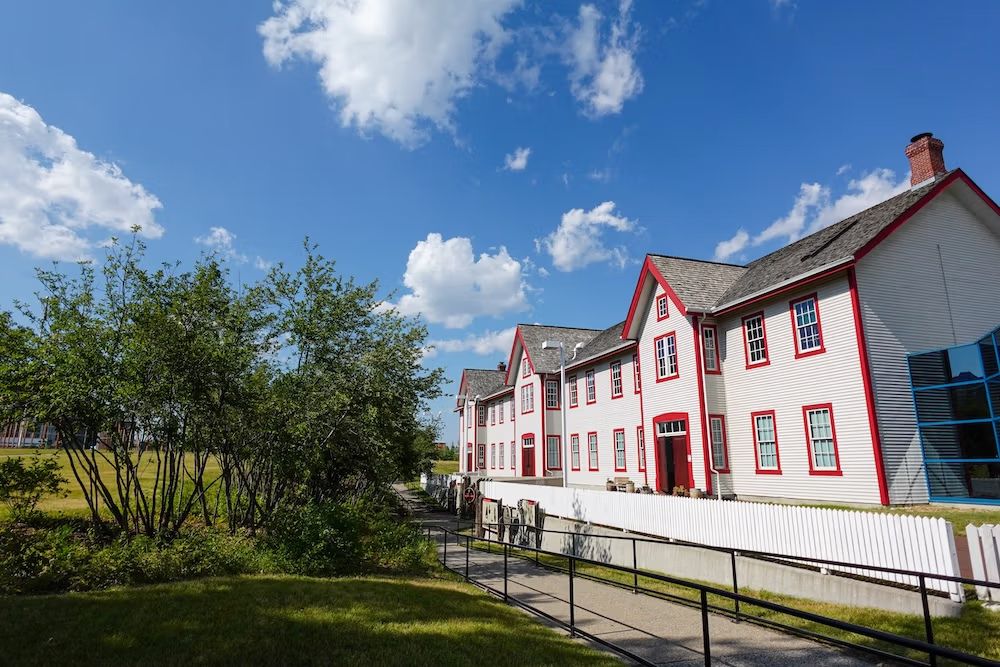
Fort Calgary officially became The Confluence Historic Site & Parkland in May 2024, and the new name reflects a much bigger rethink of what this place is supposed to represent. The story is no longer centred almost entirely on the arrival of the North-West Mounted Police in 1875. The Confluence is increasingly interpreting the much longer Indigenous history of the land, the arrival of colonial institutions, the fort itself and the development of modern Calgary.
It is also still changing. In 2026, new exhibitions are open while further permanent galleries are planned for 2027.
So is The Confluence worth visiting?
For travellers interested in Calgary’s history and the story of the land where the Bow and Elbow rivers meet, I think the answer is yes. For somebody racing through Calgary with one day and a list of headline attractions, I would probably put it further down the queue.
The difference comes down to expectations.
Fort Calgary Is Now The Confluence — and the Change Matters
If you last visited Calgary a few years ago, or you’re working from an older guidebook, you may still be looking for Fort Calgary.
You’re in the right place.
The attraction officially adopted the name The Confluence Historic Site & Parkland on May 2, 2024. This wasn’t simply a case of somebody deciding the old logo looked tired. The institution wanted the name and interpretation to reflect a history that reaches much further back than the NWMP fort.
That’s a pretty important correction.
The Bow and Elbow rivers were meeting here long before 1875, obviously, and Indigenous peoples had longstanding relationships with this place long before Canadian police arrived. The site is connected with histories involving the Blackfoot Confederacy, Tsuut’ina, Îyârhe Nakoda and Métis communities.
11:46 – The Confluence Historic Site (Fort Calgary)
The Confluence has also received the Blackfoot name I’táámito’táaattsiiyio’pi, meaning “harmonious meeting place.”
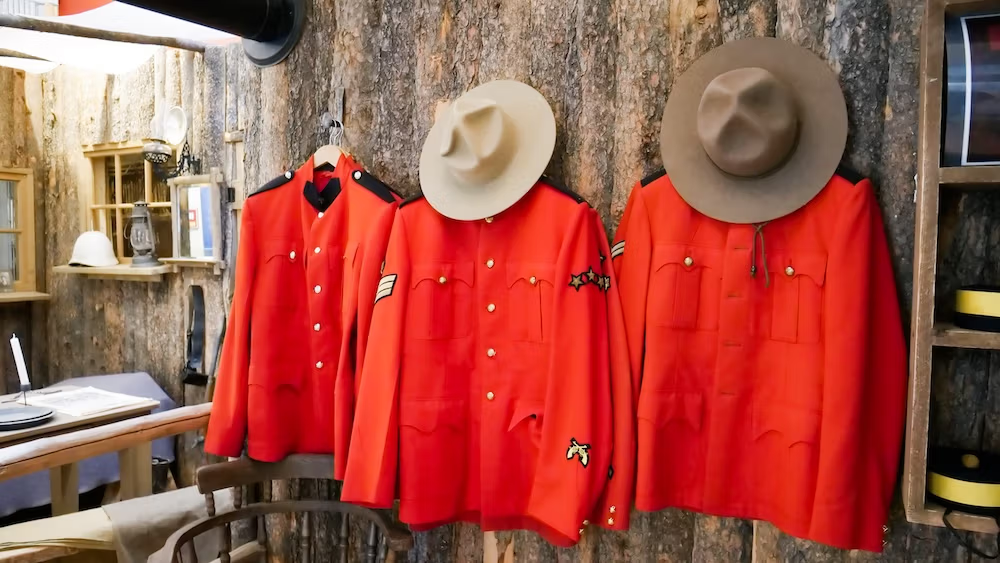
The NWMP story remains a major part of what happened here. A police post was established at the confluence in 1875, with duties that included suppressing the whisky trade and, later, policing connected with construction of the Canadian Pacific Railway.
But 1875 is no longer treated as the beginning of the entire story.
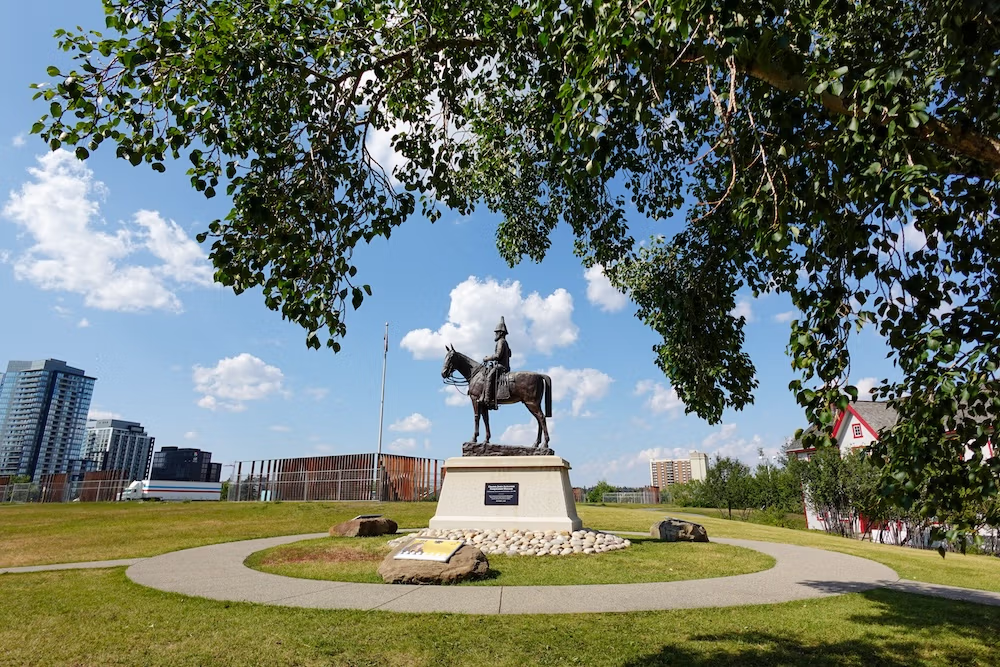
Another useful thing to know before arriving is that you are not walking into an intact nineteenth-century fort. The original Fort Calgary is gone. What remains is the historic location, parkland, a Cultural Centre and reconstructions and interpretation connected with the fort and the wider history of the site.
That distinction matters because “Fort Calgary” can conjure up something much larger and more physical than what you’re actually visiting. There are no endless rows of original wooden buildings waiting for you behind a palisade; this is primarily an interpretive historical attraction.
What We Saw Versus What You’ll See Now
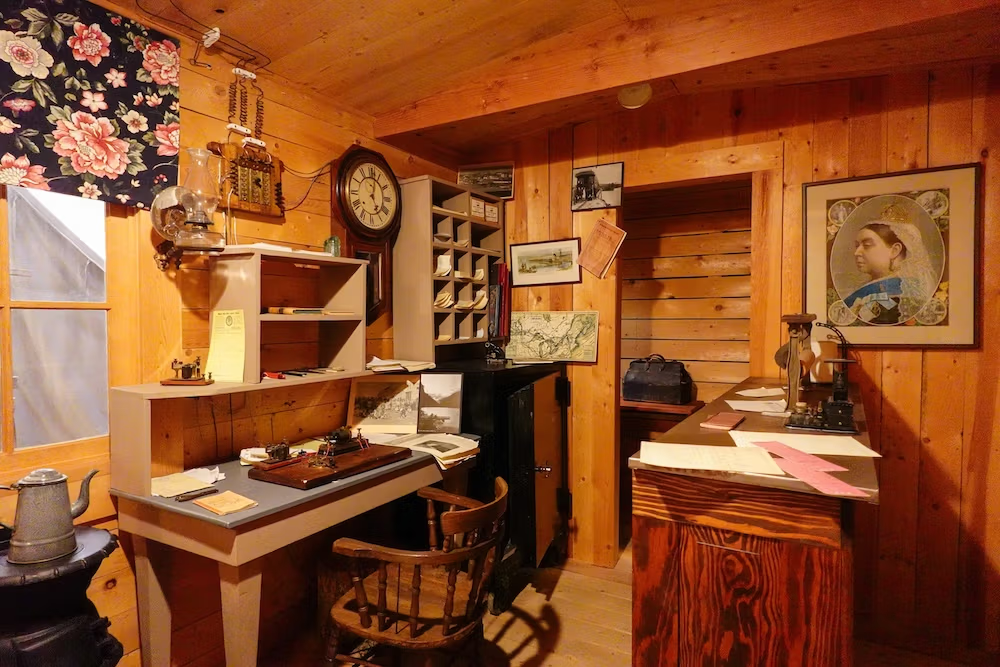
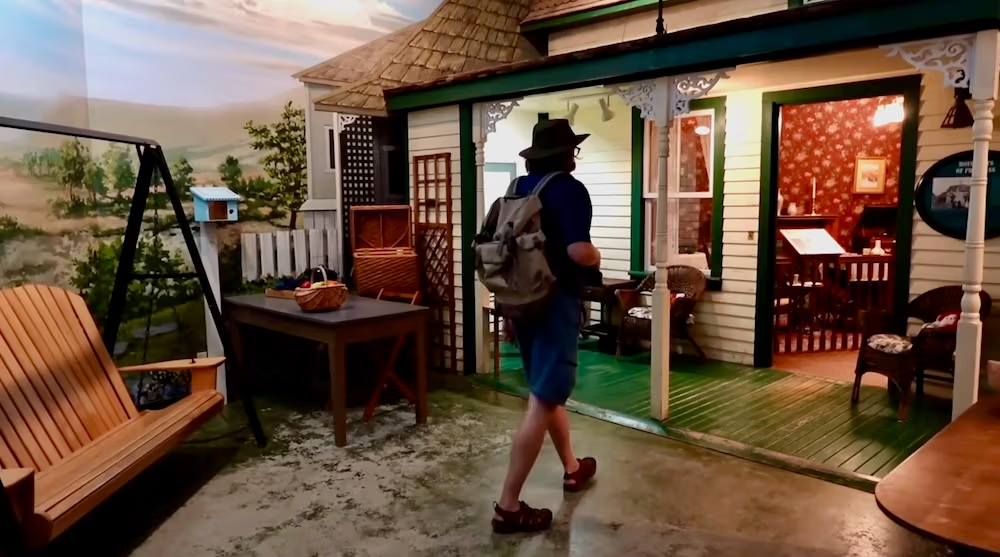
When Audrey and I visited, the indoor museum experience was fairly compact.
I liked that.
There are days when I want a giant museum with six floors and enough information to keep me occupied until somebody starts turning the lights off. There are other days when my historical concentration begins leaking out of my ears somewhere around gallery number nine.
Fort Calgary fell comfortably into the second category. We looked through the exhibits and historical interiors, got a much better sense of the period and continued with our day.
But I wouldn’t describe those galleries in detail now and pretend nothing has happened since.
A lot has.
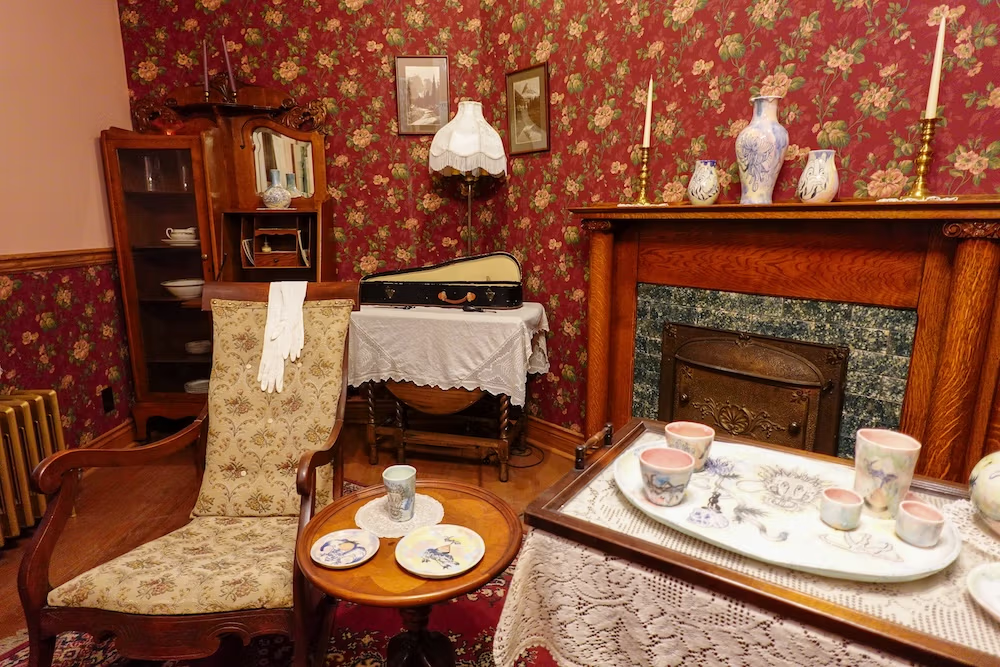
The Confluence is partway through a multi-year overhaul of its exhibitions. The first major phase was completed in 2025, more changes are underway in 2026, and additional permanent galleries are planned for 2027.
One of the biggest additions is Kípaitápiiyssinnooni (Our Way of Life), a roughly 900-square-foot exhibition developed with Blackfoot artists and knowledge keepers. The gallery explores Blackfoot culture and ways of life, and its presence alone changes the balance of what this museum is trying to do.
Another current exhibition, Unfamiliar Perspectives: The NWMP and Canada’s Colonial Project, deals with subjects including the March West, whisky trade, Fort Calgary’s use as a prison and the role of the NWMP within Canada’s colonial expansion.
That is a substantially different lens from simply presenting mounted policemen as colourful characters galloping nobly across the West.
There are also rotating exhibitions, which makes the precise visitor experience more fluid than it used to be. In 2026, you’re effectively visiting The Confluence midway through its transformation rather than seeing the final version of what the institution intends to become.
I don’t think that’s necessarily a reason to avoid it. The current exhibits already give visitors something meaningful to work with, but if you visit again in a couple of years, you may find a noticeably different museum.
Calgary’s Story Didn’t Start in 1875
The historical shift is probably the most interesting thing about The Confluence today.
The easy version of Calgary history goes something like this: the NWMP arrived in 1875, built Fort Calgary and a city eventually grew around it.
That isn’t completely wrong. It’s just very incomplete.
For Indigenous peoples, the confluence of these rivers had significance long before anybody was thinking about building Calgary. The establishment of the NWMP post needs to sit inside that longer story rather than erase it.
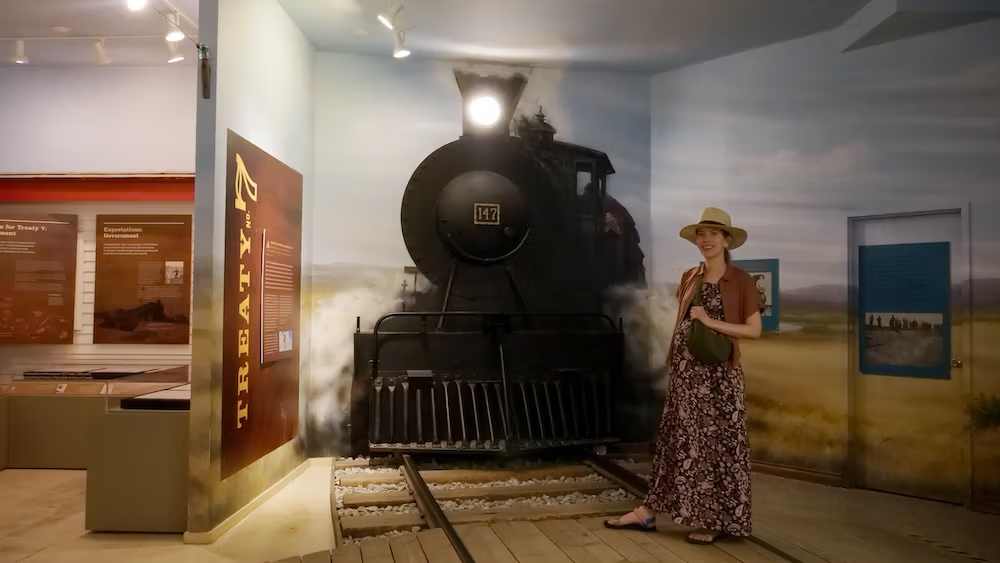
The years that followed brought enormous political and social changes across southern Alberta. Treaty 7 was negotiated in 1877 between representatives of the Canadian government and leaders representing the Siksiká, Kainai, Piikani, Tsuut’ina and Nakoda.
Even the word “agreement” needs some care here. The Canadian government’s written legal interpretation and Indigenous understandings of treaty-making were not necessarily the same, with translation difficulties and profoundly different ideas about land shaping what each side understood was happening.
Meanwhile, the NWMP became one of the institutions through which Canadian authority expanded westward. The fort’s history includes attempts to curb the whisky trade and policing associated with railway construction, but it also sits within a much larger colonial transformation that dramatically affected Indigenous communities.
You don’t need to spend half your Calgary vacation studying nineteenth-century policy documents to appreciate the importance of that distinction.
What matters for a visitor is that The Confluence is trying to tell a broader story than Fort Calgary used to.
For me, that gives the site more reason to exist. A reconstructed fort can show you uniforms, buildings and artifacts. Historical interpretation becomes more useful when it also asks why the fort appeared here, who was already here and what changed afterward.
How Long Should You Spend at The Confluence?
I would set aside roughly one to two hours for a typical visit.
That isn’t an official museum duration, and I wouldn’t set a stopwatch. Think of it as a useful planning window rather than a rule.
If you move through the indoor galleries quickly, you could spend less. If you explore the parkland properly, use the self-guided audio material or join one of the scheduled programs, you can easily stretch the experience.
Current guided options also give some indication of scale. The History of the Land walking tour runs for about an hour, while some more involved programs extend to roughly 105 minutes.
I wouldn’t normally dedicate half a day to The Confluence alone unless you’re attending something specific.
The location makes that unnecessary anyway.
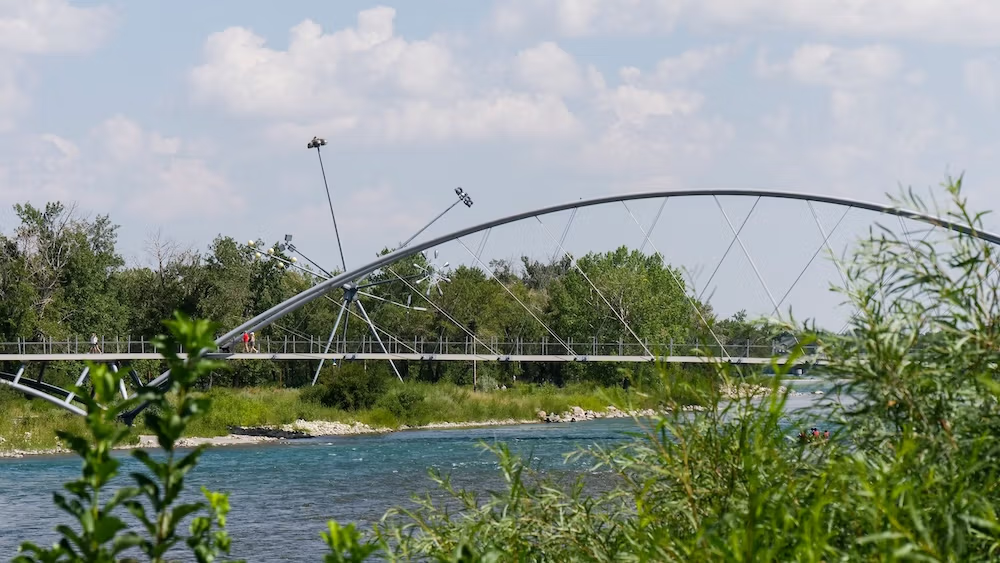
The site sits along RiverWalk near the eastern side of downtown, and that is one of its biggest practical strengths. Our own visit made sense because we walked there beside the Bow River rather than treating Fort Calgary as some isolated attraction we needed to commute across the city to reach.
That’s how I would think about it now too. Combine it with exploring the riverfront or nearby parts of central Calgary and it becomes an easy historical layer in a larger day. Make a special cross-city mission expecting an enormous museum and the value proposition becomes less convincing.
If you like the idea of making the river walk part of the history lesson, there is also a self-guided Bow River Trail smartphone audio tour that follows the river corridor and includes The Confluence among its historical stops. It is a different experience from going inside the Cultural Centre, so I would think of it as a way to add context to the wider riverfront rather than a replacement for admission.
The Practical Stuff: Admission, Hours and Getting There
As of August 2026, general adult admission is C$15.
There are reduced rates for seniors, students and youth, younger children pay less, children three and under enter free, and Indigenous Peoples receive free admission. A family ticket is also available.
That C$15 adult price is worth mentioning because this isn’t an enormous museum. Whether it feels like good value is going to depend heavily on how interested you are in the subject and whether you explore more than the indoor galleries.
The Confluence currently has different summer and winter opening schedules. From mid-May, the Cultural Centre generally opens Tuesday through Sunday from 10 a.m. to 5 p.m. Beginning in mid-October, opening becomes more limited at Thursday through Sunday from 11 a.m. to 4 p.m.
I would check the current visitor information before going. The exhibits are changing, temporary exhibitions rotate, and operating details are exactly the sort of information that can make an old travel article age like milk.
You’ll find The Confluence at 750 9 Avenue SE.
Walking works particularly well if you’re already downtown or following RiverWalk. City Hall CTrain station is a few blocks west, so visiting without a car is perfectly practical.
If you’d rather have somebody put the broader downtown history together for you, a two-hour guided downtown Calgary walking tour starts at Municipal Plaza and covers Calgary’s origins, East Village, historic buildings, the Central Library, the +15 network and Chinatown. It doesn’t replace The Confluence, but it is a useful alternative for travellers who want a wider introduction to the city rather than concentrating their historical time on one site.
There is paid ParkPlus parking on-site for drivers. In 2026, however, road construction along 9th Avenue SE can affect vehicle access, including how you enter the parking lot. That’s temporary enough that I wouldn’t build your route around anything I say here months after publication. Check the current visitor page before driving over.
Inside the Cultural Centre, accessibility features include accessible entrance doors, an elevator and accessible washrooms. The qualification is that some flooring is uneven, and parts of the outdoor grounds can involve uneven terrain once you leave paved surfaces.
There’s also a free self-guided audio experience covering the significance of the land through Indigenous storytellers and knowledge keepers. If you have the time, that strikes me as one of the better ways to make the visit feel like more than a short spin through indoor galleries.
So, Is The Confluence Worth Visiting?
I think so — if the history is genuinely part of why you’re travelling around Calgary.
This isn’t the attraction I would send somebody to because they have two free hours and need the biggest possible dose of entertainment. There are larger, more immediately impressive places in the city.
The Confluence rewards curiosity more than spectacle.
I’d make room for it if you’re interested in how Calgary developed, want to understand what Fort Calgary actually represented, or are curious about how the city’s older origin story is being reconsidered. It also makes much more sense when you’re already exploring the Bow River, RiverWalk or the eastern side of downtown because the time cost of adding it to your day is relatively low.
I would put it lower on the list if you have one extremely compressed day in Calgary, expect a huge museum, or mainly want historic buildings you can physically wander through.
And there’s another reasonable option in 2026: wait.
The Confluence is still in transition, with further permanent exhibitions planned for 2027. If you only expect to visit Calgary once and historical museums are a major priority for you, the finished version may eventually offer a fuller experience.
For everyone else, I wouldn’t treat the ongoing transformation as a deal-breaker.
When Audrey and I walked through the old Fort Calgary museum, small but interesting was my takeaway. I actually like that the current direction seems to be leaning harder into the second half of that equation instead of pretending the first half isn’t true.
You’re unlikely to walk out exhausted.
You may walk out understanding Calgary rather differently than when you went in.
For this particular attraction, that’s enough to make the stop worthwhile.
Frequently Asked Questions
Is The Confluence in Calgary worth visiting?
Yes, if Calgary history and the story of the Bow–Elbow confluence genuinely interest you. I would rank it lower for a very compressed first visit if you are mainly looking for Calgary’s biggest headline attractions.
How long should I spend at The Confluence?
I would budget roughly one to two hours for a typical visit. You can move through the indoor galleries faster, while the parkland, audio material or scheduled programs can extend the experience.
Is The Confluence the same place as Fort Calgary?
Yes. Fort Calgary officially became The Confluence Historic Site & Parkland in May 2024, with a broader interpretation that reaches beyond the NWMP fort to the longer history of the land and its people.
Is the original Fort Calgary still standing?
No. The original fort is gone. Today you are visiting the historic location, parkland, Cultural Centre, reconstructions and interpretation connected with Fort Calgary and the wider history of the site.
How much is admission to The Confluence?
As of August 2026, general adult admission is C$15. Reduced rates are available for several other visitor categories, and I recommend checking the current visitor information before going because prices and operating details can change.
Can I visit The Confluence without a car?
Yes. The site is on RiverWalk near the eastern side of downtown, and City Hall CTrain station is a few blocks west. Audrey and I reached the former Fort Calgary on foot along the Bow River.
Is The Confluence still changing?
Yes. The attraction is partway through a multi-year exhibition overhaul, with additional permanent galleries planned for 2027. That means a 2026 visit is not yet the finished version of the museum.
This guide is also available in Spanish. [Leé la versión en castellano: The Confluence en Calgary: ¿vale la pena visitar el antiguo Fort Calgary?]
This article contains affiliate links. If you book through one of these links, I may earn a commission at no extra cost to you.