
The honest answer isn’t a single number or a simple yes-or-no. It depends entirely on where you’re standing. Audrey and I visited in September, and the whole way through, the mountain never felt busy — but it got noticeably quieter the farther we walked along the boardwalk, and that gap between one part of the visit and another is really the whole story.
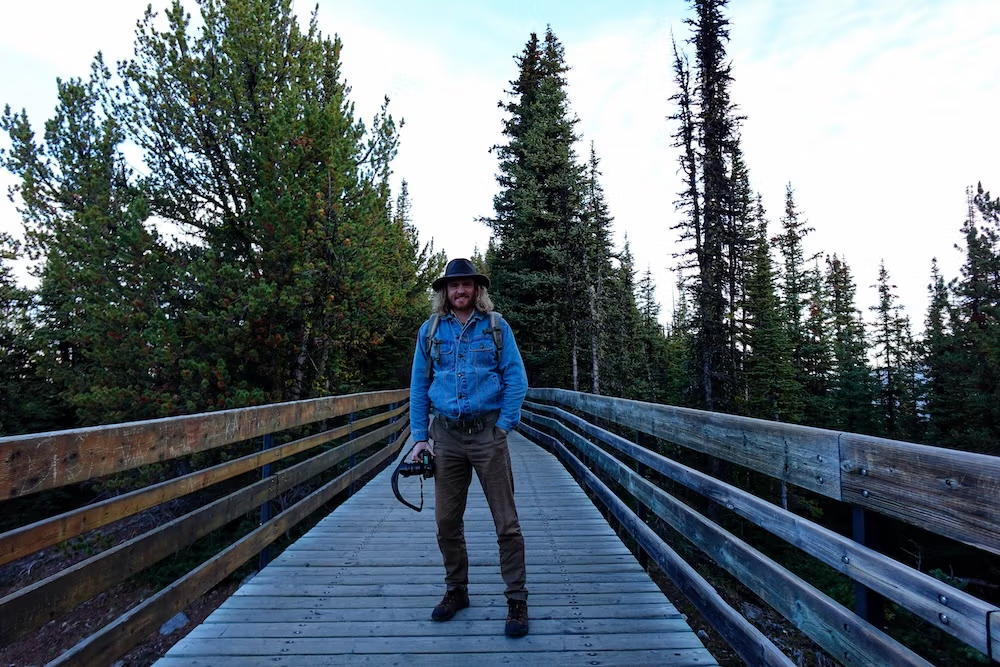
Most people ask “is it crowded” as if the answer applies evenly across the entire visit. It doesn’t. The Gondola has a couple of real pinch points and a lot of open space, and knowing which is which will do more for your visit than any generic “go early” advice.
Where the Line Actually Forms
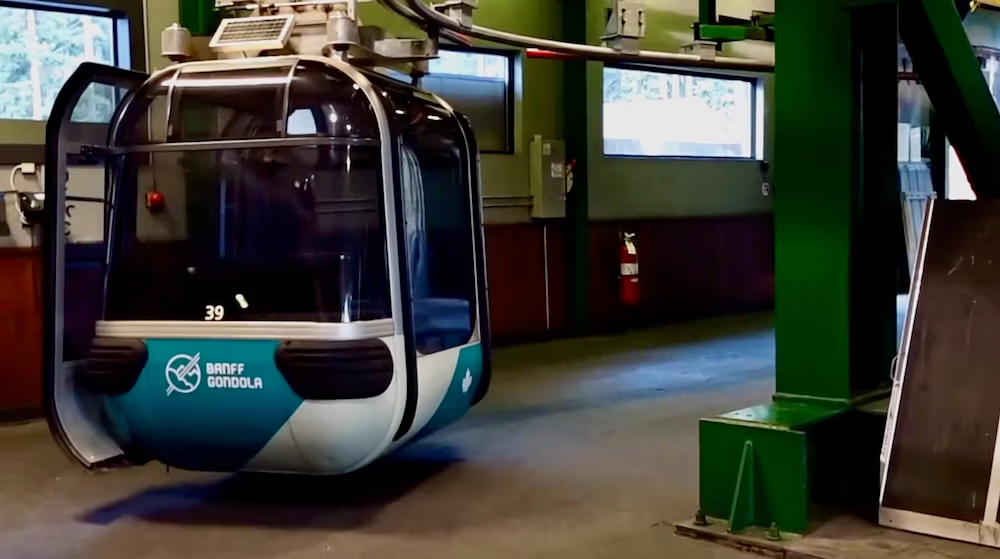
If you’re going to hit a bottleneck anywhere, it’s at the base station before you’ve even left the ground. Entry is timed and pre-booked — you choose an arrival window when you buy your ticket — and the cabins, which hold up to four people each, generally load to capacity before the next one heads up. That’s just efficient queue management, and it means the most line-like part of the whole visit is the ten minutes before you board, not anything that happens after.
27:03 – Cosmic Ray Station
Tickets can also sell out during peak season, which is itself a useful crowd signal before you’ve even arrived. If crowds worry you, it’s worth taking a look at current time-slot availability before you finalize your date — less because the ride itself gets uncomfortable, and more because a sold-out slot means you lose the ability to choose your window at all.
Why the Building Feels Different From the Boardwalk
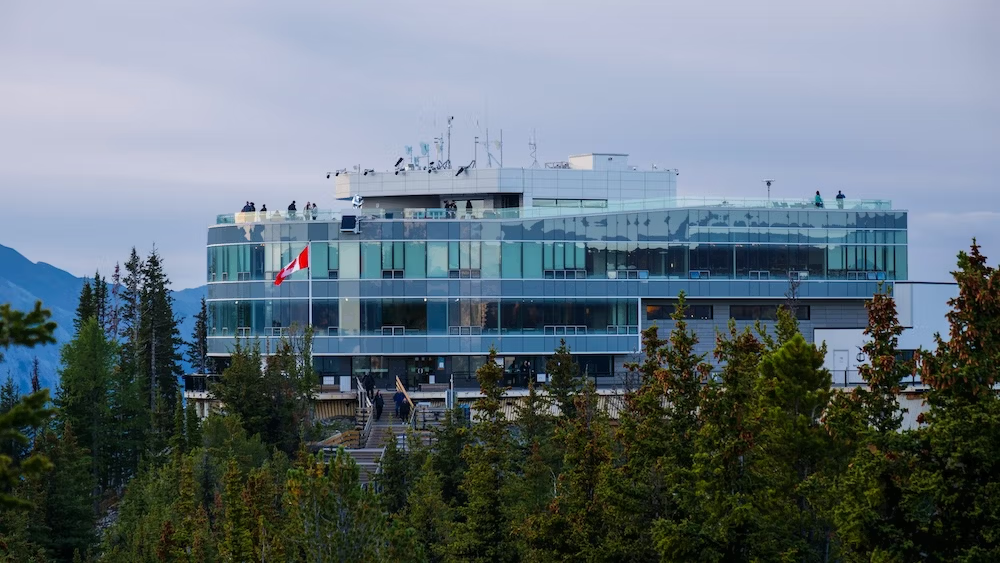
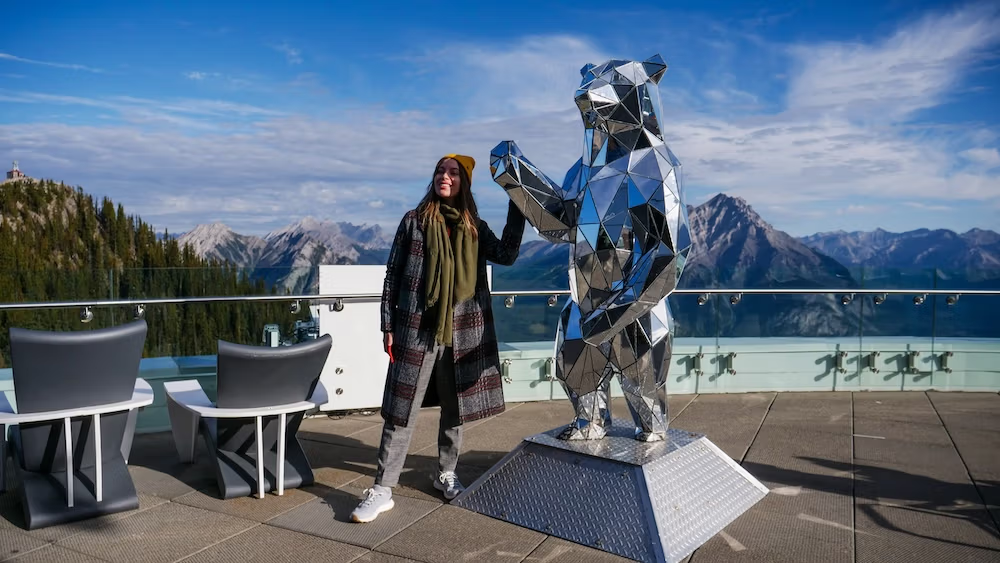
Once you’re up top, the crowd picture changes for a straightforward reason. The summit building packs a lot into one footprint — restaurants, interpretive exhibits, a theatre, the main rooftop observation deck — so a lot of visitors end up circulating through the same enclosed space at the same time. Step outside onto the boardwalk, though, and you’re on a long, branching path strung with multiple viewpoints, not one spot everyone has to funnel through. People spread out because the boardwalk gives them room to.
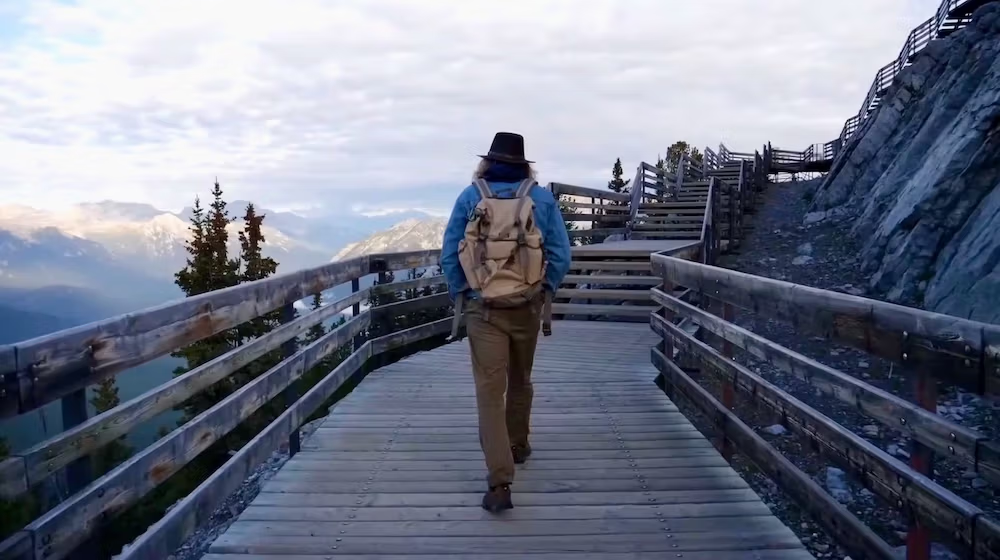
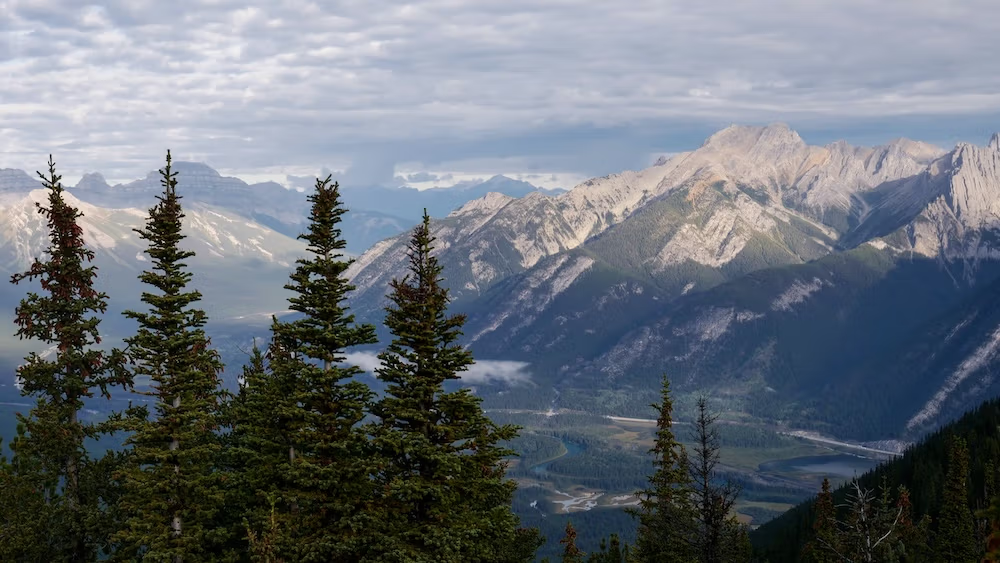
That’s exactly what we found in September. The building had a normal, unremarkable amount of foot traffic — nothing that felt like a wait, just people moving through a busy indoor space. The boardwalk was a different story: the farther out we walked, the fewer people we saw, until entire stretches felt like we had them to ourselves. That wasn’t luck. It’s the natural result of the layout — give people a building full of restaurants and a theatre, and most of them will stay in it rather than walk a boardwalk that takes real minutes to cover.
Does Any of This Actually Get in the Way?
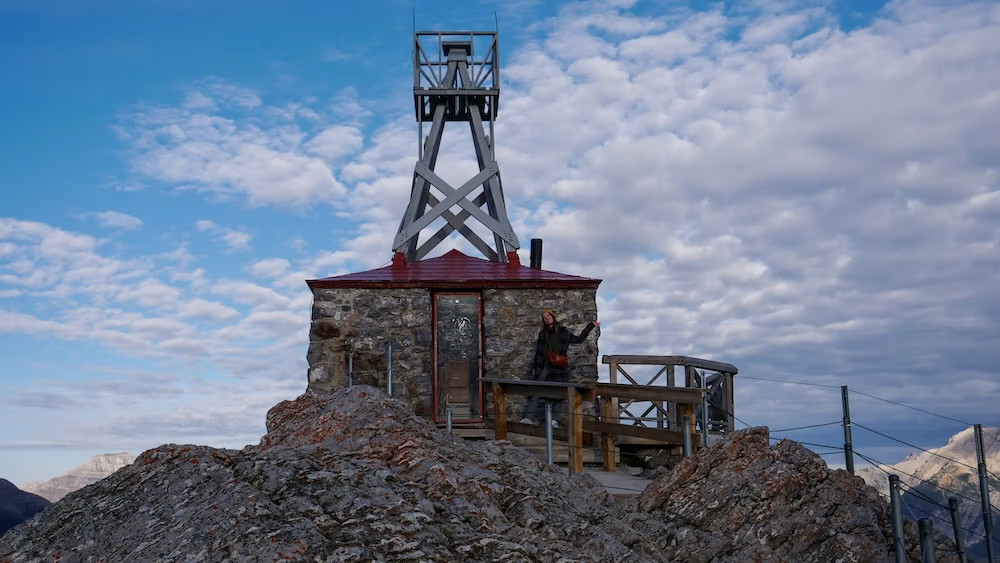
Not on our visit, and probably not on most visits, for the same structural reason. Because the pressure point is the building rather than the walk, the parts of the Gondola that actually take time to enjoy — the boardwalk, the changing viewpoints, Sanson’s Peak — are the parts least likely to feel crowded, even when the building itself is busy. I can’t promise that holds exactly the same way in the thick of July and August, when volume is genuinely higher across the board. But the same layout is doing the same job regardless of season: a lot of people, one enclosed space, and a long outdoor path most of them don’t fully use. If anything, that gap should widen at busier times, not close, since the building has a hard capacity and the boardwalk simply doesn’t.
Where and When You’re Most Likely to Feel It
If you want the best odds of an experience like ours, the timing evidence points in a clear direction. The people who run the Gondola say plainly that midday is the busiest stretch and that early morning or late afternoon means a quieter visit — worth taking seriously, since it’s coming from whoever actually watches the lift lines every day, not a rule of thumb passed around travel blogs. September gave us a shoulder-season advantage on top of that: past the summer peak, short of the off-season. I can’t tell you exactly what day of the week or hour we rode up — that detail didn’t stick with me the way the emptiness of the boardwalk did — but shoulder-season timing plus avoiding the middle of the day is the closest thing to a formula I can honestly offer.
Here’s how it breaks down, by place and by time:
Where crowds concentrate
| Location | Crowd level | Why |
|---|---|---|
| Base station boarding | Busiest single point | Timed entry, cabins load to capacity |
| Summit building | Moderate to busy | Restaurants, exhibits, and the theatre share one enclosed space |
| The boardwalk | Quietest, and gets quieter with distance | A long, branching path most visitors don’t fully walk |
When crowds concentrate
| Time | Crowd level | Why |
|---|---|---|
| Midday | Busiest | Peak visitor volume, by the Gondola’s own account |
| Early morning / late afternoon | Quietest | Lower volume; the window the Gondola itself recommends |
| Peak summer | Busier overall | Highest annual demand; tickets can sell out |
| Shoulder season (like September) | Lighter | Past peak demand, still fully open |
If you’re visiting in peak summer, I wouldn’t expect the emptiness we had. I would expect the same pattern, just compressed — a busier building, a fuller cabin, and a boardwalk that still has more room to breathe than anywhere else on the mountain. If crowds are a real concern, it’s worth taking a moment to browse early and late departure times before you book, and once you’re up top, keep walking. The quiet isn’t a secret. It’s just farther out than most people bother to go.
Frequently Asked Questions
Is the Banff Gondola crowded?
It depends on where you are. The base station and the summit building can see real foot traffic, especially at busy times of day, but the boardwalk leading out toward Sanson’s Peak thins out quickly and often feels close to empty the farther you walk.
Where do the crowds actually form at the Banff Gondola?
Mostly at boarding. Entry is timed and pre-booked, and cabins generally load to capacity before the next one departs, which makes the ten minutes before you board the most line-like part of the whole visit. The summit building sees moderate activity too, since it packs restaurants, exhibits, and a theatre into one enclosed space.
Is the boardwalk crowded?
In my experience, no, and it gets quieter the farther you walk. The boardwalk is long and branches into multiple viewpoints rather than funneling everyone through one spot, so it naturally spreads people out instead of concentrating them the way the summit building does.
What’s the best time of day to avoid crowds at the Banff Gondola?
Early morning or late afternoon. Midday is the busiest stretch, and avoiding it is the simplest way to improve your odds of a quieter visit, regardless of the season.
Does visiting in shoulder season instead of peak summer make a difference?
In my experience, yes. I visited in September, past the summer peak but before the off-season, and the whole visit felt light on crowds. I’d expect peak summer to compress the same pattern rather than erase it — busier building, fuller cabins, but the boardwalk still has more room to spread out than anywhere else on the mountain.
Do the crowds affect the actual gondola ride?
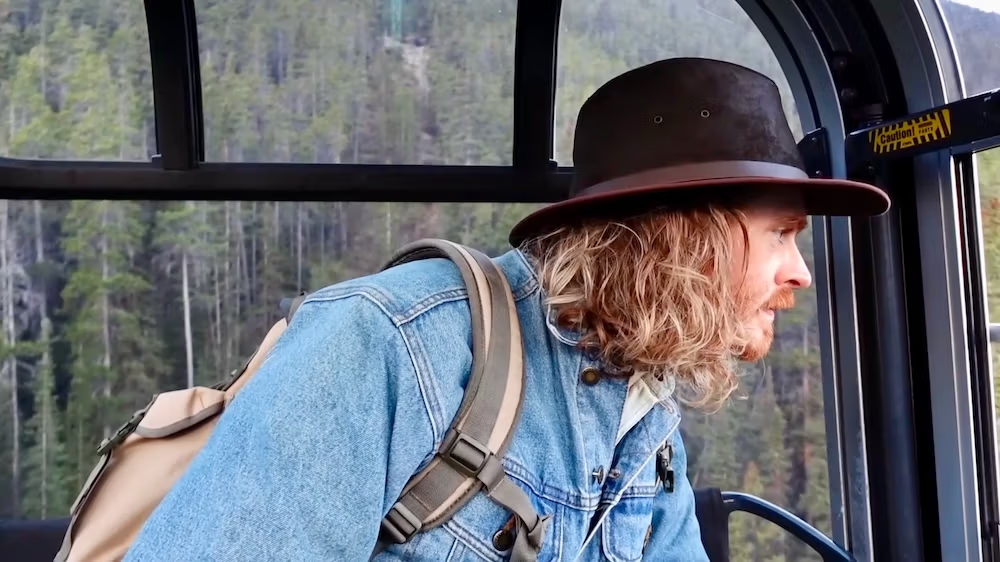
Not in my experience. The ride itself felt normal rather than crowded, since the real bottleneck is boarding beforehand, not the eight-minute trip up.
Should I book Banff Gondola tickets in advance if I’m worried about crowds?
It’s worth checking current availability ahead of time. Tickets can sell out during peak season, and a sold-out slot means you lose the ability to choose your preferred window at all, which matters more than the crowd level itself.
This article is also available in Spanish. [Leé la versión en castellano: ¿Qué tan concurrido es el Banff Gondola?]
This article contains affiliate links. If you book through one of these links, I may earn a commission at no extra cost to you.