
I arrived in Hakodate thinking we were making a worthwhile stop on the way to Sapporo. Three action-packed days later, I was wondering why we hadn’t given ourselves more time. Funny how that happens. You carefully plan a trip, decide how long each destination deserves, and then arrive somewhere that makes a complete mockery of your calculations.
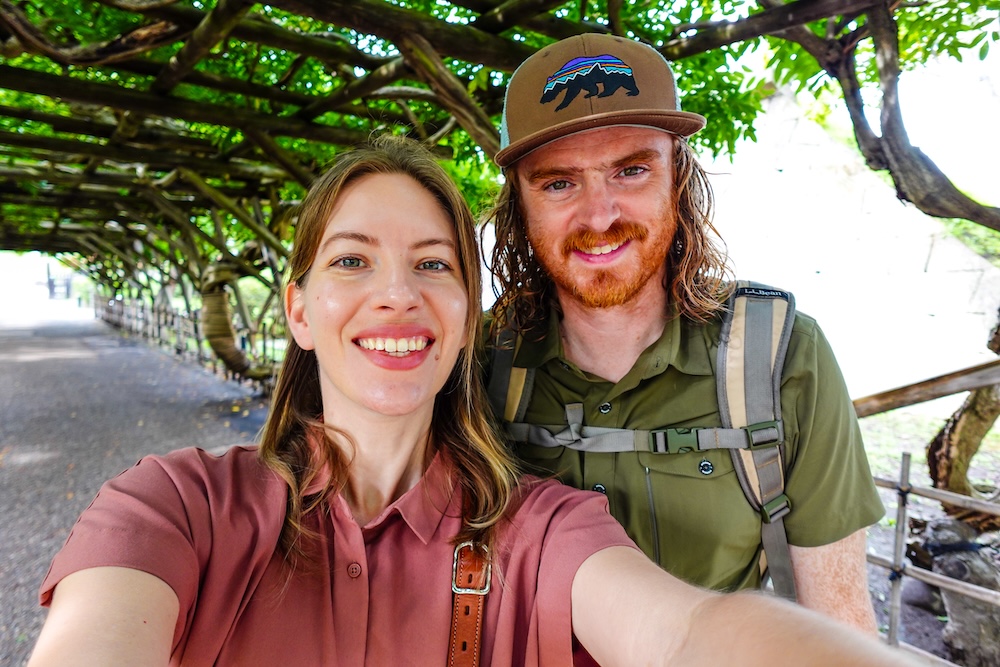
Audrey and I had an absolute blast exploring this port city in southern Hokkaido. We rode old-fashioned trams, wandered through historic neighbourhoods, climbed steep streets overlooking the harbour, explored a former railway ferry and visited museums that were considerably more interesting than I’d anticipated. We also enjoyed two of the most distinctive viewpoints in Japan, with Mt. Hakodate revealing the city’s unusual peninsula geography and Goryokaku Tower giving us a bird’s-eye view of an enormous star-shaped fort.
And then there was the food. Fresh seafood at the Morning Market, delicious salt ramen, conveyor-belt sushi good enough to bring us back for a second visit, and burgers from a local chain with clowns plastered all over its branding. We finished one sightseeing outing comparing pumpkin and purple sweet potato gelato flavours. Hakodate certainly wasn’t lacking in variety.
What surprised me was how well all these experiences came together. In the morning, you could be exploring an old ferry that once connected Hokkaido with Honshu. Later, you might be walking past Orthodox, Catholic and Anglican churches in Motomachi, before sitting down for a bowl of ramen or enjoying panoramic views of the city from above.
There is one thing worth understanding before you arrive: Hakodate’s attractions aren’t concentrated in a single compact area. The historic waterfront and Motomachi form one natural sightseeing zone, while Goryokaku sits farther inland, and Yunokawa Onsen occupies another part of the city altogether. We appreciated having trams available, especially after spending a hot afternoon climbing Motomachi’s hills.
That’s why choosing where to stay and how to organize your days makes a difference. Hakodate is relatively easy to explore independently, but a little planning will save you unnecessary travel, help you choose a suitable hotel and make it easier to decide whether any guided experiences are worth booking.
In this Hakodate travel guide, I’ll share the major attractions we personally visited, the food we enjoyed and some worthwhile experiences we missed. I’ll also cover where to stay, which tours are worth considering, how long to visit and the practical details that can make your trip considerably smoother.
By the time we left, I could genuinely imagine spending a much longer stretch in Hakodate. Whether you’ve got one day or an entire week, here’s how I’d approach making the most of it.
Hakodate at a Glance: How the City Fits Together
Hakodate sits at the southern end of Hokkaido, overlooking the Tsugaru Strait between Hokkaido and Honshu. Its position made it an important maritime gateway, and its development as an international trading port left an architectural legacy that’s particularly visible in the western historic districts.
For travellers, it helps to think of Hakodate as several connected sightseeing areas rather than one enormous attraction-filled city centre.
Hakodate Station and Morning Market make a convenient starting point, with railway connections, seafood restaurants, hotels and access to the historic tram network. Moving toward the harbour brings you to Hakodate Bay and the waterfront, where you’ll find the Kanemori Red Brick Warehouses and the Seikan Ferry Memorial Ship Mashu-maru.
Above the waterfront is Motomachi, a beautiful but hilly district filled with churches, historic buildings and streets overlooking the harbour. Mt. Hakodate rises above this western end of the city, with a Ropeway leading to its famous panoramic viewpoint.
Farther inland is Goryokaku, home to the star-shaped fort, Goryokaku Tower, museums and restaurants. Finally, Yunokawa Onsen sits toward the airport side of Hakodate and is particularly appealing for traditional ryokan and hot-spring stays.
For most first-time visitors, I’d suggest two or three full days. Two can cover the major attractions if you organize your sightseeing geographically, while three provide room for museums, food, changing weather and the occasional unexpected discovery. We had approximately three days and still weren’t particularly ready to leave.
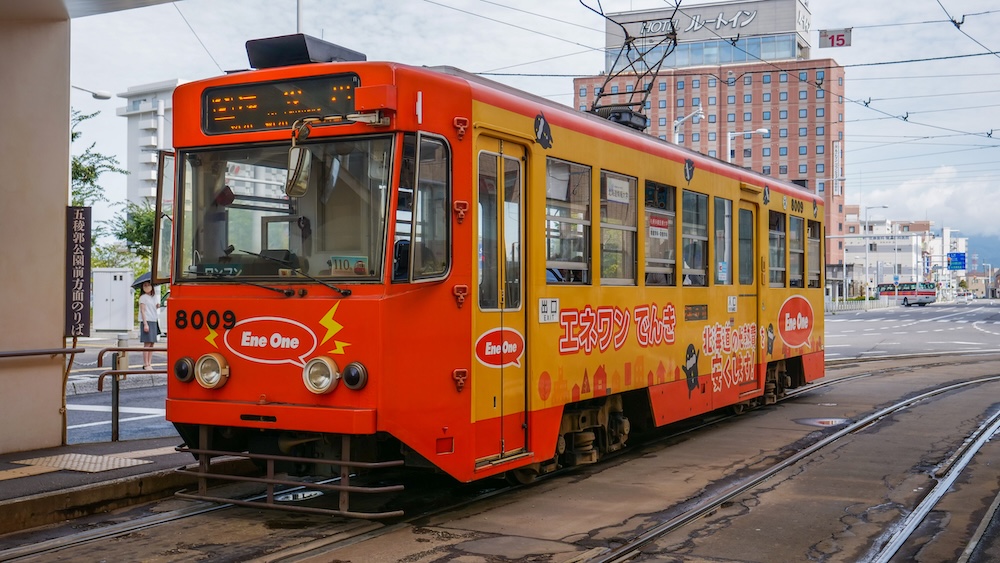
You don’t necessarily need a rental car. We used trams and walked extensively, which worked well for the places we visited. However, I’d avoid travelling back and forth between western Hakodate and Goryokaku several times in one day, and I’d take Motomachi’s slopes seriously rather than assuming everything is an easy stroll.
If you’re choosing accommodation, I’d begin with the station area for transport convenience or the Bay Area for atmosphere. Motomachi, Goryokaku and Yunokawa each have their advantages for different kinds of trips, which I’ll compare later. If you’ve already settled on your dates, you can compare Hakodate accommodation and availability while deciding which district makes sense for your plans.
With the geography established, let’s get into the attractions that made us enjoy Hakodate so much.
Best Things to Do in Hakodate: Our Favourite Experiences
We visited many of Hakodate’s famous sights, but some of my favourite memories came from places I’d barely thought about beforehand. Alongside the dramatic viewpoints and historic streets, I found myself getting excited about an old railway ferry and a fishing-boat simulator. That’s quite a range for somebody who doesn’t usually plan a trip around museums.
These are the main attractions Audrey and I personally experienced, including what made each one enjoyable and the considerations that might help you decide where to spend your time.
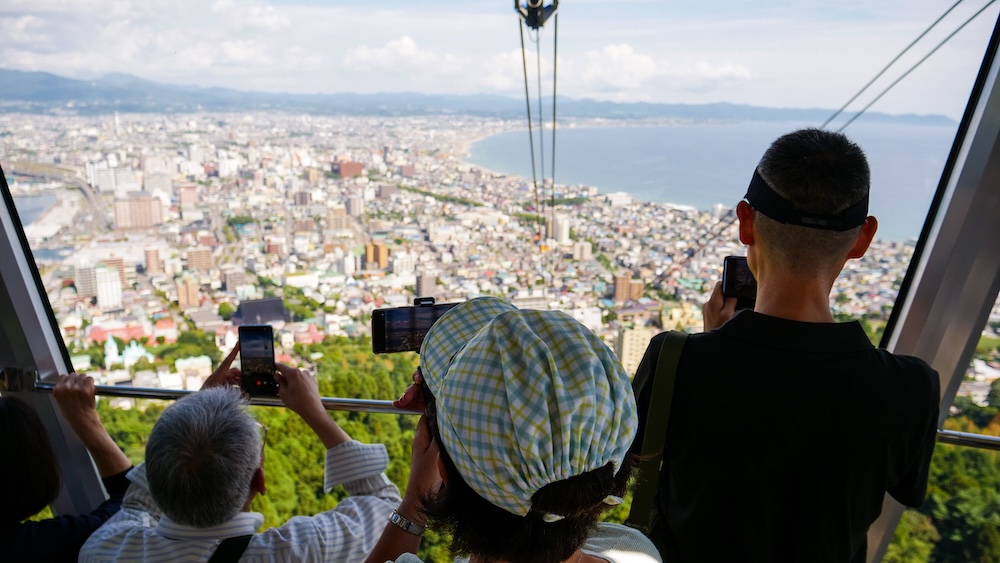
1. Take the Mt. Hakodate Ropeway for Panoramic City Views
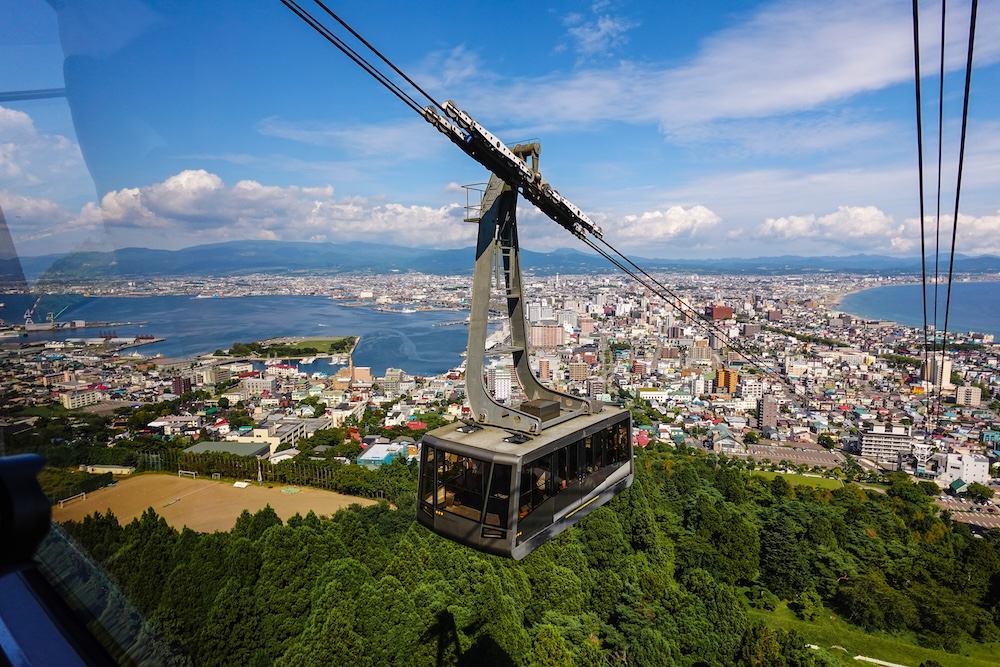
If you’re visiting Hakodate for the first time, Mt. Hakodate deserves a prominent place on your itinerary. It’s one of those viewpoints that doesn’t simply provide a lovely photograph; it changes your understanding of the city you’ve been walking around.
We took the Ropeway up during daylight, when the weather was excellent and we could see for miles. After exploring Motomachi in hot, humid conditions, I was particularly happy to feel a cooler breeze when we reached the summit.
The ride takes approximately three minutes, climbing the mountainside as the city opens up beneath you. Once we reached the top, I was struck by how much bigger Hakodate looked than I’d imagined.
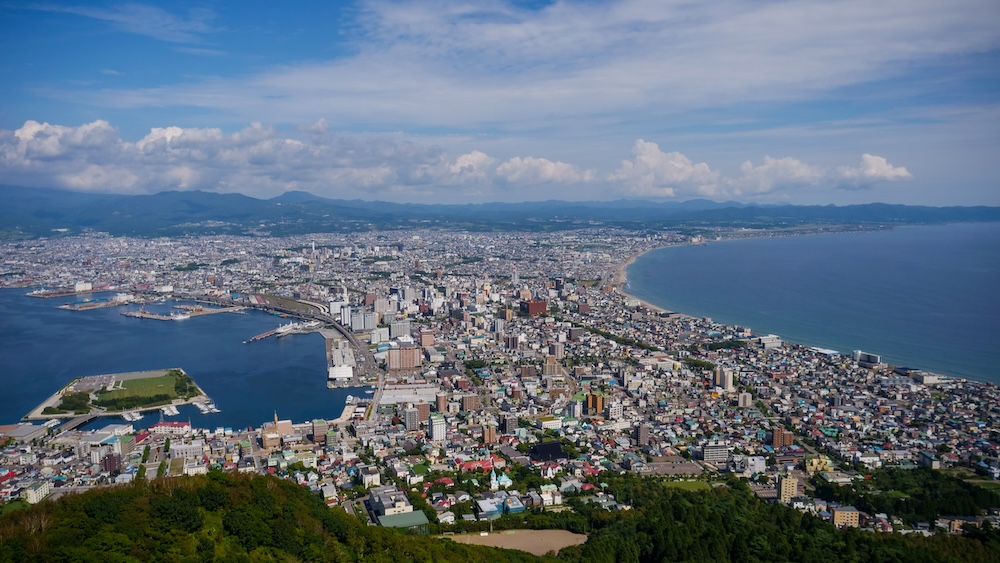
We’d spent much of our visit exploring the harbour side of the city, so I hadn’t fully appreciated the geography. From the summit, we could see Hakodate spreading across the peninsula with water on either side, ships offshore, mountains beyond the urban neighbourhoods and more rural scenery in the distance.
The whole setting was more spectacular than I’d expected. Looking down at the historic part of the city and then out toward the broader landscape helped me understand why Hakodate’s location is such a major part of its appeal.
Of course, Mt. Hakodate is particularly famous for its night view. When the city lights come on, the illuminated peninsula forms a distinctive shape between the dark waters on either side. That’s the classic Hakodate photograph you’ll see everywhere.
We didn’t visit at night, so I can’t offer a personal verdict on that experience. What I can say is that the daytime panorama was fantastic, and I wouldn’t dismiss visiting earlier simply because the night view receives more attention. If you enjoy understanding a city’s geography, daylight has its own advantages.
The standard adult round-trip Ropeway fare is currently ¥1,800, with one-way tickets available for ¥1,200. Ordinary operating hours change seasonally, while wind, weather and maintenance can interrupt the service. Sunset and evening visits may also involve substantial queues, and purchasing a ticket in advance doesn’t grant priority boarding.
One important operating exception is the scheduled October 20–November 8, 2026 maintenance closure. During that period, the Ropeway won’t operate normally, although alternative summit access may be possible depending on road and transport conditions. Check the official Mt. Hakodate Ropeway website for the current arrangements before planning your visit.
There are road-based alternatives when access is permitted, but private vehicles face restrictions during certain evening periods and the mountain road closes seasonally in winter. If you’re planning a sunset or night visit, it’s worth figuring out both the ascent and the return journey rather than concentrating exclusively on getting to the top.
For travellers especially interested in photography, Hakodate’s currently listed guided sightseeing and photography experiences are worth comparing with independent Ropeway access. A guide may be useful for combining historic streets with the viewpoint, but check that your selected experience actually reaches the summit at the time you want and whether Ropeway tickets are included. A tour can’t guarantee clear weather.
My advice is to treat Mt. Hakodate as a proper sightseeing outing rather than a three-minute cable-car ride. Allow for reaching the lower station, possible queues, enjoying the observation area and returning. If heavy cloud obscures the summit and you have another day available, consider rearranging the schedule.
I’m delighted we made time for Mt. Hakodate. Seeing the city from above tied together so much of what we’d already experienced at street level, and I’d happily return to see the night view on a future trip.
2. Explore Hakodate Morning Market
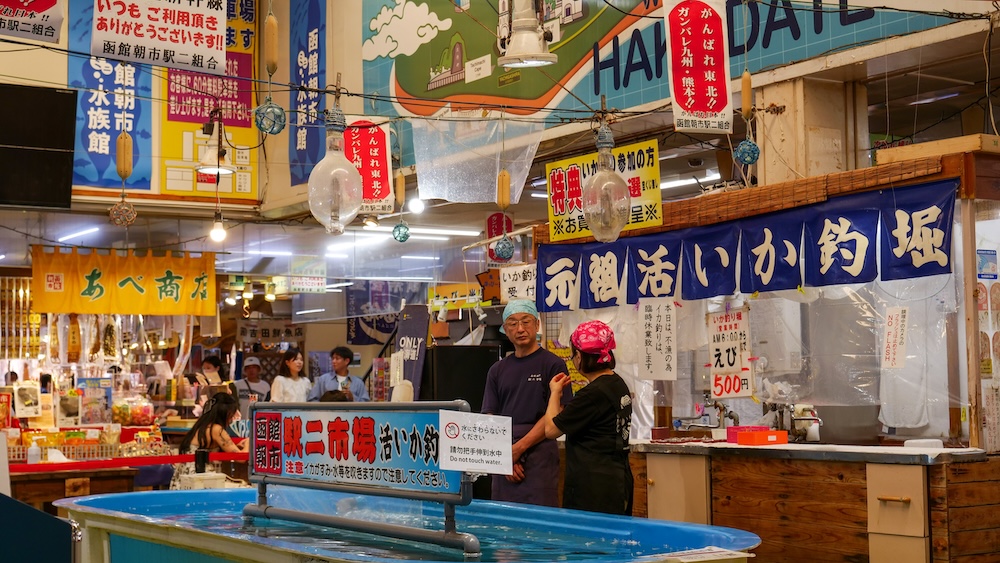
There’s something particularly satisfying about visiting a seafood market early in the morning, especially somewhere with a strong fishing tradition. Hakodate Morning Market turned out to be a fantastic introduction to the city, combining an enjoyable wander among the stalls with one of our most memorable breakfasts.
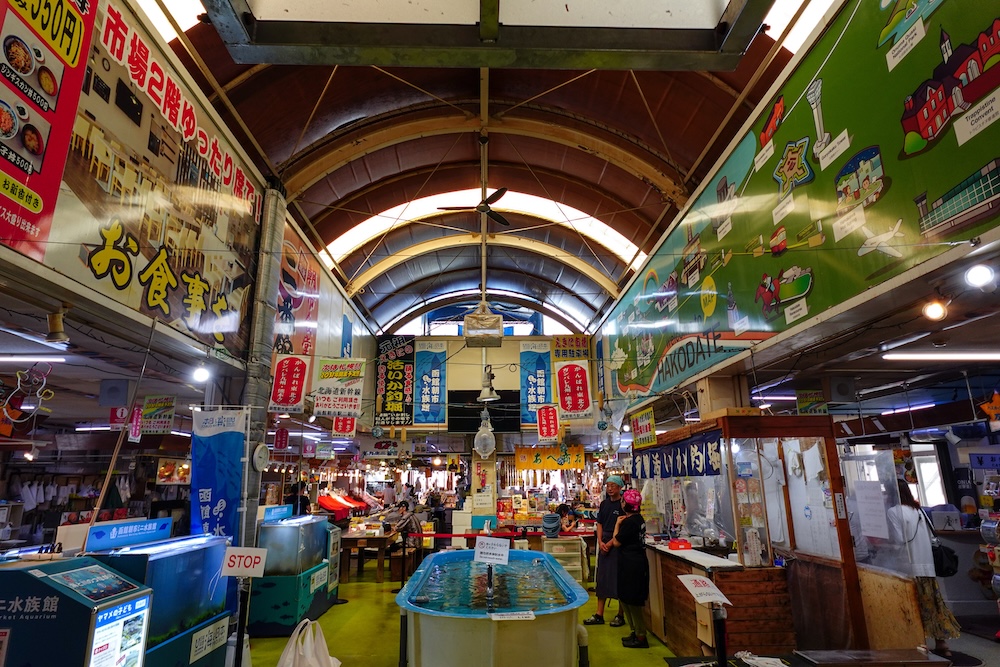
The market sits immediately beside Hakodate Station, with approximately 250 shops and businesses across its various areas. Seafood plays the starring role, although you’ll also find produce, restaurants and other local food products.
We started by wandering past vendors displaying enormous crabs, fish, squid and all sorts of seafood. Some of the crabs were absolute monsters, and I was mesmerized by their size. There was plenty happening around us, with fresh sashimi being prepared and an unmistakable seafood-market smell filling the air.
I happen to like that smell. I know it isn’t everybody’s idea of an inviting atmosphere, but it reminded me of visiting seafood markets in Busan, South Korea, where wandering through the stalls can be an attraction in itself.
At one point, I got to taste fresh squid. I’d eaten plenty of dried squid when I lived in South Korea, particularly at baseball games, but this was quite different. The fresh squid was much more tender and considerably less chewy than the dried version I remembered.
Eventually, hunger caught up with us. One thing that surprised us was the size of the market: we’d explored one section before discovering additional areas with even more places to eat. I’d recommend having a look around rather than automatically choosing the first restaurant you encounter.
Hakodate Morning Market is particularly famous for kaisendon, rice bowls topped with fresh seafood. Depending on the restaurant and what’s available, you might find combinations of salmon, tuna, crab, roe, shrimp, sea urchin and other ingredients.
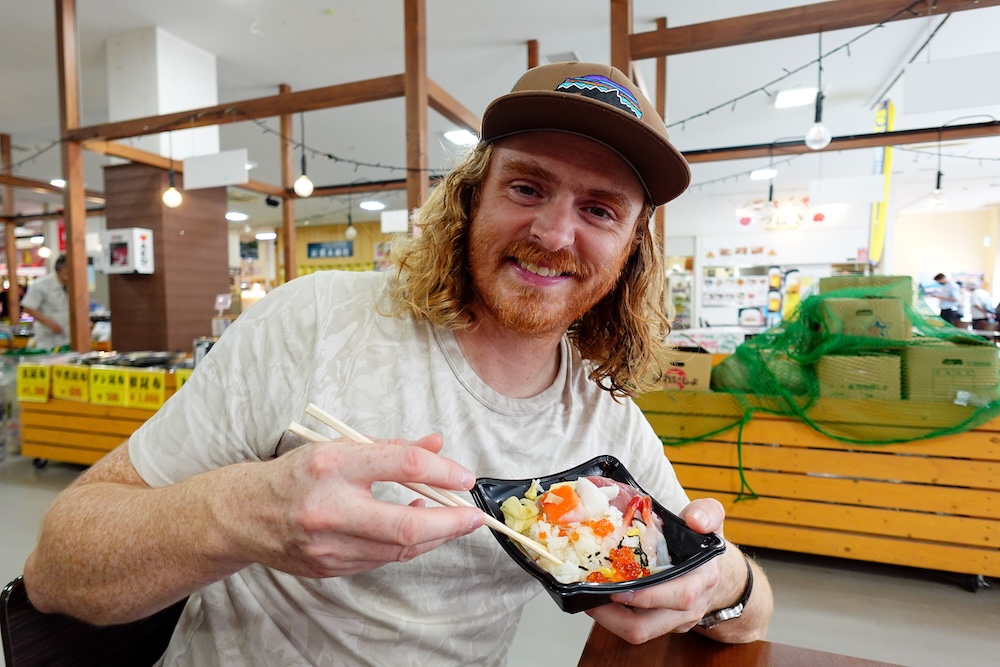
We ordered a substantial seafood breakfast with rice bowls, noodles and several additional dishes. It was fresh, satisfying and a great way to begin a sightseeing day. I’ll get into the actual meal later, because the food deserves more than a passing mention.
The market generally begins operating early, around 5:00 a.m., and continues into the early afternoon. Individual restaurants and stalls keep different hours, however, so that doesn’t mean every breakfast counter is ready at five. If jet lag has you awake at a ridiculous hour, the market may be appealing, but check where you actually intend to eat.
Activities such as squid fishing are also offered, allowing visitors to try catching a squid before having it prepared. We tasted squid but didn’t participate in the fishing experience, and availability can vary with the season and supply.
If you’re keen to learn more about the seafood rather than simply browse and order, a guided Hakodate Morning Market visit with seafood tasting options is another possibility. The approximately 90-minute experience includes a defined tasting allowance rather than unlimited food. We were happy exploring on our own, but I can see the appeal for somebody who wants help identifying unfamiliar ingredients.
Even if you aren’t planning an enormous seafood breakfast, the market is worth considering for the atmosphere and connection to Hakodate’s fishing identity. Arriving hungry is certainly an advantage, though.
3. Wander the Kanemori Red Brick Warehouses and Hakodate Bay
Hakodate’s waterfront is one of the areas where I’d deliberately leave a little time for wandering. The harbour, historic buildings and nearby attractions make it a pleasant district to explore without following a rigid schedule.
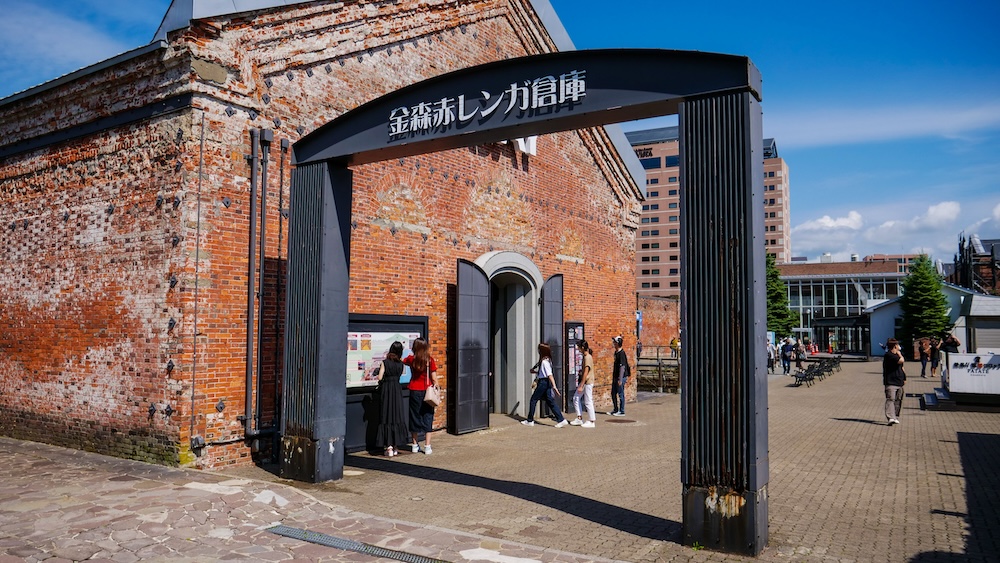
The Kanemori Red Brick Warehouses date to 1909 and have been converted into a commercial complex containing souvenir shops, restaurants, sweets and local products. We wandered through the buildings during our waterfront exploration, browsing the businesses and enjoying the atmosphere.
If you love shopping for gifts or food souvenirs, you could spend quite a while here. I wouldn’t necessarily dedicate half a day to the warehouses if shopping holds little interest for you, but the architecture and harbour setting make the area worth visiting even without buying anything. There’s no admission charge simply to enter the shopping complex.
The biggest advantage is how naturally the warehouses connect with other sights. You can explore the waterfront, visit Mashu-maru and continue toward Motomachi without making several separate journeys. I’d treat the Bay Area as part of a broader western-Hakodate sightseeing day, adjusting the time according to your interest in shopping, food and photography.
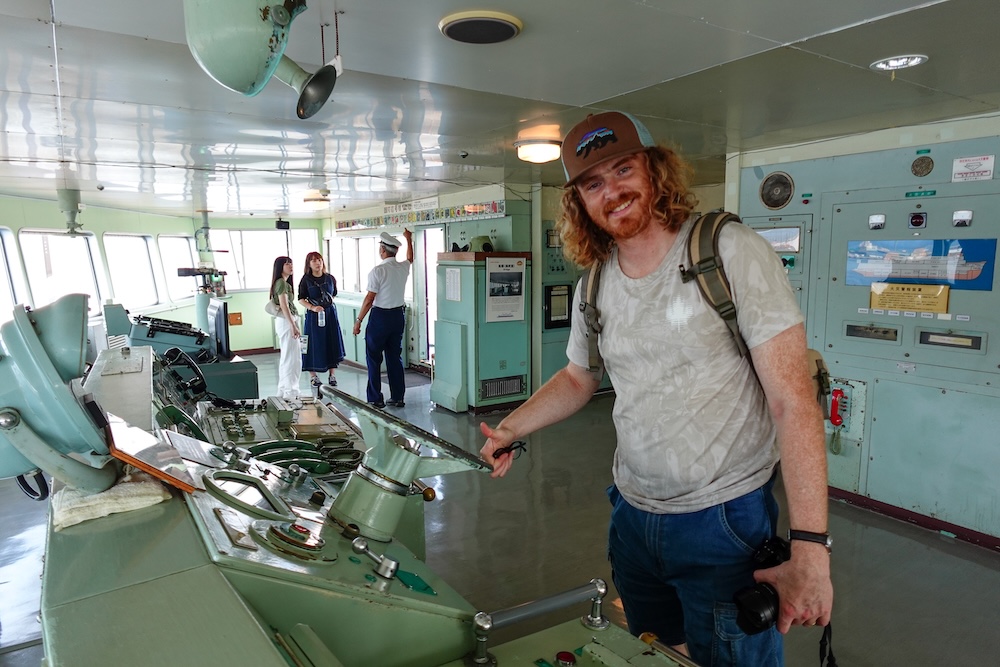
4. Board the Seikan Ferry Memorial Ship Mashu-maru
This was one of my favourite unexpected discoveries in Hakodate. We were walking around the port without much of a plan when we spotted an enormous ship docked along the waterfront. It looked interesting, so we wandered over to investigate.
It turned out to be Mashu-maru, a former railway ferry that once carried passengers and railway freight between Hokkaido and Honshu. Before the Seikan Tunnel provided a rail connection beneath the Tsugaru Strait, ferries were an essential part of travelling between the islands.
Mashu-maru is now preserved as a museum, which might not sound enormously exciting if you’re not particularly interested in boats or railway history. I certainly hadn’t arrived in Hakodate with a former ferry at the top of my sightseeing priorities. But we decided to pay admission and go aboard, and I’m very glad we did.
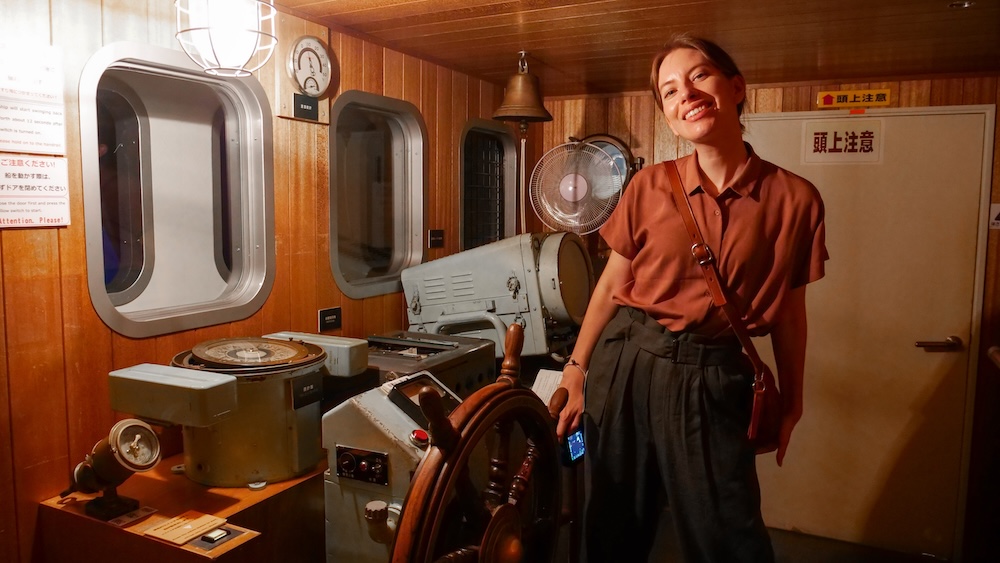
What made the museum enjoyable was how much of the ship we could explore. There were old controls, equipment, historical displays and interactive features that helped us understand how the vessel once operated. I particularly appreciated being able to engage with some of the equipment instead of simply walking past exhibits behind glass.
We also enjoyed the views across the harbour from aboard the vessel. Standing on a former ferry and looking back toward Hakodate added another perspective to the port we’d been exploring, and the whole experience made the city’s maritime history feel more tangible.
Standard adult admission is currently ¥500, making it one of Hakodate’s more affordable paid attractions. Opening hours vary by season, and temporary repairs can affect access to parts of the ship. Its location close to Hakodate Station and the Morning Market makes it easy to incorporate into a waterfront walk.
If you enjoy unusual museums, transportation history or exploring historic vessels, I’d strongly consider visiting. Even if those subjects don’t immediately excite you, I wouldn’t dismiss Mashu-maru too quickly. It was precisely the sort of spontaneous discovery that made our three days in Hakodate so rewarding.
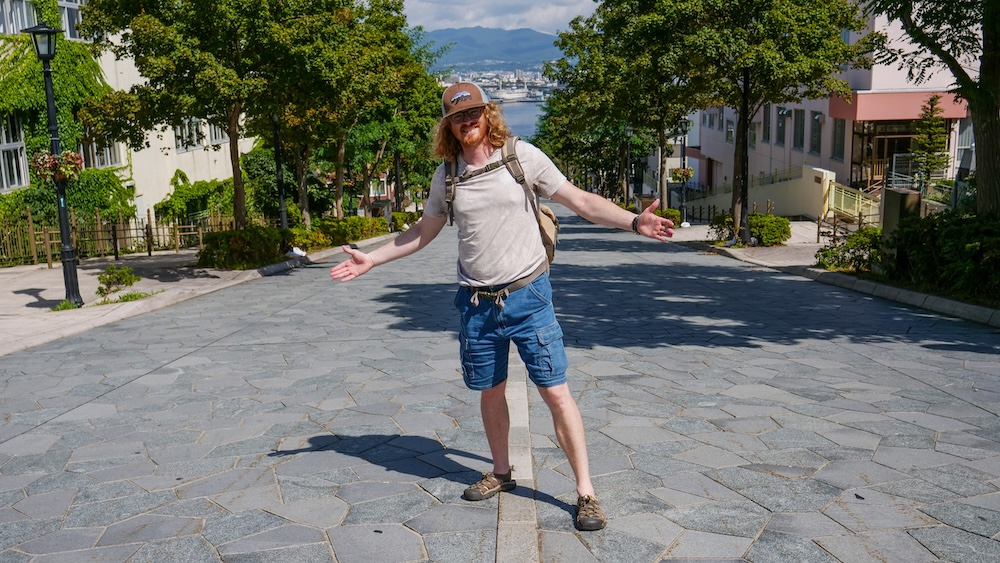
5. Climb Hachimanzaka for the Harbour View
Hachimanzaka is one of Hakodate’s most recognizable streets, largely because of the beautiful view down the slope toward the harbour. Buildings line the road as it descends toward the water, creating one of the city’s classic photographic scenes.
What those photographs don’t necessarily communicate is the effort involved in getting yourself up there. We visited on a hot, humid day, and I was definitely feeling the climb. Audrey and I had spent plenty of time living near the Canadian Rockies, but apparently that hadn’t prepared us for tackling Hakodate’s slopes in sticky weather.
There were stairs, more climbing and considerably more perspiration than I’d bargained for. The view was worth it, but this is a good example of why pedestrian-friendly doesn’t automatically mean flat.
Hachimanzaka is particularly popular for photographs, although visitors need to stay out of traffic. Hakodate City has warned against stepping into the roadway to take pictures or entering nearby private property and school grounds. You can enjoy the harbour view without putting yourself or others in danger.
I’d combine Hachimanzaka with Motomachi’s churches, the Old Public Hall and nearby historic streets rather than travel across the city solely for a photograph. Bring water in warm weather, take your time and consider the amount of uphill walking in the rest of your day.
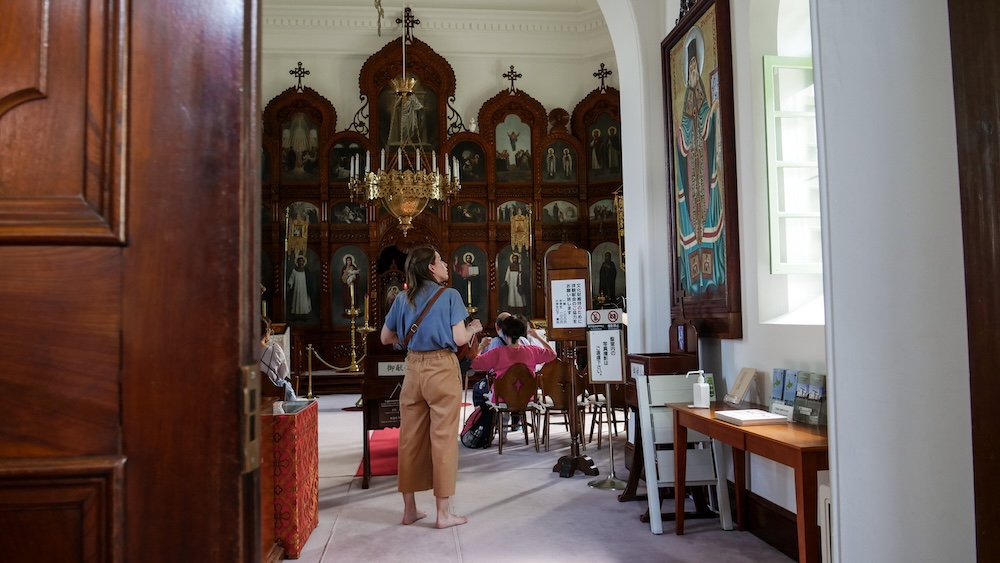
6. Explore Motomachi’s Historic Churches and Streets
Motomachi is one of the areas that makes Hakodate feel different from many other Japanese destinations. When the city developed as an international trading port, foreign communities brought different architectural and religious traditions, leaving a collection of buildings that still gives the neighbourhood its distinctive character.
We spent time exploring the streets around three particularly noteworthy churches, admiring the architecture and enjoying the changing harbour views as we walked through the district.
Hakodate Orthodox Church reflects the city’s historical relationship with Russia. Its present building dates to 1916, and the distinctive Orthodox architecture makes it one of Motomachi’s most recognizable landmarks.
Nearby, Motomachi Roman Catholic Church represents another chapter of Hakodate’s international history, with its current structure rebuilt in the early twentieth century. Hakodate St. John’s Church, associated with the Anglican tradition, has an unusual cross-shaped roof that’s particularly interesting when seen from above.
We admired these churches and their surroundings rather than undertaking detailed interior visits to all three. If you want to go inside, check the specific building’s access arrangements; seasonal restrictions, religious services and other activities can affect visiting hours.
What I enjoyed about Motomachi wasn’t simply checking off three churches. It was walking between old buildings, discovering views down different slopes and appreciating a mixture of architectural styles I hadn’t expected to find in such concentration in southern Hokkaido.
This is also an area where guided historical interpretation could add something meaningful. A three-hour guided Motomachi and Red Brick Warehouses walk offers an organized route through the historic district with explanations of the area’s architecture and port history. It involves hills and stairs, so you’re paying for the interpretation rather than escaping the physical effort.
We thoroughly enjoyed exploring independently, and I’d happily do so again. If history or architecture is a major interest, though, having somebody explain the connections between the buildings could make the visit more rewarding. Either way, plan a reasonably sensible route so you aren’t repeatedly climbing the same hills.
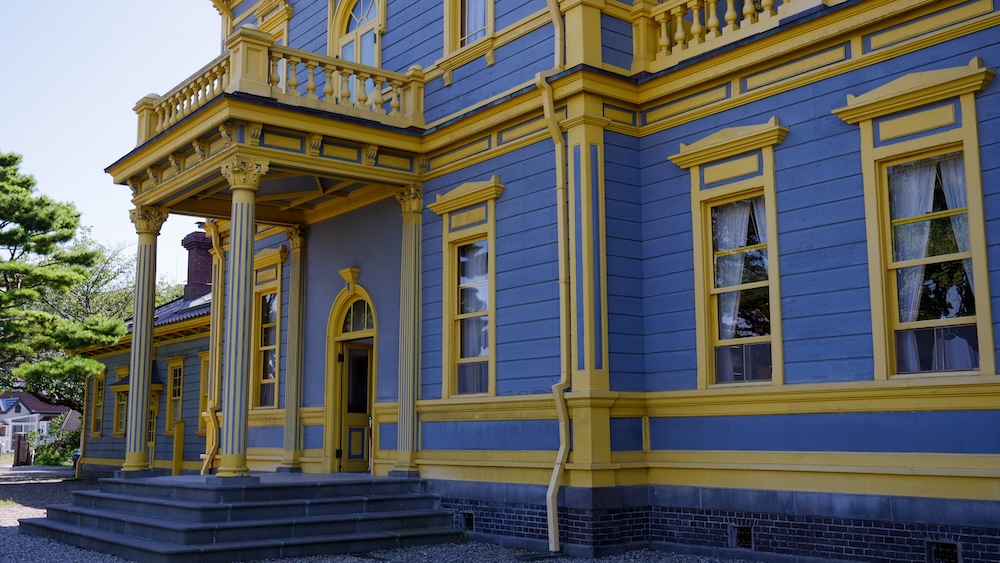
7. Visit the Old Public Hall of Hakodate Ward
One of Motomachi’s most eye-catching buildings is the Old Public Hall of Hakodate Ward, with its blue exterior, yellow-gold decorative details and prominent hillside setting. It’s a beautiful example of the Western-influenced architecture associated with Hakodate’s international history.
Rather than simply take photographs outside, we decided to pay admission and explore the interior. We removed our shoes, put on the slippers provided and wandered through the rooms, enjoying the architectural details and the atmosphere of an important early twentieth-century public building.
Completed in 1910, the building historically served public functions and accommodated visiting members of Japan’s Imperial family. Its interior has a more elaborate character than you’d expect from an ordinary municipal building, and I appreciated being able to experience the rooms rather than just admire the colourful façade.
There is also an optional historical costume experience where visitors can dress in period-style clothing. We didn’t participate, although I could imagine it appealing to somebody interested in historical photography. Costume activities cost extra, while standard adult admission to the building is currently ¥300.
I’d include the Old Public Hall during a wider Motomachi walk. It’s a worthwhile indoor experience, provides a closer look at the architecture and offers a welcome break after the hills.
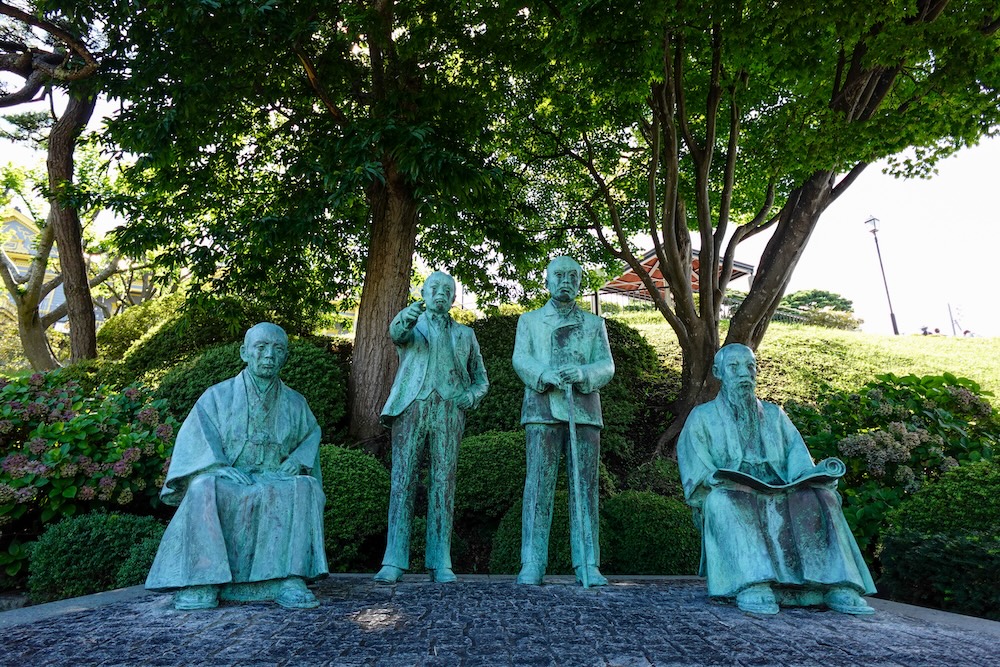
8. Enjoy the Views From Motomachi Park
Motomachi Park is another pleasant stop in the historic district, especially when you’re making your way downhill toward the waterfront. We passed through during our walk and enjoyed views over the harbour and surrounding neighbourhood.
The park sits among historic buildings, including the former Hokkaido Government Hakodate Branch Office, which adds architectural interest to the setting. I wouldn’t necessarily dedicate a substantial block of sightseeing time to the park on a short visit, but it fits naturally with the Old Public Hall and surrounding streets.
Sometimes a quiet park, a good harbour view and a few minutes off your feet are exactly what you need before continuing down the hill.
9. Discover Northern Cultures at the Museum of Northern Peoples
I’ll confess something: I’m not usually the person who arrives in a city determined to visit every museum. Audrey often has a greater appetite for them than I do, while I’m perfectly happy exploring markets, wandering through neighbourhoods and looking for something delicious to eat.
Hakodate challenged that preference.
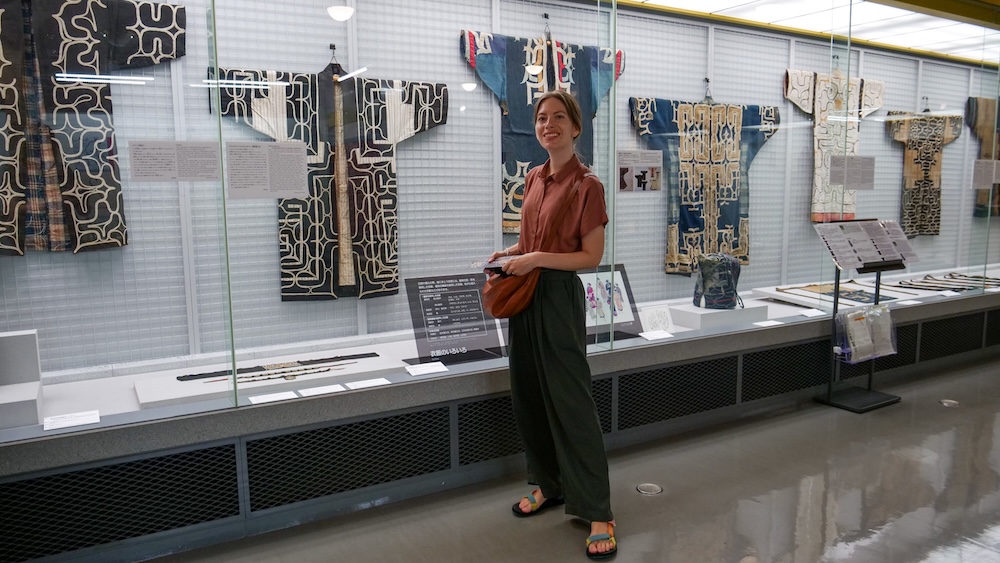
On a rainy day, we decided to visit the Hakodate City Museum of Northern Peoples, and I ended up enjoying it far more than expected. I’d assumed the subject matter might focus mainly on Hokkaido, but the collections explore cultures and histories from a much broader northern area, including Ainu-related materials and objects associated with peoples from other northern regions.
We saw exhibits featuring traditional clothing, tools, fishing, food traditions and the different ways communities adapted to demanding environments. Some of the garments were particularly fascinating, showing how animal skins and other materials were used to make clothing suited to extremely cold conditions.
Having lived in Canada, I found myself reflecting on how dependent we are on modern heating, insulated buildings and winter clothing. The exhibits provided a reminder of the knowledge and ingenuity involved in surviving and establishing communities across northern climates long before those conveniences existed.
I was also drawn to the displays about food, fishing and marine resources. Apparently even a museum devoted to northern cultures can get me thinking about my next meal.
The museum occupies a former Bank of Japan building, adding another layer of historical interest. Standard adult admission is currently ¥300, and opening hours vary by season. Some additional cultural activities have separate arrangements or language limitations.
What impressed me was the range of the collection and how thoroughly the visit held my interest. Rain had encouraged us to choose something indoors, but I came away feeling that the museum deserved consideration regardless of the weather.
If you’re interested in Indigenous histories, northern cultures or the ways people adapted to life in colder regions, I’d make time for it. Even if you’re not normally a museum enthusiast, you might be surprised. I certainly was.
10. Try the Fishing-Boat Simulator at Hakodate’s Hokuyo Museum
After our surprisingly enjoyable first museum visit, we continued our rainy-day exploration at the Hakodate City Hokuyo Museum, which focuses on the history of northern fisheries and Hakodate’s relationship with the sea.
The museum contains displays of fishing equipment, maritime history and preserved animals associated with northern waters. For a port city with such strong connections to fishing, the subject matter makes plenty of sense, but the experience I remember most clearly was the fishing-boat simulator.
This recreated the movement of a boat travelling through rough conditions, allowing visitors to experience a small approximation of what working at sea might feel like. Our simulation lasted approximately three minutes, which proved more than enough for Audrey.
She became dizzy from the rocking and was relieved when the experience ended. I found the simulator entertaining, although I wouldn’t particularly fancy spending an entire working day bouncing around like that on the open sea. Three minutes gave me quite enough perspective.
I liked how the simulator made the history more tangible. It’s one thing to read about dangerous or uncomfortable working conditions; feeling even a small approximation of the boat’s movement makes it easier to appreciate the challenges.
The museum is in the Goryokaku district, making it a practical addition to a day spent exploring the fort and tower. Current municipal information lists adult admission at just ¥100, which is remarkably inexpensive. Check that the simulator is operating if it’s your main reason for visiting, as equipment and exhibits can be affected by maintenance.
By the end of our rainy museum day, Hakodate had somehow managed to turn me into a more enthusiastic museum visitor. I wasn’t expecting that, but I thoroughly enjoyed these unusual attractions.
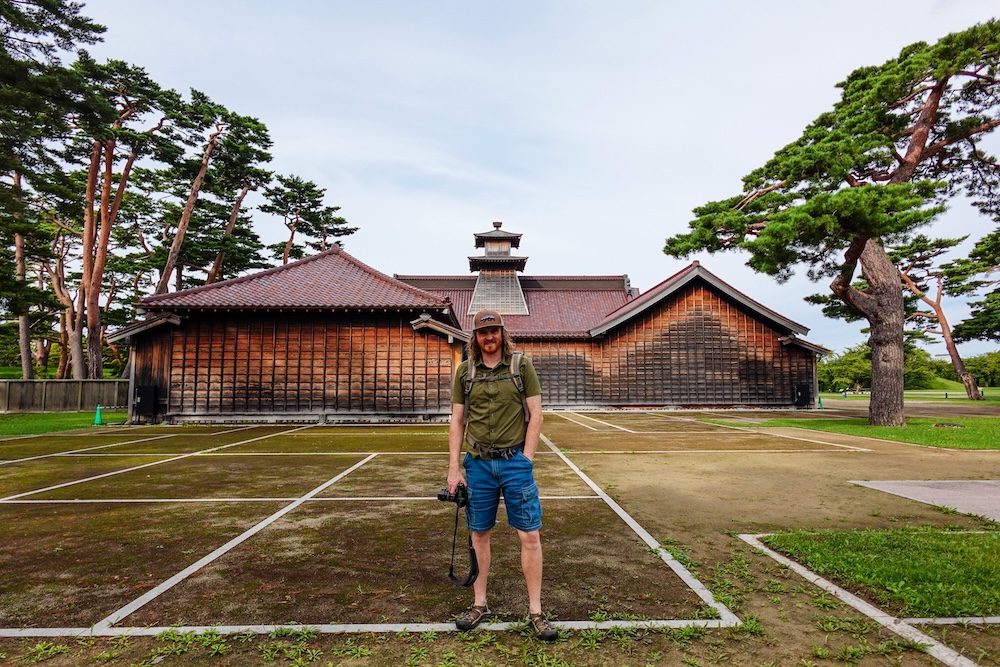
11. Walk Around Goryokaku Park and Its Star-Shaped Fort
Goryokaku is one of Hakodate’s most important historical attractions, and I think it deserves to be experienced in two different ways: at ground level in the park and from the observation deck of Goryokaku Tower.
We happened to arrive before the tower had opened, so rather than stand around waiting, we decided to explore the park first. That turned out to be a very good use of our time.
Goryokaku was constructed in the nineteenth century using Western-style defensive principles, producing the five-pointed star layout that makes it so distinctive. The fort also played an important role during the turbulent historical period surrounding the end of the Tokugawa shogunate.
From the ground, the complete star shape is harder to appreciate, but walking around gives you a much better understanding of the fortifications themselves. We followed paths beside the moat, crossed bridges and explored parts of the defensive embankments, finding elevated areas where we could look across the water and surrounding grounds.
At the centre stands the reconstructed Hakodate Magistrate’s Office, which opened in 2010. We viewed the building and the surrounding grounds, including indications of the original larger complex, although we didn’t undertake a detailed interior visit. The Magistrate’s Office is a separate paid attraction, currently listed at ¥500 for adults.
The park itself is free, and one of the things I particularly enjoyed was seeing how it had become part of everyday life in Hakodate. There were people jogging, walking and cycling, including schoolchildren making their way through the grounds. It felt like a real community green space rather than somewhere maintained exclusively for tourists.
The moat-side circuit is approximately 1.8 kilometres, so a complete walk can take around 30–40 minutes before allowing time for photographs or the central buildings. Goryokaku is particularly famous for cherry blossoms in spring, although we visited at a different time of year and enjoyed the park without them.
If you arrive early, I’d encourage you to explore the grounds before going up the tower. Seeing the fortifications and park from street level makes the aerial view considerably more meaningful, and there’s plenty to appreciate without paying admission.
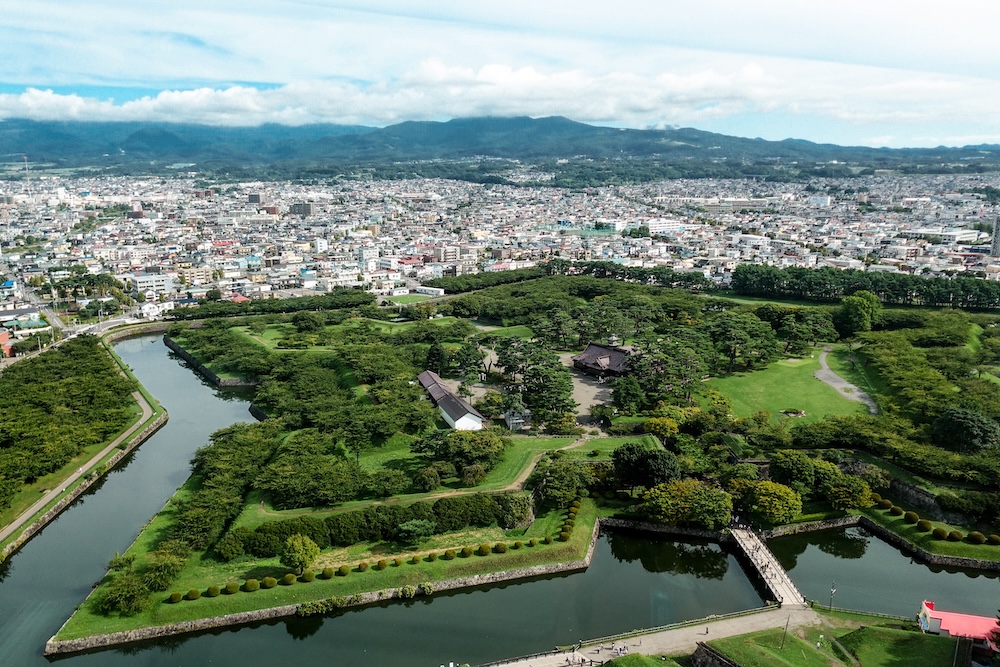
12. Go Up Goryokaku Tower for the Star-Fort View
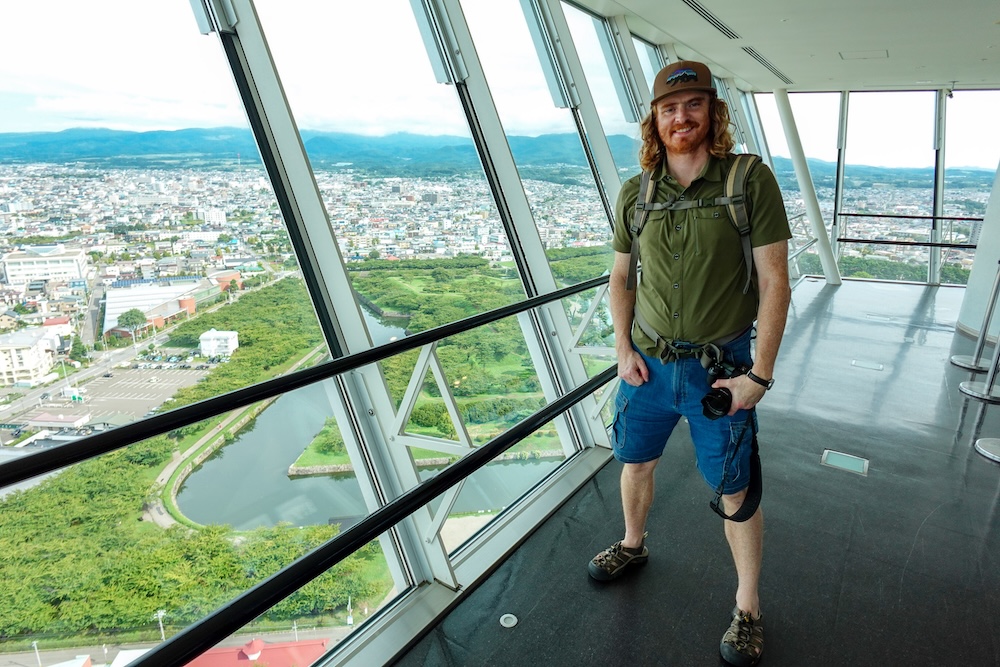
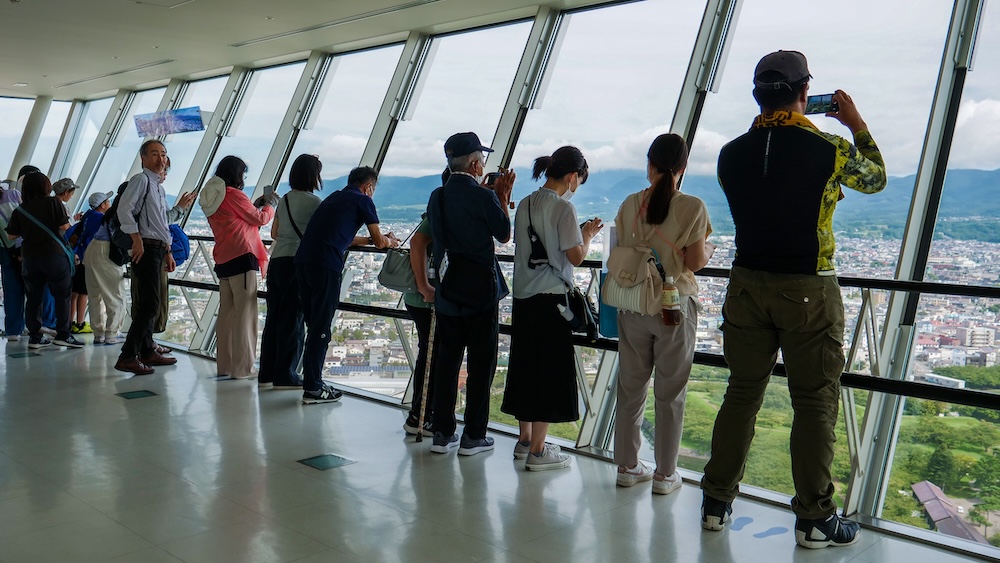
Once Goryokaku Tower opened, we headed up to the observation deck. The principal attraction is immediately obvious: looking down, you can finally appreciate the enormous five-pointed fort in its entirety, with the moat outlining its geometry.
It’s a remarkable view, but what surprised me was how much more there was to see. We’d arrived during clear weather, and the panorama stretched across the surrounding city toward parts of the harbour and distant landscape.
I’d already thoroughly enjoyed Mt. Hakodate and wondered whether going up another observation deck would feel repetitive. It didn’t. Mt. Hakodate reveals the peninsula, with the city framed by water, while Goryokaku Tower brings you much closer to the urban landscape and the star-shaped fort directly beneath you.
The two perspectives complement each other. I’d happily recommend both if you have the time and budget, and that’s a judgment I can make from our actual daytime visits rather than a comparison of photographs.
Standard adult admission to Goryokaku Tower is currently ¥1,200, compared with ¥1,800 for a round-trip Mt. Hakodate Ropeway ticket. Ordinary hours are 9:00 a.m.–6:00 p.m., with some seasonal and special-event adjustments.
If you can only visit one, I’d choose Mt. Hakodate for the larger peninsula panorama or Goryokaku Tower for the fort’s unusual geometry. Visibility matters at both, although the star-shaped fort is much closer to the observation deck than Mt. Hakodate’s wider landscape.
Visitors especially interested in the history can compare the Goryokaku Star Fort and Tower guided history experience, which offers a longer interpretive visit and lists Tower admission among its inclusions. I’d choose it for the historical explanation rather than merely for the view; an ordinary Tower ticket is enough if taking photographs is your main goal.
I’m glad we explored the park first and then viewed it from above. Together, those experiences made Goryokaku considerably more rewarding than either would have been on its own.
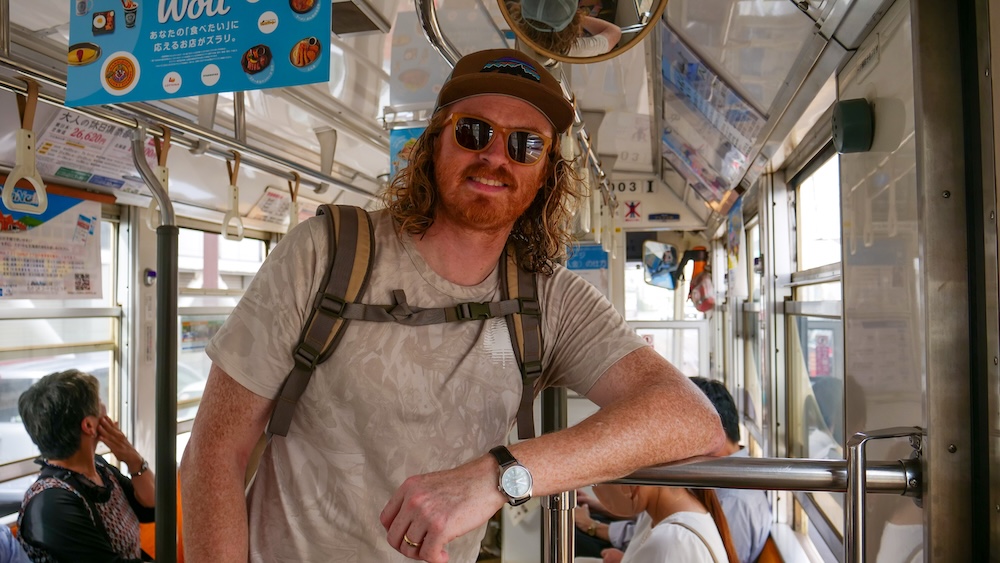
13. Ride Hakodate’s Historic Trams
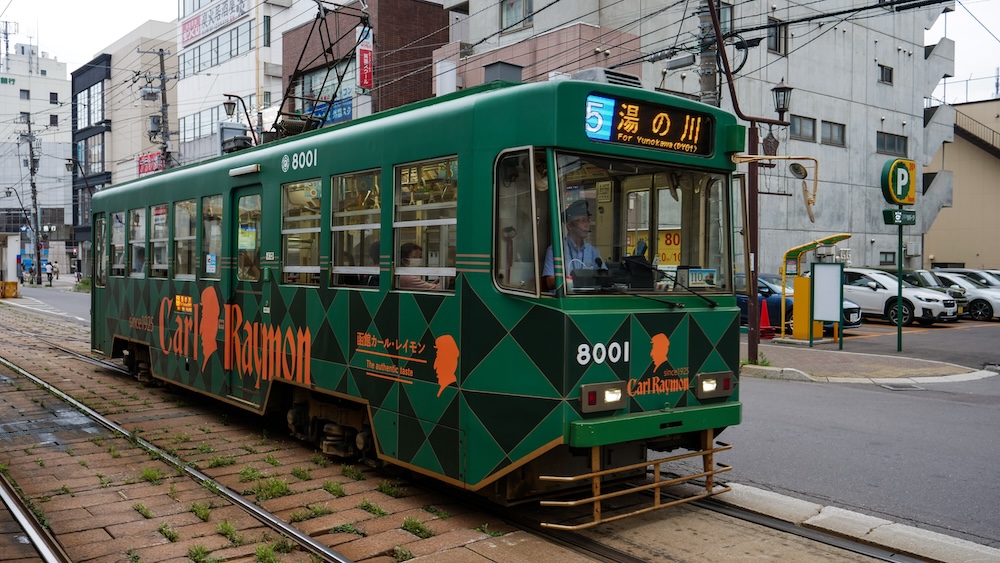
Hakodate’s trams deserve recognition as part of the experience rather than simply a way to move between attractions. We rode routes 2 and 5 repeatedly because they passed near our accommodation, and I enjoyed the character of the vehicles and travelling through the city at street level.
They reminded me a little of riding trams in Hong Kong, although Hakodate’s aren’t double-deckers. More importantly, they were practical for a city where the principal sightseeing areas are farther apart than you might initially expect.
After climbing Motomachi’s hills, I certainly appreciated being able to save some walking by hopping aboard a tram. The two routes connect Yunokawa, Goryokaku, Hakodate Station and western Hakodate, sharing a central corridor before separating near Jujigai.
Current adult fares range from ¥250 to ¥300 per trip, with day-pass options that may save money when you ride frequently. I’ll cover the practical ticket details later, but I’d encourage you to enjoy the journeys rather than treat every minute spent on public transport as wasted sightseeing time. The trams are part of Hakodate’s character.
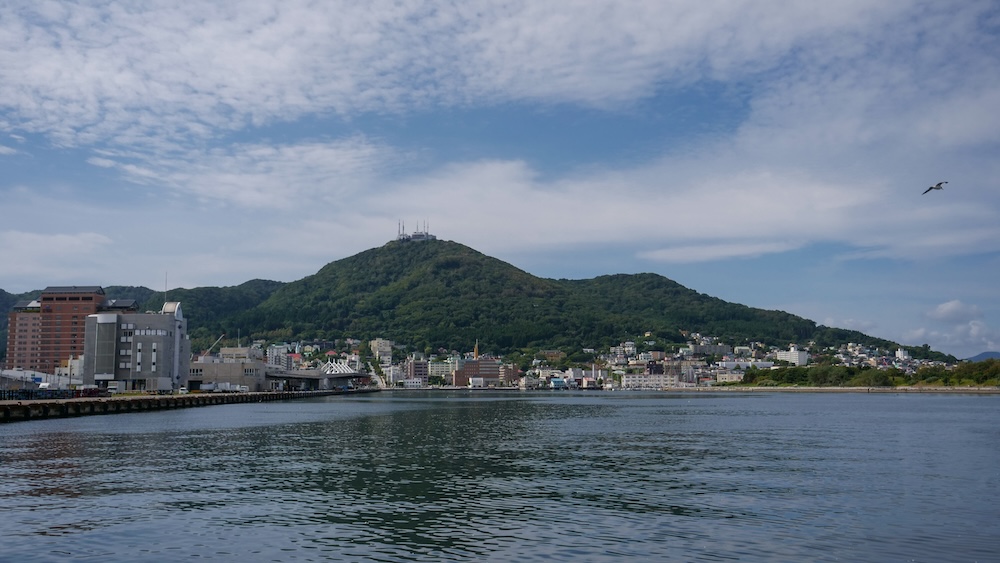
Other Things to Do in Hakodate We Didn’t Personally Experience
Three days gave us plenty of opportunities to explore, but there were several attractions we didn’t reach. These are options I’d consider for a longer visit, a different season or a trip with more specialized interests, rather than personal reviews from our time in the city.
Relax in Yunokawa Onsen
Yunokawa is Hakodate’s established hot-spring district, located toward the airport and connected with the rest of the city by tram. It has traditional ryokan, larger hotels and accommodation where bathing and relaxation are central parts of the experience.
I can see the appeal of returning from a busy sightseeing day, enjoying a bath and having a quieter evening at the property rather than rushing out for another attraction. We didn’t stay here ourselves, but it’s an area I’d investigate for a more relaxed return trip.
You can compare Hakodate ryokan and hot-spring accommodation, checking that the property is actually in Yunokawa and whether meals, private bathing or other facilities are included. There’s also a public footbath near Yunokawa Onsen tram stop if you want to experience a little of the district without staying overnight.
The main trade-off is the additional journey to the western historic attractions. If hot springs are the reason for choosing the area, that may be worthwhile; for a short trip focused on Motomachi and Morning Market, I’d generally prefer a more central base.
Visit the Tropical Botanical Garden and Seasonal Hot-Spring Monkeys
The Tropical Botanical Garden in Yunokawa is known particularly for its Japanese macaques bathing in hot-spring water during the colder months. This is a seasonal experience, generally occurring from December into early May, with precise dates and animal behaviour varying.
Standard adult admission is currently listed at ¥300. We didn’t visit, so I can’t give you a firsthand verdict, but it could be an interesting addition if you’re already staying in Yunokawa during the appropriate season. Check the latest operating information rather than assume the monkeys will be bathing whenever you arrive.
Explore Additional Historic Slopes and Coastal Viewpoints
Hachimanzaka isn’t the only scenic slope in western Hakodate. Streets such as Motoizaka, Saiwaizaka and Daisanzaka offer different perspectives on the historic district and harbour, while Cape Tachimachi and the Foreigners’ Cemetery are additional places to investigate if you’re interested in coastal scenery and Hakodate’s international history.
I’d consider these extras if you have time to explore beyond the principal sights. They don’t all need to become compulsory stops on a short first visit, but they give photographers and history enthusiasts more reasons to linger in the western district.
Discover Hakodate’s Jomon Archaeological Sites
The Hakodate Jomon Culture Center in the Minamikayabe district contains significant prehistoric material, including the National Treasure hollow clay figurine known as Chuku-dogu. Archaeological sites such as Kakinoshima and Ofune provide further insight into the region’s Jomon history.
The important planning detail is geography: the Culture Center is approximately 50 minutes from central Hakodate by car, with public transport generally taking longer. This isn’t an attraction you casually squeeze between a seafood breakfast and Motomachi. I’d plan a dedicated outing if Japanese archaeology were a major interest.
Take a Day Trip to Onuma Quasi-National Park
Onuma Quasi-National Park is in Nanae, outside Hakodate City, and offers lake scenery, small islands and views of Mt. Komagatake. Suitable limited express trains connect Hakodate with Onuma Koen in approximately half an hour, making it an option for travellers wanting a day of nature rather than another urban sightseeing outing.
We didn’t visit Onuma ourselves, but it could fit nicely into a four- or five-day stay in the region. If you’re combining it with several harder-to-reach destinations, you can compare car rentals in Hakodate; for Onuma alone, I’d look at the train first rather than rent a vehicle unnecessarily.
With just two days, I’d be hesitant to sacrifice a large portion of the city sightseeing for Onuma unless lakes and outdoor scenery were a particular priority. It’s a good example of an extra day opening up a different kind of experience.
What to Eat in Hakodate: Our Food Experiences and Local Specialties
If sightseeing was the big surprise of Hakodate, the food was something I was looking forward to from the beginning. Hokkaido has a reputation for seafood and dairy products, and Hakodate provided plenty of opportunities to enjoy both. We also discovered excellent shio ramen, returned to the same sushi restaurant twice and tried burgers from a wonderfully peculiar local chain.
Not every meal went exactly according to plan. We managed to order the wrong ramen, spent part of a breakfast figuring out what was on our plates and walked into a clown-themed burger joint wondering what on earth we’d gotten ourselves into. Fortunately, everything worked out rather well.
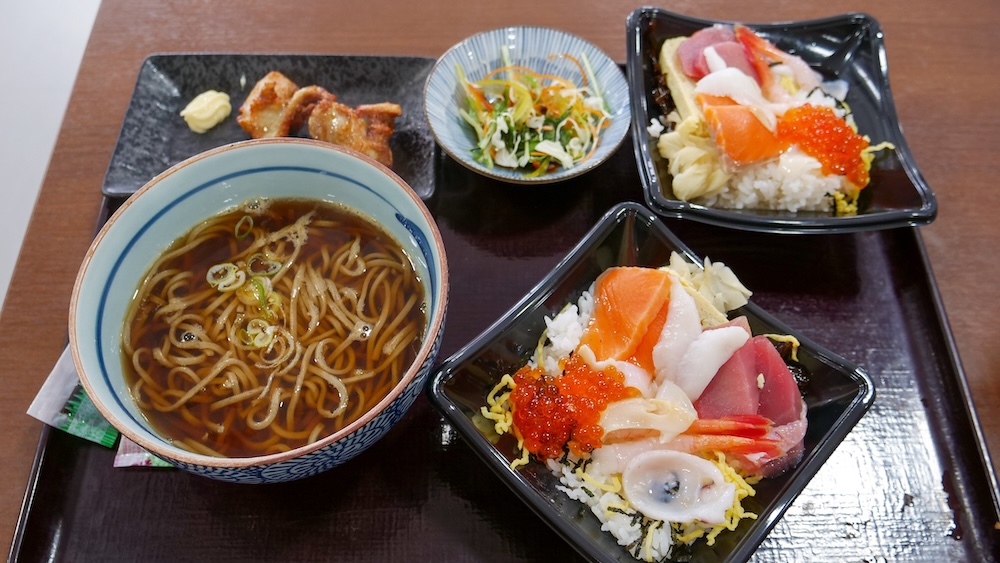
Start With a Seafood Breakfast at Hakodate Morning Market
I’ve already covered Morning Market as an attraction, but the breakfast we enjoyed there deserves its own attention. After exploring the seafood stalls and discovering that the market was bigger than expected, we eventually found somewhere to sit down and eat.
Our meal included seafood rice bowls topped with raw fish and roe, noodles and several additional dishes. There was plenty of variety, although I can’t pretend we identified every ingredient with absolute confidence.
At one point, I thought a fried item might be scallop. After tasting it, we decided it seemed more like chicken. So much for our expert seafood identification skills.
The fish was fresh and tender, and I particularly enjoyed the combination of seafood, rice, salmon roe and a little wasabi. The noodles and other dishes made it a substantial breakfast without leaving us completely incapacitated for the rest of the morning.
What I liked was the connection between the food and the market. We’d just walked past stalls selling enormous crabs and preparing fresh seafood, and now we were eating some of the ingredients that make Hakodate such an appealing food destination. It felt different from simply ordering a seafood bowl at an anonymous restaurant elsewhere in the city.
If you’re planning a market breakfast, arrive hungry and explore a little before choosing a restaurant. Kaisendon is the obvious option for raw seafood enthusiasts, but different businesses offer their own combinations and other prepared foods. Opening hours vary, too, so don’t assume every breakfast counter is operating as soon as the wider market opens.
For us, this was a fantastic start to exploring Hakodate, and I’d happily make a seafood breakfast part of another visit.
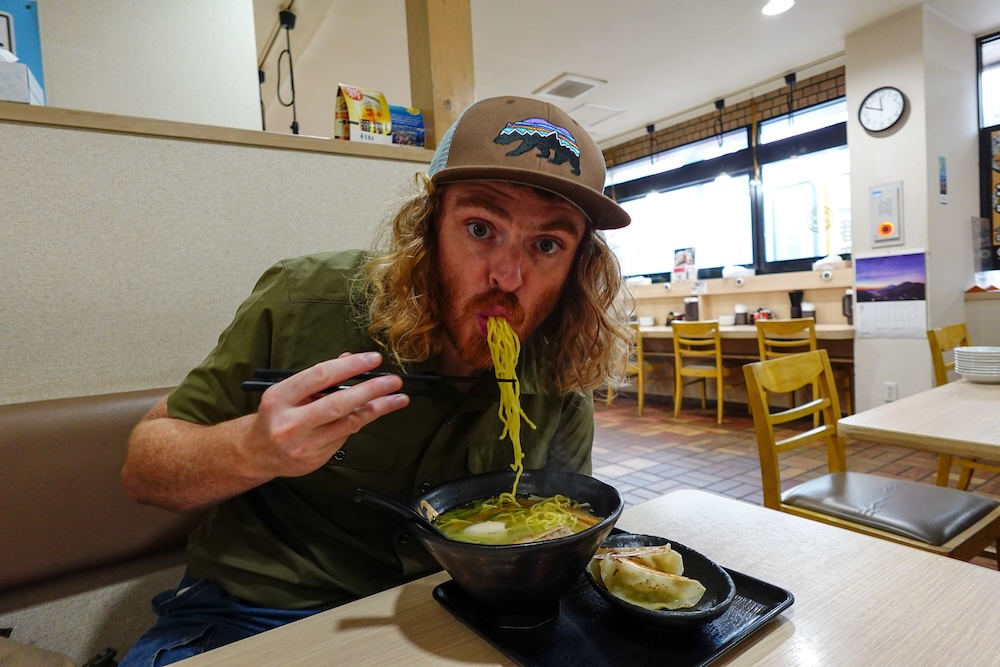
Try Hakodate Shio Ramen
One of Hakodate’s signature dishes is shio ramen, a salt-based style associated with a relatively clear, lighter broth. We knew we wanted to try it and eventually came across Hakodate Menya Yondaime, near the central station area.
The restaurant used a ticket vending machine, complete with an English-language option. That sounded straightforward enough, but we still managed to confuse ourselves.
We intended to order two different ramen styles, including butter-corn ramen and shio ramen. Somewhere during the process of inserting money, examining buttons and selecting the meals, we ended up with two variations of salt ramen instead. Not quite the culinary comparison we’d planned.
Fortunately, both bowls were delicious. I had the Yondaime shio ramen with broiled pork, while Audrey enjoyed a plainer salt-ramen variation with a clear broth. Mine came with noodles, pork, egg and other toppings, and the broth had plenty of flavour without tasting excessively salty.
The noodles had a satisfying chew, the pork worked nicely with the lighter soup, and we also ordered gyoza. Audrey enjoyed her ramen as well, so the mistake didn’t cause much disappointment once we started eating.
It did remind me that even when a vending machine offers English, you need to pay attention to the actual dish and set you’ve selected. Similar-looking menu options can be surprisingly confusing when you’re hungry and trying to figure things out.
We never received the butter-corn ramen we’d intended to try, but I certainly wasn’t complaining about the shio ramen. If you only have time for one ramen meal in Hakodate, I’d prioritize the local salt-based style.
Yondaime is a restaurant worth investigating near central Hakodate, although opening hours and menus can change. Check current arrangements before making a special journey rather than treating our past visit as a guarantee of the same service today.
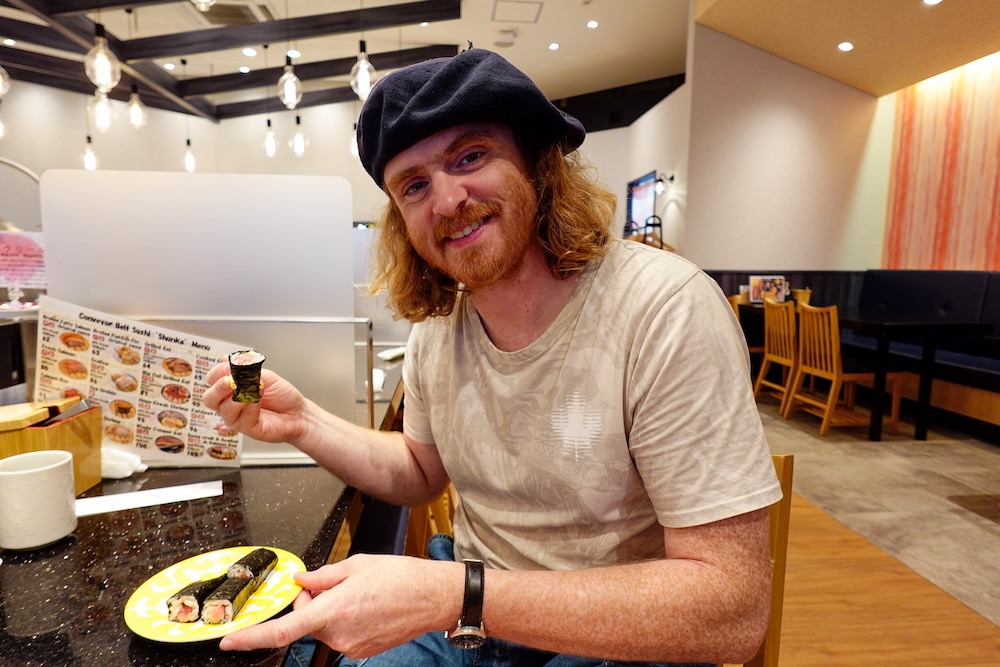
Eat Sushi at Kaiten Sushi Hakodate Shunka
Of all the restaurants we tried in Hakodate, Kaiten Sushi Hakodate Shunka has one particular distinction: we went twice.
That’s usually a pretty good indication that we enjoyed somewhere, particularly when we’re travelling for only a few days and have a long list of foods we still want to try.
Our first visit was on our first night in Hakodate. We were terribly jet-lagged and functioning somewhere between half-asleep and full zombie mode, so we didn’t feel particularly motivated to film the meal. We just wanted to sit down, eat good food and eventually find our way back to bed.
But the sushi was so satisfying that we decided to return. On the second visit, we were much more alert and ready to take our sushi ordering seriously.
The restaurant is a conveyor-belt sushi establishment at 29-18 Goryokaku-cho, opposite Goryokaku Tower. Be careful with the name: there’s another seafood restaurant called Shunka inside the tower, and it isn’t the place we ate.
The staff were helpful, providing an English picture menu and explaining the ordering system. We used numbered slips to request dishes, specify quantities and indicate details such as whether we wanted wasabi. Once we’d figured out the process, it was straightforward.
Naturally, Audrey and I ordered plenty of salmon and tuna. Those are two of our favourite kinds of sushi, and I make no apologies for returning to the same delicious choices rather than treating every meal as an exercise in culinary bravery.
We also tried other dishes, including sweet bean-curd sushi, tempura and udon, giving us plenty of variety. Our return visit took place at around 4:30 in the afternoon, when the restaurant was quite quiet. With relatively little food circulating on the conveyor belt, we ordered more dishes directly.
That worked perfectly well, although the atmosphere and ordering experience might be different during a busier lunch or dinner service. We left extremely satisfied and happy we’d made the effort to return.
I can’t claim Shunka is the best sushi restaurant in all Hakodate because we certainly didn’t test every option. What I can say is that we enjoyed it enough to devote two of our limited meals to the same place. For me, that’s a recommendation with some weight behind it.
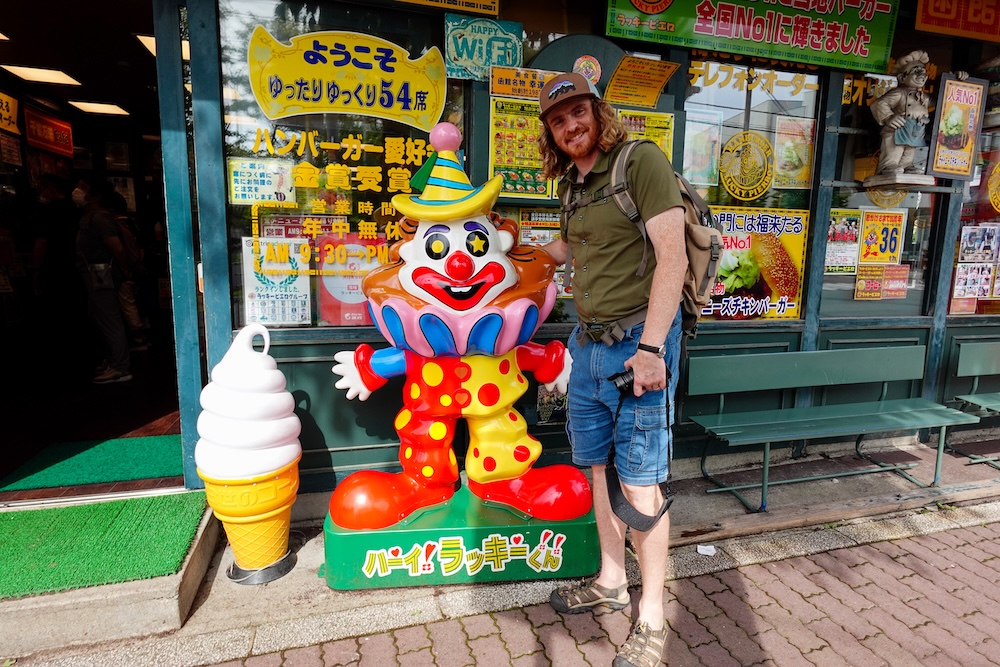
Try Lucky Pierrot’s Famous Local Burgers
Before arriving in Hakodate, I had absolutely no idea what to make of Lucky Pierrot. We kept noticing clown-themed signs around the city, and the whole thing looked rather strange. I wasn’t sure whether we were heading for a decent meal or somewhere that would be memorable mainly for the décor.
Lucky Pierrot is a local restaurant chain famous for its burgers, although the menu extends beyond them. We visited the Goryokaku Koen-mae branch, near Goryokaku Tower.
Inside, we encountered an extraordinary collection of angel figures and assorted decorations, which only increased my confusion about the overall theme. Clowns outside, angels inside, burgers on the menu. Fair enough.
We ordered at the counter, paid and waited for our number. I chose the tonkatsu burger, featuring a breaded pork cutlet with sauce and other toppings, while Audrey ordered the famous Chinese Chicken Burger, which comes with fried chicken in a sweet glaze.
We also ordered cheesy fries with gravy, a drink and sesame balls for dessert. The fries reminded me a little of Canadian poutine, although I wouldn’t pretend they were attempting to recreate our national comfort food.
The burgers were better than I’d expected. My tonkatsu burger was satisfying, with crispy pork and sauce working nicely together, while Audrey enjoyed the Chinese Chicken Burger’s combination of fried chicken and sweetness.
I wouldn’t describe Lucky Pierrot as fine dining, and I think doing so would miss the point. It’s enjoyable fast food in wonderfully peculiar surroundings, with a strong local identity and reasonable prices. We walked in a little skeptical and came away pleasantly surprised.
There are several locations across Hakodate, but the Goryokaku Koen-mae branch is the one we personally visited. It was cash-only during our trip, although payment rules can change and shouldn’t be assumed identical at every branch.
If you’re sightseeing around Goryokaku and want a break from seafood or ramen, it’s worth considering. I’d happily return, if only to see what other wonderfully peculiar restaurant interiors Lucky Pierrot has come up with.
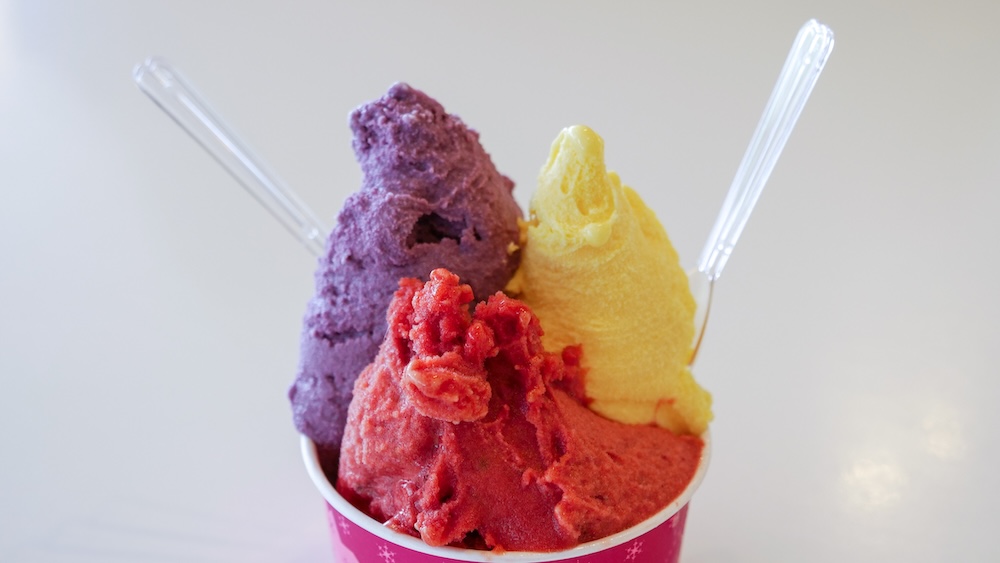
Finish With Hokkaido-Inspired Gelato
After visiting Goryokaku Tower, we stopped at Milkissimo for some gelato. Hokkaido is known for dairy products, so trying ice cream seemed like a sensible use of our time. Not that I usually need convincing when dessert is involved.
We decided to try three flavours we might not normally order: northern winter berry, pumpkin and purple sweet potato.
The berry flavour was the clear winner for both of us. It had a pleasant tartness that balanced the sweetness nicely, while the other two flavours produced a little disagreement. I preferred pumpkin over purple sweet potato, whereas Audrey preferred the sweet potato of those two.
The purple sweet potato had an interesting roasted quality and distinctive aftertaste, while the pumpkin was creamy and relatively subtle. We enjoyed trying the different flavours, even if our rankings weren’t completely aligned.
Milkissimo operates in Goryokaku Tower, so it’s an easy food stop to combine with the observation deck. Flavours change seasonally, and you shouldn’t assume the exact three we tried will always be available.
Still, if you’re already exploring the Tower, finishing with some gelato seems like an excellent idea. And if your travelling companion’s flavour rankings are completely wrong, at least you’ve got something harmless to debate over dessert.
Other Hakodate Foods Worth Considering
We ate extremely well during our visit, but there are a few additional local foods worth knowing about. One is Hasegawa Store’s yakitori bento, a Hakodate takeaway specialty that may initially confuse visitors because the name suggests chicken skewers. The standard version is actually associated with grilled pork skewers served over rice.
Seasonal seafood is another obvious attraction, with restaurants serving different types of fish, crab, roe and shellfish depending on availability. I’d browse menus rather than arrive determined to find one particular ingredient everywhere. Hokkaido’s dairy products and desserts also deserve consideration; our gelato tasting was only one small example.
For travellers interested in the background to local food, guided market tastings can add explanation that independent browsing may not provide. But I wouldn’t suggest you need a tour simply to eat well in Hakodate. Some of our favourite meals happened because we walked into a restaurant, figured out the ordering process and tried something that looked appealing.
Occasionally, we even managed to order exactly what we’d intended.
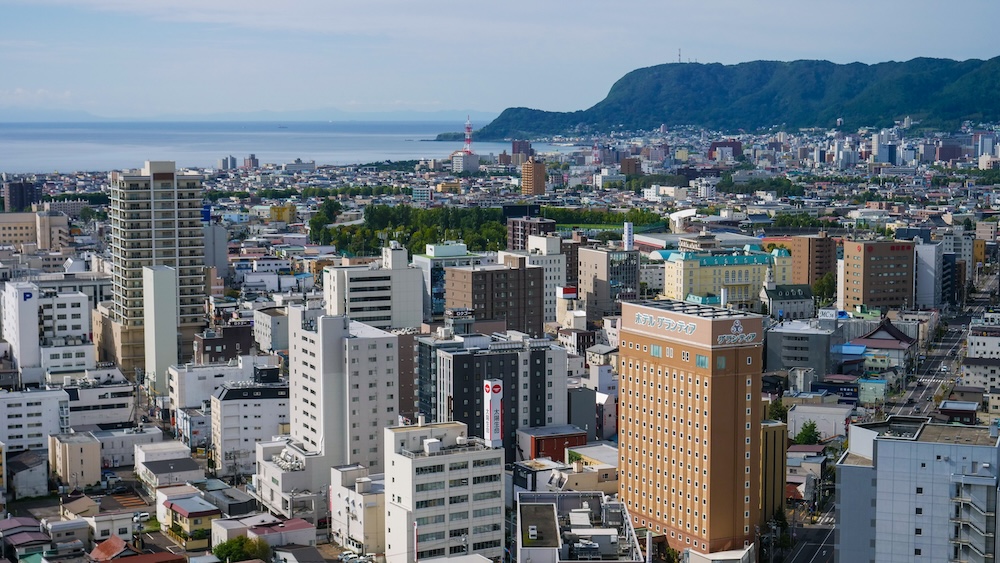
Where to Stay in Hakodate: Best Areas and Hotels
Choosing where to stay in Hakodate is one of the more important decisions you’ll make when planning your trip. Not because the city is particularly difficult to navigate, but because its different neighbourhoods offer quite different experiences.
Stay near Hakodate Station and you’ll have the Morning Market, railway connections and trams close at hand. Choose the Bay Area or Motomachi and you’ll be nearer the historic waterfront and atmospheric western neighbourhoods. Goryokaku provides a busier, more everyday urban setting, while Yunokawa Onsen offers an entirely different kind of stay built around hot springs and relaxation.
During our visit, Audrey and I stayed outside the principal central sightseeing area and relied on trams to get around. That worked well for us, but it also made me appreciate how much your hotel location can influence the rhythm of a trip.
For a first-time visit of two or three days, I’d begin by comparing accommodation around Hakodate Station and the Bay Area. Those locations make it relatively straightforward to explore the places most visitors come to see, although the other districts can be better choices when you have particular interests.
Here’s how I’d compare Hakodate’s five main accommodation areas.
| Where to stay | Best for | Main advantage | Main trade-off |
|---|---|---|---|
| Hakodate Station and Morning Market | First-time visitors, rail travellers, short stays | Transport connections and market breakfasts | Less historic hillside atmosphere |
| Bay Area and waterfront | Couples, sightseeing, harbour atmosphere | Warehouses, waterfront and western attractions | Less convenient for rail departures |
| Motomachi | Architecture, characterful stays, photography | Historic streets and Mt. Hakodate surroundings | Hills and potentially awkward luggage access |
| Goryokaku | Restaurants, urban atmosphere, longer stays | Goryokaku attractions and tram connections | Farther from the historic waterfront |
| Yunokawa Onsen | Hot springs, ryokan, relaxation | Bathing facilities and resort-style accommodation | Longer journeys to western Hakodate |
Staying Near Hakodate Station and Morning Market
For most first-time visitors, I think the area around Hakodate Station is the easiest place to recommend. You have the railway station, Morning Market, restaurants and tram connections within a relatively compact area, which makes arrivals, departures and sightseeing days considerably simpler.
If you’re arriving from Tokyo via the Shinkansen connection or travelling onward to Sapporo, staying close to the station reduces the amount of luggage juggling required. There’s also something appealing about waking up and walking to the Morning Market for breakfast. You may not want an enormous bowl of raw fish every morning, but having that option practically on your doorstep is hardly a disadvantage.
Several properties are worth comparing, and they serve slightly different needs.
JR Inn Hakodate is an especially practical option because it sits immediately beside Hakodate Station. For somebody arriving by train or prioritizing straightforward transport, that location is a substantial advantage. You can spend the day exploring distant neighbourhoods without complicating your travel days, so I’d check JR Inn Hakodate’s rooms and current rates if railway convenience is high on your list.
Hakodate Danshaku Club Hotel & Resorts is another interesting choice, particularly for families, groups or travellers who like having additional space. Its accommodation includes room formats with kitchenettes, living areas and balconies, and it’s a short walk from the station and Morning Market. For a stay lasting several nights, I’d compare the available room layouts at Hakodate Danshaku Club rather than focus exclusively on the nightly price.
Tokyu Stay Hakodate Asaichi Akarinoyu is well positioned for the market and central sightseeing. The property offers hot-spring bathing and practical in-room facilities, including microwaves, with some features differing by room category. Its breakfast arrangements are connected with restaurants at the nearby market, which is an appealing concept in a seafood destination. You can check Tokyu Stay Hakodate’s rooms and breakfast options to see whether the arrangement suits you.
Hotel & Spa Century Marina Hakodate is another central option, particularly for travellers who want more hotel facilities without sacrificing a convenient location. Its accommodation offering includes spa and sauna facilities and room categories suited to different travellers. I’d compare Century Marina Hakodate’s rooms and stay packages alongside the other central hotels rather than assume every comfort-oriented property offers the same inclusions.
These are properties worth researching, not hotels we personally stayed at, so I’d compare room categories, breakfast, facilities and cancellation policies before committing.
The appeal of the station area ultimately comes down to simplicity. You can enjoy whichever part of Hakodate interests you during the day, then return to a base with transport and food nearby. For a first-time visit with several sightseeing days, that’s difficult to argue against.
Staying in the Bay Area and Waterfront District
If I wanted more atmosphere without giving up too much convenience, I’d look closely at the Bay Area. The old warehouses, harbour views and port buildings give this part of Hakodate considerable character, and we enjoyed exploring it because several attractions naturally fit together.
I’ve always liked staying near the water, particularly in cities where the harbour has played such an important role in local history. Being able to head outside and find yourself surrounded by interesting old buildings and waterfront scenery has obvious appeal.
The compromise is railway convenience. You’re still reasonably close to central Hakodate, but depending on the exact property, you’ll have a longer walk or a short tram or taxi journey to the station. That matters more with heavy luggage or an early departure.
La Vista Hakodate Bay is a property worth considering in this area. It’s close to the Kanemori Red Brick Warehouses and offers natural hot-spring bathing, spa facilities and a breakfast offering featuring seafood and other dishes. Some rooms have harbour views, although those shouldn’t be assumed for every booking.
If the waterfront location and hotel facilities appeal to you, compare rooms, breakfast rates and availability at La Vista Hakodate Bay. I’d look at the actual total rather than judge it simply by a headline nightly price, because meals and room types can affect the comparison.
The biggest advantage is how easily the surrounding attractions fit into your stay. You can enjoy the Bay Area, warehouses and nearby historic streets without arranging a separate journey each time.
For me, the choice between the station and waterfront would come down to whether I valued efficient rail connections or the harbour atmosphere more. Both are attractive bases for a first Hakodate trip, but they deliver a slightly different experience.
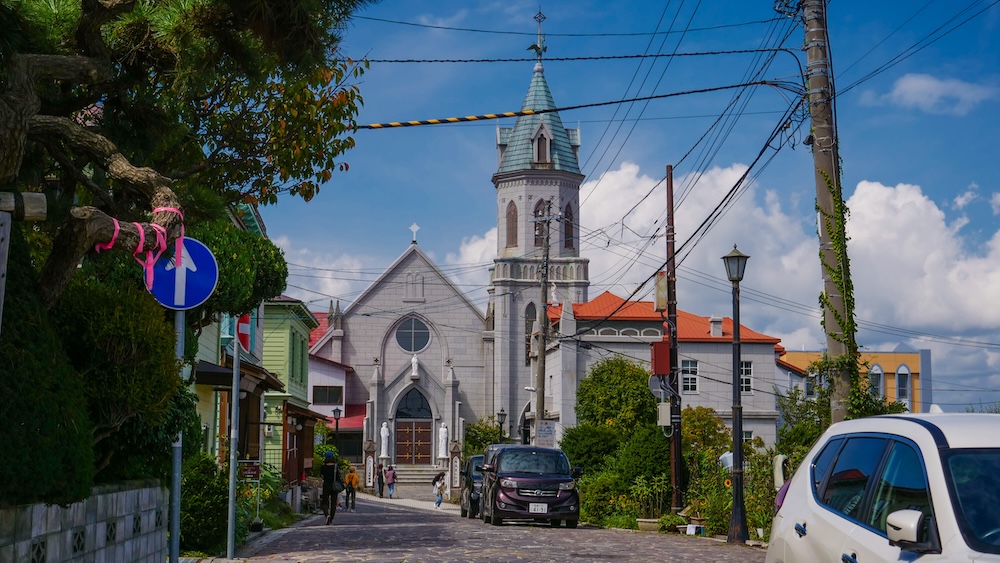
Staying in Motomachi
Motomachi is one of my favourite Hakodate neighbourhoods from a sightseeing perspective, so I can understand wanting to stay there. The historic churches, Western-influenced architecture, quiet streets and elevated harbour views give the area a character that’s difficult to reproduce around the railway station.
However, I’d pay close attention to the exact accommodation location. Motomachi isn’t uniformly flat, and there’s a meaningful difference between staying near a tram stop at the foot of the district and booking somewhere farther uphill. We certainly noticed the physical demands when exploring in hot weather, and carrying a suitcase up some of those slopes would not be my idea of a pleasant arrival.
HakoBA Hakodate by THE SHARE HOTELS is an interesting option near the historic waterfront, close to Suehirocho and Jujigai tram stops. It has a characterful setting and different accommodation formats, including shared facilities, so it’s important to understand the specific room category. I’d compare HakoBA Hakodate’s rooms and facilities if a more distinctive accommodation style interests you.
Another option is Villa Concordia Resort & Spa in Suehirocho. With larger accommodation arrangements and spa facilities, it offers a different proposition from a conventional small hotel room. You can check the available suites at Villa Concordia if additional space and comfort are priorities.
The reason to stay in this part of Hakodate is primarily the setting. You’re choosing to spend more time surrounded by the architecture and streets that give the western district its identity.
For travellers who love historic neighbourhoods, that’s worth considering. For somebody arriving with substantial luggage or heading across the city every day, I’d compare the practical advantages of a more central hotel before deciding.
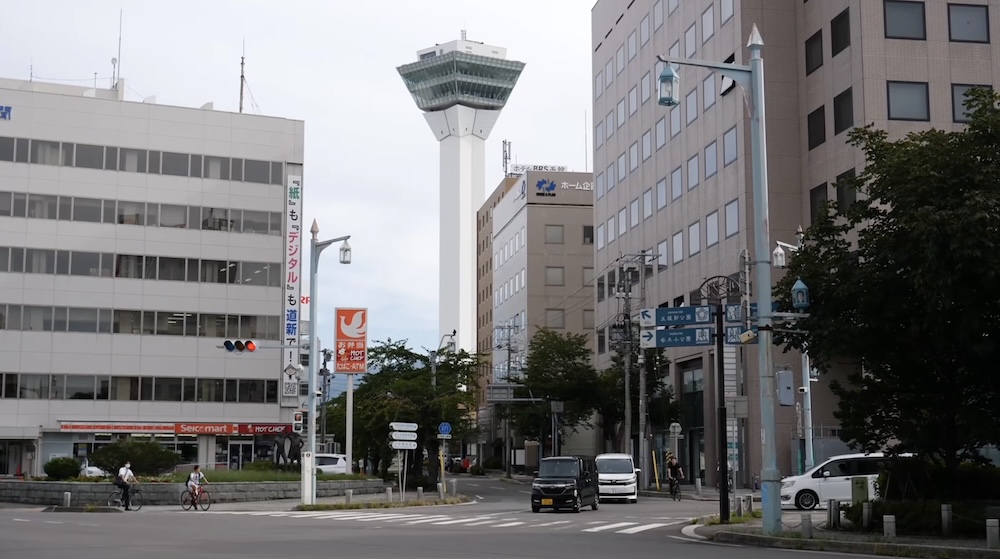
Staying Around Goryokaku
Goryokaku feels different from the historic waterfront. It’s a busier commercial district, with restaurants, shopping and everyday city activity alongside the famous fort and tower.
We enjoyed exploring the area, particularly because Goryokaku Park was being used by local residents rather than feeling like an attraction reserved for tourists. Staying nearby would give you easy access to the park, tower, museums and restaurants, along with connections to the wider city by tram.
The main trade-off is the distance from Motomachi and the Bay Area. You’ll generally use public transport when heading toward the waterfront, so Goryokaku isn’t my automatic first choice for a trip centred on western Hakodate.
HOTEL MYSTAYS Hakodate Goryokaku is a practical option near Goryokaku-koen-mae tram stop, with the fort and tower accessible on foot. The property offers conventional hotel facilities and different room configurations. If the district suits your plans, you can check current rooms and rates at HOTEL MYSTAYS Hakodate Goryokaku.
One geographical warning is worth repeating here: Goryokaku railway station is not the same as Goryokaku-koen-mae tram stop. The tram stop is the useful one for visiting the park and tower. Don’t choose a hotel or route simply because the word Goryokaku appears in the station name.
For travellers who prefer staying in a lively commercial neighbourhood rather than the historic port area, Goryokaku can work well. Just make sure you understand how the location fits with your actual sightseeing priorities.
Staying in Yunokawa Onsen
Yunokawa is where I’d look if hot springs were a major reason for visiting Hakodate. Unlike a central hotel chosen primarily for convenience, a ryokan or onsen hotel can become one of the main experiences of the trip.
You might spend the day sightseeing, return to the property earlier in the evening, enjoy a bath and settle in for a meal rather than immediately heading back out. That sounds particularly appealing after several busy days of travelling around Japan.
The district has traditional ryokan, larger resort-style properties and hotels with different kinds of bathing facilities. Its location toward the airport can also be useful depending on how you’re arriving and departing.
Bourou Noguchi Hakodate is a more luxurious accommodation option, offering hot-spring facilities and a stay oriented toward relaxation and Japanese hospitality. If you’re looking for something indulgent rather than a simple overnight room, I’d compare Bourou Noguchi Hakodate’s room categories and packages.
Wakamatsu Hot Spring Resort is another property worth investigating for a more traditional ryokan experience, with ocean views, hot-spring bathing and Japanese dining options. The meal arrangements can be an important part of the stay, so check Wakamatsu’s rooms and included meal packages rather than comparing only the lowest available rate.
Heiseikan Shiosaitei offers another form of Yunokawa accommodation, with ocean-facing bathing facilities and a larger resort-style setting. Travellers interested in that kind of experience can compare Heiseikan Shiosaitei’s room options and rates with the more intimate ryokan alternatives.
With any onsen hotel, I’d pay careful attention to the actual booking package. Does the rate include dinner or breakfast? Is bathing communal, private or attached to particular room categories? Are there restrictions or additional charges? A hotel advertising hot springs doesn’t automatically mean every room has its own private bath.
We didn’t stay in Yunokawa, so I can’t offer a personally tested favourite. What I can say is that the district makes sense when hot-spring bathing is central to the trip. If you’re primarily interested in sightseeing around Motomachi and Morning Market, you’ll spend more time travelling across the city than you would from a central hotel.
For an onsen-focused stay, that may be a perfectly reasonable trade-off.
Which Hakodate Area Should You Choose?
If I were organizing a first-time trip around the attractions we enjoyed, I’d start with Hakodate Station and the Bay Area. The station offers transport efficiency and convenient breakfasts, while the Bay Area provides a more atmospheric waterfront setting.
I’d choose Motomachi for historic character, provided the property’s precise position and surrounding slopes suited my needs. Goryokaku would make sense if that district fitted my activities or I found a particularly suitable hotel, while Yunokawa would be my choice when hot springs and relaxation outweighed central sightseeing convenience.
There’s also an additional expense to account for when comparing accommodation prices. Since April 1, 2026, Hokkaido and Hakodate have applied combined accommodation taxes, generally ranging from ¥200 to ¥2,500 per person per night depending on the accommodation charge. Stays priced below ¥20,000 per person per night incur a combined ¥200 tax, with higher brackets for more expensive accommodation.
Check the final price rather than rely only on a headline nightly rate. Meal packages, occupancy, room categories and separately collected charges can make two seemingly similar hotels quite different in overall cost.
If you’ve narrowed your preferences to one or two districts, I’d compare Hakodate hotel prices for your actual travel dates before making the final decision. The right base may depend as much on what is available as on the district you originally preferred.
For me, the best hotel is the one that suits the trip I’m actually taking. I wouldn’t save a small amount on accommodation if it meant spending a significant part of every day travelling back and forth across Hakodate.
Best Hakodate Tours and Guided Experiences: When Are They Worth Booking?
One of the things I appreciated about Hakodate was how much we could explore independently. Audrey and I used trams, wandered around neighbourhoods, bought admission tickets and went into restaurants when hunger got the better of us. Some of our favourite discoveries happened precisely because we weren’t following a fixed tour schedule.
So I wouldn’t suggest every traveller needs a guided Hakodate tour. However, there are circumstances where one can provide real value: limited sightseeing time, an interest in historical interpretation, a desire for transport to be organized, or a specialized food or photography experience.
The main thing is knowing what you’re paying for. A private driver isn’t necessarily an English-speaking historical guide, a food tour may include only a defined tasting allowance, and a tour mentioning Mt. Hakodate doesn’t automatically include the Ropeway ticket or the nighttime panorama.
You can browse available Hakodate tours and activities, but I’d choose based on how the experience improves your visit rather than how many attractions appear in its description.
Private Hakodate Sightseeing Tours
Private sightseeing tours are most appealing when you have limited time or want somebody else to manage the movement between different districts. A six-hour private Hakodate tour with a local guide is one option, covering major western attractions with different public-transport and private-vehicle configurations.
The itinerary varies by option, with Goryokaku associated with an expanded vehicle-based arrangement. That’s worth checking carefully: you don’t want to assume every illustrated attraction appears in the particular version you’ve selected.
For a shorter visit, a four-hour Hakodate highlights tour by private vehicle may help connect major areas. However, the listed driver speaks Japanese and uses translation applications for other languages. That’s a transport service with sightseeing stops, not necessarily the same experience as a detailed English-language history tour.
If historical interpretation matters more than transport alone, there’s also a six-hour private Hakodate tour with an English-speaking licensed guide and vehicle. The customizable itinerary allows a selection of major sights and includes pickup from the cruise port or central Hakodate, subject to the selected arrangements and guide confirmation.
I’d decide which service solves your actual problem. If it’s getting between dispersed attractions, a vehicle may help. If it’s understanding the history, prioritize the guide’s expertise and language. If you’re comfortable organizing both yourself, I’d happily use the trams instead.
Motomachi and Historic Hakodate Walking Tours
Motomachi is one area where guided historical interpretation could add considerable depth. We enjoyed wandering past the churches and historic buildings, but the international port history and different architectural influences provide plenty of material for somebody knowledgeable to explain.
The three-hour guided walk mentioned earlier connects the waterfront warehouses, Hachimanzaka and Motomachi’s streets. It offers a structured route and historical context, although it involves uphill walking and stairs. Paying for a guide won’t magically flatten the neighbourhood.
For architecture and history enthusiasts, I’d consider that type of experience worthwhile. If you’re mainly interested in admiring the streets, photographing the churches and enjoying the harbour views, independent exploration works perfectly well.
Morning Market and Hakodate Food Tours
Food tours provide a different benefit. We had an excellent breakfast at Hakodate Morning Market without a guide, but there were ingredients and dishes we didn’t immediately recognize. Having somebody explain the seafood and market traditions could be valuable for travellers interested in learning as much as eating.
The approximately 90-minute tasting experience mentioned earlier offers guided exploration with food included up to a defined allowance. Check the included foods before treating it as a replacement for a substantial breakfast.
I’d choose a market tour if I wanted local explanation and help navigating unfamiliar foods. If my main goal were simply to eat a delicious seafood bowl, I’d browse independently and spend the money directly at a restaurant. There isn’t much point paying for guidance you don’t actually want.
Mt. Hakodate Evening and Night-View Experiences
Mt. Hakodate’s famous night view is another situation where organized transport or a guided photography experience may be appealing. Evening visits can involve queues, weather considerations and access restrictions, so the logistics are different from our straightforward daytime Ropeway visit.
I’d examine the exact activity rather than assume every tour mentioning Mt. Hakodate will deliver a sunset or night panorama. Check the start time, summit access, whether admission is included and how the return journey works. Weather may also prevent clear views regardless of what you’ve paid.
If you have several days in Hakodate, the flexibility to choose a clear evening may be worth more than a fixed-time booking. For cruise passengers or travellers with a tight schedule, having transportation organized could be more useful.
Goryokaku History and Cultural Experiences
Goryokaku is a satisfying independent attraction, but there’s considerable history behind the star-shaped fort. A guided experience can help explain why it was built, how its defensive design worked and its role during the final years of the shogunate.
The Goryokaku Star Fort and Tower guided history tour is a more focused option for visitors interested in this particular attraction, with an itinerary lasting approximately two and a half to three and a half hours and Tower admission included in the described experience. Check the selected option for any additional Magistrate’s Office admission.
For a history enthusiast, that interpretation could justify the extra cost. For somebody primarily interested in photographing the star fort from above, I’d suggest simply buying an ordinary Tower ticket.
Hakodate Shore Excursions for Cruise Passengers
Cruise visitors face a different planning challenge from travellers staying several nights. When your ship leaves at a specific time, transport arrangements and return deadlines become considerably more important.
A five-hour private Hakodate shore excursion is one option, offering port pickup and a route that can include major areas such as Motomachi, Goryokaku, Morning Market and the waterfront. Depending on the selected arrangement, a summit viewpoint may also be possible.
The product excludes meals and attraction admissions, while the driver speaks Japanese and uses translation applications for communication in other languages. Additional time can incur charges, so the details matter. I’d check the pickup location, port-return arrangement, ship departure deadline and cancellation conditions rather than rely on a blanket promise that delays can never happen.
For a multi-day visitor, I wouldn’t consider this the obvious way to explore Hakodate. For somebody with only a few hours ashore, coordinated transport may be worth paying for.
Guided Tours Versus Independent Sightseeing
The simplest way to choose is to consider what each style adds to the experience.
| Sightseeing style | Main advantage | Main limitation | Best for |
|---|---|---|---|
| Independent trams and walking | Flexible and generally economical | You handle routes, timing and interpretation | Most multi-day visitors |
| Guided historical walk | Local explanation and organized route | Fixed schedule and often substantial walking | History and architecture enthusiasts |
| Private vehicle tour | Convenient transfers between areas | Higher cost; driver may not provide English interpretation | Short visits and transport-focused travellers |
| Guided food experience | Help understanding ingredients and food traditions | Tastings may have limited inclusions | Culinary enthusiasts |
| Cruise shore excursion | Port pickup and organized sightseeing | Fixed timing and ship-return considerations | Cruise passengers |
For two or three days in Hakodate, independent sightseeing would generally be my starting point. The trams connect the main districts, and many attractions are straightforward to visit without a guide.
But I wouldn’t hesitate to pay for a guided experience that genuinely improved the trip, whether through historical knowledge, food interpretation or convenient transport. I’d simply want to know what I was getting beyond access to attractions I could visit myself.
How Many Days Do You Need in Hakodate?
We spent approximately three busy days in Hakodate and still felt we could have stayed longer. For most first-time visitors, I’d recommend two full days as a useful minimum for the main sights, with three days offering a more comfortable experience.
With one day, choose a concentrated selection of attractions. You could enjoy Morning Market, the waterfront, Motomachi and Mt. Hakodate, or prioritize Goryokaku if the fort interests you more. Trying to include everything would mean rushing past the very places you’ve come to see.
With two full days, I’d generally give one day to western Hakodate and another to Goryokaku and nearby attractions. That’s enough for a satisfying introduction, including the principal viewpoints, historic streets and some excellent food, provided you group your sightseeing sensibly.
Three days give you time for the smaller museums, longer meals and a bit more flexibility around weather. That breathing room was part of what made our own experience so enjoyable. With four or more days, you can slow down, add an onsen stay in Yunokawa or investigate a regional outing such as Onuma.
The important distinction is usable sightseeing time. Arriving late and departing early doesn’t give you two full days just because you’ve spent two nights in Hakodate. I’d plan around the actual hours available and use a dedicated one-, two- or three-day itinerary when you want a more detailed sequence of attractions.
Getting Around Hakodate: Trams, Walking, Buses and Cars
For central sightseeing, Hakodate’s trams and walking are an excellent combination. We relied on both, using the trams between districts and exploring individual neighbourhoods on foot.
Using the Historic Hakodate Trams
Tram routes 2 and 5 share much of the corridor from Yunokawa through Goryokaku-koen-mae, Hakodate-ekimae and Jujigai before separating toward different western destinations. Pay attention to the route number when travelling beyond the shared section.
Current adult single fares are ¥250–300, depending on distance. An ¥800 calendar-day pass can be economical when you’re taking several rides, while a separate ¥1,130 24-hour ticket is valid for a full 24 hours after activation. There’s also a combined tram-and-bus day pass covering specified services.
At current fares, four rides in one day will often justify the ¥800 pass, but two or three journeys may be cheaper individually. Common transport IC cards such as Suica and PASMO are accepted. Check the official Hakodate tram information for the latest routes and payment procedures.
Walking Around the Waterfront and Motomachi
Walking works well around the station, Morning Market, harbour and warehouses, while Motomachi’s attractions are enjoyable to explore on foot once you’re in the district. The main complication is the hills. Two buildings can be close on a map while still involving a tiring uphill climb, so plan realistically if you’re travelling in hot weather, carrying luggage or dealing with mobility limitations.
Getting Between Central Hakodate and Goryokaku
From Hakodate Station, the tram to Goryokaku-koen-mae takes approximately 17 minutes, followed by another 10–18 minutes of walking depending on your destination. Don’t confuse that tram stop with Goryokaku railway station, which isn’t conveniently located for the fort and tower.
I’d combine Goryokaku Park, Tower, nearby museums and restaurants into one district-focused outing rather than repeatedly travel back toward the waterfront.
When Buses, Taxis or Rental Cars Make Sense
Buses and taxis can help with certain journeys, especially Mt. Hakodate, luggage transfers or travellers wanting to avoid strenuous walking. The climbing bus normally connects Hakodate Station with the summit when road access permits, with official information listing approximately 30 minutes without traffic and ¥700 one-way. However, seasonal road closures and night-view vehicle restrictions apply, so check how you’ll return as well as how you’ll get there.
I generally wouldn’t rent a car solely to explore central Hakodate; we managed comfortably without one. For a wider southern-Hokkaido itinerary involving more remote attractions, a vehicle may become worthwhile. In that case, compare Hakodate rental cars and pickup locations for the days you actually need a vehicle rather than automatically rent one for your entire stay.
How to Get to Hakodate
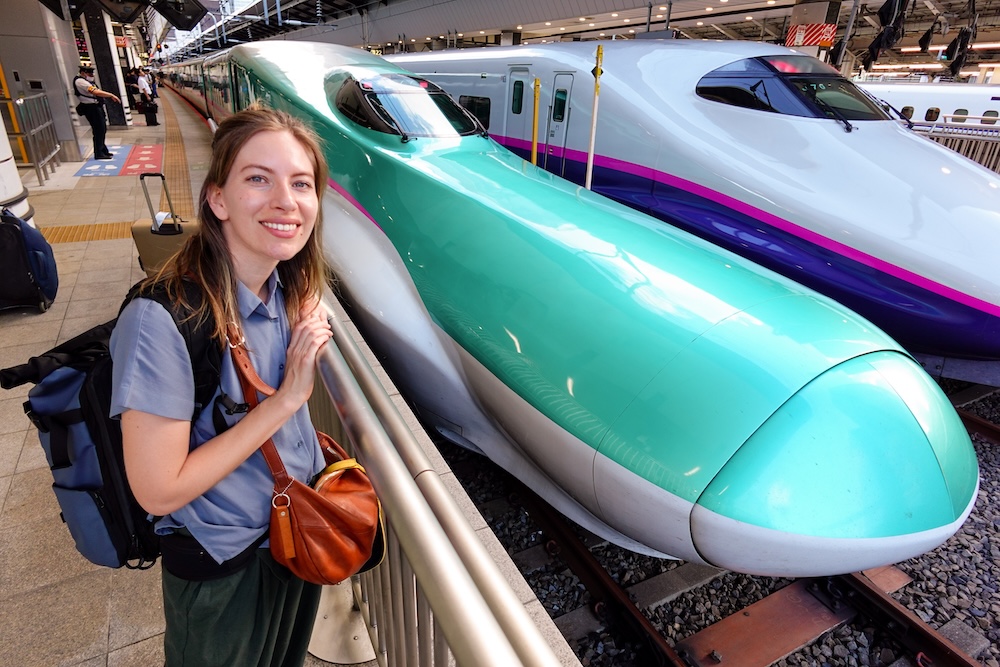
Hakodate is well connected with other parts of Japan, but there’s one railway distinction first-time visitors need to understand: Hakodate Station and Shin-Hakodate-Hokuto are not the same place.
Arriving by Shinkansen
The Hokkaido Shinkansen terminates at Shin-Hakodate-Hokuto, outside the main city. From there, the Hakodate Liner connects with central Hakodate Station in approximately 20 minutes. The combined Tokyo-to-central-Hakodate journey takes roughly four and a half hours on suitable connections, although actual times vary.
If you’re choosing a hotel near the railway station, make sure it’s close to central Hakodate Station rather than assuming accommodation near Shin-Hakodate-Hokuto puts you beside the Morning Market and tram network.
Arriving at Hakodate Airport
Hakodate Airport has domestic connections, including services involving Tokyo. Airport buses, taxis and other transfers connect the airport with the city, with the best option depending on where you’re staying. Yunokawa is on the airport side, while the station and historic western districts are farther away. Check current bus timetables and fares before travelling rather than rely on an old transfer price.
Travelling From Sapporo and Elsewhere in Hokkaido
JR Hokkaido’s Limited Express Hokuto connects Sapporo and Hakodate in approximately three and a half hours on suitable services. The train requires the appropriate reserved-seat limited express ticket. Hakodate’s southern location makes it a natural beginning or ending point for some Hokkaido itineraries, especially when connecting with Honshu.
Luggage Storage Before Check-In or After Check-Out
Hakodate Station has coin lockers, and some hotels may store luggage before check-in or after check-out. I’d arrange one of those options rather than drag a suitcase through Motomachi’s hills. A previously advertised hotel luggage-delivery service is currently listed as suspended, so don’t plan around that particular service without confirming it has resumed.
When to Visit Hakodate and How Weather Changes Your Plans
Spring is especially appealing for the cherry blossoms at Goryokaku Park, usually around late April to early May, although flowering varies each year. Summer brings longer daylight hours and events such as Hakodate Port Festival, but heat and humidity can make Motomachi’s slopes tiring. We certainly noticed that during our own visit.
Autumn offers cooler walking conditions and seasonal colour, although scheduled Ropeway maintenance can interrupt access to Mt. Hakodate. The announced October 20–November 8, 2026 closure is an example of why checking current operations matters. Winter brings snow, illuminations and the appeal of Yunokawa’s hot springs, together with colder conditions, icy streets and seasonal road restrictions. We didn’t experience Hakodate in winter or during cherry-blossom season, so those remain options I’d plan around rather than personally tested experiences.
If rain arrives, don’t assume your sightseeing day is ruined. Our rainy museum visits turned out to be unexpectedly enjoyable, and the Old Public Hall, restaurants and other indoor attractions provide alternatives. For Mt. Hakodate, where clear visibility is a major part of the attraction, I’d retain flexibility to visit on a better day when possible.
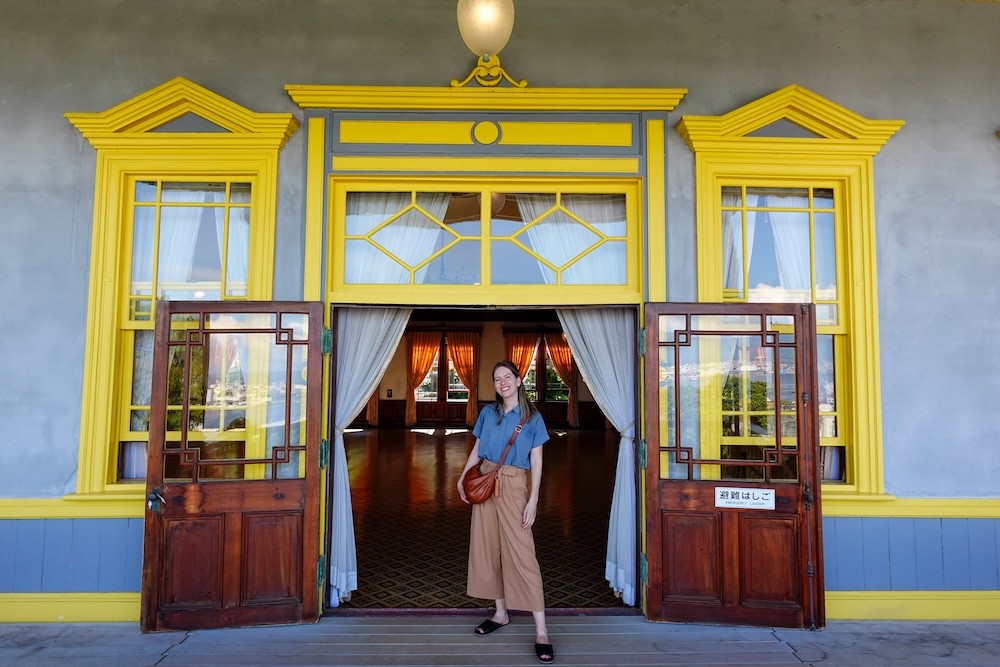
What to Book Ahead for Your Hakodate Trip
I’d arrange accommodation once your dates are reasonably firm, especially if you want a specific station-area hotel, ryokan, room type or onsen meal package. Comparing the actual room inclusions and cancellation terms is more valuable than assuming the cheapest headline price is the best deal.
If you want a private guide, specialized food experience or cruise shore excursion, check availability before arrival, since guides, language options and departures may be limited. For the main sightseeing attractions, I’d verify current opening hours, admissions and any seasonal access restrictions rather than book every possible ticket automatically.
Mt. Hakodate is the clearest example of why flexibility matters: advance Ropeway tickets don’t provide priority boarding, and weather or maintenance may affect service. Goryokaku Tower and smaller museums have their own operating schedules, while religious buildings may restrict interior access during services.
There’s also plenty to enjoy without an expensive guided tour. Goryokaku Park and the public waterfront areas are free to explore, while several museums have modest admission fees. I’d pay for the experiences I genuinely wanted rather than feel obligated to book everything on a sightseeing checklist.
| Attraction | Standard adult cost |
|---|---|
| Goryokaku Park | Free |
| Kanemori Red Brick Warehouses | Free entry |
| Mt. Hakodate Ropeway | ¥1,800 round trip |
| Goryokaku Tower | ¥1,200 |
| Mashu-maru | ¥500 |
| Museum of Northern Peoples | ¥300 |
| Hakodate City Hokuyo Museum | ¥100 |
| Old Public Hall of Hakodate Ward | ¥300 |
These are the standard adult prices checked when preparing this guide and may change. They’re useful for comparing choices, but your total budget will also depend on transport, food, hotels and which optional activities you decide to book.
Is Hakodate Worth Visiting? My Final Advice
By the end of our three days in Hakodate, I was genuinely disappointed that we weren’t staying longer. I’d arrived expecting an interesting stop before Sapporo and discovered a city with wonderful harbour scenery, historic neighbourhoods, unusual museums, excellent food and a surprisingly pleasant everyday atmosphere.
Some of my strongest memories came from places we hadn’t particularly planned to visit: boarding Mashu-maru because we happened to notice it, enjoying museums despite my usual lack of enthusiasm for them, exploring Goryokaku Park before the Tower opened and returning to Shunka Sushi because our first meal had been so good.
If I were planning another first-time visit, I’d aim for three full days if possible, compare hotels around Hakodate Station and the Bay Area, and organize sightseeing by district while leaving some flexibility for the weather. I’d prioritize the famous attractions without neglecting the smaller museums, neighbourhood walks and restaurants that gave our visit so much personality.
Most importantly, I’d resist planning every minute. Had we stuck rigidly to a checklist, we might never have investigated that interesting-looking ship in the harbour or spent so much time discovering museums on a rainy day.
For me, Hakodate turned out to be much more than a stopover. Give it a proper chance, leave room for unexpected discoveries, and you might find yourself wishing you’d planned to stay longer, too.
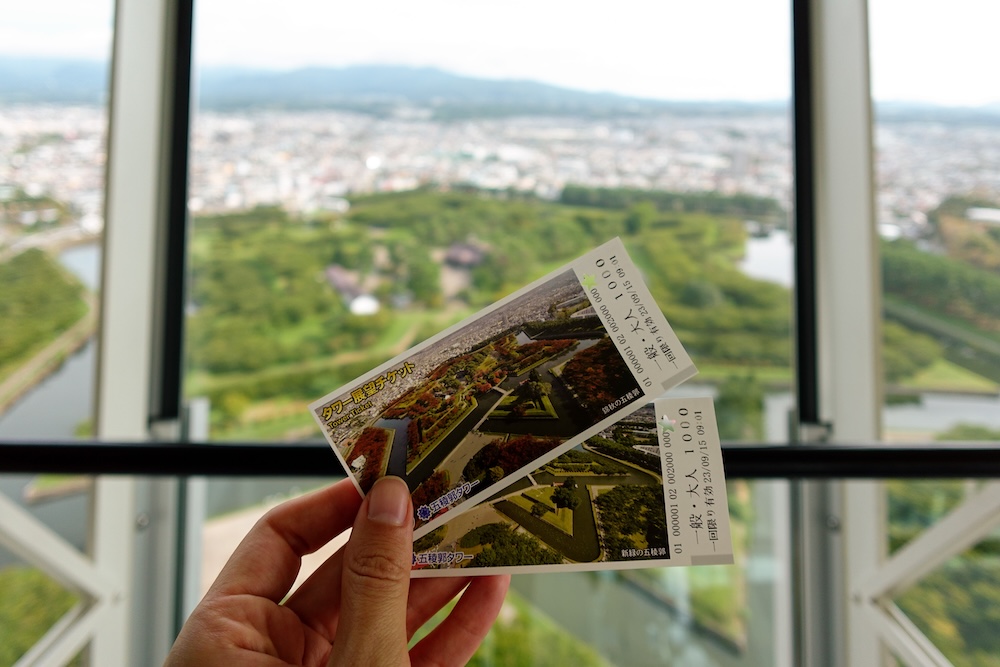
This article contains affiliate links. If you book through one of these links, I may earn a commission at no extra cost to you.