
Sapporo Clock Tower presents a rather simple sightseeing dilemma. You can stand outside, photograph one of the city’s best-known historic buildings, and carry on with your day without spending a yen. So what exactly do you gain by paying to go through the front door?
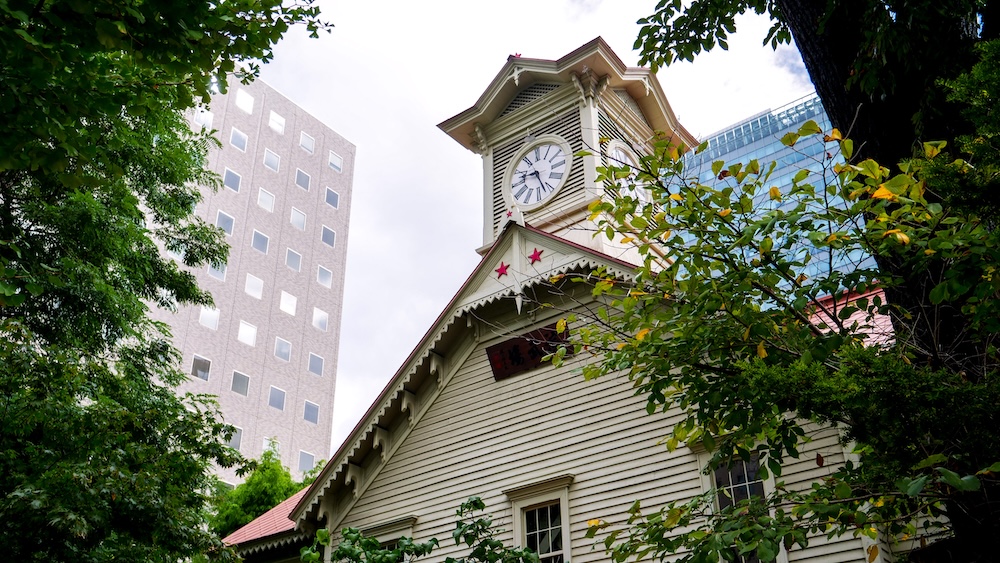
Audrey and I decided to find out on our September visit. We’d just been up Sapporo TV Tower, bought a combination ticket covering both attractions, and walked a couple of blocks over to the Clock Tower. We went through the entire interior and were finished in roughly 30 minutes or less. I thought it was time well spent, particularly because it gave us a better understanding of Sapporo’s early development.
That doesn’t mean I’d insist everyone go inside. The answer depends on how interested you are in local history, how much time you’ve got, and whether you’re visiting TV Tower too. Here’s how I’d make the call.
Our Sapporo Clock Tower Review: Is It Worth Visiting?
I think the Clock Tower belongs on a first visit to central Sapporo. Its history matters, and going indoors explains why this old building remains among the modern streets around it.
Audrey and I had pretty much the same reaction. We enjoyed seeing the place and didn’t need hours to feel we’d done it justice. It’s a relatively compact historical museum. You can move through the displays, see the old hall upstairs, and come away with a clearer picture of why this particular building matters to Sapporo.
For me, that’s the right expectation to bring. If your idea of a great attraction is an enormous museum that swallows half the afternoon, this isn’t that sort of outing. But sometimes you want to see a historic landmark, learn something about the city you’re travelling through, and still have the rest of the day for wandering, eating and whatever else catches your eye. The Clock Tower fits that kind of sightseeing rather nicely.
What Can You See Inside Sapporo Clock Tower?
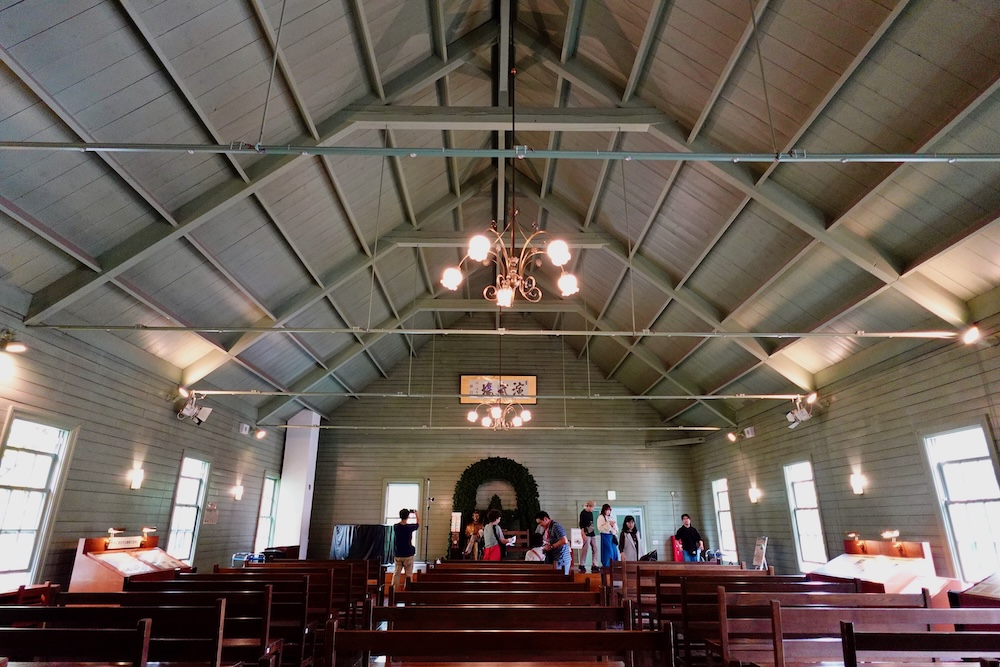
The attraction occupies two floors. Although its name might make you picture climbing a tower, the normal visitor experience is inside the former college building. You’re coming for the history and architecture, not another elevated view of Sapporo. Save the skyline photographs for TV Tower.
The First-Floor Historical Exhibits
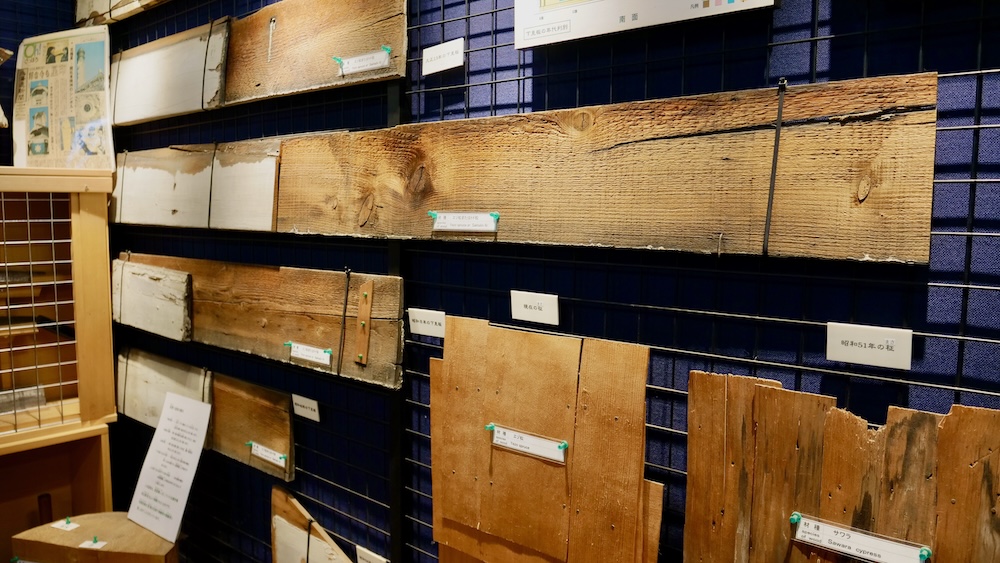
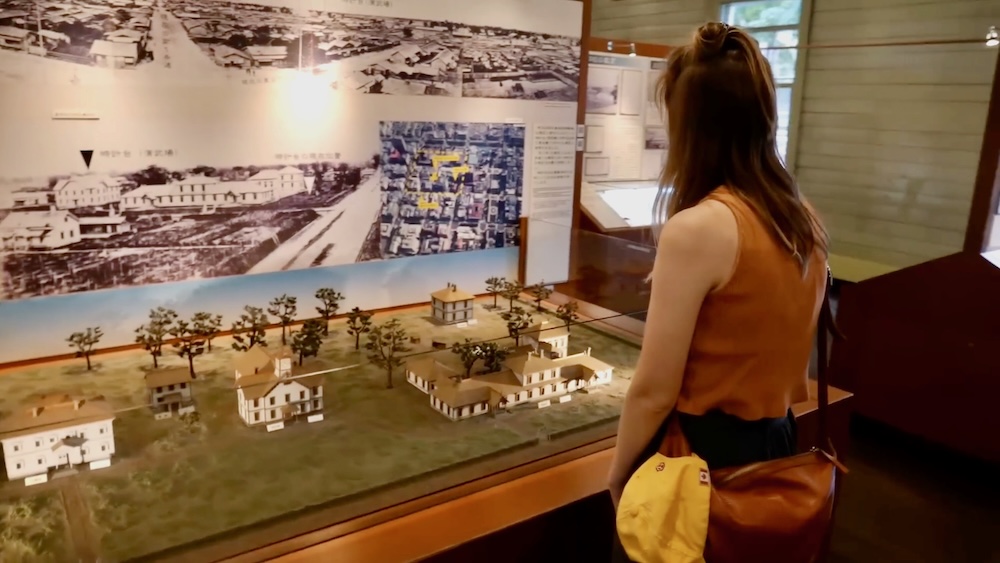
Downstairs, the exhibitions explain how the building began as part of Sapporo Agricultural College and how it became one of the city’s best-known landmarks. You’ll find old photographs, historical documents, models and information about the college, its students and the Clock Tower’s preservation. One of the models reconstructs the original college grounds, which helps put the surviving building into a setting very different from the streets around it today.
We explored the whole interior, although I couldn’t tell you now which particular display we spent the longest reading. What stayed with me was the value of getting beyond the exterior. It’s one thing to know that a building is old; it’s another to understand what it was actually used for and why it has survived while the city changed around it.
The Upstairs Hall and Clock Mechanism
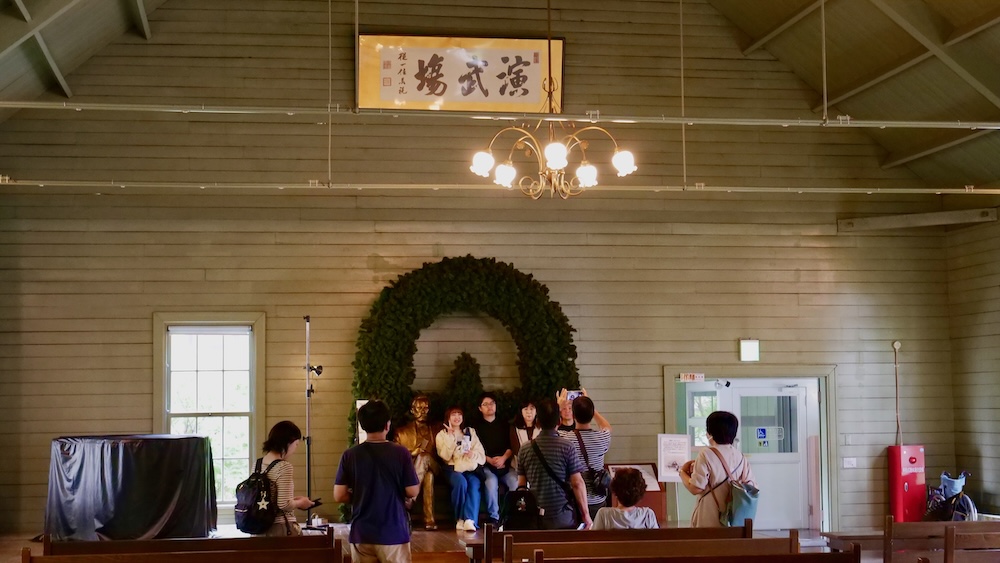
Upstairs is the former drill hall, a large wooden room that once hosted college activities and ceremonies. The present arrangement recalls an 1899 college celebration honouring graduates who received doctoral degrees, and there’s a seated statue of William S. Clark. The room itself gives you a better sense of the Clock Tower’s original purpose than its famous exterior alone can.
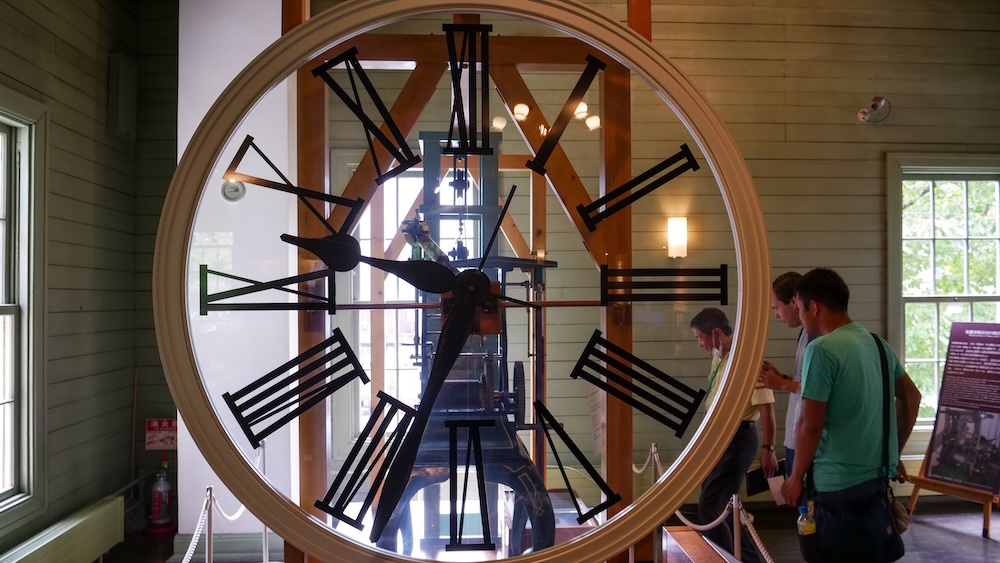
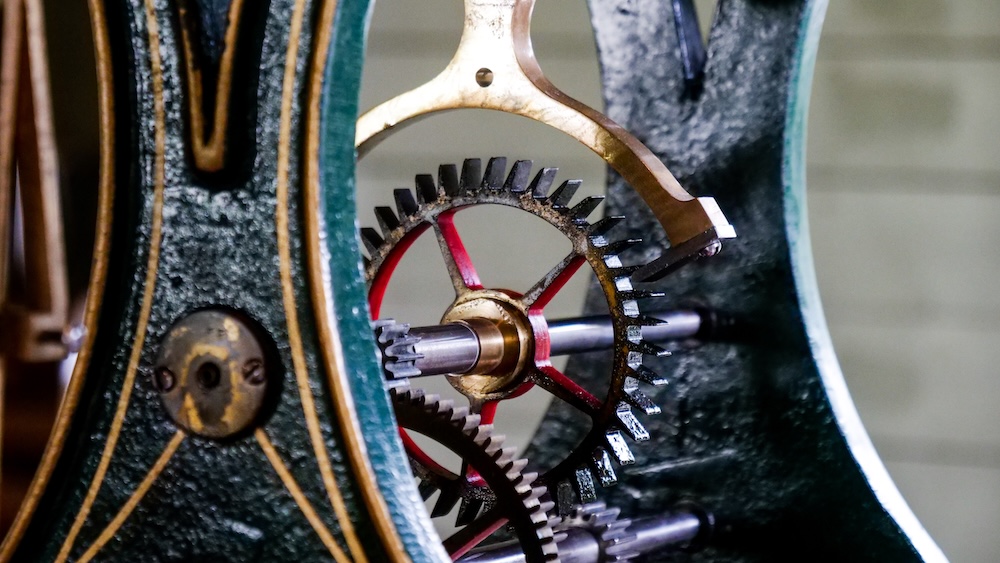
There’s also a Howard clock mechanism on display. One distinction worth knowing before you visit: this is a separate mechanism used to explain how the clock operates. The original working mechanism is above the hall and isn’t normally accessible for close-up inspection. You may hear the bell mark the hour, and there are occasional clock-winding demonstrations, but don’t build your visit around a fixed daily demonstration time. Those are announced separately and can change.
Why Is Sapporo Clock Tower Historically Important?
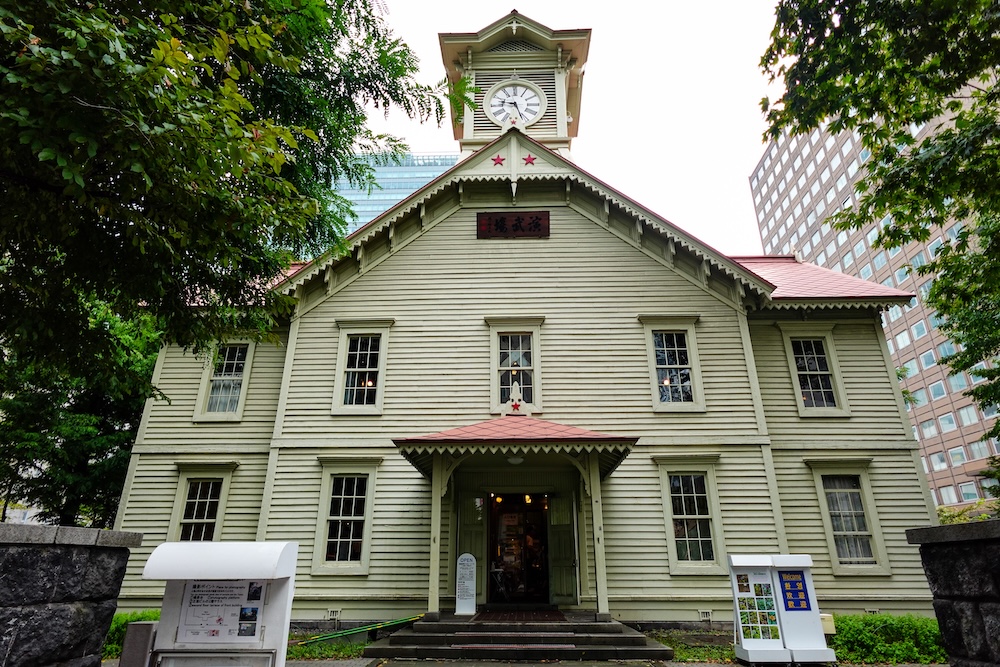
Built in 1878 as the Enbujo, or drill hall, for Sapporo Agricultural College, the building belongs to the history of today’s Hokkaido University. It served practical purposes: physical training, drills, college gatherings and ceremonies. There wasn’t even a clock on it initially.
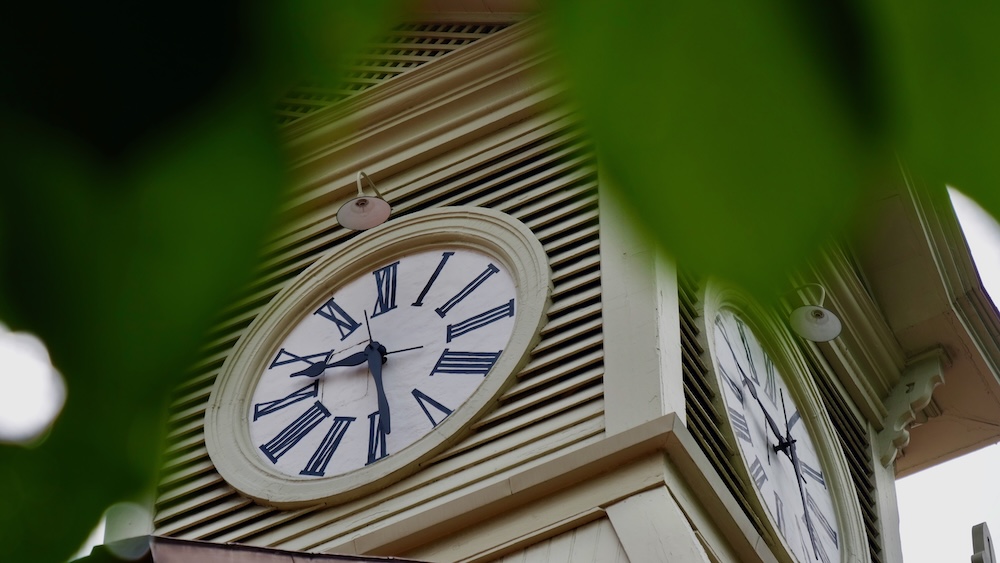
The clock came in 1881, manufactured by E. Howard & Co. in Boston. That sequence matters because the place began life as an educational building and became the landmark we recognize today only afterward. The Western architectural and educational influences also tell you something about the direction Sapporo was taking during Japan’s Meiji era. William S. Clark influenced the college’s early direction, while William Wheeler and Japanese engineer Yoshiyuki Adachi contributed to the planning and construction of the hall.
This is one chapter of Hokkaido’s history, of course, not the beginning of it. The Ainu people were here long before the Meiji government’s development of modern Sapporo. It’s worth keeping that wider context in mind when looking at the city’s early institutional buildings.
The Clock Tower was moved to its present site in 1906 and designated a National Important Cultural Property in 1970. I find those dates useful because they explain why a relatively small building has been protected in the middle of a modern city. Its importance comes from the history it carries, not from taking up an impressive amount of space.
How Much Time Do You Need at Sapporo Clock Tower?
I’d allow about 20–30 minutes for the interior, which is very close to the time Audrey and I spent there. We saw the whole place in roughly half an hour or less. It wasn’t a matter of charging through because we were desperate to leave; the building simply lends itself to a short visit.
If you’re fascinated by nineteenth-century history, enjoy reading every display or happen to catch a clock demonstration, you could stay longer. On a busy day, the time it takes to get through the entrance might also change your plans. We noticed plenty of other visitors during our stop, but that doesn’t mean you’ll always find a queue.
For an exterior photograph, allow considerably less time. The important thing is not to give the Clock Tower an entire afternoon in your itinerary just because it has the word tower in its name. It’s an easy historical stop to work into a day around central Sapporo.
Sapporo Clock Tower Tickets: Is the TV Tower Combination Worth It?
As of November 2026, regular adult entry to Sapporo Clock Tower costs ¥350. University students pay ¥150 with appropriate ID, while high school students and younger can enter free under the admission rules. You can visit independently and purchase admission on site.
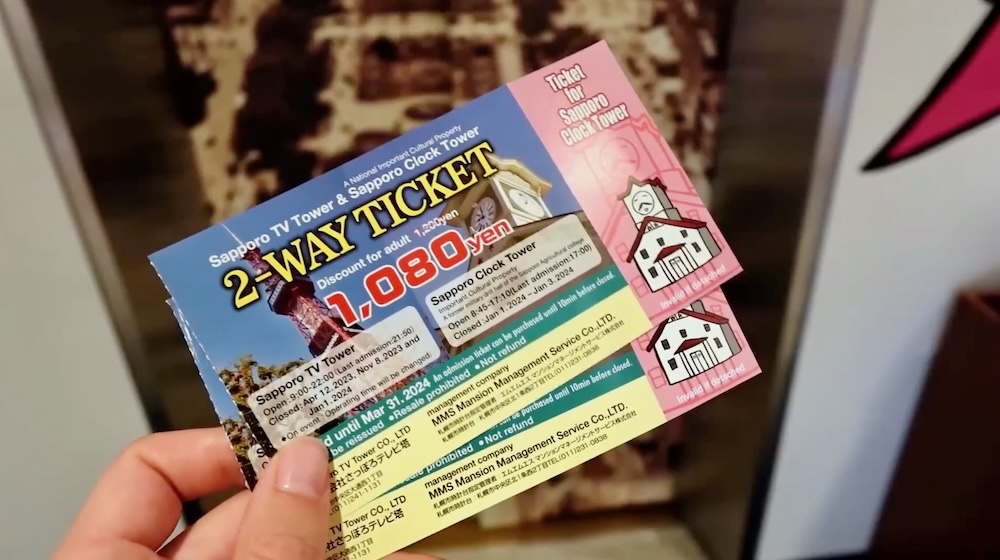
The more interesting calculation is the combination ticket with Sapporo TV Tower. The current standard adult prices are ¥1,200 for TV Tower alone and ¥1,300 for the two attractions together. Separate tickets would total ¥1,550, so the combined ticket saves ¥250. Put another way, if you already intended to pay the standard adult price to go up TV Tower, adding the Clock Tower costs you just ¥100.
That’s the sort of arithmetic I can get behind. We bought a combined ticket on our own trip, and I liked pairing the two experiences. TV Tower gave us the broad view across Sapporo, while the Clock Tower added some of the story behind the city below. The contrast makes the pairing worthwhile.
The current combined offer is advertised through March 31, 2027, and conditions or prices can change after that. Check the official TV Tower ticket page before planning around it. If you’re skipping TV Tower, or qualify for a different concession, an individual Clock Tower ticket may be the sensible choice.
How to Visit Sapporo Clock Tower
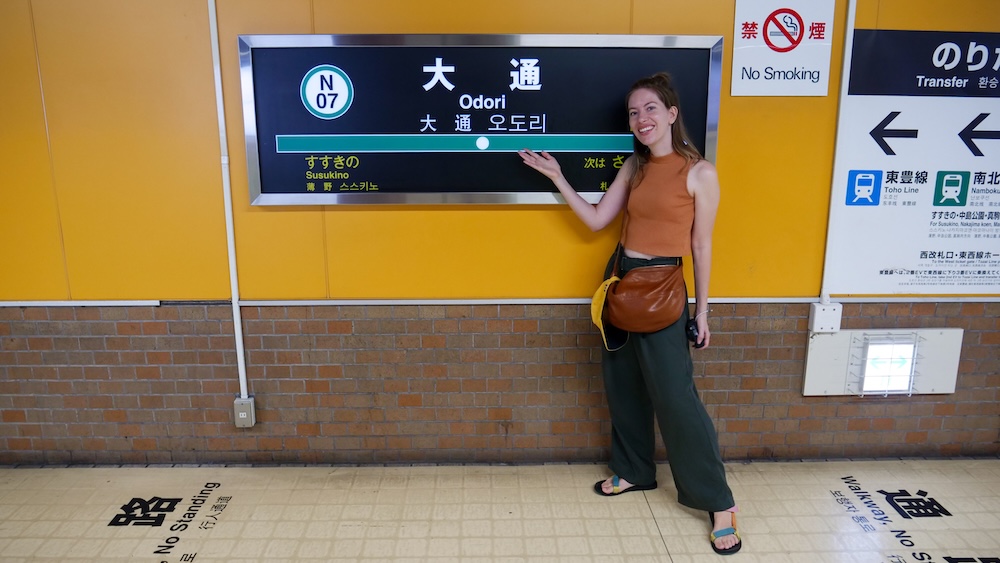
You’ll find the building at Kita 1-jo Nishi 2-chome in central Sapporo, around five minutes on foot from Odori subway station and about ten minutes from the south side of JR Sapporo Station. Sapporo TV Tower is roughly five to seven minutes away. We walked between the two, and it was an easy pairing for our day in the centre.
You don’t need a guided tour for a straightforward Clock Tower visit. However, if you’d rather have someone explain Sapporo’s history while connecting several landmarks, there’s a full-day guided Sapporo historical sightseeing tour that includes the Clock Tower’s museum, TV Tower and other central sights. It’s an eight-hour outing with considerable walking and a sake-tasting component restricted to adults aged 20 and over, so I’d consider it for a broader guided city experience rather than book it just to see the Clock Tower. Check the current itinerary and admission inclusions before committing.
The regular opening hours are 8:45 AM to 5:10 PM, with the final admission at 5:00 PM. The building ordinarily closes from January 1–3, and special events can affect access. Unlike TV Tower, which stays open much later, the Clock Tower is one to fit into your daytime plans. For changes, use the Clock Tower’s official visitor information.
One practical warning: the historic building has no air conditioning. It can become very warm inside in summer, and winter heating doesn’t necessarily make every corner cosy. If the weather outside is extreme, don’t assume the museum will provide a perfectly climate-controlled break. Given the heat Audrey and I experienced elsewhere in Sapporo during our September trip, that’s worth knowing.
There is a step at the entrance, but wheelchair users can contact staff using the intercom, and a lift provides access to the second floor. Restrooms are in a separate annex reached by a short outdoor passage. There aren’t coin lockers, although the building has a designated area for larger luggage near the first-floor office. These details are worth checking directly if accessibility or bags will affect your visit.
Should You Go Inside or Just Photograph the Exterior?
Here’s the distinction I’d make if you’re standing outside wondering whether to buy admission:
| If you’re… | I’d suggest… |
|---|---|
| Interested in Sapporo’s history, architecture or small museums | Go inside. The exhibits and former hall are the reason to pay. |
| Already planning a paid TV Tower visit | Consider the combined ticket while it’s offered. |
| Mostly interested in photographing the historic exterior | Take your pictures and carry on. |
| Pressed for time or facing a particularly crowded entrance | An exterior-only visit is a perfectly sensible decision. |
For photographs, the building can be viewed from the surrounding streets, and there’s a free second-floor photography terrace in the Sapporo MN Building across from it. The exterior is also illuminated after dark, even though the museum itself closes earlier. You don’t need a ticket to appreciate what makes this a recognizable Sapporo landmark.
Would I recommend going inside? Yes, especially with the TV Tower combination. We learned more about Sapporo’s history, and half an hour is a reasonable investment. But if I arrived to find it extremely busy and had a packed afternoon ahead, I’d have no trouble taking exterior photographs and moving on. The Clock Tower will still have told you something about Sapporo; going inside simply lets you understand a little more.
Frequently Asked Questions
Is Sapporo Clock Tower worth going inside?
I think so if you enjoy history, architecture or small museums. Audrey and I explored the interior and found it a worthwhile way to understand more about Sapporo. If you mainly want exterior photos, you can reasonably skip admission.
How long do you need at Sapporo Clock Tower?
Allow around 20–30 minutes for a typical interior visit. Audrey and I explored the whole building in roughly half an hour or less, although you might stay longer if you read every display or attend a scheduled demonstration.
What is inside Sapporo Clock Tower?
The first floor contains historical exhibits, photographs and models about Sapporo Agricultural College and the building. Upstairs is the former drill hall, with a William S. Clark statue and a display clock mechanism.
How much does Sapporo Clock Tower cost to enter?
As of November 2026, standard adult admission costs ¥350, while university students with suitable ID pay ¥150 and high school students and younger enter free under the stated rules. Check official admission details before visiting.
Is there a Sapporo TV Tower and Clock Tower combination ticket?
Yes. The standard adult combination ticket is advertised at ¥1,300 through March 31, 2027, compared with ¥1,550 for separate standard adult tickets. It makes sense if you already intend to visit both attractions.
Can you visit Sapporo Clock Tower without buying a ticket?
You can view and photograph the exterior without paying for museum admission. There is also a free second-floor photography terrace in the Sapporo MN Building opposite the Clock Tower.
This guide is also available in Spanish. [Leé la versión en castellano: Torre del Reloj de Sapporo: guía y reseña, ¿vale la pena entrar?]
This article contains affiliate links. If you book through one of these links, I may earn a commission at no extra cost to you.