
There are two kinds of “family attractions” on a road trip: the ones you hype up for weeks, and the ones you stumble into because everyone needs a leg stretch and the baby is starting to make “I demand a snack immediately” noises.
Kootenay Trout Hatchery is the second kind… and it’s weirdly perfect.
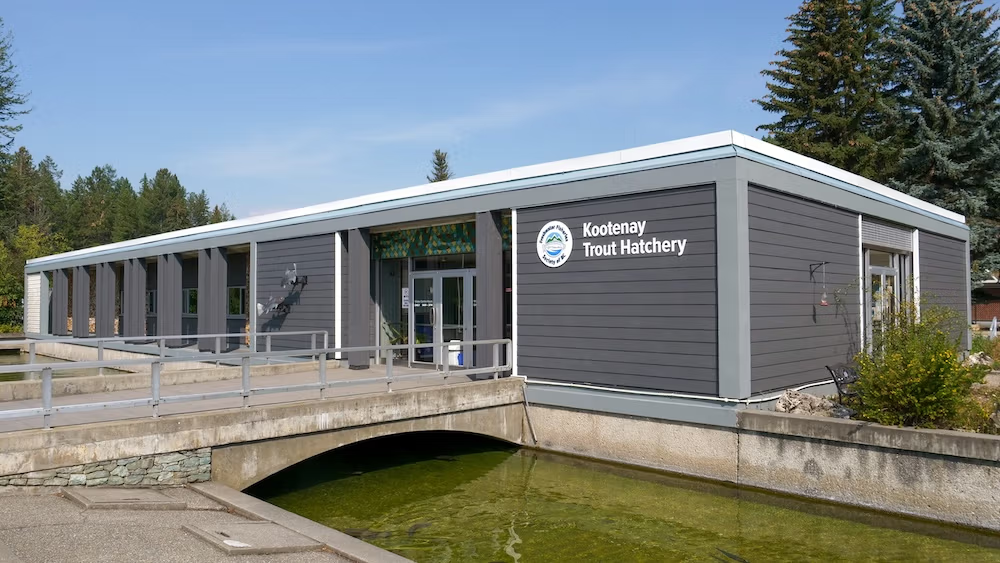
We pulled in with baby Aurelia and did what any normal, fully-put-together adults would do: we brought a baby to look at fish. Then we fed a swarm of hungry trout for literal pocket change (“All gone. 25 cents.”), immediately realized we forgot sunscreen, and declared the outing a success anyway.
This guide is the blog version of that experience: practical, family-friendly, and low-stress.
Kootenay Trout Hatchery snapshot
| What you need to know | Quick answer |
|---|---|
| Where is it? | Fort Steele area, on Fenwick Road (easy drive from Cranbrook) |
| Visitor centre hours | Listed as daily, 9:00 am–3:00 pm (confirm before you go) |
| Cost | Drop-in visitor centre (we didn’t see ticketing); fish food costs can be “pocket change” (when we went, feeding was $0.25) |
| Best for | Toddlers + younger kids, first-time anglers, anyone who likes easy wins |
| Time needed | 45–90 minutes (2 hours if you fish + wander) |
| Big family highlight | Feeding trout + the kids’ catch-and-release pond (seasonal) |
| Fishing pond season | Seasonal; commonly listed May 1–Oct 31 (dawn–dusk), but closures for programs/events happen—call ahead |
| Rod loan + help | Rod loans are commonly highlighted May–August; staff may help beginners |
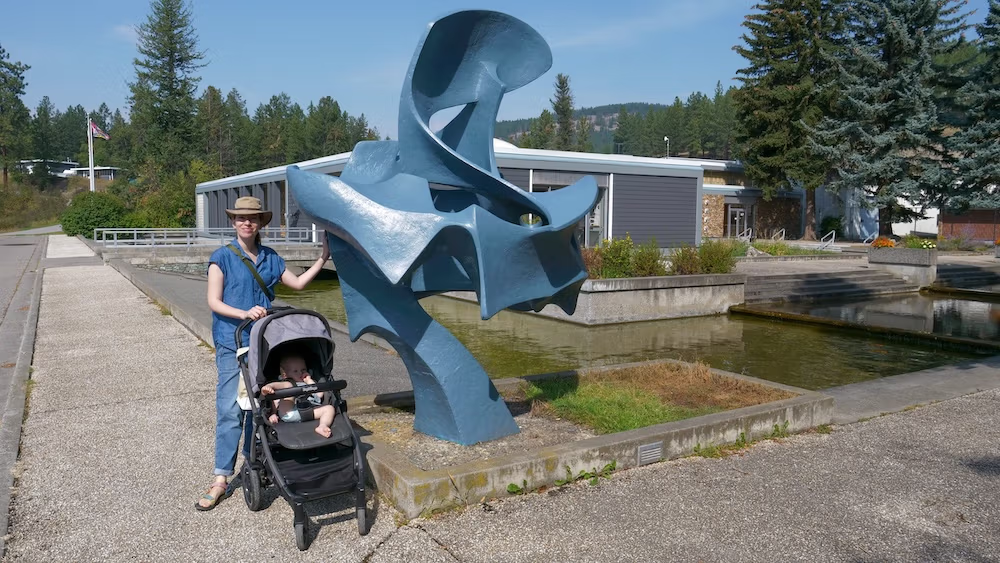
Why this place works so well for families
Let’s be honest: family travel is a constant negotiation between “We want meaningful experiences” and “We need something that doesn’t melt down our entire day.”
Kootenay Trout Hatchery hits a sweet spot:
- It’s short-attention-span friendly (big fish payoff happens fast).
- It’s genuinely educational without feeling like homework.
- It’s cheap (or free-ish), which makes it an excellent “sure, why not?” stop.
- It works as a standalone mini outing or as a quick add-on between bigger plans.
Also, there’s something deeply satisfying about an attraction that doesn’t require a ticket line, a timed entry, or a 12-step parking app. You arrive. You look at fish. You feed fish. You leave feeling like you nailed parenting for the day.
First, where is Kootenay Trout Hatchery and how do you get there?
The official contact listing puts Kootenay Trout Hatchery and Visitor Centre at 4522 Fenwick Road, Fort Steele, BC.
If you’re coming from Cranbrook, it’s an easy drive out toward the Fort Steele / Bull River area. The hatchery is roughly 40 km from Cranbrook. In our case, we were thinking in “parent time” (“about 25 to 35 minutes outside of the city”), which is basically the same unit of measurement as “one Bluey episode.”
Parking and arrival vibes
This is not a “battle for a parking spot” kind of place. It feels like a local, practical facility that happens to be extremely fun for kids. The vibe is: pull in, breathe, and enjoy the fact you’re not parallel parking downtown.
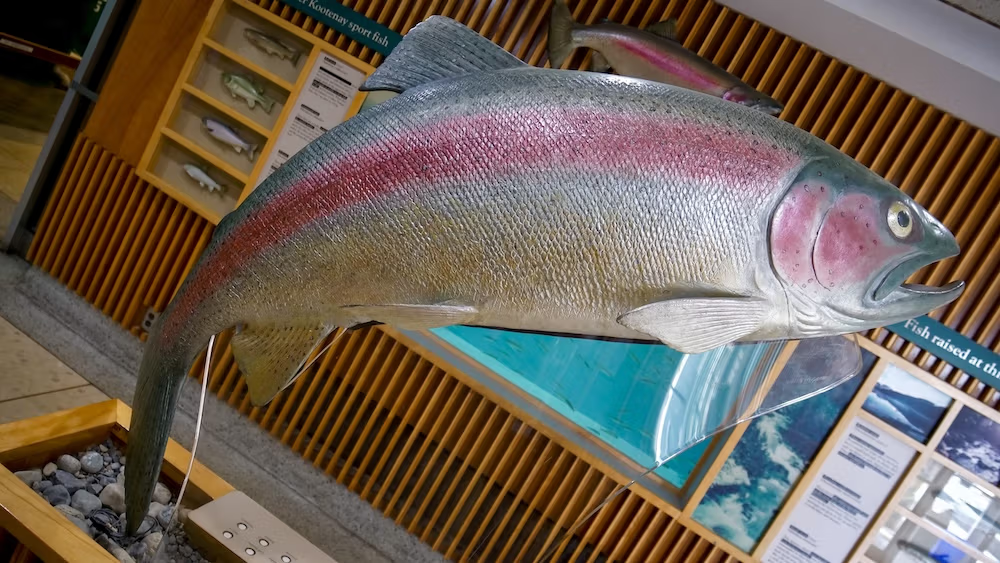
Our family visit: the exact play-by-play (and why it convinced us this stop is legit)
We rolled up with baby Aurelia, fully committed to our new identity: people who do parks, ponds, and “look at this interesting rock” as entertainment.
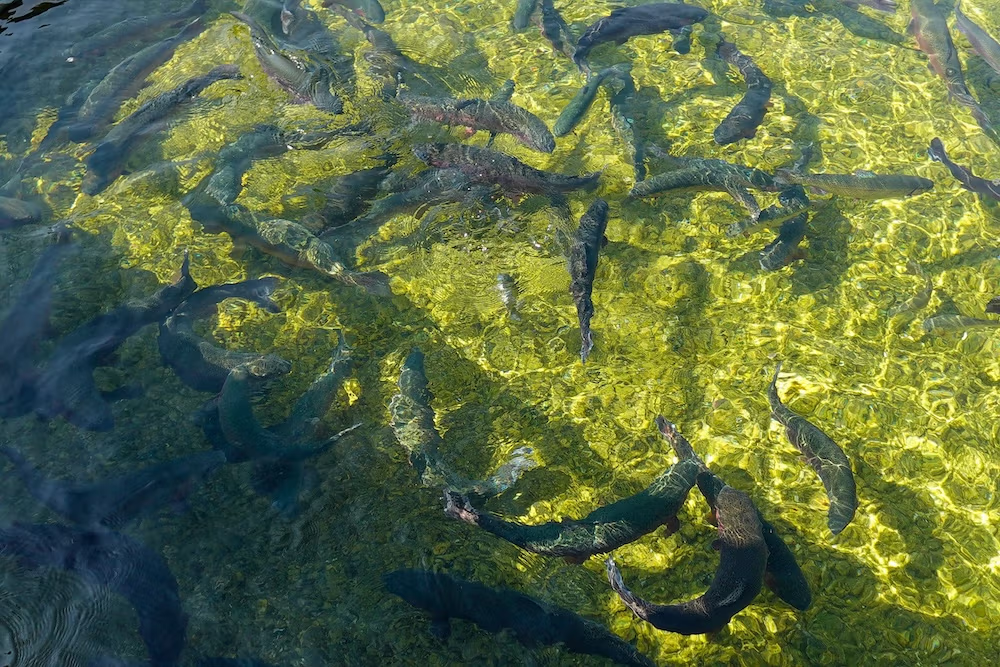
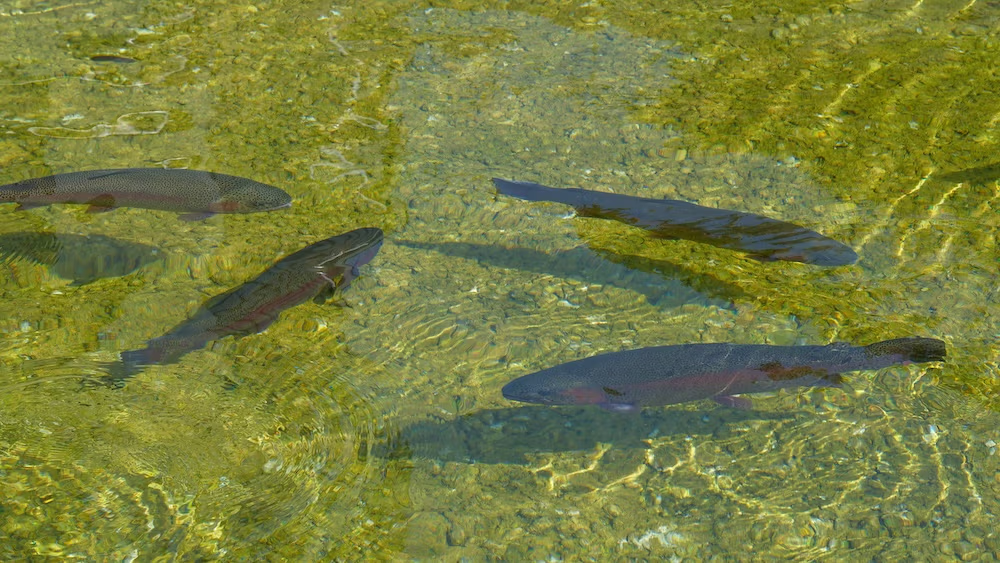
The first thing we noticed was an outdoor area where you can see trout swimming around—big ones (including rainbow, cutthroat, and brook trout). That alone is enough to get kids hooked, because fish that size feel like a tiny freshwater monster movie (in a wholesome way).
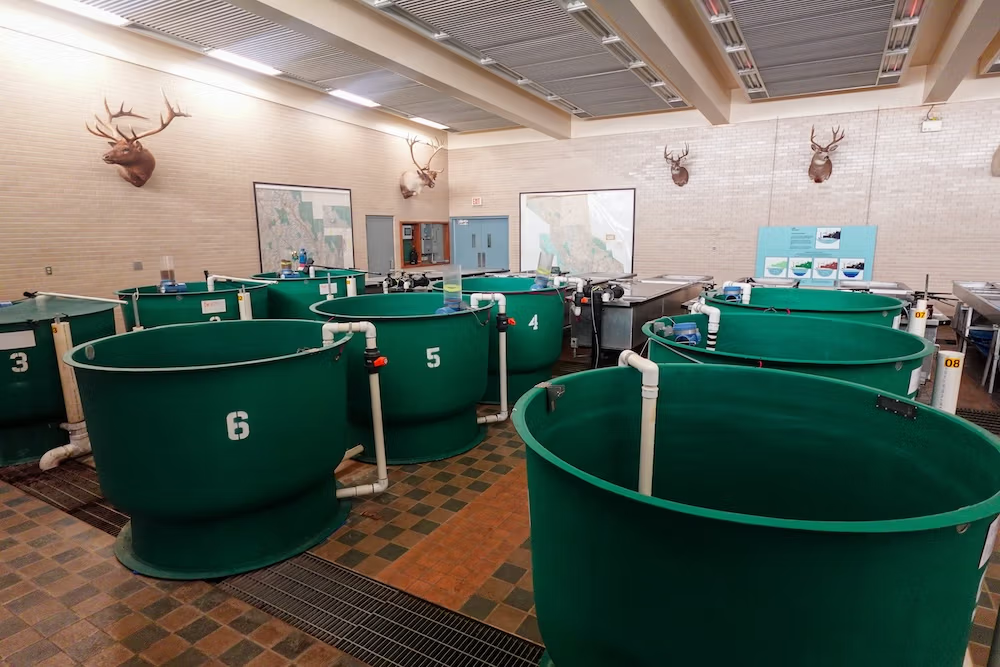
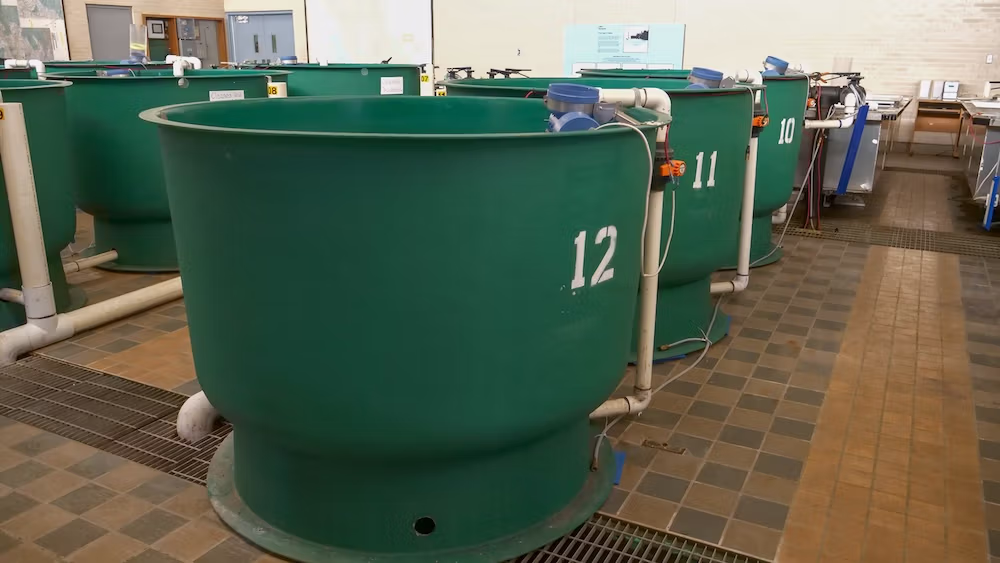
Then we went inside expecting “a quick look around,” and… we learned more than we expected. I ended up doing my best tour-guide voice in front of these green holding tanks and dropping stats like I was about to start a podcast called Tanks & Toddler Chaos.
Here’s what stood out:
- Each green tank holds 1,350 litres of water.
- A single tank can hold up to 40,000 little trout.
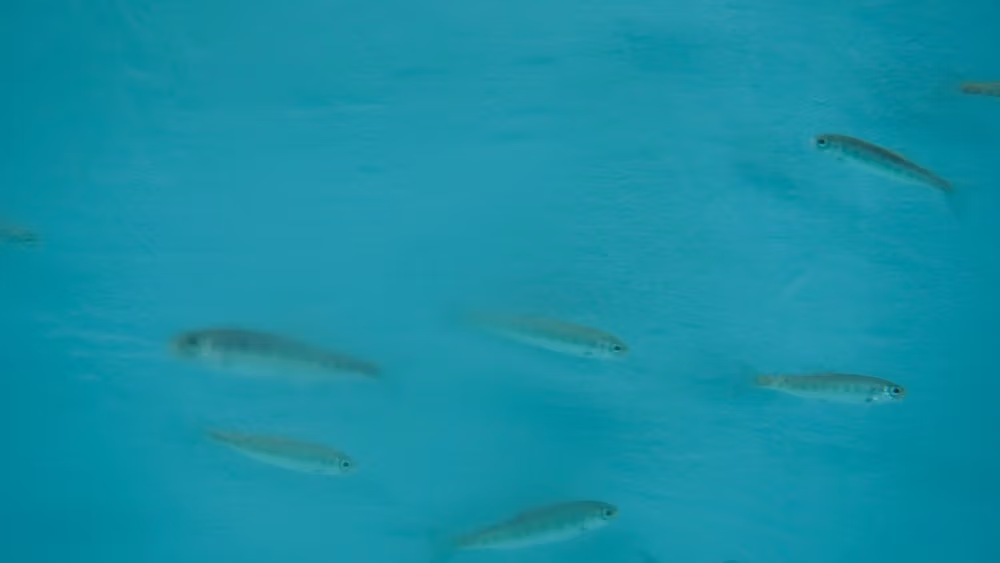
- These little guys were pinky-finger sized and about 1 gram each.
- Across the visible tanks, that’s roughly 720,000 fish capacity.
Then we did the main event: feeding trout.
We fed them. Then we fed them again. The trout reacted like we’d just opened a bag of chips at a party.
And that’s when the hatchery truly won our hearts: it was simple, fun, and the snack budget for the fish was 25 cents.
Also: we forgot sunscreen. In our defence, we were distracted by fish.
Things to do at Kootenay Trout Hatchery
This is the section you’ll copy-paste into your brain as your on-site checklist.
Feed the trout (the “pocket change” highlight)
If you have kids, feeding trout is basically guaranteed entertainment. You buy fish feed on-site (often via a coin-friendly vending setup), and then you toss pellets in and watch the chaos unfold. This is a family-friendly stop and an easy activity for kids.
When we visited, a single round of feeding cost us 25 cents. Prices can change, so I’d describe it as “bring a handful of coins and you’ll be fine.”
Tip: Bring coins anyway. This is not the time to be an “I only have Apple Pay” person.
Explore the self-guided visitor centre (surprisingly good for kids)
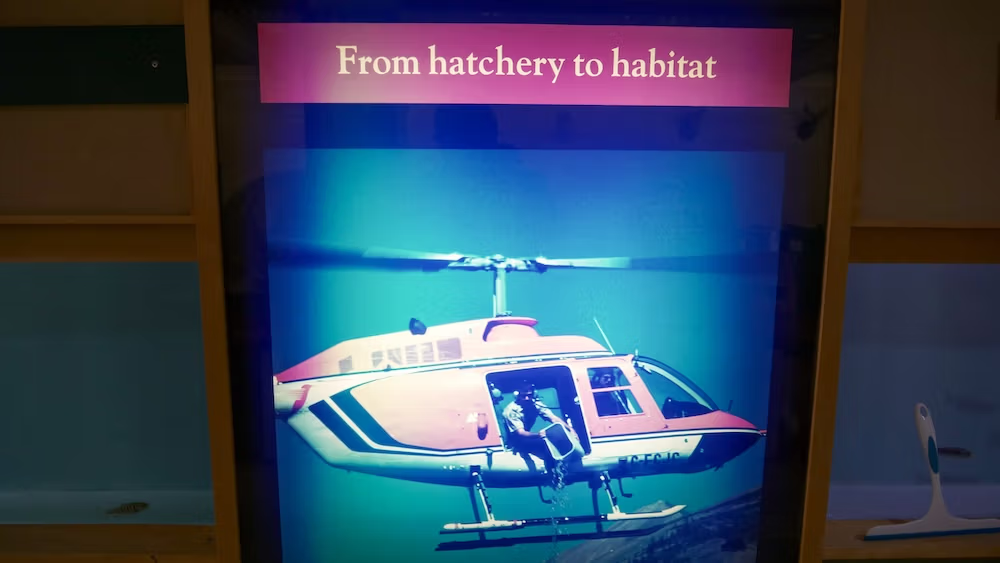
The visitor centre is self-guided and designed to teach you about B.C. freshwater fish, hatchery operations, and recreational fishing.
If you’re travelling with kids, the key is that it’s broken into bite-sized pieces: quick displays, aquaria, and “oh cool” moments rather than long text-heavy panels.
What to look for:
- Anything showing fish life stages (eggs → fry → fingerlings → “big fish energy”)
- Displays that connect the hatchery to local lakes and fishing opportunities
- Aquaria where kids can press their faces close to the glass and pretend they’re marine biologists
Watch the fish up close outside (the instant payoff zone)
Outside, you get the biggest “wow” in the shortest time: big trout cruising around like they own the place.
This is your best toddler moment because it requires almost zero patience. You can literally do:
- walk up
- look at fish
- say “Wowww”
- take a photo
- leave
And everyone feels accomplished.
Try the children’s catch-and-release fishing pond (seasonal)
If your kids have ever asked to go fishing (or if you have always secretly wanted to be the kind of person who teaches your child to fish), this pond is the perfect low-pressure place to try.
Multiple tourism listings describe an on-site pond where children and new anglers can practise catch-and-release fishing.
What matters for planning:
- The outdoor fishing ponds are commonly listed as open May 1 to Oct 31 from dawn to dusk.
- The pond may close during registered programs or private events, so calling ahead is smart.
- Rods are often available for loan May to August, and staff may be able to help get visitors set up.
Important: In B.C., anyone 16+ generally needs a basic freshwater fishing licence to fish in non-tidal waters. If you’re bringing older teens, aunts, uncles, or “I’m just going to have a quick cast” adults, sort that out before you go.
Take a short nature walk and soak up the “easy outdoors” feeling
You can also take a nature walk to spot native plants, birds, and animals of the region.
This is the underrated part of the hatchery stop: it’s not only “indoors + fish tanks.” You can slow down, let kids wander (supervised), and turn it into a mini nature break.
Look for guided tours, programs, and “extra” options
The hatchery does offer guided tours (especially in peak season) and even birthday party options.
Even if you don’t do a formal tour, it’s useful to know the place is set up for groups and education—because it usually means the signage and layout are thoughtfully done.
The best way to visit: choose your family “style”
Here’s the thing: families don’t all travel the same. Some of us are “two-hour deep dive, read every sign.” Others are “we have 30 minutes before nap time detonates.”
Pick your vibe:
| Visitor style | Best for | Do this first | Time needed | Your success metric |
|---|---|---|---|---|
| The Toddler Sprint | 1–3 year olds, short fuses | Outdoor fish + feeding | 30–60 min | No meltdown + one cute photo |
| The Curious Kid Loop | 4–10, “why?” phase | Visitor centre first, then feeding | 60–90 min | Kids remember one fun fact |
| The New Angler Day | First-time fishing families | Fishing pond + staff help (seasonal) | 90–120 min | One fish landed, big celebration |
| The Road Trip Pit Stop | Travellers passing through | Outdoor look + quick indoor loop | 30–45 min | Everyone stretches + resets |
| The Chill Picnic Break | “We need a calm afternoon” | Nature walk + snack + fish look | 60–120 min | Parents drink coffee in peace |
Kootenay Trout Hatchery by the numbers (because it’s honestly wild)
This is the part kids won’t care about… until they do. And when they do, you’ll feel like the most prepared adult in the room.
From the on-site info we were reading during our visit:
- Each green holding tank can hold 1,350 L of water.
- Each tank can hold up to 40,000 tiny trout (pinky-finger sized, ~1 gram each).
- Across the tanks you see, that’s about 720,000 fish capacity.
To a kid, that translates to: “This is basically a fish city.”
What the hatchery actually does
At a basic level, trout hatcheries raise fish that are stocked into lakes to support recreational fishing and fisheries management. The Kootenay Trout Hatchery stocks regional lakes.
And zooming out, the hatchery is part of a bigger provincial system. The Kootenay Trout Hatchery opened in 1966, and in 2003 ownership of provincial trout hatcheries was converted to the newly formed Freshwater Fisheries Society of BC.
So yes, it’s an attraction. But it’s also a working facility connected to actual fisheries outcomes, education, and getting people (especially kids) into responsible fishing.
Planning your Visit
Best time of day to go
If you’re travelling with little kids, aim for “when everyone is at their best,” which usually means:
- morning after breakfast, or
- early afternoon before the late-day crankiness
If you’re doing the fishing pond, go earlier in the day when attention spans still exist.
How long to budget
Here’s a realistic time guide:
| Your pace | What you can do | Time |
|---|---|---|
| Quick stop | Outdoor fish + feed + quick indoor peek | 30–45 min |
| Standard family visit | Feed fish + visitor centre + wander | 60–90 min |
| Full experience | Add fishing pond (seasonal) + nature walk + snack | 90–120 min |
Costs and what to bring
On our visit, it felt like a drop-in, no-ticket kind of place, and the on-site fun is mostly low-cost.
Bring:
- Coins (for fish feed)
- Snacks + water (because kids)
- Hand wipes (fish feed + toddlers = sticky hands)
- A hat and sunscreen… learn from our mistakes
- If fishing: your licence (if 16+), and your own rod if you’re outside the rod-loan window
The “don’t learn this the hard way” checklist
- Call ahead if your day depends on the fishing pond. It can close for programs or private events.
- Assume you’ll spend longer than you think if the fish feeding is working.
- If you forgot sunscreen, stand in the shade and pretend you planned it.
Family-friendly safety + etiquette
This isn’t a dangerous place, but it is full of the two things toddlers love most: water and chaos.
- Hold hands near pond edges.
- Don’t let kids climb railings.
- Only feed the fish the approved food (no crackers, no “just a little bread,” no toddler snack offerings).
- If you’re fishing, use good fish handling: wet hands, gentle release, keep it quick.
Decision matrix: should you stop at Kootenay Trout Hatchery?
Use this to decide fast, especially on a road trip day when everyone is running on granola bars and optimism.
| If you have… | This stop is a YES when… | Consider skipping when… |
|---|---|---|
| Toddlers | You need a short, high-payoff outing | You need a guaranteed nap right now |
| Older kids | They like animals/nature/learning | They only want “big thrills” |
| A rainy day | You want an indoor + outdoor mix | Weather is truly miserable and you’re done |
| A tight budget | You want an activity that’s basically free-ish | You want a paid attraction with lots of structure |
| New anglers | You want a low-pressure pond (seasonal) | Fishing pond is closed that day |
Trout, Char, Kokanee (and a Bonus Sturgeon): Meet the Hatchery Cast
If you’ve ever said the phrase “a trout is a trout is a trout,” the Kootenay Trout Hatchery is about to lovingly roast you.
This place is basically a freshwater fish meet-and-greet… with a side of education, conservation, and children losing their minds because the fish are doing fish things at maximum speed.
At the Kootenay Trout Hatchery, the species you’ll most often hear about (and potentially see raised here) include Rainbow Trout, Cutthroat Trout, Brook Char, and Kokanee—plus White Sturgeon as a conservation program. That last one is not a trout, but it is the prehistoric-looking VIP that steals the show.
Quick “Trout vs Char vs Kokanee” decoder
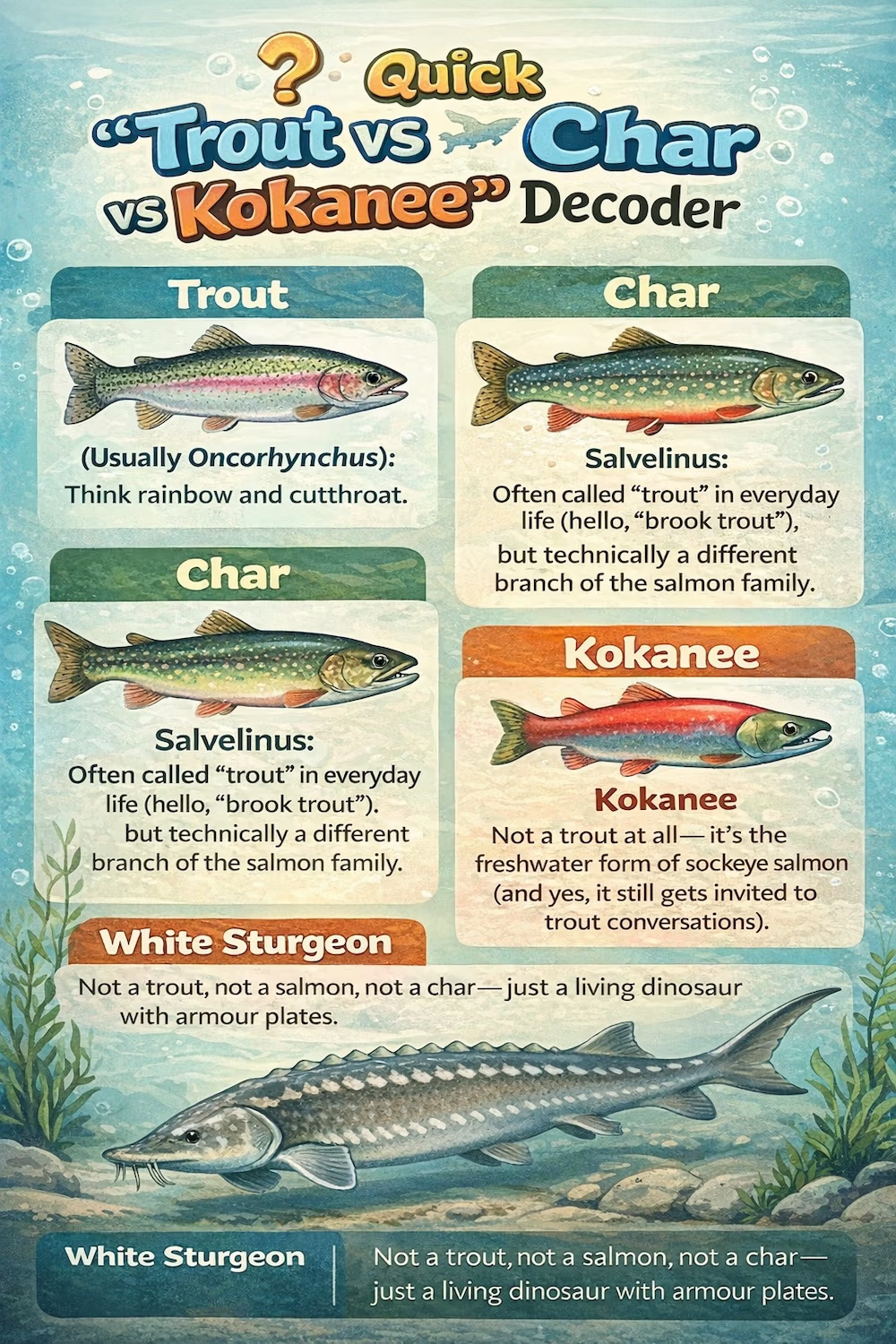
- Trout (usually Oncorhynchus): think rainbow and cutthroat.
- Char (Salvelinus): often called “trout” in everyday life (hello, “brook trout”), but technically a different branch of the salmon family.
- Kokanee: not a trout at all—it’s the freshwater form of sockeye salmon (and yes, it still gets invited to trout conversations).
- White sturgeon: not a trout, not a salmon, not a char—just a living dinosaur with armour plates.
The Hatchery Species Spotter’s Guide
Rainbow Trout
Rainbow trout are the classic “starter trout” in BC: hardy, popular, and basically the reason a lot of family-friendly stocked lakes exist.
How to spot one (kid-friendly edition):
- Look for black spots (often on the back and fins).
- Many have a pinkish stripe or blush along the side, especially when they’re feeling extra dramatic.
Why they matter around Cranbrook/Kootenays:
Rainbow trout are one of the backbone species for recreational fishing in BC. And the Kootenays have some famous rainbow trout lore too—like the Gerrard rainbow trout of Kootenay Lake, known for reaching truly ridiculous sizes.
Fun line to tell the kids:
“This one’s called a rainbow trout because it’s basically wearing a faint pink highlighter down its side.”
Westslope Cutthroat Trout
If the rainbow is the popular kid, the westslope cutthroat is the local legend with a bit more backstory.
How to spot one:
- The signature giveaway is the orange-red “cut” mark under the jaw (sometimes faint, but it’s the classic ID feature).
- Often has heavier spotting, and that slightly “wild” look.
Why they’re a big deal here:
Westslope cutthroat are a native fish in parts of the Kootenays, and they’re important enough in Canada that the BC population was listed as Special Concern under Canada’s Species at Risk Act. In plain language: they’re not extinct, but they’re sensitive, and we don’t want to mess this up.
This is where it gets extra relevant to your hatchery visit: the Kootenay facility is the only hatchery in BC that raises and releases westslope cutthroat trout.
Fun line to tell the kids:
“See those little orange ‘slashes’ under the jaw? That’s the cutthroat trout’s signature moustache.”
Tip: If your kid becomes obsessed with “the slash-jaw trout,” just lean into it. It’s a wholesome hyperfixation.
Brook Char (often called “Brook Trout”)
Brook char are gorgeous… and confusing… because most people call them brook trout, even though they’re technically char.
How to spot one:
- White leading edges on the lower fins (the “fancy cuff” look).
- A marbled or wormy pattern on the back (“vermiculations,” if you want to sound like a fish professor).
- Often has red spots with bluish halos—like someone dotted them with a tiny paintbrush.
Trout or char?
Brook “trout” are members of the char family, and char tend to love cold, clean water. So if you ever want to turn your kid into a tiny environmentalist, brook char are a great gateway fish.
Fun line to tell the kids:
“This one looks like it got decorated by a kindergarten art class—in the best possible way.”
Kokanee (the honorary trout-ish guest)
Kokanee are the landlocked (freshwater) form of sockeye salmon. In other words: they’re salmon who never went to the ocean.
How to spot them (in the wild, someday):
- Silvery most of the year, and in spawning season they can turn vivid (depending on the population).
- But at the hatchery, the bigger point is what they are rather than trying to play fish detective in a tank.
Why they matter here:
Kokanee are widely stocked and managed in BC to support recreational fisheries, and hatchery-reared kokanee fry are part of the broader stocking picture.
Fun line to tell the kids:
“Kokanee are sockeye salmon who decided the ocean was overrated.”
White Sturgeon (the conservation celebrity)
Now for the plot twist: white sturgeon are raised here for conservation purposes.
These fish can get massive, live a very long time, and look like something you’d expect to see swimming past a submarine window.
How to recognize one:
- Long body, bony plates (armour vibes), and a mouth that looks built for vacuuming snacks off the bottom.
- Basically: prehistoric energy.
Why they matter:
White sturgeon are one of the most iconic freshwater giants in western North America, and conservation programs exist because some populations have struggled with recruitment and long-term survival. The Fort Steele facility has been described in federal conservation reporting as an experimental conservation culture facility for sturgeon populations in the Kootenay/Kootenai and upper Columbia systems.
Fun line to tell the kids:
“This fish is basically a dinosaur in a wetsuit.”
Spot-the-Fish Matrix: What You’ll Notice First
| Fish | The “Instant Clue” | What it usually looks like in the water | Kid-friendly tagline |
|---|---|---|---|
| Rainbow trout | Spots + pinkish side stripe | Sleek, classic trout shape | “The one with the pink racing stripe.” |
| Westslope cutthroat | Orange-red slash under jaw | Speckled, wild-looking | “The slash-jaw trout.” |
| Brook char | White-edged fins + marbled back | Fancy patterning, red/blue spots | “The artsy one.” |
| Kokanee | It’s a salmon (freshwater sockeye) | Often silvery | “Sockeye that stayed home.” |
| White sturgeon | Armour plates + prehistoric look | Long, bottom-oriented | “River dinosaur.” |
Mini Life Cycle Cheat Sheet (so the tanks make more sense)
Hatcheries deal with fish life stages that sound like they were invented by a committee of whimsical biologists:
- Eggs: the beginning (and the most “please don’t bump the tray” stage).
- Alevin (yolk-sac fry): freshly hatched fish still living off a yolk sac—basically a tiny fish with a built-in lunchbox.
- Fry: when they start feeding on their own.
- Fingerlings: juvenile fish roughly “finger-sized” (a very scientific unit of measurement, obviously).
- Yearlings: older juveniles, often closer to the size you’d imagine for stocking depending on program goals.
If your kids ask why hatcheries do this instead of “letting nature handle it,” the simplest answer is: because nature is chaotic and fish survival is low, and stocking helps maintain recreational fisheries—while conservation programs try to support species that need extra help.
Sample mini-itineraries (so you can copy our energy, minus the sunscreen fail)
45-minute “pit stop” plan
- 10 min: Outdoor fish viewing
- 10 min: Feed the trout
- 15 min: Visitor centre loop
- 10 min: Final outdoor lap + photo + leave
90-minute “proper family visit”
- 15 min: Visitor centre first (kids are freshest)
- 15 min: Outdoor fish viewing + feeding
- 30 min: Fishing pond attempt (seasonal)
- 30 min: Nature walk + snack break
Half-day pairing ideas from Cranbrook
This hatchery stop pairs beautifully with other easy family outings around Cranbrook (parks, historic sites, etc.). If you’re building a full day, think “one educational stop + one outdoorsy stop + one food stop.”
Seasonal guide: what changes through the year
Spring (April–May)
This is shoulder season energy. The visitor centre hours are typically listed as daily 9–3, but the fishing pond schedule ramps up later.
If you’re visiting in early spring, go for the visitor centre + outdoor viewing, and treat fishing as a bonus if it’s open.
Summer (June–August)
This is peak “family win” season.
- The fishing pond is generally open in summer and rods may be available for loan May–August.
- This is when staff/programming support is most likely.
Summer tip: pack a snack that won’t melt into a tragic goo inside your car.
Fall (September–October)
Fall is underrated.
- Fewer crowds.
- Cooler temperatures.
- Still often within the May–Oct pond season window.
Winter
Expect the fishing pond to be closed for the season, and treat the hatchery as a “check hours first” stop. The official contact listing sometimes posts seasonal closure notes.
For parents travelling with babies and toddlers
This is where Kootenay Trout Hatchery shines. You don’t need perfect behaviour or a perfectly planned day.
What worked for us:
- Start outside because it’s the quickest payoff.
- Keep the visit modular: you can bail at any time without feeling like you “wasted money.”
- Let the baby set the pace. If the baby is happy, everyone is happy. If the baby is not happy… you leave. This is the way.
Toddler pro tip: narrate everything like it’s a documentary. Kids love it. Strangers tolerate it.
Photography + content creation tips (for the family travel nerds)
If you’re photographing this spot (or filming a quick family reel), your best shots are:
- Outdoor fish feeding chaos (action + smiles)
- Close-ups of the fish in the tanks
- Wide shots of the green tanks (they look cool and “industrial nature” at the same time)
- A kid holding a tiny fishing rod at the pond (summer hero moment)
And if you forget sunscreen, just aim for golden hour and pretend you’re an artist.
Beginner fishing pond: a no-stress way to make “first fishing” actually fun
If your kid has never held a fishing rod before, the hatchery pond is basically training wheels for angling (in the best way). The goal isn’t “catch the biggest trout.” The goal is: learn the rhythm, feel a tug, and scream with joy like you just landed a marlin.
A few planning notes to keep expectations realistic:
- The pond is seasonal (often May 1–Oct 31) and can close for programs, so it’s worth a quick phone call if fishing is your main reason for visiting.
- Rod loan and beginner help is commonly highlighted in the May–August window. c
- Adults and teens 16+ generally need a basic B.C. freshwater licence to fish in non-tidal waters.
A “kid-first” setup (works for nervous beginners)
- Keep the rod short and simple. If you’re borrowing gear, ask for the easiest setup (this is not the day for advanced tackle talk).
- Make the first cast a team sport. One adult helps with the cast, the kid holds the rod, and everyone pretends this is a perfectly normal activity you do all the time.
- Watch the bobber like it’s the season finale of your favourite show.
- When a fish bites, celebrate immediately. Not later. Immediately. Big reactions = kids want to do it again.
- Keep fish handling quick and gentle. Wet hands, support the fish, and release it smoothly.
- End on a high note. Don’t grind until everyone’s frustrated. This is about building confidence.
Tip: If you only have 10 minutes before the “I’m hungry” chorus starts, do one or two casts and then pivot to fish feeding. The hatchery is basically built for graceful exits.
Make it a half-day: easy pairings near Cranbrook (family-friendly and low drama)
One reason we love this stop is how easily it fits into a bigger day without becoming the whole day.
Here are a few “pairing” ideas that keep the energy balanced (one easy educational stop + one outdoorsy wander + one treat).
| Pairing idea | Why it works | Best for | Time you’ll want |
|---|---|---|---|
| Hatchery + Fort Steele | Fish fun + heritage town wandering (big variety) | Mixed ages | 3–6 hours |
| Hatchery + Elizabeth Lake | Fish tanks + gentle nature walk and wildlife | Babies/toddlers | 2–4 hours |
| Hatchery + downtown Cranbrook | Quick stop outside town + cafés/parks in the city | Short trips | 2–5 hours |
| Hatchery + brewery lunch (parents win too) | Kids burn energy first, adults eat something good later | Everyone | Flexible |
If you’re building a Cranbrook itinerary around parks, historic sites, and easy nature, this hatchery stop is a perfect “starter chapter” before the rest of the day unfolds.
Packing matrix: what to bring (by season and by kid chaos level)
| Item | Spring | Summer | Fall | Why it matters |
|---|---|---|---|---|
| Coins | ✅ | ✅ | ✅ | Fish feeding is the cheapest hit of joy you’ll buy all week |
| Sunscreen + hat | ✅ | ✅✅ | ✅ | We forgot sunscreen once. We do not recommend this lifestyle. |
| Hand wipes | ✅ | ✅ | ✅ | Fish feed + toddler hands = sticky art project |
| Snacks + water | ✅ | ✅✅ | ✅ | Prevents “hangry tourism” |
| Bug spray | ➖ | ✅ | ➖ | Depends on season and how long you wander |
| Lightweight rain layer | ✅ | ➖ | ✅✅ | The Kootenays love a surprise mood swing |
| Small towel / change of clothes | ✅ | ✅ | ✅ | Water + kids… you already know |
Final thoughts: the simplest family outing that actually delivers
Kootenay Trout Hatchery is one of those places that shouldn’t be as fun as it is. On paper, it’s a hatchery. In real life, it’s:
- a cheap thrill (for humans and fish)
- a mini science lesson
- a low-pressure beginner fishing spot (in season)
- and a rare travel activity where the logistics don’t fight you
We left feeling like we’d done something wholesome and educational… and also like we need to permanently store sunscreen in every bag we own.
Kootenay Trout Hatchery visitor FAQ for families (hours, feeding, fishing pond, and planning)
Is Kootenay Trout Hatchery free to visit?
On our visit, it felt like a drop-in, no-ticket kind of place. Bring coins for feeding, and if you see a donation box, tossing in a few dollars is a nice way to support the visitor centre.
What are the visitor centre hours?
The official contact listing shows visitor hours as daily, 9:00 am–3:00 pm (always confirm before you go).
Where is Kootenay Trout Hatchery located?
It’s listed at 4522 Fenwick Road, Fort Steele, BC.
How far is it from Cranbrook?
The hatchery is about 40 km from Cranbrook, and it feels like an easy short drive.
Do you need coins to feed the trout?
It helps. Feeding is usually done with purchased fish food on-site, and bringing coins is the easiest move. When we visited, feeding cost us 25 cents.
Is the fishing pond open all year?
No. The outdoor fishing ponds are commonly listed as open May 1–Oct 31, and they can also close for programs/events—call ahead if fishing is the main goal.
Can kids borrow fishing rods at the hatchery?
Often yes in peak season. Listings commonly note rods are available for loan May–August, and staff may help beginners.
Do adults need a fishing licence for the pond?
In B.C., anyone 16+ generally needs a basic freshwater fishing licence to fish in non-tidal waters.
How long should we plan to stay with young kids?
Most families will be happy with 45–90 minutes, and longer if fishing is open and everyone’s into it.
Is this good for toddlers?
Yes. It’s short, visual, and the “feed the fish” payoff is immediate.
Is it stroller-friendly?
In practice it’s a low-stress family stop, but surfaces and layouts vary by season—if you need full accessibility specifics, call ahead.
What should we bring?
Coins, snacks, hand wipes, sunscreen, and a sense of humour (because fish feeding makes everyone feel like a hero).
Further Reading, Sources & Resources
If you want to double-check details (hours, pond season, fishing rules) or go deeper on the fish species and conservation side of the hatchery, these are the best starting points we used while researching this guide.
Official hatchery info and hours
https://www.gofishbc.com/about-us/contact-us/
Freshwater Fisheries Society of BC contact page listing the Kootenay Trout Hatchery & Visitor Centre address, phone number, and visitor hours (and sometimes seasonal pond status).
Regional tourism listings and visitor overviews
https://cranbrooktourism.com/things-to-do/fishing/kootenay-trout-hatchery
Cranbrook Tourism’s visitor-facing overview with hours, a quick description of what families can do, and contact details.
https://www.supernaturalbc.com/listings/kootenay-trout-hatchery-visitor-centre-900053870/
HelloBC / Super, Natural BC listing summarizing the visitor centre, typical hours, and fishing pond season dates (plus “call ahead” notes).
https://www.kootenayrockies.com/partner/kootenay-trout-hatchery/
Kootenay Rockies tourism listing highlighting the children/new angler pond, typical summer staffing, and rod loan window.
https://tourismfernie.com/activities/attractions/day-trips
Tourism Fernie day-trip roundup that mentions the hatchery’s species raised and positions it as an easy add-on from Fernie.
Fish stocking, hatchery background, and species details
https://www.gofishbc.com/news/about-us/a-brief-history-of-freshwater-fish-stocking-and-hatcheries-in-bc/
Background primer on why fish stocking exists in BC and how hatcheries fit into broader fisheries goals.
https://www.gofishbc.com/news/about-us/spring-at-the-freshwater-fisheries-society-of-bc-hatcheries/
Freshwater Fisheries Society post with species/program notes (including references to westslope cutthroat trout).
https://www.gofishbc.com/learn/stocked-strains/westslope-cutthroat-trout/
Species-focused explainer on westslope cutthroat trout.
Fishing licences and regulations in British Columbia
https://www2.gov.bc.ca/gov/content/sports-culture/recreation/fishing-hunting/fishing/recreational-freshwater-fishing-licence
Government of BC page explaining who needs a licence, including key age/residency rules for non-tidal freshwater fishing.
https://www.gofishbc.com/learn/fishing-licence-regulations/
Plain-language guide to basic freshwater licences, stamps, and high-level rules.
Conservation context
https://www.canada.ca/en/environment-climate-change/services/species-risk-public-registry/cosewic-assessments-status-reports/westslope-cutthroat-trout.html
COSEWIC overview page with status info for westslope cutthroat trout in Canada.
https://www.canada.ca/en/environment-climate-change/services/species-risk-public-registry/cosewic-assessments-status-reports/white-sturgeon-acipenser-transmontanus-2003.html
COSEWIC status report page with broader white sturgeon context (including references to conservation culture facilities).
Notes on accuracy
- Hours and seasons change. Even when a listing says “daily,” verify close to your visit—especially outside peak summer.
- Pond access can vary. Fishing pond dates shift year to year and the pond may close during programs/private events, so call ahead if fishing is your main goal.
- Feeding costs can change. We paid $0.25 during our visit, but treat that as a “pocket change” guideline, not a guarantee.
- Distances depend on route. “About 40 km from Cranbrook” is a helpful planning estimate, but GPS is the final boss.