
Fernie is one of those towns that tries to play it cool. You roll in and think: “Okay—cute mountain main street, a few trails, a brewery, done.” And then you take five minutes downtown and realize you’ve stumbled into a place that’s been tested, burned, rebuilt, financially sucker-punched, reinvented, and somehow come out the other side with a grin and a skyline full of mountains.
That’s why we started our Fernie trip the way we did: at the Fernie Museum.
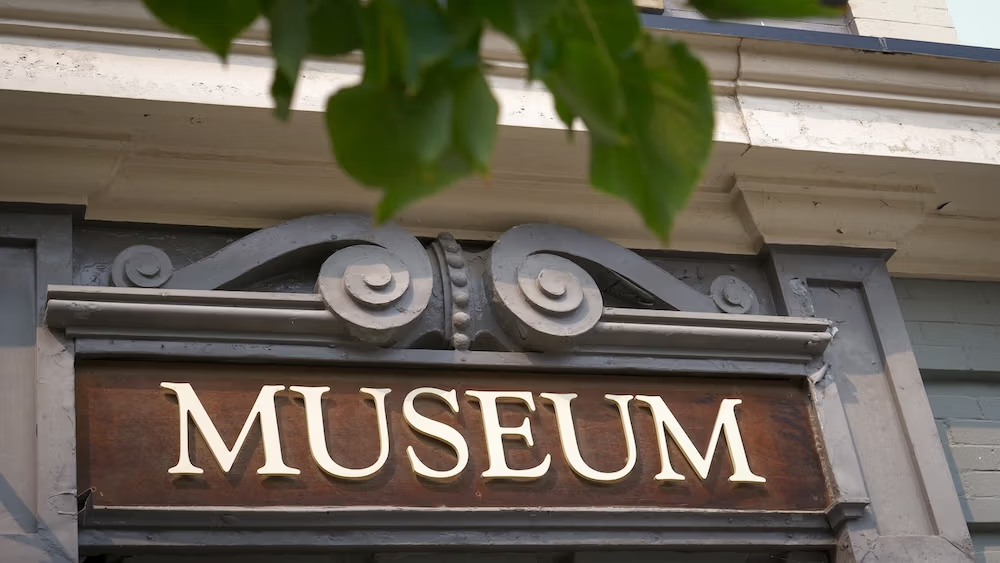
We were traveling as a trio—me (Nomadic Samuel), Audrey Bergner (That Backpacker), and our baby daughter (Aurelia)—and we wanted more than pretty views. We wanted context. The museum delivered that in the best way possible: not as a dry timeline, but as a story about a small town that has had to be stubbornly resilient… over and over and over and over again.
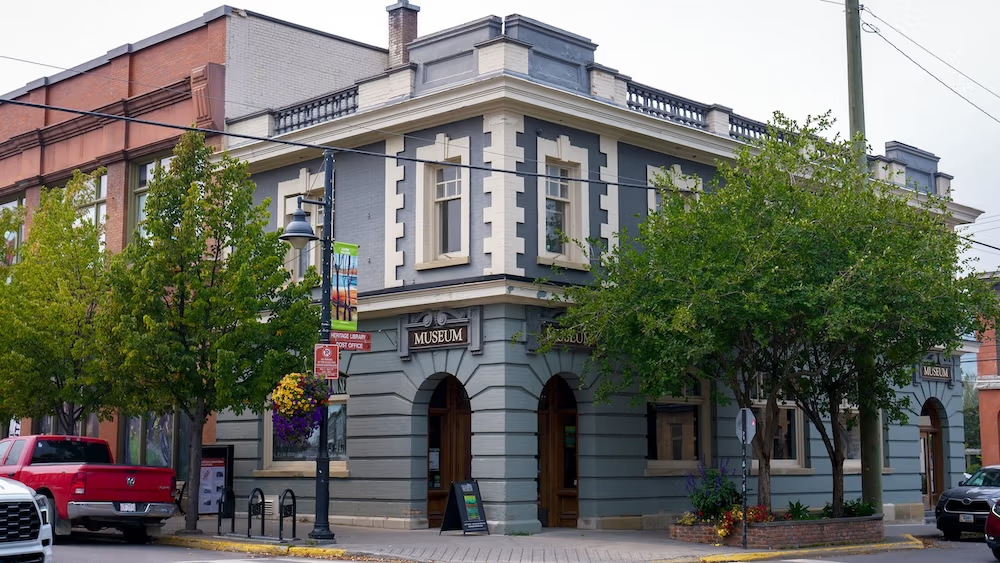
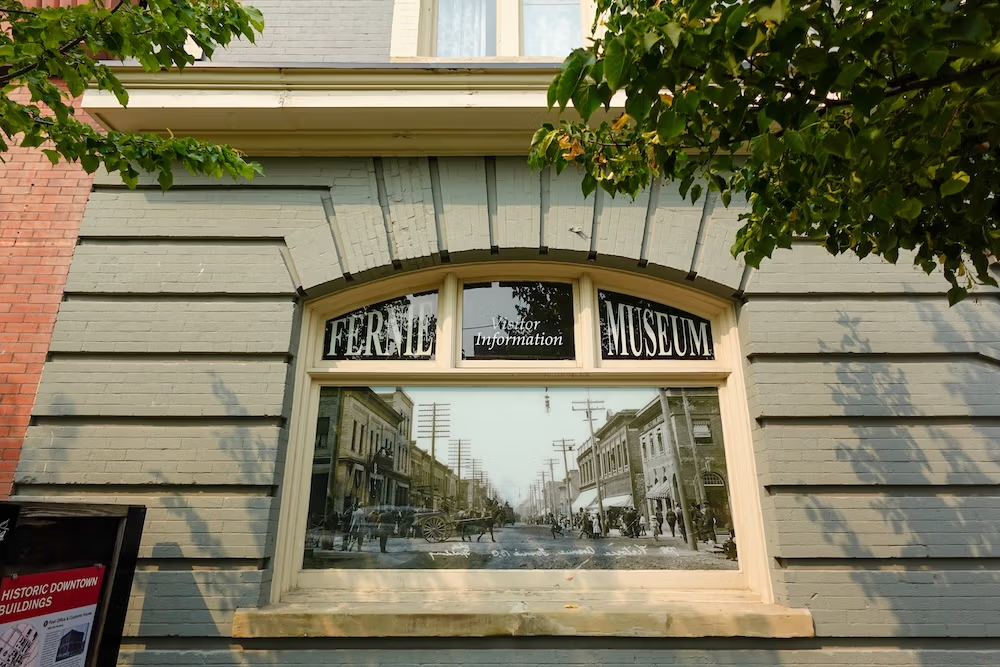
And the best part? The museum doesn’t just tell history. It’s housed inside a piece of it: the former Home Bank building, one of the most distinctive heritage buildings in downtown Fernie.
So let’s do this properly: our visit, what we learned, what to look for inside, and how we followed it up with the Fernie Heritage Walk (16 historic stops) right afterward.
Fernie Museum at a glance
| What | Details |
|---|---|
| Location | 491 2nd Avenue, Historic Downtown Fernie |
| Hours | 11am–4pm daily (closed statutory holidays) |
| Admission | By donation |
| Time needed | 45–90 minutes (more if you linger on the exhibit panels) |
| Best pairing | City Hall gardens + the self-guided Fernie Heritage Walk (16 stops) |
| Family reality check | Downtown is stroller-friendly; museum visit is easy with a carrier or stroller |
Why the Fernie Museum is a must-visit (even if you “just came for hiking”)
We love a good waterfall hike as much as anyone (and yes, we did that too), but Fernie isn’t just a scenic backdrop—it’s a town with a wildly dramatic backstory.
The museum gives you the “why” behind everything you’re seeing downtown:
- Why the architecture on 2nd Ave feels unusually solid and historic
- Why Fernie’s identity is so tied to resilience and reinvention
- Why the town’s story swings between boom and catastrophe like a pendulum
- Why Fernie today is this mashup of mountain playground + working industry + heritage downtown
If you’re filming, writing, or just trying to actually understand where you are, the museum is the cheat code.
Our Fernie Museum visit: the moment Fernie stopped being “cute” and became “holy wow”
We walked in thinking we’d do a quick lap and be on our way.
That plan lasted about two minutes.
Audrey started reading the exhibit panels…and then started taking notes on her phone because the history was too fascinating (and honestly too intense) to trust to memory.
Fernie’s story—at least the version that hit us hardest in the museum—reads like this:
Fernie’s resilience timeline
| Year | What happened | Why it matters |
|---|---|---|
| 1902 | Coal mining disaster killed about 130 people | Fernie’s early identity was deeply tied to mining—and the risks were brutal |
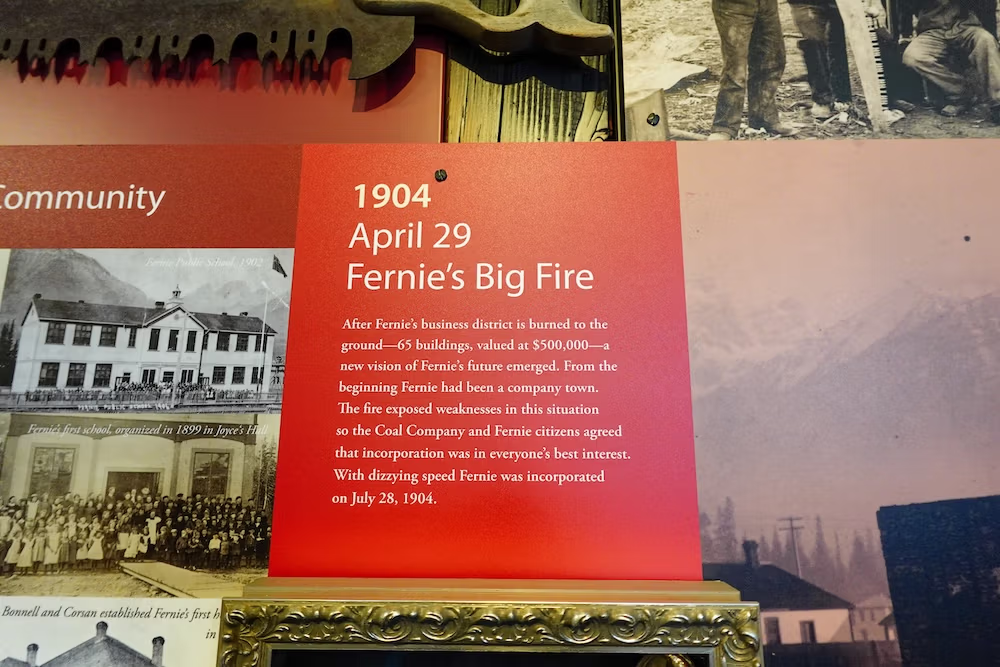
| 1904 | A huge fire burned 65 buildings and caused massive losses (half a million dollars at the time) | Disaster wasn’t a one-off; rebuilding became part of the town’s muscle memory |
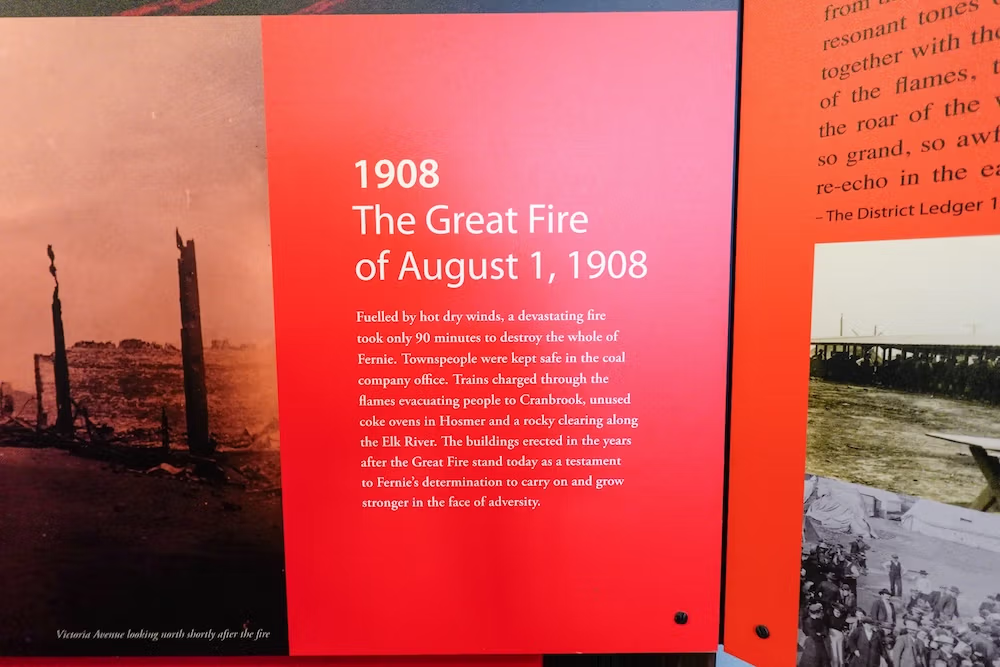
| 1908 | The Great Fire destroyed the town in about 90 minutes | Total reset. Rebuild everything. Again. Fast. |
| 1923 | Home Bank of Canada scandal/failure—locals lost major savings | A different kind of disaster: financial, personal, trust-shattering |
| 1986 | Last underground mine closed | A town built on mining had to figure out what came next |
| 1990s | Fernie reinvented itself as a tourism destination | The pivot: trails, skiing, outdoor culture, small-town charm as the “new economy” |
| Modern era | Mining continued in a modern form | Fernie isn’t just a resort town; it’s still a working region too |
And what makes this hit harder is the pace. It’s not “one bad decade.” It’s a pattern:
tragedy → rebuild → adapt → repeat.
You can feel why Fernie today has this mix of pride and calm confidence. It’s not pretending to be tough. It had to be.
The museum’s building: a heritage setting with a plot twist
One thing that makes the Fernie Museum extra memorable is where it lives.
It’s in the former Home Bank building, a downtown landmark that carries its own layer of story. The museum itself notes it’s located in a distinctive heritage building, and Tourism Fernie leans into that history too—right down to one of the coolest details in the whole place:
The original bank vault door is now used as the entrance to the elevator.
That’s such a Fernie sentence.
It’s also the perfect symbol for the museum as a whole: taking the “old Fernie” and giving it a modern, practical second life—without erasing the past.
So as you’re walking through, don’t just look at what’s on the walls. Look at the building itself:
- the feeling of an old financial institution turned into a community memory bank
- the layout that still whispers “bank” even when you’re reading about miners and fires
- the sense that history here isn’t tucked away—it’s literally the structure you’re standing in
What you’ll see inside the Fernie Museum (and how to enjoy it without rushing)
The museum experience isn’t huge-and-overwhelming. It’s compact, approachable, and surprisingly sticky—you keep finding yourself reading “one more panel” and then realizing ten minutes disappeared.
Ground floor: “This Is Our Fernie” + visitor info vibes
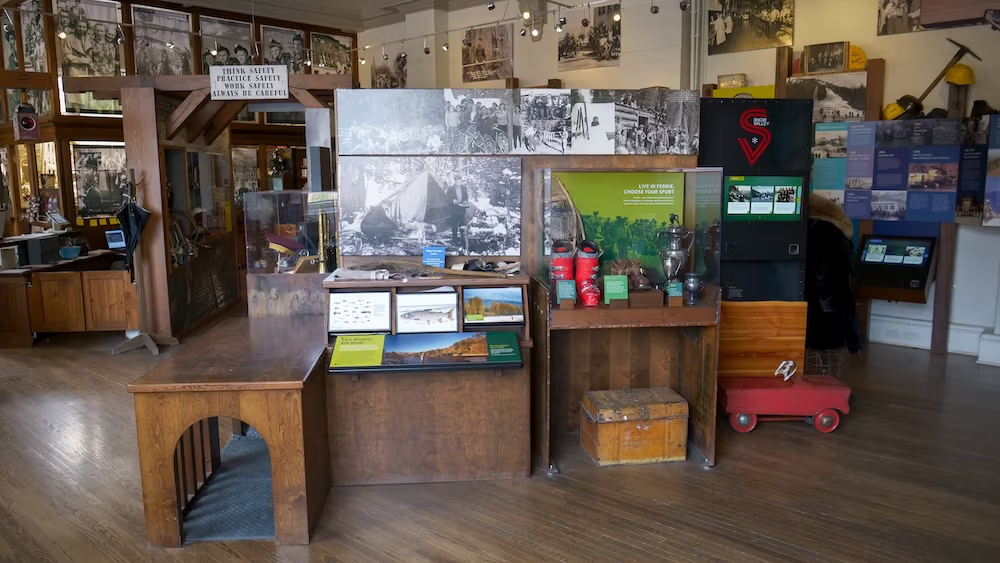
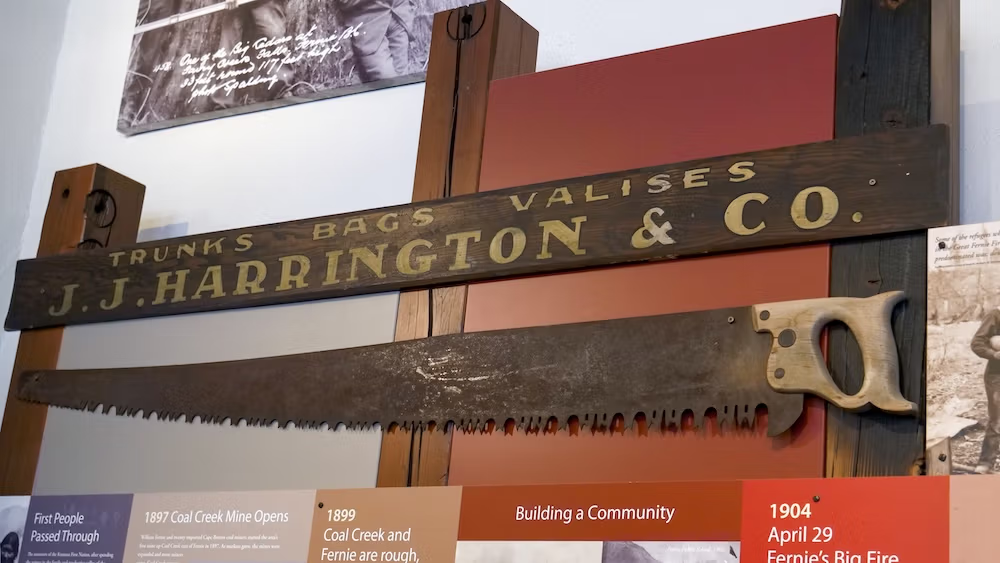
The main exhibit is designed to walk you through Fernie’s identity: origins, industries, disasters, reinvention, and what shaped the town’s personality. It’s the best place to pick up those “Fernie facts” that actually matter—the ones that make you look at downtown differently the moment you step back outside.
You’ll also find the general “visitor info” side of the museum here, which is exactly how we ended up with…
The Fernie Heritage Walk brochure (aka: your post-museum mission)
We grabbed a brochure at the museum for the Fernie Heritage Walk, a self-guided route that includes 16 historic buildings and locations scattered around town.
And that’s where Fernie started feeling like an open-air museum.
Upstairs: rotating gallery exhibits
The second floor is typically used for rotating exhibits—sometimes art, sometimes local history themes, sometimes seasonal exhibits that give you a reason to come back even if you’ve already done the permanent displays.
Archives + research energy (for the history nerds)
If you’re the kind of person who hears “local archives” and immediately gets excited (no judgment—we see you), the museum is also a research hub, with deep local collections and digitized resources.
Even if you don’t go full detective mode on your visit, it’s worth knowing this isn’t just “stuff in glass cases.” It’s an active keeper of Fernie’s memory.
The donation admission system: small detail, big charm
I’ve got to give Fernie Museum credit for this: admission is by donation, which means it can be free or as much as you want to contribute.
We loved that.
It feels welcoming. It feels community-driven. It also makes it a low-risk stop for travelers who are trying to keep costs under control (especially families who are already paying for fuel, snacks, and the constant surprise expenses of life on the road).
Fernie’s rumrunner past: the fun historical curveball
Right when you think Fernie’s story is just mining + fires + rebuilding, you get this little historical wink:
Fernie was an ideal rumrunner location during Prohibition thanks to its geography—near the Alberta border, and not wildly far from the U.S. border.
Suddenly Fernie isn’t just “charming mountain town.” It’s also “good place to quietly do suspicious things in the mountains.”
And honestly… that tracks.
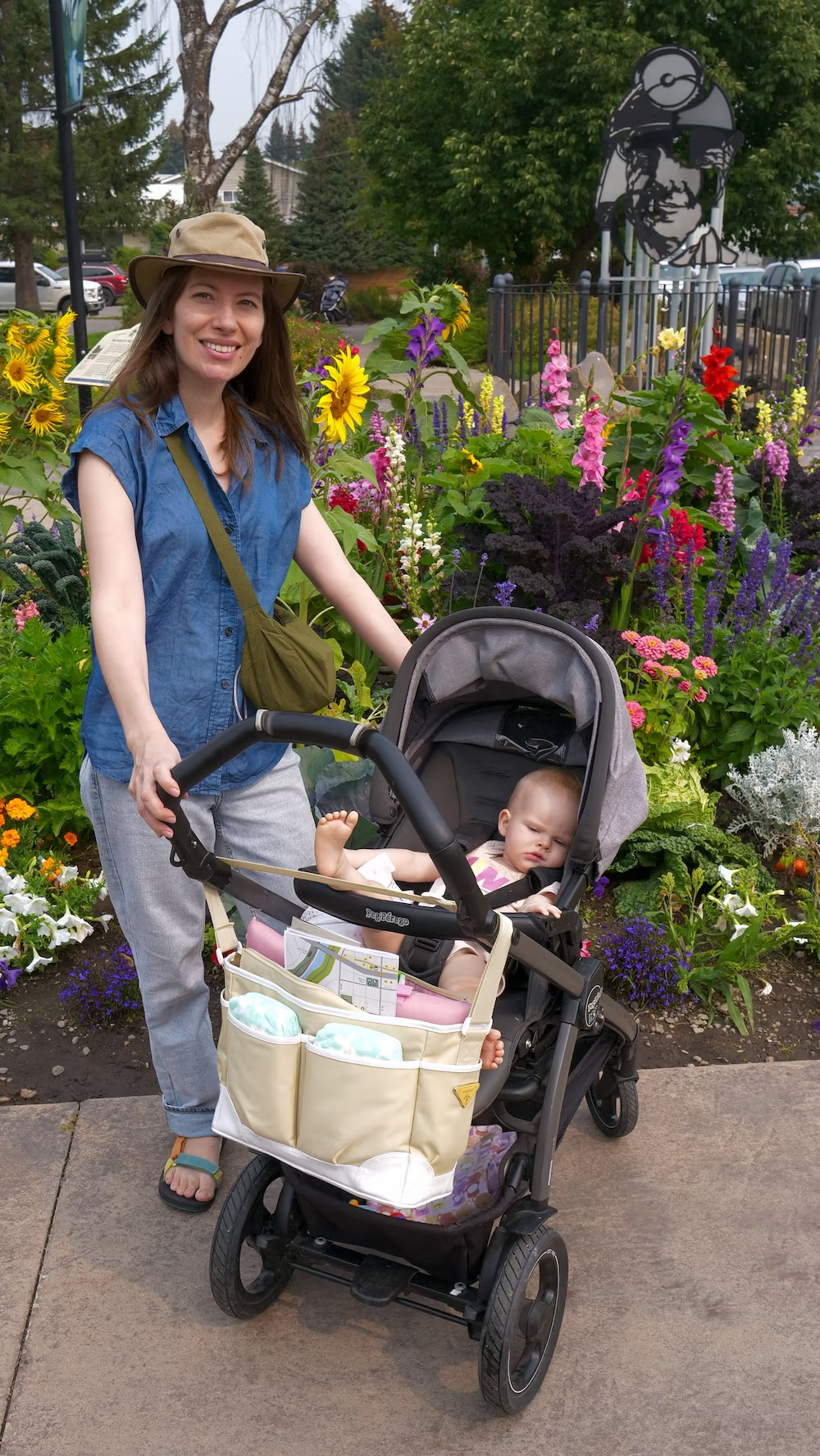
The emotional moment we didn’t expect: baby, flowers, and the soft side of Fernie
After the museum, we stepped outside and immediately shifted into a completely different mood.
Aurelia was loving being outdoors—flowers, butterflies, bright summer color everywhere. It was one of those little family travel moments that sounds small but ends up anchoring the whole memory of a day.
Fernie has this way of giving you big history… and then ten minutes later you’re watching your baby stare at a butterfly like it’s the most important meeting of her life.
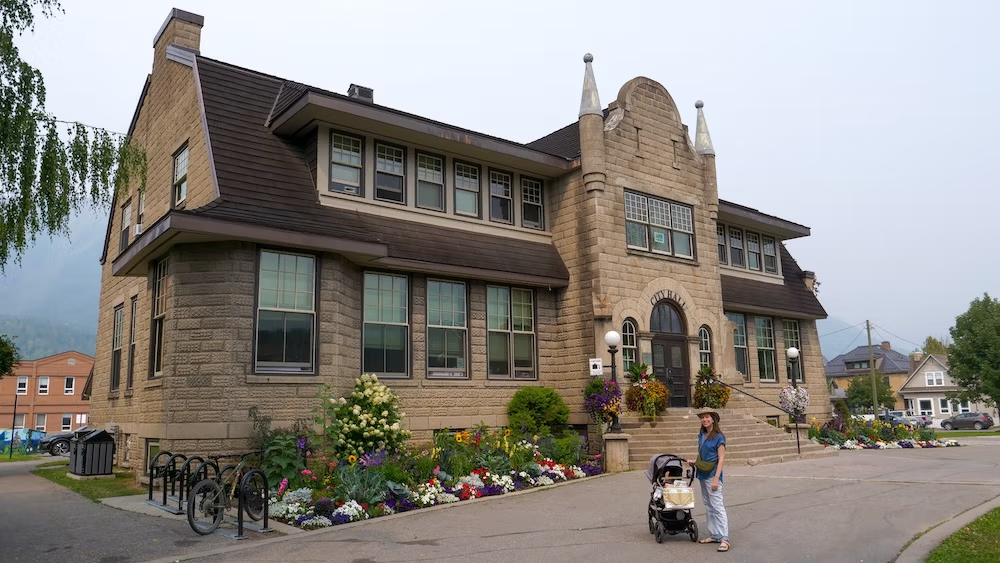
City Hall gardens: Fernie’s “slow down” button
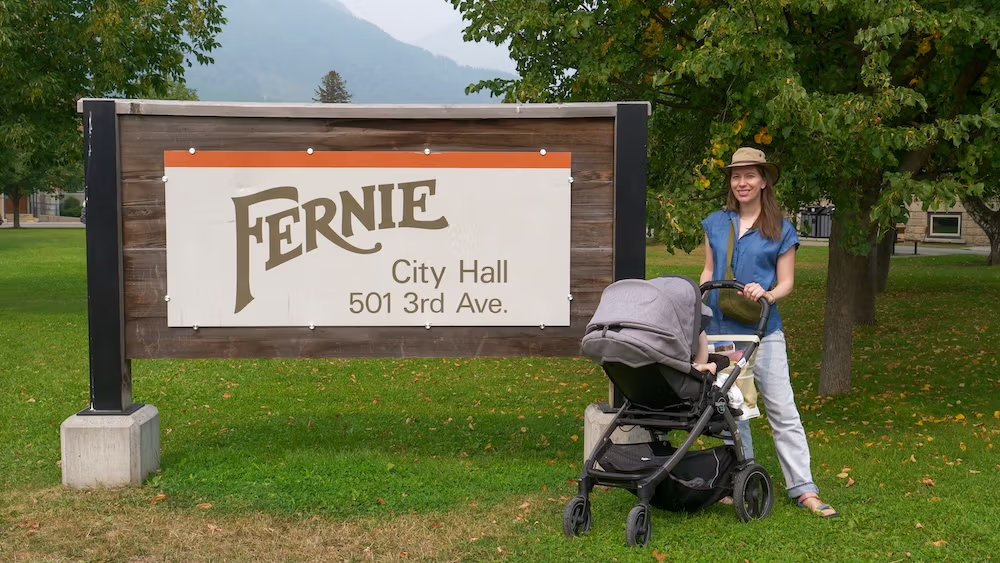
Our first real post-museum wander was around City Hall.
The gardens were in bloom, full of bees and butterflies, and it felt like Fernie was gently reminding us:
“Yes, our history is dramatic. But also… look at these flowers.”
It’s an easy place to linger, take photos, and let the museum’s heavier stories settle before you start hunting down heritage buildings.
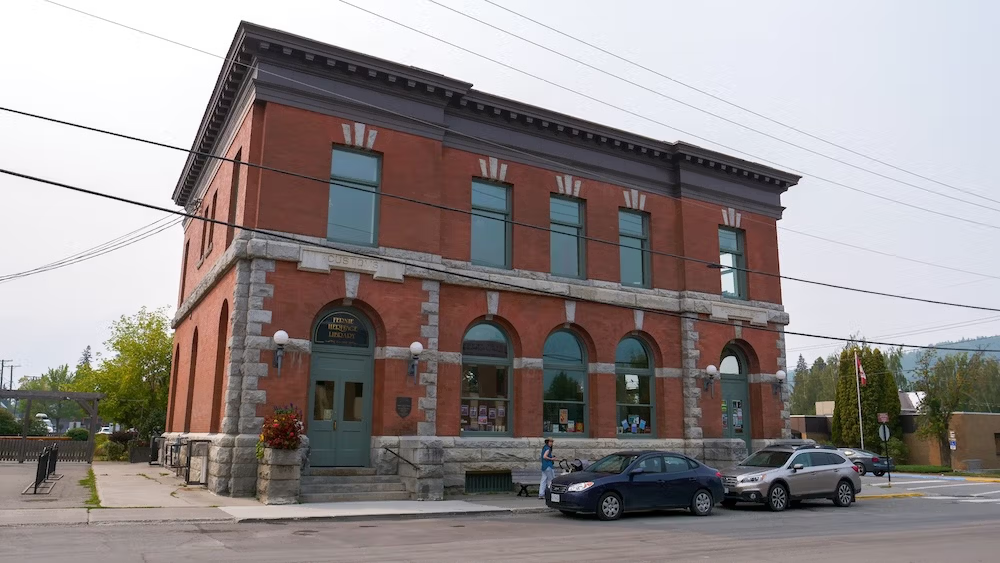
The Fernie Heritage Walk: how we turned downtown into a scavenger hunt
This is where Fernie gets dangerously likeable.
We opened the Fernie Heritage Walk brochure and realized it’s basically a built-in activity: 16 historic buildings/locations scattered around downtown, mapped out in a way that makes it feel like you’re collecting Fernie’s story piece by piece.
So we made it a casual mission.
So far on our walk we had already hit:
- the library
- City Hall
- the miner’s path
- and we had a cathedral coming up next
And the whole time we kept repeating the same thought:
Fernie is ridiculously walkable.
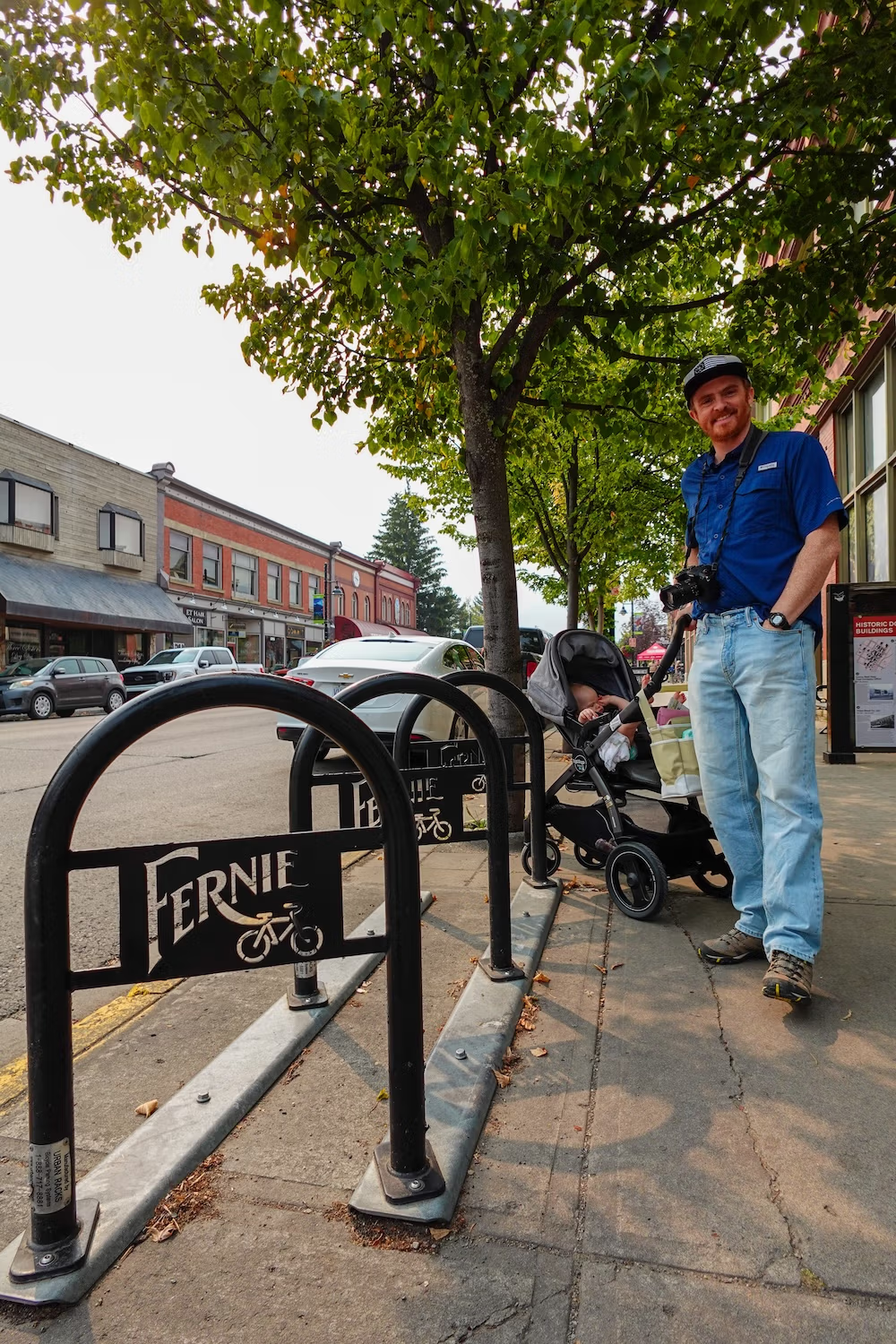
It’s charming. It’s family-friendly. It’s the kind of place where you can push a stroller, stop for photos, wander into shops, and still feel like you’re “doing something” because every block has a piece of history.
Even baby was basically on board—getting rocked to sleep mid-walk like she was thinking, “Yes, yes, show me more heritage buildings, father.”
What the museum + heritage walk combo does better than almost anything else
Individually, both are great.
Together, they become a storyline:
- Museum gives you the context (fires, mining, reinvention, resilience)
- Heritage walk gives you the evidence (the buildings, the streetscape, the downtown layout that survived because it had to rebuild smart)
So when you’re walking around 2nd Ave afterward, you’re not just looking at “pretty brick buildings.”
You’re looking at a town that got wiped out—fast—and rebuilt into what you’re seeing now.
That’s a powerful travel experience. And it’s completely doable in an afternoon without feeling rushed or over-scheduled.
Is the Fernie Museum worth it? A quick decision matrix
| If you are… | You’ll probably love it because… | Do this |
|---|---|---|
| First-time Fernie visitor | It instantly explains the town and makes downtown feel meaningful | Museum first, heritage walk right after |
| History-curious but not “museum obsessed” | It’s compact, story-driven, and connected to what you’re seeing outside | Give it 45–60 minutes |
| Traveling with kids/baby | Donation admission, easy downtown walking, and lots of sensory “outside time” afterward | Museum + City Hall gardens |
| Photographer | Heritage buildings + brickwork + mountain backdrops + historic textures | Walk downtown with no timeline |
| Only in Fernie for a day | This is the best low-effort way to “get” Fernie quickly | Museum + short heritage loop |
How long to spend at the museum (realistic timing)
| Time you have | What to do |
|---|---|
| 30–45 minutes | Quick loop of the main exhibit + skim the highlight panels (fires + mining + reinvention) |
| 60–90 minutes | Read the timeline sections properly, linger on the stories, check out the gallery upstairs |
| 2 hours | Museum + gallery + gift shop browse + start the heritage walk immediately after |
Doing Fernie with a baby: what worked for us
We tested Fernie with a stroller and a baby carrier and came away thinking: this is a very doable family town.
Our Fernie “family-friendly” checklist
- ✅ Downtown is walkable and calm
- ✅ Museum visit is straightforward and not exhausting
- ✅ City Hall gardens are a perfect reset spot
- ✅ Heritage walk keeps you moving without needing a car
- ✅ You can pace the day around naps (because you will)
Aurelia did great the whole time—stroller, carrier, downtown wandering, flowers, butterflies, the whole thing.
And yes, we absolutely had one of those proud parent moments like: How did we get so lucky with her?
The personal connection: why Fernie’s reinvention hit me
One reason Fernie’s story landed with me is because I grew up in a BC town (Gold River on Vancouver Island) where the industry left and the town felt devastated by it.
So seeing Fernie’s ability to pick up the ball—again and again—and pivot into a thriving outdoor destination? That felt meaningful.
Fernie didn’t just “get lucky.” It made choices. It rebuilt. It reinvented.
And the museum is the best place to see that story clearly.
Bonus: how we paired the museum day with the rest of our Fernie trip
This post is about the museum (and the heritage walk), but if you’re planning a quick Fernie visit, here’s exactly how our two days flowed—because the rhythm worked beautifully:
Day 1: context + downtown
- Lunch in town (we went Mexican—solid road trip fuel)
- Fernie Museum
- City Hall gardens
- Fernie Heritage Walk downtown
This day felt like “orientation.” Fernie as a town. Fernie as a story.
Day 2: nature + reward snacks
We shifted from history mode to trail mode.
We started with breakfast at Big Bang Bagels, where we did what the locals do and “got banged.”
- I had the Avo Launcher (avocado, cheddar, cream cheese, red onions, herb/mayo situation—filling in the best way)
- Audrey had the Switchback Salmon (red onion, cream cheese, alfalfa—super tasty)
Then we tackled Fairy Creek Falls, starting from the Visitor Centre (clean bathrooms, friendly staff, great maps). Baby went in the hiking backpack, I sweated like a mule, and she woke up right in time for the waterfall like she’d scheduled it.
After that? Fernie Brewing Company—because we absolutely earned it. I grabbed a Ridgewalk Red Ale and we laughed at ourselves because we thought there’d be food… but it’s more of a pints + snacks situation. Appetizer stop. No regrets.
And we ended the day at Island Lake Lodge, which was the “how is this real?” highlight—lunch at Bear Bistro, unreal views, and the kind of place that makes you immediately start planning a return trip.
Final thoughts: why the Fernie Museum belongs on your Fernie itinerary
Fernie exceeded our expectations, and the museum is a huge reason why.
It took Fernie from “pretty mountain town” to “place with a pulse and a story.” It gave us the context for the buildings we were photographing, the streets we were walking, and the pride you can feel in the town’s identity.
Then the heritage walk turned that context into a lived experience: not just reading about Fernie’s past—but walking it.
If you’re anywhere near Fernie—especially if you’re coming from Alberta or road-tripping through the Kootenays—do the museum. Grab the heritage walk brochure. Wander downtown. Let Fernie show off a little.
You’re going to have a great time.
Fernie Museum & Heritage Walk Questions: Practical Answers, Timing Tips, and Family-Friendly Advice
Is the Fernie Museum worth it if I only have one day in Fernie?
Absolutely. The museum is the fastest way to “get” Fernie beyond the pretty mountain-town first impression—fires, mining, reinvention, and all the drama in between—then you can walk outside and see that history in real buildings on the Heritage Walk.
How long should I plan for the Fernie Museum?
It depends. If you’re a quick skimmer, 45 minutes works. If you’re the type who reads every panel (hello, it’s me), plan 60–90 minutes—especially if you also check out the upstairs gallery.
Is admission really by donation, and how much should I give?
Yes. You can treat it like a choose-your-own-adventure donation: give what feels fair for your budget and the value you got. If the museum adds context to your whole trip (it probably will), I’d donate like it’s a key stop, not a throwaway.
What’s the best order: museum first or Heritage Walk first?
Museum first. The museum gives you the “why,” and then the Heritage Walk becomes the “ohhh, that’s why this building looks like this” moment. Doing it in that order makes downtown feel like an open-air exhibit.
Where do you get the Fernie Heritage Walk brochure?
Yes. The easiest place is the Fernie Museum—grab it, pick a few stops to start, and don’t stress about doing all 16 in one go unless you’re feeling extra ambitious (or fueled by bagels and caffeine).
Is the Heritage Walk stroller-friendly?
Mostly, yes. Downtown Fernie is walkable and compact, and we found it very manageable with a stroller and a baby carrier—just expect the occasional uneven sidewalk, curb, or “old town” quirk that comes with historic streets.
Can I do the museum and Heritage Walk in winter?
Yes. The museum is a great cold-weather stop, and the Heritage Walk still works in winter if sidewalks are clear—but you’ll want warmer layers, good traction, and a plan to duck into cafés when your face starts freezing off.
What’s the “bank vault door” thing people talk about?
Yup—it’s one of those quirky details that makes the museum memorable. The museum is in the former Home Bank building, and there’s a vault-door moment that feels like Fernie history winking at you while you ride an elevator.
What are the biggest historical events the museum explains in plain English?
Big picture: Fernie gets knocked down, then gets back up—repeatedly. The museum highlights major tragedies like the 1902 coal mining disaster, major fires in 1904 and the 1908 Great Fire, and the financial gut-punch of the Home Bank collapse, followed by the long shift from mining toward tourism.
Does the museum cover the rumrunner / Prohibition side of Fernie?
Yes. Fernie’s location made it a convenient zone for rumrunning during Prohibition, and that little “shady-but-fascinating” layer adds fun texture to the town’s story beyond mining and fires.
Is the Fernie Museum good for kids?
Absolutely. It’s not a massive, exhausting museum, so kids can handle it in shorter bursts, and pairing it with an outdoor walk right after is the secret weapon. If you’re traveling with a baby, it’s an easy stop because you can do museum time, then stroller time.
Is the Fernie Museum accessible for mobility needs?
Generally, yes. The building has modern upgrades (including elevator access), and staff are used to helping visitors navigate the space. If you have specific mobility concerns, it’s still worth checking current accessibility details before you go so there are zero surprises.
Do I need a car to do the Fernie Museum and Heritage Walk?
Nope. If you’re staying in or near downtown, you can do the museum and Heritage Walk entirely on foot. A car helps for everything outside the core (lakes, trailheads, brewery, Island Lake Lodge), but the museum + heritage day is perfectly walkable.
What’s the best time of year to visit Fernie for a mix of history and outdoors?
It depends. Summer and early fall are ideal if you want the museum plus lakes, hikes, and long daylight. Winter is best if you’re pairing museum time with ski-town energy. Shoulder seasons can be quieter and cozy, but be ready for changeable mountain weather.
What else should I pair with the museum day if I want a full “Fernie intro” itinerary?
Yes. Keep it simple: museum first, slow wander around City Hall gardens, then the Heritage Walk through downtown, then reward yourself with something delicious (bagels, tacos, coffee—Fernie understands the assignment). It’s the perfect “orientation day” before you go full waterfall-and-trail mode.
Further Reading, Sources and Resources
This guide comes from our own time inside the Fernie Museum and wandering downtown on the heritage walk that followed. For practical details, deeper historical context, and ongoing programs, we’ve also included the official and locally trusted resources below — helpful if you want to plan a visit, go deeper on a specific topic, or keep exploring Fernie’s past.
Official Fernie Museum
Primary sources for hours, exhibits, programs, and Fernie’s documented history.
- Fernie Museum (Homepage): https://ferniemuseum.com/
- Visiting the Fernie Museum (Hours, admission, accessibility): https://ferniemuseum.com/about/visiting/
- Fernie & District Historical Society (About FDHS): https://ferniemuseum.com/about/fernie-district-historical-society/
- Fernie History (Collections & Research): https://ferniemuseum.com/collections-research/fernie-history/
- Walking Tours (Great Fire, Rumrunners, etc.): https://ferniemuseum.com/exhibitions-programs/walking-tours/
- Gallery Exhibit (Rotating upstairs exhibits): https://ferniemuseum.com/exhibitions-programs/gallery-exhibit/
Destination guides and local context
- Tourism Fernie (Fernie Museum listing): https://tourismfernie.com/activities/arts-and-culture/fernie-museum
- City of Fernie (Museum page): https://www.fernie.ca/EN/main/residents/community-life/museum.html
- Kootenay Rockies (Fernie Museum partner page): https://www.kootenayrockies.com/partner/fernie-museum/
- Fernie.com (Fernie Museum listing): https://fernie.com/locations/fernie-museum-3/
Deeper stories and themed reading
- Tourism Fernie (Exploring Fernie’s war story with the Fernie Museum): https://tourismfernie.com/blog/exploring-fernies-war-story-with-the-fernie-museum
Reviews and community updates
- TripAdvisor (Fernie Museum reviews): https://www.tripadvisor.com/Attraction_Review-g182167-d2553891-Reviews-Fernie_Museum-Fernie_Kootenay_Rockies_British_Columbia.html
- Fernie Museum (Facebook page): https://www.facebook.com/FernieMuseum/