
Fernie has a funny way of feeling remote and easy to reach at the exact same time.
On one hand, you’re headed into the southeast corner of British Columbia, tucked into the Canadian Rockies, where mountains crowd the horizon and the air smells like pine and possibility. On the other hand, you’re basically cruising in on Highway 3 (the Crowsnest Pass Highway), which runs east–west from Alberta into B.C. and drops you right into town.
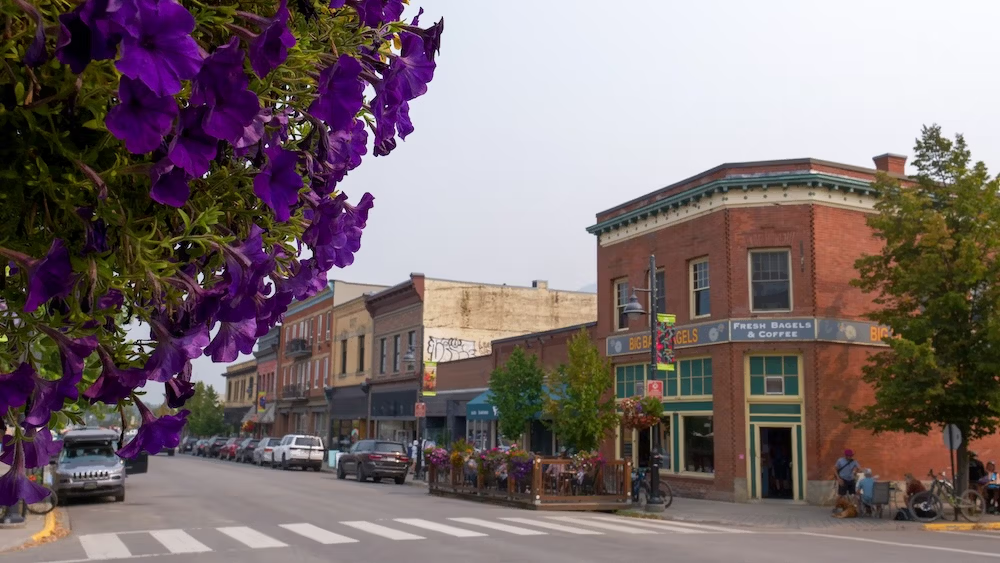
And that’s the magic of Fernie: it’s not a “drive for 14 hours and then hike for 6 more” kind of destination. It’s a “leave Calgary after breakfast, eat lunch in Fernie, and still have time to wander heritage buildings” kind of destination.
In this guide, we’ll break down the best ways to arrive—drive, fly, or bus—with practical details, honest tradeoffs, and the kind of “wish we’d known that earlier” tips that come from actually showing up with an appetite… and a baby… and a very optimistic plan.
Fernie Transport Snapshot
| Starting point | Best way to arrive | Typical travel time | Best for | Quick tip |
|---|---|---|---|---|
| Calgary (city) | Drive | ~3 hrs | Road trips, families, gear | Add buffer in winter and travel in daylight if you can |
| Calgary Airport (YYC) | Drive or shuttle | ~3.5 hrs | International arrivals, flexible flights | If you’re tired, pick the simplest route and skip scenic detours |
| Cranbrook Airport (YXC) | Fly + drive/shuttle | ~1–1.25 hrs after landing | Short trips, ski weekends | Book your rental/transfer early—this is the “fastest to Fernie” play |
| Vancouver (city/airport) | Fly to YXC + drive (or long drive) | ~11 hrs driving (or fly + short transfer) | West Coast start, long-haul connections | If you value time, flying close usually beats the full drive |
| Whitefish / Kalispell (USA) | Drive (or fly to FCA + drive) | ~1.5–2 hrs | Montana-based travelers | Build in border buffer time and keep arrival day flexible |
| Spokane (USA) | Drive | ~4–5 hrs | More flight choices, multi-stop trips | Plan a meal stop and don’t rush mountain night driving |
| No car / budget | Bus + shuttle + walk | Varies by schedule | Solo travelers, no-driving winter trips | Choose walkable lodging or pickup-friendly accommodation |
🧭 Quick Booking: Your Fernie Travel Essentials ✈️
If you’re planning your trip to the East Kootenays, these are the four bookings that make everything smoother — your base, adventures, transport, and freedom.
🎒 Your Travel Toolkit
| 🔖 What to Book | 💡 Why It’s Worth It | 🔗 Quick Link |
|---|---|---|
| 🎟️ Tours & Experiences | Skip the logistics and explore Fernie + the Elk Valley with local guides (easy wins when weather turns or time is tight) | 👉 Browse Fernie & Elk Valley tours on Viator |
| 🏨 Hotels & Stays | Lock in the right base (walkable town vs. ski hill vs. highway convenience) — especially on weekends + peak season | 👉 Find Fernie hotels on Booking.com |
| 🚗 Car Rentals | The easiest way to do day trips, chase viewpoints, and keep your schedule flexible | 👉 Compare car rentals for Fernie on DiscoverCars (pick in up Cranbrook) |
| 🚌 Bus Tickets | If you’re piecing together regional transport, checking schedules early saves headaches | 👉 Check bus routes to/from Fernie on Busbud |
Fernie in one sentence
Fernie is a mountain town in southeast British Columbia on Highway 3, close to the Alberta and U.S. borders—roughly 3 hours from Calgary, about 3.5 hours from Calgary International Airport (YYC), and about 1–1.25 hours from Cranbrook / Canadian Rockies International Airport (YXC) (drive times vary with stops, traffic, weather, and border waits).
Pick your arrival style
| Option | Best for | Pros | Cons | Our take |
|---|---|---|---|---|
| Drive | Road trippers, families, skiers, flexibility-lovers | Cheapest per group, easiest with gear, spontaneous stops | Winter conditions can be real | Best overall if you can swing it |
| Fly + Drive | Short trips, people starting far away | Saves time, still flexible once you land | Car rental + transfer adds cost | Great “middle path” |
| Bus / Shuttle | Solo travelers, low-stress travelers | No driving stress, no winter white-knuckles | Fewer schedules, last-mile logistics | Works best if your lodging helps with pickup |
Best Way to Arrive
| If you’re… | Best way to arrive | Why it’s best | What to watch for |
|---|---|---|---|
| A weekend skier with gear | Drive (or fly to YXC + drive) | Easiest with bags + timing | Winter tires, road reports |
| Flying in internationally | Fly to YYC + drive | Most flight options, easiest reroutes | Long drive after landing |
| Short trip (3–5 days) | Fly to YXC + drive/shuttle | Fastest “touchdown → Fernie” | Fewer flights, transfer planning |
| Solo traveler, no car | Fly to YYC + shuttle/bus | No winter driving stress | Limited schedules, last-mile |
| Family with baby/toddler | Drive | Stops when you want, car seat friendly | Winter prep + snacks |
| Budget traveler | Bus/shuttle (if schedule fits) | Avoid rental + gas | Inflexible timetable |
| Coming from Montana | Drive (or fly to FCA + drive) | Close + convenient | Border timing + docs |
| EV road tripper | Drive | Freedom + scenic | Winter range + charger plan |
Drive vs Fly” time-stress tradeoff
| Priority | Winner | Why | Runner-up |
|---|---|---|---|
| Cheapest per group | Drive | Costs split well with 2–5 people | Fly + YXC (if you find deals) |
| Least logistics | Drive | One plan, one vehicle | YYC + shuttle (if schedules line up) |
| Fastest door-to-Fernie | Fly to YXC | Shortest post-flight drive | Drive from Calgary (if already there) |
| Most flexible flights | Fly to YYC | More airlines/times | Fly to YVR |
| Best for heavy gear | Drive | No baggage roulette | YYC + rental SUV |
| Best for winter “no thanks” driving | Shuttle/bus | Someone else drives | Fly to YXC + transfer |
🚐 Book Transport & Car Rentals for Greater Flexibility
Whether you’re flying in, driving over, or planning day trips, locking in transport early usually means better prices + fewer last-minute compromises.
| Your plan | Best option | Link |
|---|---|---|
| 🚗 Local exploring + day trips | Car rental | 👉 Compare Fernie car rentals on DiscoverCars (Cranbrook pickup) |
| 🚌 Regional connections | Bus tickets (where available) | 👉 Book bus routes to/from Fernie on Busbud |
The #1 thing that changes everything: season
Fernie is a “choose your own adventure” place—summer lakes and hikes, winter ski trips, shoulder-season deals—and your arrival plan should match the season. The same drive that feels like a casual cruise in July can feel like a serious adult decision in January.
Winter driving reality check
In the winter tire season (often October 1 to April 30 on many B.C. highways), you need to take tire requirements and road conditions seriously. In practical terms: make sure your vehicle is properly equipped, your tread is in good shape, and you’re not rolling in with bald tires and pure confidence.
Tip: If you’re renting a car, confirm in writing that the vehicle is equipped to meet winter highway requirements before you arrive at the counter. Some rentals come with all-season tires that technically qualify, but for stormy ski weeks, we’re much happier on true winter tires.
Driving to Fernie
If you like freedom—pulling over for viewpoints, stopping when the baby needs a reset, detouring to a bakery because you “felt it in your soul”—driving is Fernie’s love language.
The main route in is Highway 3, and for a Rocky Mountain drive, it’s refreshingly straightforward. That said: mountains are still mountains. We always treat winter forecasts and road reports like part of the packing list.
The main road: Highway 3 (Crowsnest Pass Highway)
Fernie sits right on Highway 3, and the drive is scenic enough that you’ll catch yourself narrating your own travel documentary. It’s the kind of route where you say “wow” out loud… and then ten minutes later you say it again, just to be safe.
Common drive times (as a rough planning guide, no stops / no border delays):
Calgary ~3 hours, Calgary Airport (YYC) ~3.5 hours, Cranbrook ~1 hour, Whitefish ~1.5 hours, Kalispell ~2 hours, and Vancouver ~11 hours. Add time for weather, construction, coffee cravings, and that one bathroom stop that turns into “wait, why is this gas station gift shop actually amazing?”
From Calgary (and southern Alberta)
This is one of the most popular approaches and, honestly, one of the easiest “big-city-to-mountains” jumps you can do. It’s weekend-friendly, gear-friendly, and it makes Fernie feel surprisingly accessible.
Why it works:
- Straightforward highway routing
- Great for weekend trips
- Easy to time with check-in/check-out
Optional scenic upgrade: If you want a prettier, more “we’re doing a road trip!” kind of approach from Calgary, you can route south and connect back to Highway 3. It adds variety and feels more like a journey than a commute.
Tip: If you’re arriving on a Friday winter ski weekend, build in buffer time. Even if the road is fine, traffic and weather can stretch “3 hours” into “why are we still listening to the same playlist.”
From Cranbrook / Kimberley
If you’re already in the Kootenays, Fernie is close enough to be a casual hop. It’s the kind of distance where you can wake up somewhere else, have lunch in Fernie, and still feel like you didn’t spend your whole day in the car.
As a rough rule of thumb, it’s about an hour from Cranbrook and a bit longer from Kimberley, depending on conditions and stops.
From the U.S. (Montana and beyond)
Fernie is close to the border, and it shows—there’s a steady stream of U.S. plates rolling into town for ski season and summer hiking. It’s a very “hey, we could totally do this long weekend” kind of destination.
Plan for the border like a grown-up: carry your documents, budget extra time, and don’t schedule anything important (like dinner reservations or pool time promises) too tightly on arrival day.
Tip: Border delays can be wildly inconsistent. If you’re trying to hit a specific timeline, pad your schedule and arrive calmer. The mountains are more enjoyable when you’re not stressed.
From Vancouver (or the coast)
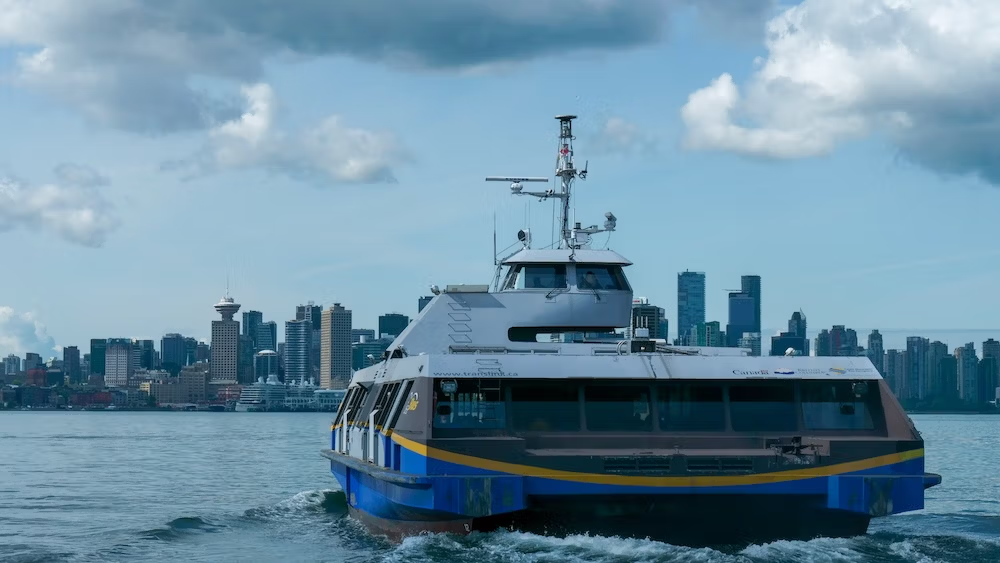
Vancouver to Fernie is a full-on road trip—big distance, big scenery, big “should we break this up?” energy. It’s the kind of route where you either:
- break it up overnight somewhere, or
- commit to a heroic dawn departure and become a new person by hour 9.
Winter driving: what we’d actually do
Here’s the reality: winter can be smooth… until it isn’t. The good news is Highway 3 is a major route and generally maintained, but storms happen and conditions can change fast. Our goal is never “arrive quickly.” It’s “arrive with our sanity intact.”
Winter “don’t be a hero” checklist:
- Proper tires (and if you’re renting, confirm what’s actually on the car)
- Check conditions before you leave (and again right before you hit the mountain sections)
- Gas up earlier than you think you need to
- Pack water + snacks + warm layers in the car
- If visibility gets bad, slow down and arrive in a better mood
Electric vehicles: yes, it’s doable
Yes—Fernie is absolutely doable with an EV. We’d just treat it like a mountain trip: plan charging like you plan snacks, and don’t assume winter range will behave like summer range.
Tip: In winter, EV range drops. Treat your battery like your patience: don’t start the trip at 12% and pure optimism.
Flying to Fernie
Fernie doesn’t have a big commercial airport right in town, so flying is really fly + transfer. The payoff is speed—especially if you’re starting far away—and the cost is usually a bit more planning (and sometimes more money).
In most cases, you’ll be choosing between a closer regional airport (faster transfer) and a bigger hub (more flight options, more rental cars, more flexibility if plans change).
Best airport options (and who they’re best for)
| Airport | Best for | Why you’d pick it |
|---|---|---|
| Cranbrook (YXC) | Fastest to Fernie | Closest major airport; short transfer |
| Calgary (YYC) | Most flight options | More routes + rental choices |
| Kalispell (FCA) | Many U.S. travelers | Convenient for U.S. starts; border crossing required |
| Vancouver (YVR) | International gateways | Often makes sense for overseas arrivals |
Cranbrook (YXC): the fastest “touchdown to Fernie” play
If your trip is short (think: 3–5 days), flying into Cranbrook and transferring to Fernie is often the best time-saver. You spend less of your vacation in transit and more of it actually doing Fernie things—like walking downtown, chasing waterfalls, or eating bagels the size of your face.
Depending on season and airline schedules, flights can route through bigger Canadian cities. The big question is simple: are you trying to maximize time on the ground? If yes, this can be a great move.
Calgary (YYC): the classic choice
Calgary is the classic “most flexible” airport choice: lots of flights, lots of rental cars, lots of backup options if your schedule shifts. The tradeoff is a longer drive, but the upside is you’re usually more likely to find a flight that works (and sometimes a better price).
This is our favourite “big picture” airport if you want flexibility, better pricing odds, and a straightforward drive in. It’s especially good if Fernie is part of a bigger Alberta/B.C. road trip.
Kalispell (FCA): underrated for U.S. travelers
If you’re coming from the U.S., Kalispell can be a genuinely smart option—just remember you’re adding an international border crossing into the mix. We’d plan with extra buffer time and keep arrival day as low-stress as possible.
Bus and shuttle to Fernie
If you don’t want to drive (especially in winter), Fernie is still doable, but you’ll want to plan the “last mile” carefully. Compared to bigger destinations, schedules can be limited and can change seasonally—so this is the option where “double-check ahead” is basically the entire strategy.
In general, you may find regional bus options between Fernie and Calgary on select schedules, plus limited transit-style connections from Cranbrook on certain days. There are also private shuttles that come and go depending on season, demand, and ski travel patterns.
Calgary Airport to Fernie by shuttle
If you’re flying into Calgary International Airport (YYC) and the thought of winter highway driving makes you feel even slightly tense, the shuttle option is the calmest move. You land, grab your bags, meet your driver, and let someone else handle the long stretch of road while you mentally switch from “travel mode” to “mountain mode.”
The big advantage here isn’t just convenience—it’s reduced friction. No rental counter negotiations. No “what tires are on this thing?” stress. No white-knuckle night driving if your flight arrives late. It’s basically the most direct way to turn a Calgary arrival into a Fernie arrival without needing to become a part-time meteorologist.
The main shuttle choice most travelers use: Tunnel49 (shared or charter)
The best-known Fernie ↔ Calgary airport shuttle option is Tunnel49, which runs airport shuttles and charters. The key thing to understand: the pricing can work like a sliding scale depending on how many people are booked on that trip. If you’re solo or a couple, it can be pricier; if you’re a family or group, it often starts making way more sense—especially when you compare it against a larger rental vehicle + fuel + parking + winter-tire uncertainty.
Tunnel49 also sets clear expectations around luggage (useful if you’ve got ski gear, baby gear, or both). There are bag limits and fees for extras, so it’s worth doing a quick “how many bags are we actually bringing?” count before you book.
Winter-season shuttle reality (this matters for Fernie trips)
Winter service tends to run on a more defined schedule, and this is where it can feel “effortless” if your flight timing lines up—or mildly annoying if it doesn’t. In peak winter months, Tunnel49 lists specific departure times for Fernie ↔ Calgary airport runs, and they also flag that road conditions can create delays (because… mountains).
The key bus/shuttle rule
If you arrive by bus, pick accommodation that’s walkable or offers pickup. Fernie is walkable, but dragging luggage in snowy slush up a hill is a character-building experience you do not need.
Local winter movement: ski shuttles
In winter, shuttles can make Fernie work surprisingly well without a car—especially if you’re staying downtown and heading up to Fernie Alpine Resort. There are seasonal ski shuttles that connect common accommodation zones with the resort, and some services also run evening routes.
(Always check current schedules—winter operations can shift with demand and conditions.)
Getting around once you’re in Fernie
Fernie has two “centres of gravity”:
- Downtown Fernie (walkable, charming, restaurants, heritage vibe)
- Fernie Alpine Resort area (ski base, mountain lodging, winter energy)
If you have a car, you bounce between them easily. If you don’t, you’ll lean on walking + shuttles + taxis. Downtown is the easy zone; the resort area is where you want a plan.
Do I need a car in Fernie?”
| If you plan to… | Car-free works? | Why | Best workaround |
|---|---|---|---|
| Walk downtown, eat, chill | Yes | Compact + walkable | Stay central |
| Ski every day | Yes-ish | Shuttles can cover it | Book lodging on shuttle loop |
| Hike multiple trailheads | Usually no | Trailheads = wheels | Rent a car or book tours |
| Visit Island Lake Lodge area | Usually no | Not convenient car-free | Car or private transfer |
| Travel with baby gear | Usually no | Convenience matters | Drive or rent |
Getting around Fernie by Shuttle
If you’d rather not drive everywhere once you arrive (especially in winter), the local shuttle can be a game-changer. It’s an easy, low-effort way to move between downtown Fernie, Fernie Alpine Resort, and a few other key areas—without dealing with icy parking lots or having to be the designated “snow driver” for the day.
You step outside, hop on, and let someone else handle the mountain roads while you save your energy for skiing, exploring, or just enjoying the ride.
FernieStoke Shuttle: town ↔ resort made simple
The FernieStoke Shuttle is built specifically for getting people between town and the ski hill, and it’s especially handy if you’re staying downtown but skiing (or snow-playing) most days.
It turns a ski day into a simple routine: grab your gear, walk to a stop, ride up, and focus on the fun part instead of parking logistics. No scraping windshields, no stress about road conditions, no debating who’s driving home after a long day.
How it works (so you don’t get surprised)
A few practical things to know before you count on the shuttle:
- You’ll typically use the FernieStoke Shuttle app to ride, buy or redeem tickets, see stops, and track the bus in real time.
- Stops usually include downtown Fernie and select hotels or accommodation areas, which is why choosing lodging near a stop can make your trip much easier.
- Schedules are seasonal and can shift early or late in the season, so we always check the current timetable the day before our first planned ride.
Tip: Some accommodations include shuttle tickets with your stay. When that happens, the shuttle feels like a free upgrade—and one less thing to think about.
Summer vs winter shuttle vibes
In winter, the shuttle really shines. It’s all about getting to the resort without battling snow-covered parking lots or driving tired at the end of the day.
In summer, the shuttle can still be useful as a car-light option, but service is usually more limited. You ought to treat summer shuttle runs as a bonus rather than the backbone of your itinerary, especially if you’re planning hikes or side trips that require more flexibility.
When the shuttle is the best choice
Lean on the shuttle most when:
- You’re staying downtown but skiing multiple days
- You want zero stress around mountain driving and parking
- You’re doing a trip where “one more logistics decision” might push us over the edge
If you’re going fully car-free in Fernie, the shuttle becomes the anchor of your plan: stay walkable downtown, use the shuttle for resort days, and choose trailheads or activities intentionally instead of trying to bounce all over the map.
Our arrival strategy in Fernie (and why it worked)
We arrived right at lunchtime and immediately followed our instincts: find food first, explore second.
That one decision set the tone. Instead of doing the usual “we’re tired, let’s just check in and stare at a wall,” we ate, recharged, and hit the ground running. We treated lunch like an arrival ritual—because nothing makes a new place feel friendly faster than being fed.
Day 1: arrive, eat, then do “orientation Fernie”
Day one was all about downtown and context: getting the lay of the land, soaking up the town vibe, and realizing Fernie isn’t just “a ski place.” It’s a resilient little mountain community with a wild history and a lot more personality than we expected.
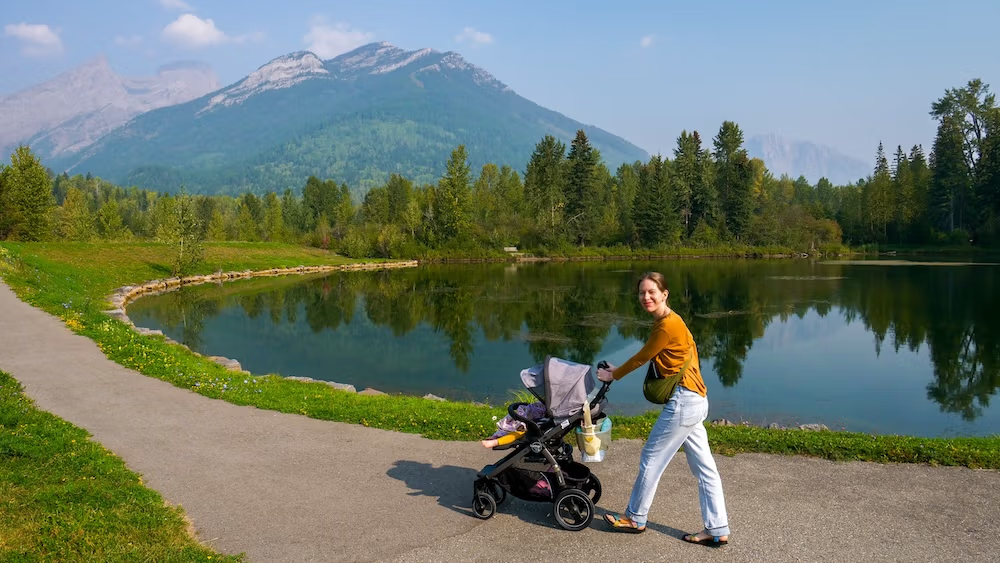
We loved how walkable it felt—easy to wander, easy to linger, easy to keep things relaxed with a stroller. That calm, small-town B.C. energy is real, and it hits you fast.
Day 2: the nature day (Visitor Centre hack included)
The next morning, we did what Fernie practically demands: bagel fuel → trail time.
We started at Big Bang Bagels (local institution) and went all-in on the bagelwich situation—the Avolauncher for me and the Switchback Salmon for Audrey—then watched the steady stream of takeaway orders and thought, “okay yes, this place is absolutely the real deal.” It was busy, the seating filled up fast, and we felt weirdly proud of ourselves for snagging a table like it was a competitive sport.
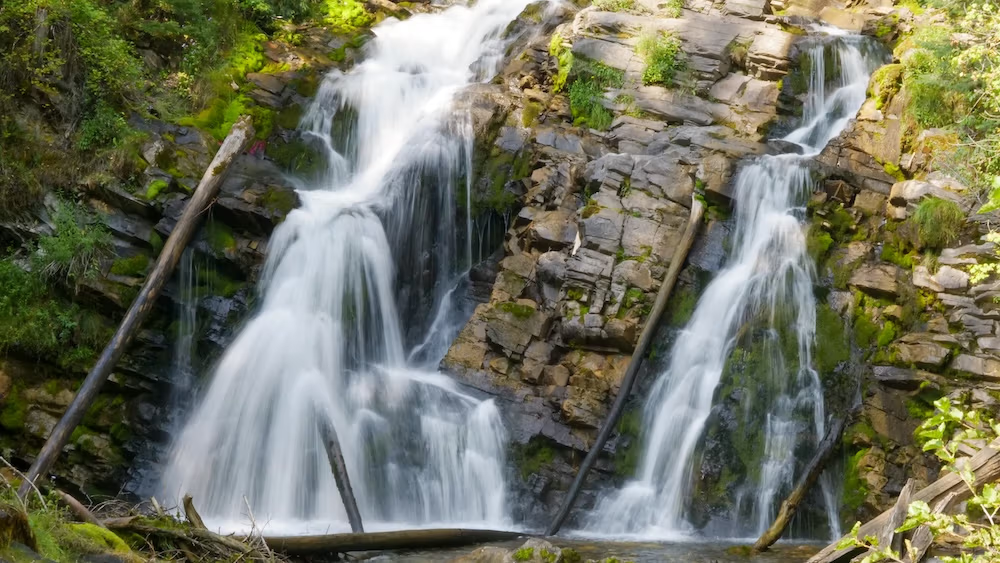
Then we parked at the Visitor Centre before hiking Fairy Creek Falls—and honestly, that’s a top-tier move. Clean bathrooms, friendly staff, trail maps, and a calm “okay, we’ve got this” vibe before you head out. If it’s your first day doing trails in Fernie, it’s an easy win.
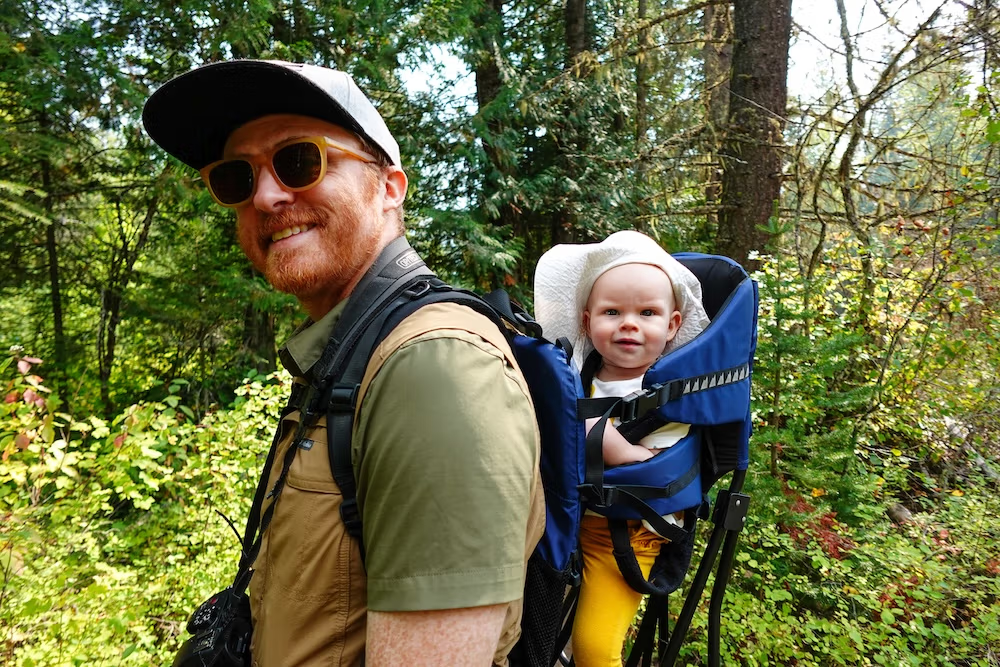
We had baby Aurelia in the hiking backpack, which turned the hike into cardio + comedy (“chunky monkey” was said, lovingly). Somehow she timed her wake-up for the waterfall like a tiny travel influencer. We were sweating, laughing, and fully in that “we’re actually doing this” family travel mode.
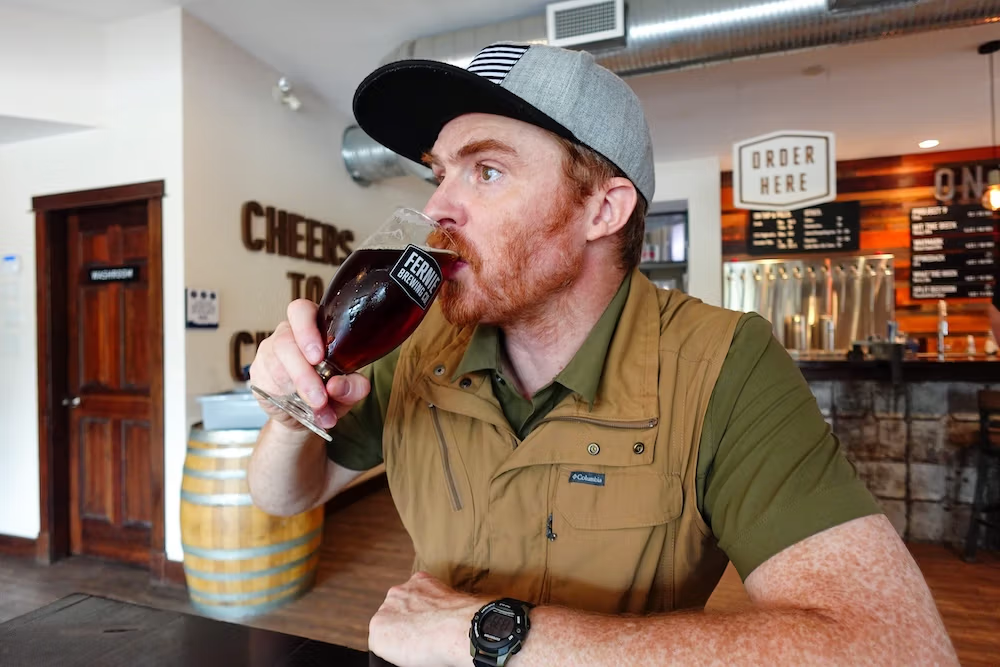
After that: a well-earned stop at Fernie Brewing (note: more “pints and snacks” than full meals), then we drove up to Island Lake Lodge and had one of those “how is this place real?” lunches—ramen that felt like a teleport back to Japan and a smash burger that hit that Shake Shack nerve in the best way. Dessert happened. The baby slept through the meal. We felt like we’d unlocked a secret level.
The point: how you arrive affects how quickly you can start enjoying Fernie. Driving gave us total control over timing, stops, baby logistics, and the ability to pivot from town to trails to lodge without friction. It made the whole trip feel smoother.
Fernie arrival “game plans” for different travelers
If you’re coming for skiing (weekend or week-long)
- Pick your airport based on schedule and price first, then work backward from there
- If you’re driving yourself, prioritize proper tires and extra buffer time (especially on weekend changeover days)
- Stay either:
- downtown (food + vibe), using shuttles to ski, or
- near the resort (ski convenience), with occasional trips into town
If you’re coming as a family
- Driving is usually easiest (car seat, snacks, “we need to stop now” flexibility)
- Plan your first practical stop (Visitor Centre is a great one if trails are in your plan)
- Keep day-one plans light: walk, dinner, early night, and let Fernie ease you into the mountains
If you’re on a budget
- Bus/transit can work, but confirm schedules early
- Choose central accommodation so you can walk most places
- Build your plan around what’s easy without a car (downtown + shuttles)
Quick recap: the best way to get to Fernie
- Best overall: Drive (especially from Alberta or within B.C.)
- Fastest “fly” option: Fly into Cranbrook (YXC) and transfer
- Most flexible flight option: Fly into Calgary (YYC) and drive
- Best no-driving plan: Bus/shuttle + walkable lodging + seasonal ski shuttle connections
✨ Ready to start planning your Fernie route?
- 🎟️ Explore tours & experiences (Viator)
- 🏨 Compare Fernie hotels (Booking.com)
- 🚗 Reserve a rental car (DiscoverCars)
- 🚌 Book bus tickets (Busbud)
Fernie transportation FAQ for real travelers who don’t want surprises
Is Fernie closer to Calgary or Vancouver?
Calgary, by a lot. Fernie is a realistic drive from Calgary for a weekend, while Vancouver is a full-on road trip. Weather and stops can change things, but for planning purposes Calgary is the obvious “closest big city.”
What’s the closest airport to Fernie?
Cranbrook / Canadian Rockies International Airport (YXC) is the closest major airport option. If your priority is “touch down and get to the mountains fast,” this is usually the first place we’d check.
Is the drive from Calgary to Fernie scary in winter?
It can be totally fine—or it can be “slow down and respect the mountains.” Winter conditions vary quickly, so we plan extra time, equip the car properly, and check road reports right before we go. The best winter driving skill is patience.
Do I legally need winter tires to drive to Fernie?
If you’re traveling on designated winter tire routes during the requirement period, yes—winter tires or chains are required, and enforcement can turn vehicles around or issue fines. Requirements can change, so we always verify the current rules before a winter trip.
Are M+S tires enough in B.C.?
Often, M+S tires can meet the minimum legal designation on many routes (as long as tread is sufficient), but for true winter conditions—especially during storms—we’re much happier on real winter tires with the mountain/snowflake rating. Legal minimum and “comfortable drive” aren’t always the same thing.
Can I get to Fernie without a car?
Yes, but it takes more planning. Bus/transit and shuttle options exist, but schedules can be limited and can change. If you’re going car-free, choose walkable accommodation and build your itinerary around downtown + seasonal shuttles.
Is Fernie walkable once I arrive?
Downtown is very walkable—we loved how easy it was to explore on foot. But if you’re staying at (or commuting to) Fernie Alpine Resort, you’ll likely use shuttles or a car to make it effortless.
Should I stay downtown or near Fernie Alpine Resort?
Downtown is best for restaurants, cafes, and that “small-town B.C.” vibe. The resort area is best for ski convenience. If it’s your first visit, downtown makes Fernie feel like more than just a ski base.
If I fly into Calgary, should I drive straight to Fernie or stop somewhere?
If you’re arriving late, stopping in Calgary (or somewhere along the way) can make the trip easier. If you arrive midday, driving straight to Fernie is a clean plan—especially if you treat lunch as your “arrival ritual” like we did.
What’s the best “first stop” when you arrive in Fernie?
For us: food first. But practically speaking, the Visitor Centre is an excellent early stop for bathrooms, maps, and friendly local info—especially if you’re heading out on trails right away.
Is Fernie good for a weekend trip?
Absolutely. From Calgary it’s a very realistic weekend—drive in, sleep, ski/hike, eat well, repeat. It’s one of those places that rewards even a short visit (and then convinces you you need to come back for longer).
How long should I budget for a first visit?
Two nights is the minimum to feel like you didn’t just “drive, sleep, drive.” Three to five nights is the sweet spot if you want both town and nature without rushing.
Is Fernie a good alternative to Banff?
We felt it had that “wow” scenery with a smaller-town feel—less of the “theme park of tourism” energy. It’s not the same as Banff, but that’s kind of the point. Fernie feels calmer, more local, and easier to breathe in.
Can I drive to Fernie from the U.S. easily?
Yes—Fernie is close to the border, and plenty of travelers do it. Just bring the correct documents, expect that border timing can be unpredictable, and avoid scheduling anything too tight on arrival day.
What’s one arrival mistake to avoid?
Over-scheduling day one. Arrive, eat, take a walk, get oriented, and let Fernie ease you into the mountains. We did “lunch + downtown” first and it made everything feel smoother.
Further reading, sources, and helpful resources
This guide is based on our own arrival experiences in Fernie. But we realize many others will be doing some kind of combination of driving, flying, and taking buses/shuttles. To confirm logistics like seasonal considerations, transport options, airport proximity, winter tire rules, and local shuttle realities, we cross-checked details using the official and independent resources below. Because schedules, road conditions, and requirements can change seasonally, it’s always worth double-checking current info before you go.
Getting to Fernie: official and independent logistics guides
- Tourism Fernie — Getting to Fernie
https://tourismfernie.com/maps-travel/getting-to-fernie - City of Fernie — Getting to Fernie
https://www.fernie.ca/EN/main/visitors/getting-to-fernie.html - Fernie.com — Getting Here
https://fernie.com/getting-here/ - Bags Always Packed — How to Get to Fernie
https://bags-always-packed.com/how-to-get-to-fernie-canada/ - Powderhounds — Fernie Getting There
https://www.powderhounds.com/Canada/Fernie/Getting-There.aspx - Ultimate Ski — Fernie Getting There
https://www.ultimate-ski.com/ski-resorts/canada/fernie/getting-there/ - Sell Mountain Vacations — How to Get to Fernie
https://www.sellmountainvacations.com/how-to-get-to-fernie - Wikivoyage — Fernie
https://en.wikivoyage.org/wiki/Fernie
Resort and air-access specifics
- Ski Fernie — Getting to Fernie
https://skifernie.com/discover-fernie/getting-to-fernie/ - Ski Fernie — Getting Here by Air
https://skifernie.com/discover-fernie/getting-here-by-air/
Winter driving requirements (important)
- Government of British Columbia — Winter tire & chain-up routes
https://www2.gov.bc.ca/gov/content/transportation/driving-and-cycling/traveller-information/seasonal/winter-driving/winter-tire-and-chain-up-routes - ICBC — Winter tires guide
https://www.icbc.com/brochures/winter-tires
Fernie shuttle & local transportation
For current schedules, routes, ticketing details, and seasonal updates, these official resources are worth checking close to your travel dates:
- Fernie.com — Getting Around Fernie (FernieStoke Shuttle overview)
https://fernie.com/getting-here/getting-around/ - Tourism Fernie — FernieStoke Local Ski Shuttle
https://tourismfernie.com - City of Fernie — Transportation information
https://www.fernie.ca