
Fernie is one of those towns that looks like it’ll be simple.
A cute mountain main street. A handful of heritage buildings. A few murals. A coffee. Done.
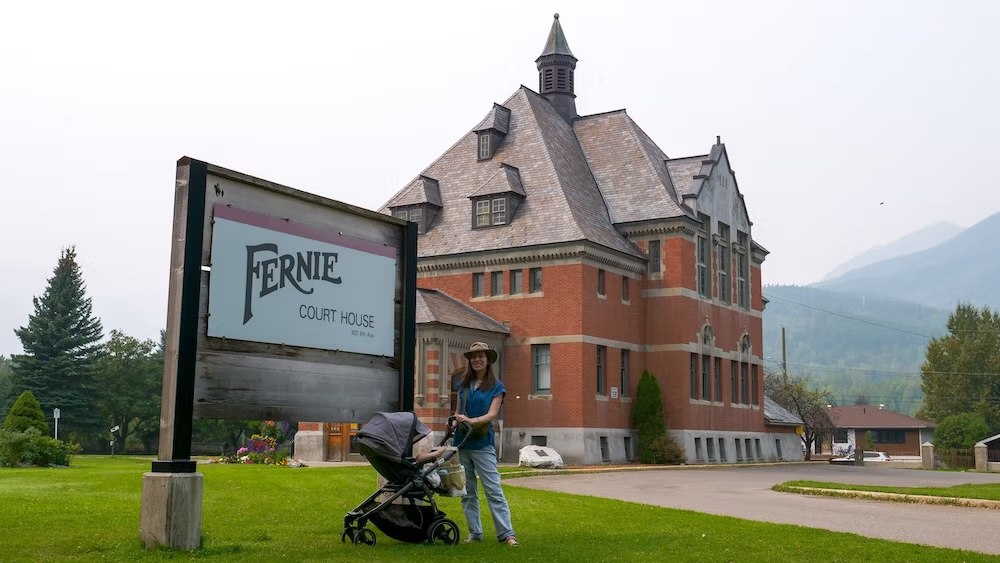
And then you arrive and realize you’ve entered a place that somehow contains: a complicated history, an absurd amount of small-town charm, and enough photo angles to make you question whether you accidentally became a “brickwork influencer.”
That was us.
We kicked off our British Columbia road trip in Fernie—back in my home province (we live in southern Alberta these days)—exploring downtown with the full crew: me (Nomadic Samuel), Audrey (That Backpacker), and baby Aurelia . And yes, the baby absolutely thrived: stroller cruising, butterfly spotting, flower appreciation, the whole wholesome package. Meanwhile, we were out here nerding out over fire history and 1910s architecture.
This walk is a self-guided, do-it-at-your-own-pace loop through downtown Fernie’s most historic buildings—16 official stops—with plenty of chances to layer in murals, ghost signs, and “wait—stop—photo!” moments.
Downtown Fernie Walk Snapshot
| What | Details |
|---|---|
| Time needed | ~2 hours at a relaxed pace (add extra time if you stop for food, photos, or baby-related diplomacy) |
| Difficulty | Easy and mostly flat around downtown blocks |
| Family-friendly | Yes—short distances, lots of breaks, and you can do it in pieces |
| Best starting point | Fernie Museum (also where you can grab the Heritage Walk brochure) |
| What you’ll see | Heritage buildings, old banks, churches, courthouse, murals/ghost signs, mining history, rail history |
| Best “photo vibe” | Brick + sandstone textures, vintage signage, dramatic architecture, mountain backdrops |
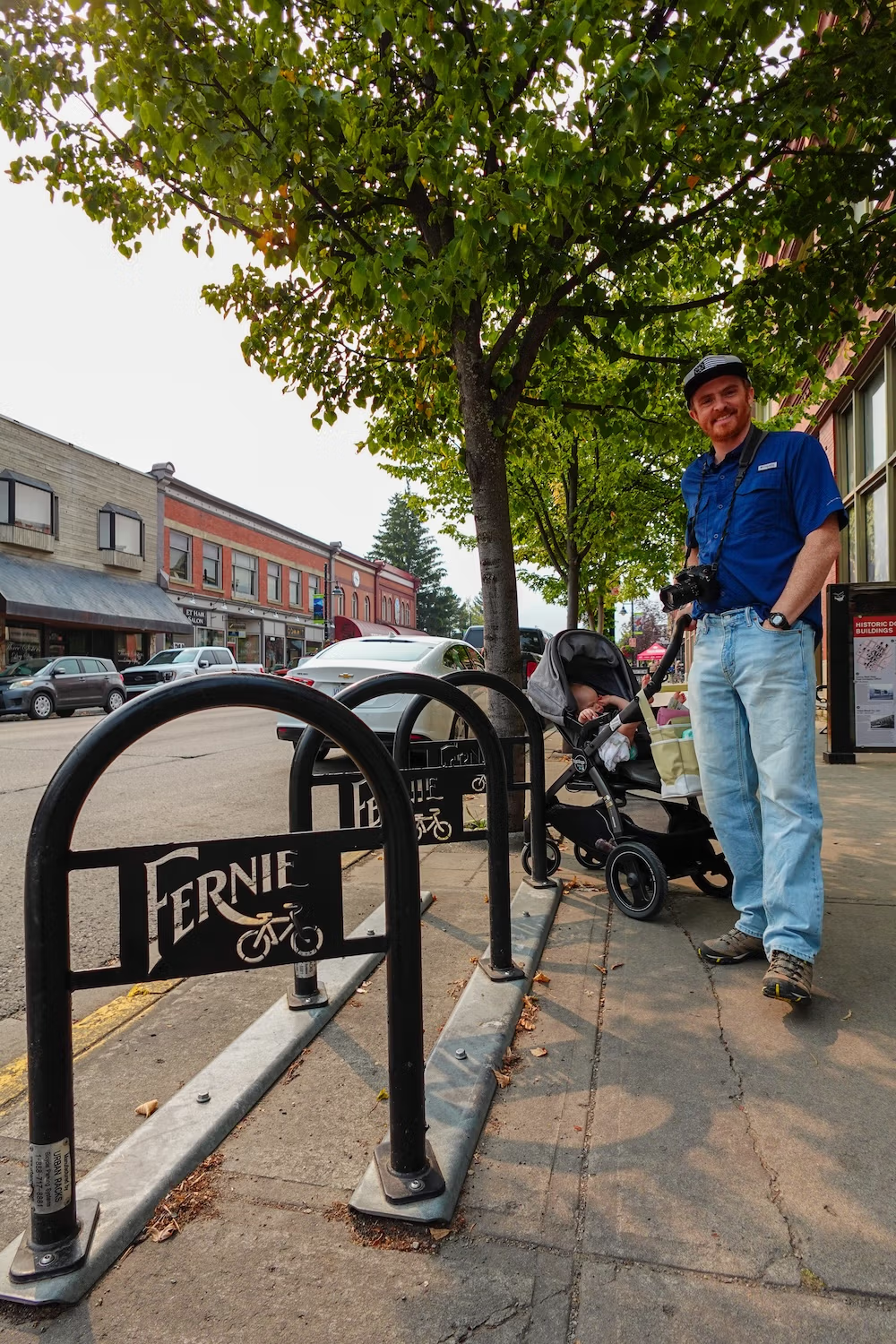
What Makes Fernie’s Downtown So Interesting?
Before we even get to the buildings, Fernie’s story is the secret sauce.
This town has lived through tragedy, reinvention, and big-time change—yet downtown still feels warm, walkable, and totally human-scale. The big headline events we kept coming back to (because they explain everything you’re seeing on this walk):
- 1902 coal mining disaster (130 lives lost)
- 1904 fire (65 buildings destroyed; massive loss for the era)
- 1908 Great Fire (Fernie essentially wiped out in about 90 minutes)
- 1923 Home Bank scandal (people losing huge savings)
- 1986 last underground mine closed
- 1990s reinvention as a tourism-forward mountain town (while modern mining continues in a different form)
Once you know that, the downtown brick buildings stop being “pretty storefronts” and start feeling like evidence—proof that Fernie got knocked down and kept rebuilding.
How to Do This Walk Like a Pro (Without Trying Too Hard)
A few quick tips that make the whole thing smoother:
- Start at the Fernie Museum. Not only is it the official starting point, but it gives you context so the rest of downtown hits harder.
- Grab the Heritage Walk brochure (map + stop list). You can do the stops in any order, but the brochure makes it easy to keep track. Here you’ll find the official list of 16 stops which is what inspired this post.
- Bring water and a camera (or at least clear phone storage… you’re going to take more photos than you think).
- Look up. Fernie’s best details are often above eye level: cornices, brickwork patterns, old signage shadows, carved stone.
- Look for fire clues. Some buildings still show signs of the Great Fire era—subtle discoloration, soot residue, and “this has been here a while” texture.
Now let’s get into the good stuff.
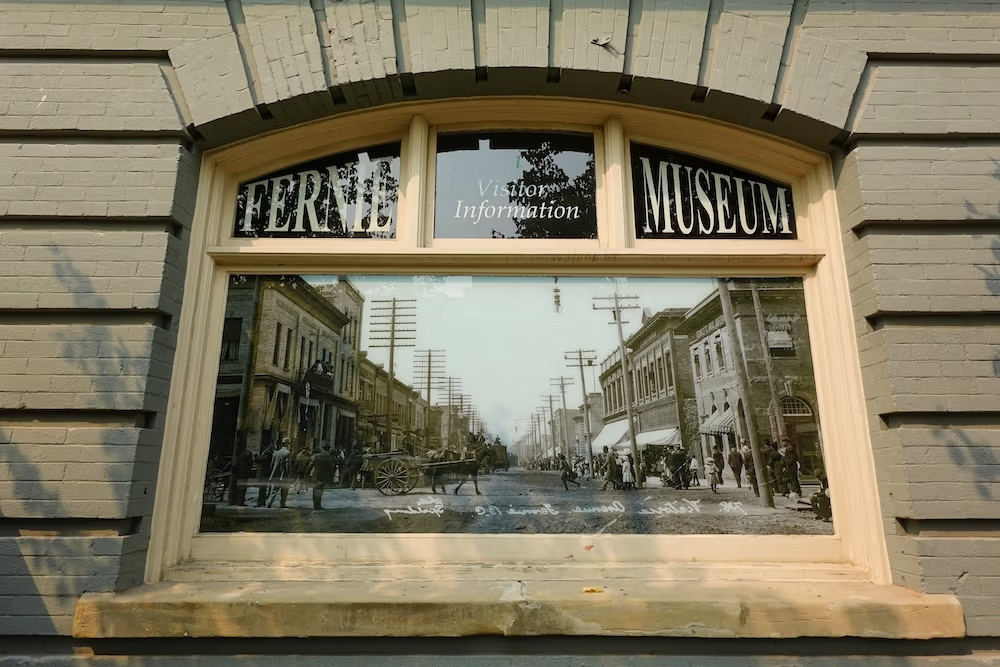
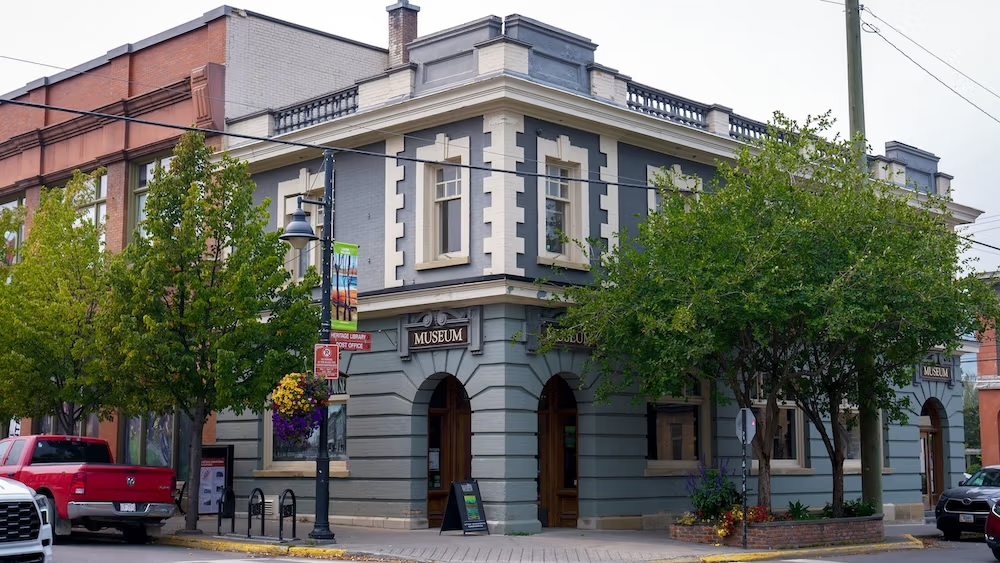
Stop 1: Fernie Museum (Home Bank Building) — 491 2nd Ave
If downtown Fernie is a story, the Fernie Museum is the prologue—and it’s a really good one.
The building itself is historic (built in 1910) and it’s a fitting home for the town’s greatest hits: origins, tragedy, resilience, reinvention. We loved that admission is by donation—free if you need it, or you can toss in what feels fair. It’s the kind of place that immediately makes you want to be a better tourist.
Built in 1910, this building served as a Home Bank branch alongside the Herchmer-Mitchell law office. When the bank collapsed in 1923, Fernie residents lost roughly $800,000 in deposits—huge money at the time, and big enough to help spark changes to Canada’s banking rules. The outside still looks remarkably original today, minus the modern paint.
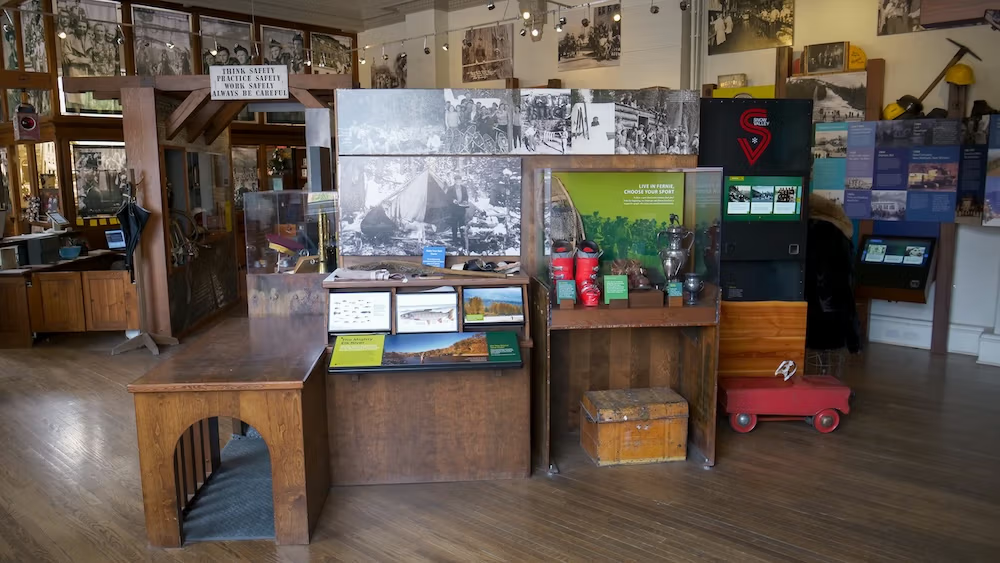
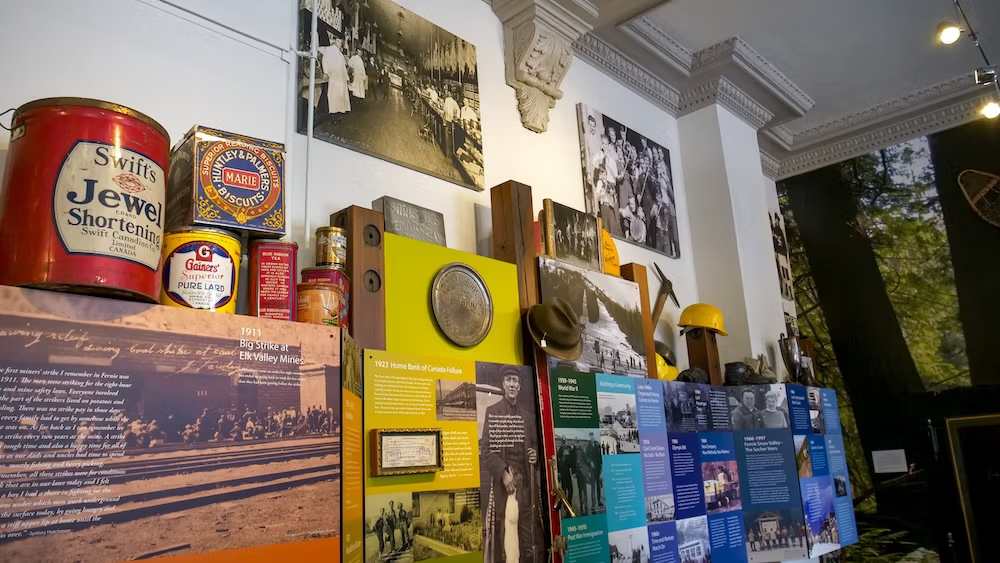
Inside, we got the big timeline that shaped our entire walk:
- The coal era: the hard work, the danger, and that 1902 disaster that still sits heavy.
- The fire era: multiple devastating fires, including the one in 1908 that changed everything.
- The money scandal era: the 1923 Home Bank collapse that hit regular people brutally.
- The shift: industry decline, the closing of the last underground mine, and then this modern reinvention as a mountain town people actually travel to on purpose.
Also: Fernie being a sneaky rum-runner location during Prohibition because of its geography? That’s the kind of detail that makes you look at the most innocent brick building and think, “You definitely have secrets.”
Photo spots
- Front façade: clean, classic, “historic bank building” energy.
- Detail shots: stonework, doorway, old signage, anything that looks like it has been touched by a century of winters.
Our note
This was the moment we went from “cute town stop” to “okay, we’re emotionally invested now.”
Stop 2: How Foon’s Laundry / Elks Hall — 491 1st Ave
This is one of the most fun stops because it combines heritage + visual payoff.
Built in 1908, this building ties into Fernie’s early Chinese Canadian history through How Foon, a Chinese entrepreneur who ran multiple businesses in town.
In this 1908 building, How Foon ran a mini-empire—think café, laundry, shoemaking, and apartments upstairs. Later, the Fernie Elks Club bought it as a hall, and you can still see the building’s original shape plus the old “Royal Crown Soap” advertising mural outside.
But the real “stop-the-walk” moment is outside:
There’s an old advertising mural—an absolute classic ghost sign—for Royal Crown Soap still visible on the exterior.
If you’re building a Fernie photo set, this is one of your guaranteed winners: weathered paint, vintage branding, brick texture, and that “history still clinging on” vibe.
Photo spots
- Straight-on shot of the Royal Crown Soap mural.
- Wider contextual shot showing the mural on the building (so it feels like a discovery, not just a cropped graphic).
Look for
- Old signage shadows and faded paint edges—these are the details that make the shot feel alive.
Stop 3: Imperial Bank (Brickhouse) — 401 2nd Ave
Ah yes, the classic “old bank building that now has a second life.”
Built in 1909, this one has strong brick-and-sandstone presence—clean lines, sturdy corners, and the kind of architecture that basically says, “We were built to last, and we take that personally.”
Before this bank went up, the Crow’s Nest Pass Coal Company offices stood here—until they burned in 1904. The Imperial Bank replaced them in 1909 and stayed in operation here until 1963, when the Imperial Bank of Canada merged with the Canadian Bank of Commerce to create CIBC.
Photo spots
- Corner angles (banks photograph well at corners—architectural cheat code).
- Close-ups of stone trim and brickwork patterns.
Fun detail to remember
Some of these heritage bank buildings still have features that make you do a double take—vaults, thick walls, old entrances. They were built for a different kind of world.
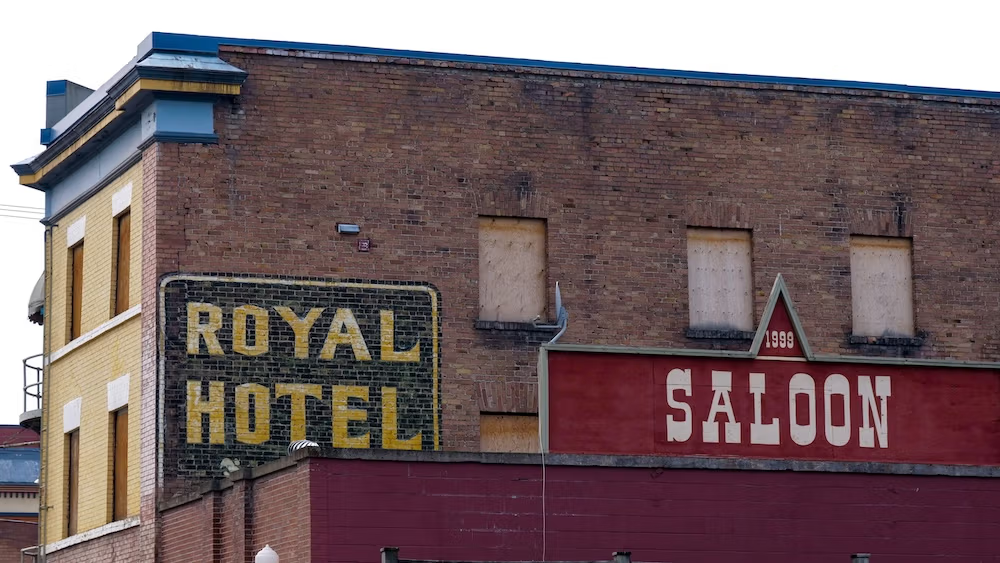
Stop 4: Crow’s Nest Hotel & Miner’s Hall (Central Hotel + Vogue Theatre) — 301 & 321 2nd Ave
This stop is peak Fernie because it’s all about layers.
There’s been a workingman’s hotel on this site since at least 1901, and after the Great Fire, the version you’re looking at was rebuilt in 1909.
Right next door, the Miner’s Hall went up in 1909 on what was basically an empty lot, then cycled through new identities—renamed The Grand, and eventually turning into the Vogue Theatre in 1947.
So you’re standing in one spot looking at a building that’s been:
- A hub for workers
- A social anchor
- A community hall
- A theatre
That’s the kind of multi-life building history Fernie does really well.
Photo spots
- Try a street-level shot that captures the scale and “main street” feel.
- Look for architectural hints that the building served different purposes over time (window shapes, entrances, signage remnants).
Stop 5: Knox United Church (Knox on 2nd) — 201 2nd Ave
Church architecture always gives you visual variety on a heritage walk—especially in a town dominated by brick commercial buildings.
Knox has been part of Fernie since 1898, and the building you see today dates to 1910. Today it’s operated as a venue by the Fernie Heritage Trust, which is a very Fernie thing: historic building, modern community use, still part of daily life.
It served church congregations right up until 2023, and now it’s run by the Fernie Heritage Trust Society as a performing arts venue.
Photo spots
- Step back far enough to get the full building shape.
- Capture vertical lines—churches love a dramatic “look up” shot.
Stop 6: World War I Internment Memorial — Elk River
This is one of the stops that can sneak up on you emotionally.
During Canada’s WWI internment era (1914–1920), Ukrainians and other Europeans were detained and labelled “enemy aliens.” Fernie’s camp began on this site (in the ice rink area) before later shifting to an empty hotel in Morrissey, which was abandoned at the time.
On a walk that can feel light and photogenic, this stop adds weight and depth. It’s worth doing, even if you keep the tone gentle and reflective.
Photo spots
- A simple, respectful shot of the memorial.
- If you want context, include a wider frame showing the river/park setting.
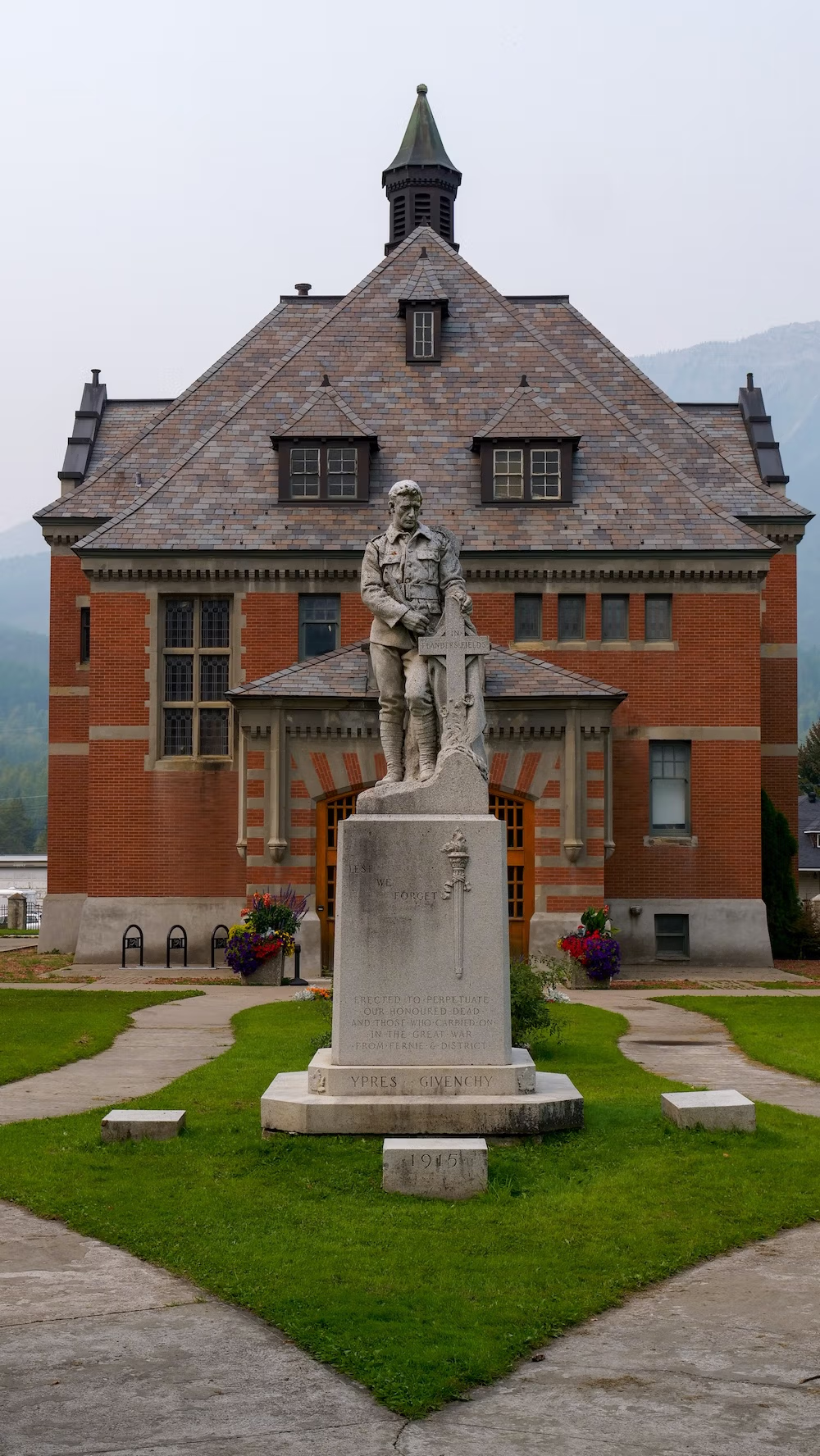
Stop 7: The Court House — 401 4th Ave
Okay, this building is a show-off—in the best way.
The Fernie Courthouse is widely admired and it has that “chateau-style” drama: a proper landmark. Construction started in 1909, it opened in 1911, and the price tag was about $100,000—big-league spending for the time. Inside, there are six stained-glass windows that nod to British Columbia history.
This is one of the most photogenic buildings on the entire walk. If Fernie were auditioning for a period film, the courthouse would get top billing.
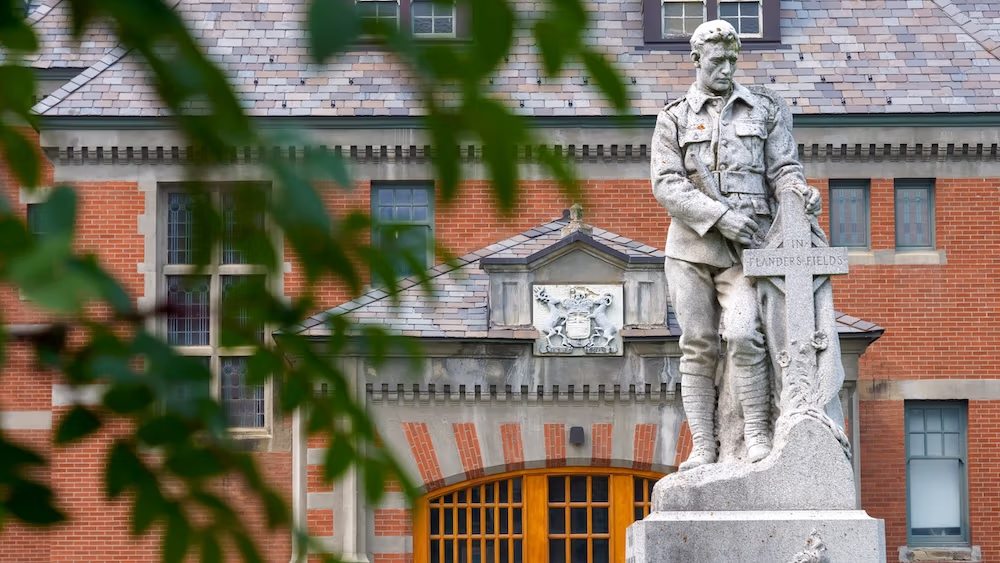
Photo spots
- Wide shot to capture the full structure.
- Detail shots: stonework, rooflines, windows, and any decorative elements.
- If you can, catch it in soft light (morning or late afternoon) when the textures pop.
Stop 8: Holy Family Catholic Church — 521 4th Ave
This is a classic “Fernie skyline” moment.
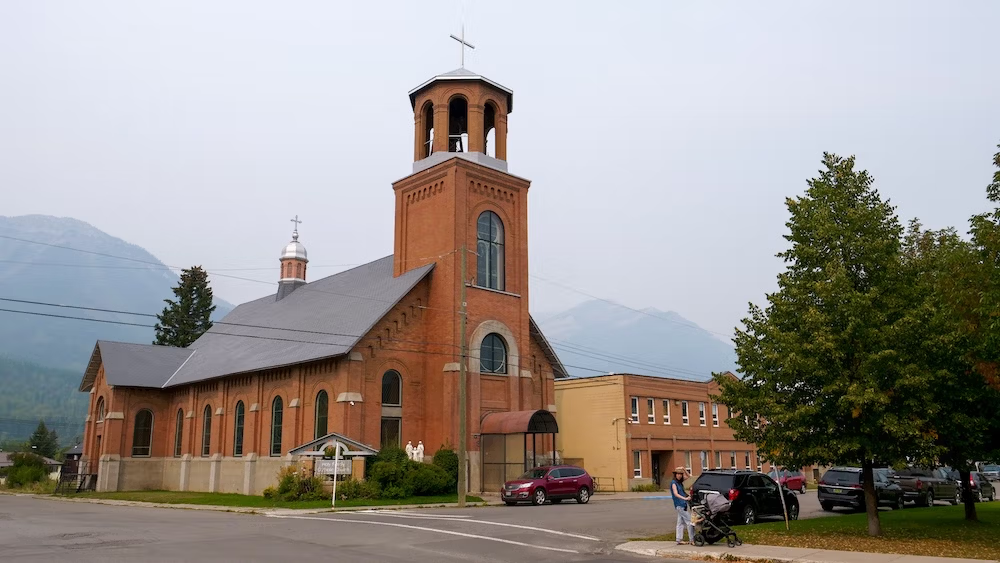
The parish dates back to 1898. During construction, miners chipped in from their pay on a regular basis, and volunteers helped finish the church in 1912. It’s the kind of origin story that screams small town teamwork—people building something they wanted to outlast them.
Photo spots
- Full building framed with sky.
- If you’re lucky: dramatic clouds. Mountain towns love dramatic clouds.
Stop 9: City Hall (Crow’s Nest Pass Coal Company Offices) + Miner’s Walk — 501 3rd Ave
This was one of our happiest stops, and not just because it’s historically important.
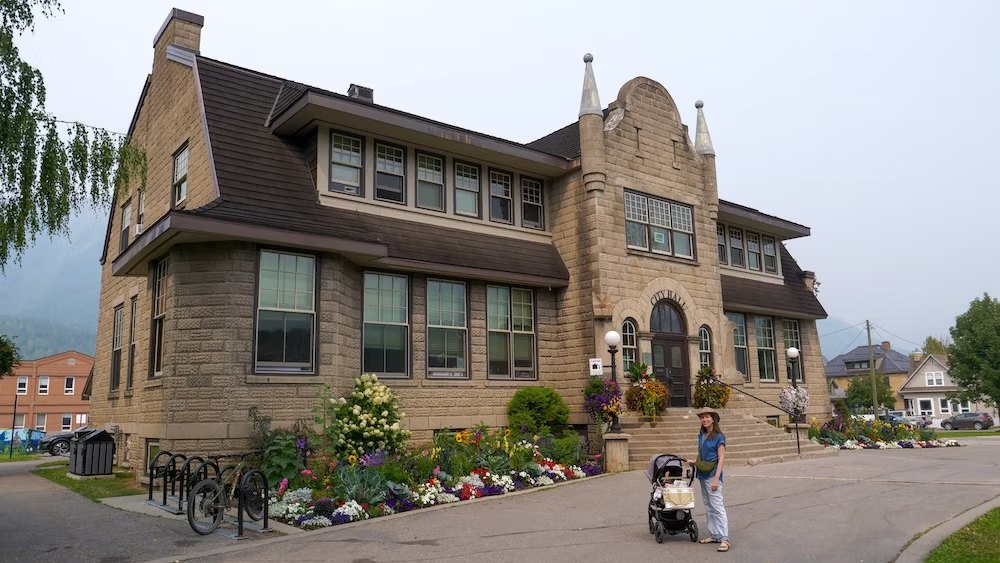
Built in 1905 with sturdy cement blocks, this was the coal company’s head office during a boom period—and it even became a refuge point during and after the 1908 Great Fire.
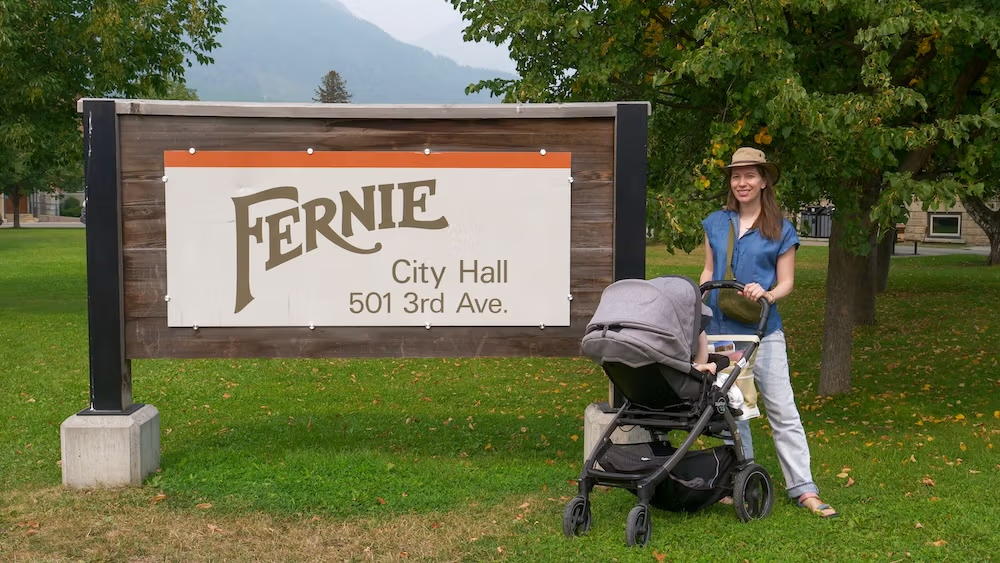
It’s been Fernie’s City Hall since 1984, and for visitors the bonus is what’s outside: The Miner’s Walk on the grounds.
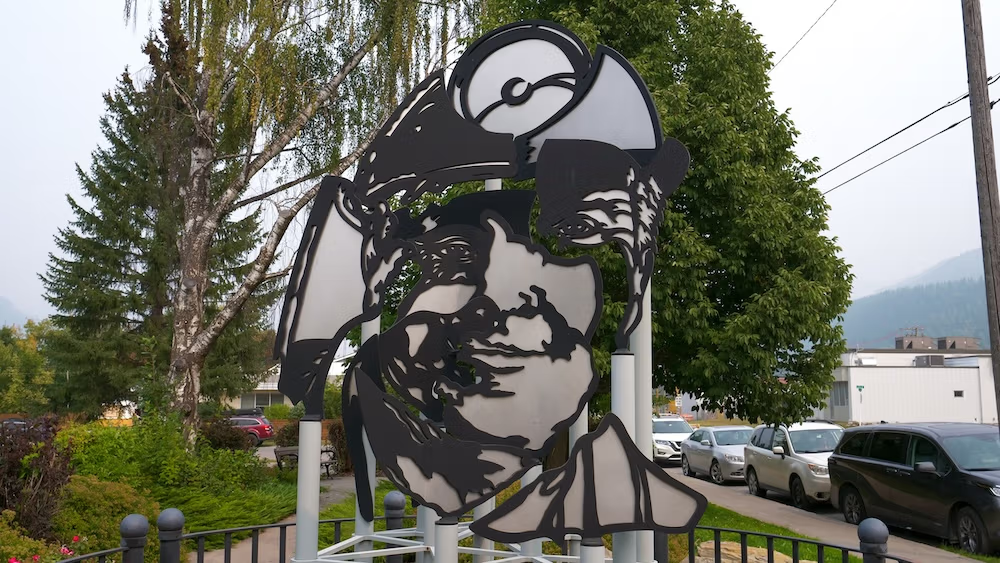
It’s an outdoor interpretive area with panels and sculptures telling Fernie’s coal mining story. It’s also one of the most family-friendly stops on the walk because it’s:
- easy to wander
- visually interesting
- not “stand and read this wall of text” energy
When we visited, the gardens were looking amazing—flowers in bloom, bees buzzing around, butterflies doing their thing. Baby Aurelia was completely locked in. Meanwhile, we were standing there thinking, “This is exactly what small-town BC is supposed to feel like.”
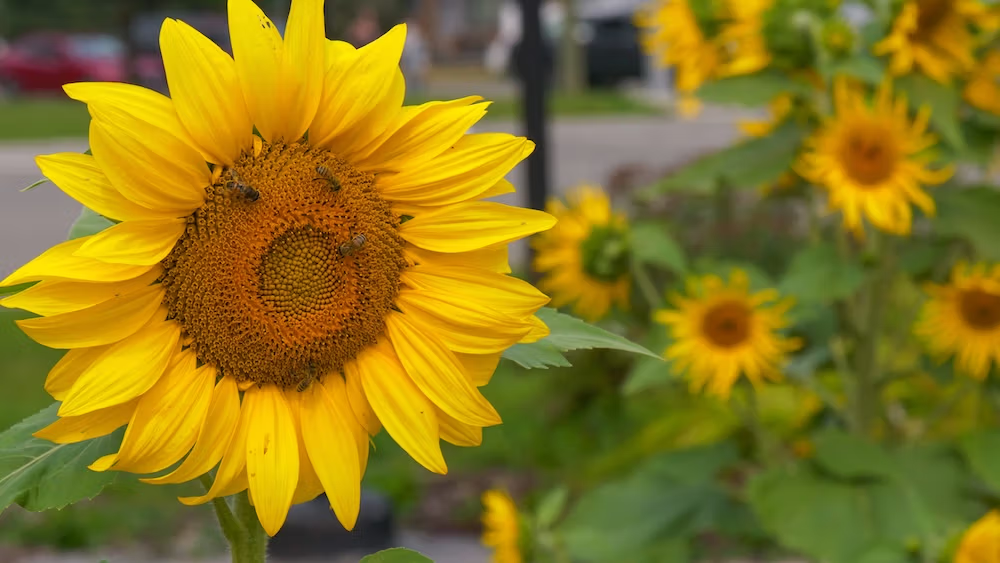
Photo spots
- City Hall façade (especially with flowers in the foreground).
- Miner’s Walk sculptures/panels (close-ups work great).
- Candid family shot: this is one of the easiest places downtown to get a relaxed photo without traffic pressure.
Stop 10: Post Office & Customs Office (Fernie Heritage Library) — 492 3rd Ave
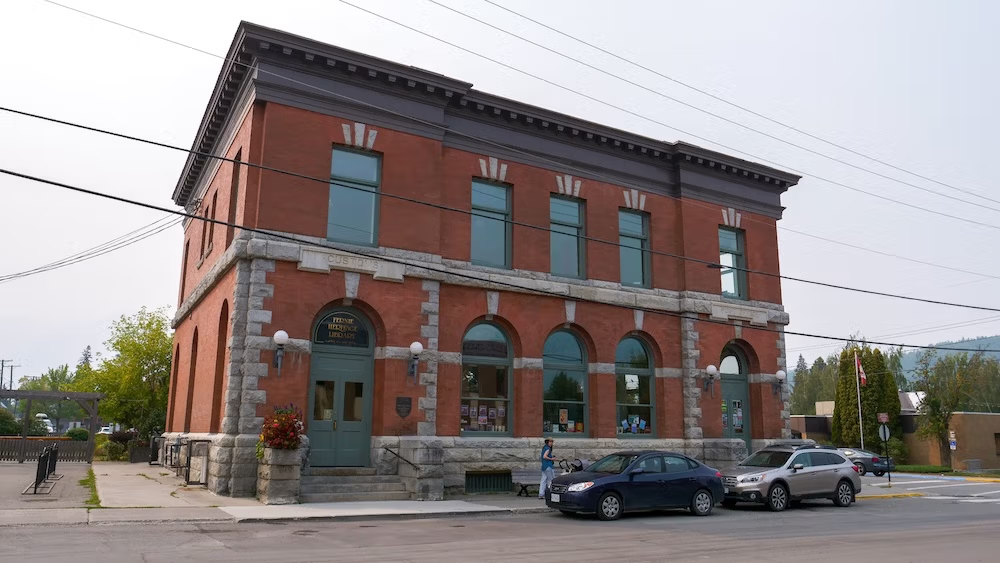
This is one of the most iconic buildings in Fernie’s downtown core.
Built in 1907, it’s got that heavy Romanesque Revival vibe—thick stonework and government-building energy. In the 1908 Great Fire it was badly damaged but still standing, and you can see a Great Fire exhibit inside on the main staircase landing.
This place is a reminder that Fernie was a real regional centre—not just a mining town—and in later years it even served as the U.S. consul office for the area.
This stop is a perfect example of Fernie’s resilience theme: not everything survived untouched, but some structures endured, were rebuilt, and kept serving the community.
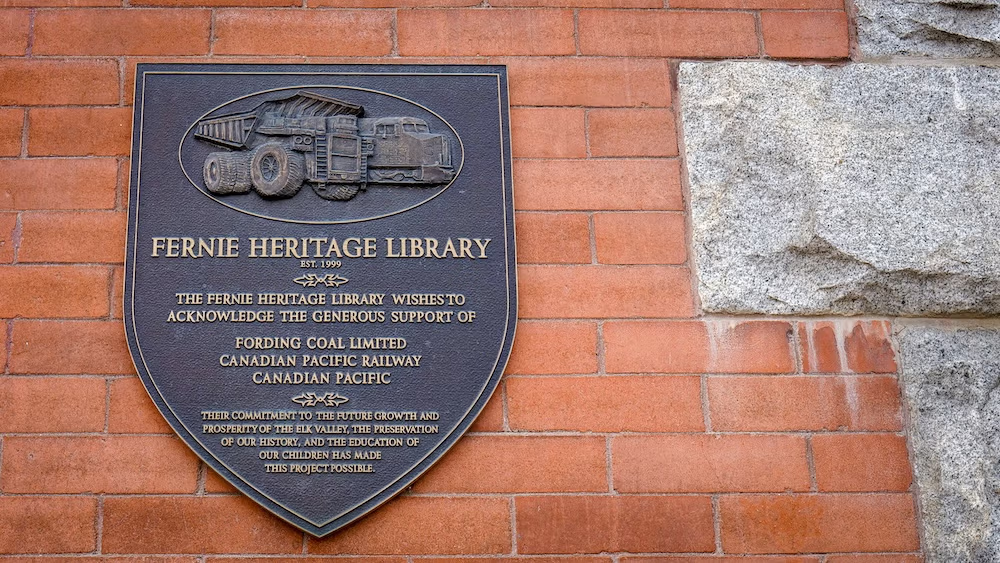
Photo spots
- Front entrance stonework.
- “Look up” angle to emphasize the heaviness of the architecture.
Stop 11: Salvation Army Building (Eye of the Needle Studio & Gallery) — 260 5th St
This stop adds a quieter “community history” layer.
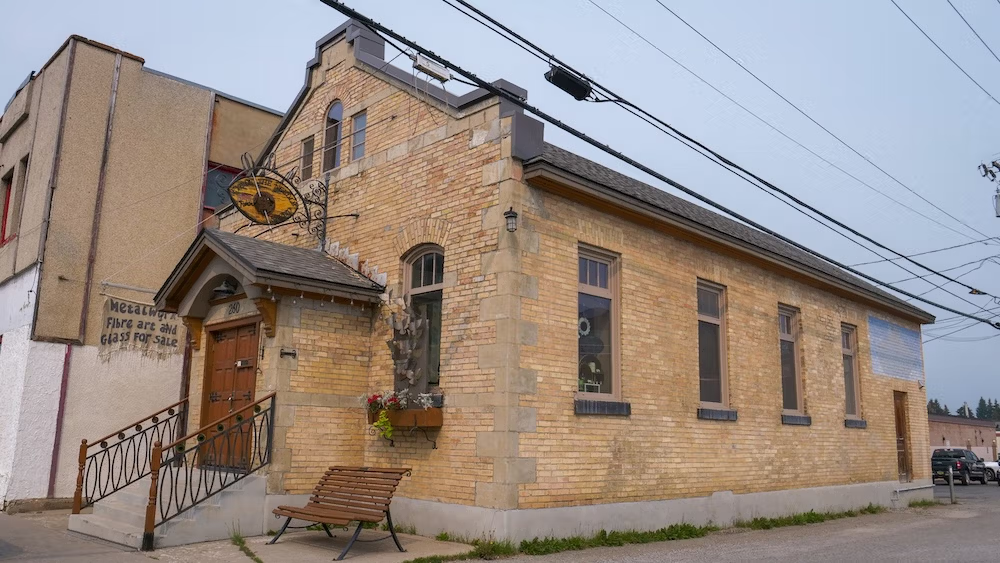
In 1904, the Salvation Army took over this site in a trade for their Victoria Avenue (now 2nd Ave) location, where they’d been operating since November 3, 1900.
Their original building was lost in the 1908 fire, and the replacement kept serving the Salvation Army all the way until 2001.
Photo spots
- Building exterior with street context.
- If the light is good, focus on texture: paint, woodwork, windows—anything that shows age and adaptation.
Stop 12: Isis Theatre (Nevados Restaurant) — 531 2nd Ave
This is one of the most fun stops to narrate because it’s basically a building with an identity crisis across decades.
- Began as “Eschwig’s Hall” in 1910
- Opened as the Isis Theatre in 1911
- Became the Orpheum in 1930
- Closed in 1949
If you love ghost signs and theatrical history, this stop is your playground. Downtown Fernie has these subtle traces of “what used to be here,” and old theatre buildings are especially good at leaving behind clues.
Photo spots
- Look for signage remnants, faded lettering, and architectural hints of its theatre era.
- A wider shot works well here because you want the building to feel like part of the living street.
Stop 13: Fernie Hospital & Nurse’s Home — 802 3rd Ave & 802 4th Ave
This stop is a reminder that heritage walks aren’t just about fancy buildings—they’re about how people lived.
The hospital was lost in the 1908 fire, and it was rebuilt the very next year in 1909.. The Nurse’s Home later had different lives (including a B&B era) and today is part of the residential fabric.
It’s not the flashiest stop, but it’s meaningful: a town rebuilding essential services quickly after disaster is a big resilience clue.
Photo spots
- Keep this one simple and respectful—documentary style rather than dramatic angles.
- A contextual street shot is often better than a tight architectural crop here.
Stop 14: Fernie Secondary School (901 Fernie / Spa 901) — 901 2nd Ave
It served as a school from 1909 to 1998—which basically means generations of Fernie kids cycled through these doors.
One quirky detail we love: the façade was stuccoed over for a period (1978–2006) and later restored. That’s one of those “heritage isn’t always perfectly preserved” realities: towns change, tastes change, budgets change—and later, someone decides the original look matters again.
Photo spots
- Angle that shows the scale (schools photograph best when you let them feel big).
- Detail shot of any original features that survived the many eras.
Stop 15: Fernie Cartage Company (Urban Settler + residences) — 701 2nd Ave
This is one of the best “materials and texture” stops.
When it was rebuilt as a livery, it was constructed with rubblestone collected from the Elk River banks. It’s one of those details we love because the building feels literally rooted in the landscape around Fernie.
Before automobiles were common, the livery delivered milk, coal, and other goods with a fleet of horse-drawn drays.
If you’re a photo person, this is where you go texture-hunting: stone, mortar, weathering, and those subtle differences between river stone and cut stone.
Photo spots
- Close-ups of the rubblestone (seriously—this is the shot).
- Wider shot that shows the building in full context on 2nd Ave.
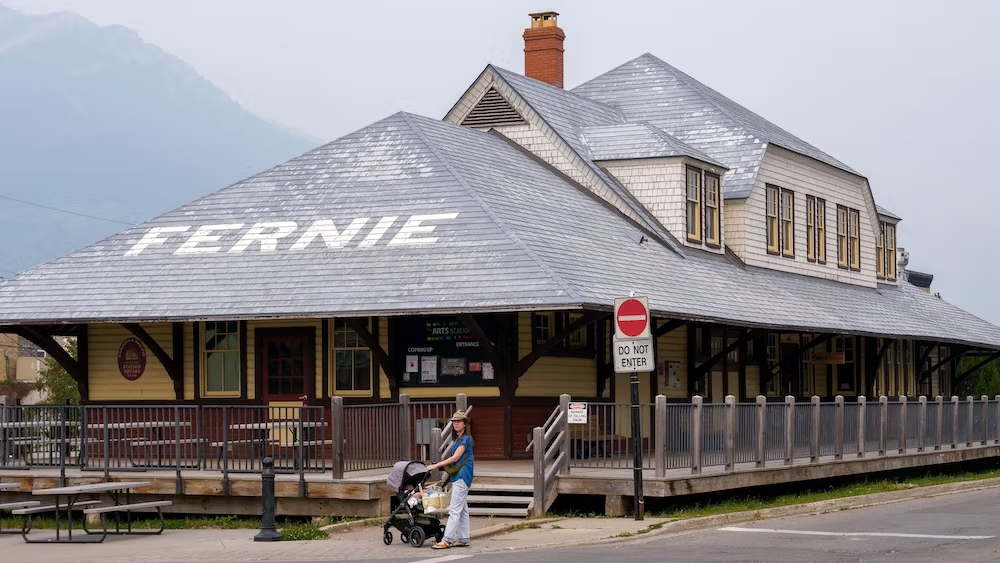
Stop 16: CPR Station (The Arts Station) — 601 1st Ave
The perfect finale.
This started life as Fernie’s Canadian Pacific Railway station. Passenger trains stopped coming through in 1964, and the whole building was relocated and refurbished in 1987. Now it’s the Arts Station—a community arts space that keeps the travel-hub vibes alive in a totally different way.
Passenger trains are long gone (since 1964), but the rail line is still active today as a freight route.
Ending here feels right because it shifts the story from “downtown commercial Fernie” to “Fernie as a connected place,” tied into rail history and travel.
Photo spots
- Classic station façade shot.
- If you can capture any “station” details—signage, layout, old travel energy—it makes the photo set feel complete.
The Fernie Fire Story (And How to Spot It While You Walk)
Fernie’s fires shaped the town’s architecture.
If you want to turn this walk into a “history detective” experience, keep an eye out for:
- brick and stone rebuild-era architecture (especially post-1908)
- subtle soot staining on some older brickwork
- filled-in windows or altered street-level features that hint at how the town physically changed over time
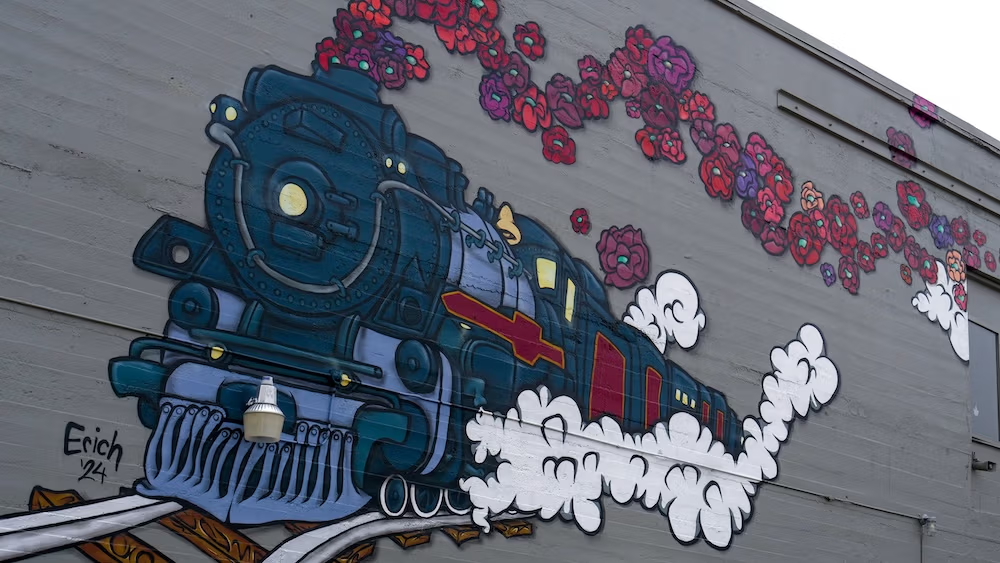
Murals, Ghost Signs, and Photo-First Detours
If your goal is “heritage buildings + murals + photo spots,” downtown Fernie makes that easy because the history is visually loud.
A few easy “photo-first” themes to hunt:
- Ghost signs (like the Royal Crown Soap mural)
- Old theatre-era traces (especially around the Isis/Orpheum building)
- Bank corners (they’re always photogenic—architecture loves a corner)
- Church + courthouse drama (big skyline energy)
- Street views framed by mountains (Fernie loves a good backdrop)
Food Breaks That Fit This Walk (Because We’re Still Us)
We’re not going to pretend we did this walk purely for education. We were also motivated by food.
Lunch: Luchador (downtown-friendly start)
We rolled in and basically went straight to burritos. Cozy, filling, and exactly what you want before museum + walking.
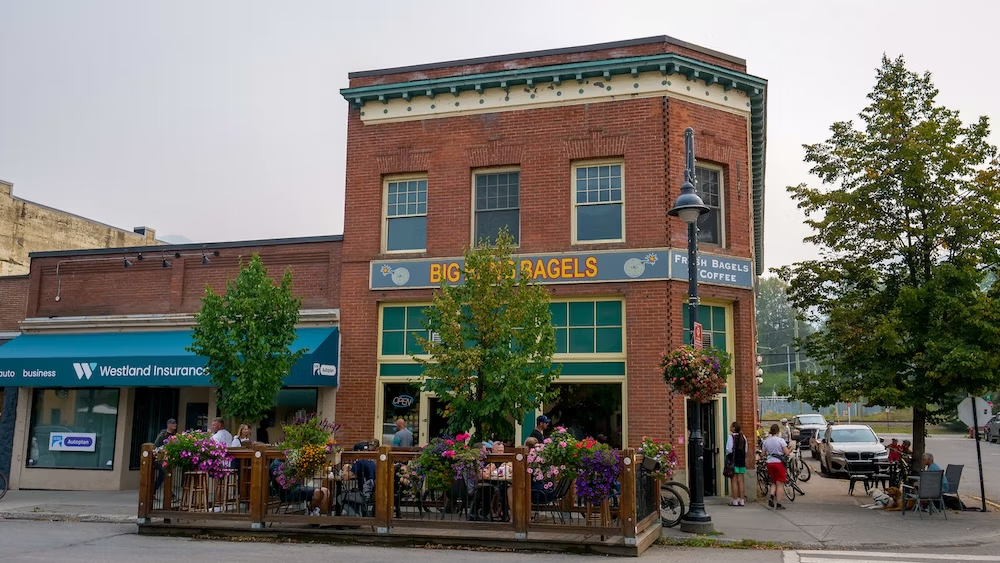
Breakfast: Big Bang Bagels (next-day Fernie ritual)
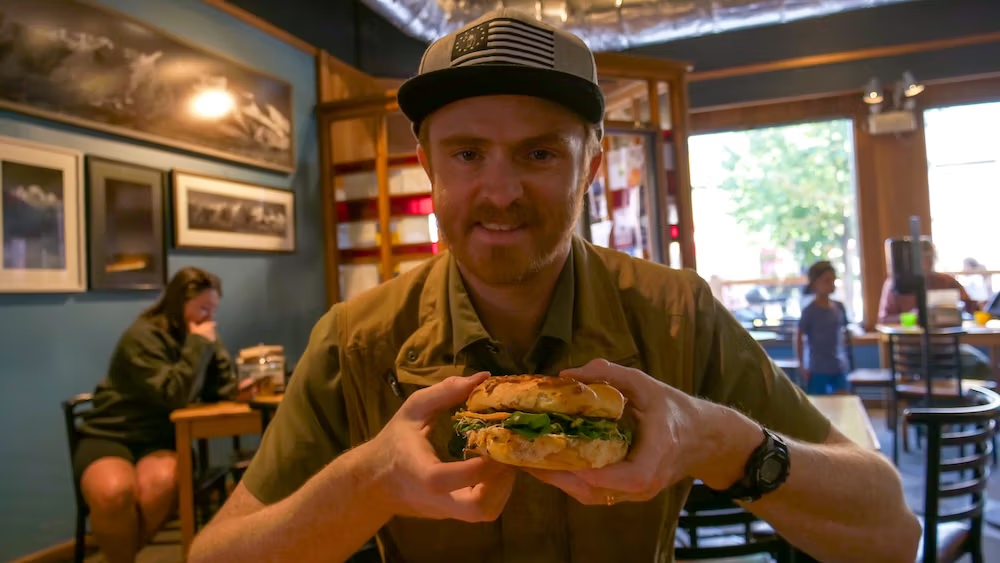
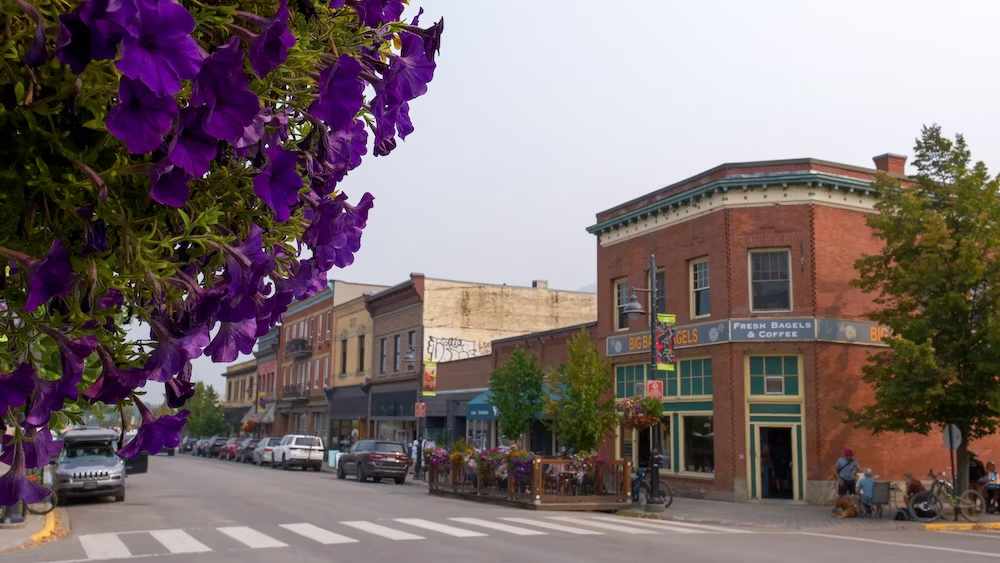
If you do this walk in the morning, Big Bang Bagels is the move. Huge selection, lots of locals grabbing coffee and bagels to go, and enough choice to cause mild decision paralysis.
We “got banged,” as the locals would say:
- one of us went Avo Launcher
- one went Smoked Salmon
- baby acted like she had a meeting to attend (stroller professionalism)
Our Final Take on Downtown Fernie
Fernie exceeded our expectations—hard.
It’s small-town BC at its best: walkable, charming, and not overrun in the way some famous mountain towns can be. The heritage walk gives you a real sense of the place, and the best part is it doesn’t feel like a chore. It feels like wandering through a town that’s lived through a lot… and still shows up looking good.
Also: if you’re traveling with kids, Fernie is sneaky-great. Downtown is manageable, there are breaks built in, and even a baby can have a fantastic time just watching flowers and butterflies while you geek out over 1909 brickwork.
And if you only take one piece of advice from us: start at the museum. Context turns a “nice walk” into a story you actually feel.
If you’re anywhere near the Alberta border—or building a BC road trip—Fernie deserves a spot on your route. You’ll have a great time.
(And yes, we’re already plotting our return.)
Further Readings, Sources and Resources
This self-guided walk is based on our own time exploring downtown Fernie on foot, following the official heritage stops while layering in murals, ghost signs, and photo-first detours along the way. To help with planning, historical accuracy, and deeper context, we’ve included the official heritage walk materials, museum resources, and local tourism references below. These are especially useful if you want maps, background reading, or to explore beyond the core 16 stops. Public art, murals, and app-based tools can evolve over time, so it’s worth confirming the most current versions close to your visit.
Official Fernie Heritage Walk resources
These are the core, authoritative materials behind Fernie’s official heritage walk, including maps, brochures, and self-guided tour formats.
- Tourism Fernie: A Heritage Walking Tour of Fernie — https://tourismfernie.com/blog/heritage-walk
- Fernie Heritage Walk brochure (PDF — Jan 2024) — https://tourismfernie.com/uploads/documents/4/FernieHeritageWalk-January2024.pdf
- Fernie.com: Heritage Walking Tour Booklet page — https://fernie.com/about-fernie/history/the-heritage-walking-tour-booklet/
- Kootenay Rockies: Fernie Heritage Walking Tour — https://www.kootenayrockies.com/partner/fernie-heritage-walking-tour/
- Fernie Heritage Walk 2025 flipbook — https://viewer.joomag.com/fernie-heritage-walk-2025/0845483001705532542
Fernie Museum resources
These sources add deeper historical context and guided-walk options that complement the self-guided downtown route.
- Fernie Museum: Walking Tours — https://ferniemuseum.com/exhibitions-programs/walking-tours/
- Tourism Fernie: Walking Tours (Fernie Museum listing) — https://tourismfernie.com/activities/attractions/walking-tours-fernie-museum
- Fernie Museum (main site) — https://ferniemuseum.com/
Murals, public art, and “photo-first” add-ons
Helpful for expanding the walk beyond heritage buildings into street art, murals, and visually driven detours.
- Tourism Fernie: Public Art in Fernie — https://tourismfernie.com/activities/arts-and-culture/public-art-fernie
- Fernie Art Walk (PDF) — https://tourismfernie.com/uploads/documents/4/FernieArtWalk-FINAL.pdf
Optional: self-guided tour app background
Background reading on Fernie’s mobile walking tour tools for those who prefer app-based navigation and audio-style guidance.
- Tourism Fernie: Iconic Fernie Mobile App — https://tourismfernie.com/blog/iconic-fernie-mobile-app
- West Coast Traveller: New walking tour app launched in Fernie — https://www.westcoasttraveller.com/new-walking-tour-app-launched-in-fernie/