
We’d heard the Fernie rumours — the kind that get passed around like a secret handshake among mountain people.
“Underrated.” “Ridiculously scenic.” “Still feels like a real town, not a stage set.”
And honestly? We weren’t sure if any of that was true… or if it was just the usual small-town myth-making that happens whenever a place has good trails and one very convincing brewery patio.
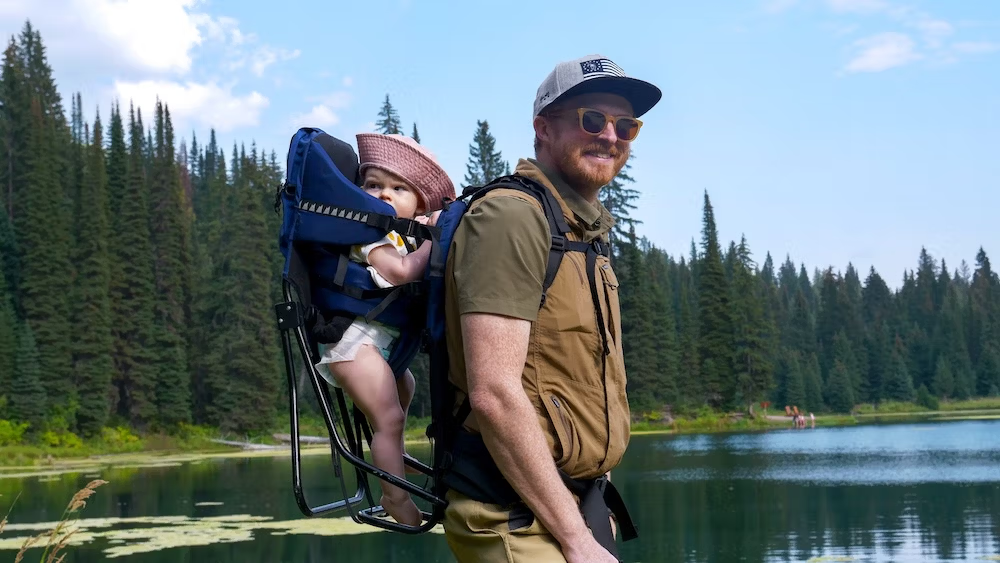
So we came to Fernie to fact-check it — as a family, at our own pace, with a stroller, a baby carrier, and a very serious commitment to good bagels. What we found was a mountain town that doesn’t try too hard, doesn’t feel manufactured, and somehow makes “just one more day” feel like the most logical decision you’ve ever made.
Fernie is the kind of mountain town that still feels like a real town. The brick buildings aren’t “for tourists.” The mining story isn’t decorative. And the outdoor access doesn’t feel like a theme park queue — it feels like you’re stepping into an actual place that existed long before you showed up and will keep humming along after you leave.
It also hits a sweet spot that’s getting harder to find: Fernie offers a whole lot of the “Banff/Whistler-level wow” without the constant crush of crowds. And because it’s so close to the Alberta border, it pulls a ton of weekend visitors from Alberta — especially Calgary (which is dramatically closer than Vancouver), so you’ll notice a lively, road-trip-friendly energy in town that still somehow stays chill.
So the real question isn’t “Is Fernie worth visiting?” It’s: How many days do you need so you’re not just speed-running the highlight reel?
🧭 Quick Booking: Your Fernie Travel Essentials ✈️
If you’re planning your trip to the East Kootenays, these are the four bookings that make everything smoother — your base, adventures, transport, and freedom.
🎒 Your Travel Toolkit
| 🔖 What to Book | 💡 Why It’s Worth It | 🔗 Quick Link |
|---|---|---|
| 🎟️ Tours & Experiences | Skip the logistics and explore Fernie + the Elk Valley with local guides (easy wins when weather turns or time is tight) | 👉 Browse Fernie & Elk Valley tours on Viator |
| 🏨 Hotels & Stays | Lock in the right base (walkable town vs. ski hill vs. highway convenience) — especially on weekends + peak season | 👉 Find Fernie hotels on Booking.com |
| 🚗 Car Rentals | The easiest way to do day trips, chase viewpoints, and keep your schedule flexible | 👉 Compare car rentals for Fernie on DiscoverCars (pick in up Cranbrook) |
| 🚌 Bus Tickets | If you’re piecing together regional transport, checking schedules early saves headaches | 👉 Check bus routes to/from Fernie on Busbud |
Quick answer: how many days do you need?
| Days | Best for | You’ll actually get to do | The tradeoff |
|---|---|---|---|
| 1 | Road-trippers, “just passing through” | 1 signature hike + downtown stroll + one great meal | You’ll feel like you missed the “big Fernie” day |
| 2 | Classic weekend | The full Fernie sampler (food + history + an easy lake + waterfall + a scenery finale) | You’ll still be choosing between highlights |
| 3 | First-timers who want the full picture | Fernie feels complete: history + town + 2 legit nature days | You’ll start planning your “next time” |
| 4 | Outdoors-forward, families, slower travel | Add a day trip or a true rest day without losing your must-dos | You’ll stop rushing (this is a good thing) |
| 5 | Content capture, weather buffer, “let’s live here for a week” energy | Fernie + Elk Valley side quests + repeat favourites at golden hour | Fernie will ruin other “quick stops” for you |
If you’re only going to read one thing: 2 days is fun, 3 days is ideal, and 4–5 days is when Fernie stops being a weekend and becomes a full-on mountain reset.
The big difference between 1 vs 2 vs 3+ days
Fernie isn’t hard to “do.” You can hit a lake loop, grab a coffee, snap a downtown photo, and tell everyone you visited. The difference is whether you leave feeling like you met Fernie — or you just drove through it wearing hiking shoes.
Here’s what genuinely changes as you add days. Not theoretical “you could…” stuff — the real shift in how the trip feels in your body: your pacing, your patience, your willingness to sit on a bench and just stare at mountains like it’s your job.
- Day 1: You do Fernie’s highlight reel. It’s efficient. It’s thrilling. It’s also mildly chaotic because you’re squeezing town + nature + food into one tight storyline.
- Day 2: You get context. You stop treating Fernie like a pit stop and start noticing what makes it different: the history, the brick-built downtown, and that relaxed “we’re not performing for tourists” vibe.
- Day 3: You unlock the second big nature day. This is the turning point where Fernie stops being “cute” and becomes a destination — because you can do both the easy family-friendly side and the dramatic “okay, that’s ridiculous” scenery day.
- Day 4–5: You gain pace and weather flexibility — which is everything in mountain travel. You can move big hikes if it’s smoky, swap plans if it pours, take a proper rest morning, and still get your marquee moments without feeling like you’re constantly behind.
Fernie in one table: pick your trip length
| If you have… | Fernie feels like… | Best for | You’ll need to accept… |
|---|---|---|---|
| 1 day | A drive-by romance | Road-trippers, “passing through,” one big activity | You’ll miss the deeper Fernie vibe |
| 2 days | A proper mini-break | First-timers, families, weekenders | You’ll still be choosing between “town” and “backcountry” |
| 3 days | A balanced mountain getaway | Hikers + food lovers, casual adventurers | You’ll start wanting a 4th day |
| 4 days | Fernie with breathing room | Photographers, slower travelers, mixed abilities | You’ll spend less time “maximizing” and more time enjoying |
| 5 days | Full Fernie immersion | Outdoor addicts, ski trips, bike park crews | Your “quick stop” has officially become a trip |
Our real-life Fernie family trip
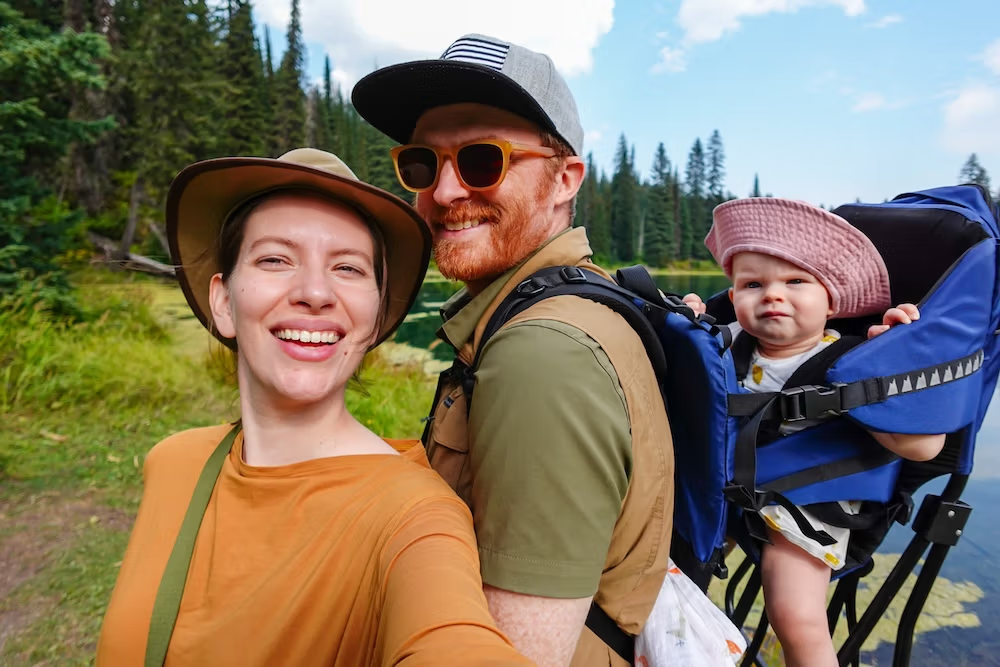
This is the exact rhythm that made Fernie click for us: one day for town + context, one day for easy nature + a waterfall + a brewery, and then Island Lake Lodge as the mic-drop finale.
It worked because it felt realistic. It didn’t rely on “perfect conditions” or “unlimited energy.” It left room for wandering, snacks, diaper changes, and those moments where you accidentally spend 20 minutes staring at flowers in front of City Hall because the mountains are doing mountain things in the background.
Day 1: Fernie’s story + downtown wandering
Day 1 is about getting oriented and giving the scenery a backstory. It’s the day that makes the rest of your trip feel richer, because suddenly you’re not just walking past pretty brick buildings — you’re seeing a town that’s rebuilt itself again and again and somehow ended up charming because it refused to quit.
- Lunch: Luchadoro Burrito Co (arrive hungry — this is the correct “we just got to town” move)
- Fernie Museum: the “Fernie is tougher than you think” stop — donation-based entry, surprisingly fascinating, and a perfect rainy-day anchor
- City Hall gardens: an easy, beautiful wander that feels oddly wholesome in the best way
- Heritage walk vibes: brick buildings, relaxed streets, and that satisfying feeling of being in a town that isn’t trying too hard
Day 2: Bagels → lake loop → waterfall → brewery → Island Lake Lodge
Day 2 is Fernie at its most likeable: low-stress, family-friendly, and secretly impressive. It’s the day where you realize you’re doing “simple” things — a lake loop, a waterfall hike, a brewery stop — but Fernie keeps making them feel scenic and satisfying instead of basic.
- Breakfast: Big Bang Bagels (we “got banged” — and yes, we immediately felt invincible)
- Maiden Lake: flat, stroller-friendly, quick nature reset (the kind of place that makes you feel like you’re winning at travel)
- Fairy Creek Falls: waterfall payoff with a “this feels like a real hike” vibe — we swapped stroller for baby carrier and the baby slept most of the way like she was outsourcing the effort
- Fernie Brewing Company: post-hike pint + snacky vibes (important note: this is pints and snacks, not a full meal — treat it like an appetizer stop)
- Island Lake Lodge: the “wow” finale — scenic drive, next-level views, and Bear Bistro for a meal that feels like a reward you didn’t know you earned
That’s the core 2-day Fernie experience that hits both sides of the town: heritage + food + easy family nature + one “wow” mountain moment. Once you have that backbone, scaling your trip up (or down) gets way easier.
If you only have 1 day in Fernie: what changes?
With one day, Fernie becomes a choose-one-town-and-one-nature situation. The biggest mistake people make is trying to do eight “quick stops” and spending their whole visit in the car, slightly stressed, eating a granola bar like it’s a lifestyle.
One day is about one strong storyline, not a scattered checklist. Pick the version of Fernie you want most — town + history, or nature + views — and then give it enough time to feel like an experience instead of a drive-by.
Option A: The best 1-day Fernie plan (summer / shoulder seasons)
Morning
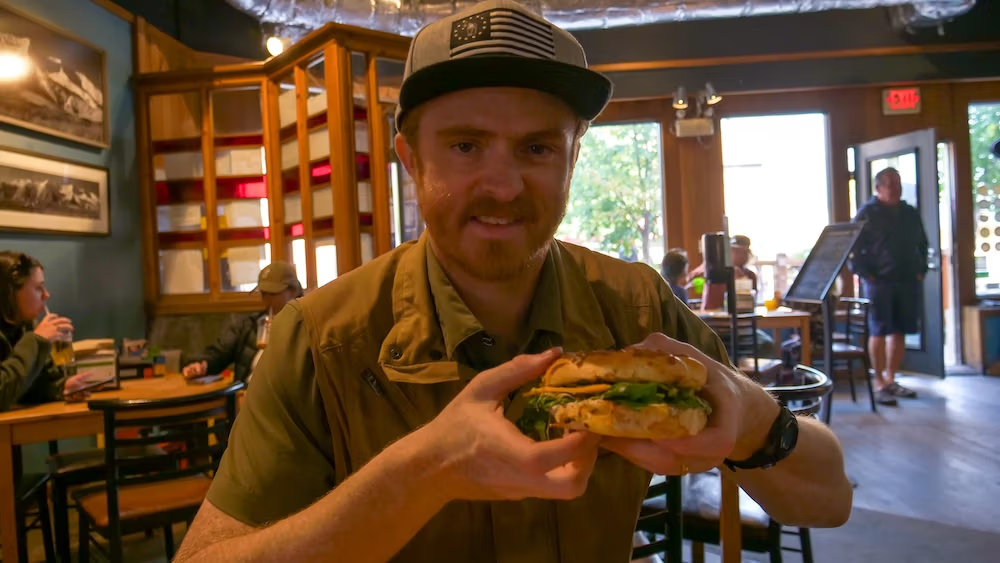
- Big Bang Bagels breakfast
- Quick downtown wander (brick buildings + coffee + a few photos)
Midday
- Maiden Lake (flat, mellow, stroller-friendly reset)
- OR Fairy Creek Falls if you want a proper “we hiked” moment with a waterfall payoff
Afternoon + evening
- Fernie Museum or a longer downtown heritage wander (depending on weather)
- One great meal (Luchadoro if you want fast and satisfying; downtown dinner if you want a sit-down “we did Fernie” finish)
This plan works because it’s not trying to be heroic. It’s trying to be good. You get a taste of Fernie’s vibe, you get one nature moment, and you leave without feeling like you sprinted through town with a stopwatch.
Option B: The best 1-day Fernie plan (winter)
Morning
- Breakfast + coffee downtown
- Short museum visit (especially if it’s cold or stormy)
Midday
- Pick one: a half-day on the ski hill (if you’re already geared up) or a winter walk on an easy path close to town
Evening
- Cozy dinner + downtown stroll (Fernie is ridiculously charming in winter light)
One day in winter is less about distance and more about comfort. Build in warmth and flexibility — and don’t underestimate how “simple” can still feel magical when everything’s snow-dusted and quiet.
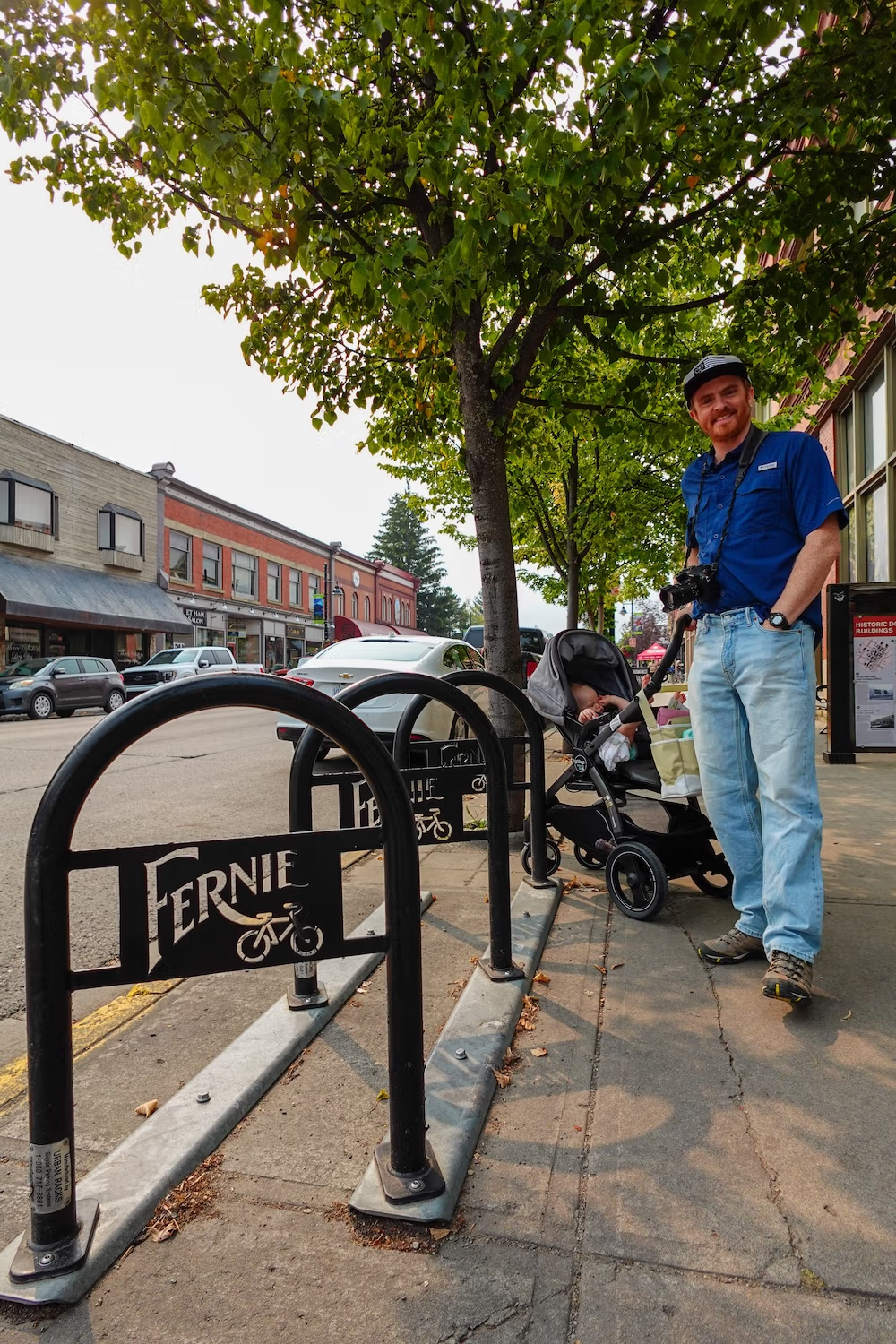
2 days in Fernie: the classic weekend (and why it works)
Two days is Fernie’s sweet spot for weekenders — especially if you’re coming from Alberta. It’s long enough to feel like you went somewhere, short enough that you don’t need to over-plan, and perfectly built for that “Friday night arrival, Sunday afternoon drive” rhythm.
The key is balancing context (so the town feels meaningful) and nature (so you get your mountain payoff). If you do two straight big hikes, you’ll miss what makes Fernie feel different from other mountain towns. If you do only town stuff, you’ll spend the drive home thinking, “We didn’t even do the Fernie thing.”
2-day Fernie itinerary (the “do Fernie properly” version)
Day 1: Arrive + Luchadoro + museum + downtown stroll
Arrive, eat something satisfying immediately (it sets the tone), then give Fernie an hour of your attention beyond the scenery. The museum is the fastest way to understand why Fernie looks the way it does — and why it has a sturdier, less “resort-y” personality than many mountain towns.
Finish with an unhurried downtown wander. Fernie’s brick-built core is part of the point. Pick a dinner spot, do a short post-meal walk, and you’ve done Fernie properly — even before you touch a trail.
Day 2: Bagels + lake loop + waterfall + brewery + Island Lake Lodge (if you can)
This day is your “Fernie highlights” day — but the trick is that none of it feels rushed if you keep the driving tight. Start with Big Bang Bagels, do Maiden Lake as a relaxed warm-up, then commit to a real payoff hike like Fairy Creek Falls.
After that, Fernie Brewing is the perfect low-effort reward stop (just set expectations: pints + snacks). And if you can swing it, cap the day at Island Lake Lodge — even just for Bear Bistro and a short lakeside trail. It’s the kind of place that makes you start plotting your return while you’re still standing there.
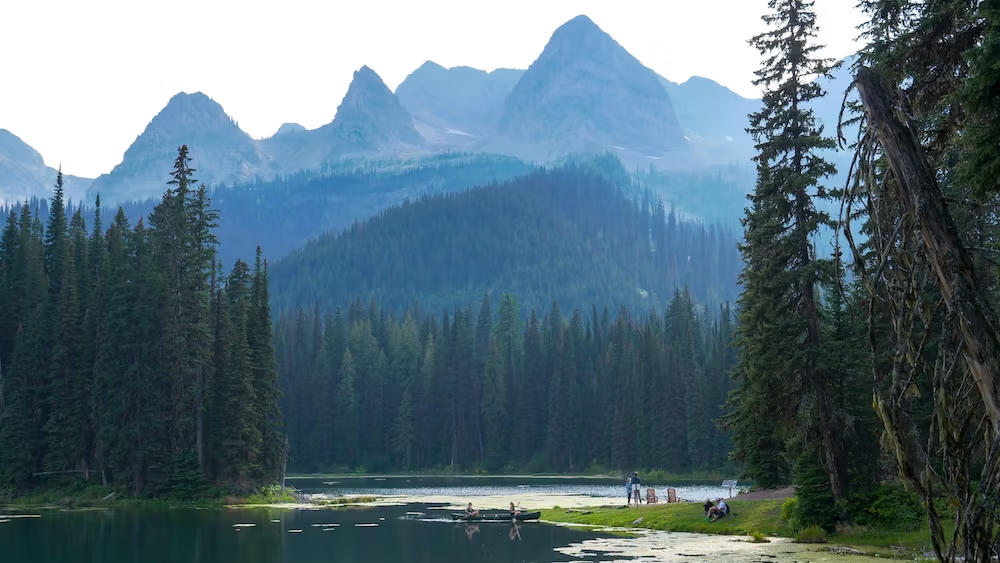
3 days in Fernie: what changes?
Day 3 is where Fernie stops being a sampler platter and becomes a full meal. You no longer have to choose between “easy family-friendly Fernie” and “big scenery Fernie.” You get both — and that’s why three days is the first trip length that feels truly satisfying for first-timers.
Practically, three days gives you the breathing room to do one day of town + history, one day of easy nature (lake + waterfall), and then one day where you go bigger — either in elevation, scenery, or distance from town. This is where you start seeing why people come back to Fernie again and again, and why a lot of visitors quietly prefer it to louder mountain destinations.
3-day Fernie itinerary: the “this finally feels complete” plan
Day 1: Food + museum + heritage walk + downtown wandering
Day 2: Bagels + Maiden Lake + Fairy Creek Falls + Fernie Brewing (optional) + early night
Day 3: Pick your big scenery day (choose one of these based on season + energy)
Big scenery day (Option A): Island Lake Lodge as the main event
If you only do one “splurge scenery” day in Fernie, Island Lake Lodge is a contender. Treat it like a proper day, not a squeezed-in stop. Go earlier, linger longer, and let the place do what it does best: make you feel like you accidentally teleported into a postcard.
Pair Bear Bistro with a longer lakeside wander, then add a second trail if conditions and energy allow. In summer, it’s also the kind of place where canoeing starts to feel like an inevitable life choice. In shoulder seasons, it’s all about moody light and quiet trails. In winter (if you’re staying or visiting appropriately), it turns into the “we should get snowed in here for three days” fantasy.
Big scenery day (Option B): Fernie Alpine Resort summer day (views + trails)
If you want a “big mountain” day without committing to a monster hike, build Day 3 around Fernie Alpine Resort in summer. This is a great option for mixed abilities because you can combine lift-assisted views, shorter trails, and the simple joy of being up in the alpine without having to earn every single metre of elevation the hard way.
A classic move is pairing resort time with a moderate hike like Lizard Lake (and nearby viewpoints), then finishing with a relaxed patio moment back in town. It’s scenic, efficient, and still feels like a real mountain day — especially if Day 2 was your waterfall-and-lake loop day.
Big scenery day (Option C): A “real hike” day close to town (Mount Fernie / Castle Rock)
If you’re here for hiking and you want your Day 3 to feel like you truly did something, make this the day you pick a bigger objective close to Fernie. Two popular “commitment hikes” that keep you near town are Mount Fernie Trail and Castle Rock Trail — both deliver that satisfying mix of effort + views + bragging rights, without turning the day into a full expedition.
This is also where you start paying attention to conditions. Fernie’s trails can change quickly with heat, rain, smoke, or early-season snow. Day 3 is the perfect day to build around a bigger hike because you’ve already had two days to get oriented, check trail chatter, and pick what makes sense for your energy level and the week’s conditions.
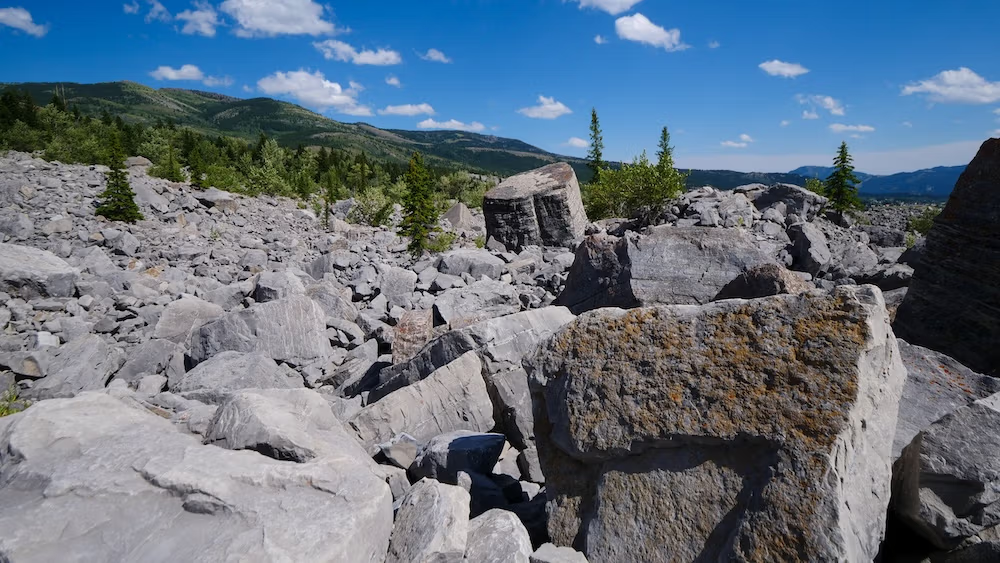
4 days in Fernie: what changes?
Four days is where Fernie becomes flexible — and flexibility is the real luxury in the mountains. You can absorb a smoky afternoon, a rainy morning, or a “we’re more tired than we admitted” moment without losing your best experiences.
It’s also the first trip length where a day trip makes sense without feeling like you’re stealing time from Fernie itself. With four days, you can do your Fernie essentials and add an Elk Valley side quest — which is exactly how you turn “Fernie was great” into “Fernie was a full region trip.”
4-day Fernie itinerary: Fernie + one day trip (serious, practical version)
Day 1: Town day (museum + heritage + downtown)
Day 2: Easy nature day (Maiden Lake + Fairy Creek Falls + brewery)
Day 3: Big Fernie day (Island Lake Lodge or resort alpine day or a bigger hike like Mount Fernie / Castle Rock)
Day 4: Pick your day trip (choose one)
Day trip option A: Sparwood + Elkford (Elk Valley classics)
This is an easy, iconic day trip loop that still feels connected to Fernie’s coal-and-mountains identity. Start in Sparwood to see the Terex Titan (the famous “world’s largest truck” display), then continue to Elkford for a quieter mountain town vibe and a different slice of the valley.
Why it works: it’s low-stress, it’s very “this region,” and it doesn’t require perfect weather the way a big alpine hike does. It’s also a great family day because you can mix short walks, viewpoints, and stops without committing to one long trail.
Day trip option B: Crowsnest Pass + Frank Slide Interpretive Centre (big geology, big story)
If you loved Fernie’s history and want a day that’s more “wow, nature is powerful” than “let’s hike until our legs negotiate a ceasefire,” head east into Alberta to the Crowsnest Pass and make the Frank Slide Interpretive Centre your anchor stop.
This is a heavy-hitting day trip because it combines dramatic landscape with a story that sticks with you. Pair it with a scenic drive through the Pass and one short walk or viewpoint stop, then roll back into Fernie for dinner feeling like you expanded the trip beyond “just a mountain town weekend.”
Day trip option C: Whiteswan / Lussier Hot Springs (a soaking day)
If your legs are cooked (or you’re traveling with kids and want a break from constant “go go go”), plan a proper soaking day around Lussier Hot Springs in Whiteswan Lake Provincial Park. This is the kind of day that makes a 4-day trip feel luxurious instead of just longer.
Hot springs days are also secretly strategic: they’re perfect for shoulder season, smoke days, or weather days when alpine plans are questionable. Just treat it like an early start, pack properly, and build in time to do it calmly rather than rushing in and out.
Day trip option D: Cranbrook-area heritage + hatchery (family-friendly and fascinating)
Want a day trip that’s practical, easy, and surprisingly fun with kids? Build it around the Kootenay Trout Hatchery (near Wardner) and pair it with a heritage stop like Fort Steele Heritage Town or a lake break at Wasa Lake Provincial Park (season-dependent). It’s less “extreme mountain” and more “regional experience,” which is exactly why it’s a great Day 4 option.
This is also the day trip choice that feels the most like “we’re actually exploring the Kootenays,” not just doing Fernie-specific highlights. If you’re the kind of traveler who likes variety — history, wildlife, water, food — this option plays really well.
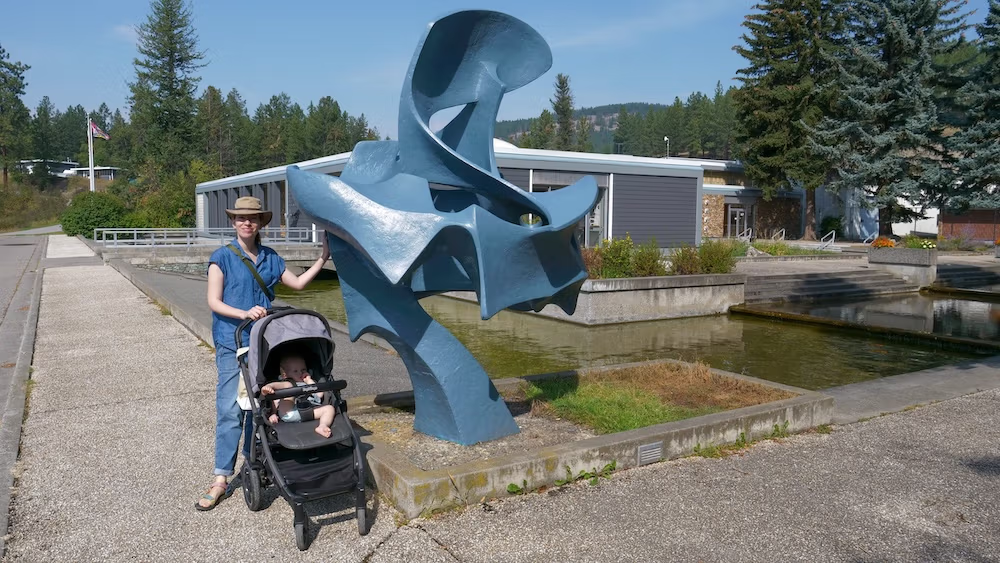
5 days in Fernie: what changes?
Five days is when Fernie becomes a lifestyle. You stop optimizing. You start repeating favourites on purpose — the same lake loop at a different time of day, the same downtown street in different weather, the same patio because you finally have enough time to sit there like you belong.
It’s also the trip length where you can layer in a genuinely big objective (or two) and still have recovery time. If Day 3 is your “big Fernie scenery” day and Day 4 is your “side quest” day trip, Day 5 becomes your wild card: a true big hike, a photo mission, a second resort day, or simply a slow day that saves the whole trip from feeling like a bootcamp.
5-day Fernie itinerary: full Fernie immersion (more serious, more specific)
Day 1: Town + museum + heritage + downtown dining
Day 2: Easy hike day (Maiden Lake + Fairy Creek Falls) + brewery reward
Day 3: Big Fernie scenery day (Island Lake Lodge or Fernie Alpine Resort summer day)
Day 4: Day trip (Sparwood Titan + Elkford, or Crowsnest Pass + Frank Slide, or Lussier Hot Springs)
Day 5: Pick your “big hike” or “deep cut” Fernie day (choose one)
Day 5 option A: Mount Proctor (big effort, big reward)
If you want to end the trip with a “this is why we stayed five days” hike, Mount Proctor is one of the classic big objectives near Fernie. This is not a casual stroll — it’s the kind of day where you start early, pack seriously, and come back tired in the best possible way.
The payoff is that you get a true panoramic perspective on the region — a finishing-day hike that actually feels like a finale. If you’re traveling with mixed abilities, this becomes a split-day: hikers do the big objective, everyone meets later for an easy downtown dinner and an early night.
Day 5 option B: Heiko’s Trail / Three Sisters (for strong hikers who want the “serious” Fernie day)
If you’re here for real hiking and you’ve been building up to a bigger day, look at objectives like Heiko’s Trail or routes toward the Three Sisters area (depending on conditions and access). This is the “Fernie has depth” day — the day that makes you understand why people come here for entire seasons, not just weekends.
These are the kinds of hikes where details matter: access roads, trail conditions, weather, and your group’s experience level. The smartest move on a 5-day trip is using Days 1–4 to gather intel — visitor centre maps, locals, conditions — and then choosing the best Day 5 objective for that specific week.
Day 5 option C: Coal Creek heritage + a moderate hike (history + views in one day)
If you want Day 5 to feel like “Fernie, the place” rather than “Fernie, the treadmill,” build it around Coal Creek — one of the most meaningful ways to connect Fernie’s mining history to the landscape you’ve been enjoying all week.
Pair Coal Creek with a moderate hike like Hartley Lake (a classic that feels like a true mountain outing without necessarily being a full-day sufferfest), then finish with a slow downtown evening. It’s a satisfying way to close the loop: scenery, effort, and story all in one day.
Day 5 option D: Repeat favourites on purpose (the underrated “good trip” choice)
Five days also gives you permission to repeat something you loved — and that’s not boring. It’s the opposite. Do Maiden Lake again at golden hour. Revisit downtown when the light is different. Go back to the same patio because you actually have time to linger. If you’ve ever finished a mountain trip feeling like you never slowed down, this Day 5 option is how you fix that.
This is also the best option if weather turns, smoke rolls in, or your legs are toast. A flexible Day 5 is the difference between a trip that ends stressed and a trip that ends satisfied.
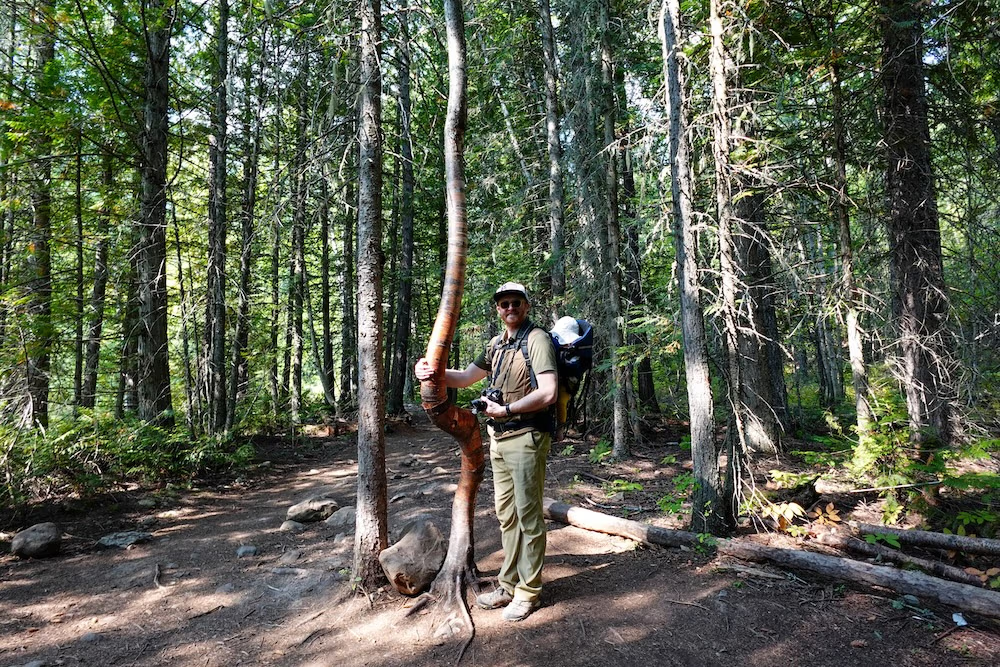
Best hikes in Fernie (easy → big) + who they’re best for
Fernie’s hiking range is one of the reasons people underestimate it. You can do a flat, stroller-friendly lake loop in the morning… and then (if you’re built for it) go chase serious elevation and ridgelines the next day. The trick is matching the hike to your trip length and energy — not your optimism.
Here are practical, name-specific options you can plug into the 1–5 day itineraries above. Always check current conditions locally (visitor centre is genuinely useful), but these are reliable “Fernie staples” that show the range.
| Hike / walk | Effort level | Best for | Why it’s worth it |
|---|---|---|---|
| Maiden Lake | Easy | Families, stroller walks, quick reset | Flat, mellow, close to town — easy nature that still feels scenic |
| Fairy Creek Falls | Easy / Moderate | First-timers, families (carrier-friendly), “I want a payoff” hikers | Waterfall payoff without needing a full-day commitment |
| Coal Creek (heritage area / trail) | Easy / Moderate | History lovers, mixed groups, half-day exploration | Connects Fernie’s mining story to the landscape in a way that actually lands |
| Hartley Lake | Moderate | People who want a “real hike” without going huge | Classic Fernie outing — feels like a proper mountain day |
| Lizard Lake (Fernie Alpine Resort area) | Moderate | Summer visitors, mixed abilities, scenic resort day add-on | Alpine feel with a straightforward plan |
| Mount Fernie Trail | Hard | Strong hikers, Day 3–5 trips | Big effort, big view — a true “we earned this” hike |
| Castle Rock Trail | Hard | Strong hikers, Day 3–5 trips | Another serious objective close to town with a rewarding payoff |
| Mount Proctor | Very hard | Experienced hikers with a full day | Panoramic finale hike — best saved for Day 5 or a dedicated “big day” |
| Heiko’s Trail / Three Sisters area | Very hard | Experienced hikers, strong fitness, good conditions | Deep-cut Fernie — the “this place has serious depth” objective |
Best day trips from Fernie
Fernie is a full destination on its own — but once you’re at 4–5 days, the nearby region becomes part of the fun. The Elk Valley and surrounding Kootenay/Pass stops give you variety: big stories, weird roadside icons, hot springs, heritage towns, and easy “family win” attractions.
Here are day trips that fit naturally with a Fernie itinerary (and don’t feel like you’re spending the whole day driving for one photo).
| Day trip | Exact location highlight | Best for | Trip style |
|---|---|---|---|
| Sparwood | Terex Titan display (Sparwood “world’s largest truck” stop) | Families, road-trippers, quick iconic stop | Easy, fun, low-effort |
| Elkford | Elk Valley side-quest town (pair with Sparwood) | People who like “regional exploration” | Scenic drive + small-town vibe |
| Crowsnest Pass | Frank Slide Interpretive Centre (Frank, Alberta) | History/geology lovers | Heavy-hitting story day |
| Whiteswan Lake Provincial Park | Lussier Hot Springs (soaking day) | Recovery day, shoulder season, “treat ourselves” day | Relaxation + nature |
| Wardner / Cranbrook area | Kootenay Trout Hatchery (near Wardner) | Families, wildlife lovers | Easy, educational, fun |
| Fort Steele | Fort Steele Heritage Town (historic site) | History lovers, family-friendly heritage day | Regional culture day |
| Wasa Lake | Wasa Lake Provincial Park (season-dependent lake day) | Summer travelers who want a swim/picnic day | Relaxed outdoors day |
| Hosmer | Hosmer Ruins (quirky historical stop) | Photographers, curious explorers | Short stop + easy add-on |
| Akamina-Kishinena | Akamina-Kishinena Provincial Park (farther, “bigger mission” day) | 5-day trips, strong planners | Big day trip adventure |
Getting to Fernie (drive, flights, and why Alberta visitors are everywhere)
Fernie’s location is part of its magic. It’s in the southeast corner of BC, close to Alberta, and that shapes who visits and how the town feels. It has a steady flow of Calgary weekenders (and Alberta plates everywhere), plus international seasonal workers who show up for ski season and summer adventure season.
If you’re driving, Fernie is famously approachable by road — and that’s why it’s such a common “quick getaway” from Alberta. Vancouver is much farther, so Fernie tends to feel like a mountain town that belongs to the region, not a spillover from coastal tourism.
Driving
Driving is the default for most people, especially if you’re trying to do hikes, day trips, or anything outside the downtown core. It also gives you the flexibility that makes longer trips (3–5 days) feel so much better — because you can pivot based on weather and conditions.
Flying
If you’re flying in, your most common gateways are Calgary (bigger airport, more flight options) or Cranbrook (closer, smaller). From there, you’re typically renting a car or arranging transport. Fernie is doable without a car if you stay central and keep your plans simple — but the moment you want Island Lake Lodge, bigger trailheads, or day trips, wheels become a big quality-of-life upgrade.
Winter driving note
Winter routes in BC can have winter tire and chain requirements depending on highway signage and dates (commonly Oct 1 to Apr 30). In winter, plan conservatively, watch forecasts, and treat “it’s only a few hours” like famous last words.
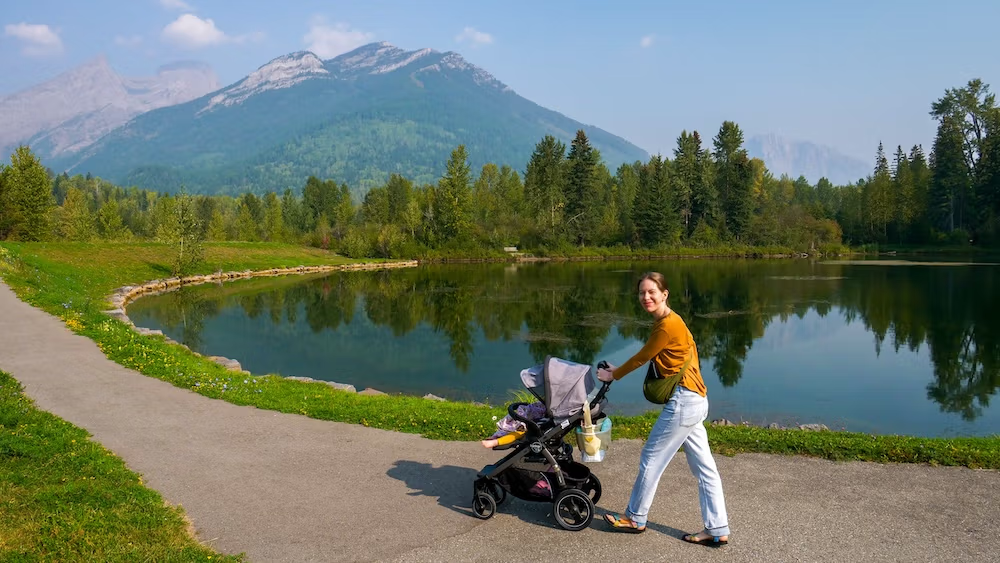
Getting around Fernie (walkability, paths, strollers)
Fernie is surprisingly walkable for a mountain town. Downtown is compact, pleasant, and genuinely enjoyable to wander — not just “walkable on paper.” That matters more than people expect, especially on a longer trip where you don’t want every coffee and dinner to feel like a small logistical mission.
If you’re traveling with kids, Fernie is also one of those places where the simple moments are easy: flat paths, parks, relaxed streets, and that steady stream of other families doing the same thing. It’s a town that doesn’t make you fight for your “easy day.”
Without a car, the trip becomes more downtown-focused and you’ll need to be choosier with hikes. With a car, Fernie opens up fast — and that’s when 3–5 days starts making a lot of sense.
Where to stay in Fernie (decision table)
Where you stay changes how Fernie feels. Not in a small way — in a “do we casually stroll for dessert at 8 pm or do we debate driving?” way. If walkability and vibe matter to you, stay central. If skiing is the whole point, stay near the hill. If you’re chasing quiet, go rural and accept more driving.
| Where to stay | Best for | Pros | Tradeoffs |
|---|---|---|---|
| Downtown / near downtown | First-timers, food lovers, families | Walkable meals + coffee + evening strolls; easiest overall trip flow | You’ll drive to bigger hikes/day trips |
| Ski hill / resort area | Ski trips, winter-focused visits | Convenience if skiing is the main event | Less “town vibe,” more driving for restaurants |
| Out of town / rural | Quiet seekers, longer stays | Peaceful, scenic, space to spread out | Driving becomes part of every plan |
🏨 Where to Stay in Fernie (Our Top Hotel Picks)
⭐ Quick Booking Box: Fernie Hotels (Compare Rates)
| Pick | Best for | Vibe | Booking link |
|---|---|---|---|
| 🏆 Top Pick: Best Western Plus Fernie Mountain Lodge | First-timers & families who want a comfy, well-reviewed base with great facilities | Indoor pool, hot tubs, restaurant, solid location near town | 👉 Compare Best Western Plus Fernie Mountain Lodge (Booking.com) |
| ⛷️ Ski-Area Stay: Fernie Slopeside Lodge | Powder days & ski access without long drives | Ski-area convenience plus mountain views | 👉 See Fernie Slopeside Lodge (Booking.com) |
| 🏨 Mid-Range: Lizard Creek Lodge or Fernie Stanford Resort | Walkable town stays with a bit more character & amenities | Classic mountain-town hotels with pools/hot tubs | 👉 Browse mid-range Fernie hotels (Booking.com) |
| 🌲 Cabins / Cozy Stay: Snow Creek Lodge or Pinnacle Ridge Condos | Couples & small groups who want more space + scenic stays | Mountain views, hot tub, private space | 👉 Check Snow Creek Lodge & cabins (Booking.com) |
| 💰 Budget: Canada’s Best Value Inn & Suites Fernie | Practical choice for road-trippers & value seekers | Simple comfort with pool & sauna close to town | 👉 Find Canada’s Best Value Inn & Suites Fernie (Booking.com) |
🔎 Want to browse all options instead?
👉 Compare all Fernie hotels on Booking.com
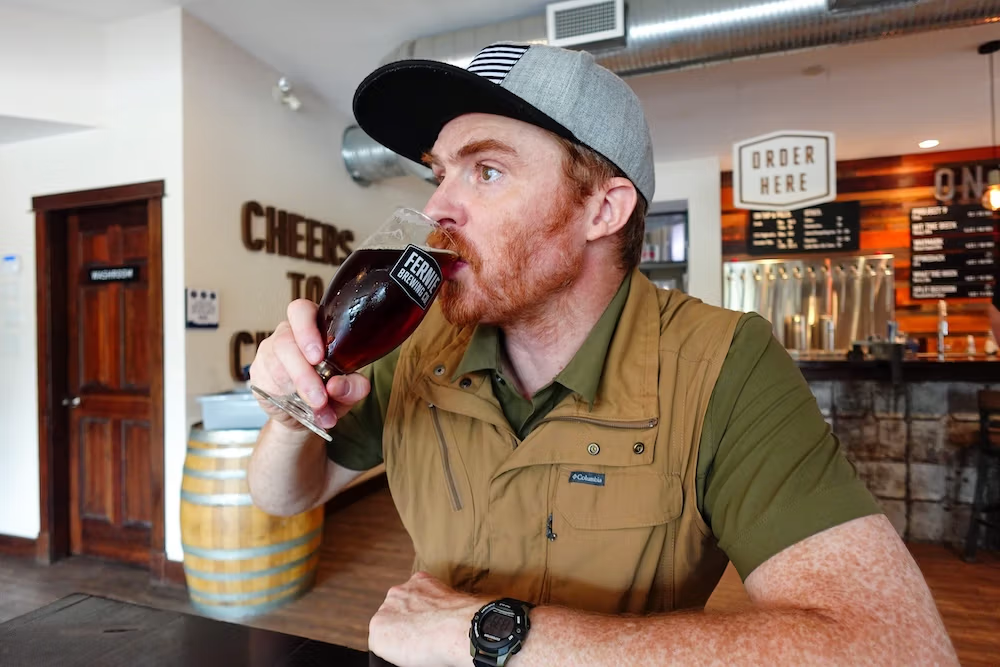
Food game plan (simple, effective, and very Fernie)
Fernie is a town where the food plan doesn’t need to be complicated — but it does need to be strategic. The best meals tend to happen when you align them with your day: quick fuel before trails, something satisfying on arrival, a brewery reward that’s more “vibes” than “dinner,” and one scenic meal that becomes the memory.
Breakfast
Big Bang Bagels is the classic. It’s fast, filling, and perfect “trail fuel.” It’s also one of those places where you can feel Fernie’s rhythm: locals grabbing coffee to go, travelers strategizing maps, and that subtle buzz of a town that runs on outdoor plans.
Lunch
Luchadoro Burrito Co is a great arrival-day move because it’s easy and satisfying. You don’t need to overthink it — just show up hungry, grab something hearty, and you’ll be set for an afternoon of walking and wandering without immediately needing another snack stop.
Post-hike drink
Fernie Brewing Company is a perfect “we earned this” stop. Just don’t show up expecting a full meal. It’s pints, snacks, and a relaxed reset — which is exactly what you want after hiking when your brain has moved on to “sit somewhere pleasant and be proud of ourselves.”
Scenic meal
Bear Bistro at Island Lake Lodge is the “this is the memory” meal. Pairing a great meal with a short lakeside trail in absurd scenery is one of the easiest ways to make Fernie feel special — and it’s why Island Lake Lodge makes so much sense as a Day 3 centerpiece (or a Day 2 finale if you’re doing the classic weekend).
Best time to visit Fernie (season cheat sheet)
Fernie is a year-round town, but the “right” time depends on what you want your days to feel like. Summer is the easiest, most straightforward version. Fall can be spectacular if you want fewer crowds and crisp hiking weather. Winter is a full ski-town experience. Spring is quieter and cheaper, but trail conditions can be messy and unpredictable.
| Season | What it’s best for | What to watch |
|---|---|---|
| Summer | Hiking, lakes, patios, resort sightseeing | Busy weekends + wildfire smoke risk |
| Fall | Crisp hikes, golden light, fewer crowds | Weather swings, shorter daylight |
| Winter | Ski trips, cozy town vibes, snowy scenery | Winter driving requirements + storms |
| Spring | Quiet town feel, shoulder-season deals | Mud, variable trail conditions |
If you want the easiest “1–3 day” visit, summer is the most straightforward. If you want a calmer “4–5 day” stay, fall can be incredible — just build in flexibility and don’t lock yourself into one perfect-hike fantasy.
Packing lists (because mountains don’t care about optimism)
Day hike essentials (easy hikes still deserve respect)
- Water (more than you think)
- Snacks (more than you think)
- Layers (mountain weather mood-swings are real)
- Sun protection (hat + sunscreen)
- Bug spray (season-dependent)
- Basic first aid + blister care
- Bear awareness basics (and bear spray if that’s your normal mountain practice)
Winter driving essentials (if visiting in snow season)
- Proper winter tires (or chains where required)
- Warm layers + gloves in the car (not in your suitcase)
- Scraper, washer fluid, and a little patience
- Extra snacks + water (because winter delays are a thing)
✨ Ready to start planning your Fernie route?
- 🎟️ Explore tours & experiences (Viator)
- 🏨 Compare Fernie hotels (Booking.com)
- 🚗 Reserve a rental car (DiscoverCars)
- 🚌 Book bus tickets (Busbud)
Frequently Asked Questions About How Many Days You Need in Fernie (real traveler questions, answered)
Is 2 days enough for Fernie?
Yes. Two days is enough to get a real taste: downtown + museum, an easy lake loop, a waterfall hike, and one “wow” scenery moment (ideally Island Lake Lodge). You won’t do everything, but you’ll leave feeling like you actually experienced Fernie — not just drove through it.
Is 3 days in Fernie worth it?
Absolutely. Three days is the first length that feels “complete” because you get two nature days — one easy/family-friendly and one bigger scenery day — plus enough town time to understand Fernie’s personality.
What’s the biggest difference between 2 and 3 days?
The second big nature day. With two days, you’re choosing between Island Lake Lodge, Fernie Alpine Resort, or a bigger hike. With three days, you can do your easy waterfall day and your big scenery day — which changes the whole feeling of the trip.
Can you do Fernie in one day without feeling rushed?
Yes — if you pick one strong storyline. Do downtown + one nature moment (Maiden Lake or Fairy Creek Falls) and one great meal. The rushed feeling usually comes from trying to do “town + multiple hikes + multiple drives” in a single day.
Is Fernie good for families with a stroller?
Yes. Maiden Lake is a great stroller-friendly option, and Fernie’s downtown is genuinely pleasant for easy wandering. For hikes like Fairy Creek Falls, you’ll likely want a baby carrier — but the overall “family logistics” in Fernie are refreshingly easy.
Is Island Lake Lodge worth it if you only have 2 days?
Yes — if you treat it as a centerpiece, not a squeezed-in stop. If you try to do Island Lake Lodge and a full day of other hikes and errands, it’ll feel rushed. If you build the day around it, it can easily become the highlight of a short trip.
What are the best easy hikes in Fernie?
Maiden Lake is the easiest “nature fix” and Fairy Creek Falls is a great easy/moderate hike with a real payoff. Coal Creek is also a great option if you want something that mixes landscape with Fernie’s history.
What’s the best big hike near Fernie for experienced hikers?
Mount Proctor is a classic “big effort, big reward” objective. For stronger hikers looking for deeper-cut routes, options like Heiko’s Trail (and routes toward the Three Sisters area) can be a serious Day 5-style adventure — conditions and experience matter a lot for these.
What are the best day trips from Fernie?
Sparwood’s Terex Titan is the classic quick icon stop. Crowsnest Pass + Frank Slide Interpretive Centre is a powerful story day. Lussier Hot Springs (Whiteswan Lake Provincial Park) is the “recovery day” winner. Cranbrook-area stops like the Kootenay Trout Hatchery and Fort Steele are great for families and history lovers.
Do you need a car in Fernie?
Not strictly — you can do a walkable downtown-focused trip without one. But a car makes Fernie dramatically easier if you want Island Lake Lodge, bigger trailheads, or day trips. For 3–5 days, a car is a huge quality-of-life upgrade.
Is Fernie less crowded than Banff?
In our experience, yes — especially in terms of how it feels day-to-day. Fernie can still get busy (summer weekends, ski season peaks), but it doesn’t feel as constantly overwhelmed. You get a lot of the mountain magic without the same level of crowd intensity.
Do you need winter tires to drive to Fernie?
Often, yes — depending on routes, signage, and dates. BC has designated winter tire and chain-up requirements that commonly apply during the cold season. If you’re visiting in winter, plan like winter matters (because it does).
Further Reading, Sources & Resources
If you want to double-check trail details, plan day trips, or confirm seasonal access, these are the most useful official and planning-friendly resources to keep open while building your Fernie itinerary.
Fernie hiking + trails
- Tourism Fernie — Hiking Trails (great overview of named hikes like Fairy Creek Falls, Mount Fernie Trail, Castle Rock, and more)
- Tourism Fernie — Mount Proctor (helpful for understanding this as a bigger objective hike)
- BC Parks — Mount Fernie Provincial Park (official park info and trail context for popular Fernie-area hiking)
Day trips + nearby attractions
- Tourism Fernie — Day Trip Attractions (a solid list to pull from for 4–5 day trips)
- Frank Slide Interpretive Centre (official site for hours, tickets, and planning)
- BC Parks — Whiteswan Lake Provincial Park (park info for planning a Lussier Hot Springs area day)
- Kootenay Trout Hatchery (Go Fish BC) (visitor info + location for the hatchery near Wardner)
- Fort Steele Heritage Town (planning info for a heritage-focused day trip)
- BC Parks — Wasa Lake Provincial Park (summer lake day planning)
Local history + winter driving
- Fernie Museum — Visiting Info (hours, admission approach, and trip planning)
- Government of BC — Winter Tire & Chain-Up Routes (official winter driving requirements)
Notes on accuracy
Trail distances, difficulty, and access can change with weather, wildfire activity, seasonal closures, and maintenance. Use the resources above for current details, and for on-the-ground reality checks, the Fernie Visitor Information Centre is genuinely helpful for maps and trail updates.