
Fernie has a funny way of making you overconfident.
You pull into town thinking it’s going to be a quick, tidy mountain stop: a cute main street, a couple heritage buildings, maybe a short trail, then you’re back on the highway heading to the next destination. And then Fernie does what Fernie always does—it quietly drops big history, real-town grit, and “wait… how is this place real?” scenery on your plans until you’re sitting on a bench downtown, staring at the brick buildings and the mountains behind them, doing that internal math where you try to figure out how to stay an extra two nights without blowing up the rest of your trip.
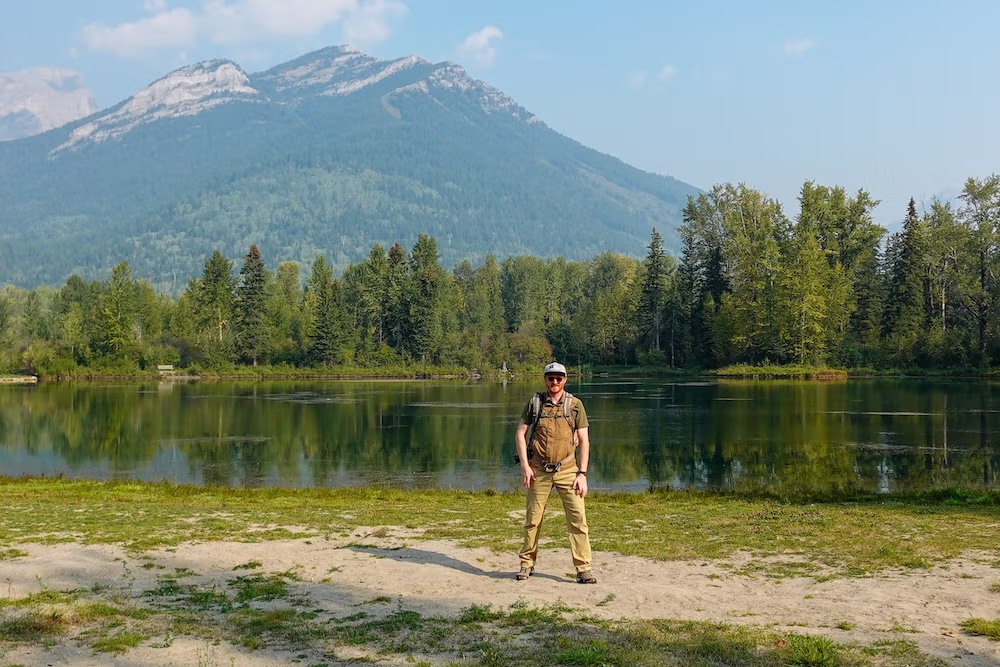
We came for a quick visit as the kickoff to our BC road trip. Fernie turned it into a full-on mood.
It’s not that other BC mountain towns aren’t great. They are. But Fernie hits differently because it’s not a mountain town that was designed to be a mountain town. It’s a coal town that survived, rebuilt itself (more than once), and then discovered it had world-class mountains right out the door—without losing its backbone in the process.
And that changes the vibe.
Fernie feels less like a resort bubble and more like a place where people live, work, raise families, build community, and then just happen to go hiking after lunch because that’s what you do here. It’s a town with scars and stories. The brick downtown isn’t a theme—it’s a consequence of fire and rebuilding. The “powder town” identity isn’t just branding—it’s tied to the geography and the way weather hits the Lizard Range. Even the local mythology (hello, Griz) feels like something the community actually owns, not something invented by a marketing team with a font budget.
We’re going to unpack all of that—using our two-day Fernie experience as the backbone—so you can understand what makes Fernie different before you even arrive.
Fernie at a glance
Fernie snapshot: pick your vibe
| If you want… | Fernie delivers… | What it feels like in real life |
|---|---|---|
| A real town with a historic core | Brick downtown + walkability + heritage | You can wander, snack, stop at gardens, and it feels normal (in a good way) |
| Big mountain energy without mega-resort chaos | Five-bowl ski terrain + “powder town” attitude | You get world-class terrain talk without the “resort village simulation” |
| Nature that fits into a normal day | Lakes + waterfalls + easy trail access | You can do a lake loop and a waterfall hike and still be back for a pint |
| A quieter alternative to the Banff-style crush | Scenic wow with less overwhelm | More breathable, less “everyone is here at the same time” energy |
| Family-friendly mountain travel | Stroller loops + baby-carrier hikes + chill pace | You’re not fighting the destination; it supports you |
Fernie vs other BC mountain towns
Not a “who’s better” thing—more of a “who’s your match” thing.
Fernie vs the archetypes
| Town type | What it’s like | The best part | The tradeoff | Fernie’s contrast |
|---|---|---|---|---|
| Resort village | Convenient, polished, tourist-forward | Ski-in/out ease, amenities concentrated | Can feel manufactured or insulated | Fernie feels lived-in and downtown-first |
| Adventure basecamp town | Trail networks, gear shops, outdoors culture | Constant access to activities | Downtown can be newer or spread out | Fernie has a historic brick core + outdoors |
| Heritage mountain town | Story, architecture, museums, walkable core | Personality and “place” | Sometimes smaller on big-ticket terrain | Fernie has heritage and major mountain terrain |
| “Secret’s out” town | Very popular, busy, iconic | Energy, options, events | Crowds and price pressure | Fernie feels more breathable (right now) |
Is Fernie your kind of mountain town?
| Ask yourself | If you say “yes”… | Fernie rating |
|---|---|---|
| Do we like towns that feel real (not just tourist-built)? | You’ll love the downtown + community vibe | Very high |
| Do we want nature without heavy logistics? | Waterfalls, lakes, and lodge scenery fit into a day | High |
| Are we into history as part of travel? | The museum + fires + coal story adds real depth | Very high |
| Do we want skiing culture but not only skiing? | Fernie is four-season without feeling like an afterthought | High |
| Are we traveling with kids / a baby / grandparents? | Walkability + mellow pacing make it easier | High |
| Do we need luxury shopping + nightlife? | You might find it quieter than you want | Medium |
Our Fernie trip, as it actually happened (and what it revealed)
We didn’t do Fernie like a checklist. We did Fernie like humans with a baby, a stroller, a hunger problem, and a loose plan. Which is honestly the best way to understand the town’s vibe.
The “Fernie Backbone” itinerary (2 days)
| Day | What we did | What it taught us about Fernie |
|---|---|---|
| Day 1 | Burritos → Museum → Heritage walk through town | Fernie is history-forward, walkable, and quietly charming |
| Day 2 | Bagels → lake loop → waterfall hike → brewery → Island Lake Lodge | Fernie over-delivers on nature and doesn’t feel rushed or staged |
Now let’s break down what made those simple days feel so specific to Fernie.
Day 1: Fernie feels like a town before it feels like a destination
Lunch first: the “local institution” effect
We landed in Fernie and did the most Fernie thing possible: we ate something casual and satisfying before we tried to be productive.
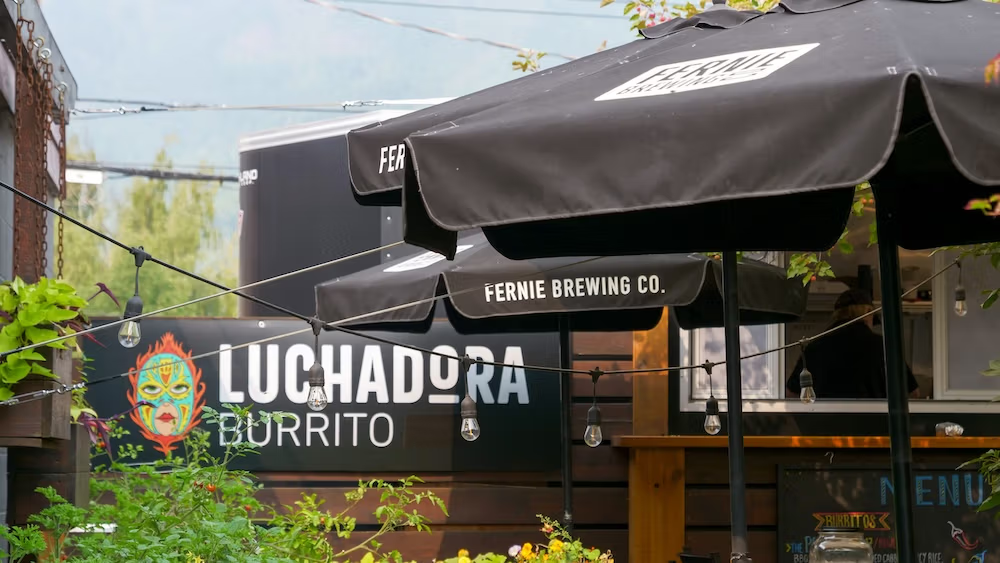
We started with burritos at Luchadoro (the kind of place where you feel like the town eats here, not just tourists). There’s a particular vibe you get when you walk into a place and it’s clearly part of the community rhythm—people popping in, people lingering, staff moving with confidence, the menu doing what it does without needing to prove itself.
With a baby in the mix, this mattered even more. We were juggling food and baby puree and trying to keep things pleasant for everyone (including ourselves). Fernie made it easy. That “easy” feeling is one of the town’s sneaky strengths: it’s mountain town scenery with a pace that doesn’t punish you for being a normal person.
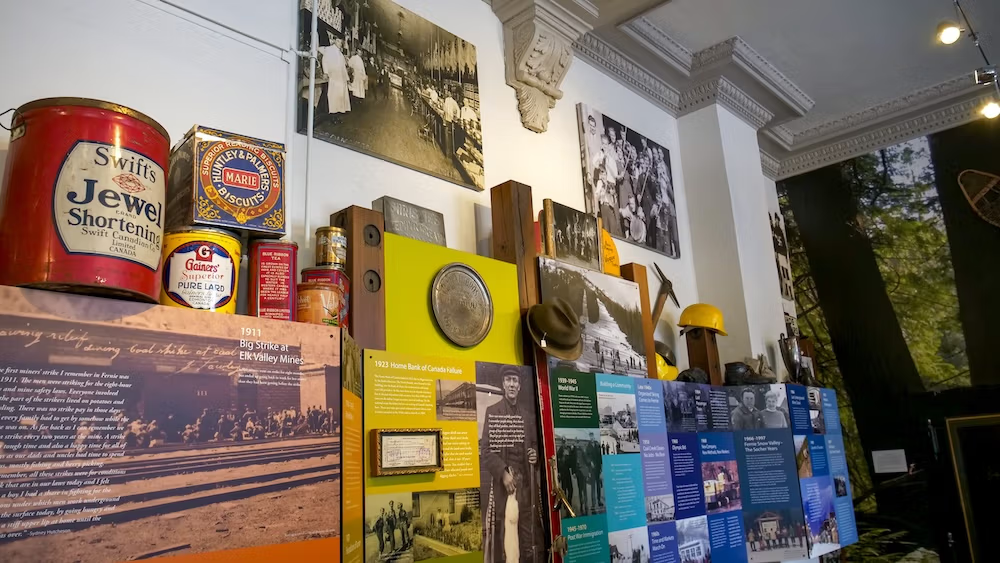
The Fernie Museum: the moment Fernie stops being “cute” and becomes “layered”
If you do one thing in Fernie that instantly changes your understanding of the place, it’s the museum.
The Fernie Museum isn’t just “a rainy day option.” It’s a context machine. You walk in thinking you’re doing a quick history stop, and you walk out feeling like Fernie has lived three different lives and somehow integrated them into one town.
This is where Fernie’s biggest differentiator really clicks: resilience is the personality.
Fernie isn’t a town that simply grew up around mountains. It’s a town that grew up around coal and rail, got hit with tragedy and fire, rebuilt in brick, faced industry shifts, and then reinvented itself again as tourism and skiing expanded.
When we were there, we kept coming back to how intense the story is for a small place. It’s not gentle history. It’s weighty. And that weight gives Fernie a grounded vibe that’s hard to fake.
Fernie’s “history hits harder” timeline
This isn’t meant to be a textbook—this is the story backbone that changes how the town feels when you walk around it.
- Coal town beginnings: Fernie’s early growth was tied to coal mining and rail expansion. This isn’t a “fun fact,” it’s an identity imprint.
- 1902 Coal Creek disaster: A mining disaster that took a devastating number of lives. Even if you’re not a history person, that kind of event leaves a mark on a community’s story.
- 1904 fire: Another blow, another rebuild.
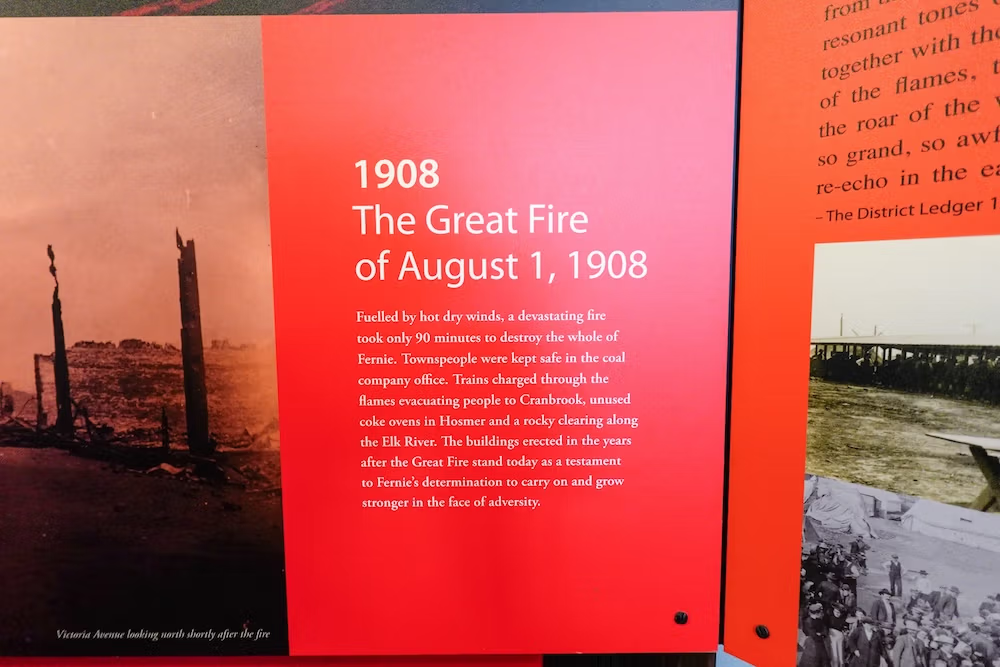
- 1908 Great Fire: The big one. The one that reshaped Fernie’s look and forced the town to rebuild with more fire-resistant materials—one reason the historic core feels so distinct today. The “brick town” feel isn’t aesthetic. It’s survival.
- 1923 Home Bank collapse: Financial shockwaves, and another reminder that Fernie’s story isn’t just mountains and leisure.
- 1980s industry shift: Mine closures and the hard reality of economic transition—something a lot of industry towns never recover from.
- 1990s tourism era: Fernie pivots into a travel and ski destination, but it doesn’t erase the coal-town foundation. It layers on top of it.
What makes Fernie feel different is that you can still sense these layers. It has a past, and it carries it.
The Heritage Walk: Fernie is a “stroll town”
After the museum, we did what felt like the most natural next step: we walked.
Not a “power walk.” Not a “we need to get steps” walk. A Fernie walk. The kind where you stop at gardens, take photos, read a sign, point at a building, and say something like, “Okay, this is actually really cute.”
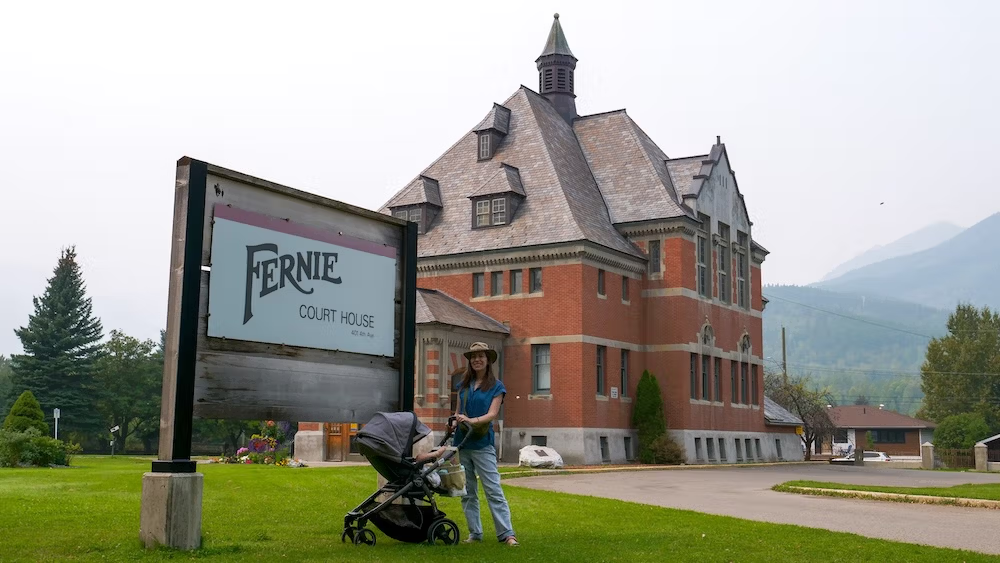
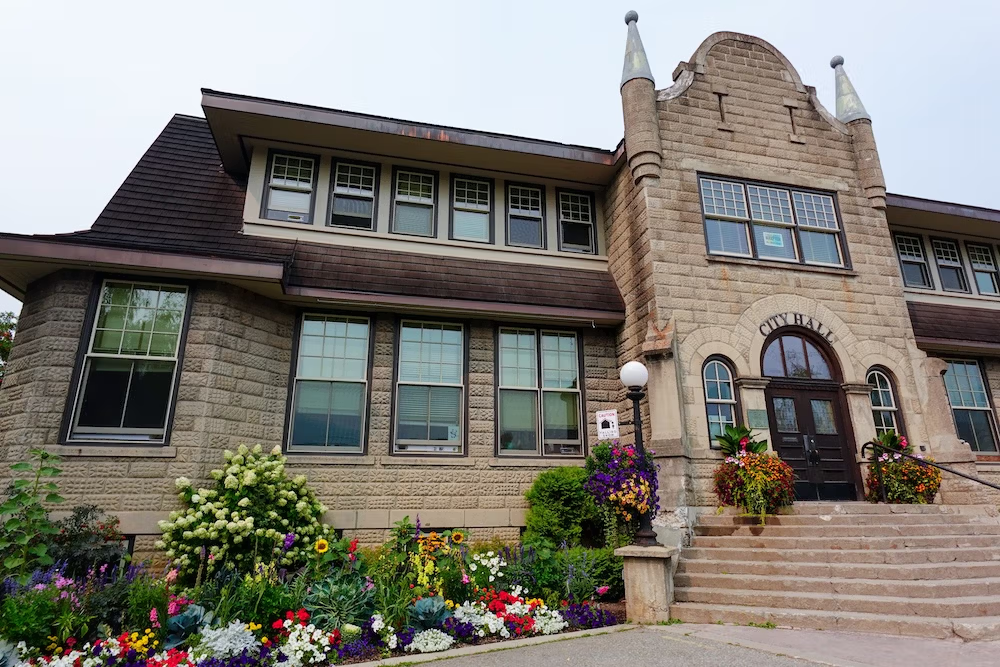
We followed the Heritage Walk brochure, which made the experience feel playful and structured without being rigid. It turned the afternoon into a mini scavenger hunt for historic buildings: library, City Hall, miner’s path, cathedral, and all the little details in between.
And this is where Fernie’s downtown magic becomes obvious: it’s not just scenic. It’s navigable. It’s human-scale. It’s the kind of place where you can be traveling with a stroller and still feel like you’re genuinely experiencing the town.
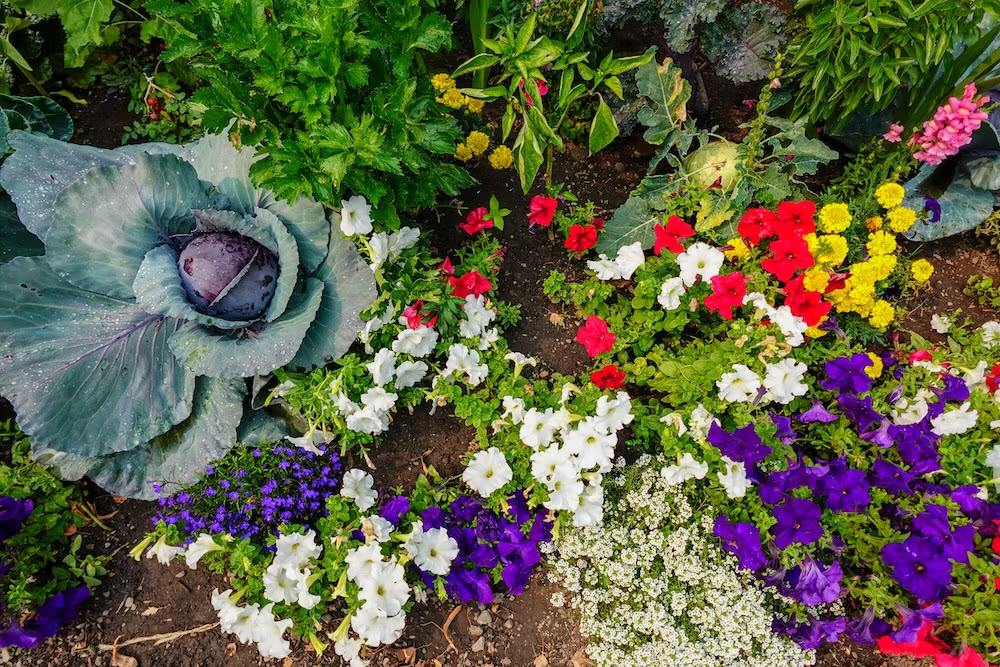
The City Hall gardens: small details that signal “real town”
One of our most vivid Fernie impressions was ridiculously simple: City Hall gardens.
We were there when the gardens were buzzing—bees, butterflies, flowers, the whole thing. It wasn’t a tourist attraction. It was just… the town being pleasant. And that’s the point. Fernie’s vibe isn’t only delivered in big headline moments. It shows up in little civic details that make the place feel cared for.
That kind of “town pride” is part of why Fernie doesn’t feel manufactured. It feels maintained.
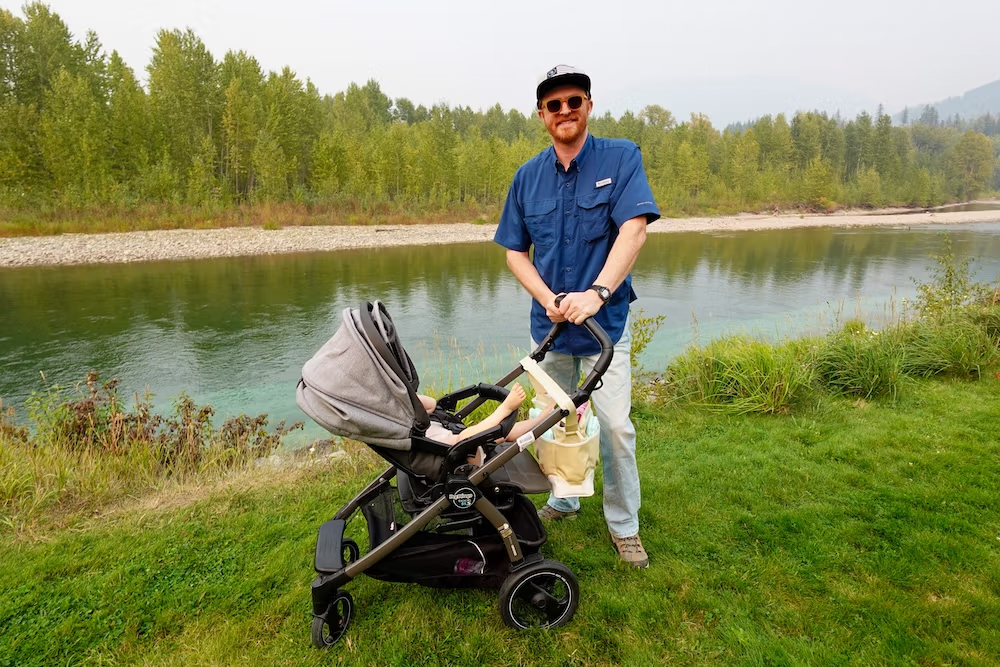
Day 2: Fernie’s nature is close, casual, and ridiculously photogenic
Day 2 was basically a masterclass in why Fernie works so well as a base for a short trip: you can stack experiences without them feeling like chores.
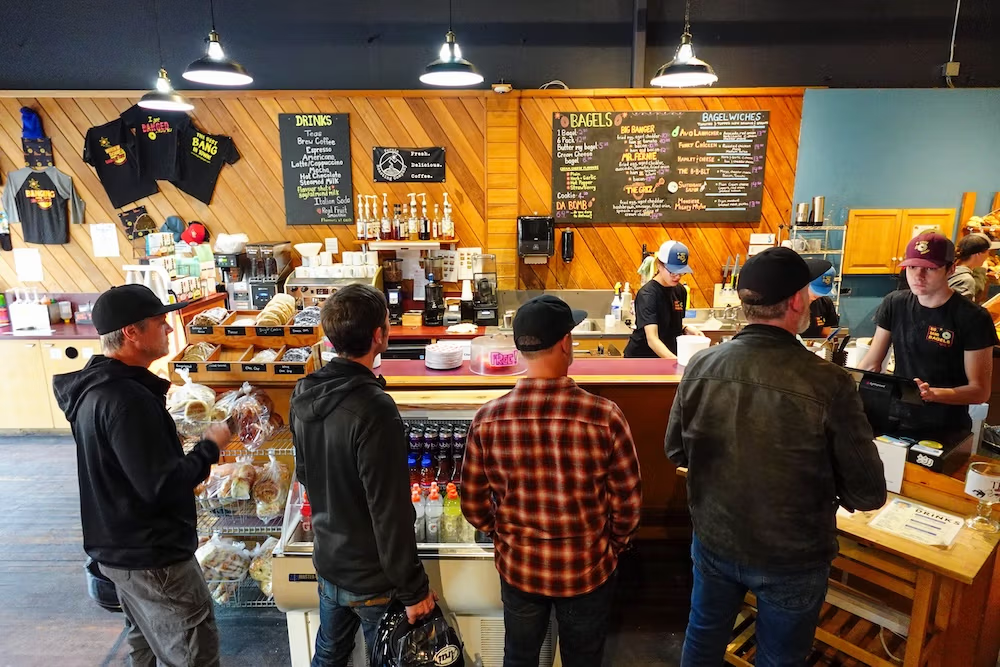
Breakfast at Big Bang Bagels: Fernie’s sense of humor is part of the culture
Big Bang Bagels is one of those places that becomes a travel memory even if you’re just grabbing breakfast. It’s busy. It’s efficient. It’s satisfying. And it has that “local institution” energy where you can tell it’s part of the town’s routine.
And then there’s the local slang: “We got banged.”
That kind of playful culture matters. It’s not just about the food. It’s about the fact that Fernie feels like a place with inside jokes, not just attractions.
We went hard:
- Avolauncher (for the “we’re hiking later” appetite)
- Switchback Salmon (because Fernie is a mountain town and salmon bagels just feel correct)
Bagels became the tone-setter for the day: casual, high quality, no fuss.
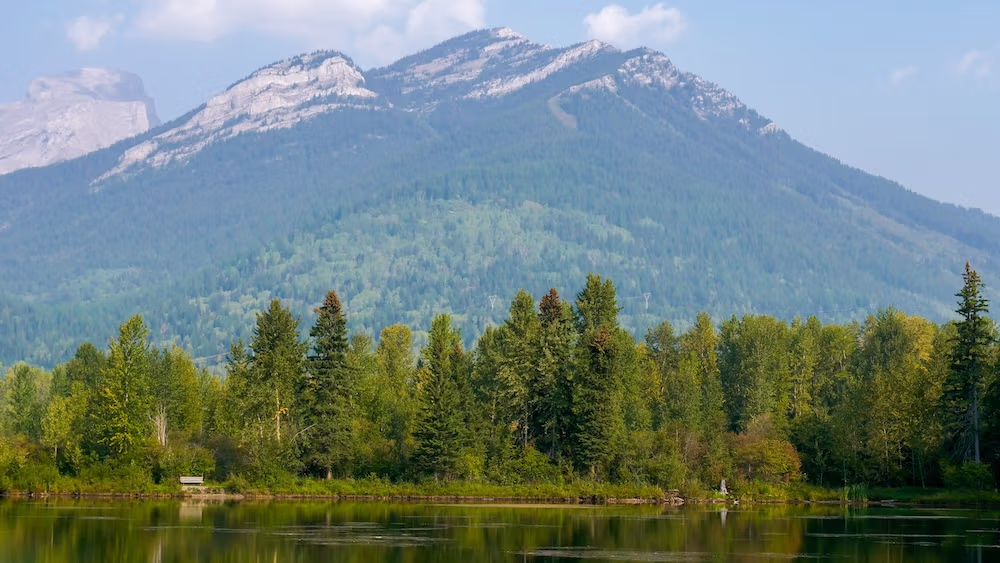
Maiden Lake: Fernie’s “how is this so close?” nature flex
Maiden Lake is one of the best examples of Fernie’s practical magic.
It’s beautiful—mountain reflections, water, a loop that feels like it was designed for photographers and families at the same time. But what really got us was how close it is to normal town infrastructure. It’s not a big expedition. It’s not a whole-day commitment. It’s just… there. Waiting for you to do a peaceful loop with a stroller and feel like you’ve achieved something.
That proximity is a huge differentiator. Some mountain towns have their best nature tucked far away behind long drives or complicated trail logistics. Fernie has nature that fits into real life.
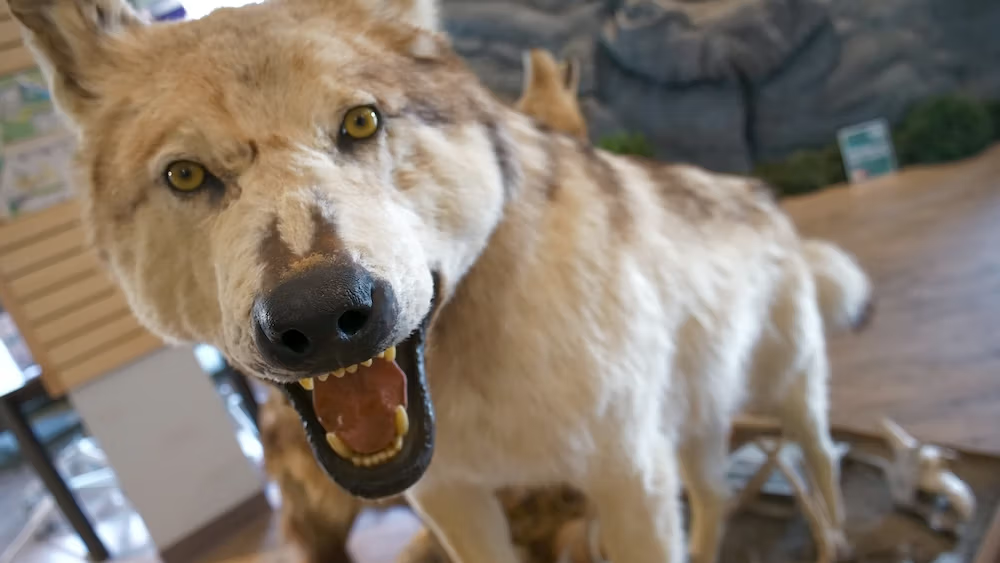
Visitor Centre start: Fernie makes the outdoors easier than it needs to be
Before Fairy Creek Falls, we stopped at the Visitor Centre—and it ended up being one of those “this town is well-run” moments.
Clean bathrooms (underrated). Interactive displays. Friendly staff. Maps that make you feel like you’re in control of your day. Trail options explained in a way that doesn’t assume you’re a hardcore hiker.
When you’re traveling with a baby, this matters even more because every small friction point becomes ten times bigger. Fernie reduced friction. That’s a big part of the vibe.
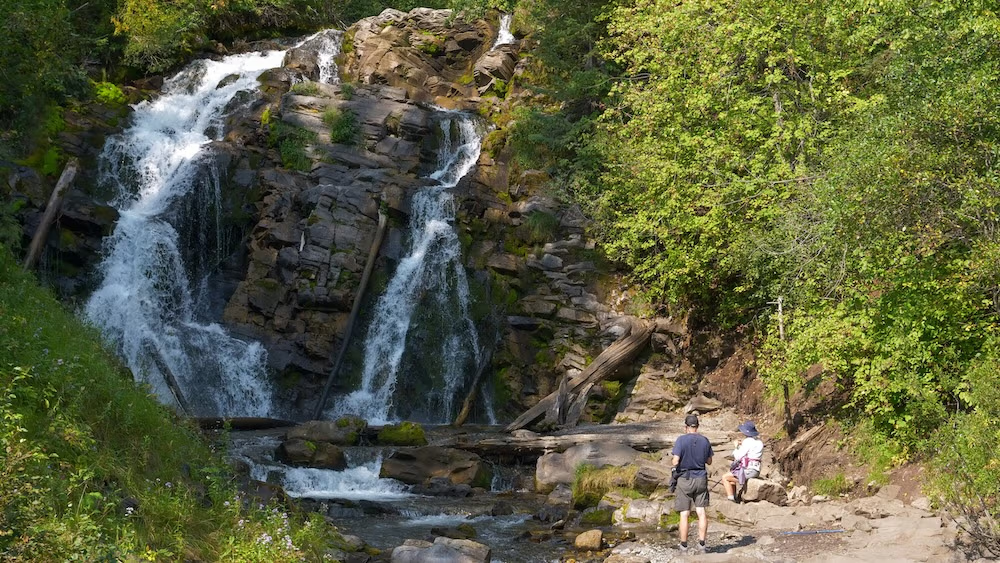
Fairy Creek Falls: a short hike with a proper payoff
Fairy Creek Falls was exactly what we wanted: a satisfying waterfall without a massive time commitment.
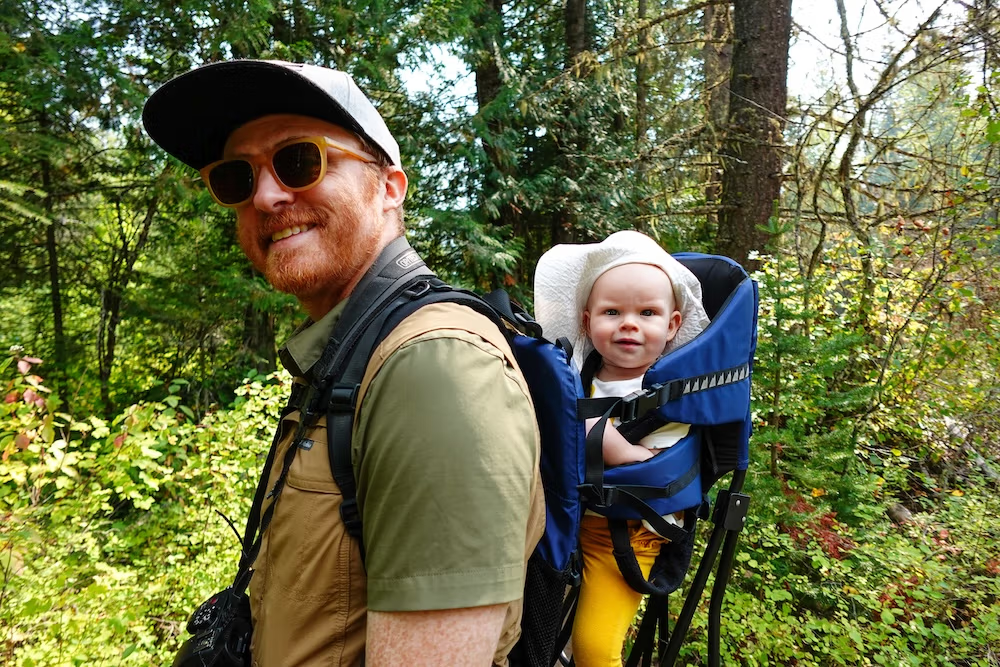
We swapped from stroller life to baby-carrier life, and the hike felt like a good blend of “we’re outdoors” and “we’re still functioning humans.” The trail had enough people that we felt comfortable (we also checked in about bears—there hadn’t been recent sightings on that route when we asked, and the traffic was steady).
And then you get the payoff: the waterfall. The kind of payoff that makes you feel like you did something real, even if you still have time for a brewery afterward.
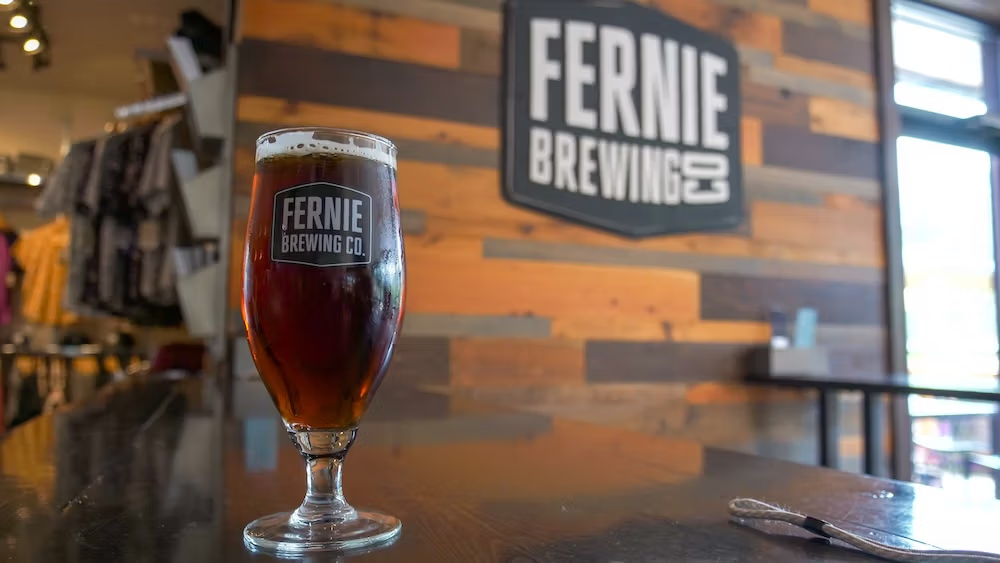
Fernie Brewing Company: the post-hike reward that stays low-key
Fernie Brewing Company felt like a perfect Fernie moment because it wasn’t trying to be everything.
We did the classic post-hike thing: grab a pint, relax, decompress, feel smug about our day. It’s not a “full meal” spot (more pints and snacks), and that honesty is part of what makes it work. It knows what it is, and it does it well.
That’s Fernie in miniature.
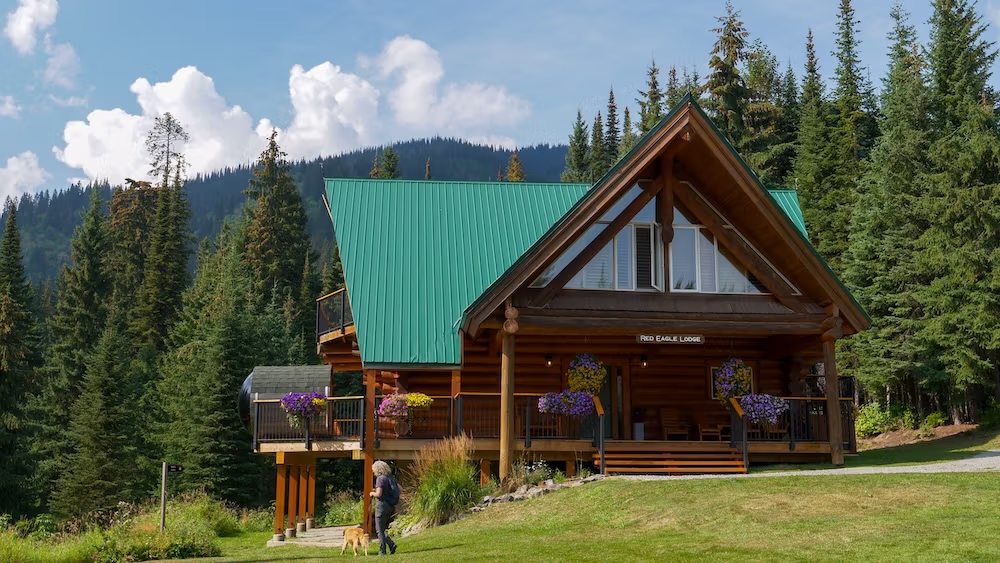
Island Lake Lodge: Fernie’s “over-deliver” finale
Island Lake Lodge was the “okay, Fernie is not playing around” moment.
The drive is scenic in that “how is this road allowed to be this beautiful?” way. The setting feels like a postcard. And then you sit down at Bear Bistro and realize you’re about to have a meal that would be impressive in a major city, never mind up a mountain road.
We ate:
- Miso ramen that triggered a wave of Japan nostalgia
- A smash-style burger that had major “this is unfairly good” energy
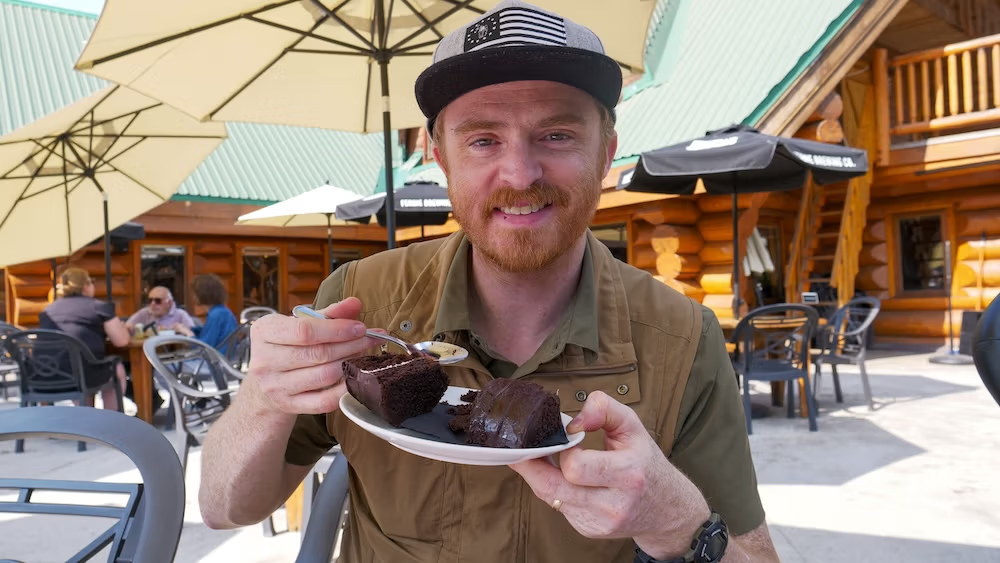
- Dessert that felt like a reward for existing
And then the most Fernie thing happened: the baby basically slept through the meal like a tiny travel pro.
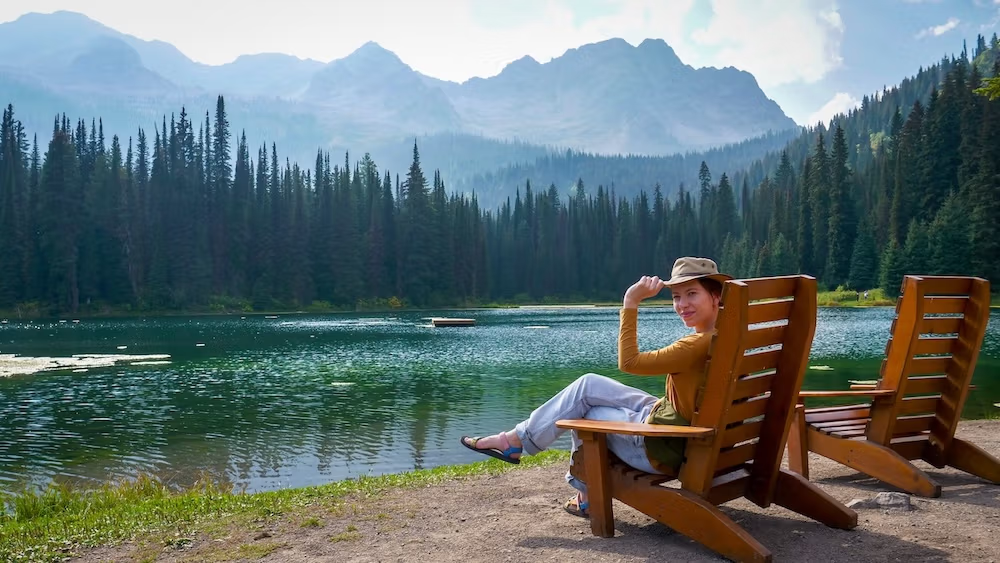
Afterward, we walked by the lake, saw people lounging in chairs like this is just their casual afternoon, and had that moment where you start planning imaginary future trips (“What if we stayed overnight during a snowstorm?” “What if we came back with friends?” “What if we lived here for a month?”).
Island Lake Lodge is important in a “Fernie difference” article because it shows Fernie’s range. Fernie can do historic brick town. It can do casual bagels and brewery vibes. And it can also do a mountain lodge setting that feels genuinely special.
The 10 things that make Fernie feel different
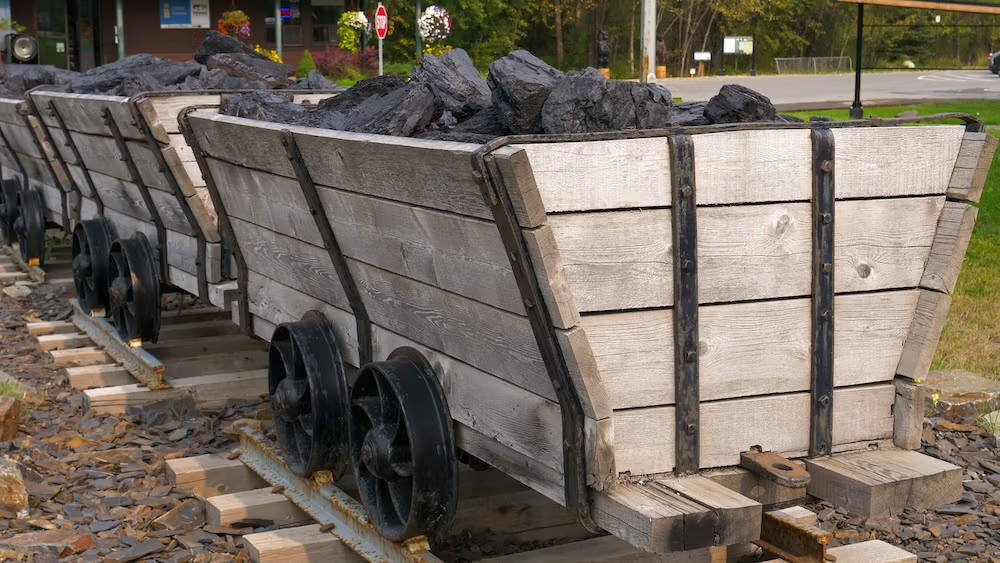
1) Fernie is a coal town at heart—even when you’re here for hiking
Fernie’s origin story is industrial, not recreational, and you can feel it in the town’s posture. This isn’t one of those places where the whole community seems built around catering to visitors, with everything polished into “mountain town aesthetic.” Fernie has that work-first DNA underneath the beauty—the sense that the town existed for a real purpose long before anyone showed up with a ski rack and a “where’s the best latte?” question.
What surprised us is how that industrial backbone doesn’t make Fernie feel harsh—it makes it feel grounded. It’s the difference between a town that’s performing and a town that’s simply… living. When we wandered downtown (stroller in play, baby logistics in full swing), we didn’t feel like we were walking through a tourist zone. We felt like we were walking through someone’s actual community—civic buildings, real neighborhoods, local routines, and then, casually, mountains rising behind everything like a flex.
2) The brick-built downtown is a consequence, not an aesthetic choice
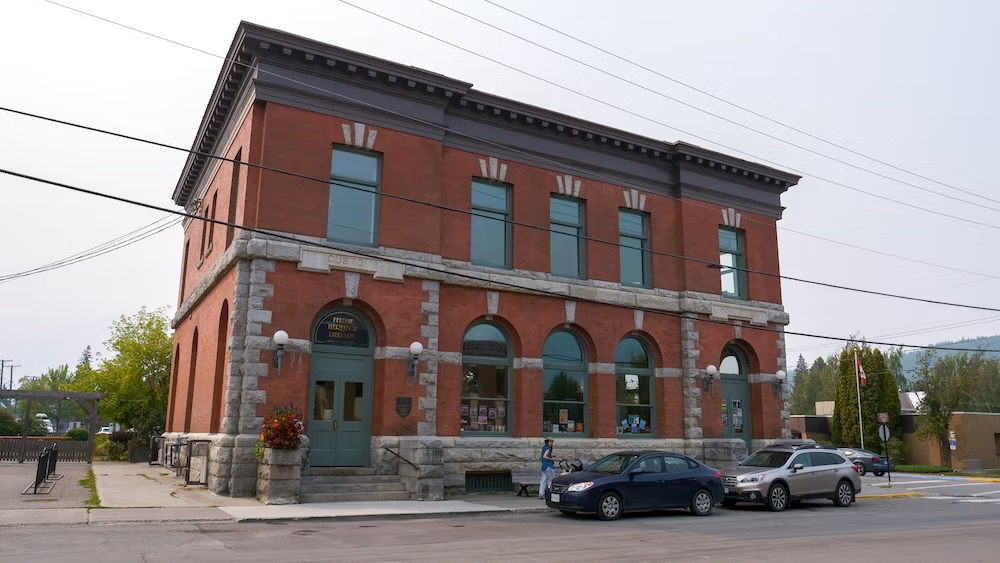
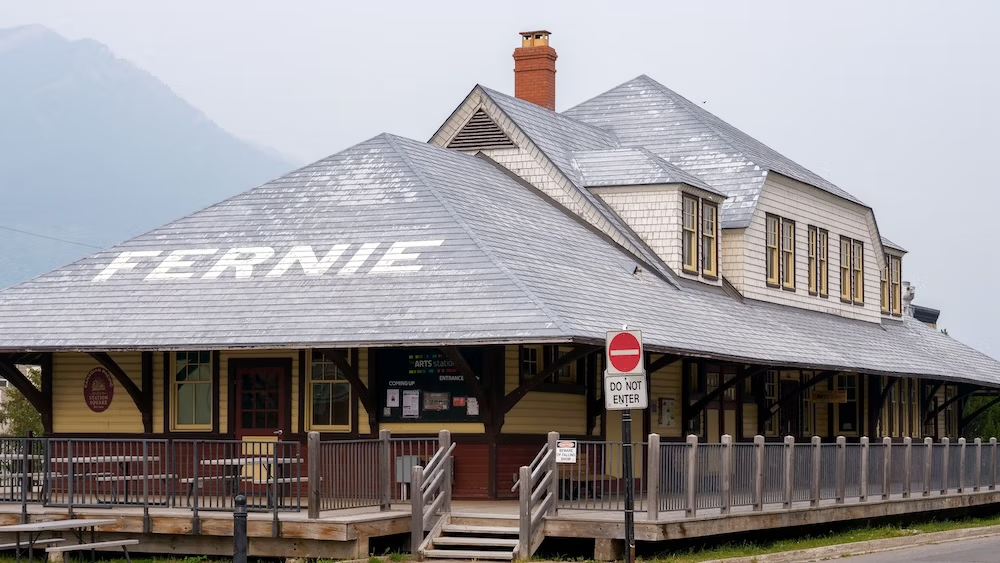
Fernie’s historic core isn’t chalet-cute—it’s sturdy, substantial, and kind of quietly confident about it. A lot of mountain towns lean hard into wood, stone accents, and that “storybook village” vibe. Fernie’s downtown feels different because it’s not trying to look like a mountain town. It looks like a place that had to rebuild itself and decided to come back fireproof and serious.
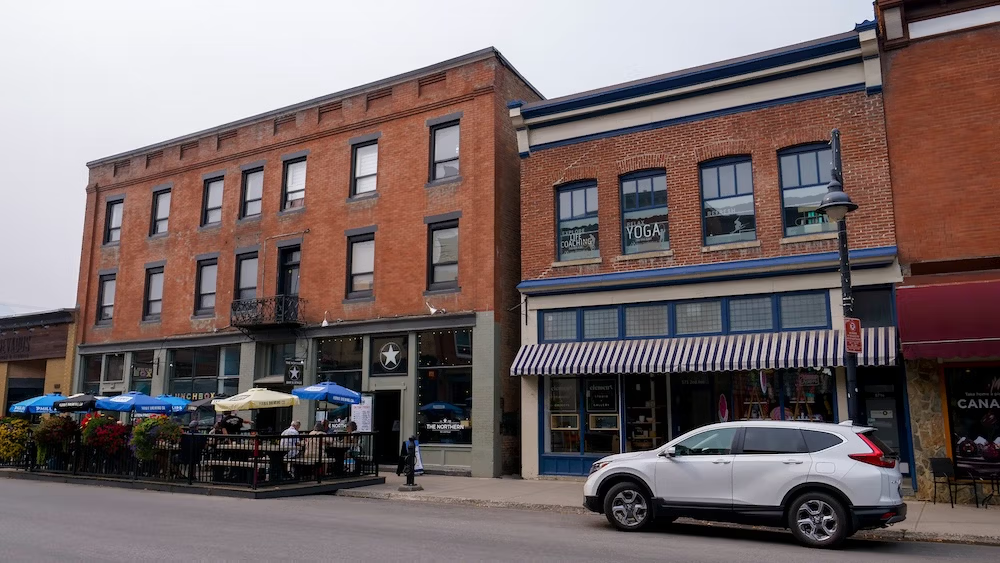
When we left the museum and started roaming, the downtown texture became part of the experience. Brick façades. Heritage-era lines. That “this place has been here awhile” feeling. Fernie doesn’t feel like it was built last week to host a tourist economy; it feels like it has continuity. Even if you don’t know the full story yet, the streetscape tells you: something happened here.
3) Fernie’s history is dramatic enough to rival its scenery
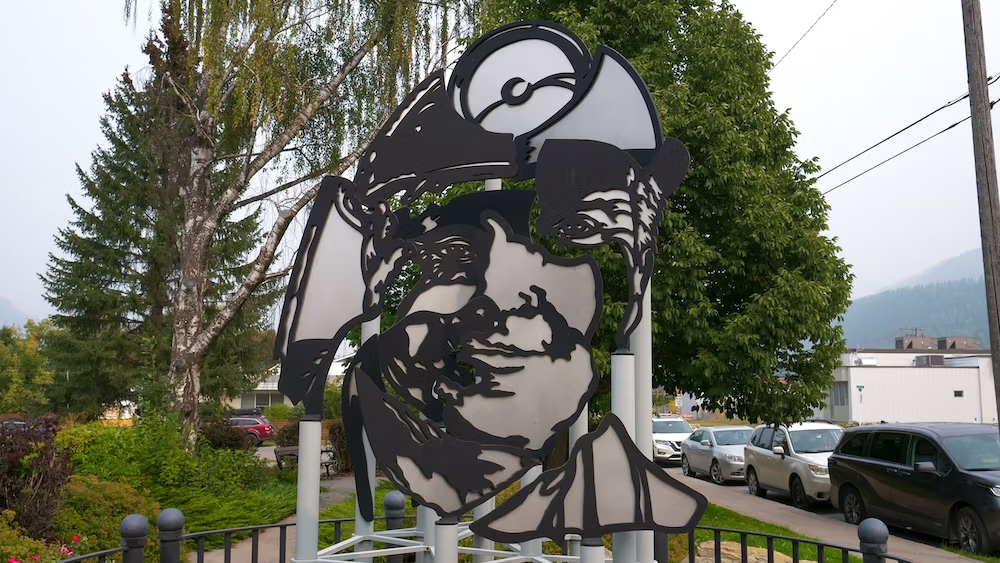
Some mountain towns have pleasant history: a founding plaque, a quirky pioneer story, a few old photos in the lobby of a hotel. Fernie has headline history—the kind that makes you pause mid-exhibit and go, “Wait… all of this happened here?” Mining tragedy, major fires, economic pivots, community reinvention. It’s intense for a small town, and that intensity gives Fernie an emotional depth you don’t always get in places known primarily for recreation.
The Fernie Museum was the turning point for us because it didn’t just provide trivia—it reframed the whole town. Suddenly the brick downtown wasn’t just “nice.” It was a rebuild after catastrophe. The town’s identity wasn’t just “outdoorsy.” It was “we’ve adapted repeatedly and we’re still here.” After the museum, walking around Fernie felt like walking through a living story, not just a scenic backdrop.
And the best part is that Fernie doesn’t feel like it’s stuck in the past. It feels like it has integrated the past. There’s a confidence that comes from surviving hard things. Fernie doesn’t feel fragile. It feels capable—like a town that knows who it is.
4) The town is walkable in a way that makes travel feel easy
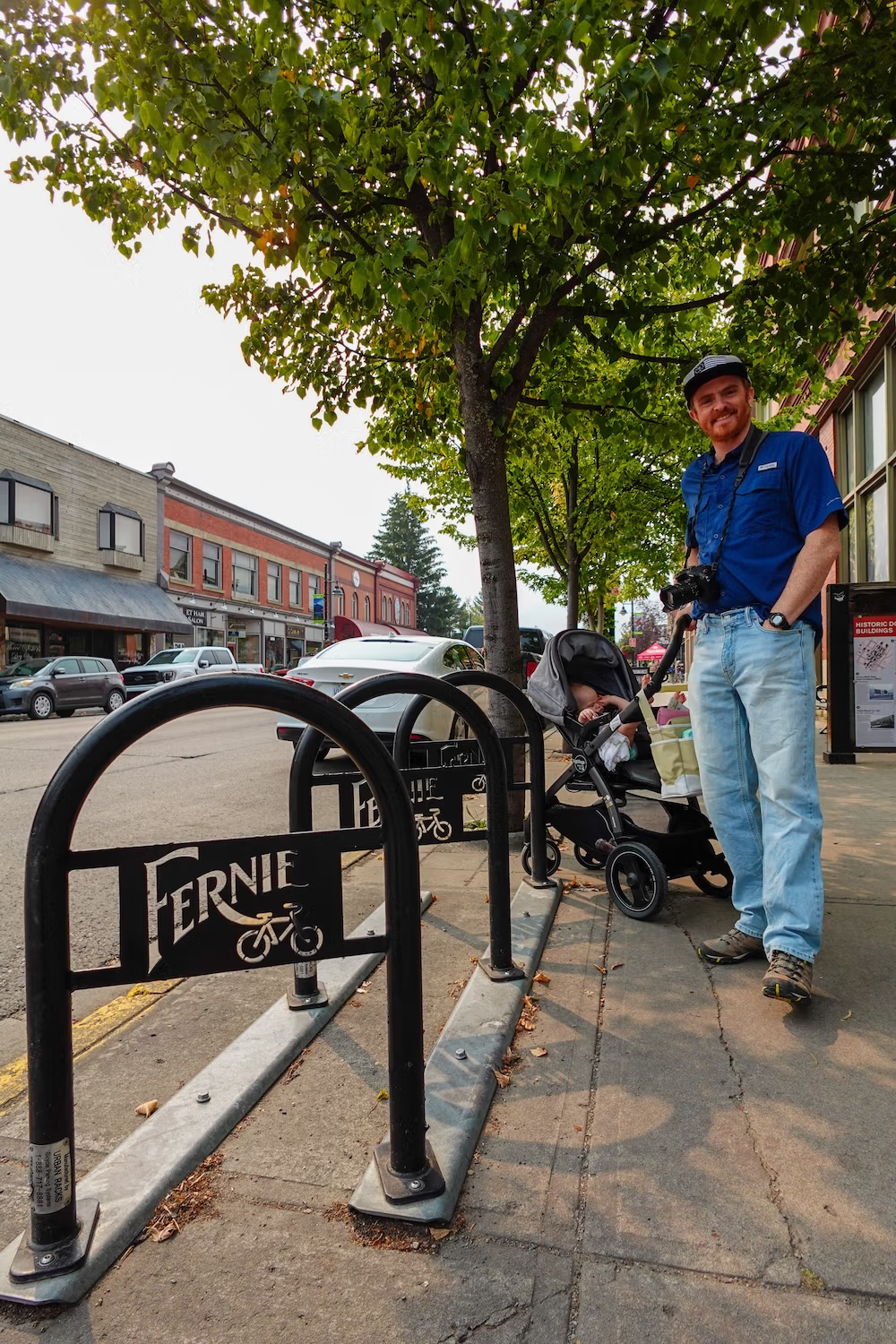
Walkability sounds like one of those boring “nice-to-have” features… until you’re traveling with a stroller and a baby and a schedule that needs to stay flexible. Then walkability becomes the difference between a trip that feels smooth and a trip that feels like constant micro-stress.
Fernie’s downtown felt like it wanted us to wander. We could move from the museum to City Hall gardens to heritage buildings to little photo stops without getting into the car, without fighting awkward distances, and without that constant “where do we park next?” loop. It wasn’t just walkable in the technical sense; it was walkable in a way that felt pleasant and human-scale.
And that walkability becomes part of Fernie’s personality. You’re not just passing through—you’re lingering. You can slow down, notice details, follow a heritage brochure like total nerds, and still feel like you’re “doing Fernie” properly. The town basically invites you to take your time, and that relaxed rhythm is one of Fernie’s biggest vibe advantages.
5) Fernie’s outdoors access is casual (in the best way)
A lot of places have incredible trails, but they require a whole operation: early start, long drive, parking drama, maybe a permit system, maybe a “we need to leave at 6:00 a.m. or it’s over” vibe. Fernie gave us nature that felt like a normal part of a day, not a mission.
We did Maiden Lake and Fairy Creek Falls in the same trip flow without it feeling like we were grinding. Maiden Lake especially hit us with that “how is this so close?” magic—stroller-friendly, reflective, photogenic, and right there. Fairy Creek Falls had the satisfying waterfall payoff without the time commitment of an all-day hike, which is exactly what we wanted while traveling as a family.
6) Fernie is a four-season town that doesn’t feel like it’s pretending in summer
Some ski towns in summer feel like they’re waiting for winter to return. The chairlifts are quiet, the village looks slightly confused, and everything has this off-season “we’ll be back soon” energy. Fernie in summer felt fully alive—like it doesn’t need winter to justify itself.
Our two-day visit had lakes, waterfalls, trails, patios, breweries, and a mountain-lodge finale that felt genuinely special. Nothing about it felt like an “off-season substitute.” It felt like a different season with its own personality: greener, slower, water-focused, family-friendly, and still properly scenic.
That matters because it changes what kind of trip Fernie can be. Fernie isn’t only a winter headline—it’s a place where you can show up in summer, do easy nature, eat well, walk downtown, and feel like the town is in its element. The four-season identity feels real, not forced.
7) The “Fernie Factor” gives the town a specific weather personality
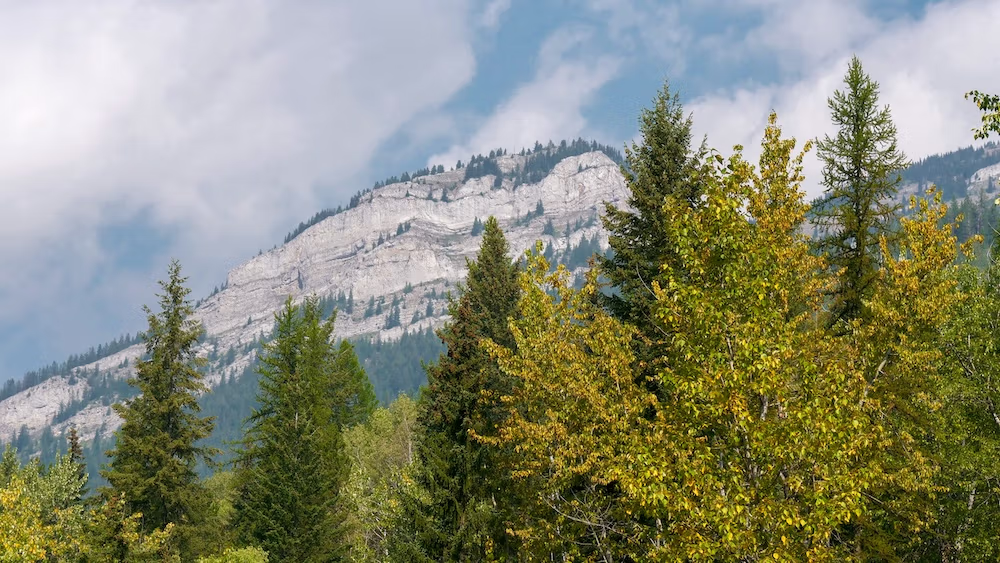
Fernie’s snow reputation isn’t just hype—its geography shapes how winter behaves here, and locals talk about it like it’s part science, part superstition, part community identity. The Lizard Range acts like a big mountain wall that can squeeze moisture out of weather systems, and the shorthand for those surprise-dump days is the “Fernie Factor.”
Even if you’re visiting in summer, you still feel how winter culture lives here. People talk about the mountains like they’re characters. Snow isn’t just a condition; it’s a storyline. Fernie feels like it has a relationship with weather in a way that’s more intimate than “we get winter here.”
And that’s a vibe differentiator. In a lot of places, winter is a season. In Fernie, winter feels like an identity layer. The town’s powder reputation has that “earned” quality because it’s not just marketing—there’s geography behind it, plus local belief built over decades of watching forecasts get humbled.
8) Fernie delivers Whistler/Banff-level “wow” without the same crush (and Alberta is a big reason why)
Fernie has a sneaky superpower: it can feel world-class without feeling like you’re standing in line for world-class. The scenery hits hard. The mountains look dramatic from town. The lodge experience up at Island Lake felt like one of those “how is this real?” moments you associate with bigger-name destinations. And yet, the overall energy is more breathable.
This is where Fernie becomes a brilliant alternative to places like Banff or Whistler—especially if what you want is the wow factor without the sensory overload. We loved the fact that Fernie felt friendly and lively, but not overwhelming. It didn’t feel like the town was being swallowed by its own popularity.
And Fernie’s geography shapes its visitor mix in a way that reinforces this vibe. Fernie sits in that sweet spot where Alberta visitors can realistically road trip in, and you feel that influence in the town’s rhythm. Calgary is simply a much shorter, more practical drive than Vancouver, so Fernie becomes this natural “BC mountain escape” for Albertans—weekenders, families, skiers, hikers—without the same global tourist pressure cooker you get in the most famous resort hubs.
So Fernie ends up with a specific kind of tourism energy: strong demand, plenty of visitors, lots of buzz… but it still feels like a town, not a theme park. That’s a rare balance, and it’s a huge part of what makes Fernie different.
9) Fernie has culture beyond outdoors (which reinforces that it’s a community, not a resort)
Fernie doesn’t feel like a place where the only acceptable personality trait is “I hike.” There’s arts energy, community institutions, events, and a sense that people here build lives that aren’t just built around gear and trail conditions.
You can feel this in small ways—how the town presents itself, how downtown is cared for, how there’s a civic heartbeat beyond tourism. For us, that showed up in the museum being genuinely central, the heritage walk being easy and supported, and the general feeling that Fernie’s identity isn’t fragile. It doesn’t depend on you being entertained every second. It feels like a community that has its own internal momentum.
10) Fernie has powder-town swagger and community-owned mythology (five bowls + the Griz = a very Fernie combo)
Fernie’s ski identity is serious, and you don’t have to be a skier to notice it. The five-bowl terrain gives Fernie a “big mountain” reputation that shapes the town’s winter confidence—the language people use, the winter pride, that subtle “we know what we have” energy. Fernie doesn’t feel like a casual ski hill town. It feels like a place with proper mountain credibility.
But here’s the Fernie twist: that winter identity isn’t only technical. It’s also playful. Fernie has folklore, inside jokes, and a specific kind of community weirdness that makes the town feel alive. The Griz legend and Griz Days aren’t just branding—they’re part of local identity. It’s the kind of myth that reinforces the idea that Fernie belongs to its people first, and visitors second.
And that combination—serious terrain + playful mythology—is incredibly Fernie. Some places are all “extreme mountain.” Some are all “cute festival town.” Fernie has both. It can be legitimately world-class and still feel like it’s in on its own joke. That’s a hard vibe to manufacture, and it’s one of the reasons Fernie sticks with you after you leave.
Making Fernie decisions without overthinking it
Fernie “base choice”: where to stay for your vibe
| Stay area | Best for | Vibe | Pros | Cons |
|---|---|---|---|---|
| Downtown / near historic core | Walkability + food + heritage | Brick-town charm | Easy strolling, cafes, museum access | Less “mountain lodge” feeling |
| Near the highway edges | Convenience + budget | Practical | Often cheaper, easy driving | Less charm on foot |
| Near the resort | Ski-first trips | Winter-forward | Quick access to lifts | Feels more separated from town life |
| Out toward Island Lake Lodge (or similar vibes) | Romance / scenic escape | Quiet and cinematic | “Wow” setting | More driving, less casual wandering |
“What kind of Fernie trip are we doing?”
| Your priority | Do this in Fernie | Skip this | Your ideal length |
|---|---|---|---|
| History + vibe | Museum + Heritage Walk + downtown wandering | Overstuffed hiking days | 2–3 nights |
| Family-friendly ease | Maiden Lake + Visitor Centre + short waterfall hike | Big full-day backcountry missions | 2–4 nights |
| Big scenery + one special meal | Island Lake Lodge (lunch + lake stroll) | Trying to cram 5 trails | 2–3 nights |
| Winter powder focus | Bowls + Fernie Factor storytelling | Long downtown museum time (unless you love it) | 3–5 nights |
| Fly fishing / river time | Elk River culture + mellow town evenings | Resort-first itinerary | 3–6 nights |
Fernie vs “big name” destinations (experience tradeoffs)
| If you’re choosing between… | Fernie feels like… | The other place often feels like… | Choose Fernie if… |
|---|---|---|---|
| Fernie vs a mega-iconic park town | Scenic + breathable + grounded | Spectacular + crowded + high-energy | You want less overwhelm and more “normal town” ease |
| Fernie vs a resort village | Town-first + layered identity | Convenience-first + polished | You like authenticity over perfection |
| Fernie vs a pure adventure hub | Heritage + outdoors blend | Outdoors-only focus | You want culture and story alongside trails |
“How many days do we need?”
| Days | What you can realistically do | Who it suits |
|---|---|---|
| 1 (day trip / overnight) | Downtown + one nature hit + one great meal | Quick tastemakers, road trippers |
| 2 | Museum + Heritage Walk + lake + waterfall + brewery | Most first-timers (this was us) |
| 3 | Add a bigger hike or extra lodge/river time | Families, relaxed travelers |
| 4–5 | Start to feel like you “live” Fernie | Slow travelers, outdoors lovers |
| 6+ | You’re basically settling in | Ski weeks, fishing trips, content trips |
The Fernie “vibe language” you’ll notice once you’re there
Fernie has a specific way of being a mountain town. Here’s how it shows up:
The town doesn’t feel like it’s performing for you
Fernie felt friendly and welcoming, but not in that “we are a destination brand” way. More like “yeah, this is our town—enjoy it.” That’s a subtle difference, but it’s huge.
The pace is mellow, but the landscape is dramatic
This contrast is basically Fernie’s signature. Fernie is laid-back, but the mountains behind downtown are not subtle. You can be eating a bagel in town and staring at scenery that looks like it belongs on a tourism brochure.
You get “work boots + ski boots” energy
Fernie has a working-town backbone. It’s not all Patagonia catalog vibes. It’s a blend. And that blend keeps the town grounded.
The town has inside jokes (and that matters)
“We got banged.” The Griz. The way locals talk about snowfall. These little cultural markers signal community.
They make the town feel like it belongs to itself.
What we’d do differently next time (because Fernie made us want a next time)
Fernie gave us that “we barely scratched the surface” feeling—which is exactly what a great destination should do.
Next time, we’d add:
- A longer hike day (once we’re not balancing stroller logistics so heavily)
- More downtown food stops (Fernie has serious “local institution” potential)
- More Elk River time (fishing culture is a huge part of Fernie’s summer identity)
- A Griz Days trip (because Fernie folklore deserves a live experience)
- Winter content (because Fernie’s powder identity is basically a genre of its own)
The Fernie conclusion
Fernie feels different because it’s not just a mountain town—it’s a town that had to become itself the hard way.
It’s a brick-built, history-heavy, proudly walkable place with a coal-town backbone and a modern outdoors identity layered on top. It’s scenic without being showy, friendly without being performative, and dramatic in both landscape and story. You can do Fernie casually—bagels, a lake loop, a short waterfall hike, a pint—and still feel like you had an incredible trip. Or you can go deep—history, powder, fly fishing, festivals—and realize the town has far more range than it advertises.
Fernie exceeded our expectations in that rare way where a place doesn’t just impress you—it makes you want to rearrange your trip.
And honestly? That’s the highest compliment we can give a mountain town.
Further Reading, Sources and Resources
This article is driven primarily by our own time in Fernie and how the town felt on the ground—walking downtown, visiting the museum, looping lakes, hiking short trails, and living the pace for a couple of days. To make sure historical details, heritage context, and place-based facts were accurate, we cross-checked key background information using the official and local resources below. As always in mountain towns, details can evolve, so it’s worth confirming anything time- or access-sensitive before you go.
- Tourism Fernie: Great Fire of 1908
https://tourismfernie.com/history/the-great-fire-of-1908 - Library and Archives Canada: Fernie history exhibit
https://epe.lac-bac.gc.ca/100/205/301/ic/cdc/fernie/ - The Canadian Encyclopedia: Coal mining disasters (Coal Creek / Fernie context)
https://www.thecanadianencyclopedia.ca/en/article/coal-mining-disasters - Fernie Alpine Resort: mountain stats / bowls / snow reputation
https://skifernie.com/discover-fernie/mountain-stats/ - Tourism Fernie: Maiden Lake
https://tourismfernie.com/activities/parks-facilities/maiden-lake - Fernie Fix: “Fernie Factor” explainer
https://www.ferniefix.com/article/outdoors/fernie-factor - Tourism Fernie: Legend of the Griz
https://tourismfernie.com/blog/the-legend-of-the-griz - Griz Days festival site
https://www.grizdays.com/
Deep, Practical, Real-World Fernie Travel FAQ for First-Timers Who Want the History, the Vibe, and a Smooth Trip
Is Fernie more like a resort town or a “real” town?
Both—but it leans “real town” in a way you can feel. Downtown isn’t a resort village set; it’s a historic core with civic buildings, a museum that actually matters, and a pace that feels normal (in a great way).
What’s the single best thing to do first to understand Fernie?
Go to the Fernie Museum early in your trip. It turns Fernie from “cute mountain town” into “oh wow, this place has lived through things,” and then everything you see downtown makes more sense.
Why does Fernie’s downtown feel so different visually?
Because Fernie rebuilt after devastating fires, especially the Great Fire of 1908, and the rebuild created a sturdier brick-and-stone feel. It’s not “theme cute.” It’s “rebuilt for survival.”
Is Fernie a good alternative to Banff for crowds and stress levels?
Yes—if what you want is dramatic scenery without the same intensity of crowds. Fernie still has busy times, but overall it can feel more breathable and less overwhelming.
How many days do we need to get a proper Fernie experience?
Two days is enough to fall for it. Three to four days is where you start feeling like you’re living Fernie: slower mornings, more trails, more lake time, and a better sense of the town rhythm.
Can you do Fernie without a car?
You can enjoy downtown on foot easily, but a car makes a huge difference for places like Island Lake Lodge and for stacking lake + waterfall + brewery in one day.
What’s the easiest “wow” nature stop close to town?
Maiden Lake. It’s scenic, photogenic, and surprisingly close to town life—perfect when you want a nature moment without a long mission.
Is Fairy Creek Falls worth it if we only want a short hike?
Yep. It’s a satisfying payoff for the effort, and starting at the Visitor Centre makes it easy because you can get current info, maps, and trail suggestions.
Is Fernie family-friendly with a stroller and baby carrier?
Yes. We did both. Downtown wandering and Maiden Lake were great with a stroller, and Fairy Creek Falls worked well with a baby backpack carrier.
What’s the deal with the “Fernie Factor”?
It’s local slang for the idea that Fernie sometimes gets more snow than forecast due to the way weather systems interact with the nearby mountains. Treat it like “local lore grounded in geography,” not a guaranteed magic trick.
Does Fernie Brewing Company serve full meals?
Nope. It’s more of a pints-and-snacks vibe. Perfect post-hike, just don’t show up expecting a full dinner.
Is Island Lake Lodge worth it if we’re not staying overnight?
Yes. The drive is scenic, the setting is unreal, and even a lunch + lakeside stroll can be a trip highlight.
Is Fernie mainly a winter destination?
No. Winter is a big headline, but summer felt fully alive: lakes, waterfalls, trails, patios, and that mellow mountain-town pace that makes you slow down.
What makes Fernie’s vibe feel “authentic” compared to some mountain towns?
Fernie’s identity is layered: coal town roots, major rebuilding history, and modern outdoor culture sitting together. It doesn’t feel like it exists only for visitors, and that makes everything feel more genuine.