
Truth-be-told Cranbrook didn’t make the best first impression when we drove in through the commercial zone. It reminded us of Red Deer a bit (not flattering). But once we found the older streets, parks, and nature spots, we started to “get” it—and then the Cranbrook History Centre sealed the deal.
Because this isn’t a museum where you stare at trains from a distance and politely pretend to care about wheel sizes. This is the Canadian Museum of Rail Travel, and the big magic trick is that you can actually step inside historic railcars on guided tours. You’re not just looking at a “train.” You’re walking through a preserved world of sleepers, dining cars, and travel rituals that shaped the region (and a big chunk of Canada).
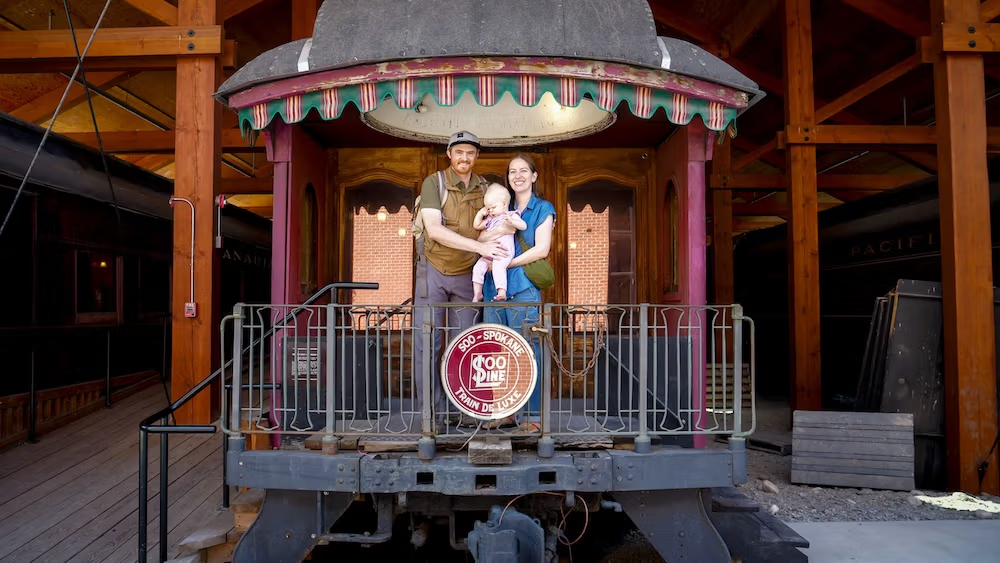
We visited as a family with our baby Aurelia, which meant two things were true at the same time:
- We wanted the full “wow” experience (because we’re adults who still get excited about trains), and
- We also needed a plan that didn’t collapse the moment a tiny human decided she was done with history.
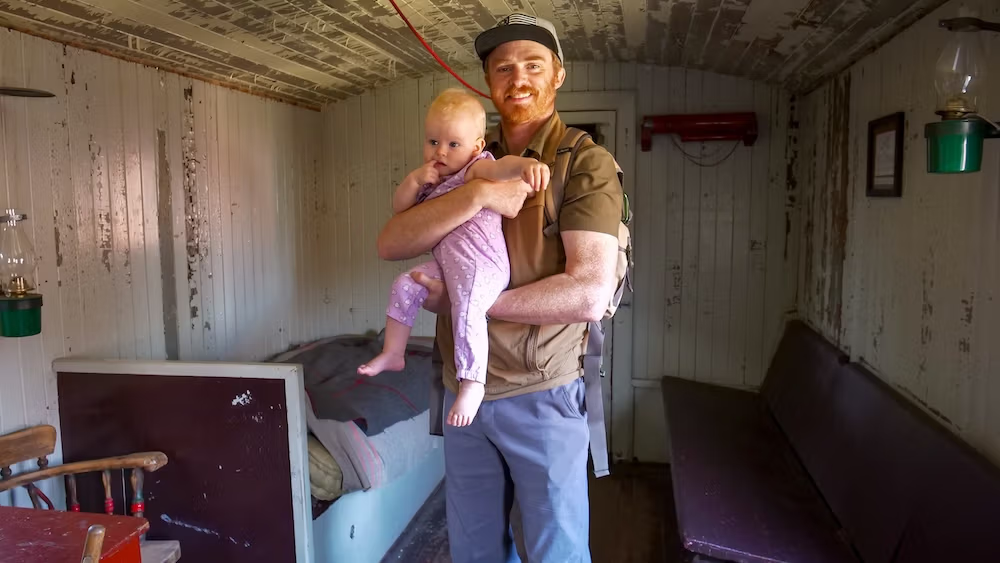
Enter the Toddler Tour—20 minutes of highlights, offered depending on interpreter availability, and honestly one of the most sanity-preserving “family travel” options we’ve ever seen at a museum.
This guide mixes our real visit (quirks, laughs, baby logistics and all) with practical planning info, tour strategy, and what to expect once you’re actually on the platform.
Cranbrook History Centre at a glance
| Quick detail | What you need to know |
|---|---|
| Location | 57 Van Horne St S, Cranbrook, BC V1C 4H9 |
| Hours | June–September: 10am–5pm Tue–Sat; October–May: 10am–4pm Tue–Sat |
| Closed | Sundays and Mondays (plus New Year’s Day, Family Day, Victoria Day, Truth and Reconciliation Day, Remembrance Day, and Christmas Day) |
| “Can we wander the trains?” | Not freely—railcars are accessed on guided tours |
| Tour days | Tours run Tuesday–Saturday (three main tours + specialty tours) |
| Accessibility | Museum building is accessible; railcar interiors aren’t. Ask about the Platform Tour. |
| Family highlight | Toddler Tour (20 min) is a short, availability-based option for little ones |
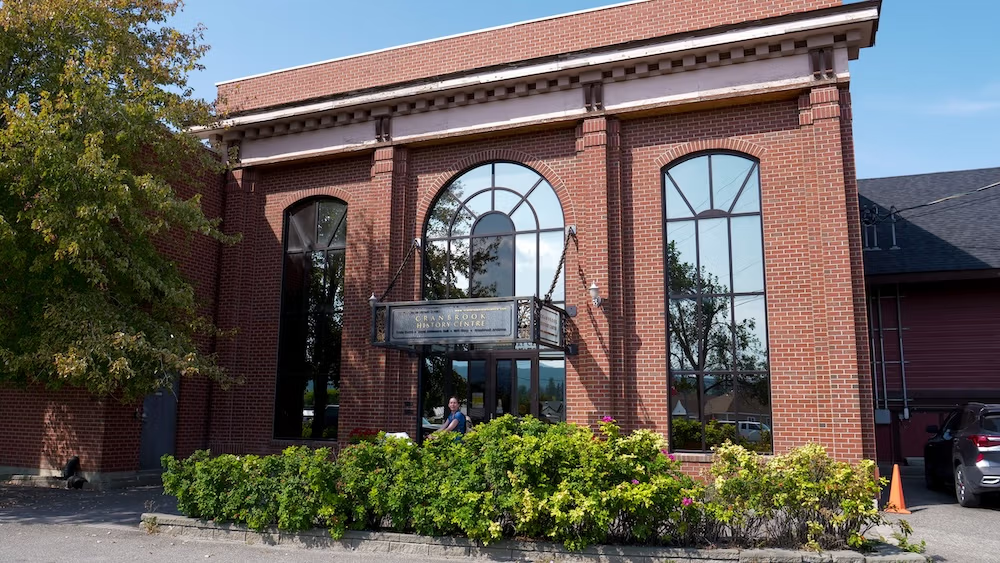
Why this is the #1 history stop in Cranbrook
Cranbrook exists because of the railway, and the History Centre tells that story in a way that’s actually fun: through people, not just mechanics.
The museum’s rail pages also frame rail history honestly—acknowledging the site is on traditional Ktunaxa territory and that railroads in Canada are tied to Indigenous displacement, taken land, and labour injustices (including the Black porters who worked under unfair conditions on luxury passenger trains).
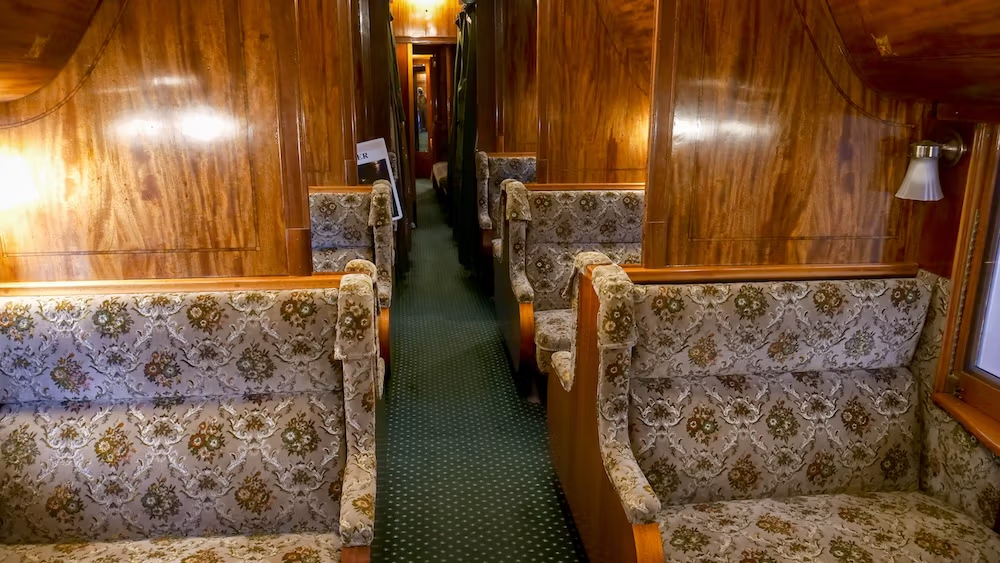
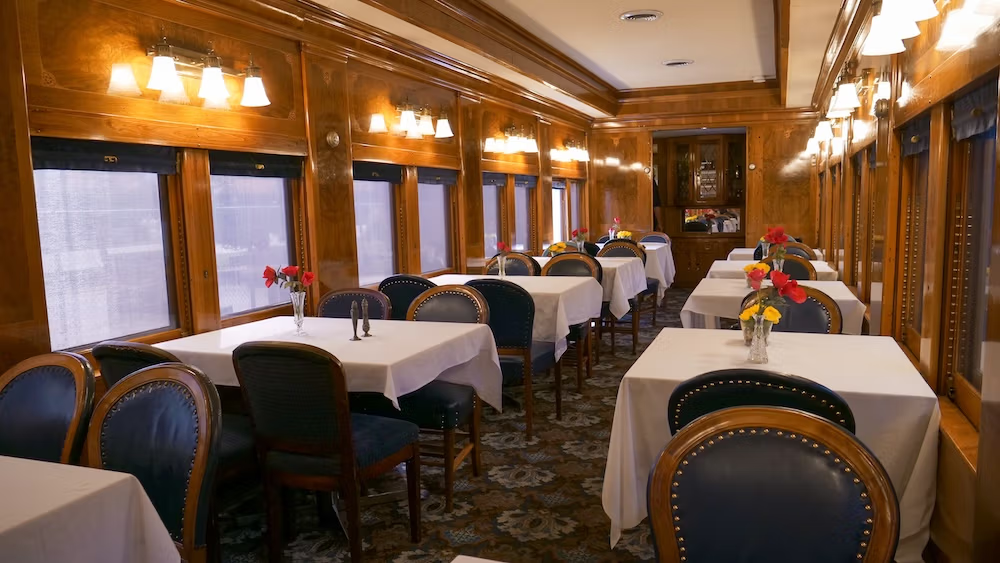
And then there’s the collection itself: 20 railway cars, with 17 currently available to the public, including a 7-car 1929 Trans-Canada Limited set (described as “Jazz Era Art Deco”), two 1907 Soo-Spokane cars (“Edwardian Art Nouveau Elegance”), and the 1927 executive night car “Strathcona,” which hosted VIP guests including Queen Elizabeth II, John & Jackie Kennedy, and Winston Churchill.
In other words: you’re not visiting “a local museum.” You’re stepping into one of the largest historic railcar collections in North America—and it just happens to be in Cranbrook.
What it feels like to visit (and why it works so well as a family activity)
Here’s the family-travel reality: museums are basically emotional rollercoasters with an admission fee.
You start optimistic. You make a plan. You tell yourself everyone will behave camly. And then your baby discovers the joy of yelling into high ceilings.
The Cranbrook History Centre works with that reality because the visit has natural “chapters”:
- Guided train tour (focused, structured, time-boxed)
- Galleries (you can slow down, wander, and bail out whenever you need)
- Model Railway (joy, wonder, and the universal adult experience of becoming eight years old again)
We especially thought that the model railway was “so much fun,” “great for kids,” and we were impressed it has kept running thanks to volunteers as we watched trains loop through tiny Kootenay scenes.
The “which train tour should I do?” decision matrix
The key thing to know: the trains are only accessible on a guided tour. That’s partly how the museum protects an irreplaceable collection of “deluxe hotels on wheels” that are still in active restoration.
So choose the tour that matches your time, attention span, and travel style.
| Tour | Duration | Best for | What you’ll actually feel |
|---|---|---|---|
| Soo-Spokane (1907–1914) | 20 min | Quick visits, families, history “sampler” | Early-1900s wooden cars + “Cranbrook time machine” energy |
| Comparative (1927–1970) | 45 min | First-timers who want variety | Big contrasts (executive car vs caboose; privilege vs working life) |
| Trans-Canada Limited (1929) | 45 min | Design lovers, “wow” interiors | Peak interwar luxury—Canada’s “hotel on rails” vibe |
| Grand Tour (specialty) | 1 hr 50 min | Rail fans who want it all | All three tours bundled; best booked in advance |
| Toddler Tour (specialty) | 20 min | Train-loving toddlers + tired parents | Highlights, short attention-span friendly, interpreter availability |
| Platform Tour (specialty) | 30 min | Mobility needs / wheelchair access | Window views from the covered platform with full interpretation |
If you’re visiting with kids or you’re simply not in the mood to climb stairs for 45 minutes, Soo-Spokane or the Toddler Tour is a smart, low-stress win. If you’re visiting once and want the biggest impact, the Trans-Canada Limited is the one that tends to make people say “okay, wow.”
Before you go: the “don’t make this harder than it needs to be” checklist
A train tour isn’t like a normal museum wander. It has a start time, tight spaces, and stairs. So a tiny bit of planning makes the whole day smoother.
What to bring
- A baby carrier (even if you use a stroller elsewhere)
- A small snack and water bottle (especially with kids)
- A layer (railcars can feel cooler/warmer depending on season and sun)
- A phone/camera with low-light readiness (some interiors are dimmer)
- Curiosity (because the interpreters are the secret sauce)
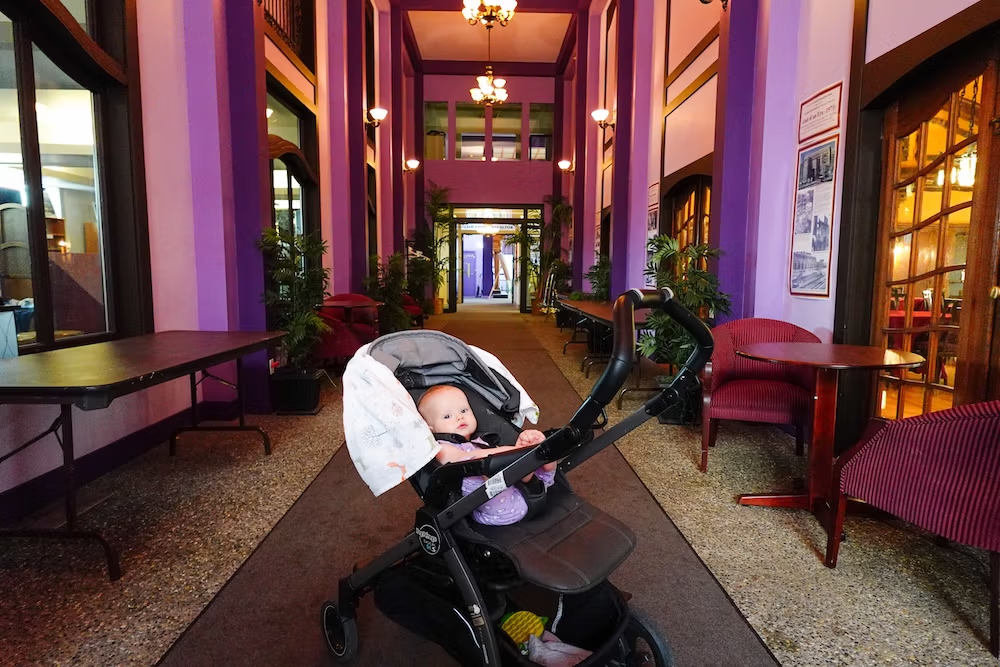
*We ended up doing the stroller for the museum and I just carried Aurelia in my arms for the toddler train tour*
What not to bring
- A huge backpack you’ll smack into every narrow hallway (ask me how I know)
- A “we’ll show up whenever” attitude (the tour schedule wins every argument)
Our visit on the Toddler Tour: highlights before the squirmy worm phase
We wrote it down exactly the way it felt: “Took 20 minute toddler tour. Highlights before she got all squirmy wormy.”
That’s the Toddler Tour in a nutshell. The museum describes it as a short 20-minute tour for train-loving toddlers, offered depending on interpreter availability.
For us, it hit the perfect sweet spot:
- We still got the full “step inside the past” thrill, and
- We didn’t gamble on a 45-minute tour with a baby who might decide to start narrating her feelings loudly in the quietest car.
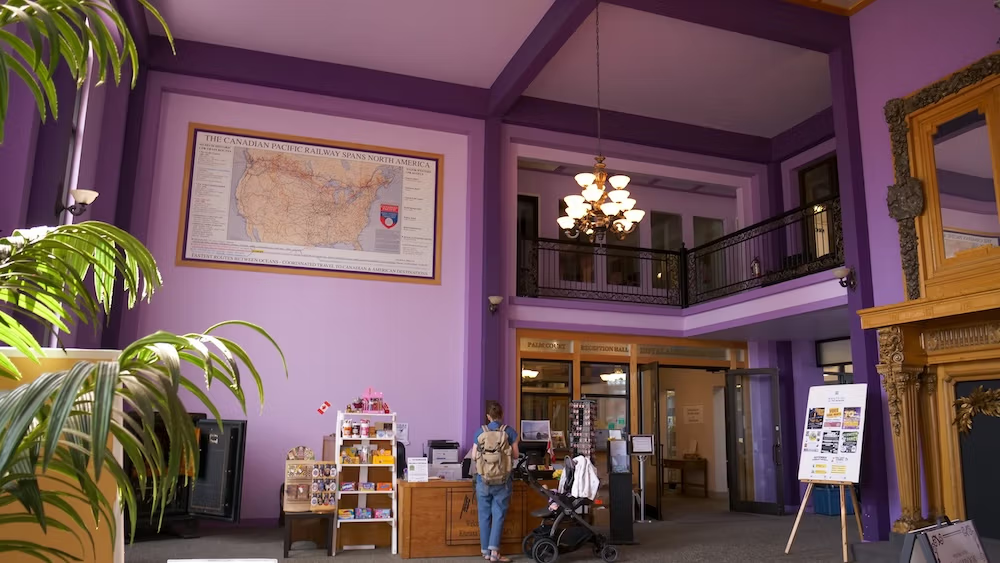
We also got that first “whoa” moment from the Royal Alexandra Hall—saved and reassembled in Cranbrook—which somehow feels both wildly out of place and completely perfect at the same time.
What you’ll notice inside the railcars (even if you’re not a “train person”)
The railcars feel intimate in a way modern travel rarely does.
You’ll notice the narrow hallways and tight turns first—then you’ll start seeing how every inch was designed for a purpose. Storage. Privacy. Service. Comfort. And, depending on the era, a very clear message about who was expected to be comfortable and who was expected to work.
Here are the details that tend to stick with people:
- Craftsmanship: woodwork, upholstery, glasswork, and design choices that feel like a lost art
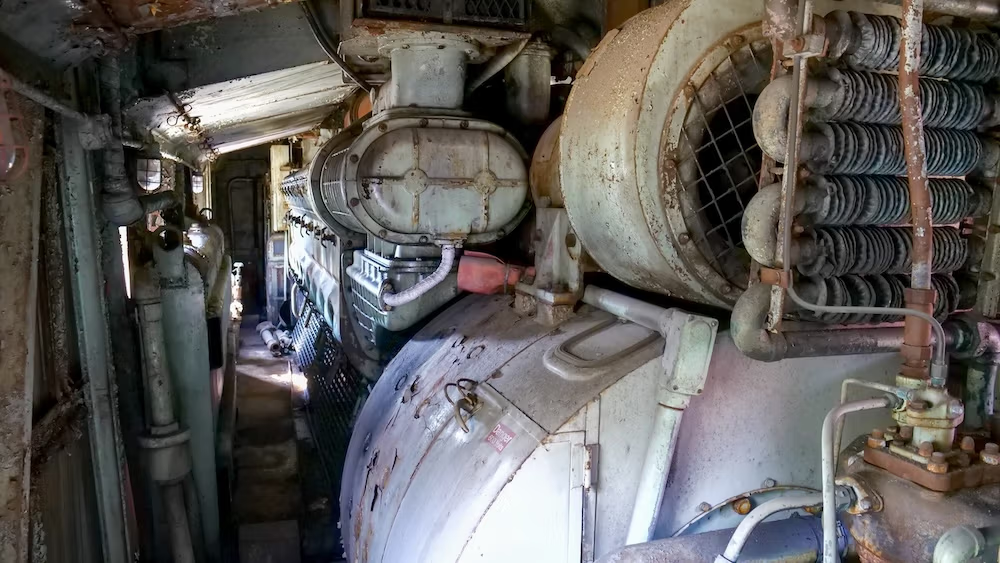
- “Systems thinking”: how kitchens, dining, sleeping, and staff quarters all had to function in motion
- Social history: luxury for some, hard labour for others (and the museum doesn’t hide that)
- The time-travel effect: you stop imagining “a train” and start picturing a life
Even on a short tour, it’s the closest thing to walking into an old photograph.
The three main daily tours, explained like a friend (not a brochure)
Comparative Tour (1927–1970)
This is the best “first tour” for most people, because it’s all contrast.
In 45 minutes, you jump between worlds: an invite-only executive car on one end of the spectrum and the caboose on the other—where the freight crew’s daily reality was practical, cramped, and very much not glamorous.
If you like variety, pick this tour. It’s also the one that tends to spark the most “I never thought about that” conversations afterward, because it makes inequality and labour visible without lecturing you.
Trans-Canada Limited (1929)
This is the tour for people who want to be impressed.
The museum highlights the Trans-Canada Limited as a 7-car set with “Jazz Era Art Deco” style—a first-class travel experience that feels more like a rolling luxury hotel than transportation.
The tour itself is 45 minutes and focuses on both the passenger lifestyle and the behind-the-scenes work that made luxury look effortless.
If you’re choosing one tour to anchor your entire visit (and you don’t have toddler constraints), this is usually the “big wow” pick.
Soo-Spokane (1907–1914)
The Soo-Spokane tour is shorter (20 minutes), and it feels the most directly tied to early Cranbrook—touring wooden railcars that stopped daily at the Cranbrook train station from 1907 to 1914.
It’s also the most “pairable” tour: short enough that you can do it and still have energy for galleries, coffee downtown, and whatever your kid decides is the day’s main plot twist.
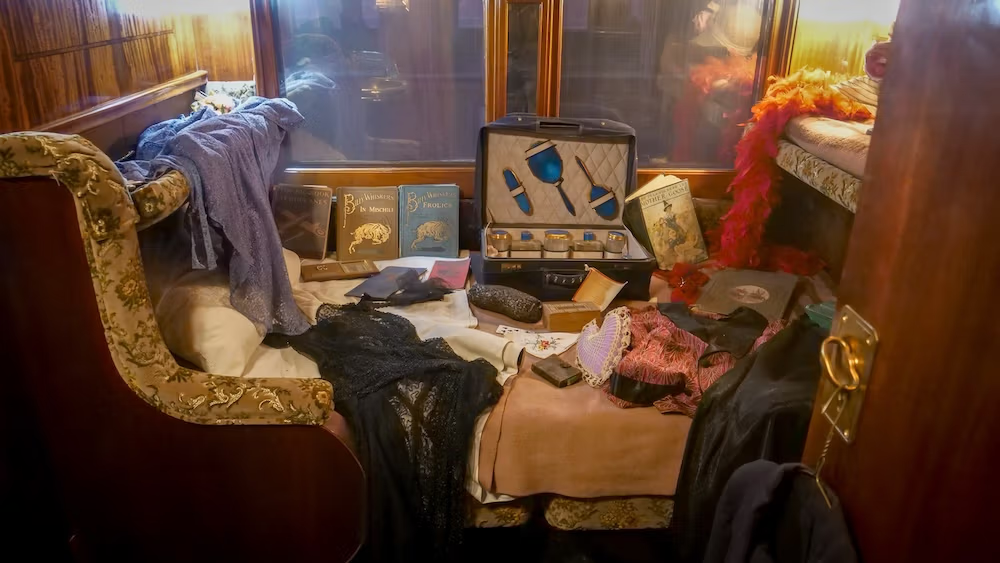
Specialty tours: the ones that solve real problems
Platform Tour
The museum is upfront that the railcar interiors aren’t wheelchair accessible and include stairs and narrow hallways.
The Platform Tour exists for visitors who require wheelchair access or have mobility concerns. It’s 30 minutes and covers much of the same history as the Comparative and Soo-Spokane tours through window views from a covered platform.
Grand Tour
If you can’t decide, the Grand Tour bundles all three main tours into one 1 hour 50 minute experience (recommended 13+) and is pre-booked.
It’s for the people who finish the first tour and immediately say, “Okay… but can we see everything?”
Toddler Tour
Already discussed, but worth repeating: this is a museum that actually understands family travel.
Ticket prices and timing: what to know before you arrive
Tour tickets include museum admission
Train tour prices include Museum Admission.
Current tour prices (check the website before you go)
As listed on the tours page (rates do not include GST):
- Adult: $20.25 (Trans-Canada Limited or Comparative), $12.50 (Soo-Spokane)
- Senior (65+): $16.00 or $9.50 (Soo-Spokane)
- 18 & Under/Student: $16.00 or $9.50 (Soo-Spokane)
- 5 & Under: free
Arrive early, because the tours start on time
The museum asks visitors to arrive 15–20 minutes before tour start and notes tours start promptly.
If you’re traveling with kids, treat that buffer as mandatory. It buys you time for bathroom runs, snack diplomacy, and the moment your toddler decides socks are a form of oppression.
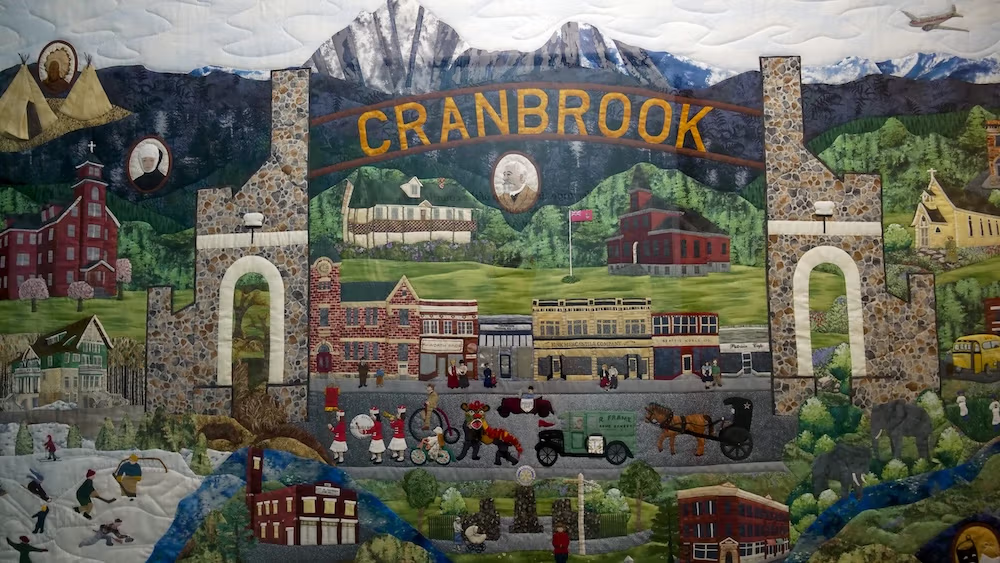
Don’t skip the galleries: the 1898 freight shed and the East Kootenay story
Trains might be the headline, but the museum galleries are the glue that connects rail travel to the region.
The Cranbrook Museum is situated in the original 1898 Cranbrook Freight Shed and focuses on the culture and heritage of the East Kootenay, including First Nations histories, early settler artifacts, wildlife, photographs, and regional timelines.
It also includes a Cranbrook History Gallery (which the museum notes spans local history, folklore, natural history, palaeontology, and Ktunaxa traditions) and an East Kootenay Paleontology Gallery featuring a fossil collection donated by Michel Plourde and a mural by Rosalie Dureski.
If you’re visiting with kids, the galleries are a great pacing tool: you can do 10 minutes, leave, return later, and nobody feels like the day “failed.”
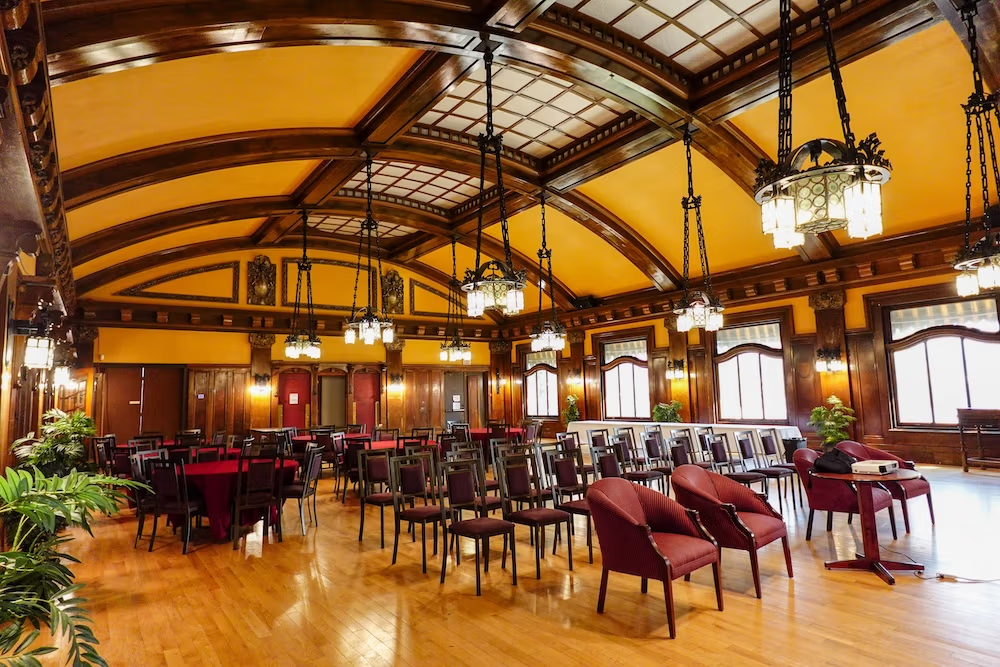
The Royal Alexandra Hall: rescued Canadian grandeur
We’re not being dramatic when we say the Royal Alexandra Hall feels like a movie set.
It began as the Grand Café of Winnipeg’s Royal Alexandra Hotel (built in 1906). When the hotel was demolished in 1971, the Grand Café was carefully disassembled and stored. The Cranbrook History Centre acquired the pieces in 1999 and reopened the rebuilt hall in 2004.
Today it’s open for viewing and used for events, and the museum describes it as one of the most elegant public venues in southeastern BC, seating over 200 people.
It’s the kind of room that makes you want to whisper, even if you’re holding a baby and a granola bar and wearing hiking pants.
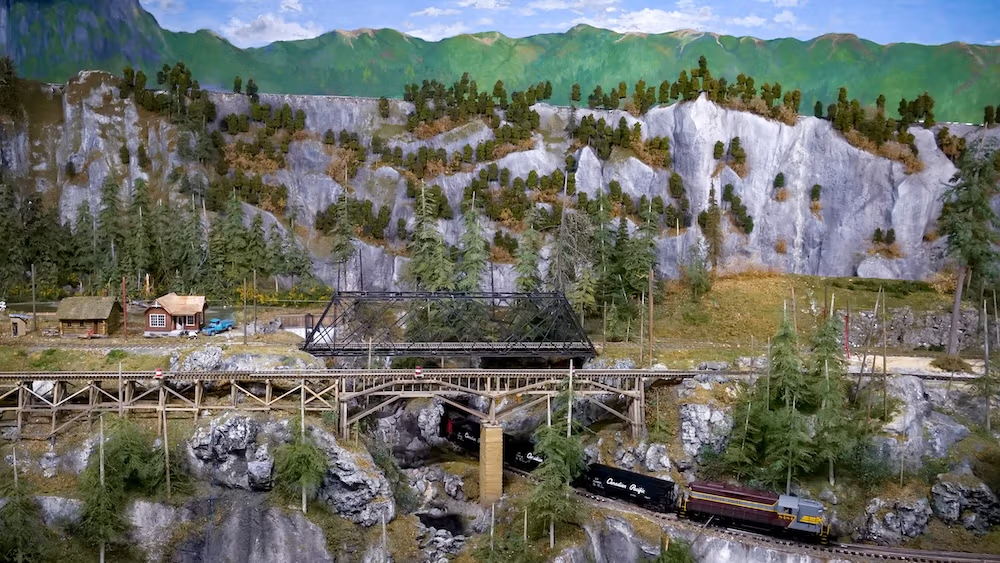
The Model Railway: the “everyone relaxes” room
After the trains, we wandered into the model railway, and it instantly became the happiest part of our visit. In our notes we wrote: “After saw model railway which was so much fun. Great for kids. Kept going from volunteers.”
On the exhibit page, the museum explains two standout displays:
- An “O” gauge model that’s over 80 feet long, running through floor-to-ceiling dioramas inspired by BC scenery, with five lines/four levels and a “forest” of 6,000 trees.
- An “HO” scale layout recreating a section of the CPR’s southern mainline through the Kootenays, depicting scenes from Bull River through Cranbrook to Kootenay Landing and spanning decades of rail change.
If you’re traveling with kids, put this at the end. It’s the reward room.
How long to budget: realistic visit times
| Time you have | Best plan |
|---|---|
| 60–75 minutes | Soo-Spokane tour + quick gallery loop + model railway |
| 1.5–2.5 hours | One 45-min tour + galleries + Royal Alexandra Hall + model railway |
| 3–4 hours | One tour + deep gallery time + model railway lingering (plus gift shop) |
A half-day Cranbrook plan built around the History Centre
If you want to build an easy day without sprinting around town, this is a realistic flow.
| Time | Plan |
|---|---|
| Morning | Arrive early, do your train tour first (it anchors the visit) |
| Late morning | Galleries + Royal Alexandra Hall (slow pace, lots to absorb) |
| Lunch | Head downtown for food (see our favourites below) |
| Early afternoon | Model Railway (kids’ favourite, adults’ secret favourite) |
| Bonus | Grab the self-guided Historic Cranbrook walking tour pamphlet and do a short downtown stroll |
Where to eat after your museum visit (we tested this for you)
We have a pattern when we travel: we visit a museum, we pretend we’re refined, and then we immediately look for food like we’ve been stranded in the wilderness for weeks.
Two Cranbrook meals stood out on our trip.
Family Thai Restaurant
This was our first meal in Cranbrook, and we couldn’t believe how much it hit the spot—especially because we used to live in Chiang Mai and we’ve missed Thai food deeply. We had Pad Thai, a green coconut curry, and we learned (the hard way) that level 3/5 spice can be… emotionally cleansing.
Fire Hall Kitchen & Tap
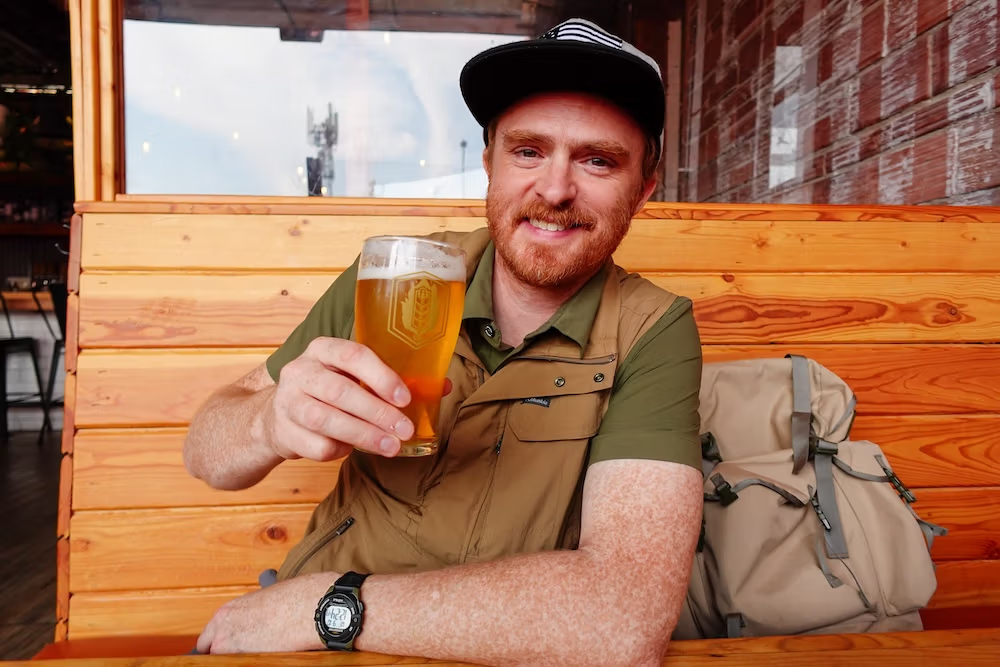
We called this “maybe the most interesting restaurant in the whole town,” mostly because it’s a repurposed fire hall building with tons of character. I went for signature burgers (goat cheese, avocado, bacon—yes, it was glorious), washed it down with a pilsner, and somehow still made room for key lime pie.
If you’re doing the museum with kids, this is also a nice “reward” lunch: it feels like a treat without needing a whole fancy-night-out production.
Visiting with kids: age-by-age game plan
If you’re traveling as a family, the best experience here comes from matching the tour to your kid’s “attention budget.”
| Age | Best approach | Tip |
|---|---|---|
| Baby (0–12 months) | Toddler Tour (if offered) or Soo-Spokane + galleries | Bring a carrier for the railcar portion; keep your stroller for the galleries. |
| Toddler (1–4) | Toddler Tour (ideal) or Soo-Spokane | Treat the model railway as the grand finale reward. |
| Kids (5–8) | Soo-Spokane first, then decide if you want more | If they’re into it, loop back for a 45-minute tour on a return visit. |
| Kids (9–12) | Comparative or Trans-Canada Limited | Give them one “mission” (spot something fancy; ask one question). |
| Teens | Trans-Canada Limited or Grand Tour | Teens respond well to the “this is basically a luxury hotel” angle. |
The museum notes that the three main tours are designed for visitors over age 6, which is why the Toddler Tour exists as a tailored option.
Accessibility and sensory notes (the honest version)
Even if you don’t need a fully accessible experience, it helps to know what the tour environment is like.
- Stairs + narrow hallways: railcars are historically tight, and the museum notes the interiors aren’t wheelchair accessible.
- Low light in places: some cars feel dimmer, especially on cloudy days—great for atmosphere, less great for “reading every label.”
- Sound: guided groups + echo-y interiors can feel louder with kids (or if you’re noise-sensitive).
- Temperature: cars can feel warmer in sun or cooler in shade depending on season—layers help.
If mobility is a concern, the Platform Tour is the museum’s built-in solution, offering interpretation from a covered platform with window views into the cars.
Photography tips and railcar etiquette
- Ask before using flash (discouraged around sensitive interiors).
- Keep hands off upholstery and fixtures—these are living artifacts.
- Wide-angle mode is your friend in narrow hallways.
- Take your time in the Royal Alexandra Hall; it photographs beautifully from multiple angles.
Mistakes to avoid (so your visit stays fun)
- Showing up at random and hoping to catch a tour (the schedule wins)
- Planning a stroller-only day (bring a carrier for railcars or be prepared to carry your baby/toddler in your arms)
- Skipping the galleries because “we came for the trains” (they complete the story)
- Missing the model railway (it’s the easiest joy-per-minute in the building)
Cranbrook History Centre and Historic Train Tours FAQ: Tickets, Timing, Tours, Accessibility, and Family Tips
Do I need to book train tours in advance?
Sometimes. If you have a tight schedule or need a specialty tour (Grand Tour, Platform Tour, Toddler Tour), booking ahead is the safest move. Regular tours run on a daily schedule Tuesday–Saturday, but the specific tour times can vary by season.
Can I go inside the railcars without a tour?
Nope. Railcars are only accessed during guided tours, which helps preserve the historic cars.
Which tour is best for first-timers?
The Comparative Tour is the best “safe” choice because you get variety and contrast in one 45-minute experience.
What’s the best tour for toddlers?
The Toddler Tour. It’s a short 20-minute highlight tour that’s designed for train-loving toddlers and offered based on interpreter availability.
Are the train tours wheelchair accessible?
Unfortunately not inside the railcars. The Platform Tour is the accessible alternative (30 minutes) and covers much of the same history from the covered platform.
Do tour tickets include museum admission?
Yes. All train tour prices include Museum Admission.
How early should I arrive?
Do it. The museum recommends arriving 15–20 minutes early and tours start promptly.
How long should I plan to spend at the museum?
Most visitors will be happiest with 1.5–2.5 hours (one tour + galleries + model railway). If you love museums, you can easily stretch it to 3–4 hours.
Is the Royal Alexandra Hall included?
Yes. You can view it during your visit, and it’s also used as an event venue.
Is the model railway worth it if I’m not a train person?
Absolutely. The model railway is fun in the purest sense—tiny trains running through huge handcrafted landscapes—and it’s one of the best kid-friendly parts of the museum.
Further Reading, Sources & Resources
For this Cranbrook History Centre + Historic Train Tours guide, these are the best “go straight to the source” links to use (and the ones I’d personally check again right before visiting—because hours, pricing, and tour times can change seasonally).
Official Cranbrook History Centre sources
https://www.cranbrookhistorycentre.com/
The main hub for exhibits, visitor info, and updates.
https://www.cranbrookhistorycentre.com/visit/hours-information/
Official hours, closures, and the most reliable “before you go” details.
https://www.cranbrookhistorycentre.com/visit/tours/
The definitive page for tour types, durations, seasonal schedules, and ticket pricing.
https://www.cranbrookhistorycentre.com/exhibit/railcar_collection/
Background on the railcar collection, highlights, and why guided tours matter for preservation.
https://www.cranbrookhistorycentre.com/exhibit/model-railway/
Details and stats on the O-gauge + HO-scale layouts (and why it’s sneakily one of the best parts for families).
https://www.cranbrookhistorycentre.com/exhibit/royal-alexandra-hall-rentals/
History of Royal Alexandra Hall and its story (plus how it’s used today).
https://www.cranbrookhistorycentre.com/exhibit/cranbrook-museum/
What’s in the museum galleries beyond trains (including the paleontology elements).
Regional tourism listings and trip-planning context
https://cranbrooktourism.com/
Cranbrook Tourism’s main site for broader trip planning (attractions, seasonal ideas, local context).
https://cranbrooktourism.com/things-to-do/heritage/cranbrook-history-centre
A destination-style overview that’s handy for quick context and “where it fits” in a Cranbrook itinerary.
Notes on accuracy
- For tour times, pricing, and seasonal hours, always treat the Tours and Hours & Information pages above as the final word (especially if you’re traveling on a tight schedule or visiting around holidays).
- If anything in a third-party listing conflicts with the official Cranbrook History Centre pages, go with the official site—details like pricing and available tours can change over time.