
You don’t just “arrive” on the Patagonian coast. You endure it.
After a 19-hour overnight bus ride from Mar del Plata—complete with an inexplicable two-hour delay in the middle of nowhere—we stepped out into the bright, wind-scoured concrete of the Puerto Madryn terminal in a state of pure, disorienting zombie mode. We were absolutely exhausted. The kind of exhausted where you haven’t seen pasta or a fresh vegetable in a day and a half, your clothes smell like diesel, and your first thought isn’t about majestic whales or soaring cliffs. It is entirely about finding a plate of hot food before you collapse.
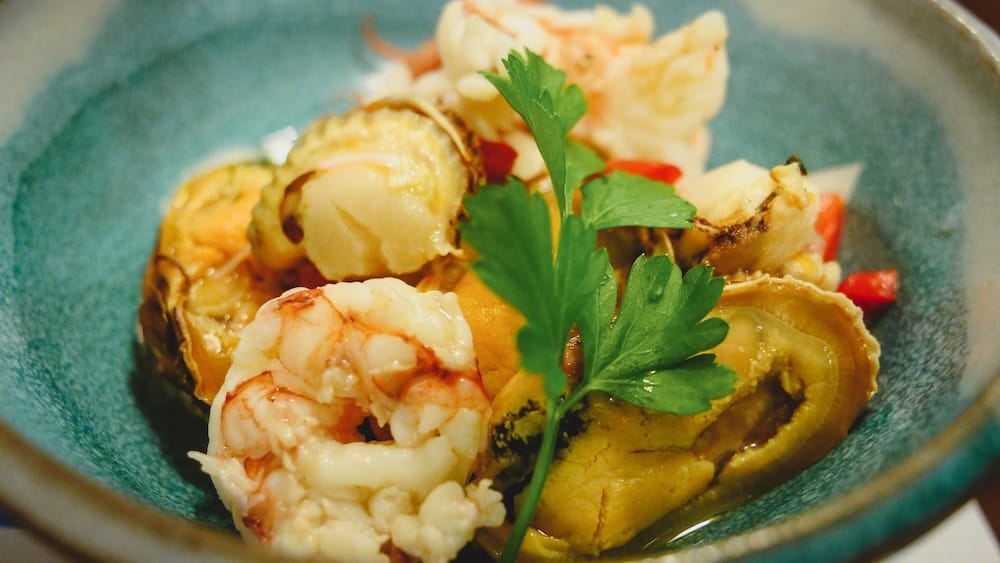
If you’ve watched the approach journey videos on our YouTube channel, you know we essentially triage our travel fatigue with heavy breaded milanesas right at the bus terminals. It keeps us moving. But once we dropped our bags at the studio apartment and finally walked down to the waterfront, the real culinary mission of this trip began.
When most travelers think of Patagonia, their minds immediately jump to the Andean west: towering granite peaks, the jagged spires of Fitz Roy, and massive slabs of lamb roasting on iron crosses. But there is an entirely different side to this region. The Atlantic Coast of Argentina is a wild, desolate, wind-battered frontier that produces some of the most sought-after, high-grade seafood on the planet. From the sweet red shrimp of Chubut to the colossal King Crab of Tierra del Fuego, the ocean here yields a brutal, beautiful bounty.
Getting to it, however, requires navigating broken credit card machines, staggering inflation, unpredictable weather, and mind-numbing distances. Let’s break down the exact logistics of eating your way down the edge of the Atlantic.
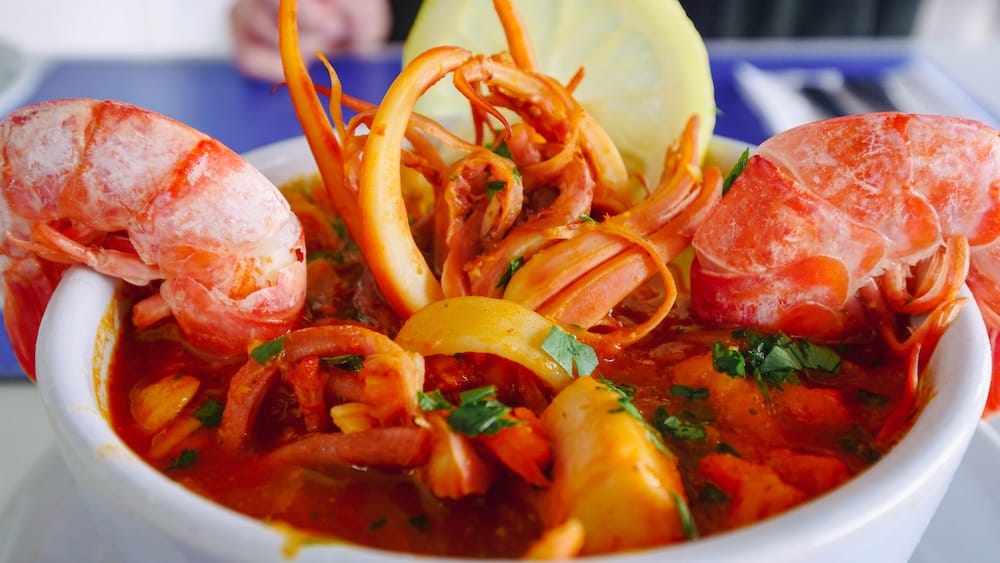
The Master Atlantic Catch Matrix: What to Eat, Where, and What It Costs
| The Catch & Scientific Name | The Hub & Prime Venue | The Signature Prep & Pairing | The Merroir (Why it tastes like that) | 2026 Price Reality (ARS) | Samuel’s “Friction & Fix” Protocol | The Peak Harvest Window |
| Langostino Patagónico (Pleoticus muelleri) | Puerto Madryn Cantina El Náutico | Grilled whole with garlic or anchoring a massive mixed platter. Pairing: Río Negro Semillón. | The Cold-Water Snap: Thrives in freezing Chubut offshore currents, forcing slower growth. The result is a naturally deep-pink shrimp with a sweet, dense, almost lobster-like bite. | ARS 38,000 – 50,000+ (Massive platter for two) | The Friction: 9:30 PM wait times will leave you freezing on the sidewalk. The Fix: Arrive right at the 12:00 PM or 8:00 PM opening bell. | May to October (Winter Fleet) |
| Centolla (Lithodes santolla) | Puerto Almanza & Ushuaia Ruta de la Centolla | Boiled alive in seawater, cracked open, served with lemon/butter. Pairing: Crisp local white wine. | The Deep South Freeze: Survives in the lethal, icy depths of the Beagle Channel. The extreme cold prevents the meat from turning mushy, locking in a legendary buttery, snow-white texture. | ARS 35,000 – 60,000+ (Downtown) ARS 205,700+ (Almanza 4×4 Tour) | The Friction: Paying elite prices for thawed, out-of-season tourist trap crab. The Fix: Rent an SUV, brave the 75km pothole-riddled Route J to Almanza, and demand to see the live tank. | November to March (Summer Catch) |
| Vieiras & Pulpo (Aequipecten tehuelchus) | Las Grutas / San Antonio Oeste Beachfront Restós | Picada de Mariscos (The “Potpurrí”). A staggering mountain of bivalves. Pairing: Ice-cold draft beer. | The Gulf Anomaly: Harvested from a unique geographical anomaly where the San Matías Gulf traps warm-water currents. Produces aggressively briny, tender scallops totally distinct from the deep south. | ARS 60,000 – 65,000 (Communal platter for 2-3) | The Friction: The brutal 4:00 PM – 8:30 PM “Siesta Starvation” when all kitchens hard-lock their doors. The Fix: Pivot immediately to the beachfront food trucks to tide you over. | October to March (Spring/Summer) |
| Illex Argentinus (Shortfin Squid) | Las Grutas The Amphitheater Food Trucks | Rabas. Violently hot, thickly breaded fried squid rings served in a paper cone to-go. | The Pure Protein Hit: A massive staple of the Atlantic industrial fleet. Thick, meaty tubes that provide pure, salty sustenance when you need it most. | ARS 16,000 (Per cone) | The Friction: Cellular towers are weak; the Posnet (card reader) will spin and fail. The Fix: This is your siesta-survival lifeline. Carry crisp physical pesos. | Year-Round |
| Merluza Negra (Dissostichus eleginoides) | Comodoro Rivadavia & Ushuaia Av. Costanera | Pan-seared heavily to render the fat. Pairing: High-acid Chubut Sauvignon Blanc to cut the richness. | The Millionaire’s Catch: Mislabeled globally as “Chilean Sea Bass.” A deep-sea bottom dweller with an incredibly high oil/fat content that gives it an unmatched melt-in-your-mouth texture. | ARS 16,000 – 25,000+ (Single gourmet main) | The Friction: It’s an industrial oil hub, not a quaint tourist village, and quotas make the fish rare. The Fix: Manage your aesthetic expectations and check QR-code menu prices closely to avoid sticker shock. | Variable (Strict Quota System) |
| Atlantic Salmon (Local Festival Catch) | Camarones National Salmon Festival | Chupín del Pescador. A bubbling, communal cauldron of massive fish stew. Pairing: Light, high-acid Chubut Pinot Noir. | The Hyper-Local Haul: Raw, unfiltered Atlantic fishing culture cooked down into a rich, salty, oceanic broth meant to feed an entire village. | ARS 10,000 – 15,000 (Per massive bowl) | The Friction: Requires a 72km detour off the desolate RN 3 with zero cell service or infrastructure. The Fix: Download offline maps and anchor your entire itinerary to the first two weeks of February. | February Only (Festival Anchored) |
The 50% Off Hustle and the Red Shrimp Capital of Puerto Madryn
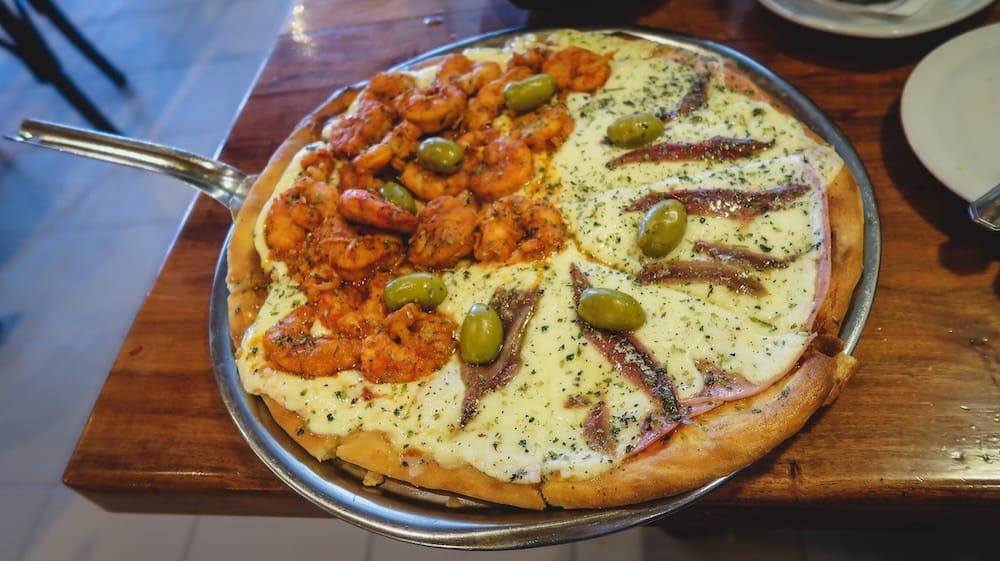
Our first few days in Puerto Madryn were a crash course in the economic duality of Argentine travel. On our first afternoon, completely jet-lagged and wandering the streets before our Peninsula Valdes excursion, we stumbled into a local pizzeria. We noticed a bizarre 50% off special on pizzas if you ordered between 4:00 PM and 8:00 PM. We immediately capitalized on this bizarre “siesta discount,” ordering a massive half-shrimp, half-anchovy pizza. When you’re navigating Argentine inflation, you learn to hustle.
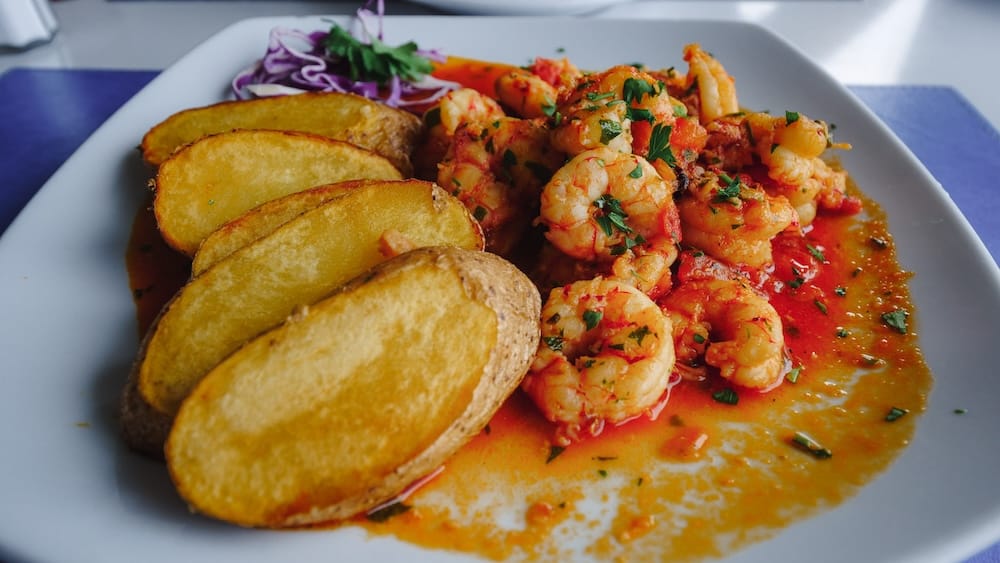
But Puerto Madryn is ultimately famous for its premium catches, specifically the Langostino Patagónico (Argentine Red Shrimp) and Merluza (Hake). The red shrimp here are wild-caught, distinctively sweet, and naturally pink even before they hit the heat.
To experience the gold standard, we woke up early to secure a table right when the doors opened at Cantina El Náutico, an absolute institution on Av. Julio A. Roca. We had heard the wait times peak at a miserable hour and a half around 9:30 PM. Sitting there, I distinctly remember ordering a three-course lunch special that cost us a mere 450 pesos.
That memory is a ghost now. If you are traveling in 2026, the hyperinflationary adjustments mean physical menus are mostly gone. You will scan a QR code taped to the table, and that same legendary seafood platter for two now runs between ARS 38,000 and ARS 50,000+ (roughly $38 to $50 USD, depending on the Dólar Blue fluctuations). Gourmet single dishes of grilled toothfish or calamari sit between ARS 16,000 and ARS 25,000.
[The Samuel Sidebar: The Wind Factor]
Outdoor patio seating sounds incredibly romantic when you’re looking at a map of Puerto Madryn. Do not do it unless the air is dead calm. The Patagonian wind is infamous, kicking up violent gusts of dust and sand by mid-afternoon that will instantly ruin a $50 seafood platter. Always request an indoor table by the window. You get the view of the Golfo Nuevo without chewing on the beach.
Puerto Madryn Micro-Logistics & Dining Matrix
| Venue / Experience | The Signature Catch | 2026 Price Reality (ARS) | Effort vs. Reward & Logistical Triage |
| Cantina El Náutico (Av. Julio A. Roca) | Seafood Platter & Fresh Hake | ARS 38,000 – 50,000+ for two | High Reward. Arrive exactly at 12:00 PM or 8:00 PM. If you show up at 9:30 PM, you will be standing on the sidewalk for an hour. |
| The Early-Bird Pizzerias (Downtown Grids) | Half-Shrimp / Anchovy Pies | Variable, massive discounts | High Value. Look for chalkboard signs offering 40-50% off between 4:00 PM and 8:00 PM to capture the hungry-but-cheap backpacker market. |
| The “Booked Out” Shuffle | Finding an open bed in peak season | Hotel rates vary wildly | High Friction. We had to physically pack our bags and switch studio apartments after one night. Book weeks in advance; you cannot “wing it” here. |
The 4:30 PM Ghost Town and the Salty Lamb Revelation
After Madryn, we jumped into a van and headed deep into the Peninsula Valdes reserve, eventually getting dropped off in Puerto Pirámides. This is the only actual town on the entire peninsula.
We filmed a walking tour here for the channel, stepping out onto Avenida de las Ballenas (which the YouTube auto-captions hilariously decided was “Avenida de la SOPA de nos”). It was 4:30 PM. The temperature was a sweltering 38.5°C (101°F). We were dripping sweat, starving, and looking for a cold drink and a snack.
The entire town was completely abandoned.
This was our brutal introduction to the “Siesta Starvation.” Unprepared North American and European tourists expect to grab a late lunch after a morning of hiking or whale watching. The reality is that sit-down restaurants along the Patagonian coast entirely shut down their kitchens from roughly 4:00 PM until at least 8:30 PM. We walked down to the beach to see if we could at least rent kayaks. The vendors had completely packed up and gone home early. Welcome to Patagonian island time.
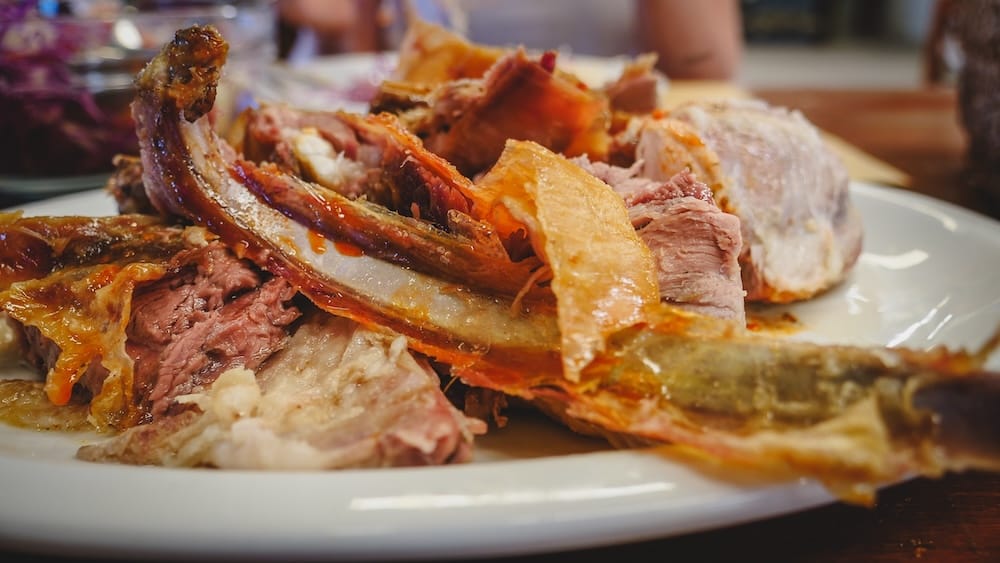
We eventually found salvation the next day after what I can only describe as the “Highway Hike of Shame.” We had missed a trail cutoff after visiting a sea lion colony and ended up lost, trudging down the gravel shoulder of a barren highway under the blazing sun. When we finally limped back into town, we collapsed at a local spot and ordered a massive Patagonian lamb burger.
Why talk about lamb in a seafood guide? Because as our local guide explained, the lamb on the Valdes Peninsula tastes fundamentally different than the lamb in the Andes. The sheep here graze on steppe vegetation that is deeply permeated by the extreme oceanic salinity in the air. The Atlantic flavors the meat. It is a spectacular terrestrial crossover that you cannot miss.
The Unforgiving Road South: What We Missed (But You Shouldn’t)
Due to our strict timeline, we couldn’t hit every micro-destination on the coast. But our foundational research for our upcoming destination guides revealed massive logistical blind spots in how people travel this region. Do not look at a map of Patagonia and assume you can just “hop” between coastal towns.
If you are driving south from Madryn on Route 3 (RN 3) toward San Antonio Oeste and Las Grutas, you are in for a 270-kilometer drive on a desolate, two-lane highway dominated by heavy industrial trucking with zero cell service for hours. But the payoff in the Gulf of San Matías is completely absent from generic guidebooks.
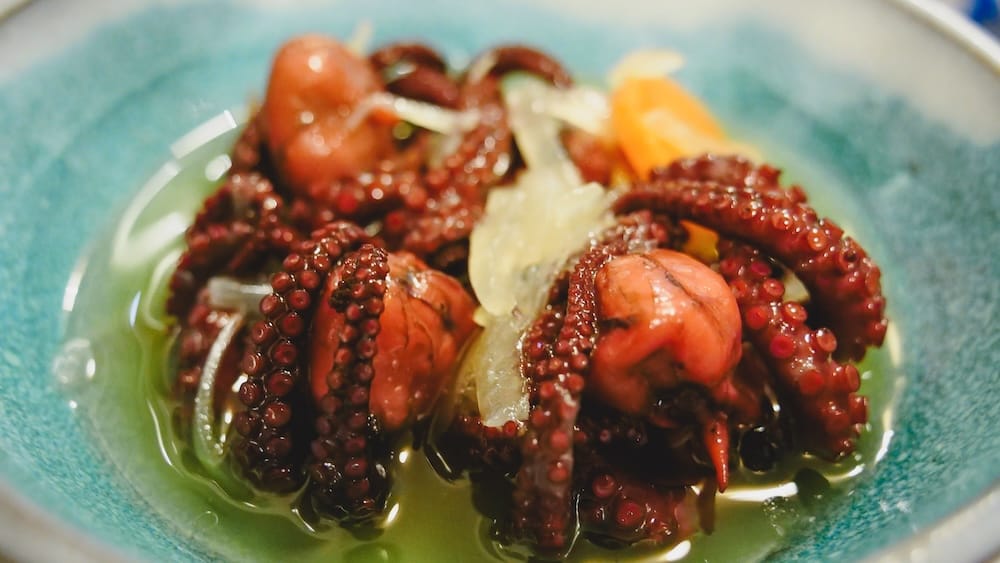
Because the gulf waters are uniquely warm, the seafood profile changes entirely. The local specialty is not hake or crab, but dredged scallops (vieiras) and octopus (pulpo). If you find yourself hitting the dreaded 4:30 PM siesta closure in Las Grutas after a day at the beach, skip the locked restaurant doors and head straight to the beachfront amphitheater. The local food trucks run all afternoon, selling massive paper cones of fresh, violently hot fried squid rings (rabas) for around ARS 16,000. It is the ultimate workaround to survive until the 9:00 PM dinner hour.
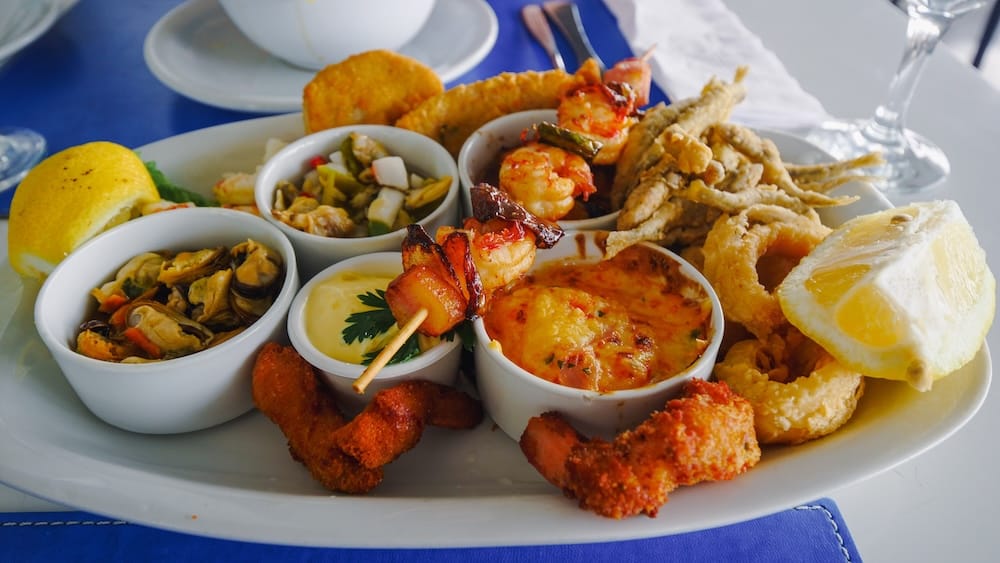
When dinner finally rolls around, order the Picada de Mariscos (sometimes listed as the “Potpurrí”). It is a staggering communal platter of regional bivalves and shrimp that currently commands about ARS 60,000 to 65,000.
Further south, requiring a 72-kilometer detour off RN 3 on an incredibly isolated paved road, lies the tiny outpost of Camarones. Generic lists completely ignore this town. But if you time your road trip for the first or second weekend of February, you will hit the National Salmon Festival. The climax of this event is a massive, communal fish stew banquet called the Chupín del Pescador. Portions are usually ladled out for around ARS 10,000 to 15,000. It is the most authentic, unfiltered display of Atlantic fishing culture you will find.
[The Samuel Sidebar: The Cash Connection Limit]
Do not trust your credit card outside of the major downtown grids of Puerto Madryn and Ushuaia. In places like Puerto Pirámides, Camarones, or the food trucks of Las Grutas, the cellular and Wi-Fi signals are incredibly weak. The Posnet (credit card terminal) will spin, fail, and time out. Always, always carry enough physical Argentine Pesos to cover the exact cost of your meal. “Cash only due to broken Wi-Fi” is a daily, frustrating reality.
The Route 3 Coastal Logistics Matrix
| Destination Hub | The Local Obsession | Logistical Friction Point | The Actionable Fix |
| San Antonio Oeste / Las Grutas | Picada de Mariscos (Scallop/Shrimp Potpurrí) | The Siesta Starvation: Sit-down spots hard-close from 4 PM to 8:30 PM. | Buy an ARS 16,000 cone of rabas from the beachfront food trucks to survive until dinner. |
| Camarones | Chupín del Pescador (Communal Salmon Stew) | Extreme Isolation: 72 km detour off RN 3. Zero cell service on the approach. | Download offline Google Maps. Time your arrival for the February Salmon Festival. |
| Comodoro Rivadavia | Deep-sea Merluza Negra (Toothfish) | Industrial Grind: It’s an oil and shipping hub, not a quaint tourist village. | Stick to the upscale restós along Av. Costanera; manage your aesthetic expectations. |
Ushuaia: The End of the World Crab Hustle
Eventually, you run out of continent. To reach Ushuaia overland, you must cross into Chile and back into Argentina. It is an absolutely grueling 11.5-hour bus ride featuring a tedious, double border crossing. We arrived exhausted, but we had booked an indulgent 12-night stay. We were arrogant enough to think nearly two weeks was enough of a buffer to hike the surrounding glaciers, lagoons, and national parks.
The wind, rain, and snow had other plans.
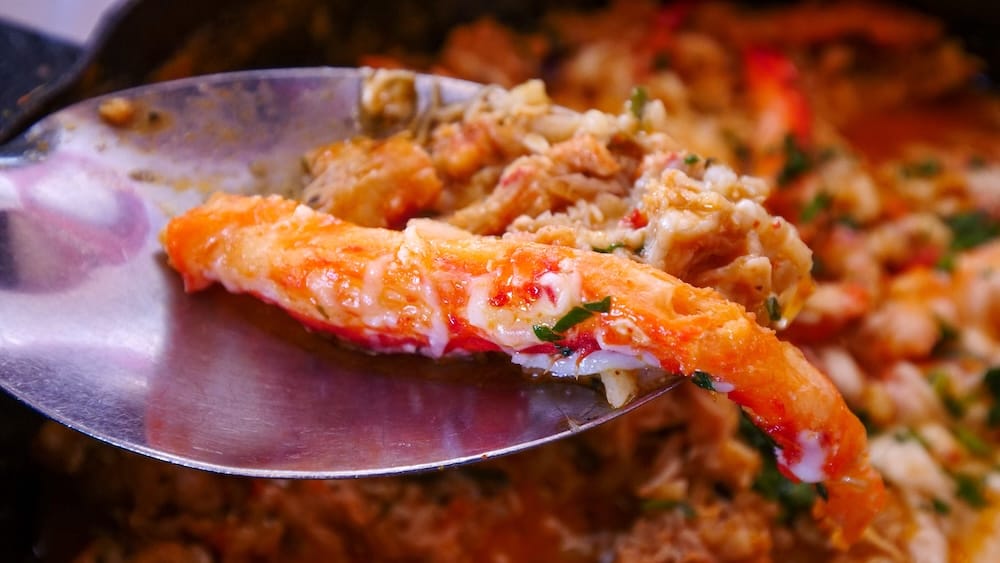
We spent days grounded in the city, forced to cancel multiple excursions due to extreme weather. It was the ultimate Patagonian reality check: Nature dictates the itinerary here, not your booking confirmation. But being trapped in the city allowed us to hyper-focus on Tierra del Fuego’s most famous export: Centolla, or Southern King Crab.
Ushuaia is a massive tourist hub, which means it is filled with tourist traps. If you walk down San Martín (the main restaurant drag), you will see dozens of menus offering crab legs for ARS 35,000 to 60,000+ per plate. But here is the secret: many of these downtown generic restaurants are serving you frozen crab, often exported from elsewhere or held over from a previous season.
If you want the real thing, you have to look for the live seawater tanks. Centolla must be kept alive in tanks until immediately before boiling in seawater to maintain its legendary sweet, tender profile. If a restaurant doesn’t proudly display a tank of live crab, keep walking.
But the true foodie pilgrimage requires leaving Ushuaia entirely. The absolute best crab is found 75 kilometers east in Puerto Almanza, a tiny fishing village that anchors the Ruta de la Centolla.
Here is where the logistics get sharp.
If you book a guided 4×4 excursion from a downtown agency to eat lunch in Puerto Almanza, you will pay a staggering ARS 205,700 to ARS 330,000+ per adult. It is an absolute budget-killer.
The workaround? Rent an SUV or crossover with high clearance. You can drive to Puerto Almanza yourself, paying only a fraction of the cost directly to the local fishermen whose houses have been converted into living-room restaurants. However, you must navigate Provincial Route J, an unpaved, pothole-riddled gravel road.
You need to leave Ushuaia by 10:30 AM to secure a table (they serve lunch only, closing around 4:00 PM). More importantly, you must finish your meal and hit the road by 4:30 PM. You absolutely do not want to be navigating that desolate gravel road in the dark or when the infamous freezing fog rolls in off the Beagle Channel.
Ushuaia Micro-Logistics & The Centolla Matrix
| Venue / Location | Current Reality | The 2026 Price Data | Effort & Pain Points |
| Downtown Ushuaia (San Martín) | The “Frozen Crab Illusion.” High-end spots like Kaupé are excellent, but generic spots use frozen stock. | Mains run ARS 35,000 – 60,000+. Reservations mandatory weeks out. | Low Physical Effort, High Financial Risk. Look for the live seawater tanks before sitting down. |
| Puerto Almanza (Ruta de la Centolla) | The pinnacle of fresh, straight-from-the-channel King Crab. Fisherman-owned living-room restós. | Excursions: ARS 205,700+. Direct meal cost: Considerably less if self-driving. | High Friction. 75km on Route J (gravel). Must rent high-clearance vehicle. Lunch only (11:30 AM – 4:00 PM). |
| The City Topography | Ushuaia is built into the side of the Andes. The walk from the flat port to the restaurant strip is a steep, calf-burning climb. | Taxis from the terminal to your hotel are cheap and essential. | High Physical Effort. Dragging rolling luggage up these icy, cracked sidewalks in winter will break your spirit. |
The Timing Trap: Navigating the Patagonian Catch Calendar
You cannot just show up to the Beagle Channel in July and expect local fishermen to be happily hauling live crab out of the freezing, storm-battered straits. The Atlantic Coast operates on a strict, unforgiving biological clock. If you time your flight wrong, you are paying elite, hyper-inflated 2026 prices for frozen stock that has been sitting in a deep freeze for six months. In our upcoming destination guides on the YouTube channel, we dedicate an entire segment to this, because the “Frozen Crab Illusion” is the number one trap in southern Argentina.
To ensure you are actually eating what the ocean is yielding right now, you have to sync your itinerary with the regional harvest.
The Harvest and Availability Matrix
Here is the un-sugarcoated reality of what is swimming, what is frozen, and when you should actually order it.
| Target Catch | Peak Fresh Harvest | The “Frozen Months” (Proceed with Caution) | The Biological & Logistical Reality |
| Centolla (Southern King Crab) | Late Spring / Summer (November to March) | Winter (May to September) | Harvested from the icy Beagle Channel. During winter storms, the small artisanal boats do not go out. If you eat it in July, you are eating frozen reserves. |
| Langostinos Patagónicos (Argentine Red Shrimp) | Late Fall / Winter (May to October) | Varies depending on coastal quotas. | Chubut’s massive offshore fleet operates primarily in the colder months. Fortunately, these freeze beautifully, but for the raw, sweet, straight-off-the-boat texture, target mid-year. |
| Vieiras (San Matías Scallops) | Spring / Summer (October to March) | Deep Winter (June to August) | These unique warm-water scallops are dredged from the San Antonio Oeste gulf. Best consumed fresh during the same window you’d actually want to visit the Las Grutas beaches. |
| Atlantic Salmon | Hyper-Specific: February | The rest of the year. | In the tiny outpost of Camarones, the fresh catch revolves entirely around the National Salmon Festival. Outside of this February window, expect imported or farmed salmon from Chile. |
[The Samuel Sidebar: The Live-Tank Rule]
When you walk down San Martín, the main tourist drag in Ushuaia, every single chalkboard menu is screaming at you to buy the crab. Ignore the chalk; look for the glass. Centolla must be kept alive in tanks until immediately before boiling in seawater to maintain its legendary sweet, tender profile. If a restaurant doesn’t proudly display a tank of live, moving crab near the front door—or if you are visiting in July—you are paying premium prices for thawed product. Save your pesos for a steak instead.
If you understand this calendar, the menus suddenly make sense. When we were eating our 50% off early-bird seafood pizza in Puerto Madryn, it was loaded with local shrimp because we were aligned with the Chubut processing season. The ocean dictates the menu here, not the chef. If you align your travel dates with the seasonal catch, the Patagonian coast transforms from an overpriced tourist trap into one of the greatest raw seafood destinations on earth.
Decoding the Catch: The Patagonian Protein Matrix
Here is the un-sugarcoated scientific and culinary breakdown of the three heavyweights dominating the coastal menus.
| Scientific Name | Local Menu Name | The Visual & Flavor Profile | The “Merroir” Reality (Why it tastes like that) |
| Pleoticus muelleri | Langostino Patagónico (Red Shrimp) | Naturally deep pink/red even when completely raw. Shockingly sweet, with a dense, meaty bite that mimics lobster. | Thrives in the cold, nutrient-dense currents off the Chubut coast. Cold water forces the shrimp to grow slower and build richer fat/sugar reserves than warm-water farmed shrimp. |
| Lithodes santolla | Centolla (Southern King Crab) | Spiky, intimidating crimson shells hiding long, thick legs packed with delicate, snow-white, buttery meat. | Survives in the extreme, icy depths of the Beagle Channel. The lethal water temperatures give the meat its legendary density and prevent it from becoming mushy. |
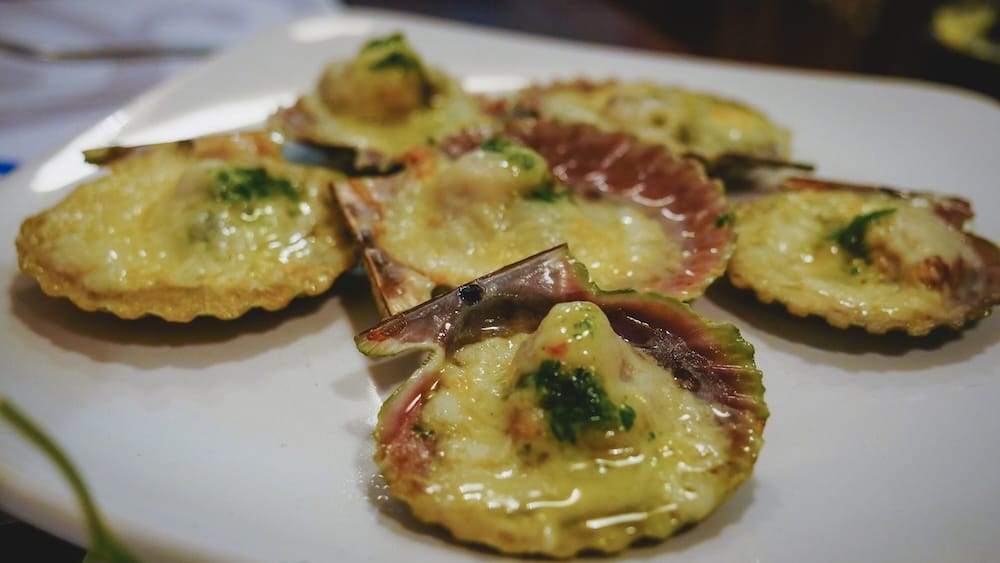
| Aequipecten tehuelchus | Vieira (San Matías Scallop) | Small, tender, and incredibly briny. Usually served heavily seasoned or tossed in a massive Potpurrí platter. | The geographical anomaly: The San Matías Gulf (near Las Grutas) features uniquely warm water currents trapped in the bay, creating a hyper-localized scallop dredging industry. |
The Red Shrimp Reality Check
Let’s talk about the Langostinos. When we first ordered them at Cantina El Náutico, we expected the standard, translucent gray shrimp you find in North American supermarkets. What arrived looked like it had already been cooked. Pleoticus muelleri is a wild-caught species that is naturally pink straight out of the ocean.
Because they pull these out of the freezing Chubut offshore currents rather than a warm-water farm, the texture is entirely different. They are incredibly dense. You aren’t getting that watery, rubbery chew; you are getting a sweet, rich snap that genuinely rivals high-end lobster. If you see them on a menu in Puerto Madryn or raw in a local pescaderia, order them immediately.
[The Samuel Sidebar: The Biology of the Live Tank]
I mentioned earlier that you must look for the live seawater tanks in Ushuaia before dropping money on Centolla. This isn’t just a marketing flex to make the restaurant look elite. It is a strict biological necessity. The Southern King Crab has highly reactive enzymes in its body. The absolute second it dies, those enzymes go into overdrive and rapidly degrade the meat, turning that expensive, buttery flesh into an unappetizing, mushy paste. Keeping them alive in circulating seawater until the exact moment they hit the boiling pot is the only scientifically sound way to preserve the texture. If there’s no tank, the biology has already been compromised.
The Warm-Water Anomaly
While Ushuaia and Puerto Madryn get all the international press for their freezing, deep-sea catches, the Gulf of San Matías is the hidden biological wild card of the region.
If you drive the desolate stretch of RN 3 up toward Las Grutas and San Antonio Oeste, the ocean topography drastically changes. The gulf acts like a massive solar oven, trapping warm-water currents that don’t exist further south. This specific merroir produces the Aequipecten tehuelchus—the local scallop.
Because these are harvested via dredging in a uniquely warm bay, their flavor profile is aggressively briny and distinct from the buttery, cold-water catches of Tierra del Fuego. They are the backbone of the massive Picada de Mariscos platters you’ll find in the beachfront restós. You aren’t just eating a different dish; you are literally tasting a geographical anomaly in the ocean floor.
When you sit down to eat on the Atlantic coast, you aren’t just a tourist looking for a meal. You are consuming the raw, biological adaptations of some of the most extreme marine environments on the planet. And once you know exactly what you are putting on your fork, every single bite tastes exponentially better.
Patagonian Seafood Decision Matrix: Choose Your Coastal Food Base
| If You Want… | Go Here | Order This | Why It Wins | Main Catch |
|---|---|---|---|---|
| The most famous shrimp meal | Puerto Madryn | Langostino platter | Best-known red shrimp hub with strong restaurant scene | Wait times, peak-season lodging crunch |
| The most iconic king crab experience | Puerto Almanza | Fresh centolla | Highest authenticity and strongest story payoff | Rough road, lunch-only timing |
| Easy-access tourist seafood | Ushuaia | Crab or toothfish | Most convenient base with lots of restaurant choice | Frozen crab trap, high prices |
| Beach-town shellfish feast | Las Grutas | Picada de Mariscos | Distinct warm-water scallop profile | Afternoon closures |
| Hyper-local fishing culture | Camarones | Chupín del Pescador | Most raw and communal seafood event | Festival timing and isolation |
| Functional seafood stop on a workhorse city route | Comodoro Rivadavia | Merluza Negra | Strong fish options despite industrial setting | Low charm factor |
The Patagonian Seafood Friction Index: What Each Stop Demands From You
| Destination | Food Reward | Transport Difficulty | Timing Difficulty | Payment Risk | Weather Risk | Overall Friction |
|---|---|---|---|---|---|---|
| Puerto Madryn | High | Low–Moderate | Moderate | Low–Moderate | Moderate | Medium |
| Puerto Pirámides | Moderate | Moderate | High | Moderate | High | High |
| Las Grutas | High | Moderate | High | Moderate | Moderate | High |
| Camarones | Very High for festival travelers | High | Very High | High | Moderate | Very High |
| Comodoro Rivadavia | Moderate–High | Moderate | Low–Moderate | Low | Moderate | Medium |
| Ushuaia | High | Moderate | High | Low | Very High | High |
| Puerto Almanza | Very High | High | Very High | Moderate | High | Extreme |
The Final Reality Check
Traveling the Atlantic coast of Patagonia is an exercise in endurance. You will likely spend hours on buses, get lost on desolate highways, sweat through siesta hours with no cold water, and watch your carefully planned glacier hikes get wiped out by snowstorms. You will curse the broken credit card machines and the brutal winds that coat your teeth in grit.
But when you finally sit down at a slightly sticky wooden table in a fisherman’s living room in Puerto Almanza, or when you squeeze into a packed cantina in Puerto Madryn right at 8:00 PM to order a massive platter of sweet red shrimp, every bit of that logistical friction dissolves.
You are eating the wild, unfiltered essence of the deep south. And it tastes incredible.
If you are planning an overland route through this region, make sure to check out our full approach journey videos on the Samuel and Audrey YouTube channel, where we document every agonizing hour of those bus rides and every glorious, 50%-off slice of seafood pizza.
FAQ: Atlantic Coast Patagonian Cuisine: Seafood Extravaganza!
Is the seafood in Patagonia expensive?
Depends. The 2026 inflation rate means prices swing wildly depending on where you sit down. A plate of King Crab in downtown Ushuaia will easily hit ARS 60,000+, which rivals major international city prices. But if you hit the local food trucks in Las Grutas for a cone of fried squid rings, or hustle for a 4:00 PM early-bird pizza special in Puerto Madryn like we did, you can eat incredibly well on a tight backpacker budget.
What is the best time of year to visit for Patagonian seafood?
Summer. Specifically, the window between November and March. This is the absolute golden season for fresh, live-catch Southern King Crab and warm-water scallops. If you show up in the deep winter (July), you are going to battle brutal winds, canceled excursions, and likely end up eating thawed reserves from the previous season.
Do I need to book restaurants and hotels in advance?
100%. Peak season on the Patagonian coast operates at absolute maximum capacity. We literally had to pack our bags and switch studio apartments in Puerto Madryn after one night because we tried to wing it. For famous restaurants like Cantina El Náutico or high-end Ushuaia spots, you either line up at the exact opening bell or book weeks ahead.
Can I just pay for everything with my credit card?
Mostly no. While the main downtown grids in Puerto Madryn and Ushuaia have stable internet, the cell towers in smaller hubs like Puerto Pirámides, Camarones, or Puerto Almanza are incredibly weak. The Posnet (credit card reader) will constantly spin, fail, and time out. Always carry enough physical Argentine Pesos to cover the exact cost of your meal.
Is it safe to rent a car and drive to Puerto Almanza for crab?
Yes. But you need the right vehicle. Do not attempt this drive in a tiny budget compact car. Provincial Route J is 75 kilometers of desolate, pothole-riddled gravel. Rent an SUV or crossover with high clearance, leave Ushuaia by 10:30 AM, and make sure you are off that road before the freezing fog rolls in at sunset.
Do restaurants actually close in the middle of the afternoon?
Absolutely. Welcome to the Patagonian siesta starvation. Almost every sit-down restaurant on the coast completely hard-locks its doors between 4:00 PM and 8:30 PM. If you come off a boat tour at 4:30 PM expecting a late lunch, you will be wandering a ghost town. Buy snacks ahead of time or locate the beachfront food trucks.
Is fresh King Crab available year-round in Tierra del Fuego?
Nope. That is the “Frozen Crab Illusion.” The artisanal boats in the Beagle Channel cannot safely harvest Centolla during the violent winter storms. If you see crab heavily marketed on a tourist menu in July, it was pulled from a deep freeze. Always demand to see the live seawater tanks.
I don’t eat seafood. Will I starve on the Atlantic coast?
Never. You are still in Argentina, after all. Your absolute must-try alternative is the Patagonian lamb. In places like the Valdes Peninsula, the sheep graze on steppe vegetation thoroughly soaked by the heavy marine air. It gives the meat an incredible, naturally salty flavor profile that you simply won’t find in the Andes or Buenos Aires.
Project 23 Argentina: This guide is also available in Spanish. [Lea la versión en castellano: Mariscos Patagónicos — La cocina de la costa atlántica que nadie espera]