
There is a highly specific, deeply humbling level of physical exhaustion that sets in somewhere around hour 16 of staring out a bus window at the endless, scrubby gray-green void of the Patagonian steppe.
When Audrey and I finally stumbled off our overnight bus in Puerto Madryn, we were operating in full zombie mode. We had just completed an 18-to-19-hour journey south from Mar del Plata. As I stepped onto the pavement, looking down at the ridiculous, blocky “farmers feet” tan lines permanently burned onto my skin by a month of wearing Teva sandals , it hit me: almost everyone gets Patagonia completely wrong.
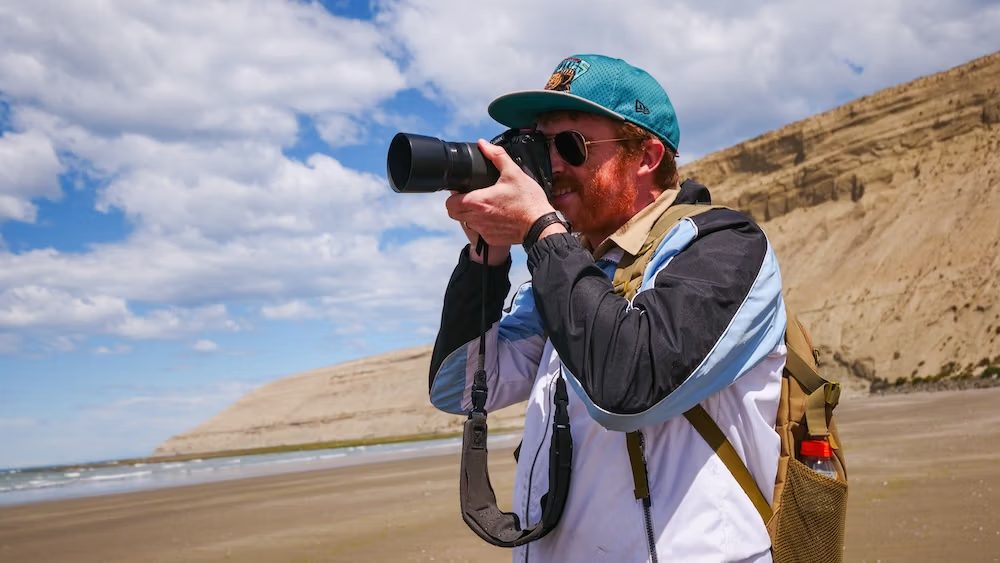
When travelers hear “Patagonia,” they picture strapping on crampons to hike a glacier or bundling up in specialized alpine parkas to tackle jagged mountain peaks. But that is only the Andean sliver of the region. The Atlantic side of Patagonia is a massive, windswept parallel universe. It is a world where the arid desert crashes directly into the deep blue ocean, where massive marine wildlife colonies take over the beaches, and where unexpected Welsh tea houses sit in the middle of nowhere.
If you are planning a trip down the Atlantic coast, you need to throw out your alpine trekking assumptions. Coastal Patagonia is not a lesser version of the Andes; it is a dramatically different parallel experience that rewards slower travel and curiosity. You cannot just “wing it” here without paying the price. Before we dive into the dusty, wind-sprung reality of our trip—and exactly how to survive the logistical traps—let’s lay all our cards on the table.
To help you build a north-to-south itinerary that actually works, here is the ultimate, no-fluff cheat sheet to the Patagonian coast.
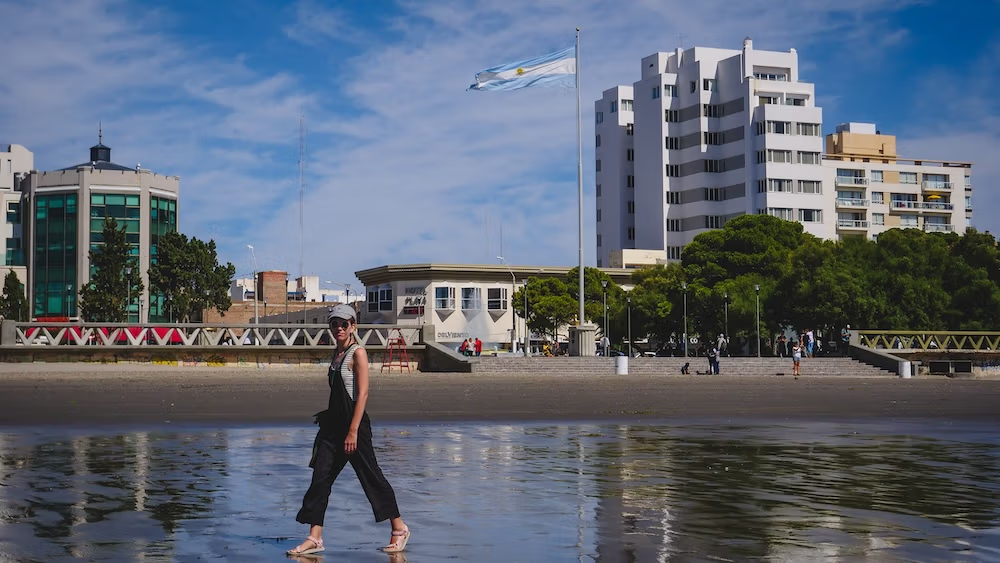
The Atlantic Patagonia Reality Check Matrix
| Destination | The Vibe & Core Draw | The Un-Sugarcoated Reality | The “Nomadic Samuel” Fix |
| Las Grutas | A northern gateway and beach-town version of Patagonia featuring white cliffs and the warmest waters on the coast. | It is fiercely seasonal; if you arrive late in the season, nearly all hotels and restaurants will be bolted shut. | Visit during peak summer to avoid the ghost-town effect, and prioritize the local seafood catches. |
| Puerto Madryn | The primary logistical gateway to marine Patagonia. It serves as a relaxed base for wildlife tours with wide, low-tide beaches. | Distances are vast, and getting here requires massive overland travel, often involving 18-hour overnight bus rides from central Argentina. | Book the fully reclining Cama seats well in advance , and immediately recover upon arrival with a massive half-shrimp pizza. |
| Peninsula Valdés & Puerto Pirámides | A stark steppe landscape meeting dramatic cliffs, packed with southern right whales, penguins, and elephant seals. | You will be walking completely exposed under a sneaky, punishing sun that can reach a blistering 38.5°C. | Bring a wide-brimmed hat, heavy sunscreen , and seek refuge at a local restaurant for a giant Patagonian lamb burger. |
| Trelew, Gaiman & Dolavon | An unexpected pocket of Welsh history featuring tea houses, chapels, and agricultural canals built in the desert. | Small towns like Dolavon essentially shut down entirely on Mondays and Tuesdays, leaving tourists stranded and hungry. | Plan your Welsh detour strictly between Wednesday and Sunday , and skip lunch to survive the massive 12-cake tea spreads in Gaiman. |
| Comodoro Rivadavia | The largest city on the central Patagonian coast. It is a wealthy, industrial oil town with surprisingly great coastal boardwalks. | The wind here is a physical force; it creates “mini tornadoes” of dust that will blast you right in the face on the sidewalk. | Hold onto your car doors for dear life , and feast on the massive seafood platters the city’s wealth provides. |
| Rada Tilly | The southernmost seaside resort in Argentina, boasting a massive, flat sandy beach at low tide. | The water looks like the tropical Caribbean, but the Atlantic temperatures cap out at a freezing 17°C (62°F). | Pack a windbreaker instead of just a swimsuit , and beachcomb carefully so you don’t crush any pristine white seashells. |
[Samuel’s Overland Triage Warning] Do not attempt the overnight bus journeys in this region on the cheap. Distances are vast. An 18-hour ride is standard. When booking your tickets (via companies like Mar y Valle or 28 De Julio), you must strictly opt for the Cama (fully reclining bed) or Cama VIP seats. The Semi-Cama seats are a recipe for a ruined spine. A Cama ticket from Mar del Plata to Puerto Madryn currently runs about $64 USD equivalent , and a 9-hour journey from Trelew to Esquel is remarkably cheap at roughly $36 USD. Spend the extra twenty bucks. Your lower back will thank you.
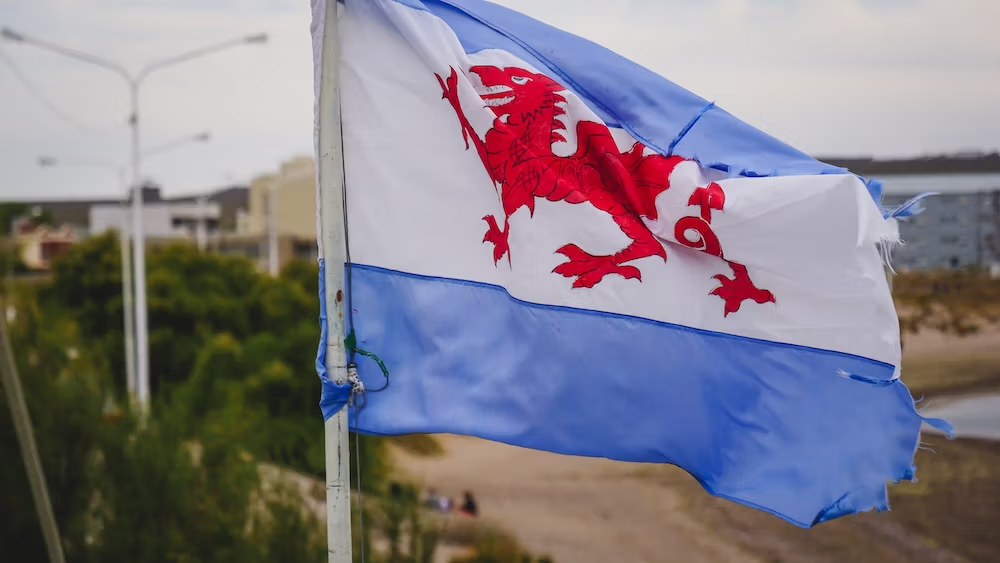
Puerto Madryn: Basecamp for the Marine Crucible
Puerto Madryn is the undisputed logistical hub of the Atlantic coast, a beachside city that feels pleasantly suspended in a permanent state of siesta. It is where you will rent your car, book your major wildlife excursions, and eat yourself into a stupor.
But before you drive out of the city limits, you need to understand the physical forces at play. The Patagonian wind is not a breeze; it is a geographic feature. Sustained winds hover between 30 and 50 km/h year-round.
If you rent a car here (currently running $40–$60 USD daily), the rental agent will aggressively warn you about “wind-sprung doors.” If you open your car door without firmly holding the handle with two hands, the wind will violently rip the door backward, destroying the hinges and instantly voiding your rental deposit. You must strictly park facing into the wind. Furthermore, while Ruta 3 is a fully paved, fast-moving highway dominated by massive cargo trucks, the moment you turn off toward the wildlife reserves, you hit the ripio—heavily corrugated, teeth-rattling dirt and gravel roads.
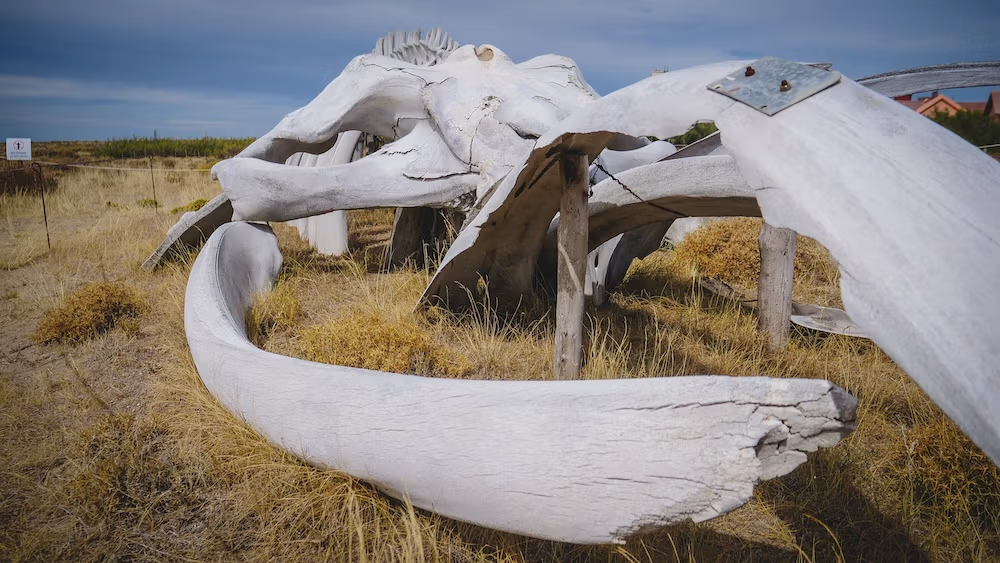
The Peninsula Valdés Crucible and the 38.5°C Mistake
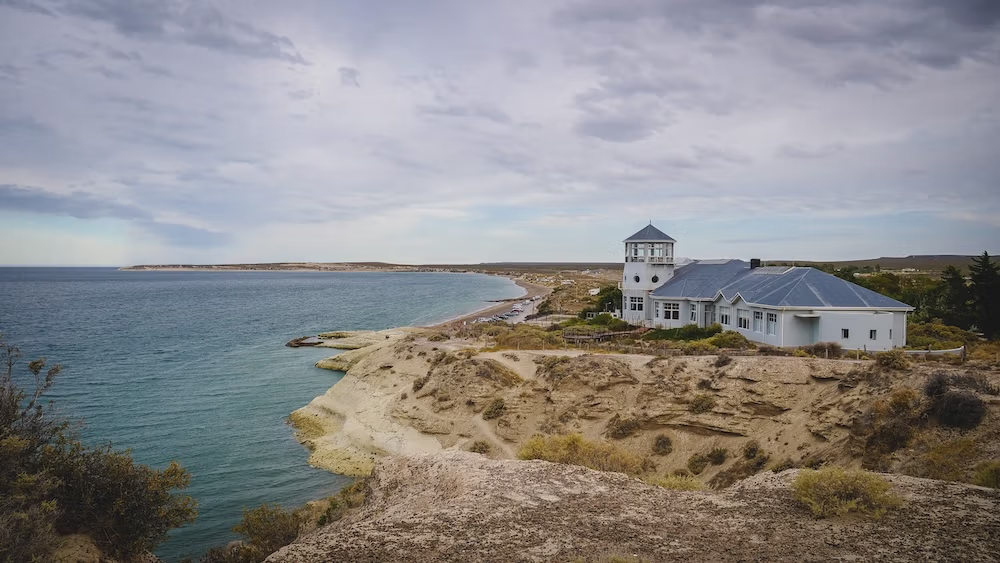
Peninsula Valdés is the crown jewel of Atlantic wildlife. You pay your entrance fee at the gate (currently around AR$ 6,500 for international visitors, though prices fluctuate rapidly with the Argentine peso) and enter a harsh, beautiful, salt-sprayed desert.
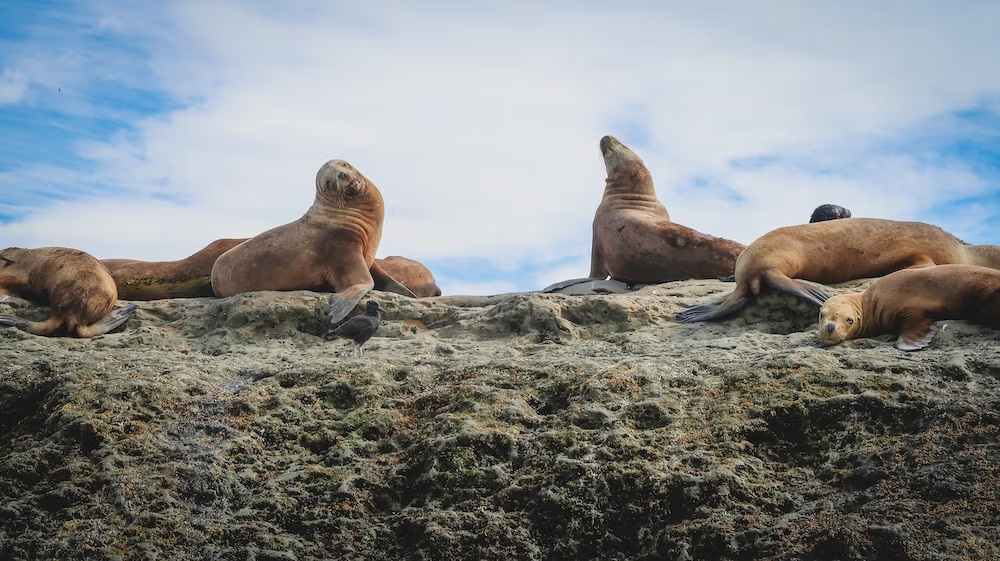
We based ourselves in Puerto Pirámides, the only actual town inside the reserve. One morning, feeling ambitious, we hiked several kilometers out to La Lobería to watch sea lions teaching their pups to swim in the turquoise water. It was glorious. The return trip was not. We somehow missed the trail turning back into town and ended up hiking along the exposed asphalt highway.
The temperature that day peaked at a blistering 38.5°C (101°F). With zero shade, no trees, and the ozone-depleted southern sun beating down, we were practically melting into the tarmac. Everyone assumes Patagonia is freezing; no one warns you about the coastal heatwaves. You absolutely must pack high-SPF sunscreen, a wide-brimmed hat, and excessive amounts of water.
We staggered back into Puerto Pirámides and collapsed at a restaurant called La Cucaracha. To revive our spirits, we ordered their legendary Patagonia burger. It was a massive lamb patty, loaded with baked cheese, fresh greens, and sun-dried tomatoes, wedged into a giant artisanal bun. It was the exact, heavy, savory rescue mission my body needed.
[The Wildlife Migratory Math]
Tourists constantly mess up the wildlife seasons here. Peninsula Valdés is famous for Southern Right Whales and Orcas that intentionally beach themselves to hunt.
- The Whale Heartbreak: Do not show up in January expecting whales. They operate on a strict migratory clock. The whales are reliably in the gulf from September to late November. By late December, they are gone.
- The Orca Math: Seeing the orcas hunt at Punta Norte is not guaranteed. You must arrive exactly at high tide, and the winds must be calm or blowing offshore. If you arrive at low tide or during heavy onshore winds, you will stare at an empty beach.
The Atlantic Wildlife Migration & Friction Clock
If you take away one piece of advice from this entire guide, let it be this: Marine wildlife does not care about your PTO schedule. They operate on a strict migratory calendar, and the infrastructure to see them is riddled with very specific friction points. Here is exactly when to go, and what traps to avoid in 2026.
| The Target Species | Prime Viewing Window | The Location | The Logistical “Moat” (Friction & Fix) |
| Southern Right Whales | September to late November | Puerto Pirámides (Peninsula Valdés) | The Season Trap: Do not show up in January expecting whales. They are completely gone by Christmas. Book zodiacs in October. |
| Orcas (Beach Hunting) | March & April | Punta Norte (Peninsula Valdés) | The Tide Math: Orcas will not hunt at low tide or during onshore winds. You must align your arrival perfectly with high tide and calm weather, or you will stare at an empty beach. |
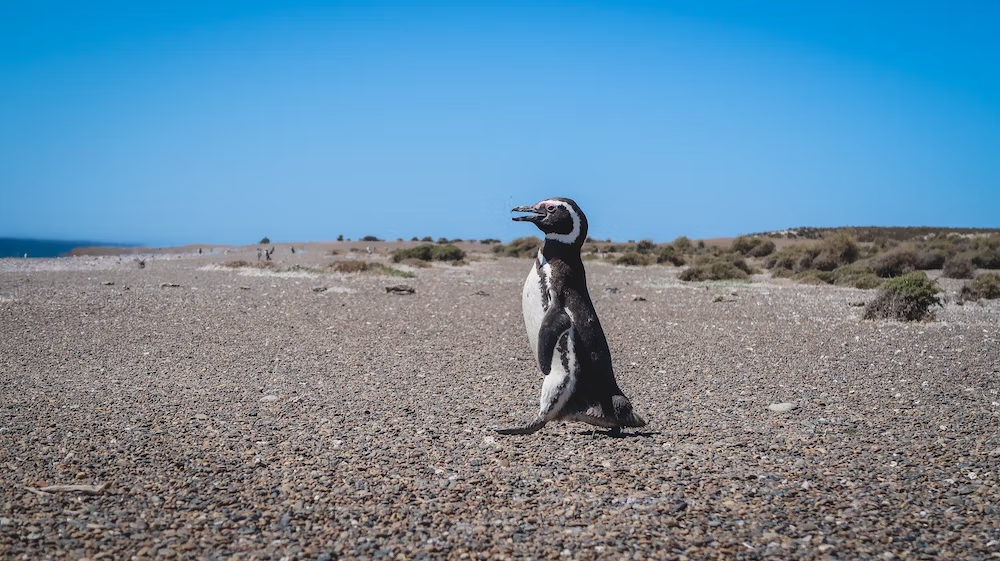
| Magellanic Penguins | December to February (Chicks hatching) | Punta Tombo & Cabo Dos Bahías | The Digital Blackout: Punta Tombo has zero cell signal and card machines fail daily. You must bring the ~AR$ 25,000 entrance fee in physical cash, or you will be denied entry. |
| Commerson’s Dolphins | Year-Round (Best in Summer) | Puerto Rawson Docks | The Motion Sickness Trap: The Atlantic chop on these small zodiacs is brutal. Book the 8:00 AM departures before the afternoon winds whip up the sea. |
| Sea Lions & Elephant Seals | Year-Round (Spring for pups) | La Lobería & Punta Ninfas | The 38.5°C Mistake: These colonies offer zero shade. Do not attempt the hike at high noon without excessive water and a wide-brimmed hat. |
The Wheelbarrow Food Coma: Coastal Culinary Triumphs
While the Andes give you hearty mountain stews, the Atlantic coast delivers some of the best, most underpriced seafood in South America.
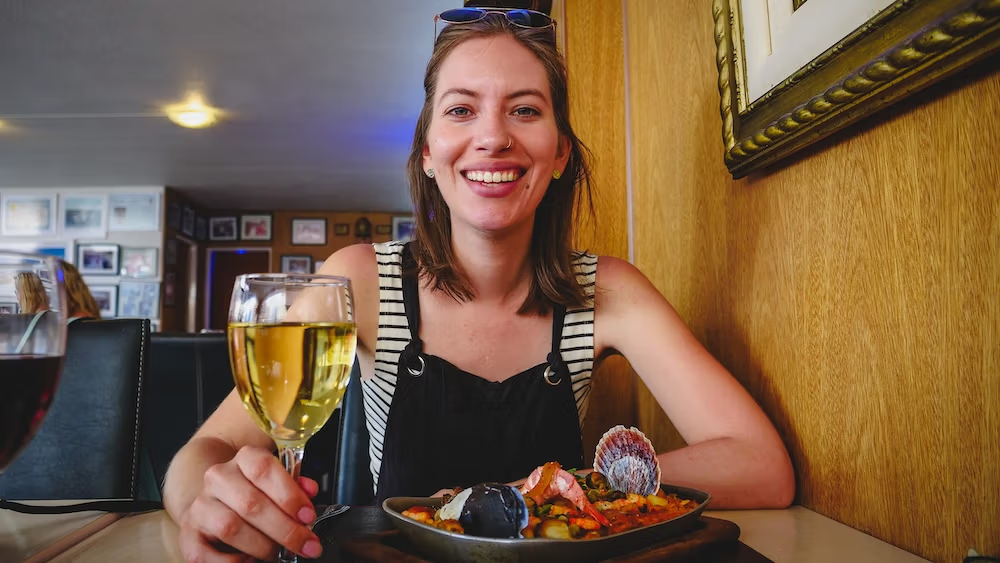
One afternoon in Puerto Madryn, after visiting the spectacular, multi-story EcoCentro museum (which strictly opens from 5:00 PM to 9:00 PM and is closed Tuesdays ), we hit up Cantina El Nautico. We ordered a lunch special that fundamentally altered my understanding of value. For the equivalent of $12 USD per person, we were served a bread basket, a bottle of wine, a massive tuna-mash tomato appetizer, a main of salmon smothered in Roquefort cheese, a seafood paella-style rice loaded with shrimp and calamari, and a thick flan drenched in caramel syrup for dessert.
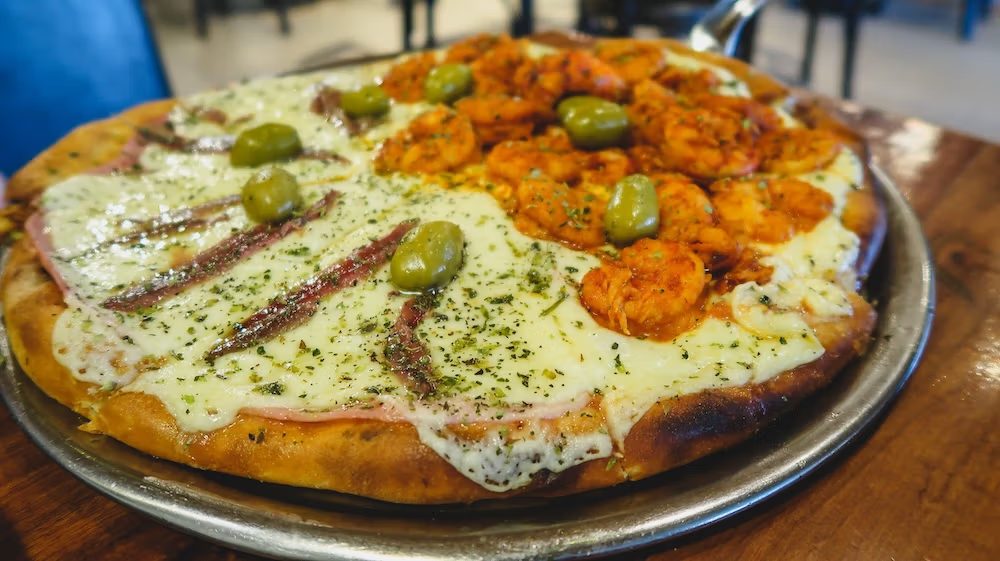
I was so profoundly stuffed I joked that Audrey would need to rent a wheelbarrow to roll me back to the hotel. You will find this culinary weight class everywhere. At a spot called Puerto Mitre (also known as Shona in some iterations), we ordered a regional Patagonian specialty: a massive, thick-crust pizza where one half was loaded with giant, juicy pan-fried shrimp and the other half was buried in salty anchovies and green olives. Do not skip the seafood pizza on the coast.
The Puerto Madryn & Valdés Logistical Ledger
| Location / Venue | Exact Current Detail (2026) | The “Nomadic Samuel” Vibe Check | Post-Hike Triage Priority |
| Punta Tombo Reserve | AR$ 25,000 (~$18 USD). 3 hours south of Madryn. | The Digital Blackout. Zero cell signal. Credit card machines fail daily. Bring exact physical cash or you will be denied entry. | Requires a 3km walk with zero shade. Bring water. |
| Cantina El Nautico | ~$12-$15 USD for the multi-course lunch special. | Old-school, maritime-themed institution. Massive portions. The Roquefort salmon is aggressive and incredible. | Critical. You will need a siesta immediately after. |
| La Cucaracha (Pirámides) | ~$10 USD for the Patagonia Lamb Burger. | Rustic, loud, beach-town energy. The lamb burger with sun-dried tomatoes is a masterpiece. | High. Perfect for recovering from a 38.5°C death march. |
| EcoCentro Museum | Open 5:00 PM – 9:00 PM. Closed Tuesdays. | Gorgeous clifftop architecture. Explains the entire marine ecosystem perfectly. | Low physical effort. Great for the windy late afternoons. |
The Patagonian Coast Culinary & Triage Index
You are going to burn a massive amount of calories battling the Patagonian wind and hiking the arid steppe. Fortunately, the coastal food scene is heavy, absurdly generous, and shockingly affordable if you know where to look. Here is the exact menu playbook we used to survive the coast.
| Venue / Location | The Signature Order | 2026 Price & Value | The “Nomadic Samuel” Food Coma Rating |
| Cantina El Nautico (Puerto Madryn) | Roquefort-smothered Salmon & Seafood Paella | ~$12–$15 USD for the massive multi-course lunch special. | Level 5: The Wheelbarrow. You will physically require a siesta immediately after paying the bill. |
| Puerto Mitre / Shona (Madryn / Comodoro) | The Half-Shrimp / Half-Anchovy Coastal Pizza | ~$16 USD for a massive large pizza and wine. | Level 3: The Carb Anchor. The ultimate salty/savory combo to recover from a 19-hour bus ride. |
| La Cucaracha (Puerto Pirámides) | The Patagonian Lamb Burger with Sun-Dried Tomatoes | ~$10 USD. Unbelievable value for a resort town. | Level 4: The Resuscitation. A heavy, savory rescue mission after melting on the highway. |
| Ty Gwyn / Nain Maggie (Gaiman) | Traditional Welsh Tea Service with Torta Negra | ~$18–$25 USD. Includes sandwiches, scones, and endless cake slices. | Level 5: Sugar-Induced Delirium. Skip lunch entirely. It is a marathon of butter and carbs. |
| Hashtag In (#In) (Rada Tilly) | Saffron Lamb Risotto & Dulce de Leche Volcano Cake | ~$25 USD per person. The ultimate coastal splurge. | Level 4: The Elegant Collapse. Heavy, rich, and totally worth staring at the ocean for three hours. |
The Welsh Steppe: Dinosaurs, Teahouses, and Monday Ghost Towns
If you drive an hour south of Puerto Madryn, the marine vibe abruptly gives way to one of the most bizarre cultural anomalies in South America: the Welsh settlements of Trelew, Gaiman, and Dolavon.
Fleeing English cultural suppression and poverty in 1865, Welsh pioneers sailed to Patagonia, expecting lush green valleys. Instead, they found the arid, dusty steppe. They survived only by befriending the indigenous Tehuelche people, who taught them how to hunt and navigate the brutal landscape. Today, their legacy is etched into the architecture, the irrigation canals, and the endless supply of black tea.
Trelew: The Paleontological Powerhouse
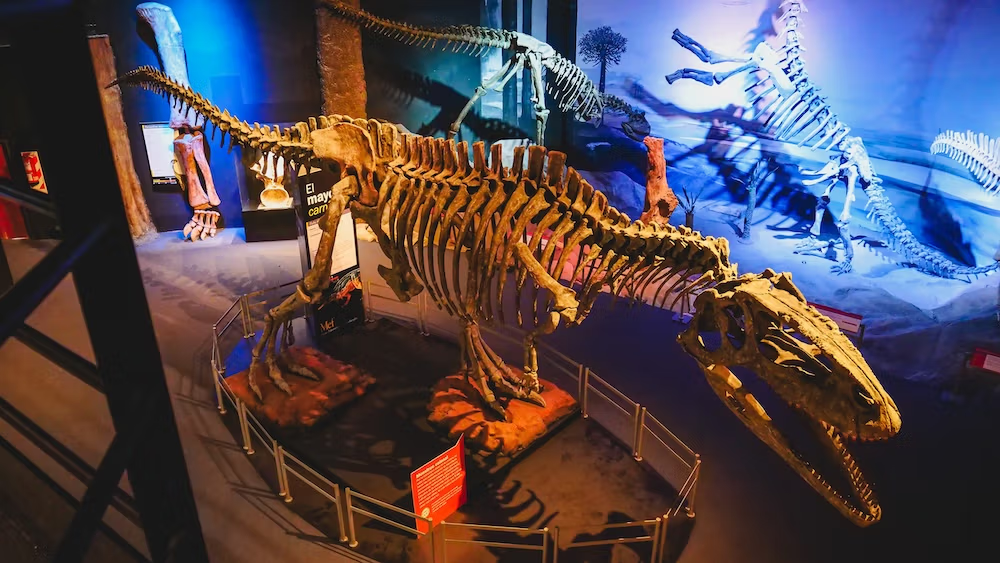
Trelew is a gritty, working-class hub, but it holds a world-class secret. It is home to the Egidio Feruglio Paleontological Museum (MEF). Patagonia is a dinosaur graveyard, and this museum houses the Patagotitan mayorum, the largest dinosaur ever discovered.
For an entrance fee of roughly AR$ 18,000 (about $13.50 USD), you walk through incredibly detailed, chronological exhibits tracing back to the Mesozoic era. It is an absolute must-do, completely upending the idea that Patagonia is only about modern wildlife.
The Dolavon Disaster: A Lesson in Small-Town Logistics
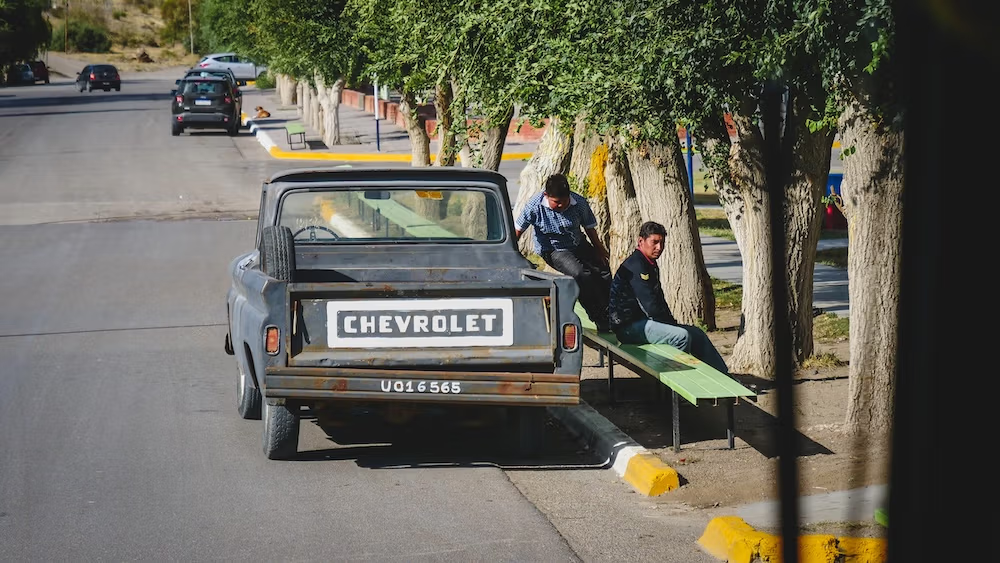
To truly understand how travel works down here, you have to embrace failure. We took a local bus (via the 28 De Julio company) out to the tiny Welsh village of Dolavon, a town famous for its historic flour mill and water wheels. We arrived on a Monday, pumped to explore.
Absolutely everything was bolted shut.
The famous mill? Locked. The museum? Closed. The highly-rated restaurants? Ghost towns. We walked the dusty streets alongside a pack of incredibly friendly stray dogs, desperately looking for a meal. We finally found salvation at a local fast-food spot called Lightning Bolt, where we devoured incredibly juicy, cheap fried beef empanadas.
Our grand cultural day trip culminated with us sitting on the concrete curb of a gas station, drinking a neon-yellow grapefruit Paso de los Toros soda, and eating packaged alfajores to salvage our morale.
[The “Siesta and Sunday” Rule] Do not attempt to visit Dolavon, or any deeply rural Patagonian town, on a Monday or Tuesday. Tourism strictly operates from Wednesday to Sunday. Furthermore, the entire region shuts down daily between 1:00 PM and 4:30 PM for siesta. If you need food, coffee, or a museum during those hours, you are entirely out of luck.
Gaiman and the 12-Cake Standoff
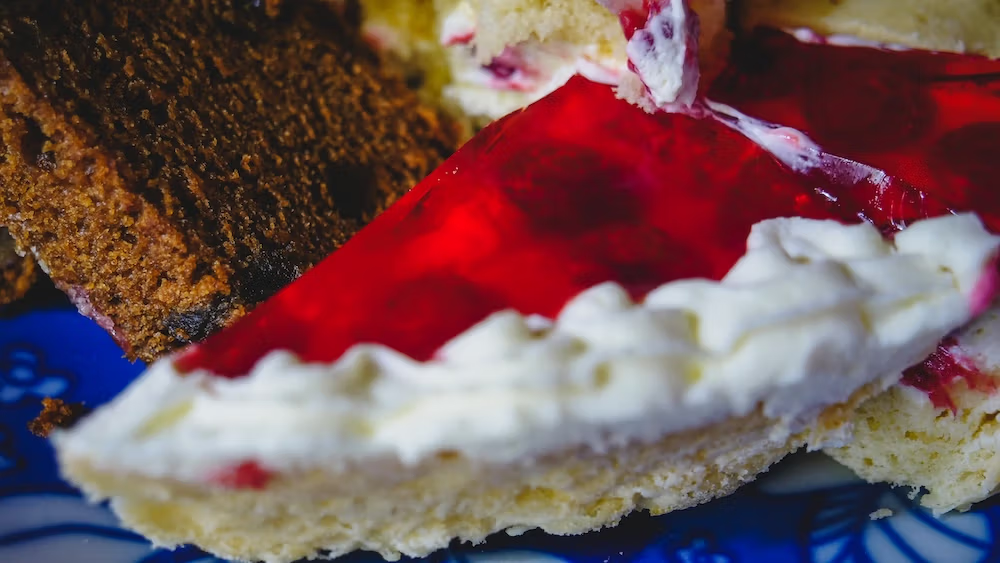
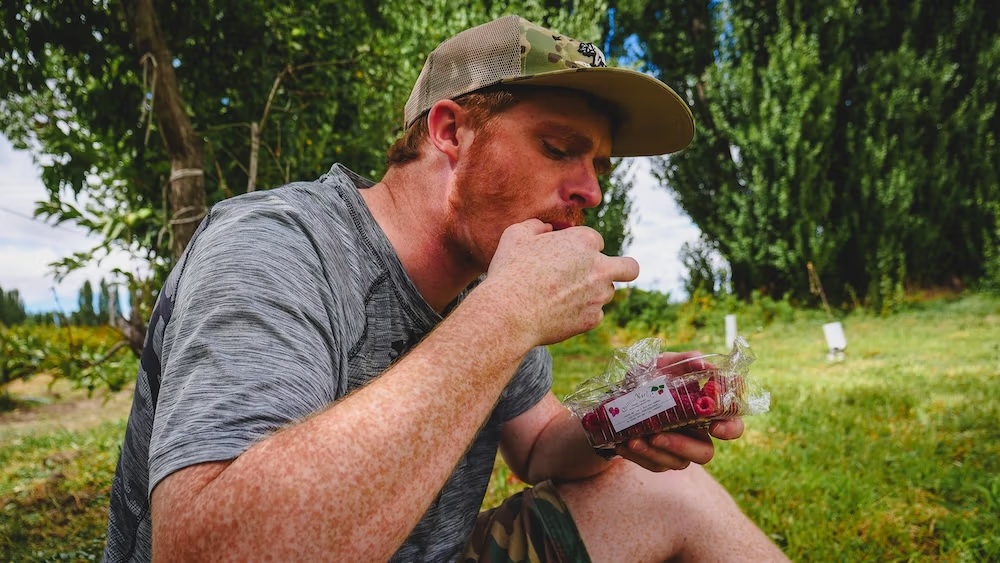
Gaiman is the beating heart of the Welsh corridor. Instead of immediately hitting the town center, we took a taxi to the outskirts to visit Quinta Narlu, a working farm run by a fourth-generation Welsh descendant. Sitting in their lavender fields, we ate fresh-picked raspberries and our first slice of torta negra (Welsh black cake)—a dense, rum-soaked, brown-sugar and raisin masterpiece.
But you come to Gaiman for the official Afternoon Tea.
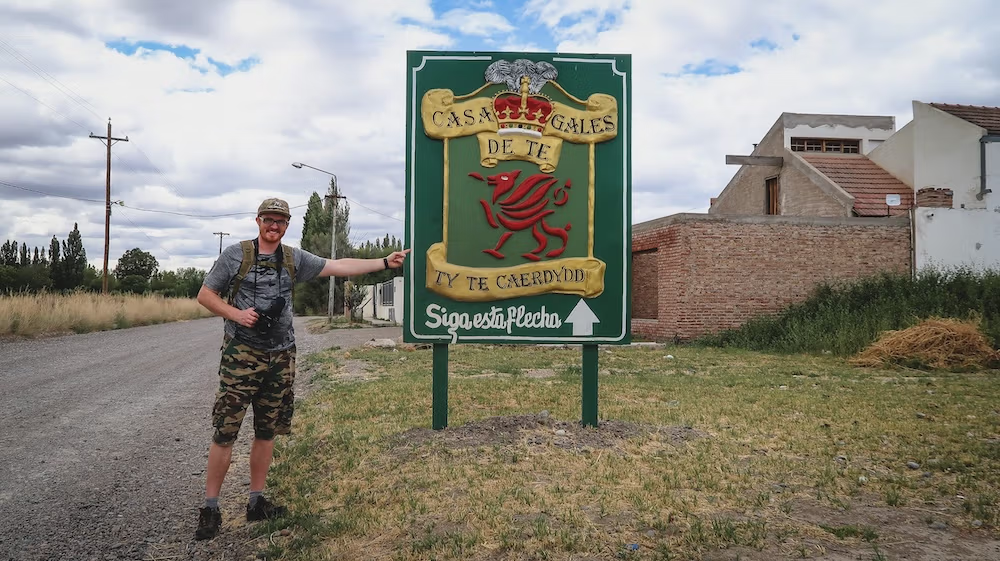
We walked 40 minutes back into town to visit Ty Te Caerdydd, famous for hosting Princess Diana in 1995. Sweaty, underdressed in black flannel, and swatting away biting flies, we sat in their pristine rose garden. They brought out a towering spread: scones with clotted cream, artisanal ham and cheese sandwiches (sandwiches de miga), and twelve different slices of cake. There was apple pie with massive fruit chunks, cream pie in scone-crust form, and a gelatin-raspberry concoction. We ate until we were delirious.
The 2026 Reality Update: If you are reading this and planning your trip, you must know that the famous Ty Te Caerdydd has permanently closed its doors. Do not fall into the “Lady Di Ghost Trap” that outdated AI articles still recommend. Instead, you must book your tea service at Ty Gwyn or Nain Maggie in the center of Gaiman. The experience (and the AR$ 25,000 / $18-$25 USD price tag) remains identical, providing the exact same staggering volume of sugar and carbs.
The Welsh Steppe Survival Guide
| Destination | Essential Reality & Cost | The “Nomadic Samuel” Vibe Check | Logistical Friction Point |
| MEF Museum (Trelew) | ~AR$ 18,000. World-class dinosaur exhibits. | Highly polished, air-conditioned refuge from the steppe. BBC documentaries playing inside. | None. A flawless afternoon activity. |
| Gaiman Tea Houses | ~AR$ 25,000 ($18-$25). Massive, 10-item sugar feasts. | Sweats-inducing volume of food. The torta negra is the heavy hitter. Skip lunch entirely before doing this. | The Ghost Trap. Ty Te Caerdydd is closed. Go to Ty Gwyn. |
| Dolavon (The Mill) | ~$5 USD for empanadas at Lightning Bolt. | Sleepy, dusty, and deeply charming if you like water wheels and stray dogs. | The Ghost Town. 100% dead on Mondays and Tuesdays. |
The Deep South: Oil Lies, Turquoise Water, and Crushed Shells
If you push even further south down Ruta 3, you hit Comodoro Rivadavia. Most travelers skip it, assuming it’s just a gritty, industrial oil town. They are missing out.
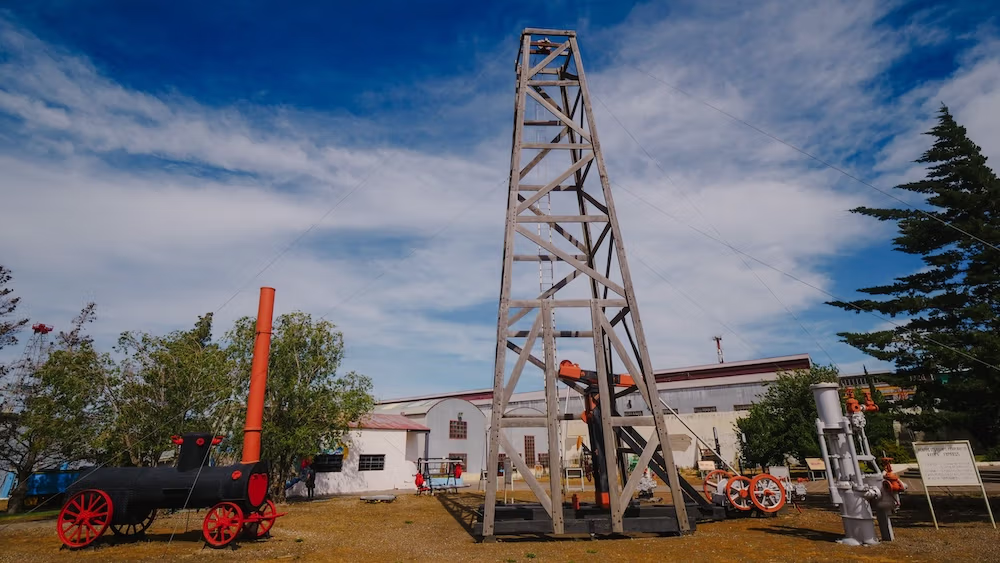
Comodoro is wealthy, developed, and boasts a fascinatingly deceptive history. We visited the National Petroleum Museum, expecting a dry history lesson. Instead, we uncovered a conspiracy. The official story is that the founders were innocently drilling a well for drinking water when they accidentally struck oil. Our guide took us to the original 1907 rig and showed us the actual telegrams sent to the President of Argentina. The drillers were at 500 meters deep. You don’t drill 500 meters for water. It was a massive cover-up to secure the oil rights before anyone else could make a claim. It is one of the coolest historical flexes on the coast.
The city also has a surprisingly great beach vibe. On our first morning, walking the boardwalk, we watched local lifeguards running rigorous beach training drills, accompanied by a pack of enthusiastic stray dogs sprinting alongside them in the surf. It was pure Patagonian chaos.
Rada Tilly: The Santorini of the South
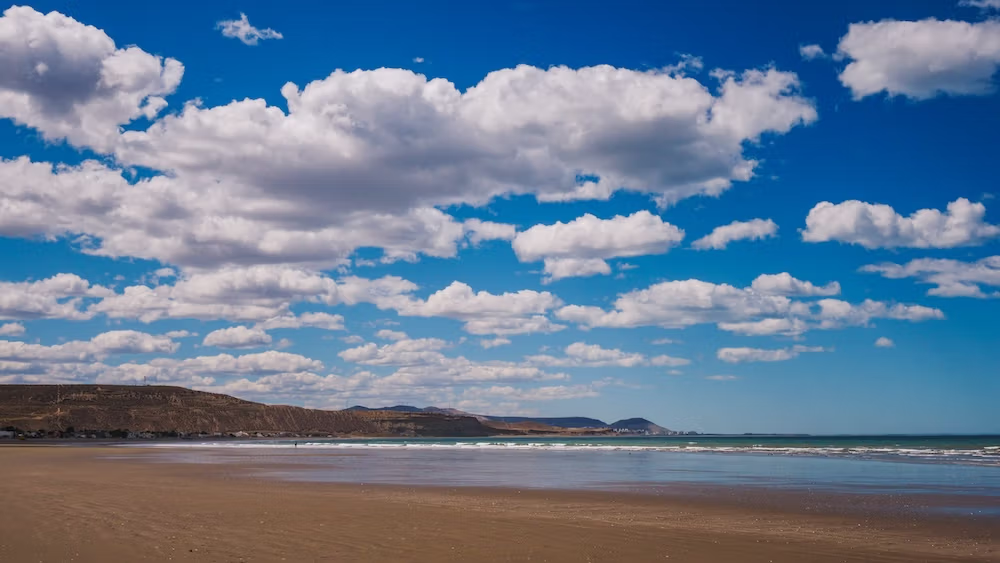
Just 30 minutes south of Comodoro via a 55-peso (less than $1 USD) local bus ride lies Rada Tilly. It claims the title of the southernmost seaside resort in the Americas.
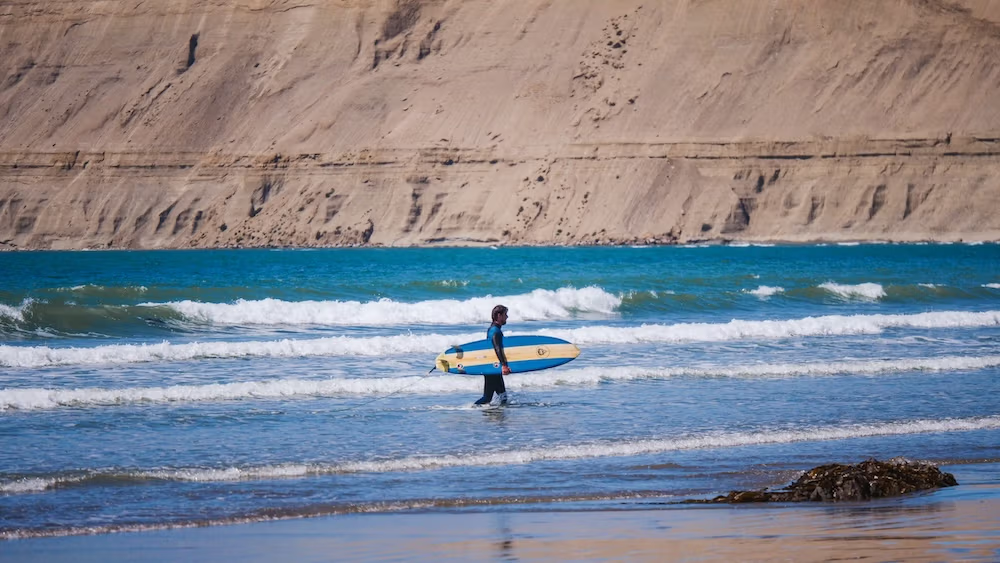
We expected a quiet beach town; we found coastal mansions. The architecture is wild—one massive house featured whitewashed walls and bright blue domes, looking like it had been violently teleported from Santorini. The beach itself is staggeringly wide at low tide, with pristine, almost Caribbean-turquoise water (though at 17°C/62°F, the water temperature is aggressively Atlantic).
As Audrey was peacefully walking the shoreline, carefully beachcombing to find the absolute perfect, unblemished white seashell to bring home to her mother, I was staring up at the mansions. CRUNCH. I stepped directly on the pristine shell she was about to pick up, snapping it in half. Travel romance at its finest.
We salvaged the afternoon at a beachfront restaurant called Hashtag In (#In). Sitting on the sand, we ordered a Patagonian lamb risotto infused with saffron, and a seafood risotto practically overflowing with scallops and mussels. The lamb was melt-in-your-mouth tender, covered in caramelized onions and a rich, savory glaze. We followed it with a Dulce de Leche Volcano—a molten lava cake that bled warm Argentine caramel onto vanilla ice cream. At $50 USD total for two massive mains, dessert, and a full bottle of La Poderosa wine, it was the best culinary splurge of the entire trip.
The Deep South Triage
| Location | Exact Current Detail | The “Nomadic Samuel” Vibe Check | The Un-fakeable Reality |
| Comodoro Rivadavia | National Petroleum Museum: ~$5 USD entry. | Gritty but wealthy. Surprisingly great Wi-Fi and urban infrastructure. | The 500-meter telegram lie. The city was built on a brilliant cover-up. |
| Puerto Mitre (Comodoro) | ~$16 USD for a massive large pizza and wine. | Unpretentious, loud, and carb-heavy. The seafood pizza is a regional masterpiece. | The half-shrimp/half-anchovy split is the ultimate salty/savory combo. |
| Rada Tilly Beach | Local Bus: ~$1 USD from Comodoro. | Wide, wealthy, and visually stunning. Santorini vibes at the end of the world. | The water looks tropical but is an icy 17°C (62°F). Bring a windbreaker. |
| Hashtag In (#In) | ~$25 USD per person (Splurge alert). | Beachfront luxury. The Dulce de Leche volcano cake is life-altering. | You will spend 3 hours here eating lamb risotto and staring at the waves. |
The Edges We Missed (But You Shouldn’t)
Our itinerary eventually forced us west toward the Andes, but the Atlantic coast continues to drop off the map into some of the most remote, spectacular ecosystems on earth. While we technically passed through the very bottom of this corridor, we were moving so fast that our cameras stayed packed, and in other places, we were just completely oblivious to what was right next door. Based on local logistics, our own transit regrets, and current 2026 data, here is the ultimate deep-south expansion pack for your coastal road trip.
Rawson & Playa Unión: The Panda Dolphin Regret
Here is a painful admission: Audrey and I spent five full nights in Trelew, eating our weight in Italian pasta and Welsh cake, and somehow failed to make the 20-minute drive down to the provincial capital of Rawson. Do not repeat this logistical oversight.
- The Draw: Puerto Rawson is the undisputed capital for spotting Toninas Overas (Commerson’s dolphins). These are tiny, hyperactive, black-and-white cetaceans that look exactly like miniature orcas or swimming pandas.
- The 2026 Data Payload: You catch the zodiac boat tours directly from the gritty fishing docks of Puerto Rawson, not the neighboring beach of Playa Unión. Tours currently run around $45–$60 USD and last about an hour and a half.
- The Catch: The boats are small and the Atlantic chop is real. Book a morning departure when the winds are typically calmer, and take a motion sickness pill if you are prone to turning green.
Bahia Bustamante: The Private “Galapagos of Patagonia”
Located a dusty 3.5 hours south of Trelew, this is an entirely off-the-grid, private eco-lodge. You aren’t just paying for a room; you are paying for absolute, unfiltered isolation.
- The Draw: Private access to a petrified forest and massive seabird colonies without a single tour bus in sight.
- The 2026 Data Payload: It comes with a steep price tag—currently around $1,215 USD per night for a Double Sea Cabin, with a strict 3-night minimum.
- The Catch: It shuts down completely during the harsh Patagonian winter (April to September). You must plan your visit between October and March.
Cabo Dos Bahías & Camarones: The Punta Tombo Alternative
If the idea of fighting massive crowds at Punta Tombo gives you a headache, you need to detour off Ruta 3 and take the rugged coastal Ruta 1 down to the historic town of Camarones.
- The Draw: The Cabo Dos Bahías nature reserve is home to a staggering colony of roughly 30,000 Magellanic penguins.
- The 2026 Data Payload: Because it requires driving significantly further south into the Chubut province on heavily corrugated dirt roads, it receives a fraction of the foot traffic. You can walk the frothing, broody shoreline and watch the penguins play in the waves almost entirely by yourself.
Puerto Deseado & Isla Pingüino: The Rockhopper Pilgrimage
Look at a map and you’ll assume you can easily pop down to Puerto Deseado. You cannot. It is a grueling 8-hour drive deep-south from Puerto Madryn into the Santa Cruz province, but it is the jumping-off point for one of Patagonia’s rarest sights.
- The Draw: Isla Pingüino is the only easily accessible place on the South American mainland coast to see Rockhopper penguins—the ones with the wild, yellow-crested eyebrows.
- The 2026 Data Payload: You cannot just show up at the dock. Specialized boat tours run about $120–$150 USD and depart strictly at 8:00 AM based on the tides.
- The Catch: Conservation rules are ruthless here. Only 18 tourists are allowed on the island at any given time. Book this months in advance.
Monte León National Park: The Clay Trap
This is where the Patagonian steppe literally collapses into the sea. Located 210 kilometers north of Rio Gallegos along Route 3, Monte León is a coastal wilderness known for its dramatic sea caves and high puma population. But it hides a massive logistical friction point.
- The Draw: Raw, unfiltered coastal beauty. The entrance is entirely unmanned; you literally just unhook a chain on the gate to drive yourself in.
- The 2026 Data Payload: To reach the coast, you must drive an 18-kilometer dirt road off the main highway.
- The Catch: That road is made of clay. The second it rains or snows, it turns into a slick, dangerous trap, and park rangers will immediately close the park. Never attempt this detour if there are dark clouds on the horizon.
Rio Gallegos & Cabo Vírgenes: The End of the Line
Here is another Nomadic Samuel confession: Audrey and I actually spent a couple of days in Rio Gallegos, the wind-battered capital of the Santa Cruz province. But honestly? After endless weeks of travel, we were so deep in transit zombie-mode, just killing time before catching our overnight bus inland to El Calafate, that the cameras never even came out. We essentially used it as a layover, and that was a massive mistake.
- The Draw: Rio Gallegos is the basecamp for Cabo Vírgenes. This remote, windswept lighthouse marks the official Kilometer 0 of Argentina’s legendary Ruta 40.
- The 2026 Data Payload: It is located 133 km from Rio Gallegos down a long gravel road. But the payoff is staggering: a massive colony of around 250,000 Magellanic penguins.
- The Catch: The wind here is notoriously violent. If you want your photo next to the Ruta 40 sign, bring a heavy windbreaker and hold onto your phone with a death grip.
To make skipping these spots impossible for you, I’ve broken down the exact effort-to-reward ratio for venturing into the deep south and the surrounding coast.
| Location | The Distance | The Highlight | The “Nomadic Samuel” Triage Level |
| Puerto Rawson | 20 mins from Trelew | Toninas Overas (Commerson’s Dolphins). | Low Effort / High Reward. Costs $50 USD. Take a morning tour for calmer waters. |
| Bahia Bustamante | 3.5 hours south of Trelew | Private petrified forests & luxury eco-cabins. | Low Effort / High Cost. Only for those willing to drop $1k+ per night for exclusivity. |
| Cabo Dos Bahías | 3.5 hours south of Trelew | 30,000 penguins with zero crowds. | Medium Effort. A fantastic, uncrowded alternative to Punta Tombo. |
| Isla Pingüino | 8 hours south of Madryn | Yellow-crested Rockhopper penguins. | High Effort. Requires long drives and pre-booked $120+ boat tours. |
| Monte León | 210 km north of Rio Gallegos | Coastal caves and wild puma habitats. | Weather Dependent. Incredible if dry; a logistical nightmare if the 18km clay road is wet. |
| Cabo Vírgenes | 133 km south of Rio Gallegos | Km 0 of Ruta 40 & 250,000 penguins. | High Reward. Don’t repeat our zombie-mode mistake; rent a car and brave the winds. |
The Final Verdict on the Atlantic Edge
Patagonia is massive, wildly diverse, and surprisingly easy to misunderstand if it is your first visit. The Andean side will always command the magazine covers with its towering glaciers and alpine lakes. But the Atlantic coast offers something entirely different.
It is a place where you have to earn your views by battling the wind and navigating endless, flat highways. It is a place where a 38.5°C day can melt your resolve, only to be entirely redeemed by a $10 lamb burger, a 12-cake Welsh tea service, or the sight of a million penguins marching into the surf. It is raw, it is uncrowded, and it is unapologetically authentic.
If you want to see the footage of these exact meals, our encounters with the stray dogs, and the sheer scale of those Patagonian beaches, make sure to check out our full video series on our YouTube channel. And whatever you do, when you rent your car in Puerto Madryn, hold onto that door handle with both hands.
Safe travels, and keep eating the seafood pizza.
FAQ: Why the Atlantic Side of Patagonia Deserves More Attention
Is the Atlantic side of Patagonia cheaper than the Andean side?
100%. You skip the massive resort markups of places like El Calafate or Torres del Paine. A massive, multi-course seafood lunch at an institution like Cantina El Nautico in Puerto Madryn will only set you back around $12 to $15 USD. The food and accommodation are highly affordable, though you still need to budget for the inevitable long-distance overland bus tickets.
Do I need a 4×4 or SUV to drive the Patagonian coast?
Depends. If you are strictly commuting from town to town on Ruta 3, a standard compact car is fine because the highway is fully paved. But the second you turn off to reach the wildlife reserves at Peninsula Valdés or Cabo Dos Bahías, you hit the ripio—heavily corrugated gravel roads. An SUV isn’t legally mandatory, but the clearance and suspension will save your sanity. Just keep it under 60 km/h.
Can I see penguins and whales at the same time?
Highly unlikely. Marine life operates on a strict, unforgiving calendar. The Southern Right Whales are reliably hanging around Peninsula Valdés from September to late November. By late December, they are gone. Meanwhile, the Magellanic penguins are most active from December to February when their chicks hatch. You have to pick your priority.
Is it safe to drive in coastal Patagonia?
Absolutely. Crime isn’t your enemy out here; the geography is. The wind averages 30 to 50 km/h and will literally rip your rental car door off its hinges if you open it carelessly. Always park facing the wind, hold the handle with two hands, and stay alert for the massive, fast-moving cargo trucks that dominate Ruta 3.
Can I just pay for everything with my credit card?
Nope. While hotels and nice restaurants in hubs like Puerto Madryn or Comodoro Rivadavia take cards, the remote wildlife reserves are a different story. Punta Tombo, for example, is a total digital blackout zone with zero cell signal. If you don’t show up with the roughly AR$ 25,000 entrance fee in physical Argentine Pesos, the rangers will turn you away at the gate.
What should I pack for the Atlantic coast?
Layers. Everyone assumes the word “Patagonia” means you need alpine parkas and crampons. But we got caught hiking down a highway near Puerto Pirámides in a blistering 38.5°C (101°F) heatwave. You definitely need a heavy windbreaker for the coastal gusts, but do not forget high-SPF sunscreen, a wide-brimmed hat, and a sturdy water bottle. The sun will cook you.
Are the Welsh towns actually worth the detour?
100%. It is one of the most bizarre and incredible cultural anomalies in South America. Surviving a towering, 12-cake afternoon tea spread in Gaiman is a traveler rite of passage. Just respect the local schedule: do not try to visit smaller towns like Dolavon on a Monday or Tuesday, or you’ll find everything bolted shut and end up drinking grapefruit soda on a gas station curb.
Do I need to book tours in advance?
Yes. Do not wing the major excursions, especially if you are venturing into the deep south. For example, the specialized boat tours to see the rare Rockhopper penguins on Isla Pingüino have a strict conservation limit of only 18 people allowed on the island at any given time. Book those months in advance.
Project 23 Argentina: This guide is also available in Spanish. [Lea la versión en castellano: Por qué la costa atlántica de la Patagonia merece más atención]