
I thought I was going to be cold, but the Patagonian wind has a way of slicing through whatever high-tech, moisture-wicking nonsense you bought at REI and finding your bones. It was 6:00 AM, the temperature had plummeted unexpectedly overnight, and we were facing a massive “wardrobe malfunction.” We desperately needed warmer socks and thicker hats, but there was no time to shop. We had a bus to catch.
We sprinted to the terminal, shivering, only to discover our first harsh reality of Patagonian transit: the bathroom had zero toilet paper. And, as we would soon learn, neither did the bus. Always, always carry a dedicated roll of toilet paper in your daypack down here. It is worth its weight in gold.
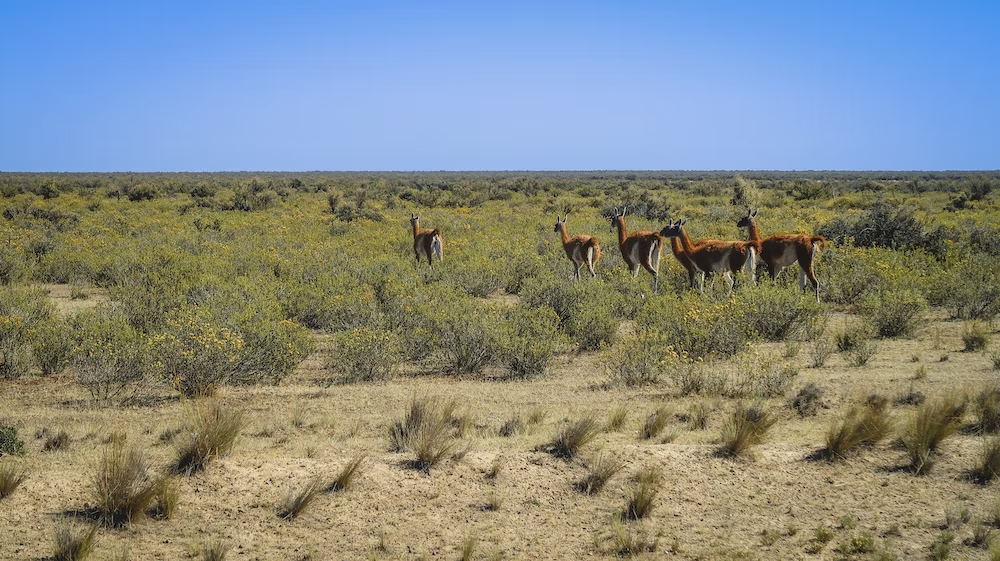
As our bus rumbled out of the terminal, leaving central Argentina behind and plunging into the vast, arid Patagonian steppe, I pressed my head against the cold glass. The landscape out here is mesmerizingly flat and dry. Small shrubs cling to the salty earth, and the only real trees exist because estancias planted and rigorously water them. Suddenly, a guanaco—a wild, slender relative of the llama—effortlessly vaulted over a high wire fence right by the highway.
That was the moment it hit me. We weren’t just looking at scenery anymore. We had entered one of the most raw, unforgiving, and spectacularly dense wildlife corridors on the planet.
If you’ve been following our YouTube channel, Samuel & Audrey, you know we’ve been documenting the gritty, unpolished realities of South American travel. Today, we are ripping the glossy Instagram filter off Patagonia. This isn’t a brochure. This is the ultimate, hyper-granular 2026 wildlife dossier. We are breaking down exactly where the animals are, what it actually costs to see them, the microscopic logistics of getting there, and the frustrating tourist traps you need to dodge.
The Master Wildlife Matrix: What, Where, and the Brutal Reality
Before we dive into the granular logistics of buses, border crossings, and booking portals, you need to know exactly what is out there. Patagonia is not a sanitized zoo; the wildlife is scattered across thousands of miles of punishing terrain.
We built this matrix to serve as your ultimate cheat sheet. It covers everything from the apex predators to the bizarre prehistoric birds of the steppe, and even the controversial introduced species that are reshaping the ecosystem.
🐋 THE MARINE GIANTS & PINNIPEDS
| Target Species | The Best 2026 Location | Peak Viewing Window | The “Nomadic Samuel” Reality Check |
| Orca (Killer Whale) | Punta Norte (Peninsula Valdés, ARG) | Mid-March to Mid-April | High Friction. You must align peak dawn with high tide (The “High Tide + 3” rule) to see them beach themselves. Tides shift 40 mins daily. |
| Southern Right Whale | El Doradillo & Puerto Pirámides (ARG) | September to October | Zero Effort (If timed right). At El Doradillo, you can literally sit on the beach for free at high tide and watch them breach 50 feet from shore. |
| Commerson’s Dolphin | Rawson Port / Playa Unión (ARG) | Year-round (Best: July – Dec) | The “Panda Dolphin”. These tiny, black-and-white endemic dolphins will literally surf the boat wake. Tip: Skip massive tours; book a small semi-rigid boat from Rawson. |
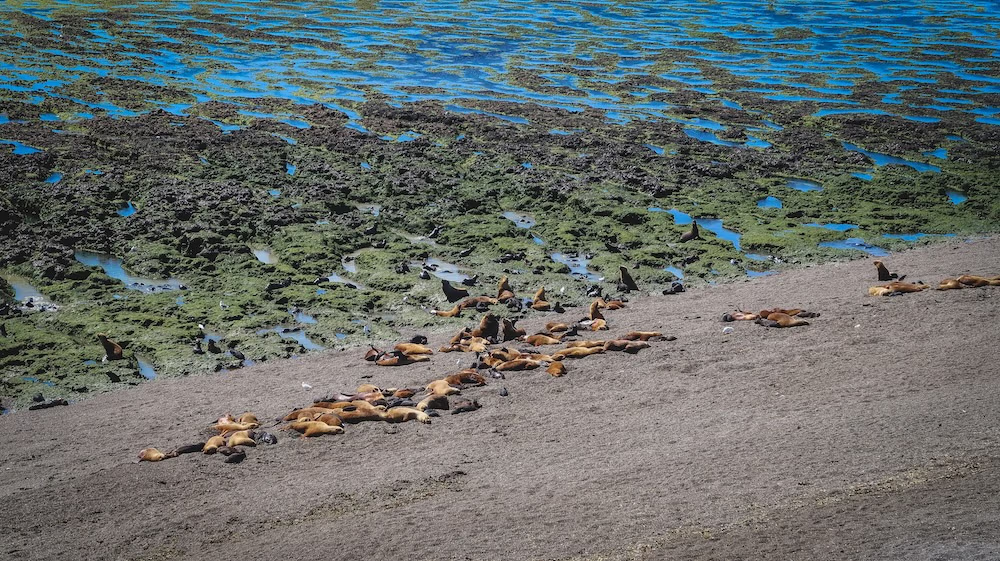
| Southern Elephant Seal | Punta Norte / Punta Delgada (ARG) | Sept–Nov (Mating) / March (Molting) | The Audio Shock. They look like multi-ton slabs of blubber, but sound exactly like a flock of bleating sheep. Warning: Populations are still recovering from the H5N1 avian flu drop. |
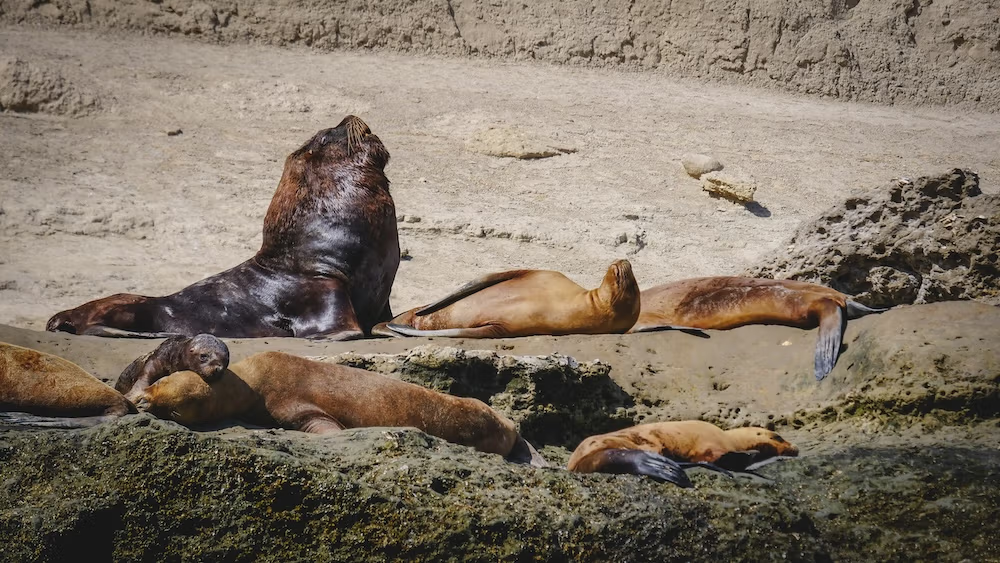
| South American Sea Lion | Beagle Channel (ARG) / Valdés | Year-round | Wet & Wild. If you take the zodiac tours out of Puerto Madryn to see them in the sea caves, dress in full Gore-Tex. You will get soaked by the sea spray. |
🏔️ THE APEX PREDATORS & STEPPE MAMMALS
| Target Species | The Best 2026 Location | Peak Viewing Window | The “Nomadic Samuel” Reality Check |
| Patagonian Puma | Torres del Paine Borders (CHILE) | April, September, October | The Legal Loophole. CONAF bans off-trail tracking inside the park. You must pay $600+ USD/day at private estancias (like Cerro Guido) to legally track them in 4x4s. |
| Guanaco | Tierra del Fuego / Torres del Paine | Year-round | The Parkour Llama. You will see thousands. Do not underestimate them; we watched them effortlessly vault 5-foot barbed-wire fences from a standstill right next to the highway. |
| Vicuña | High altitude Andean Steppe | Year-round | The Skittish Cousin. Smaller and more slender than guanacos with pale cinnamon fur. They can hit 29 mph at high elevations. Bring heavy zoom glass. |
| Huemul (Andean Deer) | Cerro Castillo Reserve (CHILE) | November to March | Brutal Physical Toll. Highly endangered. Finding them requires a grueling, multi-day backcountry trek over glassy obsidian scree slopes. Bring cash for the private land exit fee. |
| Southern Pudú | Chiloé Island / Tepuhueico (CHILE) | November to March | The Ghost Deer. The smallest deer in the world (about the size of a pug). They hide in the dense Valdivian rainforest. Do not attempt without a local botanical tracker. |
| Patagonian Mara | Peninsula Valdés Uplands (ARG) | Sept–Oct (To see babies) | The Prehistoric Jackrabbit. Looks like a giant rabbit crossed with a small deer. Highly skittish. You will usually only see their white rumps as they sprint away from your bus. |
| Chinchillón | Cañon de la Buitrera (ARG) | Year-round | The Giant Fluffy Squirrel. Often found climbing the 150-meter vertical volcanic basalt cliffs near Piedra Parada. Bring binoculars; they blend perfectly into the rock. |
| Culpeo & Gray Foxes | Tierra del Fuego / Steppe | Year-round | Campground Thieves. Highly adaptable scavengers. You will likely see them trotting through your campsite at dawn looking for unguarded empanadas. |
| Hairy Armadillo (Piche) | Sandy Steppe Terrain | Summer (Nocturnal/Dawn) | The Prehistoric Tank. They dig deep burrows and are incredibly fast diggers. If you spot one, it will likely vanish into the sand before you get your lens cap off. |
🐧 THE AVIAN UNDERWORLD (PENGUINS & PREHISTORIC BIRDS)
| Target Species | The Best 2026 Location | Peak Viewing Window | The “Nomadic Samuel” Reality Check |
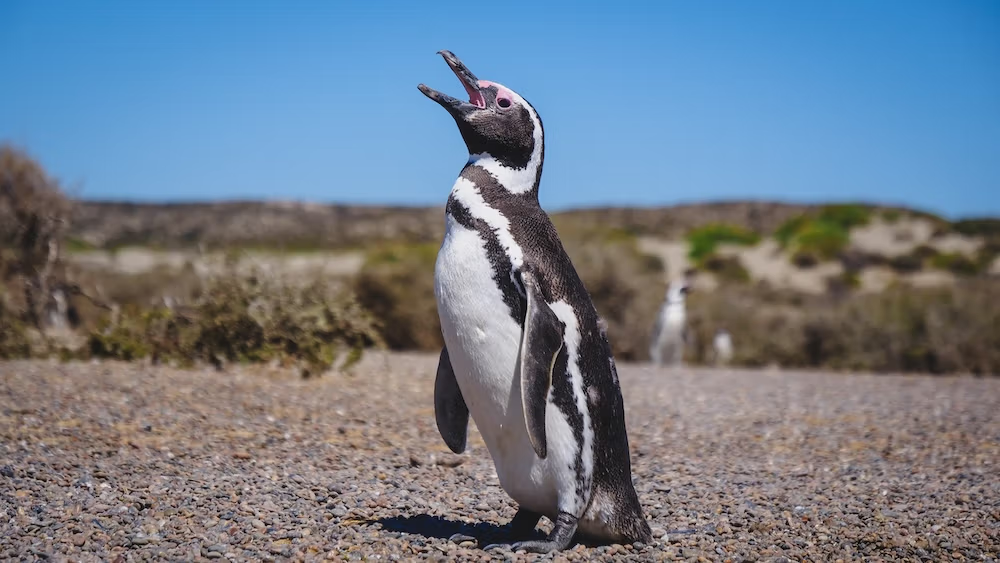
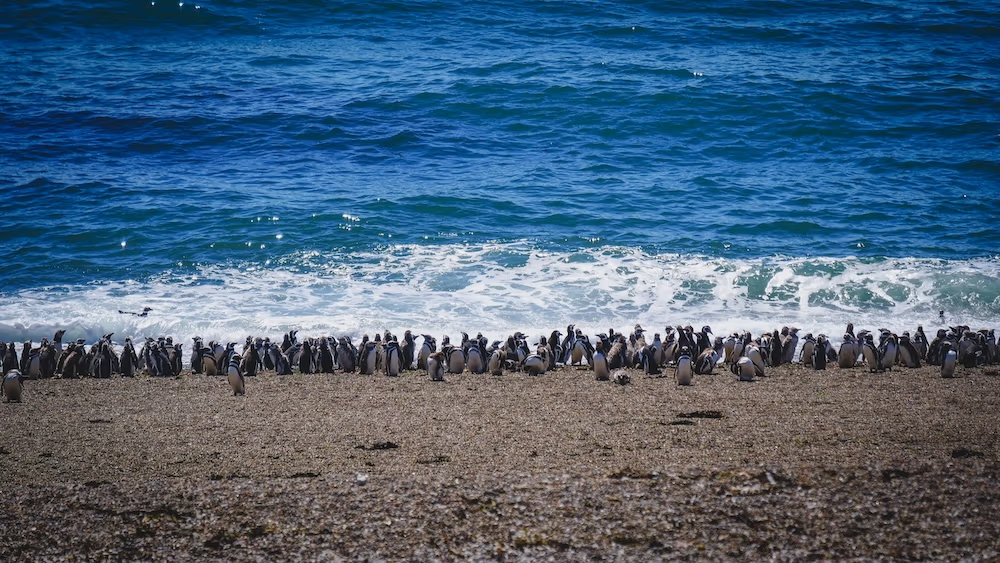
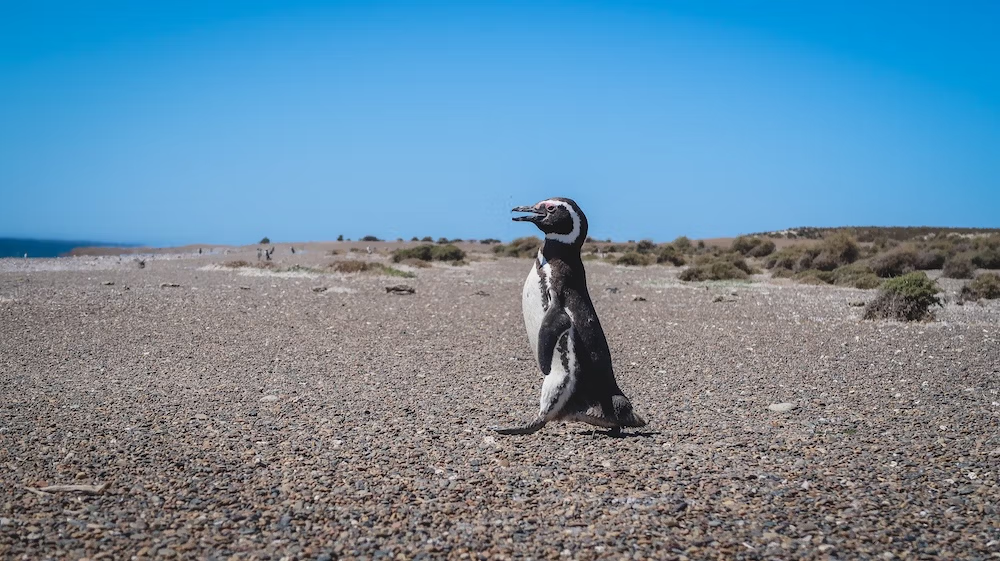
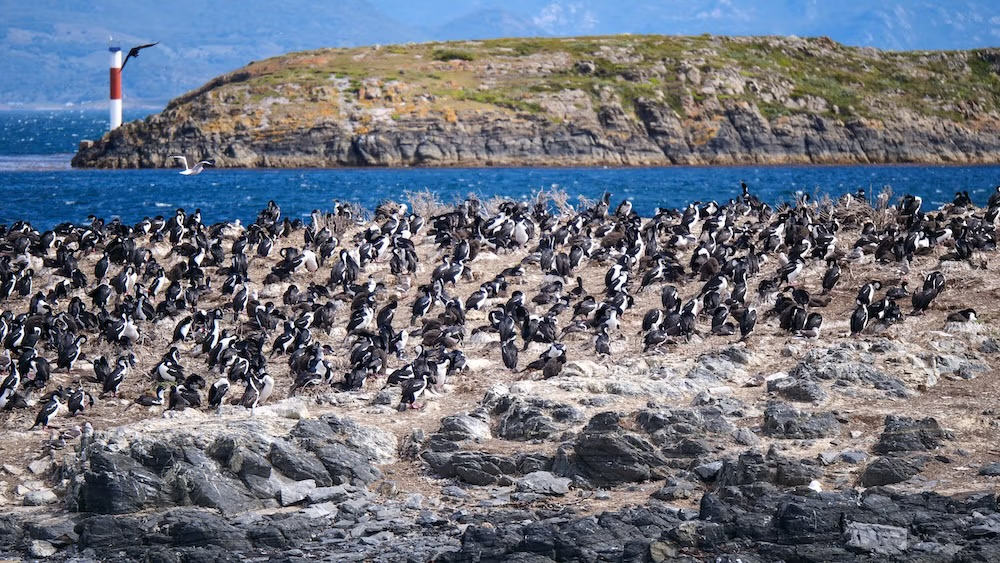
| Magellanic Penguin | Estancia San Lorenzo / Punta Tombo | October to January | Traffic Laws Apply. At San Lorenzo, humans must strictly yield to the penguins. They have the right of way on the trails, and they will march right up to your boots. |
| King Penguin | Parque Pingüino Rey (Tierra del Fuego) | Year-round | The Wind Trap. Requires a brutal 14-hour round trip from Punta Arenas including a ferry that regularly gets canceled by high winds, stranding tourists overnight. |
| Rockhopper Penguin | Isla Pingüino (Puerto Deseado, ARG) | October to April | The Red-Eyed Rebels. Famous for their yellow crests and aggressive rock-hopping. Getting to the island requires a rugged boat ride that gets canceled frequently due to swells. |
| Darwin’s Rhea (Choique) | Patagonia National Park (CHILE) | November to April | The Patagonian Ostrich. Flightless, massive, and can sprint at 43 mph. You will likely see them dodging traffic on the dirt highways. |
| Chilean Flamingo | Laguna Nimez (El Calafate, ARG) | November to April | The Neon Hallucination. A massive flock of bright pink birds standing in a lagoon against a backdrop of blue glaciers. Just a flat 10-minute walk from downtown El Calafate. |
| Magellanic Woodpecker | Tierra del Fuego National Park | October to March | The Nail Gun. You will hear them before you see them. Listen for a sound like an industrial nail gun hitting a tree. Hunt near the invasive beaver ponds. |
| Andean Condor | El Chaltén (Mirador de los Cóndores) | November to March | Prepare for a Stiff Neck. With a 10-foot wingspan, they ride the thermal updrafts above the Fitz Roy massif. The hike to the Mirador is short, but the wind at the top is punishing. |
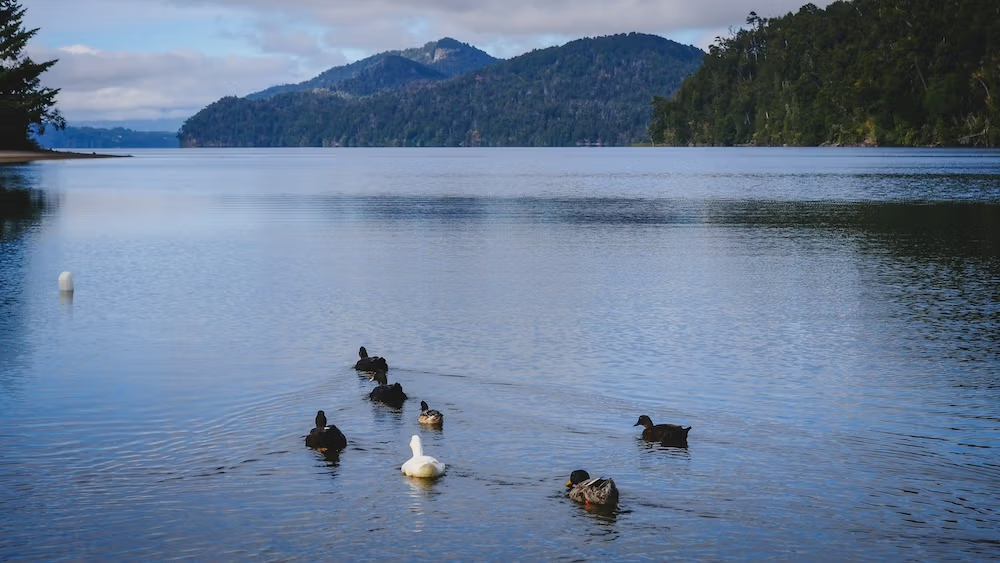
| Black-Necked Swan | Lakes & Mallines (Wetlands) | Year-round | The Elegant Drifter. Easily spotted from bus windows as you traverse the Lake District (Bariloche/Puerto Varas). |
🎣 THE INVASIVE & INTRODUCED (THE ECOLOGICAL WILD CARDS)
[Samuel’s Ecological Reality Check]
Not everything in Patagonia belongs here. Over the last century, governments and sportsmen introduced foreign species that have completely rewritten the ecological map. Some created world-class tourism industries; others triggered multi-million-dollar environmental disasters. You will undoubtedly encounter both.
| Target Species | The Best 2026 Location | Why They Are Here | The “Nomadic Samuel” Reality Check |
| North American Beaver | Tierra del Fuego (ARG/CHILE) | Introduced in 1946 for the fur trade. | The $31 Million Disaster. Unlike North American trees, Patagonian lenga trees do not grow back when chopped down. Beavers have devastated 16 million hectares of pristine forest. A massive, binational eradication trapping program is currently underway. |
| Sea-Run Brown Trout | Río Grande (Tierra del Fuego) | Introduced late 1800s. | The Angler’s Holy Grail. These trout migrate to the ocean and return massive. Lodges here charge premium rates. The wind is so vicious you have to alter your casting mechanics entirely. |
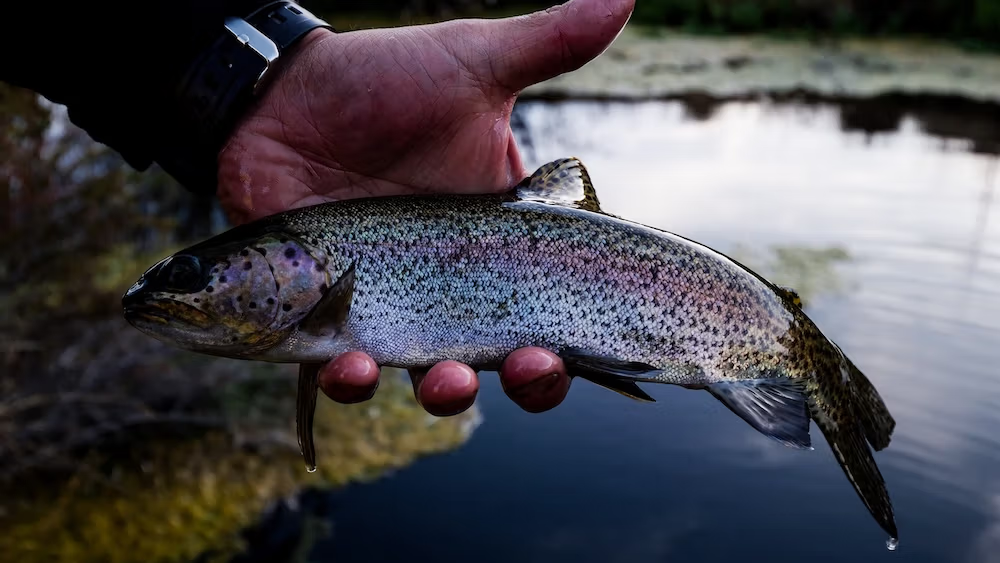
| Rainbow Trout | Limay River / Río Chimehuín (ARG) | Introduced from Northern California. | The Drift Boat Target. They thrive in the cold, predator-free rivers. The late-season (April/May) run on the Limay produces monstrous 30-inch fish. |
| Brook Trout | Lanín National Park Alpine Lakes | Stocked for sport fishing. | The Remote Prize. Found in high-elevation lakes. You will need a local guide and a 4×4 to reach the pristine, scud-rich waters where these colorful fish hide. |
| Chinook (King) Salmon | Pacific-feeding rivers (Chile/Arg) | Escaped from aquaculture farms. | The Heavyweights. If you are fly fishing in the late summer, make sure your tippet can handle these absolute bruisers pushing up the rivers. |
Tracking the Giants of the Valdés Peninsula
Our first major wildlife staging ground was Puerto Madryn, the gateway to the Valdés Peninsula. You pay your 30,000 ARS entrance fee at the gate, and suddenly you are in a UNESCO World Heritage site that feels like the edge of the earth.
We made the long, dusty drive out to Punta Norte specifically to see the southern elephant seals. Because they are a protected species, you can’t just walk up to them. You view them from a cliffside overlooking the beach. I had my camera ready, expecting to hear thunderous, Jurassic-Park-level roars echoing off the Atlantic.
Instead, I heard sheep.
I’m not kidding. These massive, multi-ton slabs of blubber were dragging themselves out of the surf, shedding their skin during the molting process, and barking at each other with high-pitched bleats that sounded exactly like a pasture full of confused livestock. It was hilarious, awe-inspiring, and slightly surreal.
However, if you are traveling in 2026, you need a serious reality check regarding these colonies.
[Samuel’s Marine Triage Warning]
The “Ghost Colonies” of 2026: You will see old blog posts showing beaches carpeted with thousands of elephant seals. Manage your expectations. Due to the severe 2023-2024 Avian Flu (H5N1) outbreak, some Valdés Peninsula colonies suffered a 66% population drop. The outbreak has ended, but the recovery is slow. The massive “wall of seals” is currently much thinner. Do not yell at your tour guide; nature is just healing.
While the seals are recovering, the Orcas are as ruthless as ever. Punta Norte is globally famous for “intentional stranding,” where orcas literally beach themselves to snatch sea lion pups from the shore. But you cannot just show up at noon in March and expect a National Geographic documentary to unfold.
There is an exact mathematical formula to this violence.
It is the “High Tide + 3” Rule. Orcas require the water to be deep enough to reach the sloping pebble beach, meaning strikes only happen within a six-hour window (three hours before and three hours after peak high tide). Furthermore, the sea lion pups are most active and reckless at dawn. Therefore, your absolute highest probability of seeing an attack in 2026 is by checking the local tide charts and finding the specific days in mid-March to mid-April where the peak high tide perfectly aligns with sunrise (around 6:30 AM to 8:30 AM). If high tide is at 2:00 PM, your odds plummet.
2026 Marine Wildlife & Logistics Ledger
| The Target | The Staging Ground | 2026 Peak Window | Exact Cost (Entry/Tour) | The Hidden Logistical Friction |
| Southern Right Whales | El Doradillo (Shore) / Puerto Pirámides (Boat) | Sept – October | Shore: Free. Boat: ~$195,000 ARS (~$150 USD). | High tides at El Doradillo often close the beach access roads entirely to prevent erosion. |
| Orcas (Stranding) | Punta Norte (Valdés) | Mid-March – Mid-April | 30,000 ARS Valdés Entry Fee. | High tide shifts 40-60 mins later daily. You must track the lunar cycle, not just the weather. |
| Elephant Seals | Punta Delgada / Punta Norte | Sept – Nov (Mating) / March (Molting) | Included in Valdés Entry. | Viewing is strictly cliff-side. Bring a 300mm+ lens; your smartphone will just capture blurry rocks. |
| Sea Lions | Puerto Madryn (Zodiac Tours) | Year-round | ~$60 – $80 USD | Zodiac tours are bumpy. We ducked into sea caves to see marine fossils, but you will get soaked. |
The Great Penguin Pilgrimage (And the Traffic Laws of San Lorenzo)
If there is one animal that defines the coastal Patagonian experience, it’s the Magellanic penguin. And there are two wildly different ways to see them.
Our favorite experience was at Estancia San Lorenzo. This working sheep ranch happens to host a colony of roughly 600,000 penguins during peak season. You walk down toward the beach, and suddenly, they are everywhere. They aren’t scared of humans at all.
There is a specific trail marked by white stones that weaves through the scrub brush. But here is the catch: Penguins always have the right of way. You will literally be walking, and a squad of penguins will march out of the bushes, cross the path, and look at you as if you just ran a red light. You must stop, keep at least a meter’s distance, and let them waddle past to the ocean. It is the best traffic jam in the world.
Then, there is the behemoth: Punta Tombo Provincial Reserve.
Punta Tombo has the name recognition, but getting there is a physical ordeal. It sits 180km south of Puerto Madryn. You will eventually turn off the smooth, paved Ruta 3 and hit Provincial Route 1. I call this the “Spine Rattler.” It is over 100km of deeply rutted, washboard gravel. If you book the cheapest group tour available, you will be crammed into the back row of a low-roof transit van with blown suspension, breathing dust for three hours straight.
If you are going to Punta Tombo in 2026, rent a 4×4 or explicitly verify that your tour operator uses modern, high-clearance vehicles. The entry fee is 25,000 ARS (~$25 USD), and you need to arrive by 9:30 AM. Why? Because by 10:30 AM, the massive cruise ship buses arrive, and the 3km rocky walkway turns into a slow-moving queue of tourists complaining about the wind.
The Penguin Colony Showdown
| Location | Species | Current Price | Physical Effort & Reality Check |
| Estancia San Lorenzo | Magellanic | ~$60 USD (Tour) | Moderate. Excellent proximity. The white stone path is easy walking, and you get incredibly close (1 meter). |
| Punta Tombo Reserve | Magellanic | 25,000 ARS Gate Fee | High. The 180km drive is punishing. You walk a 3km rocky trail. The sheer volume of birds is staggering, but crowds are heavy. |
| Parque Pingüino Rey (Tierra del Fuego) | King Penguins | 18,000 CLP (~$19 USD) + Tour | Extreme. This is a 14-hour, 700km round-trip marathon from Punta Arenas. Viewing is restricted to platforms 50 yards away. |
[Samuel’s Weather Trap Warning]
The King Penguin Wind Trap: Notice the “Extreme” effort rating for Tierra del Fuego. To get there from Punta Arenas, you must take a ferry across the Magellan Strait. High Patagonian winds frequently cause the Port Authority to cancel the afternoon return ferries with zero warning. Tourists get stranded on the island overnight constantly. Never book the King Penguin tour on the day before your flight home.
The Puma Bait-and-Switch & The Torres del Paine Ticket Loop
Moving inland toward the jagged granite peaks of the Andes, the target shifts from blubber to stealth. Everyone wants to see a wild Puma in Torres del Paine (Chile). But almost everyone gets the logistics wrong.
You will see dozens of agencies in Puerto Natales advertising “Puma Tracking Tours” for a couple of hundred dollars. Do not hand them your credit card until you ask one specific question: Do you have private Estancia access?
Here is the un-sugarcoated reality: CONAF (the Chilean National Forest Corporation) strictly forbids anyone from leaving the marked trails inside Torres del Paine National Park. If you book a cheap tour that operates strictly inside the park, you aren’t “tracking” anything. You are driving down the main park road, pulling over when you see a crowd, and staring through binoculars at a beige dot sleeping under a bush two miles away.
To actually track pumas—to follow fresh scat, find guanaco kills, and get within ethical photography range—you must be on the private lands bordering the park. Estancia Cerro Guido and Estancia Amarga are the heavy hitters here. Yes, a full-day conservation safari at Casa Puma (Cerro Guido) will run you roughly $550 to $815 USD. It is painfully expensive. But it is the only legal way to off-trail track in 4x4s with dedicated spotters. Dawn to dusk, with peak activity between 5:30 AM and 9:00 AM.
But even before you look for cats, you have to fight the Chilean government’s IT department.
As of May 1, 2026, Chile fundamentally altered how you access Torres del Paine. The generic “3-Day Park Pass” is dead. CONAF has implemented a strict Route-Based Ticket. You must specify if you are hiking the “W Trek,” the “O Circuit,” or just doing the “Base Torres” day hike at the exact moment of purchase. The foreign entry fee fluctuates between $33 and $50 USD depending on the route, and names are strictly non-transferable.
Worse, you have to buy this on pasesparques.cl.
This website is a legendary friction point. It uses a payment processor called Webpay Plus that attempts to charge in Chilean Pesos (CLP). If you use a US or European credit card, your bank will almost instantly flag this as international fraud. The session times out, and the system auto-cancels your reservation. Because dates sell out months in advance, you can lose your entire itinerary while waiting on hold with Visa.
The Fix: Do not bash your head against the wall trying the same credit card three times. Bypass Webpay entirely and select the newly integrated PayPal option at checkout. It costs a tiny bit more in conversion fees, but it works on the first click.
Beyond the Big Three: Huemuls, Chinchillóns, and the Foraging Tax
While everyone is fighting for space in Torres del Paine and Los Glaciares, we took our cameras off the beaten path to explore the hidden corners of the region. This is where the real magic—and the real physical pain—happens.
Take Cerro Castillo, for example. Often touted as the “uncrowded alternative to the W Trek,” this jagged massif in the Aysén region is the best place on earth to spot the elusive Huemul (the endangered South American deer). You want to hike the Las Horquetas trail between late November and mid-March, specifically looking near the lenga forests around Campamento Río Turbio at dawn.
But Cerro Castillo is not a sanitized park. It is a grueling, 53km backcountry trek over glassy obsidian and loose pumice scree slopes. There are no luxury refugios here to buy a hot meal. And at the very end of the trail, exhausted and filthy, you will hit the Estero Parada guard post.
To cross this private land and reach the road, you must pay an exit fee of 25,000 CLP (~$26 USD). The card machines here run on spotty satellite internet that drops every time the wind blows. If you don’t have crisp Chilean Pesos in your pocket, you aren’t leaving. Always carry a minimum of 30,000 CLP in small bills for the exit and the shuttle back to town.
Further north, crossing back into Argentina near Esquel and El Bolsón, the arid steppe gives way to the Valdivian temperate forests. We spent a day hiking around Lake Puelo, pushing right up against the Chilean border.
It was here, amidst the ancient, coppery trunks of the Arrayanes trees, that we paid the Patagonian Foraging Tax. We found wild mora (blackberries) growing in the brush. You know they are ready when they turn a deep, dark black. But the mora bush is a horrible, aggressive, prickly plant. The thorns tear at your clothes, and the leaves literally scratch your arms as you reach in. We were bleeding from the wrists, but the sweet, jam-like explosion of those forest berries made the pain entirely worth it.
And if you want a truly bizarre wildlife sighting, skip the forests and head to the volcanic monoliths of Piedra Parada and the towering 150-meter walls of Cañon de la Buitrera (Vultures Canyon). Yes, we saw the Andean condors circling the basalt cliffs, but the real prize was spotting a Chinchillón. The best way I can describe this creature to you is that it looks exactly like a giant, wildly fluffy squirrel hopping up vertical rock faces. It was incredible.
The Deep Cuts Logistics Matrix
| Location / Trail | Target Species | Exact Entry/Exit Fee | The Brutal Reality Check |
| Las Horquetas (Cerro Castillo) | Huemul (Andean Deer) | 25,000 CLP Exit Fee | Cash only at the exit. Brutal scree descents. 100% self-reliant backcountry. |
| Lake Puelo Border Hike | Wild Mora Berries | National Park Fee | The bushes will shred your arms. Bring your passport if you plan to fully cross into Chile via the trails. |
| Cañon de la Buitrera | Condors & Chinchillóns | Free (Public Access) | Zero facilities. 150-meter canyon walls trap the midday heat. Bring double your normal water supply. |
| Los Alerces National Park | 2,700-Year-Old Trees | ~$15 USD Entry | The glacial turquoise water is stunning, but boat tours require advanced booking in summer. |
The Avian Underworld (Beyond the Penguins)
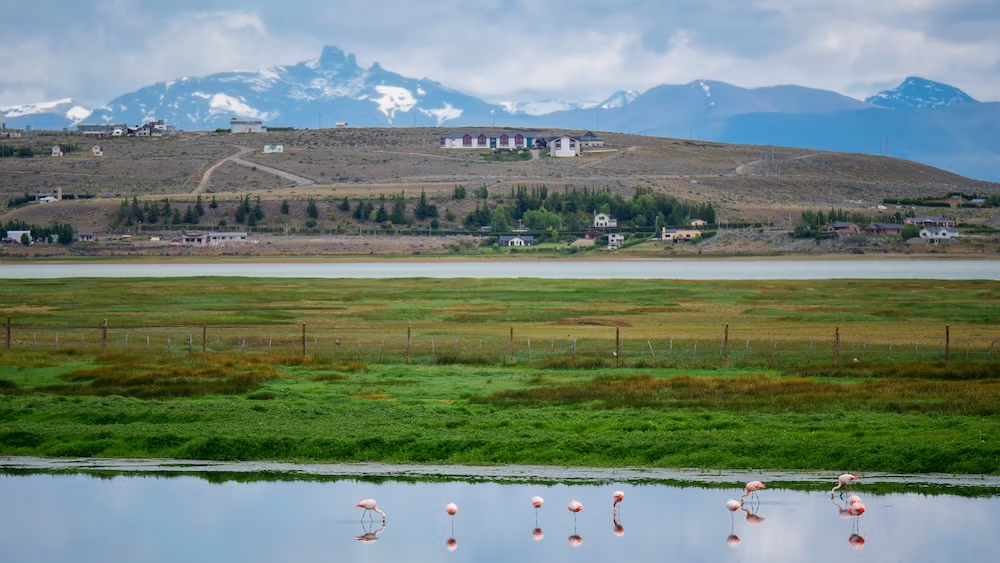
You go to Patagonia expecting a monochromatic world of blue ice, grey granite, and brown steppe. So, when you are walking just ten minutes outside the tourist hub of El Calafate and suddenly stumble upon a flock of neon-pink Chilean Flamingos standing in a glacial lagoon, your brain short-circuits.
I remember rubbing my eyes, convinced the altitude or the cheap bus coffee was making me hallucinate. But there they were.
We’ve talked a lot about the “Big Three”—the whales, the pumas, and the penguins. But if you ignore the skies and the shrubs, you are missing out on Patagonia’s secret identity: it is an absolute world-class birding destination. And you don’t even need to be a hardcore “birder” with a massive, camouflaged spotting scope to appreciate the avian underworld here. Some of these birds are practically dinosaurs, and finding them provides a massive return on investment for your itinerary.
Laguna Nimez: The Neon Hallucination
Let’s start with that flamingo hallucination. Laguna Nimez is an ecological reserve located literally a 10-minute walk from downtown El Calafate. While everyone else in town is agonizing over dropping hundreds of dollars on boat tours to the Perito Moreno glacier, you can walk right up to the reserve gate, pay the 12,000 ARS (roughly $12 USD) entry fee, and hit the self-guided circuit.
It is a stunning, almost jarring visual contrast. You have the freezing, jagged peaks of the Andes dominating the background, and right in front of you, black-necked swans and bright pink Chilean flamingos are peacefully feeding in the shallow wetlands. It requires almost zero physical effort, making it the perfect “rest day” activity before you tackle the major glaciers.
The Forest Carpenter of Tierra del Fuego
If you head further south to the literal end of the world—Tierra del Fuego National Park—the target changes entirely. We spent hours hiking the coastal and forest trails here, specifically looking for the Magellanic Woodpecker.
[Samuel’s Audio-Visual Warning]
The Nail Gun Reality: You do not usually see a Magellanic Woodpecker first; you hear it. They sound like someone firing an industrial nail gun into a tree. The males are massive, sporting a jet-black body with a brilliant, crimson-red head. To find them, you actually want to look for the ugliest parts of the forest: dead or decaying trees. Specifically, look around the damage zones and ponds created by the invasive Canadian beavers (a whole different ecological disaster you will witness here).
Your absolute best window for spotting these giant woodpeckers is during their breeding season, which runs from October to March. We found that the highest probability of a sighting happens when you ditch the crowded main road and hike the Senda Costera (Coastal Path) or the dense forested trails wrapping around Lago Acigami (formerly Lake Roca).
Dodging the Giants of the Steppe
But the absolute crown jewel of Patagonian weirdness is the Darwin’s Rhea. In Argentina, they call it the Choique, and in Chile, the Ñandú. Picture an ostrich, shrink it slightly, and drop it into the freezing, wind-blasted Patagonian steppe.
We were driving along the endless, arid scrubland when one of these massive, flightless birds just bolted across the horizon. It is a wildly prehistoric sight. They can sprint up to 70 km/h (about 43 mph), throwing their oversized wings out behind them like rudders to take sharp, high-speed turns in the dust.
They are incredibly skittish, largely because they’ve suffered from a century of overgrazing and hunting. However, if you are crossing over into Chilean Patagonia, keep your eyes glued to the window near Patagonia National Park (in the Aysén region). Thanks to massive, cross-border rewilding efforts, their populations have tripled in recent years, making road-side sightings much more common for the observant traveler.
The 2026 Patagonian Birding Matrix
To make sure you don’t miss these feathered oddities, here is your tactical breakdown.
| Target Species | The Best Staging Ground | Exact 2026 Entry / Logistics | The “Nomadic Samuel” Reality Check |
| Chilean Flamingo | Laguna Nimez (El Calafate) | 12,000 ARS. Open noon to 8 PM. | Zero Effort. A 10-min flat walk from town. Go in the late afternoon for the best golden-hour lighting against the pink feathers. |
| Magellanic Woodpecker | Tierra del Fuego NP (Senda Costera) | 30,000 ARS Park Entry. | High Patience. Hunt for the beaver ponds. If you hear a loud, rhythmic knocking, stop walking instantly and scan the mid-canopy trunks. |
| Darwin’s Rhea (Ñandú) | Patagonian Steppe / Patagonia NP (Chile) | Free (Visible from highways). | Pure Luck. You will likely see them sprinting away from your bus. Do not try to chase them on foot; they are faster than you and incredibly temperamental. |
| Andean Condor | El Chaltén (Mirador de los Cóndores) | Free trail access from town. | Stiff Neck. You’ll be staring straight up. Look for the massive 10-foot wingspan catching the thermal updrafts above the Fitz Roy massif. |
Patagonia Wildlife Master Calendar: What You Can See Month by Month
If you only skim one section before planning your trip, make it this. Patagonia wildlife is extremely seasonal, and being off by even a few weeks can completely change what you’ll see.
| Month | Best Wildlife Highlights | Best Regions |
|---|---|---|
| September | southern right whales, early penguins arriving, condors | Peninsula Valdés, Puerto Madryn, El Chaltén |
| October | whales, penguins, flamingos returning to wetlands | Valdés, Laguna Nimez (El Calafate) |
| November | whales, penguins in full swing, pumas active, rheas | Valdés, Torres del Paine, Patagonian steppe |
| December | penguins, pumas, condors, Commerson’s dolphins | Valdés, Torres del Paine, Rawson / Playa Unión |
| January | penguins peak, whales tapering, flamingos, woodpeckers | Valdés, Laguna Nimez, Tierra del Fuego |
| February | pumas, penguins, condors, dolphins | Torres del Paine, Valdés, Rawson |
| March | pumas, condors, flamingos, huemul chances | Torres del Paine, El Chaltén, Cerro Castillo |
Why this matters: Patagonia isn’t a year-round zoo. It’s a moving wildlife system shaped by migration, breeding cycles, and weather windows. Get the timing right, and it feels effortless. Get it wrong, and it can feel empty.
Patagonia Wildlife Quick Picks (Fast Answers for Trip Planning)
If you’re planning quickly and just want the highlights, this is your cheat sheet.
- Best all-around wildlife destination: Peninsula Valdés
- Best predator experience: Torres del Paine / Cerro Guido (puma tracking)
- Best penguin colony: Estancia San Lorenzo or Punta Tombo
- Best easy birding stop: Laguna Nimez (El Calafate)
- Best marine wildlife: Valdés coast, Rawson dolphins, Beagle Channel
- Best weird surprise: King penguins in Tierra del Fuego
- Best self-drive wildlife region: Chubut coast
These are the places where the effort-to-reward ratio is strongest.
Best Patagonia Wildlife Experiences by Traveler Type
Not all wildlife experiences are created equal. Some are easy, some are expensive, and some require serious patience (or luck). Here’s how to choose based on your travel style.
Best for First-Time Visitors
These are the most reliable, high-reward experiences with relatively manageable logistics.
- Peninsula Valdés (marine wildlife concentration)
- Estancia San Lorenzo or Punta Tombo (penguin colonies)
- Laguna Nimez (easy-access birdlife near El Calafate)
Why: Minimal guesswork. High probability sightings.
Best for Wildlife Photographers
If you’re traveling with a long lens and a lot of patience.
- Cerro Guido or Torres del Paine (puma tracking)
- Punta Norte (orca hunting behavior, seasonal)
- Rawson / Playa Unión (Commerson’s dolphins)
- Condor lookouts near El Chaltén
Why: Behavior-driven encounters, not just sightings.
Best for Independent Travelers (No Tours Required)
For those who prefer self-driving or DIY exploration.
- Laguna Nimez (walkable reserve)
- El Doradillo (shore-based whale viewing in season)
- Mirador de los Cóndores (El Chaltén)
- Tierra del Fuego coastal trails (marine + birdlife)
Why: No expensive tours required, just timing and patience.
Best for Hardcore Wildlife Nerds
If you’re chasing rare, niche, or ecosystem-specific sightings.
- King penguins in Tierra del Fuego
- Huemul zones near Cerro Castillo
- Magellanic woodpeckers in Tierra del Fuego forests
- Beaver-modified ecosystems (ecological case study)
Why: These aren’t easy sightings — but they’re some of Patagonia’s most fascinating.
Wildlife Experience Difficulty Matrix (What It Actually Takes)
This is where Patagonia separates casual sightseeing from real wildlife travel.
| Experience | Difficulty | Cost | Booking Needed | Independent Friendly |
|---|---|---|---|---|
| Laguna Nimez birding | Easy | Low | No | Yes |
| Estancia San Lorenzo penguins | Medium | Medium | Sometimes | Yes |
| Punta Norte orcas | Medium | Low–Medium | No | Yes |
| Rawson dolphin tour | Easy–Medium | Medium | Recommended | Yes |
| Cerro Guido puma safari | High | High | Yes | No |
| King penguin reserve | Medium | Medium | Often | Moderate |
| Condor viewpoints (El Chaltén) | Easy–Medium | Free | No | Yes |
Reality check: The most iconic wildlife experiences in Patagonia often sit at the intersection of:
- cost
- timing
- effort
- luck
Patagonia Wildlife by Region (Think in Ecosystems, Not Just Animals)
Instead of chasing individual species, it’s smarter to think in terms of habitat zones.
Atlantic Patagonia (Chubut Coast)
- whales, elephant seals, sea lions, penguins, dolphins, mara
- best concentration of marine wildlife
Southern Andes (Torres del Paine / El Chaltén)
- pumas, condors, guanacos
- predator-prey dynamics
Wetlands & Lagoons
- flamingos, swans, waterbirds
- easy access, high reward
Tierra del Fuego
- king penguins, woodpeckers, beaver landscapes, marine mammals
- strange, unique ecosystems
Steppe & Interior Patagonia
- rheas, foxes, armadillos, guanacos
- often seen while driving, not hiking
Common Patagonia Wildlife Mistakes (Avoid These)
Even experienced travelers get caught out here.
- Visiting in the wrong season
- Assuming wildlife is everywhere
- Underestimating driving distances
- Not booking puma tracking in advance
- Bringing the wrong camera gear
- Expecting guaranteed sightings
- Ignoring wind and weather conditions
- Forgetting snacks, water, or cash
- Assuming tours are always optional
- Missing early morning windows
Bottom line: Patagonia rewards preparation, not spontaneity.
Patagonia Wildlife Ethics: How to Watch Without Ruining It
This matters more than most people think.
- Keep your distance — use a zoom lens instead of getting closer
- Never block animal paths (especially penguins)
- Stay on marked trails and platforms
- Avoid loud noises and sudden movement
- Don’t feed or interact with wildlife
- Respect seasonal closures and restrictions
- Accept that no-sighting days are part of ethical wildlife travel
The goal is not just to see wildlife — it’s to leave it undisturbed.
The Long-Haul Survival Guide: Transit, Food, and Ghost Towns
You cannot survive Patagonia on views alone. The distances are vast, the wind is relentless, and the infrastructure is designed to test your patience. If you take away anything from our journey, let it be these final logistical life rafts.
The “Cama” Imperative
If you are traversing Argentina, you will spend a lot of time on long-haul double-decker buses. Do not cheap out here. During the peak summer season, you must book your tickets days in advance and explicitly demand “Cama” (bed) class. We made the mistake of booking “Semi-Cama.” While the seats are comfortable, they only recline partially. “Cama” gets you a massive, first-class style leather seat that reclines 160 to 180 degrees, a hot meal, and a door separating you from the bathroom (which, again, will run out of toilet paper by hour four).
The Monday/Tuesday Ghost Town Trap
Here is a massive logistical trap that ruined one of our travel days. If you arrive in a smaller Patagonian hub (like the Welsh colonies of Trelew/Gaiman, or even parts of El Calafate) on a Monday or a Tuesday, prepare to starve. These towns cater heavily to weekend domestic tourism. By Monday morning, they turn into absolute ghost towns. Almost all restaurants, tea houses, and tour operators lock their doors for 48 hours to recover. We wandered the streets filming a “non-tourist guide” because literally nothing was open. Buy groceries on Sunday.
The Culinary Rewards (Puerto Natales)
When the towns are open, the food is spectacular. If you are using Puerto Natales as your basecamp for Torres del Paine, there are two mandatory stops.
First, Santolla. This is where you go when you survive the mountains and need to celebrate. The signature dish is the Chupe de Centolla—a ridiculously rich, cheesy Patagonian King Crab pie. Pair it with a Calafate Berry Sour. Mains run between 18,000 and 28,000 CLP (~$19 – $30 USD). Get there before 7:30 PM, or you will be standing in the freezing wind waiting for a table.
If you are on a tighter budget but still want high quality, head to Mesita Grande. You will sit at long communal tables eating wood-fired Patagonian Lamb Pizza. It costs about 12,000 to 16,000 CLP (~$13 – $17 USD). Just be warned: if you are there during the Patagonian International Marathon weekend, the queue wraps around the block.
Patagonia is not a pristine, climate-controlled theme park. It will freeze your toes, rattle your spine on gravel roads, drain your wallet with exit fees, and make you yield the right-of-way to a penguin. But when that Orca breaches the surf at dawn, or when you finally spot a Puma slipping through the golden steppe grass, you forget about the cold. You forget about the broken credit card machines.
You just stand there, in the wind, completely in awe.
If you want to see the exact footage of those sheep-sounding elephant seals, or watch us bleed for wild berries, make sure to check out our full Patagonia video series on the Nomadic Samuel YouTube channel. We’ll see you out there.
FAQ: Patagonia Wildlife Guide: Where and When to See Animals
Do I really need to book Torres del Paine tickets in advance to see pumas?
100%. As of 2026, Chile’s CONAF uses a strict route-based ticket system at pasesparques.cl, and dates sell out months in advance. Plus, you cannot track pumas off-trail inside the national park anyway. To actually follow the cats in 4x4s, you have to book private estancias like Cerro Guido well ahead of your arrival.
Can I see penguins in Patagonia year-round?
Nope. The massive Magellanic penguin colonies at Punta Tombo and Estancia San Lorenzo are migratory. They arrive in September to breed and leave by mid-April. If you show up in July, you will be staring at empty bushes. The only exception is the small King Penguin colony in Tierra del Fuego, which maintains a year-round presence.
Is it guaranteed I’ll see Orcas beaching themselves at Peninsula Valdes?
Not even close. It requires incredible luck and math. You have to align peak dawn with high tide (the “High Tide + 3” rule) between mid-March and mid-April. Even if your tide calculations are absolutely perfect, the orcas simply might not be hungry that morning. Manage your expectations.
What is the best month overall for a Patagonia wildlife trip?
October. You catch the ultimate ecological overlap. The Southern Right Whales are still breaching right off the shore at Peninsula Valdes, the Magellanic penguins have just arrived to nest, and the pumas are highly active in Torres del Paine before the massive summer hiking crowds flood the region.
Do I need a massive zoom lens for wildlife photography here?
Absolutely. Your smartphone is just going to capture blurry, beige dots. Animals like pumas, guanacos, and cliff-side elephant seals are usually hundreds of yards away. Bring a 300mm to 600mm lens, and make sure you have a heavy-duty, sandbagged tripod that can actually survive the Patagonian wind without snapping.
Are the Patagonian buses actually comfortable for long trips between wildlife hubs?
Depends. If you book a “Semi-Cama” seat for a 14-hour ride, your spine will regret it. If you spend the extra cash for “Cama” (a massive leather seat that reclines 160+ degrees), it’s incredibly comfortable. Just remember to pack your own roll of toilet paper in your daypack, because the onboard bathroom will inevitably run out by hour four.
Is the avian flu still affecting the seal and sea lion colonies in 2026?
Sadly, yes. The severe H5N1 outbreak from a couple of years ago wiped out huge swaths of the elephant seal and sea lion populations in the region. The outbreak itself is over, but the recovery is slow. The massive “carpets of seals” you see in older blog photos are much thinner right now.
Can I just rent a car and drive to all these wildlife spots easily?
Proceed with caution. Renting a 4×4 is great for freedom, but the roads are brutal. The drive to the Punta Tombo penguin colony involves 100km of deeply rutted, washboard gravel that I call “The Spine Rattler.” If you rent a cheap, low-clearance sedan, you are going to pop a tire, rattle your teeth loose, and likely lose your rental deposit.
Project 23 Argentina: This guide is also available in Spanish. [Lea la versión en castellano: Guía de Fauna de la Patagonia: Dónde y Cuándo Ver Animales]