
I stumbled off the 17-hour overnight bus from Mar del Plata into the blinding midday sun of Puerto Madryn, operating in what I can only describe as a full-blown zombie daze. My spine felt like a question mark, my legs were numb, and my brain was aggressively repeating a single phrase: Always pay for the fully reclining seats. If you take nothing else away from this guide, know this: when booking a peak summer long-distance bus in Argentina to cross the endless, wind-battered voids of the south, do not try to save a few bucks by booking “semi-cama.” Upgrade to “cama” or “ejecutivo.” Your vertebrae will thank you.
This profound state of regret was my introduction to Patagonia.
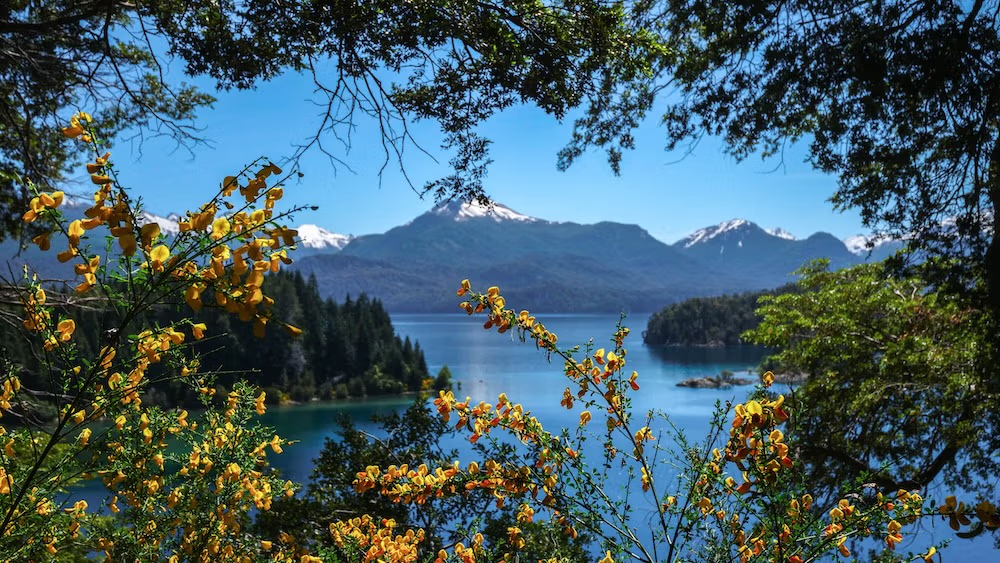
If you’ve watched the vlogs on our YouTube channel, you know Audrey and I try to keep morale high. We love chasing down a good local meal and a scenic viewpoint. But Patagonia doesn’t care about your itinerary, your travel umbrella, or your comfort. It is an ecosystem that demands respect, meticulous planning, and a massive stack of physical cash.
The brochures love to condense this region into a highlight reel of jagged granite peaks and calving glaciers, but to truly understand Patagonia, you have to break it down into its three dominating landscapes: the endless extra-Andean Steppe, the wildlife-dense Atlantic Coast, and the towering, violent Mountains of the Andes. You will invariably have to cross one to get to the other, and if you aren’t prepared for the micro-logistics of how these zones operate, you are going to get stranded, go hungry, or end up paying a massive rental car deductible.
Let’s strip away the Instagram filters and dig into exactly what it takes to navigate, survive, and actually enjoy the distinct terrains of the end of the world.
The Macro View: Decoding the Three Patagonias
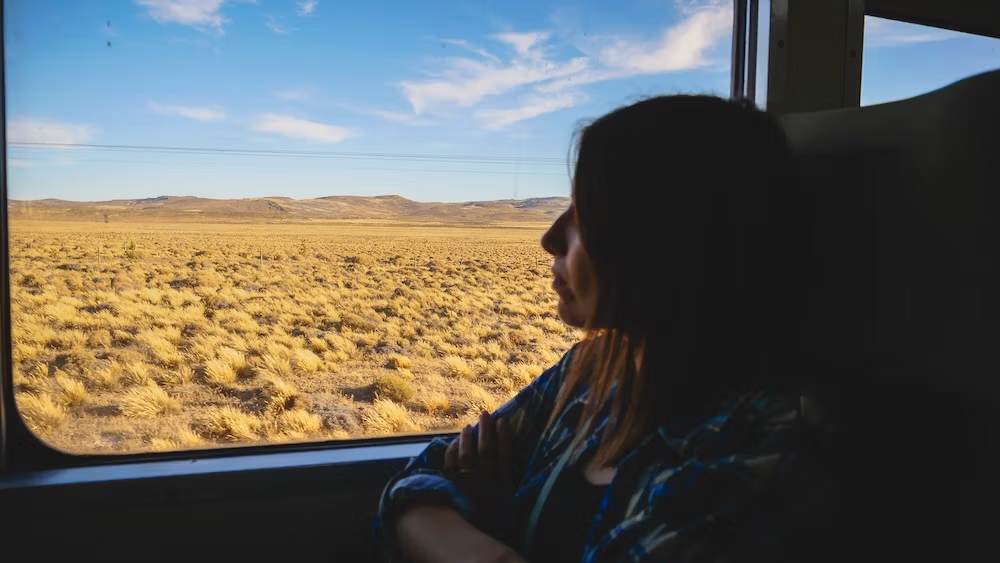
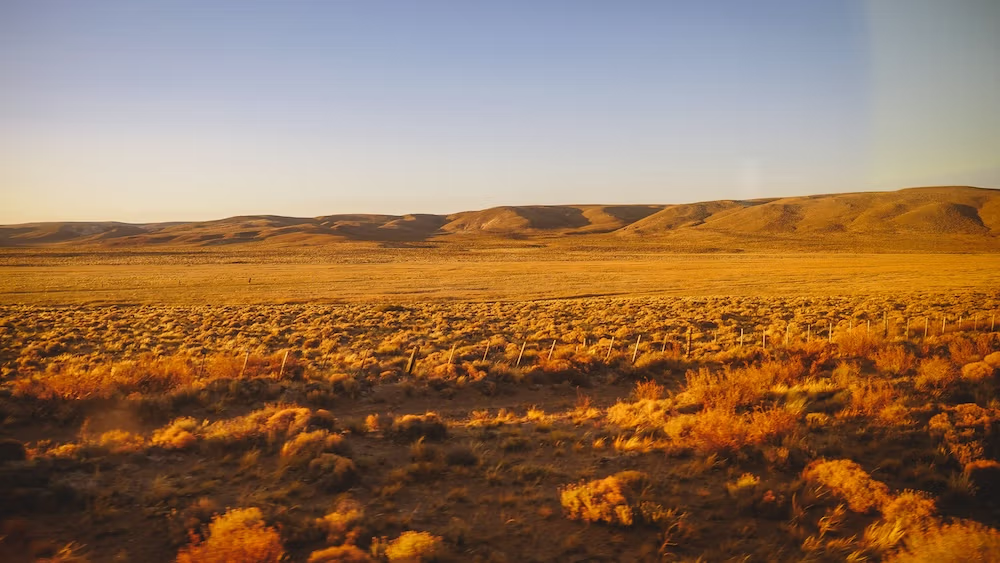
To cross Patagonia from east to west is to watch the world transition from complete sensory deprivation to vertical chaos. Driving from the Atlantic Coast (like Puerto Madryn) toward the Andes (Esquel or Bariloche) requires surviving roughly 600 to 800 kilometers of the Patagonian Steppe—a flat, arid, featureless expanse where the wind acts as a physical force actively trying to run your car off the asphalt.
Before we drill into the granular friction points of each zone, here is the current baseline for what you are walking into.
Master Landscape Database & Access Realities
| Landscape Category | Defining Topography | Key Hub / Location | Current Foreign Entry Fee | Operating Hours & Transit Reality |
| The Steppe | Arid scrubland, paleontology sites, petrified forests, infinite horizons. | Bosques Petrificados de Jaramillo (Arg) | FREE | Daytime access. Extreme crosswinds. Long stretches (100km+) with zero fuel or cell service. |
| The Coast | Gravel beaches, sandstone cliffs, sheltered gulfs, 42m below sea level salt flats. | Peninsula Valdes / Punta Tombo (Arg) | 45,000 ARS + 2,500 ARS Vehicle Tax | 24/7 Access (Peninsula). Punta Tombo strictly 8 AM – 6 PM (Sept-April only). |
| The Mountains | Sub-polar beech forests, granite spires (Fitz Roy), advancing ice caps. | Los Glaciares N.P. (El Chaltén) | 45,000 ARS (approx. $31-$45 USD) | Ticket booths manned 8 AM – 5 PM. Sunrise hikers often find booths empty. Steep town inclines. |
| The Mountains | Jagged ‘Cuernos’, turquoise lakes, dense temperate rainforests. | Torres del Paine N.P. (Chile) | $35 USD (1-3 days) / $49 USD (>3 days) | 7 AM – 9 PM (Summer). Strict cut-off times for trails to ensure hiker safety. |
Patagonia Landscape Decision Matrix: Which Version of the Region Matches Your Travel Style?
| If You Want… | Prioritize This Landscape | Best Base | Why It Fits | Main Risk |
|---|---|---|---|---|
| Wildlife and dramatic coast | Coast | Puerto Madryn | Best for penguins, whales, cliffs, salt flats | Wind + gravel-road damage |
| Huge open-space road-trip feeling | Steppe | Esquel, roadside overland routes, inland Chubut/Santa Cruz corridors | Pure scale and horizon shock | Fuel anxiety + boredom + exposure |
| Iconic hiking and glaciers | Mountains | El Chaltén / Torres del Paine / El Calafate | Patagonia’s most famous scenery | Fees, weather, trail exhaustion |
| Cultural stops with softer pacing | Valley towns / Steppe transition | Trelew, Gaiman | History, tea culture, lower-intensity days | Siesta closures and transit friction |
| Mixed itinerary with less rushing | Coast + mountain hubs | Madryn + Esquel / El Bolsón | Strong contrast without full overland burnout | Long transfer days |
Surviving the Coast and the Steppe
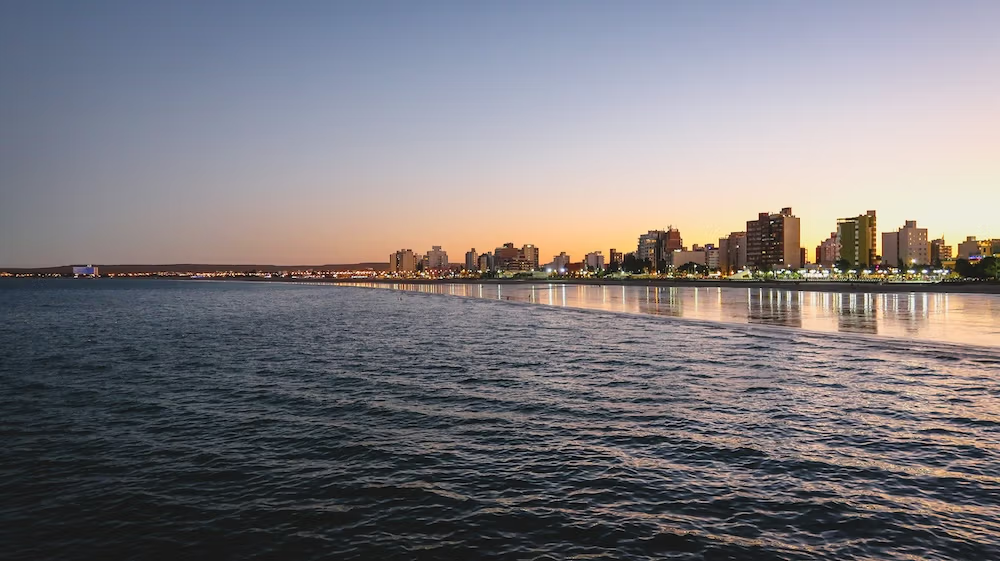
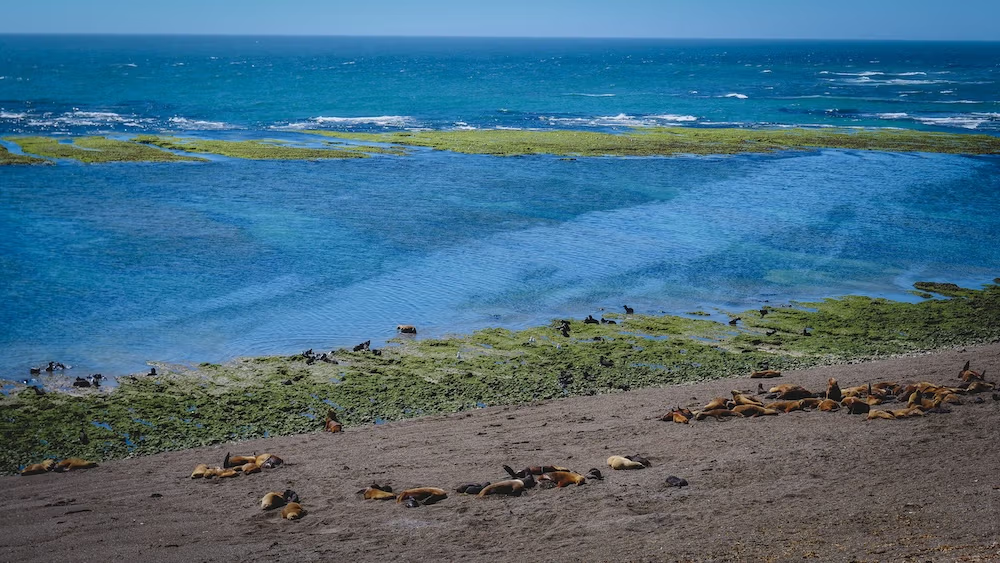
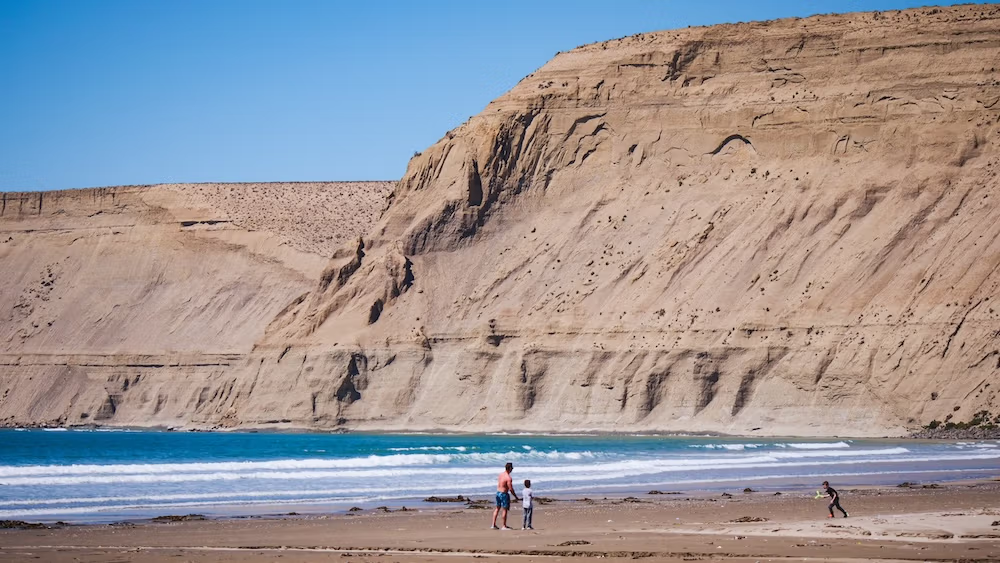
When we first arrived on the coast, the visual shock of the Steppe meeting the Atlantic was profound. We drove out toward Peninsula Valdes and Punta Tombo expecting lush coastal foliage. Instead, we found a dry, arid scrubland. It’s an incredible sight to watch Magellanic penguins waddling up from the beach, completely bypassing the water, to seek shade under dusty desert bushes.
But navigating this coastal-steppe hybrid is a logistical minefield. Let’s talk about the rental car trap.
If you are renting a car in Puerto Madryn or Trelew to see the penguins or the Southern Right Whales, you are going to encounter ripio—washboard gravel roads. Do not assume your standard Collision Damage Waiver (CDW) covers you. It explicitly excludes undercarriage damage from deep ruts and windshield cracks from flying stones, both of which are near-guarantees when driving 100 kilometers out to a colony. You either need to pay for the premium, zero-deductible local insurance, or you need to drive a maximum of 40 km/h, keeping a massive following distance from any truck on the road.
[Samuel’s Rental Car Warning: The Wind-Voided Insurance Trap]
The Patagonian wind is not just a breeze; it is an aggressive, omnipresent entity. If you open your rental car door without holding the frame firmly with two hands, a sudden gust will catch it and hyper-extend the hinges backward. Rental agencies classify this specific, common damage as “driver negligence.” Your insurance will instantly be voided, and you will pay out of pocket. Treat your car doors like loaded weapons. Always park facing into the wind.
The Reality of Coastal Inflation
When we first visited Peninsula Valdes a few years ago, we paid 650 Argentine Pesos for our international visitor entry. Thanks to hyper-inflation and massive sweeping changes in Argentina’s park systems, that same ticket is now 45,000 ARS. But here is the hidden moat point generic guides miss: if you are driving yourself, you must also pay a strictly enforced 2,500 ARS vehicle tax at the gate (for cars up to 5 seats).
The silver lining? Unusually for Argentine parks, the Peninsula Valdes gate is open 24/7. This allows dedicated wildlife photographers to enter hours before dawn to catch the sunrise over the salt flats without fighting a queue.
Coastal & Steppe Micro-Logistics Matrix
| Logistical Friction Point | The Problem (What goes wrong) | The Exact Solution & Cost |
| Highway Heatstroke | Missing a trail turn-off (e.g., near Puerto Pirámides) means walking on baking asphalt under a merciless sun. | Download offline Google Maps. Carry 2L of water per person minimum. There is zero natural shade. |
| Guanaco Strikes | Driving the ripio near dusk/dawn (6 PM – 8 AM) leads to rampant, dangerous collisions with large local wildlife. | Strictly enforce a “daylight driving only” rule for coastal roads. |
| Gas Station Deserts | Stretching fuel on Ruta 40 or coastal highways, assuming the next town’s pump is functioning. | Treat a half-tank as empty. Top off at every opportunity. Expect to pay ~1,000-1,200 ARS per liter. |
The Welsh Towns: Navigating the Cultural Steppe
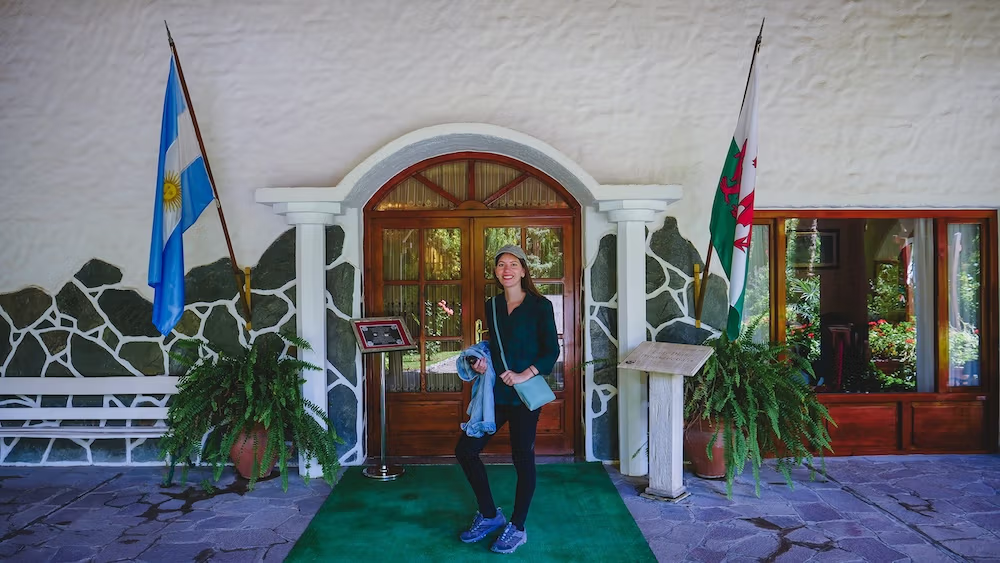
Moving inland from the coast, Audrey and I ventured into the lower Chubut River valley to explore the historic Welsh settlements of Trelew, Gaiman, and Dolavon. This is where we hit our first massive logistical brick wall regarding Patagonian transit and operating hours.
To get from Trelew to Gaiman for their famous Welsh tea, you can’t just hop on a bus and hand the driver some coins. We had to go to the terminal, buy a specific transit card for 85 pesos (which is non-refundable; it’s yours forever whether you want it or not), and then track down the 28 de Julio bus company. If you want the scenic route through the valley instead of the boring highway, you have to explicitly ask the driver to take “Route 7.”
Audrey and I had been walking for miles under the scorching Patagonian sun, sweating through our black flannel shirts and following a series of hand-painted signs promising tea. When we finally stumbled into the lush, pristine gardens of the teahouse Princess Diana once visited in Gaiman, we looked less like royalty and more like feral hikers. That is Patagonia: to get to the luxury, you usually have to survive the landscape first.
But Gaiman was a triumph compared to Dolavon.
If you want to know who is really in charge in Patagonia, try finding lunch in a small town on a Monday afternoon. We arrived in Dolavon on a Monday right as siesta hit (1:00 PM). Every single restaurant, museum, and even the local butcher was padlocked shut. The brochures promise endless cultural immersion; the reality requires you to surrender to their clock. We spent our “authentic Patagonian afternoon” sitting on the curb of a gas station, eating packaged alfajores and drinking Paso de los Toros grapefruit soda.
[The Operational Reality Check]
Do not trust Google Maps hours for small Patagonian towns on Mondays or Tuesdays. Between 1:00 PM and 5:00 PM, you are functionally locked out of society. Buy your groceries in the morning, and always carry emergency snacks if you plan to transit between 12:00 PM and 6:00 PM.
The Violent Transition: Entering the Mountain Hubs
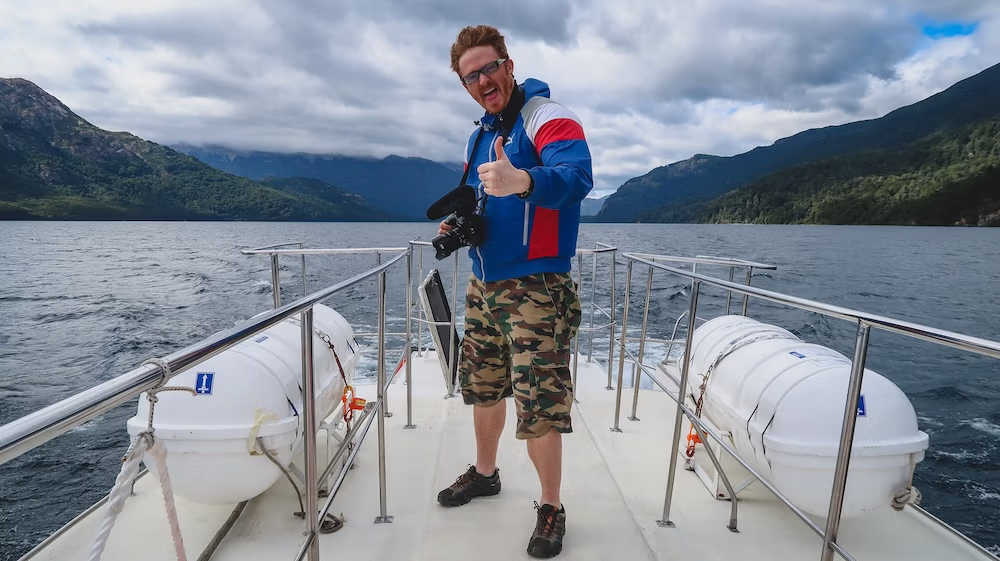
Eventually, the steppe cracks open, and you enter the Andes. We based ourselves out of Esquel and El Bolsón for parts of our trip, and later experienced the staggering scale of Los Glaciares.
It was in Esquel that the physical environment truly humbled me. I was forced to walk 10 blocks in the pouring rain to the bus terminal to physically buy tickets because online booking for regional lines was non-existent. It took exactly ten blocks for the infamous Patagonian wind to completely obliterate my cheap travel umbrella. I stood in the freezing rain holding a mangled piece of wire and nylon, learning a crucial lesson: standard city travel gear comes to Patagonia to die. Leave the umbrella at home; invest in a high-quality, Gore-Tex hardshell jacket.
The mountains are stunning, but the transit chokepoints surrounding them are terrifying. While trying to visit Los Alerces National Park from Esquel during the shoulder season, we discovered there was exactly one daily bus leaving in the morning and returning in the evening. We bought round-trip tickets. Others didn’t. We literally sat on the packed evening return bus and watched tourists get stranded in the freezing park overnight because they assumed they could just “wing it” and buy a ticket from the driver.
And transit absurdity doesn’t end there. When taking a simple 40-minute local bus from El Bolsón to Lago Puelo, the driver abruptly stopped the bus in the middle of nowhere. Why? Because El Bolsón is in the province of Río Negro and Lago Puelo is in Chubut. We all had to grab our bags, step over the provincial border line, and board a completely different bus run by the exact same company. The invisible friction here is relentless.
The Mountain Hiking Trap: Los Glaciares & Torres del Paine
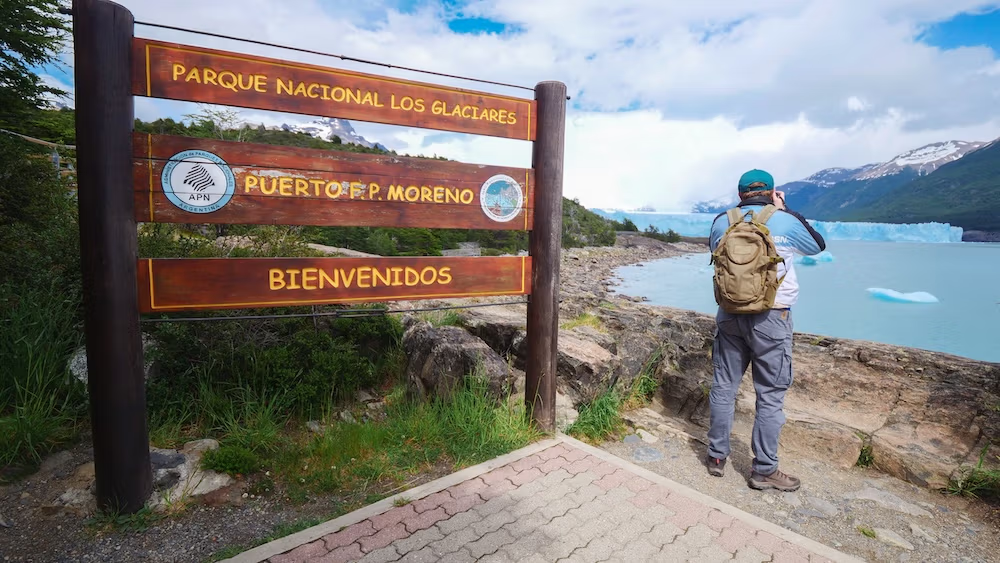
For a decade, El Chaltén (home to the Fitz Roy trek) was globally celebrated as Patagonia’s “Free Hiking Capital.” I have terrible news: as of late 2024 and continuing strictly, that era is dead.
Argentina has implemented a massive 45,000 ARS daily entry fee for foreigners to access the Los Glaciares north sector trails (including the famous Laguna de los Tres). There is a 50% discount for a consecutive second-day ticket (valid for 72 hours).
Here is the friction point people are actively getting burned by: tourists are buying a ticket down south in El Calafate to see the Perito Moreno Glacier, driving to El Chaltén three days later, and trying to claim the 50% “second-day” discount because it is technically the same National Park. Ticket agents are aggressively rejecting this. The fee is sector-specific. To get the discount, you must hike El Chaltén trails on back-to-back days.
Across the border in Chile, things are just as tight. We missed trekking the full “W” in Torres del Paine on our initial pass (a prime target for an upcoming guide!), but if you are heading there, you must prepare for the new standardized USD tiered fee: $35 USD for up to 3 days and $49 USD for more than 3 days.
But the real trap in Torres del Paine is the “Cash-Only Stranding.” You can book your main bus ticket from Puerto Natales online. But when you arrive at the Laguna Amarga park gate, the road to the actual Welcome Center and trailheads is un-walkable. You are forced to take a mandatory 15-minute connecting shuttle van. This van explicitly demands 4,500 CLP in physical cash. If you show up with only a credit card or US Dollars, you will be left standing in the freezing wind while the vans drive away.
The Mountain Hub Micro-Logistics Ledger
| Specific Location | The Hidden Friction | The Fix / Reality | Effort vs. Reward |
| Torres del Paine (Laguna Amarga Shuttle) | Shuttle strictly demands 4,500 CLP physical cash. Cards are useless. | Withdraw small-denomination Chilean Pesos in Puerto Natales before boarding your main bus. | High Effort / High Reward. Crucial for starting your trek. |
| El Chaltén / Ruta 40 (Gasoline) | The single gas station at the edge of town routinely runs dry or the internet crashes, reverting to cash-only. | Fill up completely in El Calafate. Carry a massive stack of Argentine Pesos earmarked purely for emergency fuel. | High Stress / High Consequence. Do not arrive on fumes. |
| Lago Puelo (Local Bus) | Provincial border bus swaps; drivers rarely have change for large bills. | Bring exact change (e.g., 30 pesos historically, adjust for inflation) or small bills. The relief of exact change is real. | Medium Effort / High Reward. Beautiful lake access. |
| Esquel (Cerro de la Cruz) | Missing the trailhead means bushwhacking in gale-force winds. | Know when to quit. If you are an hour out and getting blasted, go back to town and eat pizza. | High Effort / Variable Reward. The pizza is a guaranteed win. |
The Patagonian Reality Check (Food, Exhaustion, and Triage)
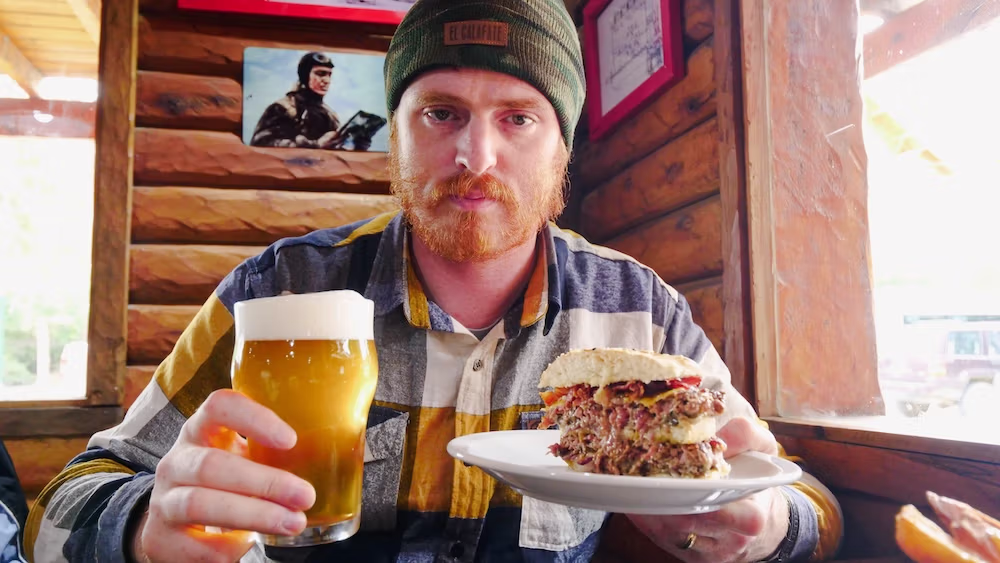
Halfway up the mountain in Esquel, blasted by the wind and completely off the trail, a passing hiker informed us we still had an hour to the summit. We looked at the peak, looked at each other, and immediately turned around to go back to town and eat a massive pizza instead.
Let’s be honest about exploring the Patagonian Andes: sometimes the greatest triumph of your day is knowing when to abandon a hike and go hunt for carbs.
You are going to burn thousands of calories fighting the terrain, the cold, and the sheer logistical stress of moving around. Fortunately, the food in Patagonia is an incredible reward, provided you manage your timing.
After a few weeks of traversing the steppe and the mountains, we found ourselves sitting in a local Parrilla (steakhouse) in El Bolsón. We had just consumed an absolute mountain of Patagonian lamb, accompanied by the flawless, ubiquitous puré de calabaza (pumpkin mash) that graces every good southern Argentine table, and finished with a dense flan. It was at this moment I had to admit to Audrey that I was now living strictly in stretch leggings because my jeans simply no longer fit.
The portion sizes down here are not designed for casual diners; they are designed to refuel sheep shearers and mountaineers.
[The Foodie Reality Check & Budgeting]
A massive Parrilla dinner for two (including a bife de chorizo, lamb, salads, bread, and a full bottle of local Malbec) will run you roughly $30 to $45 USD depending on the current blue dollar exchange rate in Argentina. It is an absurd value. However, daily budgeting requires strategy. If you are backpacking and cooking your own meals in hostel kitchens, expect to spend $45 to $60 USD a day. If you want mid-range hotels and restaurant dinners, budget $100 to $150 USD a day. Supermarket groceries are cheap, but remember: the local dog that escorts you home from the market will expect a toll in the form of cold cuts.
Triage & Recovery: The Post-Hike Matrix
When you drag yourself back into town after a 24km round-trip hike to Laguna de los Tres, your body is going to be broken. El Chaltén, cruelly, is built on an incline, meaning your walk from the trailhead back to your hostel involves navigating steep, cobblestone-like dirt streets. There are no taxis waiting to save you. Here is how you prioritize your recovery.
| Triage Priority | The Craving | The Local Fix | Estimated Price |
| Immediate Hydration / Sugar | You are dusty, wind-burned, and shaking. | Paso de los Toros (Grapefruit Soda). The ultimate tart, highly carbonated local life-blood. | ~$1.50 – $2.00 USD at a Kiosko. |
| Heavy Caloric Replacement | Your muscles are depleted from vertical climbs. | Patagonian Lamb (Cordero Patagónico) with Puré de Calabaza . Slow-roasted over an open fire. | ~$18 – $25 USD per massive plate. |
| Next-Day Comfort | It’s raining, your gear is wet, you aren’t hiking. | Welsh Tea (Té Galés). Find a teahouse (if not siesta time) for scones, black tea, and heavy cakes. | ~$15 – $20 USD per person. |
The Meteorological Mechanics: Why the Wind Wants to Destroy You
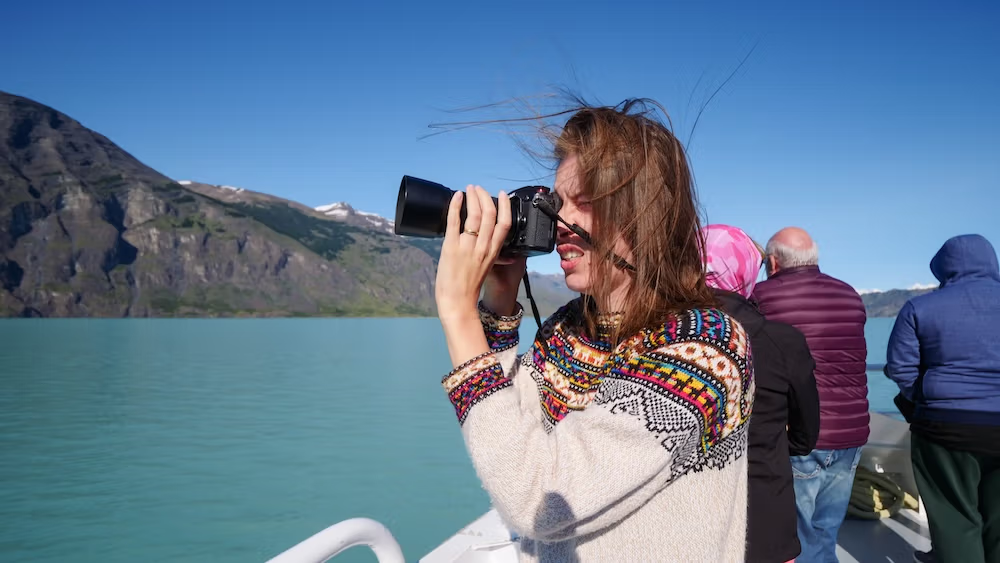
You don’t truly understand Patagonian wind until you step out of a bakery in El Chaltén, completely sober, and find yourself stumbling sideways down the street just trying to eat an empanada.
Before we arrived, everyone warned us: “The wind is bad.” But “bad” implies a temporary weather system. In Patagonia, the wind isn’t a storm that passes; it is the permanent, defining geographical feature of the landscape. It is an aggressive, invisible opponent. To survive it—and to understand why your packing list needs to look like an Everest expedition rather than a summer vacation—you have to understand the actual science of what is happening at the bottom of the world.
If you look at a globe from the bottom up, you’ll notice something terrifying: between Antarctica and the southern tips of South America, Africa, and Australia, there is almost zero land. It is an endless, uninterrupted ring of ocean.
Because there are no continents to act as speed bumps, the westerly winds down here just build, and build, and build.
Decoding the Latitudes: The Forties and Fifties
Sailors have feared these latitudes for centuries, giving them distinct, aggressive names based on their geographic coordinates:
- The Roaring Forties (Between 40°S and 50°S): This band slices right through the northern half of Patagonia (including Bariloche, Esquel, and Puerto Madryn). The winds here are relentless and loud, consistently sweeping eastward across the Steppe.
- The Furious Fifties (Between 50°S and 60°S): This is the deep south. This band hammers Torres del Paine, El Calafate, and Tierra del Fuego. Down here, gale-force gusts exceeding 100 km/h are considered a normal Tuesday afternoon.
These massive, moisture-heavy ocean winds spin uninterrupted around the globe until they finally slam into the only brick wall in their path: the jagged granite spine of the Andes Mountains.
The Rain Shadow Effect: A Tale of Two Ecosystems
When these roaring westerlies hit the Chilean side of the Andes, the air is forced upward into the freezing alpine altitudes. Cold air cannot hold moisture, so the clouds violently dump all their water on the western slopes. This meteorological collision is exactly why Chilean Patagonia is defined by incredibly lush, dripping temperate rainforests, deep green fjords, and massive hanging glaciers.
But once that air crests the mountain peaks and drops into Argentina, it is completely bone-dry.
This is known as the Rain Shadow Effect. As the dry air violently descends the eastern slopes of the Andes, it accelerates, blasting out across the Argentine Steppe. This is why you can stand in a dense, wet forest in Chile, drive a few hours east across the border, and suddenly find yourself in a brown, arid desert that looks like a Mad Max film set.
[Samuel’s Packing Reality Check]
Understanding the Rain Shadow is the key to cracking the Patagonian packing code. You are packing for two completely different meteorological realities on the exact same trip. You need a 20,000mm-rated Gore-Tex hardshell to survive the torrential dumps of the Chilean rainforests, and you need polarized sunglasses, heavy chapstick, and severe wind-blocking layers to survive the blinding, dehydrating gales of the Argentine Steppe.
The Patagonian Weather Matrix
Here is exactly how the macro-meteorology translates into your daily, boots-on-the-ground reality:
| Meteorological Phenomenon | The Physical Mechanism | The Geographic Impact | The Visitor Survival Protocol |
| The Roaring Forties | Uninterrupted westerly winds building over the open ocean. | Relentless, loud crosswinds across northern Patagonia (Ruta 40, Peninsula Valdes). | Car Doors: Always park facing the wind. Two hands on the door frame when exiting. |
| The Furious Fifties | Extreme gale-force winds closer to Antarctica. | Violent, sudden gusts in Torres del Paine and Tierra del Fuego. | Tent Pitching: If camping, you must use heavily fortified guy-lines. Standard fiberglass poles will snap. |
| The Rain Shadow (Chile) | Westerly winds pushed up the Andes, dumping all moisture. | Deep green temperate rainforests, muddy trails, high precipitation. | Waterproof Standard: Leave the cheap poncho. Bring a proper 3-layer hardshell jacket and waterproof hiking boots. |
| The Rain Shadow (Argentina) | Dry air dropping down the mountains and accelerating east. | The Arid Steppe. Zero natural shade, intense dust, extreme dehydration. | The Dry Kit: Heavy-duty lip balm, 2L+ of water per person, and physical wind-buffs for your face to block dust. |
When you stop treating the wind as an annoyance and start viewing it as the master architect of the landscape, the entire region makes sense. The trees are bent sideways in Tierra del Fuego because the Furious Fifties sculpted them that way. The extra-Andean steppe is empty because the Andes stole all the water. You aren’t just enduring bad weather; you are walking through a living geology lesson.
The Patagonia Friction Index: What Each Landscape Will Demand From You
| Landscape | Wind Stress | Transport Stress | Cash Stress | Physical Effort | Gear Difficulty | Overall Friction |
|---|---|---|---|---|---|---|
| Steppe | Extreme | High | Medium | Medium | Medium | High |
| Coast | High | Medium–High | Medium | Medium | Medium | High |
| Mountains | High–Extreme | High | High | Extreme | High | Very High |
| Small town valley stops | Medium | Medium | Medium | Low–Medium | Low | Medium |
The Final Verdict on the End of the World
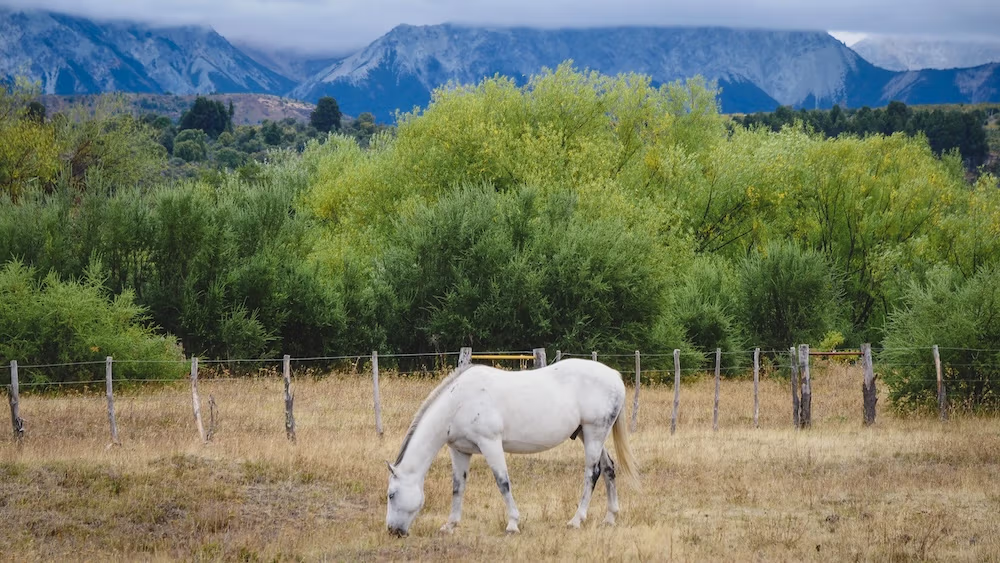
Patagonia is not a vacation; it is an expedition, even if you are staying in nice hotels. The Steppe will test your patience and your gas tank. The Coast will test your rental car’s suspension and your tolerance for wind. The Mountains will test your physical endurance, your knees, and your ability to carry exactly 4,500 CLP in your left pocket.
But when you are sitting in a warm Parrilla after surviving a provincial border bus swap, drinking a glass of Malbec while a stray dog sleeps on your boots, you realize the friction is the point. The logistical hurdles keep the region wild. If you plan for the closures, respect the wind, and always upgrade your bus seat, the landscapes of Patagonia will deliver the greatest travel experience of your life.
Make sure to check out our YouTube channel for the full, boots-on-the-ground video dispatches of these exact struggles, and keep an eye out for our upcoming deep-dive guides on the specific trails of El Chaltén and Torres del Paine. Until then, grab some exact change, hold onto your car doors, and enjoy the ride.
What Each Patagonian Landscape Actually Looks Like in Real Life
| Landscape | What People Imagine | What You’ll Actually See |
|---|---|---|
| Steppe | Empty boring plains | Massive horizons, guanacos, wind-blasted drama, severe light |
| Coast | Green coastal scenery | Dry scrubland, cliffs, gravel, wildlife, raw Atlantic exposure |
| Mountains | Endless perfect views | Stunning peaks plus mud, fees, trail fatigue, steep towns |
| Chilean side | postcard rainforest | deep wet forests, soaked gear, dense cloud and rain |
| Argentine side | generic dry terrain | extreme rain-shadow desert with light, dust, and huge skies |
FAQ: All About Patagonian Landscapes
When is the absolute best time to visit Patagonia?
Depends. If you want the warmest weather and the longest daylight hours for hiking, aim for the peak summer months of December through February. However, this is when the trails are packed and the wind is at its absolute fiercest. If you want to avoid the crowds, pay lower prices, and see incredible fall foliage, target the shoulder season of March and April.
Do I really need to rent a car to get around?
Nope. You can navigate the vast majority of the region using the extensive long-distance bus network, just make sure to always upgrade to a fully reclining cama seat. However, if you are exploring the Atlantic coast around Peninsula Valdes, a rental car is incredibly helpful. Just remember the ripio warning: gravel roads will destroy your undercarriage, and a gust of wind will hyper-extend your car door, instantly voiding your rental insurance.
Can I just pay for everything with a credit card or US Dollars?
Never. While hotels and larger restaurants take cards, assuming you can go cashless is a guaranteed way to get stranded. You need physical, small-denomination Chilean Pesos for the mandatory Torres del Paine shuttles, and a massive stack of Argentine Pesos for small-town transit cards, exact-change local buses, and emergency gas fill-ups on Ruta 40 when the town internet inevitably crashes.
How many days do you actually need to see the region?
Fourteen. Anything less than two full weeks means you are going to spend more than half your trip just staring out the window of a bus trying to cross the steppe. The distances here are brutally long. Give yourself 10 to 14 days minimum so you can actually stop, recover from the transit, and adjust to the strict local siesta schedules without rushing.
Is it safe to drink the tap water in Patagonia?
Absolutely. In almost all the main Patagonian towns, the tap water is heavily treated and perfectly safe to drink, though it might taste a bit chlorinated. The real magic happens when you get up into the mountain trails of Los Glaciares or Torres del Paine; the water rushing through those streams is pure, filtered glacier melt. Fill your bottle straight from the river.
How bad is the Patagonian wind, really?
Destructive. Do not bring a cheap travel umbrella; I watched mine get completely obliterated by the wind outside the Esquel bus terminal in under ten blocks. The wind here is a permanent, physical force that dictates the landscape. You need a high-quality, wind-blocking hardshell jacket and serious face protection to survive the gusts, especially out on the extra-Andean steppe.
Do I need a visa to cross back and forth between Argentina and Chile?
Nope. If you hold a passport from the US, UK, Canada, or Australia, you do not need a visa for short tourist visits; you will generally be granted up to 90 days upon arrival. However, crossing the border is a serious process. The Chilean SAG agricultural checkpoints are incredibly strict. If you forget a single apple or a piece of local meat in your backpack, you will be hit with a massive fine.
Is it dangerous to travel in Patagonia?
Hardly. In terms of violent crime or theft, Patagonia is incredibly safe compared to major global cities. The actual dangers here are purely environmental and logistical. The real threats are hitting a guanaco on the highway at dusk, getting aggressive sunburns due to zero natural shade, or getting stranded overnight in Los Alerces National Park because you failed to buy a round-trip bus ticket in advance.
Project 23 Argentina: This guide is also available in Spanish. [Lea la versión en castellano: Paisajes de la Patagonia Explicados: ¡Estepa, Costa y Montañas!]