
There is a highly specific sound a cheap travel umbrella makes when it meets the Patagonian wind. It’s a sharp, violent snap, followed instantly by the humiliating realization that you brought a toy to a knife fight.
We had just stepped out into the streets of Esquel to buy bus tickets. It was raining, so I popped open the flimsy little canopy we had carried across three countries. In less than two seconds, the “infamous Patagonian winds” caught the underside, hyperextended the metal skeleton, and bent the entire contraption permanently out of shape. It looked like a modern art sculpture of defeat. I was soaked. Audrey couldn’t stop laughing. We threw it in the nearest bin and walked to the bus terminal looking like drowned rats.
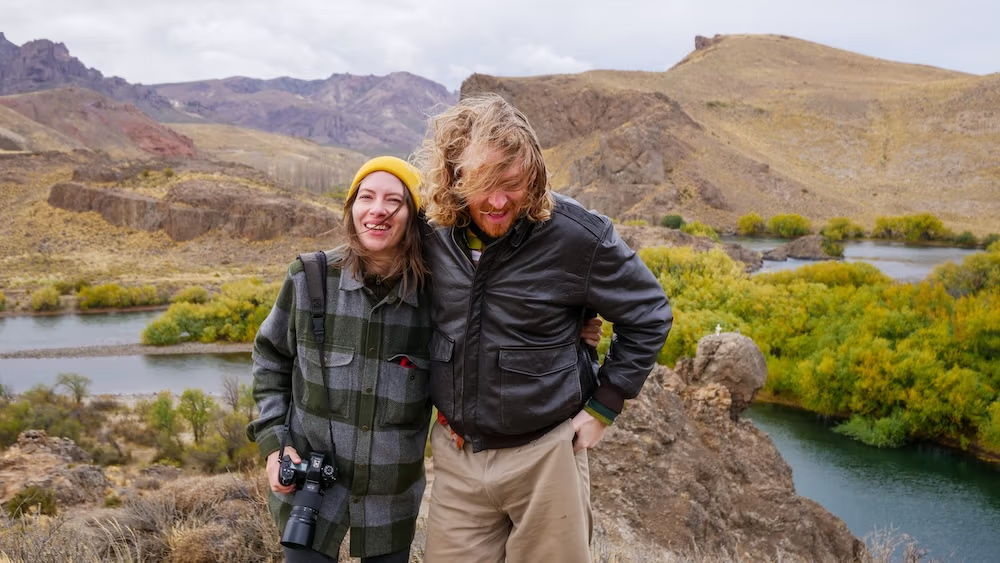
If you are planning a trip to the southern tip of South America, you need to understand something fundamental before you pack your bags, book your rental cars, or map out your trekking routes. The wind down here—born in the latitudes known as the Roaring 40s and Furious 50s—is not a “weather event.” It doesn’t just mess up your hair. It is a physical, geographical force. It is an invisible bully that dictates every logistical move you make, from the moment your plane attempts to land to the second you try to open your car door.
On our YouTube channel, we frequently joke about the “Patagonian curveballs,” but behind the camera, the logistics require militant preparation. Let’s strip away the brochure gloss and dive into the microscopic, on-the-ground realities of navigating the bottom of the world.
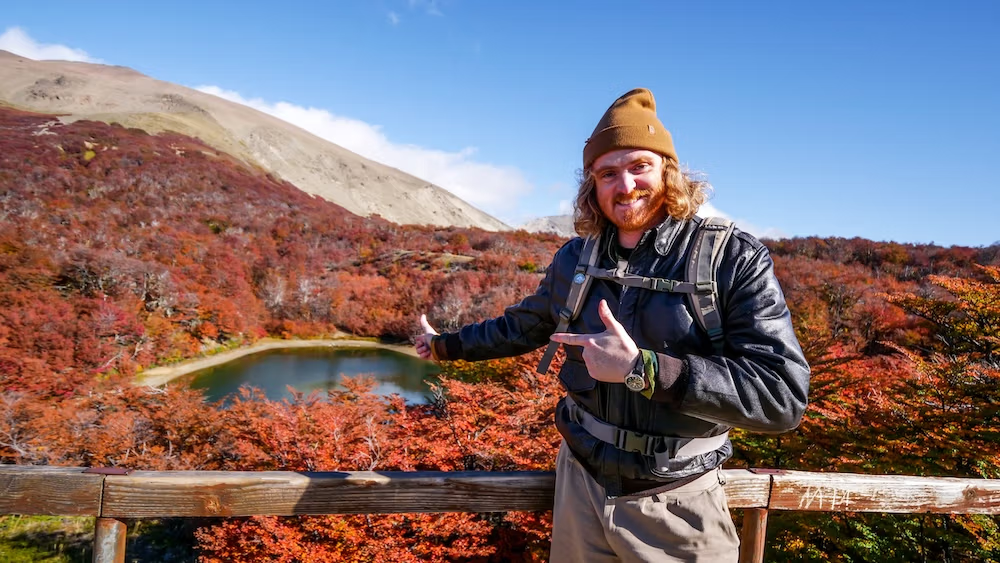
The “Roaring 40s” Reality Matrix: What You Are Actually Up Against
| The Atmospheric Phenomenon | The Physical Metric | The Ground-Level Reality | The Logistical Workaround |
| The “Unbroken” Roaring 40s | Base velocities of 60–80 km/h | Wind arrives at the continent with zero landmass friction to slow it down. It is a constant, horizontal wall of pressure. | Add 30% to all estimated driving and hiking times. The constant physical resistance drains your daily energy twice as fast. |
| The Venturi Effect (Wind Tunnels) | Gusts accelerating to 100–120 km/h | Narrow mountain passes (like Torres del Paine’s French Valley) violently compress and accelerate the baseline wind. | Ditch the fiberglass gear entirely. Use strictly 7001-T6 aluminum trekking poles and tent spikes; cheap gear will shatter. |
| Adiabatic “Gravity Waves” (Williwaws) | Sudden, violent downdrafts pushing 110+ km/h | Air hits the Andes, dumps rain, and plunges down the eastern slopes into towns like El Chaltén without any warning. | Never park parallel to the wind. Always use both hands to open your rental car door to prevent the hinges from snapping. |
| Atmospheric Salinity (The “Sandblast”) | Atomized seawater carried 5km+ inland | In coastal areas (like Punta Arenas or Puerto Madryn), high winds carry abrasive salt and grit that coats gear and skin. | Wipe down camera gear nightly with a damp cloth, and swap water-based face moisturizers for heavy beeswax or Lanolin sealants. |
| The Infrastructure Trigger | 55 Knots (Aviation) / 80 km/h (Maritime) | The exact wind-speed thresholds where local governments mandate airport ground-stops and ferry cancellations. | Never build an itinerary down to the minute. Always leave a 24-hour “Triage Buffer” between major treks and outbound flights. |
The Physics of the Bully (And Why Your Wardrobe is Wrong)
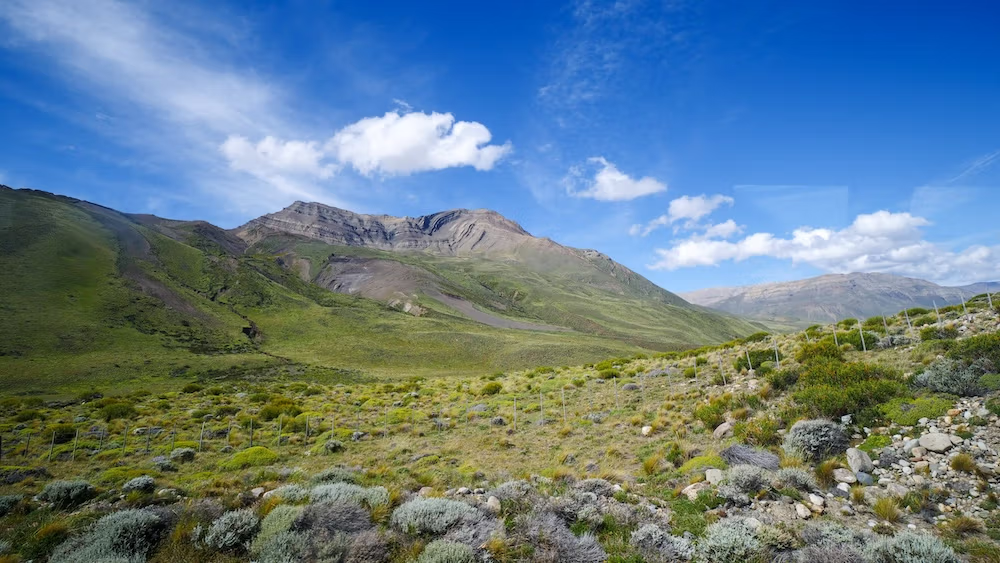
To understand what you’re up against, you have to look at a globe. Look at the Earth between the 40° and 50° South latitudes. It is 90% ocean. There are no major landmasses to create friction. The wind builds unbroken kinetic energy across the South Pacific High, screaming eastward until it finally smashes into the jagged wall of the Andes Mountains.
When that massive wall of air hits narrow mountain passes like the French Valley in Torres del Paine, it triggers the Venturi Effect. A stiff 60 km/h coastal breeze is funneled and compressed into 100+ km/h wind-tunnels. Then comes the “Adiabatic Cooling.” The moist Pacific air hits the mountains, dumps its rain, and creates invisible “Gravity Waves”—sudden, violent downdrafts (known locally as williwaws) that slam into the eastern steppe where towns like El Chaltén sit.
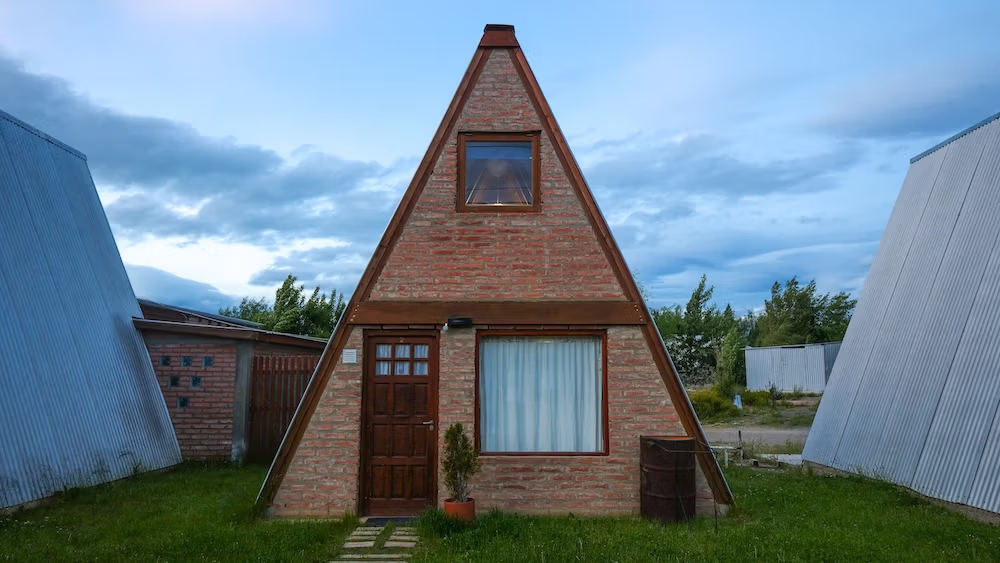
I learned this the hard way. We arrived in Patagonia in late January. Peak summer. I packed for a South American summer. Forty-eight hours later, I was waking up in a rented cottage to 7°C (44°F) mornings, listening to the wind physically shake the foundation of the house so violently I felt like one of the Three Little Pigs wondering if the architect used straw or brick. I spent my first morning shivering through town to buy a heavy flannel overshirt and a local Gaucho hat just to survive the walk to breakfast.
[Samuel’s Gear Reality Check] Standard softshell jackets are completely useless here. The wind literally pulls the heat out through the pores of lesser fabrics—a phenomenon known as “wind chill stripping.” You need a hardshell with a 20,000mm+ waterproof/windproof rating.
For my fellow video creators: a standard “dead cat” microphone windscreen will fail. The wind creates a turbulent noise floor that ruins audio. We actually had to upgrade our audio gear for our upcoming destination guides because the wind acts as a physical object hitting the diaphragm. Leave the fiberglass tent poles at home; park guidelines actively recommend 7001-T6 aluminum or DAC poles because carbon and fiberglass simply shatter.
The Transport Failure Matrix
When the wind acts as a physical force, infrastructure shuts down. You cannot build an itinerary down to the minute here. You have to build in “triage days.” Here is exactly what the failure thresholds look like on the ground right now.
| Transport Mode | The Wind “Trigger” Threshold | The Logistical Reality & Workaround | 2025/2026 Financial Impact |
| Aviation (FTE/USH) | 55 Knots (102 km/h) | “Ground Stops” are enacted. Flights will circle and divert back to Buenos Aires. | Cost of rebooking local transit if you miss your bus connection. Always leave a 24-hour buffer between flights and treks. |
| Austral Broom Ferry | Sustained 80 km/h | Crossings over the Strait of Magellan are indefinitely suspended. Averages 4.5 closure days a month. | Cars: $31,700 CLP (~$33 USD). Motorhomes pay double. Foot passengers cross free. |
| Park Speed Limits | 40 km/h Legal Limit | This isn’t for traffic; 110 km/h lateral gusts easily flip high-profile campervans at higher speeds. | Time cost: A 100km drive will take 3 hours. Do not rush the washboard gravel (ripio). |
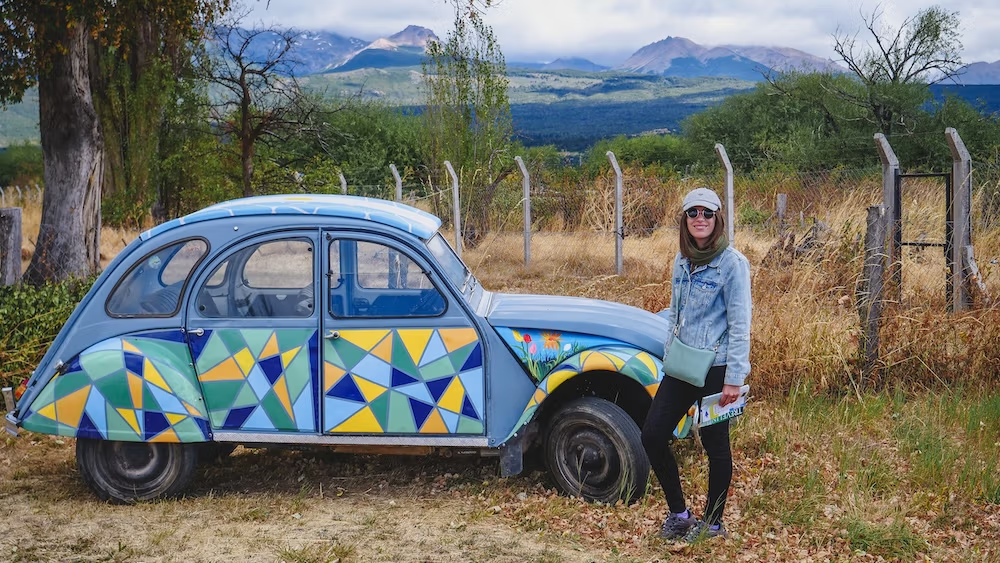
The “Wind-Blown Door” and the $3,000 Mistake
Let’s talk about the single most expensive mistake tourists make in Patagonia, and it happens before they even reach a trailhead.
You land in Punta Arenas or El Calafate. You rent a high-clearance 4×4 from Hertz or Europcar. You dutifully pay for the “Super CDW” (Collision Damage Waiver) to ensure you have full coverage. You drive to your hostel, park the car, and grab the door handle. You pop the latch, and instantly, a 100 km/h gust of wind rips the door entirely out of your hand. It flies open with a sickening crunch, hyperextending the metal hinges and denting the front quarter-panel.
When you return the car, the rental agency smiles, looks at the door, and hands you a bill for the excess deductible—anywhere from $1,105 to over $3,000 USD.
Why? Because in 2026, Patagonian rental contracts contain a highly specific, often-buried “Force Majeure” or “Wind-Blown Door” exclusion clause. Rental agencies classify wind-damage to doors not as a collision, but as driver negligence, instantly bypassing your expensive CDW coverage.
The Fix: You must change your physical muscle memory. Always, without exception, park your vehicle facing directly into the wind. When exiting, roll down the window two inches to equalize the cabin pressure. Grab the interior door handle with both hands, brace your shoulder against the panel, and push it open slowly. Never let go of the handle until you are physically out of the vehicle and the door is latched shut behind you.
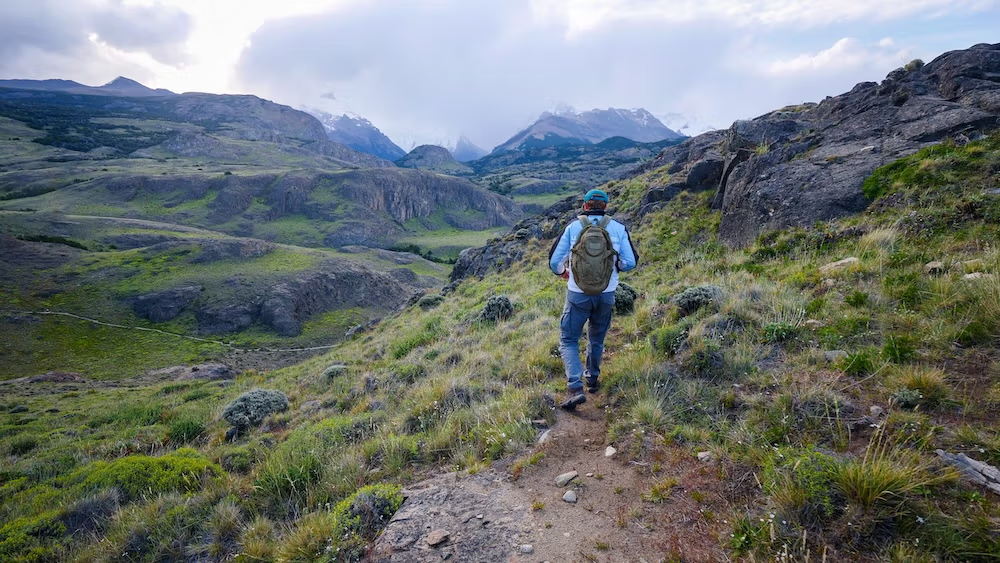
“We Have Errands to Run” (The El Chaltén Reality)
Every generic travel blog will tell you to “push to the summit” and “embrace the challenge” of Patagonia’s legendary trails. I am here to tell you that sometimes, the absolute smartest thing you can do is bail, turn around, and eat pizza.
We were hiking up the Cerro Torre trail network in El Chaltén. The wind was howling down the valley, throwing grit into our eyes. We were about halfway up a massive, exposed ascent, completely battered. The trail had turned into a steep gradient of loose scree, and we were leaning forward at a 45-degree angle just to keep from being blown backward.
Suddenly, a French couple appeared, descending rapidly. They looked like they had just survived a shipwreck. We asked them how much further to the top. They shook their heads. “It is at least another hour,” the guy said, shouting over the roar, “and it is much worse up there.”
Audrey and I looked at each other. The toxic positivity of travel blogging whispered in my ear to keep going. But my freezing toes and the prospect of a hot meal screamed louder. “You know what?” I said. “We actually have errands to run back in town.”
We turned around. We did not reach the summit. And it was the best decision we made all week.
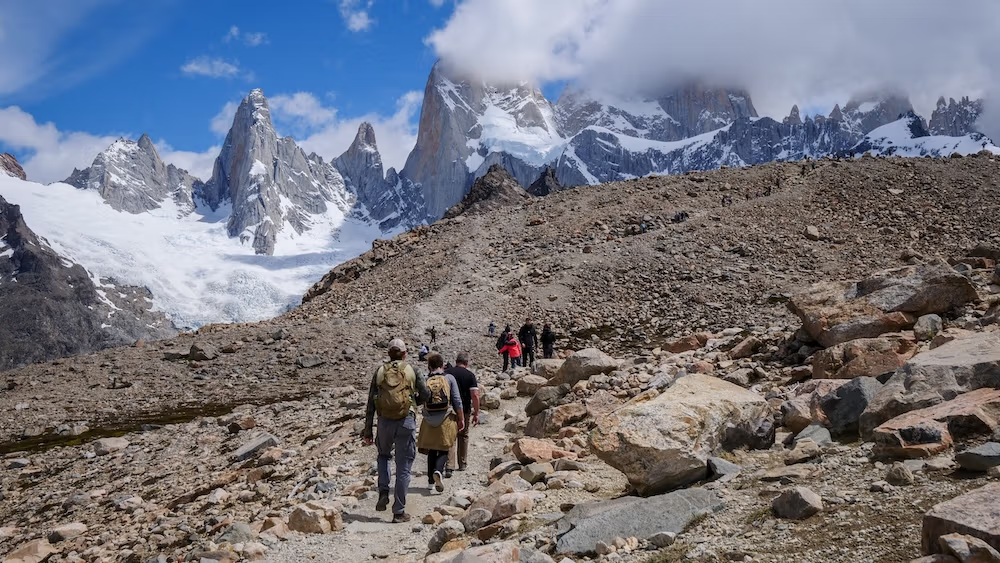
If you are tackling the famous Laguna de los Tres hike (the base of Mount Fitz Roy), you have to understand the terrain reality. The final kilometer of this 20km round-trip is a brutal 400m elevation gain at a 40-50% gradient on loose scree. If the wind hits 80 km/h here, you cannot walk upright. You will be crawling on your hands and knees.
The biggest mistake hikers make is treating this like a normal day-hike and starting leisurely at 10:00 AM. By the time they hit the boulder field, the afternoon adiabatic cooling has triggered. They walk straight into an 80 km/h “Afternoon Whiteout,” and Fitz Roy is completely hidden by clouds.
The 4:45 AM Fix: The 6:00 AM to 10:00 AM window is the only statistically reliable time to get calm winds and clear views. You must book a shuttle to drop you at Hostería El Pilar before dawn (around 4:45 AM). Hiking the flat valley in the dark with a headlamp puts you at the base of the final brutal ascent by 7:30 AM. You beat the crowds, you beat the whiteout, and you actually get the photo.
Trail Triage & Logistics Ledger
| Trail / Venue | 2025/2026 Financial Reality | The Physical Friction | The Specific Workaround |
| Laguna de los Tres (El Chaltén) | Free Entry (North Sector Los Glaciares NP) | The final 1km is a 40-50% scree gradient. Will destroy knees without poles. | Start at Hostería El Pilar at 4:45 AM. Summit between 6 AM and 10 AM. |
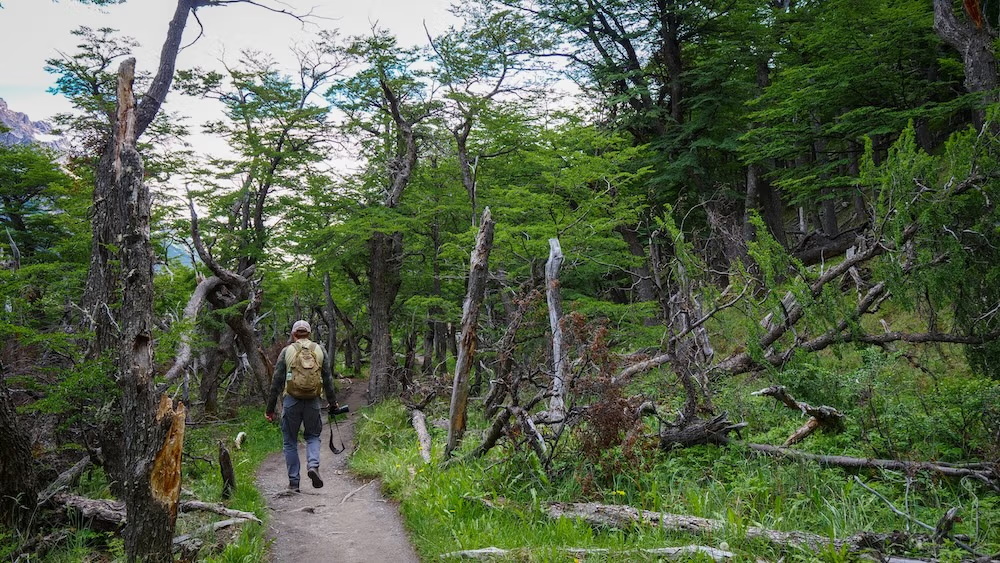
| Campamento Poincenot (Base Camp) | Free (Requires registration) | High winds cause shallow-rooted dead trees to snap and crush tents. | Look up. Never pitch under “widowmakers.” Pitch low profile facing westerly winds. |
| Torres del Paine (TDP) Entrance Gate | May 1, 2026 Shift: ~$40-$50 USD route-based fee. | Walk-up ticket sales have been entirely abolished. You will be turned away. | Mandatory 24-hour pre-booking via pasesparques.cl. No exceptions. |
The 2026 Torres del Paine Overhaul (What We Missed)
We have to talk about the bureaucratic elephant in the room: Torres del Paine in Chile. While our recent focus has heavily featured the Argentine side of Patagonia, the cross-border logistics are shifting massively in 2026.
If you are planning to cross from El Calafate into Puerto Natales to tackle the ‘W’ or ‘O’ circuits, your 2023 guidebooks are dangerously obsolete. As of January 1, 2026, CONAF lifted the mandatory guide requirement for the O-Circuit, replacing it with a strict “Mountain Trail Operation Protocol.” Independent hikers must now pass a localized “Weather Readiness Briefing” at the Laguna Amarga entrance. If you don’t have the right gear (remember the Aluminum Rule), they can pull your permit.
More importantly, starting May 1, 2026, the entry fee structure completely changes. Instead of the flat foreigner rate of $48,500 CLP ($50-$55 USD), TDP is moving to a route-based fee system. You will pay specifically for the trails you use (the ‘W’ costs differently than the ‘O’). This is designed to fund wind-damaged trail maintenance. Furthermore, if you are doing the multi-day treks, you must have all your campsites pre-booked across both private companies (Vértice and Fantástico Sur) before CONAF will even let you past the gate.
You cannot wing Torres del Paine. It requires military-grade spreadsheet planning six months in advance.
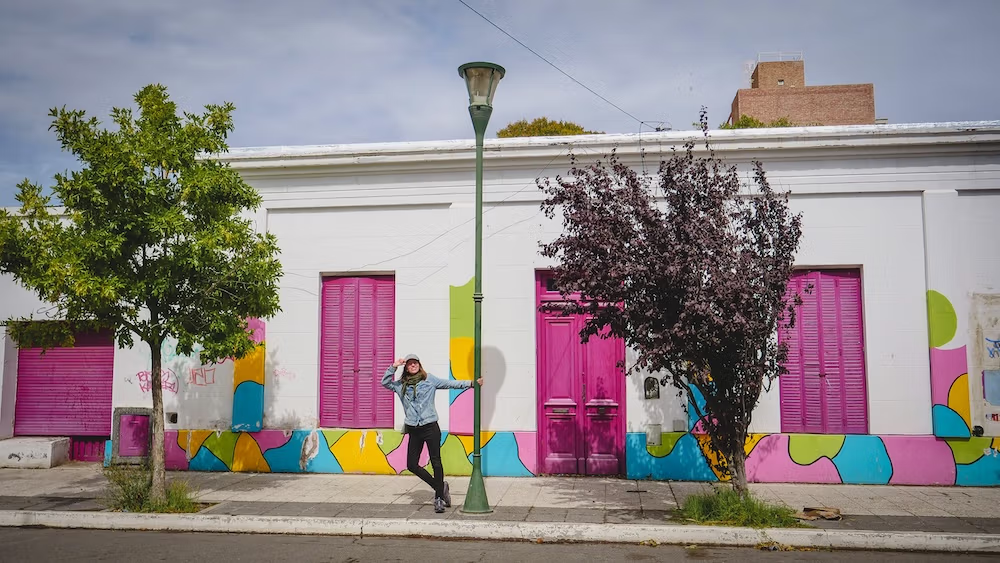
Ghost Towns, Siestas, and the “Pasta Sauce” Extortion
Let’s shift gears from the physical to the cultural. Patagonia’s unforgiving environment heavily dictates how its people live, eat, and operate. And if you aren’t paying attention, you will go hungry.
We learned this the hard way on a drive from the coast into the Chubut province. We arrived in the Welsh settlement town of Trelew on a Sunday, expecting bustling streets and open cafes. Instead, we found a ghost town. It was completely desolate. We saw maybe three cars. Everything was shuttered tight.
The next day (a Monday), we drove into Dolavon. We had plotted out restaurants and a small local museum. But guess what? Monday and Tuesday are the designated “weekend” for many tourism and hospitality businesses here. By the time we walked to the tourist office, it was 2:00 PM—which meant it was siesta time. The town locked down until 5:00 PM. We ended up sitting on the curb at a YPF gas station, eating packaged alfajores for lunch. We really should have known better by then.
[Samuel’s Cash-in-Hand Warning] When you finally do find an open restaurant, prepare for a very specific quirk of Argentine menus: The Pasta Sauce Extortion. In North America, if you order ravioli, it comes with sauce. In Patagonia, you pay one fee for the pasta, and a completely separate, secondary fee for the sauce you want on it. Oftentimes, the sauce costs exactly as much as the pasta, doubling the price of your meal. Factor this into your dinner budget.
But when you get the food right, it is life-changing. Because you are burning so many calories just existing in the cold and fighting the wind, your body craves dense, winter-style comfort food, even in the middle of summer.
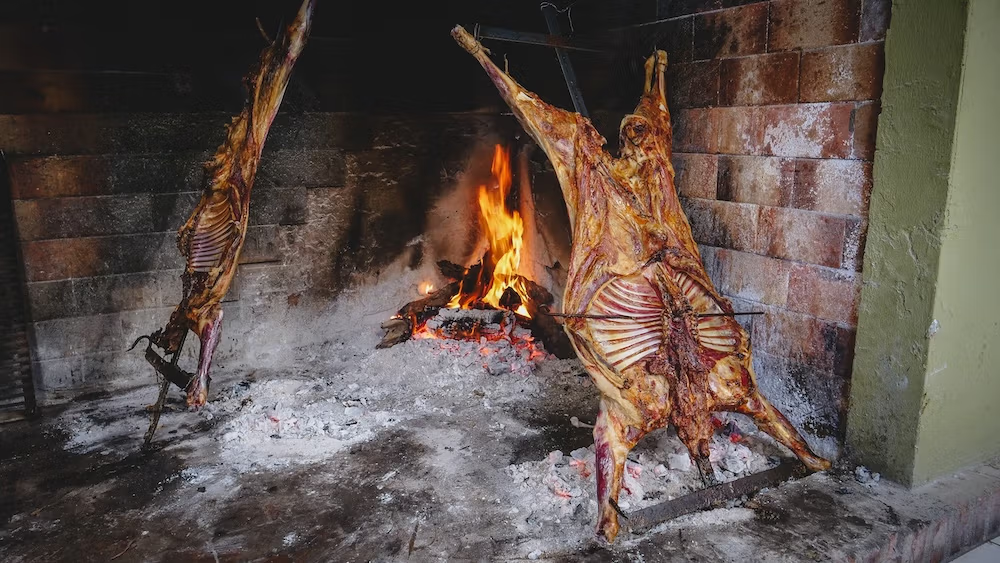
Enter the Cordero Patagónico (Patagonian Lamb).
We found a spot recommended by our local host, and for just under $30 USD for the two of us ($15 a person!), we feasted. They slow-roast the lamb over an open fire until the fat renders down, the skin crisps up like bacon, and the meat becomes unbelievably fibrous and tender. We ate an impossibly large portion with pumpkin mash, drank a whole bottle of local Malbec, and promptly slipped into a glorious “meat sweats” food coma. I was physically useless for the next three hours.
The Provincial Town Survival Ledger
| Friction Point | The Logistical Reality | The Specific Workaround |
| The Sunday/Monday Dead-Zones | Towns like Trelew and Dolavon shut down completely on Sundays and Mondays. | Stock up on groceries on Saturday. Use Sundays exclusively for transit or self-guided nature walks. |
| The Afternoon Siesta | Between 2:00 PM and 5:00 PM, museums, bakeries, and cafes lock their doors. | Welsh Tea Houses (like in Gaiman) are the exception; they typically open from 2:30 PM to 7:00 PM. |
| The “Pasta Sauce” Fee | Restaurants charge a base fee for pasta, and a separate fee for the sauce. | Read the menu carefully; expect pasta dishes to cost double the listed “base” price. |
Surviving the Steppe: Bus Transit and “Encomiendas”
Finally, we have to talk about how you actually get between these remote outposts. Driving the steppe is physically exhausting. The wind hits the side of your vehicle constantly, forcing you to actively fight the steering wheel for hours just to keep the car in the lane. Driving 100km here feels like driving 300km anywhere else.
Which is why we heavily utilized the long-distance bus network.
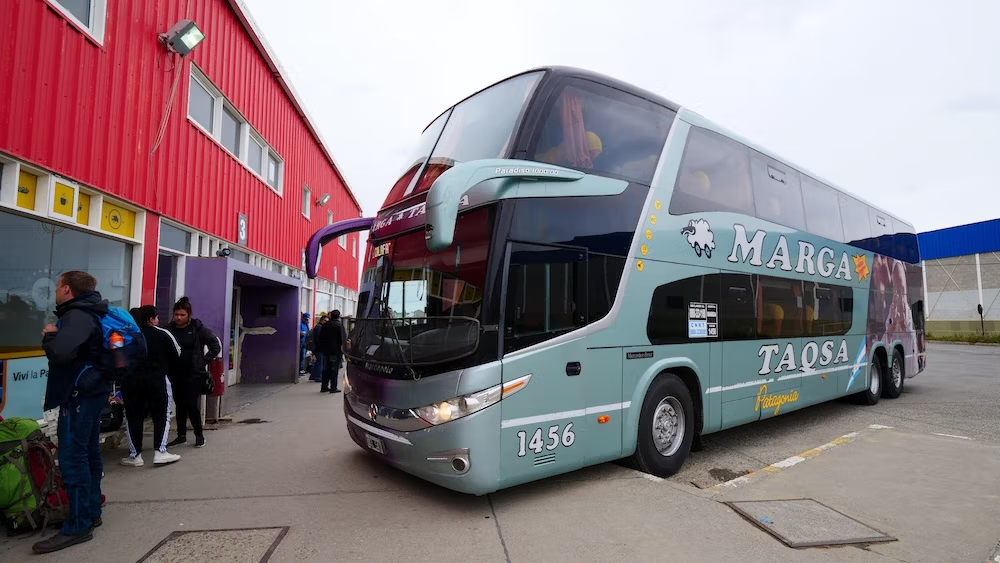
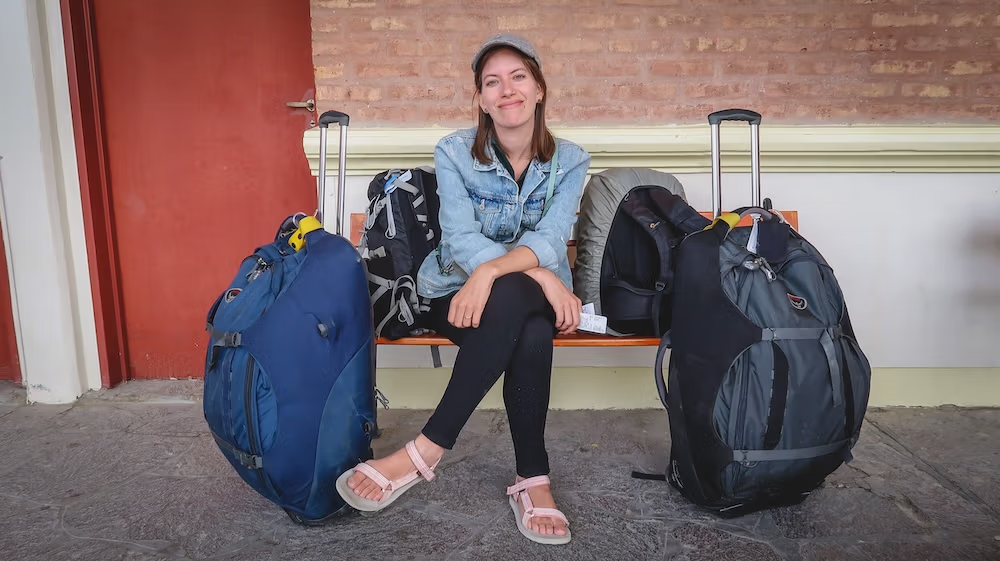
For our journey from Trelew out to Esquel, we faced an 11.5-hour overnight ride. You might cringe at the thought, but the Argentine bus system is elite. We paid $36 US dollars for a ticket on a “Semi-Cama” (half-bed) bus. For thirty-six bucks, we essentially got a hotel on wheels.
If you have the budget, always book the “Cama” (Full Bed) or VIP tier. The seats recline fully flat, you get a hot meal, and there is no one sitting right next to you. But even on our cheaper Semi-Cama tickets, the attendants still came down the aisle serving complimentary whiskey. You can’t beat that value.
While waiting at the terminals, you’ll notice a massive counter labeled Encomiendas. This is basically Patagonia’s localized Amazon delivery network. Because towns are so remote, people arrive with boxes, parcels, and bags, pay a fee, and the bus companies load them into the cargo holds to travel unaccompanied to the next town. You will be sharing your 11-hour ride with stacks of auto parts, winter coats, and birthday presents. It’s a brilliant, chaotic system that keeps the region alive.
Surrendering to the Horizontal Dust Storm (The Shelter Strategy)
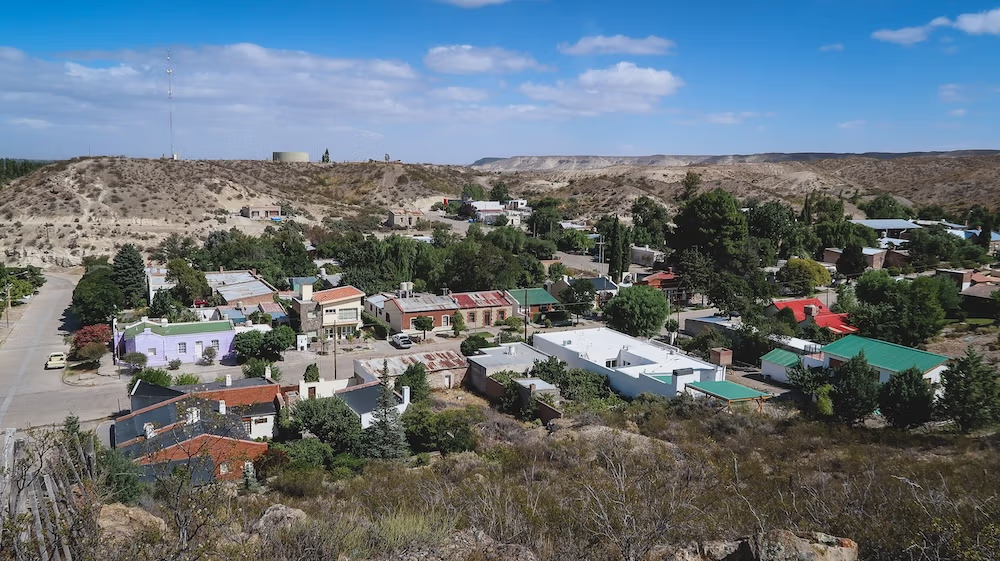
There comes a moment on every Patagonian trip where you have to stop pretending you’re a rugged explorer and admit the environment has thoroughly beaten you. For Audrey and me, that moment happened in Gaiman. We were trying to walk down a street that had essentially turned into a horizontal brown wall of flying grit.
When the ferries stop running and the park rangers lock the trailhead gates, your itinerary is toast unless you have a designated “Shelter Strategy.” You must identify the heavy-infrastructure havens where you can retreat, recover, and still experience the local culture while the Roaring 40s rage outside.
We pushed through a heavy wooden door in Gaiman and instantly went from a howling wasteland into a cozy, lace-doily-covered haven smelling of butter and steeped tea. Welcome to the Welsh Tea House culture of the Chubut province. When the elements turn violent, these historical sanctuaries become the ultimate wind-refuges. But remember our earlier warning about provincial operating hours? You cannot just stumble into a tea house at noon seeking shelter. You must time your retreat perfectly. Almost all the authentic tea houses strictly operate between 2:30 PM and 7:00 PM.
Once inside, your objective is to consume as many calories as possible to recover from the sheer physical exhaustion of fighting the wind. You must order the Torta Negra (Welsh Black Cake). It is a dense, spiced, fruit-heavy brick of absolute culinary comfort that acts as the ultimate high-calorie survival food. Pair it with an endless pot of black tea, sit by the window, and watch the wind try to tear the roof off the building while you stay perfectly warm. You can see our full spread of this incredible, table-breaking tea service in our Gaiman video over on the Samuel and Audrey YouTube channel.
But what if you aren’t in the Welsh valleys when the ground-stop hits? You need what we call a “Museum Buffer.”
On days when flights are grounded and the national parks are locked down due to lateral gusts, the smart money moves to world-class indoor exhibits. However, here is the critical logistical friction: getting to them. You don’t want to be walking miles across town in a gale. You need venues with dedicated, weather-resistant transit. In Trelew, the MEF (Museum of Paleontology Egidio Feruglio) is your fortress. It houses some of the largest dinosaur fossils ever discovered and is centrally located enough to dash into from a radio-taxi.
Down in El Calafate, when the Perito Moreno glacier boardwalks become dangerously slippery and windy, you pivot to the Glaciarium. This modern ice museum sits out on the exposed steppe, but it has a dedicated, heavy-duty shuttle bus that departs directly from the provincial tourism board office in the center of town. These shuttles run reliably even when the airport puts a ground-stop on incoming flights, ensuring you get door-to-door shelter without having to fight the elements on foot.
[Samuel’s Plan-B Reality Check]
Never build a Patagonian itinerary without at least two designated “Triage Days.” If you pack your schedule with back-to-back outdoor hikes, a single 100 km/h wind day will cause a cascading collapse of your entire trip. Plot out your Museum Buffers and Tea Houses in advance. Have the shuttle bus departure times screenshotted on your phone, because when the wind knocks out the local Wi-Fi, you need to know exactly where the extraction point is.

The 100 km/h Wind-Day Triage Matrix
When the outdoors are off-limits, use this breakdown to salvage your day with specific, actionable indoor logistics.
| The Plan B Sanctuary | Exact Current Status & Timing | The Logistical Transit Reality | Post-Wind Triage Priority |
| Welsh Tea Houses (Gaiman) | Strict Hours: 2:30 PM – 7:00 PM. Expect to pay ~$15-$20 USD for full service. | Walkable within the small town center, but expect a brutal, gritty walk if the wind is high. | High. The Torta Negra will cure your wind-battered soul. |
| The Glaciarium (El Calafate) | Open daily. Entry is ~$20 USD. | The “Wind-Proof” Shuttle: Departs every hour from the downtown tourism office. Do not attempt to walk there. | Essential when Perito Moreno glacier is locked down. |
| MEF Paleontology (Trelew) | Open daily (Check Sunday hours). ~$10 USD entry. | Central downtown location. Grab a local radio-taxi from your hotel directly to the front steps to avoid the dust. | High. A world-class indoor buffer while waiting out a flight delay. |
Waking Up to the 80-Grit Reality
I will never forget waking up after our first full day exploring the Patagonian steppe. I opened my eyes, tried to smile at Audrey, and immediately felt my lips crack. My face felt impossibly tight, radiating a dull, burning heat that made me feel like I had been aggressively exfoliated with 80-grit sandpaper while I slept. I checked the mirror, expecting to see a massive sunburn. Instead, my skin was just angry, red, and entirely sapped of life.
If you scroll back to our earliest Patagonia dispatches on our YouTube channel, you can physically see the learning curve on our faces. We were victims of a gritty, utilitarian reality that generic travel guides completely ignore: windburn is infinitely more destructive than sunburn down here.
When you hike in a place like El Chaltén, the ambient air is often bitterly cold. Because you are shivering, your brain suppresses your natural thirst mechanism. You simply do not feel thirsty. But while you are ignoring your water bottle, the environment is quietly robbing you blind. This is the science of “Wind-Induced Dehydration.” The Roaring 40s act like a giant, atmospheric vacuum. Every time you exhale, the dry, high-velocity wind instantly rips the moisture away from your lungs. Simultaneously, the constant airflow evaporates the lipid barrier right off your face. You are dehydrating at twice the rate of a tropical hike, but the cold tricks you into thinking you are perfectly fine.
[Samuel’s Hydration Reality Check]
Do not wait until you are thirsty to drink. By the time you feel parched on a Patagonian trail, you are already operating at a dangerous deficit. Force yourself to drink a liter of water before you even leave your hostel in the morning, and carry a thermal flask with hot tea or mate on the trail. The ambient heat of the tea makes it psychologically easier to stay hydrated when the wind chill drops to freezing.
The instinct is to combat this facial tightness by slathering on standard, drugstore moisturizer. Do not do this. Water-based lotions—which make up 90% of what tourists pack—are worse than useless on the steppe. The moment you step outside, the high-velocity wind either instantly evaporates the water content in the lotion or, worse, the freezing gusts chill the moisture directly against your pores.
You do not need a moisturizer; you need a “Patagonian Sealant.”
To survive the physical friction of the wind, you have to upgrade to heavy-duty barrier creams. You are looking for ingredients that physically trap moisture beneath a wind-proof layer. Lanolin, heavy beeswax-based salves, or even a thin layer of pure petroleum jelly on your cheekbones and lips are the only things that will survive a 100 km/h lateral gust. You have to apply this protective armor thirty minutes before you hit the trail, locking in the hydration before the “Force” has a chance to strip it away.
The Steppe Skincare Triage Matrix
Stop packing for a beach vacation and start packing for an atmospheric assault. Here is exactly what survives the wind, and what will leave your face cracked and bleeding.
| Skincare Arsenal | The Steppe Reality | The Scientific Friction | Post-Hike Triage Priority |
| Standard Water-Based Lotion | Fails immediately. | Wind evaporates the water base, leaving skin unprotected and chilled. | Skip It. Leave the pump bottles at home. |
| Lanolin / Beeswax Salves | The ultimate “Patagonian Sealant.” | Creates a physical, wind-proof barrier that locks in your skin’s natural moisture. | Critical. Apply heavily to lips, nose, and cheekbones before stepping outside. |
| SPF 50+ Sunscreen | Mandatory, but deceiving. | UV rays reflect off glacial ice, burning you even when the air temperature is near freezing. | High. Layer this under your beeswax barrier cream. |
| Electrolyte Packets | The silent lifesaver. | Combats the invisible “Wind-Induced Dehydration” when the cold suppresses your thirst. | Essential. Dump one into your morning water bottle every single day. |
The Patagonia Survival Rulebook
Patagonia has a special talent for making confident travelers look ridiculous. The people who do best here are not always the fittest or the toughest. They are the ones who stop treating the trip like a heroic montage and start treating it like a system.
That means building margin into the day, respecting the morning weather window, carrying gear that is actually windproof, and knowing when a strategic retreat for tea, lamb, or pizza is not failure but professionalism in action. The wind does not care about your itinerary. It cares about whether your plan has weak points.
The Patagonia Survival Matrix
| Situation | Bad Instinct | Smarter Move | Why It Works |
|---|---|---|---|
| Calm morning in town | Assume the whole day will stay manageable | Start early and treat the morning as your best weather window | Patagonia often gets nastier as the day goes on |
| Strong gusts at the trailhead | Push on because you came all this way | Reassess exposure, timing, and bailout options | Pride is terrible hiking gear |
| Rental car stop | Open the door casually | Brace it with both hands and face into the wind | One gust can turn a normal exit into a four-figure mistake |
| Clothing choice | Pack for “cold” in a generic sense | Prioritize windproof outer layers over bulky softness | Patagonia punishes leaky systems |
| Tight itinerary | Stack hikes and transfers back to back | Build in triage days and recovery room | One bad wind day can collapse the whole trip |
| Windy day in town | Sulk and call the day wasted | Pivot to museums, tea houses, gear reset, and a heavy lunch | Smart travelers salvage rather than sulk |
| Trail getting ugly | Keep going because you are halfway there | Turn around early while morale and energy still exist | Retreating early beats crawling back destroyed |
| Hydration | Drink only when thirsty | Force fluids early and carry hot tea or mate | Cold suppresses thirst while the wind quietly dehydrates you |
The broader rule is simple: Patagonia punishes flimsy systems. Flimsy jackets. Flimsy schedules. Flimsy optimism. Flimsy assumptions about how long things take, how hungry you will get, or how much abuse your skin, gear, and mood can handle in one day.
If you understand that, the trip gets better. Not easier, exactly. Just sharper. You stop trying to dominate Patagonia and start negotiating with it properly. And that is usually when the best decisions happen: the early start, the correct shell, the smarter bus, the tea house at exactly the right hour, the summit attempt you postpone, and the miserable day you salvage before it turns into a disaster.
The Payoff is Worth the Friction
Patagonia is not a passive vacation. The wind will break your umbrella, the siestas will leave you hungry, the washboard roads will shatter the wheels off your rolling luggage (bring a backpack, seriously), and the sheer physical effort of standing upright will leave you exhausted.
But when you are sitting in a warm cabin, listening to the 100 km/h winds batter the double-paned glass while you slice into the best lamb of your life, you realize why this place is so intoxicating. The Roaring 40s strip away the fluff of modern travel. It forces you to be present, to be prepared, and to earn every single breathtaking view.
Pack the aluminum poles. Park facing the wind. Turn around when the mountain tells you to. And whatever you do, don’t forget to budget for the pasta sauce.
For more on-the-ground visual realities of our Patagonian transit and trekking, make sure to check out our upcoming destination guides on the Samuel & Audrey YouTube channel.
FAQ: Infamous Patagonian Wind
When is the windiest time of year in Patagonia?
Ironically, summer. From late November through February, the warmer temperatures cause the highest pressure differentials, creating the strongest, most violent winds of the year. If you want calmer air, you have to trade it for freezing winter temperatures in July.
Will the wind actually cancel my flights and ferries?
100%. Aviation authorities will issue a “ground stop” if crosswinds hit 55 knots (102 km/h), meaning your flight will likely circle and divert back to Buenos Aires. Ferries, like the Austral Broom crossing the Strait of Magellan, indefinitely suspend service when sustained winds hit 80 km/h. Always build a 24-hour buffer into your travel days.
Can I avoid the wind if I hike early in the morning?
Sometimes. The wind usually wakes up with the sun. If you start a massive hike like Laguna de los Tres at 4:45 AM in the pitch dark, you can often summit the hardest scree sections before the afternoon adiabatic cooling triggers those brutal 80 km/h downdrafts.
Do I really need to buy expensive aluminum trekking poles?
Absolutely. Standard fiberglass or cheap carbon fiber poles will literally shatter under a Patagonian lateral gust. The 2026 park guidelines strongly recommend 7001-T6 aluminum poles. Don’t bring toys to a knife fight.
What happens if the wind damages my rental car door?
You pay for it. Most rental agencies in Patagonia have a “Wind-Blown Door” clause that explicitly excludes door hyperextension from your Collision Damage Waiver (CDW). If the wind rips the door out of your hand and bends the hinges, you are on the hook for a $1,105 to $3,000+ repair. Always park facing the wind and use two hands to open the door.
Will my normal winter ski jacket work for the wind?
Nope. Standard softshells or thick puffy ski jackets are useless against “wind chill stripping,” where the wind physically pulls the heat right through the fabric pores. You need a dedicated hardshell outer layer with a 20,000mm+ waterproof and windproof rating to act as an impenetrable armor.
How bad is the wind for camera gear and drones?
Devastating. In coastal areas like Puerto Madryn or Punta Arenas, the wind carries atomized seawater and grit up to 5km inland. It will sandblast your lenses and corrode your seals within 48 hours if you don’t wipe everything down nightly. And forget flying a drone; it will be in the Atlantic Ocean before you can hit the return-to-home button.
What should I do if the trails close due to extreme wind?
Eat. When the national parks lock the gates, pivot to your “Shelter Strategy.” We highly recommend retreating to the Welsh Tea Houses in the Chubut province (open 2:30 PM to 7:00 PM) to gorge on high-calorie Torta Negra, or taking a wind-proof shuttle to an indoor exhibit like the Glaciarium in El Calafate.
This guide is also available in Spanish. [Lea la versión en castellano: Los Cuarenta Rugientes — El Viento Patagónico No Es un Fenómeno Meteorológico, Es una Fuerza Física]