
Audrey and I are currently pressed up against a concrete wall just to hear ourselves speak on camera. Out here on the Patagonian steppe, the wind isn’t just a weather condition you dress for; it’s a physical, aggressive force that has historically blown local cargo trains right off their tracks. I am practically shouting into my lapel microphone, Audrey’s hair is entirely horizontal, and we haven’t even made it to the mountains yet.
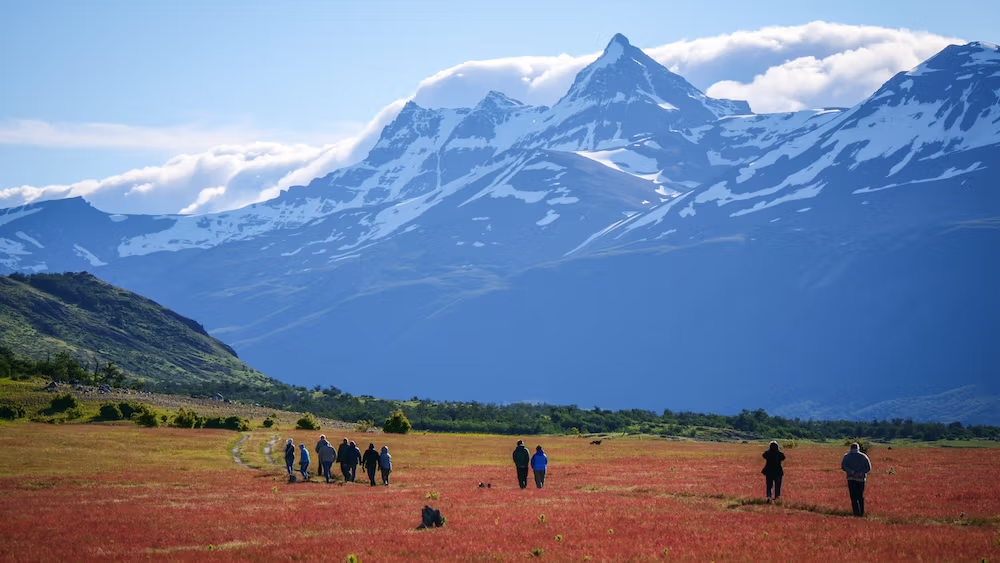
You look at a map of South America, spot that tapering southern tail, and think, Oh, we’ll just pop down to the coast and work our way across. Seventeen hours later, waking up on an overnight bus from Mar del Plata to Puerto Madryn, the delusion shatters. You finally realize Patagonia operates on an entirely different planetary scale. It is a region that actively resists being traversed.
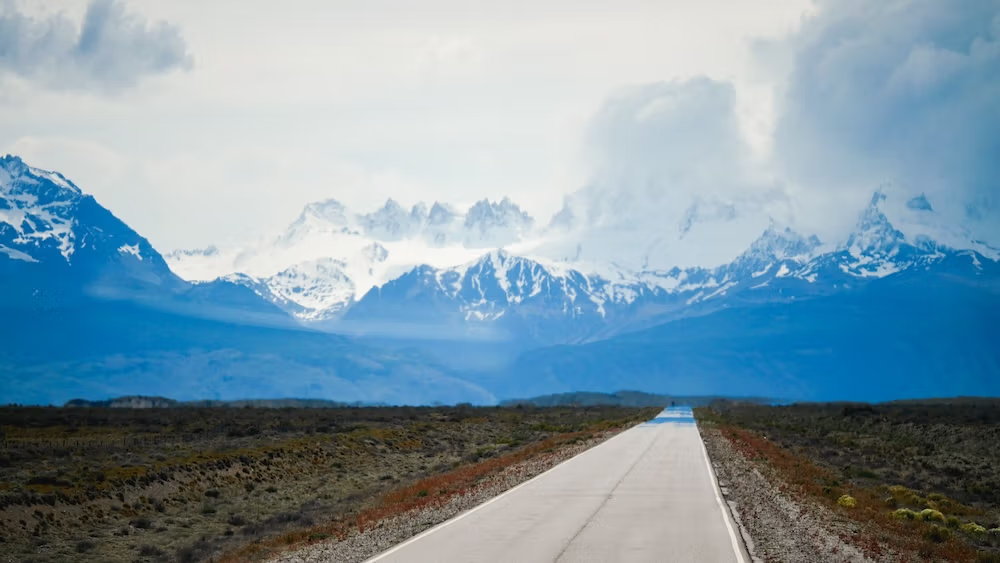
If you’ve been following our YouTube channel, you know we don’t sugarcoat travel logistics. We love this region deeply, but a first-time trip here requires a fundamental rewiring of how you perceive distance, infrastructure, and time. What looks like a casual afternoon drive on Google Maps is actually a four-hour white-knuckle endurance event against corrugated gravel, fuel anxiety, and a headwind that wants to peel your rental car’s doors off.
This is the unfiltered, ground-level reality of moving through the deep south in 2026. Put the map away. Here is how Patagonia actually works.
The “Just a Quick Drive” Delusion
When you rent a car to drive Argentina’s legendary Ruta 40 or Chile’s Carretera Austral, you are not embarking on a leisurely road trip. You are entering a logistical gauntlet. The defining feature of Patagonian roads is “ripio”—deep, loose, corrugated gravel that violently rattles your vehicle and routinely shatters windshields from the kick-up of passing cargo trucks. You cannot safely exceed 30 to 40 kilometers per hour on these stretches. The infamous “73 Malditos” (73 cursed kilometers) near the outpost of Bajo Caracoles will force you down to a crawl.
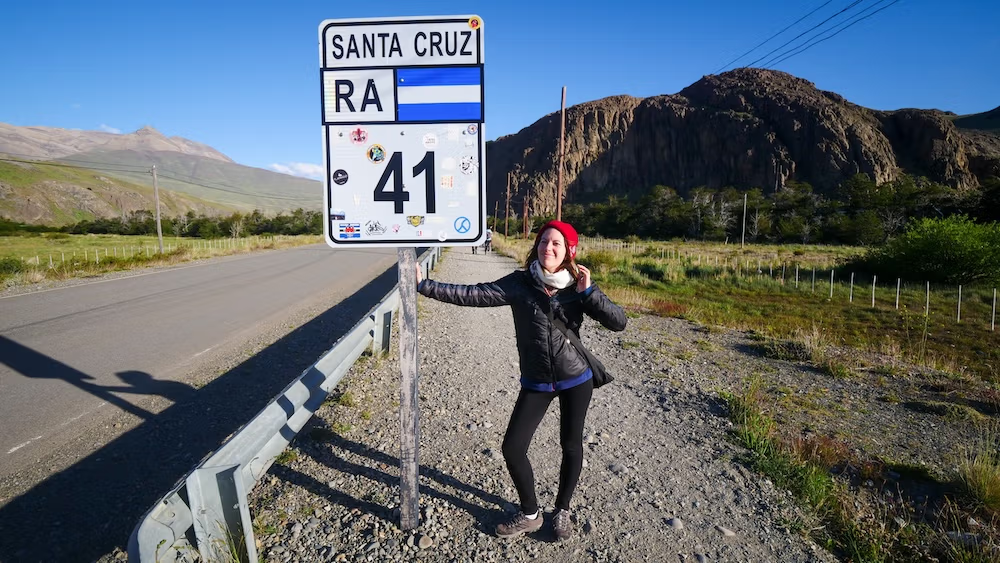
And then there is the fuel situation. Because distances between outposts can exceed 340 kilometers, gas stations are not just convenience stops; they are chaotic survival bottlenecks. Bajo Caracoles is a microscopic speck on Ruta 40, but because it holds the only fuel and free Wi-Fi for hours, the station is a permanent gridlock of overland trucks and panicked tourists. The fuel is trucked in from Perito Moreno, meaning the vintage, sticker-bombed pumps frequently run entirely dry.
[Samuel’s Fuel-Gauge Warning]
Never let your tank drop below half. Ever. Before you leave a major hub like Bariloche or El Calafate, rent a 20-liter jerrycan and keep it full in your trunk. If you are crossing the border at Paso Don Guillermo and heading north toward El Calafate, route yourself to the “EPA” gas station in Esperanza. It constantly glitches off Google Maps, but it is a vital lifeline that saves you from driving the final 150 kilometers on fumes.
The wind also plays a cruel trick on your dashboard computer. Driving into the “Roaring Forties”—the prevailing westerly winds that routinely sustain 80 to 100 km/h—can decrease your vehicle’s fuel efficiency by up to 40%. Your digital “range to empty” calculation is lying to you.
The Map vs. Reality Transit Matrix
| The Map Route | Theoretical Distance | The Patagonian Reality (2026) | The Critical Friction Point |
| Mar del Plata to P. Madryn | 1,000 km | 16–17 hours via Overnight Bus | Book a “Cama” (180-degree bed) seat. “Semi-Cama” will ruin your back for three days. |
| El Calafate to El Chaltén | 215 km | 3.5 to 4.5 hours driving | 100km/h crosswinds require two hands on the wheel. Watch for suicidal guanacos darting across the asphalt. |
| Paso Don Guillermo Border | 1 Line on Map | 2 to 4 hours of bureaucracy | The border is split. 15km of desolate “No Man’s Land” separates the Argentine and Chilean checkpoints. |
| Ruta 40 (Bajo Caracoles) | 100 km stretch | 3+ hours driving | Brutal ripio gravel. Windshield insurance is non-negotiable when renting ($600-$900 USD/week). |
Border Purgatory and the Micro-Bureaucracy
Crossing between Argentina and Chile isn’t a simple passport stamp; it is a multi-stage physical challenge. At Paso Río Don Guillermo, you park on the Argentine side, wait in a queue behind three tour buses, get your exit stamp, and receive a small transit paper. You then drive over 15 kilometers through absolute nothingness. Travelers frequently forget to grab this specific transit paper. If you reach the Chilean side without it, the border guards will mercilessly force you to backtrack 30 kilometers round-trip on gravel, costing you half your daylight.
Once you actually reach the Chilean side, you face the SAG (Agricultural and Livestock Service) inspectors. Forget generic warnings about “no fresh fruit.” In 2026, due to recent plague scares, they x-ray every piece of luggage and are aggressively confiscating things you wouldn’t expect. A decorative wooden spoon bought at an artisan market in Argentina? Confiscated. A sealed jar of local honey? Trashed. Failing to declare these items results in an immediate $300 USD fine.
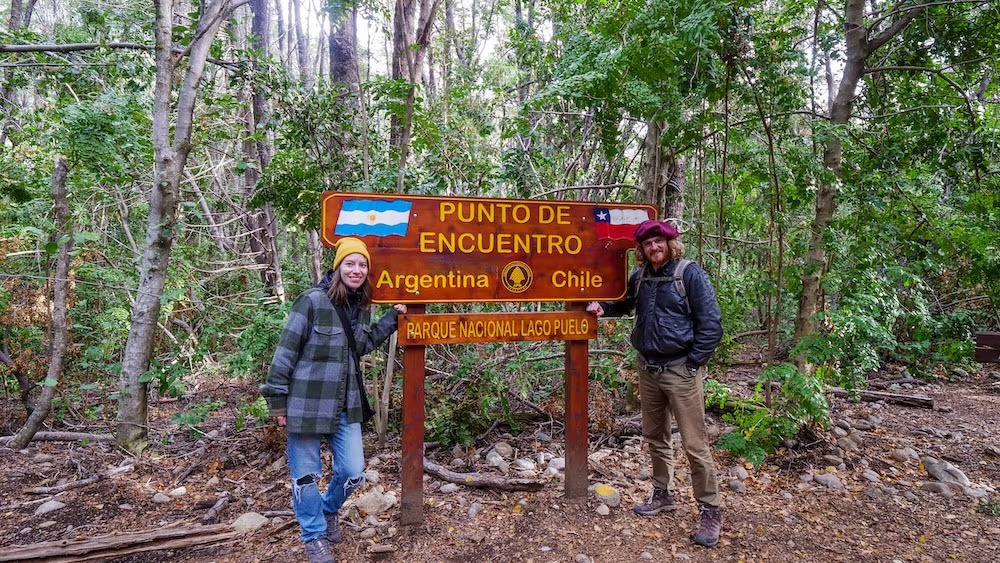
Even internal provincial borders are bizarrely strict. We jumped on the La Golondrina bus line to get from El Bolson down to Lago Puelo. The ticket was practically free, but because El Bolson sits in the Río Negro province and the lake sits in Chubut, the bus legally had to stop at the provincial border line. Every single passenger had to step off the bus, walk across the line, and board a different bus owned by the exact same company just to finish the last leg of the trip.
The End of the “Free” Wilderness
If you are basing your budget on blog posts written in 2022, you are in for a massive shock at the park gates. Up until late 2024, El Chaltén was globally famous as the rugged, “free” trekking capital of Argentina. You could just walk out of your hostel and up to Mount Fitz Roy. Today, hikers arrive at the trailhead to find manned booths enforcing a strict ARS 45,000 daily entry fee. Wild camping has been entirely banned to protect the fragile ecosystem; designated campsites now cost ARS 15,000 a night and sell out months in advance via the Amigos de Parques Nacionales portal.
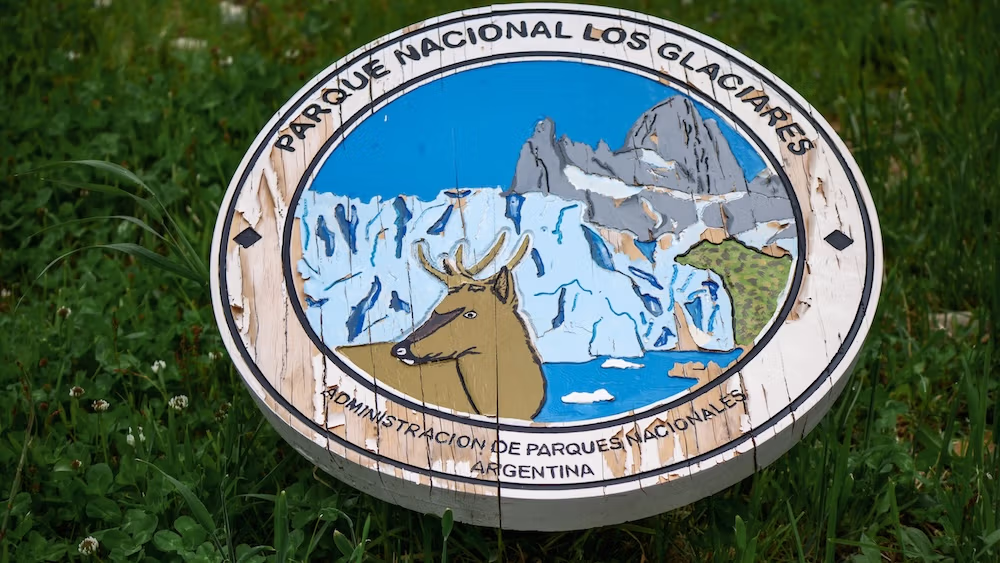
If you are spending a few days in the Los Glaciares region (which includes both El Chaltén and the Perito Moreno Glacier down south), you must buy the online Flexipass. It costs ARS 90,000 for three days, saving you 33% over daily tickets and allowing you to bypass the massive 8:00 AM ticket queues where the tour buses unload.
[Samuel’s Cash-in-Hand Warning]
While Argentine park gates legally accept credit cards (which automatically give you the favorable MEP exchange rate), the remote satellite internet frequently drops out. When the POS machine inevitably spins out and fails, the rangers will not let you pass without exact physical cash. Always carry your gate fees in ARS notes. Skip the local ATMs—use Western Union in Buenos Aires or Mendoza to withdraw stacks of cash before you head deep south.
Over in Chile, Torres del Paine has instituted a brutal digital roadblock. CONAF (the park authority) now strictly requires all park tickets to be purchased via pasesparques.cl. The entry fee is CLP 32,400 (roughly $35 USD) for up to three days, or CLP 46,200 ($50 USD) for longer stays. The critical failure point? There is absolute zero cellular service at the Laguna Amarga entrance gate. Dozens of tourists arrive daily with an email confirmation link instead of a downloaded ticket. The rangers turn them away, forcing them to drive 45 minutes back toward Puerto Natales just to get one bar of 3G signal. You must take a hard screenshot of the QR code and save the PDF directly to your phone’s local files before leaving your hotel’s Wi-Fi.
2026 Park Access & Triage Logistics
| Location | 2026 Entry Cost | The Logistical Hurdle | The “Pro-Move” Fix |
| Los Glaciares (Perito Moreno Gate) | ARS 45,000 (~$32 USD) | Peak gridlock hits the steel catwalks from 10:00 AM – 2:00 PM. | Buy the 3-Day Flexipass (ARS 90k). Arrive at 8:00 AM sharp to hear the ice calve in silence. |
| Los Glaciares (El Chaltén Trails) | ARS 45,000 (Daily) | “Short walks” involve massive elevation. Laguna de los Tres ends with a brutal 400m vertical scramble. | Do not plan to wild camp. Book the ARS 15k campsites 3 months out. Start hiking by 6:30 AM. |
| Torres del Paine (CONAF Gates) | CLP 32,400 / CLP 46,200 | Zero cell service at Laguna Amarga. QR code must be locally saved. | Download the QR code PDF directly to your device. Arrive before 8:30 AM to beat the W-Trek crowds. |
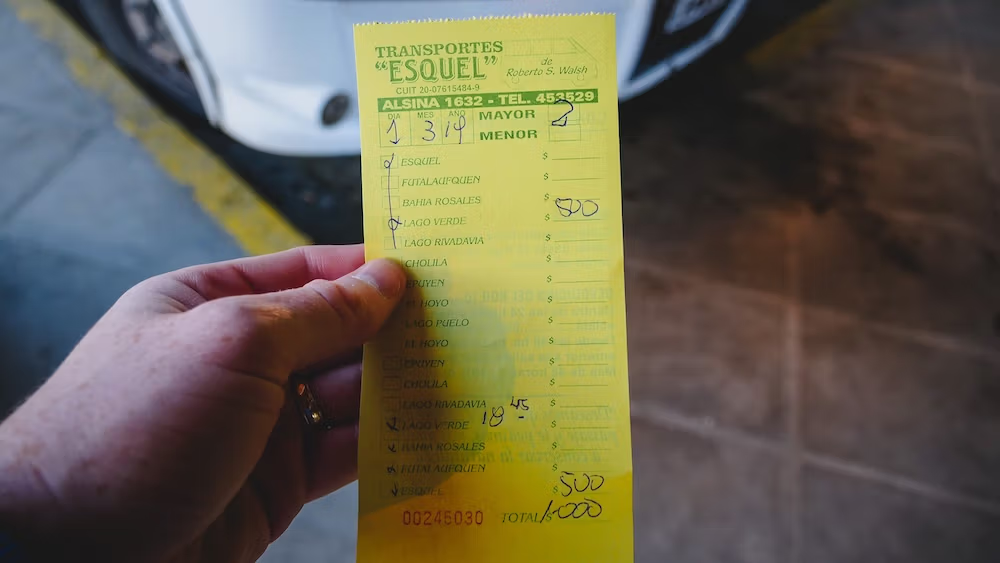
| Los Alerces National Park | Varies by season | Low-season public transit is practically non-existent. | You MUST buy a round-trip ticket from the driver in the morning, or you will be stranded at dusk. |
The Phantom Infrastructure of Patagonian Towns
There is a romantic notion that Patagonian towns are bustling hubs of alpine culture, ready to serve up hot chocolate and hearty stews to weary travelers at all hours. The reality is that these communities operate on deeply entrenched local rhythms that do not care about your itinerary.
During our swing through the Chubut province, Audrey and I rolled into the town of Dolavon around 2:00 PM, ready to film a comprehensive city guide. The visitor center was bolted shut. Every bakery was dark. The cafes we had pinned on our map were gated. We wandered the empty streets for an hour before seeking refuge inside a YPF gas station, where we drank ice-cold sodas next to the motor oil display. We ended up filming what I called the “Non-Tourist Guide”—a raw look at the strict Patagonian siesta. From 1:00 PM to 5:00 PM, commerce effectively ceases to exist.
This isn’t just a small-town phenomenon. We spent a Sunday in Trelew, a major regional city, and it felt like a post-apocalyptic ghost town. We walked down the middle of main avenues without seeing a single moving car, just the occasional pack of roaming street dogs. If you do not buy groceries on Saturday afternoon, or pre-identify the one hotel restaurant that stays open on a Sunday, you will simply not eat.
This lack of infrastructure extends dangerously to public transit. We were visiting Esquel during the low season and wanted to explore Los Alerces National Park. There was exactly one daily bus. You cannot reserve tickets online; you simply show up to the terminal an hour early and pray. We snagged seats, but we watched in horror later that evening as several tourists realized they were stranded in the darkening park. They had bought one-way tickets that morning, assuming they could just pay the driver for the return trip. But the bus was at capacity, and the driver legally could not let them on.
The Cultural and Culinary Payoff (Why We Endure It)
If you are willing to submit to the wind, navigate the ripio, and respect the siesta, Patagonia rewards you with cultural experiences and culinary value that are frankly unmatched anywhere else in the Americas. When the logistics align, the payoff is monumental.
After surviving the dust and closures of the Chubut valley, we found ourselves in the historic Welsh farming settlement of Gaiman. We sat down at a traditional tea house called Ty Gwyn. For exactly $14 USD per person, they brought out an absurd, table-buckling spread: platters of white and whole-wheat cheese sandwiches, warm scones, thick slabs of local butter, and six different types of cake. It felt less like a meal and more like a desert mirage. You could not buy a stale sandwich and a drip coffee at a North American airport for $14, yet here we were feasting like 19th-century royalty.
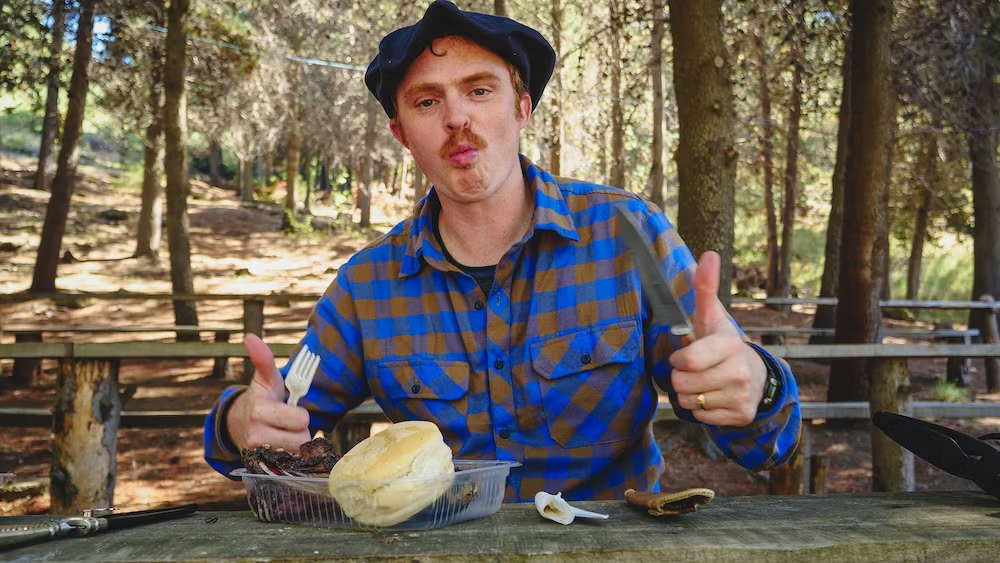
The value scales up when you hit the meat. At the Fiesta Nacional del Asado in the tiny town of Cholila, we sat down at a communal table surrounded by actual gauchos. The smoke from the cross-roasted lambs blanketed the field. We paid just under $30 USD total for the two of us. That price included massive cuts of beef, crispy lamb, a heaping salad, fresh bread, and an entire bottle of local red wine. I was so blissfully overwhelmed by the food that I spent half the meal trying to subtly hide my glasses from Audrey’s camera because I realized they were 15 years old and falling apart. You don’t get that kind of raw, joyous authenticity at a sanitized resort.
[The Digital Nomad Reality Check]
A massive shift is currently happening across the remote steppes. In 2026, the Starlink revolution has effectively killed the “dead zones” of the Carretera Austral and Ruta 40. Historic Estancias (ranches) that were entirely off-grid for a century now boast 150 Mbps download speeds. It slightly kills the “edge of the earth” romanticism, but it means digital nomads can now base themselves deep in the fjords without losing their jobs.
🥩 The “Gaucho Etiquette” & Local Social Protocol
It is very easy to feel like an outsider in Patagonia, especially when you step away from the major tourist trailheads and into the agricultural heartlands. But if you understand the unwritten social rules of the region, the local culture opens up in ways that are profoundly generous.
During our time in the Chubut province, Audrey and I were invited to a local Gaucho party in El Manso and later attended the legendary Fiesta Nacional del Asado in the tiny town of Cholila. It was here, sitting at communal tables surrounded by actual gauchos, that we learned the mechanics of Patagonian hospitality. (It was also here, surrounded by such effortless, rugged coolness, that I spent half the meal trying to secretly hide my 15-year-old glasses from Audrey’s camera).
If you want to be treated like a guest rather than a “Gringo,” you need to master these three cultural pillars.
The Asado & The Rule of the “Facón”
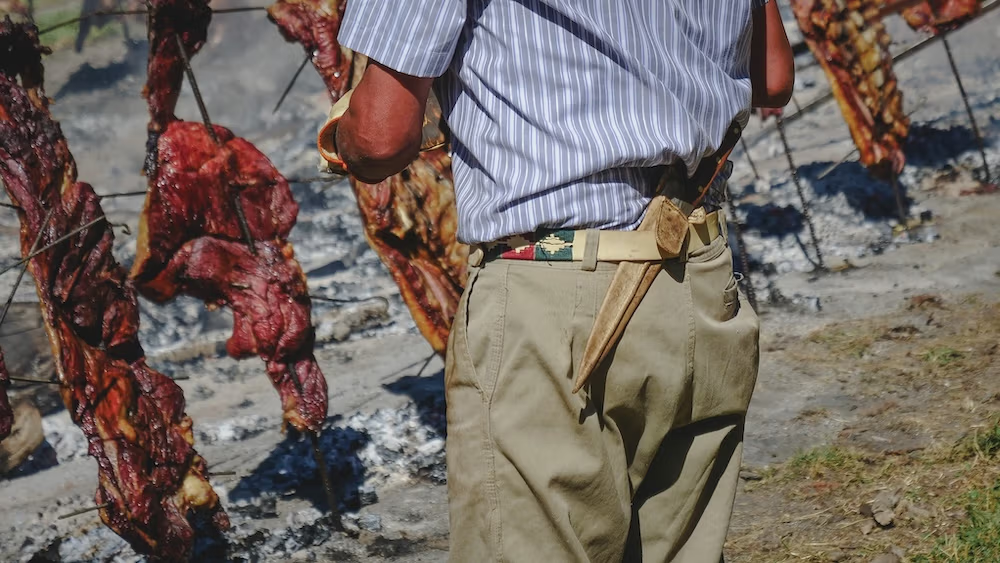
A traditional Patagonian asado (barbecue), particularly Cordero al Palo (lamb roasted on a cross over an open fire), is not just a meal; it is a sacred ritual of time and fire. And at the center of this ritual is the facón—the traditional, large fixed-blade knife carried by every gaucho, tucked directly into the back of their sash.
- The Etiquette: The facón is historically the only eating utensil a gaucho needs. When the meat is served, it is carved with absolute precision. Do not insult the asador (the pitmaster) by asking for steak sauce, ketchup, or BBQ sauce. The meat is seasoned perfectly with coarse salt during the hours-long cooking process. You may be offered chimichurri (a local blend of parsley, garlic, oregano, and oil) or salsa criolla, but applying heavy commercial sauces is a cardinal sin that ruins the meat’s integrity.
- The Value: The payoff for respecting the rules is immense. At the Cholila festival, our feast of massive cuts of beef, crispy lamb, fresh bread, salad, and an entire bottle of local red wine cost us exactly $30 USD total.
🧉 The “Mate” Circle: 3 Non-Negotiable Rules
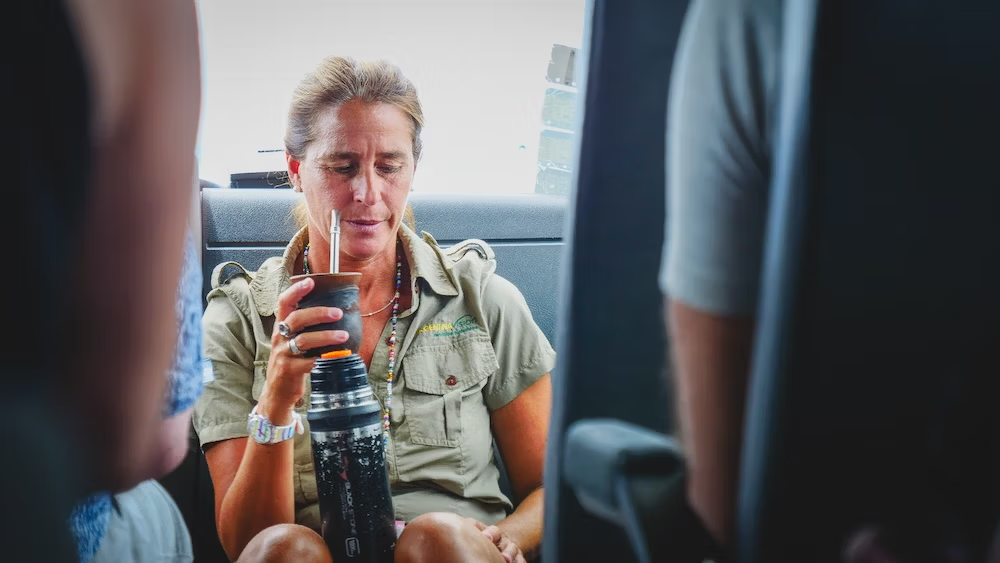
Yerba mate (pronounced mah-tay) is a highly caffeinated, earthy herbal infusion passed around in a hollowed-out gourd and sipped through a metal filtered straw called a bombilla. You will see locals drinking it everywhere—at gas stations, on trails, and in town squares. If you are invited to join a mate circle, it is a sign of deep trust. Do not mess it up.
| The “Mate” Rule | The Tourist Mistake | The Local Protocol |
| 1. The Bombilla | Stirring the metal straw like it is a cocktail or a cup of coffee. | Never touch the straw. The cebador (the person serving) has carefully packed the yerba leaves at a specific slope. Moving the straw ruins the filtration and clogs the drink. |
| 2. The Pace | Taking one tiny sip and passing the gourd to the next person. | Drink the whole thing. It is not a microphone. When handed the gourd, drink until the water is gone (a slight slurping sound is perfectly polite). Then hand it directly back to the cebador, not the person next to you. |
| 3. The “Gracias” | Saying “Thank you” the first time the gourd is handed to you. | Silence is golden. In a mate circle, saying gracias means “Thank you, I am completely finished.” If you say it on your first turn, you are politely removing yourself from the circle and will not be served again. |
The “Siesta” Survival Schedule
As we discovered the hard way in the town of Dolavon, Patagonian communities do not bend to North American or European tourism schedules. They operate on a strict, unyielding survival rhythm designed around the harsh afternoon sun and wind. If you do not sync your biological clock to the local schedule, you will go hungry.
[Samuel’s Daily Logistics Timeline]
- 8:00 AM – 12:30 PM (The Window): Towns are active. Bakeries are selling facturas (pastries), banks are open, and tourist offices are staffed. Get your chores done now.
- 1:00 PM – 5:00 PM (The Dead Zone): Commerce ceases to exist. Restaurants lock their doors. Tourist centers bolt their shutters. Do not expect to find a “late lunch” at 2:30 PM. Your only cultural discovery during this window will be buying a lukewarm soda at a YPF gas station.
- 5:00 PM – 8:00 PM (The Awakening): Cafes reopen for merienda (afternoon tea and coffee). This is when you eat a light snack to bridge the gap to dinner.
- 8:30 PM – 11:30 PM (Peak Energy): Dinner service finally begins. If you show up to a restaurant at 7:00 PM expecting dinner, the staff will likely still be eating their own family meal and will turn you away.
🌬️ The Wind-Chill & Gear-Failure Matrix
If you read a generic travel blog about Patagonia, they will tell you to “dress in layers” because the weather changes quickly. That is adorable advice, but it completely misses the point.
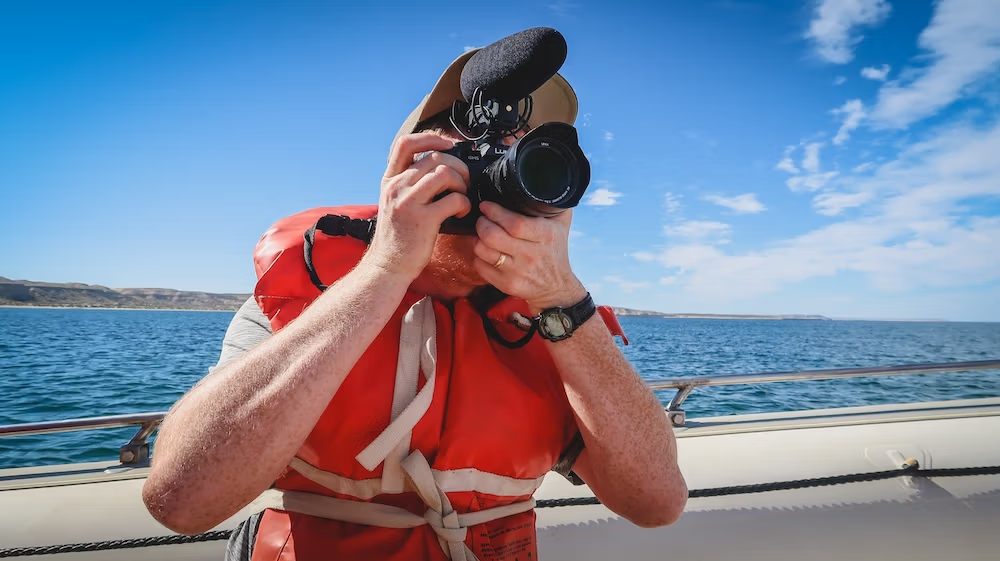
Down here, the wind isn’t just a temperature drop; it is a mechanical force. The “Roaring Forties” and “Furious Fifties” are prevailing westerly winds that sweep off the Pacific, accelerate over the Andes, and absolutely body-slam the Patagonian steppe. We spent half of our time in the Chubut province literally pressed into concrete corners just so the wind wouldn’t blow our audio out.
You aren’t just protecting your body; you are protecting your expensive equipment and your rental car deposit. Here is exactly what the wind will destroy, and how to prevent it.
The “Mechanical Friction” Survival Guide
| The Gear / Scenario | The Brochure Advice | The Patagonian Reality (Failure Mode) | The “Nomadic Samuel” Fix |
| Rental Car Doors | “Enjoy the scenic pull-offs.” | The Wind-Check: A 100km/h gust will catch an open door, violently hyper-extend the hinge, and crease the metal frame. | The Two-Handed Grip: Never unlock the door without a firm grip on the interior handle. Brace it with your shoulder as you exit. |
| Drones (DJI, etc.) | “Capture epic aerial footage.” | The $1,000 Kite: Once your drone clears the tree line, the crosswind will carry it straight to the Atlantic. | Leave it in the bag in Santa Cruz province. Only fly deep in protected valleys in the early morning (before 9:00 AM) when the air is dead. |
| Camera Bodies & Lenses | “Bring a zoom lens for wildlife.” | The Ripio Infiltration: The wind turns fine glacial dust and ripio gravel into sandpaper. It will bypass standard “weather sealing.” | Bring a manual sensor cleaning kit. Never change lenses outside the car. Put a UV filter on your lens immediately—let the $40 glass take the scratches, not the $1,000 lens. |
| Outerwear (Jackets) | “Bring a waterproof Hardshell.” | The Potato Chip Effect: High-end Gore-Tex hardshells crinkle violently in the wind. If you are vlogging, it ruins your audio entirely. | Layer a dense, windproof Softshell over a down mid-layer. Softshells don’t crinkle, they cut the wind better, and they won’t blow out your microphone. |
[Samuel’s Audio & Tech Warning]
Let’s talk about those fuzzy “deadcat” microphone covers. They are useless here. If you are planning to vlog or record video on your phone, the wind will slice right through standard wind-muffs. You need to physically block the wind with your body, a building, or a vehicle. And regarding that rental car? When you inevitably pull over on Ruta 40 to take a photo of a guanaco, park the car facing the wind. If the wind is hitting your car from the side, opening the doors becomes a dangerous, deposit-ruining wrestling match.
What We Missed (But You Shouldn’t)
Because of the sheer scale of our overland route, we had to make painful cuts. If you are looking to completely bypass the driving friction, the ultimate alternative route is navigating the Chilean coastline via the Navimag ferry system.
The Navimag ferries travel through the remote Patagonian fjords, offering a 4-day journey from Puerto Montt down to Puerto Natales. It completely eliminates the need to drive the Carretera Austral or cross the Argentine border. However, our research for our upcoming destination guides revealed a harsh logistical truth: high season (November through March) requires a staggering six months of lead time if you want to secure a private cabin. Prices range from $550 to $1,100 USD per person depending on the berth. It is a massive financial and temporal commitment, but it is the only way to see the fragmented coastal glaciers that are entirely inaccessible by road.
Patagonia is not a place you conquer. It is a place you survive, adapt to, and ultimately fall in love with. It will blow your trains off the tracks, confiscate your souvenirs, and force you to drink gas station soda on a Sunday afternoon. But the moment you accept that the map is lying to you, the true scale of the adventure begins. Pack your cash, download your QR codes, and brace for the wind.
FAQ: Why Patagonia Feels Bigger Than It Looks on a Map
What is the best month to visit Patagonia?
Depends. Peak summer (January and February) offers the warmest weather and fully open trails, but it also brings the highest crowds and the most ferocious winds. If you want a balance of functioning infrastructure and fewer tour buses fighting for parking, aim for the shoulder seasons: November or March.
Do I really need to rent a 4×4 to drive Ruta 40?
Rarely. A standard, high-clearance 2WD vehicle can handle the ripio (loose gravel) if you respect the road and drive slowly. The real danger isn’t getting stuck in mud; it’s the windshield-shattering rocks kicked up by trucks and the aggressive crosswinds. Just ensure your rental agreement includes premium glass and tire insurance.
Can I rely on my credit card in Patagonia?
Nope. While national park gates and hotels legally accept credit cards (and automatically apply the favorable MEP exchange rate), the satellite internet in remote areas is notoriously fragile. If the card machine is spinning out at the Los Glaciares gate, the rangers will not let you pass without exact physical cash. Always carry a stack of Argentine Pesos as a backup.
Is the W-Trek in Torres del Paine worth the logistical hype?
100%. But the logistics are unforgiving. You cannot just show up with a backpack anymore. You have to book your campsites months in advance, and you must download your QR entry codes directly to your phone before leaving your hotel’s Wi-Fi. It is an incredibly rewarding hike, but it requires absolute precision planning.
How bad is the wind, really?
Brutal. We had to physically press ourselves into concrete corners just to record usable audio. It isn’t just a breeze; it is a mechanical force that can blow your rental car door completely off its hinges if you aren’t bracing the handle. It will also drop your vehicle’s gas mileage by up to 40%. Take it very seriously.
Are the towns open all day for tourists?
Absolutely not. Do not roll into a Patagonian town expecting to find a late lunch at 3:00 PM. Entire communities strictly observe the afternoon siesta. From 1:00 PM to 5:00 PM, commerce is entirely dead. Plan your meals around these local rhythms, or get used to drinking lukewarm sodas at the local gas station.
Is taking the bus a viable way to get around?
Yes. But you have to pay for the upgrade. For massive 16-to-17-hour hauls, you must book a “Cama” (180-degree lie-flat bed) seat. Also, during the low season, transit frequencies drop drastically. Always buy your return ticket directly from the driver the moment you board, or you risk getting stranded in a national park at dusk.
Is Patagonian food just steak and lamb?
Mostly. And it is incredible. You can easily find a massive Gaucho-style lamb asado with a full bottle of wine for under $30 USD. But the region has hidden culinary pockets. If you head to the Chubut valley, you will find historic Welsh tea houses serving up absurd spreads of sandwiches, scones, and six different cakes for ridiculously cheap.
Project 23 Argentina: This guide is also available in Spanish. [Lea la versión en castellano: Por qué la Patagonia se siente más grande de lo que parece en el mapa]