
Walking into a manicured tea garden fit for Princess Diana while dripping in Patagonian bus sweat is a profoundly humbling experience.
Audrey and I stood in the immaculate foyer of Ty Te Caerdydd in Gaiman, looking like we had just wrestled a guanaco. We were wearing our trusty, dusty travel gear. Around us, patrons sat with perfect posture, sipping from delicate china in a room that felt entirely decoupled from the rugged, wind-whipped Argentine steppes waiting just outside the door.
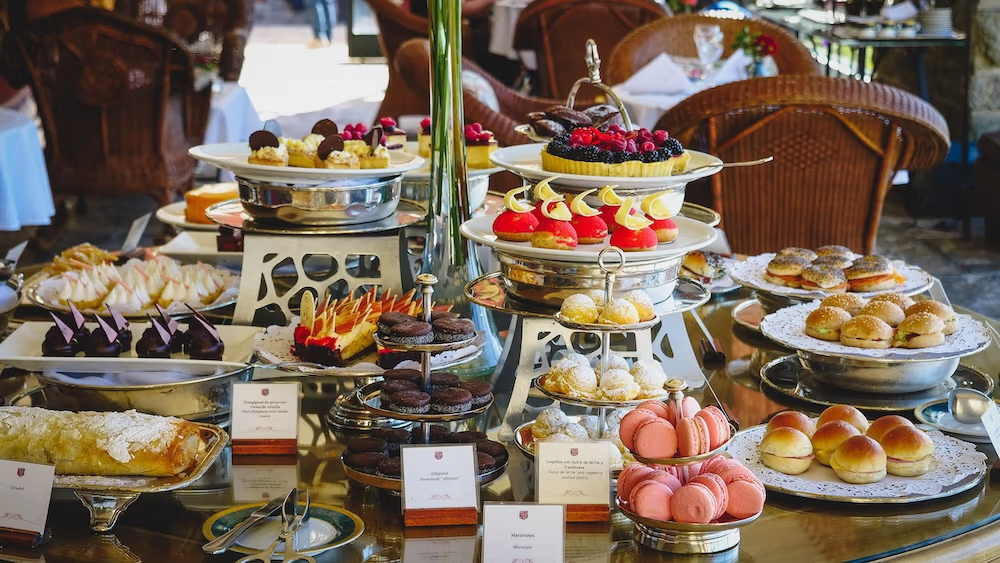
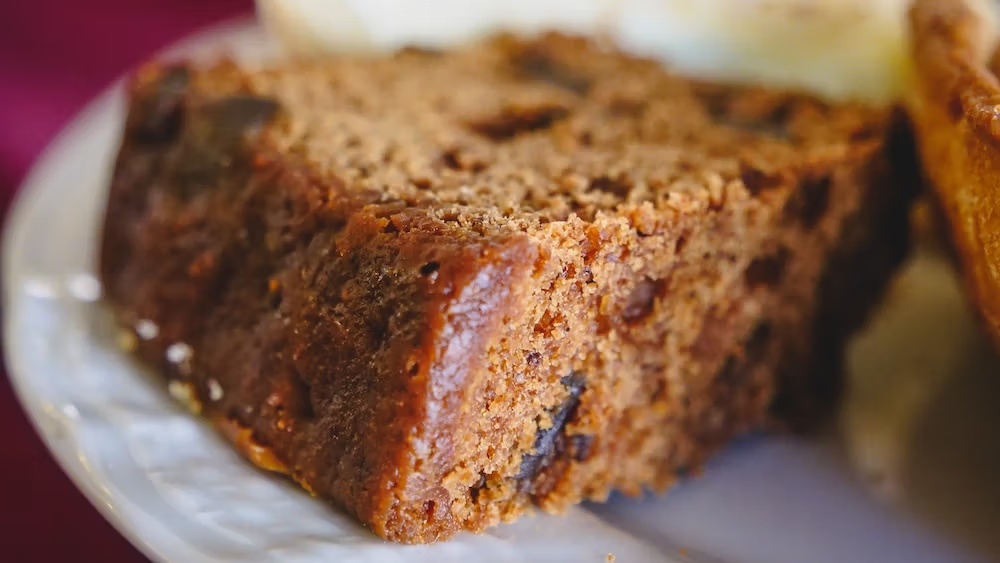
But for a slice of traditional Torta Negra Galesa—a dense, boozy Welsh black cake so biologically stable they used to save the top tier for a firstborn’s baptism—I was fully willing to ruin their aesthetic.
If you’ve watched our YouTube channel, you know we travel for food. We plan our entire days around meals. But nothing could have prepared us for the sheer, unadulterated caloric violence of the Argentine Merienda. In Patagonia, afternoon tea isn’t a delicate snack to tide you over until dinner. It is a grueling endurance sport. It is a cultural institution born from 1865 Welsh settlers and perfected by modern Argentines who view a table without at least eight different cakes as a personal failure.
Forget the generic travel brochures telling you to “enjoy a quaint afternoon.” If you are heading down to Chubut or the Bariloche Lake District in 2026, you need a tactical battle plan. You need to know exactly which buses accept cash (spoiler: none of them), how to bypass the hidden “sharing fees,” and why you should absolutely never arrive in a Patagonian village at 1:00 PM.
This is the unfiltered, boots-on-the-ground reality of surviving Patagonia’s sacred afternoon tea tradition.
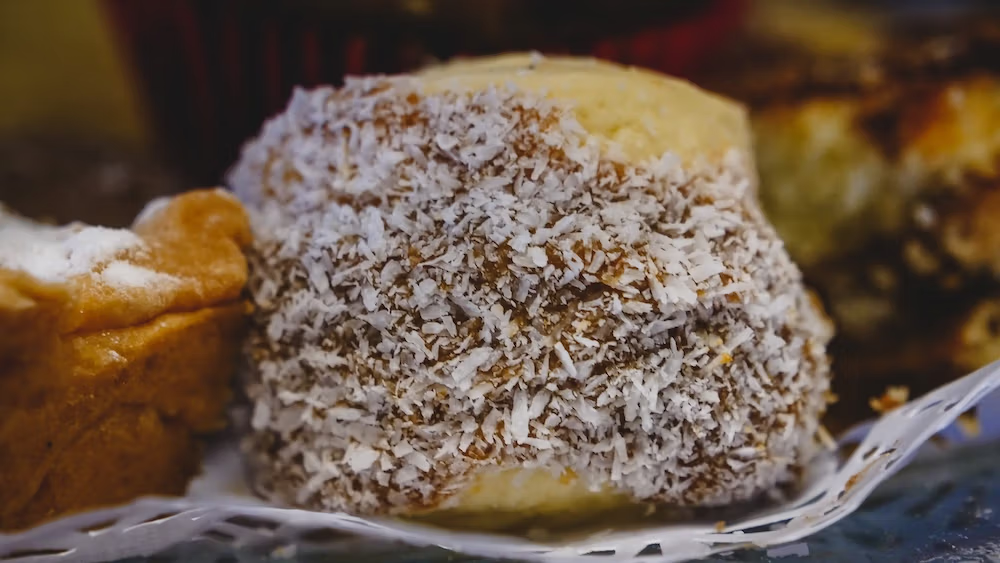
The 5:00 PM Sugar Mandate: Decoding the Argentine Merienda
In North America, a 4:30 PM snack is usually a sad, foil-wrapped granola bar eaten over a keyboard just to stave off the shakes until a 6:00 PM dinner. When you cross the equator into Argentina, you must completely rewire your biological clock. Here, dinner does not happen until the sun has completely set, the streetlights have been buzzing for hours, and the clock strikes 9:00 PM at the absolute earliest.
This massive, four-hour temporal void between lunch and dinner created the Merienda—a culturally enforced late-afternoon ritual designed to bridge the gap.
In its most common form, the Argentine Merienda is a beautiful, simple pause in the day. If you are sitting at a sidewalk cafe in Buenos Aires, it usually involves a cortado (espresso cut with a dash of warm milk) and exactly three medialunas (sweet, sticky croissants) or a few tostados (toasted ham and cheese sandwiches). It is light. It is conversational. It is a quick hit of caffeine and carbohydrates to get you to the 10:00 PM steak dinner.
But as Audrey and I have been systematically mapping out all 23 provinces for our Che Argentina Travel project, we’ve learned that the Merienda is a geographical shape-shifter. And when you cross the parallel into Patagonia, the quaint afternoon snack mutates into a high-calorie survival tactic.
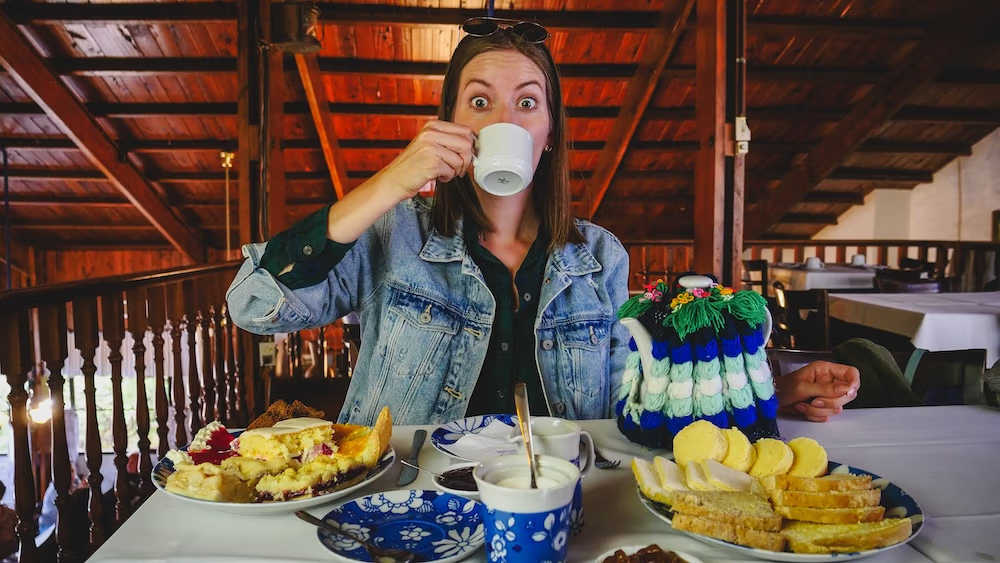
The 1865 Welsh Caloric Defense
To understand why a Patagonian tea tray looks like it was designed to feed a small army, you have to rewind to 1865. That year, a group of Welsh immigrants landed on the wind-battered, unforgiving coast of the Chubut province. They were not dealing with the mild, humid breezes of the capital; they were trying to carve a life out of the arid, freezing Patagonian steppe.
To endure the bone-chilling winds and the immense physical labor of taming the valley, their traditional British afternoon tea had to evolve. A flimsy cucumber sandwich was not going to cut it. They adapted their ancestral recipes using whatever local ingredients could withstand the harsh environment. They baked Bara Brith (a dense, speckled bread) and the legendary Torta Negra Galesa—a cake so packed with brown sugar, local spirits, and fruit that it could sit in a pantry for months without spoiling.
The Patagonian Merienda wasn’t born out of leisure; it was born out of caloric necessity. Today, the ancestors of those settlers still run the Casas de Té in Gaiman and Trevelin, and they still serve the exact same cold-weather endurance rations, regardless of whether you spent the day plowing a field or just sitting on a green and yellow tour bus.
[Samuel’s Reality Check: The Macro-Nutrient Crisis]
I am going to be completely transparent here: filming an epic Patagonian food guide is an absolute hazard to your health. I’ve been on a pretty strict fitness journey lately. I used to weigh 212 pounds, and after a lot of discipline, I finally dropped down to 172, with my sights dead-set on hitting a lean 160. But let me tell you, trying to maintain a caloric deficit while staring down eight varieties of clotted cream pie and dense Welsh black cake is a psychological war zone. You cannot politely eat a salad in Gaiman. My strategy? Eat the savory sandwiches de miga for protein, take a tactical bite of the Torta Negra for the YouTube camera, and aggressively utilize the cajita (doggy-bag) to remove the remaining 3,000 calories from my immediate line of sight.
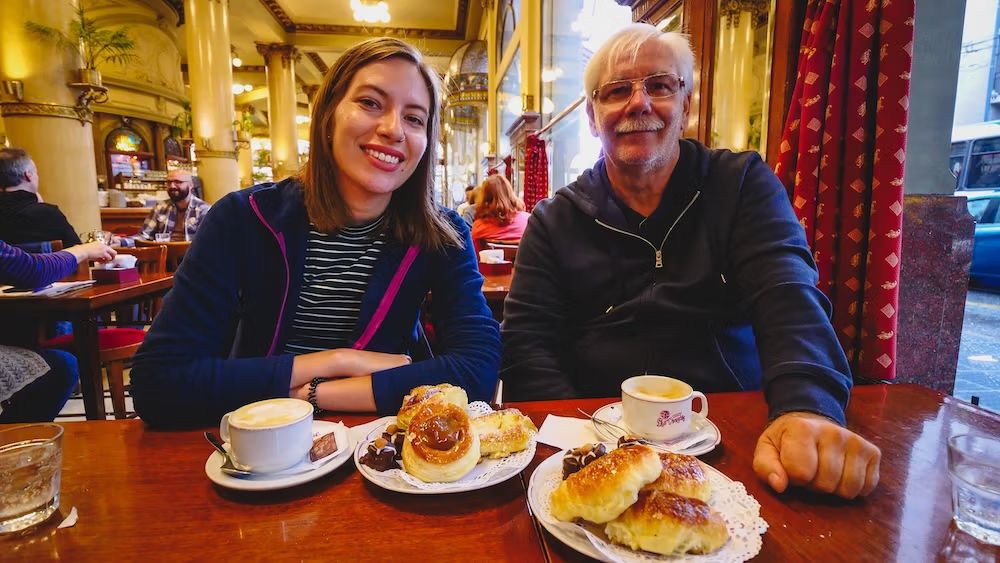
The Cross-Province Merienda Matrix
Because we spend our lives bouncing between vastly different Argentine climates, we’ve had to adapt to how each region handles this 5:00 PM ritual. If you are planning a multi-province itinerary, here is exactly how the afternoon tea culture shifts as you move across the map.
| The Region | The Core Vibe & Origins | The Signature Carb Profile | 2026 Price Baseline | The Dinner Impact |
| Buenos Aires (The Capital) | Fast-paced, Italian/Spanish influenced cafe culture. Urban and social. | Medialunas de manteca, tostados de miga, and a Submarino (hot milk with a sunken chocolate bar). | $8,000 – $12,000 ARS | Minimal. You will still be starving by the time the parrillas open at 9:00 PM. |
| Sierras de Córdoba (The Center) | Rustic, mountain-town comfort. We see this daily while managing our hotel renovation project in the Sierras. | Herbal Mate infusions, homemade pan casero (country bread), and fruit-filled alfajores. | $10,000 – $14,000 ARS | Moderate. The heavy breads fill you up, usually pushing dinner closer to 10:30 PM. |
| Chubut Valley (Patagonia) | 1865 Welsh survivalist heritage. Ceremonial, seated, and overwhelmingly abundant. | Torta Negra, clotted cream pies, scones with heavy salted butter, and Citrón jam. | $25,000 – $35,000 ARS | Devastating. If you finish your tray at 6:00 PM, you are legally skipping dinner. |
| Bariloche (Alpine Patagonia) | Swiss/German alpine luxury. High-end indulgence with volcano views. | Smoked trout sandwiches, Strudel, and bespoke tea blends (like the Llao Llao tea). | $45,000 – $70,000 ARS | Significant. You are paying a premium; you will eat every crumb to justify the cost. |
Understanding this cultural shift is the difference between a great trip and a miserable, bloated one. When you are up in the Sierras de Córdoba, you sip your mate and nibble an alfajor while watching the sunset. When you are down in Patagonia, you are engaging in a historical reenactment of 19th-century winter survival. Treat the Chubut Merienda with the respect—and the empty stomach—it demands.
The Anatomy of a Patagonian Tea Tray
Before we get into the transit nightmares and the hidden fees, you need to understand what you are actually up against. The traditional Té Galés (Welsh Tea) in Patagonia is entirely different from the everyday merienda you’ll find in a standard Buenos Aires cafe.
An everyday merienda runs you about $8,000 to $12,000 ARS (roughly $6 to $9 USD at the current early-2026 Dólar Blue rate of $1,433 ARS) and consists of a coffee and maybe two facturas (pastries).
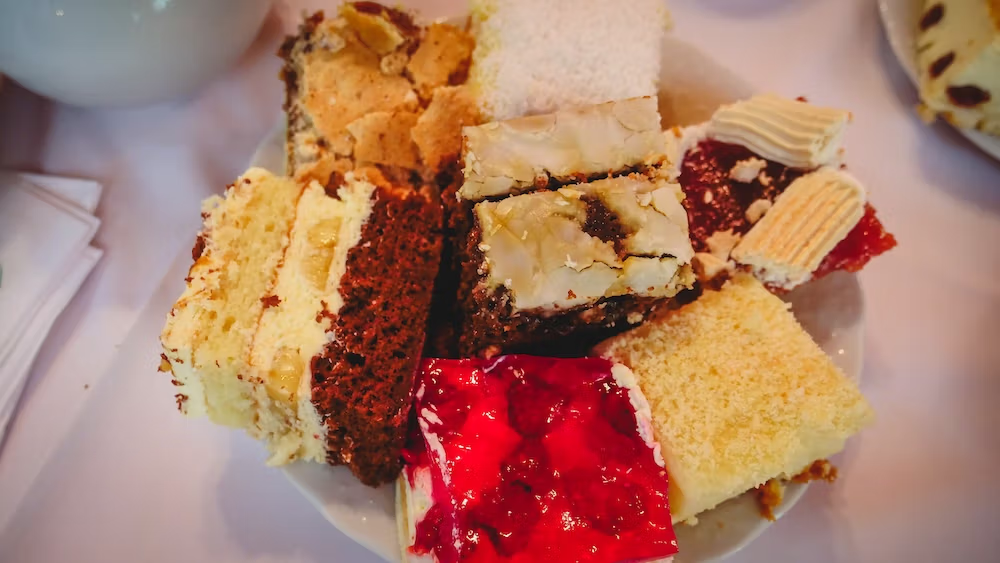
The ceremonial Welsh Tea is a full-blown multi-course event costing anywhere from $25,000 to $70,000 ARS. When the waiters at places like Ty Gwyn bring out the spread, they don’t bring you a menu to choose from. They bring you everything.
The Mandatory Spread
| The Item | The Reality | The Strategy |
| Sandwiches de Miga | Crustless, triple-layered white bread sandwiches (usually ham/cheese). | Eat these first. This is your savory foundation. Once you cross into the sugar zone, you cannot come back. |
| Scones & Salted Butter | Dense, buttery scones served with ultra-rich, savory local butter. | Split one. Do not eat both halves or you will tap out before the cake arrives. |
| Torta Negra Galesa | The crown jewel. Dark, heavy, packed with brown sugar, spirits, and raisins. | Eat a small slice. Save the rest for the doggy-bag (more on this later). |
| Citrón Jam | A highly regional preserve made from the Patagonian Citrón melon. | Smear this on the whole wheat bread. It tastes like a tart cross between cucumber and lemon. |
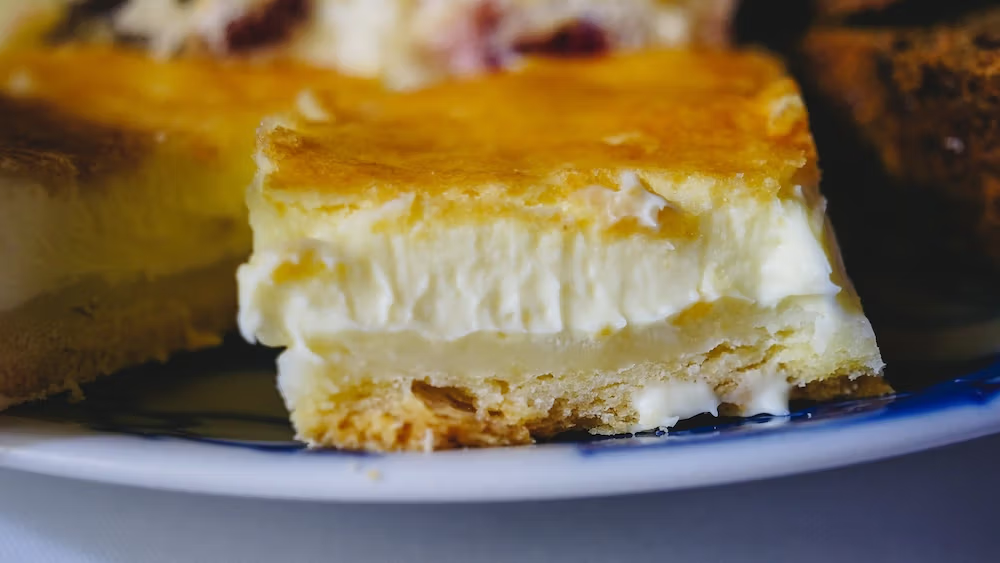
| The Cream Pie | A devastatingly rich pie. At Ty Gwyn, the clotted cream is baked into the pie itself. | Approach with extreme caution. This is the item that will trigger the sugar coma. |
[Samuel’s Foodie Reality Check: The Colic Cleanser]
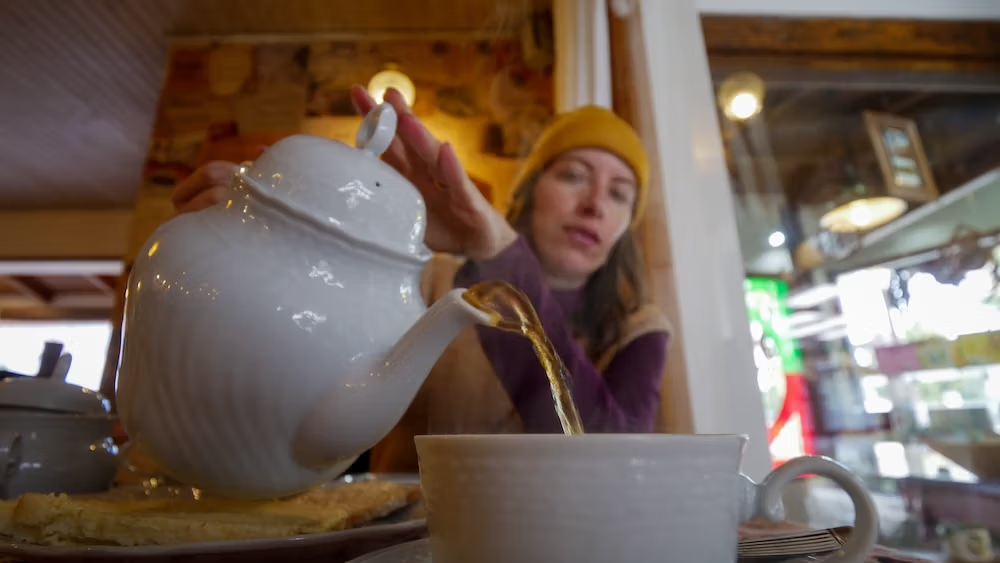
At some point during the Ty Gwyn feast, I realized something horrifying: I couldn’t taste anything anymore. My palate had completely shut down from the sugar overload. This is when I discovered the true purpose of the bottomless pot of loose-leaf tea. I started drinking the black tea completely unsweetened. It stopped being a cozy beverage and became a strict, medicinal palate cleanser. The harsh astringency of the tea physically stripped the clotted cream and caramelized sugar from my tongue, allowing me to go back in for round three. Do not put sugar in your tea. You will need the bitterness to survive.
The Lower Valley: Gaiman’s Logistical Minefield
Gaiman is the epicenter of the Welsh tea tradition. Located in the Chubut province, it’s a tiny, flat village where fourth and fifth-generation descendants still run the historic tea houses. It is also a logistical trap for the unprepared day-tripper.
The SUBE Card Dead Zone
Most travelers base themselves in Trelew or Puerto Madryn and take the bus into Gaiman. The company that runs this route is Empresa 28 de Julio (look for the green and yellow buses). Back when we first filmed our Patagonia transit videos, we bought a physical card for 85 pesos. Today, in 2026, the reality is much stricter.
The bus from the Trelew terminal to Gaiman is entirely integrated into the national SUBE card system. You cannot pay the driver in cash. A one-way ticket costs between $1,361 and $3,204 ARS depending on your exact stop.
Here is the friction point: Gaiman is tiny. There are practically zero reliable kiosks in the village to buy a new SUBE card or recharge an empty one. If you board the bus in Trelew without enough pre-loaded balance for your return trip, you will be stranded in Gaiman after your tea.
- The Fix: Buy a SUBE card in Buenos Aires before you ever fly south. Load it with at least $10,000 ARS via the official SUBE app or MercadoPago, and validate the balance at a terminal before you leave Trelew. If you want the scenic route, make sure you get on the bus that explicitly follows Route 7.
The Siesta Starvation Trap
Nothing tests a traveler’s patience quite like arriving in a quaint Chubut village at 1:00 PM with a rumbling stomach, ready to explore the local museum and grab a bite, only to find the entire town looks like a post-apocalyptic movie set.
Gaiman respects the siesta with terrifying dedication. From 12:30 PM until roughly 4:00 PM, the town completely shutters. But here is the critical exception: The Tea Houses open at 2:30 PM. Do not arrive at 1:00 PM. Arrive at 2:15 PM, wait outside the doors of your chosen Casa de Té, go into your two-hour sugar coma, and emerge at 4:30 PM right as the local museums and shops finally unlock their doors for the evening. Also, note the terrain. Gaiman is flat, but the sidewalks are ancient, uneven concrete giving way to packed dirt side streets. Do not bring rolling luggage here. It is strictly a day-pack destination.

Ty Gwyn vs. Ty Te Caerdydd
We hit both of the heavyweights in Gaiman, and they offer wildly different vibes.
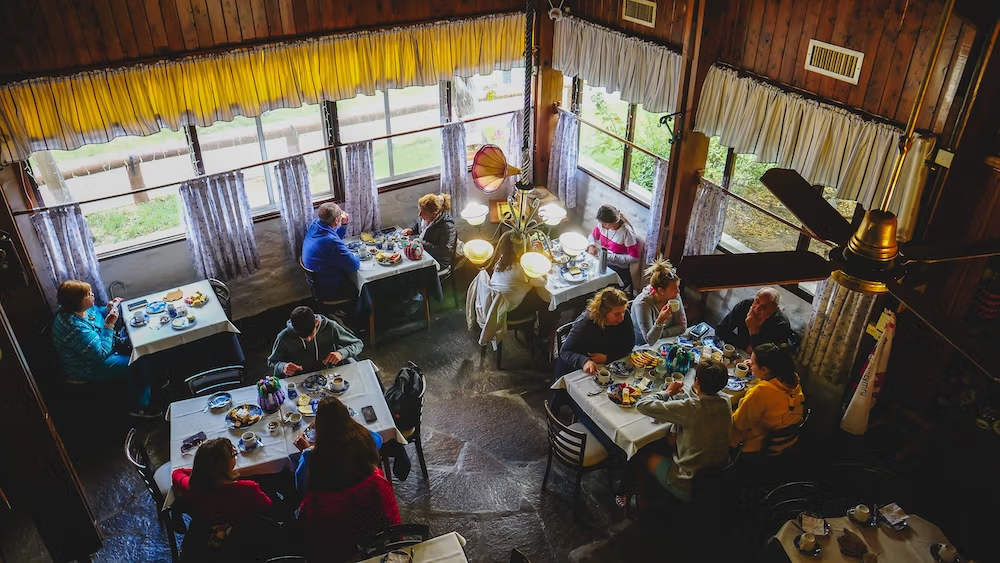
- Ty Gwyn: This is where we experienced the clotted cream pie and the true volume of the Welsh spread. It feels like stepping into a rustic, wooden grandmother’s cabin. It opens precisely at 2:30 PM. Expect to pay a flat fee of around $30,000 ARS ($22 USD) per person.
- Ty Te Caerdydd: This is the establishment Princess Diana visited in 1995. It is incredibly posh, with perfectly manicured gardens. They charge around $28,000 ARS, but take note: they are closed on Mondays and Tuesdays. If you show up early in the week, you’ll be staring at a locked gate.
[The “Para Llevar” Protocol: Winning the Breakfast Game]
When the waiter drops eight cakes on your table, the instinct is to try and finish them so you don’t waste your $22 USD. Stop. In traditional Welsh Tea Houses, it is culturally expected that you will only finish about 30% of the sweets. Asking for a cajita (a little box) is not considered rude; it proves you respect the abundance. We gave up at Ty Gwyn, got our leftovers packed up, and let me tell you—that dense Torta Negra made an absolutely legendary, high-calorie breakfast the next morning. You are paying for today’s tea and tomorrow’s breakfast.
Trevelin: The Mill Town Transit Pivot
If Gaiman is the arid, desert-adjacent Welsh outpost, Trevelin is the lush, alpine equivalent tucked away near the Andes. Usually, travelers use the nearby city of Esquel as a base camp.
We had grand plans to take the cheap public commuter bus from Esquel to Trevelin for our tea at Nain Maggie (which translates to Grandmother Margaret). We failed to account for the rural Sunday schedule. The buses simply didn’t exist. We had to pivot, hailing a taxi for the 20-kilometer ride just to ensure we didn’t miss our reservation. If you are doing this on a weekend, pre-book a transfer or rent a car. Do not rely on public transit in rural Chubut on a Sunday.
The “Learned Mistake” Mastery
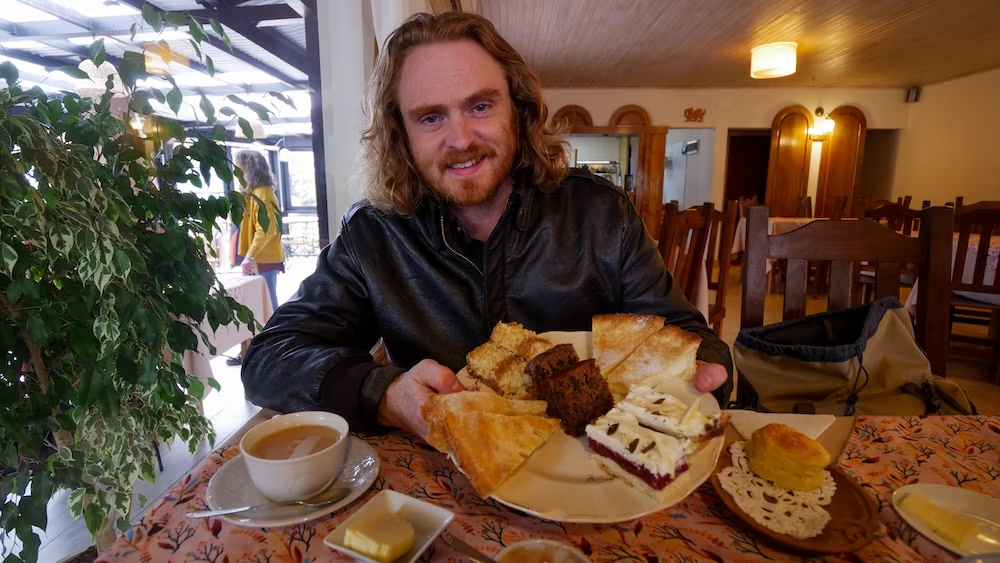
By the time we walked into Nain Maggie, we were seasoned Merienda veterans. We had been deeply traumatized by the sheer volume of food in Gaiman. So, we executed a flawless tactical maneuver: we ordered exactly one Welsh tea set to share.
We received the classic white and whole-wheat bread (made using flour from the local Trevelin mill), a phenomenal chocolate sponge cake with coffee icing, and enough tea for two. We actually finished it. We walked out feeling victorious instead of lethargic.
However, you must be careful with this strategy in 2026.
The “Costo de Vajilla” Warning
Many high-end tea houses have caught onto the sharing hack. To combat tourists splitting a single $30,000 ARS tray, venues now aggressively enforce a Costo de Vajilla (Place Setting / Sharing Fee). If you ask for a second teacup, they will slap a $5,000+ ARS charge on your bill. Always ask: “¿Hay costo por compartir?” before you order. If the fee is astronomical, you are mathematically better off ordering two full sets and utilizing the cajita protocol to take the second set home.
(Side note: If you are in Trevelin in October, the famous tulip farms outside of town are in full bloom. We were there in the wrong season, but it is the ultimate “What we missed but you shouldn’t” detour.)
Bariloche & The Mountain Luxury Tier
As you move north from Chubut into the Río Negro and Neuquén provinces, the Welsh heritage merges heavily with Swiss-German alpine traditions. The Merienda up here isn’t just about history; it’s about high-end luxury and volcano views.
The Llao Llao Bait-and-Switch
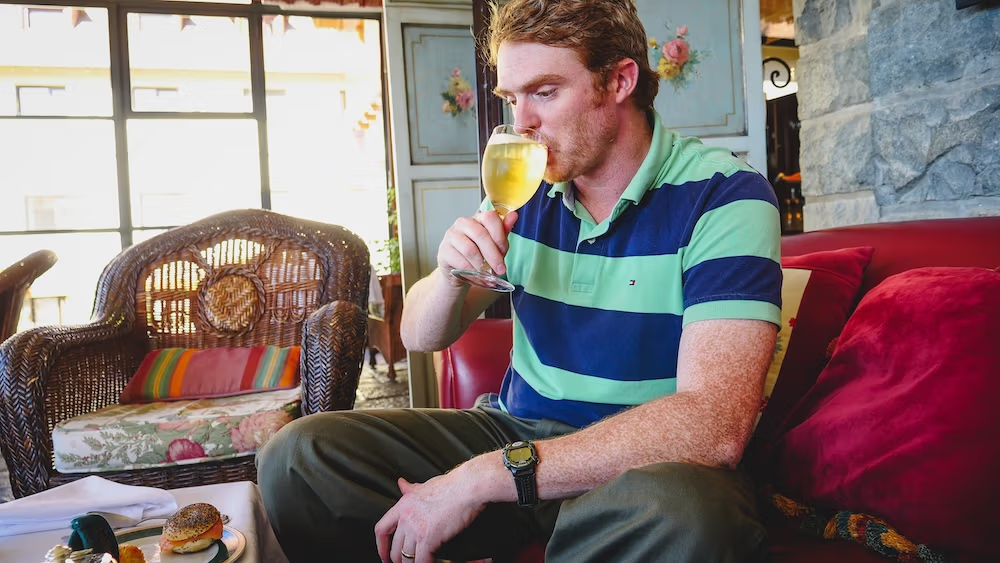
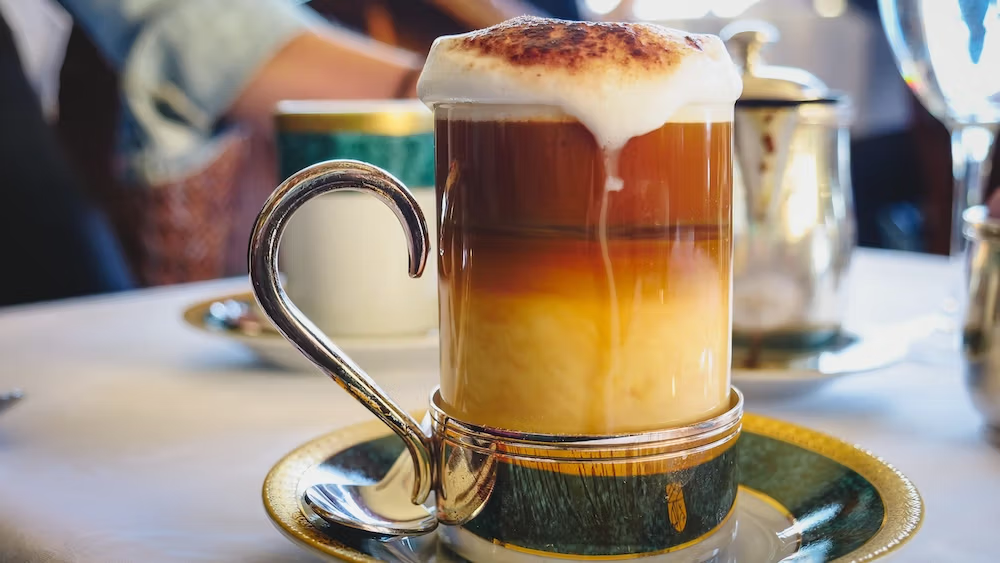
The most famous afternoon tea in South America is the “Llao Llao Tea” at the five-star Llao Llao Hotel in Bariloche. It costs an eye-watering $55,000 to $70,000 ARS ($40-$50 USD) per person. You get savory smoked trout sandwiches, the custom “Llao Llao Blend” tea, and panoramic views of the Tronador volcano.
But there is a massive friction point here that ruins vacations. Tourists trying to book this online often accidentally make a reservation at the Patagonia Restaurant inside the hotel. This restaurant serves standard food in a dated, wood-paneled room with no view.
The Fix: You must explicitly state: “Reserva para la Ceremonia del Té en el Winter Garden.” The Winter Garden is the iconic glass-walled atrium. If you sit down and don’t see a panoramic wall of glass, you are in the wrong room. Furthermore, Llao Llao strictly forbids sharing. One person, one full price tag.
The Circuito Chico Transit Reality
Getting to Llao Llao requires taking public Bus Line 20 from downtown Bariloche to Kilometer 25 of Avenida Bustillo. It takes almost an hour because the bus stops constantly. By 5:00 PM, the bus heading back to town is a shoulder-to-shoulder nightmare on a winding mountain road.
If you want a view that rivals Llao Llao without the $50 USD price tag, get off the bus a few stops early at Km 24.6 and look for the Bellevue Tea House.
- The Vibe: At $18,000 ARS, their Red Fruit Tart (Frutos Rojos) is phenomenal, and it offers the best hidden view of Lago Moreno.
- The Warning: Reaching Bellevue requires walking down a steep, unpaved dirt path toward the lake. If it has rained, this path is a literal mudslide. Do not wear luxury footwear or high heels to this tea house. Leave the fancy clothes for the Winter Garden.
High-Altitude Alfajores in San Martin
If you push further north to San Martin de los Andes, the vibe shifts again. We spent an afternoon at Ostia Walton, overlooking Lake Lácar. While Audrey and I sat there, absolutely demolished by the thickest, most sugar-dense alfajores I have ever eaten in my life, local kittens played outside on the patio. It was the perfect, blissful defeat. It lacked the rigid ceremony of Gaiman, replacing it with pure, unadulterated mountain comfort.
Quick-Reference Mountain Logistics
| Venue | 2026 Price Range | The Standout Feature | The Friction Point |
| Llao Llao Winter Garden | $55k – $70k ARS | Smoked trout, bespoke tea, glass atrium. | Mandatory 72-hour+ booking lead time. Zero sharing allowed. |
| Bellevue (Bariloche) | $18k – $22k ARS | Red fruit tart, intimate Lago Moreno views. | Steep, muddy access path. Closed Mon/Tue. |
| Ostia Walton (San Martin) | $12k – $15k ARS | Comically thick alfajores, Lake Lácar views. | Pure sugar overload. Very few savory palate cleansers. |
The Financial Reality Check
Let’s talk money, because Argentina’s economy requires constant vigilance.
The Dólar Blue (the unofficial but universally used exchange rate) is hovering around $1,433 ARS. All the USD estimates in this guide are based on that rate or the Dólar MEP (the rate you get when using a foreign Visa or Mastercard).
[Samuel’s Cash-in-Hand Warning]
Do not rely on your credit card in rural Chubut. Places like Gaiman have incredibly weak cellular signals and notoriously spotty Wi-Fi. We watched multiple tourists panic as the Posnet (credit card) machines timed out over and over again. Locals pay using Transferencia (a bank transfer app), but this requires an Argentine DNI (ID number), meaning foreigners cannot use it.
You must bring crisp, physical Argentine Pesos—exchanged previously at the Blue Rate in a major city like Buenos Aires—to cover the exact cost of your tea, plus a 10% cash tip. If you try to pay with physical US Dollars, the tea house will likely give you a terrible, outdated exchange rate.
The Digital Disconnect: Why Your MacBook Belongs in the Trunk
When you spend your life documenting all 23 Argentine provinces for a massive project like Che Argentina Travel, the instinct to turn every flat surface into a makeshift office is deeply ingrained. Give me a table, a caffeine source, and a decent chair, and my muscle memory immediately reaches for my laptop to start culling footage or backing up SD cards.
But let me save you from becoming the ultimate villain of your Patagonian itinerary: bringing a laptop into a traditional Casa de Té is a catastrophic cultural misread.
We need to talk about the digital reality of the Chubut Valley and the Bariloche lake district. If you are a remote worker, a digital nomad, or just a creator desperate to upload an Instagram story of your Torta Negra, you must understand that these historic tea houses operate as an entirely different dimension where Wi-Fi signals go to die. The walls of these 1865 Welsh homes are made of thick, historic brick and mortar. They act as literal Faraday cages. Even if your Claro or Movistar eSIM was pulling 5G in Trelew, the moment you cross the threshold in Gaiman, your phone becomes an expensive paperweight.
And honestly? That is exactly the point.
In Buenos Aires, it is perfectly normal to order a café con leche, open your MacBook, and camp at a corner table for three hours. In Patagonia, the ceremonial Merienda is a sacred, communal endurance event. You are there to conquer a mountain of clotted cream, engage in deep conversation, and stare out the window at the rugged landscape. Pulling out a screen to answer emails while a fourth-generation Welsh grandmother is pouring your loose-leaf tea isn’t just physically difficult due to the dead zones—it is considered deeply rude.
The Screen-Time Triage Matrix
To prevent any awkward staredowns with the waitstaff, here is the unvarnished reality of connectivity and digital etiquette at the heavy-hitter venues.
| The Venue | The Connectivity Reality | The “Laptop Forgiveness” Level | The Verdict |
| Ty Gwyn (Gaiman) | Thick brick walls. Cellular signal drops to 3G or “No Service.” Wi-Fi is strictly for the Posnet (card machine), and even that barely works. | Zero. The tables are packed with eight cakes. There is physically no room for a keyboard without smearing it in local butter. | Absolute Ban. Leave it in your daypack. |
| Ty Te Caerdydd (Gaiman) | Spotty outdoor signal in the manicured gardens, but dead inside the main dining rooms. | Negative Zero. Princess Diana didn’t check her Slack messages here, and neither should you. | Phone photos only. Do not ruin the aesthetic. |
| Nain Maggie (Trevelin) | Slightly better cell reception due to proximity to Esquel, but rural Sunday networks are notoriously unstable. | Very Low. It’s a bustling, family-run mill town vibe. You are taking up a highly coveted table. | Eat, pay, and leave. Work at your hotel. |
| Llao Llao Winter Garden (Bariloche) | Flawless, enterprise-grade resort Wi-Fi. 5G coverage across the property. | Socially Unacceptable. You are paying $50+ USD for the view of the Tronador volcano and the live pianist. | Frowned Upon. The staff won’t stop you, but the other guests will judge you relentlessly. |
[Samuel’s Creator Reality Check: The Upload Strategy]
Audrey and I learned this the hard way: do not try to live-post your tea experience. Between the heavy, wood-paneled shadows inside places like Ty Gwyn and the non-existent upload speeds, you will just end up frustrated, watching a loading bar spin while your scones get cold. Take your photos, shoot your b-roll, and put the phone on airplane mode to save battery. Wait until you are back on the green and yellow 28 de Julio bus heading toward the Trelew terminal before you even attempt to sync your footage to the cloud.
If you truly need to catch up on work while in the Gaiman area, your best bet is to wait out the brutal afternoon siesta back at your rental or in a modern, commercial cafe in the larger hub of Puerto Madryn before making the trek down to the valley. When you sit down for the Welsh tea, you are committing to the analog era. Embrace the disconnect, pour another cup of the astringent black tea, and focus on the real task at hand: figuring out how to fit the leftover cream pie into your doggy-bag.
But here’s where most travelers get it wrong.
Merienda in Patagonia isn’t just about showing up hungry — it’s about choosing the right place, timing it properly, and understanding what kind of experience you actually want.
Because depending on where you are, this ritual can feel like a casual snack… or a full-blown endurance event.
So let’s break it down.
The Patagonia Merienda Game Plan: Where, When, and How to Do It Right
Destination Decision Matrix: Pick Your Merienda Style
| Location | Vibe | Best For | Strength | Weakness | Ideal Traveler |
|---|---|---|---|---|---|
| Gaiman | Historic Welsh village | First-time, cultural deep dive | Most authentic Welsh tea experience in Argentina | Requires planning + transport | Culture-first travelers |
| Trevelin | Scenic + quieter Welsh town | Slower, less crowded experience | Feels more local and relaxed than Gaiman | Fewer options than Gaiman | Travelers exploring Esquel region |
| Bariloche | Alpine + upscale | Scenic tea with views | Best lake + mountain tea settings | Less “Welsh,” more curated | Luxury + scenery seekers |
| San Martin de los Andes | Boutique + polished | Café-style merienda | High-quality pastries + relaxed vibe | Not a traditional tea house experience | Foodies + slow travelers |
| Buenos Aires | Urban café culture | Casual merienda | Easy, everywhere, low friction | Not special or ceremonial | Time-strapped travelers |
The Merienda Strategy Matrix: What Kind of Experience Do You Want?
| Goal | Strategy | Where to Go | Why |
|---|---|---|---|
| Authentic Welsh Tea | Go all-in with full tea service | Gaiman / Trevelin | This is the real deal — heritage + ritual |
| Instagram + Scenic Views | Pick a lake or mountain setting | Bariloche | Tea with a backdrop that carries the moment |
| Low Effort, High Reward | Walk into a café mid-afternoon | San Martin / Buenos Aires | No planning, still satisfying |
| Cultural Deep Dive | Combine tea with town exploration | Gaiman | The town itself is part of the experience |
| Luxury Indulgence | Book a hotel tea service | Llao Llao (Bariloche) | Elevated version of merienda |
Timing Strategy: When to Arrive (This Matters More Than You Think)
| Time | What Happens | Should You Go? |
|---|---|---|
| Before 3:00 PM | Too early, kitchens may not be ready | ❌ Skip |
| 3:30–4:30 PM | Ideal arrival window | ✅ Best time |
| 4:30–5:30 PM | Peak merienda rush | ⚠️ Expect crowds |
| After 6:00 PM | Slim pickings, some items gone | ❌ Risky |
Tip:
Arrive slightly early, especially in Gaiman. Once the trays start moving, things disappear fast.
Portion Reality Check: How Much Food Are You Actually Getting?
Let’s reset expectations.
| Item | What You Expect | What You Get |
|---|---|---|
| Tea | One cup | Multiple refills or a full pot |
| Cake | One slice | Several dense slices |
| Pastries | Light snack | Full sugar overload |
| Sandwiches | Optional | Often included |
| Experience | Casual tea | Full-blown feast |
Reality:
This is not a snack.
This is a caloric event.
The Survival Strategy (Because Yes, You Need One)
Step-by-Step Merienda Game Plan
- Arrive hungry (but not starving)
- You need stamina, not desperation.
- Don’t order everything immediately
- Pace yourself — the trays keep coming.
- Prioritize early
- Eat the items you really care about first.
- Hydrate with tea strategically
- Tea helps, but it also fills you up quickly.
- Accept defeat gracefully
- You will not finish everything.
- Ask for a cajita
- This is not failure. This is strategy.
Cost Reality: What You’ll Actually Pay
| Type | Estimated Cost (USD equivalent) | Notes |
|---|---|---|
| Full Welsh tea service | $15–30 | Depends on venue |
| Upscale hotel tea | $30–60 | Bariloche luxury tier |
| Café merienda | $5–15 | Casual option |
| Add-ons (sharing, extra items) | +$2–10 | Watch for hidden costs |
Important:
- Cash is often preferred in smaller towns
- Cards may fail (Posnet issues)
- Transfers sometimes accepted
Logistics Matrix: Getting There Without Losing Your Mind
| Destination | Best Access | Difficulty |
|---|---|---|
| Gaiman | Bus from Trelew (28 de Julio) | Medium |
| Trevelin | Drive or base in Esquel | Easy–Medium |
| Bariloche | Walk / taxi / bus | Easy |
| San Martin | Walkable | Easy |
Gaiman Tip:
This is the only destination that feels like a mission.
Plan it like one.
The Hidden Rulebook (Things No One Tells You)
- Sharing may incur a fee (“costo de vajilla”)
- Portions are not standardized — they’re generous by default
- Some places require reservations
- Wi-Fi may be unreliable or nonexistent
- Siesta hours can affect availability
- Menus may be verbal or informal
- English is not guaranteed outside major destinations
The Final Crumb
The Argentine Merienda is not just a meal. It is a portal into the strange, beautiful history of Patagonia. It is a testament to the Welsh immigrants who dragged tea leaves and brown sugar across a desert, and the modern Argentines who decided that a Tuesday afternoon requires 3,000 calories of baked goods.
Yes, you will likely get sweaty on a bus. You will absolutely get frustrated by the siesta closures. And you will definitely experience a sugar crash so severe it alters your brain chemistry. But when you are sitting in a historic wooden cabin, slicing into a piece of Torta Negra that has been baked to perfection, washing it down with aggressively steep black tea while the Patagonian wind howls outside... you realize that every ounce of logistical friction was worth it.
Just remember your SUBE card, pack your patience, and for the love of all things holy, ask for the doggy-bag.
(If you want to see exactly how badly I struggled to eat that cream pie in real-time, or need a visual walkthrough of the Trelew bus terminal, make sure to check out our full Patagonia series on our YouTube channel!)
FAQ: The Argentine Merienda — Patagonia’s Sacred Afternoon Tea Tradition
Do I need to tip at a Welsh tea house in Patagonia?
Absolutely. While there’s no strict 20% rule like in the US, leaving a 10% cash tip is standard practice. Remember, the Posnet (card) machines often fail down here, and even if they work, there’s rarely a tip line. Bring crisp Argentine pesos specifically for leaving on the table.
Can I just order coffee instead of tea?
Yes. Nobody is going to kick you out for requesting an espresso or a café con leche. That said, the traditional pairing is the bottomless pot of loose-leaf black tea. It acts as a necessary, astringent palate cleanser against the mountain of sugar you’re about to consume.
Is it worth visiting Gaiman if I don’t have a sweet tooth?
Depends. If you only eat savory food, the $20+ USD price tag for a tea tray might feel steep, even though the crustless sandwiches de miga and salted butter scones are phenomenal. However, walking the quiet streets, seeing the 1865 Welsh architecture, and visiting the local museum is a unique slice of history you won’t find anywhere else in Argentina.
Do I need to make a reservation in advance?
Sometimes. For the elite luxury tier like the Llao Llao Winter Garden in Bariloche, it is 100% mandatory weeks in advance. For the historic houses in Gaiman like Ty Gwyn or Ty Te Caerdydd, they generally operate on a walk-in basis. Just be waiting at the door when they unlock at 2:30 PM to secure a table.
Are these historic tea houses wheelchair or stroller accessible?
Rarely. You are dealing with 19th-century architecture. Expect narrow doorways, packed dirt paths, uneven concrete sidewalks, and steps to get inside. It’s physically challenging to navigate with wheels, so plan accordingly and perhaps call ahead to specific venues to check their ramp situation.
Can two people share one tea service to save money?
Be careful. Many high-end spots now strictly enforce a Costo de Vajilla—a sharing or place-setting fee that can add $5,000+ ARS just for giving you a second teacup. Ask before you sit down. If the fee is huge, just buy two sets and ask for a cajita (little box) to take the leftovers home for breakfast.
How long does the Patagonian tea experience actually take?
Two hours. Do not rush this. You are paying for a cultural endurance event, not a quick caffeine hit. Sit down, let the sugar digest, have real conversations, and watch the Patagonian wind rattle the windows.
What happens if I show up in town at 1:00 PM?
Nothing. Literally nothing. Gaiman completely shuts down for siesta between 12:30 PM and 4:00 PM. The museums are locked, the shops are dark, and the tea houses don’t open until 2:30 PM. Arrive mid-afternoon, or prepare to sit on a park bench with a rumbling stomach.
Project 23 Argentina: This guide is also available in Spanish. [Lea la versión en castellano: La Merienda Argentina — La Sagrada Tradición del Té en la Patagonia]