
You picture delicate porcelain cups, hushed conversations, and perhaps the lingering image of Princess Diana gracefully sipping Earl Grey. You do not picture coughing up a cloud of Patagonian topsoil inside a pitch-black 1914 railway tunnel exactly ten minutes before tea time.
But there I was, standing in the “Dusty Do”—the historic Federal Grand Central Chubut tunnel—getting blasted by a wind-tunnel effect that coated my clothes in fine, arid grit. We had just arrived in Gaiman, the epicenter of Welsh culture in Argentina, and I was about to walk into one of the most famous, luxurious tea houses in South America looking less like a refined food critic and more like a 19th-century coal miner.
If you are planning a trip to Chubut Province to experience the famous Welsh settlements, you’ve likely read the standard brochures. They mention the Mimosa ship that arrived in 1865, the quaint chapels, and the fact that “there is a lot of cake.”
But the reality of eating Welsh tea in Patagonia is entirely different. It is an endurance event. It requires strategic transit planning, a firm grasp of the local siesta, and the physical fortitude to consume a staggering amount of butter. We’ve been creating a massive series of Patagonia content over on our YouTube channel, and today, we are stripping away the brochure gloss.
This is the microscopic, boots-on-the-ground reality of what it takes—and what it costs in 2026—to tackle the Welsh tea houses of Gaiman and Trevelin.
The Tale of Two Valleys: Coastal Dust vs. Andean Snow
Before we talk about the cake, we have to talk about the geography. The Welsh experience in Patagonia is fractured into two very distinct environments, separated by hundreds of miles of empty steppe.
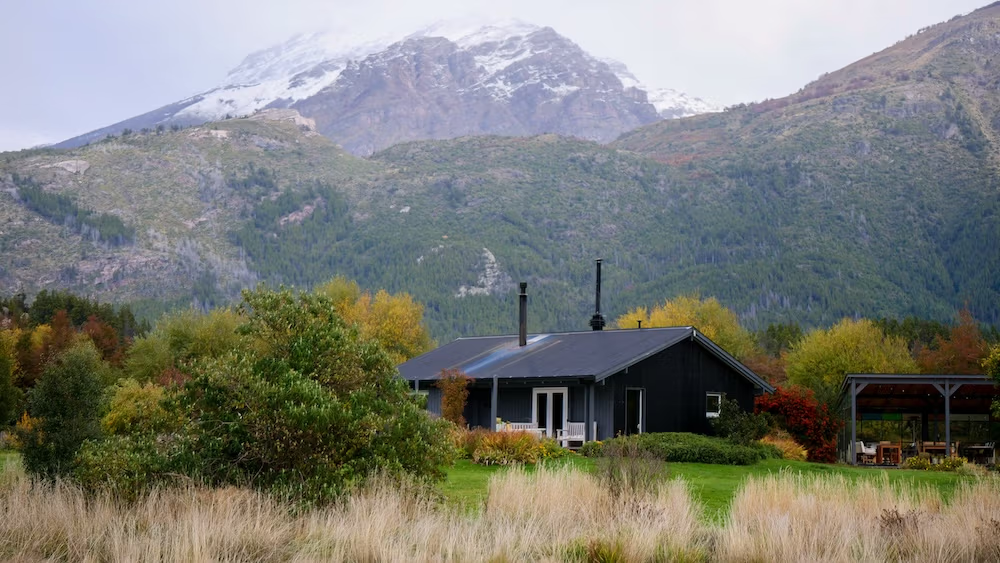
Gaiman sits in the lower Chubut River Valley, just inland from the Atlantic coast. It is arid, dusty, and visually harsh, defined by scrubland and stark red rock formations. The tea houses here are literal oases—manicured, lush gardens hidden behind high hedges. Trevelin, on the other hand, translates to “Mill Town” and is nestled deep in the Andes mountains near the Chilean border. It is alpine, green, and heavily dictated by mountain weather.
The Geographic Clash: The Steppe vs. The Andes
| Logistical Feature | Gaiman (The Lower Valley) | Trevelin (The Mill Valley) |
| The Visual Vibe | Desert Steppe, Historic, “The Origin Point” | Alpine, Snow-capped peaks, “The Frontier” |
| Transit Hub | Trelew (15-45 mins away) or Puerto Madryn (1 hr) | Esquel (30 mins away) |
| Tea House Density | High (5+ major houses clustered in a 5-block radius) | Moderate (2-3 major houses, spread further apart) |
| The Local “Hook” | Princess Diana’s 1995 visit; the historic train tunnel | The Tulip Fields (October); the 1885 “Cwm Hyfryd” settlement |
| Average Cost (2026) | $25,000 – $30,000 ARS (~$25-$30 USD) | $22,000 – $28,000 ARS (~$22-$28 USD) |
The Linguistic Collision: Your Patagonian Tea Rosetta Stone
There is a very specific moment of panic that occurs about thirty seconds after you sit down in a Gaiman tea house. The waitress hands you a menu, smiles, and walks away. You look down and realize you are staring at a three-way linguistic car crash.
The heritage is Welsh, the staff and the printed menus are Argentine Spanish, and your brain is desperately trying to translate it all back into English before she returns with the teapot. If you don’t know the difference between Bara Brith and Torta Negra, you are going to miscalculate your sugar intake for the next 48 hours.
Generic guides will tell you to “just eat the cake.” We don’t do that here. I built this cheat sheet specifically so you can pull it up on your phone at the table. This is exactly what you will see on the menus in Chubut, what it actually means, and the sensory reality of what is about to arrive on your plate.
[Samuel’s Ordering Warning]
Do not rely on Google Translate in these tea houses. The app frequently misinterprets localized Welsh-Spanish mashups. Bookmark this table.
| The Welsh Origin | The Argentine Spanish Menu (What you will read) | The English Translation & Tasting Reality |
| Cacen Ddu | Torta Negra Galesa | The Patagonian Black Cake: The heavy hitter. It looks exactly like a rich chocolate cake, but contains zero cocoa. It is a dense, historical survival bread packed with dark muscovado sugar, molasses, walnuts, and a heavy pour of rum. Triage Priority: Save this for the takeaway box. |
| Bara Brith | Pan Dulce Galés | Speckled Fruit Bread: A lighter, yeasted bread dotted with dried fruits that have usually been soaked overnight in cold tea. It is not overly sweet and is structurally designed to act as a vehicle for thick local butter. |
| Tarten Hufen | Torta de Crema | Baked Cream Pie: A revelation. Imagine taking the thick clotted cream you would normally spread on a scone, sweetening it slightly, and baking it directly into a pie crust until it sets. |
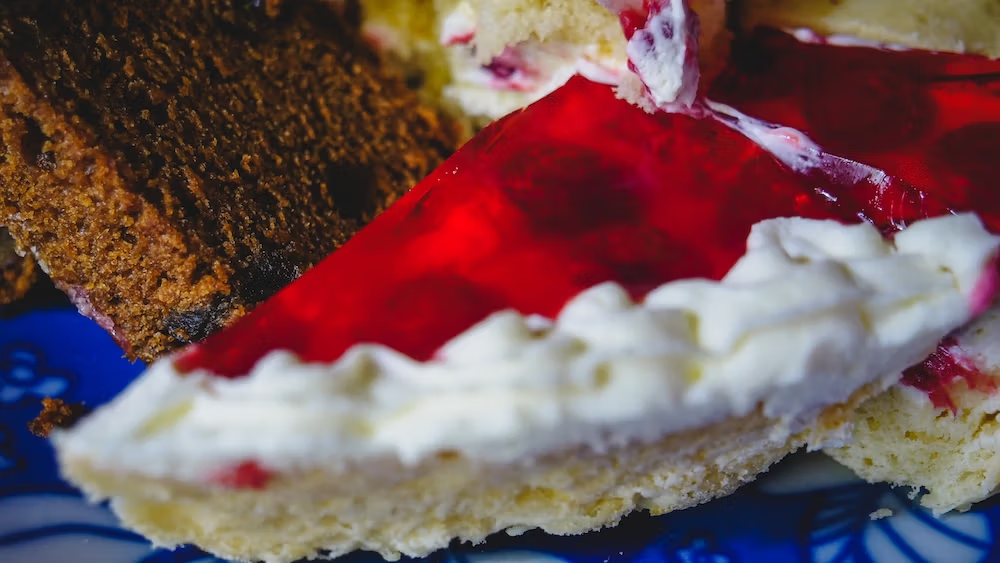
| Cacen Sbwng | Bizcocho a lo / Bizcochuelo | Vanilla Sponge: The airy counter-punch to the dense black cake. It is a massive, fluffy vanilla sponge, frequently layered with whatever local berries are in season and topped with a sugary glaze. |
| Cacen Rwm | Torta “Thornton Aida” | Rum & Raisin Farm Cake: Harder to find on the main tourist strip, but a staple at farmhouse venues like Quinta Narlu. It tastes like a localized, heavily spiced Christmas cake. |
| Sgons | Escones | Warm Scones: Do not expect a delicate British high-tea scone with imported clotted cream. These are hearty, warm, and served with dense regional butter and homemade fruit preserves. |
| Brechdanau | Sandwiches de Miga | Crustless Finger Sandwiches: The mandatory savory break. Paper-thin, crustless white bread layered simply with ham and mild cheese to cut through the impending sugar coma. |
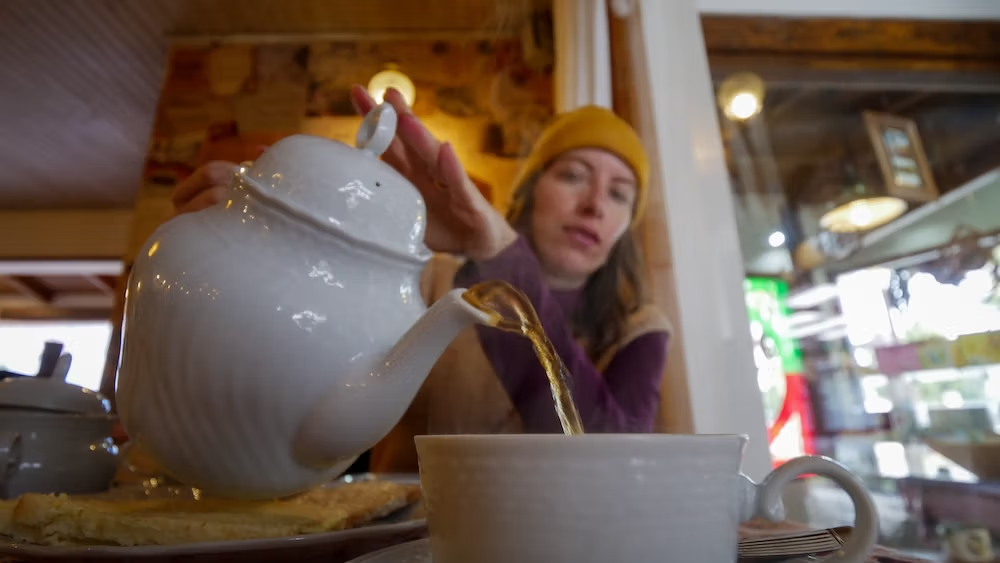
| Te Rhydd | Té Negro en Hebras | Loose Leaf Black Tea: The lifeblood of the operation. Served in bottomless pots. Local Rule: Pour a splash of cold milk into the cup first to “cut” the heat, then add the tea. |
Armed with this, you won’t accidentally order a towering stack of vanilla sponge when your soul was actually craving the heavy, rum-soaked history of the Torta Negra.
The First-Timer Mistake Index
If you want to enjoy Welsh tea in Patagonia without avoidable chaos, here are the mistakes most people make on their first attempt.
| Mistake | What Goes Wrong | Better Move |
|---|---|---|
| Showing up without cash | Card machine fails and stress levels spike | Carry physical ARS |
| Assuming the bus takes cash | You get denied boarding | Bring a loaded SUBE card |
| Arriving during siesta with no plan | Town feels shut down and you waste hours | Time your visit carefully |
| Ordering like it’s normal afternoon tea | The food volume absolutely buries you | Pace yourself and ask for a cajita |
| Expecting British-style delicacy | The meal feels heavier than expected | Treat it like heritage fuel, not dainty tea |
| Ignoring mosquitoes | Patio tea becomes a battle | Bring repellent in warm months |
| Relying on Google Translate alone | You misunderstand the menu | Use a pre-built cheat sheet |
| Assuming dietary restrictions will be easy | You find few safe options on the spot | Contact venues ahead of time |
The 45-Minute Illusion on the Green and Yellow Line
Getting to Gaiman sounds incredibly easy on paper. It’s a mere 15 kilometers from the city of Trelew. We walked up to the Trelew bus terminal, expecting to toss a few pesos at a driver and zip over in fifteen minutes.
Reality hit us at the boarding door. The intercity 28 de Julio bus line—identifiable by its bright green and yellow coaches—has recently been fully integrated into the national SUBE network. You cannot pay cash. We watched tourists ahead of us get denied boarding because they lacked the card.
[Samuel’s Transit Warning]
Do not show up in Chubut expecting to buy a SUBE card at the bus station. You must purchase and load a SUBE card in Buenos Aires before flying south. If you arrive in Trelew without one, you will have to wander downtown looking for a specific “Kiosco” that sells them (and if it’s during the afternoon siesta, they will be closed). The current fare to Gaiman is roughly $2,055 ARS.
Once we finally tapped our card, the anticipated 15-minute zip turned into a 45-minute rural crawl. Why? Because there are two routes. The bus driver had taken “Ruta 7,” the scenic farming route, rather than Ruta 25, the highway. While the delay initially sparked a mild logistical panic regarding our tea reservations, Route 7 ended up being stunning, weaving through old farmland, past historic chapels, and dodging locals on bicycles.
The Fix: When boarding the 28 de Julio, explicitly ask the driver: “Ruta siete o Ruta veinticinco?” If you are in a rush to make a 4:00 PM reservation, wait for the highway bus. If you want the history, take Route 7.
Navigating the Gaiman Tea House Roster
Gaiman shuts down entirely between 12:30 PM and 4:00 PM. The museums lock their doors, the streets empty out, and the Patagonian wind whips through the central Plaza Julio A. Roca. If you arrive at 1:00 PM, you will be sitting on cracked concrete in the sun.
Because of this, a massive bottleneck occurs right at 3:45 PM. Tourists who have been hiding in their rental cars suddenly swarm the tea houses. To beat the 4:00 PM “Sugar Crash” queue, you need to know exactly which house you are targeting.
The Ty Gwyn Caloric Intimidation
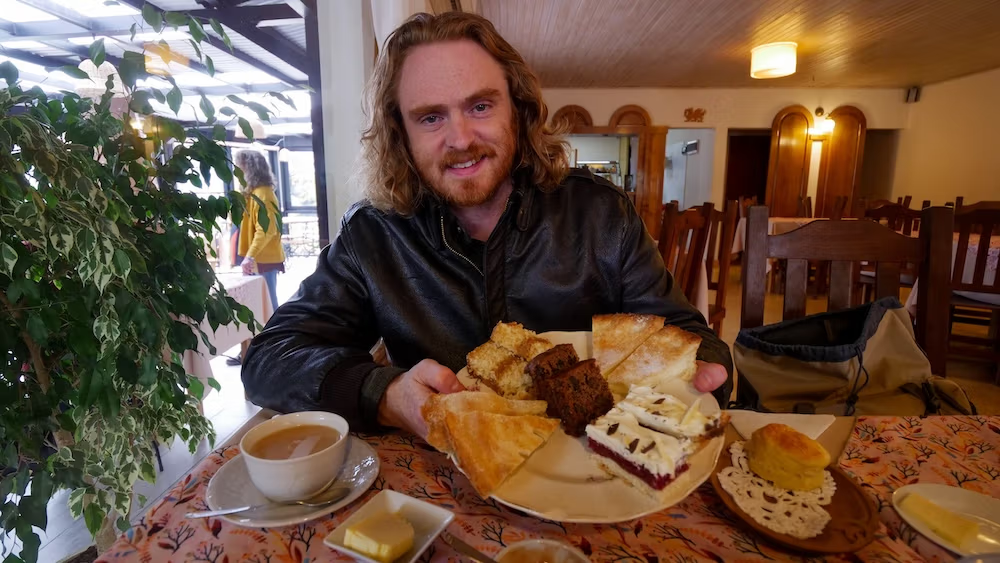
We decided to tackle Ty Gwyn first. It’s a slightly more rustic, large venue where the staff still wear traditional white aprons. We sat down, ordered the full service, and within minutes, the table vanished underneath porcelain and carbohydrates.
There is a very specific type of panic that sets in when you are presented with a basket overflowing with white bread, whole wheat bread, cheese sandwiches, warm scones, and six different whole cakes, realizing utter defeat is imminent before the first bite.
We came naive and hungry. We left utterly defeated. But this defeat introduced us to the greatest unwritten rule of Patagonian tea culture: The Doggy Bag Obligation.
In Gaiman, solo travelers and couples frequently try to order one “Full Tea Service” to share. Do not do this. Most top-tier tea houses strictly prohibit sharing, either charging a punitive fee or outright demanding one full service per seated adult. You must accept the cost (currently around $28,000 ARS at the top spots) and explicitly ask for a “Cajita” (takeaway box) the moment you sit down.
We packed the heavy cakes away immediately and focused on eating the warm scones and savory sandwiches in the restaurant. The next morning, that cardboard box of leftovers funded our breakfast. Taking your leftovers isn’t cheap; it is a local badge of honor.
The Royal Imposter Syndrome at Ty Te Caerdydd
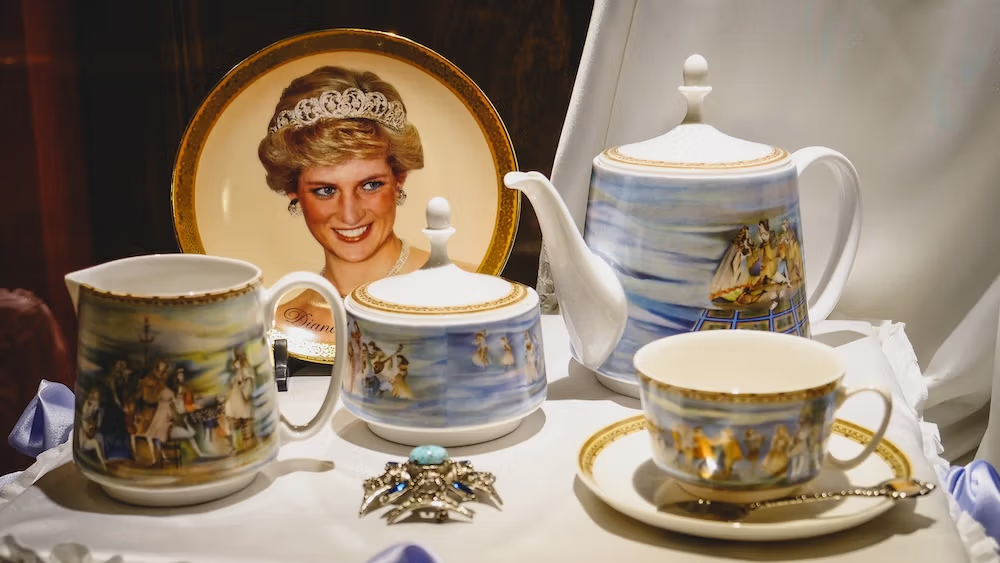
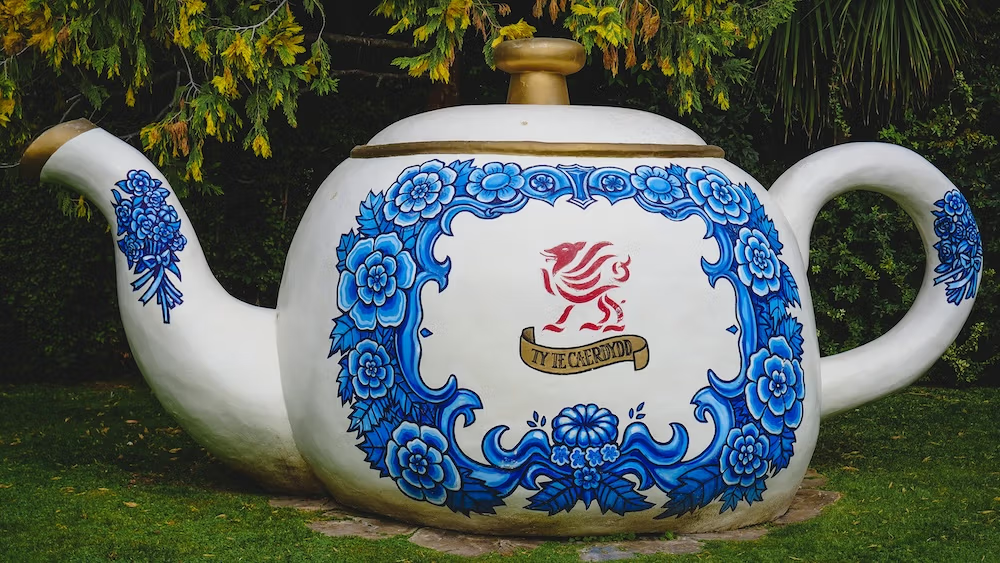
If Ty Gwyn is the hearty rustic option, Ty Te Caerdydd is the royal court. This is where Princess Diana had tea in 1995, and the venue leans heavily into that legacy.
Remember that “Dusty Do” railway tunnel I mentioned? We walked through it just before arriving here. Stepping into the lush, meticulously manicured gardens of Ty Te Caerdydd, I looked down at my dust-covered travel clothes and felt a profound wave of imposter syndrome. We were woefully underdressed for the sheer luxury of the place.
The service here is impeccable, but the environment is entirely at the mercy of the Patagonian summer. We tried to enjoy a slow, aristocratic tea on the patio, but ultimately had to pack our Torta Negra into a box and flee before the evening mosquitoes ate us alive.
The Gaiman Venue Matrix (2026 Status)
| Tea House | The Vibe & Signature Detail | Current 2026 Price | Operating Hours |
| Ty Te Caerdydd | The “Royal” choice. Formal, manicured gardens, features the actual chair Princess Diana sat in. | $28,000 ARS | 2:00 PM – 8:00 PM (Opens early, great for beating the siesta queue). |
| Plas y Coed | The oldest house. Avoids the cruise ship crowds. Feels like sitting in a Welsh grandmother’s living room. | $25,000 ARS | 3:00 PM – 7:30 PM (Often closed early week outside of peak summer). |
| Ty Gwyn | Rustic, large capacity. Excellent savory sandwiches and a staggering volume of bread. | $27,000 ARS | 2:30 PM – 8:00 PM. |
The Anatomy of the Caloric Onslaught
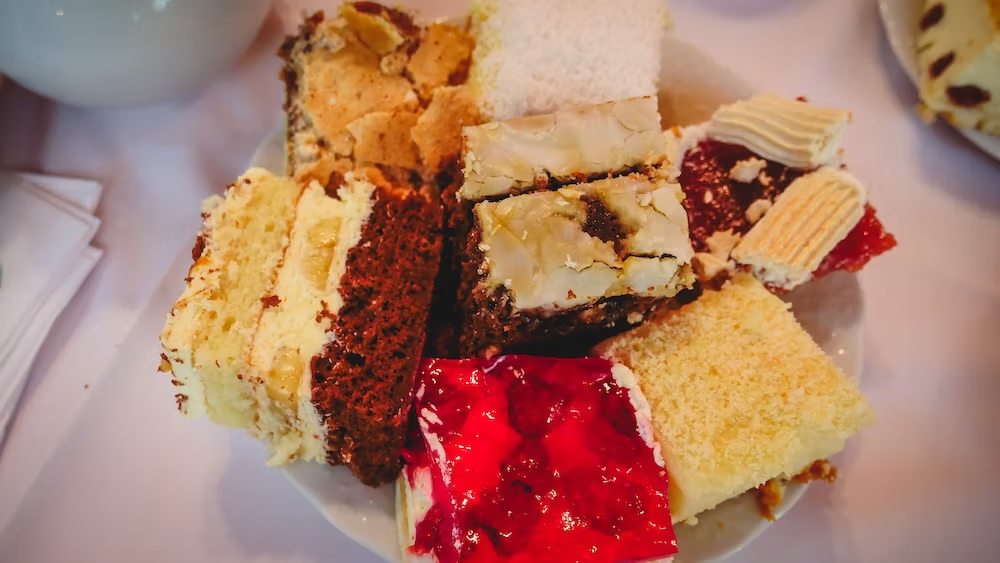
So, what are you actually paying for? A Patagonian Welsh tea is not a tiered, delicate British High Tea. It is a historical survival meal born from the harsh realities of the 1865 settlers who needed food that wouldn’t spoil in the desert.
- The Torta Negra Galesa (The Black Cake): This is the crown jewel. It looks like chocolate, but it contains zero cocoa. The dark color comes from dark muscovado sugar, molasses, spices, and a heavy dose of rum or sherry. It is incredibly dense, designed to last for months on a wagon trail.
- Bizcocho a lo: The counter-punch to the dense black cake. It’s a light vanilla sponge cake, often layered with local raspberries and a sugary glaze.
- The Cream Pie: A revelation. Imagine taking the thick clotted cream you would normally spread on a scone, and baking it directly into a pie crust.
- The Savory Tier: Dainty cucumber sandwiches do not exist here. You get hearty slices of artisanal white and whole wheat bread, served with a massive block of salted local butter and simple ham and cheese finger sandwiches. The butter is applied heavily.
- The Tea: Loose-leaf, usually a robust black blend, served in bottomless pots. The Welsh way here is to add a splash of cold milk first, to “cut” the tea, followed by sugar.
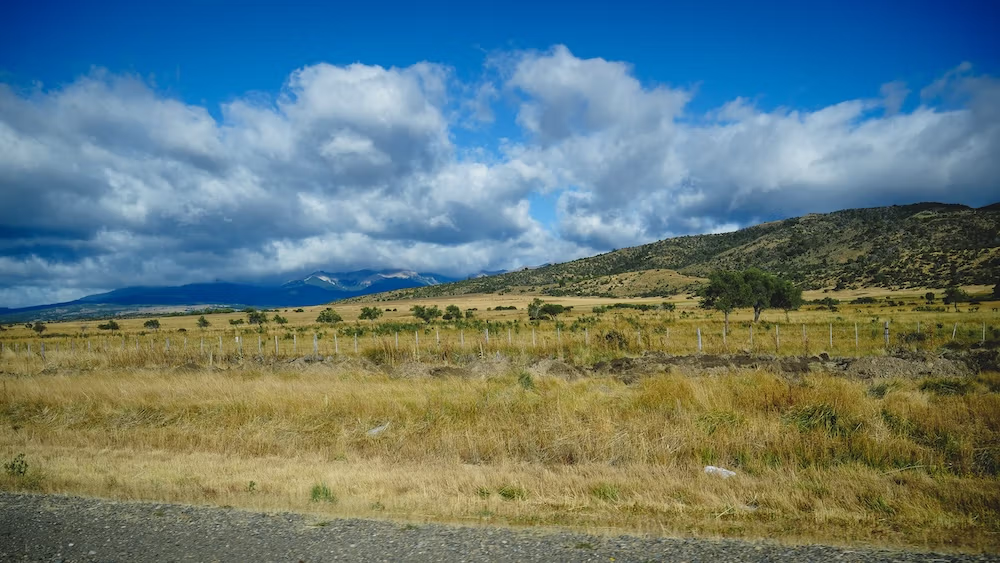
The Andean Course-Correction: Trevelin
A week later, we found ourselves hundreds of miles west in the Andes, navigating the winding mountain roads toward Trevelin. If Gaiman is the historical anchor, Trevelin is the frontier.
But that word—frontier—starts to take on real meaning the moment you leave the Chubut Valley behind.
The landscape shifts gradually at first, then all at once. The dry, dusty tones of Gaiman give way to greener hills, colder air, and a more rugged Andean backdrop. The wind feels different here. The light feels sharper. And the towns feel less preserved and more lived in—less like open-air museums and more like places still adapting to their environment.
Trevelin sits in that space.
It doesn’t feel frozen in time. It feels shaped by it.
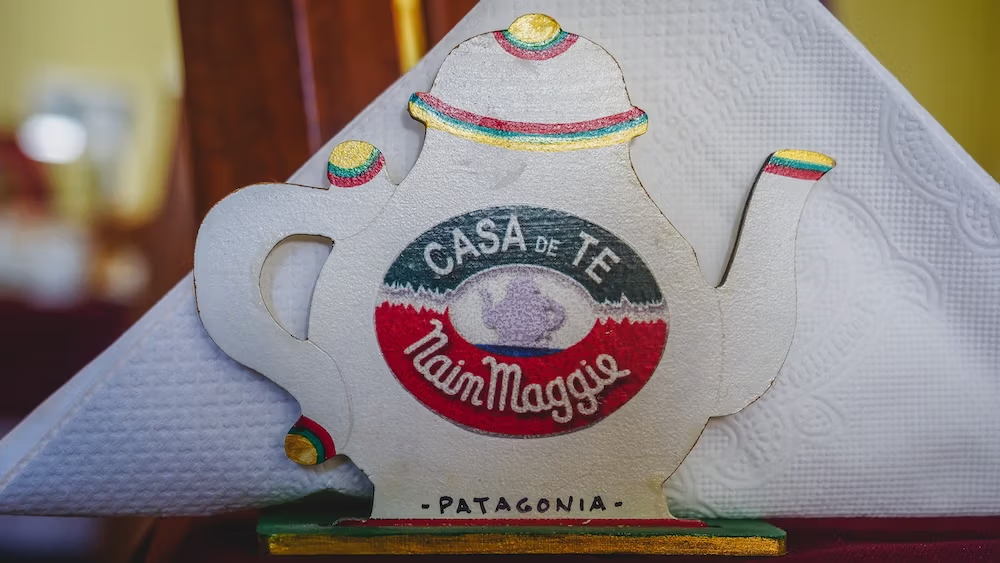
Our target was Nain Maggie (Grandmother Margaret), the absolute gold standard of Andean tea houses. Located centrally on Perito Moreno street, it is much easier to walk to than the sprawling garden estates of Gaiman, but the logistical effort to reach the town itself is much higher.
And that’s the tradeoff.
Gaiman challenges you once you arrive.
Trevelin challenges you just to get there.
[The Sunday Transit Blackout]
We were staying in nearby Esquel and decided to visit Trevelin on a Sunday. Do not rely on public buses on Sundays in the Andes. The schedule is drastically reduced, and you will likely get stranded in Trevelin after 7:00 PM. We had to hire a private Remis (taxi) for roughly $12,000 ARS and explicitly agree on a return pickup time before the driver dropped us off.
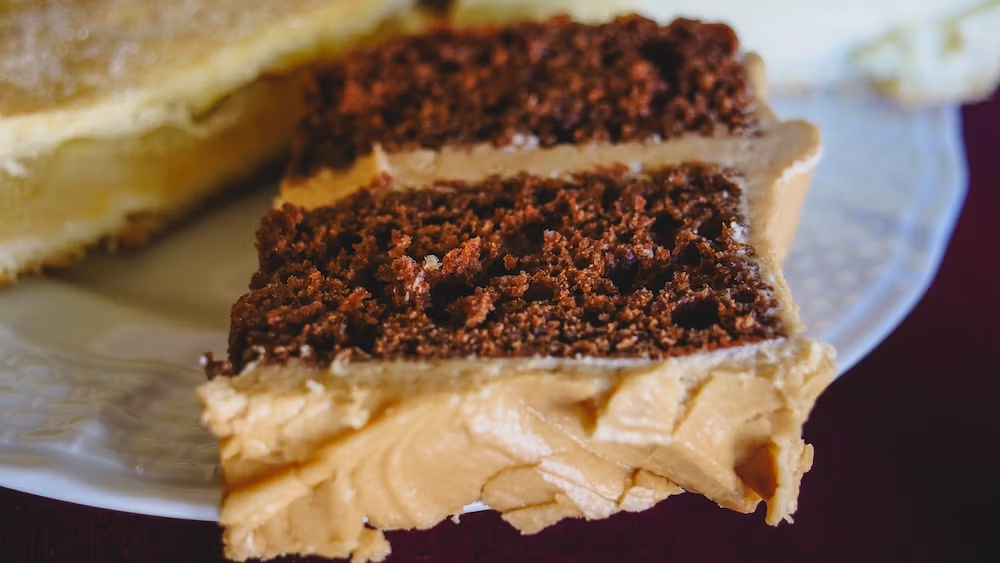
We arrived at Nain Maggie with earned wisdom. Learning from our previous mistakes of over-ordering in Gaiman, we realized that Andean tea houses are slightly more forgiving of the “no-sharing” rule. We successfully ordered a single tea service to split.
That might sound like a small win, but in the world of Welsh tea in Patagonia, it’s a tactical breakthrough.
Because by this point, we understood something clearly:
👉 This is not a light afternoon snack
👉 This is a commitment
The menu here reflects the mountain environment. While Gaiman relies heavily on fruit and vanilla sponges, Nain Maggie’s signature is a dense, decadent Chocolate Sponge Cake with Coffee Icing, alongside a Dulce de Leche and Coconut cake. It is heavier, warmer, and perfectly suited for a town that gets buried in snow during the winter.
And you can feel that intention in every bite.
These aren’t cakes designed for mild afternoons and polite tea service.
They feel engineered for:
- colder air
- longer winters
- higher calorie needs
- and a lifestyle shaped by the Andes rather than the valley
Where Gaiman’s desserts can feel airy and fruit-forward, Trevelin leans into richness and depth. The textures are denser. The flavors linger longer. The portions still push your limits—but in a way that feels more aligned with the environment around you.
Even the atmosphere inside Nain Maggie reflects that shift.
It feels calmer.
Less theatrical.
Less about presentation—and more about warmth.
You’re not stepping into a perfectly preserved historical setting.
You’re stepping into something that still feels lived in, still evolving, still connected to the rhythms of mountain life.
And that’s the key distinction.
If Gaiman is where Welsh culture was carefully preserved,
Trevelin is where it adapted—and kept going.
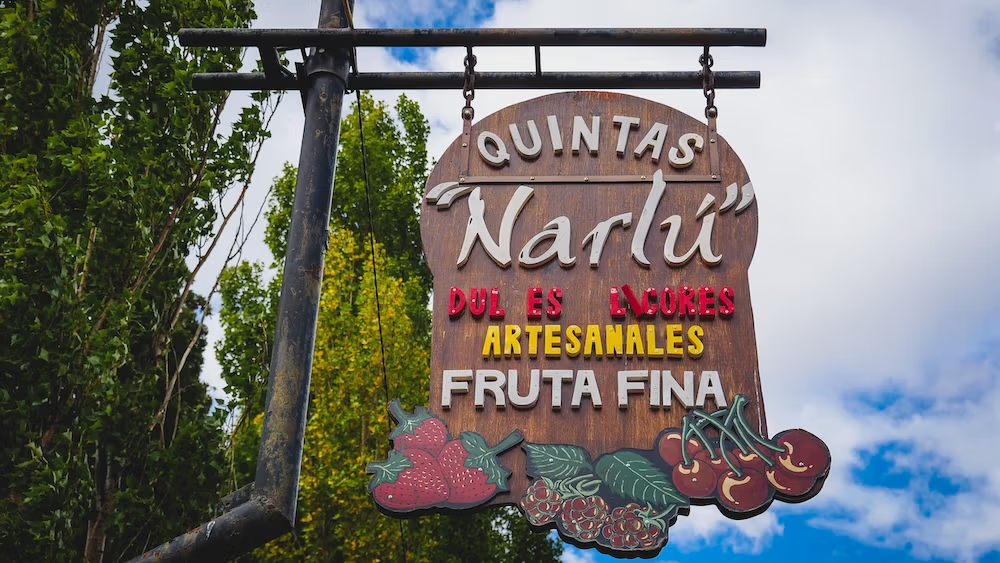
The Quinta Narlu Escape: What Most Tourists Miss
If you want the ultimate “moat” experience—something completely off the standard tourist circuit—you have to leave the main plazas.
You have to break the pattern.
During our time in Gaiman, we bypassed the 4:00 PM tea house rush entirely one afternoon. We grabbed a cheap local cab for a five-minute ride to the outskirts of town to a farm called Quinta Narlu.
And within minutes, the entire tone of the experience changed.
The crowds disappeared.
The schedule disappeared.
The sense of “performance” disappeared.
We were greeted by a fourth-generation Welsh descendant who ran the orchards. There was no royal seating, no strict sharing rules, and no busloads of cruise ship passengers. We bought a massive basket of freshly picked raspberries (which were perfectly in season) and bought a rustic, homemade “Thornton Aida” cake right out of the farmhouse kitchen. We ate it sitting near the orchards, the cake tasting heavily of rum, brown sugar, and raisins—like a localized Christmas cake.
And the difference was immediate.
There’s no menu to decode here. No etiquette to navigate. No pressure to order a full service or justify your choices.
You build your own experience.
Piece by piece.
- fruit from the land
- cake from the kitchen
- and a setting that feels completely unfiltered
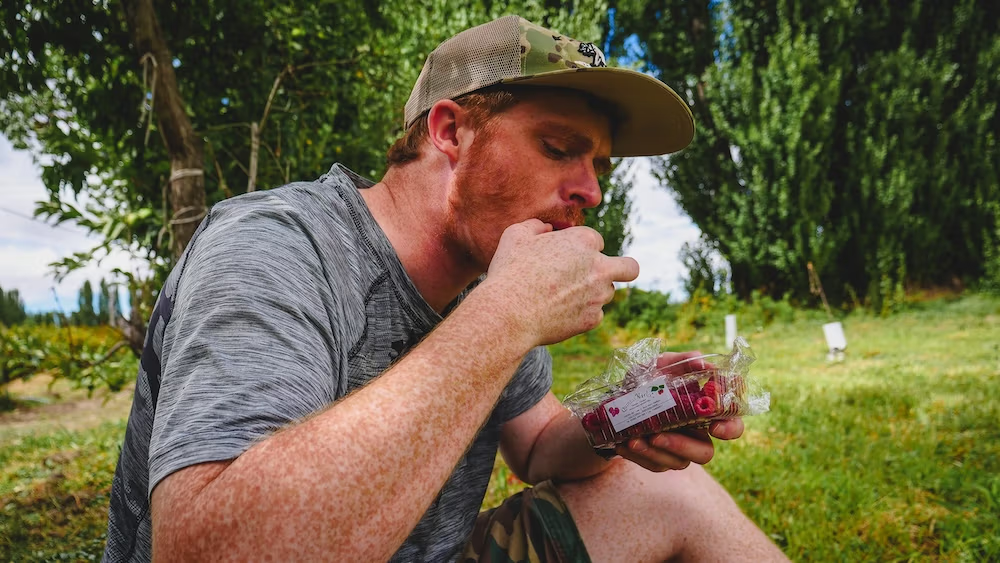
The raspberries were still warm from the sun.
Sweet, slightly tart, and bursting with flavor in a way that instantly reminded us how far removed this was from a formal tea house setting.
The cake, on the other hand, told a different story.
Dense. Moist. Deeply flavored.
Not delicate. Not decorative.
It felt like something designed to last.
Something meant to be stored, shared, and eaten over time—exactly the kind of food that makes sense in a place where winters are long and resources matter.
At one point, sitting there near the orchards, it became clear:
This wasn’t just a different version of Welsh tea.
It was a completely different lens on it.
No polished presentation.
No curated heritage experience.
Just continuity.
This is what happens when a tradition moves out of the tea house and into everyday life.
Why this matters
Most visitors leave Gaiman thinking they’ve fully experienced Welsh tea in Patagonia.
And to be fair—they’ve experienced the most visible version of it.
The one tied to:
- famous tea houses
- Princess Diana’s visit
- manicured gardens
- and structured tea service
But Quinta Narlu shows you something else entirely.
👉 What happens when that same tradition exists outside the spotlight
👉 When it’s shaped by families instead of foot traffic
👉 When it’s sustained quietly rather than performed
It’s not better.
It’s not worse.
It’s just more real.
And that’s exactly why it stays with you longer.
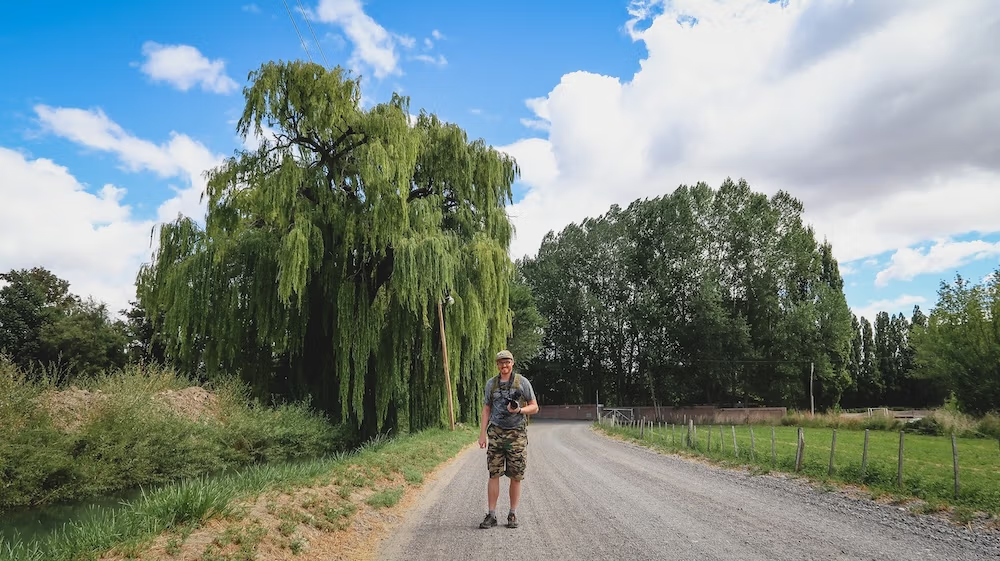
Gaiman vs Trevelin: Which Welsh Tea Experience Should You Actually Choose?
If you only have time for one Welsh tea stop in Patagonia, the real question is not which tea house is “best.” It is which version of the Welsh Patagonian experience fits your trip style.
Gaiman is the classic. It has the historical weight, the Princess Diana connection, the dense cluster of famous tea houses, and that strange visual contrast of lush garden patios hidden inside an arid valley. It feels older, dustier, and more iconic.
Trevelin feels more relaxed and more Andean. The tea culture is still rooted in Welsh heritage, but the backdrop is greener, colder, and more mountain-driven. It feels less like a polished heritage stop and more like a frontier town where tea evolved to match snow, forest, and alpine weather.
| Pick This Place | Best For | What It Feels Like | Main Advantage | Main Friction |
|---|---|---|---|---|
| Gaiman | First-time visitors who want the classic Welsh Patagonia experience | Historic, dusty, theatrical, heritage-heavy | More famous tea houses and stronger “origin story” atmosphere | Siesta closures, queues, stricter full-service rules, bus logistics |
| Trevelin | Travelers already exploring the Andes or staying near Esquel | Alpine, quieter, greener, more relaxed | Easier town feel, mountain character, slightly more flexible tea service | Harder regional access and weaker Sunday transport |
| Both | Serious food and culture travelers | A full “two valleys” comparison | You understand how geography changes the tea ritual | More expensive, more planning, more cake than any rational person needs |
Quick decision matrix
| Your Travel Style | Go To |
|---|---|
| I want the most famous and historic experience | Gaiman |
| I want the prettiest mountain setting | Trevelin |
| I care most about iconic tea houses | Gaiman |
| I hate crowded afternoon bottlenecks | Trevelin |
| I’m already based in Esquel | Trevelin |
| I want the fullest cultural comparison | Both |
The Final Bill: Cash and Connectivity
Let’s talk about the final friction point: paying the bill.
In 2026, many of these tea houses claim to accept international credit cards. Do not trust this. The physical point-of-sale machines in Chubut frequently lose signal because the legendary Patagonian winds disrupt the local internet infrastructure. We watched multiple tourists panic as their cards were repeatedly declined by a spinning machine, only to be told it was a “cash only” day.
The Fix: Always carry at least $40,000 ARS in physical cash per person when visiting the tea houses. Do not rely on the ATMs in Gaiman or Trevelin, as they are frequently drained completely dry by Friday afternoon.
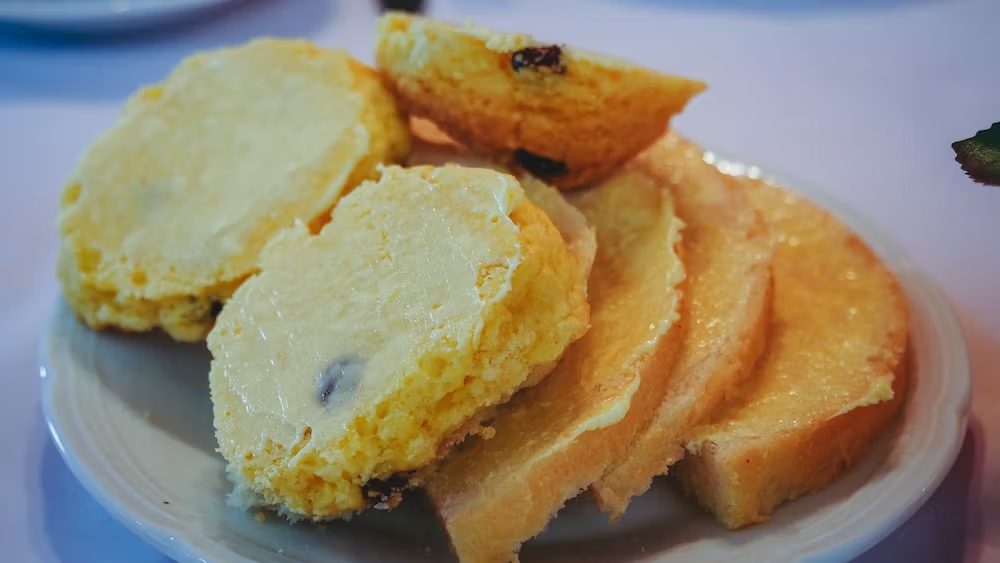
The “Y Wladfa” Blueprint: Why This Menu is Trying to Destroy My Caloric Deficit
When you finally secure a table in one of Gaiman’s manicured gardens, it’s incredibly easy to look at the dainty floral teacups and assume you’ve stumbled into a delicate, aristocratic culinary tradition. Let me stop you right there. It isn’t.
I have fought my way down from 212 pounds to 172, and I am actively grinding toward that 160-pound goal line. So, staring down a 5,000-calorie tray of carbs alongside Audrey feels like an act of deliberate, calculated dietary sabotage. Toss our 15-month-old daughter Aurelia into the mix—whose primary objective is to grab every piece of breakable porcelain within a three-foot radius—and this “leisurely” tea experience rapidly devolves into a high-stakes caloric negotiation.
But to truly appreciate what you are eating, you have to understand why this food is aggressively heavy. This isn’t high-society baking; it is 19th-century edible survival technology.
Back in 1865, a ship called the Mimosa landed on the Patagonian coast carrying about 150 Welsh settlers fleeing cultural suppression. They were promised a lush, green paradise. What they actually walked into was the harsh, arid, wind-blasted desert of the lower Chubut River valley. They called their new settlement Y Wladfa (The Colony).
The pioneers quickly realized that dainty British scones weren’t going to keep them alive while digging irrigation trenches in the desert. The food had to evolve. The famous Torta Negra (The Black Cake) was their masterpiece of caloric engineering. Lacking refrigeration and spending weeks navigating the steppe on wooden wagons, they engineered a cake that practically refuses to spoil. By ditching perishable dairy and packing the dough with dark muscovado sugar, dense molasses, walnuts, candied fruits, and a heavy, preserving pour of rum or sherry, they created a nutrient-dense brick that could survive for months in a saddlebag.
When you slice into a Torta Negra today, you aren’t eating dessert. You are eating the exact fuel source that kept a colony alive through the brutal Patagonian winters.
The Celiac and Vegan Minefield: Navigating the “Sin TACC” Reality
If you are traveling without dietary restrictions, the Welsh tea houses are an absolute carbohydrate playground. But if you are Celiac, gluten-intolerant, or vegan, the traditional Patagonian tea house suddenly becomes a major logistical hurdle.
Living in Argentina, we know firsthand that the country actually has incredibly strict, world-class laws regarding gluten-free food, locally labeled as “Sin TACC” (Sin Trigo, Avena, Cebada, y Centeno). You will see this logo plastered everywhere in Buenos Aires and on supermarket shelves. However, a 150-year-old traditional Welsh kitchen in Chubut is essentially a flour-dusted wind tunnel. Cross-contamination isn’t just a risk here; it is an inescapable geographic reality.
[Samuel’s Dietary Triage Warning]
If you have severe Celiac disease, do not just casually stroll into a Gaiman tea house at 4:00 PM expecting a safe, full-service tea tray to magically appear. The kitchens are small, the volume of airborne wheat flour is massive, and you will be turned away. You must plan ahead.
Generic guides completely gloss over this, leaving travelers to figure it out while a waiter taps their notepad. Here is the un-sugarcoated reality of how to handle dietary restrictions in Chubut, complete with the exact workarounds.
The Patagonian Tea Triage Matrix: Dietary Edition
| Dietary Profile | The Harsh Reality | The Boots-on-the-Ground Workaround | Effort vs. Reward |
| Strict Celiac (Sin TACC) | The entire traditional menu revolves around wheat flour. Kitchen cross-contamination is virtually guaranteed in the smaller, rustic houses. | The 48-Hour WhatsApp Hack: Top-tier venues like Ty Te Caerdydd do offer sealed, pre-packaged “Sin TACC” options (crackers, specialized cake slices, fruit), but they require 48 hours of advance notice via WhatsApp to source and secure. | High Effort / Moderate Reward. You get the atmosphere, but you miss out on the fresh-baked tradition. |
| Mild Gluten Intolerance | You still cannot eat the Bara Brith or the scones, but cross-contamination is less of a medical emergency. | The Mountain Bypass: If you walk into Nain Maggie in Trevelin without a reservation, skip the fixed-price “Full Tea.” Pay for a pot of loose-leaf tea and ask for a simple plate of their local homemade jams and fresh seasonal fruit. | Low Effort / High Reward. A cheaper, lighter way to experience the ambiance without the wheat crash. |
| Strict Vegan | Nearly impossible. The entire ecosystem is held together by local cow’s milk, heavy cream, eggs (the binding agent in the Torta Negra), and staggering amounts of salted butter. | The Farmhouse Escape: Bypass the indoor tea houses entirely. Replicate our Quinta Narlu farm run on the outskirts of Gaiman. Buy fresh, raw Patagonian raspberries by the basket directly from the orchards. | Low Effort / Massive Reward. You get an authentic, off-the-beaten-path experience that is naturally 100% plant-based. |
| Dairy-Free / Lactose Intolerant | The scones rely on butterfat for structure, and the Torta de Crema is literally baked cream. | Order black tea without the traditional splash of milk. Request the savory finger sandwiches without cheese or butter (leaving you with plain bread and tomato). The Torta Negra is often dairy-free (using oil/rum), but always confirm with the staff. | Moderate Effort / Moderate Reward. You can survive the experience, but it requires heavy menu micromanagement. |
The Reality of the Ritual
Eating Welsh tea in Patagonia is not a delicate culinary exercise. It is a collision of cultures—where 19th-century Celtic survival recipes meet the harsh realities of the Argentine steppe and the soaring peaks of the Andes.
It requires you to battle transit cards, dodge dusty railway tunnels, fight off mosquitoes, and accept the fact that you will be eating cake for breakfast for the foreseeable future. But when you are sitting in a lush garden in the middle of a desert, spreading thick local butter onto a warm scone while the wind howls outside, it is undeniably one of the most unique food experiences on the planet.
Just remember: keep your SUBE card loaded, pack your mosquito repellent, and whatever you do, do not leave that Torta Negra on your plate. Ask for the cajita, take your prize, and wear that leftover box like the badge of honor it is. Be sure to check out our full video breakdown of the Gaiman tea houses on our YouTube channel to see the sheer scale of these cakes for yourself.
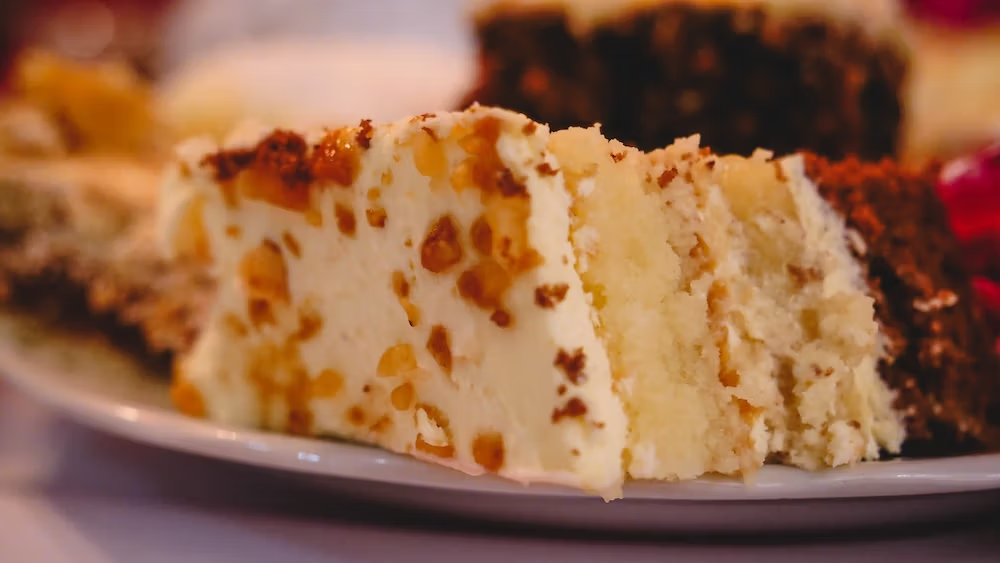
FAQ: What Welsh Tea and Welsh Cakes in Patagonia Is Actually Like
Do people still speak Welsh in Patagonia?
Yes, but barely. You will hear Argentine Spanish 90% of the time. The Welsh language in Chubut is mostly reserved for the tea house menus, older generations, and specific cultural festivals. Don’t expect your waitress to casually chat in Celtic while pouring your tea; she’s most likely speaking Spanish.
Can two people share one Welsh tea in Gaiman?
Nope. Most top-tier tea houses strictly forbid sharing one tea service between two adults. They will either hit you with a steep sharing fee or outright demand you purchase two full services. Just accept the cost, pay for both, and immediately ask for a “cajita” (takeaway box) to pack up the heavy cakes for tomorrow’s breakfast.
How much does a traditional Welsh tea cost in Argentina?
Around $25 to $30 USD. In 2026, that translates to roughly $25,000 to $30,000 ARS per person depending on the fluctuating exchange rate. It sounds incredibly pricey for an afternoon cup of tea, but remember, you are essentially buying a mountain of artisanal breads, scones, and half a dozen cakes.
Which tea house did Princess Diana visit in Patagonia?
Ty Te Caerdydd. She visited this specific Gaiman tea house in November 1995. The venue leans heavily into the royal aesthetic with perfectly manicured gardens, and yes, they still proudly display the exact chair she sat in while enjoying her tea.
Are the tea houses open in the morning?
Absolutely not. Gaiman shuts down hard for the traditional siesta from roughly 12:30 PM to 4:00 PM. The tea houses generally do not open their doors until 2:00 PM or 3:00 PM. Do not show up at 10:00 AM expecting a warm scone; you will find nothing but locked doors and empty streets.
Do I need to book my tea house reservation in advance?
Depends. If you are rolling into Gaiman on a random Tuesday afternoon, you can usually just walk into Ty Gwyn or Plas y Coed. But if you are visiting during the peak summer months, or heading to Nain Maggie in Trevelin during the busy October Tulip Season, you should absolutely secure a table a day or two in advance.
Is taking the bus from Trelew to Gaiman easy?
Sort of. It is a scenic 45-minute ride on the green and yellow 28 de Julio bus, but there is a massive catch: you cannot pay the driver with cash. You must have a pre-loaded SUBE card to board, and you should really buy and load that card in Buenos Aires before flying south to avoid scrambling around Trelew.
Do the tea houses accept credit cards?
Risky. While many venues claim to accept international credit cards, the legendary Patagonian winds regularly knock out the local internet infrastructure, turning their point-of-sale machines into useless plastic bricks. Always bring at least $40,000 ARS in physical cash per person to avoid a highly awkward dish-washing situation.
Project 23 Argentina: This guide is also available in Spanish. [Lea la versión en castellano: Cómo es realmente el té galés y las tortas galesas en la Patagonia]