
There is a specific kind of delirium that sets in after 19 hours on an Argentine overnight bus. It’s a state of mind where the concept of time dissolves, your limbs feel like overcooked noodles, and your only conscious thought is a desperate, primal drive for carbohydrates.
When Audrey and I finally staggered off our double-decker bus into the coastal wind of Puerto Madryn, leaving central Argentina completely behind for our first foray into Patagonia, we were entirely disoriented. We had arrived right in the dead zone of the Argentine siesta. The streets were quiet. The cafes were shuttered. Our grand plans of immediately diving into historical research evaporated. We survived that afternoon entirely because a local spot called “Chona” was serving 50% off pizzas between 4:00 PM and 8:00 PM.
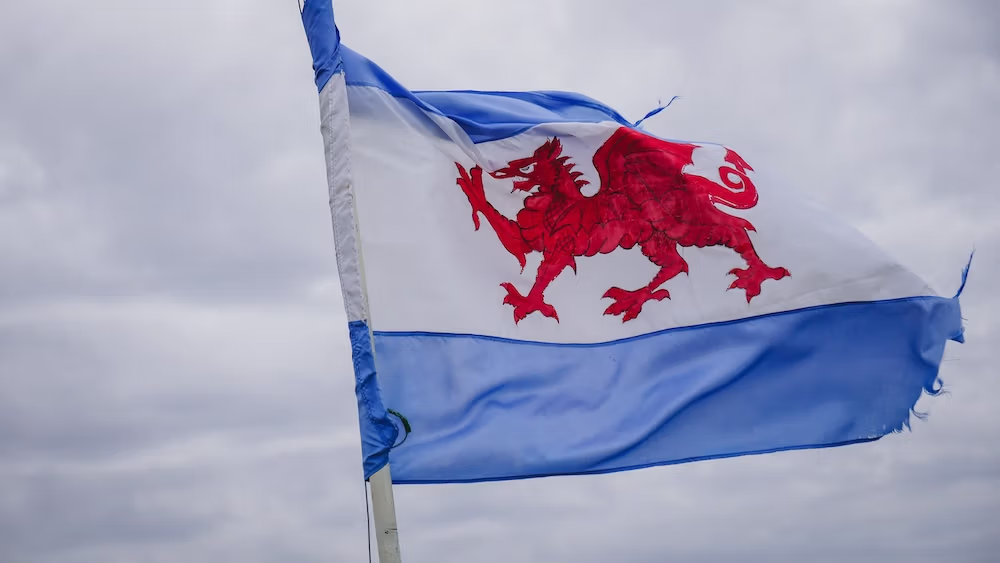
We inhaled the pizza, chugged some soda water, and finally regained our senses. We hadn’t just endured an 18-hour bus ride to eat discounted cheese. We were here to chase down one of the most bizarre, fascinating, and unlikely migration stories in human history: the 1865 arrival of the Welsh pioneers in the Patagonian desert.
If you’ve watched our Patagonia travel series on our Samuel and Audrey YouTube channel, you know we love a deep historical dive. But the reality of tracing the Welsh route through the Chubut Valley is far grittier, far more logistical, and far more carbohydrate-dense than the glossy tourism brochures let on.
This is the ultimate, un-sugarcoated guide to tracing the voyage of the Mimosa, navigating the modern logistics of the Chubut Valley, and surviving the sheer volume of scones you are about to encounter.
Map Controls
Select a Town
Click a town on the map to reveal the travel logistics, friction points, and historical context.
The False Idyll and the Wind-Swept Reality of Punta Cuevas
To understand the Welsh settlements of Gaiman, Trelew, and Trevelin, you have to understand the sheer panic of the arrival.
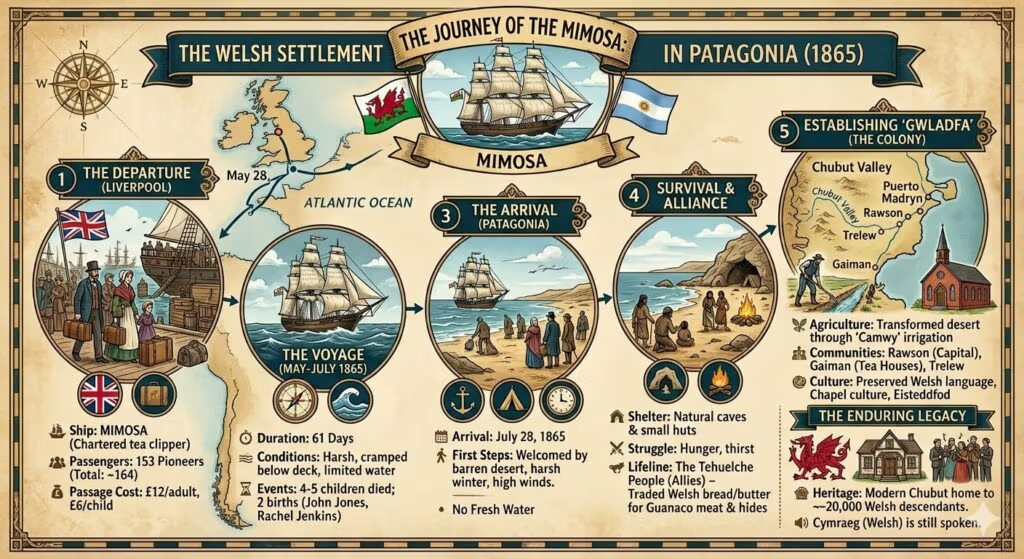
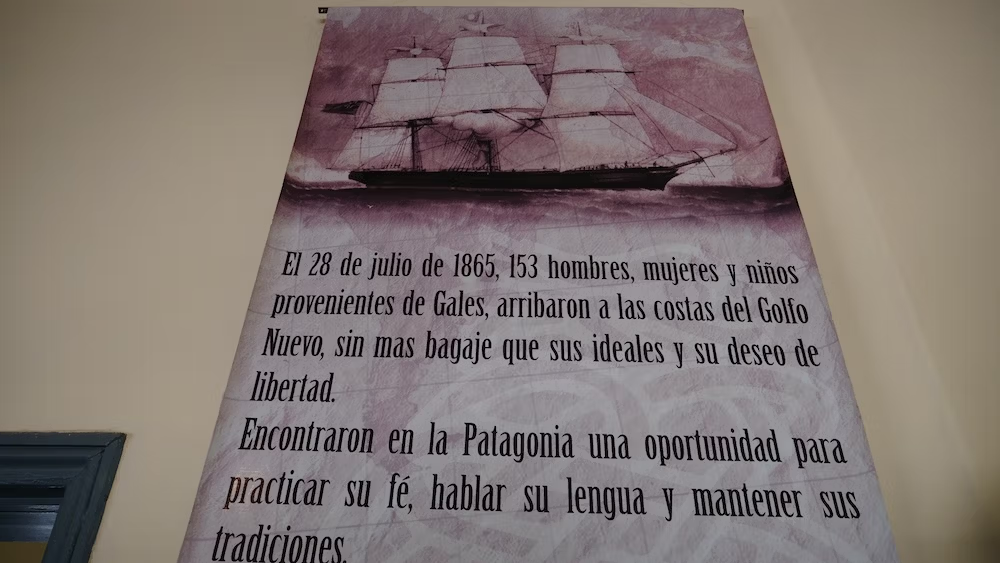
In May 1865, a converted tea clipper named the Mimosa left Liverpool, England. Aboard were 153 official pioneers (and a total of 164 souls if you count the advance party). They were fleeing cultural suppression and failed crops in Wales, lured by pamphlets promising a verdant, green “Welsh Paradise” in South America. The voyage took 61 grueling days. Four children died at sea; two were born.
When they finally dropped anchor in the Golfo Nuevo (modern-day Puerto Madryn) on July 28, 1865, it was the dead of the Patagonian winter. There were no green rolling hills. There was no fresh water. There was only the brutal, relentless Patagonian wind—el viento—and a semi-arid desert steppe.
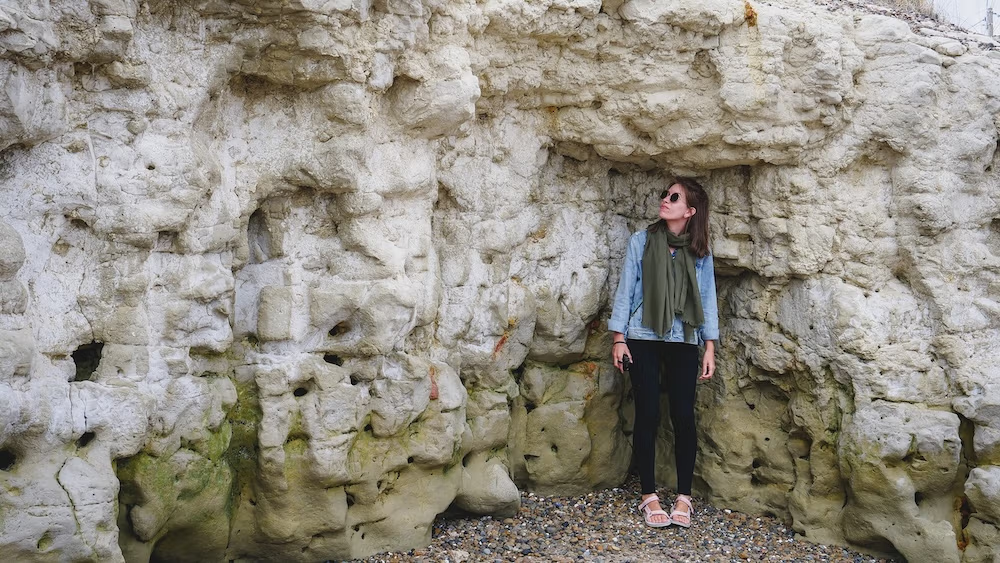
Today, you can visit the exact spot where they huddled for survival: Punta Cuevas.
Getting to Punta Cuevas is a right of passage, and it requires some physical effort. Located at the far southern end of the Puerto Madryn beachfront, it is a solid 45-minute walk from the city center pier. Most travelers vastly underestimate the coastal wind. Walking south against the gusts can easily double your transit time and sap your energy before you even reach the historical site.
[Samuel’s Logistical Reality Check]
A lot of older travel blogs will tell you to “go explore the caves where the Welsh lived.” This is outdated. Recently, local authorities have installed reinforced fencing and preservation cordons around the grottos due to soft-stone erosion. You can still view them from a few feet away, but the days of physically walking inside the sandstone shelters are over. Take a taxi from the center for about $5,000 ARS (~$5.00 USD) and save your energy for the museum.
Right next to the caves sits the Museo del Desembarco (Museum of the Landing). For a completely reasonable $1,500 ARS ($1.50 USD), you can view the original ship manifests and the crude tools they used to carve out an existence. The museum operates on strict Patagonian hours: 15:00 to 19:00, and is closed on Tuesdays. Bring cash, as card machines here are notoriously finicky.
The 1865 Mimosa Voyage vs. Current Travel Realities
| The Metric | The 1865 Pioneer Reality | The Modern Traveler Reality |
| The Journey | 61 Days via Tea Clipper from Liverpool. | 18-19 Hours via Cama-Suite Bus from Mar Del Plata. |
| The Cost | £12 per adult (Charter total: £2,500). | ~$50 – $80 USD for a long-haul bus ticket. |
| The Welcome | Sleeping in sandstone grottos in the winter cold. | 50% off pizza at Chona during siesta hours. |
| The Lifeline | Trading bread for Tehuelche guanaco meat. | Finding a functioning ATM that dispenses ARS cash. |
Escaping the Coast: Navigating the Trelew Transit Hub
The pioneers didn’t stay on the beach. Brokering a deal with the Argentine Interior Minister, Guillermo Rawson (who humbly named the new provincial capital after himself), they moved inland to the Chubut River Valley to begin digging massive irrigation canals.
To follow them, you have to transit through Trelew.
Trelew is the logistical anchor of the region, housing the main bus terminal and the nearby airport. But it comes with a massive, glaring warning label that we learned the hard way: The Sunday Apocalypse.
If you ever want to know what the end of the world feels like, step out into the streets of Trelew on a Sunday morning. It is an absolute ghost town. Everything is shuttered. The eerie silence in what is usually a bustling transit and commercial hub is jarring. When we stayed there, we found ourselves wandering desolate streets just looking for a coffee.
Plan your Trelew base carefully. Do your laundry, buy your groceries (we spent a very reasonable $13 USD on a massive haul of local staples), and visit the world-class Museo Paleontológico Egidio Feruglio between Wednesday and Saturday.
When you are ready to head to the Welsh cultural heart of Gaiman, you will need to battle the Trelew bus terminal.
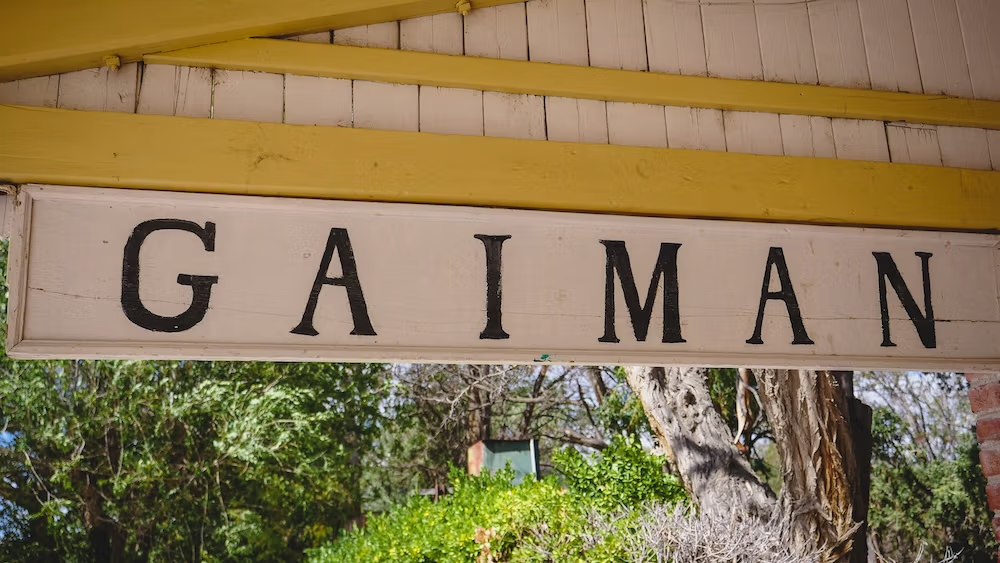
How to Hack the Route to Gaiman
Gaiman is a 1-hour and 15-minute journey from Puerto Madryn, but there are no direct lines. You must transfer in Trelew.
- The Ghost Boards of Madryn: If starting in Puerto Madryn, do not trust the main digital departure boards in the terminal. The 28 de Julio line doesn’t always show up. Instead, walk out to Darsenas (Platforms) 1 through 5 and physically look for the bus with a faded “Trelew/Gaiman” placard in the window.
- The Transfer: You will arrive at the Trelew terminal. The transfer isn’t perfectly timed. Expect a 20 to 30-minute wait on a plastic bench.
- The Route 7 Hack: This is the most crucial piece of advice in this article. There are two ways the 28 de Julio bus goes to Gaiman. One is the boring, industrial highway. The other is Route 7. You must explicitly ask the driver for the “Ruta 7” bus. It adds 10 minutes to the trip, but it winds directly through the rural farmland, showcasing the original 19th-century irrigation canals and red-brick Welsh chapels.
- The Payment Friction: You cannot just hand the driver cash. You must purchase a local reloadable transit card (similar to a SUBE card, but regional) from the terminal kiosk. The bus fare itself is currently around $6,000 ARS ($6.00 USD), but you must factor in the cost of buying the physical card first.
Gaiman: Pitch-Black Tunnels and High Tea Pipelines
Arriving in Gaiman feels like stepping through a portal. The arid Patagonian steppe suddenly gives way to lush, green poplars, rose gardens, and red-brick buildings.
But timing is everything. Because of the grueling bus logistics, we arrived right at 13:00. This triggered the dreaded Siesta Dead Zone. Between 12:30 and 15:00, Gaiman essentially ceases to exist. The museums close, the artisan stalls lock up, and the tea houses haven’t started baking.
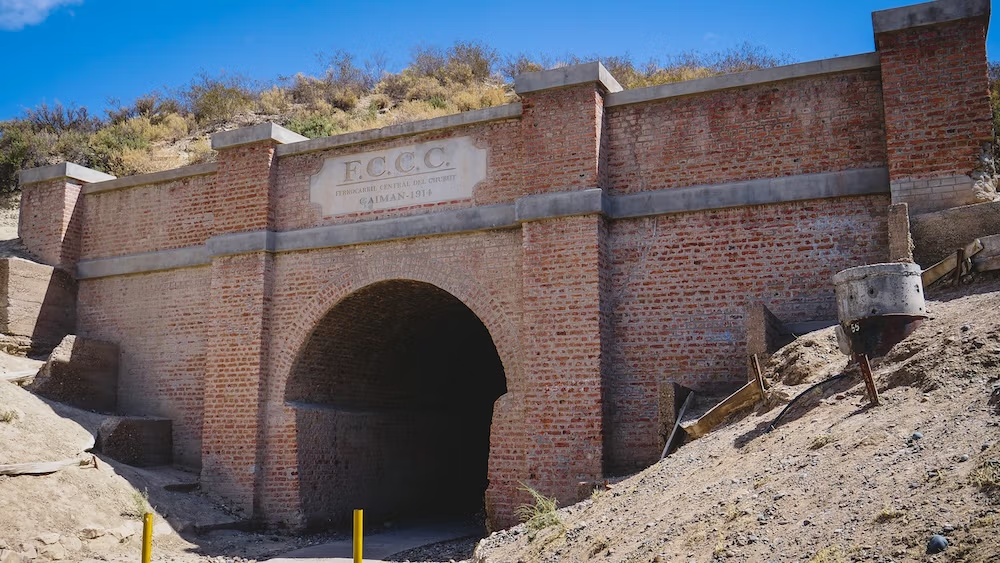
To kill time, we decided to walk the old railway route. In 1914, the locals refused to allow the noisy train to run directly through their peaceful town center, forcing engineers to blast a curved tunnel directly through the hillside.
Walking through this tunnel is a physical experience. It is pitch-black (you must use your phone flashlight), the ground is incredibly uneven with remnants of old track ties, and it is overwhelmingly dusty. We emerged on the other side coughing, our shoes covered in a fine layer of gray Patagonian silt.
And because of our geographic location upon exiting the tunnel, our very next stop was tea at Ty Te Caerdydd.
Nothing makes you feel quite as aggressively underdressed as walking out of a pitch-black, dusty 1914 railway tunnel in your scuffed travel sneakers and immediately sitting down in a lush, manicured garden where Princess Diana once drank from fine china.
[The Foodie Reality Check: The Carbohydrate Surrender]
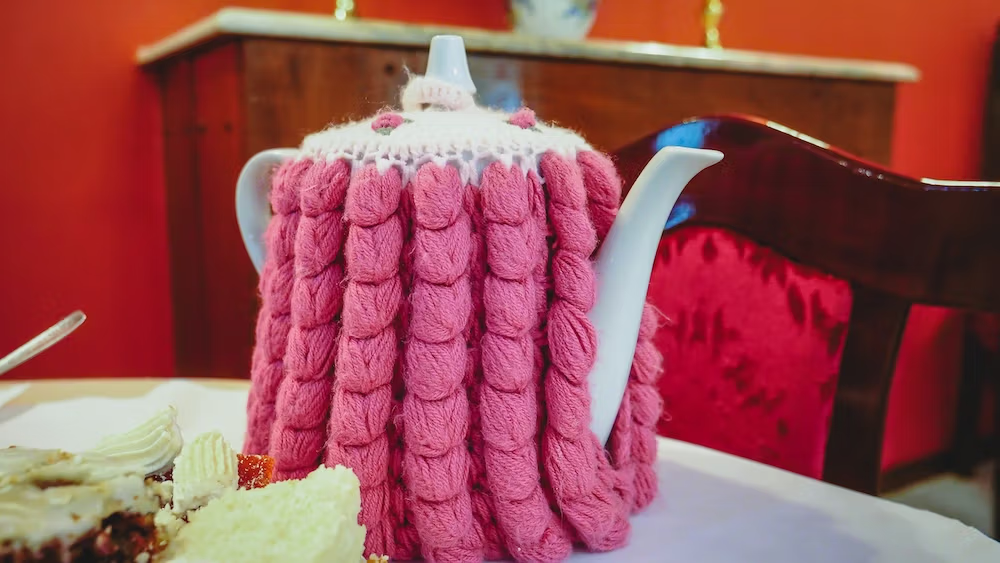
We need to talk about what “Welsh Tea” actually entails. When we visited the traditional Ty Gwyn, we paid what was then $14 USD per person (current pricing across Gaiman sits between $25,000 and $35,000 ARS, or roughly $25-$35 USD). We sat down, and quickly realized our fatal mistake: we had eaten lunch. The amount of food they bring you is physically staggering. Baskets of fresh bread, mountains of scones, homemade butter, and six different types of cake. My official advice? Skip lunch entirely. Treat this as a competitive eating event.
The Great Gaiman Tea House Showdown
To ensure you get the right experience, we’ve broken down the two major players in town.
| Tea House | The Vibe & History | The Reality & Standout Item |
| Ty Te Caerdydd | The “Royal” Choice. Luxurious, expansive gardens. Princess Di visited in 1995 (you can see her teacup). | The Lockout: Tour buses dump 50+ people here at 16:00. Arrive right at 14:00 to get a table. Expect to pay ~$30 USD. |
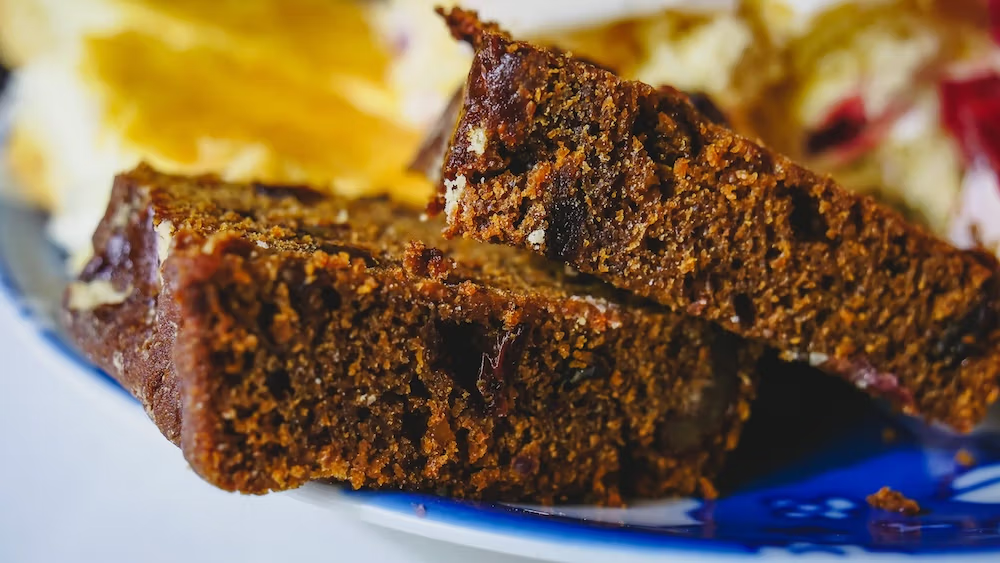
| Ty Gwyn | The “Homestyle” Choice. The oldest in town, feeling like you are sitting in someone’s cozy, wood-paneled living room. | The Torta Negra: The most authentic, dense slice of traditional Black Cake in town. Incredible value. |
The “Moat” Authenticity Test: The Citrón Jam
Generic guides will tell you to enjoy the “local jams.” If you want to know if a tea house or farm stand (like the incredible Quinta Narlu on the outskirts of town) is authentic, look for Citrón Jam. Citrón (Chayote) is a dense, melon-like squash that the early Welsh settlers adapted when they realized traditional berries wouldn’t grow easily in the harsh soil. If your tea house serves you generic, store-bought strawberry jam instead of Citrón, you are in a tourist trap.
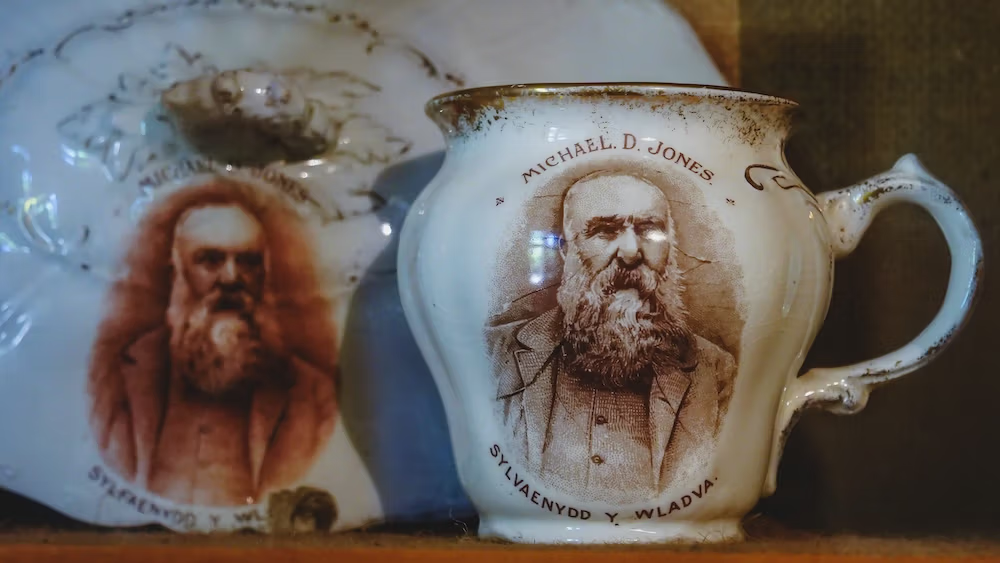
The “Chubut Welsh” Survival Phrasebook
One of the most surreal experiences in the Chubut Valley is the sheer linguistic whiplash. You are standing in the middle of the arid Argentine steppe, ordering a massive slice of cake in Spanish, from a menu written in English, handed to you by a fourth-generation local who is speaking fluent Welsh to the table next to you.
Because the original pioneers came here specifically to protect their language from English assimilation, Patagonian Welsh (or Cymraeg y Wladfa) didn’t just survive—it evolved. Today, there are bilingual schools across Gaiman and Trevelin, making this one of the only places on earth outside of Wales where you can comfortably navigate town using Celtic phrases.
You can absolutely get by with basic Spanish, but dropping a localized Welsh phrase when you walk into a Ty Te (Tea House) is the ultimate respect-earner. Here is your trilingual cheat sheet for navigating the valley.
| What You Mean (English) | What You Say (Local Spanish) | What They Say (Chubut Welsh) | The Phonetic Cheat Sheet |
| Hello / How are things? | Hola / ¿Qué tal? | Shwmae | Shoo-my |
| Good morning | Buenos días | Bore da | Boh-reh dah |
| Thank you | Gracias | Diolch | Dee-olch |
| Cheers! (A Toast) | ¡Salud! | Iechyd da | Yeh-kid dah |
| Tea House | Casa de Té | Ty Te | Tee Tay |
| The Mill | El Molino | Y Felin | Uh Vel-in |
| Black Cake | Torta Negra | Cacen Ddu | Kak-en Thee (hard ‘th’ like ‘this’) |
| Speckled Bread | Pan Dulce / Pan Galés | Bara Brith | Bah-rah Breeth |
The Map Translation Guide
When you look at historical markers or old train station signs, you’ll often see the original Welsh settlement names instead of the modern Argentine ones. The Welsh prefix “Tre-“ literally translates to “Town of.”
- Trelew: It is literally the “Town of Lewis,” named after pioneer Lewis Jones. (Note: While locals pronounce it Treh-LEOO with a Spanish flair today, the original Welsh rolls off the tongue closer to Tre-LOO).
- Trevelin: “Town of the Mill” (Tre + Felin).
- Rawson: You will often see the provincial capital written on historical plaques as Tre Rawson (Town of Rawson).
- Puerto Madryn: Historically written and still referred to by Welsh speakers as Porth Madryn.
[Samuel’s Linguistic Reality Check]
Don’t stress if you butcher the pronunciation on your first try. The sheer effort of a tourist attempting to order their Torta Negra using “Cacen Ddu” usually results in a massive, appreciative smile from the staff—and occasionally, a slightly larger slice of cake. Diolch!
The Shovel and the Scone: How Stubbornness Built an Oasis
It is easy to sit in a manicured Gaiman garden today, eating a warm scone, and assume this lush valley was simply waiting for the Welsh to arrive. It wasn’t. The green, tree-lined Chubut Valley you see out the window of the Ruta 7 bus is entirely artificial. It is a man-made oasis engineered out of sheer, desperate stubbornness.
When you dig into the historical records—something we spent hours doing for our Patagonia YouTube series—the standard “colonial” narrative falls apart completely. The Welsh didn’t conquer this land. They were nearly swallowed by it.
During those first few brutal winters after 1865, the pioneers were starving. Their European crops failed in the arid, salty steppe soil. They were cut off from the world, huddled in their makeshift homes, entirely unprepared for the reality of the Patagonian rain shadow. They survived only because of an unlikely, beautiful alliance with the indigenous Tehuelche (Aonikenk) nomadic tribes.
Instead of the violent clashes that defined much of the Americas, the Welsh and the Tehuelche formed a pragmatic, life-saving partnership based on a very specific currency: carbohydrates and protein.
The Welsh women baked dense, long-lasting bread. The Tehuelche hunters, masters of the harsh steppe, traded guanaco meat, rhea (ostrich) eggs, and warm guanaco-skin quillangos (cloaks) for those baked goods. The indigenous tribes taught the European pioneers how to hunt using boleadoras and how to track fresh water. This peaceful co-existence—the “Bread for Meat” trade—is the literal foundation of the Chubut Valley. The massive tea house spreads we enjoy today are the direct, evolutionary descendants of those desperate early bread-baking operations.
But even with meat, the Welsh needed crops to survive long-term. And this is where the sheer, unadulterated stubbornness kicks in.
The Great Irrigation Miracle
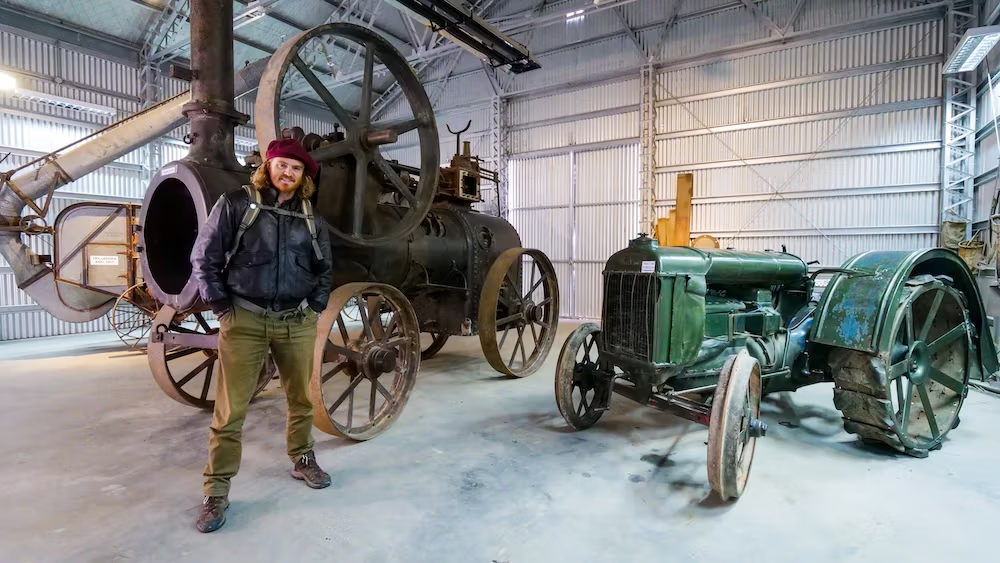
With no formal engineering degrees and only hand shovels and horse-drawn plows, the settlers looked at the winding Chubut River and decided to reshape the desert. Over the next few decades, they dug an astonishing network of over 300 miles of irrigation canals (known in Welsh as camwy).
[Samuel’s Geography Reality Check] When you take that 28 de Julio bus from Trelew to Gaiman and request the “Ruta 7” detour, pay close attention out the right-side window. You aren’t just looking at quaint farm ditches. You are looking at the original 19th-century survival infrastructure. The water flowing through those specific trenches is what turns the brown, dusty steppe into the bright green alfalfa and poplar groves you see today. It is one of the most under-appreciated feats of civilian engineering in South America.
The 1914 Railway Rebellion
By the late 19th century, the Chubut Valley was actually producing surplus wheat. To move it to the coast, British investors built the Ferrocarril Central del Chubut (The Central Chubut Railway), connecting the port of Madryn to Trelew, and eventually pushing toward Gaiman.
But the Welsh residents of Gaiman presented a massive logistical headache for the railway engineers.
They wanted the economic benefits of the train, but they absolutely refused to let a screaming, smoke-belching steam locomotive lay tracks through the center of their tranquil, rose-covered town. No amount of corporate pressure could break their resolve. The railway company, facing a wall of Celtic stubbornness, was forced to capitulate.
At massive expense, engineers had to blast and dig a curved, 280-meter tunnel directly through the solid hillside bordering the town just to bypass the residential streets.
This is exactly why that pitch-black, dusty tunnel we walked through earlier exists. It isn’t just a quirky tourist attraction; it is a 1914 monument to a group of people who crossed an ocean, survived a desert, dug a river by hand, and then looked at a massive industrial railway corporation and said, “No, you go around.” ***
Now that we understand exactly how much sweat and stubbornness went into building this valley, let’s talk about what happens when you leave the oasis and push further west into the Andes. Because the Chubut Valley wasn’t the end of the line.

The Failed Missions and the Andean Expansion
No travel guide is complete without admitting failure.
We are currently editing our massive Trelew and Chubut digital guides, and a huge section is dedicated to what not to do. Case in point: Dolavon.
Travel blogs love to sell you on the charm of Dolavon, a remote Patagonian mill town a little further down the valley from Gaiman. They talk about the water wheels and the historic flour mills. What they usually leave out is the part where you arrive on a Monday, find every single door heavily padlocked, realize the entire town shuts down early in the week, and end up eating four empanadas while hanging out at a local gas station.
The Rule: Do not attempt to visit Dolavon or the Bryn Gwyn Paleontology badlands on a Monday or Tuesday. Wednesday to Sunday is your only safe window.
Chasing the Mimosa to the Mountains: Trevelin
Eventually, the Chubut Valley ran out of arable land. The Welsh explorers, aided heavily by the indigenous Tehuelche—who literally saved the pioneers from starvation by teaching them how to hunt guanaco and rhea—pushed 600 kilometers west across the steppe until they hit the towering Andes mountains.
Here, they founded Trevelin (literally “Mill Town” in Welsh).
Do not make the mistake of thinking you can do Gaiman and Trevelin in the same weekend. They are an 8-hour drive apart. To tackle Trevelin, you must fly into Esquel (EQS), not Trelew.
When we were based in Esquel, we took a dedicated 20-kilometer taxi ride into Trevelin for one highly specific reason: Casa de Te Nain Maggie (Grandmother Margaret’s Tea House).
Standing in the main square of Trevelin, looking at the massive monument to the Mimosa, with the snow-capped Andes in the background, the sheer scale of what these pioneers accomplished hits you. They crossed an ocean, survived a desert, and walked until they hit a mountain range, just to keep their language alive.
It makes you feel very small. But any existential dread is quickly cured by walking over to the artisanal fair in the plaza and securing the absolute largest piece of dulce de leche cake legally allowed to be served to a human being.
Final Logistical Briefing
- Cash is King in the Past: While the big tea houses take Mercado Pago or credit cards, the smaller heritage sites (like the Primera Casa museum in Gaiman) are strictly cash-only. Withdraw at least $40,000 ARS in Trelew before arriving. Gaiman ATMs are frequently empty by Saturday afternoon.
- The Footwear: Gaiman is flat, but the sidewalks are a disaster of broken pavement and dirt edges. Leave the nice boots at home; wear sturdy sneakers.
- The Seasonal Catch: If you are heading all the way to Trevelin, time it for October. For exactly one month, the massive Patagonian tulip fields bloom against the backdrop of the Andes. It will cost you about $15,000 ARS to enter, but it is the single greatest photo op in southern Argentina.
Tracing the Welsh arrival in Patagonia isn’t a passive vacation. It requires long bus rides, battling the wind, deciphering transit schedules, and surviving intense sugar comas. But as you sit in a red-brick cottage at the edge of the world, drinking hot tea and eating dense black cake, you realize that some history is best learned not by reading, but by tasting exactly what survival felt like.
Frequently Asked Questions: Tracing the Welsh in Patagonia
Do people actually still speak Welsh in Patagonia?
Absolutely. You won’t hear it shouted on every street corner in Trelew, but in Gaiman and Trevelin, the language is very much alive. There are bilingual schools, and you’ll often hear fourth-generation locals speaking Cymraeg (Welsh) inside the tea houses. It didn’t just survive; it evolved into its own unique Patagonian dialect.
Is Gaiman worth visiting if I don’t like tea or cake?
Depends. If you actively hate history and have zero sweet tooth, it might be a quick stop. But honestly, the tea is only half the story. You go to Gaiman to see one of the weirdest historical anomalies in South America. Walking through the pitch-black 1914 railway tunnel and seeing the massive 19th-century irrigation canals that turned a desert into an oasis is worth the bus ticket alone.
How much time do I actually need in Gaiman?
Half a day. Do not plan to spend 48 hours here. The perfect itinerary is arriving around 14:00. This perfectly bypasses the brutal 12:30 to 15:00 siesta dead-zone, allows you to walk the tunnel and the riverbanks, and puts you at the door of a tea house exactly when they open to beat the 16:00 tour bus lockout.
Can I visit the original Welsh landing caves in Puerto Madryn?
Yes, but with a catch. You can go to Punta Cuevas where the 1865 pioneers huddled for survival, but as of recently, the grottos are fenced off to prevent erosion. You can no longer physically walk inside them. Take a $5,000 ARS taxi from the city center instead of fighting the coastal wind on foot, and spend your time at the adjacent Museo del Desembarco.
Is it possible to do Gaiman and Trevelin on the same day trip?
Nope. Not unless you own a teleporter. Tourists constantly look at a map and assume the “Welsh towns” are next door to each other. They are 600 kilometers apart. Gaiman is on the arid coast (fly into Trelew), and Trevelin is nestled in the Andes mountains (fly into Esquel). Treat them as two entirely separate legs of your Patagonia itinerary.
Do I need to book the Gaiman tea houses in advance?
Generally, no. For small groups of two to four people, places like Ty Gwyn or Ty Te Caerdydd operate on a first-come, first-served basis. However, because they don’t take small reservations, your entire strategy hinges on arriving right when they open (around 14:00 to 14:30) before the massive tour buses from Puerto Madryn dump 50 people into the dining room.
What is the weather actually like in the Chubut Valley?
Windy. The early pioneers didn’t land in a tropical paradise; they landed in a semi-arid steppe. Even in the height of the Argentine summer, the Patagonian wind (el viento) is relentless and can drop the perceived temperature significantly. Always pack a windbreaker, even if the forecast says it will be sunny and 75 degrees.
Can I pay for everything with my credit card or Mercado Pago?
Definitely not. While the major tea houses and hotels have modernized, the Chubut Valley still relies heavily on paper money. The smaller heritage sites, the Primera Casa museum, and the local artisan stalls are strictly cash-only. Withdraw at least $40,000 ARS in Trelew or Madryn before you arrive, because the ATMs in Gaiman are notoriously unreliable by Saturday afternoon.
Project 23 Argentina: This guide is also available in Spanish. [Lea la versión en castellano: La historia del Mimosa y la llegada de los galeses a la Patagonia, Argentina]