
I am standing at the reception desk of the Vertical Lodge, watching the receptionist swipe my credit card for the fourth consecutive time. Outside, the infamous Patagonian wind is howling, rattling the window frames and aggressively tearing down the town’s fragile internet connection. The transaction fails again. I shift my weight uncomfortably. I am wearing drawstring pants because, after eating my way through the southern half of the continent, my jeans absolutely do not fit. I am experiencing a physical state I can only describe as “bulbous plumptitude”.
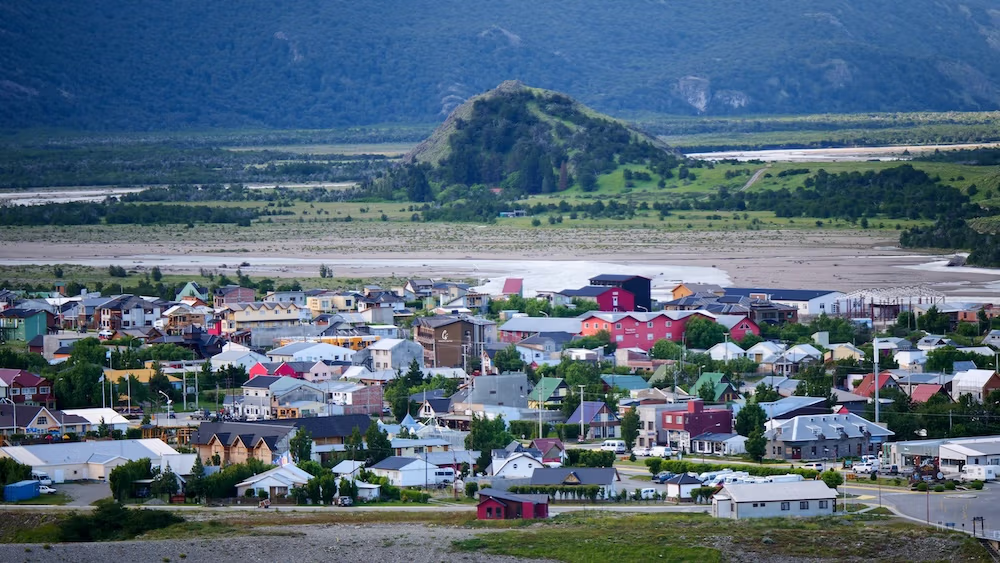
We are officially in El Chaltén, the undisputed Trekking Capital of Argentina. We have arrived completely unprepared, operating in full-blown “foodie mode” rather than anything resembling actual alpine fitness. And right now, we can’t even pay for our room because the internet goes down constantly. Eventually, the payment crawls through the digital ether. We drop our bags in a shockingly spacious room that costs $54 USD a night, complete with a king-sized bed and a bidet, and realize a fundamental truth about this destination.
El Chaltén is not a standard vacation town. It is a spectacular, isolated, wind-whipped frontier outpost inside Los Glaciares National Park. The brochures will tell you it is highly compact and entirely “walkable.” They are technically correct. But the physical reality of navigating its gravel streets, extreme weather, and hidden logistical traps requires an entirely different survival guide.
Here is the unvarnished, blister-inducing, calorie-dense truth about walking everywhere in El Chaltén.
The Gravel Grind: A Topographical Reality Check
El Chaltén is marketed as a tiny, walkable haven. It is roughly one kilometer by one kilometer. But “walkable” and “paved” are two very different concepts. There is no public transit network operating within the town limits. Taxis technically exist, but they are scarce, impossible to hail off the street, and generally reserved for desperate travelers trying to transport luggage from the South Terminal.
Your legs are your primary vehicle. You need to know exactly how far you are walking before the actual hiking even begins.
[The Faux-Trekker Truth]: Do not rely on Google Maps here. The satellite imagery is often outdated, and the connectivity is a joke. Before you even board the bus in El Calafate, download Maps.me. It is the absolute mandatory app for offline trail and town navigation in this region.
The El Chaltén Walking Distance Matrix
| Start Point | Destination | Distance | Est. Walk Time | The Physical Reality |
| Bus Terminal (South end) | Town Center (San Martin St) | ~0.5 km | 5 – 10 mins | Flat, mostly gravel. A nightmare for rolling luggage; a breeze for backpacks. |
| Any Hotel | Supermarkets / Restaurants | < 0.5 km | 2 – 5 mins | Everything commercial is highly centralized. The hardest part is walking against the wind after eating a massive burger. |
| Bus Terminal | Laguna Torre Trailhead (West) | ~1.0 km | 10 – 15 mins | Slight uphill grade. A gentle, painless walk to access the Torre valley trails. |
| Bus Terminal | Fitz Roy Trailhead (North) | ~1.5 km | 15 – 20 mins |
The “Basecamp” Navigation Matrix
The town is split between the South (Bus Terminal/Visitor Center) and the North (Fitz Roy Trailhead). Where you stay dictates how much “bonus hiking” you’ll do just to reach the dirt.
| Start Point | Destination | Distance (Approx) | Est. Walk Time | The “Nomadic Samuel” Reality |
| Bus Terminal | San Martin Main Strip | ~0.5 km | 5 – 10 mins | Mostly flat, but the wind acts as a physical wall. |
| Town Center | Fitz Roy Trailhead | ~1.0 km | 15 – 20 mins | The “San Martin Slog.” Every step counts before a 20km day. |
| Visitor Center | Condores Trailhead | ~0.2 km | 2 – 5 mins | Right across the bridge at the town entrance. Easy win. |
| Vertical Lodge | Laguna Torre Trailhead | ~0.8 km | 10 – 15 mins | A slight uphill grade that serves as a rude awakening. |
The Wi-Fi Windstorm and The Illusion of “Walkability”
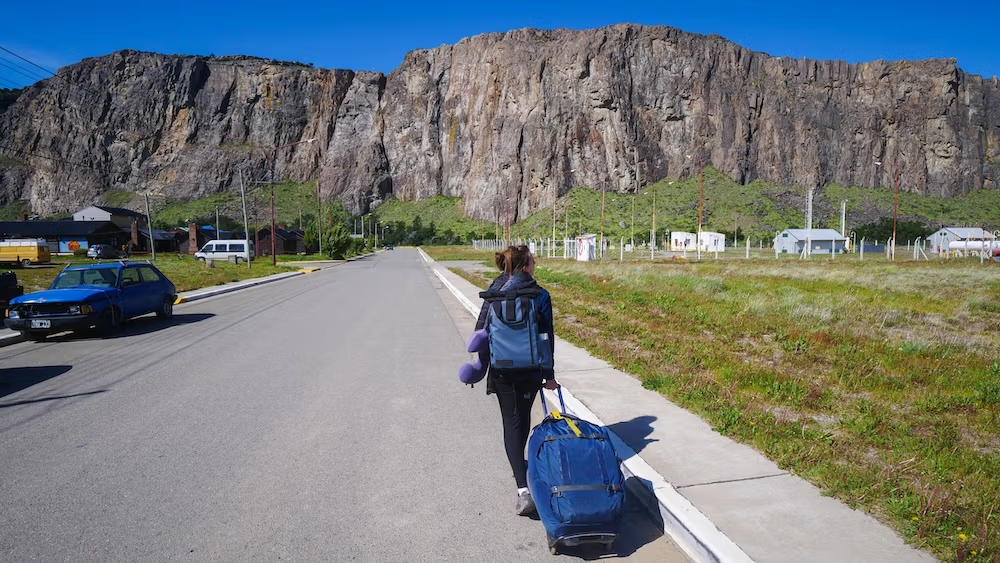
We eventually had to abandon our hotel and walk to the central plaza just to find a faint, free Wi-Fi signal to process basic communications. This is your first lesson in El Chaltén walkability: you will walk, but you will do so at the mercy of the grid.
[The Faux-Trekker Truth]: Do not bring rolling luggage to El Chaltén. The distance from the bus terminal to the main commercial strip on San Martin Street is only about 500 meters, but the streets are an unforgiving mix of dirt, jagged gravel, and deep potholes. Dragging a forty-pound wheeled suitcase through a Patagonian wind tunnel is a miserable 20-minute initiation to the town.
Furthermore, the walkability of the town is directly tied to your financial solvency. Because the wind routinely knocks out the internet, every credit card machine in town will frequently and simultaneously die. If you haven’t walked down to the single, notoriously unreliable ATM at the bus terminal—which imposes low limits and high fees—you cannot buy dinner.
What we missed but you shouldn’t: For modern travelers, the ultimate town navigation hack bypasses the ATM entirely. Savvy trekkers now use the Western Union app to send themselves cash from their home bank accounts, walking to the local Western Union outpost in town to pick up thick stacks of physical Argentine Pesos. It is the only reliable way to guarantee you can pay for your post-hike empanadas when the grid collapses.
Fueling the Faux-Trekker: Supermarket Shocks and the $10 Lunchbox
We walked into the local supermarket with visions of saving money by cooking our own healthy, pre-hike meals. Then we saw the apples. They cost the equivalent of one US dollar per single apple. The food selection was beyond limited. We stared at the sparse shelves, did the mental math on the expensive groceries, and immediately pivoted our strategy.
If you want to survive the trails without going bankrupt at the grocery store, you must embrace the local hospitality infrastructure. Most hotels and guesthouses in El Chaltén offer a custom lunchbox service.
You place your order the night before, and the food is ready and waiting for you the following morning. At $10 USD per lunchbox, it felt a bit pricey for Argentina, but the sheer convenience in a town with limited communal kitchens made it an absolute necessity.
Our daily rations typically included a hefty rice salad packed with carrots, eggs, coleslaw, and tomatoes, flanked by an apple, a granola bar, a muffin, and a handful of candies. It was the perfect high-calorie fuel.
However, walking with these lunchboxes presents a distinct physical hazard.
[Samuel’s Side-Note]: The plastic containers they use for the salads are fragile. On multiple occasions, my salad bowl broke deep inside my backpack while hiking up a steep incline. You either stop immediately on the side of a mountain and shovel rice into your mouth, or you accept that you will be eating a vinaigrette-soaked fleece jacket for dinner.
The Caloric Sourcing Matrix: El Chaltén Edition
| Sourcing Method | Budget Reality | Effort Required | The Faux-Trekker Verdict |
| Local Supermarkets | Extremely High ($1 per apple). | High. Requires navigating limited stock and cooking in cramped hostels. | Skip it. The selection is too bleak to justify the high prices. |
| Hotel Lunchboxes | Medium ($10 USD flat rate). | Zero. Ordered the night before, handed to you at 6:00 AM. | Mandatory. Essential survival gear, despite the risk of crushed salad bowls. |
| Local Bakeries | Low. Empanadas and medialunas are cheap. | Medium. Requires waiting in line early in the morning before the trails. | Great for supplemental sugar, but lacks the heavy carbs needed for a 20km day. |
Navigating the Trailheads (And Forgetting the Map)
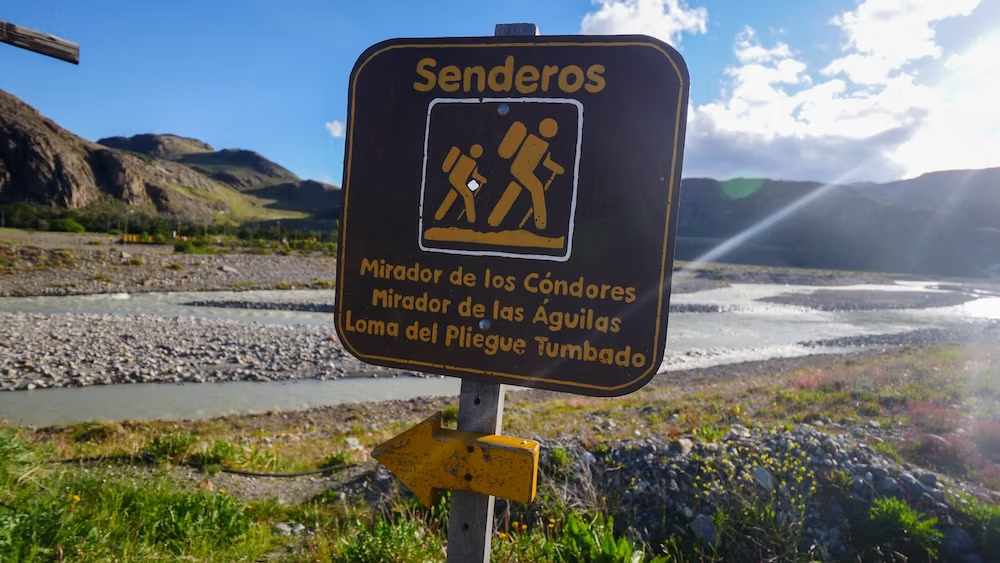
Because El Chaltén is positioned directly inside the national park, the town itself bleeds seamlessly into the wilderness. There are no massive transit hubs to reach the mountains. You simply walk to the edge of the pavement, and the dirt path begins.
Naturally, we managed to mess this up immediately.
On our first major trekking day, energized by an early breakfast, we hit the streets—only to realize we had left our crucial trail map sitting uselessly on the hotel nightstand. We wandered aimlessly for a bit before realizing the simple rule of town navigation: to find the Fitz Roy trailhead, you just walk north along San Martin Street until you reach the very end of town and hit the signage.
It took us nearly 45 minutes of walking from our lodge at the opposite end of town just to reach the starting line.
As you walk through the streets toward the trails, you will inevitably encounter the friendly, free-roaming local dogs. Do not pet them. Do not let them follow you. When we first arrived, the park rangers gave us a very specific warning: if you befriend a pup, do not let it follow you out of town. The national park is home to the Huemul, a highly endangered type of Andean deer, and domestic dogs disrupt their fragile habitat.
The Alternative Route (For the True Experts): While we dutifully walked from the center of town, modern logistics offer a massive loophole for 2026. The park has recently begun implementing toll booths at certain entry points. However, these booths are generally only staffed from 7:00 AM to 6:00 PM. Hardcore hikers seeking the legendary Laguna de los Tres sunrise will walk out of town well before 7:00 AM, bypassing the checks entirely while securing the best light of the day. Furthermore, while we fumbled without our paper map, you should download Maps.me. Google Maps is practically useless on the trails, but offline topography apps are mandatory.
The Sedan Chair Fantasy: When the Town Map Meets Mountain Reality
There is the walk you plan, and then there is the walk you actually experience.
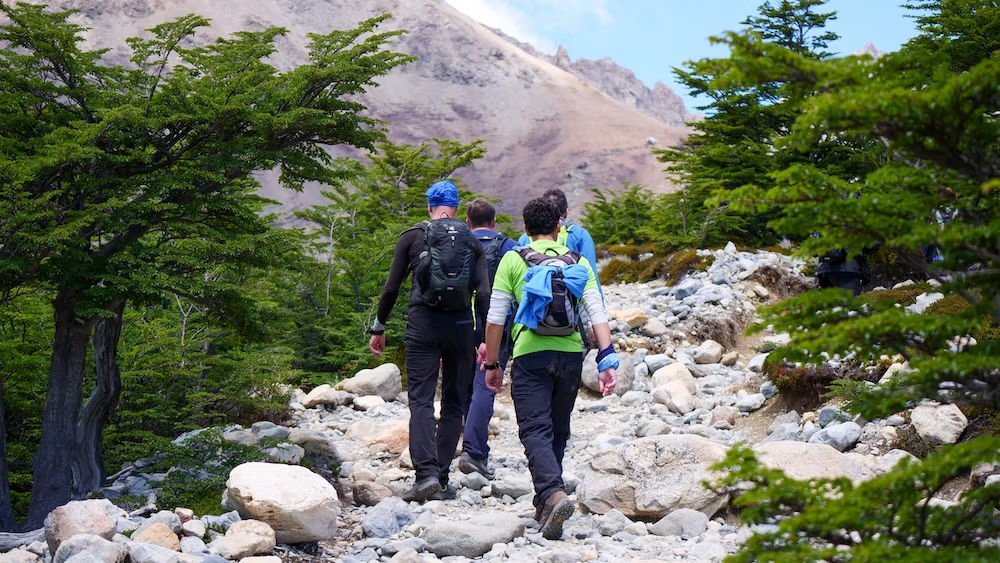
We set off for Laguna de los Tres, universally recognized as the premier hike of the region. Things started poorly. By 9:00 AM, barely an hour into the trek, my hunger overpowered my willpower, and I sat on a rock and consumed almost my entire packed lunch.
The trail markers in the park are excellent, placed every single kilometer, allowing you to easily track your pace. For the first eight kilometers, we felt like true alpine explorers. We breezed past Laguna Capri, marveling at the majestic, computer-generated looking peaks of Mount Fitz Roy.
Then, we hit kilometer nine.
This is where the longest, toughest, and most brutal section of the trek begins. It is a bottleneck of exhausted humans navigating steep, rocky, gravel-heavy switchbacks. Trekking poles would have been a brilliant idea. We had none.
We pushed through the wind—which was ferocious beyond belief —and reached the cerulean waters of Laguna de los Tres. It was breathtaking. But the true cost of this hike is not paid on the ascent. It is paid on the walk back into town.
The descent shattered us. By the time we were dragging ourselves back down the mountain, our feet were aching and throbbing with a violent intensity. The physical devastation was so complete that I spent a significant portion of the hike actively fantasizing about calling an emergency rescue number to be airlifted out, or perhaps being carried back to our hotel on a luxurious sedan chair.
We were taking breaks not out of convenience, but out of absolute, bone-deep soreness. We clocked over 20 kilometers that day.
[The Faux-Trekker Truth]: Do not underestimate the walk back to your hotel. When your legs are functioning purely on lactic acid and sheer panic, that final 1.5-kilometer walk from the trailhead sign back through the gravel streets of El Chaltén feels longer than the entire mountain ascent.
The “El Pilar” One-Way Leg Saver: Had we known the ultimate town navigation hack, we could have saved ourselves immense suffering. Instead of walking the grueling 20km out-and-back from town, you can book a private shuttle (costing roughly 58,000 ARS) to Hostería El Pilar, located 17km outside of El Chaltén. This allows you to hike the trail backward into town. It transforms a punishing round-trip into a stunning one-way route that organically drops you right back at your hotel door.
Trail Access & Survival Matrix
| The Trek | Town Access Point | Effort Level | The Physical Reality |
| Mirador de los Cóndores | South edge of town, near the visitor center. | Low. 45 minutes up a steep hill. | A perfect, steep sunset walk. Great views, minimal joint damage. |
| Laguna de los Tres (Fitz Roy) | North end of San Martin Street. | Brutal. 20+ km round trip. | The final kilometer will make you beg for a sedan chair airlift. Throbbing feet guaranteed. |
| Laguna Torre | West edge of town. | Intermediate. 18 km loop. | A walk in the park compared to Fitz Roy. Flat valleys allow for rapid, pain-free speed. |
The Ultimate Leg-Saver: Why You Shouldn’t Walk from Town
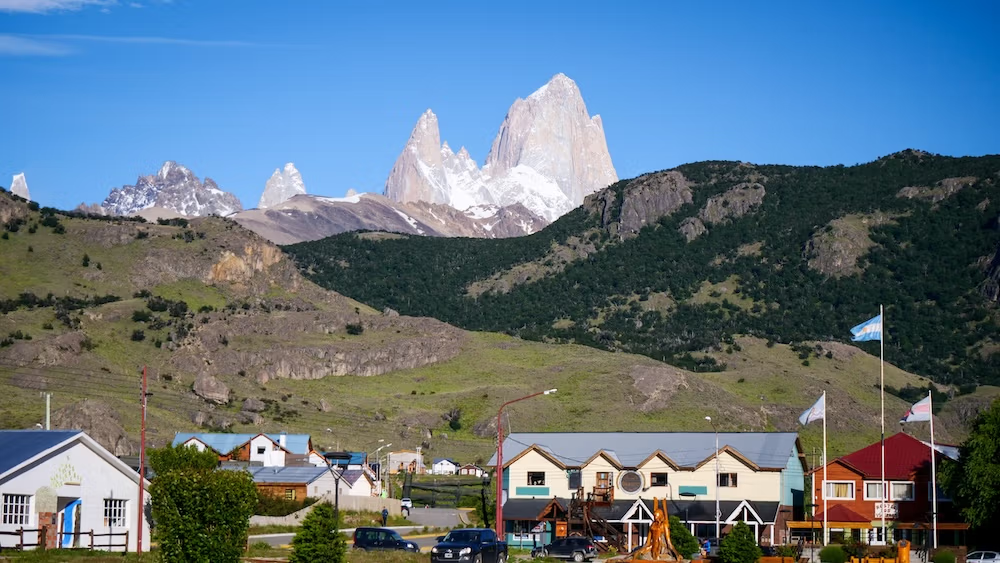
The biggest mistake we made—and the biggest mistake almost every visitor makes—is treating the Fitz Roy trek as a mandatory out-and-back trail starting from the northern edge of town.
You wake up, you walk from your hotel to the trailhead, you hike 10 kilometers up a mountain, and then you turn around and walk the exact same 10 kilometers back. By the time you hit kilometer 18, your feet are throbbing, the scenery is redundant, and you are actively fantasizing about being carried out on a sedan chair.
You do not have to do this. There is a “skip-the-walk” logistical hack that completely changes the game.
Instead of walking from town, you book a private shuttle to Hostería El Pilar. Located roughly 17 kilometers outside of El Chaltén, this rustic lodge serves as a secondary, highly strategic trailhead for Fitz Roy. By starting here, you hike the trail backward into El Chaltén.
It turns a grueling, repetitive round-trip into a constantly evolving, scenic one-way route. The elevation gain feels slightly more forgiving, you bypass the morning bottleneck of hikers leaving town, and most importantly, the trail organically dumps you right back at your hotel door at the end of the day. No backtracking required.
The Fitz Roy Strategy Matrix: Hard Way vs. Smart Way
| The Strategy | Transit Cost | The Route | The Verdict |
| The Traditional Sufferfest | Free. Walk from your hotel. | 20+ km Out-and-Back. Start in town, end in town. | Brutal. You see the exact same scenery twice. The final 3km walk back through town will break your spirit. |
| The El Pilar Hack | ~58,000 ARS. Booked via agencies like Zona Austral. | One-Way Scenic Route. Start at El Pilar, end in town. | Mandatory. A 28-minute drive saves you hours of repetitive joint pain. Worth every single peso. |
The Cloudy Anticlimax and the Food-Motivated Sprint
Not every walk ends with a postcard view.
Two days later, our legs marginally recovered, we tackled the 18-kilometer Laguna Torre trail. The path itself was a joy. There was a lot of variety, taking us through dense forests that looked haunted, alongside rushing rivers, and past the massive Margarita Waterfall. Best of all, it only required a mild 250 meters of elevation gain.
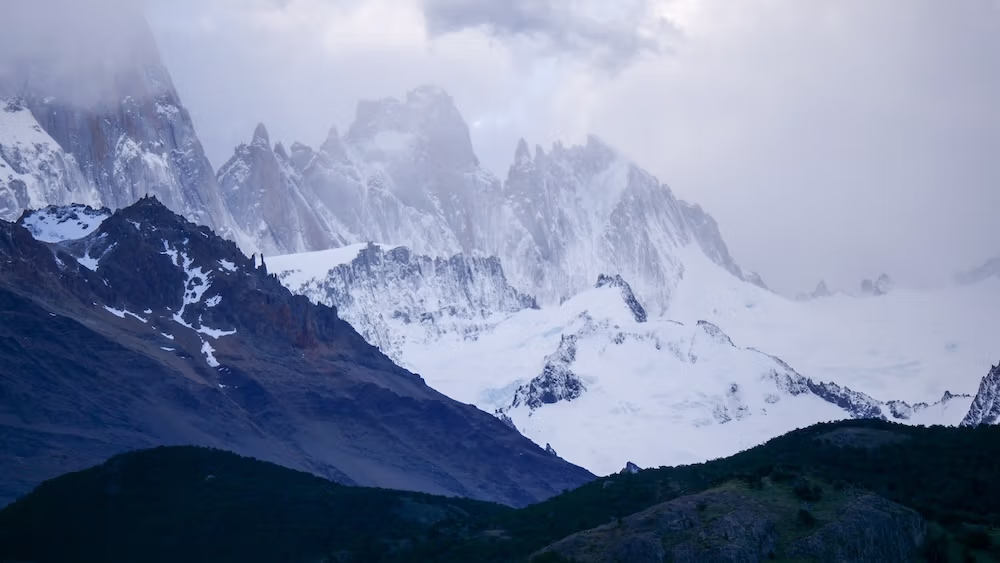
We arrived at the final lagoon feeling remarkably fresh. We looked up, expecting the iconic, jagged spire of Cerro Torre.
Nothing.
The entire mountain peak was completely smothered in dense, unyielding clouds. The glacier looked black and muted, and the water in the lagoon resembled murky cafe au lait. It lacked the massive “wow factor” we had experienced a few days prior.
We stared at the grey soup for a few moments, shrugged, and then experienced a simultaneous, synchronized realization: we wanted hamburgers.
What followed was the fastest walk of our entire Patagonian adventure. Motivated entirely by our hunger, we put our cameras away and blasted through the final nine kilometers back to town. The trail was flat, and we flew through the valley. The signage indicated a three-hour trek; fueled by visions of bacon and cheese, we crushed it in two hours and twenty minutes.
This is the ultimate secret of walking in El Chaltén. The mountains get you out the door, but the restaurants are what drag you back.

The High-Calorie Recovery Trail: Navigating El Chaltén’s Culinary Scene
The day after our massive Fitz Roy hike was an absolute write-off. We were so impossibly stiff that we hardly left our hotel room. We slept for 10 to 12 hours straight.
When you finally emerge from your recovery coma, your ability to walk around town will be entirely dictated by your proximity to heavy carbohydrates. El Chaltén’s culinary scene is a wild mix of high-end boutique dining and bottom-feeding comfort food, all crammed into a few dusty blocks.
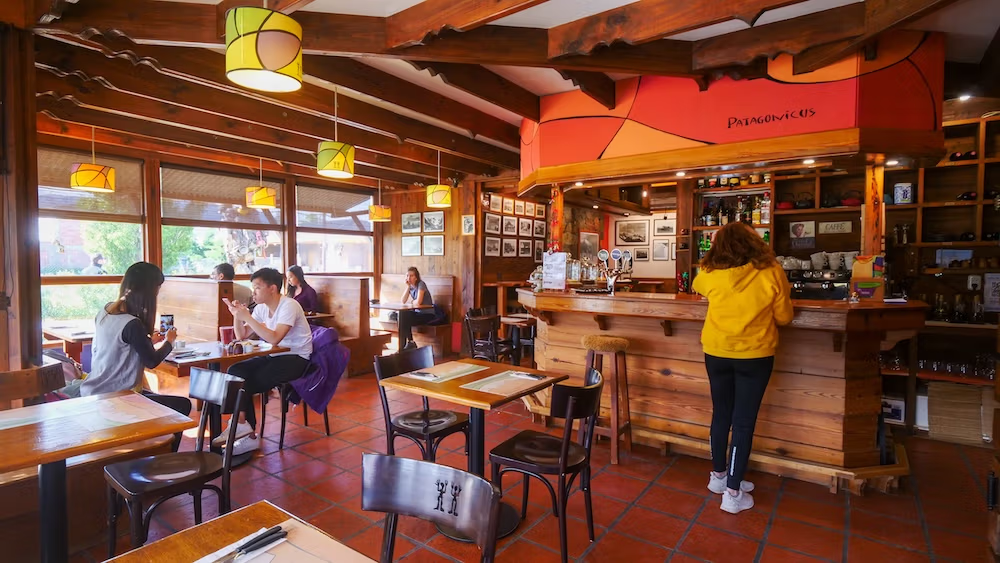
Our favorite hidden gem was Senderos. Located slightly off the main drag near the bus terminal, it is a tiny, upscale restaurant hidden inside a high-end guesthouse, boasting only six or seven tables. We waddled in, physically broken, and were revived by gourmet food. I ordered a decadent blue cheese risotto packed with walnuts and sun-dried tomatoes, while Audrey inhaled a hearty lentil casserole. We washed it down with a full bottle of Syrah—taking a rare break from our beloved Malbec—and finished with chocolate mousse and a traditional apple pancake.
When we weren’t pretending to be high society, we were sprinting back from Laguna Torre to hit La Zorra. This place is an absolute monument to caloric excess. We devoured gourmet craft burgers—specifically the spicy “Foxy Lady” and a massive bacon burger—alongside pints of craft beer and baskets of loaded, cheesy bacon fries. I did not want to know the calorie count. We needed it.
[Samuel’s Side-Note]: If you feel a sudden, crushing wave of guilt regarding your ever-expanding waistline, you can walk over to Cúrcuma. It is the exact opposite of La Zorra, offering clean quinoa bowls, roasted vegetables, and low-sugar desserts to make you feel like a responsible adult again. Alternatively, you can embrace the gluttony and linger at La Waflería, playing cards and drinking lattes while waiting to order a second round of gourmet waffles.
The Post-Hike Foodie Recovery Index
| The Restaurant | The Vibe | The Mandatory Order | Walkability Factor |
| Senderos | Boutique, hidden, intimate (6-7 tables). | Blue cheese risotto with walnuts, lentil stew, full bottle of Syrah. | Off the main street near the bus terminal. A slow, painful waddle back to bed. |
| La Zorra | Craft beer heaven, bottom-feeding burger gluttony. | The “Foxy Lady” burger and loaded cheesy bacon fries. | Centrally located. Worth speed-walking 9km down a mountain to reach. |
| Cúrcuma | Healthy, guilt-erasing, vegetable-forward. | Quinoa bowls and low-sugar desserts. | Easy walk. Perfect for days when your leggings are feeling uncomfortably tight. |
| Artisanal Ice Cream | Pure sugar rush. | Super Dulce de Leche and Mascarpone with Pistachio. | Right on the main drive. The perfect nightcap after a massive dinner. |
The Final Ledger: Is El Chaltén Truly Walkable?
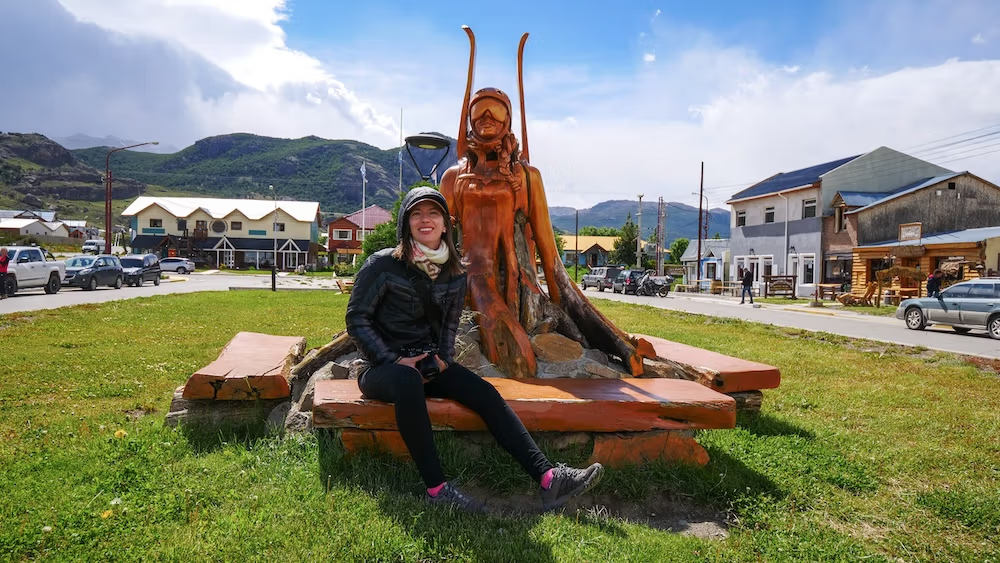
We arrived in El Chaltén as unabashed foodies, completely out of shape and heavily reliant on elastic waistbands. We played the role of “faux trekkers,” complaining about the steep hills, getting lost without our maps, and retreating to our hotel room for 12-hour recovery sleeps.
Yet, despite the throbbing feet, the broken salad bowls, the brutal winds, and the constant threat of a digital blackout, we did the work. We did the pain, we did the stiffness, and we walked the trails.
So, can you walk everywhere in El Chaltén?
Yes. In fact, you have no other choice. But you must understand that walking here is a unique experience. You are walking on unpaved gravel to buy expensive groceries. You are walking up grueling mountains to stare at computer-generated peaks, or sometimes, just grey clouds. And most importantly, you are walking as fast as humanly possible back into the valley, driven by the primal, unbreakable desire to eat a massive plate of cheesy bacon fries.
We left El Chaltén with stronger strong legs and full stomachs. In the Trekking Capital of Argentina, you really couldn’t ask for a better finish line.
FAQ: Can You Walk Everywhere in El Chaltén? A Town Navigation Guide
Is El Chaltén actually walkable?
Absolutely. The town grid is only about one kilometer wide by one kilometer long, making your feet your primary mode of transit. Just do yourself a massive favor and ditch the rolling luggage—dragging a wheeled suitcase across these unpaved, pothole-ridden gravel streets is a miserable way to start your trip.
Do I need to book a taxi or shuttle to the trailheads?
Depends. If you are doing the standard routes like Laguna Torre, you simply walk to the edge of town and hit the dirt. However, if you want to save your knees on the brutal Fitz Roy trek, book the 58,000 ARS private shuttle to Hostería El Pilar. It drops you 17km outside of town so you can hike the trail backward, turning a grueling out-and-back into a scenic one-way route.
Can I rely on credit cards in El Chaltén?
Nope. While most restaurants and hotels technically accept them now, the infamous Patagonian wind frequently knocks out the town’s satellite internet. When the grid goes down, every card machine in town dies with it. We had to try four times just to process the payment for our room at the Vertical Lodge. Always carry physical pesos.
Is the ATM in El Chaltén reliable?
Not really. There is exactly one ATM located at the bus terminal, and it constantly runs out of cash, imposes tiny withdrawal limits, and charges ridiculous fees. The modern traveler’s hack is to send yourself money via the Western Union app and pick up stacks of physical cash at the local outpost in town.
Should I buy groceries in town to save money?
Nope. The generic advice is to cook your own meals, but the local supermarkets have a shockingly limited selection with massive markups—we paid a dollar for a single apple. You are much better off ordering a $10 USD packed lunchbox from your hotel for your trail days. Just pack it carefully; my plastic salad bowl cracked open inside my backpack on a steep incline.
Does Google Maps work on the trails?
100% no. Cell service dies the second you leave the town limits, and honestly, the mobile data inside town barely works anyway. Before you even get on the bus in El Calafate, you must download Maps.me. It is the absolute gold standard for offline town and trail navigation in Patagonia.
Are there entrance fees for Los Glaciares National Park in El Chaltén?
Yes and no. Historically, the northern end of the park was free, but for 2026, they have started implementing toll booths at certain entry points and parking lots. The local loophole? The booths are generally only staffed from 7:00 AM to 6:00 PM. If you walk out of town before 7:00 AM to catch the Laguna de los Tres sunrise, you bypass the physical checks entirely.
How many days should I spend in El Chaltén?
Minimum four. We stayed for six nights, and it was perfect. If you are a “faux trekker” or a foodie like us, you absolutely need to factor in buffer days for horrific Patagonian windstorms, as well as full “write-off” recovery days where you just sleep for 12 hours and waddle to La Zorra for bacon burgers after a massive hike.
Project 23 Argentina: This guide is also available in Spanish. [Lea la versión en castellano: ¿Se Puede Caminar a Todos Lados en El Chaltén? Una Guía de Navegación por el Pueblo]