
Laguna de los Tres is the hike that turns regular folks into philosophers. You start out thinking: “Look at us! We’re outdoorsy types!” and then—right near the end—the trail casually asks you to climb a steep pile of loose rock in Patagonia wind whilst your legs get all kinds of wobbly.
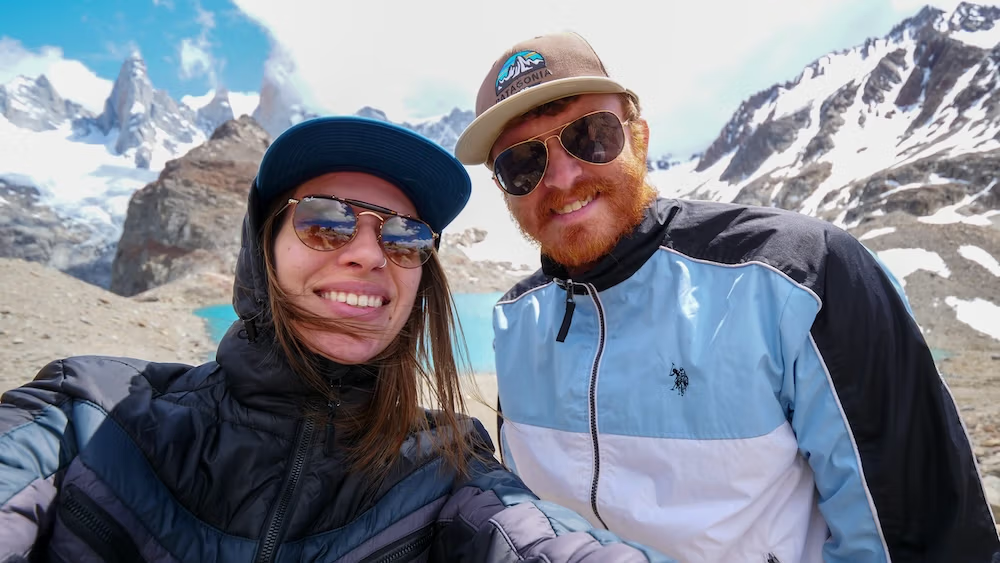
Audrey and I did this hike in full “foodie mode” (yes, we arrived a little… rotunding, as I like to describe it) and still made it to the lagoon—windblown, ravenous, and very aware that we were cosplaying as trekkers.
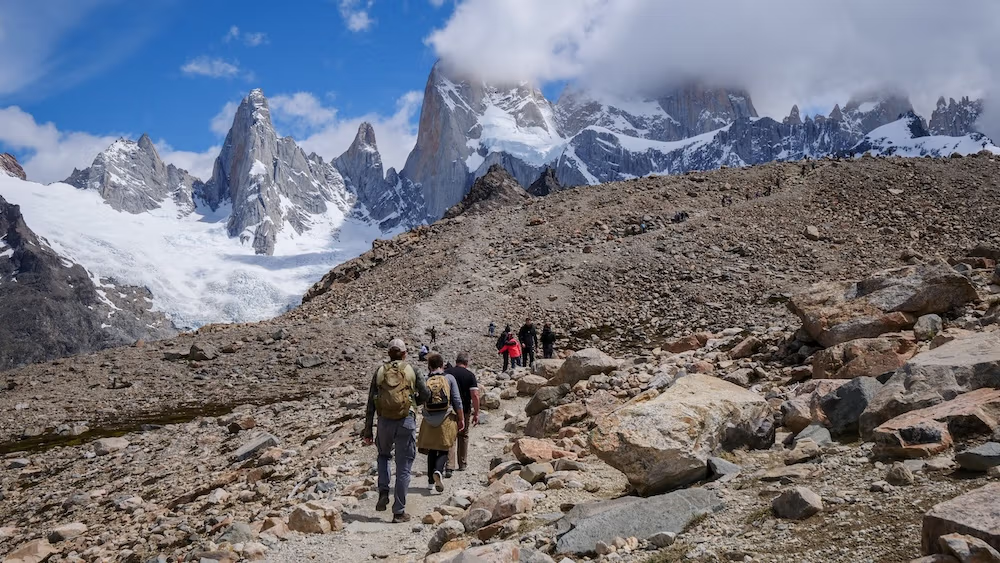
We’ll be real: Audrey and I didn’t arrive in El Chaltén as the best versions of ourselves in terms of fitness. Lots of eating. Not a lot of training. We still made it — and left with some strong legs — but if you can arrive even a little fitter than we did, the last kilometer will feel way less like a personal attack.
This guide is laser-focused on what makes the final kilometer feel so brutal—and exactly how to get through it without turning the last stretch into a slow-motion existential crisis.
The best way we can describe it: the first nine kilometers felt “intermediate but doable”… and then the last kilometer shows up like, “Ha!. Prove it!.” That final stretch is where it really tests you.
The Last Kilometer Survival Snapshot
| What punches you in the soul | Why it’s harder than the rest | Survive it with | What it felt like for us |
|---|---|---|---|
| Sudden steepness | Most of the climbing is saved for the end; the last stretch can gain ~400 m and can take about an hour | Switch to “short steps + steady breath” mode; micro-goals | “KM 9… the bottleneck… rocky, gravelly, steep.” |
| Loose rock + uneven steps | You’re walking on gravel/scree and big, awkward “stairs” | Three points of contact; deliberate foot placement; patience | We had to stay super alert because a sloppy step would’ve been ugly |
| Exposure to wind/rain | Above treeline, no shelter, and conditions change fast | Layer early; wind-shell; don’t “white-knuckle” in gusts | “Windy beyond belief.” We hid behind a rock and inhaled snacks |
| Crowd bottleneck | Everyone hits the wall at the same time (and the trail narrows) | Start early; let faster hikers pass; keep your rhythm | Encouragement from people coming down genuinely helped |
| Mental meltdown | You’re close enough to see the payoff—but not close enough to stop suffering | Break the last km into 5–10 minute “wins” | “Too early to turn around… Fitz Roy was calling our name.” |
Also: we were hilariously optimistic about our pace early on. We hit kilometer one and realized we were moving at a glacial pace because we kept stopping for views and corresponding photos/videos. No regrets… but it’s a good reminder that “distance on paper” isn’t the same as “distance with the plethora of Patagonia distractions.”
By kilometer two we were already doing what we call a “mini-lunch” because… why suffer hungry? Our lunch box salad container also broke again, which added a fun new mini-game called “eat fast or wear that rice salad.” Glamorous trekking as always.
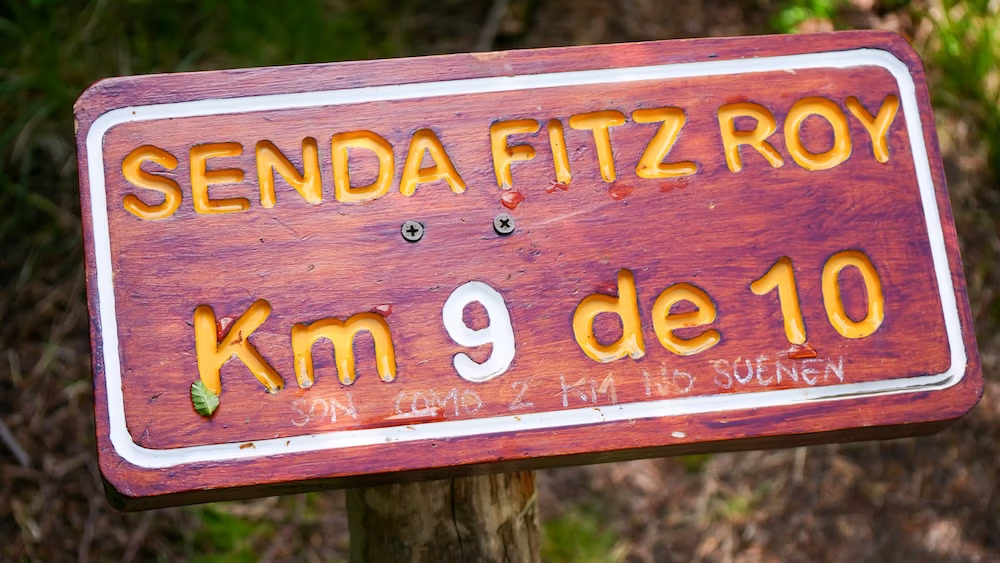
Why the Last Kilometer Is Brutal (The Honest Physics)
Most of the Laguna de los Tres hike feels like a steady build: forests, viewpoints, the campsite vibes, and that constant Fitz Roy “is this real?” feeling. Then you reach the point where the trail basically says: “Okay buddy ol’ pal, warm-up’s officially over.”
Here’s why the end hits so hard:
The climb is concentrated at the end
It’s about 10 km one way and roughly 750 m of elevation gain for the full hike. That doesn’t sound outrageous until you learn the last stretch is famously steep—described as a climb of about 400 meters that can take a little over an hour. For context, that’s a 40% grade!
So yes, it’s not just you. The trail really does save the hot-sauce for the finale.
The terrain gets “legally annoying”
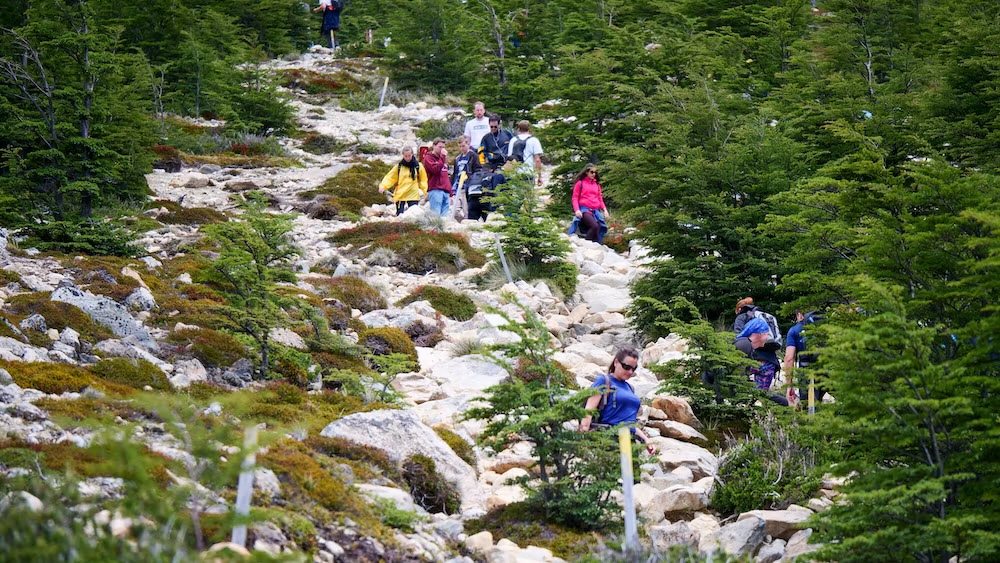
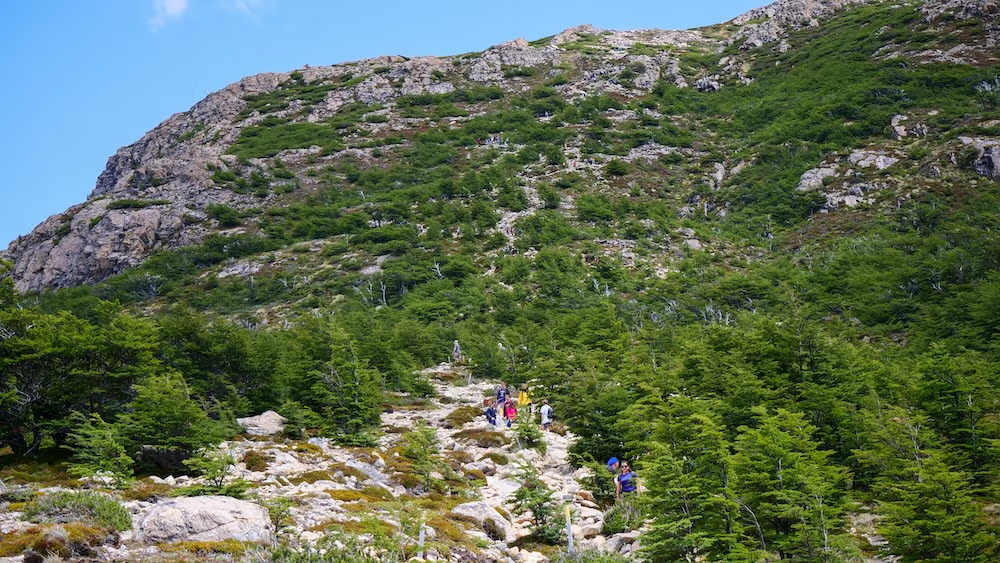
That last kilometer often shifts into rocky, gravelly footing with big steps. You can’t just “walk.” You have to place your feet like you’re defusing a tiny bomb with each step. This is where fatigue becomes dangerous. Cuz sloppy foot placement + loose rock is an extremely bad combo.
Exposure turns the hike into a weather negotiation
Park trail guidance explicitly warns that the Fitz Roy route is very steep and to use caution with rain and wind. Translated: the last kilometer can go from “fun suffering” to “why are we doing this?” if the gusts are punching sideways or the gravel is super slick.
Everyone arrives at the pain party together
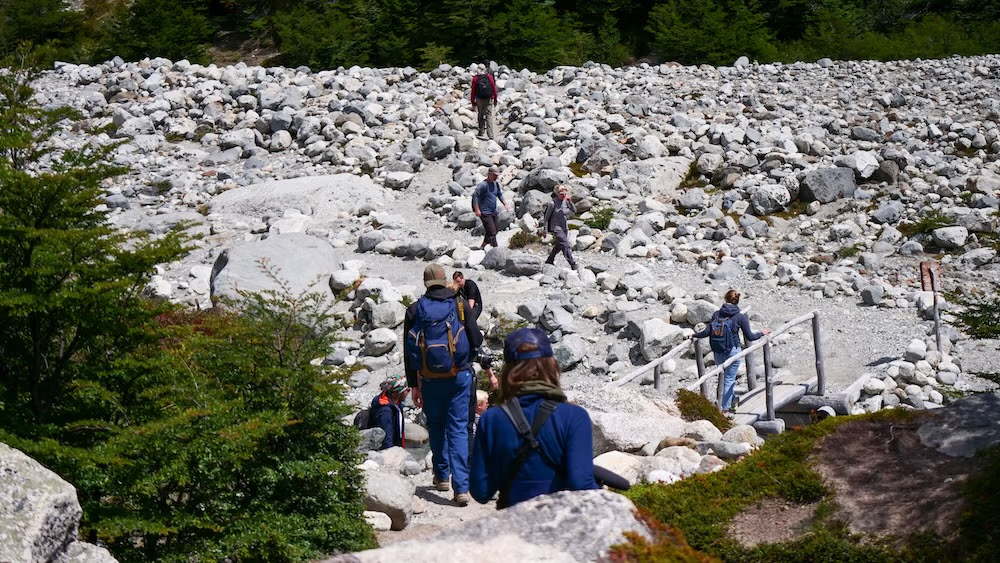
Even if you’re not normally bothered by crowds, the last climb can feel like a slow-moving traffic jam. People bunch up because the grade is steep, the path narrows, and everyone is freakin’ tired. In our notes we literally called KM 9 “the bottleneck.”
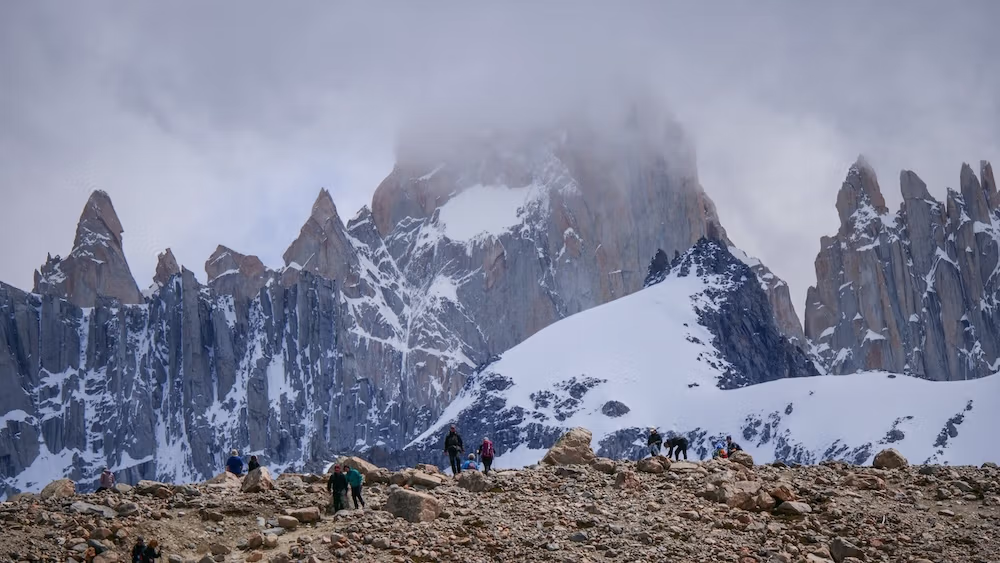
The brain does its worst work right here
The last kilometer is also where your brain starts negotiating like a lawyer:
- “We already got amazing views at Laguna Capri…”
- “Isn’t the lagoon basically the same from here?”
- “What if we just… become photographers instead of hikers?”
This is normal. Also: do not trust the opinions of a brain running on fumes and granola dust.
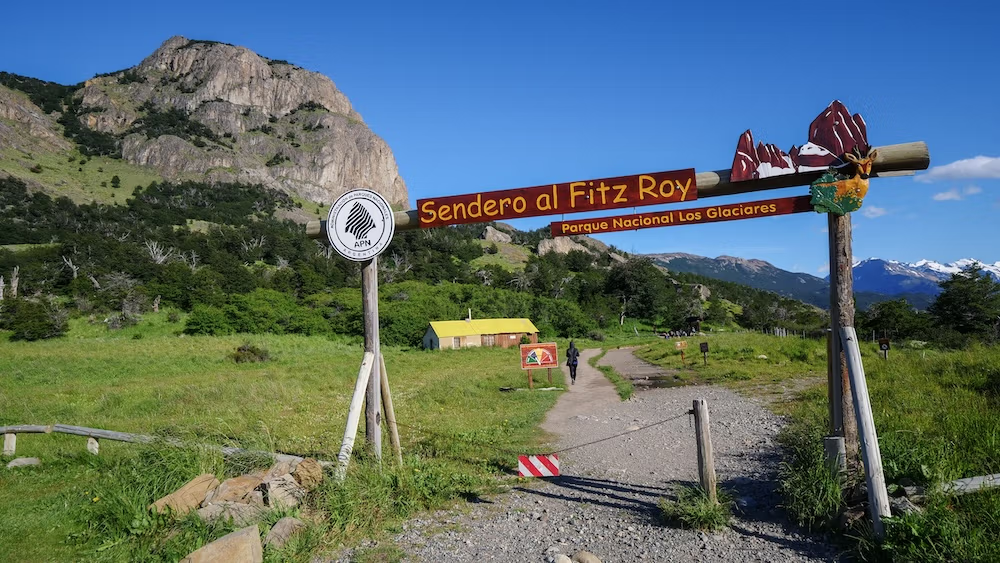
The Route in Plain English (So You Know Where the “Wall” Lives)
You don’t need a novel-length description of the full trail here (we’ve got separate guides for that). You just need to know the main “chapters” so you can time your energy for the endgame.
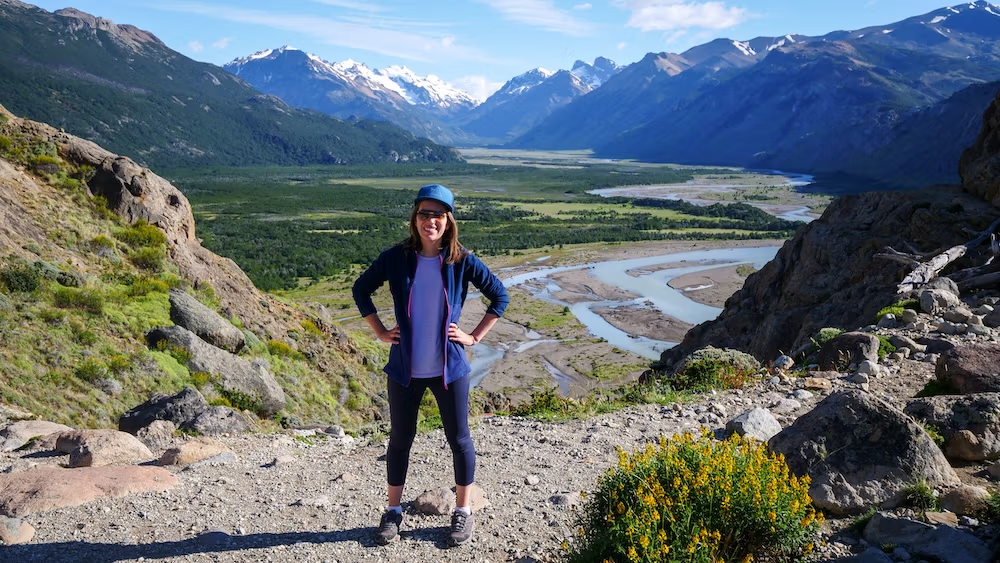
The classic route from town
The trailhead starts at the end of Avenida San Martín where El Chaltén basically stops being town and starts being “okay, this is happening.” You climb steadily early on, hit viewpoints, and then make your way toward Laguna Capri and the Poincenot/Río Blanco area.
After you reach the camp area, you continue up the Del Salto stream and eventually reach Río Blanco (used by climbers), and then the final steep slope up to Laguna de los Tres.
The key idea
Everything before the last kilometer is the “approach.” The last kilometer is the “test.”
So treat your day like a boss fight:
- Do not sprint the first half.
- Do not snack like we did (I ate most of my lunch at 9 a.m., like an untrained golden retriever).
- Do not arrive at the base of the last climb surprised.
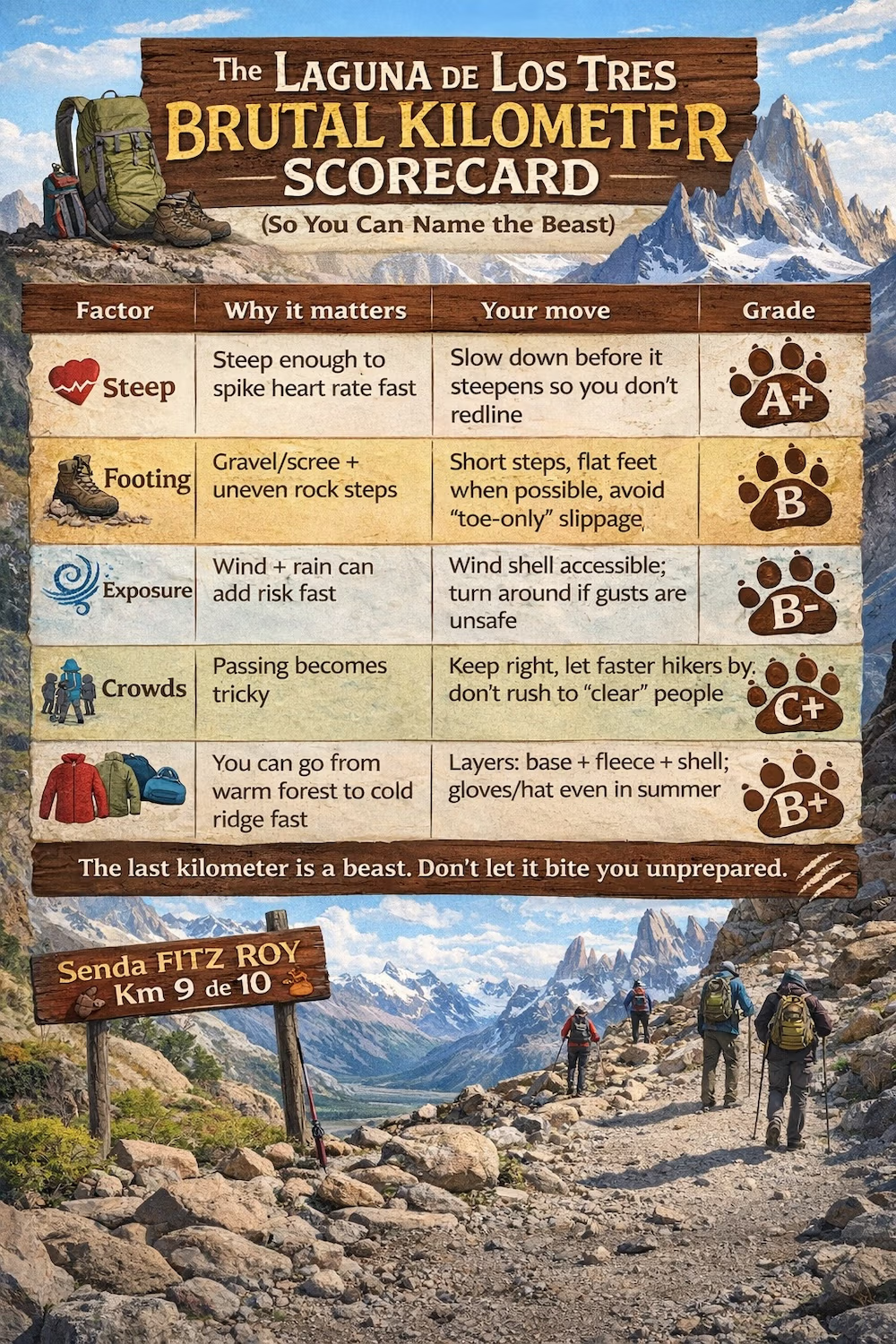
The Brutal Kilometer Scorecard (So You Can Name the Beast)
| Factor | Why it matters | Your move |
|---|---|---|
| Grade | Steep enough to spike heart rate fast | Slow down before it steepens so you don’t redline |
| Footing | Gravel/scree + uneven rock steps | Short steps, flat feet when possible, avoid “toe-only” slippage |
| Exposure | Wind + rain can add risk fast | Wind shell accessible; turn around if gusts are unsafe |
| Crowds | Passing becomes tricky | Keep right, let faster hikers by, don’t rush to “clear” people |
| Temperature swing | You can go from warm forest to cold ridge fast | Layers: base + fleece + shell; gloves/hat even in summer |
The “Don’t Let KM 9 Eat You” Game Plan
This is the part you came for: the step-by-step survival plan. None of this is complicated. It’s just the stuff nobody tells you until you’re already halfway up the loose rock thinking, “Oh, so this is my personality now.”
Step 1: Shift gears before the steep part begins
A common mistake is arriving at the base of the last climb already breathing hard. When you feel the trail start to tilt, back off your pace immediately. The goal is not speed—it’s steady output.
Think like a diesel engine, not a sports car.
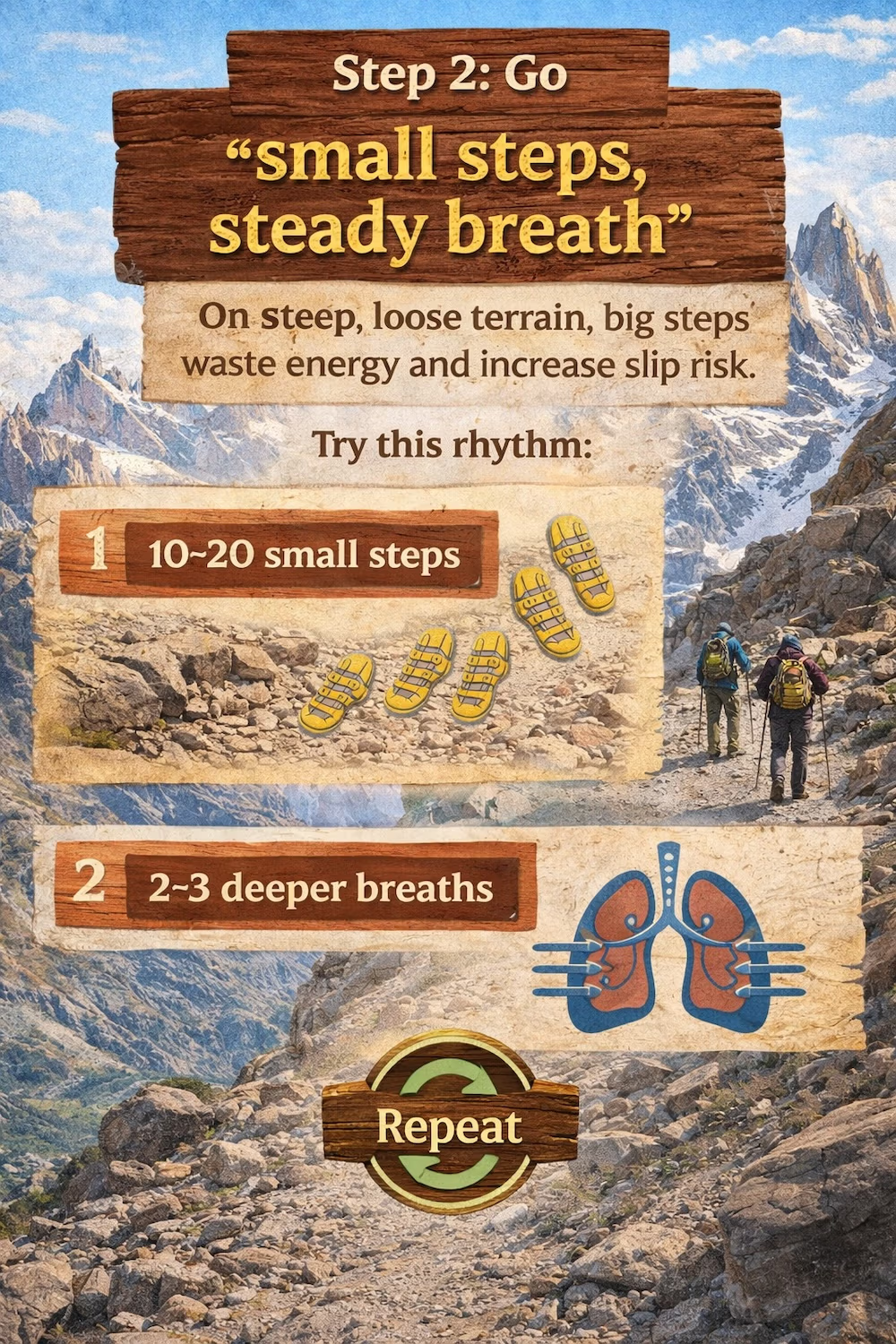
Step 2: Go “small steps, steady breath”
On steep, loose terrain, big steps waste energy and increase slip risk.
Try this rhythm:
- 10–20 small steps
- 2–3 deeper breaths
- Repeat
If you’re hiking with a buddy, this is also when conversation becomes mostly grunts, encouragement, and occasional dramatic statements like: “We are so close. So so so so very close.”
Step 3: Use micro-goals to keep your brain from quitting
The last kilometer is where the finish line feels “visually near but emotionally far.” So don’t aim for the top. Aim for:
- the next switchback
- the next rock cluster
- the next flat-ish patch
- the next person who looks equally wrecked
This is not weakness. This is strategy.
Step 4: Foot placement becomes your entire personality
Loose rock punishes sloppy steps. Plant your foot, test it, then commit weight.
Helpful cues:
- Step on larger embedded rocks when available (more stable than loose gravel).
- Keep your center of gravity over your feet (avoid leaning back while stepping up).
- If the trail is crowded, don’t “rush pass” someone on scree. Wait for a stable spot.
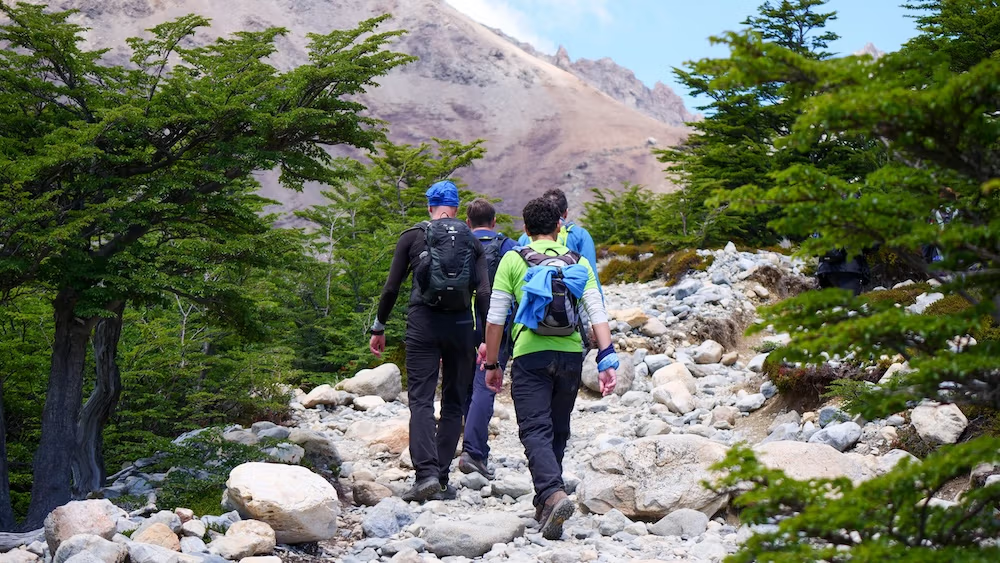
Step 5: Let the crowd flow without stealing your rhythm
When the trail narrows, you’ll get stuck behind slower hikers or feel pressured by faster ones. Here’s the trick:
- If someone is faster, pull aside at a stable spot and let them pass.
- If you’re slower, keep a steady pace and don’t apologize every 12 seconds.
- If you’re with a partner, don’t split up. The last km is where people get turned around or separated, and that’s when bad decisions happen.
For us, encouragement from hikers coming down honestly mattered more than we expected. Patagonia has many gifts, and one of them is tired strangers saying: “You’re almost there!” Huzza!
Step 6: Layer up before you crest
Let’s get real for a minute. Wind up top can be savage. We reached the lagoon and it was “windy beyond belief,” so we literally sat behind a rock to shield ourselves and inhaled what was left of our food.
Don’t wait until you’re already cold to put your shell on. Put it on at the last sheltered spot in the climb, while your fingers still work.
Pacing: The “Not Today, Muscle Cramps” Schedule
This isn’t a strict itinerary—just a pacing mindset so you don’t hit the last kilometer already cooked.
| Segment | Effort level | What you’re trying to do | What we did (and what we’d tweak) |
|---|---|---|---|
| First hour | Moderate | Warm up, don’t sprint | We were excited and slightly chaotic (we even forgot our trail map). |
| Mid-trail | Comfortable | Eat + drink steadily, avoid bonking | We snacked early… too early. Don’t be me. |
| Campsite zone | Easy-moderate | Reset. This is where you decide whether you’re “going for it” | “Too early to turn around… we’re going for it.” |
| Last kilometer | Hard | Small steps, steady breath, no hero moves | “KM 9… rocky, gravelly… trekking poles would’ve been a good idea.” |
Food and Water: Don’t Do “Granola Bar Regret”
We love a good trail snack moment. But the last kilometer is not the place to discover you’re out of fuel.
On our hike, we reached the lagoon ravenous and basically had “one granola bar and some candy” left, which is… not exactly a Michelin-star fueling strategy.
A simple fueling plan that works
- Eat a real breakfast (not just coffee and vibes).
- Snack every 45–60 minutes even if you don’t feel hungry.
- Save something substantial for right before the last climb and for the top.
Lunch box reality (and why they’re popular)
Many accommodations offer lunch boxes you order the night before—convenient, expensive, and very “Patagonia logistics.” Whether you DIY or buy, the concept is the same: carry enough calories to avoid becoming a shaky, cranky cautionary tale. Bring extra favs if possible.
Gear: The “Would This Make the Last Kilometer Less Awful?” Checklist
You can hike Laguna de los Tres without fancy gear. But the last kilometer is where smart gear choices feel like wizardry.
Footwear
If you’re going to splurge on anything, make it decent shoes. Loose gravel + tired legs is exactly how people twist ankles.
Layers
The park explicitly warns to use caution with rain and wind on this route. That’s your cue to carry at least:
- a base layer you can sweat in
- a warm layer (fleece or light puffy)
- a windproof/water-resistant shell
Trekking poles
We’ll say it plainly: we could have used them. The last kilometer is steep and rocky, and poles can help you:
- stabilize on loose gravel
- share the workload with your upper body
- reduce knee pain on the descent
Are they mandatory? No. Are they a quality-of-life upgrade? Absolutely.
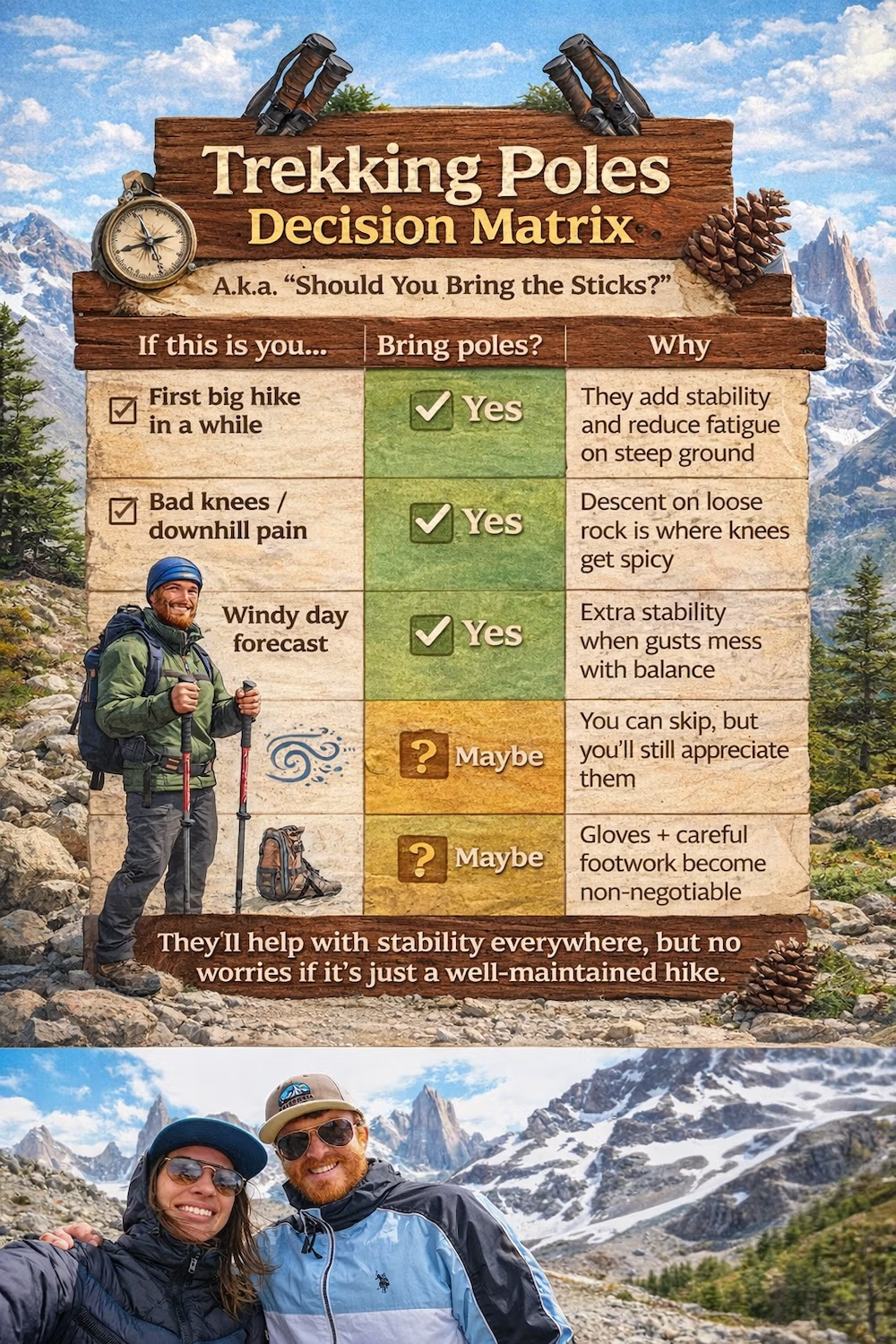
Trekking Poles Decision Matrix (A.k.a. “Should You Bring the Sticks?”)
| If this is you… | Bring poles? | Why |
|---|---|---|
| First big hike in a while | Yes | They add stability and reduce fatigue on steep ground |
| Bad knees / downhill pain | Yes | Descent on loose rock is where knees get spicy |
| Windy day forecast | Yes | Extra stability when gusts mess with balance |
| You’re very experienced and steady on scree | Maybe | You can skip, but you’ll still appreciate them |
| You hate carrying things and prefer free hands | Maybe | Gloves + careful footwork become non-negotiable |
Our honest take: poles won’t make the last kilometer easy, but they can make it less sketchy and help you keep moving when your legs are trembling.
How Fit Do You Need To Be For the Last Kilometer?
This article isn’t here to shame anyone out of hiking. Laguna de los Tres is absolutely doable for most folks who prepare and pace themselves. But the last kilometer does punish “I’ll just wing it.”
The overall experience for us was out of our element and out of our fitness level—yet still worth it. That’s the key: you don’t need to be a an elite athlete. But you do need.a plan.
A readiness test that actually reflects the last kilometer
If you can do most of these, you’re in decent shape for the climb:
- Walk/hike 2–3 hours at a steady pace without needing a long sit-down
- Handle stair climbing for 20–30 minutes (the last kilometer can feel like that, but outdoors and meaner)
- Recover reasonably after a hard day (not instantly, but without being demolished for a week)
If those sound terrifying, you can still enjoy El Chaltén. You just pick a different “win” (Laguna Capri, viewpoints, shorter trails), and you’ll still have a wildly good time.
Weather: Patagonia’s Favorite Plot Twist
Patagonia doesn’t do “stable.” It does “character building.”
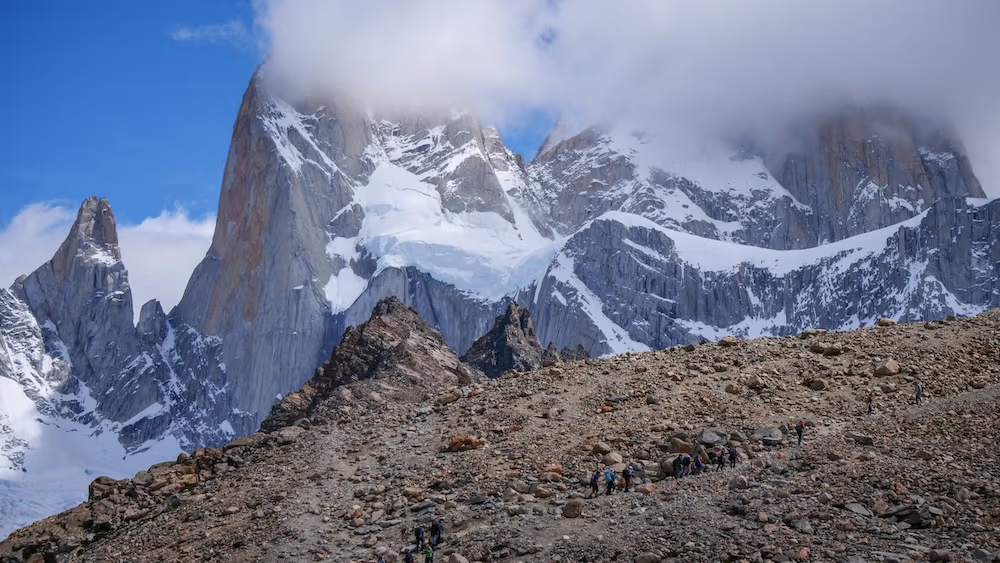
One minute you’re hiking through forest, feeling smugly competent. Next minute you’re on exposed rock with wind trying to uninstall you from the mountain.
Official guidance for this trail highlights caution with wind and rain because the route is very steep. That’s not just a fun fact—it’s the difference between a tough hike and a risky one.
When you should not push the last kilometer
Use this as your non-negotiable line:
| Condition | What it does to KM 9 | Better decision |
|---|---|---|
| Strong gusty wind | Balance gets sketchy on loose rock | Turn around or delay; do a lower, sheltered hike |
| Heavy rain | Gravel becomes slippery; footing worsens | Choose Laguna Capri / viewpoints; save the lagoon for a better day |
| Low visibility | Navigation + footing both suffer | Don’t force it; Patagonia will still be there tomorrow |
| Fatigue you can’t shake | Mistakes happen when you’re cooked | Take longer breaks, or bail before the steep bit |
Crowd + Timing Hacks That Actually Help
If you want the last kilometer to feel less like a staircase festival, timing is your best tool.
Start earlier than you think
This hike is long. It’s about 4 hours one-way to Laguna de los Tres. Most folks don’t want to be racing daylight on the return—or descending loose rock while cranky and tired.
Early starts also:
- reduce crowd bottlenecks on the last climb
- give you more flexible weather windows
- make your return feel calmer
Take breaks before the steep part
If you’re going to sit down, snack, or adjust layers, do it before the last kilometer begins. It’s way easier to stay warm and steady there than to do a full stop mid-scree while people thread past you like it’s a highway.
At the Top: How to Actually Enjoy Laguna de los Tres (Instead of Just Surviving It)
When you arrive, you want the payoff—not a hurried photo while your hands freeze.
A few practical moves:
- Find shelter behind rocks if it’s windy (we did, and it saved us).
- Eat something real, not just sugar.
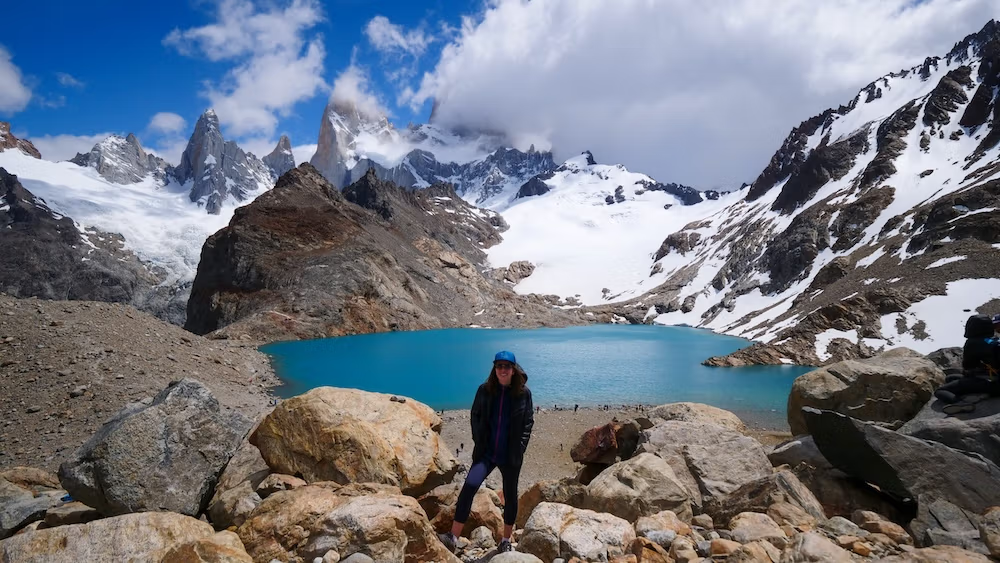
- Give yourself time to breathe and look around. The lake’s color, the glacier views, the Fitz Roy wall—this is why you climbed.
And if the wind is doing its full demon routine? Enjoy the view, take the evidence photos, and don’t linger so long that your descent becomes all kinds of tres miserable.
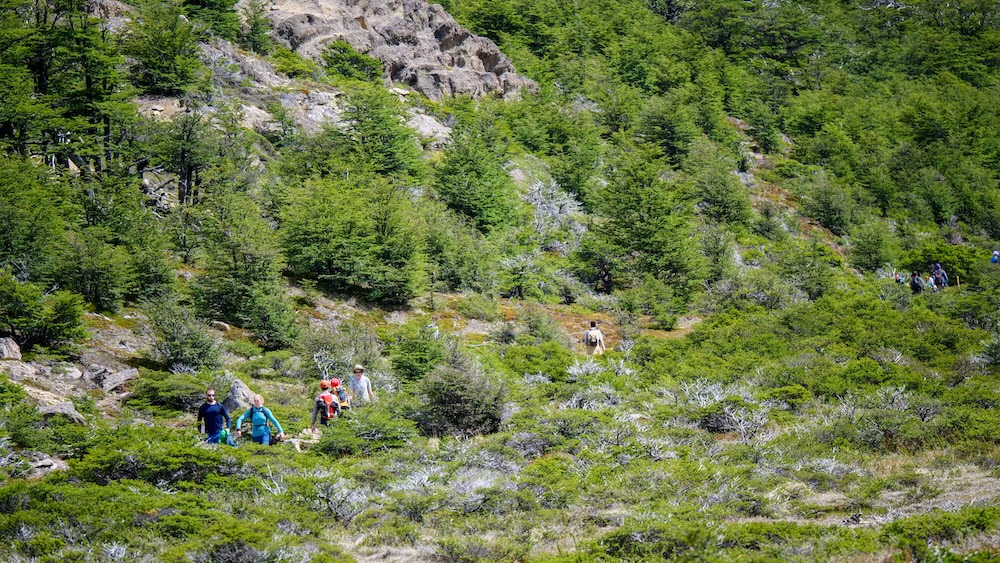
The Descent: Why Down Can Be Harder Than Up
People talk about the last kilometer like it’s the only hard part. It’s not. It’s just the most dramatic.
Downhill on loose gravel can be:
- slippery
- knee-punishing
- mentally tiring (because you still need to focus)
Descent technique that saves your legs
- Keep steps short.
- Face slightly sideways on steep loose sections if needed.
- Use poles if you have them.
- Take “standing breaks” (lean on poles, breathe) instead of full sit-downs that stiffen you up.
On our return, we were so spent we joked about being carried out on a sedan chair or calling for an airlift. (A joke. But… emotionally true.)
Recovery: The “We Didn’t Leave the Room Next Day” Protocol
After a big Laguna de los Tres day, treat recovery like part of the itinerary—not merely an optional bonus.
After 20 km we needed time, and the next day we basically didn’t leave the room. That’s extremely relatable… and also avoidable if you do a few things right.
A simple recovery plan
- Hydrate immediately after the hike.
- Eat a proper meal with carbs + protein.
- Do a slow 10-minute walk later that evening (yes, it hurts; yes, it helps).
- Stretch calves, quads, and hips lightly (no hero yoga).
- Sleep like it’s your job.
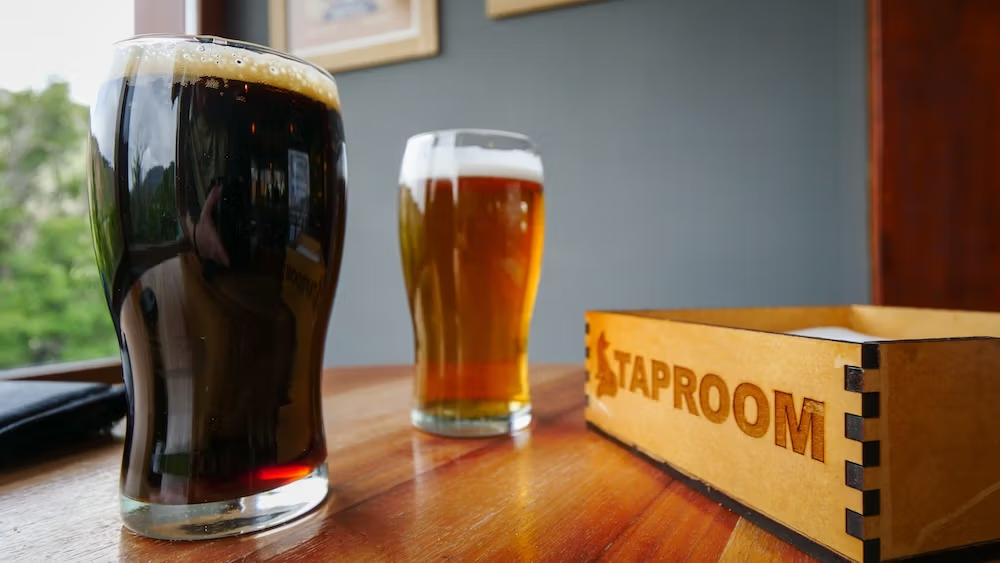
And if you want to reward yourself the way we did: go find a cozy spot for a big meal and an even bigger glass of wine. (Your legs will still be sore, but your spirit will be nourished.)
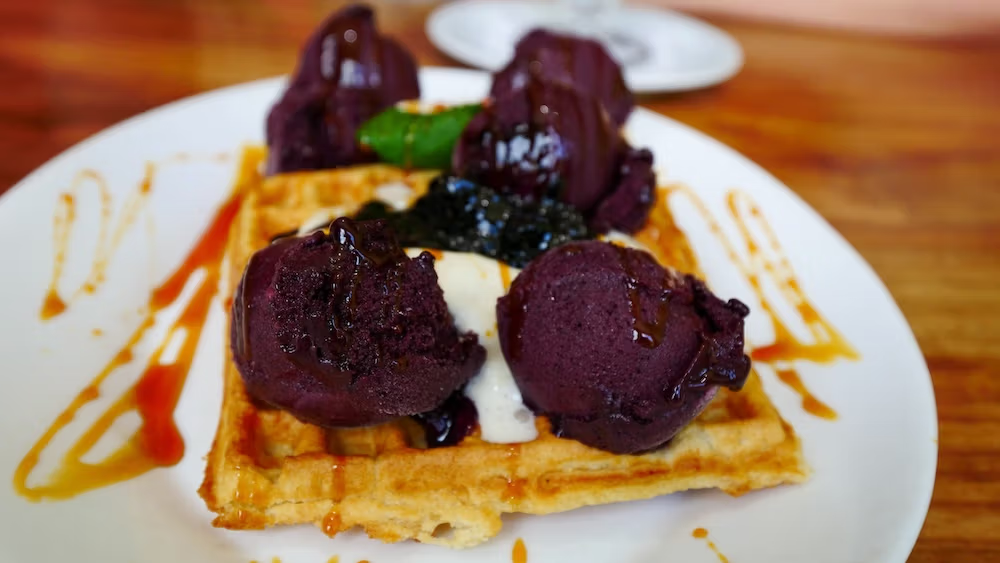
Our reward meal was at Senderos — a tiny, cozy spot near the bus terminal inside a boutique guesthouse (only a handful of tables). We went full “we survived” mode: blue cheese risotto with walnuts and sun-dried tomatoes, a hearty lentil dish, a full bottle of Syrah (we even took a break from Malbec), and two desserts. Yeah. You read that correctly. 2 of em! Then we waddled home and passed out. Glorious.
If the Last Kilometer Sounds Like Your Villain Origin Story: Easier “Wins” That Still Slap
You do not have to summit Laguna de los Tres to have a legendary El Chaltén day.
The park’s trail network gives you plenty of options—some short, some moderate, many with ridiculous views.
Here are alternatives that keep the magic without the scree staircase finale:
- Laguna Capri: big Fitz Roy views, camp vibes, and a solid payoff without the brutal last climb.
- Mirador viewpoints: fast “wow” factor.
- Other half-day trails: you can stack two easier hikes and still feel like a champion.
Your trip doesn’t need to be a suffering contest. It just needs to be memorable.
Route Variations: Can You “Hack” the Brutal Kilometer?
Let’s get this out of the way: no matter which way you approach Laguna de los Tres, the final climb to the lagoon is still the final climb. You can’t magically delete the steepness from your life.
But you can change the shape of your day—especially crowds, scenery, and how your legs feel when you arrive at the base of the last kilometer.
Option A: Classic out-and-back from El Chaltén (most common)
This is the straightforward “walk from town” route that most people do. It’s simple and well-established, and it’s also why the last kilometer becomes a bottleneck—everyone piles into the same ending.
Best for: first-timers who want simple logistics and don’t mind sharing the trail.
Option B: Start at Río Eléctrico / El Pilar area (more of a “trailhead transfer” day)
Some hikers start outside town around Río Eléctrico / the El Pilar trailhead area (often reached by shuttle/taxi). In other words: you outsource a chunk of the walking approach so you can enter the Fitz Roy area from a different angle.
El Pilar is roughly 17 km from El Chaltén and is typically reached by shuttle. The vibe tends to be: earlier forest, different scenery, and a day that can feel less “conga line” at the beginning.
Routes around Río Eléctrico can be very steep and dangerous in wind/rain—another reminder that conditions, not just fitness, shape the difficulty.
Best for: repeat visitors, photographers chasing different angles, or anyone who wants to reduce “same way back” monotony.
Option C: Turn it into a point-to-point day (for strong hikers)
There are longer point-to-point variations that link the Fitz Roy side with other trail networks. These are “big day” options where you trade simpler logistics for a more epic route. They’re popular with experienced hikers—but they also require clear weather, a solid pace, and comfort with a long time on trail.
Bottom line: alternate starts can improve flow and crowd vibes, but they don’t remove the final kilometer’s steep, rocky reality. They just help you arrive at the base of it with a slightly different story.
Should You Attempt the Last Kilometer Today? (A Fast Decision Matrix)
Use this as a gut-check at the campsite area before you commit to the steep bit. The goal isn’t to be fearless. The goal is to be smart.
This is exactly where we had our little “are we doing this or not?” moment. We were around KM 8, it was just past 12, and we honestly felt pretty good — not cooked, not cranky, and with a huge daylight buffer. So we did the only logical thing: declared “today we are trekkers” and kept going.
| Check-in question | Green light | Yellow light | Red light |
|---|---|---|---|
| Wind right now | Mild to moderate, stable | Gusty but manageable | Gusts pushing you sideways |
| Rain / surface | Dry or lightly damp | Wet but you still feel stable | Slick gravel + low traction |
| Energy | Tired but steady | You’re fading fast | You feel wobbly / clumsy |
| Time | Plenty of daylight + buffer | You’re tighter than you wanted | You’ll be descending late and rushed |
| Mood | “Let’s do it” | “I’m not sure” | “I hate everything” |
If you’re in yellow, slow down, eat, layer up, and try a short test climb. If you’re in red, call it. Laguna Capri and the viewpoints will still deliver a very smug, photogenic Fitz Roy day.
Final Pep Talk (From Two Former Foodies Turned Trekkers)
If you’re reading this because you’ve heard the last kilometer is brutal… yes. It is. The rumors are true. It turns out that the gravel is not your bestie.
But it’s also one of those hikes where the struggle is part of the story. You’ll remember the bottleneck, the encouragement from strangers, the moment you crested and saw the lagoon, and the way Fitz Roy looks like it was rendered by a smug computer.
KM 9 is where things got real for us. That’s where the bottleneck happened, everyone looked a bit wrecked, and the trail demanded full attention because it was steep, rocky, and gravelly — the exact combo that punishes tired legs. In that moment we fully understood why people love trekking poles (and why future-us might pack them).
And weirdly? The thing that kept us moving wasn’t motivation posters or grit — it was the steady stream of hikers coming down telling us, “You’re so close” and “the view is insane.” It sounds cheesy, but it genuinely worked like a relay handoff for our morale.
And if you decide to turn around before the last climb? That’s not failure. That’s good judgment. Patagonia rewards smart decisions. And that’s A-OK.
Frequently Asked Questions About Hiking Laguna de los Tres and Surviving the Brutal Final Kilometer
Is the last kilometer really the hardest part?
Yes. It’s where the trail steepens dramatically, the footing gets loose and rocky, and you’re usually already tired. It’s a short section that feels long because it demands focus and steady effort right when your legs want to negotiate a ceasefire.
How long does the last kilometer take?
For many hikers, about an hour is a realistic ballpark—sometimes less, sometimes more—because the climb is steep and the terrain is slow-going. If you plan for “one hour of grinding,” you’ll be mentally prepared, and that’s half the battle.
Can beginners do Laguna de los Tres?
Many beginners can do it if they start early, pace themselves, and treat the last kilometer as a controlled climb—not a race. If you’re unsure, aim for Laguna Capri first and decide from there based on how you feel.
Do trekking poles actually help on the final climb?
They can help a lot—especially for balance on loose rock and for saving your legs on the descent. We absolutely felt like poles would have made that bottleneck section more manageable.
What shoes should I wear for the last kilometer?
Wear hiking shoes or boots with solid traction and support. The final kilometer has loose gravel and uneven rock steps, which is exactly where flimsy shoes turn your ankles into a suggestion instead of a stable joint.
How much water should I bring?
It depends on the day and your pace, but plan enough to drink steadily all day and still have some for the climb and the top. Dehydration makes the last kilometer feel twice as steep.
What’s the best time of day to tackle the last kilometer?
Earlier is usually better. You’ll avoid more of the crowd bottleneck, and you’re more likely to have stable weather. Plus, you’ll have extra time if you move slower than expected (which is extremely normal on KM 9).
What should I do if it’s super windy?
If gusts are strong enough to mess with your balance on loose rock, don’t force it. The park itself warns about caution with wind and rain on this steep route, and that’s there for a reason. Turn back, enjoy a safer viewpoint, and come back another day.
Is it safer to go up or down the last kilometer?
Going up is cardio-hard; going down can be knee-hard and slip-hard. Many people find the descent more annoying because you’re tired and the gravel can feel unstable. Short steps and patience are your best friends.
We’ll confirm: the descent is where the hike gets most annoying. We were spent, we stopped not for cute photo breaks but because our legs and feet were straight-up aching, and we definitely had at least one “sedan chair fantasy” moment. We made it… but we also learned that pacing on the way up is basically an investment in your future happiness on the way down.
What’s the “bail point” if I don’t want to commit to the last kilometer?
Laguna Capri and the campsite area before the final climb are common decision points. You still get incredible Fitz Roy views without committing to the steep scree finale.
Will I see Fitz Roy even if I don’t reach the lagoon?
Absolutely. A huge part of the magic is the constant mountain views and the viewpoints along the way. The lagoon is the closest, most iconic angle—but it’s not the only epic view you’ll get.
Do I need a guide for Laguna de los Tres?
Most people do it self-guided on a well-marked trail, but a guide can be helpful if you’re nervous about pace, conditions, or planning. If you’re confident hiking independently and check weather, DIY is common.
How crowded does the last kilometer get?
It can get very crowded, especially mid-morning through early afternoon in peak season. That’s why early starts help—less waiting, less passing stress, more space to move at your own rhythm.
What food should I save for the top?
Save something substantial—real carbs plus something salty. We hit the top ravenous and basically survived on a granola bar and candy, and we do not recommend that as your “summit feast.”
Our lunch box situation earlier in the hike was way better than our “summit feast” planning. Think rice salad with veggies/egg/cheese, an apple, a granola bar, a mini muffin, and a chaotic amount of candy — the classic hiker food pyramid. Most places in town will have you order the night before and hand it to you in the morning, which is wildly convenient when you’re out all day.
We paid about the equivalent of $10 USD per lunch box — not the cheapest for Argentina — but it saved us from scrambling for food in the morning. For long hiking days, the convenience factor is real (especially if your accommodation setup doesn’t make picnic logistics easy).
What’s the one mistake that makes the last kilometer worse?
Starting too fast and arriving at the base of the steep section already cooked. The last kilometer rewards steady pacing and punishes “let’s crush it!” energy early on.
Is Laguna de los Tres safe in bad weather?
It can be risky in bad weather because the final climb is steep and exposed, and loose rock becomes more dangerous when it’s wet or when wind affects balance. If conditions look sketchy, the smartest move is to bail early and come back on a better day.
Do I need gloves or a hat even in summer?
Often, yes. The last stretch is exposed and can be brutally windy, and wind chill is real even on a sunny day. Having light gloves and a beanie/buff can be the difference between “epic” and “I can’t feel my fingers.”
Can I do Laguna de los Tres as a sunrise hike?
Some people do, but it’s a serious mission. You’ll need a headlamp, strong navigation confidence, and a safe weather window. The final kilometer on loose rock in the dark is not ideal, so only attempt sunrise if you’re experienced and conditions are stable.
Project 23 Argentina: This guide is also available in Spanish. [Lea la versión en castellano: Laguna de los Tres: Por qué el último kilómetro es brutal para el trekking (y cómo sobrevivir)]
Further Reading, Sources & Resources
If you’re planning to hike Laguna de los Tres these are some references that help confirm the steepness reality, safety warnings, trail context, and park rules/fees.
Official park safety + trail context (the “trust anchor” sources)
1) Parque Nacional Los Glaciares — Senderos Zona Norte (PDF, official trail + safety guidance)
https://www.argentina.gob.ar/sites/default/files/2019/06/folleto_senderos_zona_norte_pnlg_espanol_2024.pdf
This is the official North Zone trails brochure and one of the best sources for grounding the article in what the park itself emphasizes (trail network, warnings, and why conditions like wind/rain matter).
2) Argentina.gob.ar — Derechos de acceso a Parques Nacionales (tarifas / regulations)
https://www.argentina.gob.ar/parquesnacionales/tarifas
This is the cleanest national reference page for park access fees and the underlying resolutions. Use this as your “always verify current pricing” link because fees can change.
3) Argentina.gob.ar — Parque Nacional Los Glaciares: Tarifas page (Los Glaciares-specific)
https://www.argentina.gob.ar/interior/ambiente/parquesnacionales/losglaciares/tarifas
A Los Glaciares–specific tariffs page that’s useful when you want to confirm what applies to the park (and to El Chaltén access) without scrolling broader lists.
Local / trail-specific route explanations (good for details + user intent)
4) ElChalten.com — Laguna de los Tres trek (English)
https://elchalten.com/v4/en/laguna-de-los-tres-trek-el-chalten.php
A practical route overview that matches what most hikers experience (trailhead location, progression of the hike, and what the day feels like). Great for confirming “how people actually do this hike.”
5) ElChalten.com — Laguna de los Tres (Spanish)
https://elchalten.com/v4/es/laguna-de-los-tres-el-chalten.php
Same destination focus in Spanish, helpful for cross-checking basic route facts and how the hike is described locally for Spanish-speaking visitors.
Notes on accuracy
- Trail conditions change fast in Patagonia, especially with wind, rain, snow, and shoulder season mud—so even “standard” hike descriptions can be inaccurate on a specific day. Always check conditions locally before you commit to the final climb.
- Fees and access rules can change. For anything money- or regulation-related, default to the current Argentina.gob.ar tariffs pages