
If you came here hoping for “Don’t worry, it’s an easy stroll—just bring vibes,” I regret to inform you that Laguna de los Tres is a full-day hike with a final climb that tries to take your soul.
And if you came here fearing you need to be a mountain goat with a sponsorship deal and a resting heart rate of 12, we have good news: you don’t.
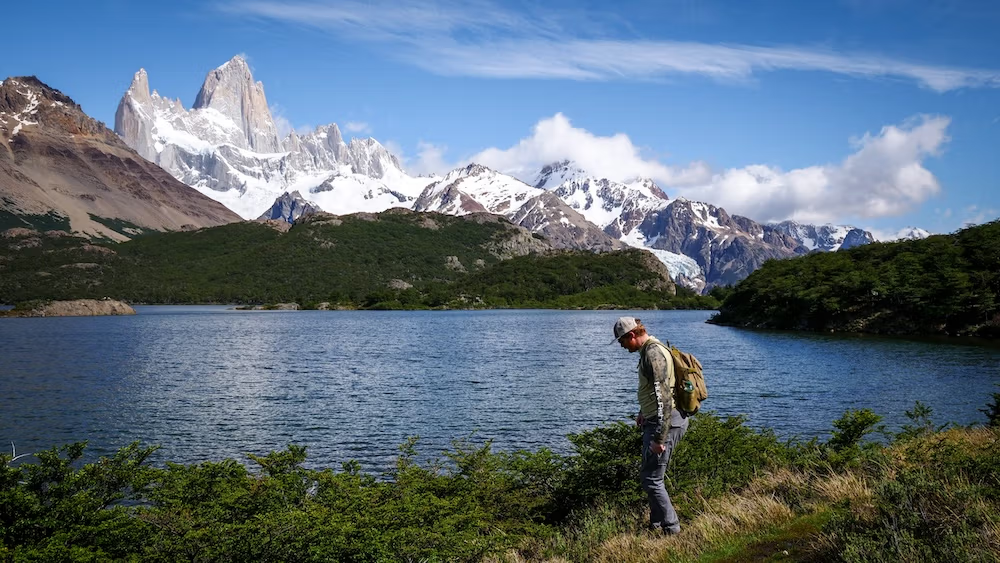
What you do need is a specific kind of fitness—less “I can deadlift a fridge” and more “I can keep moving for hours, then climb a steep staircase of rocks when I’m already tired.” The hike is honest. Patagonia is even more honest. And our bodies—at the time of our trip—were… let’s call them food-forward (rotunding, if you will).
Audrey and I arrived in El Chaltén in peak “we’ve been eating our way across Argentina” form. Our legs were not trail-seasoned; they were empanada-seasoned. We had dreams of Fitz Roy glory, and the kind of optimism that only exists in people who haven’t met Kilometer 9 yet.
This guide is the reality check we wish we’d had: how fit you actually need to be, what the hike feels like on the ground, how to train (without becoming a triathlete), and how to finish without turning the next day into a total writeoff.
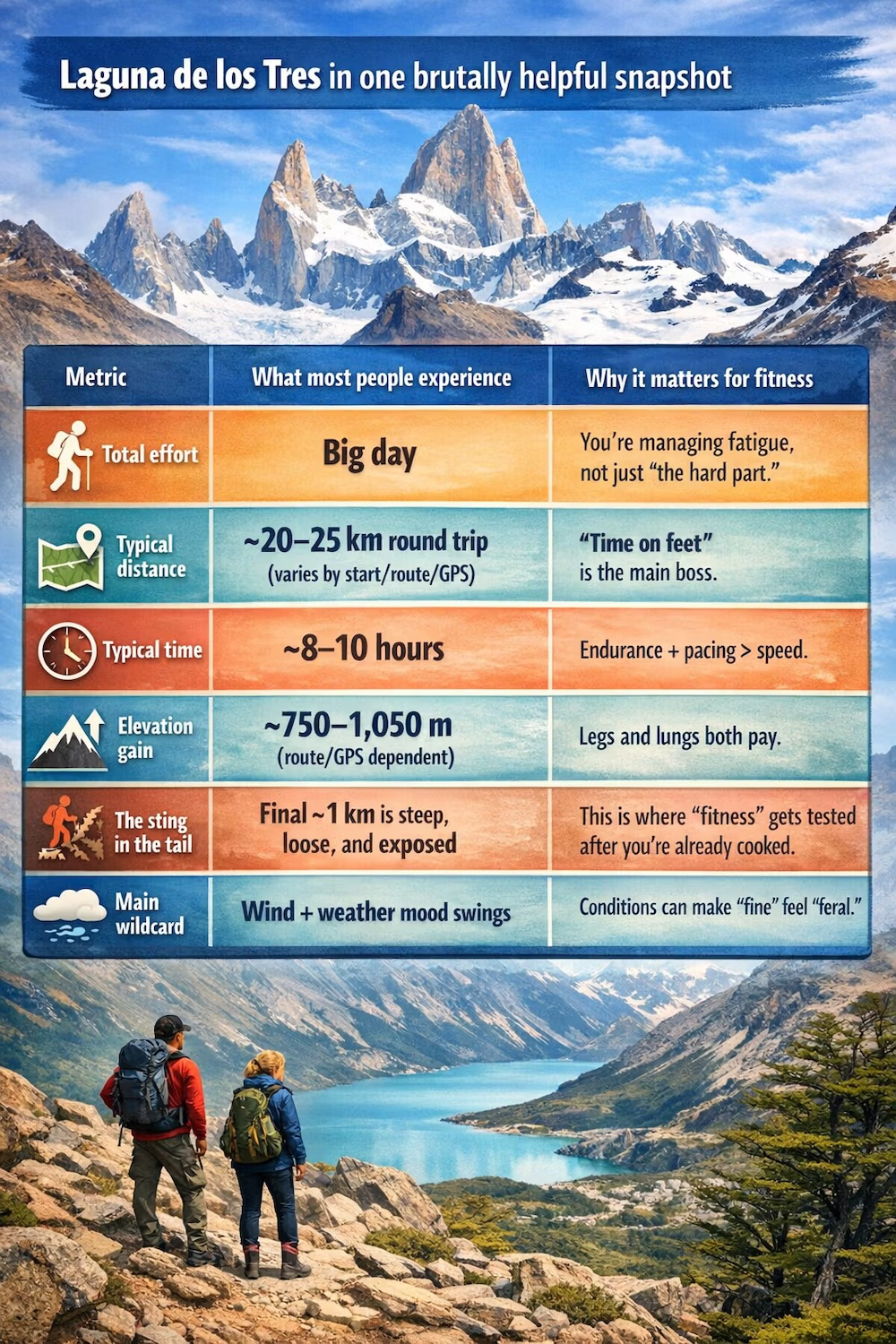
Laguna de los Tres in one brutally helpful snapshot
| Metric | What most people experience | Why it matters for fitness |
|---|---|---|
| Total effort | Big day | You’re managing fatigue, not just “the hard part.” |
| Typical distance | ~20–25 km round trip (varies by start/route/GPS) | “Time on feet” is the main boss. |
| Typical time | ~8–10 hours | Endurance + pacing > speed. |
| Elevation gain | ~750–1,050 m (route/GPS dependent) | Legs and lungs both pay. |
| The sting in the tail | Final ~1 km is steep, loose, and exposed | This is where “fitness” gets tested after you’re already cooked. |
| Main wildcard | Wind + weather mood swings | Conditions can make “fine” feel “feral.” |
If you only remember one thing: it’s not a constant suffer-fest. The hike is long, scenic, and often quite manageable… until it suddenly isn’t.
What “fit enough” actually means on this hike
“Fit” is a weird word. It can mean “I run 10K,” or “I can carry groceries without breathing like a haunted accordion,” or “I once did a spin class and survived.”
For Laguna de los Tres, “fit enough” usually boils down to five practical abilities:
- Endurance (steady movement for hours)
Can you keep moving at a comfortable pace for a big chunk of the day without needing to lie down and make existential apologies? - Uphill tolerance (late in the day)
The final climb isn’t at the beginning when you’re fresh and full of hope. It’s near the end, when your legs are negotiating for early retirement. - Downhill durability (knees + quads)
People obsess over the climb, but the descent is where many bodies start filing complaints. - Time-on-feet resilience (feet, hips, little stabilizer muscles)
You can be “cardio fit” and still get humbled by blisters, hot spots, and wobbly ankles. - Weather readiness (wind, cold, sun, sudden changes)
Patagonia loves surprises. Your “fitness” includes your ability to stay safe and functional when the elements become dramatic.
The honest reality, told by two people who were not trail gods
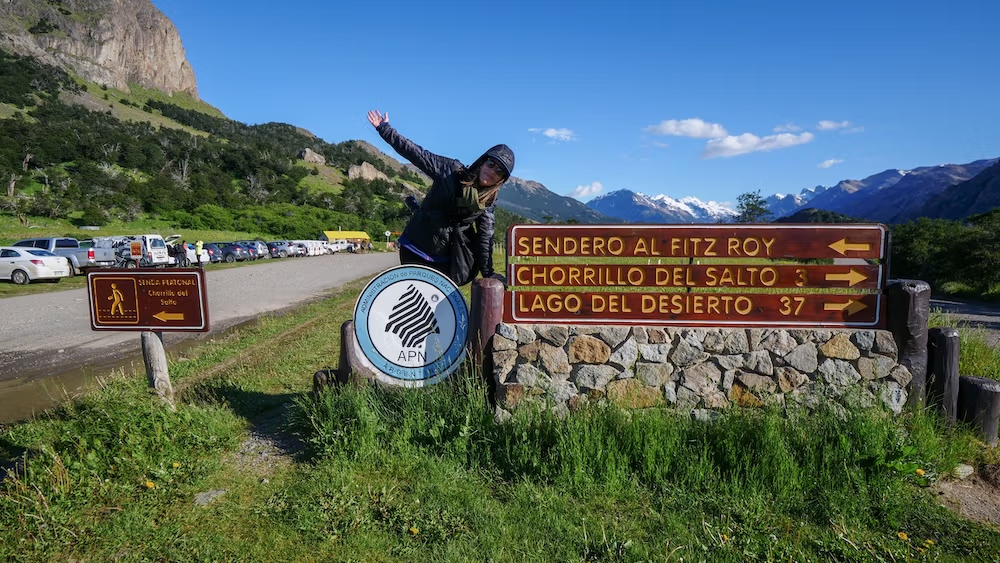
Here’s what happened on our Laguna de los Tres day, in the most useful way possible. Also worth admitting: we didn’t exactly nail the “efficient start.” From where we were staying, it took us about 45 minutes of walking across town to get to the trail from the opposite end—so if you’re wondering why some people have monster day totals, this is one of those sneaky reasons. El Chaltén is small, but “small” still adds up when the hike is already huge.
We started with decent intentions… and then did a few classic things:
- We forgot the trail map and spent time orienting ourselves like two confused cats in a new apartment.
- We were so excited that we ate most of our lunch way too early (9 a.m. snack gremlins are real).
- The first part felt “Okay! We’re hikers now!”
- And then the final push arrived like, “Hello, I’m the consequences of your decisions.”
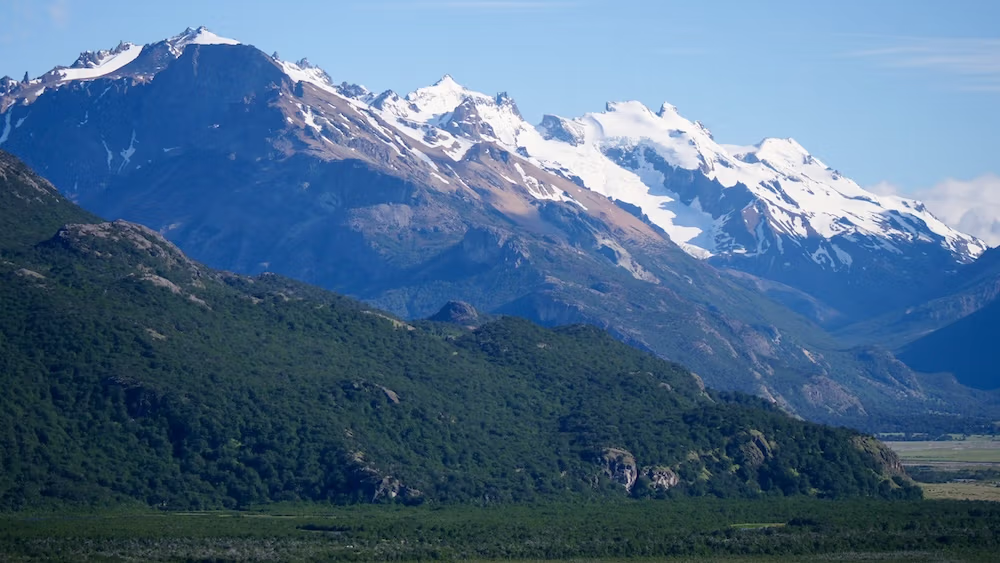
For the record, “ate most of our lunch early” wasn’t poetic exaggeration—it was me being an absolute piggie. About 20 minutes in, we hit that first “wow” zone…and I was already chewing through real calories like the trail was going to confiscate my food at Kilometer 3. It was 9 a.m. I had no excuse. Patagonia just does that to your brain.
The hike is roughly split into:
- A long approach that’s very doable for most people who are moderately active.
- A final climb that is steep, rocky, and exposed—and it shows up when you’re already tired.
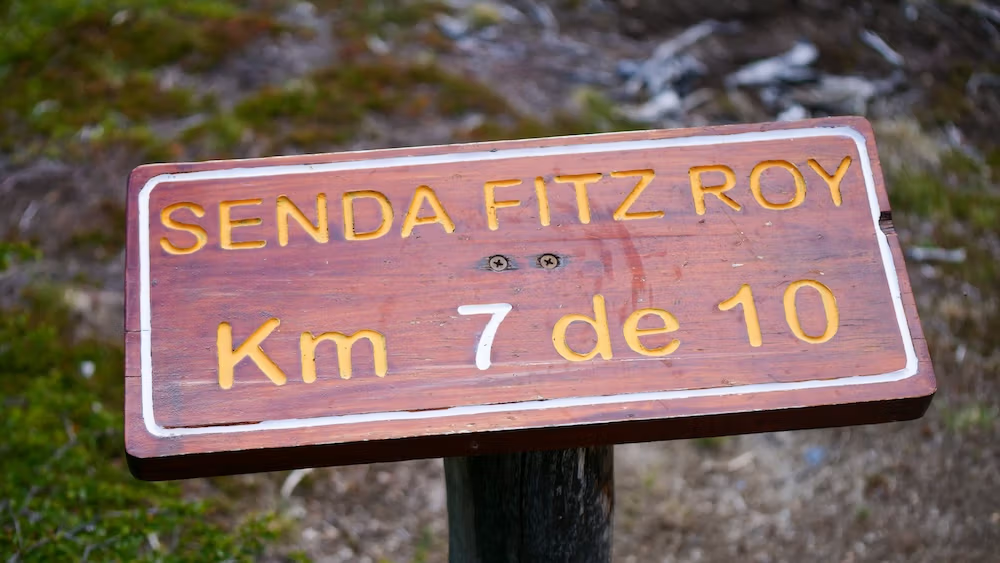
One thing I genuinely loved: the kilometre markers. It’s like having a little progress bar for your nervous system—you always know where you are, how far you’ve come, and how far you still have to limp with dignity. We even saw three condors on the way, which feels like Patagonia’s way of saying, “Yes, you’re suffering… but also, here’s something majestic to distract you.”
We hit that last section and immediately understood why people talk about it like it’s a rite of passage. Everyone funnels into the same steep, loose path, moving slower, watching their footing, taking mini-breaks, bargaining with the concept of gravity.
At the top, the wind was outrageous. We were hiding behind rocks and trying to chew snacks while getting sandblasted by Patagonia’s invisible leaf blower. We also had a very specific regret:
We wished we had trekking poles.
The next day? Total write-off. We slept forever. Everything was stiff. Our bodies were basically a museum exhibit called “Two People Who Thought They Could Wing It.”
And here’s the important part: we still think the hike is worth it.
But we also think people deserve the truth: you don’t need elite fitness, but you do need a realistic plan.
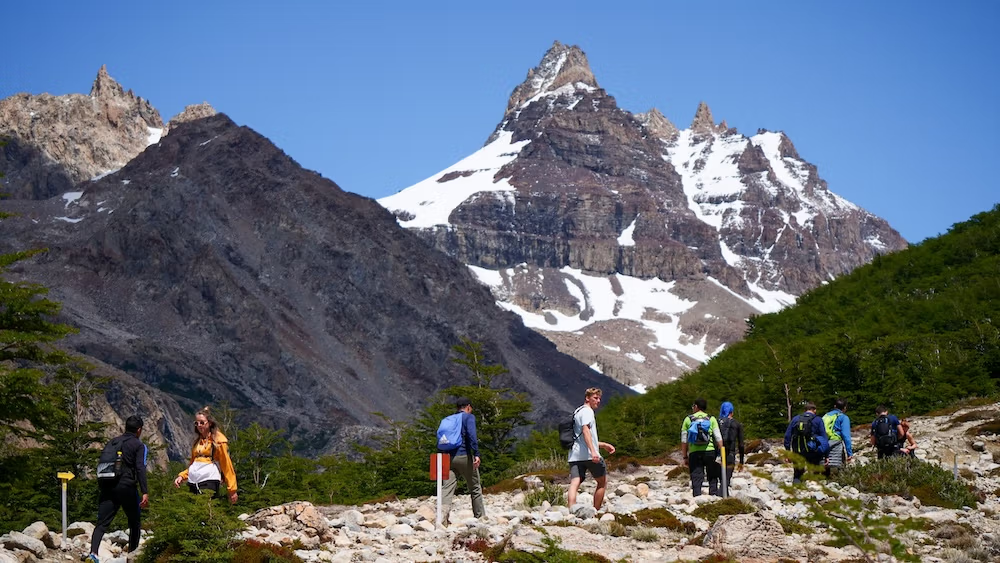
How hard is it, really? The “where it hurts” breakdown
The hike has three personalities
1) The “Welcome to hiking” beginning
You start climbing pretty early. It’s not instantly savage, but it’s enough to get your heart rate up and remind you you’re not walking to brunch.
Fitness demand: moderate
Main challenge: settling into a pace you can hold all day
2) The long middle
This is where the hike feels like a proper journey: forest, views, steady progress, and the illusion that you have become an outdoor person.
Fitness demand: moderate
Main challenge: endurance + fueling + not going too fast because you feel good
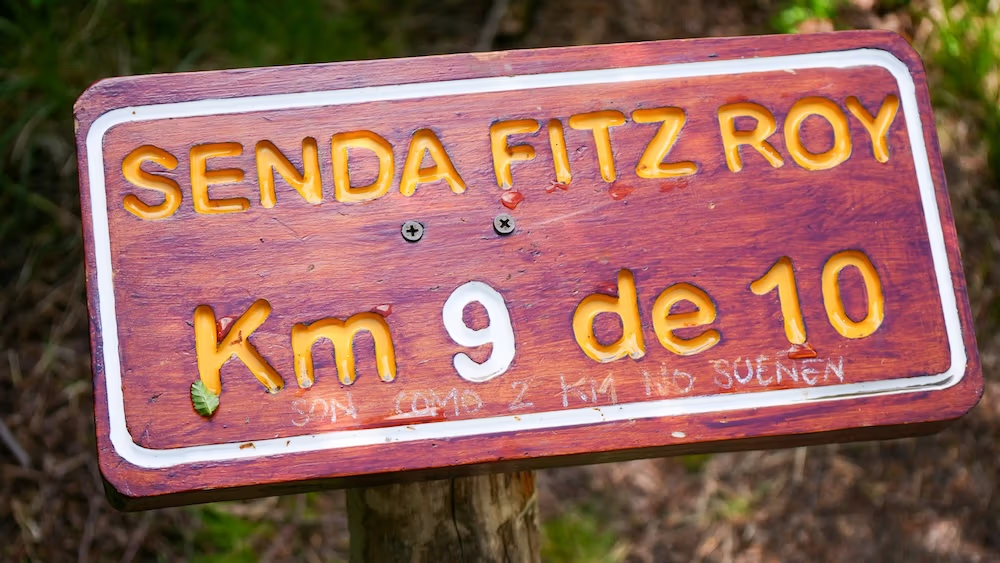
3) The final climb (Kilometer 9 energy)
Then you hit the infamous final section—steep, rocky, and exposed. It’s not technical climbing, but it’s sustained uphill effort on loose terrain.
This is also where the trail turns into a bottleneck: everyone slows down, everyone gets quiet, and suddenly you’re doing that highly technical Patagonian sport called Don’t trip in front of strangers. What kept us moving (besides stubbornness) was the stream of hikers coming down telling us the views were insane and we were so close. It’s weirdly motivating to be suffering in a little community of shared regret.
Fitness demand: high
Main challenge: climbing while tired, keeping footing, and not getting bullied by wind
This last chunk is where people learn the difference between:
- “I’m generally fit,” and
- “I’m fit for this specific kind of suffering.”
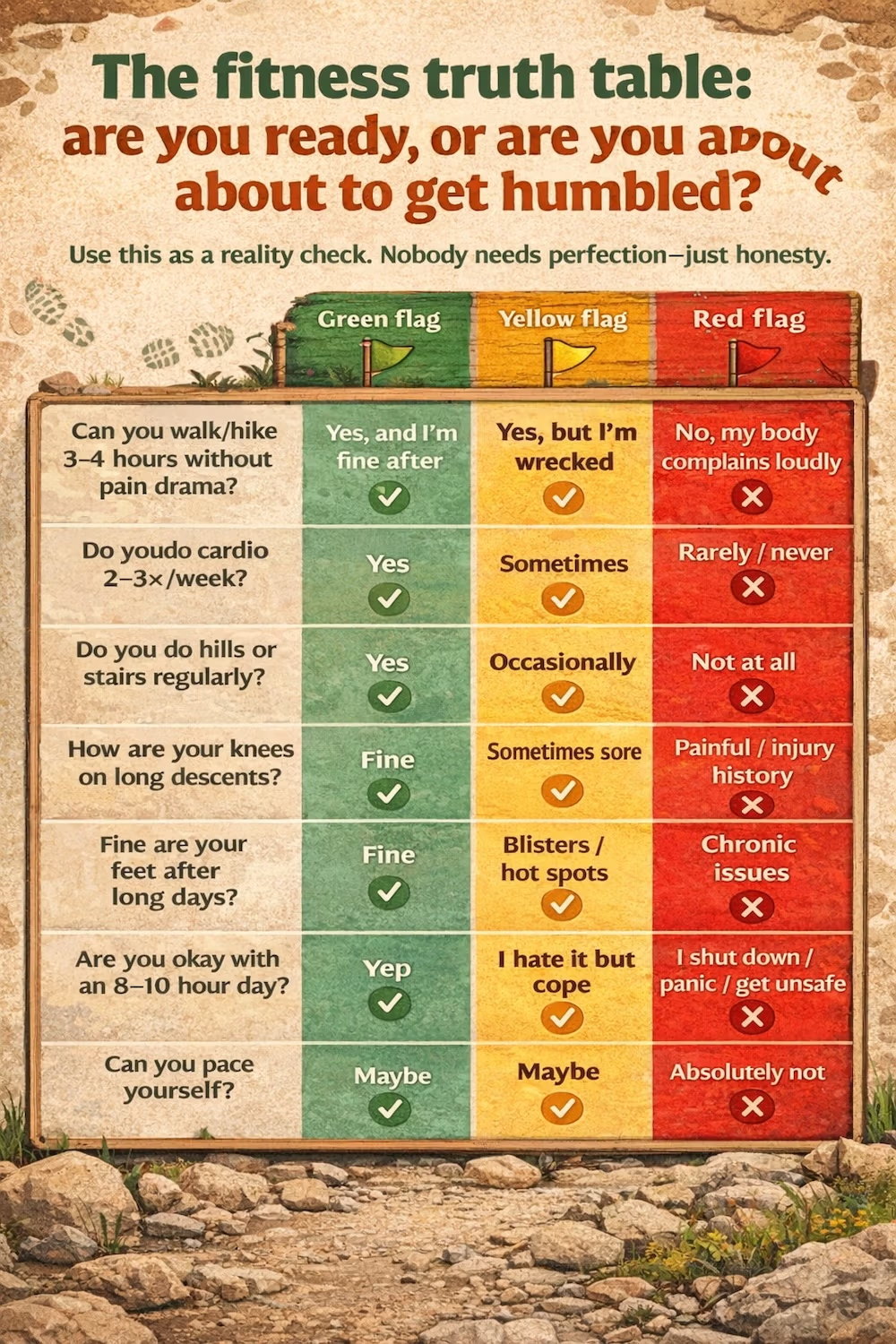
The fitness truth table: are you ready, or are you about to get humbled?
Use this as a reality check. Nobody needs perfection—just honesty.
| Question | Green flag | Yellow flag | Red flag |
|---|---|---|---|
| Can you walk/hike 3–4 hours without pain drama? | Yes, and I’m fine after | Yes, but I’m wrecked | No, my body complains loudly |
| Do you do cardio 2–3x/week? | Yes | Sometimes | Rarely / never |
| Do you do hills or stairs regularly? | Yes | Occasionally | Not at all |
| How are your knees on long descents? | Fine | Sometimes sore | Painful / injury history |
| How are your feet after long days? | Fine | Blisters/hot spots | Chronic issues |
| How do you handle cold/wind/sun? | I adapt | I hate it but cope | I shut down / panic / get unsafe |
| Are you okay with an 8–10 hour day? | Yep | Maybe | Absolutely not |
| Can you pace yourself? | I start slow | I start fast then suffer | I sprint until I explode |
If you’re mostly green: you’re probably good.
If you’re lots of yellow: you can still do it, but the game becomes pacing, gear, and turn-around discipline.
If you’re stacking reds: consider a different plan, a training block first, or a shorter hike that day.
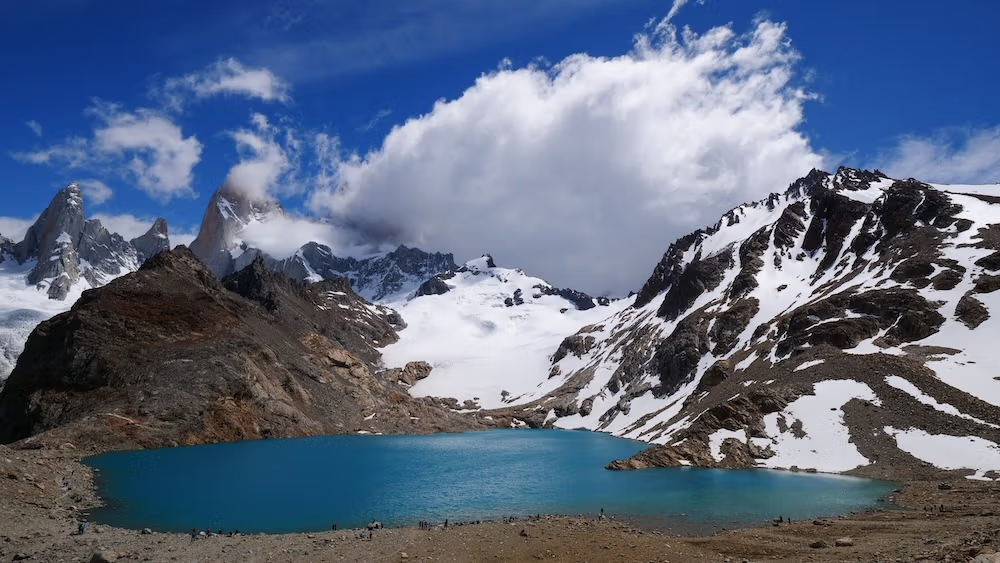
Who should do this hike (and who should choose something else today)
This hike is a good idea if…
- You’re moderately active and can handle long days.
- You’ve done at least a couple of hikes in the 10–15 km range recently.
- You can climb steadily for 45–60 minutes (with breaks) without feeling like your lungs are leaving your body in protest.
- You’re willing to start early, move steadily, and treat the final climb with respect.
This hike is a bad idea today if…
- You’re sick, injured, or running on 3 hours of sleep and vibes.
- You haven’t walked much lately and your feet aren’t conditioned.
- You’re terrified of wind/cold and don’t have layers.
- You plan to start late and “see how it goes.” (Patagonia sees you. Patagonia judges you.)
- Your plan involves returning in the dark without a headlamp and a backup brain.
You don’t need to be fearless. You just need to be prepared.
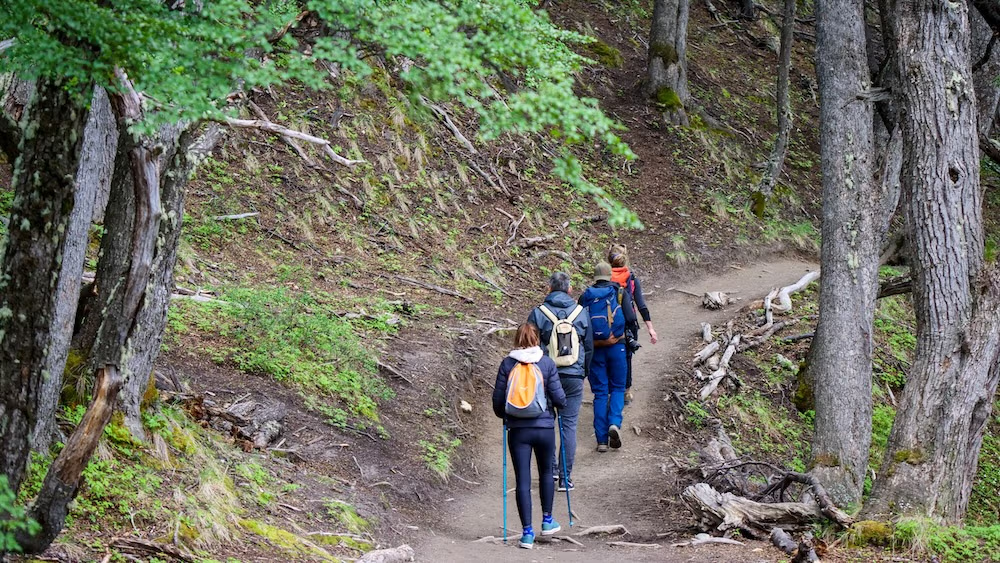
Your “choose-your-own-adventure” game plan (based on fitness level)
| Your current situation | Start time | Pace strategy | Goal | Notes |
|---|---|---|---|---|
| Weekend walker / casual cardio | Early (seriously) | Slow + steady, lots of micro-breaks | Make it to the top safely | Trekking poles help a lot here. |
| Regular cardio, not much hiking | Early | Conservative early pace | Save legs for final climb | Watch feet and knees on descent. |
| Hikes monthly with elevation | Normal early | Even pacing | Enjoy + summit | You’ll still feel the last climb. |
| Frequent hiker / strong legs | Early-ish | Steady | Add viewpoints, more photos | Conditions still decide the mood. |
The recurring theme: start early and protect your energy for the last section.
Training for Laguna de los Tres (without becoming a different person)
You can absolutely do this hike “as you are” if you’re moderately active. But if you want it to feel less like a cinematic struggle montage, a little training goes a long way.
The goal of training is not becoming fast
The goal is:
- being able to move steadily for hours,
- being able to climb late in the day,
- and being able to descend without your knees sending legal threats.
The minimum effective training ingredients
- 2–3 cardio sessions/week (walking briskly, hiking, cycling, jogging—anything steady)
- 1–2 strength sessions/week (legs + core)
- 1 longer walk/hike each week (build time on feet)
Strength moves that translate directly to the trail
- step-ups
- step-downs (downhill insurance)
- squats (bodyweight counts)
- lunges
- calf raises
- dead-bug / planks (core stability matters on rocks)
The practical training matrix
| Time until your hike | If you’re starting from “not much” | If you’re already active | The key win |
|---|---|---|---|
| 2 weeks | Walk 4–5x/week, add stairs 2x | Add one longer hike + stairs | Adapt feet + joints |
| 4 weeks | Build to 2–3 hour weekend hike | Add hills + leg strength | Uphill tolerance |
| 8 weeks | Build to 3–4 hour hikes + strength | Simulate long day with elevation | Confidence + durability |
A simple 4-week plan (repeatable, non-heroic)
| Day | Session | Notes |
|---|---|---|
| Mon | 30–45 min brisk walk | Easy pace, consistency |
| Tue | Strength (30–40 min) | Step-ups, squats, lunges, core |
| Wed | Hills or stairs (20–35 min) | Slow repeats, recover between |
| Thu | Rest or easy walk | Keep it gentle |
| Fri | Strength (20–30 min) | Emphasize step-downs + calves |
| Sat | Long walk/hike (2–4 hours) | Add time gradually |
| Sun | Recovery walk + mobility | Ankles, calves, hips |
If you only do one thing: do stairs once a week and do one long walk weekly. That alone changes everything.
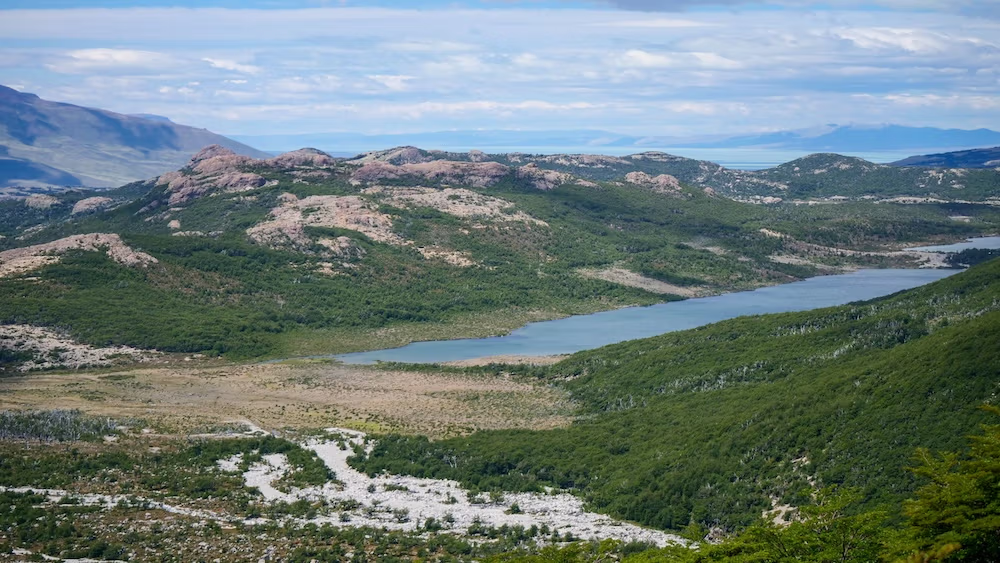
Pacing: the skill that saves the most people
This hike punishes one specific personality trait: starting too fast because you feel fine.
The first half is seductive. It’s scenic. You’re excited. Your legs are fresh. You’re thinking about the summit like it’s inevitable.
Then the final climb happens and you realize you spent your entire energy budget buying souvenirs in the first two hours.
The pacing rules we wish we’d tattooed on our foreheads
- Start slower than you want.
- Take short breaks early, not long collapses late.
- Eat before you’re hungry.
- Turn around if you’re behind schedule.
- Save your “push” mindset for the final section.
The talk-test guide (simple and effective)
- If you can speak in full sentences: great.
- If you can speak in short phrases: okay, but don’t live there all day.
- If you can only make wind noises and regret: slow down.
Patagonia will still be there if you hike like a tortoise. Fitz Roy is not impressed by your suffering. Fitz Roy is impressed by your ability to arrive before the weather tantrums begin.
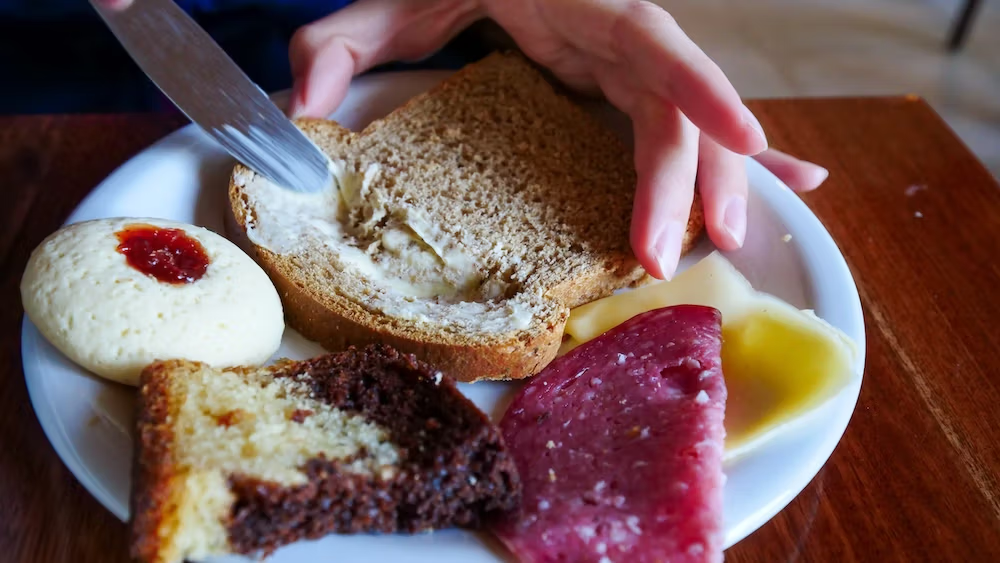
Food and water: the underrated fitness multiplier
We’re going to say something controversial:
A lot of “fitness problems” on this hike are actually “fueling problems.”
If you don’t eat enough, you bonk. If you don’t drink enough, you feel weak. If you don’t replace salts, you get headaches and weird leg cramps and begin contemplating whether rocks are edible.
How to fuel like a functional human
- Eat a solid breakfast.
- Bring snacks you will actually eat (not aspirational snacks).
- Eat every 60–90 minutes.
- Bring a real lunch, not just emotional support candy.
We used lunchboxes in town because we didn’t have a kitchen setup. It worked brilliantly. The only mistake was our timing: we started nibbling too early and then had fewer “real calories” available later.
Fueling table: what to pack
| Category | Examples | Why it helps |
|---|---|---|
| Quick carbs | bananas, trail mix, bars, cookies | fast energy, morale boost |
| Real lunch | sandwich, empanadas, wraps | prevents “candy-fueled despair” |
| Salts | electrolytes, salty snacks | prevents headaches/cramps |
| Emergency | extra bar, chocolate | top-of-hill wind bunker insurance |
Water reality
Bring enough water for a long day. Exact liters depend on heat, wind, and you as a person, but the core idea is simple: don’t show up under-watered and try to brute-force it with willpower.
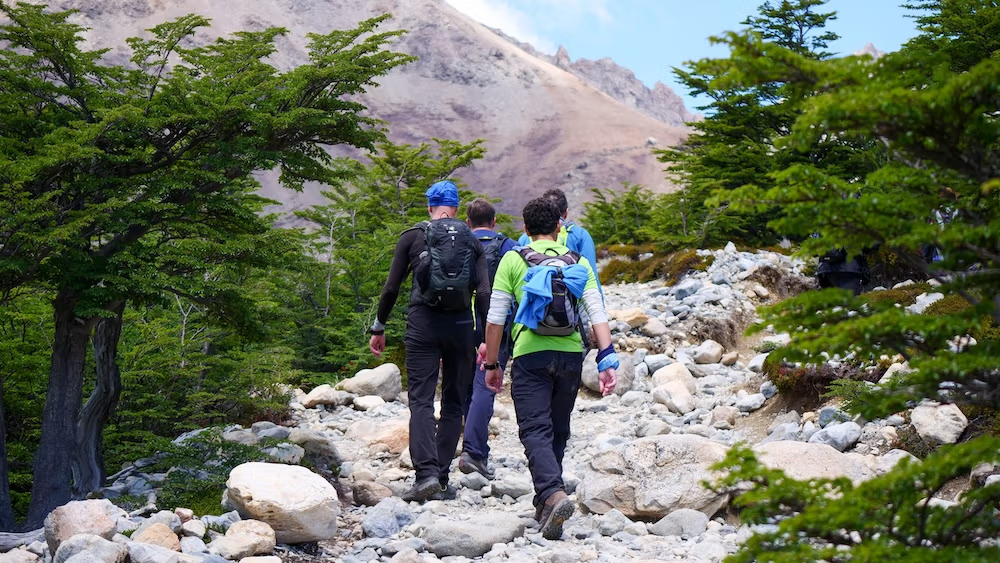
Gear: what matters, what doesn’t, and what we regretted
You don’t need a gear museum. You do need a few things that make a huge difference.
Gear that genuinely matters
- Good footwear (trail runners or hikers with grip)
- Layers (wind + cold + sun can rotate quickly)
- Rain shell / wind shell (Patagonia’s favorite joke is “surprise wind”)
- Sun protection (yes, even when it’s cold)
- Headlamp (because “we’ll be back before dark” is a spell that doesn’t always work)
- Food + water
- A small first-aid / blister kit
- Offline map (because signals can be unreliable)
Also: El Chaltén is not the place to assume your phone will magically save you. We had stretches with basically no data and flaky Wi-Fi around town, which is funny until you’re relying on it for navigation. Download the map, make it idiot-proof, and then you can be a happy little trail gremlin in peace.
The one item we wished we had
Trekking poles.
On steep, loose terrain, poles reduce load on knees, improve balance, and make the descent feel less like a controlled fall with photos.
Gear decision matrix
| Condition | Must-haves | Nice-to-haves |
|---|---|---|
| Windy | wind shell, warm layer, secure hat | buff, gloves |
| Hot/sunny | water, sunscreen, hat | electrolyte tablets |
| Shoulder season | traction awareness, warm layers, shell | microspikes (if icy), poles |
| Long descent knees | poles, supportive shoes | knee sleeve |
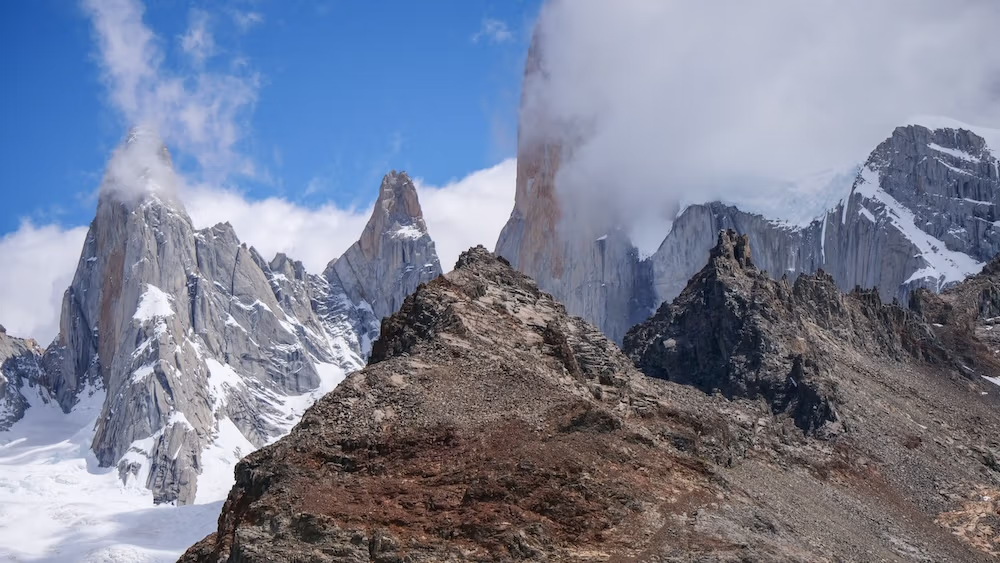
Weather: the Patagonia wildcard that doesn’t care about your training plan
You can be fit and still have a rough day if the wind is out for blood.
Weather reality checklist
- Morning conditions in town can be totally different from conditions near the laguna.
- Wind exposure increases as you climb.
- Visibility can change quickly.
- Cold plus wind makes everything feel harder.
The honest version: you don’t “beat” Patagonia. You collaborate with it.
Sometimes collaboration means a rest day, a café day, or a scenic shorter hike that doesn’t involve getting sandblasted at altitude.
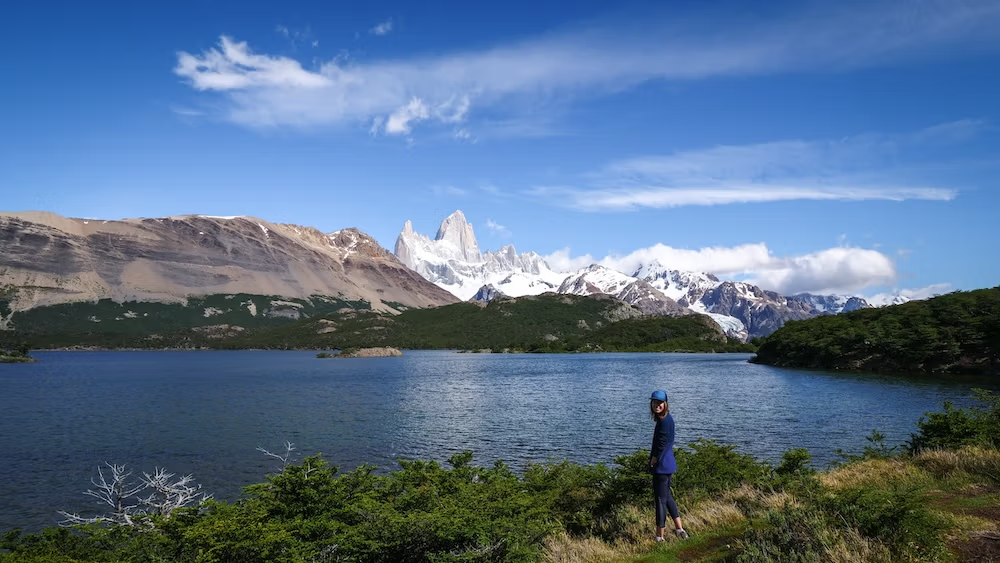
Trail milestones that make the day feel manageable (and keep you from spiraling)
One of the sneakiest reasons this hike feels intimidating is the length. “All-day hike” can sound like a vague threat. In reality, the trail breaks into recognizable milestones that make pacing easier—because your brain loves small victories.
| Milestone | What it means | What it feels like | Fitness note |
|---|---|---|---|
| Early viewpoint zone | You’ve started climbing and warmed up | “Okay, legs, we’re doing this.” | Don’t go fast just because you feel good. |
| Laguna Capri decision point | A natural “checkpoint” to assess | The moment Fitz Roy starts flirting with you | If you’re behind schedule here, be honest. |
| Forest-middle grind | The long steady section | Meditative… until you remember the final climb exists | Eat before you’re hungry. |
| Camp Poincenot area | The “almost there” zone | Excitement + mild dread | This is where people realize the last bit is real. |
| Base of the final climb | The entrance to the boss fight | “Who designed this staircase of rocks?” | Micro-breaks, short steps, steady breathing. |
| Laguna de los Tres | You made it | Windy, glorious, emotionally confusing | Layer up fast; snacks become urgent. |
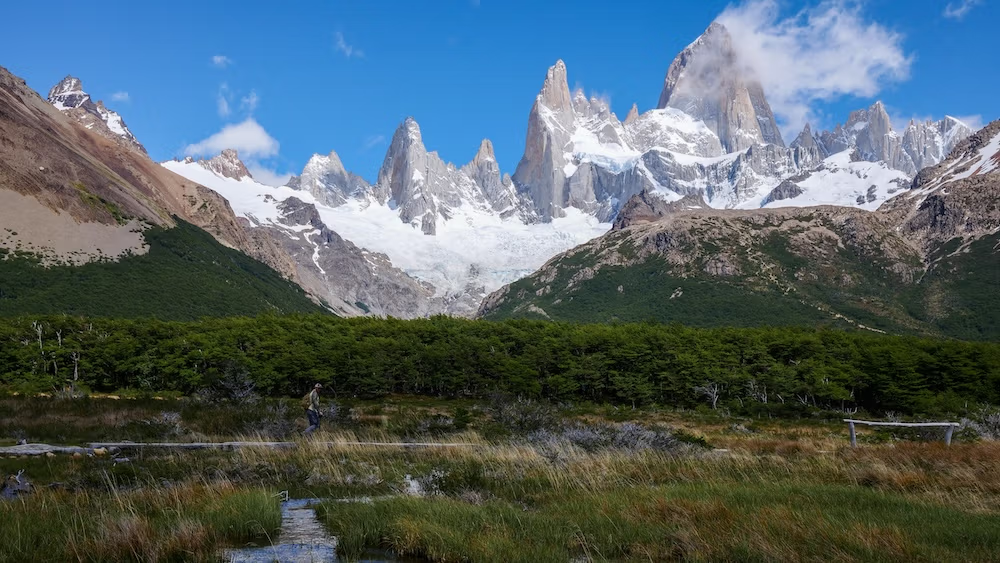
That Laguna Capri checkpoint matters for the tone of this whole article. At Laguna Capri we had a very clear fork-in-the-road moment: take the win and head back (still an epic day), or commit to Laguna de los Tres knowing we’d been warned about the final kilometre being brutal. We looked at Fitz Roy sitting there like a CGI mountain prop, the weather was holding, daylight was on our side… and it felt way too early. So we went for it.
It’s where we had the classic internal debate: Do we turn back and take the win, or do we commit to the full Fitz Roy experience? And Fitz Roy, being Fitz Roy, kind of calls your name in a way that makes rational decisions feel optional.
The “final kilometer” technique (how to survive the steep section without unraveling)
The last climb is where people get dramatic—not because it’s impossible, but because it’s relentless. The terrain is rocky, the grade is steep, and the wind can turn the whole thing into an outdoor exfoliation treatment.
Here’s what actually helps:
Make it small
Don’t think “one more kilometer.” Think:
- one more rock cluster
- one more bend
- one more breath cycle
- one more minute
Use the “two gears” method
- Gear 1: slow, steady steps for 2–5 minutes
- Gear 2: 15–30 seconds of standing still, breathing, and letting your legs stop yelling
This is the “trekking poles would’ve been nice” section—because poles turn Gear 2 into a real rest instead of a wobbly squat over loose rock.
Protect your descent body
The summit is not the finish line. You still have a long way home, and your knees will remember everything you do up there. If you sprint the final climb and arrive at the top in a puddle, the descent becomes a second boss fight.
Common problems on Laguna de los Tres (and the simple fixes that actually work)
This hike has a handful of predictable “failure modes.” The good news is that most of them are fixable with boring, practical actions—usually involving food, water, pacing, or layers.
| Problem | What it feels like | Likely cause | Fix you can do today |
|---|---|---|---|
| Bonk (energy crash) | sudden weakness, grumpiness, brain fog | not enough carbs | eat real calories now; don’t “wait until lunch” |
| Headache | dull pressure, irritability | dehydration / sun / wind | drink + electrolytes + hat + slow down |
| Leg cramps | tightening, twitching | salts + fatigue | electrolytes + salty snack + ease pace |
| Blisters / hot spots | burning rub, pain with steps | socks/shoes friction | stop early, tape, dry, adjust socks |
| Knee pain on descent | stabbing/soreness | downhill load + pace | shorten stride, use poles, slow down |
| Overheating | sweating, nausea | too many layers | vent early, unzip, adjust before you cook |
| Wind chill misery | sudden cold, shivering | exposed + sweaty shirt | layer up immediately at top, keep shell handy |
| “I feel unsafe” | shaky confidence, poor footing | fatigue + terrain + weather | pause, eat, drink, reassess; turn back if needed |
We hit a few of these lightly (hello, early-snack gremlins), and the wind at the top turned “admire the view” into “hide behind a rock.”
Build an El Chaltén itinerary that respects Laguna de los Tres (because your legs have feelings)
If you’re basing a trip around hiking, the smartest move isn’t more ambition—it’s buffer days. Patagonia has weather moods. Your body has recovery needs. And the hike itself can be a “whole trip moment,” not something you squeeze between brunch and another 20 km.
Here are realistic ways to structure it:
The classic 3-day setup (best for most people)
| Day | Plan | Why it works |
|---|---|---|
| Day 1 | Short hike + viewpoints (Cóndores/Águilas vibes) | loosen legs, test weather, don’t overdo it |
| Day 2 | Laguna de los Tres | big day, main event |
| Day 3 | Recovery day or short waterfall walk | your body becomes a better person again |
This isn’t theoretical—we did the Lookout of the Condor and it’s only about a kilometre, but it’s steep enough to give your legs a polite warning about what Fitz Roy will do to you tomorrow. It’s the perfect “shake out the travel stiffness, see if your body remembers what stairs are” hike—and the views for the effort are borderline unfair.
The “we’re eager but not indestructible” 5–6 day rhythm
| Type of day | Examples | The principle |
|---|---|---|
| Big hike | Laguna de los Tres | one major suffer day |
| Recovery day | town wander, café day, laundry, naps | let legs rebuild |
| Medium hike | Laguna Torre (often feels steady) | more distance, less brutality |
| Weather flex | anything that fits conditions | Patagonia decides sometimes |
This is basically how our time played out: big Fitz Roy day, recovery, a weather-forced café day, then another long hike that felt more comfortable. It’s not a weakness. It’s a strategy.
Route options and variations (and why most people keep it simple)
Most first-timers do the classic out-and-back from town. There are also variations people discuss (like starting via El Pilar and connecting routes), but for a first attempt—especially if fitness is your big question—simple is smart.
You can still make the day feel personalized:
- add a viewpoint like Laguna Capri as a milestone,
- take longer breaks,
- or commit to the full push if you’re feeling good and the weather is cooperating.
The route isn’t the hard part. The route is the stage. The hard part is the final climb and your ability to manage yourself for the whole day.
The “turn-around time” rule (the decision that saves trips)
Here’s the most underrated hiking skill: knowing when to turn around.
Set a turn-around time before you start, based on:
- daylight,
- weather forecast,
- your pace,
- and how you’re feeling.
If you reach the midpoint late, you have a choice:
- push on and risk returning exhausted and stressed,
- or turn back and keep the trip safe and enjoyable.
Turning around is not failure. It’s evidence you have a functioning frontal lobe.
How to make Laguna de los Tres feel easier (without changing the mountain)
1) Start early
The hike doesn’t shrink, but the day feels bigger.
2) Use micro-breaks
Short breaks prevent long collapses.
3) Save your legs for the end
That means conservative pacing early.
4) Bring poles if you’re knee-sensitive
Especially for descent.
5) Eat more than you think
Under-fueling turns “hard” into “why am I like this.”
6) Give yourself a buffer day afterward
If you plan to do Laguna de los Tres and then do another massive hike the next morning, you may discover your body’s secret talent: mutiny.
Our trip had a built-in lesson: after the big Fitz Roy day, we needed recovery. And Patagonia also gave us weather days that forced rest whether we wanted it or not. That’s normal. Plan for it.
The honest “fitness answer” (the one most people actually want)
So… how fit do you really need to be?
If you can:
- comfortably walk for 3–4 hours,
- handle stairs/hills for 45–60 minutes (with breaks),
- and finish a long day without your knees or feet turning into angry lawsuit paperwork,
…you can probably hike Laguna de los Tres with a good plan.
If you’re less conditioned than that, you still might do it—but your success will depend on:
- starting early,
- pacing slowly,
- fueling well,
- using poles,
- and knowing when to turn around.
And if you’re currently in “foodie mode” and worried you’re not “hiker-shaped” enough, we have lived this:
You don’t need a new identity. You need a realistic day plan.
We’ll also just say it plainly because it’s the whole point of this post: we were out of our element, out of our league, and out of our fitness level… and we’re still glad we pushed. The views at the end were the most impressive of our week in El Chaltén, and that last kilometre genuinely taught us what “hiking fitness” actually means in real life.
Laguna de los Tres will challenge you. It will also reward you. And when you get back to town, everything tastes better because you earned it—especially if you finish the day as we did: hungry, wind-tousled, and deeply proud that we did the thing.
Case in point: our post-hike celebration meal was at a tiny spot called Senderos, tucked near the bus terminal inside a high-end guesthouse with only a handful of tables—so small we felt like we’d accidentally wandered into someone’s private dinner party. I went for a blue cheese risotto with walnuts and sun-dried tomatoes, Audrey crushed a hearty lentil casserole (lentejas), and we split a full bottle of Syrah because even we need a break from Malbec sometimes. Then we committed fully to the “earned it” lifestyle with two desserts… and basically waddled back and passed out.
Plan your day like a professional (even if you’re secretly a snack goblin)
| Phase | What to do | The purpose |
|---|---|---|
| Night before | Pack snacks, layers, offline map | Reduce morning chaos |
| Morning | Eat, fill water, start early | Protect energy + daylight |
| First 2 hours | Slow pace, small breaks | Avoid early burnout |
| Mid-hike | Eat regularly, adjust layers | Keep energy stable |
| Final climb | Short steps, steady breathing | Efficiency > suffering |
| Summit | Layer up, eat, photos fast | Wind makes lingering hard |
| Descent | Poles, careful footing, patience | Save knees + reduce falls |
| Back in town | Hydrate, big meal, rest | Tomorrow-you will thank you |
FAQ: Laguna de los Tres Fitness, Training, and Real-World “Can I Do This?” Questions
Do I need to be “in shape” to hike Laguna de los Tres?
Yes… but not in the gym-poster way. You need endurance for a long day, enough leg strength for a steep final climb, and the ability to descend without your knees filing complaints. If you’re moderately active and plan smart, it’s very doable.
Is Laguna de los Tres harder than Laguna Torre?
Absolutely. Laguna Torre is long but tends to feel more consistent. Laguna de los Tres has that final climb that turns the last part into a very personal conversation with gravity.
What’s the hardest part of the hike?
The final steep section before the laguna. It’s rocky, sustained, and often windy. It also arrives after you’ve already been hiking for hours, which is why it hits so hard.
How long does the hike take for an average person?
Many people take about 8–10 hours round trip, depending on pace, breaks, conditions, and how long you stay at the top.
Do I need trekking poles?
You don’t need them, but if your knees are sensitive, you’re worried about balance on loose rocks, or you want the descent to feel less punishing, poles are a major advantage.
Can I do it if I don’t hike often but I do cardio?
Probably, but your biggest surprise may be feet and knees rather than lungs. Cardio helps, but time-on-feet and downhill durability are the sneaky parts of hiking fitness.
Can beginners hike Laguna de los Tres?
Some beginners can, especially if they’re generally active and start early. But “beginner” who rarely walks long distances and has no hill experience should consider training first or choosing a shorter hike that day.
What’s the best training if I have only two weeks?
Walk often, do stairs once or twice a week, and do one longer walk each weekend. You’re trying to condition feet, joints, and confidence—not reinvent your life.
What should I eat and drink on the hike?
Eat a real breakfast, snack regularly, and bring a proper lunch. Drink steadily. Under-fueling and under-hydrating are common reasons people feel weak or miserable even when they’re “fit.”
What time should I start?
Earlier than your inner sleepy goblin wants. Starting early gives you more daylight, more flexibility with breaks, and a better buffer if weather shifts or you move slower than expected.
What if the weather looks bad?
Patagonia doesn’t reward stubbornness. If wind, rain, or visibility looks sketchy, choose another hike or a rest day. The mountain will still be there when conditions are friendlier.
Is it safe to hike without a guide?
Many people hike independently, but you should still treat it seriously: carry layers, food, water, a headlamp, and an offline map, and don’t rely on cell signal. If you’re unsure, a guide can add confidence.
Can I do Laguna de los Tres and another big hike the next day?
Some people can. Many people discover the next day feels like walking in wet cement. If it’s your first big hike in El Chaltén, build in a buffer day afterward.
What’s the biggest mistake people make on this hike?
Starting too fast. The first half feels manageable, so people spend their energy early and suffer on the final climb. Slow starts make strong finishes.
What’s the simplest way to make the hike easier?
Start early, pace conservatively, eat more than you think, use poles for the descent, and treat the final climb as the main event you’re saving energy for.
Project 23 Argentina: This guide is also available in Spanish. [Lea la versión en castellano: ¿Qué tan en forma tenés que estar realmente para hacer Laguna de los Tres? (La pura verdad)]