
El Chaltén feels oddly intentional—like it was placed here with purpose. A handful of streets, bright little buildings, and then boom: Fitz Roy towering overhead, perfectly framed, as if the town exists mainly to prove a point. Which, as it turns out… is closer to the truth than most people realize.
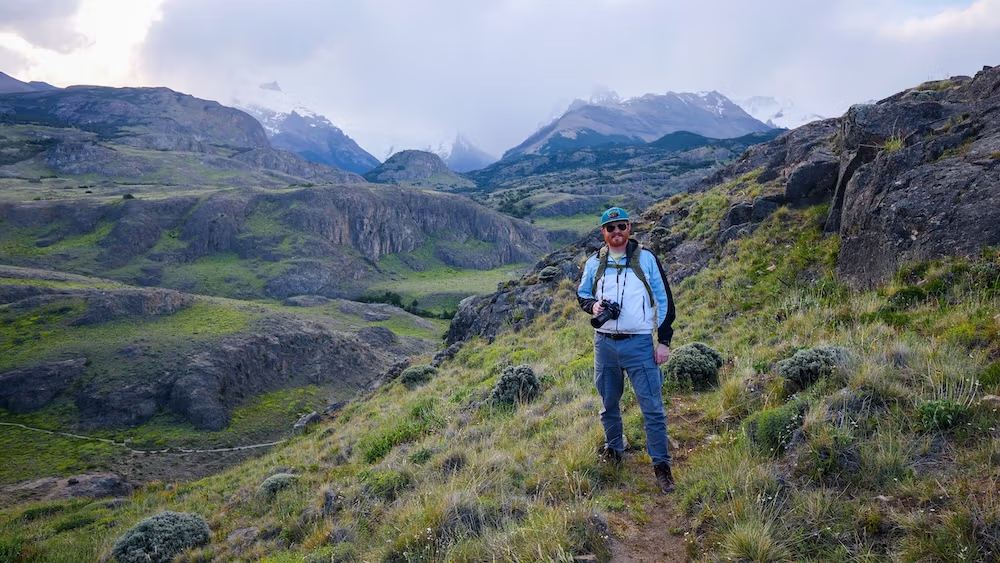
And here’s the twist most visitors don’t expect (we definitely didn’t, at first): El Chaltén isn’t an ancient frontier village that slowly “became” a trekking hub. It’s a deliberately founded place. A modern town with a very specific reason for existing… and only later did it grow into Patagonia’s most famous hiking base.
Audrey and I arrived in full “we’ll just wing it” mode—dreaming of pastries, pizza, and the kind of post-hike meals that make your hiking pants quietly negotiate a separation agreement. Then reality gently (and repeatedly) reminded us: this is a remote corner of the world. Groceries can be limited and pricey, internet can be… aspirational, and the wind has strong opinions about your itinerary. But somehow, that contrast is exactly why El Chaltén works. It’s a town built to be a staging ground—first for sovereignty, later for trekking dreams.
This is the story of how a geopolitical dot on the map turned into Patagonia’s “hiking town”… and how that history still shows up in the most practical parts of your trip today.
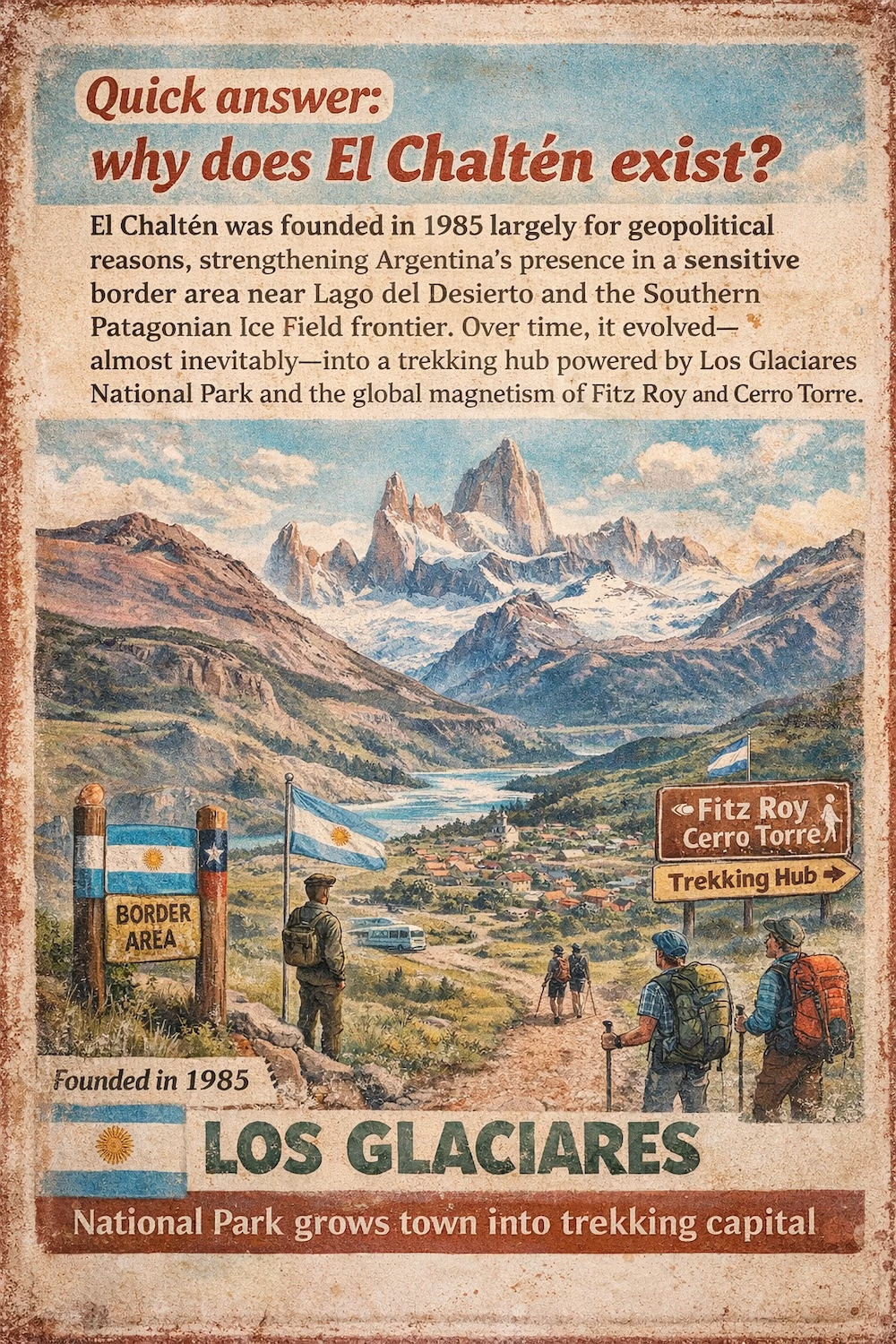
Quick answer: why does El Chaltén exist?
El Chaltén was founded in 1985 largely for geopolitical reasons, strengthening Argentina’s presence in a sensitive border area near Lago del Desierto and the Southern Patagonian Ice Field frontier. Over time, it evolved—almost inevitably—into a trekking hub powered by Los Glaciares National Park and the global magnetism of Fitz Roy and Cerro Torre.
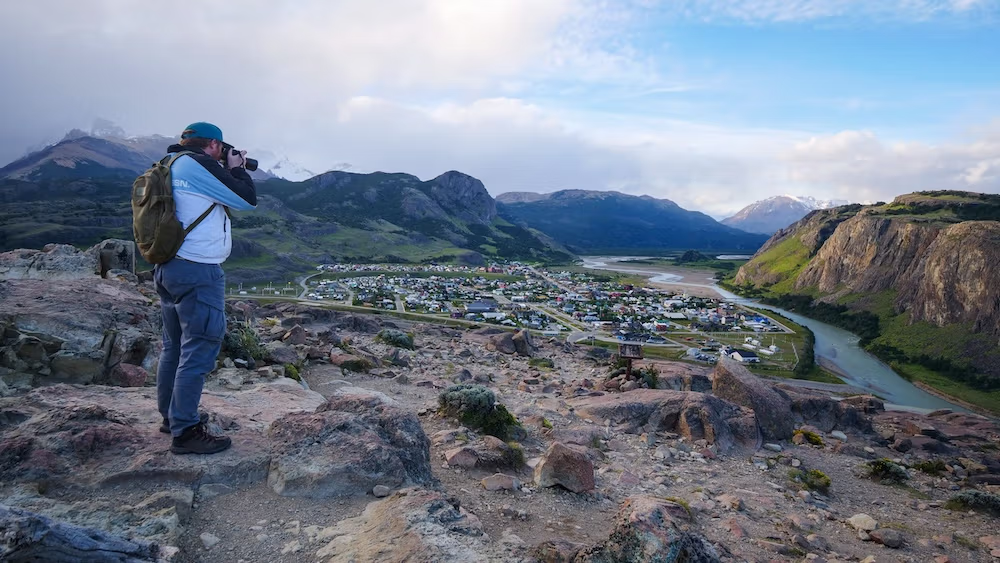
A first-night sunset that explains everything
Audrey and I rolled into town after the bus ride from El Calafate and immediately did what all serious adventurers do: we panicked about groceries. The shops felt small, the selection felt limited, and the prices had that quiet Patagonian confidence of, “Yes, that apple really is super expensive. Welcome.” El Chaltén teaches you—fast—that remoteness has a budget line.
Then we had a choice:
- Be responsible, unpack, hydrate, stretch, go to bed.
- Sprint up a steep hill to chase a sunset like two caffeinated meerkats.
We chose option 2, obviously.
Mirador de los Cóndores is close to town—short in distance, steep in attitude. And as we climbed, the town revealed itself in layers: tiny streets, colorful buildings, a little plaza, and that feeling you get when you can’t decide if a place is charming or slightly absurd… until you remember the mountains behind it are legendary, and suddenly the absurdity feels like the point.
At the top, the view is basically a thesis statement: El Chaltén is not “a town with hikes nearby.” It’s a base camp with a mayor. A settlement positioned to face the mountains, serve the people who come to walk into them, and—this is where history enters the chat—assert presence in a place where presence mattered.
That first-night panorama is a reminder that geography isn’t neutral. Towns don’t just happen. Sometimes they are placed.
Before the town: “Chaltén” and the world before borders
Long before anyone argued over maps, this region was part of Patagonia’s deep human timeline—seasonal movement, travel corridors, and a landscape that shaped people as much as people shaped the landscape. The “empty wilderness” narrative is a modern invention, not a fact. Patagonia has always been lived-in, known, named, and navigated—just not always in the ways modern paperwork recognizes.
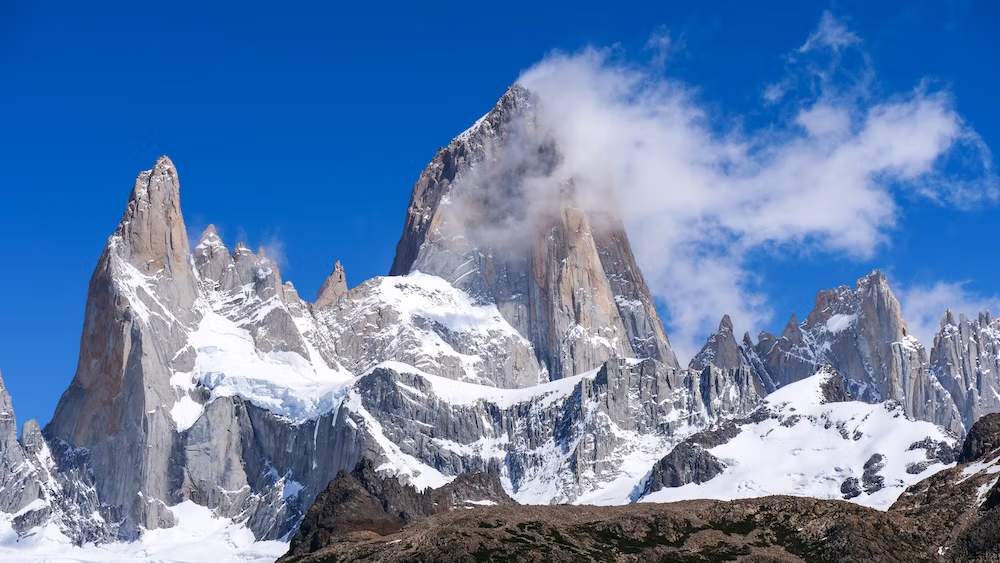
The name “Chaltén” is usually explained as having Indigenous roots, and in popular retellings it’s often glossed as “smoking mountain”—a nod to the way Fitz Roy frequently wears a cloud cap like it’s flexing. The first time we saw that peak with a swirling halo of cloud, we understood why the phrase stuck. It looks like a mountain doing special effects.
But it’s also worth being honest: place-name stories often get simplified over time. Like many Indigenous toponyms filtered through explorers, translators, and later tourism narratives, the tidy one-line translation can be more complicated than the postcard version. Some sources also connect the name to ideas like “sacred mountain,” or emphasize that the word may have been used more broadly for peaks, not as a single tidy label.
Either way, the meaning is a clue: the mountain came first. The name came first. The town came much later.
Explorers, names, and the moment Fitz Roy entered the map
Before El Chaltén existed, the mountains were already making noise in the world’s imagination—through exploration accounts, surveys, and the stubborn habit of naming things.
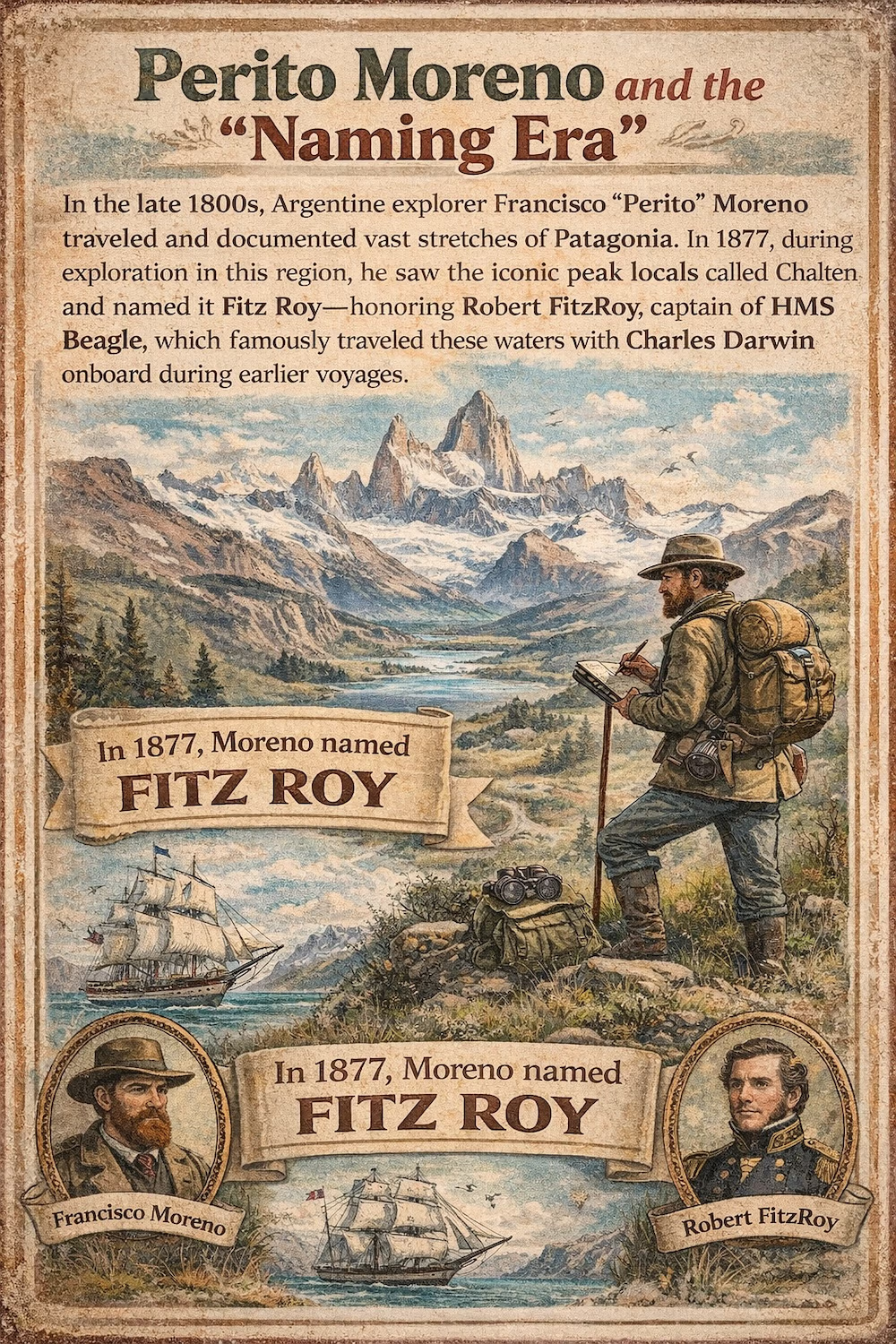
Perito Moreno and the “naming era”
In the late 1800s, Argentine explorer Francisco “Perito” Moreno traveled and documented vast stretches of Patagonia. In 1877, during exploration in this region, he saw the iconic peak locals called Chaltén and named it Fitz Roy—honoring Robert FitzRoy, captain of HMS Beagle, which famously traveled these waters with Charles Darwin onboard during earlier voyages.
This is one of those details that’s both romantic and slightly ridiculous: a mountain with a name rooted in Indigenous cosmology ends up carrying the surname of a British naval officer because the 19th century was basically “the paperwork era,” and maps were the ultimate flex.
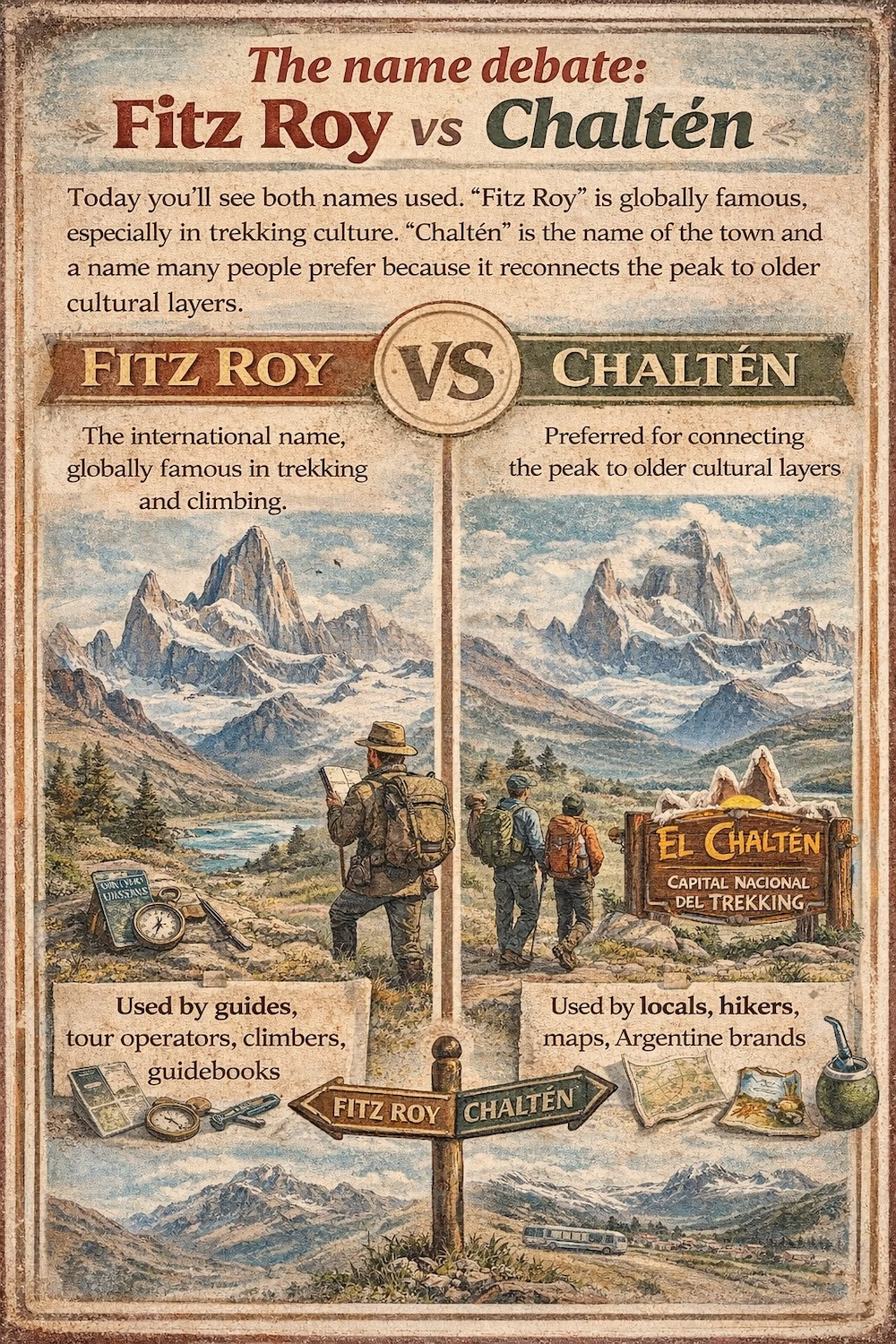
The name debate: Fitz Roy vs Chaltén
Today you’ll see both names used. “Fitz Roy” is globally famous, especially in trekking culture. “Chaltén” is the name of the town and a name many people prefer because it reconnects the peak to older cultural layers. If you’ve ever wondered why you keep hearing two names for the same dramatic spike in the sky: welcome to Patagonia, where the scenery is straightforward and the history is not.
Why this matters for El Chaltén
Naming is a kind of claiming. And while names aren’t borders, the act of mapping, naming, and repeatedly returning to a place adds up. It lays groundwork for later decisions: parks, policies, roads, settlements. El Chaltén didn’t appear from nowhere—it appeared at the end of a long chain of “this place matters” moments.
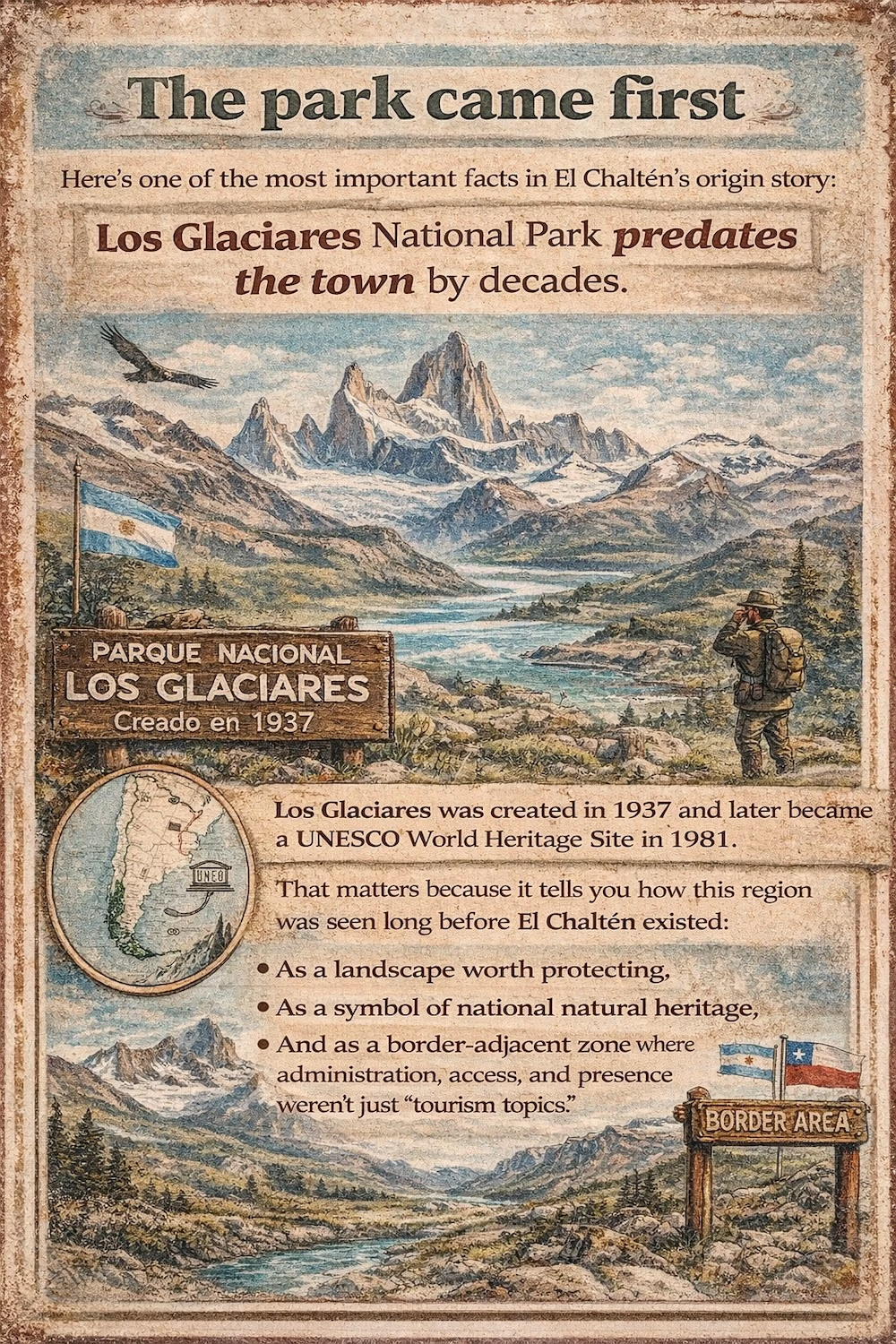
The park came first
Here’s one of the most important facts in El Chaltén’s origin story: Los Glaciares National Park predates the town by decades.
Los Glaciares was created in 1937 and later became a UNESCO World Heritage Site in 1981. That matters because it tells you how this region was seen long before El Chaltén existed:
- as a landscape worth protecting,
- as a symbol of national natural heritage,
- and as a border-adjacent zone where administration, access, and presence weren’t just “tourism topics.”
The park also creates a weird, uniquely El Chaltén situation: you’re in a town that lives in the orbit of a protected area. That influences everything—from where development can happen, to how trails are maintained, to why rules and signage feel unusually “official” for a place that also sells you artisanal brownies the size of a small pillow.
It also helps explain why El Chaltén feels so different from El Calafate. Calafate has the “tour gateway” energy. El Chaltén has the “field station” energy. It feels like a place designed to support movement outward—into valleys, forests, glaciers, and rock faces—rather than a place designed to keep you entertained indoors.
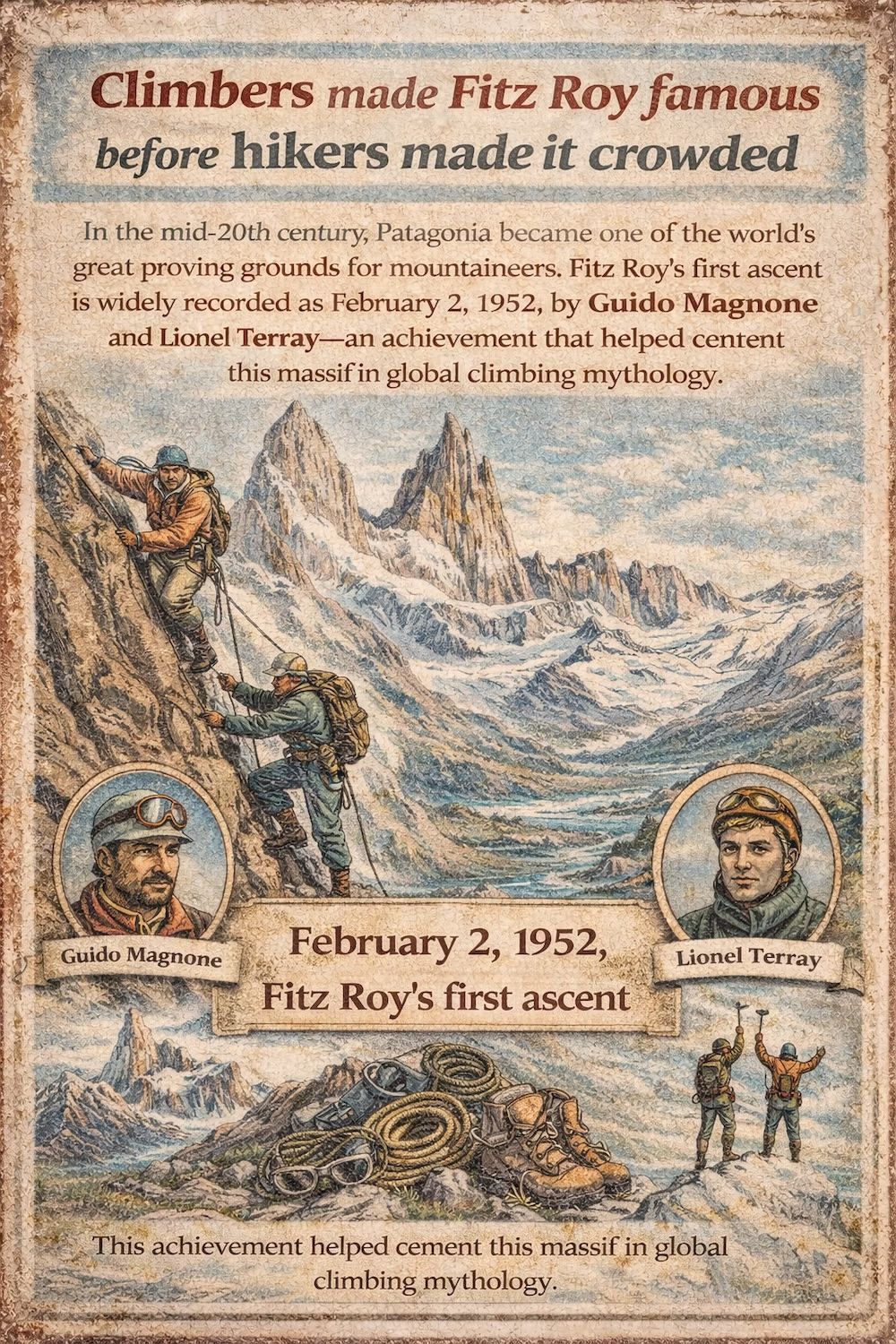
Climbers made Fitz Roy famous before hikers made it crowded
Fitz Roy wasn’t made famous by Instagram. It was made famous by obsession.
In the mid-20th century, Patagonia became one of the world’s great proving grounds for mountaineers. Fitz Roy’s first ascent is widely recorded as February 2, 1952, by Guido Magnone and Lionel Terray—an achievement that helped cement this massif in global climbing mythology.
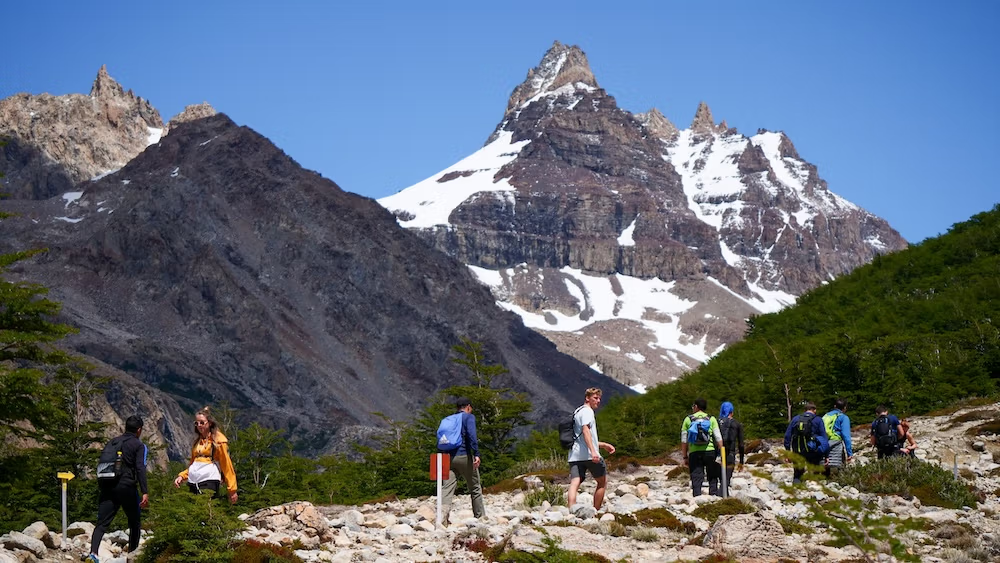
And once the climbing world started telling stories about these peaks, a few things happened:
- More climbers came.
- More guidebooks got written.
- More photos circulated.
- The “Patagonia mystique” grew.
- And eventually, a broader set of travelers began arriving—not to climb vertical granite, but to walk toward it and stare in awe.
If you want to understand why El Chaltén eventually became “the hiking town,” start here:
- The mountains were already legendary.
- The place already had a story that drew outsiders.
- What it lacked was a settlement that could scale access and support.
So when El Chaltén shows up in 1985, it isn’t appearing in a cultural vacuum. The peaks already have a global aura; the park already has a legal framework; and the border already has tension. El Chaltén is the match that lands on the kindling.
The border pressure cooker: Lago del Desierto and the ice field frontier
If you come to El Chaltén expecting pure nature vibes, the border history can feel like a plot twist. But it’s central to why the town exists.
Lago del Desierto: the dispute behind the scenery
The Lago del Desierto area—roughly in the frontier sector between boundary post 62 and Mount Fitz Roy—became a long-running Argentina–Chile boundary dispute. One of the reasons the region stayed sensitive is that the terrain is hard to survey, hard to access, and full of glaciers, valleys, and watersheds that don’t politely match neat lines on a map.
This wasn’t just a debate in distant offices. In the 1960s, tensions in the region escalated into on-the-ground confrontations (and different national accounts describe events with different emphases, which is normal in border history). The takeaway for our purposes is simple: the area wasn’t just remote—it was politically charged.
1994: a big legal turning point
In 1994, an international arbitral tribunal issued a decision concerning the frontier line between boundary post 62 and Mount Fitz Roy. This is often referred to as the Laguna del Desierto arbitration.
In plain terms, the tribunal’s decision helped resolve how the frontier line should be understood in that contested sector. A follow-up decision in 1995 dealt with requests for revision/interpretation and contributed to closing the case.
The ice field frontier: when borders melt (literally)
Beyond Lago del Desierto, the Southern Patagonian Ice Field frontier has historically been complex to demarcate. Ice fields move, melt, reveal, conceal—nature is not a static survey marker.
In 1998, Argentina and Chile signed an agreement to “precise the course” of the boundary from Monte Fitz Roy toward Cerro Daudet—part of the longer process of dealing with difficult-to-define frontier segments in the ice field region.
The big takeaway (without the geopolitics headache)
You don’t need to be a border scholar to understand the logic. In contested or sensitive areas, states often emphasize presence: infrastructure, administration, people, permanence.
And El Chaltén is permanence made visible.
1985: the “town as flag” moment
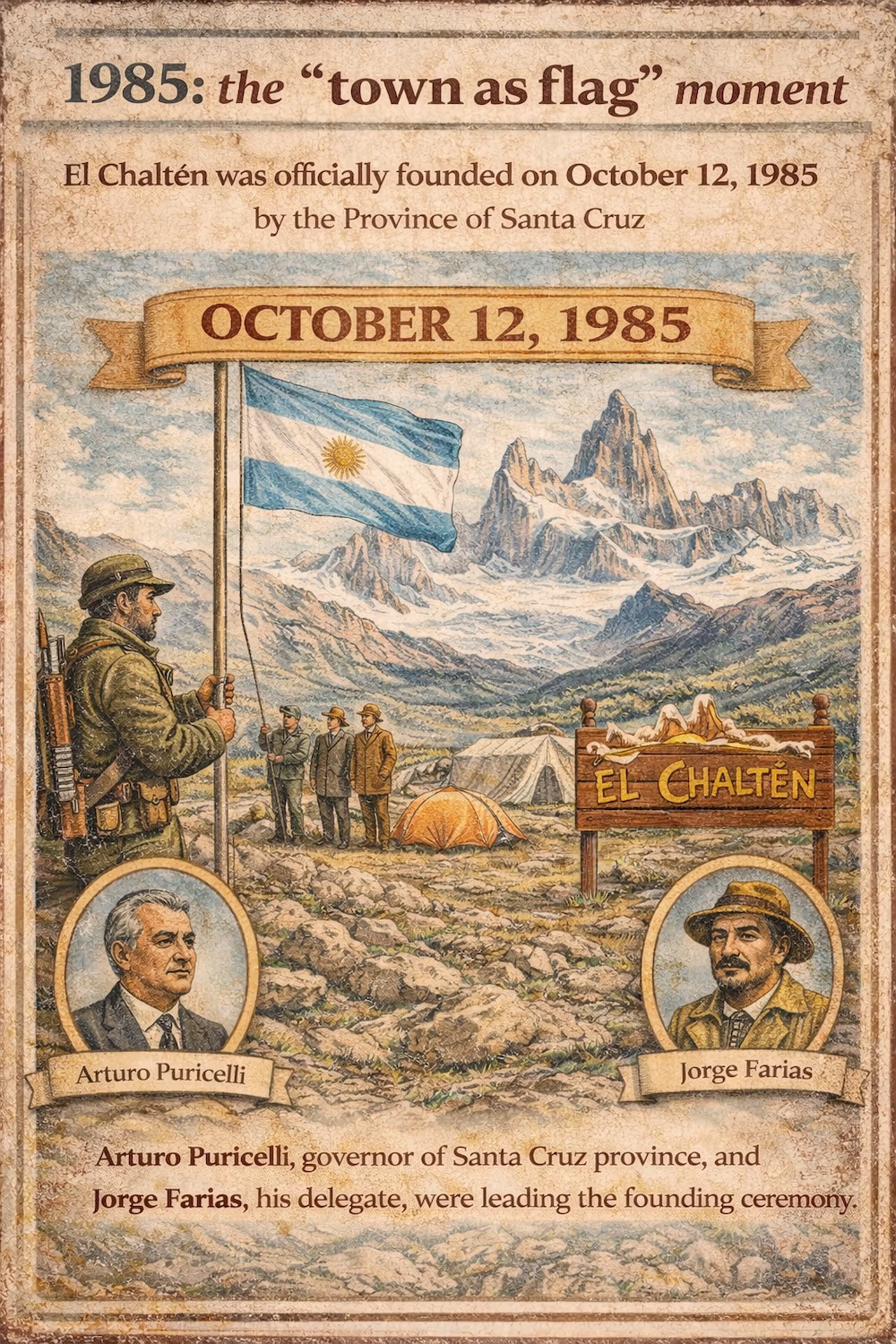
El Chaltén was officially founded on October 12, 1985, by the Province of Santa Cruz. The founding is frequently described—by legal listings and local histories—as a geopolitical decision tied to the border context with Chile, especially around Lago del Desierto and the ice field frontier.
This is the part that surprises people: El Chaltén is one of Argentina’s youngest towns. It’s not a centuries-old settlement that slowly drifted into tourism. It’s a modern foundation with a strategic heartbeat.
“Okay, but what does that actually mean?”
It means the original “purpose” wasn’t to host hikers with sore knees and strong opinions about merino wool.
It was to create a settled presence. A town—however small—signals administration and continuity. It helps anchor services, roads, land use, and the human layer of territorial reality.
The legal smoking gun: land transferred from the park system
Here’s where things get wonderfully specific: a national law authorized transferring land from the national parks administration to Santa Cruz—about 135 hectares within the Reserve Zone Viedma—to establish El Chaltén. The town is literally carved into the administrative space of a protected area.
That fact is everything.
It shows El Chaltén wasn’t casual, informal growth. It required formal coordination at the national level, intertwined with protected area management. El Chaltén exists because the state made room for it.
And once a town exists, it tends to develop a second purpose: to justify itself economically. The easiest second purpose, in this location, is obvious: serve the people who come to see (and hike toward) Fitz Roy.
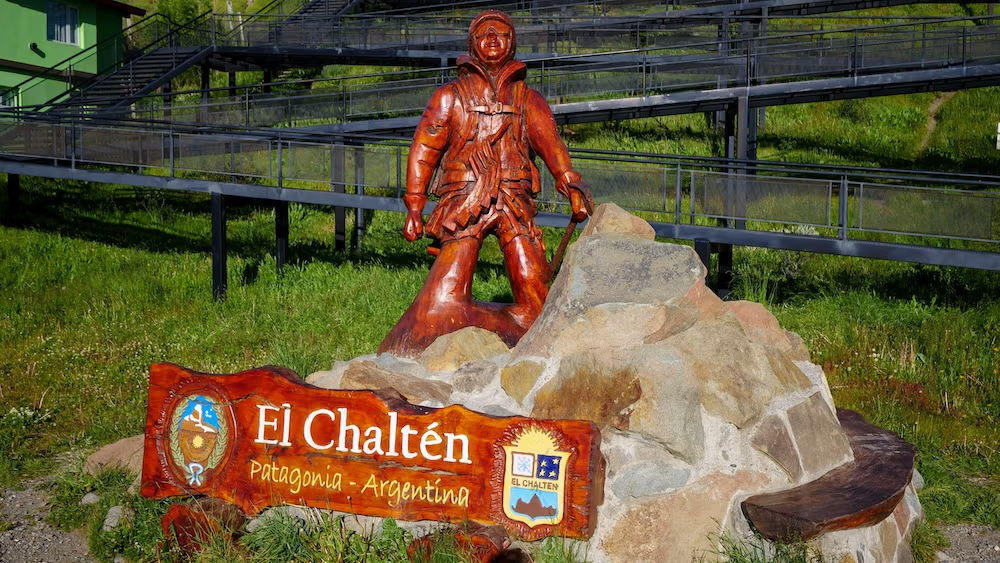
From outpost to trekking capital
The story of El Chaltén after 1985 is basically Patagonia doing what Patagonia does best: taking a practical decision and turning it into a myth.
Step 1: build base-camp infrastructure
A young settlement on the edge of a world-famous park becomes a natural service hub:
- lodging,
- food,
- transport links,
- basic infrastructure,
- and the social “launch pad” energy that makes people brave enough to wake up at dawn and voluntarily climb steep piles of rocks.
On our trip, we stayed at Vertical Lodge, a short walk from the bus terminal, and it felt like the perfect “trekking base”: roomy enough to dry gear, organize snacks, and do the unglamorous logistics. And for the price we paid (about $54 USD per night with breakfast included), it felt like a rare Patagonia win.
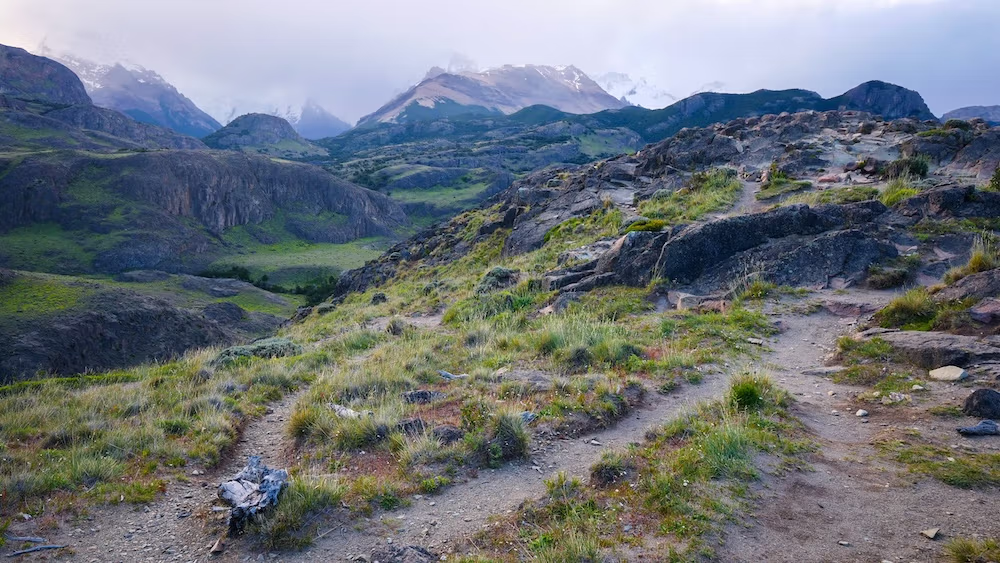
Step 2: trails become the town’s bloodstream
If you’ve hiked here, you feel it immediately: everything is organized around walking.
The practical side of that culture is honestly one of the reasons El Chaltén works so well:
- breakfasts that start early (because the mountains don’t care about your snooze button),
- packed lunches (“lunchboxes”) you order the night before,
- and trail signage that makes solo trekking feel approachable.
Even the small details—like distance markers—change how you hike. They turn “Are we dying?” into “We are at kilometer 9. This is a scheduled emotional collapse.” And honestly, that’s progress.
Step 3: the “second founding” happens in people’s heads
At some point, El Chaltén stops being “a town founded in 1985” and becomes “the trekking capital.” The identity shifts from geopolitical to experiential. It becomes the place you go to earn a view.
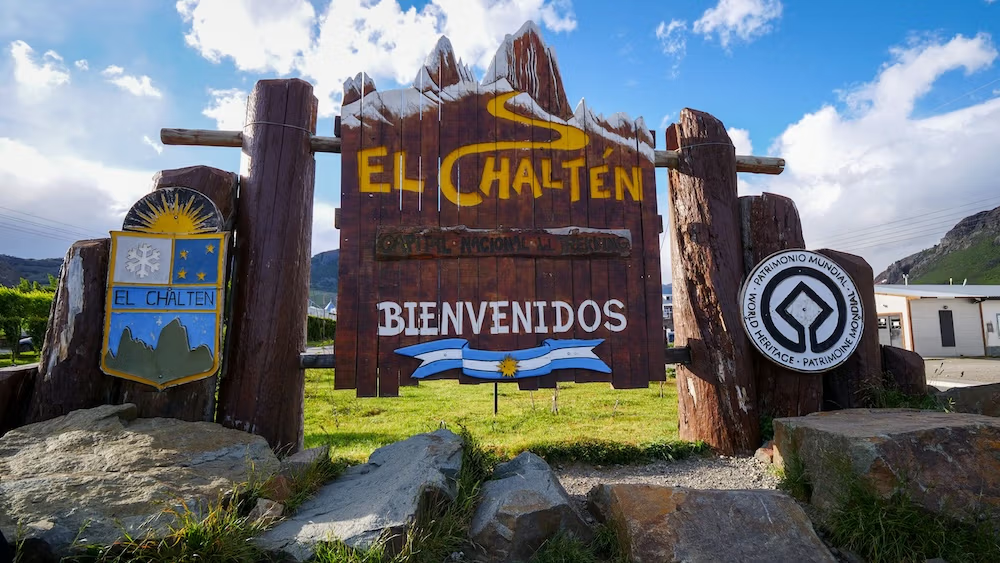
That branding eventually becomes official: Argentina declared El Chaltén the “Capital Nacional del Trekking.”
Step 4: the tourism boom gets real
Once the town is known internationally, the growth loop feeds itself:
- more hostels and hotels,
- more guiding services,
- more cafes,
- more gear rentals,
- more buses timed for arrivals and departures,
- and more people chasing the same few iconic viewpoints.
This is how El Chaltén becomes a modern Patagonia paradox:
- It’s remote, yet crowded.
- It’s a tiny town, yet internationally famous.
- It was founded for strategy, yet loved for freedom.
What the history means for your trip today
El Chaltén’s origin story isn’t just trivia to impress people over a craft beer. It shows up in practical, real-world ways.
1) El Chaltén still feels like an outpost… because it is
Even with tourism, the town retains a frontier quality. On our first day we dealt with:
- limited grocery options,
- “remote pricing,”
- patchy connectivity,
- and the reminder that Patagonia is not a place where convenience always wins.
If you come expecting a big resort town, you’ll be confused. If you come expecting a functional base camp with personality, you’ll be delighted.
2) The park framework shapes your choices
You’re operating in a protected area context. That’s why the trail system is so robust and why rules and signage exist even when the vibe is casual. It’s also why the town’s growth feels constrained in some directions and chaotic in others: development meets protection meets demand.
3) Weather is part of the town’s design logic
This region is dramatic, beautiful, and meteorologically unhinged. That’s not just a fun travel anecdote—it’s a reason El Chaltén works best as a base where you can pivot:
- switch big hikes based on forecasts,
- do short viewpoints when wind is aggressive,
- treat “buffer days” as a strategy, not a defeat.
We had days where the sky looked like a movie trailer and days where the wind tried to legally adopt our backpacks. Both are normal.
4) You’re walking through a story of modern Patagonia
You’re not just hiking for views. You’re hiking inside the intersection of:
- national park governance,
- border-era state strategy,
- mountaineering myth,
- and the modern tourism economy.
Which is a fancy way of saying: yes, your sore knees are historically significant.
How the town feels when you actually live it (even for a few days)
History is great, but El Chaltén is the kind of place you understand with your legs, your appetite, and your ability to function on patchy Wi-Fi.
Day 1: logistics, groceries, and the “we’re totally prepared” illusion
The first lesson hit immediately: in a remote hiking town, “shopping” is a sport. Audrey and I wandered the small markets trying to assemble the sacred Patagonia food pyramid: carbs, carbs, emergency carbs, and one token vegetable/fruit to keep the conscience quiet.
Some basics were easy. Others were either missing or priced like they had been flown in on a private helicopter with a personal assistant holding the receipt. And yes, we noticed the classic El Chaltén paradox: you can buy a very artisanal chocolate bar with a backstory, but the humble everyday item you actually want is… elusive.
I also ran headfirst into the connectivity reality. When people say “the internet is unreliable,” they don’t always mean “a little slow.” Sometimes they mean “welcome to a world where your phone becomes a camera, a compass, and a brick—often in that order.” The fix is simple: download everything you need (maps, bookings, trail info) before you arrive, and treat any Wi-Fi signal you find as a bonus, not a right.
Then Audrey and I did Mirador de los Cóndores at sunset. Short hike, steep first section, big reward. It was the perfect arrival move because it gave us:
- a view of town (so we could mentally map where we’d be eating tomorrow),
- a preview of the mountains (so we could emotionally panic about tomorrow),
- and just enough effort to justify a post-hike treat (so we could eat tomorrow’s calories today).
Day 2: the Fitz Roy “trophy day” and the joy of kilometer markers
Laguna de los Tres is the hike people talk about in El Chaltén. It has that legend status: a full day out, steady buildup, and then a final steep push that feels like the mountain asking you to show your credentials.
We started early, because that’s the unsexy secret of Patagonia: the earlier you start, the more you can adapt. And El Chaltén quietly makes that easier than you’d expect. You’ll see tons of hikers moving at dawn, cafes opening early, and accommodations that understand breakfast is not a leisurely activity—it’s fuel.
One of our favorite practical details on the trails here: distance markers. They sound boring until you’re tired. Then they become therapy. Instead of guessing, you can measure. Instead of spiraling, you can progress.
It turns hiking into a weirdly satisfying math problem:
- “We’re at kilometer 9. Great. Only a little bit more… and then the final steep section… and then we die… and then we see Fitz Roy.”
The final climb to Laguna de los Tres is steep enough to reintroduce you to parts of your personality you didn’t know existed. We powered through, mostly fueled by stubbornness, scenery, and the promise of food. And when the view hits—Fitz Roy towering above the lake—it’s hard not to feel like you just earned a tiny medal, even if nobody gives you one.
Recovery culture: El Chaltén’s underrated superpower
Here’s the thing: El Chaltén isn’t only good at big hikes. It’s also weirdly good at recovery.
After a “trophy day,” the town’s whole ecosystem supports the inevitable human need to:
- sit down,
- eat something warm,
- and talk about how you “weren’t that tired,” while visibly limping.
We leaned fully into that. Cozy cafes, hearty meals, and the comforting realization that in El Chaltén, nobody judges you for taking a slow day. Half the town is doing the same thing, just with different levels of dramatic stretching.
Day 3: the Torre option and the beauty of Plan B
Laguna Torre is often the smarter hiking choice when weather is unpredictable. It’s a classic, it’s scenic in a steady way, and it can feel more forgiving if the wind is acting like a chaotic gremlin.
This is the genius of El Chaltén’s trail system: you can pick a big goal, but you can also downshift without “wasting” the day. If conditions change, there are shorter viewpoints, forest walks, and near-town hikes that still deliver scenery.
That flexibility is part of the town’s DNA. El Chaltén was founded to be functional. It became famous because it’s functional for hikers—especially hikers who want a great trip without pretending weather doesn’t exist.
How to “see” the history while you hike
If you want this post to be more than trivia, here are simple ways to connect El Chaltén’s origin story to what you’re doing on the ground:
- Notice how the town faces outward. The streets and viewpoints are oriented toward the peaks like the whole place is one big base camp.
- Read the trailhead boards and signage. That “official” feel isn’t accidental—it’s the protected-area framework showing up in your day.
- Take a moment at Mirador de los Cóndores and look back at town. You’ll feel how recently it was placed in this valley.
- Do a day trip toward Lago del Desierto if you can. Even without diving into politics, you’ll sense how “border landscape” and “wild landscape” overlap here.
- Pay attention to infrastructure: footbridges, markers, maintained paths. The park-town relationship is visible in practical details.
- Watch the weather move. In places where forecasts can change quickly, a base town becomes more than convenience—it becomes safety.
Plan your visit: decision tables that save your knees
Destination Snapshot: pick your vibe
| Your vibe | What you’ll love about El Chaltén | What will annoy you | Best move |
|---|---|---|---|
| “I want iconic views” | Fitz Roy / Cerro Torre drama | Crowds + early starts | Build a 2–3 day weather window |
| “I want flexible hiking” | Many day hikes from town | Wind can cancel ridgelines | Bring a buffer day and alternate routes |
| “I’m here for chill + cafes” | Cozy recovery culture | Limited non-hike activities | Mix short viewpoints + food rewards |
| “I like remote places” | Outpost energy, big nature | Prices + connectivity | Pack snacks, download offline maps |
| “I hate planning” | Trails are well signed | The big hikes require timing | Follow a simple blueprint (below) |
Trip length decision table: how many days you actually need
| If you have… | The smartest plan | What you’re giving up | Who this fits |
|---|---|---|---|
| 1 day | Short hikes + one viewpoint | Big “trophy” treks | Road trippers, tight schedules |
| 2–3 days | One big trek + one flexible day | Some trail variety | Most first-timers |
| 4–6 days | Fitz Roy + Torre + buffer + recovery | Nothing important | People who want freedom |
| 7+ days | Add Lago del Desierto + wildcards | (You become a local) | Slow travelers, content creators |
The “history-to-hike” blueprint: feel the story in 3 days
| Day | Morning | Afternoon | The hidden “history” theme |
|---|---|---|---|
| 1 | Arrive + town walk | Mirador de los Cóndores at sunset | A town placed for a view—and a purpose |
| 2 | Big hike (Fitz Roy or Torre) | Recovery meal | The mountains that made the town famous |
| 3 | Lago del Desierto day trip (or shorter hikes if weather is mean) | Pack + chill | The border landscape behind the postcard |
Fitz Roy vs Torre: choose your “final boss”
| FactorLaguna de los Tres (Fitz Roy)Laguna Torre (Cerro Torre) | ||
|---|---|---|
| Difficulty vibe | Harder finish, steeper drama | More even pacing |
| Crowd factor | Often higher | Often calmer |
| Best on… | Clear skies | Moody “Patagonia is being Patagonia” days |
| If you’re short on time | Riskier (needs a good window) | More forgiving |
| Emotional payoff | Trophy view energy | Cinematic, steady scenic payoff |
The “arrival reality check” matrix
| Topic | What surprised us | What we’d do next time |
|---|---|---|
| Groceries | Limited selection + pricey basics | Bring backup snacks from El Calafate |
| Internet | Patchy and sometimes mythical | Download offline maps + info in advance |
| Energy | “We’re fit… probably” (wrong) | Start with a short hike on Day 1 |
| Weather | Wind has opinions | Keep one buffer day sacred |
| Food | You’ll earn your calories | Plan one “reward meal” per big trek |
Crowd strategy matrix: how to win without speed-walking strangers
| Situation | What it feels like | What to do |
|---|---|---|
| Peak morning rush | A hiking conga line | Start earlier or choose a flexible trail |
| Iconic viewpoint | “So… nobody’s alone today” | Be patient, rotate photo turns, enjoy it anyway |
| Narrow sections | People stopped mid-trail | Step aside, breathe, don’t become the villain |
| You’re behind schedule | Panic spiral starts | Shorten the plan and call it a win |
A practical tip that feels obvious only after you learn it the hard way
In El Chaltén, the town is your base camp. Protect the base camp:
- Start early when weather is good.
- Eat enough (seriously).
- Treat a recovery day like strategy, not weakness.
- Remember that the “best hike” is the one you can actually finish safely.
We learned that on Laguna de los Tres, when the final push felt like nature asking, “Are you sure you deserve Fitz Roy today?” We said yes, mostly out of stubbornness and the promise of post-hike food.
If you want the hyper-practical trekking side next, I already have deep guides that pair well with this history piece:
- https://nomadicsamuel.com/travel-blog/laguna-de-los-tres-trail-guide-hike-to-fitz-roys-iconic-view
- https://nomadicsamuel.com/travel-blog/when-is-the-best-time-to-visit-el-chalten-argentina
El Chaltén history FAQ for hikers who like context
Why was El Chaltén founded in 1985?
Geopolitical decision. El Chaltén was founded in 1985 by Santa Cruz during a period when the border context around Lago del Desierto and nearby frontier sectors was sensitive; many legal and local histories describe the founding as a geopolitical decision.
Is El Chaltén actually inside Los Glaciares National Park?
It sits tightly within the park’s orbit, and national law authorized transferring park-system land to Santa Cruz for establishing the town—so its existence is deeply tied to protected-area governance.
What is the Lago del Desierto arbitration, in plain English?
It’s an international arbitration decision about the frontier line in a sector between boundary post 62 and Mount Fitz Roy, published in the UN’s Reports of International Arbitral Awards.
Why does El Chaltén feel so “frontier” compared to El Calafate?
Because it’s smaller, newer, more remote, and designed as a base camp rather than a resort town. Even today, the rhythm of life is set by wind, supplies, and trail days.
What does “Chaltén” mean?
You’ll often hear it explained as “smoking mountain,” referring to Fitz Roy’s cloud cap. It’s a popular interpretation and fits what you’ll see, but the linguistic history can be more complex than one tidy translation.
When did it become “Capital Nacional del Trekking”?
Argentina passed a law declaring El Chaltén the “Capital Nacional del Trekking.”
Is El Chaltén worth visiting if I’m not a hardcore hiker?
Yes. There are short viewpoints and easier walks that still deliver absurd scenery. Just plan for limited services, unpredictable weather, and a town that gets quiet early because everyone is saving energy for tomorrow.
Which is better: Laguna de los Tres or Laguna Torre?
Tough call. If you want the “trophy day,” go for Fitz Roy on a clear forecast. If you want something steadier and often calmer, Torre can be the smarter choice—especially when the wind is acting like a villain.
How early do you really need to start hikes?
Early. Not because you have to, but because it buys you options: better light, fewer crowds, and a buffer if conditions turn moody. Patagonia loves a plot twist.
What’s the single biggest mistake first-timers make?
Overcommitting on day one, underestimating wind, and treating Patagonia like a place where your plan is in charge. Build in a buffer day, start early, and let the forecast decide who you are.
Project 23 Argentina: This guide is also available in Spanish. [Lea la versión en castellano: Por qué existe El Chaltén: la sorprendente historia de la “capital del trekking” de la Patagonia]
Further Reading, Sources & Resources
If you’re the kind of person who reads a hiking-history post and thinks, “Cool… but show me the receipts,” this section is for you. These are the most useful, high-signal sources behind the origin story. Simple as that.
Key laws and official references
https://www.saij.gob.ar/LPZ0001771
Santa Cruz / Argentina legal listing used to anchor the official provincial-law context around El Chaltén (handy for tracking the formal “yes, this is real and documented” side of the founding story).
https://www.argentina.gob.ar/normativa/nacional/ley-23766-167/texto
The national law text tied to the legal framework for establishing El Chaltén within the Los Glaciares protected-area orbit—basically the paperwork proof that this town wasn’t a “let’s just build a cute village here” situation.
https://www.argentina.gob.ar/interior/ambiente/parquesnacionales/losglaciares
Official Argentina government overview of Los Glaciares National Park—useful for the big picture: why this landscape mattered before El Chaltén became a trekking brand.
https://whc.unesco.org/en/list/145/
UNESCO’s World Heritage listing for Los Glaciares—the “international recognition” layer that helps explain how this region became globally famous (and eventually crowded).
Border dispute and arbitration texts (aka: the heavyweight documents)
https://legal.un.org/riaa/cases/vol_XXII/3-149.pdf
UN legal archive (Reports of International Arbitral Awards). This is the primary-source anchor for the Lago del Desierto / Fitz Roy frontier dispute context—dense, serious, and extremely useful if you want the strongest possible sourcing.
https://servicios.infoleg.gob.ar/infolegInternet/anexos/55000-59999/58471/norma.htm
Infoleg text for additional Argentina–Chile agreement documentation in the broader frontier story—helpful for confirming how boundary definition/demarcation remained an ongoing legal process.
https://servicios.infoleg.gob.ar/infolegInternet/verNorma.do?id=240648
Infoleg entry connected to later-stage Argentina–Chile frontier agreement texts—useful for showing the border story didn’t magically evaporate after one headline moment.
Naming and exploration context (how Fitz Roy entered the modern map)
https://www.educ.ar/recursos/101723/francisco-moreno-en-la-patagonia-austral
Educ.ar background on Francisco “Perito” Moreno’s southern Patagonia exploration—great for the “mapping + naming era” context, and why the Fitz Roy / Chaltén name story is more than just trivia.
Notes on accuracy (so we don’t accidentally do “history fanfic”)
- When it comes to borders, use primary sources. Laws + arbitration texts are the bedrock; everything else is commentary or storytelling.
- Place-name meanings get simplified over time. If you mention “Chaltén = smoking mountain,” frame it as “commonly explained as…” unless you’re using a dedicated linguistic source.
- If two sources disagree, pick the one with the most authority (government legal text > general web summary > travel site).