
El Chaltén has a funny way of humbling your itinerary. You arrive with a color-coded plan, a fresh pair of hiking shoes, and the quiet confidence of someone who has binged Patagonia reels on Instagram. Then the wind shows up, laughs, and gently (or violently) rearranges your priorities.
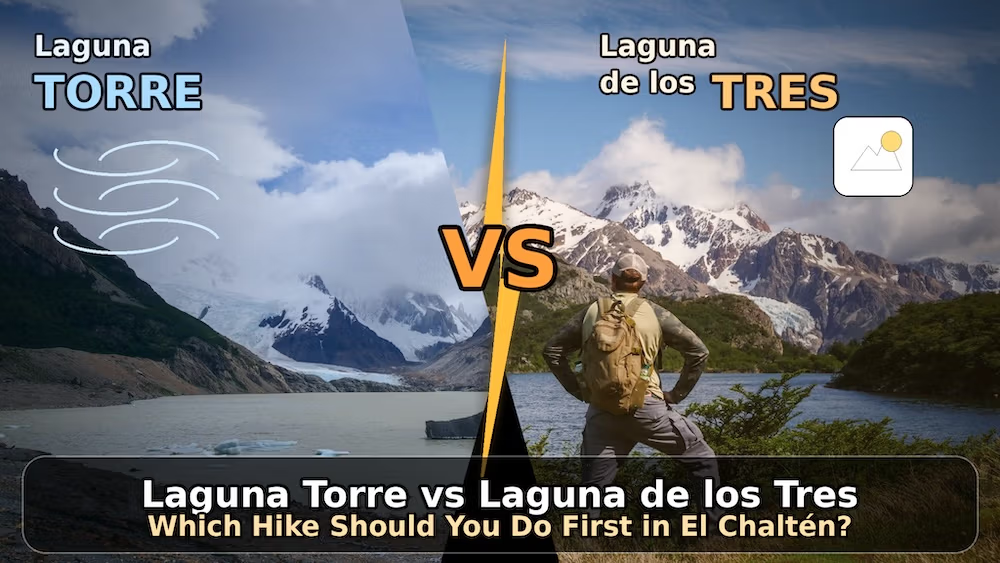
So if you’re staring at the two big names—Laguna de los Tres (Fitz Roy) and Laguna Torre (Cerro Torre)—and asking “Which one should we do first?”, you’re asking the right question… but the wrong person.
You should be asking the weather.
We spent six nights in El Chaltén and still had to play trail Tetris: we did Laguna de los Tres on our best weather day, needed a full recovery day after, got completely wind-benched on another day (café champ energy), and then did Laguna Torre on “decent but not great” weather—where it somehow felt like our most comfortable long hike of the trip.
This guide is the result: a practical, no-nonsense comparison—plus the lived reality of two self-aware “foodies who hike” trying to earn our views the hard way.
The numbers you actually care about (and why they feel different on your legs)
Let’s get the boring stats out of the way—because once you’re six hours in, “only 25 km” stops sounding like a fun personality trait.
| Metric | Laguna Torre | Laguna de los Tres |
|---|---|---|
| Common round-trip distance | ~18–20 km (plus optional extensions) | ~23–25 km (classic from town) |
| Typical hiking time | 7–8 hours | 8–10+ hours |
| Effort profile | Long + steady, fewer brutal spikes | Long + steady… then a steep finale |
| “Signature suffering” | Wind exposure near the laguna + last stretch fatigue | Final steep climb + knee-taxing descent |
| Most common add-on | Mirador Maestri ridge walk | Laguna Sucia viewpoint |
| Best use of a cloudy day | High (still feels rewarding) | Medium (iconic payoff depends on visibility) |
A quick sanity check: you’ll see slightly different distances online because there are multiple legitimate route variants (especially for Laguna de los Tres via El Pilar/Río Eléctrico).
Destination Snapshot: Torre vs Tres (pick your vibe)
| Hike | Vibe | Best for | Typical time | “Hard part” | Iconic payoff dependency | Crowd feel |
|---|---|---|---|---|---|---|
| Laguna Torre | Long, steady, scenic valley walk with glacier drama at the end | A first big day, pacing practice, “comfortable” endurance | 7–8 hrs (plus optional extensions) | Mostly length + exposure near the laguna | Medium (still great even if peaks hide) | Medium |
| Laguna de los Tres | The classic Fitz Roy pilgrimage with a steep finale | The “I came to El Chaltén for THIS” day | 8–10+ hrs | Final steep climb (and the descent) | High (clear day matters a lot) | High |
If you only remember one line: Laguna de los Tres is the bigger gamble. Laguna Torre is the safer bet.
🧾 Quick Booking: Your El Chaltén Travel Essentials 🥾✨
🎒 Your Travel Toolkit (Book These 4 Things)
| ✅ What to book | 💡 Why it’s worth it | 🔗 Quick link |
|---|---|---|
| 🥾 Tours & experiences | Easy way to lock in a glacier day, a Lago del Desierto adventure, or a guided option when weather turns moody | Browse El Chaltén tours on Viator |
| 🏨 Hotels & stays | El Chaltén sells out fast in peak season — booking early = better locations + fewer “only the priciest rooms left” moments | Find El Chaltén hotels on Booking.com |
| 🚗 Car rentals (optional) | Best for freedom days: Ruta 40 viewpoints, flexible timing, photo stops, and a smoother Lago del Desierto run | Compare car rentals in El Calafate (gateway to El Chaltén) on DiscoverCars |
| 🚌 Bus tickets | The classic El Calafate ↔ El Chaltén route is simple — but popular departure times fill up | Book El Calafate → El Chaltén buses on Busbud |
👉 One-click backup (reverse direction): Book El Chaltén → El Calafate buses on Busbud
Effort profile by kilometers (aka: where your optimism goes to die)
This is the part most guides skip, even though it’s exactly what your body wants to know.
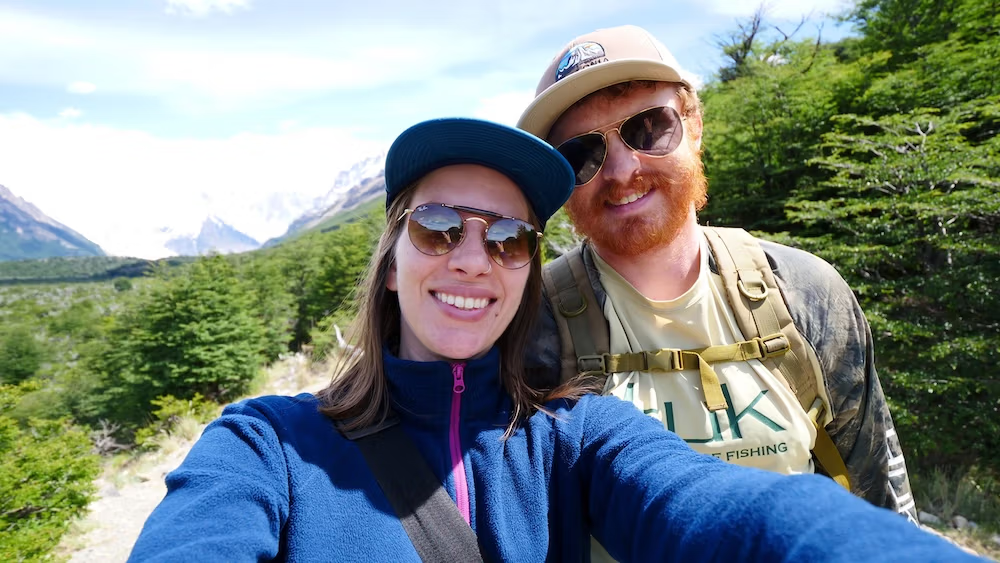
Laguna Torre: how the day typically unfolds
| Km-ish marker | What happens | How it feels |
|---|---|---|
| 0–1 | You’re out of town, feeling heroic | Warm-up energy, mild incline |
| ~0.7 | Waterfall detour area | “Okay, this is already pretty” |
| 2–3 | Early viewpoint(s) | First real photo stop |
| ~5 | Junction toward Madre e Hija | You realize there are options |
| 5–8 | Valley cruise | Rhythm hiking: steady, scenic, efficient |
| ~8 | De Agostini area | “We’re close… but not close” |
| ~9 | Laguna Torre | Glacier mood, wind mood, snack survival |
| +2 each way | Mirador Maestri ridge walk | Extra drama if you’ve got energy and visibility |
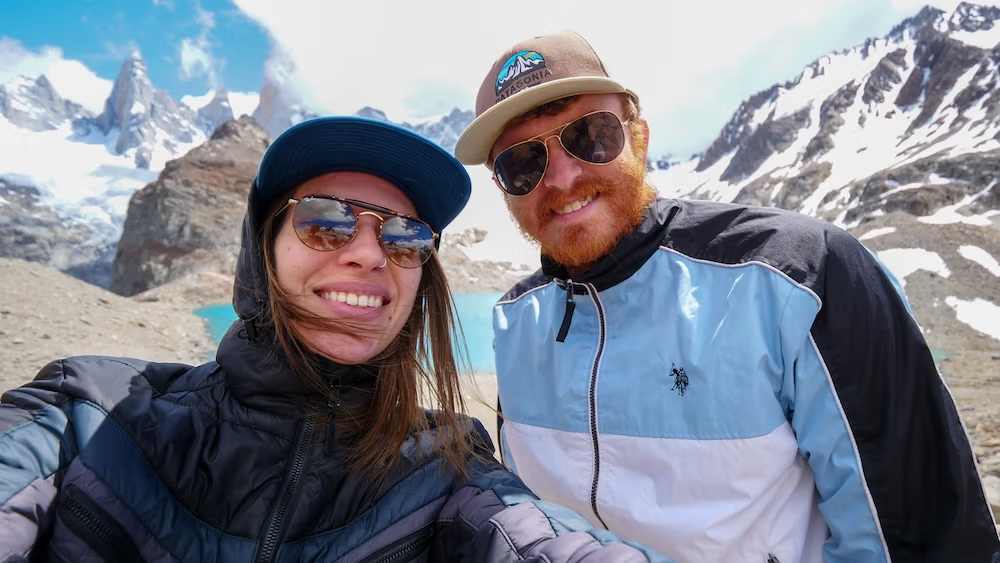
Laguna de los Tres: the classic “friendly until it isn’t” curve
| Segment | What happens | How it feels |
|---|---|---|
| Trailhead → mid-route viewpoints | Forest, river, steady climbing | Comfortable effort, lots of stop-worthy scenery |
| Mid-route → Poincenot area | More mountains, more people, more anticipation | “We’re basically there” (you are not) |
| Poincenot → Laguna de los Tres | The famous steep final climb (~400 m gain) | Slow, rocky, breathy, and very real |
| Top + lake area | Fitz Roy glory (if visible) + wind | Awe + “why is eating so hard here?” |
| Descent | Gravity collects its payment | Knees + quads + concentration tax |
If you’re choosing “which first,” this is the core difference: Torre is a long steady day; De los Tres is a long day with a tough final exam.
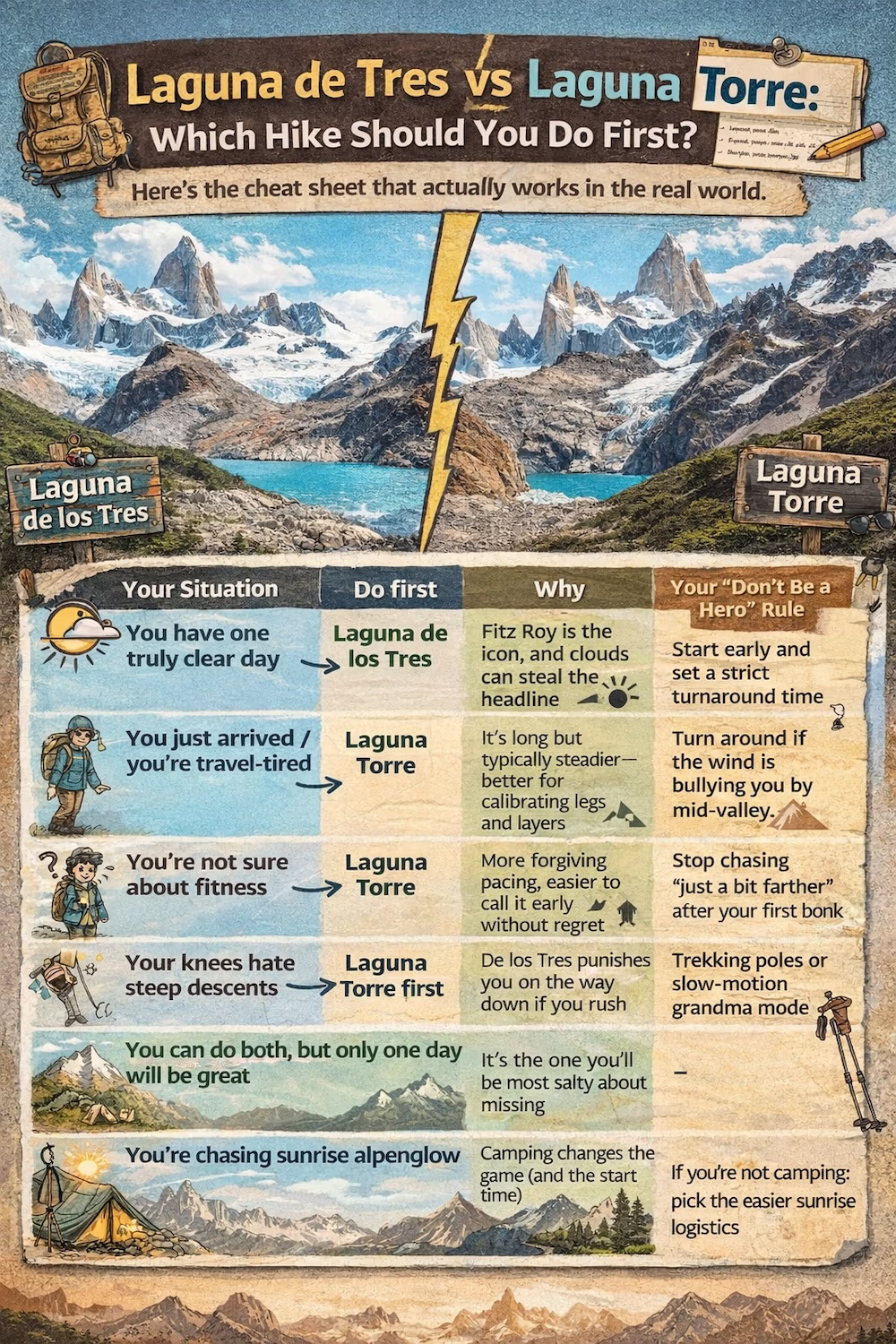
The decision matrix: which hike should you do first?
Here’s the cheat sheet that actually works in the real world.
| Your situation | Do first | Why | Your “don’t be a hero” rule |
|---|---|---|---|
| You have one truly clear day | Laguna de los Tres | Fitz Roy is the icon, and clouds can steal the headline | Start early and set a strict turnaround time |
| You just arrived / you’re travel-tired | Laguna Torre | It’s long but typically steadier—better for calibrating legs and layers | Turn around if the wind is bullying you by mid-valley |
| You’re not sure about fitness | Laguna Torre | More forgiving pacing, easier to call it early without regret | Stop chasing “just a bit farther” after your first bonk |
| Your knees hate steep descents | Laguna Torre first | De los Tres punishes you on the way down if you rush | Trekking poles or slow-motion grandma mode |
| You can do both, but only one day will be great | Save De los Tres for the best day | It’s the one you’ll be most salty about missing | Torre can still be satisfying on a “meh” day |
| You’re chasing sunrise alpenglow | Depends on where you sleep | Camping changes the game (and the start time) | If you’re not camping: pick the easier sunrise logistics |
My default recommendation
- Do Laguna Torre first as your “systems check” day.
- Do Laguna de los Tres second on the best forecast day when your pacing, layers, and morale are dialed.
And yes, we did it the other way around—because Patagonia gave us one clear day and we took it.
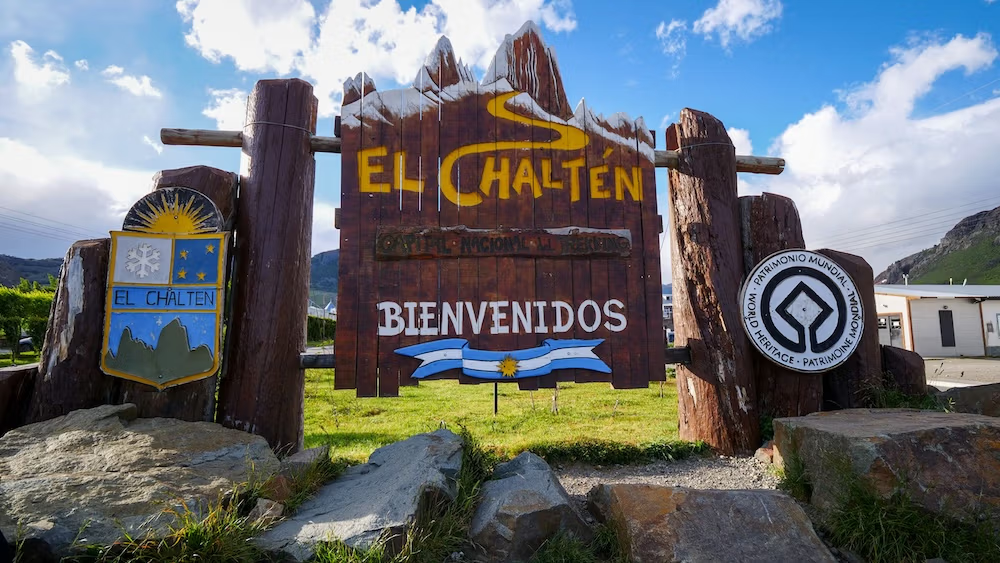
Our real El Chaltén “weather chess” itinerary (and what it teaches)
We stayed six nights. Not because we’re enlightened long-stay travelers… but because Patagonia weather is basically a slot machine, and we wanted more pulls.
| Day | What we did | Why it mattered for Torre vs Tres |
|---|---|---|
| 1 | Arrive from El Calafate + sunset Mirador de los Cóndores | Short hike = perfect “arrival legs” warm-up |
| 2 | Laguna de los Tres | Best weather day = take the icon when it’s available |
| 3 | Recovery day | De los Tres hit us hard (steep finish + long descent) |
| 4 | Wind so bad we could barely stand → café day | Wind can cancel your plans even in summer |
| 5 | Laguna Torre | “Comfortable long hike” even with imperfect visibility |
| 6 | Chorrillo del Salto + Mirador de las Águilas | Proof that easy days matter between big days |
The lesson: if you only have 2–3 days, you might get lucky… or you might spend your “big hike day” holding a medialuna with two hands so it doesn’t become airborne.
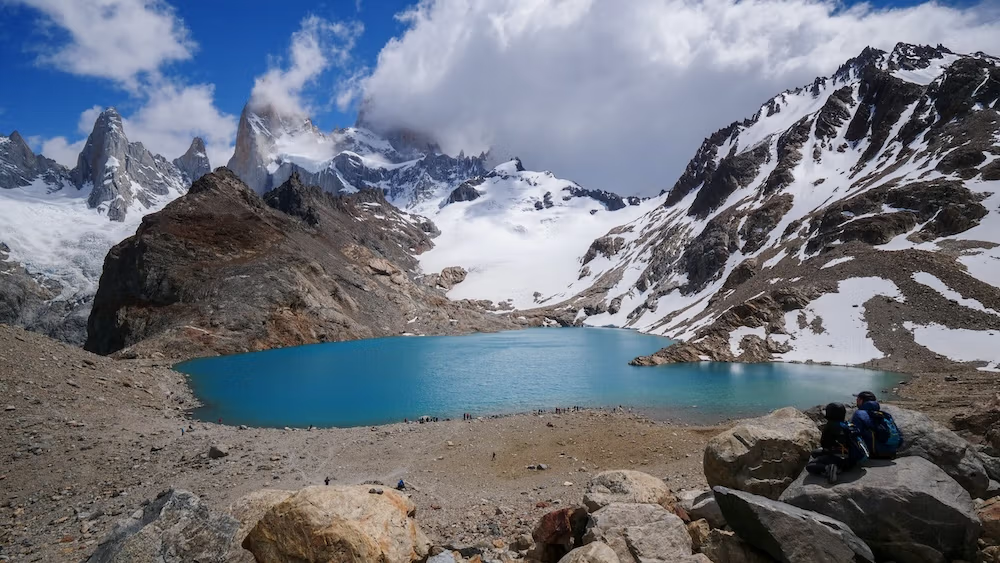
Laguna de los Tres (Fitz Roy): the boss level in a friendly disguise
Laguna de los Tres is sneaky because it starts like a friendly documentary and ends like a final exam you didn’t study for. The morning vibe can be pure Patagonia magic—clear skies, Fitz Roy already looking unreal even from town, and that “today we are trekkers” confidence that makes you feel like you should legally be allowed to buy a Patagonia jacket at a discount. Audrey and I had early breakfast (El Chaltén basically runs on “hiker o’clock”), marched out full of hope… and promptly did the most rookie thing possible: forgot our trail map and burned time finding the trailhead. It’s not catastrophic—signage is good—but it’s the first reminder that this hike has a habit of charging small “idiot taxes” early so it can collect the big payment later.
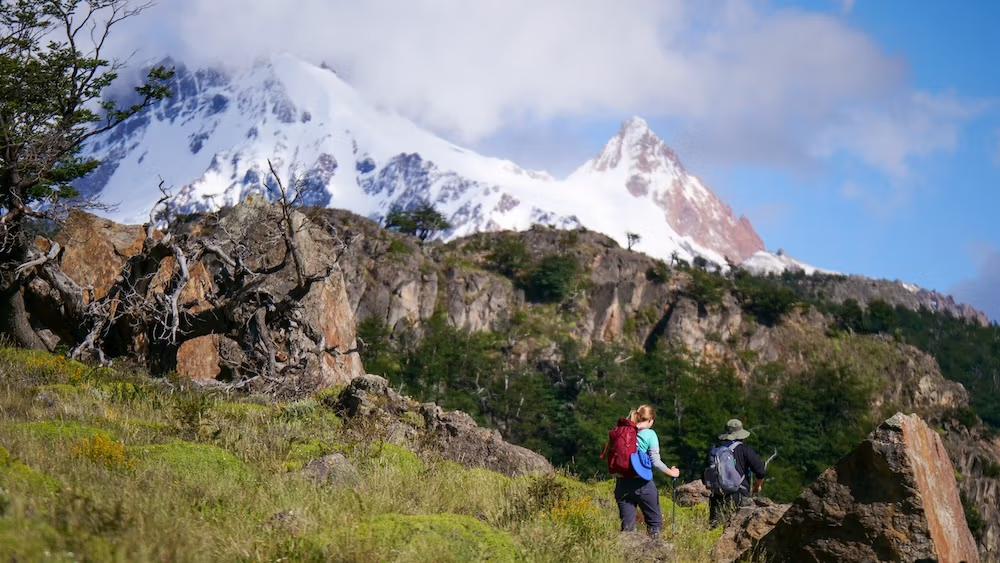
The hike’s psychology: it lures you in with scenery and then asks for your soul (politely)
For the first chunk, you’re rewarded constantly: river viewpoints, forest sections, and a steady rhythm that convinces you you’re in control. And then Laguna Capri shows up and basically tries to end your day early—in a good way. Because Capri’s Fitz Roy view is so ridiculous and there’s a very real “We could stop here and still feel smugly accomplished” moment. We used the facilities at the Capri campsite, had snacks, soaked in the view, and faced the most dangerous decision in El Chaltén: turn back like a sensible person… or keep going because Fitz Roy is ‘calling your name’.
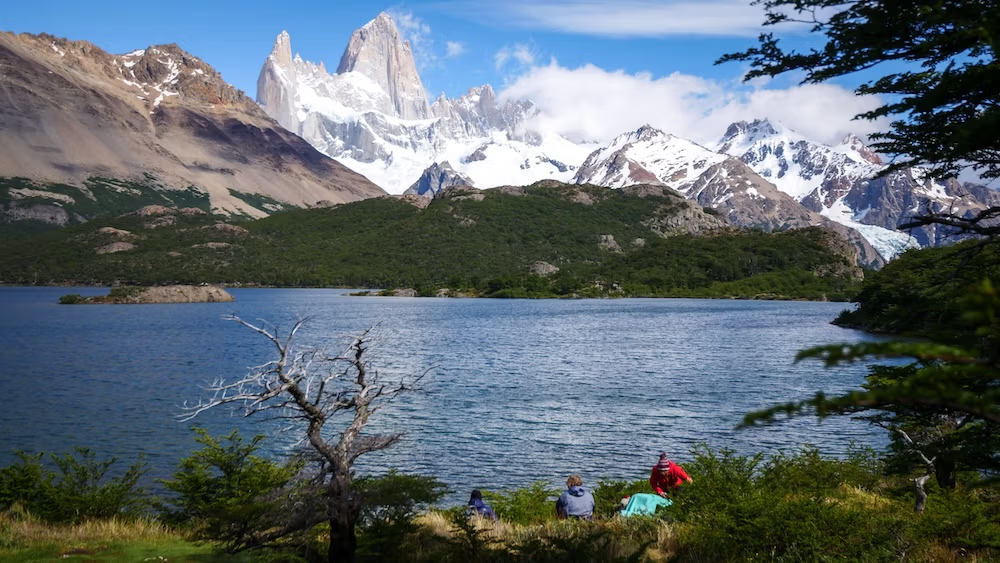
Capri is the great fork-in-the-road (and it’s the smartest decision point on the whole hike)
This is where Laguna de los Tres becomes two different experiences. If you stop at Capri (or do the shorter loops and miradors around there), you still get a world-class day—without the part where your legs start bargaining with you. If you continue, the trail can feel fairly flat and scenic for a while, which is exactly why people get cocky and think, “We’re basically there.” And this is where El Chaltén’s kilometer markers are oddly brilliant: they keep you honest. We loved having a marker every kilometer because it lets you do the adult thing—check pace, check daylight, check energy—and decide whether you’re adding side trails or simplifying the plan. It’s like a built-in anti-delusion system… which you will appreciate once the hike tries to gaslight you near the end.
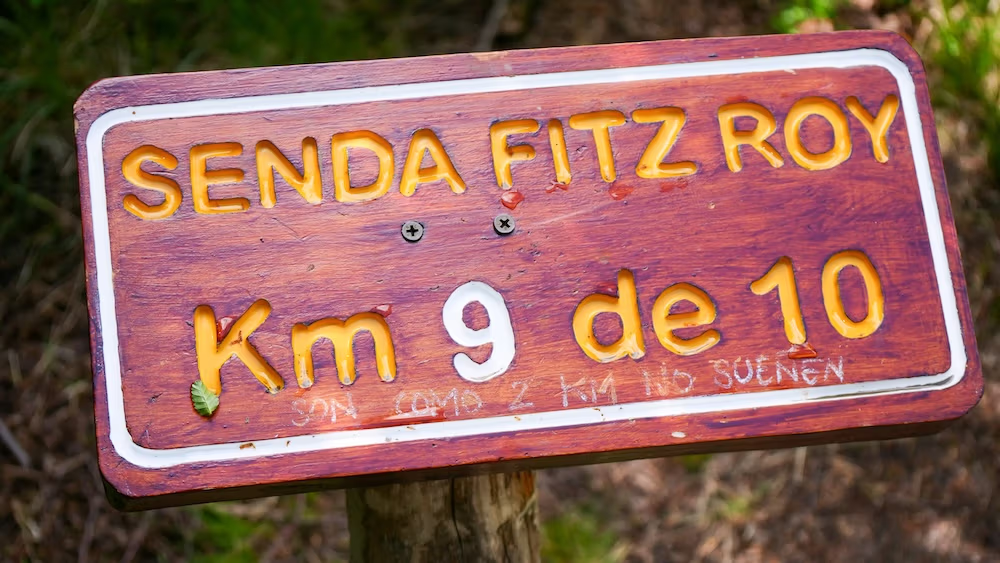
The “final kilometer” reality check (Km 9 is where your confidence goes to be humbled)
People warn you about “the last kilometer” in a way that sounds like an overdramatic campfire story. It’s not. On our day, we hit Km 9 and suddenly encountered the bottleneck: everyone is tired, the trail turns rocky and gravelly, the incline feels personal, and you have to be more alert right when you have the least enthusiasm left. This is the section where trekking poles stop being “gear for serious hikers” and start being “why didn’t we bring these, we are fools.” The only thing more reliable than gravity here is the encouragement from hikers coming down telling you it’s worth it—which is both motivating and slightly terrifying because it implies you’re about to learn something about yourself.
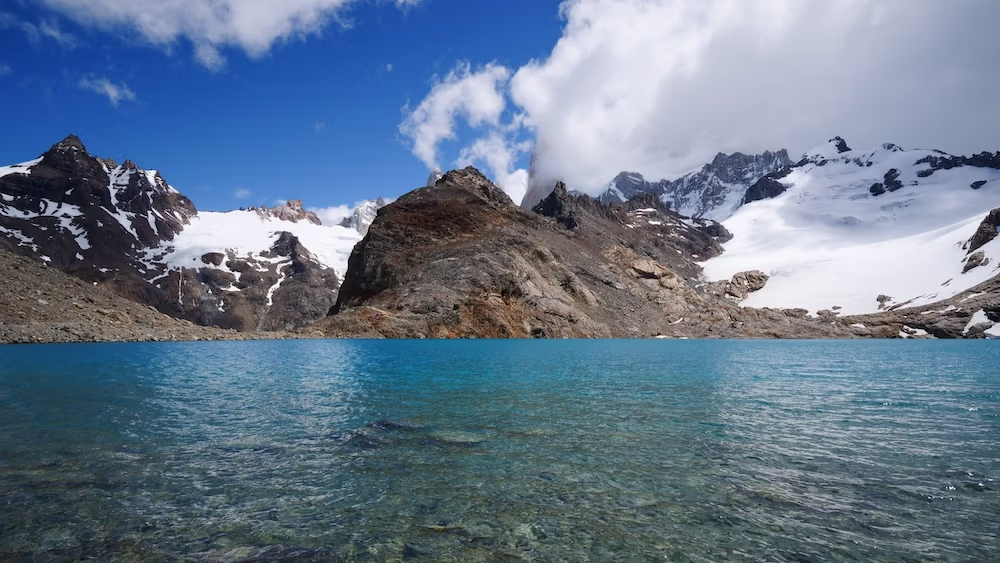
The top: iconic views + ferocious wind + snack-time survival mode
And then you make it. Laguna de los Tres is that rare payoff that doesn’t feel exaggerated in photos—because the scale is absurd and Fitz Roy is iconic. But the summit experience often comes with a very Patagonian twist: wind. Audrey and I were ravenous and basically had scraps left—granola bar and candy vibes—so we did what any elegant, refined hikers would do: hid behind a rock and devoured whatever was left.
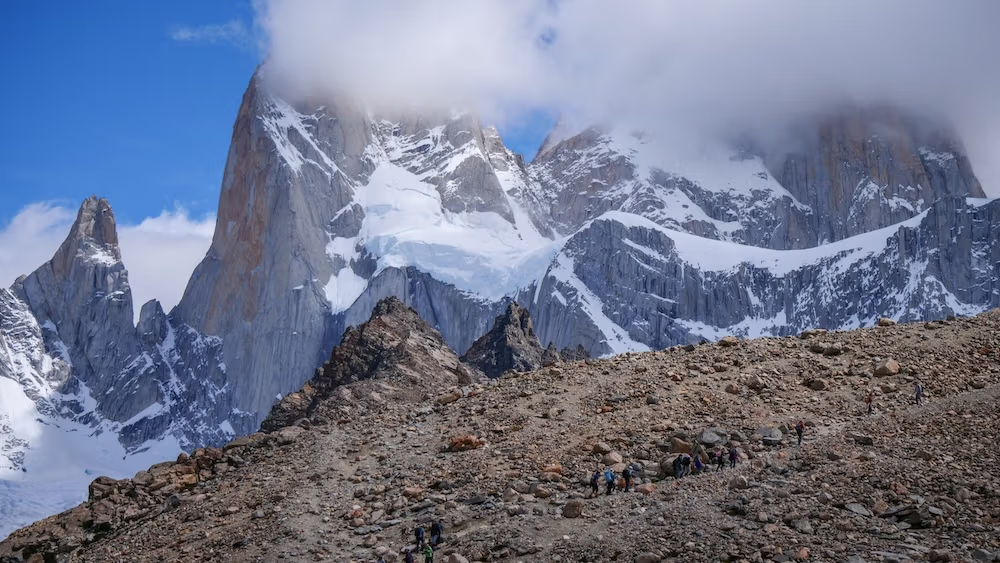
The descent: the part nobody posts (and the part you will remember in your quads and calves)
The descent is where Laguna de los Tres quietly becomes a different hike. Going up feels hard in a dramatic, “push through it” kind of way. Going down is the slow grind that adds up: knees, quads, foot soreness, and the mental focus of not face-planting after a long day. We reached the point where we stopped taking breaks out of “wow this view” and started taking breaks out of “my legs have briefly resigned from their jobs.” At one point we were joking about being carried out on a sedan chair or calling for an airlift—not because we were truly in danger, but because that last kilometer up-and-down can feel more strenuous than the earlier stretch combined when you’re not trained up and you’ve come to Patagonia in full foodie mode. The next day proved it: we were stiff, wrecked, and needed a day off from hiking.
Why you should “save” this hike for the best conditions (visibility + wind matter more here)
If you only get one clear day, this is the hike that benefits most from it. Laguna de los Tres isn’t just “nice views along the way”—it’s a pilgrimage to a specific iconic scene. When Fitz Roy is visible, it’s the kind of moment you file away as “coolest hike we’ve ever done” territory. When it’s hidden, you can still have a fantastic day (the forest and mid-route viewpoints don’t stop being beautiful), but the emotional math changes—because you just paid for the boss fight and the boss didn’t show up for work. Wind matters too: that exposed top section is where “a little breezy” becomes “why is my sandwich trying to escape into Chile.”
Who should prioritize Laguna de los Tres first (and who should build up to it)
You should do this hike first if you’re short on days and you see a rare weather window—clear visibility, manageable wind, and the kind of forecast you don’t want to waste. It’s also a great “first big hike” if you’re already conditioned for long days and steep finishes, and you’re not going to melt into a puddle the next morning like us. But if you’re arriving like Audrey and I did—joyfully over-fed, under-trained, and armed mostly with optimism and snacks—then it’s smarter to treat this as the hike you earn after you’ve calibrated your pace.
Start-time strategy that doesn’t ruin your life (and doesn’t turn Km 9 into rush hour)
Start early enough that you’re climbing the steep final section before it becomes a conga line of fatigue. Yes, El Chaltén has long summer daylight, but the length of the day is not permission to start late; it’s permission to hike slower, take breaks, and still get home without stress. If you’re the type who’s vulnerable to “the bakery won,” make that your post-hike reward, not the reason you hit the trail at 10:30 a.m. Also: if you can arrange a lunchbox the night before, do it—because running out of food at the top is a surefire lesson in humility.
Tiny but useful “endpoint” matrix for De los Tres day-hikers
| If you feel… | Best endpoint | Why it works |
|---|---|---|
| Strong, weather is clear, and you started early | Laguna de los Tres | You’ll actually get the iconic payoff you came for |
| Good but not bulletproof | Laguna Capri + viewpoints | Insane Fitz Roy views without the steepest section |
| Behind schedule or wind is rising | Turnaround earlier | You’ll enjoy the day more and avoid the “descent of despair” |
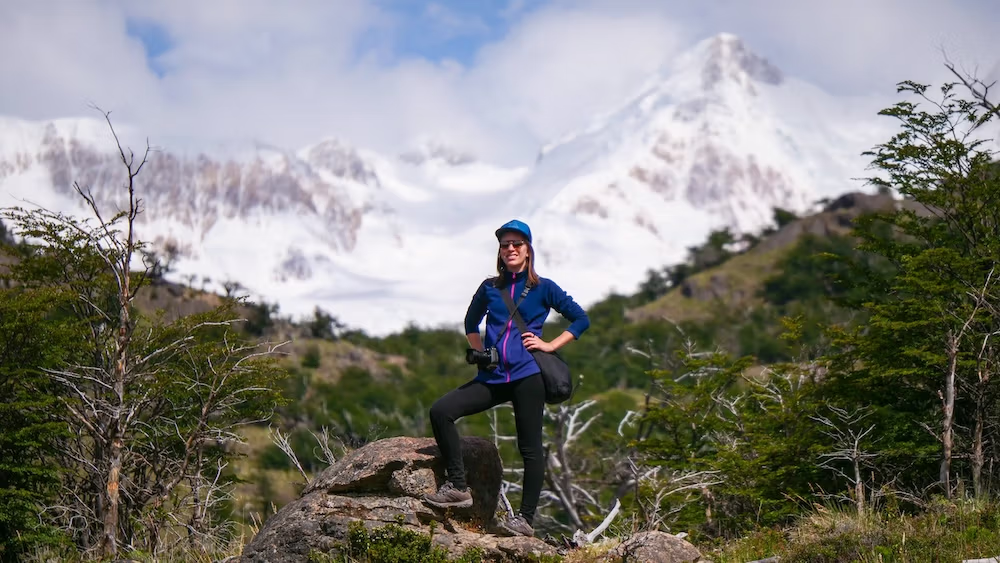
Laguna Torre (Cerro Torre): the comfortable classic that still feels epic
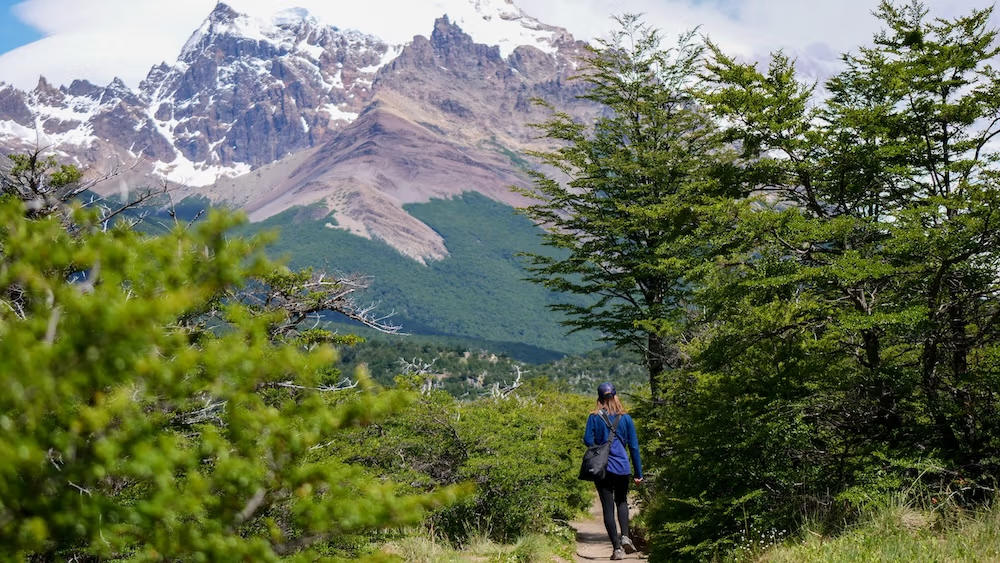
Laguna Torre is the hike you do when you want a full Patagonia day without the emotional negotiation of that brutal final kilometer. It’s still long—still a proper trek—but the effort profile is more forgiving, and the day tends to feel like a steady adventure instead of a single dramatic showdown. Audrey and I did Torre after our Fitz Roy day, after a forced recovery day, and after a wind day so violent we could barely stand—and somehow it still felt like our most comfortable long hike. That’s not a small compliment coming from two people who openly admit we arrived in El Chaltén in full foodie mode and basically had to “grow legs” in real time.
The trail’s superpower: it’s rhythmic (and that changes everything mentally)
The best way to describe Laguna Torre is that it has momentum. You start with some climb early (enough to feel like you’re doing something respectable), and then around Km 3.5–4 it flattens out and turns into a wide, scenic valley walk where you can gain ground quickly. That “flattening” is psychologically huge. On De los Tres, the hard part waits at the end like a trap. On Torre, the hard part is mostly the length and the fact that wind can still make the final stretch feel tiring—but the trail doesn’t suddenly hit you with a steep exam when you’re already cooked. It’s the difference between “I’m hiking all day” and “I’m hiking all day and then auditioning for a suffer-fest doc at kilometer nine.”
The route beats (and why this hike feels like it has chapters)
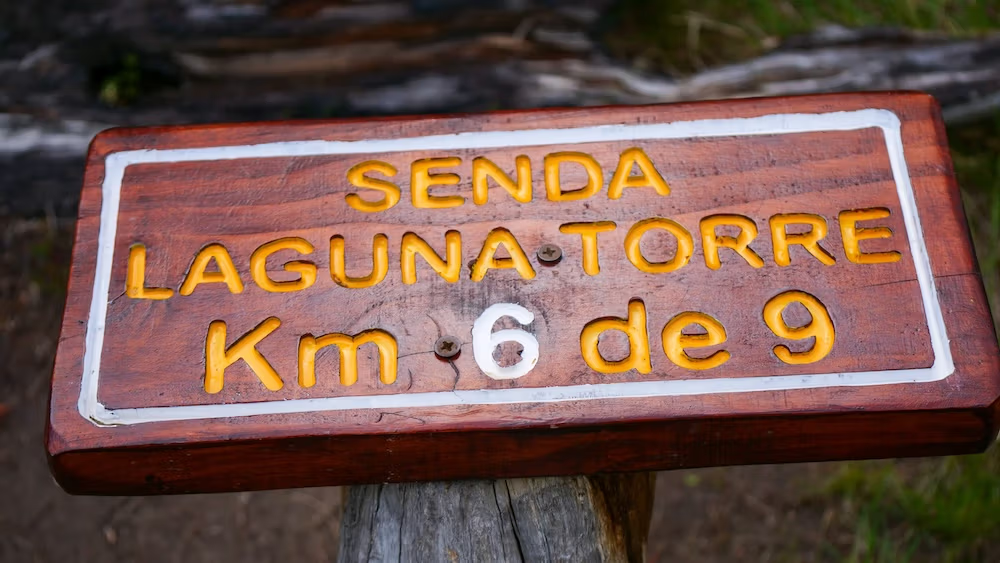
One thing we loved is how easy it is to understand the day because the trail signage basically hands you a storyline: waterfall early, viewpoints, trail junctions, the De Agostini campground, then the laguna. Those little milestones stop the hike from feeling like an endless treadmill. You can mentally break it into chunks, snack accordingly, and keep morale high—because nothing boosts happiness like being able to say, “Okay, we’re at kilometer two, it’s time for a mini-lunch,” without pretending you’re above such pleasures.
What it feels like (aka: why we called it “comfortable”)
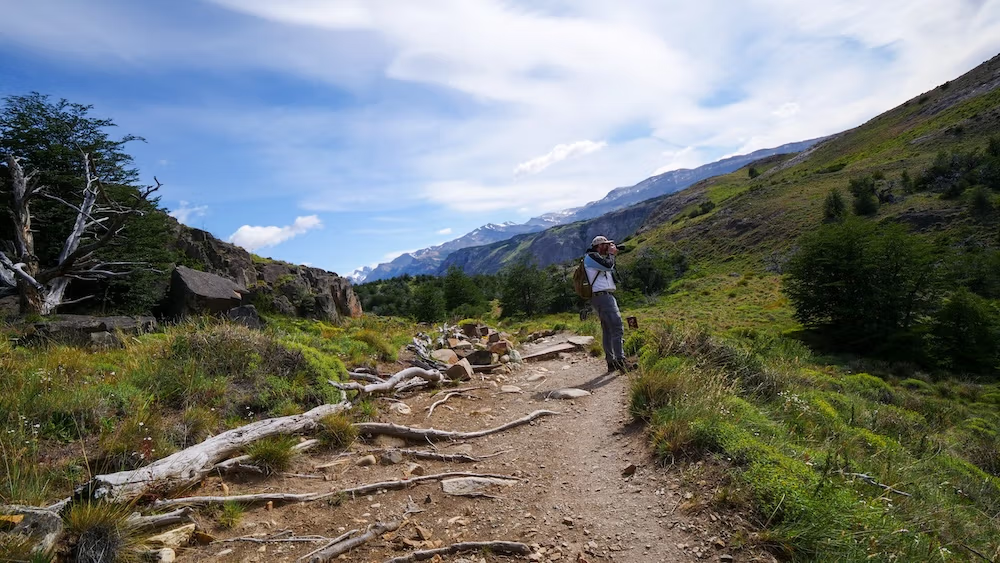
The vibe on Torre is steadier and (dare I say it) more relaxed. We found ourselves taking breaks because Audrey and I wanted to admire the scenery, not because our legs were jell-o. There’s also often more shelter than you’d expect—wind in town can be rude, but once you’re in the forest, you can feel surprisingly protected. We moved “slower than a turtle” early on because we couldn’t stop taking photos, and the waterfall (Cascada Margarita) is legitimately impressive. But because the trail becomes flatter later, you can still make excellent time even if you’re stopping constantly. That’s a big reason Torre is such a good first big hike: it’s way more forgiving of imperfect pacing.
The crowd factor: not empty, but less “constant flow”
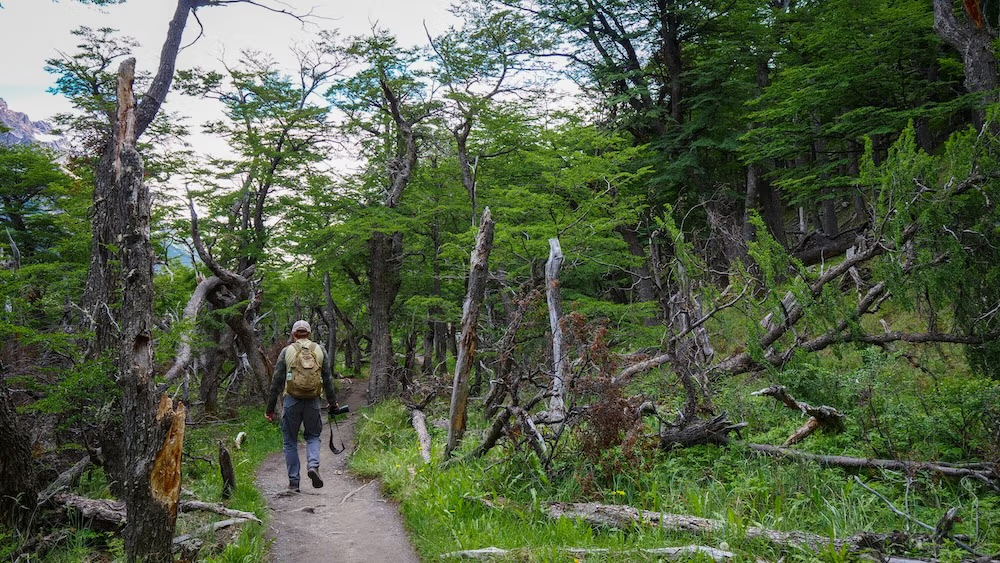
Compared to the Fitz Roy corridor, Laguna Torre felt less like a parade. You still see people (it’s popular for a reason), but you also get long pockets where it’s quieter and you can hear the river, the wind in the trees, and your own internal monologue debating what dinner should be. That quiet matters because it changes the whole texture of the day. On De los Tres, you’re often managing crowds and effort. On Torre, you’re mostly just… hiking. And that’s a beautiful thing when you’re in a place as dramatic as Patagonia.
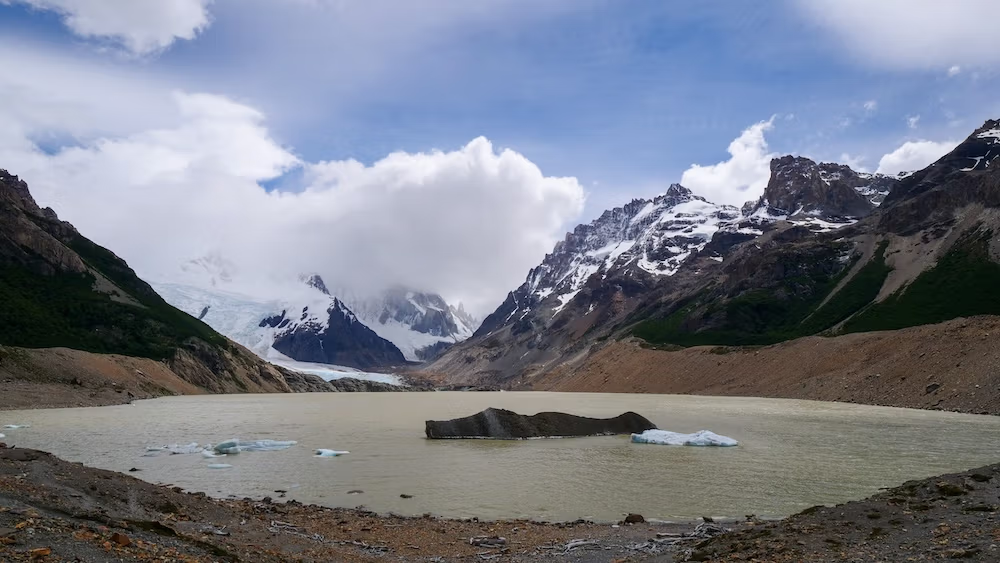
The destination: sometimes moody, sometimes muted, still wildly Patagonia
Here’s the honest truth: Laguna Torre’s “wow factor” depends heavily on visibility. On a cloudy day, the lagoon can look muted (we joked it was café au lait), and the iconic peaks can vanish behind cloud . That happened to us. Audrey and I couldn’t see Cerro Torre properly, and the big iconic “three peaks” scene was not showing. But even then, the place still had atmosphere: little icebergs floating, mountain ranges in every direction, and that wild remote feeling that makes you forget Wi-Fi exists. And because the hike itself is such a good experience—varied landscapes, forests, rivers, glacier views—it didn’t feel like the day was “ruined.” It just felt like the story Patagonia wanted to tell that day was more about mood than postcard perfection.
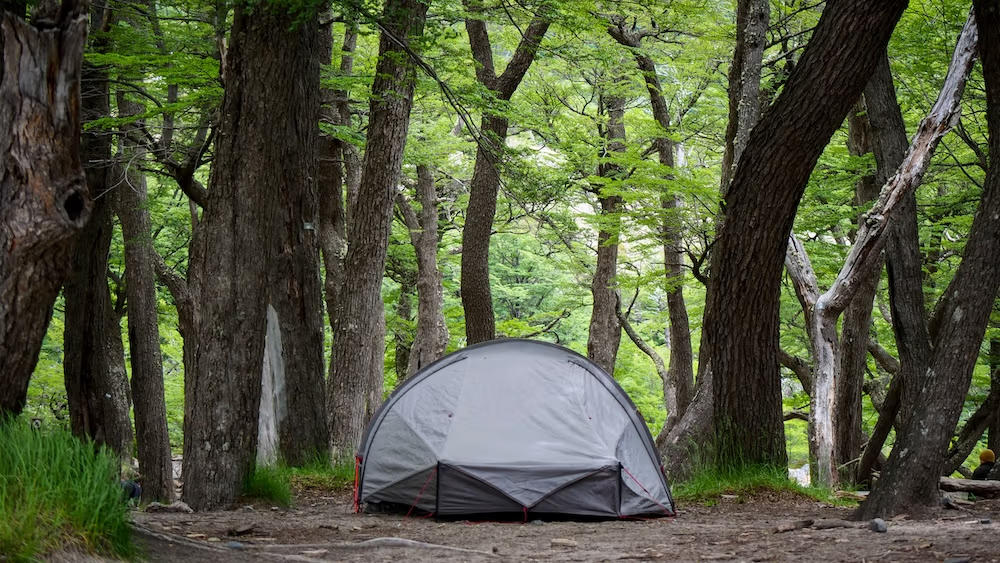
The campsite moment (and the universal temptation of other people’s noodles)
The De Agostini campground is one of those places that makes you stare at strangers’ camp stoves like you’re watching fine dining. We rolled in hungry, saw people cooking ramen, and immediately began planning a hearty dinner as a motivational strategy for the nine kilometers back. This is also where Laguna Torre quietly outperforms De los Tres as a day-hike experience: even when you’re tired, the return feels doable. The flatter valley helps, and you can cruise when you need to. We basically put the cameras down and marched home on a food mission.
Why Torre is often the best “first big hike” (especially if you’re not a trained mountain goat)
We’ll say it plainly: if you’re trying to decide which hike to do first, Torre is often the smarter opener because it teaches you how El Chaltén hiking works—distance, wind, layers, snacks, pacing—without hammering you with the steep finale that makes De los Tres so infamous. It’s intermediate, but it feels reasonable if you’re healthy, steady, and willing to take breaks. And if the weather isn’t perfect? Torre still delivers a satisfying day because the journey itself is the point. De los Tres can still be amazing in mixed conditions, but it’s the hike where you’re more likely to feel robbed if Fitz Roy stays hidden after you’ve paid the full effort price.
The “variety advantage” (forests, rivers, glacier motivation, and zero urgency)
Torre feels like it has more variety packed into one day—different forest moods (including a stretch that genuinely gave us haunted forest vibes), open valleys, river scenes, little ponds revealing themselves around bends, and that hanging glacier on the horizon that keeps you walking because your brain loves having a visual target. And the best part? There’s less urgency. Audrey and I felt relaxed on Torre in a way we didn’t on De los Tres, partly because we knew there wasn’t a brutal final kilometer waiting to collect our soul. You can stop, snack, take photos, breathe, and still finish feeling like you had a full Patagonia day rather than a survival mission.
Quick “Torre day” decision add-ons
| If conditions are… | Do this | Skip this |
|---|---|---|
| Clear + light wind | Add extra viewpoints / linger longer at the laguna | Rushing the return |
| Mixed clouds | Enjoy the journey + aim for the laguna anyway | Getting emotionally attached to seeing Cerro Torre perfectly |
| Windy | Keep breaks shorter; eat earlier; turn around if footing feels sketchy | Overcommitting to exposed add-ons |
The most important factor: weather and wind (Patagonia chooses your order)
If you’re trying to decide Torre vs Tres in advance, you’re basically trying to pre-schedule a personality. Patagonia will not cooperate.
Instead, use this logic:
Visibility logic
- Clear mountain forecast? prioritize Laguna de los Tres.
- Mixed clouds / “meh” day? consider Laguna Torre (still rewarding when the peaks hide).
- Total soup? do a short hike, eat something reckless, and live to hike tomorrow.
Wind logic (the unglamorous truth)
Wind doesn’t just make you cold. It makes you slower, more tired, and less safe—especially on exposed ridges and steep rocky sections. We had a day where the wind was so intense we could barely stand upright. That is not “character building.” That is “coffee building.”
Planning essentials: seasonality, weather, fees, camping, and logistics
Before we get poetic about granite spires, here’s what determines whether your day goes smoothly or becomes a “we learned a lot” story.
Seasonality and daylight (so you don’t hike by vibes)
El Chaltén’s prime hiking season is roughly late spring through early fall (think November to March) when days are long and most people can reach the big viewpoints without snow skills. Shoulder seasons can still be amazing—quieter, moodier, more dramatic—but you’re more likely to deal with snow patches, muddy sections, and a final climb that feels spicier than advertised.
Daylight matters more than you think:
- In peak summer, you can have extremely long days (sunrise early, sunset late), which gives you flexibility.
- In shoulder season, you need to be far more disciplined about start times because the margin for error shrinks fast.
Practical takeaway for “which first”:
If you’re visiting in peak summer, you can be flexible. If you’re visiting in shoulder season, you want your hardest day (De los Tres) on the clearest, calmest day with the earliest start.
Weather and wind: a more useful decision table
Patagonia weather isn’t just “rain vs sun.” It’s visibility, wind, and how fast things change.
| Forecast reality | What it usually means on trail | Best choice |
|---|---|---|
| Clear + light wind | Mountains show, the top is tolerable | Laguna de los Tres (take the icon) |
| Clear but windy | Views can be epic, but exposed sections get exhausting | Either, but start earlier and be conservative |
| Mixed clouds, low chance of clearing | You’ll get moody drama and some peekaboo moments | Laguna Torre (journey stays rewarding) |
| High winds | Balance feels weird, eating becomes a sport | Short hikes, viewpoints, café diplomacy |
| Wet + cold + low visibility | Slippery rocks + slow progress | Save the big hikes for a better day |
Camping and sunrise: the advanced move
Camping is the hack that turns “start early” from a motivational quote into a realistic plan. The classic camps for these hikes are:
- Poincenot (the base for the De los Tres sunrise mission)
- De Agostini (the base for the Torre sunrise mission)
- Laguna Capri (a gentler overnight option that also sets you up well)
The key point: if you’re planning an overnight, the question changes from “which first?” to “which sunrise do I want more?”
- Want Fitz Roy turning red at dawn? Sleep near Poincenot.
- Want Cerro Torre + glacier mood at first light? Sleep near De Agostini.
And if you’re not camping? You can still do both as day hikes—just start early and don’t pretend you’re immune to fatigue.
🥾 Plan B Adventures: Tours & Easy Day Trips from El Chaltén
Even hardcore hikers end up with a “Plan B” day in Patagonia. When the wind is feral, legs are toast, or you just want someone else to handle the logistics, these Viator options are easy wins.
👉 Browse El Chaltén tours (plus nearby options) on Viator
| Option | Best for | Book it |
|---|---|---|
| 🚌 El Chaltén “Complete Experience” day tour (from El Calafate) | A low-effort way to “see El Chaltén” without committing to a big hike | El Chaltén Complete Experience Full-Day Tour from El Calafate (Viator) |
| 🧊 Perito Moreno Glacier full-day + optional boat safari | Classic Patagonia bucket-list day that doesn’t require hardcore hiking | Perito Moreno Glacier Full-Day Tour with Optional Boat Safari (Viator) |
| 🚤 “Todo Glaciares” navigation (Upsala + Spegazzini) | Big-glacier scenery with max comfort (aka: let the boat do the work) | Glaciares Gourmet Navigation: Upsala & Spegazzini Navigation (Viator) |
| 🗿 El Calafate city tour + Walichu Caves | A cultural/history reset day (great when the weather is moody) | El Calafate City Tour + Walichu Caves (Viator) |
| 🚙 Nativo Experience: Lakes & Caverns (4×4 style) | Off-road adventure + viewpoints when you want something different than trails | Nativo Experience: Lakes & Caverns (Viator) |
| 🇨🇱 Torres del Paine full-day trip (from El Calafate) | Maximum “Patagonia wow” in one day (long day, huge payoff) | Torres del Paine Full-Day Tour from El Calafate (Viator) |
Which one should you do first? The full answer
If you’re in El Chaltén for a short stay, you’re not choosing the “best” hike. You’re choosing the best use of your best day.
Do Laguna de los Tres first when:
- Tomorrow is your only clear day.
- You want the iconic Fitz Roy payoff more than anything.
- You’re okay with the steep finish and a recovery day.
Do Laguna Torre first when:
- You want a long, classic Patagonia hike that feels steadier.
- You’re still dialing in your pace, footwear, and wind layers.
- The forecast is mixed and you want a hike that still delivers even if the peaks ghost you.
If you have 4–6 days (the luxury play)
Let the forecast decide. Do short hikes on windy days, do the big hike on the clearest day, and build recovery days into your plan like a grown-up who wants to enjoy their trip.
Itinerary templates
2-day “we’re here for a good time, not a long time”
| Day | Plan | Why |
|---|---|---|
| 1 | Laguna Torre | Calibrate + still get a classic day |
| 2 | Laguna de los Tres (early) | Take the icon while you can |
3-day “smart and realistic”
| Day | Plan | Why |
|---|---|---|
| 1 | Short hike (Cóndores / Águilas / Salto) | Arrival legs + weather scouting |
| 2 | Best forecast day: De los Tres or Torre | Use the best day wisely |
| 3 | The other big hike (or a shorter backup) | Keep flexibility |
5–6 day “Patagonia chess”
Mix:
- 2 big hikes (Torre + De los Tres)
- 2 short hikes (Cóndores/Águilas, Salto, Capri viewpoint)
- 1–2 flex days for wind, recovery, and spontaneous pastry decisions
Mistakes to avoid (we made them so you don’t have to)
- Treating the forecast like a suggestion.
- Starting late on a long day because breakfast was “too cozy.”
- Underestimating the last steep section of De los Tres (and the descent).
- Not packing enough snacks for the wind-blasted top where eating becomes a sport.
- Trying to do big hikes back-to-back without thinking about recovery.
The bottom line
If you want one simple plan that works for most people:
- Start with Laguna Torre to get a full-value day and calibrate your hiking reality.
- Save Laguna de los Tres for the clearest day and go early.
- If the wind says “no,” believe it. Patagonia will still be there tomorrow—your ankles would like the same guarantee.
✨ Ready to lock in your El Chaltén plan?
- 🥾 Browse El Chaltén tours on Viator
- 🏨 Find El Chaltén hotels on Booking.com
- 🚗 Compare El Calafate car rentals on DiscoverCars
- 🚌 Book El Calafate → El Chaltén buses on Busbud
El Chaltén Hiking FAQ: Laguna Torre vs Laguna de los Tres (and how to choose like a sane person)
Is Laguna de los Tres harder than Laguna Torre?
Yes. The big difference is the steep final climb (and the steep descent after). Torre is still long, but it tends to feel steadier and less “make-or-break” in the last stretch.
Which hike is better if the weather is cloudy?
Laguna Torre often holds up better on a cloudy day because the journey is varied and atmospheric even when the peaks hide. De los Tres is still worth doing, but the iconic payoff depends more on visibility.
Can I do both hikes in two days?
You can, but it’s a lot—especially if you do De los Tres on one of those “why are my legs made of concrete?” days. A three-day plan with a buffer day is more enjoyable. Get in shape and train if you can – as opposed to rolling into town like us in full-on foodie-mode.
What time should I start each hike?
Early. If you want fewer crowds and more predictable pacing, starting in the morning is the move. Sunrise missions are incredible, but they’re easiest if you’re camping.
Do I need trekking poles?
If you have them, bring them—especially for De los Tres. They’re helpful on the descent when fatigue messes with footing.
Which hike has more crowds?
De los Tres is usually the busier one because it’s the famous Fitz Roy classic. Torre can also get busy, but it often feels more spread out.
Is Laguna Torre worth it if Cerro Torre is hidden?
Usually, yes. The valley scenery, glacier vibes, and overall experience can still feel very Patagonia even when the towers play hide-and-seek.
What’s the best “first hike” if I just arrived in town?
If you want something short: Mirador de los Cóndores or Chorrillo del Salto. If you want a big day but not the harshest finish: Laguna Torre.
Can beginners do these hikes?
Fit beginners can do them with early starts, good pacing, and enough food/water. The key is respecting time, wind, and the steep final section on De los Tres.
How do I choose between them if I only have one day?
Pick De los Tres if it’s the clearest day you’ll get and you want the iconic Fitz Roy view. Pick Torre if the forecast is mixed, you want a steadier experience, or you’d rather enjoy the journey without a brutal final climb.
Project 23 Argentina: This guide is also available in Spanish. [Lea la versión en castellano: Laguna Torre vs Laguna de los Tres: ¿Cuál hacer primero en El Chaltén?]
Further Reading, Sources & Resources
If you want to double-check the practical details (fees, ticketing, camping rules, and the official-ish trail descriptions), these are the sources that are most useful.
Park fees, tickets, and rules
- https://www.argentina.gob.ar/interior/ambiente/parquesnacionales/losglaciares/tarifas
The most directly relevant official fee page for Los Glaciares National Park (including the El Chaltén / Zona Norte context). If you’re confused about prices, categories, or what “counts,” start here. - https://ventaweb.apn.gob.ar/
The official online ticketing platform for Argentina’s national parks. Useful for purchasing ahead of time and avoiding any “we thought we could pay later” surprises. - https://www.argentina.gob.ar/parquesnacionales/patagonia-austral/parque-nacional-los-glaciares/alojamiento
The official park page for accommodation/camping info—helpful for understanding what’s regulated, what requires reservations, and the general rules around staying inside the park.
Camping specifics + on-the-ground planning
- https://amigospnlosglaciares.org/campamentos/
Detailed camping information from Amigos del Parque Nacional Los Glaciares, including practical notes around camps and what to expect. Great for turning a vague camping idea into an actual plan.
Trail descriptions and hiking context
- https://elchalten.com/v4/es/laguna-de-los-tres-el-chalten.php
One of the most useful local trail-description pages for Laguna de los Tres: route notes, practical tips, and the kind of detail hikers actually look for when planning (especially for start times and what the day feels like).
Notes on accuracy
- Fees, portals, reservation systems, and payment rules can change quickly in Patagonia (sometimes mid-season). Always verify the latest status right before hiking, especially if you’re arriving on a tight timeline.