
There are hikes that feel “nice.” There are hikes that feel “hard but rewarding.” And then there’s Laguna de los Tres—the El Chaltén day that politely taps you on the shoulder, smiles, and then spends the next 8–10 hours trying to decimate your legs.
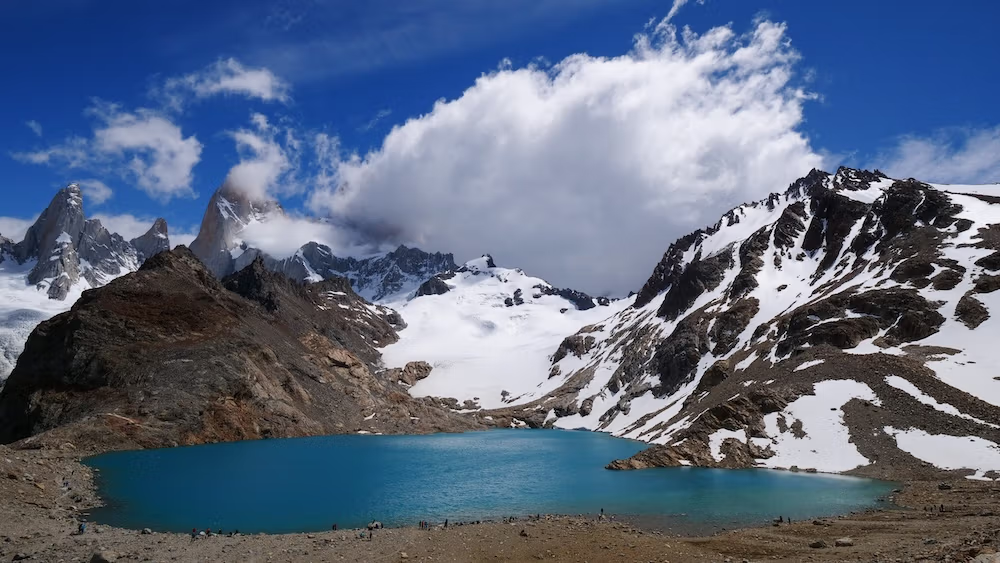
Audrey and I did this hike together and, yes, we got the iconic Fitz Roy view. We also learned several important lessons: wind in Patagonia is not a vibe, it’s a personality, and the final kilometer is basically a gravelly stairmaster.
This guide is the practical trail breakdown Audrey and I wish we had in our pocket that morning—equal parts how to do it well and how to survive it with your sense of humor intact.
Trail snapshot
| Detail | What to plan for |
|---|---|
| Starting point | El Chaltén (Fitz Roy / Laguna de los Tres trailhead at the end of town) |
| Typical time | 8–10 hours roundtrip for most hikers (plus breaks) |
| Typical distance | About 20–25 km roundtrip depending on exact route and add-ons |
| Difficulty vibe | Moderate… until the final climb, which is “why do I live here?” |
| Best season | Late spring to early autumn (weather dependent) |
| Highlights | Laguna Capri, forest + valley walk, Fitz Roy views, Laguna de los Tres viewpoint, optional Laguna Sucia overlook |
| Biggest challenge | The steep final kilometer (loose rock + fatigue + wind) |
If you remember only one thing: this hike is mostly a long, beautiful approach—then it turns into a steep punchline right at the end.
Park fees and entry logistics
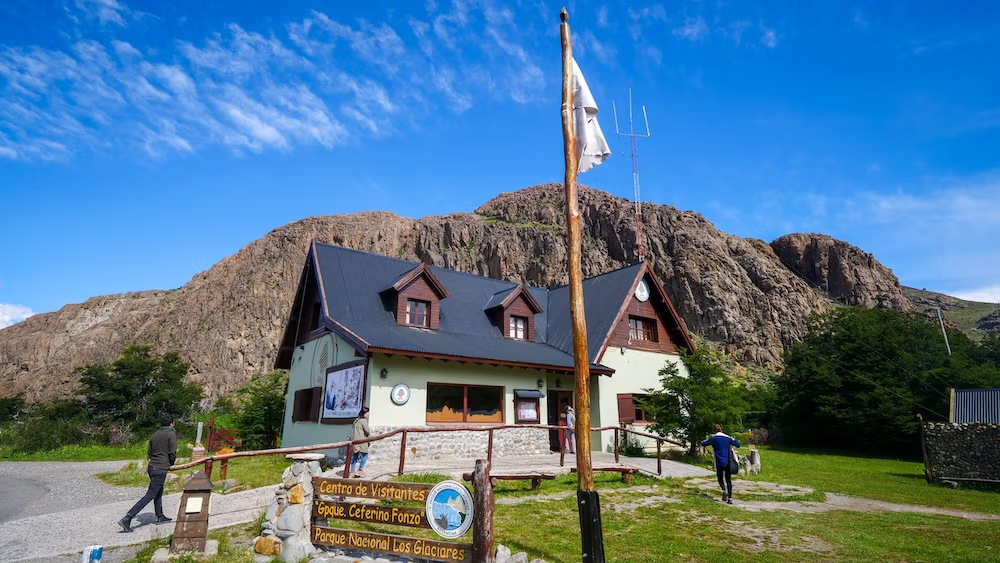
Laguna de los Tres is inside Parque Nacional Los Glaciares (Zona Norte / El Chaltén), and access is managed through trailhead portales (entry-control points). This only becomes “exciting” when you’re standing at the start with a coffee in one hand and your legs still asleep.
Here’s what to know before you hit the trail:
Yes, there’s an entry fee (current published prices)
As of Jan 6, 2025, Los Glaciares National Park lists these day-pass categories:
- Tarifa general: ARS 45,000
- Residentes nacionales (Argentina): ARS 15,000
- Residentes provinciales: ARS 5,000
- Estudiantes: ARS 7,000
- Exempt categories: includes kids 0–5 and other listed exemptions (check the official list)
Zona Norte: don’t plan on paying cash
On the El Chaltén hiking side (Zona Norte), tickets are obtained only online:
- Buy ahead online, or
- Scan the QR code at the portal and purchase on your phone
Payment is card only (credit/debit). No “I’ll just pay cash at the trailhead” plan.
Pick the best ticket strategy (save money if you’re hiking more than once)
| If you’re planning to… | Consider this | What it means in real life |
|---|---|---|
| Do one hike day | Pase diario | Pay for a single day entry |
| Do two hike days close together | 2nd-day 50% discount | Second entry can be 50% off if it’s within 72 hours |
| Enter the park 3 times | Flexipass 3 días | Multi-entry bundle (3 visits) |
| Enter the park a bunch in a week | Flexipass 7 días | Multi-entry bundle (7 visits) |
| Visit parks often across Argentina | Pase anual | Annual access option |
Current published bundle pricing for Los Glaciares (2025):
- Flexipass 3 días: ARS 90,000 (general) / 30,000 (national residents) / 10,000 (provincial residents)
- Flexipass 7 días: ARS 157,500 (general) / 52,500 (national residents) / 17,500 (provincial residents)
- Pase anual: ARS 225,000
Bottom line: if Laguna de los Tres is your “big day” and you’ll hike at least one more day soon after, don’t ignore the second-day discount or Flexipass math—it can make the whole El Chaltén week noticeably cheaper.
When to hike (and what “good weather” means here)
El Chaltén runs on weather windows. We stayed long enough that we could choose good days for our big hikes, and it was the difference between “core memory” and “miserable fog cardio.”
Good weather for Laguna de los Tres usually means:
- Clear or mostly clear skies (for the iconic view)
- Wind that isn’t trying to yeet you into the moraine
- No heavy rain (the final climb becomes slippery and miserable fast)
Daylight is your secret weapon
Patagonia summer gives you ridiculous daylight. Mornings get bright early and sunsets come late, which is why big day hikes feel possible even if you’re not an ultra-runner. Still: don’t be casual about it. The final descent takes time, and tired people make dumb choices.
Route overview: three ways to do Laguna de los Tres
There’s the classic version, the “maximize scenery” version, and the “I want sunrise without ruining my life” version.
Option A: Classic out-and-back from El Chaltén (most common)
This is the straightforward route:
- Start in town
- Follow the main Fitz Roy trail
- Hit Laguna Capri (optional but highly recommended)
- Continue to Poincenot
- Climb the final section to Laguna de los Tres
- Return the same way
Best for: first-timers, simple logistics, anyone who likes not thinking too hard.
Option B: One-way / point-to-point (logistics required, fewer repeats)
You can combine sections of the Fitz Roy network with a drop-off or pick-up near Río Eléctrico / El Pilar area. This can:
- Reduce repeat trail
- Add extra viewpoints
- Spread out crowds
Best for: hikers with time, a plan, and transport arranged.
Option C: Sunrise strategy (camping at Poincenot)
If sunrise at Fitz Roy is on your bucket list (and it should be), camping at Poincenot is the civilized way to do it. You hike most of the distance the day before, sleep (sort of), then tackle the final climb in the dark for the alpenglow show.
Best for: photographers, sunrise chasers, anyone who wants the iconic view with fewer people and more magic.
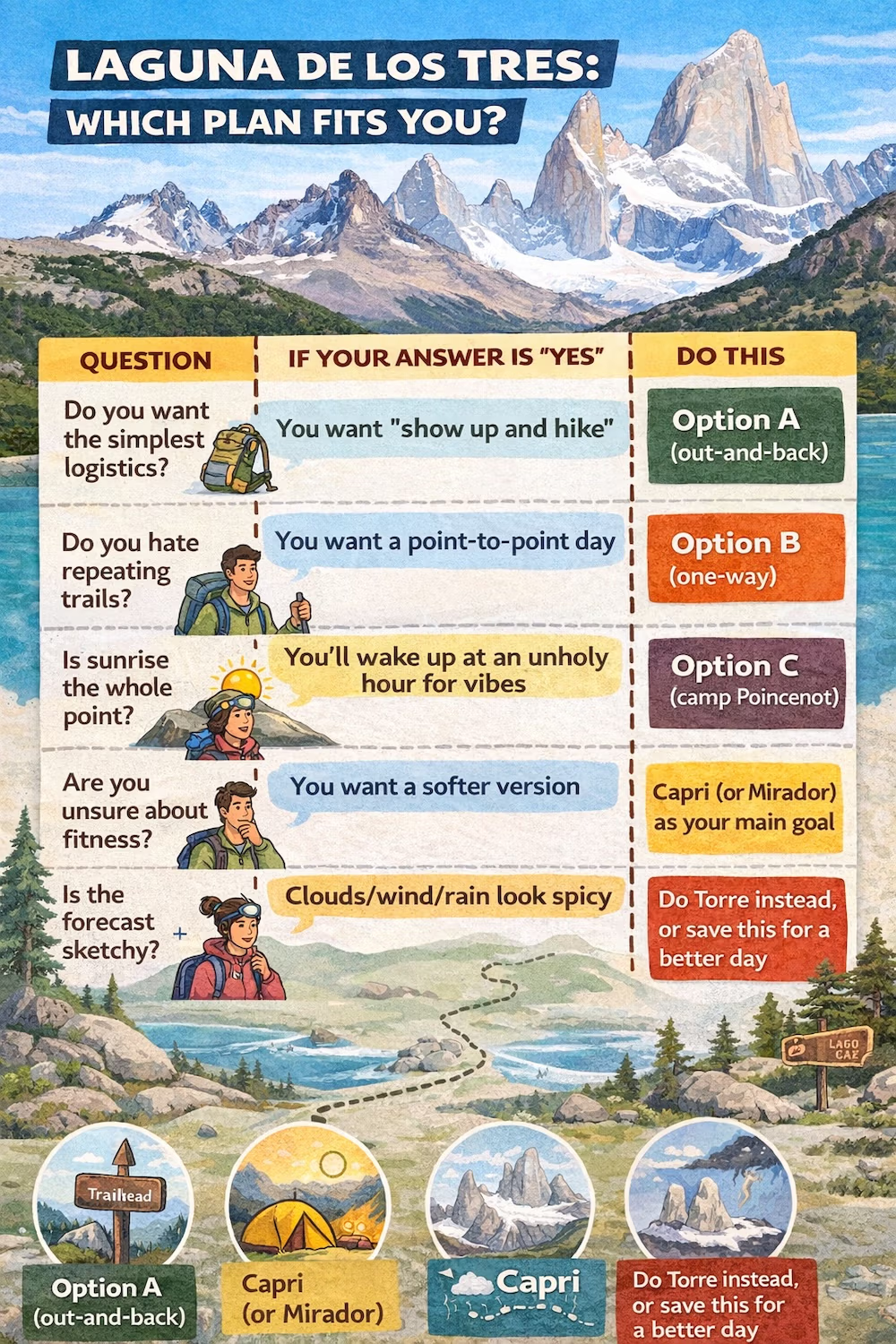
Decision matrix: which plan fits you?
| Question | If your answer is “yes” | Do this |
|---|---|---|
| Do you want the simplest logistics? | You want “show up and hike” | Option A (out-and-back) |
| Do you hate repeating trails? | You want a point-to-point day | Option B (one-way) |
| Is sunrise the whole point? | You’ll wake up at an unholy hour for vibes | Option C (camp Poincenot) |
| Are you unsure about fitness? | You want a softer version | Capri (or Mirador) as your main goal |
| Is the forecast sketchy? | Clouds/wind/rain look spicy | Do Torre instead, or save this for a better day |
Finding the trailhead (and how we nearly made it harder than it is)
The trailhead is not hidden, but it can feel confusing if you’re half-awake, hopped up on instant coffee, and convinced you memorized the map. We started with breakfast at our hotel around 6 a.m. because El Chaltén accommodations know the trekker routine—and I still couldn’t believe how bright it was that early in summer. It feels like the day is cheating in your favor.
Here’s the simple method we should have used immediately:
- Walk north along Avenida San Martín (the main drag)
- Keep going to the end of town
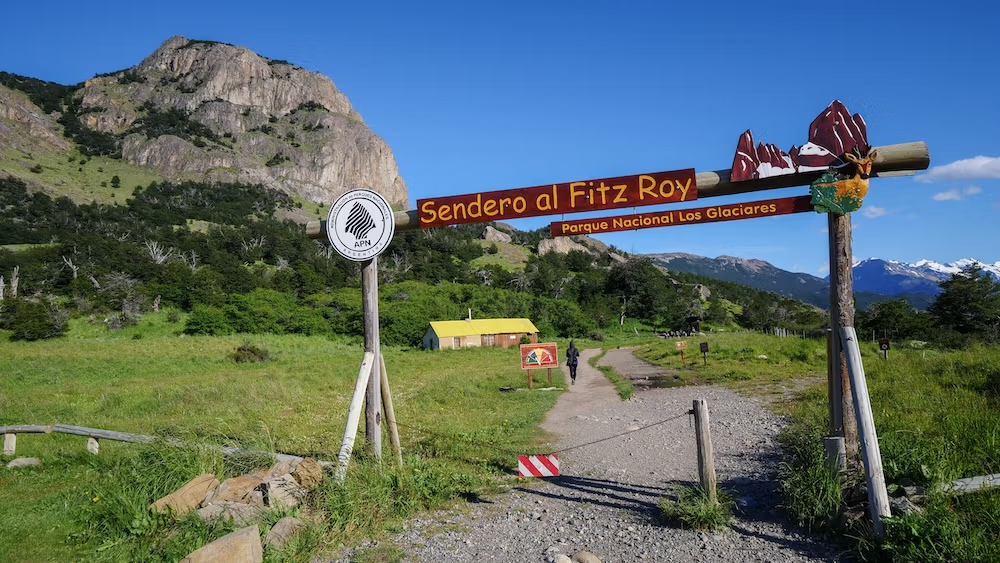
- You’ll see signage and the obvious start of the Fitz Roy trail network
To be fair, we were staying at the opposite end of town—so we managed to turn a simple “walk north” into a 45-minute warm-up that nobody asked for. Patagonia does not reward arrogance… but it does reward caffeine and humility.
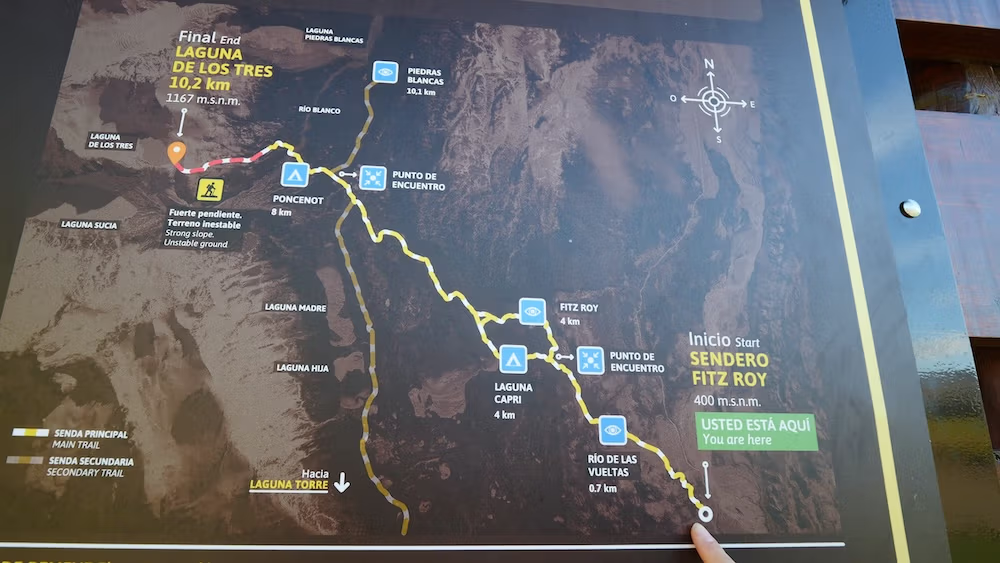
Step-by-step trail breakdown
Think of this hike in five acts:
- Initial climb and early viewpoints
- Forest and valley cruising
- Laguna Capri payoff (and decision point)
- Poincenot approach (the calm before the chaos)
- Final climb to Laguna de los Tres (the chaos)
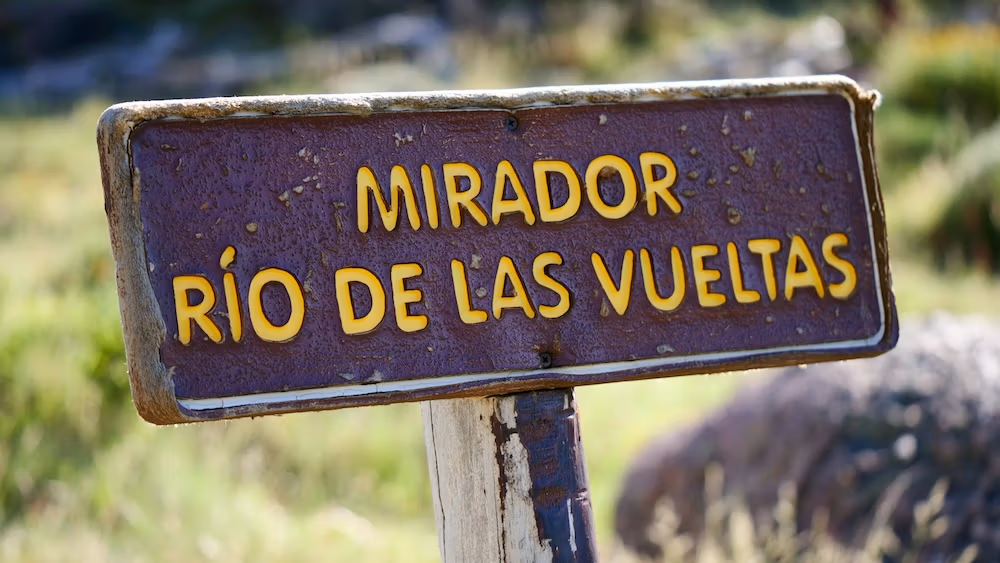
Act 1: The opening climb (wake up your legs)
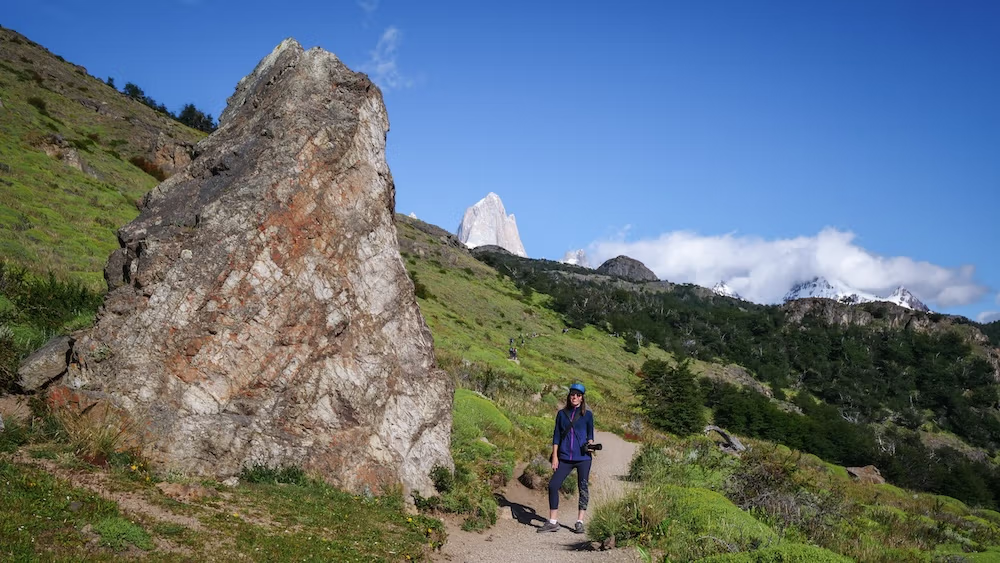
Right out of town the trail climbs. It’s not brutal, but it’s enough to remind you that you are, in fact, a wandering meatsuit.
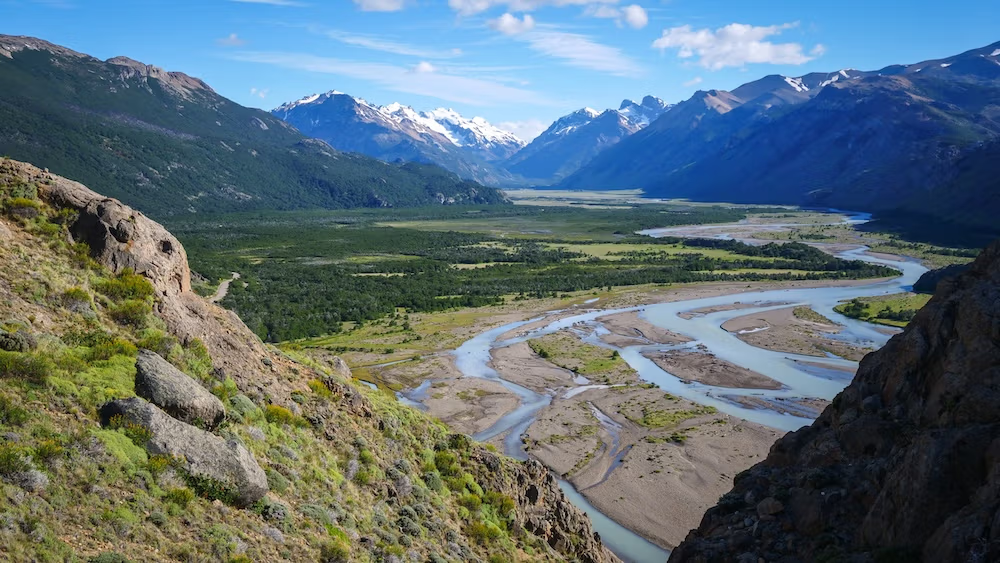
This section delivers an early “wow” viewpoint over the Río de las Vueltas valley. It’s the first moment where El Chaltén stops feeling like a small town and starts feeling like a staging area for otherworldly hikes.
Confession: I had already eaten most of my lunch by 9 a.m. Like a man who didn’t understand the concept of an eight-to-ten-hour day hike. Audrey was being normal; I was being… me.
Tip: If you’re already breathing like a malfunctioning vacuum cleaner here, slow down. This is not the place to set personal records.
Act 2: Forest and valley cruising (settle into the day)
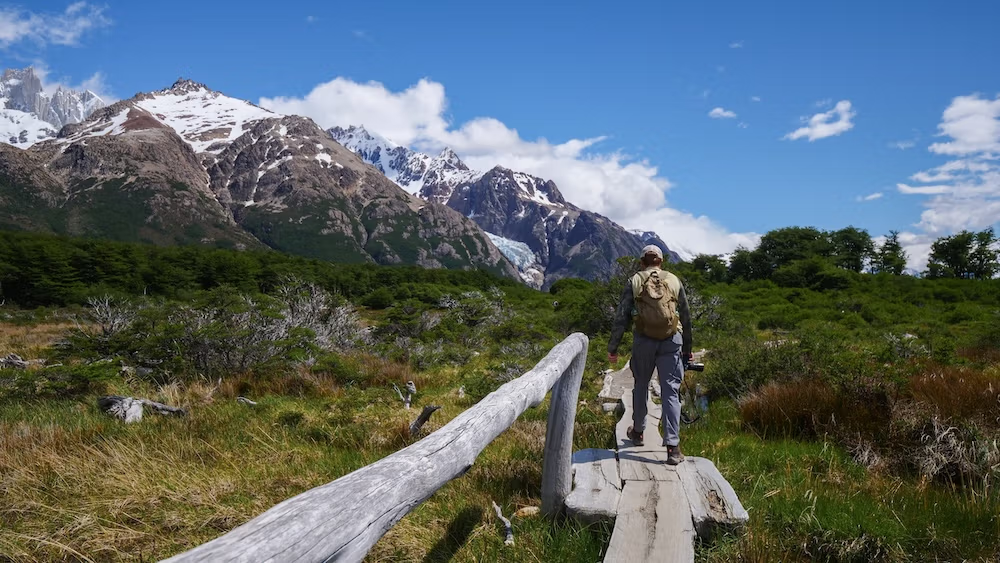
After the opener, the trail becomes a steady, scenic approach. You move through forest, along rivers, and through classic Patagonian landscapes that make you stop mid-sentence because your brain is busy processing how real it looks.
We also got one of those Patagonia moments you don’t plan for: three condors circling overhead like they owned the sky (because they do). It was the kind of sight that resets your mood instantly.
This is where pacing matters. A lot of people burn matches early, then pay for it at the end. The hike is long, so treat the middle like a marathon, not a sprint.
Act 3: The kilometer markers (the best psychological gift)
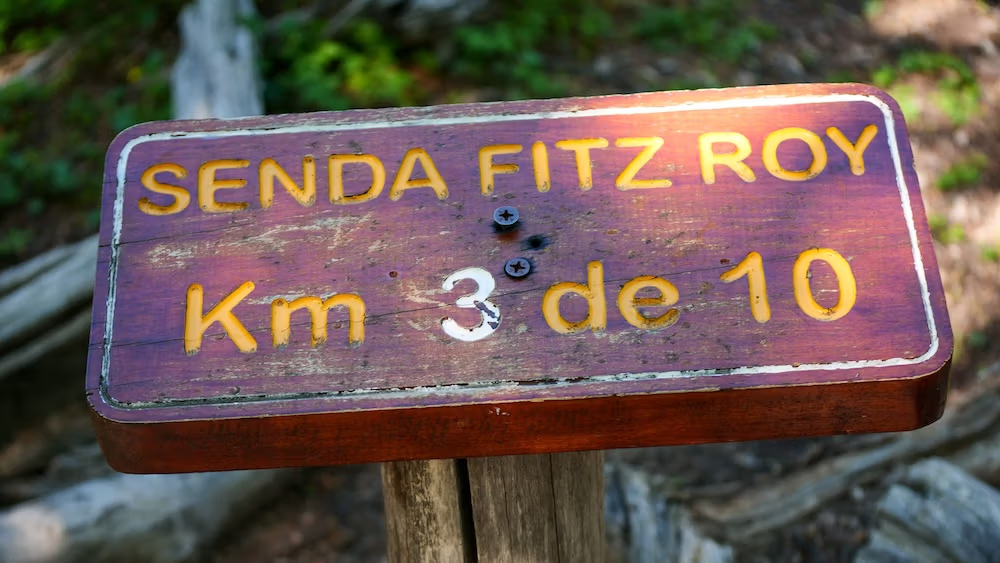
One of the underrated joys of hiking around El Chaltén is how well the trails are marked. We loved the kilometer markers because they turn a vague “how far is it?” into something you can actually manage.
At the fork just after kilometer three, we went left toward Laguna Capri—partly because we wanted that headline Fitz Roy view early, and partly because we liked the idea of building morale before the hike tried to emotionally bankrupt us.
It’s easier to stay positive when you can say:
- “Okay, we’re at km 5. We’re cruising.”
- “If we’re at km 7 by lunch, we’re golden.”
- “If we’re at km 9 and our souls have left our bodies, that’s normal.”
Act 4: The fork after around km 3 (don’t autopilot this)
Around the early part of the hike you’ll hit an important fork where you choose between different viewpoints and directions in the Fitz Roy network.
In practice, most hikers aiming for Laguna de los Tres will follow the main Fitz Roy / Poincenot direction. Just don’t switch off your brain and follow a random group like you’re migrating.
Tip: At every major sign, pause for ten seconds. Confirm. Drink water. Continue.
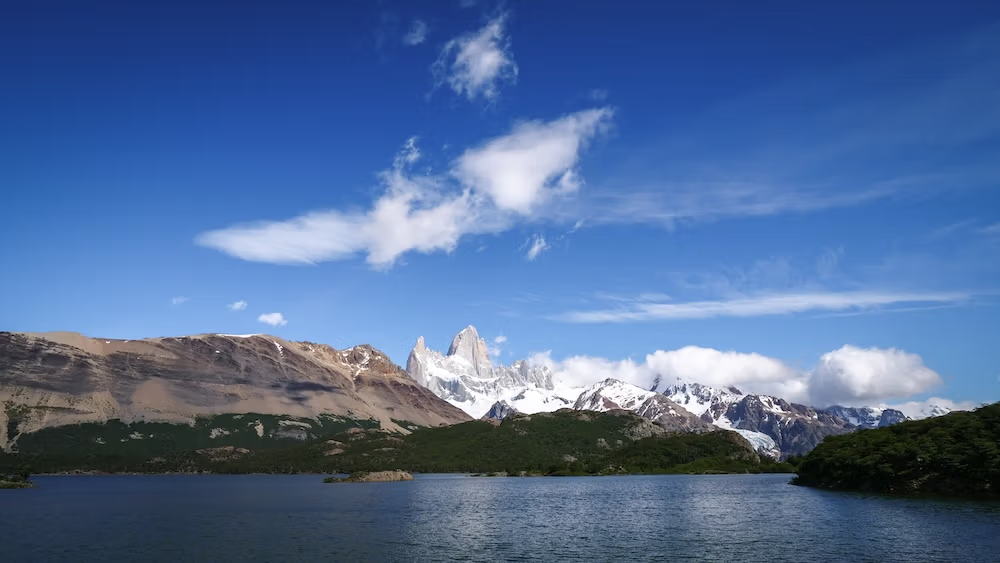
Act 5: Laguna Capri (the “you could stop here and still win” payoff)
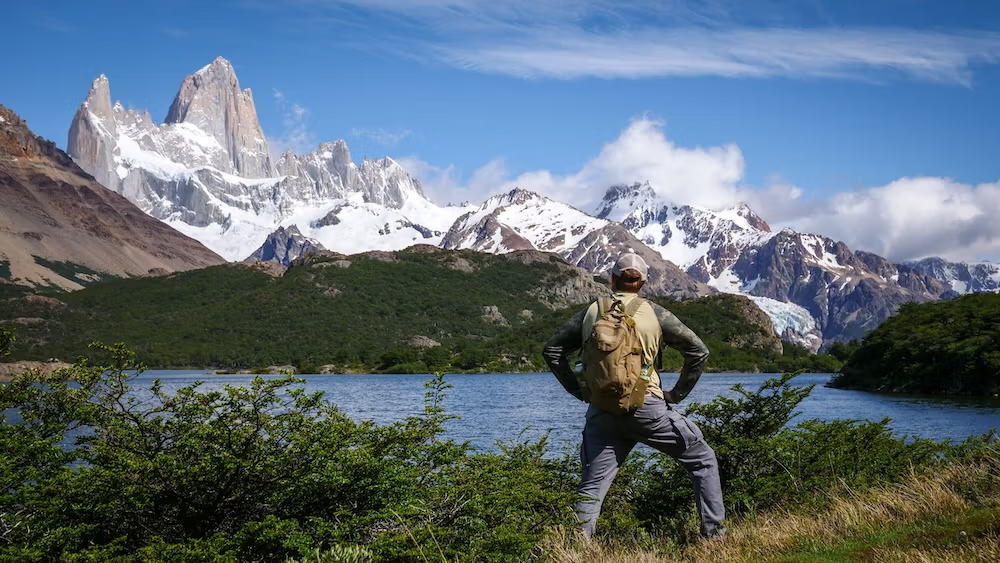
Laguna Capri is where Fitz Roy starts to feel offensive. Like, “excuse me, mountains, why are you trying so hard?”
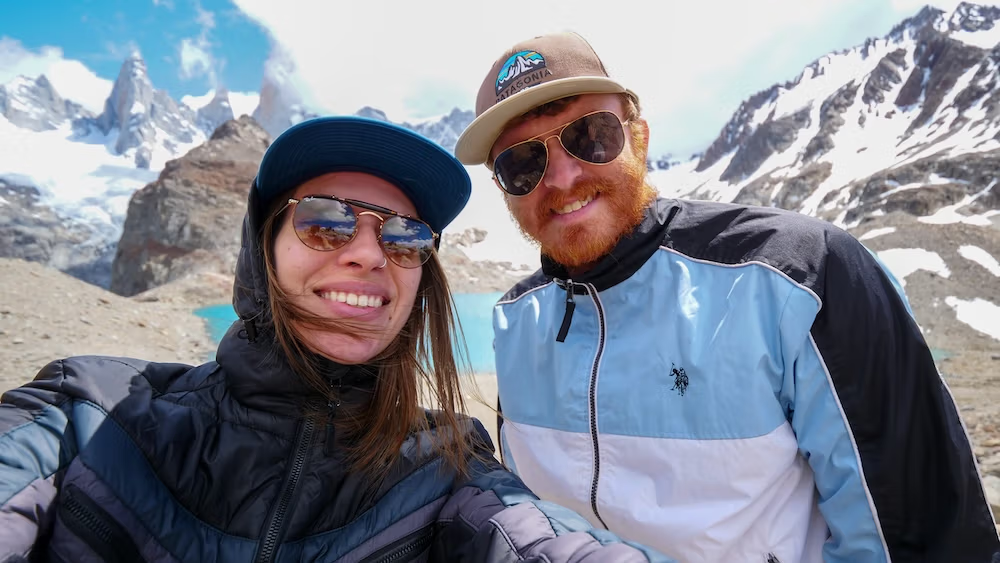
On a clear day, the view is borderline CGI. We literally called it “welcome to paradise” out loud. Fitz Roy looked so unreal it felt like someone had turned the graphics settings up to Ultra… and then we noticed the Patagonia hat resemblance and lost it.
This is also the most important psychological moment of the hike, because you can do the following:
- Enjoy a huge payoff
- Eat something
- Decide what kind of day you’re having
If you’re tired, the weather is turning, or you started late, turning back at Capri is not a defeat. It’s a smart hike with a great reward.
Capri decision table: continue or turn back?
| Signal | What it usually means | Best move |
|---|---|---|
| You feel strong, skies are clear, wind is manageable | You’re set up for success | Continue |
| You’re already wrecked and it’s only mid-morning | The final climb will be misery | Consider turning back |
| Clouds are swallowing Fitz Roy | The iconic view might not happen | Save Laguna de los Tres for a better day |
| Rain is starting | Final climb gets slippery and unpleasant | Turn back or switch hikes |
| You started late | Descent will push you into evening | Turn back (or be very conservative) |
We stood at Capri, heard the warning about the brutal last kilometer, looked at the time, and decided: heck we’re gonna go for it.
Also: Capri has that campground vibe—outhouse facilities, packs everywhere, and hikers doing snack math. Audrey had a muffin bite, we did the “are we really doing this?” check-in… and then Fitz Roy basically dared us to keep going.
Act 6: The long approach to Poincenot (steady wins)
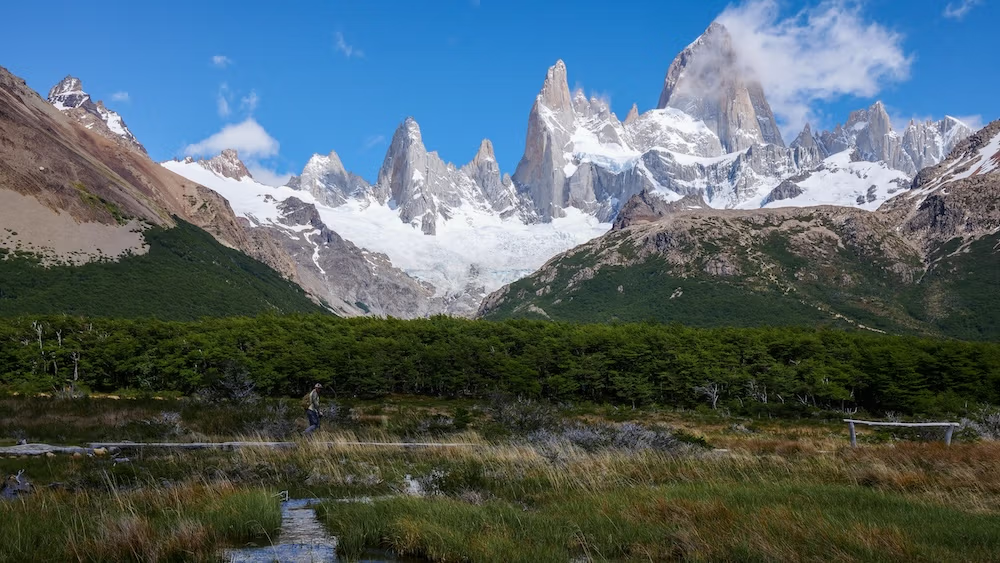
Past Capri, the trail continues through gorgeous terrain toward Campamento Poincenot, the main staging camp for Fitz Roy.
This section is scenic, mostly steady, and deceptively friendly. It’s the hike lulling you into a false sense of confidence, like: “See? This is fine. You’re fine. Everything is fine.”
This is where you should top up energy and water, because the final section is not the place to discover your body’s opinion on hunger.
Act 7: Río Blanco area (where the final climb becomes real)
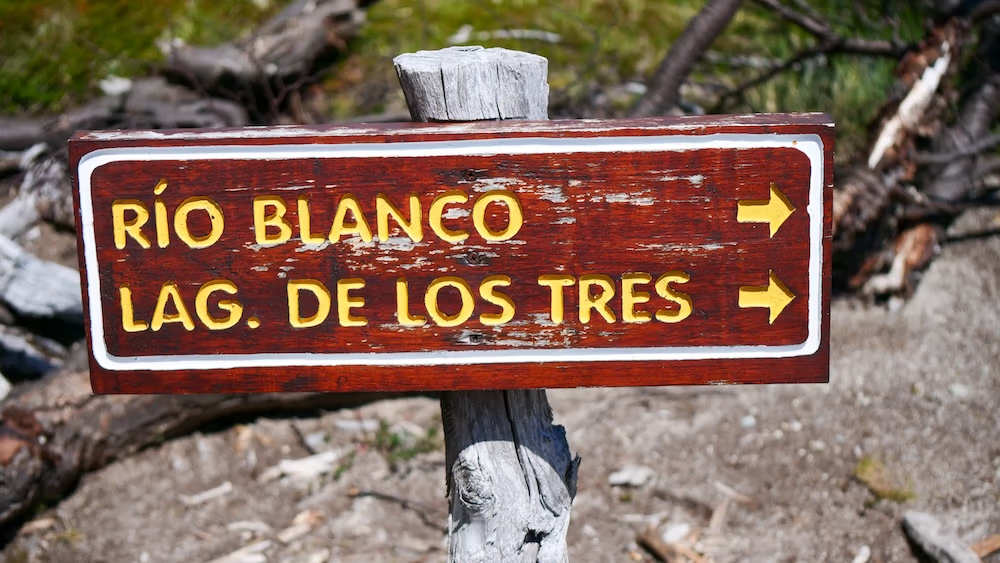
Somewhere near the upper valley and Río Blanco area, the trail transitions from “pleasant hiking day” to “serious business.”
You’ll feel it in the vibe. People get quieter. Snack breaks become more frequent. Someone always says, “Is that the steep part?” and everyone pretends they don’t know.
Act 8: The final climb (the boss level)
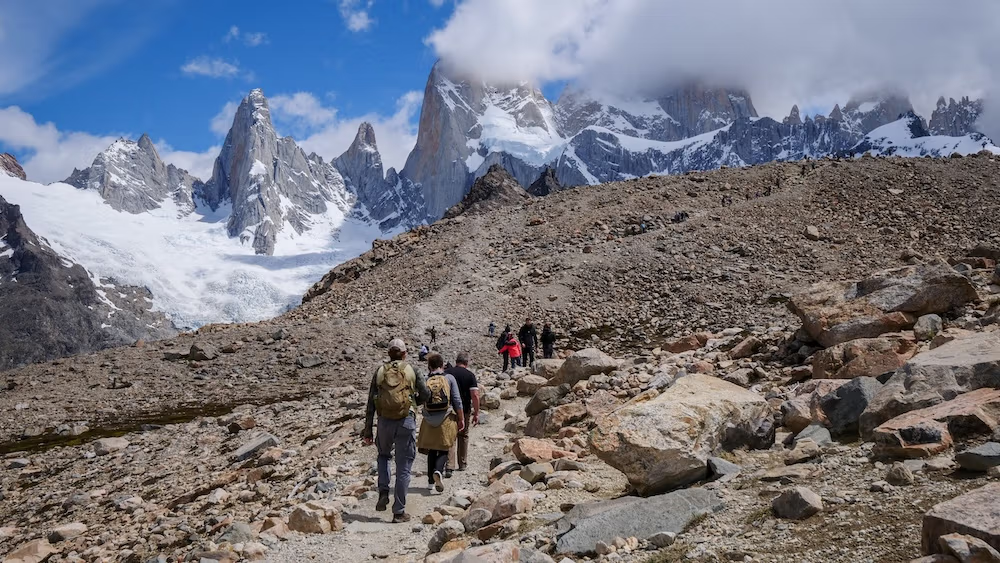
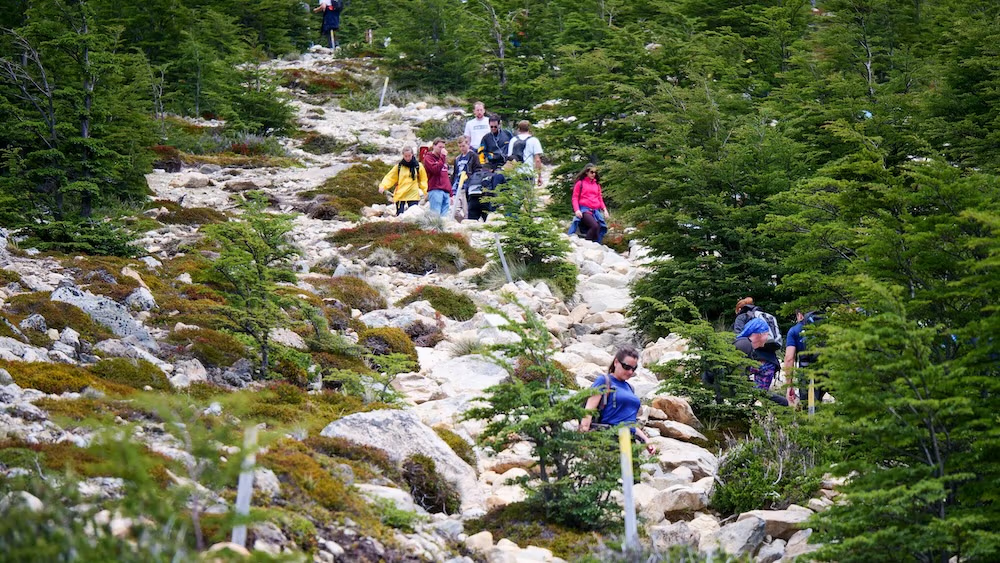
Let’s not sugarcoat it: the final climb is steep, loose, and humbling. It’s also the part of the hike that creates legends, friendships, and short-lived fantasies about helicopter rescues.
What it feels like:
- A staircase made of gravel
- A treadmill set to “why”
- A slow-motion negotiation between your lungs, your thighs, and your will to live
We hit this section and instantly understood why people warn you about it. Trekking poles would have been extremely helpful here, both for climbing and for protecting knees on the descent. We should have brought/bought some. Our bad.
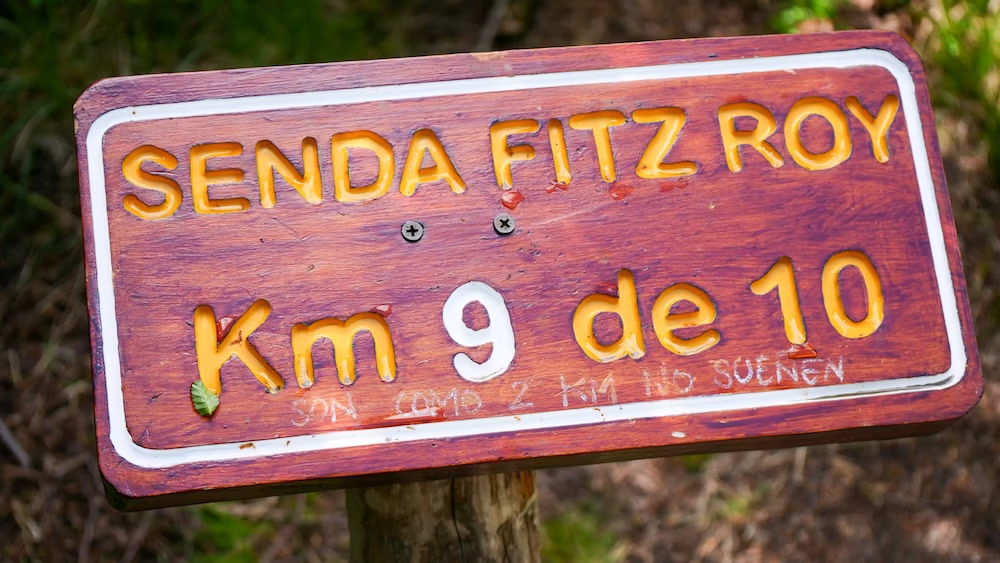
For us, kilometer nine was the true bottleneck: rocky, gravelly, steep, and the exact moment where tired legs start negotiating with your brain. What genuinely helped was the steady stream of hikers coming down saying, “you’re so close—keep going,” and promising the view was ridiculous.
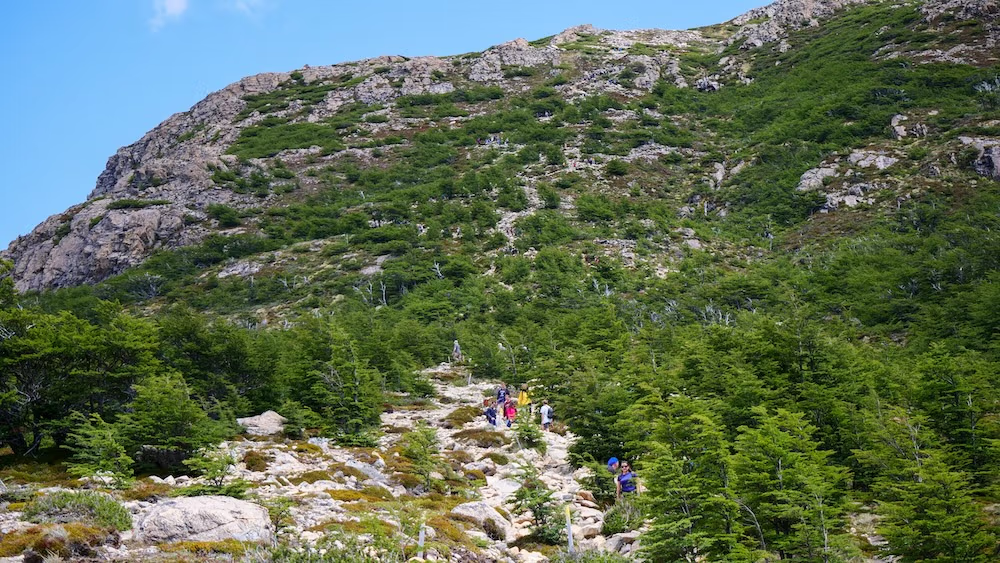
Tip: Tiny steps. Consistent rhythm. Breathe. Look up occasionally so you remember why you’re doing this.
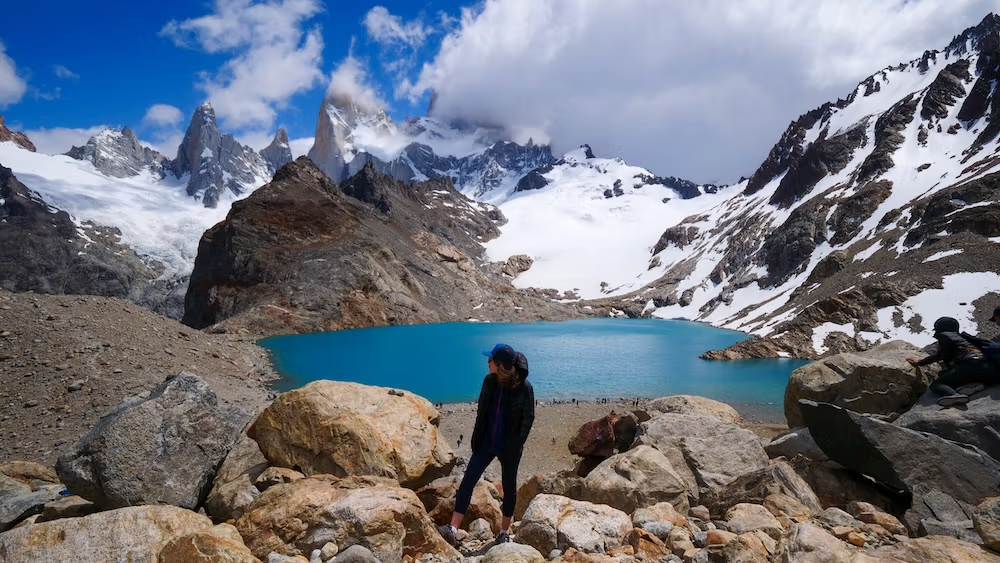
Act 9: Laguna de los Tres viewpoint (and the wind that tried to evict us)
When you reach the top, you arrive at the iconic viewpoint. On a clear day, Fitz Roy feels close enough to touch—an absurd wall of granite rising above the lake and glacier basin.
And then the wind introduces itself. We were so ravenous and so wind-slapped that we literally hid behind a rock like fugitives, shielding ourselves long enough to inhale the last of our food. Our grand summit feast: one granola bar and some candy… eaten like it was a Michelin tasting menu.
This is the Patagonia lesson: even if the hike up is warm, the top can be cold, windy, and dramatic. Bring a layer you can throw on immediately.
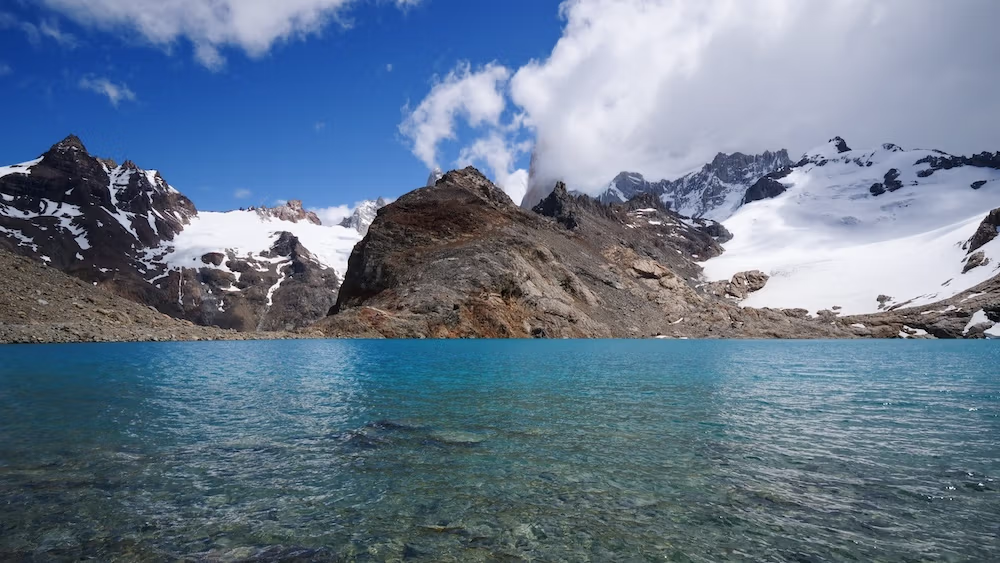
Optional add-on: Laguna Sucia overlook (if you have fuel left)
If conditions and energy allow, there’s a side viewpoint beyond the main area that looks over Laguna Sucia and the glaciers. It’s one of those “if we’re already here…” moments.
Decision rule: If you’re feeling strong and the wind isn’t violent, go. If you’re cooked, the main viewpoint is already a lifetime memory.
Timing plans: how to structure your day
The “normal human” day hike schedule
This is a realistic pacing template for most people. Adjust based on fitness, photo stops, and wind-related existential crises.
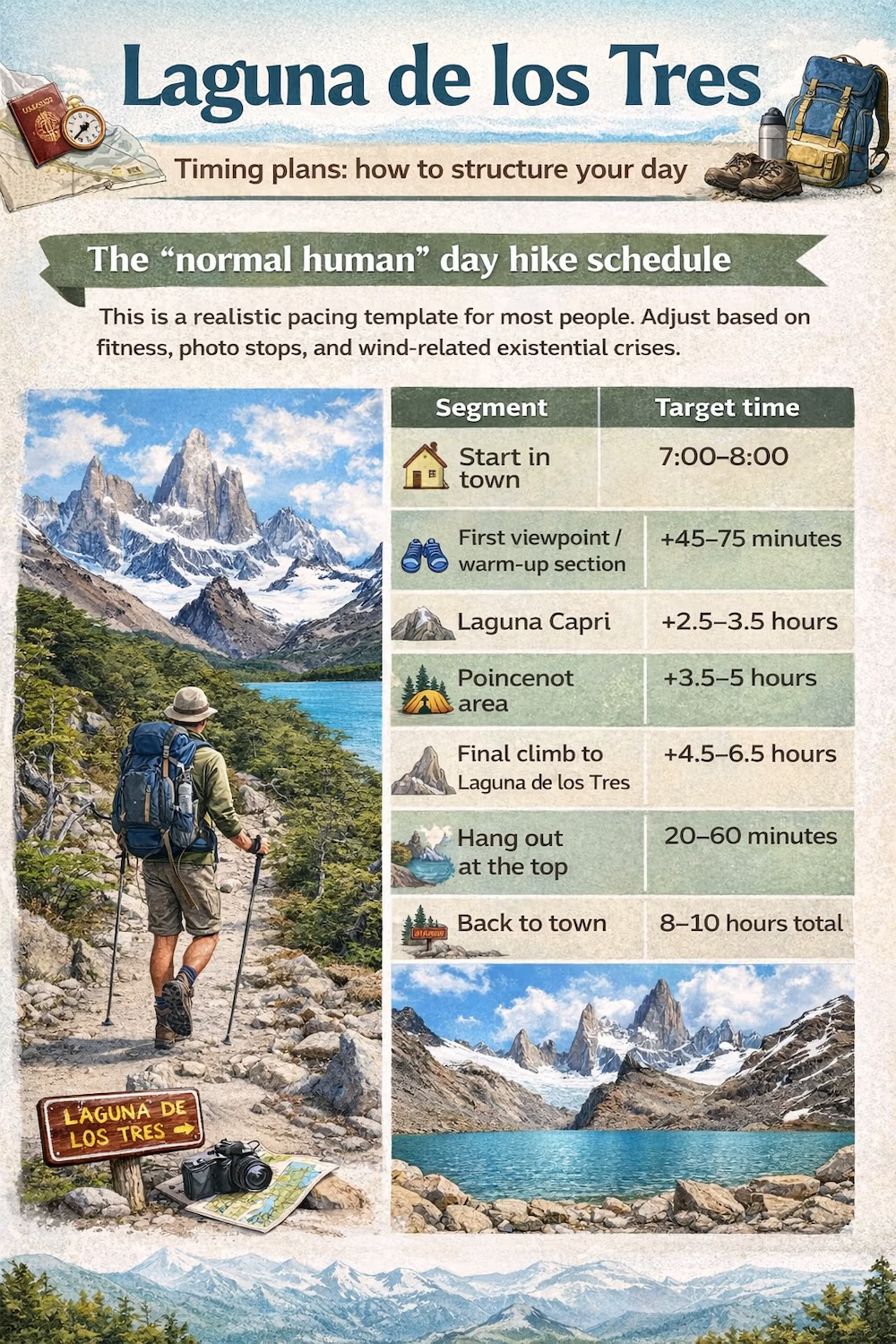
| Segment | Target time |
|---|---|
| Start in town | 7:00–8:00 |
| First viewpoint / warm-up section | +45–75 minutes |
| Laguna Capri | +2.5–3.5 hours |
| Poincenot area | +3.5–5 hours |
| Final climb to Laguna de los Tres | +4.5–6.5 hours |
| Hang out at the top | 20–60 minutes |
| Back to town | 8–10 hours total |
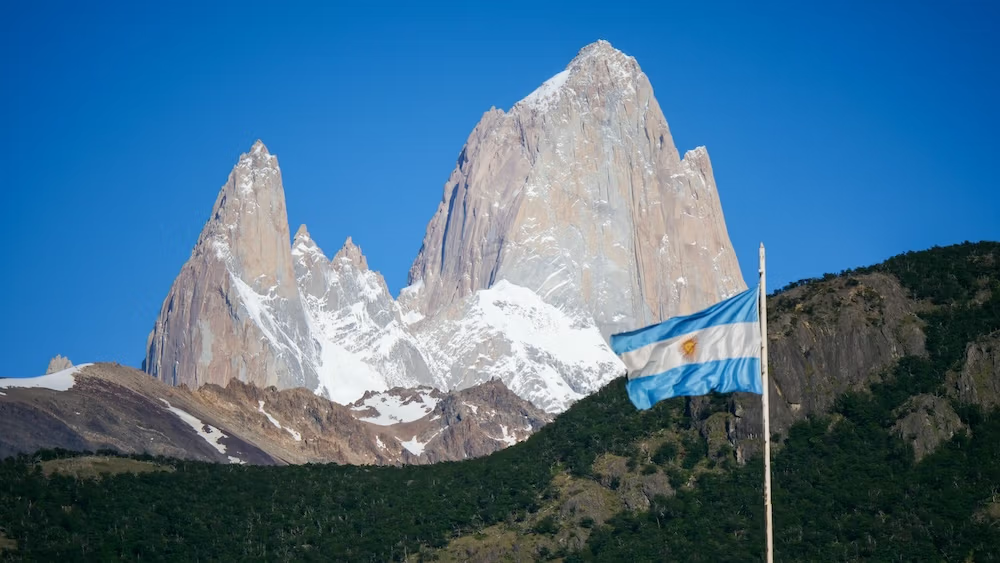
The sunrise plan (without camping)
Sunrise is the dream, but doing it as a day hike means hiking in the dark for hours. If you try this:
- Bring a real headlamp
- Download offline maps
- Expect colder conditions
- Start ridiculously early (often 2:00–4:00 depending on season and pace)
The sunrise plan (with Poincenot camping)
The civilized way:
- Day 1: hike to Poincenot, eat, sleep
- Day 2: start the final climb in the dark for sunrise, then return to town
This approach gives you:
- Less total suffering per morning
- Better odds of a quiet viewpoint
- A much more magical experience
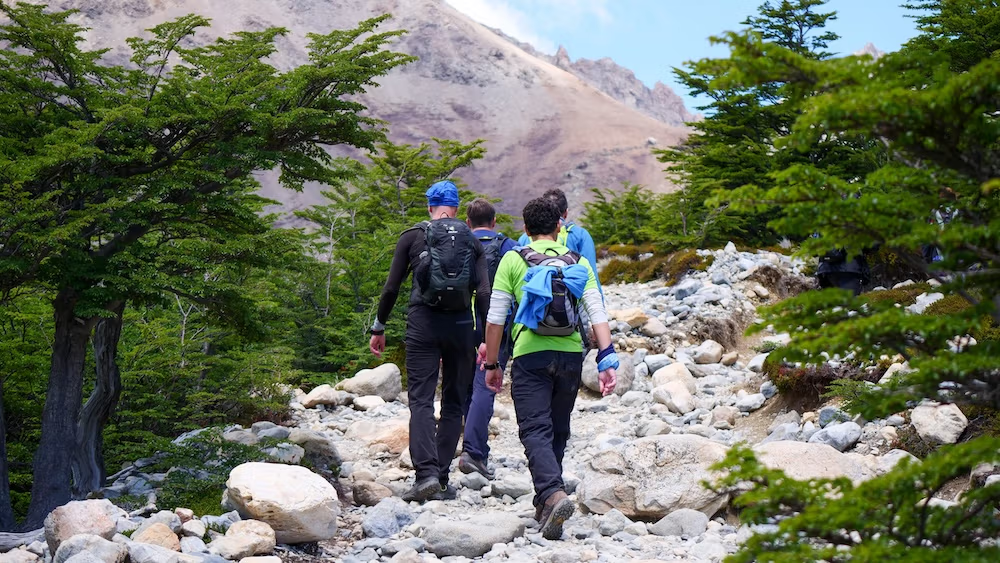
Crowds: how to get the view without a human wall
Laguna de los Tres is famous, which means you are not the only genius who thought, “We should do the famous hike.”
Crowd-minimizing strategies:
- Start early (the single best move)
- Go midweek if possible
- Aim for shoulder season days with stable forecasts
- If you’re fast, go early and linger; if you’re slower, go early and accept you’ll see people
A crowded viewpoint is still spectacular. But a quiet one feels like a secret.
What to pack (and what not to overthink)
Packing checklist (the stuff that actually matters)
| Item | Priority | Why it matters |
|---|---|---|
| Windproof layer | Mandatory | Patagonia wind is not optional |
| Warm mid-layer | Mandatory | The top can be cold even in summer |
| Rain shell | Strongly recommended | Weather flips fast |
| Trekking poles | Highly recommended | Final climb + knee-saving descent |
| Headlamp | Recommended | Late returns happen; sunrise hikes require it |
| Sunglasses + sunscreen | Mandatory | UV hits hard in the mountains |
| 2–3 liters of water | Recommended | Long day + dry wind |
| Snacks you’ll actually eat | Mandatory | The final climb runs on sugar and spite |
| Offline map | Recommended | Confidence improves decision-making |
| Small first-aid kit | Recommended | Blisters are predictable |
| Gloves / beanie | Optional but smart | Wind at the top can be brutal |
Clothing strategy: dress for three different hikes
Laguna de los Tres often delivers:
- A cool morning start
- A warm, sweaty mid-hike
- A cold, windy summit
Layering is the entire game. If you have one “Patagonia rule,” let it be this: pack for the top, not the town.
Food + water strategy (and the magic of the El Chaltén lunchbox)
We went the classic El Chaltén route and ordered a hotel lunch box the night before—convenient, a bit pricey, and still worth it when you’re trying to get out the door early. Audrey’s rice salad had big chunks of cheese and egg… and my main strategy was “eat everything too early and regret it later.”
Our lunchbox had the usual suspects:
- Rice salad
- Fruit
- A granola bar
- A muffin
- A few candies for morale
And then, somewhere on the trail, our salad container cracked and the “rice salad” became a conceptual art piece called Grains of Regret. We ate it anyways.
Snack strategy that actually works
This is not a “one big lunch” hike. The final climb wants you to have steady energy. Aim for:
- A snack every 45–60 minutes
- A bigger break at Capri or Poincenot
- Quick sugar for the final ascent (candy, dried fruit, gels, chocolate)
Tip: Bring snacks you love, not snacks you tolerate. Patagonia is not the time to experiment with “healthy bars” that taste like furniture.
Water: what we do
People often drink from streams with filters. We treat it like a long day hike and carry plenty, then top up only if we’re confident in the source and have purification.
Rule of thumb: If you’re thirsty, you’re behind.
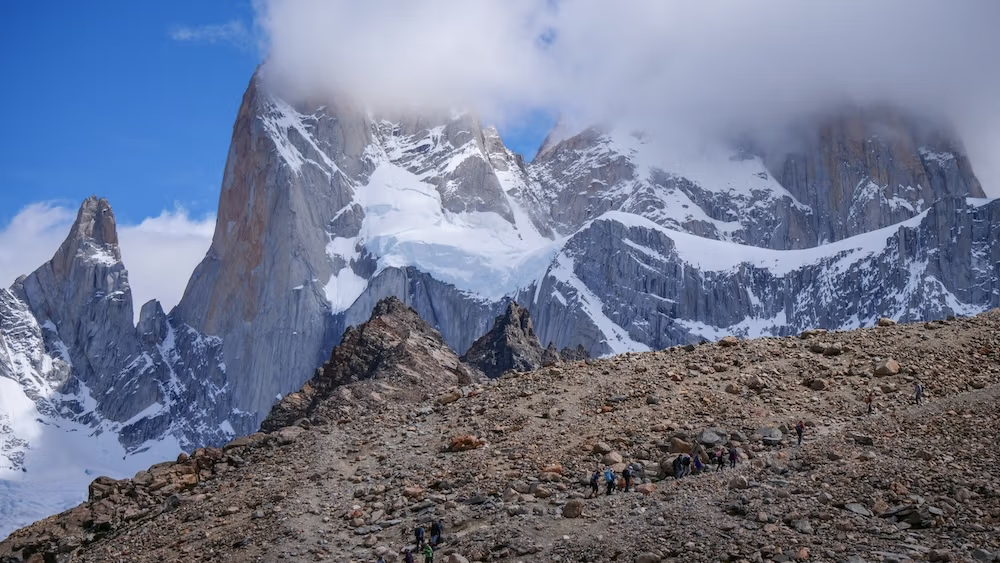
Weather + safety: when to turn around (and how to avoid dumb decisions)
Patagonia weather can switch fast. It’s part of the drama, and it’s also the main risk factor for this hike.
The “turnaround triggers” table
| Situation | Why it’s a problem | What to do |
|---|---|---|
| Rain starts and the wind increases | Slippery final climb + cold exposure | Consider turning back at Capri/Poincenot |
| Fitz Roy is fully socked in by clouds | You may grind for a view you never see | Decide if the hike is still worth it for you |
| You’re behind schedule early | Long descent in low light | Turn back earlier, not later |
| You feel dizzy, chilled, or shaky | Early hypothermia or bonk | Add layers, eat, reassess immediately |
| The final climb looks unsafe (ice/snow) | Slip potential is high | Don’t push; save it for better conditions |
Wind is the silent difficulty multiplier
We experienced strong wind at the top. Wind increases:
- Heat loss
- Fatigue
- Stress
- The chance you’ll rush your descent (bad idea)
If it’s truly howling, shorten your summit time and get moving downhill where you’ll be more sheltered.
Hiking etiquette (and small-town karma)
El Chaltén is a trekking town. People are out here chasing big days. Be the kind of hiker you’d want to meet:
- Let faster hikers pass
- Don’t block narrow sections
- Pack out your trash
- Stay on trail, especially in fragile areas
The descent: your knees will remember this part
Going down is where the hike collects payment. After the full 20 km day, we basically wrote off the next day. We didn’t leave the room, slept 10–12 hours, and walked like two dehydrated robots because everything was stiff—proof that we were absolutely out of our element… and still loved it.
Descent tips:
- Poles help a lot here
- Take smaller steps on loose sections
- Don’t rush the steep part just because you’re “done”
- Eat something before the descent so you’re not running on fumes
We found the descent mentally easier (gravity does the work), but physically punishing in the knees and feet. That’s normal. This is also where we had time to focus on how sore we felt. And golly gee wiz, we started to ache.
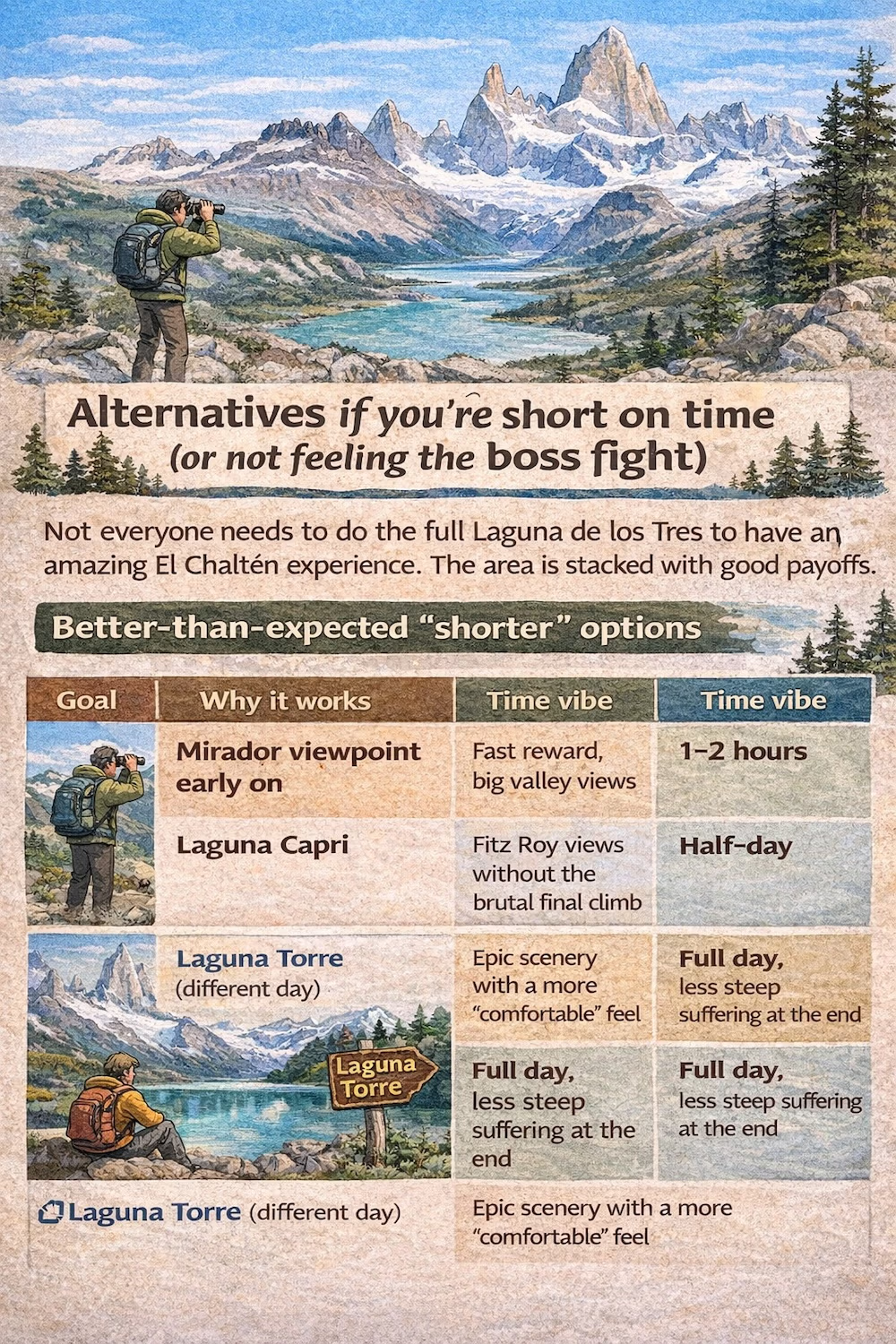
Alternatives if you’re short on time (or not feeling the boss fight)
Not everyone needs to do the full Laguna de los Tres to have an amazing El Chaltén experience. The area is stacked with good payoffs.
Better-than-expected “shorter” options
| Goal | Why it works | Time vibe |
|---|---|---|
| Mirador viewpoint early on | Fast reward, big valley views | 1–2 hours |
| Laguna Capri | Fitz Roy views without the brutal final climb | Half-day |
| Laguna Torre (different day) | Epic scenery with a more “comfortable” feel | Full day, less steep suffering at the end |
If you only do one big hike, yes, Laguna de los Tres is iconic. But if the forecast is bad, don’t force it. Save it for a clear day and do something else that’s still incredible.
Our personal “what we’d do differently” list
We loved this hike. We also learned.
- Bring trekking poles. The final climb would have been less brutal and the descent kinder on knees.
- Pack a stronger wind layer. The top was a wind tunnel.
- Start earlier than you think. Early starts buy you weather flexibility and fewer crowds.
- Snack more often. A steady drip of calories beats one heroic lunch.
- Arrive a bit fitter. Patagonia rewards preparation. We arrived in full foodie mode and paid for it.
Recovery planning: the secret to enjoying El Chaltén
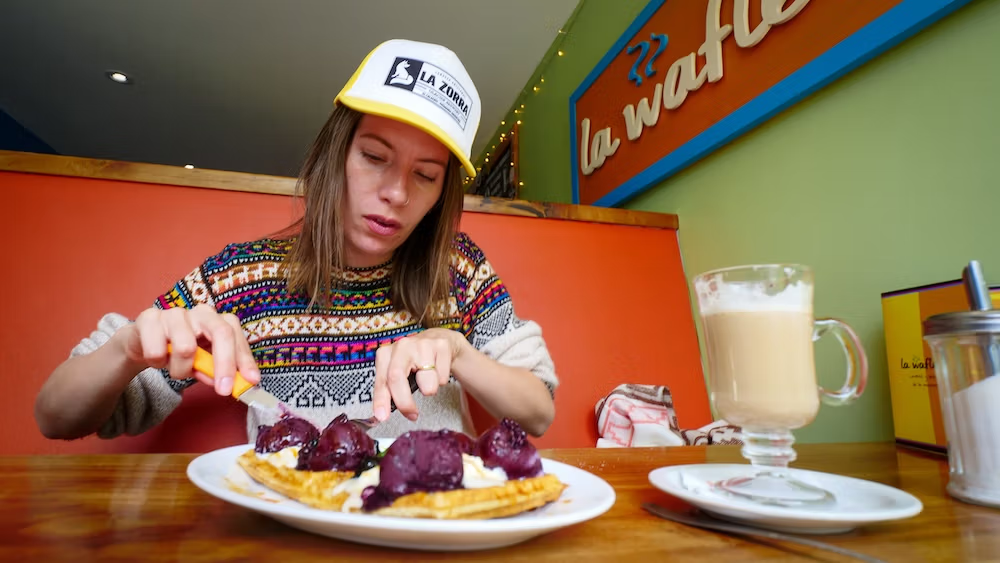
Here’s the part most guides skip: this hike can wipe you out.
After our Fitz Roy day we basically had a “write-off” recovery day—sleeping forever and moving like our joints had been replaced with rusty door hinges. That’s not weakness. That’s consequences.
How to plan your week like a responsible adult
- Do Laguna de los Tres on a high-energy day
- Schedule an easier hike or rest day after (Chorrillo del Salto, town wandering, café life)
- Don’t stack your two hardest hikes back-to-back unless you genuinely recover like a superhero
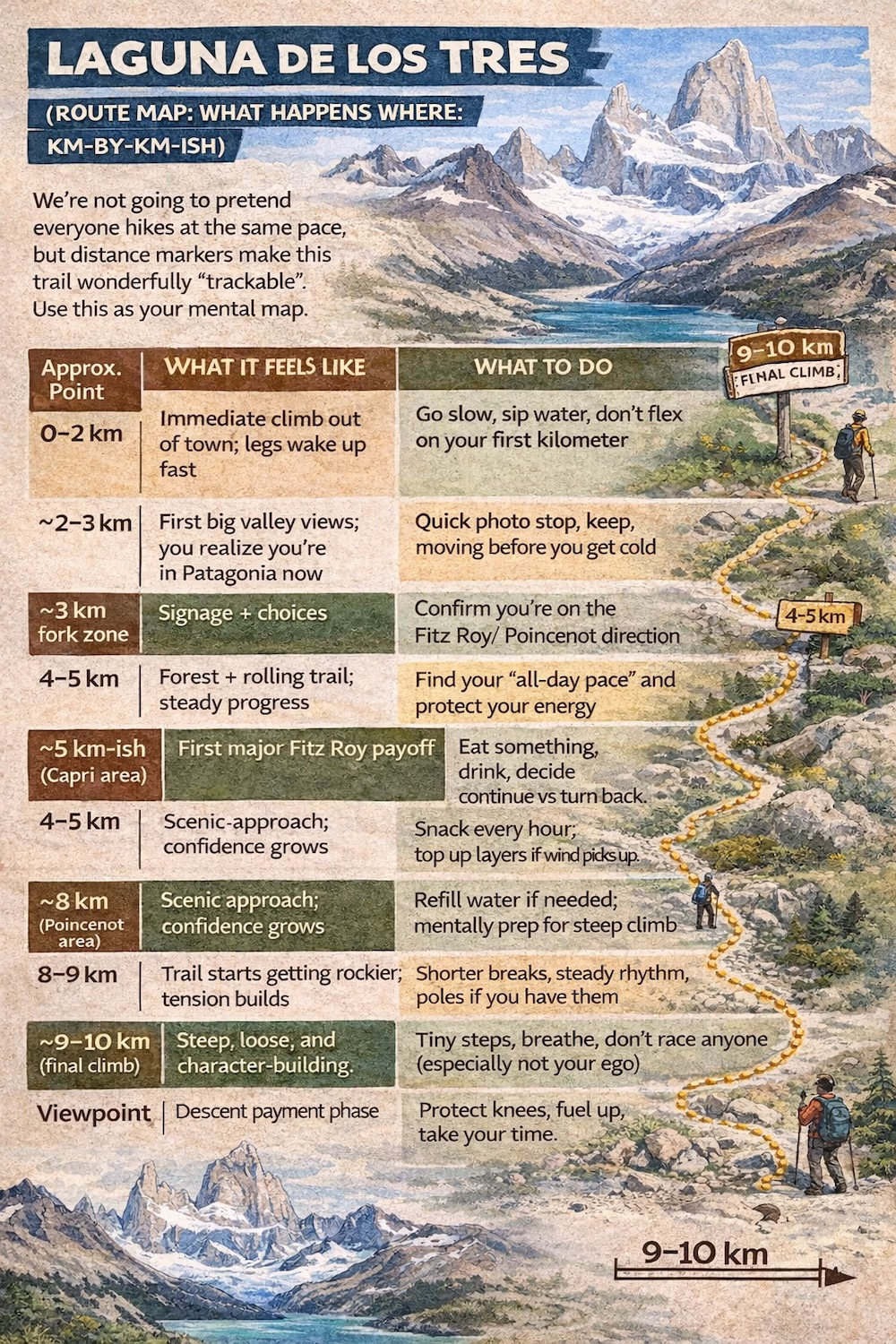
Route map in words: what happens where (km-by-km-ish)
We’re not going to pretend everyone hikes at the same pace, but distance markers make this trail wonderfully “trackable.” Use this as your mental map.
| Approx. point | What it feels like | What to do |
|---|---|---|
| 0–2 km | Immediate climb out of town; legs wake up fast | Go slow, sip water, don’t flex on your first kilometer |
| ~2–3 km | First big valley views; you realize you’re in Patagonia now | Quick photo stop, keep moving before you get cold |
| ~3 km fork zone | Signage + choices | Confirm you’re on the Fitz Roy / Poincenot direction |
| 4–5 km | Forest + rolling trail; steady progress | Find your “all-day pace” and protect your energy |
| ~5 km-ish (Capri area) | First major Fitz Roy payoff | Eat something, drink, decide continue vs turn back |
| 6–8 km | Scenic approach; confidence grows | Snack every hour; top up layers if wind picks up |
| ~8 km (Poincenot area) | Camp zone vibe; people look serious | Refill water if needed; mentally prep for steep climb |
| 8–9 km | Trail starts getting rockier; tension builds | Shorter breaks, steady rhythm, poles if you have them |
| ~9–10 km (final climb) | Steep, loose, and character-building | Tiny steps, breathe, don’t race anyone (especially not your ego) |
| Viewpoint | The iconic lake + granite wall; wind may attack | Layer up immediately; shelter behind rocks; enjoy the moment |
| Return | Descent payment phase | Protect knees, fuel up, take your time |
Tip: If you’re feeling great, add a few short “micro-goals” on the final climb (next big rock, next bend, next flat-ish patch). The mind handles 30 small victories better than one giant suffering session.
Pacing strategy: how to finish strong (instead of crawling)
The most common mistake we see on big El Chaltén day hikes is going too hard early because the trail feels easy. Then the final climb arrives and everyone suddenly discovers they have “interesting” cardiovascular opinions.
The “3 gears” method
- Gear 1 (first hour): slow and steady. You should still be able to chat. Yes, even if you feel like a hiking god.
- Gear 2 (middle miles): consistent cruising. This is where you bank progress without burning your legs.
- Gear 3 (final climb): tiny steps and stubbornness. You’re not trying to be fast—you’re trying to be efficient.
Breaks that work
- Short breaks (30–60 seconds) every so often beat long sit-down breaks that make your legs stiff.
- Save your longer break for Capri or Poincenot, where the scenery and the psychology both help.
The “knee tax” warning
If you’ve ever thought, “I’m better at going down than up,” congratulations—your knees would like a word. Descending loose rock when you’re tired is where people slip, twist, and regret everything. Slow down before you feel like you need to.
Photography and viewpoint game plan (without turning the hike into a photoshoot)
Let’s be honest: most of us are doing this hike because we want That View. Here’s how to increase the odds of getting it.
Best light (and best vibes)
- Sunrise: legendary. The granite can glow and the lake area feels extra dramatic.
- Morning: often calmer conditions and fewer people at the top.
- Midday: bright and clear can still look amazing, but harsher light and more crowds.
- Late afternoon: can be quieter again, but you’re gambling with fatigue and time.
Where to linger
- Capri is a great “slow down and soak it in” spot, especially if you’re not sure about pushing to the top.
- At Laguna de los Tres, find a sheltered spot and take your time—just keep an eye on wind and clouds.
A simple “clear day” rule
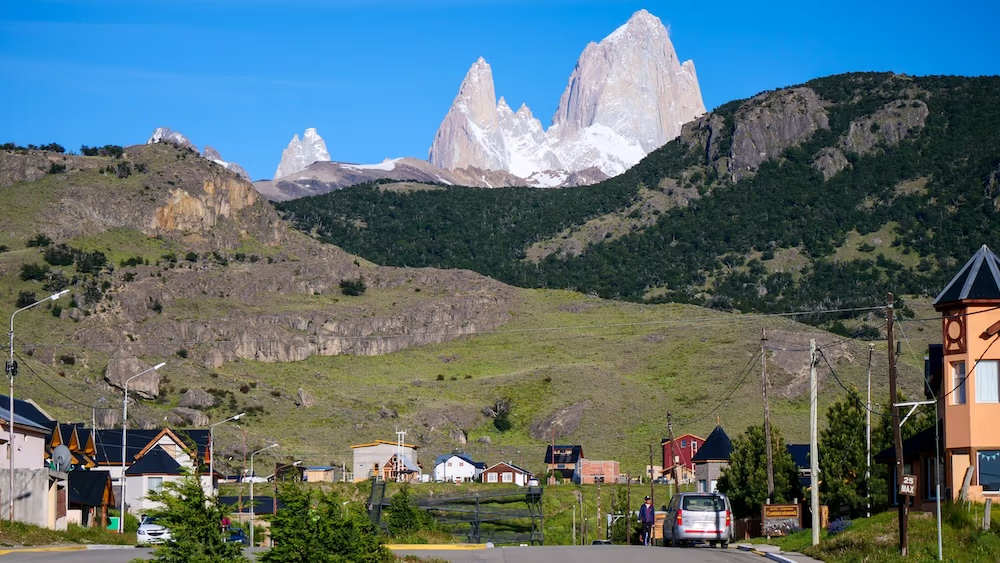
If Fitz Roy is clearly visible from town in the morning, your odds of a good viewpoint window are strong. If it’s already getting swallowed by cloud bands early, consider saving the hike for another day.
Comfort and sanity upgrades (small things that make a big difference)
These are the little choices that turn a hard hike into a good memory.
Blister prevention
- Trim nails, wear known socks, and don’t debut brand-new boots on the biggest day.
- If you feel a hotspot, stop early. Patagonia doesn’t care about your pride.
Wind management
- Bring a layer you can put on in 15 seconds at the top.
- Gloves and a beanie weigh almost nothing and can save your mood when the wind goes feral.
Lunchbox pro-tip
If you’re doing the El Chaltén packed lunch thing, put it inside a tougher bag or container. Our salad decided to become a backpack-based science experiment.
Leave No Trace and local trail etiquette
El Chaltén is famous because it’s easy to access epic trails. That also means the landscape gets hammered if hikers are careless.
- Stay on trail, especially around fragile areas near viewpoints.
- Pack out every scrap of trash, including “tiny” things like candy wrappers.
- If you see dogs following hikers, don’t encourage it. Rangers and locals worry about wildlife impact, and it can create problems for the animals and the dogs.
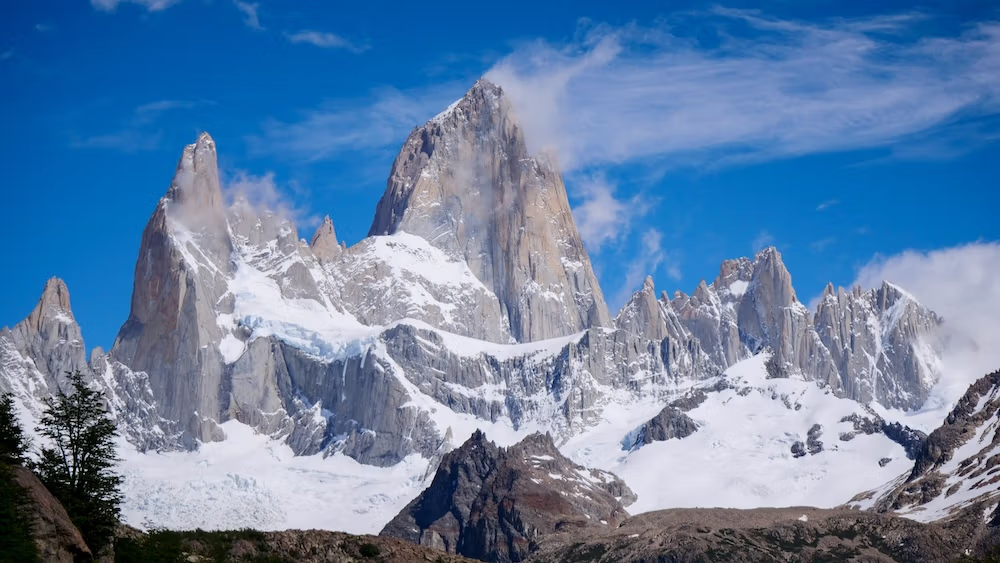
If you’re deciding between Laguna de los Tres and Laguna Torre
We did both, and they’re both epic. But they’re different flavors of epic.
| Pick this hike | If you want… | Expect… |
|---|---|---|
| Laguna de los Tres | The iconic Fitz Roy “poster” view | A brutal final climb and a bigger fitness demand |
| Laguna Torre | A slightly more “comfortable” long day | Big scenery with less steep suffering at the end |
If you only have one clear day, choose based on the view you care about most and your fitness levels. If you have multiple days, do both—but give yourself a recovery buffer unless you enjoy walking like a zombie.
Quick training reality check (so the hike feels better)
You don’t need to be an athlete, but a little prep helps a lot.
If you have a few weeks before Patagonia:
- Do longer walks with a loaded daypack
- Add stairs or hill repeats once or twice a week
- Practice fueling (snacks on the move)
- Break in your footwear
We arrived in full foodie mode and still finished, but it’s definitely more fun when your legs aren’t running a constant complaint hotline.
Mini-itinerary: the “smart” two-day El Chaltén Fitz Roy plan
Day 1: Warm-up + logistics
- Short hike or viewpoint (easy win)
- Buy/organize snacks
- Check forecast
- Early dinner, early sleep
Day 2: Laguna de los Tres day
- Early breakfast
- Start hiking early
- Capri break
- Summit and soak it in (wind permitting)
- Slow, careful descent
- Big dinner reward
Day 3: Recovery or “comfortable epic” hike
- Rest day, or
- Laguna Torre if the body feels decent
Laguna de los Tres Trail Guide FAQ: Real-World Questions About Timing, Difficulty, Gear, and Getting the View
Is Laguna de los Tres the same thing as the Fitz Roy hike?
Yes. When people say “the Fitz Roy hike” from El Chaltén, they usually mean the route that finishes at the Laguna de los Tres viewpoint beneath Fitz Roy.
How hard is it really?
It’s moderate for most of the day, then the final climb is steep and humbling. If you pace well, snack often, and take small steps, it’s very doable—but it’s not “easy.”
How long does it take?
Most hikers should plan 8–10 hours roundtrip including breaks. Faster hikers can do it sooner, but the final climb slows almost everyone down.
What time should we start?
Earlier than you think. A 7:00–8:00 start is a good baseline in summer, and earlier helps with crowds and weather windows.
Is Laguna Capri worth it if we don’t do the full hike?
Absolutely. Capri gives you legit Fitz Roy views and feels like a big accomplishment. It’s a perfect half-day option.
Do we need trekking poles?
No… but also yes. You can do it without them, but the final climb and descent are noticeably easier on your legs and knees with poles.
Can beginners do this hike?
Many beginners do, especially with good weather and a slow pace. The key is being honest about your fitness, starting early, and being willing to turn around if needed.
Is it dangerous?
In good conditions, it’s a standard mountain hike. The risk increases with rain, high wind, snow/ice, or poor visibility—especially on the final climb.
What should we do if the weather looks bad?
Save it. Do a different hike that day and keep Laguna de los Tres for a clearer, calmer forecast. El Chaltén rewards patience.
Do we need a guide?
Most people hike it independently. The trail is well-used and generally well-marked, but you still need basic mountain sense and proper gear.
Can we do this hike in winter?
Sometimes, but conditions can be serious. Snow and ice can make the final climb unsafe without traction gear and experience. If you’re not sure, don’t gamble.
How much water should we bring?
Plan for 2–3 liters per person for a full day, more if it’s warm or windy. If you use a filter, you can top up, but don’t rely on that as your only plan.
Are there toilets on the trail?
There may be facilities near camps, but you should assume limited options and be prepared for “nature bathroom” etiquette and Leave No Trace habits.
What’s the single best tip for enjoying this hike?
Start early and pace like you’re going to be out all day—because you are. The hike is more enjoyable when you stop treating it like a race.
Project 23 Argentina: This guide is also available in Spanish. [Lea la versión en castellano: Guía del trekking a Laguna de los Tres: Cómo llegar a la vista más icónica del Fitz Roy (Ruta, consejos y tiempos)]
Further Reading, Sources & Resources
If you want to double-check the most important logistics (park fees, how tickets work, trail stats, and camping rules), these are the sources we relied on and recommend bookmarking before your hike day.
Official park fees and rules
- https://www.argentina.gob.ar/interior/ambiente/parquesnacionales/losglaciares/tarifas
Official Los Glaciares pricing page (day pass categories + Flexipass/annual options) and the “values effective from Jan 6, 2025” wording. Best for confirming the current numbers. - https://www.argentina.gob.ar/parquesnacionales/tarifas
National Park fees overview page (useful context if you’re comparing parks or checking broader APN fee policy updates).
Official ticket purchase portal
- https://ventaweb.apn.gob.ar/
The official APN online ticket platform (helpful to check in advance so you’re not figuring it out at the trailhead on weak signal).
Official trail map and trail stats (Zona Norte)
- https://www.argentina.gob.ar/sites/default/files/2019/06/folleto_senderos_zona_norte_pnlg_espanol.pdf
Official APN PDF brochure for Senderos Zona Norte (trail distances/times/elevation references and key trail network notes). Great for “hard numbers,” even if you still plan using your own pace.
Laguna de los Tres route descriptions (high-quality local tourism resource)
- https://elchalten.com/v4/es/laguna-de-los-tres-el-chalten.php
One of the most widely used El Chaltén route explainers (trailhead location, route narrative, and practical expectations). Super useful for route planning and understanding the “shape” of the hike.
Camping reservations and fees (administered camps)
- https://amigospnlosglaciares.org/campamentos/
The key page for campground rules and published rates (e.g., Poincenot pricing, who is exempt, and what services/limits exist). If you’re camping to chase sunrise, this is the one you’ll actually use.
Helpful “what changed recently” coverage (context)
- https://ahoracalafate.com.ar/contenido/34803/pn-los-glaciares-se-restablece-el-cobro-de-acceso-en-la-zona-nort
Local reporting that summarizes the Zona Norte access control returning and reiterates the online-only + card-only payment reality. Useful for understanding the “why” behind the current system. - https://www.infobae.com/turismo/2025/12/06/el-gobierno-congelo-los-precios-de-las-entradas-a-los-parques-nacionales-para-este-verano/
National reporting that mentions the published fee structure (helpful as a cross-check, but always prioritize APN pages for final numbers).
Notes on accuracy
- Fees and purchase rules change the fastest. Always confirm pricing and ticket rules on the official Argentina.gob.ar / APN pages close to your travel date.
- Trail stats vary by measuring method. Some sources list town-to-viewpoint vs trailhead-to-viewpoint, plus optional add-ons (Capri, Laguna Sucia, etc.). Use the official brochure for a baseline, then plan with a realistic buffer.
- Conditions matter more than numbers. Wind, rain, and snow/ice can dramatically change timing and difficulty—especially on the final climb—so check local conditions before committing.