
El Chaltén does this hilarious thing where it convinces normal people—peeps who own jeans with buttons and have opinions about brunch—to become “trekkers.” You arrive for a few pretty viewpoints, and suddenly you’re debating merino wool, checking wind forecasts like a sailor, and carrying enough snacks to survive a small apocalypse.
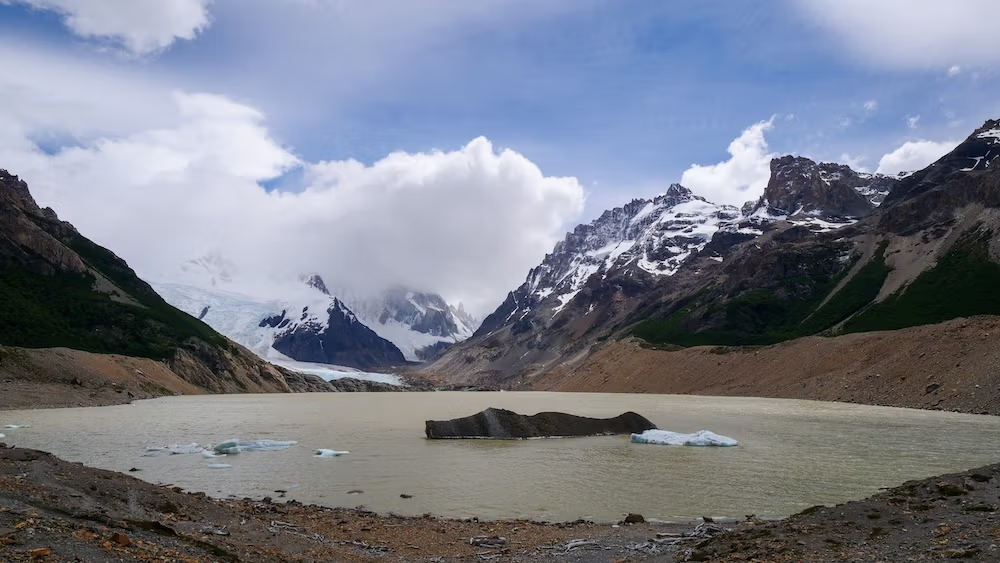
Laguna Torre is the hike that makes you feel like you’ve earned your Patagonia badge without having to crawl on all fours up a final death-staircase. It’s the classic “big landscape, steady walking, massive payoff” day… with one caveat: Cerro Torre is a dramatic diva and sometimes refuses to show up for your photos. That’s Patagonia, baby.
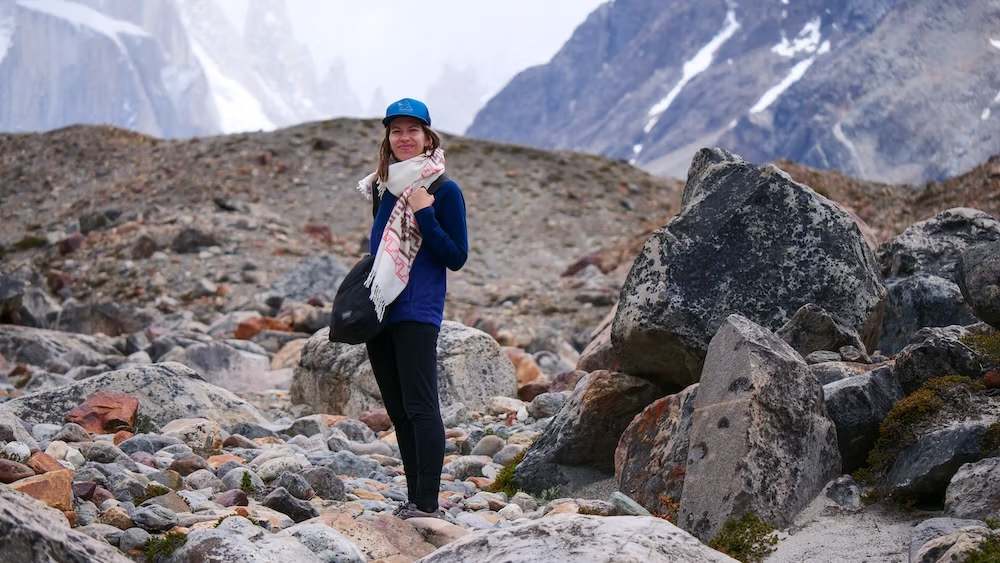
Audrey and I did this hike together and it quickly became our favourite hike. This is the full, practical, boots-on-trail version—plus the quirky human details that make the day feel real.
Trail Snapshot
Trail type: Out-and-back valley hike from El Chaltén to Laguna Torre (with optional Mirador Maestri)
Distance: Commonly listed around 19 km round-trip from town (some routes show ~18 km depending on your exact start)
Time: Most hikers take 7–8 hours for the classic Laguna Torre out-and-back; add time for Mirador Maestri
Difficulty vibe: Moderate because it’s long, not because it’s relentlessly steep
Highlight: A glacier-fed lagoon with Cerro Torre and the jagged Cordón Adela backdrop (on clear days)
Our honest take: Better “hike experience” than Fitz Roy, but the final view is more weather-dependent
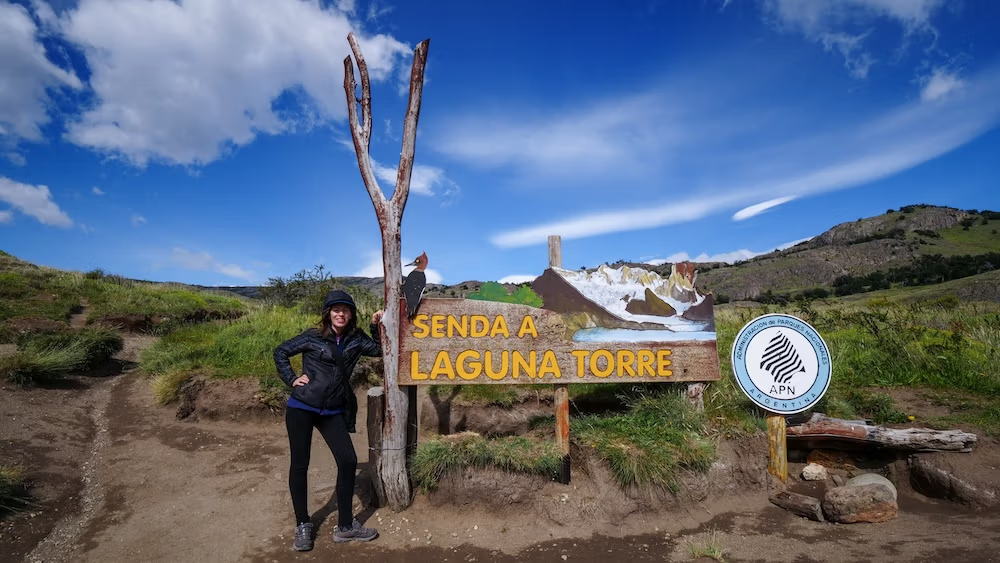
We did Laguna Torre after our Fitz Roy day, and our legs were deeply grateful for a “big hike” that didn’t end with a brutal final staircase. Even with imperfect visibility at the lagoon, this ended up being our favorite hike for the overall experience.
Is Laguna Torre Worth It?
Yes. With an asterisk.
Laguna Torre is worth it because the journey is genuinely beautiful: river views, forest sections, open valley walking, and constant mountain “presence” even when the peaks are playing hide-and-seek behind clouds. It’s also a wonderfully manageable “big day” for a lot of people, especially if the Fitz Roy hike feels like a boss fight.
The asterisk is the payoff. If Cerro Torre is clear, it’s spectacular—one of the most iconic mountain silhouettes on earth. If it’s cloudy, the lagoon can look moody and milky, the glacier can feel muted, and you’ll have that very Patagonian experience of thinking: “I’m sure this is incredible… somewhere… behind that gray curtain.”
That was basically our day: the lagoon had a café-au-lait look, the glacier felt darker and more muted, and the “iconic” Torre moment depended entirely on what the sky decided to reveal. And honestly? I still loved the hike—because the trail itself (and the landscape variety) was the real star.
The good news? Even on a moody day, the trail itself is still a win. And on a clear day, it’s the kind of scenery that makes you whisper, “We should move here”.
Choose Your Version of the Hike
| Version | Best for | What you’ll see | Time/effort | Biggest downside |
|---|---|---|---|---|
| Mirador del Torre (turnaround) | Shorter day, uncertain weather, families | Big valley views + Torre massif “tease” | Half-day vibe | You don’t reach the lagoon |
| Laguna Torre (classic) | First-timers, most hikers | Lagoon + glacier + Torre views (if clear) | Full day | Long day if you start late |
| Laguna Torre + Mirador Maestri | Photo hunters, strong hikers | Ridge views + more dramatic glacier/iceberg angles | Longer day | More exposure to wind + weather |
Audrey and I did the classic Laguna Torre out-and-back and took our sweet time—no urgency, no speed-run energy, just a relaxed Patagonia day. Compared to Fitz Roy, it felt more peaceful and less like a constant flow of hikers.
Before You Go: What Changes, What Doesn’t, and What to Double-Check
El Chaltén is famous because you can do world-class hikes right from town. That part hasn’t changed. What has changed in recent seasons is the admin side of things: park access controls, fees, and camping policies have been evolving in a pricey manner.
Here’s the safe, practical approach that won’t betray you:
- Assume there is a park fee for the El Chaltén trail network (including Laguna Torre)
- Assume you may need to pay digitally (QR/online/card), not cash
- Assume camping (including De Agostini) may require booking/fees depending on the current season rules
- Confirm the latest details at the park info point in town or on the official park pages before hiking
I treated El Chaltén like a place where the mountains are timeless but the logistics change by season. A two-minute check in town can save you a very annoying surprise at the trailhead.
Patagonia is wild, but the bureaucracy can be wilder. Ya, betta believe it!
Trailheads: Where the Hike Starts (And Why Your GPS Might Look “Wrong”)
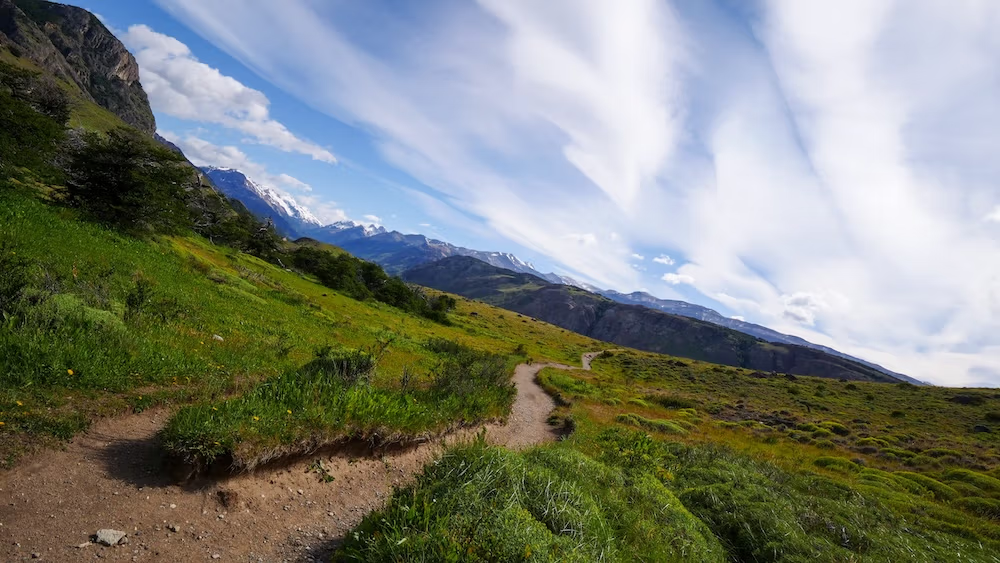
Laguna Torre has more than one way to begin because El Chaltén is basically a hiking town stitched together by trailheads. Depending on where you’re staying, you might join the route from slightly different starts, and those paths merge quickly.
What matters: follow signs for Laguna Torre / Cerro Torre and don’t panic if your app route looks different for the first few minutes. This is one of the best-marked trail systems we’ve ever seen, and the “wrong turn” anxiety usually expires fast.
Planning Logistics (The Stuff That Saves Your Day)
Start time
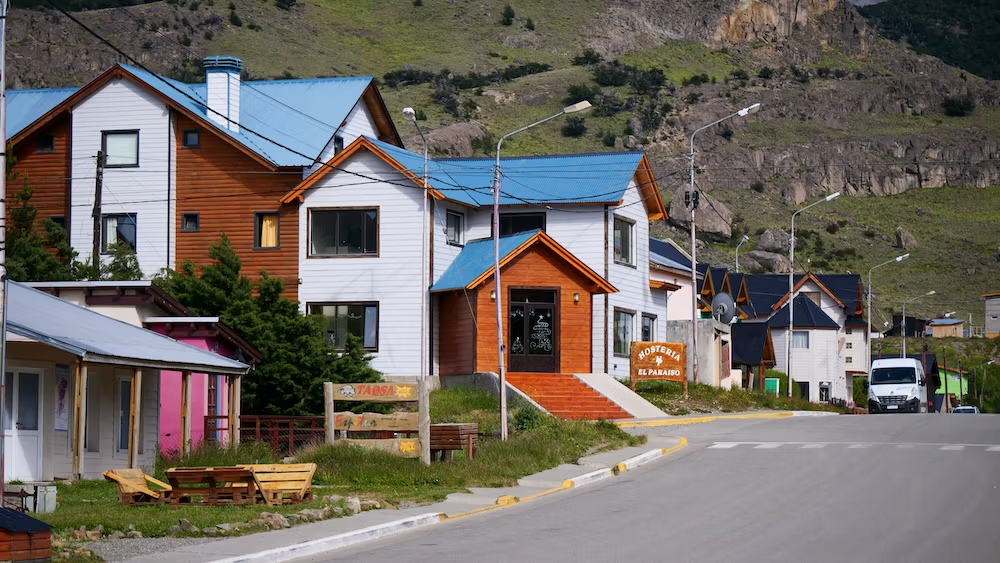
If you want a relaxed day (with photo stops, snack breaks, and a non-chaotic return), start early. In summer, “early” means something like 7:30–9:00 am depending on your pace and daylight.
We started with that pleasant “we’re not rushing” energy. And that was the correct choice. Patagonia punishes late starts with headwinds, fading light, and the slow realization that you are still very far from your bed.
One thing I noticed right away in El Chaltén: breakfasts start early because everyone’s chasing a weather window. We liked having a calm morning routine—eat, layer up, double-check our pack—then hit the trail without feeling rushed.
Weather: the real boss of this hike
El Chaltén weather does not “arrive.” It attacks.
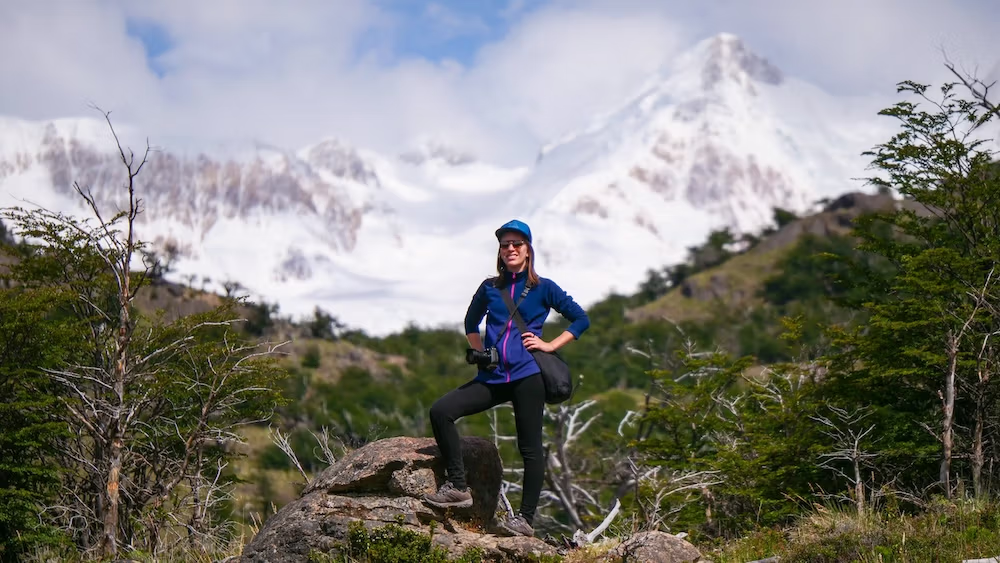
Audrey and I packed layers even on a day that looked “fine” from town, and we were glad we did—Patagonia has a talent for changing the rules mid-hike. If you bring one thing extra, make it wind protection.
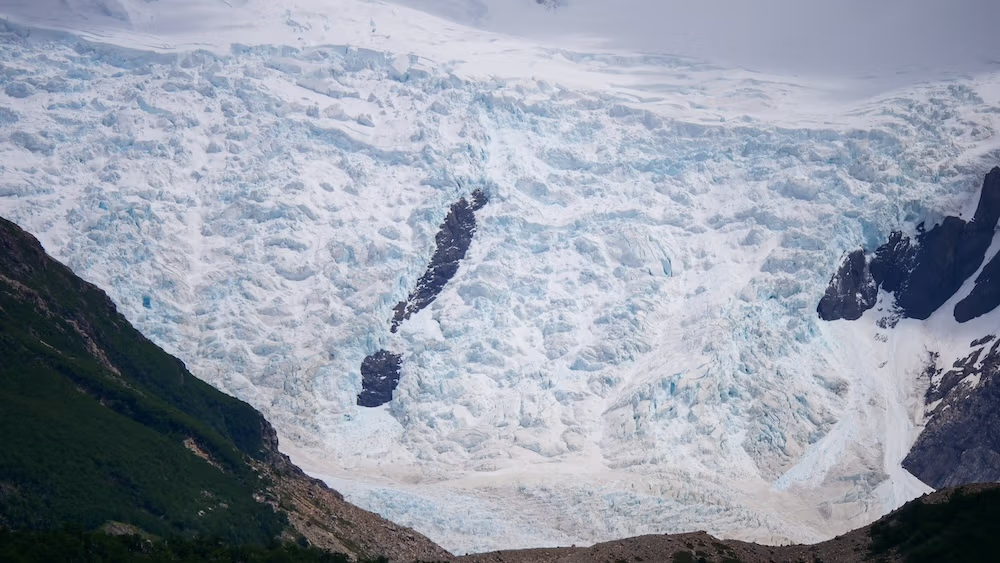
You can have sunshine in town and then find yourself in sideways rain thirty minutes later, then back to sun, then wind that tries to uninstall your hood. Cerro Torre visibility is the biggest variable on this hike, so check:
- Cloud cover (especially low cloud)
- Wind speed (valley winds can be spicy)
- Precipitation timing
- Temperature swings
If you wake up and the peaks are already invisible, you can still hike Laguna Torre. Just set your expectations: you’re doing it for the experience, not for the postcard.
Food and water
For a full Laguna Torre day, treat your body like it’s doing a full Laguna Torre day.
- Bring a proper lunch, not just “two almonds and a dream”
- Bring snacks that don’t freeze into sadness
- Water: carry enough for the day; refill options exist but depend on comfort and conditions
One El Chaltén hack that Audrey and I loved: ordering a packed lunch (“lunchbox”) from a local spot the day before. It feels like cheating, in the best way. You start the hike already winning.
Bathrooms
There may be facilities around campground areas, but don’t assume toilets are frequent. Plan like there are none, and be pleasantly surprised if there are some. Carry tissue, use Leave No Trace best practices, and pack out what you can.
Navigation
Download an offline map before you go. Even if the trail is well-marked, it’s comforting to have a backup—especially if visibility drops or you’re starting early/finishing late.
What to Pack (The Patagonia Reality List)
| Item | Why it matters | Non-negotiable? |
|---|---|---|
| Windproof shell jacket | The wind is relentless and personal | Yes |
| Warm layer (fleece or puffy) | Even in summer, it can feel wintery | Yes |
| Hat + gloves | Tiny items, huge comfort | Strong yes |
| Good shoes/boots | Mud, rocks, and long mileage | Yes |
| Trekking poles | Helps on the moraine and on tired legs | Optional |
| Sunglasses + sunscreen | Sun + glare can surprise you | Yes |
| Snacks + lunch | Mood stability in edible form | Yes |
| Water (and/or filter) | You’ll be out all day | Yes |
| Offline map | Signal can be patchy | Yes |
| Headlamp | Shoulder season insurance | Sometimes |
Layering, simplified
| Conditions | Top half | Bottom half | Extras |
|---|---|---|---|
| Clear + mild wind | Base + light fleece + shell in pack | Hiking pants/leggings | Sunglasses |
| Cold + steady wind | Base + warm midlayer + shell | Pants + optional thermal | Gloves + beanie |
| On/off rain showers | Base + shell (easy on/off) | Quick-dry pants | Dry bag for electronics |
| Shoulder season chill | Warm base + puffy + shell | Pants + thermal | Headlamp |
Fitness Reality Check (So You Enjoy This, Not Endure It)
You don’t need to be an ultrarunner to do Laguna Torre, but you do need to be ready for a long day on your feet.
If you can comfortably walk 15–20 km in a day at home (even on flat ground), you’re in a good place. If you can’t, you can still do this hike—just start earlier, go slower, take breaks, and don’t treat “speed” like it’s a virtue.
The biggest enemy is not steepness. It’s the combo of distance + wind + weather mood swings. Patagonia adds invisible difficulty.
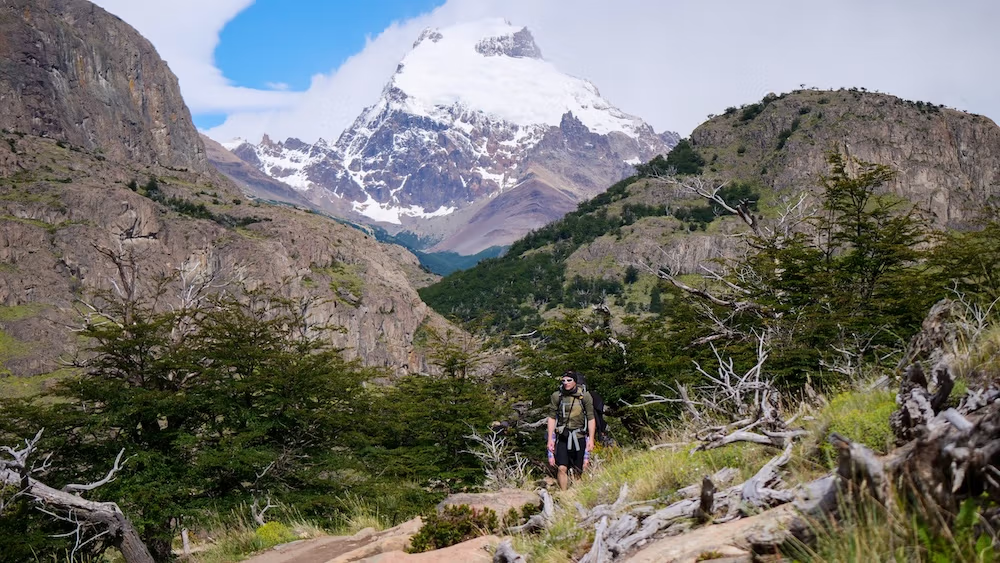
The Laguna Torre Route: Step-by-Step (With Our Experience)
Laguna Torre is a “steady story” hike. It doesn’t slam you with nonstop steep climbing. Instead, it gives you a little early effort, then a long, gorgeous walk up a valley that feels like it was designed by a landscape artist who got paid in glaciers.
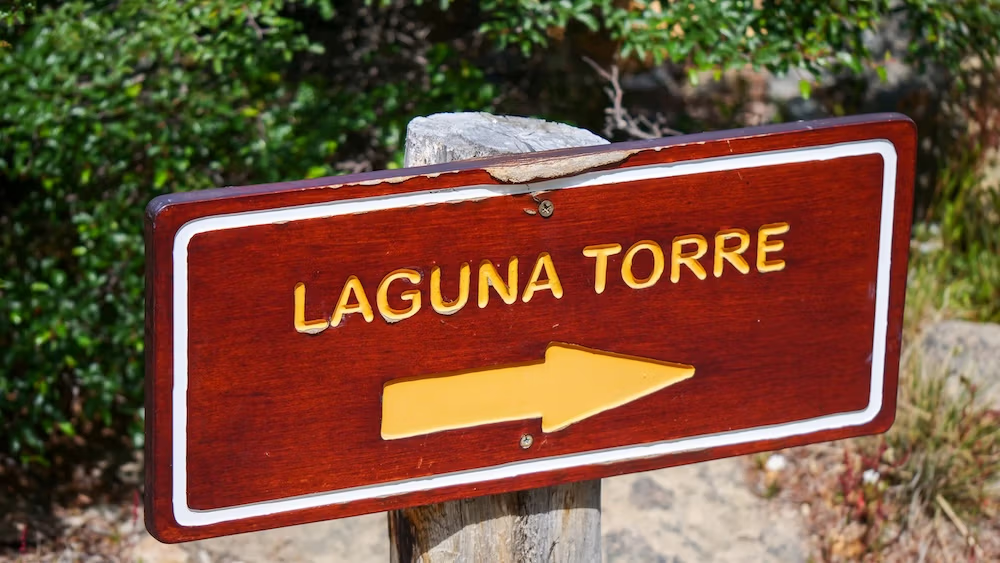
Route breakdown by kilometer (easy planning mode)
| KM marker | What you’ll notice | Our vibe note |
|---|---|---|
| 0.7 | Margarita waterfall viewpoint area | First “wow,” first photo stop |
| ~2.5 | Lookout / big valley views | The mountains start flirting |
| ~5 | Junctions toward other routes | Stay on Laguna Torre signs |
| ~8 | De Agostini campground zone | You smell the finish line |
| ~9 | Laguna Torre | The payoff (or the tease) |
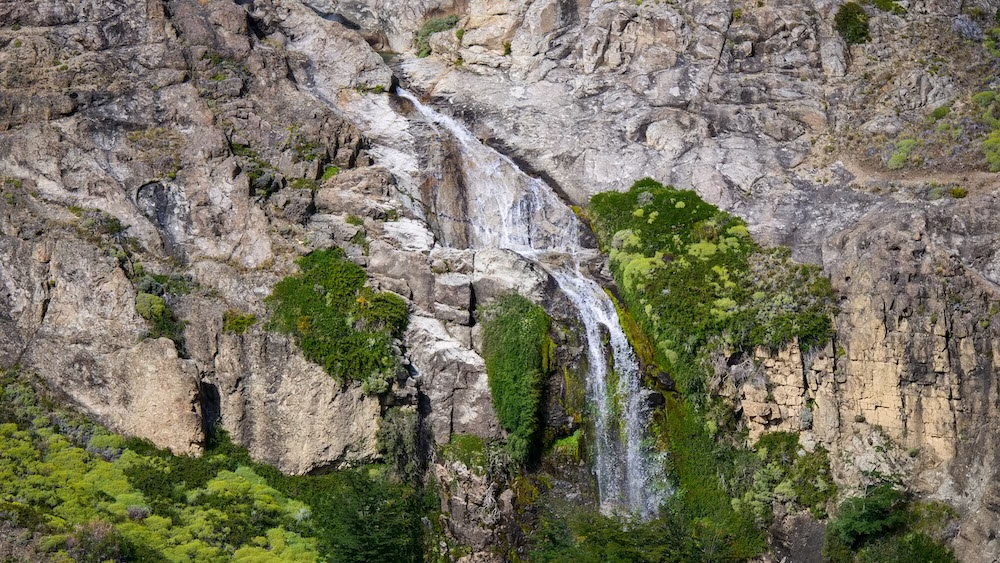
1) Trailhead to Margarita Waterfall (around km 0.7)
You start out of town, and within a short walk you hit your first real “oh wow” moment. There’s a viewpoint where you can often spot Cascada Margarita across the gorge.
This is also where your hike pace gets immediately ruined… because you stop for photos. And then you stop again. And then again. Which is fine. The entire point of hiking in Patagonia is being repeatedly distracted by Patagonia.
Audrey and I hit kilometer one moving slower than a turtle because the scenery kept demanding attention. It was also a funny contrast: once we left town, the hike felt calmer and more “in the bubble” of nature right away.
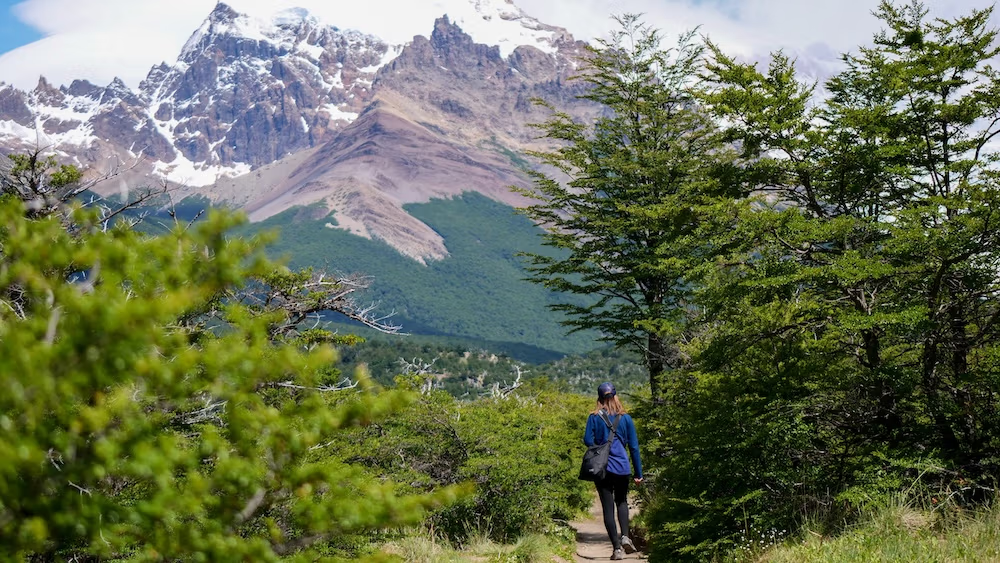
2) Early climb and the first 3–4 km “work” section
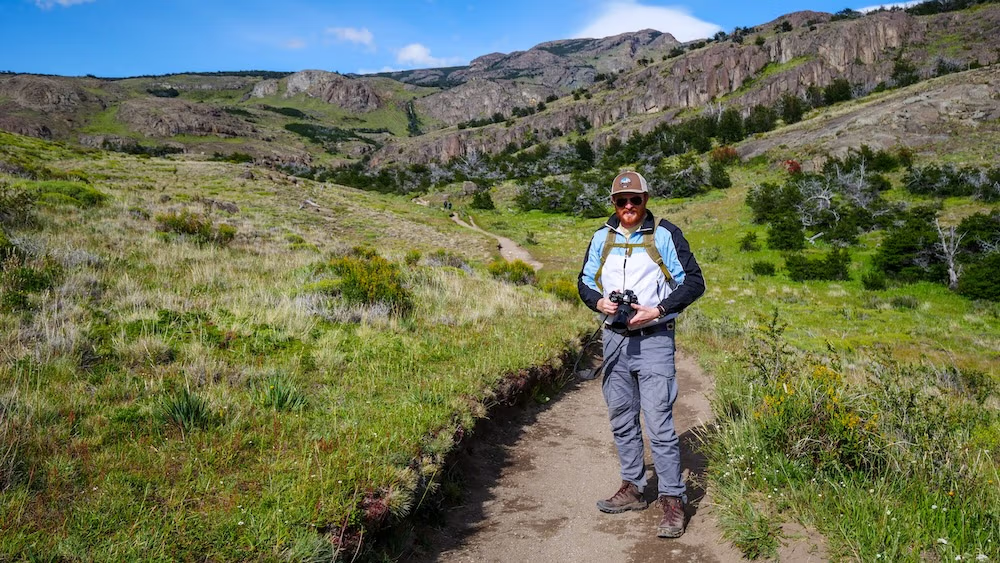
In our experience, the most noticeable climbing happens early. It’s not brutal, but it’s the part where you feel your legs warming up and you realize: yes, this is a hike, not a scenic walk to a café.
After roughly the first few kilometers, the grade eases and the trail turns into a beautiful, steady cruise. This is where we started joking more, taking our time, and feeling that “we’ve got this” confidence.
Our big takeaway was that the first few kilometers do most of the “work,” and then it settles into a long, steady valley walk. That mental shift—effort first, cruise later—made the whole day feel easier.
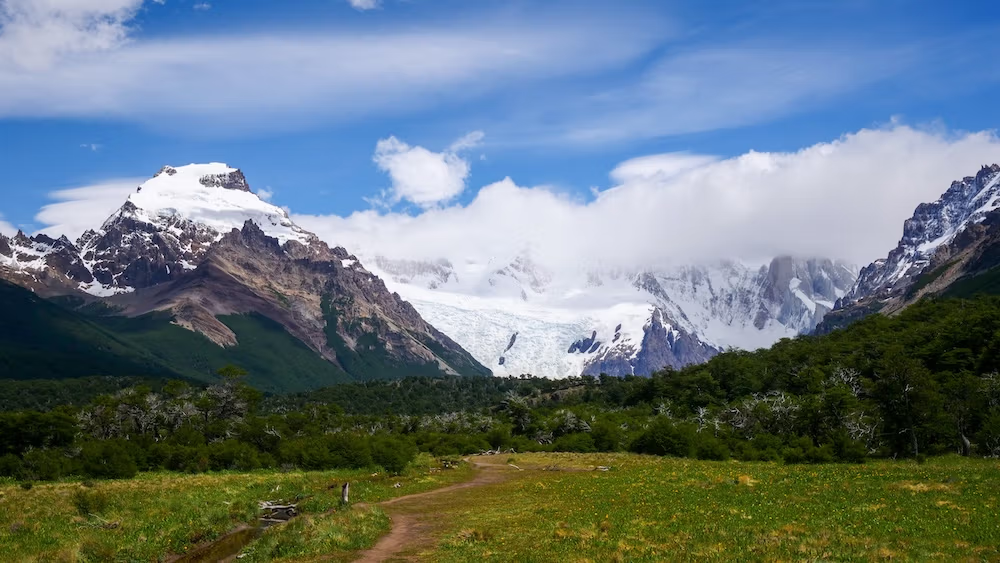
3) Mirador / lookout area (around km 2.5)
This is one of those sections where you get a big open view and your brain goes: “Okay, I understand why people move here and become outdoor enthusiasts.”
Even if the peaks are cloudy, the scale of the valley still hits. The mountains are there. They’re just… emotionally unavailable.
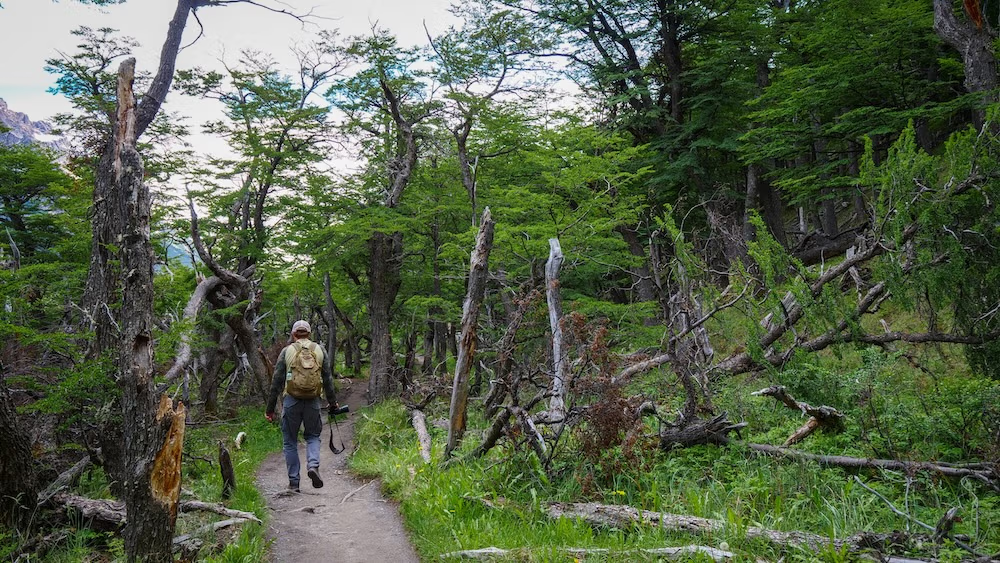
4) The “haunted forest” and river-valley cruising
There’s a section that feels like you stepped into a different biome—more tree cover, a slightly darker forest vibe, and that quiet, wind-whispering sound that makes you talk a little softer.
This is the hike where the scenery keeps switching: darker forest, river views, open valley, massive vantage points, then the lagoon at the end. That variety is a huge reason we enjoyed Laguna Torre so much—even when the peaks were playing hard to get.
Here is the part where Laguna Torre can feel more peaceful than the Fitz Roy trail. On our day, it wasn’t a constant flow of people. We had space. Audrey and I weren’t rushing. We could just walk and be present. Pure joy, honestly.
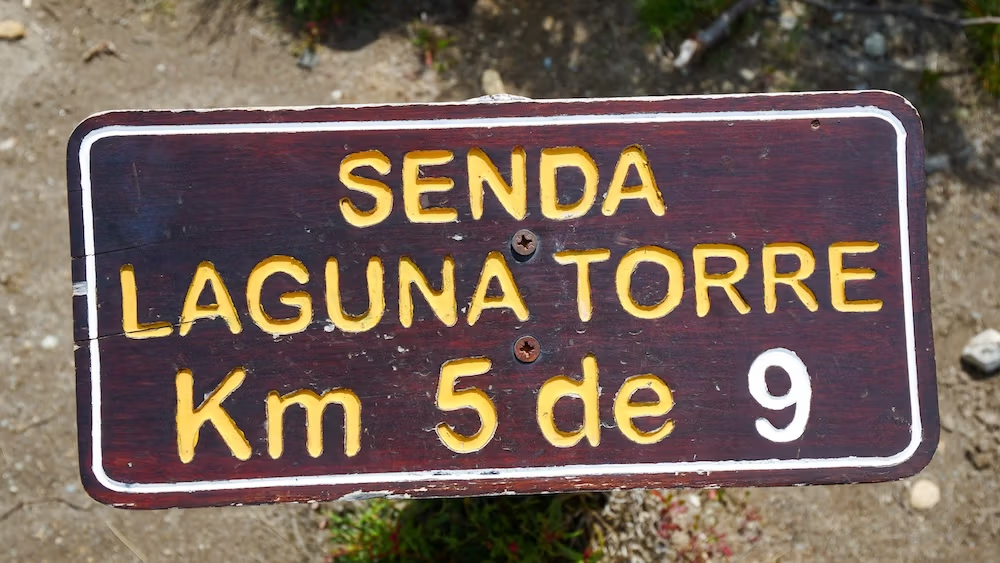
5) Junctions and the Madre e Hija area (around km 5)
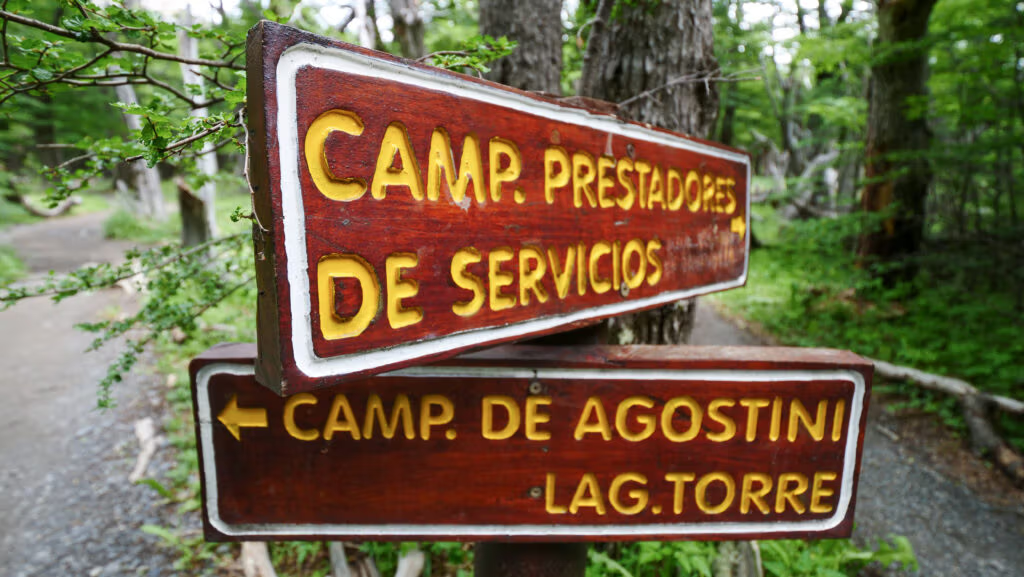
You’ll see signage for other routes as trails branch off. Pay attention to the signs for Laguna Torre / Cerro Torre, and don’t overthink it—El Chaltén trails are famously well-marked.
This is also where your hiking “rhythm” settles in. If the early section felt like effort, this is the part that feels like flow: steady walking, steady scenery, steady awe.
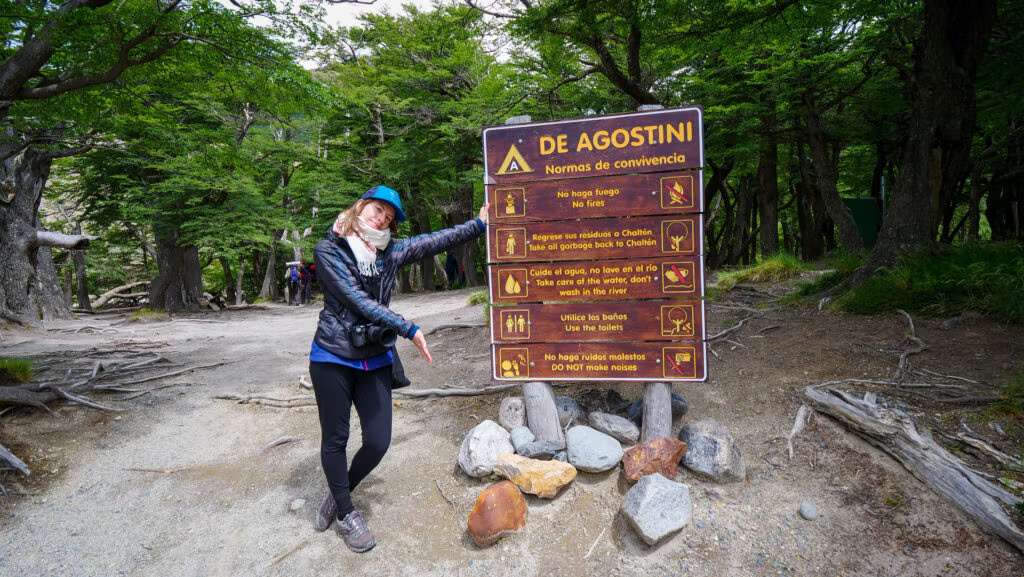
6) Campamento De Agostini (around km 8)
This is the well-known campground zone near the end of the valley walk. It’s also where you start feeling that end-of-hike energy: “We’re close, but we still have work to do.”
Audrey and I had a moment here where we saw other hikers eating ramen and immediately felt jealous. Patagonia does that. You can be surrounded by the greatest mountains on earth, and your brain is still like: “Wow, noodles. Gimme. Gimme.”
We genuinely had ramen envy for a moment—watching other hikers eat hot food while we stood there thinking, “We should have packed something warmer.” It’s also the point where you feel close enough to taste the finish line… but you still have that final push ahead.
If you’re considering an overnight here for sunrise, it can be incredible—because morning light is when Cerro Torre sometimes decides to be generous. Just confirm current camping rules and booking requirements before you plan your entire life around it.
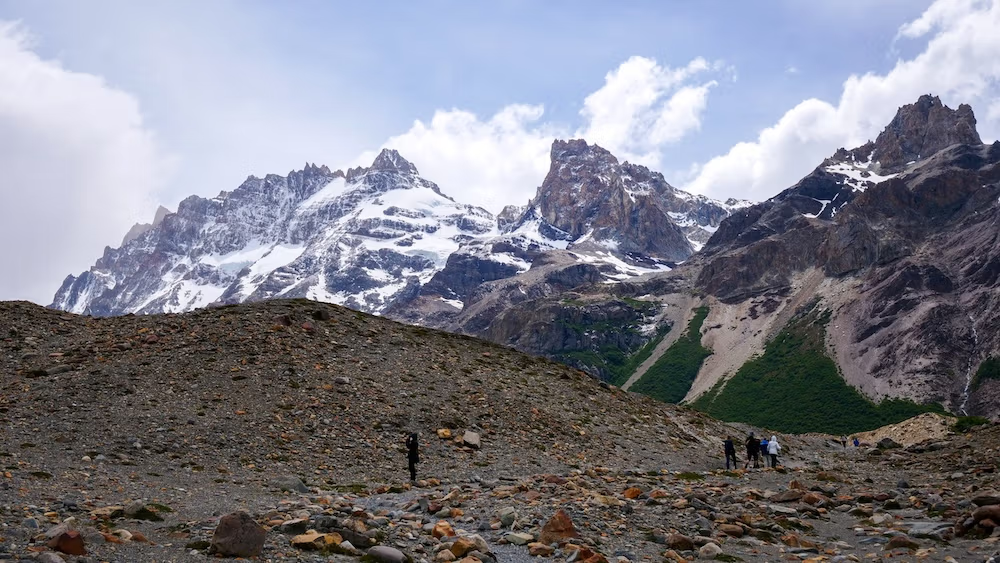
7) The final push: moraine climb to Laguna Torre (around km 9)
After De Agostini, you climb up toward the moraine viewpoint overlooking the lagoon. This is the “steepest” part of the hike, but it’s short compared to the Fitz Roy finale.
And then you crest the moraine and see the lagoon.
On our day, it was cloudy. The water looked milky—almost like a café au lait. The glacier looked darker and more muted than the bright-blue fantasy you picture. Cerro Torre was hiding. We had that mix of feelings: still impressed by the scale, but also slightly heartbroken because Patagonia was withholding the grand reveal.
If you’re hiking on a gray day, this is where expectations matter: the lagoon can look milky, the glacier can look darker, and the iconic peak might not show. But even then, Audrey and I still felt like the day delivered—because the hike itself was such a satisfying Patagonia walk.
That said: Audrey and I still loved the hike. The journey was the main event.
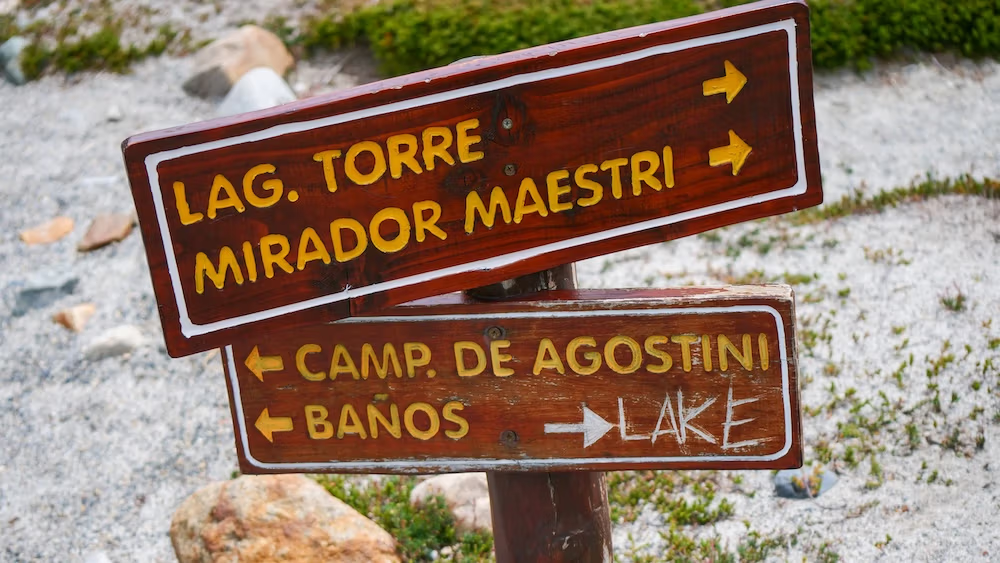
8) Optional: Mirador Maestri (bonus ridge walk)
From the moraine area, strong hikers often continue along the ridge to Mirador Maestri. This can give you a different angle and sometimes better glacier/iceberg viewing.
It also means more exposure to wind. If the weather is questionable, this is where you do the very adult thing and ask: “Is this worth it today, or is this how people end up being rescued?”
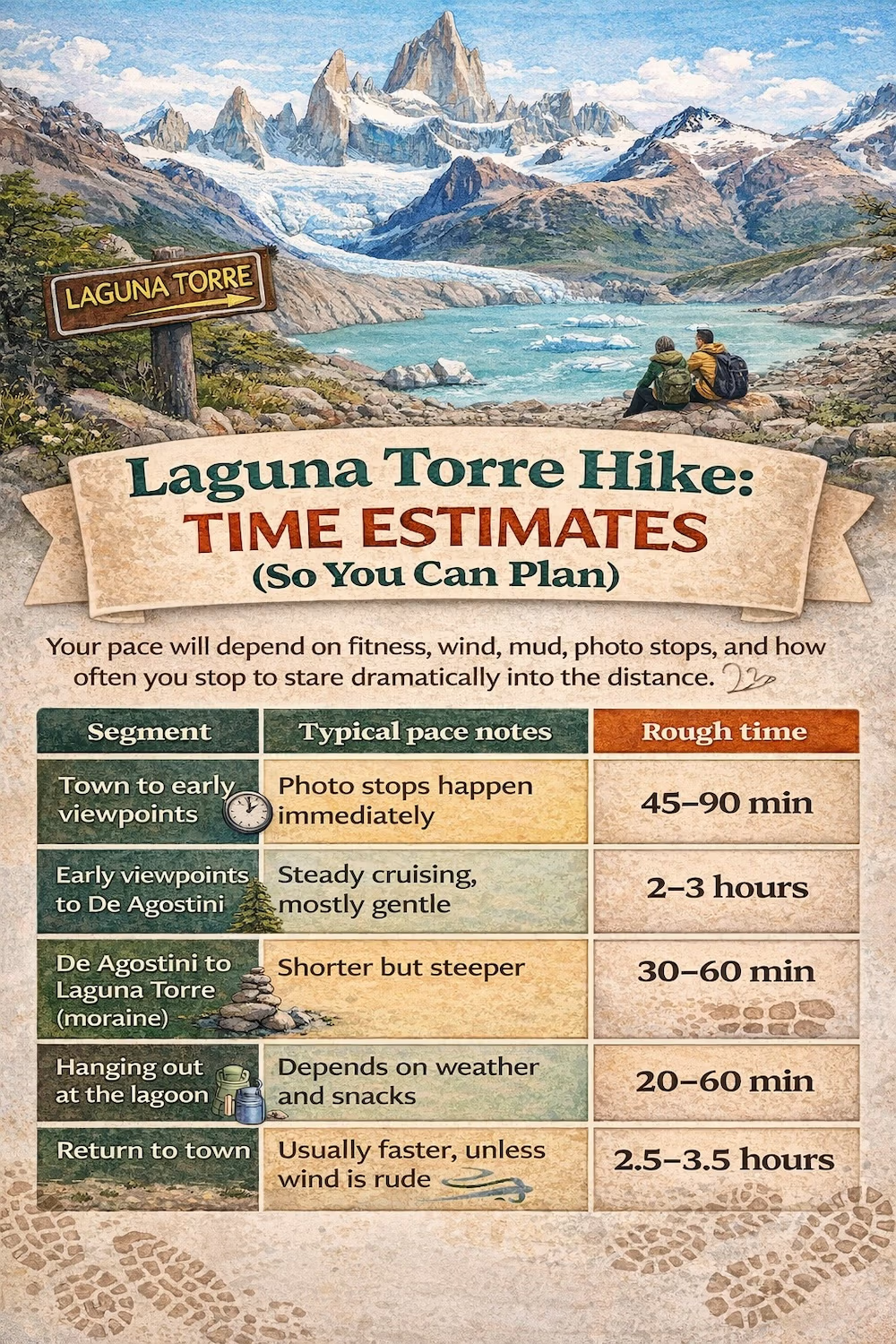
Time Estimates (So You Can Plan)
Your pace will depend on fitness, wind, mud, photo stops, and how often you stop to stare dramatically into the distance.
| Segment | Typical pace notes | Rough time |
|---|---|---|
| Town to early viewpoints | Photo stops happen immediately | 45–90 min |
| Early viewpoints to De Agostini | Steady cruising, mostly gentle | 2–3 hours |
| De Agostini to Laguna Torre (moraine) | Shorter but steeper | 30–60 min |
| Hanging out at the lagoon | Depends on weather and snacks | 20–60 min |
| Return to town | Usually faster, unless wind is rude | 2.5–3.5 hours |
On the way back, Audrey and I were so hungry we basically did a “mission for food” speed-run—less stopping, fewer photos, more purposeful marching. It’s amazing how fast you can walk when your brain is already ordering dinner.
If the sign says something like “3 hours to the turnaround,” trust that it’s a reasonable hiking-time estimate… and then add your personal “we stop for everything” factor.
The Patagonia Decision Matrices
Should you add Mirador Maestri?
| Ask yourself | Green flag answer | Red flag answer |
|---|---|---|
| Can you see anything? | Peaks are popping in and out | Everything is white-gray soup |
| How’s the wind? | Manageable, stable | It’s trying to delete your hat |
| How do your legs feel? | Tired but steady | Cramping, shaky, low energy |
| Do you have daylight? | Plenty of margin | You’re already racing sunset |
When to turn around (and still feel proud)
| Your situation | Turnaround point | Why it’s a good call |
|---|---|---|
| You started late | Mirador del Torre or De Agostini | Long day + safer timing |
| Weather is deteriorating | De Agostini | You’re close enough to be satisfied |
| You’re underfueled | De Agostini | Hunger makes bad decisions |
| You’re loving life | Laguna Torre (and maybe Maestri) | The ideal scenario |
Snack timing (because morale is a system)
| Time | What to eat | Why it works |
|---|---|---|
| First hour | Small snack | Prevents the early crash |
| Mid-hike | Real food | Sustains long cruising miles |
| At De Agostini | “Fun snack” | Psychological boost |
| At the lagoon | Whatever sparks joy | You earned it |
| Return hike | Emergency snack | The last hour can feel endless |
Seasons and Conditions (The Honest Version)
El Chaltén has a classic trekking season, but Laguna Torre doesn’t vanish outside it. What changes is the margin for error.
Summer (roughly Dec–Feb)
Long days, more hikers, and the highest chance of windows of clear weather. You still need warm layers because wind doesn’t care that it’s “summer.”
Shoulder season (spring and autumn)
Fewer crowds and gorgeous colors, but colder temperatures and more variable trail conditions. Mud can be a thing, and mornings can feel wintery.
Winter
Possible in some conditions, but snow, ice, and short daylight change the game. If you’re visiting in winter, get up-to-date local advice and don’t treat a summer blog post (including mine) like a winter safety manual.
Trail Etiquette: Dogs, Wildlife, and Being a Decent Human
El Chaltén is famous for friendly town dogs. Some will absolutely try to join your hike like they’re part of your travel vlog.
Please don’t encourage that. Trails in this region have sensitive wildlife, and dogs can disturb or endanger species (and also get themselves lost or injured). If a dog follows you, do your best to discourage it from continuing, and don’t feed it or treat it like your personal trail guide.
Also: stay on the path, don’t shortcut switchbacks, pack out your trash, and treat this place like it’s sacred… because it kind of is.
Photographers’ Notes (Without Becoming a Photog)
- Morning light is often best for dramatic mountain definition
- Wind can make tripod work comedic
- If clouds are moving fast, be patient—Patagonia can reveal the peaks in short windows
- The lagoon + glacier + jagged peaks combo is the shot, but don’t miss the smaller moments: river textures, forest light, and the scale of the valley
Comparing El Chaltén’s Big Hikes
| Hike | Difficulty vibe | Best for | Payoff reliability | Our take |
|---|---|---|---|---|
| Laguna Torre | Moderate/long | Most hikers | Medium (weather-dependent) | Best “hike experience” day |
| Laguna de los Tres (Fitz Roy) | Moderate-hard | Strong hikers | High (if clear) | Iconic, but the finale hurts |
| Laguna Capri | Moderate/shorter | Time-limited visitors | Medium-high | Great Fitz Roy views without the full grind |
| Chorrillo del Salto | Easy | Rest day, families | High | Easy waterfall win |
| Mirador de los Cóndores/Águilas | Short + uphill | First afternoon | High | Fast panoramic payoff |
Our personal ranking: Fitz Roy has the bigger single “iconic” payoff when it’s clear, but Laguna Torre is the hike we enjoyed more from start to finish—steadier, calmer, and easier to settle into.
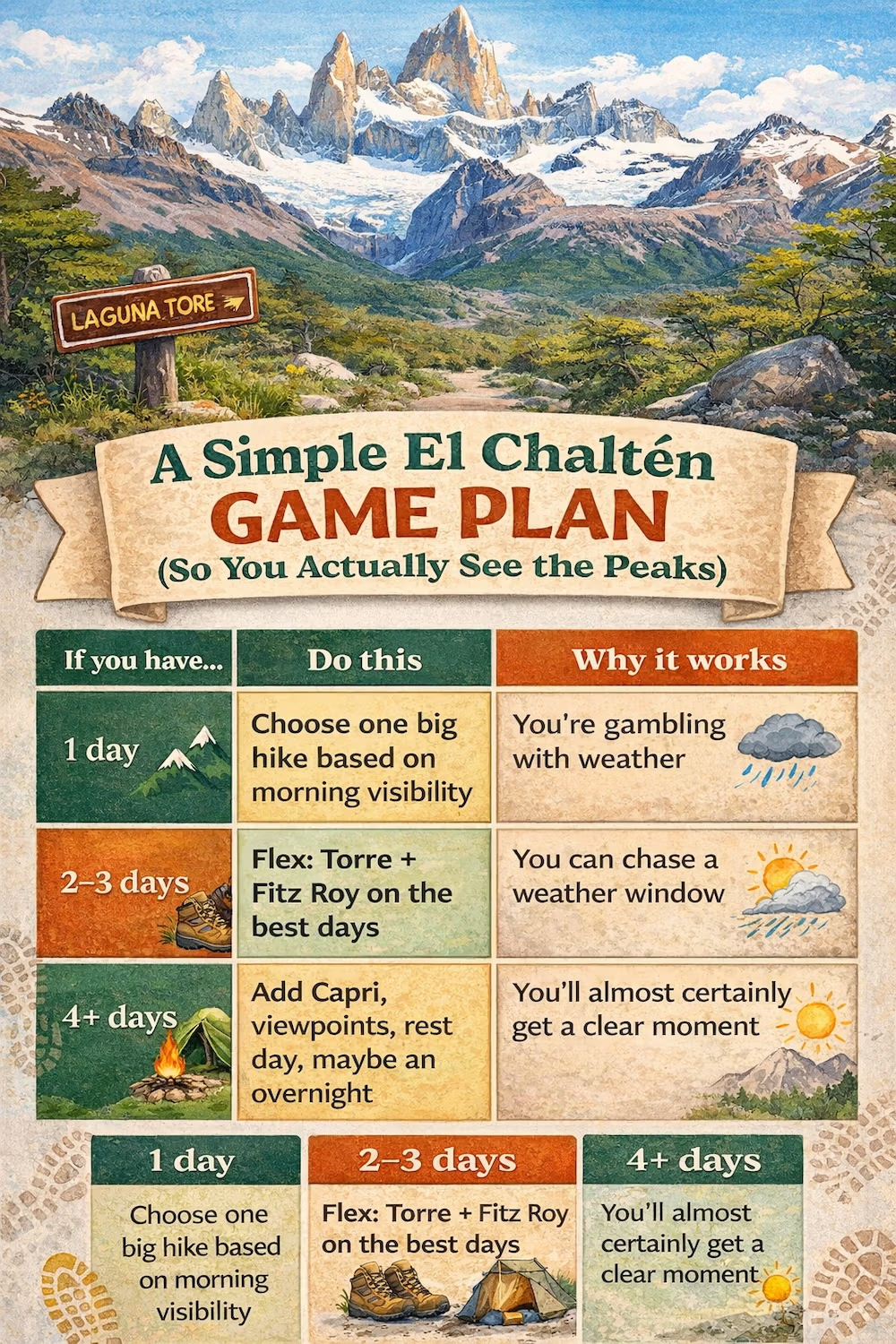
A Simple El Chaltén Game Plan (So You Actually See the Peaks)
| If you have… | Do this | Why it works |
|---|---|---|
| 1 day | Choose one big hike based on morning visibility | You’re gambling with weather |
| 2–3 days | Flex: Torre + Fitz Roy on the best days | You can chase a weather window |
| 4+ days | Add Capri, viewpoints, rest day, maybe an overnight | You’ll almost certainly get a clear moment |
We stayed long enough to time our main hikes with good weather days. That’s the cheat code.
Where to Stay in El Chaltén (So the Morning Start Is Easy)
For Laguna Torre, you don’t need to be near a specific parking lot—you just want to be able to roll out of bed, eat something, and be on the trail without a logistical circus.
A simple strategy:
- Stay in town, walking distance to restaurants and groceries
- Prioritize a place with good breakfast access (or a kitchen) so you’re not hiking on empty
- If you’re a light sleeper, consider that El Chaltén can be windy at night—some buildings shake like they’re auditioning for a disaster movie
If you’re chasing sunrise light, the “sleep early, start early” routine is everything. We loved having the freedom to pick our start time based on weather and how our legs felt that morning.
If the Weather Is Trash: A Plan That Still Feels Like a Win
Nope, you don’t have to sit in your room staring out the window like a grounded teenager.
If the forecast is ugly (heavy rain, violent wind, low visibility), here are smarter moves:
- Do a shorter viewpoint hike (Mirador style trails) and save Laguna Torre for a better window
- Walk to an easy waterfall trail and call it a “recovery day” with pride
- Spend the day sorting gear, downloading offline maps, and booking your lunchbox like the organized adult you secretly are
El Chaltén rewards patience. If you can give yourself even one flexible day, your chances of seeing the peaks jump dramatically.

Food Reward (Because We Are Who We Are)
After a full day on the trail, your body doesn’t want “a light snack.” Your body wants a feast and then a horizontal life.
We did exactly that.
We went for burgers (because Patagonia hiking makes you crave meat and carbs, and we leaned fully into the El Chaltén post-hike ritual.
We went all-in: we got the spicy jalapeño + guacamole + hot sauce situation (Patagonia meets chaos), and also went for a bacon burger, and we split loaded fries. Then happy hour did its magic—pay for a half pint, get a full pint—which felt like El Chaltén rewarding us for not collapsing on the trail.
And then, because we are professionals, we followed it up with artisan ice cream. For the record, we went full dessert mode: I indulged with dulce de leche + coconut and Audrey grabbing a mascarpone + pistachio. Zero regrets, and we slept like we’d been tranquilized (in the best way).
If you’re reading this in El Chaltén: yes, you should do that too.
Common Mistakes (So You Don’t Become a Cautionary Tale)
- Starting late and finishing in the dark
- Underpacking layers because “it’s summer”
- Not bringing enough food (hanger is real)
- Assuming Cerro Torre will be visible just because you showed up
- Ignoring wind and pushing to exposed viewpoints anyway
- Following a town dog like it’s your spirit animal
- Turning the day into a speed-run instead of a Patagonia experience
Final Thoughts
Laguna Torre is the El Chaltén hike that delivers a full Patagonia day without demanding constant suffering. It’s long, scenic, and satisfying. It can also be humbling—because the mountain decides whether you get the iconic view.
Real talk: if you’re stacking multiple hikes in El Chaltén, arriving reasonably fit makes the whole trip more fun. Audrey and I showed up in full foodie mode (more eating than training), and we still did the hikes—but we definitely felt the stiffness at first, and we definitely left stronger than we arrived.
Either way, you’ll finish the day with that rare mix of exhaustion and gratitude. And if you do it right, you’ll finish with a burger in one hand and an ice cream in the other, feeling like the luckiest human on earth.
Laguna Torre Hike FAQ: Everything Travelers Actually Want to Know Before Hiking to Cerro Torre
Is Laguna Torre easier than Laguna de los Tres?
Yes. Laguna Torre is generally easier because it doesn’t have the same relentless final climb. It’s still a long day, but the effort is steadier and less punishing.
How long does the Laguna Torre hike take?
Most people budget about 7–8 hours round-trip, plus extra time if you linger at the lagoon or add Mirador Maestri.
How far is Laguna Torre from El Chaltén?
Many guides list it around 19 km round-trip from town. Depending on your trailhead and tracking app, you might see slightly different numbers.
Do I need hiking boots for Laguna Torre?
Yes. Trail runners can work in perfect conditions, but boots (or at least sturdy shoes) are safer for mud, rocks, and long mileage.
Do I need a guide?
Nope. The trail is well-marked and many people hike independently. A guide can be nice in winter conditions or if you want extra context and safety support.
When is the best season for Laguna Torre?
Late spring through early autumn is the classic window. Shoulder seasons can be beautiful but colder and muddier. Winter can be possible, but conditions vary a lot.
What time should I start?
Early. In summer, a 7:30–9:00 am start gives you a relaxed day without racing daylight.
Is Mirador Maestri dangerous?
Sometimes. If winds are extreme or visibility drops, exposed sections can feel sketchy. If conditions are bad, skipping Maestri is the smart play.
Can I camp at De Agostini?
Maybe. Camping rules and booking requirements can change by season. Confirm current regulations before relying on an overnight plan.
Can you see icebergs in Laguna Torre?
Sometimes. Ice conditions change, but the lagoon can have floating ice chunks depending on recent calving and temperatures.
Is the trail crowded?
It can be busy in peak season, but many people find Laguna Torre less intense than Fitz Roy—especially if you start early.
Are there bathrooms on the trail?
Sometimes. There may be toilets near campground areas, but don’t assume facilities are frequent. Carry tissue and be prepared.
Is there phone signal?
In town, usually yes. On the trail, it can be unreliable. Download an offline map.
What should I do if the peaks are covered in clouds?
You can still hike Laguna Torre for the experience. If you have multiple days, consider swapping hike days to chase a clearer window.
What’s the number one thing you’d do differently?
Honestly? Pack more snacks than you think you need, start early, and treat wind gear like it’s mandatory—because it is.
Can I do Laguna Torre with kids?
Yes, with the right approach. Make it a flexible day: start early, aim for Mirador del Torre or a partial route, bring lots of snacks, and don’t turn it into a forced march.
How cold is it at the lagoon?
Colder than you expect. Even on “nice” summer days, wind and cloud can make the lagoon area feel chilly. Bring layers.
Is there a best day-of-week to hike?
Not really. The biggest difference is weather. If you want fewer people, start early and avoid peak holiday weeks if you can.
Further Reading, Sources & Resources
If you want to double-check fees, access rules, camping policies, and the core trail overview (or just go deeper than one blog post), these are the references to leaned on. They’re also the best “official-ish” starting points to confirm anything that can change season to season.
Park fees, entry rules, and official updates
- https://www.argentina.gob.ar/parquesnacionales/tarifas
Official national parks fee page (use this to confirm current pricing and any updates for Los Glaciares / the El Chaltén area).
Trail access portals and how payment works in El Chaltén
- https://trekkingelchalten.com/cobro-acceso-senderos-el-chalten/
A practical on-the-ground explainer that’s especially helpful for understanding where access is controlled and what payment methods are expected at the trailheads.
Laguna Torre route overview (El Chaltén destination info)
- https://elchalten.com/v4/es/laguna-torre-el-chalten.php
Spanish-language overview of the Laguna Torre trek with key route context and expectations. - https://elchalten.com/v4/en/laguna-torre-trek-el-chalten.php
English-language version covering the same trail overview details (useful for cross-checking trail stats and route descriptions).
Camping near Laguna Torre (De Agostini) and reservations
- https://amigospnlosglaciares.org/campamentos/
Camping information and booking details (including De Agostini), with policy guidance that’s especially important if you’re planning sunrise/sunset photography or an overnight.
Notes on accuracy
- Fees + enforcement can change quickly in El Chaltén. Always verify current pricing and access requirements via the official parks site before publishing (and encourage readers to do the same).
- Payment methods may vary by portal and season. If your readers are traveling without reliable data service, it’s worth reminding them to confirm how tickets are purchased and whether QR/online purchase is required.
- Trail distance/time varies slightly depending on where you start in town, which trailhead you use, and whether you add optional viewpoints. When in doubt, present a clear “most common” number plus a small range.