
El Chaltén is Patagonia’s tiny hiking town with big main-character energy: granite spires, glacier-fed lagoons, and weather that can go from “postcard” to “are we being punished?” in the time it takes to open a snack wrapper. The question isn’t whether there’s enough to do. The question is whether you want to rush, gamble on the forecast, or build in the kind of buffer that turns your trip from survival mode into pure joy.
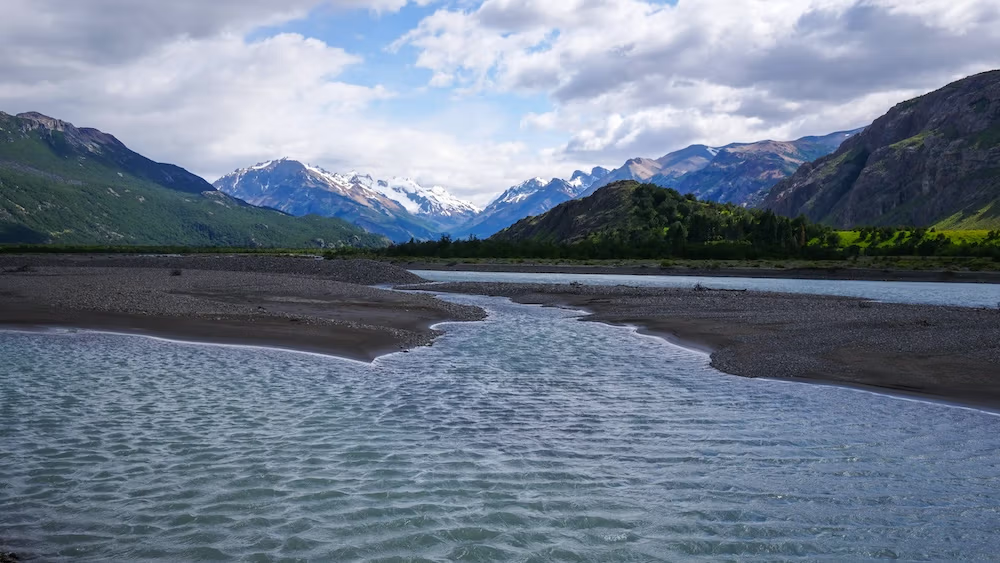
We’ll give you the honest answer (with a side of quirks, food, and a few “we are absolutely not elite athletes” confessions): 4 days is the sweet spot for most people.
But if you want to hike hard, sleep in, eat well, and still get your iconic Fitz Roy / Cerro Torre views on clear days… 6–7 days feels ridiculously good.
Day-count cheat sheet (pick your vibe)
| Days | Best for | What it feels like | The honest tradeoff |
|---|---|---|---|
| 1 | Day trippers, “I just want a taste” | A scenic appetizer | You’ll miss the big hikes or do one in a sprint |
| 2 | Fit hikers with luck | Two big swings | Weather can steal your best view day |
| 3 | Most first-timers | Balanced + doable | Still tight if you want sunrise or rest days |
| 4 | The sweet spot | Confident, flexible | You’ll still have to choose what to skip |
| 5 | Photo nerds + variety lovers | Spacious | You start hiking for pleasure, not pressure |
| 6 | “Do it right” travelers | Comfort + buffers | You’ll never want to leave (problematic) |
| 7 | The full El Chaltén lifestyle | Weather-proof + indulgent | You’ll start judging other destinations |
🧾 Quick Booking: Your El Chaltén Travel Essentials 🥾✨
🎒 Your Travel Toolkit (Book These 4 Things)
| ✅ What to book | 💡 Why it’s worth it | 🔗 Quick link |
|---|---|---|
| 🥾 Tours & experiences | Easy way to lock in a glacier day, a Lago del Desierto adventure, or a guided option when weather turns moody | Browse El Chaltén tours on Viator |
| 🏨 Hotels & stays | El Chaltén sells out fast in peak season — booking early = better locations + fewer “only the priciest rooms left” moments | Find El Chaltén hotels on Booking.com |
| 🚗 Car rentals (optional) | Best for freedom days: Ruta 40 viewpoints, flexible timing, photo stops, and a smoother Lago del Desierto run | Compare car rentals in El Calafate (gateway to El Chaltén) on DiscoverCars |
| 🚌 Bus tickets | The classic El Calafate ↔ El Chaltén route is simple — but popular departure times fill up | Book El Calafate → El Chaltén buses on Busbud |
👉 One-click backup (reverse direction): Book El Chaltén → El Calafate buses on Busbud
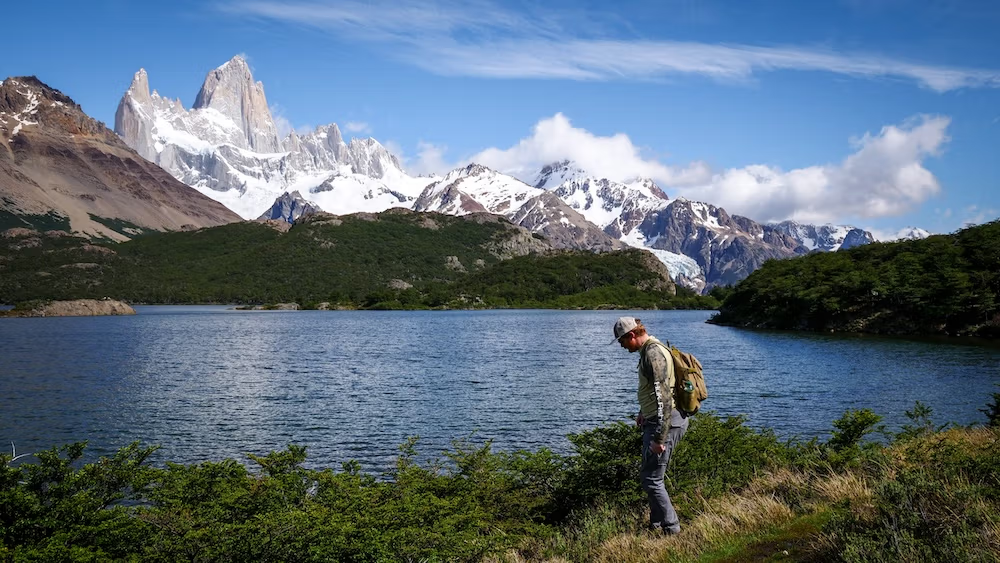
The single biggest truth: El Chaltén is a weather-buffer destination
If you plan El Chaltén like a city break—two days, tight schedule, must-do list—you’re basically trying to negotiate with wind. In El Chaltén, the best strategy is simple:
- Put your biggest hike(s) on the best forecast day.
- Build in at least one buffer day so you can swap things around.
- Accept that some days are better for cafés, short walks, and being a cozy human burrito.
That’s not pessimism. That’s Patagonia trip planning.
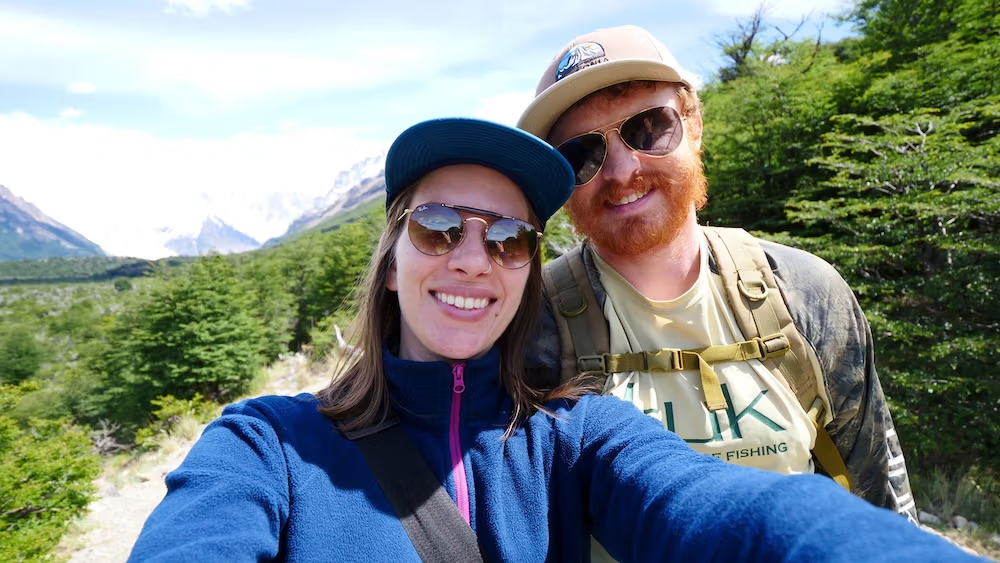
Our real El Chaltén trip: 6 nights, 2 big hikes, and a strong dependence on waffles
We stayed six nights in El Chaltén and—at least for our particular brand of “enthusiastic hikers who also consider dessert a food group”—it was the perfect amount of time. We came in hot to trot, rolled in by bus from El Calafate, and immediately learned two core truths: (1) El Chaltén is compact and ridiculously walkable, and (2) Patagonia does not care about your itinerary.
Audrey and I also learned that “logistics day” in El Chaltén is a real thing. Groceries were limited and surprisingly expensive (yes, we remember the $1 apple moment like it was yesterday), Wi-Fi was moody and unreliable, and we were staying somewhere that made hiking easy—breakfast early, trails were close, and a room comfortable enough to collapse into after big mileage.
And because we were there in December, the daylight basically laughed in the face of normal bedtime. Sunrise around 5 a.m. and sunset pushing 10:30 p.m. turns El Chaltén into this magical place where you can hike, snack, hike again, snack again, and still feel like you have time to chow down on waffles.
Here’s what it looked like in real life—messy, hungry, weather-dependent, and exactly why we’re Team “Stay Longer If You Can.”
Day 1: Arrival + logistics + sunset at Mirador de los Cóndores
We rolled in from El Calafate and did the classic arrival-day shuffle: check in, figure out where things are, stock up on snacks, and immediately notice that El Chaltén has that frontier little oasis vibe—colorful buildings, dramatic valley, mountains peeking around like they’re teasing you: “You came all this way…now earn it.”
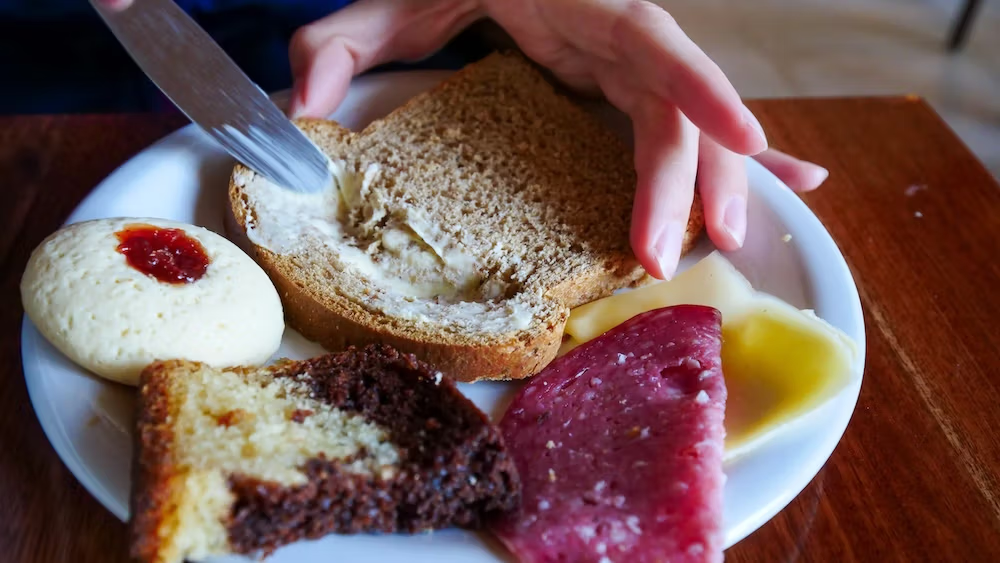
Audrey and I also learned: the town is built for trekkers, even if you are a “foodie pretending to be a trekker,” which—hi—yes, that’s us. Our place served breakfast early (a huge win when you’re trying to beat crowds and catch the best weather window), and the whole DIY hiking thing felt approachable because El Chaltén is basically designed around the idea that you’ll wake up, lace up, and disappear into the trails.
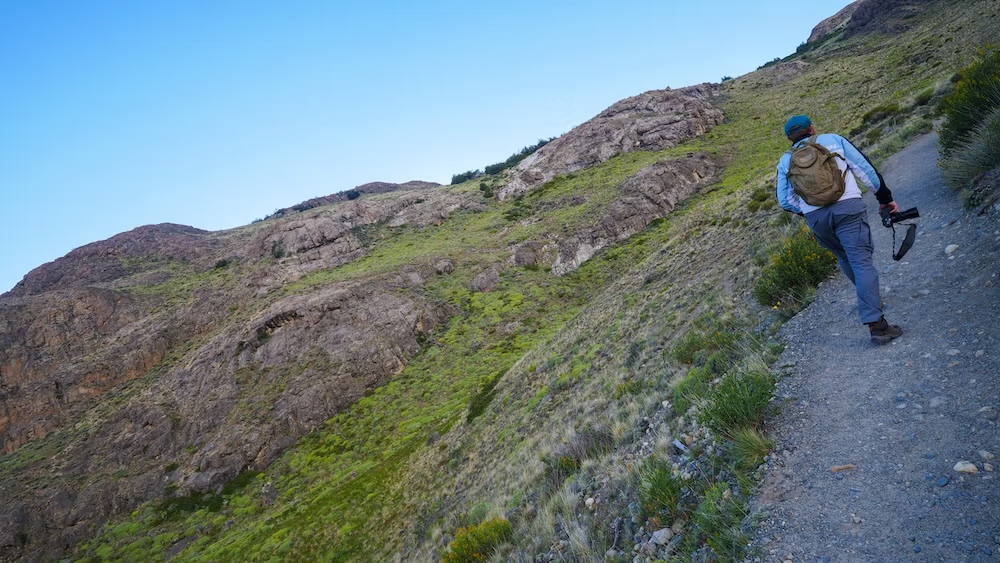
Then we pulled off the perfect arrival-day move: a sunset hike to Mirador de los Cóndores. It’s short, steep, and exactly the right amount of effort when you’re coming off a bus ride and your legs feel relatively fresh. The payoff is immediate—panoramic views of town and the surrounding ranges, and if you’re lucky, actual condors doing their slow-motion aerial villain routine above the valley.
We ended the day with that smug first-night satisfaction: we “hiked in Patagonia” without destroying ourselves, and we still had enough energy left to be enthusiastic about how early we were going to wake up tomorrow.
Day 2: Laguna de los Tres on our best weather day
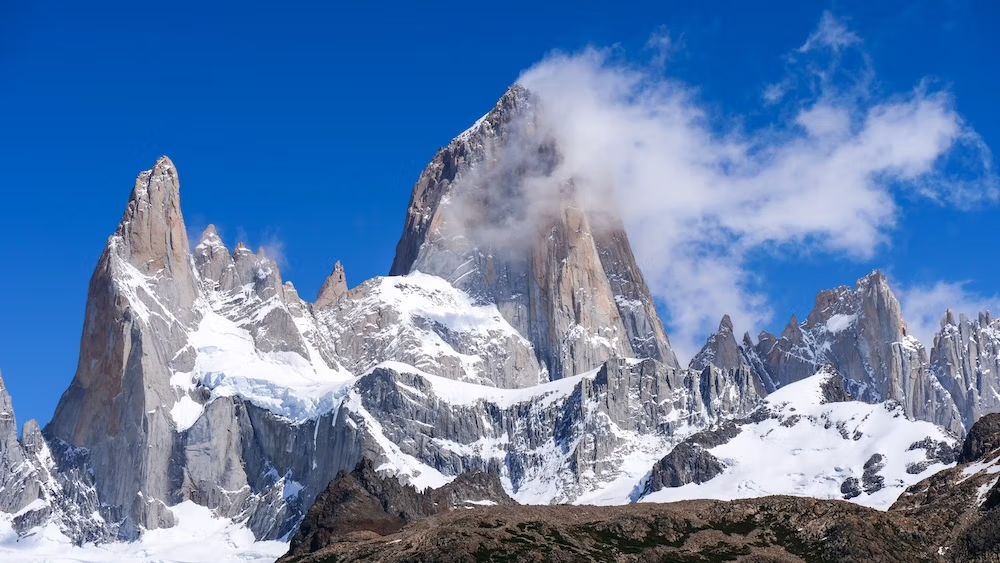
We saved the big one for the best forecast: Laguna de los Tres, aka Fitz Roy’s iconic viewpoint, aka the hike that makes your calves on fire. Audrey and I even managed a very on-brand mistake early on: we forgot our trail map on the nightstand and had to laugh at ourselves because nothing screams “professional trekking couple” like leaving your navigation behind in the comfort of a warm room.
What we loved right away: the trail system in El Chaltén is gloriously practical. You get kilometer markers, and that sounds like a small thing until you’re pacing yourself and trying to decide if you’ve got enough in the tank for a side viewpoint or if you should stop lying to yourself and admit you’re already struggling. It turns the hike into a very honest conversation: “How are we doing? Great. Terrible. Somewhere in between but pretending it’s great.”
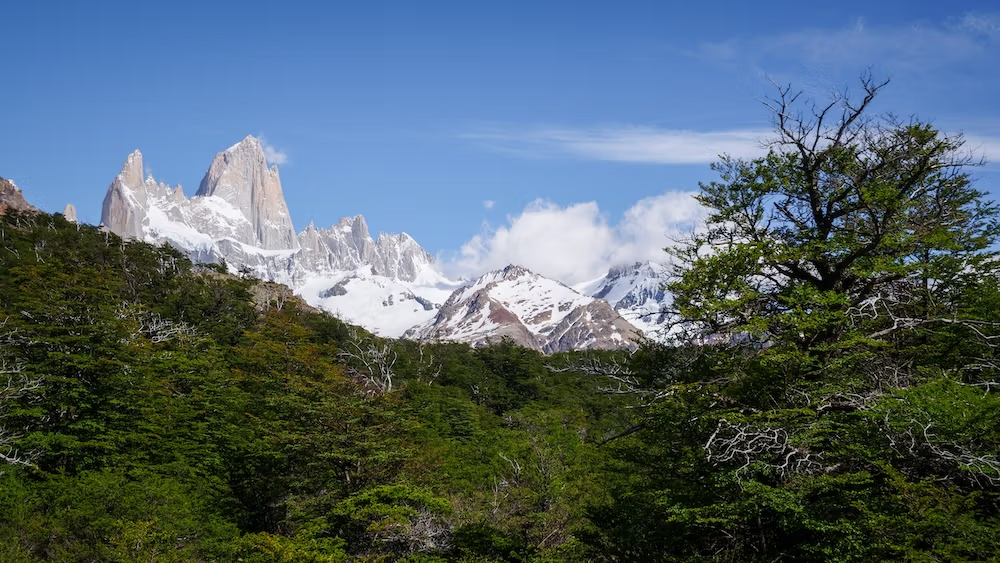
So, Audrey and I did the steady scenic grind, hit early rewards like viewpoints and Laguna Capri, and leaned hard on the “hiker lunchbox” ecosystem. A lot of accommodations offer packed lunches if you order the night before, which is convenient when you don’t have a kitchen, don’t have a fridge, and your main daily goal is “walk toward pointy mountains and eat things.” We paid about $10 USD per lunchbox, which felt a bit pricey at the time by Argentina standards, but it did save us from the “sad crushed sandwich in the bottom of a backpack” lifestyle. So, I’d recommend it.
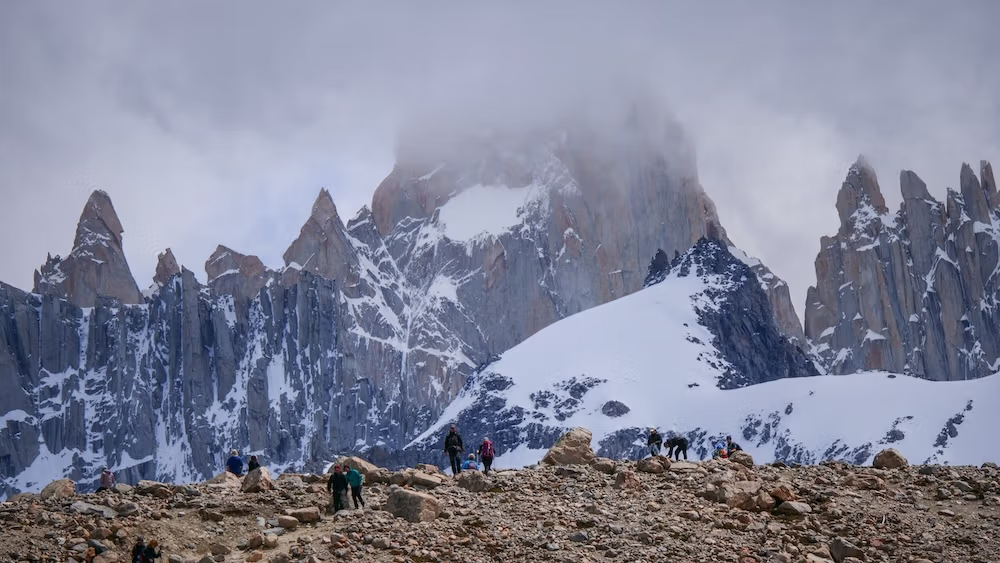
And then…that final section. The hike is basically in two moods: (1) scenic optimism and (2) “KM 9: the bottleneck.” That last kilometer is steep, rocky, relentless, and filled with other hikers who are either quietly heroic or loudly dramatic. (We were…both.) The wind at the top was absolutely unhinged, and we arrived at the viewpoint with that ravenous, hollow feeling that only comes from sweating your soul out while living mostly on candy and the power of denial.
The payoff was elite—one of the coolest hikes I’ve ever done—but the real plot twist was what happened afterward: Audrey and I staggered back into town like the walking-wounded. Fortunately, upon arrival we discovered a restaurant that felt like a hidden reward for suffering. Senderos—tiny, boutique, near the bus terminal—served us gourmet-level comfort: blue cheese risotto with walnuts and sun-dried tomatoes, a hearty lentil dish, a full bottle of Syrah (yes, we cheated on Malbec), and two desserts because we are nothing if not consistently gluttons. We waddled back to the room and passed out early like people who’d just been punched in the face by Fitz Roy.

Day 3: Recovery day (aka we become furniture)
The day after Laguna de los Tres, we were toast. We slept forever, moved like we were 90 years old, and accepted a truth that more people need to hear: rest days aren’t weakness—they’re strategy. We didn’t leave the room much, and we didn’t feel guilty about it because that hike wasn’t just “a nice day walk.” It was a long, demanding day where the first big stretch is manageable for reasonably fit people…and then the final kilometer arrives like a boss level.
There’s also the psychological side of recovery: you wake up and think, “We did it! We’re tough!” and then you try to stand up and your legs respond with, “Um. Park yourself right back down on the bed.” This is where longer stays pay off. If you only have two days in El Chaltén, a big hike can eat up your entire trip—one day to do it, one day to recover—and suddenly your “trekking capital of Argentina” experience becomes “one epic hike plus a lot of sitting.” We were grateful we’d built in enough time to recover without feeling like we were wasting the trip.
Day 4: Wind day (Patagonia chooses violence)
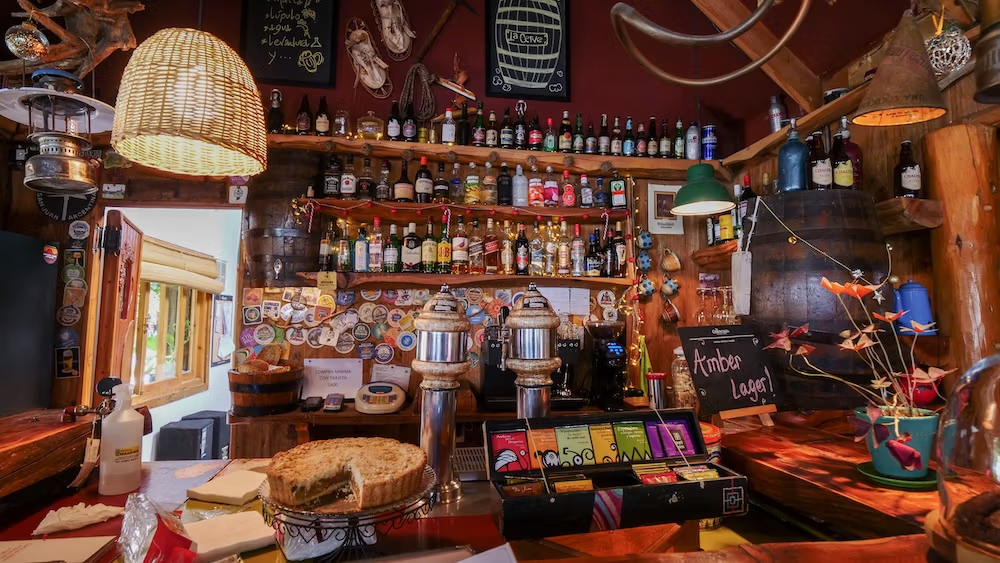
This was the day Patagonia reminded us who’s in charge. The weather turned horrendous, the wind went full aggression mode, and we tried to go outside…only to realize we could barely stand. To make matters worse we had to shout at each other from less than a meter away. So we did what sensible people do when the mountains are being that rude: café day. Hot drinks, comfort food, and another r&r day.
And honestly: this is the exact reason we keep pushing the “stay longer” philosophy. A bad weather day is not a surprise in Patagonia—it’s the default possibility. And we’re lucky we only got one. If you’ve only got 48 hours and one of those days is a wind apocalypse, you’re going to leave feeling like El Chaltén robbed you. But if you’ve got six nights? You can shrug, eat waffles (or cake, or pizza, or whatever else), and wait for your next hiking window.
Day 5: Laguna Torre on a moody day (our “comfortable” long hike)
Laguna Torre is the other marquee hike, and for Audrey and I it was the more comfortable long day—still a full trek, still real distance, but it felt more cooperative. The route is roughly an 18 km out-and-back to Laguna Torre at Km 9, and one of the best things about it is that it comes with built-in “mini goals”: Margarita Waterfall around Km 0.7, a lookout around Km 2.5, trail junctions, a campground (De Agostini) around Km 8, and then the lagoon itself. That structure makes the day feel mentally easier. That’s because you’re constantly ticking off landmarks instead of just thinking, “Are we there yet?” for seven straight hours.
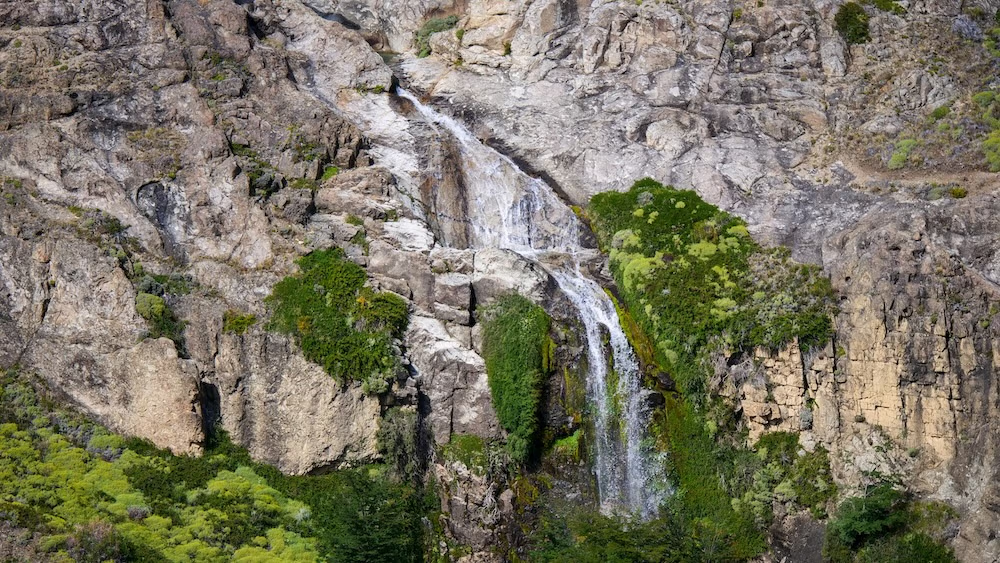
The other thing that made it feel easier: the elevation gain is more front-loaded, and then the trail flattens out around Km 3.5–4, so once you’re past the early work, you can cover ground quickly. I also noticed it felt less crowded than the Fitz Roy side—because a lot of people with limited time prioritize Laguna de los Tres first. So, there were stretches where it felt quieter and more immersive.
We did Laguna Torre on a moody weather day, which meant the iconic Cerro Torre “flex” was partially hidden behind cloud coverage. The views at the end weren’t at full power, but the hike itself was still gorgeous—forests, river sections, glacier energy on the horizon—plus it didn’t destroy us the same way Fitz Roy did. I even got a very Patagonia-specific PSA from park staff: don’t let friendly town dogs follow you onto the trails, because they can disturb local wildlife (including the endangered huemul deer). Befriend them in town, not in the park.
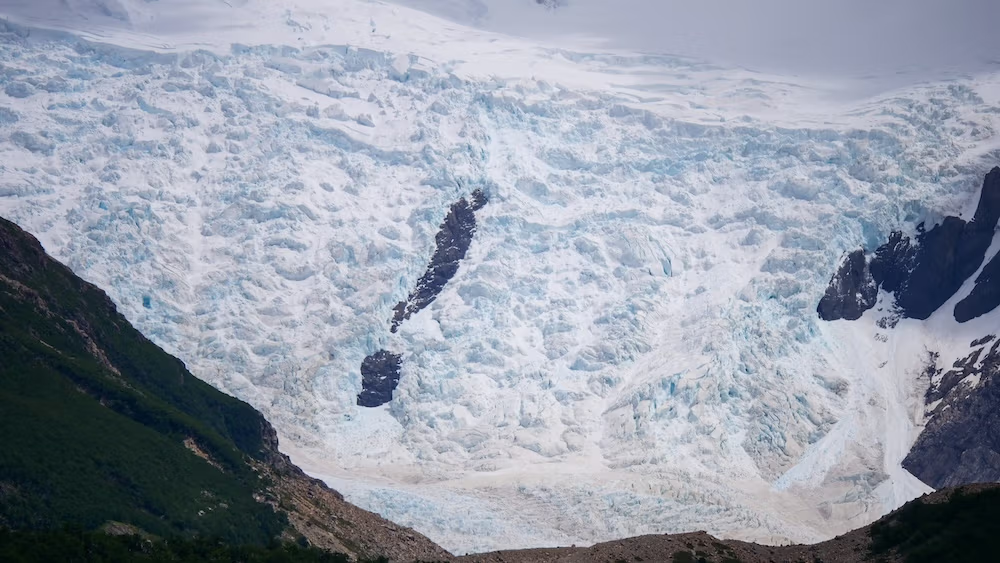
And then, because we are who we are, the return trip became a food-fueled mission. We moved faster on the way back—not because we suddenly became elite trekkers, but because the idea of dinner gave us superhero levels of motivation. Nothing gets in the way of a hungry hiker’s stride. Not fatigue. Not wind. Not existential doubt. Not even the fact that we were definitely “foodies pretending to be trekkers.”
Day 6: Chorrillo del Salto + extra viewpoints (easy day, big smiles)
After two big hikes, a full recovery day, and one weather tantrum from the universe, Audrey and I leaned into a balanced final day: Chorrillo del Salto (easy waterfall walk) and then pushing past Mirador de los Cóndores toward Mirador de las Águilas . This was the kind of day that makes a longer trip feel complete—you still get outdoors, still get those Patagonian “how is this real?” moments, but you also finish with enough energy to enjoy dinner instead of collapsing into bed at 8:30 p.m.
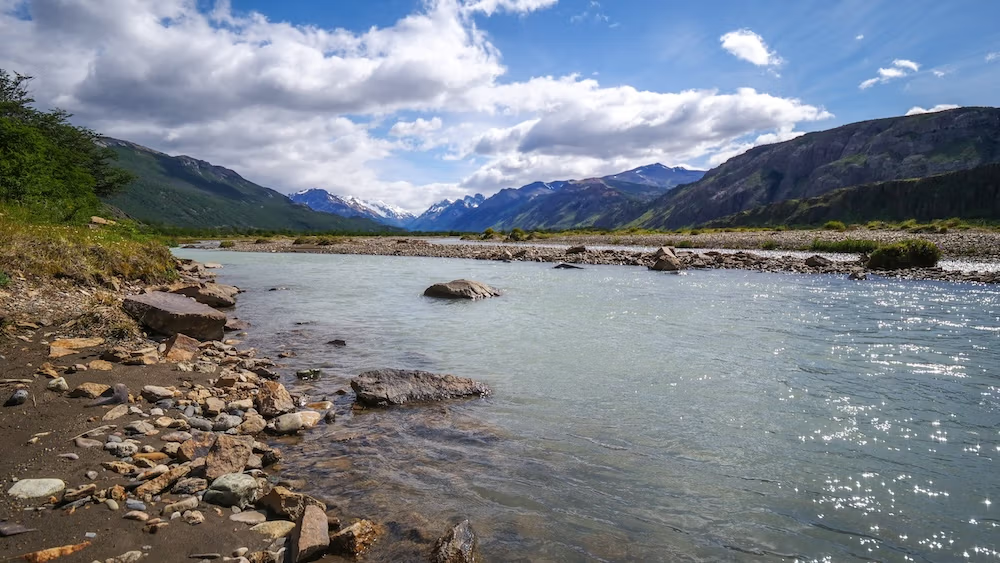
It also reinforced the big takeaway: El Chaltén rewards time. Not everyone has six nights (I get it), but if you want to do two marquee hikes without gambling your entire trip on perfect weather and perfect legs, you need enough days for reality to happen—because reality will happen. And in Patagonia, reality often arrives wearing wind.
The takeaway from our itinerary
Our six nights weren’t “extra.” They were the reason we:
- caught at least one proper clear-day payoff,
- had a recovery day that prevented injury-by-stubbornness,
- survived the wind day without stress,
- and still had time for easy hikes and food adventures.
If you want El Chaltén to be both epic and enjoyable, the number of days you choose is the difference between “we did it” and “we loved it.”
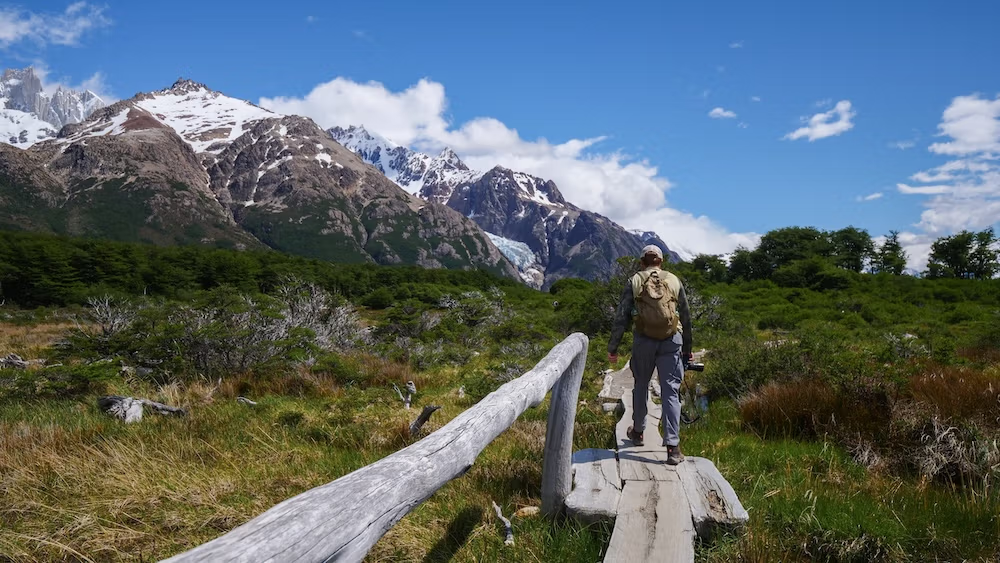
The variables that determine your ideal day count
Before we get into 1–7 day itineraries, here are the factors that should decide your trip length.
1) Your weather tolerance (and your view expectations)
If you’re happy hiking in any conditions and you don’t care if the peaks are hidden—shorter stays can work.
If you want those classic postcard views (Fitz Roy glowing, Torre showing off), you need buffer days.
2) Your hiking fitness (and how honest you are about it)
Some people do two long hikes back-to-back and then casually go for a “light trail run.” Those people are… not us.
If a big hike leaves you sore, you’ll enjoy El Chaltén far more with an intentional recovery day.
3) Your sunrise / photography goals
Sunrise missions can mean:
- starting at a deeply unserious hour,
- hiking in the dark,
- and sometimes camping to be in position.
If sunrise matters, add days. Always.
4) Your hiking style: single big days vs multi-day adventures
If you want to camp (where permitted) or do multi-day treks, your minimum day count shifts upward fast.
5) Season and daylight
Summer gives you ridiculously long daylight, which makes big hikes feel more forgiving. Shoulder season can mean fewer crowds and sharper light—but also more unpredictable conditions.
6) How you’re getting there (and whether travel days eat your schedule)
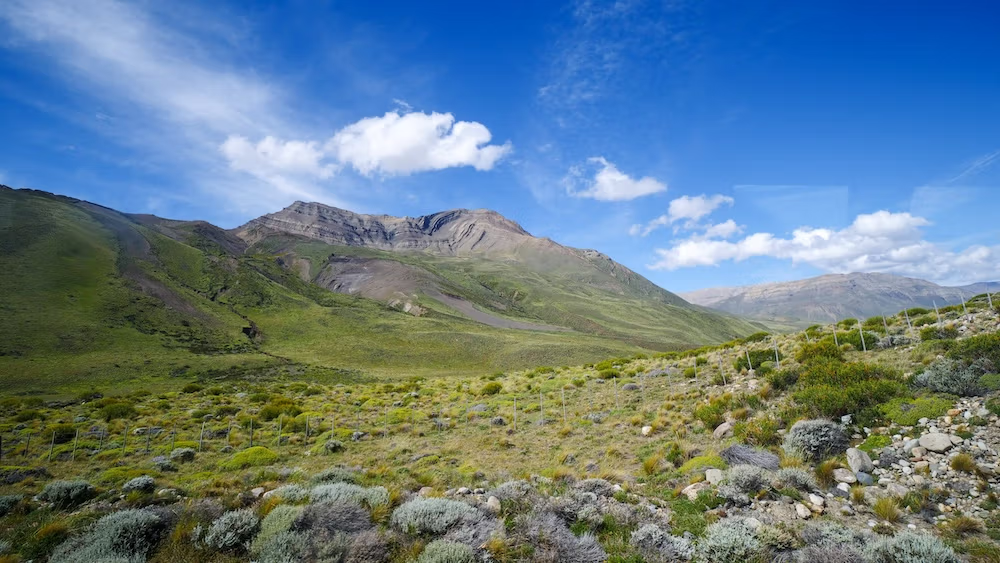
If you’re coming from El Calafate by bus, that’s a chunk of time each way. If you only have 1–2 days total, transportation can swallow your “hiking day” like a hungry guanaco.
El Chaltén hike building blocks (what fits where)
Here’s the practical menu of what people actually do, and how it fits into a 1–7 day plan. Times are typical for average hikers; add extra if you take lots of photos (hi, it’s us), stop for snack conferences, or get hypnotized by every cloud.
| Hike / Activity | Typical time | Difficulty | Best for | Notes |
|---|---|---|---|---|
| Mirador de los Cóndores (and Las Águilas add-on) | 1–2.5 hrs | Easy–Moderate | Arrival day, sunset, windy-day “still do something” | Short, steep, high payoff |
| Chorrillo del Salto | 2–3 hrs | Easy | Recovery day, families | Waterfall walk; low stress |
| Laguna Capri | 4–5 hrs | Moderate | Day 2–3 filler, “half-big” hike | Great Fitz Roy views without full suffering |
| Laguna Torre | 7–9 hrs | Moderate | Marquee hike | Long but more “flowy” than Fitz Roy |
| Laguna de los Tres | 8–10+ hrs | Hard | The iconic one | Final section is the boss level |
| Loma del Pliegue Tumbado | Full day | Hard | Big views + fewer people | A strong “extra day” choice |
| Lago del Desierto day trip | Half–Full day | Easy–Moderate | Non-hike variety | Great for mixing it up |
The “float your big hikes” method (how to outsmart the forecast)
If you take one idea from this guide, make it this: don’t assign fixed dates to your two marquee hikes until you’re in town. Treat them like wild animals. Observe conditions. Then pounce.
Here’s a simple approach that works whether you have 3 days or 7:
| Step | What you do | Why it works |
|---|---|---|
| 1 | Pick 2 “floating” big-hike days | You can swap Fitz Roy and Torre depending on visibility |
| 2 | Pick 1 guaranteed easy day | Even in bad weather you can still do viewpoints/waterfall |
| 3 | Check the forecast twice daily | Morning wind can differ from afternoon; things shift fast |
| 4 | Put your #1 priority hike on the clearest day | If you only get one “bluebird” window, make it count |
| 5 | Keep a “moody-day” option ready | You won’t waste a day doom-scrolling the weather app |
In our case, we floated the big hikes and pounced on Laguna de los Tres the moment we saw a “this could actually work” forecast. Then we used our extra days to absorb the reality that Patagonia sometimes chooses chaos.
Effort vs payoff vs crowds (choose your battles)
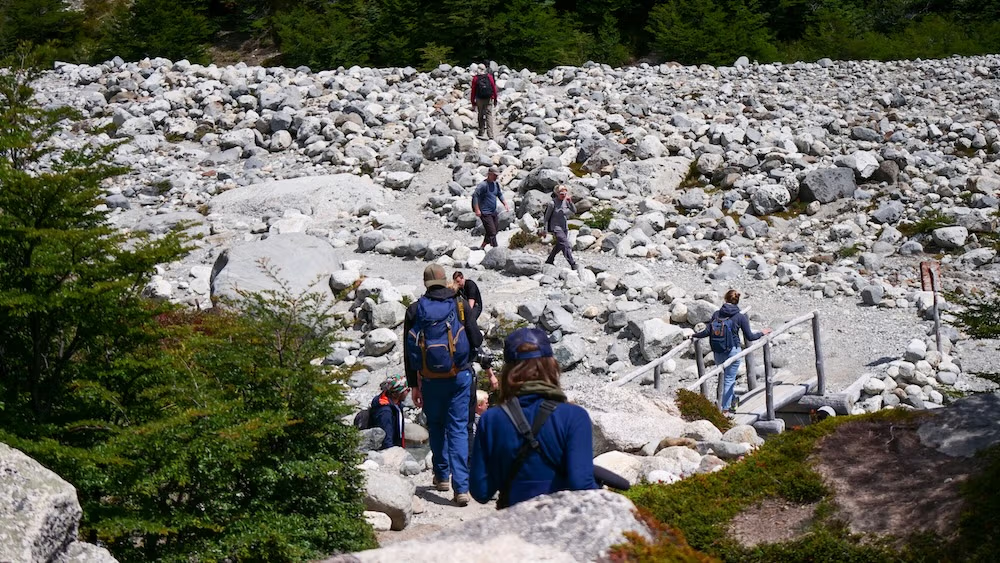
Not all hikes are hard in the same way. Some are steep, some are long, and some are emotionally challenging because you can literally see the viewpoint… but the trail is still like “cool, now climb a staircase made of loose rocks.”
| Hike | Effort level | Payoff level | Crowd level (peak season) | Best time to start |
|---|---|---|---|---|
| Mirador de los Cóndores | Medium-short (steep) | High | Medium | Late afternoon / sunset |
| Chorrillo del Salto | Low | Medium | Medium | Anytime (or late for fewer people) |
| Laguna Capri | Medium | High | High | Early morning |
| Laguna Torre | Medium-long | High (when clear) | High | Early morning |
| Laguna de los Tres | High (especially final section) | Very high | Very high | Early (or sunrise mission) |
| Pliegue Tumbado | High | Very high | Lower | Early, with stable forecast |
If crowds are a dealbreaker, add days. Extra days let you:
- start earlier without feeling rushed,
- pick a less-popular big day (Pliegue Tumbado),
- and re-try viewpoints when you catch a quieter window.
Sample “day template” that keeps you feeling sane
This is how to keep a long hiking trip from turning into a constant cycle of sore legs and rushed dinners.
| Type of day | Morning | Midday | Afternoon/Evening |
|---|---|---|---|
| Big hike day | Early breakfast + pack layers | Trail snacks + pacing checkpoints | Shower, stretch, slow dinner |
| Medium hike day | Normal breakfast | Hike + café stop | Sunset viewpoint or early night |
| Recovery day | Sleep like it’s your job | Easy stroll + big lunch | Dessert decisions + planning |
| Windy day | Wait for calm windows | Short walk / viewpoints | Cozy dinner + “tomorrow we try again” |
Our personal key: after Laguna de los Tres, we didn’t try to be heroes. Audrey and I let the recovery day happen, ate comfort food, and came back stronger for Laguna Torre.
What we’d do differently next time (small tweaks, big quality of life)
- Trekking poles for Laguna de los Tres. Not because we’re fragile (we are), but because the final section is steep and the descent is where tired legs do suspicious things.
- More snacks than pride allows. When you think you’ve packed enough food, add one more salty thing.
- One planned “food day.” El Chaltén is small but delicious, and it’s genuinely fun to have a day where the main objective is “eat well and recover.”
- A backup list of short walks. When wind hits, it’s comforting to already know your low-commitment options.
🏨 Where to Stay in El Chaltén (Our Top Hotel Picks)
⭐ Quick Booking Box: El Chaltén Hotels (Compare Rates)
| Pick | Best for | Vibe | Booking link |
|---|---|---|---|
| 🏆 Top Pick | First-timers who want an easy, reliable base | Comfortable “no-regrets” stay | Compare top stays in El Chaltén on Booking.com |
| 💎 Boutique / Treat-Yourself | Couples, hikers celebrating a big trek, views + comfort seekers | Cozy-luxe Patagonia energy | Browse boutique stays in El Chaltén on Booking.com |
| 🏘️ Mid-range (great value) | Most travelers who want comfort without splurging | Warm, practical, walkable | Find mid-range El Chaltén hotels on Booking.com |
| 💰 Budget | Road-trippers + hikers who only need a clean base | Simple, wallet-friendly | See budget stays in El Chaltén on Booking.com |
🔎 Want to browse all options instead?
👉 Compare all El Chaltén stays on Booking.com
The 1–7 day itineraries (with swaps)
Each day-count below includes:
- a “classic” itinerary,
- a “relaxed foodie” version (our natural habitat),
- and a “windy day swap” so you don’t spend your whole trip staring at a forecast like it’s your new religion.
1 day in El Chaltén (the sampler plate)
Let’s be honest: one day is not “doing El Chaltén.” It’s meeting El Chaltén briefly and then leaving before the relationship gets serious.
Classic 1-day plan (if you’re already sleeping in town)
- Sunrise / early morning: Mirador de los Cóndores
- Late morning to early afternoon: Chorrillo del Salto or Laguna Capri (choose one)
- Late afternoon: town stroll + food
Relaxed foodie 1-day plan
- Mirador de los Cóndores at golden hour
- Café crawl + bakery situation
- Short nature walk if the wind allows
Windy day swap
- Viewpoints (short windows between gusts)
- Museums / cafés / slow day, then sunset attempt
Who should do 1 day: people on a tight Patagonia circuit who want a taste and are okay missing the big hikes.
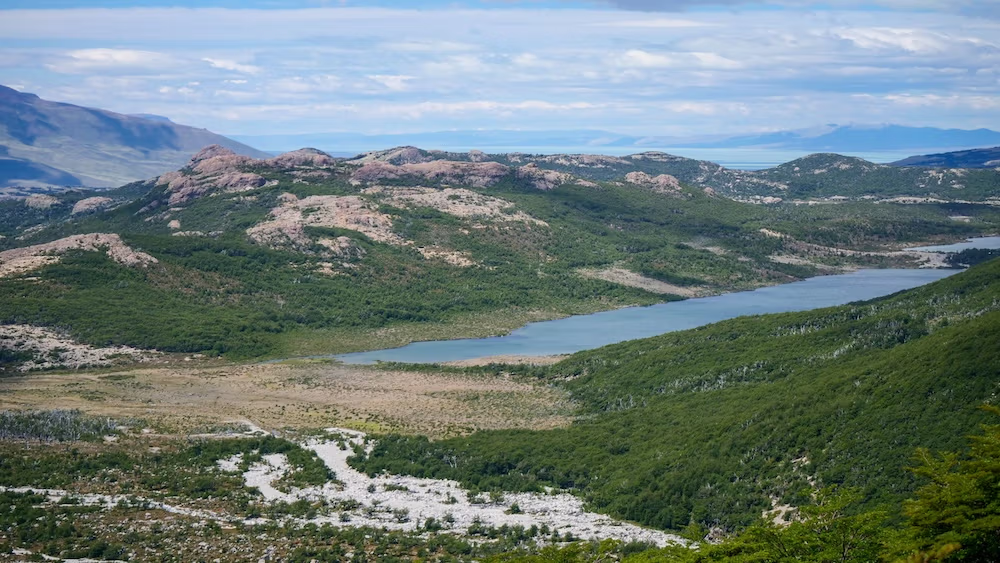
2 days in El Chaltén (high reward, high risk)
Two days can work if:
- you’re fit,
- you start early,
- and the weather cooperates.
But it’s still a gamble.
Classic 2-day plan
- Day 1: Laguna de los Tres (best weather day)
- Day 2: Laguna Torre (or vice versa)
Relaxed foodie 2-day plan
- Day 1: Laguna Capri + viewpoints + great dinner
- Day 2: Laguna Torre OR Laguna de los Tres (choose one big hike)
Windy day swap logic
If one day is socked in:
- do Chorrillo del Salto + viewpoints
- save your big hike for the better forecast day
Who should do 2 days: fit hikers or travelers who genuinely don’t mind if the peaks are hidden. If you care about views, add a day.
3 days in El Chaltén (the “most people” itinerary)
Three days is the first day-count that gives you:
- both marquee hikes,
- plus one buffer/easy day.
Classic 3-day plan
- Day 1: Arrival + Mirador de los Cóndores
- Day 2: Laguna de los Tres (best forecast)
- Day 3: Laguna Torre
Relaxed foodie 3-day plan
- Day 1: Arrival + viewpoints + early night
- Day 2: One marquee hike (best forecast)
- Day 3: The other marquee hike OR Laguna Capri + Chorrillo (if you want less intensity)
Windy day swap
- If wind ruins a marquee day: do the short hikes and shift the big hike to the next day.
Who should do 3 days: first-timers who want the highlights and have average fitness. It’s solid, but you’ll still feel a bit rushed if you get unlucky with weather.
4 days in El Chaltén (the sweet spot)
Four days is where the trip starts to feel like you’re playing chess instead of reacting to chaos.
Classic 4-day plan
- Day 1: Arrival + Mirador de los Cóndores (sunset)
- Day 2: Laguna de los Tres (best forecast)
- Day 3: Recovery or medium hike (Laguna Capri)
- Day 4: Laguna Torre (or flip days 2 and 4 depending on weather)
Relaxed foodie 4-day plan
- Day 1: Arrival + easy viewpoint
- Day 2: Big hike (best forecast)
- Day 3: Café + Chorrillo del Salto (full recovery energy)
- Day 4: Second big hike OR Lago del Desierto
Windy day swap
This is the first day-count where a true “bad weather day” doesn’t ruin anything. You just pivot.
Who should do 4 days: almost everyone. If you’re choosing one number without overthinking, choose four.
5 days in El Chaltén (variety + breathing room)
Five days is for people who want:
- both marquee hikes,
- plus an extra big viewpoint day,
- plus the freedom to go slow.
Classic 5-day plan
- Day 1: Arrival + viewpoints
- Day 2: Laguna de los Tres (best forecast)
- Day 3: Recovery / Capri / Chorrillo
- Day 4: Laguna Torre
- Day 5: Pliegue Tumbado OR Lago del Desierto
Relaxed foodie 5-day plan
- Alternate effort days and comfort days:
- Big hike
- Easy hike + great lunch
- Big hike
- Café day + short walk
- Bonus adventure day
Windy day swap
If you lose a day, you still have enough structure to hit the main goals.
Who should do 5 days: photographers, people who want to savor town life, and anyone who doesn’t want their vacation to feel like a military operation.
6 days in El Chaltén (our favorite: comfort + contingency)
Six days is the “we want to enjoy ourselves” plan. It’s the first time El Chaltén feels like a place you inhabit rather than conquer.
Classic 6-day plan (very close to what we did)
- Day 1: Arrival + Mirador de los Cóndores
- Day 2: Laguna de los Tres (best forecast)
- Day 3: Recovery day (seriously)
- Day 4: Weather buffer / café day / short hike
- Day 5: Laguna Torre
- Day 6: Chorrillo del Salto + Las Águilas add-on OR Lago del Desierto
Relaxed foodie 6-day plan
- Two marquee hikes
- Two easy days
- One bonus big day
- One pure buffer day
- And enough meals to confidently say “we know this town”
Windy day swap
With six days, wind becomes an inconvenience, not a tragedy.
Who should do 6 days: anyone who wants a trip that is epic and relaxing at the same time. Also: people who take photos, travel slower, or simply like having knees on day four.
7 days in El Chaltén (the full experience)
Seven days is how you turn El Chaltén into a lifestyle. And you just may never leave.
Classic 7-day plan
- Day 1: Arrival + viewpoints
- Day 2: Laguna de los Tres (best forecast)
- Day 3: Recovery + town + food
- Day 4: Laguna Torre
- Day 5: Pliegue Tumbado OR another big viewpoint day
- Day 6: Lago del Desierto OR a tour/excursion
- Day 7: Choose-your-own-adventure day (repeat favorite, chase a clear morning, or do every café)
Windy day swap
Wind gets two full chances to ruin your plans and still fails.
Who should do 7 days: Patagonia lovers, photographers, hikers who want both big days and slow days, and anyone who wants the best odds of seeing the mountains in multiple moods.
🥾 Plan B Adventures: Tours & Easy Day Trips from El Chaltén
Even hardcore hikers end up with a “Plan B” day in Patagonia. When the wind is feral, legs are toast, or you just want someone else to handle the logistics, these Viator options are easy wins.
👉 Browse El Chaltén tours (plus nearby options) on Viator
| Option | Best for | Book it |
|---|---|---|
| 🚌 El Chaltén “Complete Experience” day tour (from El Calafate) | A low-effort way to “see El Chaltén” without committing to a big hike | El Chaltén Complete Experience Full-Day Tour from El Calafate (Viator) |
| 🧊 Perito Moreno Glacier full-day + optional boat safari | Classic Patagonia bucket-list day that doesn’t require hardcore hiking | Perito Moreno Glacier Full-Day Tour with Optional Boat Safari (Viator) |
| 🚤 “Todo Glaciares” navigation (Upsala + Spegazzini) | Big-glacier scenery with max comfort (aka: let the boat do the work) | Glaciares Gourmet Navigation: Upsala & Spegazzini Navigation (Viator) |
| 🗿 El Calafate city tour + Walichu Caves | A cultural/history reset day (great when the weather is moody) | El Calafate City Tour + Walichu Caves (Viator) |
| 🚙 Nativo Experience: Lakes & Caverns (4×4 style) | Off-road adventure + viewpoints when you want something different than trails | Nativo Experience: Lakes & Caverns (Viator) |
| 🇨🇱 Torres del Paine full-day trip (from El Calafate) | Maximum “Patagonia wow” in one day (long day, huge payoff) | Torres del Paine Full-Day Tour from El Calafate (Viator) |
Which day-count should you choose? (decision matrix)
| You are… | Your priority | Recommended days | Why |
|---|---|---|---|
| A fast traveler on a Patagonia circuit | “Highlights only” | 3 | Two marquee hikes + arrival view |
| A fit hiker with limited time | “Do both big hikes” | 2–3 | Possible, but weather is the wildcard |
| A normal human who likes sleep and food | “Epic + enjoyable” | 4 | Buffers + recovery + flexibility |
| A photographer chasing clear peaks | “Light + views” | 5–7 | More forecast windows = more keepers |
| A slower traveler / family pace | “No stress” | 5–7 | Easy days between efforts |
| Someone who hates crowds | “Off-peak feel” | 4–6 | More time to hike early/late and pivot |
Timing: how to structure your days so the hikes feel easier
Start earlier than you think (especially for the two marquee hikes)
El Chaltén’s summer daylight is generous, but the trails are popular and the weather can shift fast.
A practical rhythm:
- Wake up early, eat breakfast, pack layers.
- Start hiking before the crowds if possible.
- Aim to reach the big viewpoints with time to linger, not just tag and flee.
Build your “fuel plan” like it matters (because it does)
Long hikes get dramatically better when you:
- pack more calories than you think you need,
- bring salty snacks,
- and treat water as non-negotiable.
If you like convenience, ordering a lunchbox the night before (when available) can remove decision fatigue on an early start.
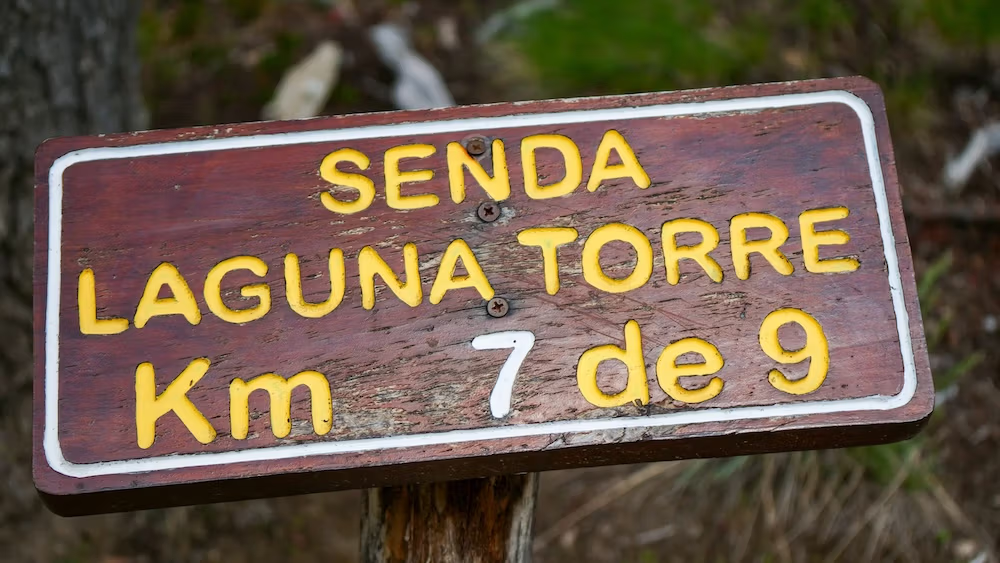
Use the km markers as a pacing game
On long hikes, mental tricks help:
- set mini-goals,
- check your pace at fixed points,
- and decide early whether you’re continuing to the full payoff or taking the scenic halfway win.
Practical logistics that influence your trip length
Where to stay
El Chaltén is compact, so location is rarely a deal-breaker. The bigger questions are:
- do you want an early breakfast for early starts,
- do you want a kitchen (snack logistics),
- and do you want a quiet place to collapse after big days?
Food, groceries, and the reality of “tiny town supply”
El Chaltén has restaurants and cafés, but groceries can be limited and pricey. If you’re staying longer, plan a few “buy what you see when you see it” moments for trail snacks.
Connectivity
Expect patchy mobile data and variable Wi-Fi. If you need to work, build in time for the “find the signal” game.
Park tickets and rules
Rules, fees, and access systems can change. Check official park sources before your trip, and don’t assume you can wing it if you’re planning any overnight or backcountry routes.
Packing list (Patagonia edition)
Essentials:
- Windproof shell (this is not optional)
- Warm mid-layer (fleece or light puffy)
- Hat + gloves (even in summer, depending on conditions)
- Good hiking shoes
- Trekking poles (your knees will send thank-you notes)
- Sun protection (yes, even when it’s cold)
- Refillable water bottle or bladder
- Snacks: salty + sweet
- Small first-aid kit + blister care
- Headlamp if you’re doing early starts or shoulder season
Nice to have:
- Thermos (hot drink on a windy viewpoint is elite)
- Dry bag or pack cover
- Spare socks
- A sense of humor (mandatory)
Common mistakes (learn from our chaos)
- Underestimating Laguna de los Tres. The final section is real. If you’re on the fence, bring poles, start early, and pace.
- Scheduling two big hikes back-to-back without a buffer. You might be fine… or you might spend day three walking like a broken robot.
- Assuming the peaks will be visible on your only “big hike” day. Build in at least one extra day if views matter.
- Not treating wind seriously. Wind changes effort levels, comfort, and safety.
- Skipping easy days. Easy days are where you absorb the place and actually enjoy your food like a vacation person.
Plan your trip (quick recap)
- If you can only do 2 days: choose one marquee hike and one flexible day.
- If you can do 3 days: do both marquee hikes + one arrival/easy day.
- If you can do 4 days: you’ve unlocked El Chaltén properly.
- If you can do 5–7 days: you’ll get variety, buffers, and far better odds of clear views.
- If you’re traveling at a foodie pace (hi): add at least one rest day.
✨ Ready to lock in your El Chaltén plan?
- 🥾 Browse El Chaltén tours on Viator
- 🏨 Find El Chaltén hotels on Booking.com
- 🚗 Compare El Calafate car rentals on DiscoverCars
- 🚌 Book El Calafate → El Chaltén buses on Busbud
FAQ: How Many Days in El Chaltén?
Is 2 days enough for El Chaltén?
Sometimes. If you’re fit and you get decent weather, you can do the two marquee hikes. If you care about views, two days is risky—one bad forecast day can steal your best payoff.
Is 3 days the best number for first-timers?
It’s a strong minimum. Three days lets you tackle the highlights, but you’ll still be tight on buffers if the wind or cloud cover is rude.
Why do people recommend 4 days in El Chaltén?
Because four days gives you flexibility. You can place the big hikes on the best forecast windows and still have an easy/recovery day.
What if I only want to do easy hikes?
Totally possible. One to three days can be great if you stick to viewpoints, Chorrillo del Salto, and moderate hikes like Laguna Capri. You’ll still want at least one buffer day for wind.
Which hike should I prioritize if I only have time for one?
If you want the iconic Fitz Roy shot, choose Laguna de los Tres on your best forecast day. If you want a long hike that feels more “comfortable,” choose Laguna Torre.
Do I need a rest day after Laguna de los Tres?
Nope. But it’s common. Audrey and I sure needed it. If you’re not conditioned for steep hiking, a rest day can make the whole trip more enjoyable (and reduce injury risk).
How early should I start the big hikes?
Early. In peak season, starting earlier helps you avoid crowds, gives you more weather margin, and makes the day feel less rushed.
Is El Chaltén good for photographers?
Absolutely. But photographers benefit from more days, because the mountains don’t show themselves on command. Five to seven days gives you more light and weather windows.
Can I visit El Chaltén as a day trip from El Calafate?
Yes, but it’s tight. Transportation time eats into your hiking time, so it’s best for viewpoints or one shorter hike unless you start extremely early.
Is it worth staying a full week in El Chaltén?
Yes. A week turns the destination into an experience rather than a checklist. You’ll get multiple chances at clear peaks, plus time for variety hikes and slow days.
What’s the best day-count for a relaxed traveler who loves food?
Four to six. That gives you space to alternate big days with café days, and you’ll actually enjoy dinner instead of inhaling it while half asleep.
How do I handle a super windy day?
Lean into short hikes, viewpoints when the gusts calm down, and café culture. Save your marquee hike for the best forecast day.
What’s the best strategy for crowds on the trails?
Start early, hike later in the day, or add days so you’re not forced onto the most popular trail at the most popular hour.
Should I plan Laguna de los Tres and Laguna Torre on fixed dates?
If you can avoid it, don’t lock them in. Treat them as “best forecast day” hikes and stay flexible.
Project 23 Argentina: This guide is also available in Spanish. [Lea la versión en castellano: ¿Cuántos días en El Chaltén necesitás? (¿1, 2, 3, 4, 5, 6 o 7 días?)]
Further Reading, Sources & Resources
If you want to double-check details, plan around current rules, or go deeper on specific hikes, here are some sources worth checking out. We’ve kept this list tight on purpose: the most useful, most “planning-critical” pages, with a quick note on what each one is best for.
Official park information and ticketing (Los Glaciares National Park)
https://www.argentina.gob.ar/parquesnacionales/patagonia-austral/parque-nacional-los-glaciares/tickets
The official starting point for entry rules and the current ticket system. This is the page we’d check right before your trip because park processes can change and this is where the latest mechanics usually show up.
https://www.argentina.gob.ar/parquesnacionales/patagonia-austral/parque-nacional-los-glaciares/tarifas
Use this to confirm current prices, categories, and any multi-day pass options so you can do the “how many days is worth it” math without guessing.
https://www.argentina.gob.ar/parquesnacionales/patagonia-austral/parque-nacional-los-glaciares/actividades
The official overview of what’s allowed / recommended, including activity rules and any seasonal requirements that can affect planning (especially shoulder season and winter).
Local destination guidance and trail descriptions (El Chaltén-focused)
https://elchalten.com/v4/en/recommendations-in-el-chalten.php
A genuinely useful “big picture” overview from a local-focused site—great for trip planning logic (how long to stay, what to prioritize, and how to structure your time).
https://elchalten.com/v4/en/weather-in-el-chalten-patagonia.php
If you read one “weather reality check,” make it this. It explains why buffers matter and why El Chaltén planning is basically forecasting + flexibility + humility.
https://elchalten.com/v4/en/laguna-de-los-tres-trek-el-chalten.php
The most important trail page for this article: Laguna de los Tres / Fitz Roy. Handy for route expectations, timing, and understanding why this hike is a full-day commitment (and why it often triggers a recovery day for normal humans).
https://elchalten.com/v4/en/laguna-torre-trek-el-chalten.php
The companion marquee hike: Laguna Torre / Cerro Torre. Useful for planning the “more comfortable long day” option and for understanding the conditions that make the payoff dramatically better (or moodier) depending on the day.
https://amigospnlosglaciares.org/campamentos/
If you’re considering camping (Capri, Poincenot, De Agostini, etc.), this is a key operational source for how camping is administered, plus practical details like basic rules and what you need to arrange before showing up.
Notes on accuracy
Trail times and conditions vary massively based on wind, visibility, temperature, crowd levels, fitness, and how long you linger at viewpoints. Also: park rules, reservation systems, and fees can change season to season. For anything that affects cost, access, or safety, verify the latest details on the official park pages close to departure—especially if you’re traveling in shoulder season or planning any overnight trekking.