
In El Chaltén, the mountains are the stars, the wind is the heckler, and you’re the supporting actor trying to look calm while your legs negotiate a new contract.

Audrey and I went to El Chaltén as foodies who apparently cosplay as hikers. We left as… slightly stronger foodies who still cosplay as hikers, just with better layering and a deeper respect for kilometer markers.
This weekend itinerary is built for mere mortals: folks with limited time, questionable hamstrings, and a very sincere desire to see those iconic Fitz Roy and Cerro Torre views without turning the trip into a survival documentary. We’ll give you a clear plan, smart timing, backup options for wind and mood swings in the sky, and just enough tough love to keep your “ultimate weekend” from becoming your “ultimate regret.”
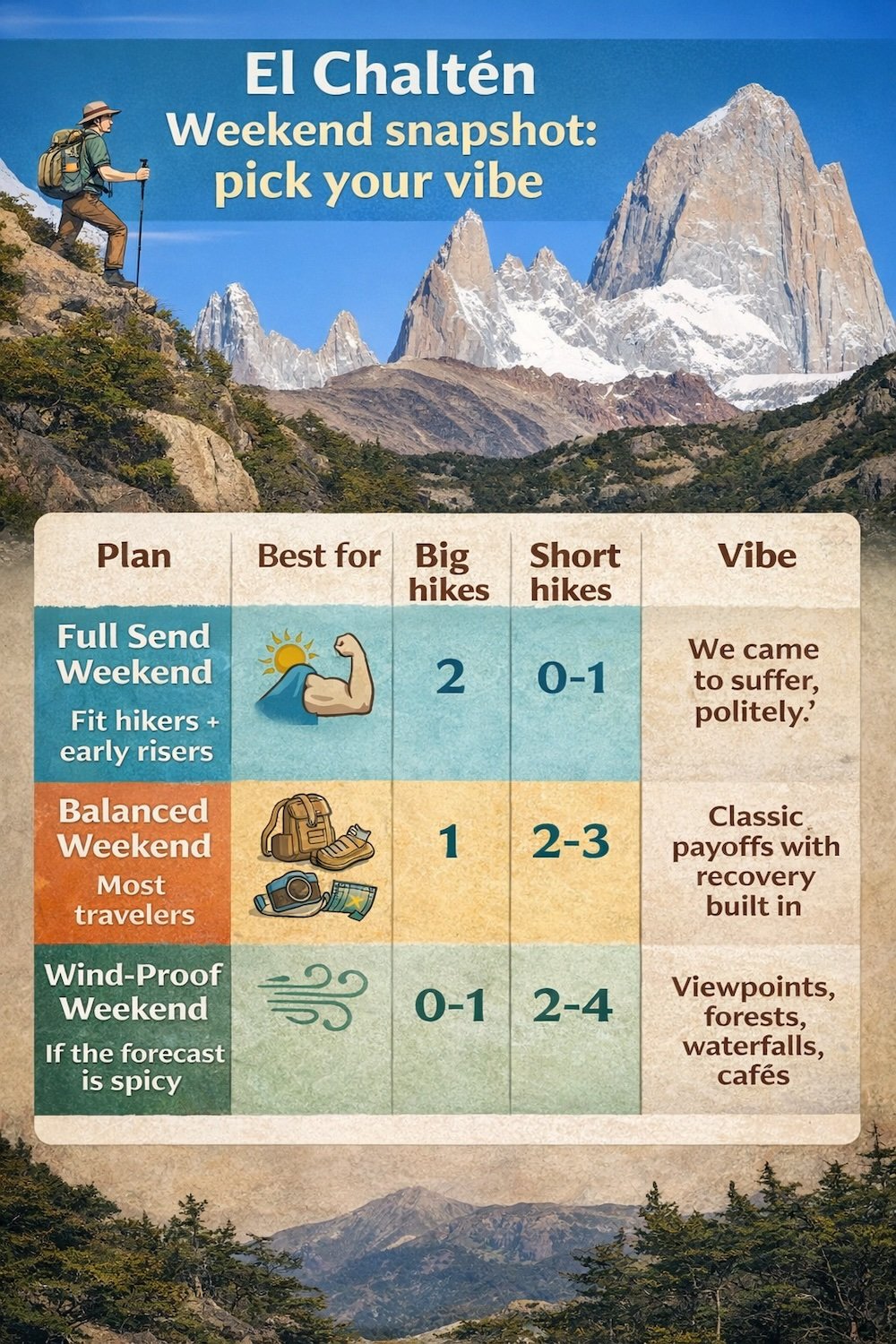
Weekend snapshot: pick your vibe
| Plan | Best for | Big hikes | Short hikes | Vibe |
|---|---|---|---|---|
| Full Send Weekend | Fit hikers + early risers | 2 | 0–1 | “We came to suffer, politely.” |
| Balanced Weekend | Most travelers | 1 | 2–3 | Classic payoffs with recovery built in |
| Wind-Proof Weekend | If the forecast is spicy | 0–1 | 2–4 | Viewpoints, forests, waterfalls, cafés |
🧾 Quick Booking: Your El Chaltén Travel Essentials 🥾✨
🎒 Your Travel Toolkit (Book These 4 Things)
| ✅ What to book | 💡 Why it’s worth it | 🔗 Quick link |
|---|---|---|
| 🥾 Tours & experiences | Easy way to lock in a glacier day, a Lago del Desierto adventure, or a guided option when weather turns moody | Browse El Chaltén tours on Viator |
| 🏨 Hotels & stays | El Chaltén sells out fast in peak season — booking early = better locations + fewer “only the priciest rooms left” moments | Find El Chaltén hotels on Booking.com |
| 🚗 Car rentals (optional) | Best for freedom days: Ruta 40 viewpoints, flexible timing, photo stops, and a smoother Lago del Desierto run | Compare car rentals in El Calafate (gateway to El Chaltén) on DiscoverCars |
| 🚌 Bus tickets | The classic El Calafate ↔ El Chaltén route is simple — but popular departure times fill up | Book El Calafate → El Chaltén buses on Busbud |
👉 One-click backup (reverse direction): Book El Chaltén → El Calafate buses on Busbud
The one rule that makes El Chaltén work in 48 hours
Use your best weather window for Fitz Roy.
If you only remember one thing from this entire guide, let it be this: Laguna de los Tres is the “clear skies trophy.” When it’s crisp, it’s ridiculous. When it’s socked in, it can still be a great day out—but the famous payoff is basically “a large gray vibe.”
So for a 2-day trip, the decision is less “which hike is better?” and more “which day is clearer?” The itinerary below is designed so you can swap Day 1 and Day 2 depending on weather and still feel like a genius.
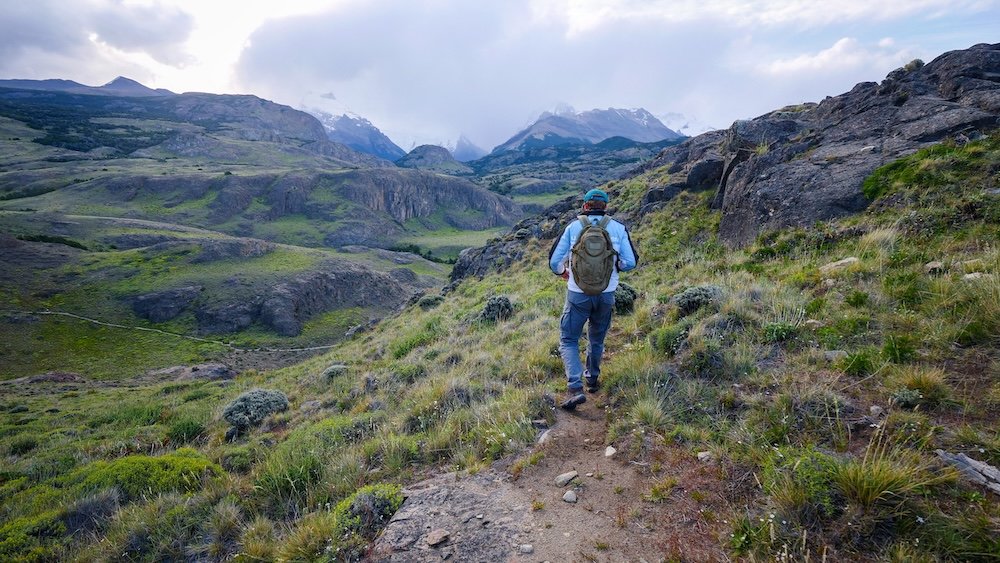
Before you lace up: quick logistics that can steal your hike day
Park entry for El Chaltén trails
Los Glaciares National Park (El Chaltén area) now uses a paid access system for the main trail portals. The official Los Glaciares tariff page lists the “Tarifa general” as ARS 45,000, with discounted categories for residents and students.
There is also an official nationwide policy that applies a 50% discount for the second day of visiting (valid for 72 hours after your first entry).
What this means in real life: a weekend can be priced like a weekend, as long as you plan your two entries within that 72-hour window.
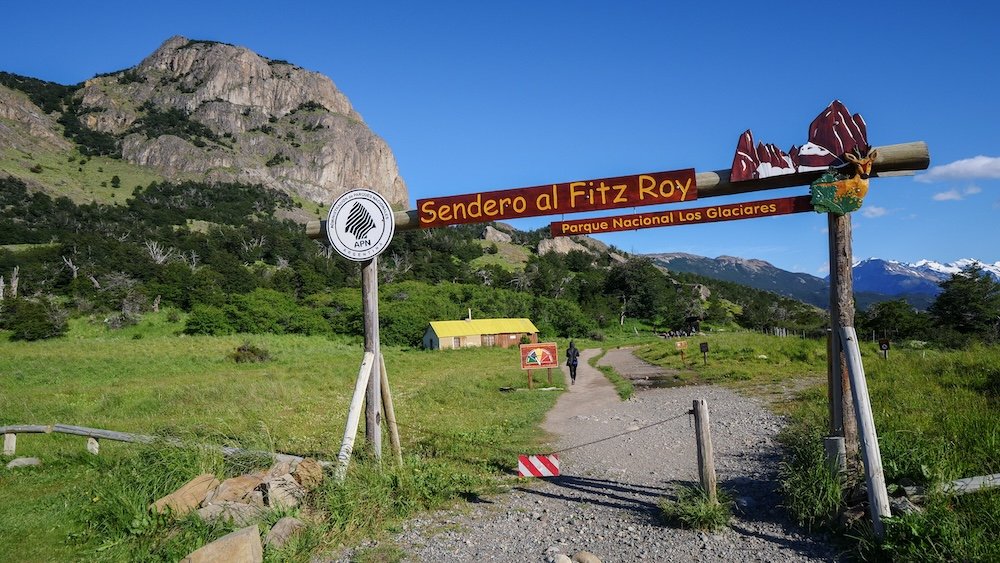
The portal situation (where you actually enter)
El Chaltén’s main hiking network is organized around signed access points (portals). Three primary portals serving different trail clusters (including the Base Fitz Roy area and Río Eléctrico).
Practical takeaway: don’t assume you can “just start walking” from any random corner of town and skip entry. Build your itinerary around the portal you’ll use that morning.
Buying tickets
National Parks tickets are sold through the official online platform.
Do yourself a favor: buy your ticket the night before. Morning trailheads are not where you want to be learning how to type your email address with frozen fingers.
Getting to El Chaltén (weekend math)
Most weekend trips route through El Calafate. The local visitor site notes that regular buses operate year-round, with at least two daily departures and extra frequencies in peak season (October to April).
That bus time is the hidden boss fight of a weekend itinerary. If you arrive midday, you’re probably not starting a 8–9 hour epic and finishing in a happy way.
👉 Compare El Calafate car rentals on DiscoverCars (best gateway for El Chaltén)
El Chaltén weather: the forecast is a suggestion, the wind is a lifestyle
Sunshine, strong winds, rain, and even surprise summer snow—sometimes in the same day—and it specifically warns that wind is an “inevitable companion,” especially October through March, with windless summer days being rare.

Our real-world weekend philosophy (from actual experience)
Audrey and I learned this the hard way: the big hikes are totally doable… and then you might need a recovery day where you move your skeleton and eat waffles for medical reasons.
For context: Audrey and I were in El Chaltén for six nights, and even with the luxury of extra days, the big hikes still had us moving like stiff marionettes afterward. That’s why this 48-hour plan is basically a “best-of” highlight reel—built from what actually felt good (and what absolutely did not).
The day after Laguna de los Tres we basically didn’t leave the room—we were so stiff we slept 10–12 hours, which is how we learned that “weekend itineraries” should respect the laws of human quads.
If your weekend is Saturday–Sunday, you can absolutely do one big hike and still have a fantastic time. Doing two big hikes is possible, but it’s the “strong legs + early starts + decent weather” version of the weekend.
Use the plan that matches your body, not your ego.
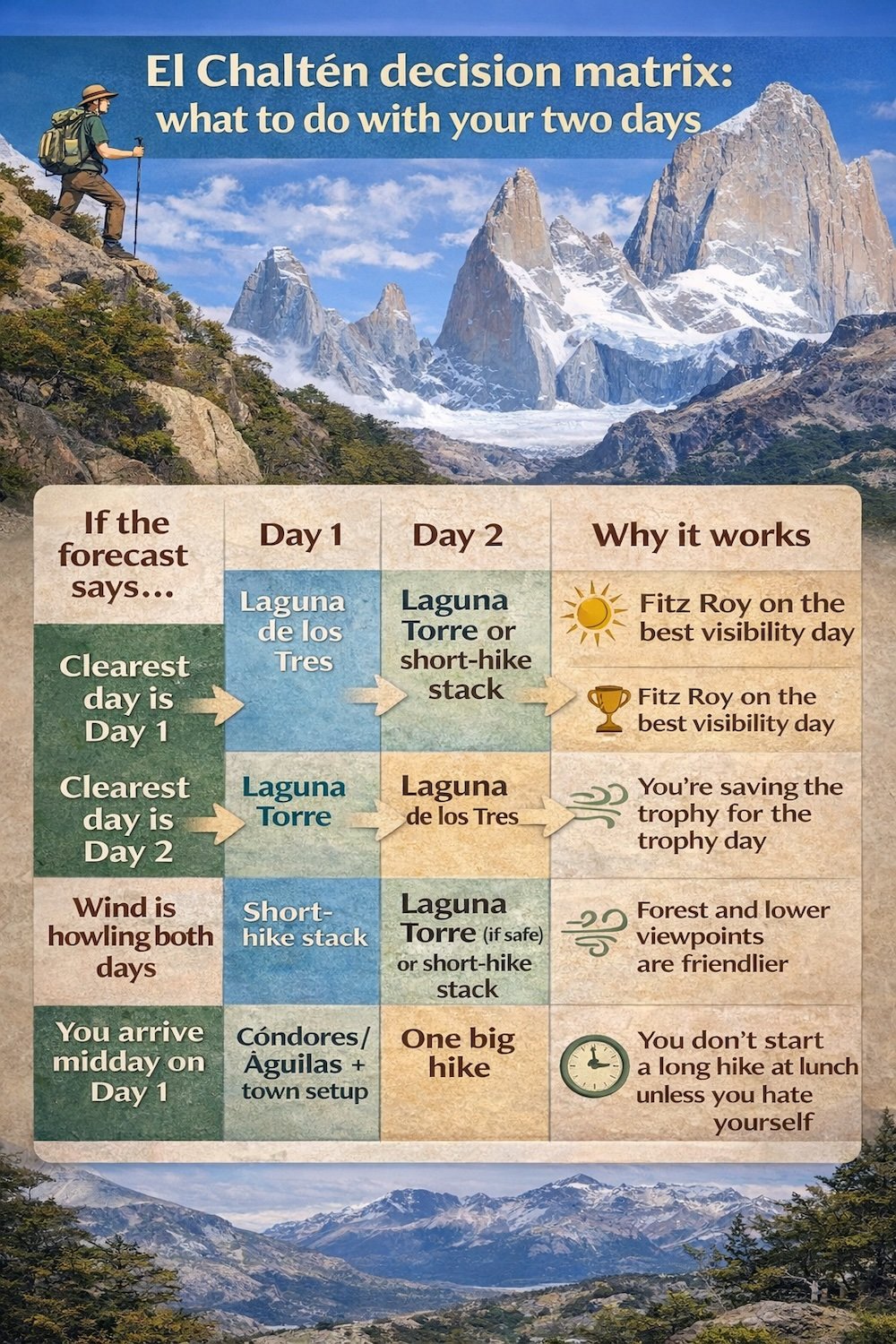
The decision matrix: what to do with your two days
| If the forecast says… | Day 1 | Day 2 | Why it works |
|---|---|---|---|
| Clearest day is Day 1 | Laguna de los Tres | Laguna Torre or short-hike stack | Fitz Roy on the best visibility day |
| Clearest day is Day 2 | Laguna Torre | Laguna de los Tres | You’re saving the trophy for the trophy day |
| Wind is howling both days | Short-hike stack | Laguna Torre (if safe) or short-hike stack | Forest and lower viewpoints are friendlier |
| You arrive midday on Day 1 | Cóndores/Águilas + town setup | One big hike | You don’t start a long hike at lunch unless you hate yourself |
Itinerary Option 1: Full Send Weekend (two big hikes)
This is the classic “we are here, we are fit, and we will earn our empanadas” plan.
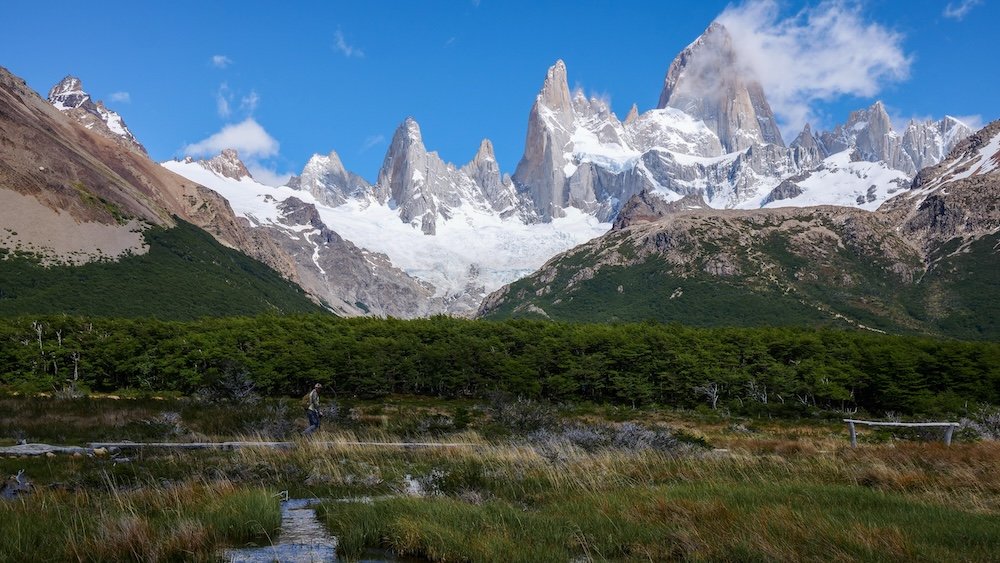
Day 1: Laguna de los Tres (Fitz Roy day)
Laguna de los Tres is the marquee hike: it’s long, it’s beautiful, and the final push has a way of turning confident adults into people who negotiate with rocks.
At around kilometer 8, Audrey and I were feeling dangerously confident—just after noon, sunset not until late, and we were like: “We have all the time in the world, let’s go for it.”
After reaching the Río Blanco area, you face a steep section (about 400 meters of ascent) to reach Laguna de los Tres.
Then came kilometer 9: the bottleneck—rocky, gravelly, steep, everyone tired, and the exact moment we realized trekking poles would’ve been a very intelligent life choice.
Day 1 game plan (timing blocks)
| Time | What we do | Notes |
|---|---|---|
| 06:30–07:30 | Breakfast + pack | This town runs on early breakfasts for a reason |
| 07:30–08:00 | Walk to trailhead + start | Starting early is crowd control and wind control |
| 10:00–11:00 | Laguna Capri viewpoint window | First “wow” moment; don’t rush it |
| 12:00–13:00 | Camps area + decision point | If you’re behind schedule, shorten your plan |
| 13:00–14:30 | Final climb + summit snack | Wind + snacks behind rocks: iconic |
| 14:30–18:00 | Descend + return to town | The descent is where tired feet get clumsy |
| Evening | Dinner + collapse | You earned carbs and a horizontal lifestyle |
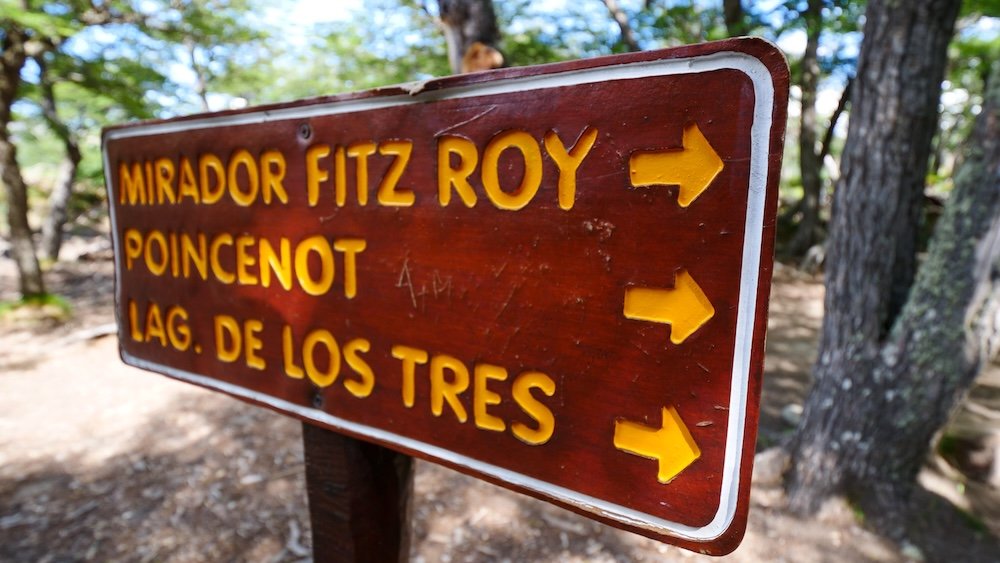
Segment-by-segment (what it feels like)
The first hour: You’re climbing enough that you’ll feel it, but not enough to question your life choices. You’re also still full of optimism.
The middle miles: This is where El Chaltén hypnotizes you with forests, views, and that sense of “we’re basically mountain goats now.”
The “KM9 gut check” moment: Somewhere near the top, the vibe shifts. The trail gets steeper and rockier, the crowds compress, and you realize the final section is a staircase designed by someone who hates knees.
The summit reality: If the sky is clear, it’s one of the most jaw-dropping views in Patagonia. If it’s not, you still get the satisfaction of having done the thing… plus the privilege of being wind-punched while eating trail mix.
It was also windy beyond belief and Audrey and I were ravenous at this point—so we basically hid behind a rock and demolished what we had left…which, in our case, was the deeply heroic dinner of one granola bar and some candy.
On the way down we were so spent we started joking about being carried out on a sedan chair…or calling the emergency number like, “Hello, yes, it’s us, we’ve become one with the mountain and can no longer bend our knees.”
After Laguna de los Tres we stumbled into a tiny place called Senderos near the bus terminal—restaurant inside a boutique guesthouse, only a handful of tables, and they looked mildly surprised we weren’t staying there. The meal was perfect: blue cheese risotto with walnuts for me, a hearty lentil casserole for Audrey, and a full bottle of Syrah to celebrate the fact we survived our own ambition.
Turnaround rule (a weekend saver)
If you haven’t hit your upper camps / decision zone by early afternoon, don’t just “push anyway” because the view is “only a bit further.” That “bit further” becomes a long descent and a late return, which is how weekend plans go off the rails.
One thing we loved: the trails have kilometer markers, which makes decision-making way less emotional—if you’re behind schedule at KM6, you can adjust before the mountain turns it into a dramatic negotiation.
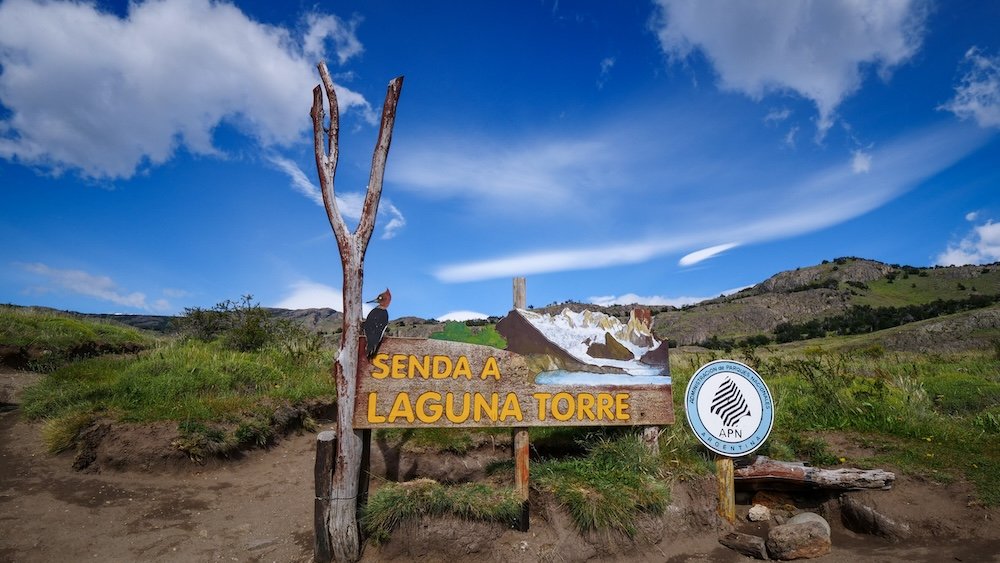
Day 2: Laguna Torre (Cerro Torre day)
Laguna Torre is the other essential classic. The El Chaltén trek hike begins with quick viewpoints (including a gorge panorama) with Margarita waterfall across the canyon early on.
This is the hike that made Audrey and I feel like competent hikers again: fewer bottlenecks, lots of variety, and a “journey is the reward” energy that holds up even if clouds decide to gatekeep the peaks.
For us, Laguna Torre landed at the perfect moment in the trip: our legs were still recovering from a previous “what have we done” mega-day, and the weather had been grumpy for a couple of days…then suddenly Patagonia flipped the switch back to gorgeous. The vibe was basically: pick up the lunchboxes, grab a big water, and go prove we’re still functioning adults.
Day 2 game plan (timing blocks)
| Time | What we do | Notes |
|---|---|---|
| 07:00–08:00 | Breakfast + start | Early light is kind to photos and vibes |
| 08:00–09:00 | Early viewpoints + waterfall peek | Instant gratification, thank you very much |
| 10:30–12:00 | Valley walking | This is the “cruise control” part |
| 12:00–13:00 | Laguna Torre area | Lunch, photos, and a long stare into the distance |
| 13:00–16:30 | Return hike | Make it back before your legs turn into wood |
| Late afternoon | Optional Mirador Condores | Only if you still have joy in your soul |
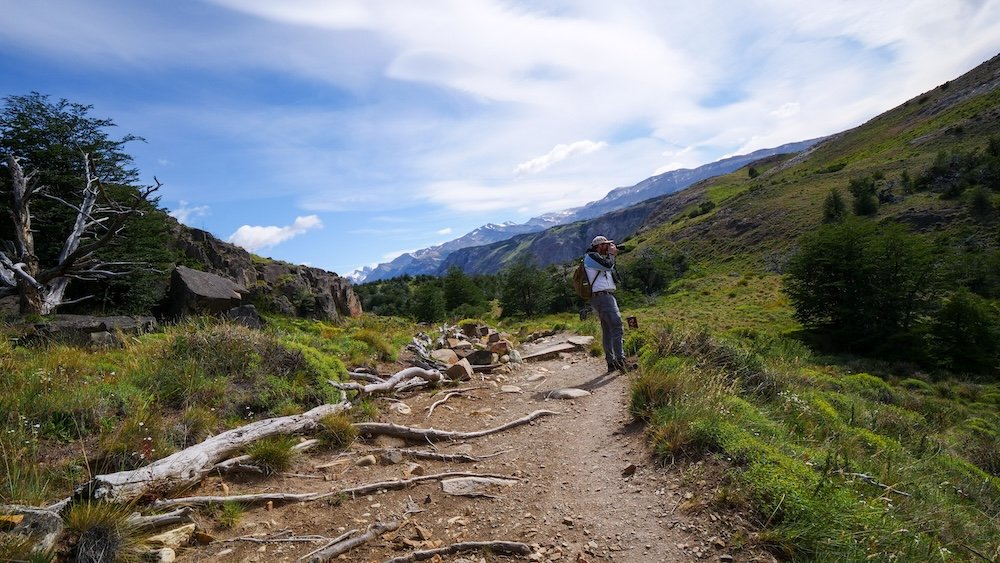
Now, the actual hike. If you like your motivation delivered early and often, this trail is generous. The waterfall shows up fast (around Km 0.7) and it’s genuinely grand—multiple sections of water crashing down into the river below, the kind of sight that makes you stop mid-sentence. We thought we’d be at Km 2 or 3 in no time, but we were moving slower than a turtle because we kept taking breaks to stare.
At Km 2, we announced a “snack stop,” which immediately became a “mini-lunch” because hikers are just foodies with backpacks. And yes—our salad bowl broke again, so we did the only logical thing: eat the evidence before it spilled all over our bag. Rice salad with mixed veggies, cheese, egg, plus an apple, peanut bar, mini muffins, and the traditional finishing move: several candies.
Practically speaking, Laguna Torre is “medium difficulty” with most of the elevation gain early, then it flattens out around Km 3.5–4, which makes the middle of the hike feel surprisingly cruisy. You also get this hanging-glacier-on-the-horizon motivation that keeps you moving, plus a fun mix of forests, rivers, and lagoons. e
The trail is also easy to mentally chunk because the points of interest are spaced out nicely: Torre lookout around Km 2.5, a trail connection at Km 5, De Agostini campground around Km 8, and Laguna Torre around Km 9 (most day hikers turn around there). We even stood at a signboard reading it like it was a menu: “Okay, waterfall first…then mirador…then campsite…then lagoon. Great. We can do this.”
At the lagoon, we got the classic Patagonia trade deal: we earned it, but the iconic peaks were hidden behind dense cloud. The water looked cold and muted, with a few little icebergs floating near the shore—less “postcard,” more “moody documentary.” And honestly? Still worth it.
We popped over to De Agostini (bathrooms = blessing) and did a longing look at campers cooking ramen. OMG, food envy! Then we turned back toward town powered by the most reliable hiking fuel of all: the promise of dinner.
Itinerary Option 2: Balanced Weekend (the best plan for most people)
This is the plan I recommend to almost everyone because it has the highest chance of success: one big hike + a stack of shorter hits so you still get epic views, but you don’t need a third day to recover.

Day 1: Arrival + sunset viewpoint combo
This is exactly how I started my time in town: arrive, handle logistics, and then go grab a sunset view like you’re in a Patagonia commercial.
The arrival checklist (do this before you pretend you’re a mountain athlete)
- Buy park tickets online for tomorrow.
- Check the wind forecast and cloud cover.
- Sort food: groceries here can be limited and pricey, so don’t wing it.
- Download maps offline. Assume mobile data will be moody.
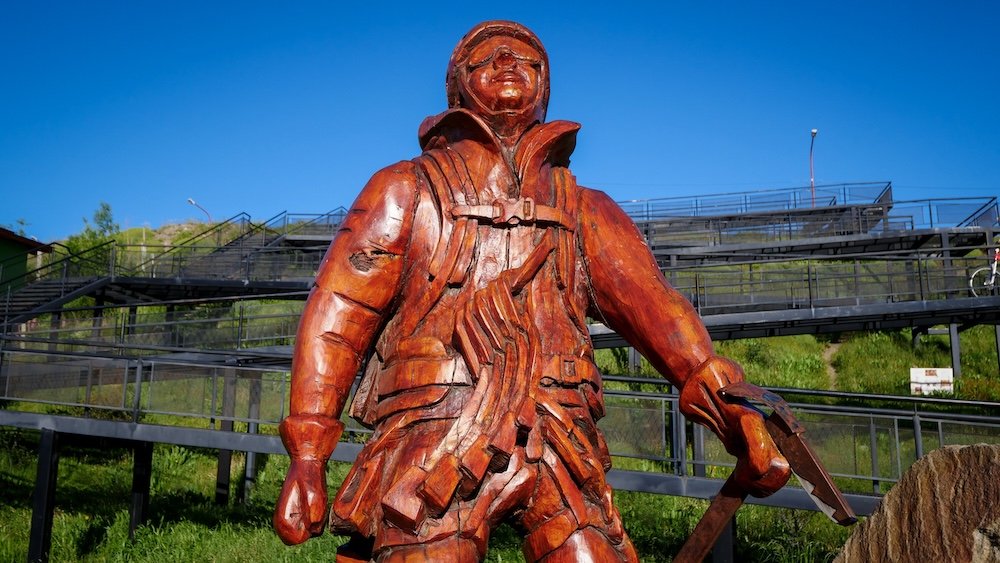
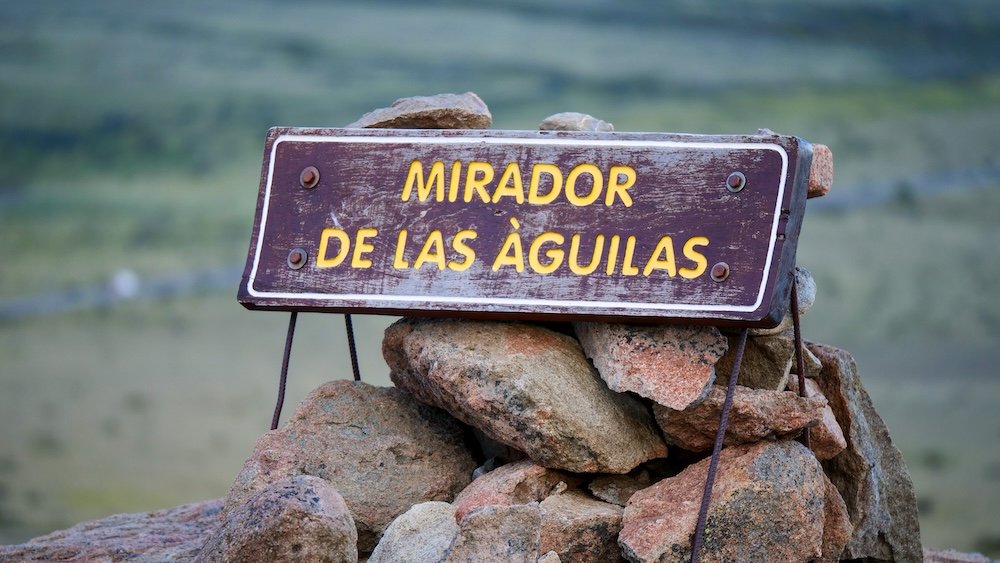
Mirador de los Cóndores + Mirador de las Águilas (sunset option)
The Los Cóndores / Las Águilas trek is short and easy, with a gentle slope and big views over town and Lake Viedma. It’s a low-difficulty hike (roughly 2 hours total for the full combo).
How we’d do it on a weekend:
- If you’re tired from travel, do Los Cóndores only.
- If you’re feeling fresh, add Las Águilas for the bigger panorama.
Day 1 game plan (timing blocks)
| Time | What we do | Notes |
|---|---|---|
| Midday | Arrive + check in | Drop bags, inhale a snack |
| Afternoon | Tickets + food + forecast | Build tomorrow’s plan like a responsible adult |
| Evening | Cóndores (± Águilas) | Sunset payoff without wrecking your legs |
| Night | Early sleep | Tomorrow is your main event |
Day 2: Pick your big hike (Fitz Roy or Torre)
Choose based on weather.
Option A: Laguna de los Tres (if it’s your clearest day)
You’re here for Fitz Roy. Start early, pack layers, and accept that the final climb is a character-building exercise. El Chaltén
Option B: Laguna Torre (if the sky is questionable or you want a smoother day)
Laguna Torre still delivers a full-day “Patagonia immersion” experience, and it tends to feel more forgiving because the path settles into valley walking after the initial climbs.
Itinerary Option 3: Wind-Proof Weekend (because Patagonia does what it wants)
If the forecast is yelling at you in all caps, you can still have a killer weekend without forcing a dangerous full-day mission.
Day 1: Cóndores/Águilas + town food mission
Do the viewpoints. Then do the important cultural activity: eating.
We were definitely not the only people doing the late-light buzzer-beat—sunset was around 9:45pm, and the trail had that “everyone is sprinting politely” energy.
Day 2: Chorrillo del Salto + Laguna Capri (or pick one)
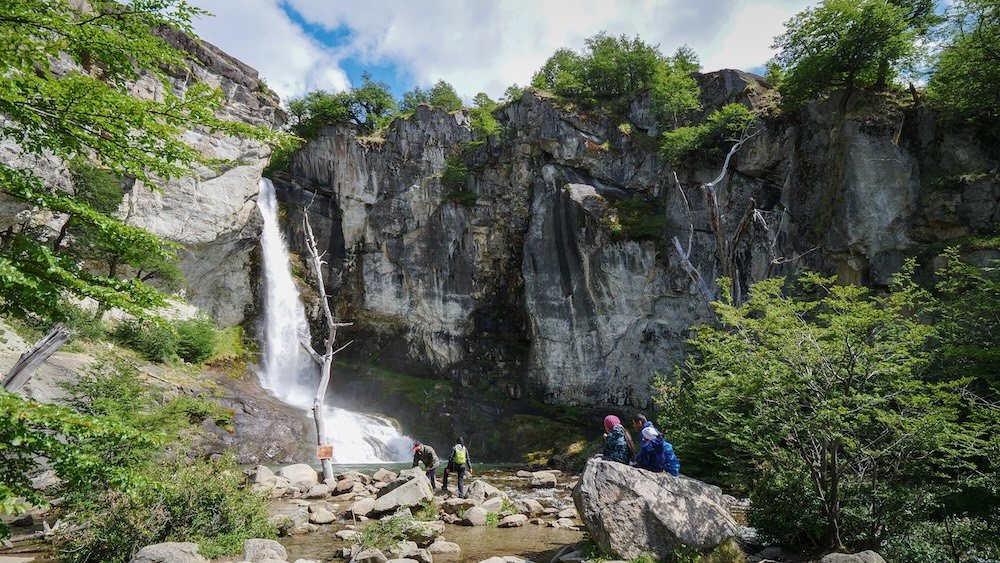
Chorrillo del Salto is a short forest trek to a waterfall (over 20 meters), that is about 3 hours total.
Laguna Capri is a relatively quick Fitz Roy-facing viewpoint hike you can reach in under two hours, and it’s one of the best “big view, smaller commitment” options.
Wind-proof stacking matrix
| Condition | Best pick | Why |
|---|---|---|
| Strong gusts | Chorrillo del Salto | Forest protection + waterfall payoff |
| Cloudy but calm | Laguna Capri | Fitz Roy views if the peaks peek out |
| Time crunch | Cóndores only | Fast payoff close to town |
| Legs are cooked | One short hike + cafés | Your knees get a vote |
🏨 Where to Stay in El Chaltén (Our Top Hotel Picks)
⭐ Quick Booking Box: El Chaltén Hotels (Compare Rates)
| Pick | Best for | Vibe | Booking link |
|---|---|---|---|
| 🏆 Top Pick | First-timers who want an easy, reliable base | Comfortable “no-regrets” stay | Compare top stays in El Chaltén on Booking.com |
| 💎 Boutique / Treat-Yourself | Couples, hikers celebrating a big trek, views + comfort seekers | Cozy-luxe Patagonia energy | Browse boutique stays in El Chaltén on Booking.com |
| 🏘️ Mid-range (great value) | Most travelers who want comfort without splurging | Warm, practical, walkable | Find mid-range El Chaltén hotels on Booking.com |
| 💰 Budget | Road-trippers + hikers who only need a clean base | Simple, wallet-friendly | See budget stays in El Chaltén on Booking.com |
🔎 Want to browse all options instead?
👉 Compare all El Chaltén stays on Booking.com
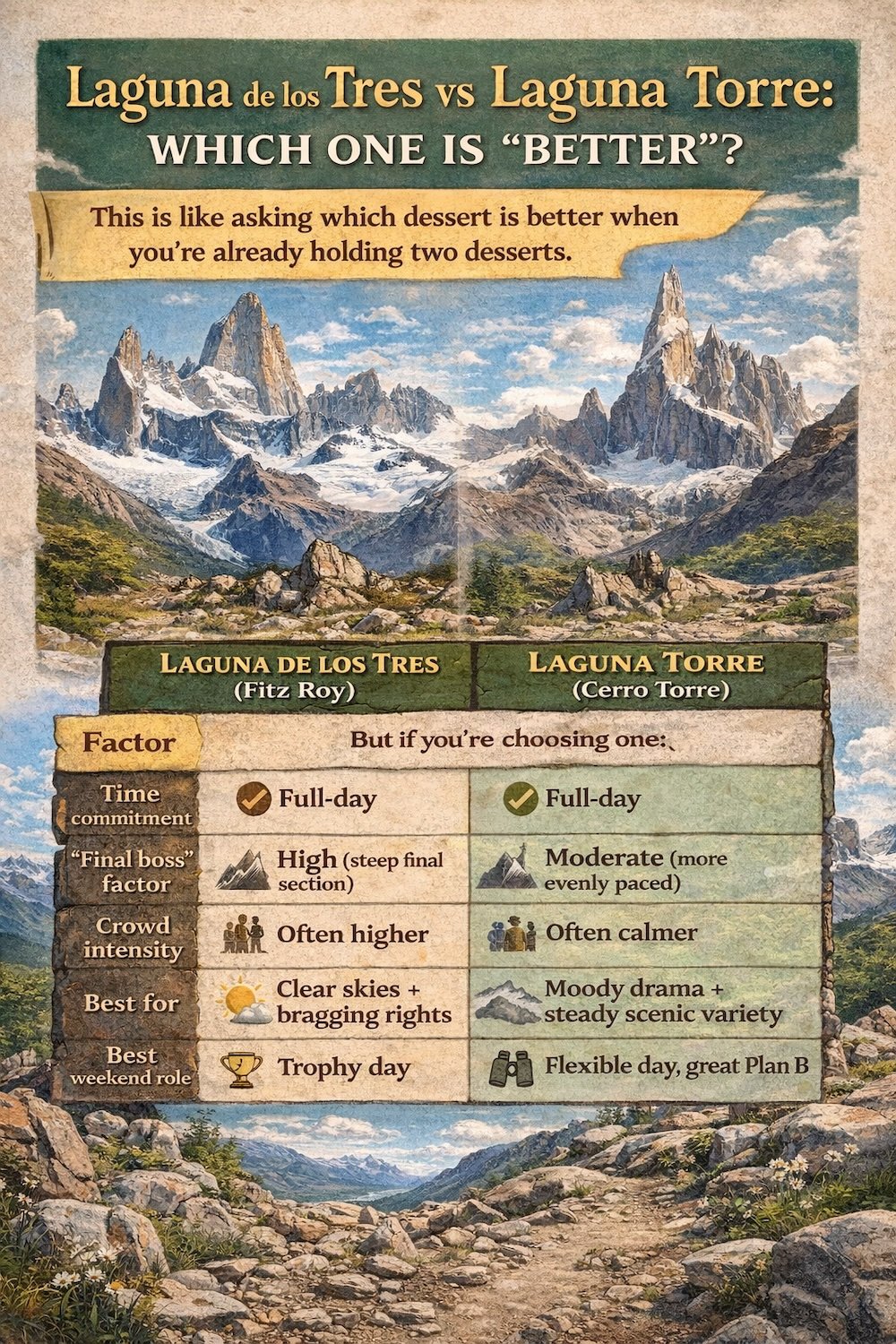
Laguna de los Tres vs Laguna Torre: which one is “better”?
This is like asking which dessert is better when you’re already holding two desserts.
But if you’re choosing one:
| Factor | Laguna de los Tres (Fitz Roy) | Laguna Torre (Cerro Torre) |
|---|---|---|
| Time commitment | Full-day | Full-day |
| “Final boss” factor | High (steep final section) | Moderate (more evenly paced) |
| Crowd intensity | Often higher | Often calmer |
| Best for | Clear skies + bragging rights | Moody drama + steady scenic variety |
| Best weekend role | Trophy day | Flexible day, great Plan B |
What to pack for a 2-day hiking weekend (the Patagonia edition)
If you show up dressed for a gentle neighborhood stroll, Patagonia will roast you.
The non-negotiables
- Windproof shell (your best friend)
- Warm mid-layer (fleece or light puffy)
- Waterproof layer (Patagonia laughs at optimism)
- Hat + gloves (yes, even in summer)
- Water (and more than you think)
- Snacks you actually want to eat when you’re tired
- Sunscreen + sunglasses (the sun can be intense) El Chaltén
- Offline map or downloaded trail info
The “we learned this the hard way” extras
- Blister care (the descent is long)
- Trekking poles (especially for the steep bits and tired legs)
- A zip bag for trash (leave no trace, even when you’re grumpy)
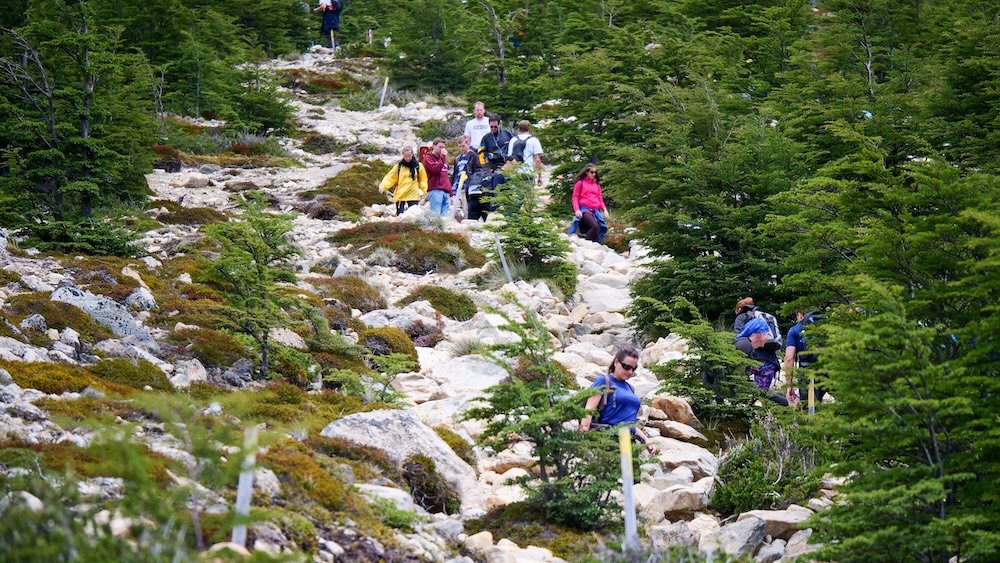
Start times, crowds, and the art of not hating people
El Chaltén trails are popular for a reason: they’re accessible, well-marked, and outrageous in payoff. The price of that convenience is crowds—especially on Laguna de los Tres.
Here’s what helped us:
Crowd strategy
- Start early. It’s the simplest hack.
- Take breaks slightly off the main flow.
- Treat bottlenecks as “photo breaks,” not personal insults.
- Remember: you are also crowds. (I say this gently.)
A simple “start time” cheat sheet
| Hike | Start time that feels civilized | Start time that feels strategic |
|---|---|---|
| Laguna de los Tres | 08:00 | 06:30–07:30 |
| Laguna Torre | 08:00 | 07:00–08:00 |
| Laguna Capri | 09:00 | 08:00 |
| Cóndores/Águilas | Anytime | Late afternoon for sunset |
| Chorrillo del Salto | Anytime | Morning or late afternoon |
Food, fuel, and recovery (a very important part of our hiking plan)
El Chaltén is a trekking town, which means it understands two things:
- You need calories.
- You will pay for them.
The lunchbox move
Many places in town do packed lunches for early starts. The smartest rhythm is:
- Order the day before.
- Pick up in the morning.
- Feel smug on the trail when everyone else is eating sad biscuits.
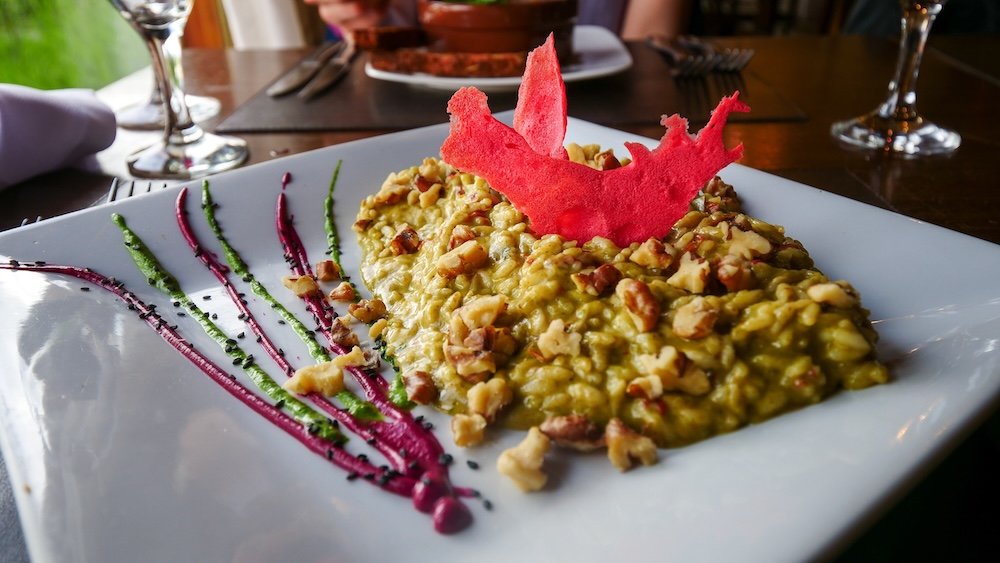
Post-hike dinner: the real summit
On our Fitz Roy day, the “win” wasn’t only the view. It was the moment we got back to town, sat down, and rejoined civilized society with a delicious meal including risotto..
Recovery day truth (weekend edition)
If you do one big hike, you can still function tomorrow.
If you do two big hikes back-to-back, you might function tomorrow… but you will function like a creature that has been mildly cursed.
Plan accordingly.
Plan your 2 days in El Chaltén recap
- Tickets bought online for both days
- Windproof layer packed (non-negotiable)
- Day 1 set as “arrival + short hike” unless you arrive early
- Clearest forecast day reserved for Laguna de los Tres
- Lunch plan made (order ahead if doing a big hike)
- Turnaround time agreed (so you don’t negotiate with the mountain at 4 pm)
- Dinner plan made (motivation matters)
We used a classic El Chaltén move: a hotel “lunchbox” you order the night before—ours was about $10 USD, a little pricey for Argentina, but wildly convenient when your accommodation doesn’t have a kitchen.
Quick orientation: how El Chaltén “works” as a hiking town
El Chaltén is small on purpose. The whole town is basically a launchpad: you sleep, you eat, you stare at mountains, and then you walk straight out of town onto trails.
We also arrived in full Patagonia Food Mode—Audrey’s jeans basically declared bankruptcy, and I was openly “rotunding” in my own bulbous plumptitude…which is exactly why El Chaltén was about to become our personal skeleton-moving bootcamp.
A few practical realities make or break a weekend:
Trails start right from town (and that’s the magic)
For Laguna de los Tres, the trailhead begins at the end of Avenida San Martín, where the town grid essentially ends and the hiking begins.
For Laguna Torre, there are two trailheads from town that merge after a few minutes.
We even had a classic El Chaltén welcome: the bus stopped at the park info center on the way in, they ran through rules, and handed out maps—very “welcome to the DIY trekking capital, good luck out there.”
Our place was literally down the street from the bus terminal, so we went from “arrive in town” to “walking toward mountains” without needing taxis, cars, or a single logistical brain cell.
Translation: if you’re staying central, you can roll out of bed, inhale a coffee, and be on a major Patagonia trail without needing a car.
The Visitor Center is not optional for some plans
If you’re doing simple day hikes, life is easy. But if you wander into “remote zones” or plan to camp, rules and registrations kick in. The official lodging/camping info for Los Glaciares (Zona Norte) mentions that some remote areas require mandatory registration at the park’s Visitor Center (or virtually).
For a weekend itinerary like this one, you can keep it simple: day hikes only, no camping, no paperwork spiral.
Park rules: quick respect checklist
Two reminders straight from official guidance:
- No pets allowed in protected areas.
- Drones are prohibited.
Patagonia is loud enough already. Let the condors have their airspace.
When to go (and what “good weather” really means)
El Chaltén’s hiking season is often framed as spring/summer into early fall. Spring-summer temperatures are typically range around 10–20°C (with warmer spikes), which is comfortable for hiking… until the wind shows up to remind you this is Patagonia, not a gentle spa retreat.
Best weekend months
- December–March: Long daylight, peak crowds, wind is a regular guest star.
- October–November / April: Fewer people, more “shoulder season mood,” still great for day hikes if you pack layers.
If you’re doing a two-day trip, daylight matters. In summer, you can finish late and still be okay. In shoulder seasons, you need to be more disciplined with start times.
Weekend transport strategy (the bus is your hidden itinerary editor)
Most people arrive via El Calafate. The bus service runs year-round with multiple daily departures, and peak season adds more options.
Here’s the weekend logic:
If you arrive in El Chaltén before lunch
- You can do an “arrival hike” without feeling rushed.
- You can also do a half-day hike like Laguna Capri or Chorrillo del Salto if you’re energized.
If you arrive mid-afternoon
- Do short viewpoints (Cóndores/Águilas) and save your legs for the big day.
- Treat the arrival day as logistics + vibes, not conquest.
If you’re leaving on Day 2
Make sure your big hike has a realistic return time before your bus. That sounds obvious, but “obvious” is exactly what tired hikers forget at 5 pm while staring into the distance.
Where to stay for a weekend (choose convenience over romance)
El Chaltén is small, but where you stay still changes your weekend rhythm. For a 2-day trip, you want less “logistics” and more “trail time.”
Quick accommodation decision table
| Stay style | Best for | Pros | Cons |
|---|---|---|---|
| Central (near Avenida San Martín) | Weekenders | Walk to trailheads, food, buses | More noise, more people |
| Quiet edge of town | Light sleepers | Calmer nights, more space | Slightly longer walks, fewer quick food options |
| Hostel | Solo travelers / budget | Social, cheap, easy info-sharing | Dorm life is… a lifestyle |
| Lodge/Hotel | Comfort seekers | Warm showers, real beds | Higher cost, books out fast |
On our trip, we stayed at Vertical Lodge. Our rooms felt surprisingly roomy—exactly what you want after a big hike when your body becomes a stiff piece of modern art.
Ours included breakfast and served it early (6:30am—because El Chaltén understands hikers). And the room genuinely surprised us in a good way: big bed, workspace, and mountain views that made it hard to pretend we weren’t immediately obsessed.
Town logistics: the things nobody mentions until they’ve suffered
Groceries: plan like an adult
El Chaltén is remote. That means limited selection and higher prices. If you need specific snacks (electrolytes, bars, peanut butter, your emotional-support cookies), consider bringing them from El Calafate.
We learned fast: the selection can feel…minimal, and we literally saw apples hovering around the “a dollar per apple” vibe. Bring your specific trail snacks from El Calafate unless you enjoy paying Patagonia prices for emotional-support granola bars.
Internet: don’t count on being a productive genius
Even if you’re here to “work remotely,” Patagonia may have other plans. Download maps and key info offline. Then being present in nature.
Our mobile data basically didn’t work, the Wi-Fi went down constantly, and we even had a moment where our hotel payment wouldn’t process (multiple attempts, maximum Patagonia suspense). The one bright spot: there was free Wi-Fi in the central plaza—aka the town’s unofficial “everyone quietly uploading something” zone.
Water: fill up early
Bring enough water and refill in town before you start. On long days, we like having a hydration strategy that doesn’t depend on optimism.
Common weekend mistakes (and how to avoid becoming a cautionary tale)
1) Starting too late because “it’s summer”
Summer daylight is generous, but wind and fatigue don’t care about your optimism. Start early.
2) Bringing “cute clothing” instead of layers
The weather page basically says the climate can throw everything at you in one day.
Look cute in your photos after you stay warm.
3) Skipping snacks because you’re “not hungry yet”
You will be hungry later, at the least convenient moment, on the steepest part of the trail, when your brain is running on fumes.
4) Not setting a turnaround time
If you don’t decide before you start, you’ll decide when you’re tired, and tired decisions are famously terrible.
5) Underestimating the cost of “small extras”
A coffee here, a lunchbox there, a celebratory dessert you “earned”… suddenly your wallet is also doing a multi-day trek.
The final weekend truth (with love)
El Chaltén is not a place you “complete.” It’s a place you sample.
In two days, your goal isn’t to conquer every trail. Your goal is to:
- See one iconic landscape that makes you say “what is this planet?”
- Feel the Patagonia wind try to negotiate you off the mountain
- Eat something glorious afterward
- Leave thinking, “We need to come back,” not “We need physical therapy.”
If you can do that, the weekend worked.
✨ Ready to lock in your El Chaltén plan?
- 🥾 Browse El Chaltén tours on Viator
- 🏨 Find El Chaltén hotels on Booking.com
- 🚗 Compare El Calafate car rentals on DiscoverCars
- 🚌 Book El Calafate → El Chaltén buses on Busbud
El Chaltén weekend hiking FAQ (tickets, timing, and the “can we actually do this?” questions)
Can we really do El Chaltén in just two days?
Yes. If you focus on one big hike and stack shorter options, two days is enough for a genuinely epic taste of El Chaltén—without needing a recovery week.
Should we do Laguna de los Tres or Laguna Torre if we only pick one?
Depends. Clear skies? Laguna de los Tres for the Fitz Roy trophy. Questionable visibility or you want a steadier day? Laguna Torre is often the smoother win.
How early should we start Laguna de los Tres on a weekend?
Early. Think 06:30–07:30 if you want fewer crowds and more buffer. The hike has a steep final section and it’s a long day. El Chaltén
Is Laguna Torre easier than Laguna de los Tres?
For most people, yes. It still takes a full day, but it’s generally more evenly paced and doesn’t hit you with the same “final boss” climb.
What if the wind is wild?
Do shorter hikes (Cóndores/Águilas, Chorrillo del Salto, Laguna Capri) and save your big hike for a calmer window. Wind is common here, especially in peak season.
Do we need to buy park tickets in advance?
Strongly recommended. Tickets are sold via the official online system, and buying the night before saves your morning.
Is there a discount if we hike two days?
Yes. There’s an official policy giving a 50% discount for the second day, valid within 72 hours of the first entry.
Can we do Mirador de los Cóndores and Las Águilas on the same evening?
Yes. It’s a short combo hike with big views, and it’s perfect for an arrival day or sunset mission.
Is Chorrillo del Salto worth it?
Absolutely. It’s an easy forest walk to a tall waterfall (over 20 meters) and a great “wind-proof” option.
Do we need hiking experience for El Chaltén’s main trails?
Not necessarily for the classic day hikes—but you do need to be prepared for fast-changing weather and long distances, and you need to start early enough to finish safely.
Project 23 Argentina: This guide is also available in Spanish. [Lea la versión en castellano: 2 Días en El Chaltén, Patagonia: Itinerario Definitivo de Fin de Semana (Aprovechá Tu Tiempo al Máximo)]
Further Reading, Sources & Resources
If you want to double-check the most important logistics (tickets, rules, trail specifics, buses, and weather), these are the references you can use to keep this weekend itinerary grounded in reality—not just vibes.
Official park info and tickets
https://www.argentina.gob.ar/interior/ambiente/parquesnacionales/losglaciares/tarifas
Official Los Glaciares National Park fee information, including entry categories and current pricing. This is the best source of truth for park entry costs.
https://ventaweb.apn.gob.ar/
The official National Parks online ticket platform. Use this to purchase your entry in advance so you’re not doing admin at the trailhead.
https://www.argentina.gob.ar/interior/ambiente/parquesnacionales/losglaciares/recomendaciones-para-visitar-el-parque-nacional-los-glaciares
Official visitor guidance covering rules and responsible travel expectations (e.g., what’s allowed/not allowed, safety basics, and protected-area norms).
Trail guides and weekend logistics
https://elchalten.com/v4/en/laguna-de-los-tres-trek.php
Detailed route notes for Laguna de los Tres, including what to expect on the approach and the final steep push to the viewpoint—useful for timing and effort planning.
https://elchalten.com/v4/en/laguna-torre-trek-el-chalten.php
Practical overview of the Laguna Torre hike with route flow and key viewpoints. Great for understanding why it works well as a “Plan B” on mixed-visibility days.
https://elchalten.com/v4/en/bus-schedule-el-calafate-el-chalten.php
Bus schedule details for El Calafate ⇄ El Chaltén—handy for weekend planning so your big hike doesn’t collide with your departure time.
Weather reality check
https://elchalten.com/v4/es/el-clima-en-el-chalten.php
A helpful overview of El Chaltén’s famously variable conditions (especially wind). Great for calibrating expectations and packing layers even on “nice” forecasts.
Notes on accuracy
- Fees and policies can change quickly, especially in Argentina. Always treat the official National Parks pages and the APN ticket platform as your final confirmation for current entry rules and prices.
- Bus schedules and prices fluctuate by season and operator. Confirm your specific departure times close to travel dates, especially if you’re building a tight weekend plan.
- Trail times depend heavily on wind, crowds, and fitness. The route descriptions are reliable for structure, but your safest plan is always: start early, carry layers, and keep a turnaround time.