
El Chaltén is proof that maps can gaslight you. It looks like a cute dot in southern Argentina, and then you show up and discover the dot comes with massive granite teeth, endless trail mileage, and a bakery that could derail your entire itinerary in one medialuna. Patagonia is spectacular, dramatic, and powered by wind that clearly enjoys chaos.
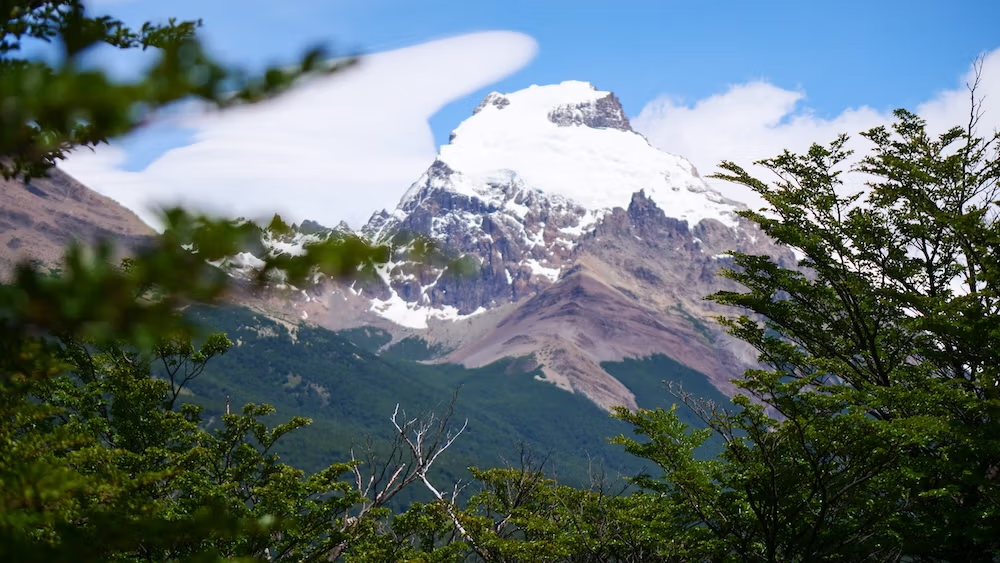
Audrey and I rolled into El Chaltén as self-confessed foodies who like the idea of hiking. We left as foodies who now understand why trekkers develop that slightly haunted “I’ve seen things” look. In three days, you can absolutely hit the classics—Fitz Roy and Cerro Torre—without turning your legs into overcooked spaghetti. The trick is doing the right hike on the right day, starting earlier than your ego wants to, and building in a “Patagonia happens” buffer.
This guide is built for first-timers who want a practical plan, honest expectations, and a little comic relief when the trail starts asking personal questions.
El Chaltén in 20 seconds
| If you have 3 days… | Do this | Avoid this |
|---|---|---|
| You want the icons | Prioritize Laguna de los Tres (Fitz Roy) + Laguna Torre (Cerro Torre) | Trying to “do everything” every day |
| You want a sane body | Add a short hike + logistics day and a flex/rest block | Back-to-back-to-back big days with no recovery |
| You want fewer crowds | Start early (especially Fitz Roy) | Late starts and hoping the trail will be empty because “it’s a weekday” |
| You want better weather odds | Keep a swap plan between days 2 and 3 | Locking yourself into one schedule no matter what |
🧾 Quick Booking: Your El Chaltén Travel Essentials 🥾✨
🎒 Your Travel Toolkit (Book These 4 Things)
| ✅ What to book | 💡 Why it’s worth it | 🔗 Quick link |
|---|---|---|
| 🥾 Tours & experiences | Easy way to lock in a glacier day, a Lago del Desierto adventure, or a guided option when weather turns moody | Browse El Chaltén tours on Viator |
| 🏨 Hotels & stays | El Chaltén sells out fast in peak season — booking early = better locations + fewer “only the priciest rooms left” moments | Find El Chaltén hotels on Booking.com |
| 🚗 Car rentals (optional) | Best for freedom days: Ruta 40 viewpoints, flexible timing, photo stops, and a smoother Lago del Desierto run | Compare car rentals in El Calafate (gateway to El Chaltén) on DiscoverCars |
| 🚌 Bus tickets | The classic El Calafate ↔ El Chaltén route is simple — but popular departure times fill up | Book El Calafate → El Chaltén buses on Busbud |
👉 One-click backup (reverse direction): Book El Chaltén → El Calafate buses on Busbud

Know before you go
El Chaltén sits beside the northern sector of Los Glaciares National Park. Trails are well marked, the town is geared to hikers, and the “classic” routes are day-hike friendly. But Patagonia is not a theme park: weather can switch quickly, and distances are real. Planning well turns your trip from “we survived” to “we had the best time and also ate waffles.”
Park entry and trail portals (El Chaltén / Zona Norte)
For the El Chaltén (Zona Norte) trailheads, Los Glaciares currently uses three access portals—Los Cóndores, Cerro Torre / Base Fitz Roy, and Río Eléctrico—and the ticket is online-only (either bought on the web or by scanning a QR at the portal). Payment is card-only (credit/debit); no cash.
Plan for the fee: the official tariff tables list “Los Glaciares – Portada El Chaltén” at AR$45,000 (general) / AR$15,000 (national) / AR$5,000 (provincial) / AR$7,000 (students), and a Flexipass 3 días option at AR$90,000 / AR$30,000 / AR$10,000 (by category). Screenshot your receipt/QR offline before you leave town.
Practical move: save your receipts and any QR codes offline. Don’t assume your phone signal will be heroic.

Weather: the real boss fight
Fitz Roy looks like a jagged movie villain, and the wind in El Chaltén acts like its publicist. Even in summer you can get sunny “shorts weather” and “why is my face numb” all in the same day.
The Patagonia rule: pack for two seasons, start early, and don’t let one nice morning gaslight you into ignoring the forecast.
Safety and trail smarts
This is common sense, but common sense gets quieter when the view is pretty.
- Tell someone where you’re going (even if that someone is just Audrey and a mildly judgmental receptionist).
- Carry more water and snacks than you think you’ll need.
- Bring a windproof layer, even on “nice” days.
- Turnaround decisions are part of hiking, not a moral failure.
When to go and what “3 days” really means
This itinerary assumes you actually have three full days in El Chaltén, not “three days including the bus day.” If you’re arriving mid-afternoon, treat that as Day 0 and shift everything by a half-step.

The big picture: classic 3-day structure
| Day | Theme | Main hike | Backup / add-on | Energy level |
|---|---|---|---|---|
| 1 | Arrival + warm-up + views | Mirador de los Cóndores (+ Águilas optional) | Chorrillo del Salto (if you want more) | Low–medium |
| 2 | The marquee day | Laguna de los Tres (Fitz Roy) | Skip the extension if weather/legs say no | High |
| 3 | Flex day: either big hike or active recovery | Laguna Torre or Rest + short hikes | Torre if Day 2 weather was bad; otherwise rest + waterfall | Medium (choose-your-own-adventure) |
If you want the “aggressive” version—two big hikes in three days—you can do it. If you want the “balanced” version—the one that leaves you functional enough to enjoy dinner—you can do that too. We’ll lay out both options inside Day 3.
Getting to El Chaltén: the arrival game plan
Most people arrive from El Calafate by bus. That’s what we did. It’s roughly a few hours each way, and there’s a halfway stop where everyone pours out like caffeinated meerkats, stretches, uses the bathroom, and buys snacks.
👉 Compare El Calafate car rentals on DiscoverCars (best gateway for El Chaltén)

Arrival checklist (do this before you get “comfy”)
- Check in and immediately locate: breakfast hours, hot water situation, and whether you have any kind of kitchen access.
- Grocery run for trail snacks and simple meals. Selection can be limited and prices can be… Patagonia.
- Pick up a trail map or download an offline map. We learned the hard way that “we’ll just find the trailhead” is an optimistic lifestyle choice.
- Buy park tickets and save them offline.
- Set tomorrow’s plan based on the best forecast window.
Wi-Fi and phone signal: plan for “meh”
In town, Wi-Fi is iffy. Mobile data can be unreliable depending on your carrier. If you need to upload photos, send messages, or check forecasts, do it when you have a solid connection—don’t wait until you’re on the trail wondering why your map is buffering like it’s 2008.
The itinerary: 3 days in El Chaltén (classic first-timer plan)

Day 1: Arrival + Mirador de los Cóndores (sunset glory without leg destruction)
Day 1 is about getting your bearings, loosening up after travel, and grabbing an “easy win” view that makes you feel like you’re already living your best Patagonia life.
Why this works: it gives you a high payoff with low commitment, and it doesn’t sabotage your legs before the big day.
Suggested schedule
| Time | Plan | Why it’s smart |
|---|---|---|
| Late morning / early afternoon | Arrive, check in, groceries, tickets, map | Logistics now = less stress later |
| Late afternoon | Mirador de los Cóndores | Short, steep, high payoff |
| Evening | Early dinner + pack day bag | Tomorrow is the big one |
Mirador de los Cóndores: what it’s like
It’s short, it’s steep, and it gets you above town fast. Audrey and I did it around sunset and immediately understood why everyone recommends it for Day 1. The trail is a friendly wake-up call: “Yo, you’re a hiker now.”
If you still have energy, extend to Mirador de las Águilas for a wider panorama. If you’re feeling travel-tired, do Cóndores only and save your enthusiasm for Fitz Roy.

Day 1 food strategy (our honest approach)
We like hiking, but we love eating more. Day 1 is the time to lock in your “trail fuel” plan: pick snacks you’ll actually eat, and don’t rely on a single granola bar to power a multi-hour hike unless you enjoy existential crises. Consider boxed lunches (often provided by your hotel when purchased the night before) as the kinda pricey but convenient hiking fuel.
Mini packing list for Day 1:
- wind layer
- water
- small snack
- phone/camera
- headlamp if you’re doing sunset

Day 2: Laguna de los Tres (Fitz Roy) — the classic “yes, it’s worth it” day
This is the one. The reason you came. The hike that makes you feel like you’re walking into a Patagonia postcard, except the postcard is also asking you to climb a pile of rocks at the end.
Laguna de los Tres is the marquee hike for a first trip. It’s long, it’s demanding, and the final climb is the moment where you either discover inner strength or develop a passionate interest in being carried by helicopter.
Audrey and I found the first ~9 km to be “intermediate” in the best way—steady, scenic, and deceptively doable. Then Kilometer 9 showed up as the real bottleneck: loose rock, tired legs, and the moment we started daydreaming about trekking poles.
The Day 2 mindset
- Start early enough that you’re hiking before the trail turns into a conga line.
- Pace like an adult, not like a golden retriever that just saw a squirrel.
- Treat the last section as its own event.
Suggested schedule (classic day)
Most places in town understand the assignment and run early breakfasts—ours started at 6:30, and it made the whole day feel less frantic. We also splurged on hotel lunch boxes (ordered the night before and ready in the morning): pricey, but wildly convenient when you’re trying to leave town with calories, not decisions.

| Time | Plan | Notes |
|---|---|---|
| 6:30–7:30 | Breakfast (early) | If your accommodation offers early breakfast, take advantage |
| 7:30–8:00 | Walk to trailhead | Don’t “wing it” like we did the first time |
| 8:00–12:00 | Hike to the midpoints (steady pace) | Breaks early prevent suffering later |
| 12:00–13:00 | Lunch | Eat before the final climb if you’re doing it |
| 13:00–14:00 | Final push + viewpoint | This is the steep “boss level” section |
| 14:00–18:00 | Return | The descent is where tired legs make bad decisions |
| Evening | Recovery meal + early night | The mountain took its tax; pay it in carbs and sleep |
Trailhead reality (learn from our mistake)
I managed to start the day by forgetting the trail map and taking longer than necessary to find the correct start. The fix is easy: know your trailhead the night before, and if you’re walking out of town, head toward the signed routes rather than relying on “we see people with trekking poles, follow them.”
Audrey and I also underestimated the walk to the trailhead from our end of town—it took about 45 minutes before the “real hiking” even began.
It’s not a disaster if you start a little late, but this is the hike where “a little late” can become “why are we walking back at dusk.”
The hike in three acts
Act 1: The warming-up section
You’ll get forest, gradual elevation, and the feeling that you might be a person who hikes for fun.
Act 2: The steady middle
This is where kilometer markers and mental milestones shine. We loved having distance markers because they break the day into manageable chunks. It becomes a progress bar for your legs.
Act 3: The final climb (the “boss level” bit)
Near the end, the trail turns steeper and rockier. This is the part where you slow down, focus on footing, and accept that you’ll be breathing like a small locomotive. Trekking poles help—especially on the descent when you’re tired and less careful than you think.
At the top, you’ll probably be hungry, slightly windblasted, and ridiculously happy. All at once.

Crowds: the beautiful curse of a famous hike
Laguna de los Tres is popular for a reason. If you visit in peak season, you won’t be alone at the viewpoint. That’s not a dealbreaker; it’s just reality. The antidote is timing: start earlier, move steadily, and don’t spend an hour at the trailhead debating socks like it’s a strategic summit.
The recovery truth (we’re being honest here)
After our Laguna de los Tres day, we didn’t “wake up refreshed.” We woke up destroyed. We slept a lot. We moved slowly. We re-evaluated our life choices while eating comfort food.
The next day was an absolute write-off in the most honest sense: we barely left the room, our feet were throbbing, and we slept something like 10–12 hours. Patagonia took its tax, and it then collected interest.
And that’s exactly why Day 3 is structured as a flex day.
This is also where Audrey and I realized we’d arrived in full foodie mode, not peak hiking fitness—so if you can do any leg prep before El Chaltén, do Future-You a favor. We left feeling stronger, but wow… the mountains definitely molded us.

Day 3: Choose your ending (Laguna Torre or active recovery)
Day 3 is where most first-timers make a mistake: they assume they’ll feel exactly as energetic as Day 2. Some people do. Many people do not.
After our Fitz Roy day, we were firmly in the “many people do not” camp. I could barely move, which is exactly why I love building the flex day into a three-day plan.
So we’re giving you two Day 3 versions, and you pick based on weather and how your legs greet you when you stand up.
Day 3 decision matrix
| Your situation this morning | Do this | Why |
|---|---|---|
| Legs feel okay, weather decent | Laguna Torre | Second iconic hike; long but often feels more “steady” |
| Legs feel destroyed, weather meh | Chorrillo del Salto + Mirador | Still scenic, less punishment |
| Weather is perfect today but wasn’t yesterday | Swap: do Laguna de los Tres today (if you didn’t) | Use your best weather window for the best view |
| Wind is savage and visibility is poor | Café day + short walks | Patagonia is teaching a lesson; accept it |

Option A: Laguna Torre (classic big finish)
Laguna Torre is the other marquee day hike and a perfect complement to Fitz Roy. The vibe is different: a long valley walk, dramatic scenery, and a glacial lagoon payoff that feels like an entirely separate Patagonia personality.
If you like knowing what’s coming, here are the little “checkpoint” moments I loved: Margarita Waterfall (Km 0.7), Mirador Torre (Km 2.5), the Madre e Hija junction (Km 5), De Agostini camp (Km 8), and then the lagoon around Km 9. The climb is mostly front-loaded, and after ~Km 3.5–4 it really flattens out, which makes it easier to settle into a rhythm—with a hanging glacier on the horizon basically acting as motivation décor.
Why it works on Day 3: it’s still a full day, but many hikers find it more “consistent” than Laguna de los Tres because the steepness doesn’t hit you the same way. You walk, you settle into a rhythm, and you keep walking. It’s a very Patagonia thing.
Suggested schedule
- Start early (similar logic to Day 2, but slightly less urgent).
- Keep breaks short and frequent.
- If weather turns moody, lean into it. Cerro Torre loves drama.

Option B: Active recovery (you still win)
If you did Laguna de los Tres on Day 2, active recovery can be the smartest possible Day 3 choice. This isn’t “wasting a day.” This is choosing to enjoy El Chaltén.
The classic recovery combo:
- Late breakfast
- Short hike to Chorrillo del Salto (waterfall dopamine, low commitment)
- Optional: Mirador de los Cóndores again if sunset looks promising
- Long dinner, zero guilt
You’re still seeing Patagonia, still moving, and still leaving with happy memories rather than a vague sense that you survived a boot camp.

The classic hikes (what to expect, how to pace, and where people go wrong)
Mirador de los Cóndores (+ Águilas): the perfect first-timer primer
This is the hike you do when you want a big view without needing a recovery strategy. It’s close to town, easy to fit into arrival day, and it doubles as a weather test. If the wind is being dramatic up here, you’ll know to pack accordingly for the big hikes.
Pacing tip: the trail is short, so people sprint it. Don’t. Walk steadily, enjoy the view, and keep your quads fresh for tomorrow.
Laguna de los Tres: the Fitz Roy classic (done smart)
What makes it hard
- It’s long. The distance adds up even if you’re fit.
- The final climb is steep and rocky.
- The descent is where fatigue turns into sloppy footing.
What makes it manageable
- Early start
- Consistent pacing
- Eating before you “feel hungry”
- Poles if you have them
- A realistic turnaround plan
Start-time matrix (crowds vs sleep)
| Start time | What it usually feels like | Best for |
|---|---|---|
| 6:30–7:30 | Quiet-ish early trail, crisp air | People who want more solitude and daylight buffer |
| 7:30–9:00 | Normal busy season flow | Most first-timers |
| 9:00+ | Crowds build, daylight buffer shrinks | People who hike fast and don’t mind company |
Snack strategy (because hunger makes you dramatic)
We’re not saying hunger makes everyone nuts. We’re saying it made us nuts, and we suspect we’re not alone.
Bring:
- something salty
- something sweet
- something you’ll actually eat when you’re tired
- enough water that you don’t start bargaining with the universe
If your lodging doesn’t have a kitchen, consider buying a packed lunch the day before. We did this and it saved our energy and decision-making capacity.
Laguna Torre: the “steady epic” counterpart
Laguna Torre is the hike you do when you want glacier vibes and a second iconic day without the same “final boss climb” energy. It’s still long, and it still takes time, but the rhythm can feel more forgiving.
Waypoint mindset (tiny goals, big day)
Long hikes get easier when you divide them into mini wins. Think in waypoints, not in “we have 18 km left.”
- early lookout points
- junctions
- bridges
- camps
- “okay, now we’re really in it” moments
Each waypoint is a morale snack for your brain.
Weather tip
If Fitz Roy can disappear behind clouds like a celebrity avoiding paparazzi, Cerro Torre can look even more mysterious. Laguna Torre is often still rewarding in moody weather. Don’t cancel just because it isn’t bluebird.
Chorrillo del Salto: the waterfall that saves trips
Chorrillo del Salto is the hike you do when:
- you’re tired
- the wind is intense
- you want something scenic with minimal commitment
- you want a “Patagonia win” without requiring a nap schedule
It’s close to town, it’s a great “recovery day” option, and it pairs perfectly with a café stop that involves sugar and self-congratulation.
The “Patagonia-proof” planning toolkit
The turnaround matrix (simple, useful, no ego)
| Status | What’s happening | What you do |
|---|---|---|
| Green | Visibility good, wind manageable, pace on track | Continue, with regular checks |
| Yellow | Gusts rising, clouds lowering, behind schedule, someone quieter | Pause, snack, reassess, shorten plan |
| Red | Route unclear, strong wind, heavy fatigue, time slipping | Turn around. No debate. |
Turning around is not a failure. It’s a Patagonia badge of wisdom.
What to pack (day-hike essentials)
| Item | Why it matters | Non-negotiable? |
|---|---|---|
| Windproof shell | Patagonia wind is a personality | Yes |
| Warm layer | Weather flips fast | Yes |
| Water + snacks | No services on trail | Yes |
| Hat + sunscreen | Sun can be intense even when cold | Yes |
| Headlamp | Late finishes happen | Strong yes |
| Poles (optional) | Huge help on steep sections and tired descents | If you have them |
| Offline map | Phone signal can be unreliable | Strong yes |
Clothing strategy (don’t get tricked)
The goal is not to dress “warm.” The goal is to dress adjustable.
Layer plan:
- base layer you can hike in
- mid-layer you can add when wind picks up
- shell that blocks wind
- gloves/hat if you run cold
If you start hiking slightly cool, you’re doing it right. If you start hiking sweating, you’re about to hate your life by kilometer two.

Food, coffee, and recovery: the secret weapon of a good itinerary
El Chaltén is a hiking town, but it’s also a recovery town. After a big day, the most satisfying thing you can do is sit down and eat like you earned it—because you did.
The trail fuel formula
| When | What to do | Why it works |
|---|---|---|
| Breakfast | Eat more than you think | Long days punish under-eating |
| On the trail | Snack every 60–90 minutes | Prevents energy crashes |
| Lunch | Real food, not crumbs | Helps you finish strong |
| Post-hike | Protein + carbs | Recovery and happiness |
| Evening | Hydrate + sleep | Tomorrow’s legs depend on it |
The “we’re foodies” truth
We planned our hikes, but we also planned our meals like were earned every post-hike morsel. It made the trip better. It gave us something to look forward to on the walk back. It turned fatigue into a story instead of a complaint.
Our best post-hike reward was Senderos (tucked inside a guesthouse near the bus terminal): blue cheese risotto with walnuts and sun-dried tomatoes for me, a hearty lentil dish for Audrey, a full bottle of Syrah (we cheated on Malbec), and two desserts because… we earned them. We then waddled home and were in bed by 8:30.
If you’re the kind of traveler who appreciates a good meal, build recovery food into your itinerary on purpose. It’s not an afterthought; it’s part of the system.
Two sample 3-day itineraries (pick your vibe)
Itinerary 1: Balanced classic (recommended for most first-timers)
| Day | Morning | Afternoon | Evening |
|---|---|---|---|
| 1 | Arrive + groceries + map | Mirador de los Cóndores | Early dinner + prep |
| 2 | Laguna de los Tres | Big hike day | Comfort food + sleep |
| 3 | Laguna Torre or Chorrillo del Salto | Choose based on legs/weather | Celebration meal |
Itinerary 2: Aggressive classic (for strong legs + early starts)
| Day | Morning | Afternoon | Evening |
|---|---|---|---|
| 1 | Arrive + short hike | Mirador + Águilas | Early night |
| 2 | Laguna de los Tres | Big hike day | Fast recovery dinner |
| 3 | Laguna Torre | Second big day | Collapse gracefully |
The aggressive version is doable, but it’s only fun if you start early and recover well. If you do it and still feel great, you’re either very fit or secretly part mountain goat.
Extra tips that save first-timers
1) Don’t waste your best weather day
If you get one clear day, use it for your top priority view. In most people’s case, that’s Laguna de los Tres. Patagonia doesn’t always give you multiple perfect days. Be ready to swap days.
2) Start earlier than you think
Every hour you delay is an hour less daylight buffer and an hour more crowds. This matters most for Laguna de los Tres, but it helps everywhere.
3) The descent is the danger zone
People focus on the steep climb, but tired descents create the real mishaps. Take it slow, use poles if you have them, and watch your footing when your brain is already daydreaming about pizza.
4) Groceries: buy what you see
Selection can be limited. If you find good trail snacks, grab them. If you find apples and they cost more than your dignity, decide if you’re paying for vitamins or for a story.
5) Wi-Fi isn’t guaranteed
Download maps, store tickets offline, and don’t rely on real-time anything once you’re out of town.
If you have one more day (the “we wish we had” bonus)
If you can stretch to four days, the whole trip becomes easier. You can do:
- Day 1 warm-up
- Day 2 Laguna de los Tres
- Day 3 rest / short hikes / café day
- Day 4 Laguna Torre
That extra day turns El Chaltén from “epic but intense” to “epic and enjoyable.” If you only have three days, the flex-day approach is your substitute.

🏨 Where to Stay in El Chaltén (Our Top Hotel Picks)
⭐ Quick Booking Box: El Chaltén Hotels (Compare Rates)
| Pick | Best for | Vibe | Booking link |
|---|---|---|---|
| 🏆 Top Pick | First-timers who want an easy, reliable base | Comfortable “no-regrets” stay | Compare top stays in El Chaltén on Booking.com |
| 💎 Boutique / Treat-Yourself | Couples, hikers celebrating a big trek, views + comfort seekers | Cozy-luxe Patagonia energy | Browse boutique stays in El Chaltén on Booking.com |
| 🏘️ Mid-range (great value) | Most travelers who want comfort without splurging | Warm, practical, walkable | Find mid-range El Chaltén hotels on Booking.com |
| 💰 Budget | Road-trippers + hikers who only need a clean base | Simple, wallet-friendly | See budget stays in El Chaltén on Booking.com |
🔎 Want to browse all options instead?
👉 Compare all El Chaltén stays on Booking.com
El Chaltén is small enough that you don’t need to overthink location. What matters more than being “central” is being comfortable, because you’re going to spend a shocking amount of time doing one of three things: sleeping, eating, or staring at your blister collection like it’s a museum exhibit.
Lodging decision matrix
| Choose this if… | Best for | Watch out for |
|---|---|---|
| Hostel / shared spaces | Social vibes, budget travelers, solo hikers | Snorers, early alarms, the 5:30am zipper symphony |
| Simple hotel / lodge | Comfort + early breakfast + easy recovery | Limited kitchen access (plan lunches) |
| Apartment / cabin | Cooking, flexibility, longer stays | Book early in peak season; some places are outside town |
We stayed at Vertical Lodge where breakfast started early (bless), but kitchen access was limited, which pushed us toward buying packed lunches for big days. That turned out to be a win: fewer decisions at 7:00am, more time hiking, and less rummaging through a grocery bag like a raccoon.
The “small town” reality check
- Restaurants can fill up when everyone returns from trails at roughly the same time.
- Groceries can be limited and sometimes hilariously pricey.
- Fuel is part of the plan. “We’ll figure out lunch later” is the fastest route to a hangry meltdown at kilometer nine.
Money, supplies, and the unglamorous stuff that makes your trip better
Quick budget sanity table (per person, per day)
| Expense | Typical range | Notes |
|---|---|---|
| Park entry | Varies | Check official rates and buy online if required |
| Lunch + snacks | Medium–high | Trail food is an investment in mood stability |
| Dinner | Medium–high | Patagonia pricing is a thing; portions often help |
| Bus transfers | High-ish | Prices change fast; book ahead in peak times |
What to buy on Day 0 / Day 1
- 2–3 days of trail snacks you actually like
- Electrolytes (or salty snacks that do the job)
- A simple “emergency meal” for the day you’re too tired to hunt for dinner
- A blister kit (future you is begging)
Crowd strategy: how to get the “wow” without the chaos
El Chaltén in peak season can feel like a friendly outdoor festival where everyone owns the same rain jacket. Crowds aren’t inherently bad, but they do change the experience.
The crowd-control decision table
| You care most about… | Do this | Accept this |
|---|---|---|
| Solitude | Start early, avoid weekends | Colder mornings, earlier bedtime |
| Photos without people | Sunrise starts, linger on the trail | You’ll still see humans at the main viewpoint |
| A relaxed morning | Start later, take your time | More people, less daylight buffer |
| Comfort and safety | Start early-ish, steady pace | Less “sleep in,” more “prepared adult” |
Our favorite trick: go early, but don’t race. You get the benefit of fewer people without turning the hike into a personal time trial.
Bad weather and wind day plan (because Patagonia loves plot twists)
Sometimes El Chaltén wakes up and chooses violence. Gusts howl through town, clouds drop low, and your “big hike day” becomes a “big café day.” This is not a tragedy. This is Patagonia giving you a reason to slow down.
The wind-day menu (choose your adventure)
| Wind / visibility | Best plan | Why it works |
|---|---|---|
| Mild but annoying | Mirador de los Cóndores + short loops | Quick payoff, low commitment |
| Strong gusts | Chorrillo del Salto (lower exposure) | Foresty sections can feel calmer |
| Very strong + low visibility | Café crawl + food mission + early sleep | You’ll be happier tomorrow |
| Rain + wind combo | Rest day + gear drying strategy | Wet gear is tomorrow’s enemy |
Common first-timer mistakes (we made at least one so you don’t have to)
- Late starting the big hikes and hiking with time stress
- Under-snacking and discovering that hunger makes you irrational
- Ignoring wind because the morning looked nice
- Rushing the descent on tired legs
- Assuming Wi-Fi will save you instead of downloading what you need
✨ Ready to lock in your El Chaltén plan?
- 🥾 Browse El Chaltén tours on Viator
- 🏨 Find El Chaltén hotels on Booking.com
- 🚗 Compare El Calafate car rentals on DiscoverCars
- 🚌 Book El Calafate → El Chaltén buses on Busbud
Frequently asked questions for planning a 3-day El Chaltén itinerary that won’t ruin your legs
Do we really need three full days to do the classics?
Yes. Two days can work if you’re fast and lucky with weather, but three days is the sweet spot for doing Fitz Roy, doing Torre, and still enjoying meals and sunsets.
Which hike is harder: Laguna de los Tres or Laguna Torre?
Laguna de los Tres. The final climb is steeper and more demanding. Torre is still long, but many people find it more rhythmic.
What time should we start Laguna de los Tres?
Early. If you can be on the trail around 7:30–8:00, you’ll have a better experience and a bigger daylight cushion.
Is Day 1 worth hiking, or should we just rest from the bus?
Worth it—if you keep it short. Mirador de los Cóndores is perfect because it’s a quick payoff and doubles as a weather test.
What if the weather is awful on our planned Fitz Roy day?
Swap days. Use your best weather window for your top priority hike. If visibility is low, you’ll be hiking for “vibes” instead of views.
Do we need trekking poles?
Nope. But they help—a lot—especially on the steep final section to Laguna de los Tres and on tired descents.
Is Chorrillo del Salto worth it if we only have three days?
Yes. It’s the best low-effort scenic option and a fantastic recovery-day win.
Can we do both Laguna de los Tres and Laguna Torre back-to-back?
Yes. But only do it if you start early, recover well, and accept that your body might file a complaint.
How much water should we carry?
Enough that you don’t start rationing by kilometer. Most people do well with 1.5–2 liters for big hikes, more on hot days.
Are the trails well marked?
Generally, yes. But don’t rely on “generally.” Bring an offline map and pay attention at junctions.
Do we need a guide for these hikes?
No for most experienced day hikers. If you’re unsure about weather, navigation, or you want a more structured experience, guided options can be worth it.
What’s the best food strategy for big hike days?
Eat a real breakfast, snack regularly, and carry a proper lunch. Under-eating turns “hard” into “miserable.”
I learned this the hard way at the top: it was windy beyond belief, I was ravenous, and we ended up crouched behind a rock devouring the last sad survivors in our lunch boxes—a granola bar and candy.
Is El Chaltén walkable without a car?
Yes. The town is compact, and many trailheads are accessible on foot.
What should we do if we’re sore on Day 3?
Do the active recovery plan: Chorrillo del Salto, viewpoints, slow walking, and a meal that feels like a trophy.
How do we avoid crowds?
Start early, hike mid-week if you can, and accept that famous viewpoints will still have people. The mountains are big enough for everyone—even if the final viewpoint rocks feel oddly competitive.
The short version: your 3-day El Chaltén plan
- Day 1: arrive, do Mirador de los Cóndores, prep for tomorrow
- Day 2: Laguna de los Tres (start early, pace, eat, survive, celebrate)
- Day 3: Laguna Torre if you’re feeling good; otherwise do Chorrillo del Salto + viewpoints and enjoy being alive
El Chaltén rewards effort, but it rewards smart effort even more. Build the flex day, respect the wind, and treat food like your finishing medal. Patagonia will still humble you—just in a way that feels fun.
Project 23 Argentina: This guide is also available in Spanish. [Lea la versión en castellano: 3 Días en El Chaltén: El Itinerario Clásico para tu Primera Vez (Mejores Trekkings + Descanso + Tips)]
Further Reading, Sources & Resources
If you want to double-check trail details, park entry rules, and hike stats (or just geek out on planning like we do), these are the most useful official pages and trail guides worth checking out.
Official park fees and access rules (the “don’t get surprised at the trailhead” stuff)
https://www.argentina.gob.ar/interior/ambiente/parquesnacionales/losglaciares/tarifas
Official Los Glaciares National Park tariffs page, including the El Chaltén (“Portada El Chaltén”) fee category and current guidance on how/where entry is managed.
https://www.argentina.gob.ar/parquesnacionales/tarifas
National Parks fee table with daily pass and multi-day pass options (useful for comparing day tickets vs a 3-day Flexipass).
Trail portals, access logistics, and current hiking intel
https://trekkingelchalten.com/cobro-acceso-senderos-el-chalten/
Clear breakdown of the El Chaltén “Zona Norte” access portals (Los Cóndores / Base Fitz Roy–Cerro Torre / Río Eléctrico) and which hikes generally fall under each.
Classic hike guides (distances, times, route notes)
https://elchalten.com/v4/en/laguna-de-los-tres-trek-el-chalten.php
Laguna de los Tres (Fitz Roy) route overview with key stats and practical route context for first-timers.
https://elchalten.com/v4/es/laguna-torre-el-chalten.php
Laguna Torre route overview (Spanish) with hike stats and trail notes—great as a cross-check when you’re deciding between the two big classics.
https://elchalten.com/v4/en/los-condores-las-aguilas-viewpoints-el-chalten.php
Mirador de los Cóndores / Las Águilas info—ideal for arrival day, sunset timing, and a low-commitment view payoff.
https://elchalten.com/v4/en/chorrillo-del-salto-trek-el-chalten.php
Chorrillo del Salto guide—perfect for recovery day planning or a weather pivot when your legs (or the wind) vote “nope.”
Notes on accuracy
- Patagonia logistics can shift fast (fees, payment methods, access points, bus pricing), so always re-check the official park pages close to your travel dates.
- Trail distances and time estimates vary by tracking method, route variant, fitness, weather, and how long you spend staring at mountains like a happy idiot.
- For safety-critical decisions, treat any online guide as a starting point—then adjust based on real-time conditions in town.