
Somewhere between “We are unstoppable Patagonian mountain goats” and “Please carry me out of here in a sedan chair,” there’s a magical, wind-swept place called a rest day.
If you’re coming to El Chaltén thinking you’ll hike Fitz Roy and Cerro Torre back-to-back like you’re training for an inspirational documentary narrated by David Attenborough…that’s adorable. But we’d also like your knees to remain functional.
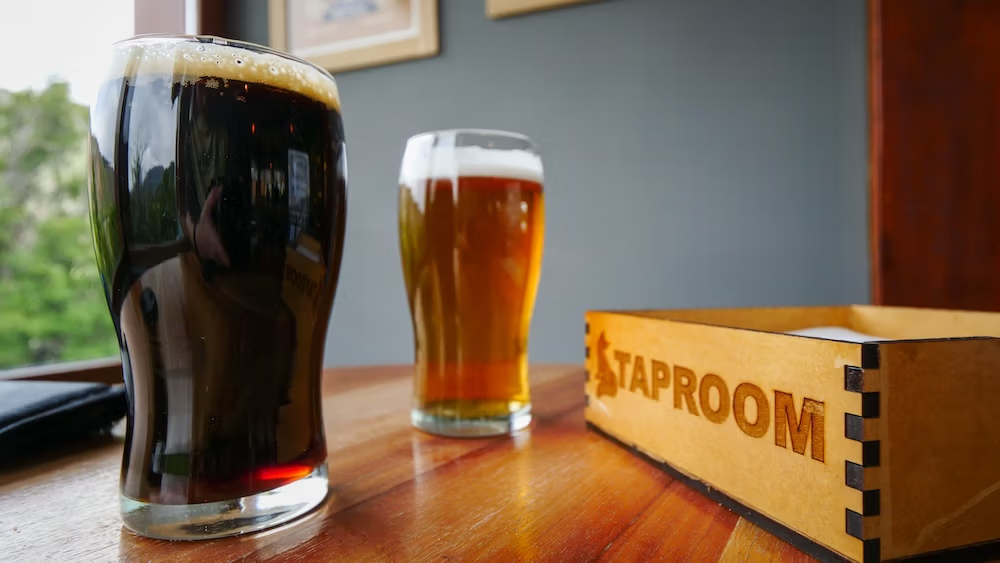
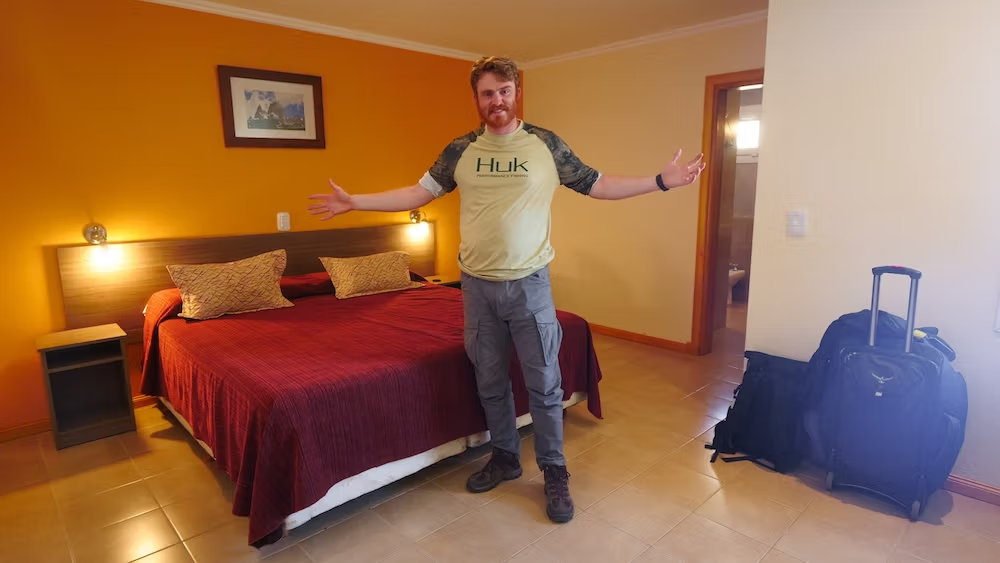
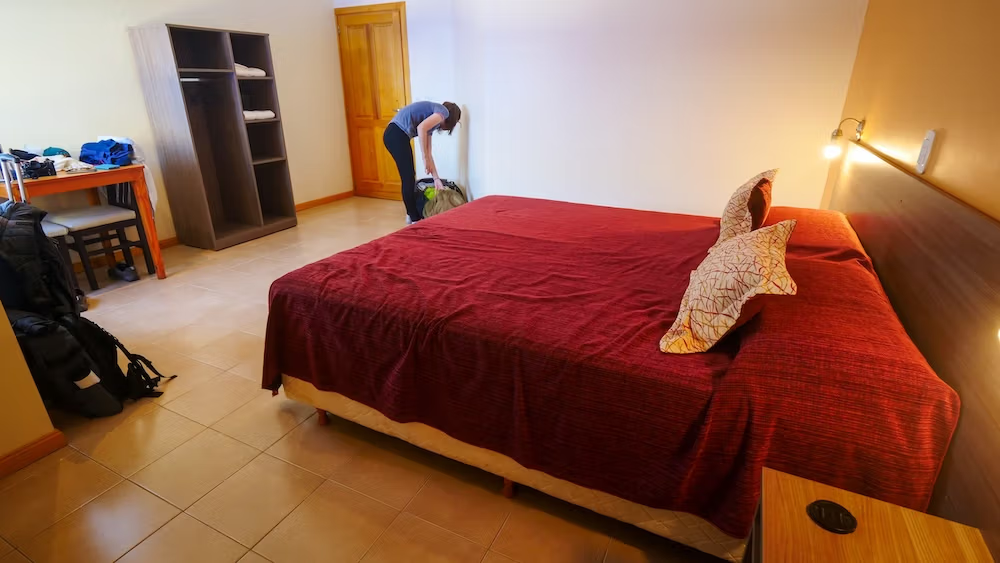
On our own trip to El Chaltén, I learned the hard way that the town doesn’t just reward hiking—it rewards smart pacing. After our big Laguna de los Tres day, the next day was an absolute write-off: stiff, sore, and mostly horizontal in our room at Vertical Lodge, like a pair of loafs left to rise. And then, just to keep us humble, Patagonia gifted us a second rest day via wind so aggressive we could barely stand outside. Two rest days in one trip, and honestly? El Chaltén still felt epic.
It helped that Vertical Lodge was weirdly perfect for recovery: a surprisingly spacious room with a big bathroom setup (bidet, tub, separate shower), a proper desk for editing, and views that made “doing nothing” feel like a scenic activity. Audrey and I paid around US$54 per night with breakfast included, and the value-to-soreness ratio was outstanding.
This guide is a rest day that doesn’t feel like “doing nothing.” It’s low-impact, weather-flexible, and joyfully snack-forward—so you can recover your legs without losing that “we’re in Patagonia!” glow.
Also: Patagonia is allergic to consistency. We had days where the temperature dropped fast, the wind started swirling, and the “summer warmth” packed its bags. That’s exactly why a rest day plan like this is so clutch—you’re not fighting the conditions, you’re thriving.
The rest-day mindset: El Chaltén is a marathon of tiny decisions
Rest days in El Chaltén aren’t a moral failing. They’re an investment.
The town’s hiking culture is intense (in the best way), and it’s easy to fall into the trap of treating every day like a summit attempt. But Patagonia has two personal assistants whose full-time job is to rearrange your plans:
- Wind
- Weather
And sometimes a third assistant joins the meeting: your quads.
A good rest day does three things:
- Resets your body so tomorrow’s hike feels fun again.
- Keeps you in the Patagonia mood (views, vibes, and a little time outside).
- Protects your trip from the spiral of exhaustion → poor decisions → bad time.
On our trip, Audrey and I stayed six nights because we’re foodies pretending to be hikers. That meant we baked in a big hike day, a full recovery day, a wind-forced café day, then another big hike day. It was not “less Patagonia.” It was more Patagonia… because we were awake enough to enjoy it.
Coming in December helped too: sunrise was around 5 a.m. and sunset stretched ridiculously late (as far as 10:30 p.m.), so we had time to hike and still take slow evenings. The trick was not turning that bonus daylight into a daily excuse to overdo it—because your legs will eventually revolt.
🧾 Quick Booking: Your El Chaltén Travel Essentials 🥾✨
🎒 Your Travel Toolkit (Book These 4 Things)
| ✅ What to book | 💡 Why it’s worth it | 🔗 Quick link |
|---|---|---|
| 🥾 Tours & experiences | Easy way to lock in a glacier day, a Lago del Desierto adventure, or a guided option when weather turns moody | Browse El Chaltén tours on Viator |
| 🏨 Hotels & stays | El Chaltén sells out fast in peak season — booking early = better locations + fewer “only the priciest rooms left” moments | Find El Chaltén hotels on Booking.com |
| 🚗 Car rentals (optional) | Best for freedom days: Ruta 40 viewpoints, flexible timing, photo stops, and a smoother Lago del Desierto run | Compare car rentals in El Calafate (gateway to El Chaltén) on DiscoverCars |
| 🚌 Bus tickets | The classic El Calafate ↔ El Chaltén route is simple — but popular departure times fill up | Book El Calafate → El Chaltén buses on Busbud |
👉 One-click backup (reverse direction): Book El Chaltén → El Calafate buses on Busbud
Choose your rest day type
| Your current condition | Patagonia’s current mood | Your rest day goal | Best approach |
|---|---|---|---|
| Sore, stiff, “hello stairs my old enemy” | Calm-ish, decent visibility | Move a little, see something, recover a lot | Short viewpoint + long lunch + early night |
| Mostly fine but mentally cooked | Whatever (you don’t care) | Reset your brain, keep the trip joyful | Café crawl + town wander + snack mission |
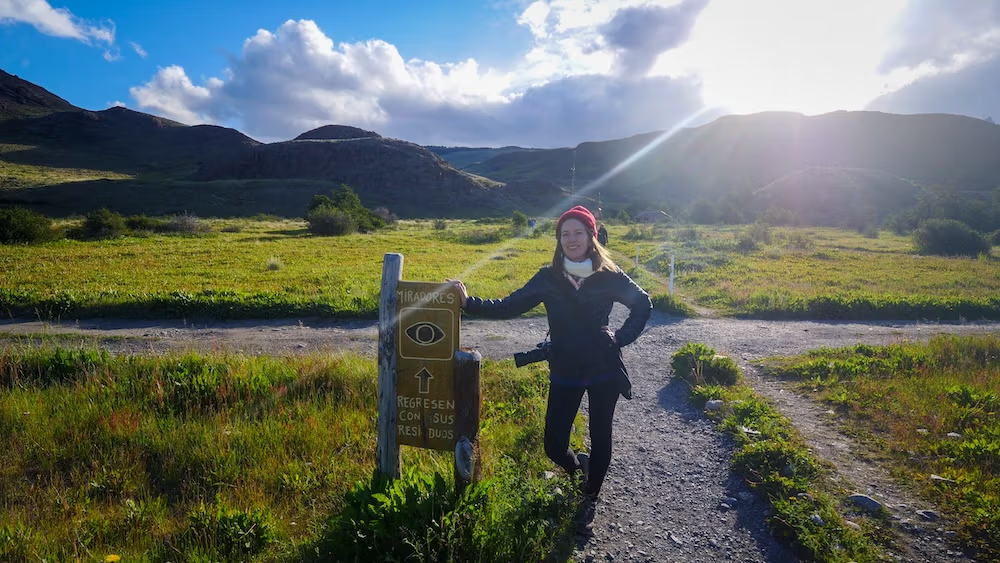
| Legs are okay, wind is violent | Windy chaos, hard to stand | Don’t get sandblasted, still feel Patagonia | Sheltered town loop + one quick mirador attempt |
| Rainy / cold / moody | Drizzle, low clouds, wet everything | Stay warm, avoid hypothermia cosplay | Indoor-first itinerary + one short “fresh air” break |
| Travel day (arrival or departure) | Unpredictable | Do something easy without risking timing | Micro-walk + groceries/snacks + early dinner |
If you’re not sure which row you’re in, do the next matrix and be honest with yourself. (This is not the day for bravado.)
One reason we love scheduling a rest day early? Admin. On our first afternoon in town, the internet was so temperamental we had trouble processing our hotel payment—multiple attempts, lots of sighing, and then suddenly it worked like nothing happened. A rest day is a great time to handle bookings/tickets/messages while you’ve got patience (and while Wi-Fi is briefly in a good mood).

The soreness honesty scale
| Soreness level | How you know | What you do today | What you absolutely do not do |
|---|---|---|---|
| Green: “I can function” | You can squat to tie shoes without bargaining with the universe | Short walks, gentle mobility, viewpoint loop | Turning your “rest day” into a stealth 18 km hike |
| Yellow: “I’m a bit broken” | Downstairs feels personal, ankles are suspicious | Café morning, one micro-view, long lunch, nap | Big elevation, long distances, ego hikes |
| Orange: “My legs are decorative” | Sitting down is painful, standing up requires strategy | Indoor-first, town loop only, feet care, early sleep | Anything that starts with “It’s only…” |
| Red: “I am one blister away from quitting travel” | Hot spots, tendon twinges, low energy, cranky vibes | Full recovery day: rest, food, hydration, plan tomorrow | Pushing through pain, ignoring feet, “just a quick” steep climb |
Most people land somewhere between Yellow and Orange after Laguna de los Tres. We certainly did.
Our personal diagnostic test was simple: if there were stairs, we treated them like a hostile negotiation. Downstairs felt personal. Sitting down required a strategy meeting. Standing up had a small sound effect. That’s when you know you’re in true rest-day territory.
The default rest day itinerary (the one that works most of the time)
This is the “low-impact but still Patagonia” plan. You can follow it exactly, or steal the pieces you like.

8:30–10:00 — Slow breakfast + the Patagonia briefing
Start with a proper breakfast. Not a sad granola bar eaten while staring into the void. A real breakfast.
At Vertical Lodge, breakfast started early (around 6:30 a.m.), and that’s the vibe in town: hikers quietly fueling up while it’s still calm outside. Even on a rest day, that early breakfast rhythm is useful—you can do the tiny walk early, then spend the rest of the day recovering like a professional.
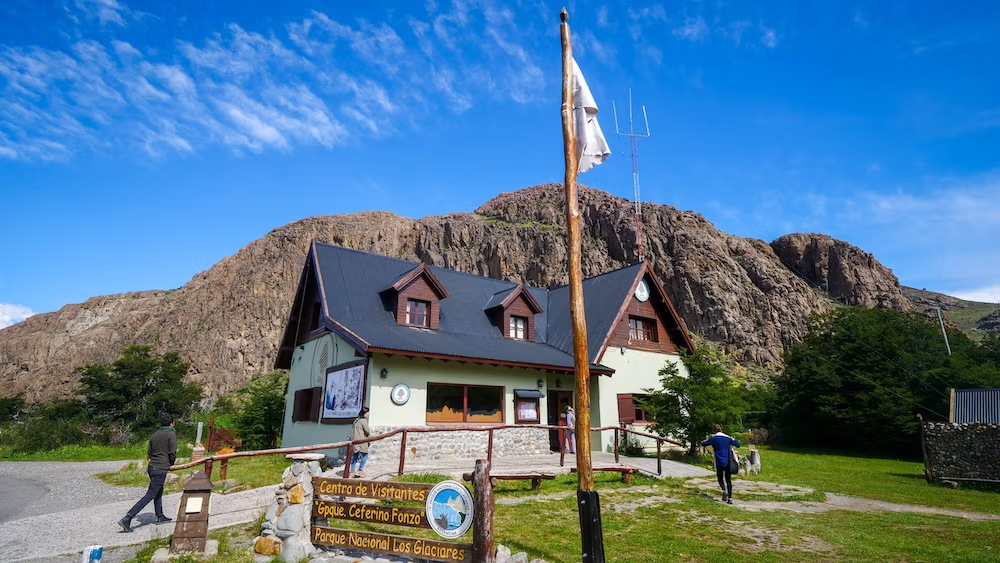
Then do the simplest planning step in El Chaltén: check today’s wind and visibility and decide whether you’re doing a viewpoint loop or a town-only day. If you want the most accurate trail/conditions intel, pop into the park visitor centre and ask what’s sensible today.
Morning rule: if you’re already tired and it’s already windy, don’t negotiate with the forecast. Make today cozy.
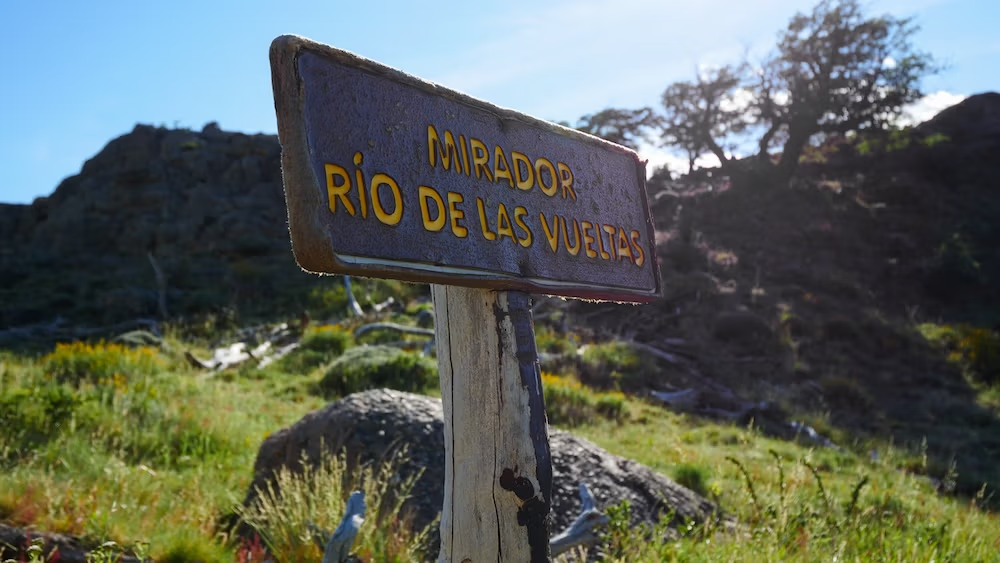
10:00–12:00 — “Patagonia in 90 minutes” viewpoint mission (optional, but recommended)
Choose one low-impact option:
- Mirador de los Cóndores / Mirador de las Águilas (classic, short, big payoff)
- Mirador Río de las Vueltas (a quick early viewpoint on the Laguna Capri route)
- A gentle river walk if the wind is manageable and you want flat terrain
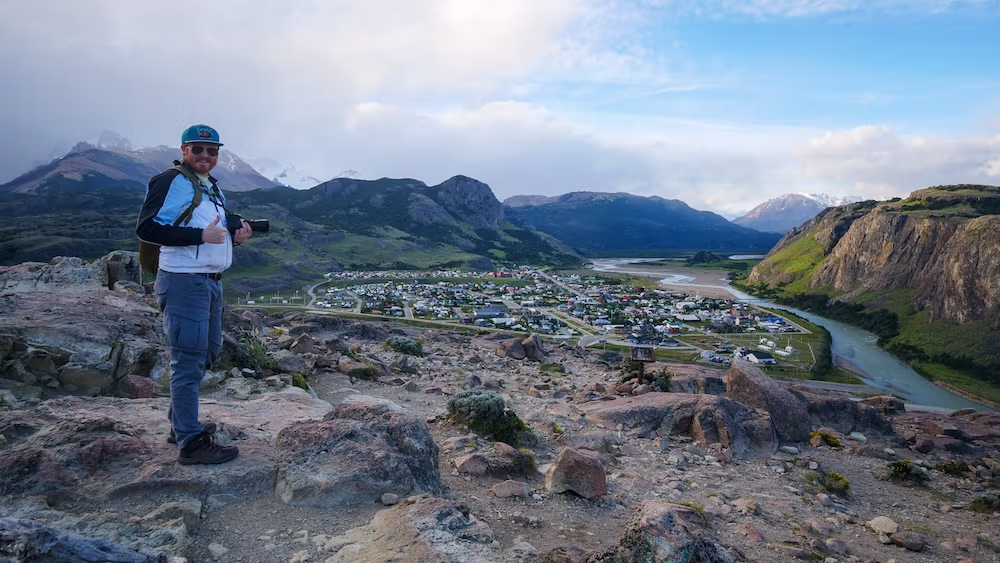
We did Mirador de los Cóndores on our first evening as a sunset “buzzer beater,” and it was the perfect low-commitment flex: roughly 45 minutes up, short but steep, and suddenly El Chaltén looked like a colorful little frontier oasis tucked into a valley. The higher we climbed, the more the mountain ranges started revealing themselves like a dramatic stage curtain.
Your goal is fresh air and a photo that proves you left the café.

12:30–14:30 — Long lunch + dessert diplomacy
This is El Chaltén. Lunch can be a proper event. On our trip Audrey and I ate like little piggies, and honestly, recovery loves carbs.
We set the tone on day one with a very serious meal plan: pizza first, then “we’ll skip beer because we’re hiking,” then immediately power-walked toward a viewpoint because the sunset clock was ticking. Eight slices later, everything smelled aggressively garlicky, and somehow that felt like peak Patagonia decision-making.
Treat lunch as part of the itinerary:
- slow meal
- water
- salt
- and dessert if your soul requests it
15:00–17:00 — Recovery block: feet, stretch, laundry, nap, repeat
This is where you win tomorrow.
- Hot shower
- feet check (blisters don’t negotiate)
- gentle mobility (hips, calves, ankles)
- laundry if needed
- gear reset (batteries, snacks, layers)
We also did the glamorous Patagonia lifestyle moment: hand-washing laundry. It’s not exciting, but having dry base layers and socks feels like upgrading your entire nervous system for tomorrow.
If you’re in Orange/Red soreness territory, add a nap and call it training.
17:00–19:30 — Town wander + golden hour mood
If the weather behaves, do a soft loop through town:
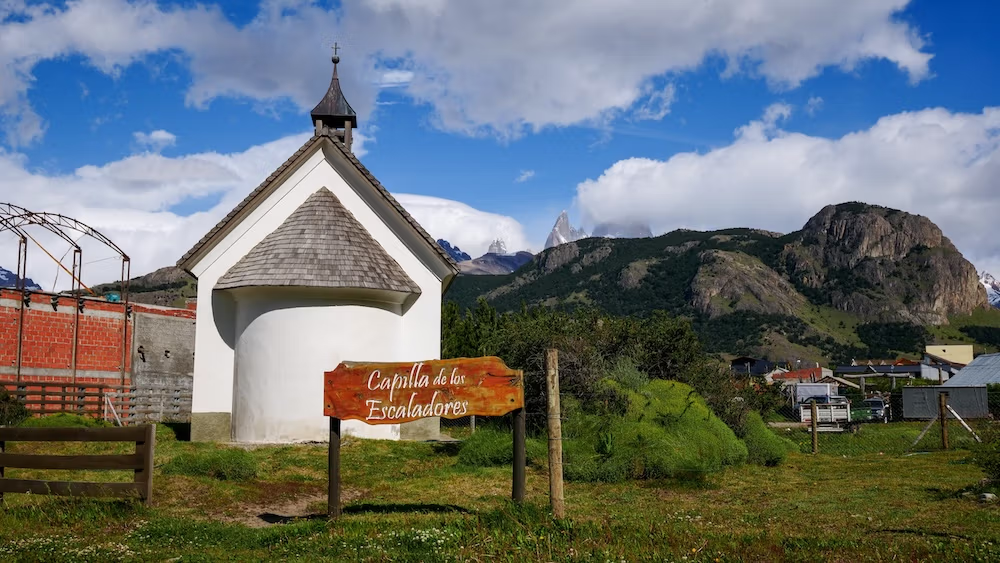
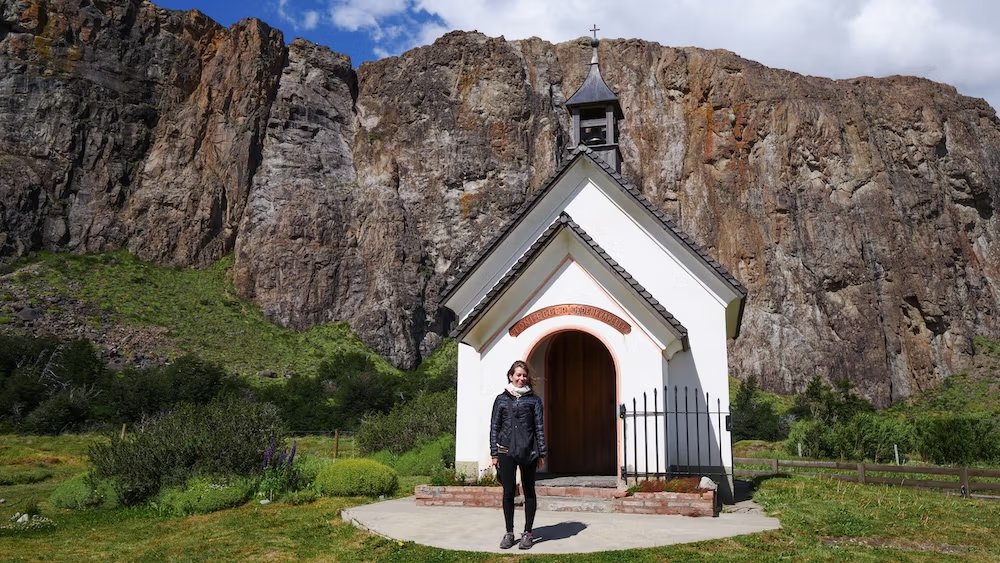
- chapel stop (Capilla de los Escaladores)
- little viewpoints
- souvenir browsing
- “Where do we eat tonight?” reconnaissance

19:30–21:30 — Dinner you’ve earned (even though you didn’t “do” anything)
We have a strong opinion here: rest day dinner should feel slightly indulgent.
Because tomorrow you’ll wake up and your body will say, “Oh good, we’re still alive,” and you’ll actually want to hike again.
Weather-proof rest day variations
El Chaltén is not impressed by your personal itinerary. Use these variations when conditions demand it.
Wind day itinerary: when Patagonia is trying to push you into Chile
This is the day we tried to go outside and could barely stand. It’s humbling.
Plan
- Café morning (warm, slow, smug)
- Short town loop in sheltered streets
- One quick attempt at a viewpoint only if you can walk comfortably
- Long lunch
- Indoor recovery block
- Early dinner
Wind-day rules
- If you’re leaning at a 25-degree angle just to remain upright, that is not “adventure.” That is “Patagonia bullying.”
- If you go out, go out with the mindset: “We can turn back immediately and still call this a win.”
Rainy / gloomy day itinerary: when the clouds are chewing on Fitz Roy
This is your “cozy Patagonia” day.
Plan
- Visitor centre / info check (what’s sensible today)
- Bookstore / café / bakery circuit
- Lunch
- Stretch + laundry + gear drying
- Optional short fresh-air walk (keep it brief and warm)
- Early night
Rain-day rules
- Wet + wind = fast heat loss. Stay conservative.
- Choose short distances, and keep a dry layer in your bag.
- If your shoes are soaked, prioritize drying. Tomorrow-you will thank you.
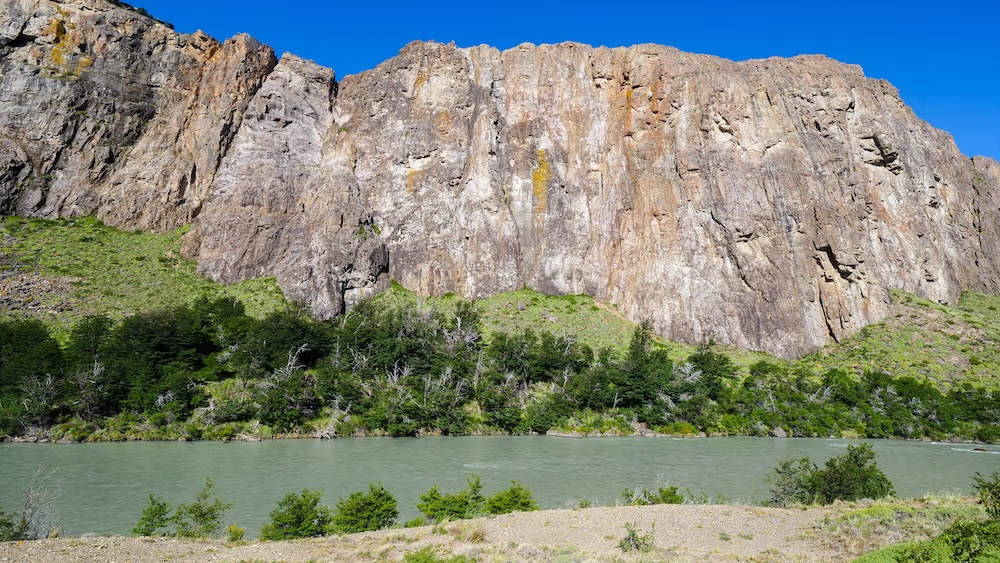
“I’m sore but stubborn” itinerary: when you want Patagonia without self-sabotage
This one is for the people who are mentally ready for a hike but physically questionable.
Plan
- Slow breakfast
- Micro-view (one viewpoint only)
- Long lunch
- Nap
- Easy town wander
- Dinner
Stubborn-day rules
- One outing. One.
- If you start negotiating with yourself mid-walk (“Maybe we go a little farther…”), you are not in charge today. Your future quads are.
Travel day itinerary: arrival or departure
Arrival day is not the day to prove anything. It’s the day to get oriented and set up tomorrow.
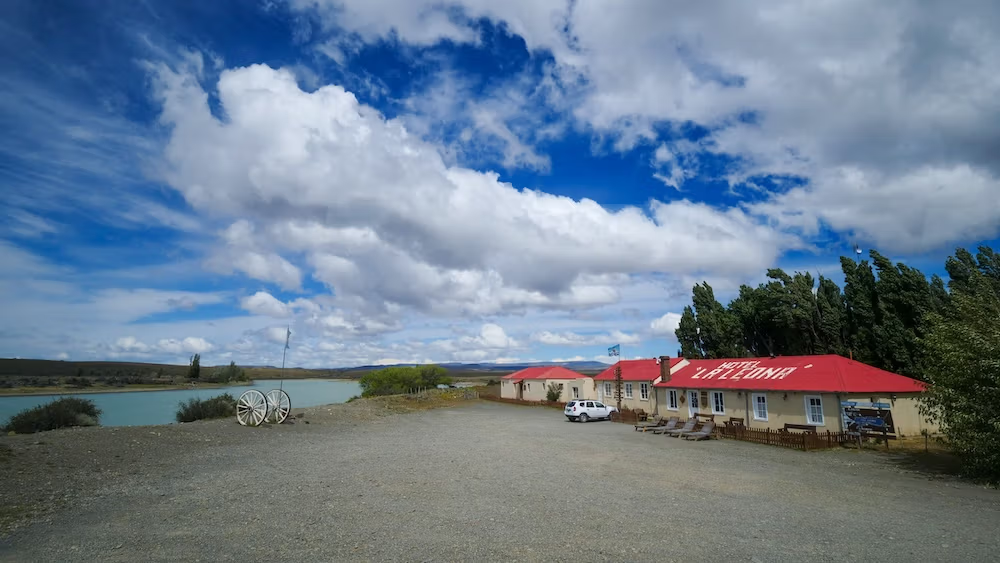
If you’re arriving from El Calafate by bus, the ride is straightforward and scenic, and there’s often a halfway stop around Hotel La Leona where you can stretch, use the bathroom, and grab a snack. We loved that once you roll into El Chaltén, it’s immediately walkable—our place was just down the street from the terminal.
Plan
- Check in
- Snack run + water
- Easy sunset walk (if time and weather allow)
- Dinner + early night
If you’re leaving, keep it small:
- short town loop
- one last bakery
- goodbye Fitz Roy, we’ll be back when our knees are younger
Choose your “tiny walk”
El Chaltén’s secret: you can get a Patagonia feeling without committing to a full hike.
The “pick your vibe” micro-walk matrix
| Your vibe today | Choose this | Time budget | Effort | Best payoff |
|---|---|---|---|---|
| “I want a view but I’m fragile” | Mirador de los Cóndores | 60–90 min | Low–moderate | Big town + valley views |
| “One more viewpoint, still chill” | Continue to Mirador de las Águilas | 90–120 min | Moderate | Wider panorama, fewer people |
| “Flat, gentle, no drama” | River walk / town edges | 30–90 min | Low | Wind-permitting stroll, calm reset |
| “I want Fitz Roy vibes with minimal commitment” | Mirador Río de las Vueltas (Capri early viewpoint) | 45–75 min | Moderate (short steep) | Quick iconic valley view |
| “I’m staying inside but want fresh air” | 10–20 min loop + photos | 15–30 min | Very low | Still counts, still Patagonia |
If you do one micro-walk on a rest day, you’ll feel better mentally without paying the physical price.
The full “Chill Patagonia” rest day (hour-by-hour version)
| Time | What we do | Why it’s in the plan |
|---|---|---|
| 08:30 | Breakfast + coffee + “how are we feeling?” check | Start slow, avoid accidental overcommitment |
| 09:30 | Decide: viewpoint or town-only | The forecast is the boss |
| 10:00 | Micro-walk to a viewpoint | Fresh air, photos, feel like Patagonia |
| 12:30 | Long lunch | Recovery fuel + mood boost |
| 14:30 | Dessert / bakery stop | Emotional resilience (highly scientific) |
| 15:30 | Shower + feet care + stretch | Prevent tomorrow from being painful |
| 16:30 | Nap / quiet time | Because you’re not a machine |
| 18:00 | Town wander + sunset light | Easy movement, soft vibes |
| 19:30 | Dinner | Finish strong |
| 21:00 | Pack tomorrow’s snacks/layers | Tomorrow-you deserves kindness |
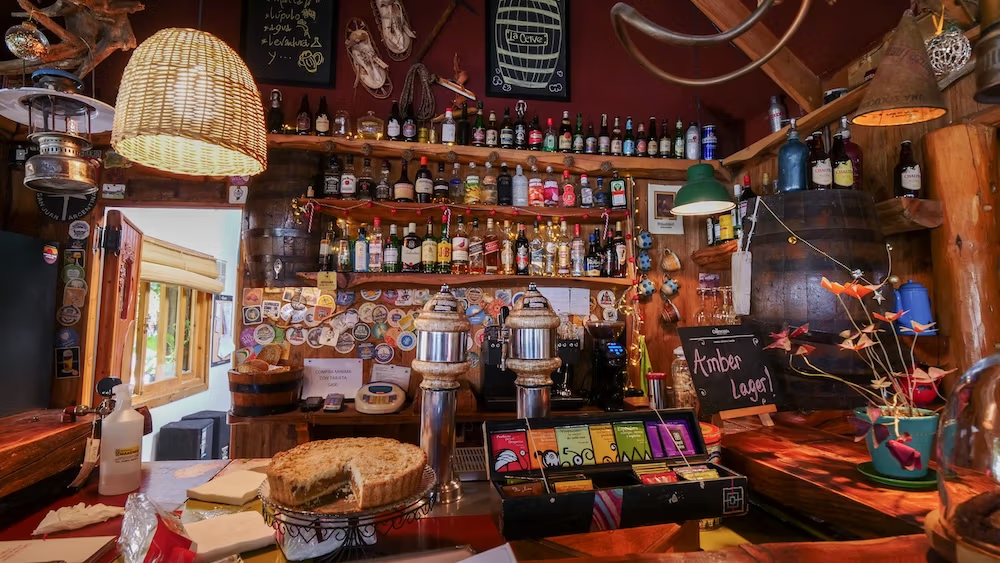
Food is part of the recovery plan (and we take recovery very seriously)
El Chaltén is one of those places where you burn calories like you’re paying off a loan, and then immediately take on new debt via pizza, beer, and dessert. This is correct behavior.
Our rest-day food philosophy
- Breakfast is not optional.
- Lunch is strategic.
- Dinner is a celebration.
- Dessert is first aid.
The “what should we eat today?” matrix
| If you’re feeling… | Your body needs… | Eat like this |
|---|---|---|
| Drained and sore | Carbs + salt + hydration | Pasta, risotto, soups, big sandwiches |
| Cranky and cold | Warmth + comfort | Hot drinks, pastries, stew-ish meals |
| “My stomach is confused” | Gentle calories | Empanadas, bread, simple bowls, bananas |
| Mentally tired | Joy | Anything that makes you smile, plus water |
| Going big tomorrow | Fuel and balance | Solid meal + veggies if available + dessert |
On our trip, one of the sneaky best rest-day moves was sorting out food logistics in advance. If your accommodation doesn’t have a kitchen (ours didn’t), you can often order lunchboxes the night before and pick them up in the morning (we paid roughly US$10 per box). It’s not cheap, but it can turn tomorrow’s hike into a smooth operation: no scrambling, no “we forgot snacks,” no bargaining with a single crushed granola bar.
And in our case, it wasn’t just convenience—it was necessity. We didn’t have a mini-fridge or communal kitchen to lean on, so having that lunchbox ready in the morning removed a whole category of “why are we doing life on hard mode?” stress.
Rest day café crawl (low effort, high morale)
If the wind is bullying you, the café crawl becomes the activity.
Rules of the crawl
- Two warm drinks maximum before lunch (unless you want to vibrate)
- One pastry that looks unreasonable
- One “we should probably drink water” moment
- Optional: sit by a window and judge the weather like a professional meteorologist
Rest day dinner: the “earned it” options
A rest day is a perfect time for:
- a cozy sit-down meal (with wine if that’s your thing)
- a burger-and-fries situation
- pizza + beer
- ice cream “because we’re in Patagonia and happiness is allowed”
We had multiple evenings where dinner turned into a full recovery ritual: burgers, loaded fries and happy hour drinks at La Zorra and then artisanal ice cream for the walk home. Not because we had to. Because it felt right.
One of our favorite recovery-day moves was Senderos (near the bus terminal): small, cozy, and surprisingly gourmet. We did comfort food + wine + dessert, then waddled back to the hotel like happy hippos.
Town wander: the slow Patagonia that most people forget to enjoy
A rest day is a great excuse to pay attention to the town itself instead of sprinting from trailhead to trailhead.
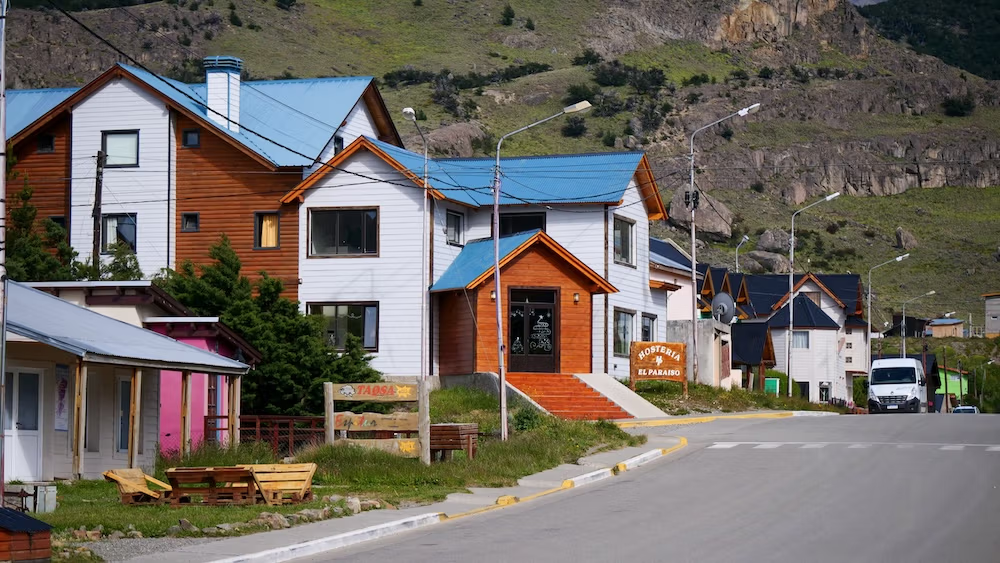
El Chaltén also has this slightly scrappy, frontier vibe that’s easy to miss when you’re only thinking in trailheads. A lot of the buildings are painted bright colors, so even a slow wander between cafés can feel scenic—like you’re strolling through a tiny mountain outpost that just happens to sit under world-class peaks.
The “soft loop” route (45–90 minutes)
- Start in the centre
- Drift past small shops
- Stop at the chapel (Capilla de los Escaladores)
- Walk a few quiet streets for mountain views between buildings
- End at a café or bakery (as the universe intended)
The “sheltered wind loop” (20–45 minutes)
- Stick to streets that keep you out of open gust corridors
- Keep it short
- Take photos between buildings when the peaks peek out
- Bail early if you’re getting slapped around
The “I need to move but gently” loop (60–120 minutes)
- Easy riverside sections (wind permitting)
- Flat terrain
- Stop often
- Treat it like a stroll, not a mission
The practical reality checks (El Chaltén edition)
This is the stuff that keeps a rest day from turning into a frustrating day.
Park fees and tickets: don’t get caught off guard
Los Glaciares National Park’s Zona Norte access around El Chaltén now involves entry fees (and the categories/prices can change). When we’re writing a rest-day itinerary, the key point is simple:
- If your plan includes a popular trail or viewpoint loop, assume you may need a ticket.
- Check the official park information close to your travel dates.
- If online purchase is required for certain routes, buy ahead when you have stable Wi-Fi.
Quick park fee snapshot (check for updates)
As of early 2025, Los Glaciares National Park listed these Zona Norte / Portada El Chaltén entry categories (verify before you go):
| Category | Example price (ARS) |
|---|---|
| General (non-resident) | 45,000 |
| National residents | 15,000 |
| Provincial residents | 5,000 |
| Students | 7,000 |
Where to get trail intel in town
If you want the best “should we go out today?” advice:
- park visitor centre / ranger info
- municipal tourism info at the bus station
On a rest day, even a five-minute check-in can save you from planning tomorrow based on wishful thinking.
Wi-Fi and connectivity: plan for occasional chaos
El Chaltén can be unpredictable for connectivity. We had moments where mobile data was weak and Wi-Fi was moody. That matters on rest days because people often try to:
- upload photos
- book tickets
- do work
- message family
- pretend they’re organized humans
If you have something important to do online, do it:
- earlier in the day
- in a place with stable Wi-Fi
- and with patience, because Patagonia is not a coworking space
On our trip, we were literally told, “your mobile data probably won’t work,” and… yep. No signal. And the Wi-Fi would drop at the worst moments, like when we were trying to do anything involving money. The best mindset is: get your online tasks done when you can, and then go back to being the offline forest creature Patagonia wants you to be.
If you’re desperate, ask around about public options—on our trip we even leaned on free Wi-Fi in the central plaza when everything else felt temperamental.
Cash and payments
Cards work in many places, but don’t assume every payment system will behave perfectly, especially when the internet is struggling. Have a little cash as backup, especially for small purchases or local fees.
Same goes for supplies. We stopped at the supermarket and it felt more like a general store—limited variety, especially for produce—and prices that made us do mental math with a thousand-yard stare (we paid about a dollar per apple). Rest day is a good time to do the snack mission calmly so tomorrow doesn’t turn into “one crushed granola bar and vibes.”
The rest day recovery toolkit (the part that makes tomorrow better)
You don’t need a full sports science lab. You need a few basic habits.
10-minute mobility routine (hotel-room friendly)
- Ankles: circles, gentle calf stretch
- Calves: slow stretch, not pain
- Quads/hips: gentle hip flexor stretch
- Back/shoulders: loosen the “daypack hunch”
Feet care (the underrated hero of El Chaltén)
- Check hot spots daily
- Dry socks matter
- If something hurts, treat it early
- Don’t wait for a blister to become a personality trait
Gear reset list
- Dry anything wet (seriously)
- Charge batteries/power bank
- Repack daypack with tomorrow’s essentials
- Refill water bottle
- Lay out layers so morning-you doesn’t make bad choices
Sleep: the most powerful recovery supplement
After our big Fitz Roy day, we slept 10–12 hours and still woke up feeling like we’d been hit by a mac ktruck driven by a polite Argentine grandmother. It was glorious. Sleep turns “I might quit hiking forever” into “okay, maybe we can do another one.”
What to carry on a rest day (yes, even on a short stroll)
A rest day bag is basically a tiny safety net.
- Water (even if it’s short)
- Light layer (wind is petty)
- Snacks (snacks are always correct)
- Hat / sunglasses (Patagonia can go from gloomy to blinding in ten minutes)
- Small first aid (blister tape is elite)
- Phone + power bank (especially if you’re buying tickets or navigating)
The “don’t accidentally ruin your rest day” mistakes
| Mistake | Why it happens | What to do instead |
|---|---|---|
| Turning “one short walk” into a half-day hike | You feel better once you start moving | Pre-commit to a turnaround point and celebrate it |
| Ignoring wind because “it looks fine” | It’s not fine, it’s Patagonia | If gusts feel unsafe, pick a sheltered loop |
| Skipping breakfast | You’re tired, you forget | Eat first, decide later |
| Not checking feet | You don’t want to look | Look anyway; future-you will thank you |
| Trying to “catch up on work” all day | You assume Wi-Fi behaves | Do one focused block, then unplug |
How to build a 6-day El Chaltén trip with rest days (our real rhythm)
If you’re staying a week (or close to it), this pacing keeps things fun:
| Day | The vibe | Main plan | Built-in flexibility |
|---|---|---|---|
| 1 | Arrival energy | Easy town walk + sunset viewpoint | If travel is exhausting, just eat and sleep |
| 2 | Trophy day | Laguna de los Tres (best weather window) | If visibility is bad, downshift to a shorter hike |
| 3 | Recovery | Full rest day | Treat it like part of the plan, not a failure |
| 4 | Weather insurance | Flexible day (café day if windy) | This day saves the trip when Patagonia misbehaves |
| 5 | Classic day | Laguna Torre | If wind is wild, aim for a shorter segment |
| 6 | Bonus / easy | Chorrillo del Salto + extra viewpoint | Keep it light, enjoy the feeling of “we did it” |
This exact rhythm saved us. We did huge days when the weather cooperated, and we recovered when it didn’t. We ate well. We laughed a lot. We walked around town like happy zombies. And we left El Chaltén feeling like we actually experienced it—not just survived it.
Plan your rest day in 15 minutes
- Decide your rest-day type (Green/Yellow/Orange/Red)
- Check wind + visibility
- Pick one micro-walk (or commit to town-only)
- Choose a lunch spot
- Do one recovery block (feet + stretch + gear reset)
- Book/confirm anything for tomorrow while Wi-Fi behaves
- Eat dinner like a person who respects their own happiness
- Sleep like a champion
El Chaltén will still be there tomorrow. Fitz Roy is not going anywhere. Your calves, however, have opinions.
✨ Ready to lock in your El Chaltén plan?
- 🥾 Browse El Chaltén tours on Viator
- 🏨 Find El Chaltén hotels on Booking.com
- 🚗 Compare El Calafate car rentals on DiscoverCars
- 🚌 Book El Calafate → El Chaltén buses on Busbud
Frequently asked questions about taking a rest day in El Chaltén without feeling like you missed Patagonia
Is a rest day “worth it” if I only have 2–3 days in El Chaltén?
Yes. If you’re doing a big hike, a mini rest day can be the difference between enjoying your second day and trudging through it like a haunted marionette. Keep it short: one micro-view, long lunch, early night.
What’s the best low-impact thing to do that still feels like Patagonia?
A short viewpoint like Mirador de los Cóndores (and optionally Águilas) is the classic move: minimal time, maximum “we are here” payoff.
If I’m sore, should I still do a short walk?
Usually yes—gentle movement often helps. But if you’re in “Red” territory (pain, hot spots, injury vibes), treat the day as full recovery.
What if the wind is insane?
Then your itinerary is: cafés, sheltered town loop, and survival. Don’t force exposed viewpoints when gusts feel unsafe. Patagonia will happily humble you for free.
What can I do on a rainy day?
Keep it indoor-first: visitor info check, café/bakery circuit, long lunch, stretch, laundry, gear drying. Add only a short fresh-air break if you’re warm and comfortable.
Do I need to buy park tickets even for short viewpoints?
Sometimes, yes—fees and ticketing can apply around El Chaltén depending on the route and current rules. Check official park info close to your travel dates.
Is it easy to buy tickets online in town?
Often yes, but connectivity can be inconsistent. If you know you’ll need online tickets, buy them when you have stable Wi-Fi and time.
Are there “flat” options for a true low-impact day?
Yes: town loops, riverside strolls (wind permitting), and short viewpoint routes with modest elevation. Keep it short and stop often.
What’s the best way to recover for a big hike tomorrow?
Sleep, hydration, carbs, and feet care. Also: pack tomorrow’s layers and snacks tonight so morning-you doesn’t make chaotic decisions.
Should I do laundry on a rest day?
If you have access, yes. Dry socks and dry base layers are a quiet superpower in Patagonia.
What should I eat on a rest day?
Comfort food with some salt and carbs, plus water. A rest day is not the time to be a nutrition minimalist. Your legs are rebuilding a small civilization.
How do I avoid turning my rest day into a surprise full hike?
Set a turnaround point before you leave. Tell yourself it’s a “photo mission,” not a “progress mission.” Celebrate stopping early like it’s the whole point—because it is.
Is a rest day still enjoyable if the mountains are hidden?
Weirdly, yes. Sometimes El Chaltén is a moody, cloud-chomping mystery and that’s part of the charm. Also: pastries exist regardless of visibility.
Can I still do something “special” without hiking?
Absolutely. Make food the activity, walk slowly, take photos in town, and lean into the atmosphere. Chill Patagonia counts.
What’s the number one rest-day mistake people make?
Ego hiking—turning a recovery day into a challenge day in disguise. Keep it genuinely low-impact so tomorrow still feels like a gift, not a punishment.
Project 23 Argentina: This guide is also available in Spanish. [Lea la versión en castellano: Día de descanso en El Chaltén: Un itinerario de bajo impacto que se siente como Patagonia tranqui]
Further Reading, Sources and Resources
If you like to double-check trail logistics, park rules, and “what’s actually open today” details before you commit your precious knees to anything, these are the most useful, traveler-friendly references for El Chaltén rest-day planning.
Official park information
https://www.argentina.gob.ar/parquesnacionales/losglaciares
National Parks Argentina’s official hub for Los Glaciares National Park updates, including entry rules and general visitor guidance.
Local El Chaltén planning, trail guides, and practical info
https://elchalten.com/
A long-running, El Chaltén-focused resource with planning basics, trail overviews, and local logistics.
https://elchalten.com/v4/en/
English version of the El Chaltén site with organized sections for trekking, transportation, and trip planning.
https://elchalten.com/v4/en/touristinfo.php
Visitor info pages that are especially handy for quick on-the-ground details (services, what to expect in town, and general practicalities).
https://elchalten.com/v4/en/trekking/condores_aguilas.php
Trail overview for Mirador de los Cóndores / Mirador de las Águilas—ideal “rest day with payoff” planning.
https://elchalten.com/v4/en/trekking/capri.php
Trail overview for Laguna Capri (including the early Mirador Río de las Vueltas viewpoint option).
Transportation logistics
https://elchalten.com/v4/en/transport/buses.php
Bus information (routes/timetables context) that’s helpful for arrival/departure days and timing a low-impact first/last day.
Notes on accuracy
- Park fees, access rules, and ticketing systems can change quickly—confirm the latest details close to your travel dates (especially during peak season).
- Weather in El Chaltén can flip fast; use these resources for general planning, but make your final decision based on same-day conditions and what feels safe.
- Trail times vary wildly by wind, mud, and how many “just one more photo” stops you take—build buffer time into any plan.