
If there is one universal truth about hiking in El Chaltén, it is this: by Day 6, your legs will hate you.
They will not just be sore; they will be staging a full-scale mutiny. After conquering the vertical granite walls of Laguna de los Tres and surviving the haunted forests of Laguna Torre, Audrey and I were walking with the grace of two penguins navigating an oil slick. We had transitioned from “enthusiastic adventure travel bloggers” to what I affectionately call “The Walking Dead: Patagonia Edition.”
And yet, it was our final day in the trekking capital of Argentina. The FOMO (Fear Of Missing Out) was palpable. We couldn’t just sit in our hotel room eating alfajores and staring at the ceiling (although, frankly, that sounded like a 5-star itinerary at the time). We needed a “Victory Lap.” We needed a hike that offered maximum visual ROI (Return On Investment) with minimum knee-destruction.
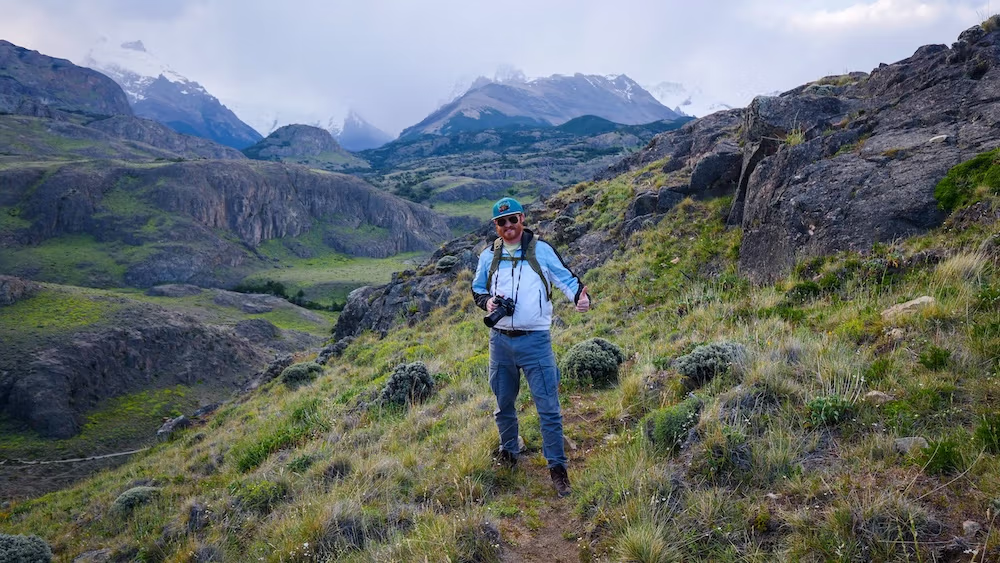
Enter the Mirador de los Cóndores and its often-neglected sibling, Mirador de las Águilas.
Most visitors to El Chaltén treat the Cóndores hike as a quick “arrival day” activity. They hike up, snap a selfie with the town background, and head back down for a beer. They see the signpost for Mirador de las Águilas (Viewpoint of the Eagles), look at the extra kilometers, look at their tired feet, and say, “Nah, I’m good.”
I am here to tell you that this is a mistake. A tragic, lazy mistake.
In this guide, I am going to convince you—using logic, bad jokes, and arguably too many food metaphors—why adding the Mirador de las Águilas extension is the single best “low effort” decision you can make in El Chaltén. It transforms a nice little walk into a full-blown Patagonian experience.
Let’s get our “faux trekkers” bodies moving one last time.
The “Recovery Hike” Philosophy
Before we dive into the trail specs, we need to establish the mood. This is not Fitz Roy. You do not need an alpine start. You do not need to pack survival gear for a three-day siege.
For us, this hike took place on Day 6. We had spent the previous week eating our way through Argentina, gaining what I scientifically classify as “bulbous plumptitude” , and then shockingly realizing that hiking 20 kilometers uphill is hard when you are comprised of a personalized balanced portfolio of 60% blue cheese and 40% Malbec.
We wanted a “Recovery Hike.”
- The Goal: See something new and epic.
- The Constraint: Do not require a sedan chair rescue at the end.
- The Reward: Justify eating a mountain of waffles immediately afterward.
The Cóndores-Águilas combo is the only trail in El Chaltén that perfectly fits this criteria. It is the “Goldilocks” zone of hiking: not too hard, not too easy, but just right for a final goodbye to the mountains.
Technical Breakdown: The “Nuts & Bolts”
Let’s look at the hard data. I know you are probably reading this on your phone while icing your knees in a hostel bunk, so I’ll keep it clean.
The trail system here is not a loop; it is a “Y” shape. You hike up a shared stem, and near the top, the path forks. Left takes you to the Cóndores; right takes you to the Eagles.
“As of late 2024, trails in the Northern Zone of Los Glaciares (including this one) can require an entrance ticket—rules change, so check the official ticket page the day before you go.”
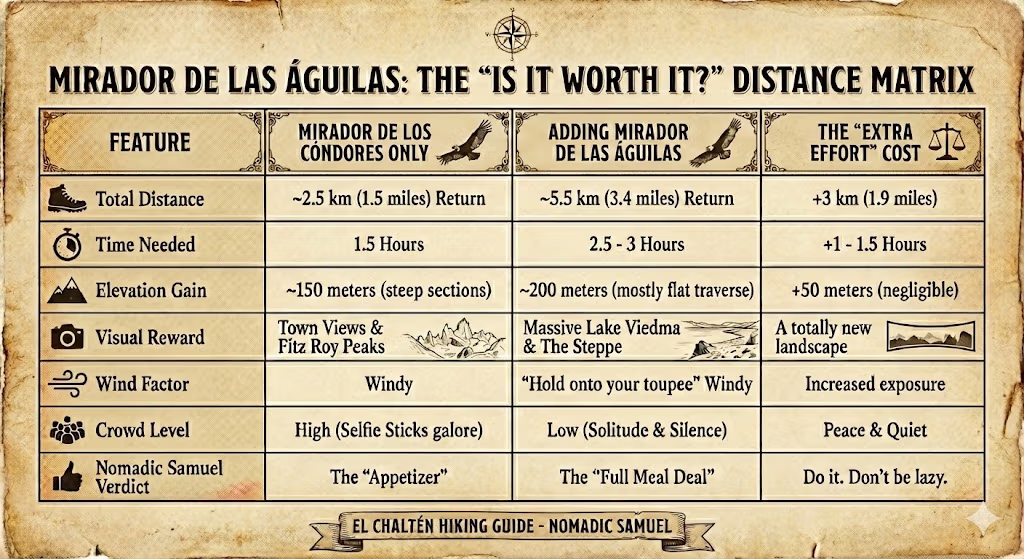
The “Is It Worth It?” Distance Matrix
| Feature | Mirador de los Cóndores Only | Adding Mirador de las Águilas | The “Extra Effort” Cost |
| Total Distance | ~2.5 km (1.5 miles) Return | ~5.5 km (3.4 miles) Return | +3 km (1.9 miles) |
| Time Needed | 1.5 Hours | 2.5 – 3 Hours | +1 – 1.5 Hours |
| Elevation Gain | ~150 meters (steep sections) | ~200 meters (mostly flat traverse) | +50 meters (negligible) |
| Visual Reward | Town Views & Fitz Roy Peaks | Massive Lake Viedma & The Steppe | A totally new landscape |
| Wind Factor | Windy | “Hold onto your toupee” Windy | Increased exposure |
| Crowd Level | High (Selfie Sticks galore) | Low (Solitude & Silence) | Peace & Quiet |
| Nomadic Samuel Verdict | The “Appetizer” | The “Full Meal Deal” | Do it. Don’t be lazy. |
The Takeaway:
Adding Águilas doubles your distance. But it does not double the difficulty. The vast majority of the elevation gain happens in the first 30 minutes leaving the Visitor Center. Once you reach the top of that initial hump, the walk over to Águilas is largely a gentle, grassy traverse. You have already done the hard work; you might as well cash in the chips for the second view.
The Hike Experience: Step-by-Step
Part 1: The Trailhead & The “Tour Bus” Climb
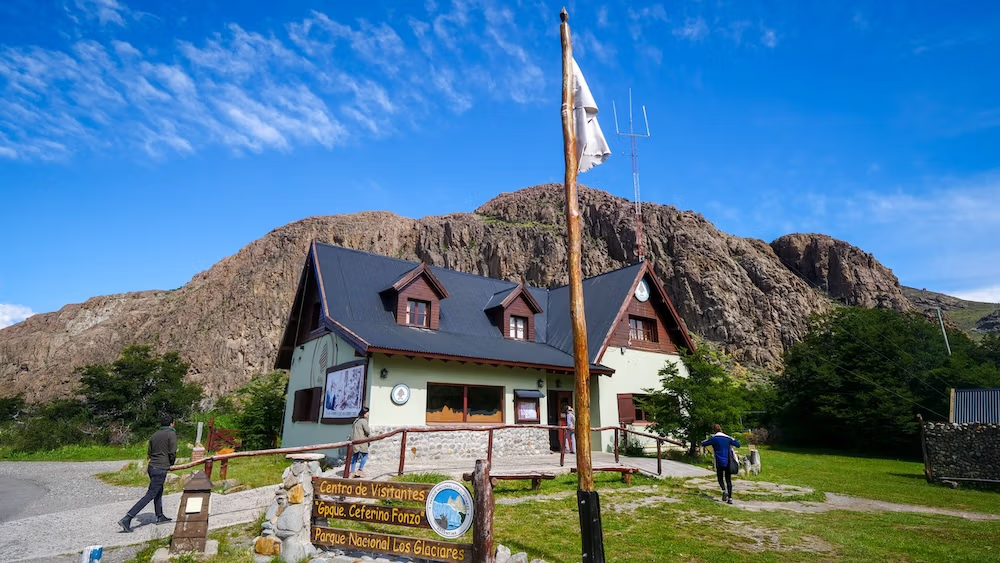
The hike starts at the National Park Visitor Center (Guardaparque Ceferino Fonzo). This is located just south of the bridge that crosses the Fitz Roy River. If you are staying in the center of town, you have to walk about 10-15 minutes just to get to the start. Consider this your warm-up.
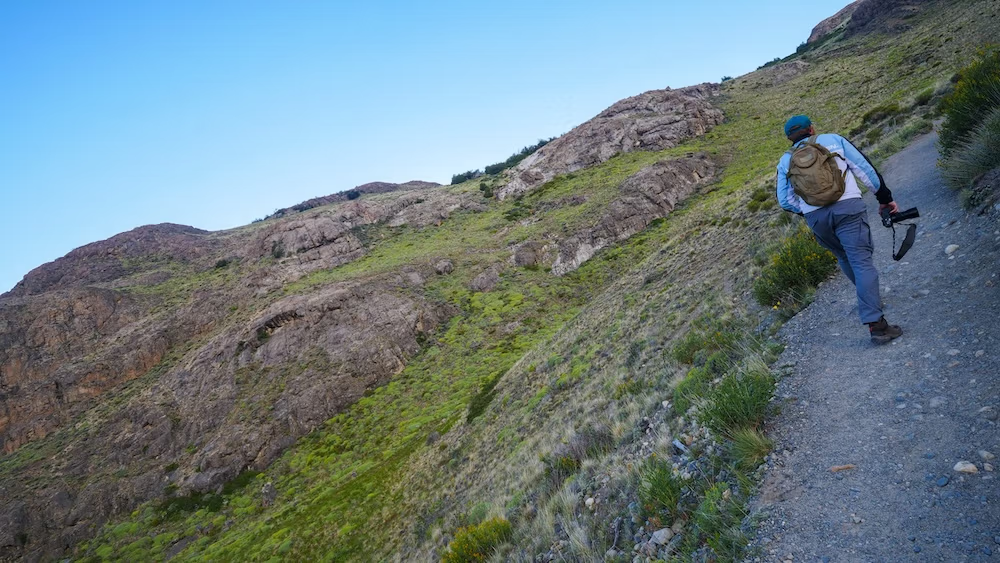
The first section is the “gatekeeper.” It is a steady, uphill grind on a well-maintained dirt path. Because this is the most accessible hike in El Chaltén, you will see everyone here. I’m talking families with toddlers, tour groups off the bus from El Calafate, and fellow “exhausted hiker chic” survivors like us.
- The Vibe: Busy. Dusty.
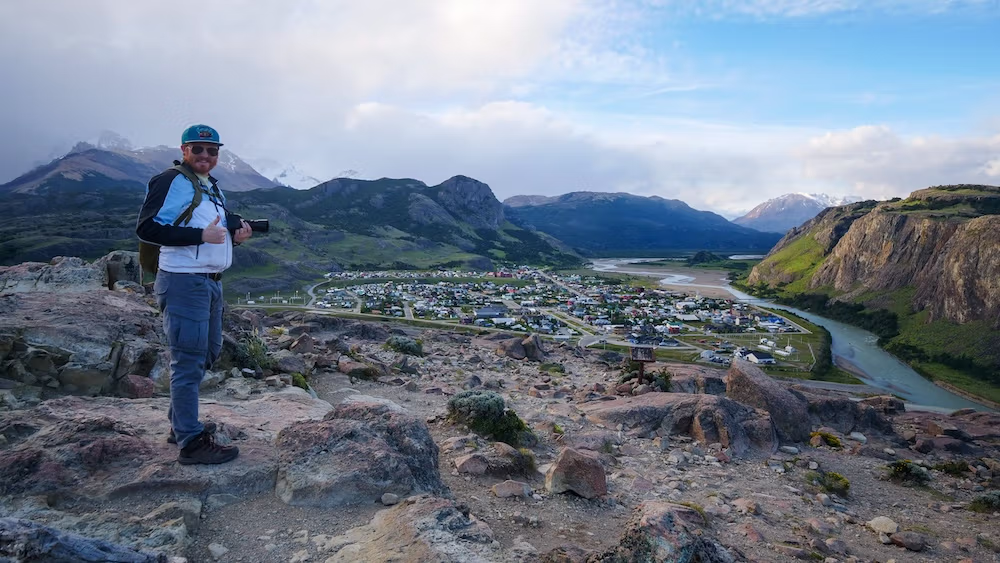
- The View: As you climb, look behind you. The views of El Chaltén (the town itself) are arguably the best from here. You see the grid of colorful frontier houses nestled in the valley, protected by the canyon walls.
Part 2: The Fork in the Road
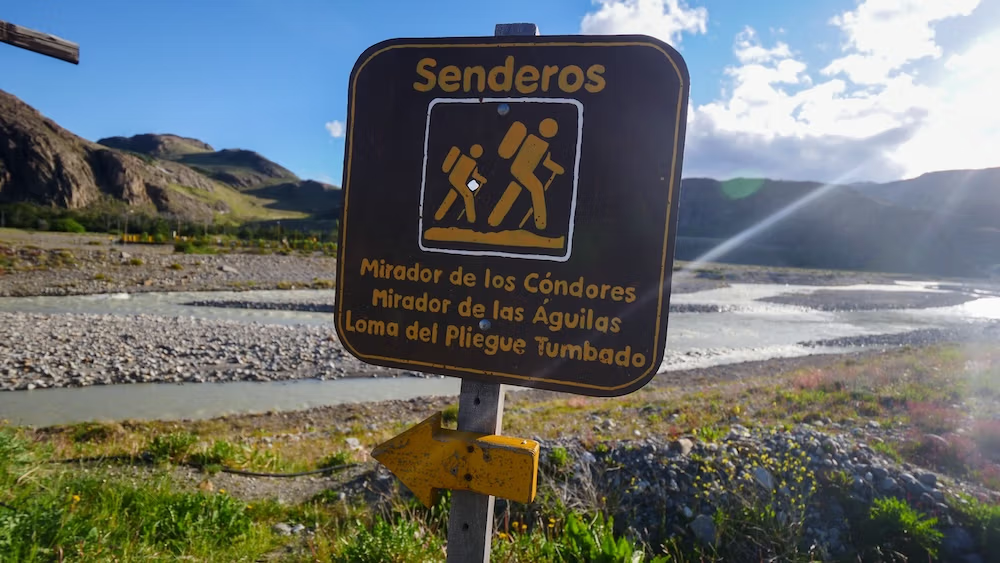
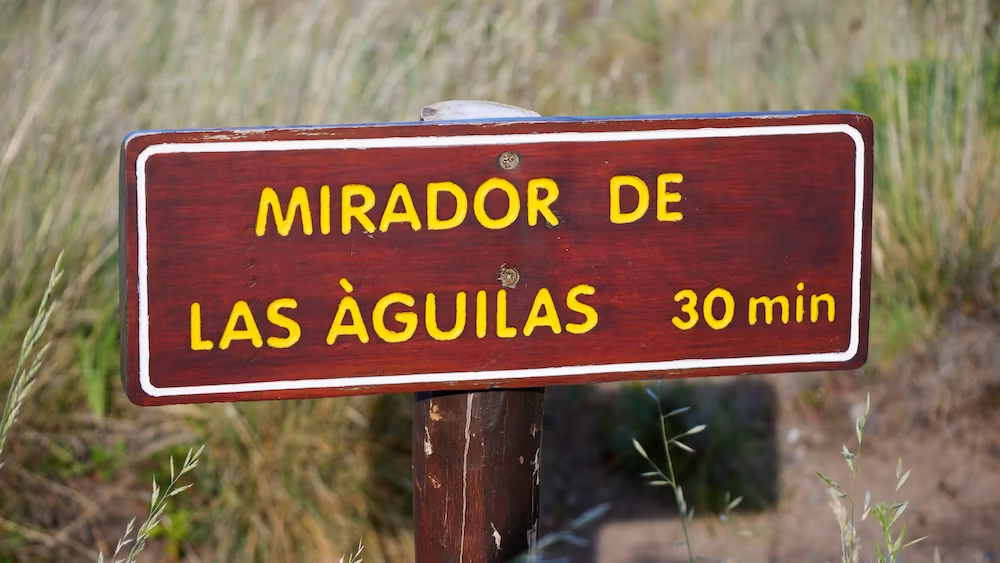
After about 30–40 minutes of puffing your way up (and blaming the empanadas), you reach a signed junction.
- Left: Mirador de los Cóndores (10 minutes away).
- Right: Mirador de las Águilas (30 minutes away).
Strategy Note: Do Cóndores first. Get the “classic” view. Then, backtrack to this fork and head toward Águilas. Why? Because Cóndores is often crowded. It’s better to tick it off, get your photos, and then escape to the solitude of the Eagles for your actual break.
Part 3: The “Secret” Traverse to Águilas
This is where the magic happens. As soon as you turn onto the Águilas trail, the crowds vanish. The noise of the tour groups fades away.
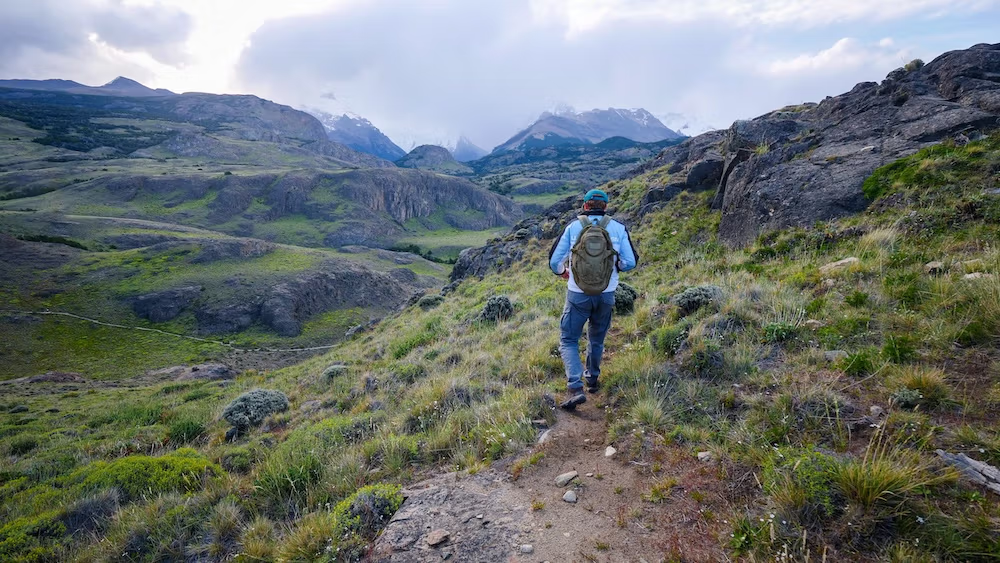
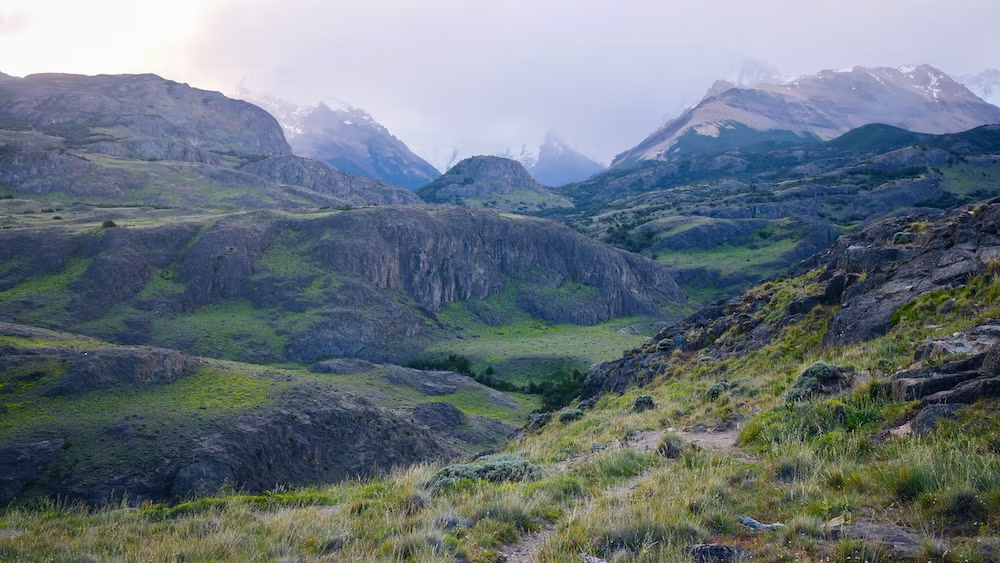
The landscape changes dramatically here. You leave the “vertical” world of granite peaks and enter the “horizontal” world of the Patagonian Steppe. The path flattens out, winding through low golden grasses and scrubby bushes. It feels less like a mountain climb and more like a walk across the roof of the world.
This section is prime territory for wildlife (more on that later), so keep your eyes peeled and your voice down.
Part 4: The Reveal
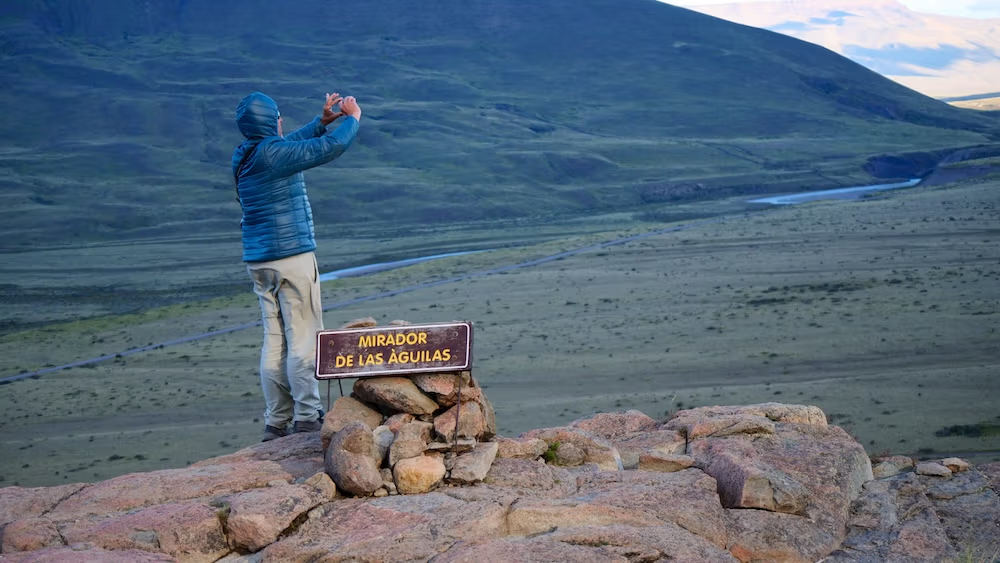
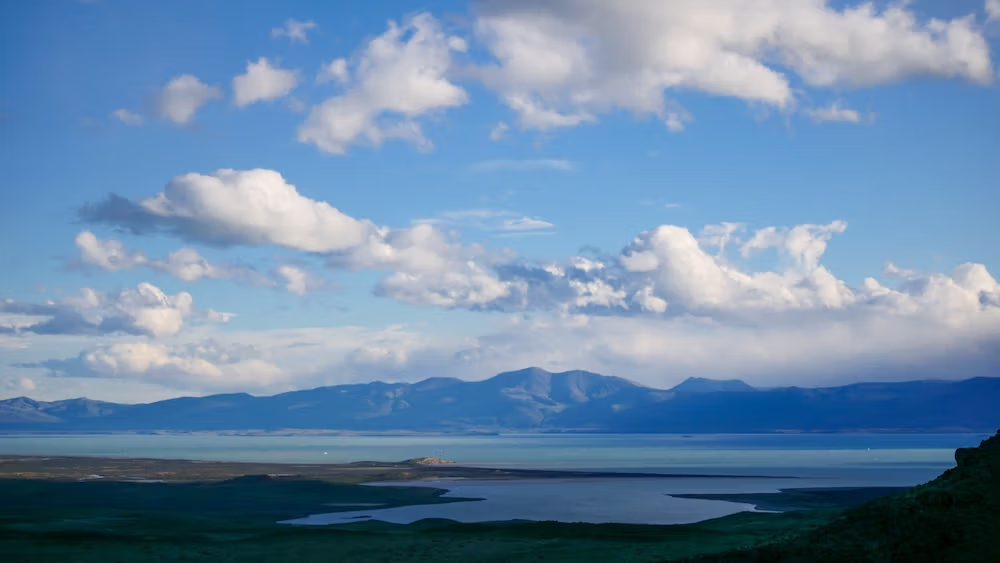
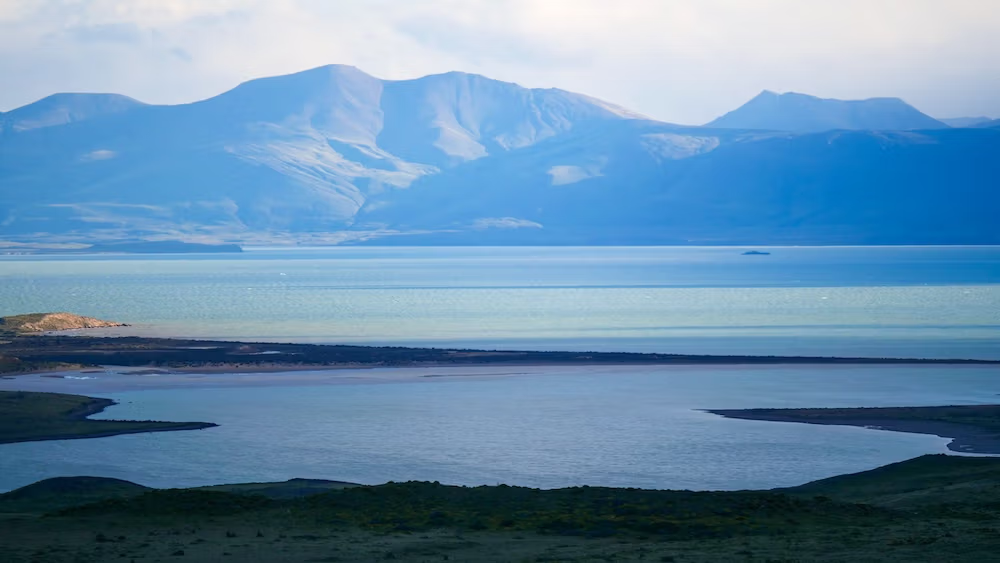
The trail ends abruptly at the edge of a massive cliff. Suddenly, the ground drops away, and you are staring into the abyss of Lake Viedma.
When I say “lake,” I don’t mean a cute little pond like Laguna Capri. I mean a body of water so massive it looks like an ocean. It is a startling, milky turquoise blue—that specific “glacial flour” color that looks fake in photos but is 100% real.
To your right, in the hazy distance, you can see the snout of the Viedma Glacier. Below you, the wind whips across the brown, arid plains of the steppe. It is expansive. It is lonely. It is the exact opposite of the crowded, jagged skyline you just left at Cóndores.
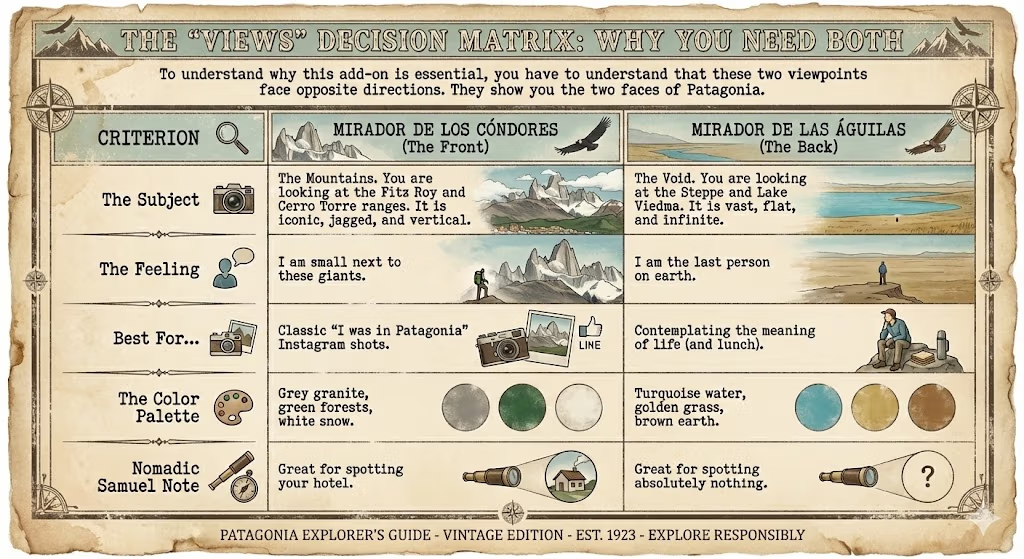
The “Views” Decision Matrix: Why You Need Both
To understand why this add-on is essential, you have to understand that these two viewpoints face opposite directions. They show you the two faces of Patagonia.
| Criterion | Mirador de los Cóndores (The Front) | Mirador de las Águilas (The Back) |
| The Subject | The Mountains. You are looking at the Fitz Roy and Cerro Torre ranges. It is iconic, jagged, and vertical. | The Void. You are looking at the Steppe and Lake Viedma. It is vast, flat, and infinite. |
| The Feeling | “I am small next to these giants.” | “I am the last person on earth.” |
| Best For… | Classic “I was in Patagonia” Instagram shots. | Contemplating the meaning of life (and lunch). |
| The Color Palette | Grey granite, green forests, white snow. | Turquoise water, golden grass, brown earth. |
| Nomadic Samuel Note | Great for spotting your hotel. | Great for spotting absolutely nothing. |
The Verdict: If you only do Cóndores, you see the “postcard.” If you add Águilas, you see the “context.” You realize that these massive mountains just… end, and the empty plains begin. It gives you a sense of scale that you miss if you stay in the valley.
The “Wind Tunnel” Reality: A Warning
I need to be very serious for a moment. (I know, it’s rare).
El Chaltén is not just windy; it is violently windy. We had days where the wind was so insane we essentially had a “cafe day” because standing upright was an optional activity.
Mirador de las Águilas is essentially a wind tunnel.
Because it sits on an exposed plateau facing the massive open lake, there is absolutely nothing to stop the wind from the Southern Patagonian Ice Field from body-slamming you.
- The “Hair” Situation: Do not bother styling your hair. You will look like a windswept scarecrow within 30 seconds.
- The Layering Strategy: Even if it is sunny in town, bring your Hard Shell jacket. The wind chill up here cuts right through fleece.
- The “Hat” Rule: If you are wearing a baseball cap, hold onto it. If you don’t, it belongs to the steppe now. The steppe accepts your offering.
During our hike, the wind at Águilas was strong enough that we had to lean into it at a 45-degree angle just to stay balanced. It adds to the adventure, but it makes eating a sandwich… complicated.

Wildlife Watch: Eagles vs. Condors
The viewpoint is named Mirador de las Águilas (Eagles), while the other is Mirador de los Cóndores (Condors). But nature, being rebellious, does not read the signs. You can see both birds at both locations.
This hill acts as a natural thermal generator. The wind hits the cliff face and shoots upward, creating an elevator for lazy majestic birds who don’t want to flap their wings.
How to Tell Them Apart (For Non-Biologists)
- The Andean Condor:
- Size: Massive. Like, “is that a small plane?” massive. 3-meter wingspan.
- Look: It has a distinct white “collar” around its neck and wide, finger-like feathers at the tips of its wings.
- Vibe: It glides. It rarely flaps. It judges you from above.
- The Black-Chested Buzzard-Eagle:
- Size: Large, but not “dinosaur” large.
- Look: Grey back, white chest (hence the name).
- Vibe: Flaps more often. Looks more like a traditional eagle.
Bonus Wildlife:
The grassy plateau between the two viewpoints is prime territory for Guanacos (the wild, undomesticated cousin of the llama/alpaca). They love this spot because it’s flat and full of tasty grass. We also saw European Hares—massive rabbits introduced to Argentina that run around like they own the place.
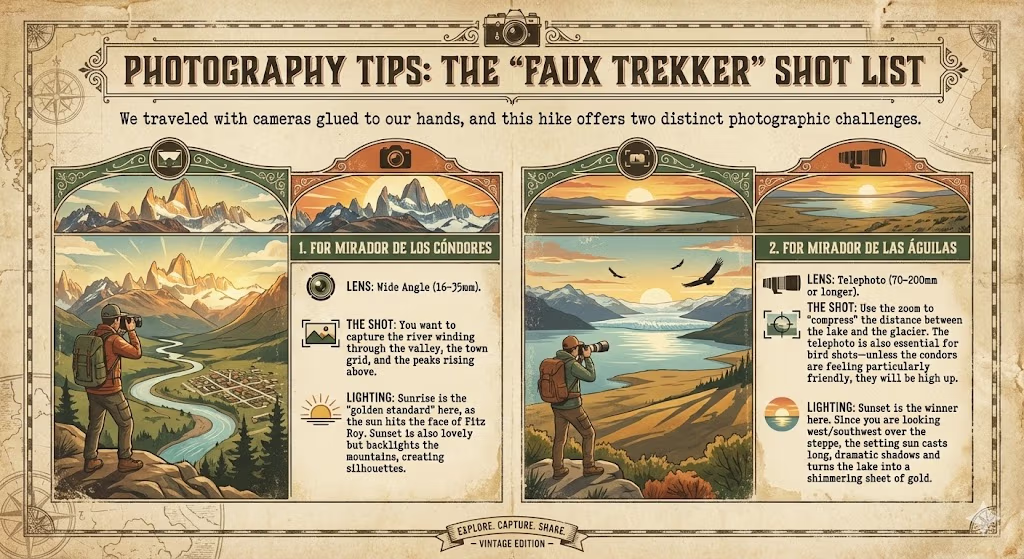
Photography Tips: The “Faux Trekker” Shot List
We traveled with cameras glued to our hands, and this hike offers two distinct photographic challenges.
1. For Mirador de los Cóndores:
- Lens: Wide Angle (16-35mm).
- The Shot: You want to capture the river winding through the valley, the town grid, and the peaks rising above.
- Lighting: Sunrise is the “golden standard” here, as the sun hits the face of Fitz Roy. Sunset is also lovely but backlights the mountains, creating silhouettes.
2. For Mirador de las Águilas:
- Lens: Telephoto (70-200mm or longer).
- The Shot: Use the zoom to “compress” the distance between the lake and the glacier. The telephoto is also essential for bird shots—unless the condors are feeling particularly friendly, they will be high up.
- Lighting: Sunset is the winner here. Since you are looking west/southwest over the steppe, the setting sun casts long, dramatic shadows and turns the lake into a shimmering sheet of gold.

The “Foodie Recovery” Plan
I am Nomadic Samuel, which means no hike is complete until we discuss what we are eating immediately afterward.
This hike is short enough that you can easily finish it by late afternoon, leaving you prime time for a “Pre-Dinner Snack” (which is a legitimate meal category in our world).
The “Waffle” Protocol
After descending from Águilas, your knees will be fine, but your soul will demand sugar.
Walk straight to La Waflería.
- The Order: A sweet waffle with Dulce de Leche, bananas, and cream or the ice/cream gelato version. Or, if you’re feeling savory, the ham and cheese waffle.
- Why: Because you just walked 6 kilometers in the wind, and calories don’t count in Patagonia. Audrey and I spent hours here playing cards and sipping lattes.
The “Burger” Directive
Later, for actual dinner, head to La Zorra Taproom.
- The Order: A craft beer (you’ve got options galore) and their massive burgers with loaded fries.
- The Vibe: It’s loud, it’s fun, and it’s full of people who look exactly like you: dusty, windblown, and incredibly happy. It reminds me of a Shake Shack but with better beer and more hiking boots.
Final Verdict: Is it Worth It?
Yes. A thousand times, yes.
Look, I get it. You’re tired. You’ve done the “Big Two” hikes. Your boots are dusty, and your Netflix download list is calling your name.
But you didn’t travel all the way to the bottom of the world to sit in your freakin’ hotel room. Mirador de las Águilas offers a high-reward, low-risk adventure that rounds out your understanding of the Patagonian landscape. It shows you the emptiness of the steppe, the vastness of the lakes, and the power of the wind.
It was the perfect ending to our 6-day saga in El Chaltén. It allowed us to stretch our legs, say goodbye to the condors, and build up just enough of an appetite to justify one last “bulbous plumptitude” meal.
So, take the right fork. Face the wind. And hold onto your hat.
See you on the trail (or at the waffle shop).
What do you think? Is the “Eagle’s View” on your list, or are you sticking to the “Condor’s View”? Let us know in the comments below!
FAQ: The Mirador de las Águilas Add-On
Can I do this hike in sneakers?
Technically, yes. Unlike the loose scree of Fitz Roy, this trail is mostly packed dirt. However, hiking boots or trail runners are always better for stability, especially if it’s muddy.
Is it safe to do alone?
100%. The trail is well-marked and close to town. You will have cell signal for most of the first half (though data in El Chaltén is practically mythical).
Can I bring my dog?
No. This is inside the National Park. We saw many friendly dogs in town, but you must be firm—do not let them follow you onto the trail. It protects the endangered Huemul deer.
Is there water on the trail?
No. Unlike the longer treks where you can drink from streams, there are no water sources on this hill. Bring a full bottle from town.
What if it’s cloudy?
Go anyway. Even if Fitz Roy is hidden in the clouds (which happens 50% of the time), the view of Lake Viedma from Águilas remains impressive because it’s about the expanse, not the peaks.
Do I need to pay an entrance fee?
No. Just like the rest of the trails starting from El Chaltén (Fitz Roy, Torre), access to this viewpoint is completely free. You can walk right past the Visitor Center and onto the trail without paying a peso. Note: This is no longer the case. You have to pay an entrance fee now.
Are there bathrooms on the trail?
No. The Visitor Center at the base (Guardaparque Ceferino Fonzo) has facilities, but once you start the ascent, you are on your own. There are no “lenga forest” toilets like you find at the Laguna Capri or Poincenot campgrounds, so plan accordingly before you leave town.
Is this hike suitable for kids or older hikers?
Yes. While the first 30–40 minutes involve a steady uphill climb that will get your heart rate up, it is widely considered the most accessible viewpoint hike in El Chaltén. The path is wide, non-technical, and lacks the scary drop-offs or slippery gravel found on the more advanced treks.
Can I fly my drone from the viewpoint?
No. El Chaltén is located inside Los Glaciares National Park, and drones are strictly prohibited to protect the wildlife (like the condors and eagles) and the experience of other hikers. Keep the drone in your bag and stick to your telephoto lens for those bird shots.
How windy is “too windy” for this hike?
Since Mirador de las Águilas is an exposed plateau facing the open steppe, it takes the full force of the wind. If the forecast in town calls for gusts over 60–70 km/h (which is not uncommon), or if you are struggling to stand upright on the street, skip it. Being up there in gale-force winds isn’t just uncomfortable; it’s a “sandblasting” experience you won’t enjoy.
Project 23 Argentina: This guide is also available in Spanish. [Lea la versión en castellano: Mirador de las Águilas: ¿Vale la pena sumarlo a la caminata de los Cóndores?]