
El Chaltén in one day is basically a daylight heist.
You’ve got limited hours, a bus schedule that doesn’t care about your dreams, and a town that keeps waving world-class hiking trails at you like, “Go on… you can totally fit Fitz Roy AND Cerro Torre AND a waffle in before dinner.”
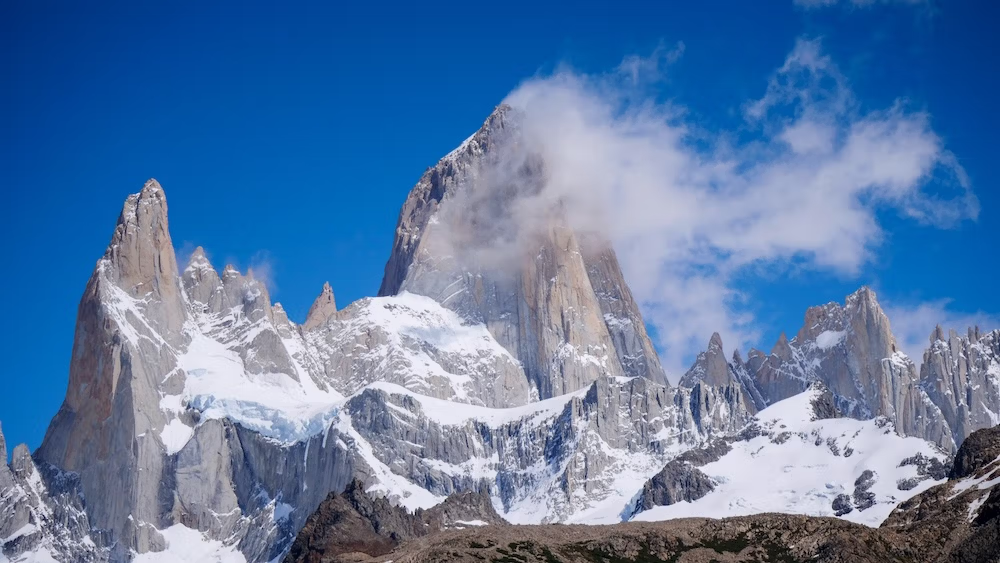
Spoiler: you can’t. Not unless you’re trail-running with a teleportation device.
But you can have an unreal day here—one that feels big, scenic, and satisfying—if you plan it like a person who respects time, wind, and the fact that your legs are not replaceable.
We’ve spent enough time in El Chaltén to learn two truths:
- the hiking is world-class, and
- one day is never enough… but it can still be incredible if you plan it like a human with a clock, not like an Instagram caption.
This guide is a one-day game plan built for real travelers with limited time: day-trippers coming from El Calafate, people squeezing El Chaltén into a broader Patagonia itinerary, and anyone who wants a “maximum wow per hour” day without turning it into a survival documentary.
One-day snapshot: what you can realistically do
Here’s the honest trade-off: in a single day, you usually choose one “main objective” (a bigger hike) or you stack several shorter hits (viewpoints + waterfalls + food). Trying to do everything is how you end up speed-walking through paradise while whispering “we’re fine” through clenched teeth.
🧾 Quick Booking: Your El Chaltén Travel Essentials 🥾✨
🎒 Your Travel Toolkit (Book These 4 Things)
| ✅ What to book | 💡 Why it’s worth it | 🔗 Quick link |
|---|---|---|
| 🥾 Tours & experiences | Easy way to lock in a glacier day, a Lago del Desierto adventure, or a guided option when weather turns moody | Browse El Chaltén tours on Viator |
| 🏨 Hotels & stays | El Chaltén sells out fast in peak season — booking early = better locations + fewer “only the priciest rooms left” moments | Find El Chaltén hotels on Booking.com |
| 🚗 Car rentals (optional) | Best for freedom days: Ruta 40 viewpoints, flexible timing, photo stops, and a smoother Lago del Desierto run | Compare car rentals in El Calafate (gateway to El Chaltén) on DiscoverCars |
| 🚌 Bus tickets | The classic El Calafate ↔ El Chaltén route is simple — but popular departure times fill up | Book El Calafate → El Chaltén buses on Busbud |
👉 One-click backup (reverse direction): Book El Chaltén → El Calafate buses on Busbud
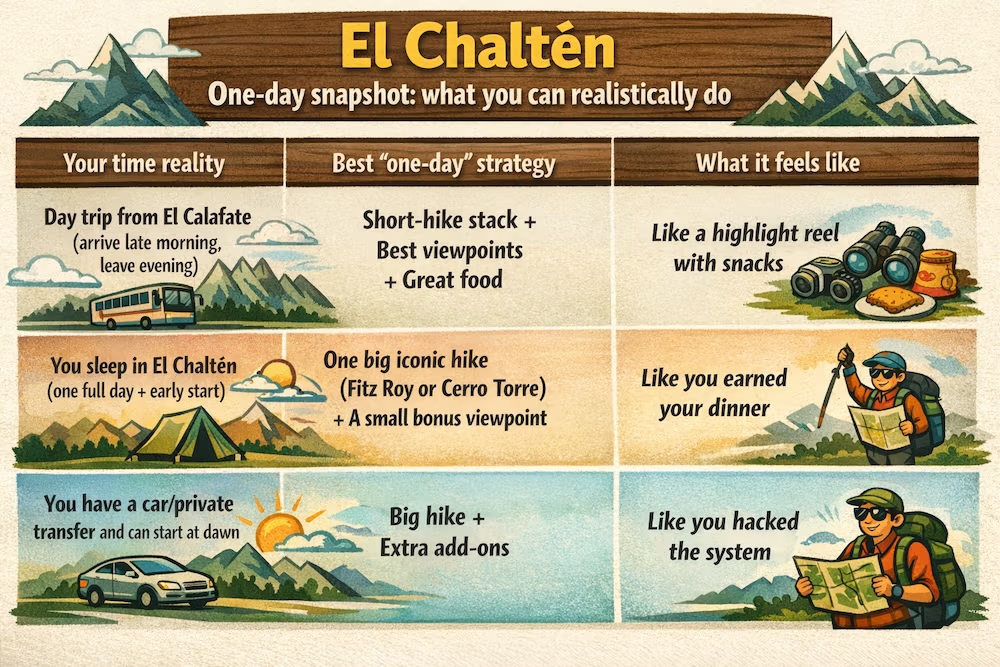
| Your time reality | Best “one-day” strategy | What it feels like |
|---|---|---|
| Day trip from El Calafate (arrive late morning, leave evening) | Short-hike stack + best viewpoints + great food | Like a highlight reel with snacks |
| You sleep in El Chaltén (one full day + early start) | One big iconic hike (Fitz Roy or Cerro Torre) + a small bonus viewpoint | Like you earned your dinner |
| You have a car/private transfer and can start at dawn | Big hike + extra add-ons | Like you hacked the system |
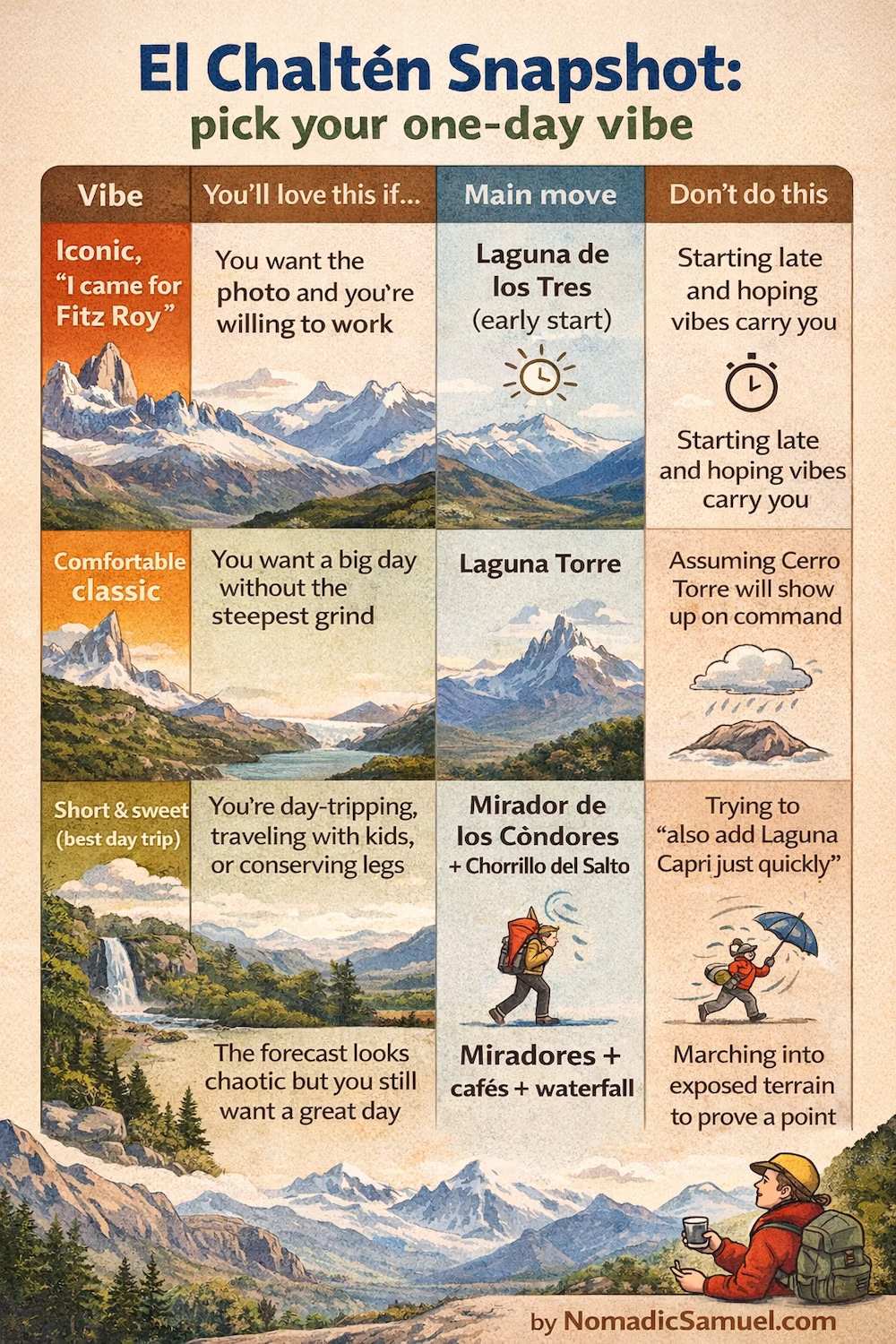
Destination Snapshot: pick your one-day vibe
| Vibe | You’ll love this if… | Main move | Don’t do this |
|---|---|---|---|
| Iconic, “I came for Fitz Roy” | You want the photo and you’re willing to work | Laguna de los Tres (early start) | Starting late and hoping vibes carry you |
| Comfortable classic | You want a big day without the steepest grind | Laguna Torre | Assuming Cerro Torre will show up on command |
| Short & sweet (best day trip) | You’re day-tripping, traveling with kids, or conserving legs | Mirador de los Cóndores + Chorrillo del Salto | Trying to “also add Laguna Capri just quickly” |
| Weatherproof foodie | The forecast looks chaotic but you still want a great day | Miradores + cafés + waterfall | Marching into exposed terrain to prove a point |
Our one-day “origin story” (why this guide is built the way it is)
When Audrey and I first rolled into El Chaltén, we were equal parts excited and overly ambitious. We’d just come off big Patagonia meals (you know the kind: “we earned this” dinners that you absolutely did not earn), and suddenly we were in Argentina’s trekking capital talking like we were about to summit something.
Also: we showed up in full “Patagonia food tour” mode, and our bodies were like… excuse me? Audrey’s jeans stopped cooperating, I was entering my “rotunding, bulbous plumptitude” era, and suddenly El Chaltén was politely suggesting we move our skeletons.
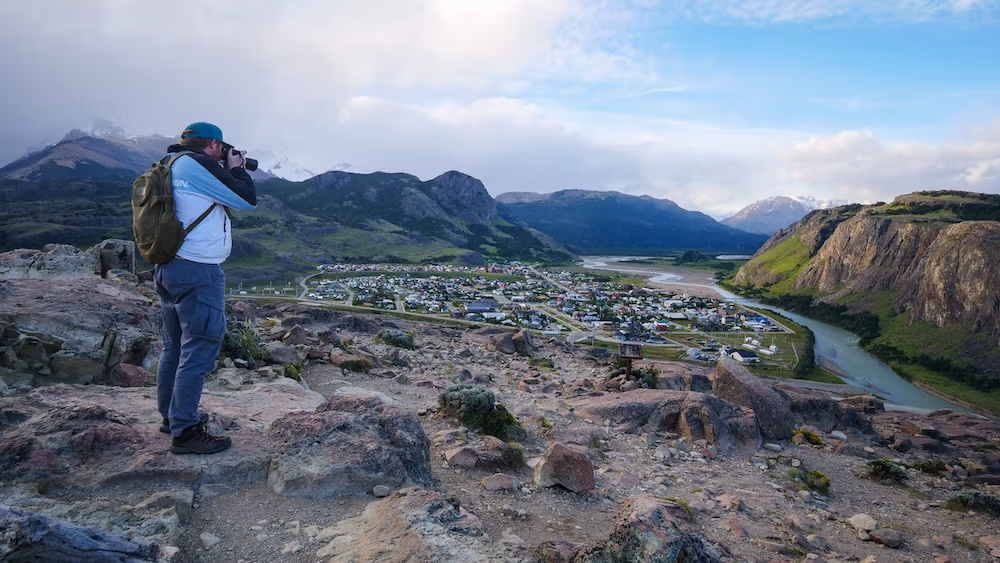
Reality check arrived fast. Groceries were pricier and more limited than we expected, Wi-Fi was… let’s call it “sporadic at best,” and the wind was already reminding us who runs this place. Audrey and I inhaled pizza, grabbed supplies, and still couldn’t resist squeezing in a sunset hike to Mirador de los Cóndores because the daylight was basically cheating.
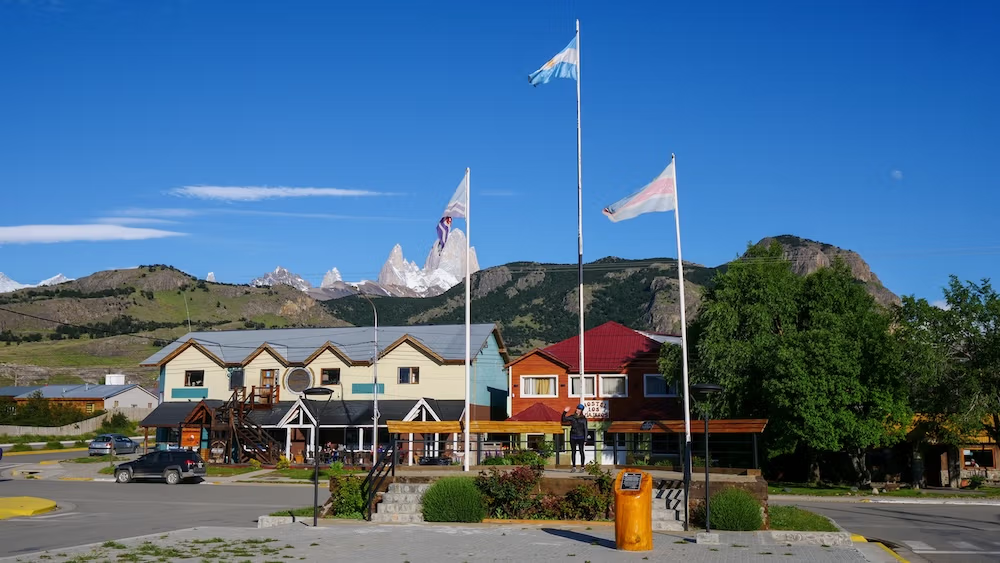
And by “sporadic Wi-Fi,” we mean: our mobile data basically didn’t work, the Wi-Fi kept dropping, and we even had a moment where we couldn’t get the hotel payment to process. Groceries were pricey (the “a dollar per apple” moment was humbling), but there was free Wi-Fi in the central plaza—so if you need to load maps, tickets, or messages, that little detail can save your sanity.
That first short hike is a big reason this post exists. It’s steep enough to wake up your legs, short enough to fit into a tight schedule, and the views are so immediate that you feel like El Chaltén just handed you a welcome gift. It set the tone for the rest of our stay: move when the weather lets you, eat like it’s part of the plan, and don’t confuse ambition with good decision-making.
December daylight really is cheating (sunset can stretch ridiculously late), but the funny part is we still ended up in “grandma bedtime” mode—hand-washing laundry, setting alarms, and calling it a night while the sky was still basically pretending it was afternoon.
Choose your “main objective” in 60 seconds
This is the decision that makes (or breaks) your day. Pick one primary goal, then build everything else around it.
This “main objective” idea is exactly how we approached our own week here. Even with six nights in town, Audrey and I still woke up each morning thinking: what’s the one thing today is built around? That mindset kept us from wasting good weather windows—and it stopped us from doing the classic El Chaltén mistake of trying to be everywhere in one day.
| Main objective | The payoff | Time on trail (typical) | Effort | Crowd level | Weather sensitivity | Works for a Calafate day trip? |
|---|---|---|---|---|---|---|
| Laguna de los Tres (Fitz Roy “money shot”) | The iconic Fitz Roy viewpoint | 8–10 hrs | High | Very high | High (wind + visibility matter) | Only for early starters / very long daylight |
| Laguna Torre (Cerro Torre vibes) | Glacier lagoon + Torre massif drama | 7–8 hrs | Moderate | High | Medium | Possible, but tight if you’re not sleeping in town |
| Miradores + Chorrillo del Salto (short-hike stack) | Big views in small bites + waterfall | 4–6 hrs total (stacked) | Low–moderate | Medium | Low–medium | Yes. This is the safest “perfect day trip” |
| Town day + short mirador | Cafés, breweries, scenery, “I’m still on holiday” energy | 2–4 hrs | Low | Low | Low | Yes (and underrated) |
If you’re reading this because you have one day and you’re not sleeping in El Chaltén, skip the hero fantasy for a moment and keep reading. We’ll still give you the big-hike option, but we’ll also give you the itinerary that actually fits in the day.
The rules of one day in El Chaltén (aka: how not to self-sabotage)
Rule 1: Build your day around the bus (or your wheels)
If you’re day-tripping from El Calafate, your “start time” is not when you finish breakfast. Your start time is your bus departure. Everything else is secondary.
Your best move: pick one of the earlier buses, and choose your return bus before you choose your hike. (Because it’s hard to enjoy the mountains when you’re mentally calculating sprint speed.)
We get it because we’ve done the “3-hour bus each way” reality—and once you’ve lived that, you stop thinking of El Chaltén as a casual day out and start treating it like a fun little logistics mission (with mountains as your reward).
👉 Compare El Calafate car rentals on DiscoverCars (best gateway for El Chaltén)
Day-tripping from El Calafate: the timing math that keeps your day fun
Most day trips look like this:
- ~3 to 3.5 hours each way on the road
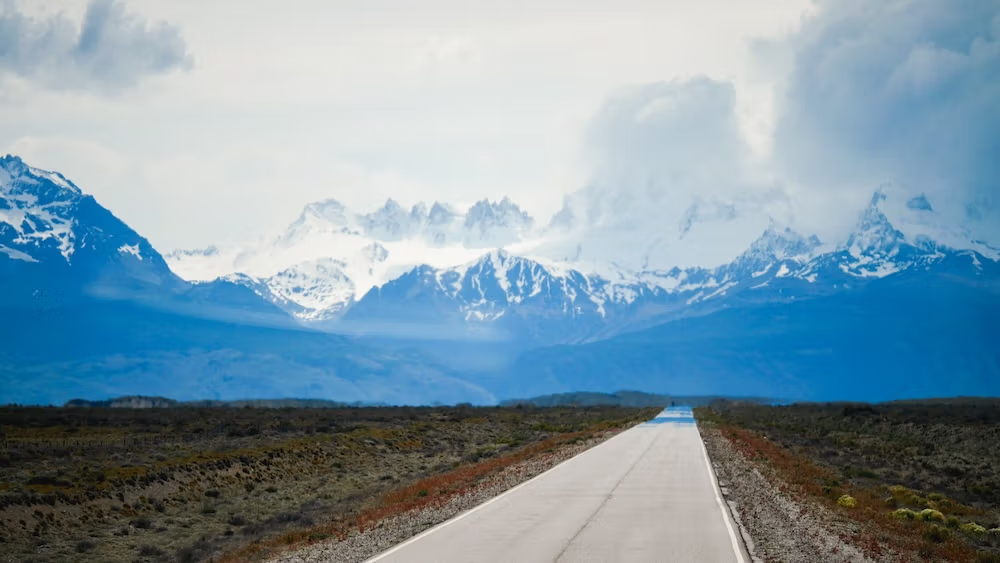
- one long scenic stretch along Ruta 40 and Route 23 with the mountains slowly getting sharper
- a quick stop en route (often at a roadside spot like Hotel La Leona) to stretch, grab a snack, and remember that “just one day” is, in fact, a full mission
The key question isn’t “What hike do I want to do?” It’s:
How many hours do I realistically have between arrival and my return bus?
Use this quick budget:
- 30 minutes: arrive, bathroom, fill water, sort tickets, organize layers
- 60–90 minutes: lunch + snacks + a small “town wandering” buffer
- 60 minutes: reward block (coffee/beer/dinner before departure)
- Everything else = hiking time
If you have 4–6 hours of hiking time total, you want the short-hike stack.
If you have 7–9 hours of hiking time total and you’re confident in your pace, you can consider a bigger hike.
Bus pairing playbook (use this to choose your “safe” plan)
| If you arrive… | And you leave… | Your realistic hiking window (after buffers) | Best plan |
|---|---|---|---|
| Late morning | Early evening | 4–5 hrs | Mirador de los Cóndores + Chorrillo del Salto |
| Late morning | Late evening | 5–6.5 hrs | Add Mirador de las Águilas or extend your waterfall time |
| Early morning | Evening | 6–7.5 hrs | Laguna Capri or a longer short-hike stack |
| Early morning | Late evening | 7.5–9 hrs | Big hike possible (Torre is the safer pick) |
If you’re looking at that table and thinking “I can do the big one,” we respect the confidence. Just keep one more thing in mind: wind steals minutes. It slows your pace, increases fatigue, and makes breaks longer because you’re searching for sheltered rocks like a lizard with a purpose.
The day-trip golden rule
If your return bus is fixed, choose a plan that lets you be back in town at least 45–60 minutes before departure. That buffer is for:
- slow descents
- bathroom lines
- the sudden need for a second pastry
- and the universal Patagonia surprise: weather shifting right when you thought you were done
Rule 2: Patagonia is not a motivational quote
Wind and visibility can change your plan, and that’s not a personal failure. Your goal isn’t to “complete the hike.” Your goal is to have an amazing day and return with the same number of bones you started with.

Rule 3: Food is part of the itinerary
In El Chaltén, eating well is not optional—it’s strategy. Audrey and I are foodies. We literally plan hikes (and any other day for that matter) around where the next warm thing is coming from. No shame. A good day here includes:
- a proper breakfast
- a packed lunch (or a plan for it)
- a “post-hike reward” meal that feels mildly ridiculous
Audrey and I leaned hard into the lunchbox routine here—order the night before, pick it up in the morning, and you’re instantly a functional adult with a plan. And yes… we were absolutely the people calling it a “snack stop” when it was clearly a mini lunch (especially the day our salad container tried to explode in the backpack).
Rule 4: Buffers are your best friend
Add buffer time for:
- wind (slows you down)
- photo stops (you’ll stop)
- trailhead logistics (bathrooms, tickets, “where are my gloves?”)
- café temptations (you’ll cave)
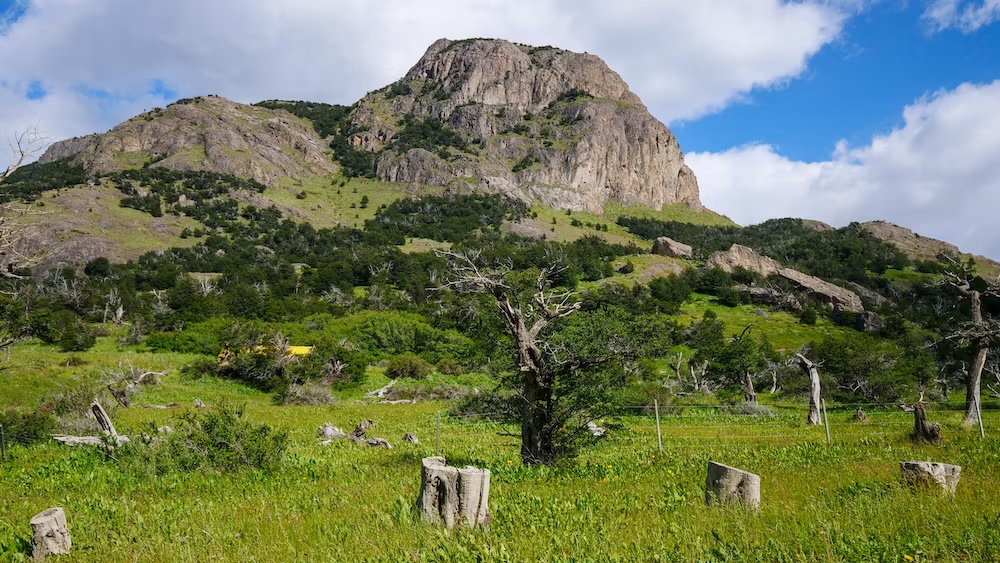
What you need to know before you start
National Park access and tickets (don’t get caught out)
Most of the classic trailheads around town are part of Los Glaciares National Park’s Northern Zone (Zona Norte). Entrance is handled differently than the Perito Moreno glacier area: for the Northern Zone portals (the ones you’ll care about in El Chaltén), tickets are obtained online and paid by card—no cash (be sure to check current prices as this is ever changing and evolving). Trailheads often have QR codes to scan, but don’t assume you’ll have perfect signal at the exact moment you need it.
If you’re only in El Chaltén for one day, treat this as part of your “pre-game.” Buy your ticket the night before or on the bus with decent data, screenshot the confirmation, and move on with your life.
One small “locals know” note we got early: don’t let the friendly town dogs follow you onto the trails. They’re sweet, but rangers warned us it’s a real problem for local wildlife (including endangered deer in the park). Pet the pup in town, get your serotonin there, and keep the trails dog-free.
Trail navigation: it’s well-marked… but still use offline maps
El Chaltén trails are generally well signed, and major routes are straightforward. Still:
- download an offline map
- don’t rely on mobile coverage
- know your turnaround time (more on that below)
What to pack for a one-day hit (even if you “never get cold”)
This is the minimum kit that keeps your day fun instead of type-two-fun:
- Windproof layer (non-negotiable)
- Warm layer (fleece or light puffy)
- Rain shell or poncho (Patagonia loves drama)
- Water (at least 1.5L; more on big hikes)
- Snacks you actually want to eat
- Lunch (sandwich, empanadas, or a “trail charcuterie” situation)
- Sunscreen + sunglasses (yes, even when it’s cloudy)
- Hat or buff (wind defense)
- Headlamp if you’re doing a big hike or winter/shoulder season
- Basic first aid (blister care is the real emergency)
- Cash + card (cash for small things / backup, card for the park ticket)
- Power bank (cold + photos = dead phone)
The “wind reality check” table
Wind is personal, but numbers help you avoid self-delusion.
| Forecast gusts (rough) | What it often feels like on exposed sections | Smart one-day move |
|---|---|---|
| 0–40 km/h | Annoying hair day | Any plan works |
| 40–65 km/h | You start leaning into gusts | Prefer shorter hikes + viewpoints; be cautious at miradores |
| 65–80 km/h | Bracing becomes tiring | Choose the short-hike stack; skip long exposed sections |
| 80+ km/h | Progress becomes a negotiation | Make it a town + mirador day. Seriously. |
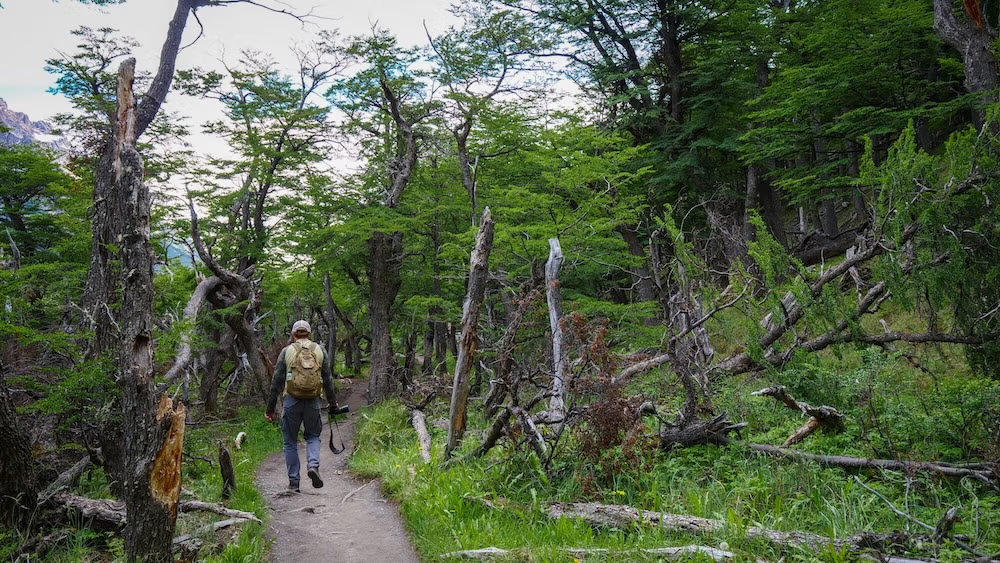
The perfect one-day itinerary (best for most day-trippers)
This is the itinerary we recommend for most people who have limited time and want a day that feels full, scenic, and joyful without turning into a marathon.
It stacks the highest “wow per hour” spots:
- Mirador de los Cóndores (and optionally Mirador de las Águilas)
- A proper lunch break
- Chorrillo del Salto waterfall
- Time for a café/beer reward
- You still make your bus without sprinting
Perfect day itinerary: timeline
Use this as a template. Adjust based on your bus arrival/return times and the season’s daylight.
10:30–11:00 — Arrive in El Chaltén and do “logistics mode”
- Use the bus ride to buy your park ticket (or confirm it’s ready)
- Drop bags at your accommodation (if staying) or use luggage storage
- Bathroom break, fill water, buy last-minute snacks
11:00–13:00 — Mirador de los Cóndores (and Mirador de las Águilas if you’re feeling it)
This is the best first move on a day trip because:
- it’s close to town
- you get panoramic views fast
- you learn what the wind is doing today
- you start the day with a “wow” instead of waiting hours for it
Mirador de los Cóndores is the classic viewpoint over town and valley. If you’re feeling good and the weather is stable, continue to Mirador de las Águilas for more wide-open scenery.
Our take: Do Cóndores no matter what. Decide on Águilas at the junction based on wind and legs. “Optional” means optional.
13:00–14:00 — Lunch break (don’t skip this)
Eat now. Not later. Later is how you turn into a snack goblin halfway to a waterfall.
Easy lunch options:
- Pack a lunch and eat at a viewpoint or in town
- Grab a quick café meal
- If you’re in a rush, do a bakery run and accept your fate happily
14:00–16:30 — Chorrillo del Salto waterfall (easy, pretty, satisfying)
Chorrillo del Salto is the perfect “afternoon hike”:
- short and foresty
- steady and low drama
- ends at a legit waterfall
If your legs are tired or you’re with family, this is the move that still feels like you did El Chaltén.
16:30–18:30 — The reward phase (coffee + pastry or beer + comfort food)
This is where the day becomes memorable.

Pick your vibe:
- Café + waffles/alfajor energy
- Craft beer + burger energy
- Slow dinner if your return bus is late
Our personal rule: If we climbed anything, we are owed something. Preferably with melted cheese.
18:30–20:40 — Return to El Calafate (or sunset stroll if you’re staying)
If you’re day-tripping, you’ll likely be on an evening bus back to El Calafate. If you’re staying overnight, this is your golden-hour stroll time—wander, take photos, and enjoy the fact you’re not leaving.
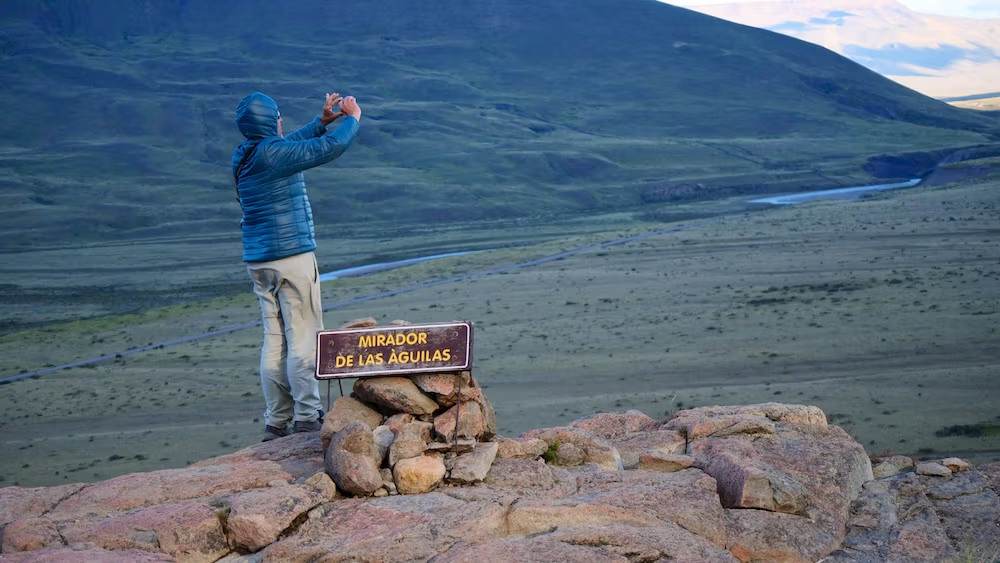
How to upgrade your day (without upgrading your suffering)
Maybe you have more time than the average day-tripper. Maybe you slept in town. Maybe you’re fit, stubborn, and fuelled by a suspicious amount of optimism. Here are the best “upgrades” to the day, in order of sanity.
Upgrade 1: Add Mirador de las Águilas (if the wind is behaving)
If you do Cóndores and feel great, keep going to Águilas. The views open up more, and it’s a solid way to feel like you went “beyond the basic.”
Upgrade 2: Add Laguna Capri as a half-day Fitz Roy taste
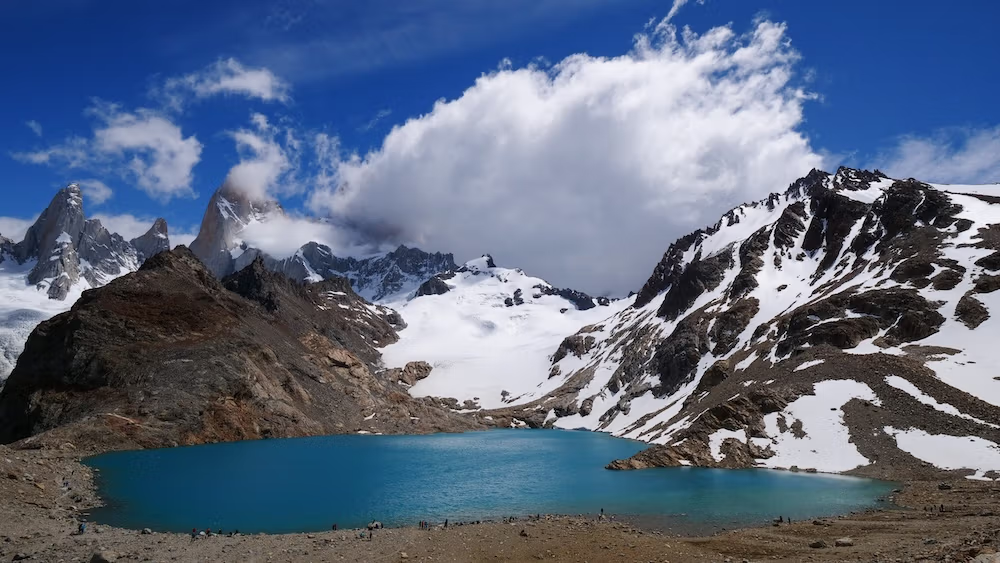
If you want a Fitz Roy-flavored day without committing to the full Laguna de los Tres boss fight, Laguna Capri is the sweet spot. It’s one of the best “reward-to-effort” hikes in town.
A realistic way to do it in one day:
- Start early (ideally sleeping in El Chaltén)
- Do Laguna Capri as your main hike
- Add Cóndores late afternoon or as a sunrise/arrival warm-up
Upgrade 3: Choose one big hike (Fitz Roy or Torre) and make everything else secondary
If you want the iconic hike experience, do it. Just treat it like your whole day, not something you squeeze between coffees.
Below are two “big hike” one-day itineraries designed to be practical.
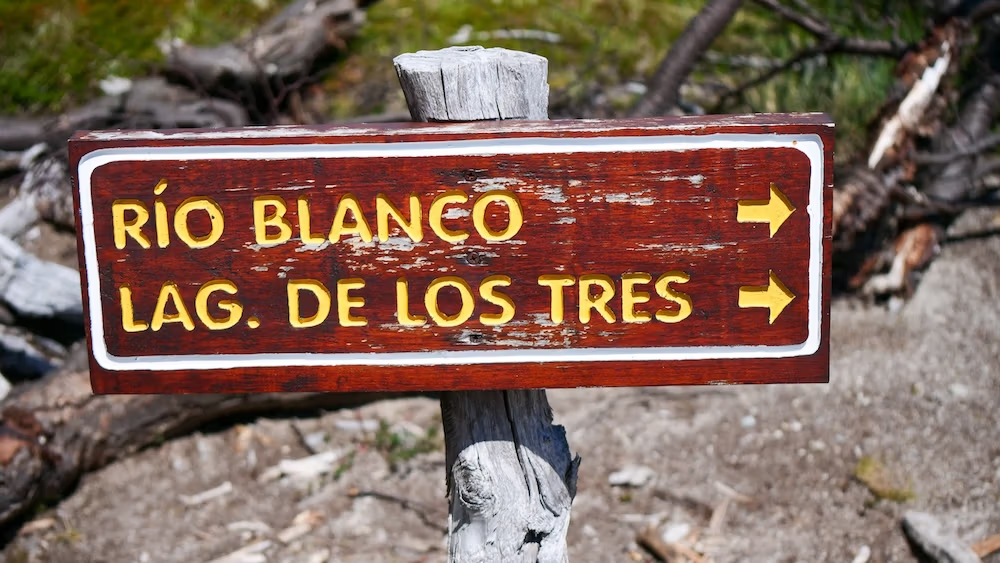
Big Hike Option A: Laguna de los Tres (Fitz Roy) in one day
This is the headline act. It’s also the one that humbles people who thought they were “casual hikers.”
Who this is for
- You’re reasonably fit
- You have a full day in El Chaltén (sleeping in town helps a lot)
- You’re okay with a long day on trail
- You’re willing to turn around if weather turns
The one-day plan (sleeping in town)
- 06:30–07:30: Big breakfast + pack lunch
- 07:30–08:00: Start hiking early (beat crowds and heat)
- 10:00–10:30: Laguna Capri area (optional break)
- Midday: Push up-valley, steady pace, snack every hour
- Early afternoon: Final steep section (“the gut-check”)
- 14:00–15:30: Enjoy the viewpoint (if visibility is good)
- 15:30–19:00: Hike back, more careful on the descent
- 19:30+: Dinner like you just won something
Our own “won something” dinner ended up being a tiny, cozy place near the bus terminal called Senderos (it felt like a boutique-guesthouse dining room—only a handful of tables). I went for a blue cheese risotto situation, Audrey got lentejas, we split wine, and then did the most El Chaltén thing possible: waddled back and passed out early… and slept like champions.
The “gut-check” reality
The last steep section is where people negotiate with themselves. Go slow, take small breaks, and don’t let faster hikers bully your pace. You’ll get there when you get there.
For us, the “gut-check” had a very specific personality: kilometer nine turned into a bottleneck because everyone was tired and the trail got steep, rocky, and extra unforgiving. What kept Audrey and I moving was the steady stream of hikers coming down saying, “keep going, it’s worth it.” Then we finally reached the top, got hit with wind beyond belief, hid behind a rock, and devoured the very sad remains of our lunch (a granola bar and some candy) like we’d never eat again.
Foodie tip: Pack something that feels like a treat. This is not the moment for dry crackers. Bring chocolate. Bring a sandwich you actually respect.
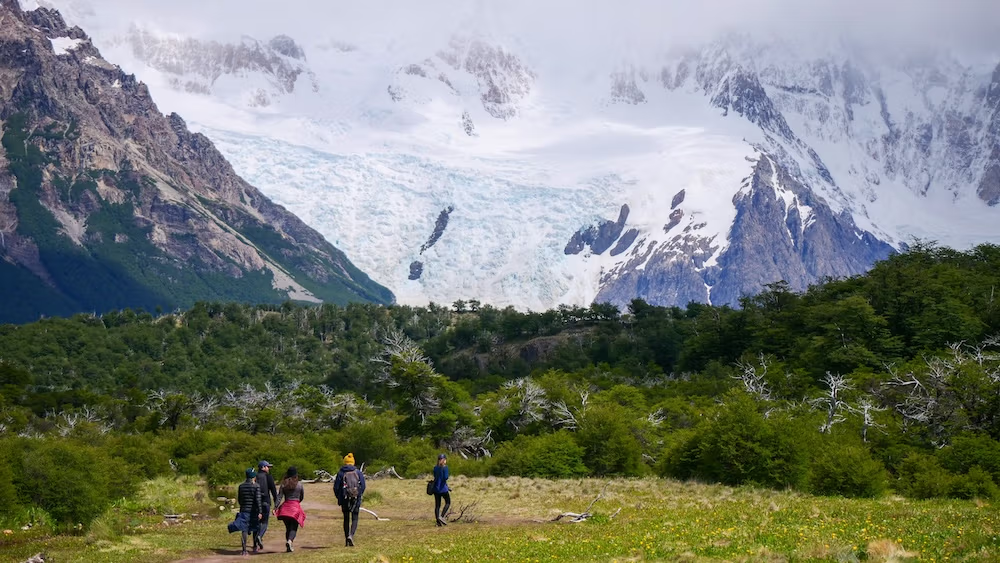
Big Hike Option B: Laguna Torre in one day
Laguna Torre is often called the “more comfortable” big day. It’s still a long hike, but the elevation gain is more forgiving and the trail is generally straightforward.
Who this is for
- You want big scenery with slightly less suffering
- You’re day-tripping but have a long daylight window and an early start
- You like glacier vibes and moody mountain drama
The one-day plan (sleeping in town)
- 07:30: Breakfast + pack lunch
- 08:00: Start hiking
- 11:30–12:30: Arrive at the lagoon area (depending on pace)
- 12:30–13:30: Lunch with views (wind permitting)
- 13:30–17:00: Hike back
- 18:00+: Reward phase (beer + hot food)
The moody-day truth
Laguna Torre is still beautiful in bad weather, but the “Cerro Torre reveal” depends on visibility. If clouds are glued to the mountains, you might finish the hike thinking, “So… it’s a very nice… and oh so grey.”
That’s still a good day. Just don’t let a moody sky convince you it wasn’t worth it.
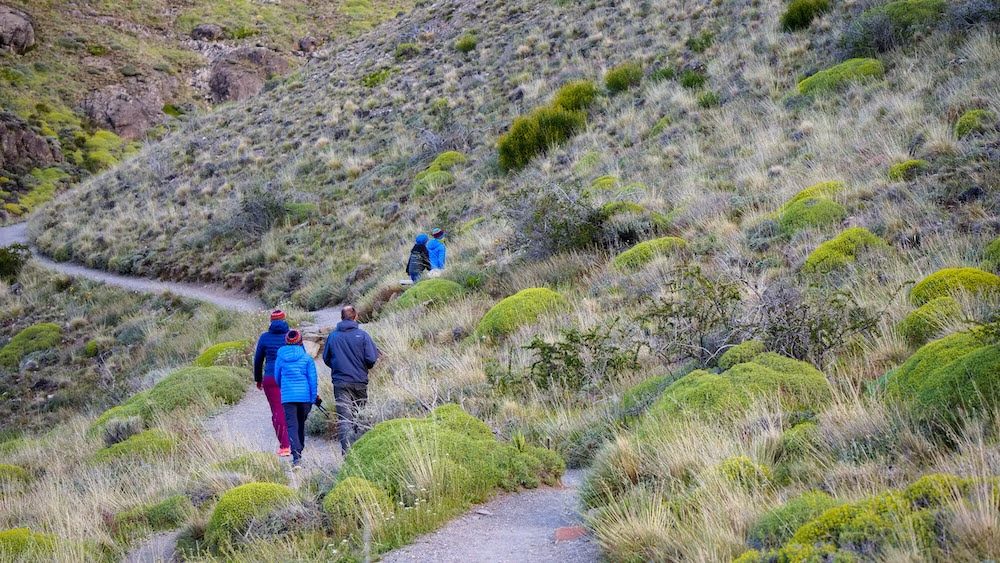
If you only have one day and you want the “iconic” feel, here’s the best compromise
If you’re day-tripping from El Calafate and you want one bigger hike without rolling the dice too hard, choose Laguna Torre over Laguna de los Tres. The timing is generally more forgiving, and you’ll still get that “I hiked in Patagonia” satisfaction.
Then add Mirador de los Cóndores either:
- the afternoon before (if you arrive the day before), or
- as a quick sunset hit if you’re staying overnight.
The “turnaround time” rule (the simplest safety hack)
A lot of people get into trouble because they think the hike ends when they reach the destination. It ends when they get back to town with daylight and energy left.
Use this formula:
- Decide your latest safe return time (bus departure or sunset minus buffer)
- Halve your available time for the outbound journey
- Turn around when you hit that time, even if you’re “almost there”
Example:
If you must be back in town by 18:00, and you start hiking at 10:00, you have 8 hours total.
Your outbound budget is 4 hours. If you haven’t reached your target by 14:00, turn around.
Is it annoying? Yes.
Is it better than missing your bus or hiking in the dark with a pastry as your only survival tool? Also, yes.
🥾 Plan B Adventures: Tours & Easy Day Trips from El Chaltén
Even hardcore hikers end up with a “Plan B” day in Patagonia. When the wind is feral, legs are toast, or you just want someone else to handle the logistics, these Viator options are easy wins.
👉 Browse El Chaltén tours (plus nearby options) on Viator
| Option | Best for | Book it |
|---|---|---|
| 🚌 El Chaltén “Complete Experience” day tour (from El Calafate) | A low-effort way to “see El Chaltén” without committing to a big hike | El Chaltén Complete Experience Full-Day Tour from El Calafate (Viator) |
| 🧊 Perito Moreno Glacier full-day + optional boat safari | Classic Patagonia bucket-list day that doesn’t require hardcore hiking | Perito Moreno Glacier Full-Day Tour with Optional Boat Safari (Viator) |
| 🚤 “Todo Glaciares” navigation (Upsala + Spegazzini) | Big-glacier scenery with max comfort (aka: let the boat do the work) | Glaciares Gourmet Navigation: Upsala & Spegazzini Navigation (Viator) |
| 🗿 El Calafate city tour + Walichu Caves | A cultural/history reset day (great when the weather is moody) | El Calafate City Tour + Walichu Caves (Viator) |
| 🚙 Nativo Experience: Lakes & Caverns (4×4 style) | Off-road adventure + viewpoints when you want something different than trails | Nativo Experience: Lakes & Caverns (Viator) |
| 🇨🇱 Torres del Paine full-day trip (from El Calafate) | Maximum “Patagonia wow” in one day (long day, huge payoff) | Torres del Paine Full-Day Tour from El Calafate (Viator) |
Food strategy for a one-day El Chaltén mission
El Chaltén is a hiking town, which means:
- you will burn more calories than you expect
- you’ll suddenly care deeply about sandwiches
- and you’ll become strangely emotional about warm soup
Breakfast: go big
A one-day itinerary lives or dies by breakfast. Aim for:
- eggs + bread + fruit
- oatmeal + nuts
- or anything that makes you feel stable and powerful
Our place served breakfast at 6:30am and we treated that like the starting gun. Even if daylight goes late, the early start is what makes the whole day feel calmer—especially if you’re chasing a big objective and want a buffer for weather and photo stops.
Lunch: pack it
Even if you plan to eat in town, pack something. Trails don’t care about your lunch reservation.
Our typical “trail lunchbox” looked like: a rice-and-veg salad (plus cheese/egg), an apple, a peanut bar, mini muffins, and a few candies for morale. Very glamorous. Very effective. And if something starts leaking in your bag, congratulations—you’re eating lunch at kilometer two whether you planned to or not.
Easy packable lunches:
- sandwiches (classic for a reason)
- empanadas
- wrap + cheese + salami (trail charcuterie)
- leftover pizza (don’t judge; it works)
Post-hike reward: choose your “victory meal”
After a hike, we become very persuasive about dessert. You should too.
Case study: after one of our ~20 km days, we inhaled burgers, walked back to the hotel, and were basically horizontal by 8:30pm. Part legs, part food coma—but that’s the honest rhythm of El Chaltén if you hike big and eat properly.
Reward categories:
- “Comfort food” (burgers, fries, milanesa, pasta)
- “Café recovery” (waffles, cakes, hot chocolate)
- “Beer therapy” (brewpub + anything salty)

Options to Consider:
PAISA High Mountain Coffee — specialty coffee (Colombian-style) plus cakes/pastries for a strong pre-hike start.
La Nieve Café y Viandas — coffee + simple “viandas” (grab-and-go food) when you need something fast and practical.
Panadería & Cafetería Lo de Haydée — classic bakery for facturas, sandwiches, and easy trail snacks.
La Waflería — big sweet and savory waffles (a “before/after the mountain” institution).
Cúrcuma Cocina — vegan + gluten-free comfort food (surprisingly filling), plus healthy options.
B&B Burger Joint — burgers + fries when you want maximum calories with minimum decision-making.
Laborum Pizzería — excellent artisanal pizza (often limited batches), great for an easy take-away dinner.
La Cervecería Chaltén — local craft beer + pub food; classic “we survived the wind” post-hike hangout.
Bourbon Smokehouse — American-style comfort food, cocktails, and local beers (happy-hour energy).
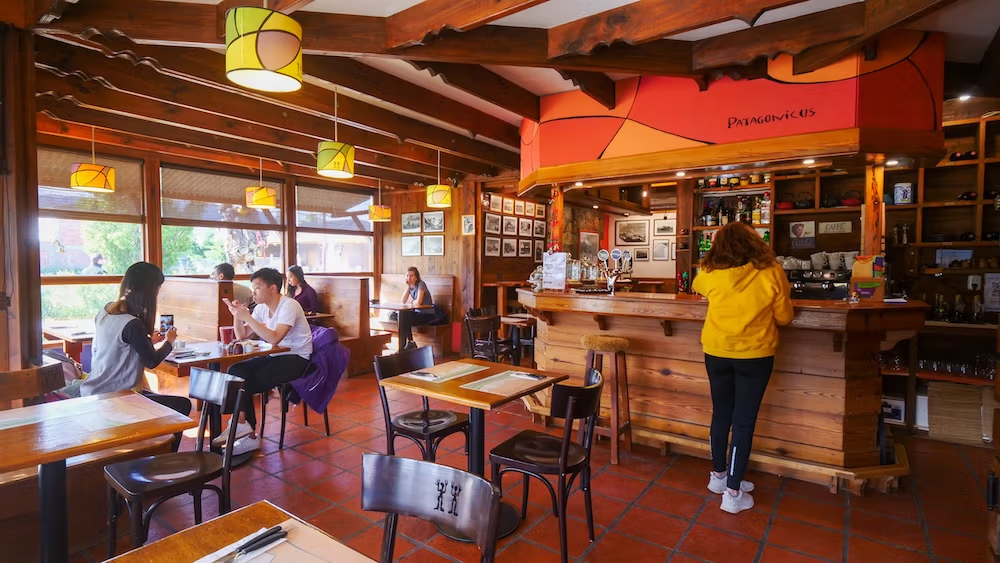
Patagonicus — hearty sit-down spot (pizza/soups/Argentine-ish classics) that works well for groups.
Hostería Senderos Restó Bar — Patagonian-leaning menu + wine bar vibe; they can also prep a packed “vianda” if you ask.
Heladería Domo Blanco — artisan ice cream for the end-of-day victory lap.
The perfect one-day packing checklist
Print this in your brain:
- Park ticket purchased (or ready to buy with data)
- Offline map downloaded
- Windproof layer
- Warm layer
- Rain protection
- 1.5–2L water
- Snacks (at least 3)
- Lunch
- Sunscreen + sunglasses
- Hat/buff + gloves (shoulder season)
- Headlamp (big hikes / shorter daylight)
- Power bank
- Cash + card
- Blister care
We’re extra intense about offline maps here because we learned it the slightly annoying way: our data didn’t reliably work, the Wi-Fi liked to disappear, and “I’ll just load it at the trailhead” is exactly the kind of optimism Patagonia punishes. The central plaza Wi-Fi bailed us out more than once.
Mistakes people make on a one-day visit (so you don’t have to)
Trying to do Fitz Roy and Torre in one day
This is the classic “we’re built different” mistake. Unless you’re trail-running and hate joy, pick one.
Starting too late
Late starts turn gorgeous hikes into stressful marches. If you’re day-tripping, your best lever is the earliest transport you can reasonably do.
Underestimating wind
Wind doesn’t just make you cold. It slows you down, drains energy, and can turn exposed viewpoints into a comedy sketch.
Not packing lunch
You will not regret carrying an extra sandwich. You will regret not carrying one.
Ignoring the return trip
Downhill is where tired legs get sloppy. Save energy and time for the return. It counts.
Micro-itinerary builder: build your own perfect day (with guardrails)
Here’s a simple “plug and play” way to design your one-day plan.
Step 1: Choose your main hike (pick ONE)
- Mirador stack + waterfall (safest)
- Laguna Capri (half-day classic)
- Laguna Torre (big day)
- Laguna de los Tres (biggest day)
Step 2: Add one “bonus bite”
Choose one:
- Mirador de los Cóndores (if not already)
- Mirador de las Águilas (if wind is calm)
- A slow café hour (yes, this counts)
Step 3: Add the reward block
Minimum 60–90 minutes. You earned it.
Step 4: Lock your return time
Bus departure or sunset minus buffer.
Then work backwards and stop pretending time is fake.
Three complete one-day itineraries (pick your vibe)
Itinerary 1: The “Perfect Day Trip” (most visitors)
Best for: day-trippers, families, casual hikers, anyone who wants a full-feeling day
- Morning arrival
- Mirador de los Cóndores (+ Águilas optional)
- Lunch
- Chorrillo del Salto
- Café/beer + dinner
- Evening departure
Itinerary 2: The “I want a big hike” day
Best for: fit travelers sleeping in town
Option A (Fitz Roy): Laguna de los Tres
Option B (Torre): Laguna Torre
- Early breakfast
- Start hiking early
- Long lunch break in the scenic zone
- Return with daylight
- Victory meal
Itinerary 3: The “windy day, still awesome” plan
Best for: high gusts, low visibility, tired legs, shoulder season
- Mirador de los Cóndores (check the scene)
- Coffee + bakery crawl
- Short forest walk or waterfall
- Early dinner
- Sleep like a champion
🏨 Where to Stay in El Chaltén (Our Top Hotel Picks)
⭐ Quick Booking Box: El Chaltén Hotels (Compare Rates)
| Pick | Best for | Vibe | Booking link |
|---|---|---|---|
| 🏆 Top Pick | First-timers who want an easy, reliable base | Comfortable “no-regrets” stay | Compare top stays in El Chaltén on Booking.com |
| 💎 Boutique / Treat-Yourself | Couples, hikers celebrating a big trek, views + comfort seekers | Cozy-luxe Patagonia energy | Browse boutique stays in El Chaltén on Booking.com |
| 🏘️ Mid-range (great value) | Most travelers who want comfort without splurging | Warm, practical, walkable | Find mid-range El Chaltén hotels on Booking.com |
| 💰 Budget | Road-trippers + hikers who only need a clean base | Simple, wallet-friendly | See budget stays in El Chaltén on Booking.com |
🔎 Want to browse all options instead?
👉 Compare all El Chaltén stays on Booking.com
Where to stay (if you can add one night)
If you can turn “one day” into “one day plus one night,” your options expand massively. Even a single overnight lets you:
- start at dawn
- pick better weather windows
- avoid the bus-time crunch
Broad categories:
- Budget: hostels + simple rooms (book early in summer)
- Mid-range: apartments/posadas for comfort and kitchen access
- Treat-yourself: boutique stays with views (and excellent breakfast)
If you only do one upgrade to your trip, make it: sleep in El Chaltén.
Where to stay (if you can add one night): 8 solid options (budget → splurge)
- Rancho Grande Hostel & Restaurante (budget / social) — big, classic backpacker base with dorms + privates, 24-hour reception, on-site restaurant, and traveler-friendly facilities (good if you want a lively vibe).
- Patagonia Travelers’ Hostel (budget / central) — right in town and close to the trail starts, with a shared kitchen and free luggage storage (handy if you’re hiking after checkout).
- Familia de Campo Hostel (budget / cozy + practical) — warm, homey hostel feel with two well-equipped shared kitchens, a bright lounge with views, and a garden/BBQ setup.
- Hotel Poincenot (mid-range / comfort + location) — comfy rooms in a very convenient spot, with a full breakfast and a bar offering gourmet sandwiches + a strong wine selection.
- Chaltén Suites Hotel (mid-range / hotel comforts) — solid mountain-town hotel with a house buffet breakfast and an on-site restaurant/bar setup (nice for a straightforward, no-fuss stay).
- Hotel Lunajuim (mid-range / friendly + trail-focused) — comfortable, well-located option with breakfast buffet plus restaurant/café/bar energy (and generally “hiker-friendly” service).
- Destino Sur Hotel & Spa de Montaña (high / post-hike recovery) — a splurgey pick with a proper spa setup (sauna/jacuzzi/massages) and an indoor heated pool—excellent after big trail days.
- Los Cerros del Chaltén Boutique Hotel (high / views + amenities) — upscale boutique stay known for panoramic mountain views from common areas, plus hotel-style amenities that make resting feel like part of the itinerary.
Final word: the best one-day plan is the one you can enjoy
El Chaltén is one of those places that rewards ambition—but it rewards smart ambition even more.
If the weather is perfect and you have the time, go big. Chase that iconic viewpoint. Earn the bragging rights.
If the wind is feral or you’re day-tripping on a tight schedule, don’t force a “legendary” hike just to say you did it. Stack the short hits. Eat well. Take in the views. Be present. Your photos will still look like Patagonia.
And your knees will thank you.
✨ Ready to lock in your El Chaltén plan?
- 🥾 Browse El Chaltén tours on Viator
- 🏨 Find El Chaltén hotels on Booking.com
- 🚗 Compare El Calafate car rentals on DiscoverCars
- 🚌 Book El Calafate → El Chaltén buses on Busbud
Frequently Asked Questions About Spending One Day in El Chaltén, Argentina (and Making It Count)
Is one day in El Chaltén actually worth it?
Yes. It won’t feel like “enough,” but it can absolutely feel like a proper Patagonia experience if you plan around one main objective and don’t try to cram every hike into one daylight window.
What’s the best hike if I only have one day?
For most people: Mirador de los Cóndores + Chorrillo del Salto (the short-hike stack). If you want one big hike and you’re sleeping in town, Laguna Torre is the best “big payoff without maximum suffering” option.
Can I do Laguna de los Tres as a day trip from El Calafate?
It’s possible but it’s awfully tight and risky. You’ll need an early start, long daylight (summer), good weather, and a fast pace. Most visitors enjoy their day more by staying overnight or choosing a shorter plan.
Which is easier: Laguna Torre or Laguna de los Tres?
Laguna Torre is generally easier in terms of elevation gain and feels more “steady.” Laguna de los Tres has that final steep section that turns into a personal negotiation with gravity.
Do I need to pay an entrance fee to hike in El Chaltén?
For the main Northern Zone trailheads in Los Glaciares National Park, yes—there’s a fee and tickets are typically handled online. Check the current rules before you go.
Do I need hiking boots?
For the short hikes, sturdy sneakers can work in good conditions. For the big hikes, boots or trail runners with good grip are a smart move, especially if there’s mud, ice, or loose rock.
How windy does it get in El Chaltén?
Very. Wind can be calm one hour and aggressive the next. Bring a windproof layer and treat gust forecasts like real information, not background noise.
What should I pack for a one-day hike?
Wind layer, warm layer, rain protection, water, snacks, lunch, sunscreen, sunglasses, and an offline map. If you’re doing a big hike or shoulder season, add a headlamp and gloves.
Is it easy to navigate the trails without a guide?
Yes for most classic routes. Trails are generally well marked. Still, download offline maps and pay attention to weather and your turnaround time.
What’s the best time of year for a one-day visit?
Late spring through early fall is the classic season. Summer gives you long daylight but also crowds and wind. Shoulder seasons can be quieter but colder and more variable.
Are the restaurants busy?
In peak season, yes—especially in the evening. Having a backup plan (or eating early) keeps your post-hike reward from turning into a line-standing contest.
Can I do Mirador de los Cóndores with kids?
Usually yes. It’s a short hike and a great “first day” option, but wind can make it feel harder. Go slow, bring layers, and make it a snack-based adventure.
Is Chorrillo del Salto worth it?
Absolutely. It’s easy, pretty, and feels like a “real hike” without requiring a full-day commitment—perfect for a one-day itinerary.
What if the weather is bad?
Lean into the short hikes, viewpoints, cafés, and comfort food. A moody day can still be gorgeous. The key is choosing a plan that keeps you safe and lets you enjoy the atmosphere instead of fighting it.
Project 23 Argentina: This guide is also available in Spanish. [Lea la versión en castellano: 1 día en El Chaltén, Argentina: El itinerario perfecto para ir por el día (Qué hacer con poco tiempo)]
Further Reading, Sources & Resources (for a 1-day El Chaltén itinerary)
If you want to double-check anything in Argentina before you go (fees, ticket rules, trail times, transport), these are the best “source of truth” pages you can rely on when planning a one-day visit.
National park fees, tickets, and official safety rules
- https://www.argentina.gob.ar/interior/ambiente/parquesnacionales/losglaciares/tarifas
Official Los Glaciares National Park fees (including El Chaltén / Zona Norte portals). - https://ventaweb.apn.gob.ar/
Official online ticket portal for Argentina National Parks (where you’ll typically purchase access). - https://www.argentina.gob.ar/sites/default/files/2019/06/folleto_senderos_zona_norte_pnlg_espanol.pdf
Official APN trail brochure for the Zona Norte (El Chaltén area) with key guidance and trail info. - https://www.argentina.gob.ar/parquesnacionales/patagonia-austral/recomendaciones-para-visitar-el-parque-nacional-los-glaciares
Official safety and visitation recommendations (weather, trail behavior, risk basics).
Transport planning (El Calafate ⇄ El Chaltén)
- https://elchalten.com/v4/en/busses-to-el-chalten.php
Practical bus schedule page (super helpful for building a realistic day-trip window).
Trail timing + distances (quick, day-trip-friendly hikes)
- https://elchalten.com/v4/es/trekking-mirador-de-los-condores.php
Mirador de los Cóndores (and Águilas) trail overview with time/distance. - https://elchalten.com/v4/es/trekking-chorrillo-del-salto.php
Chorrillo del Salto waterfall hike details (ideal for a one-day itinerary). - https://elchalten.com/v4/es/trekking-laguna-capri.php
Laguna Capri hike details (the best “half-day Fitz Roy taste” for many travelers).
Notes on accuracy
- Park fees and ticket rules can change (sometimes quickly). Always trust the official APN pages and the official ticket portal over third-party summaries.
- Bus schedules and prices can change by season and operator—confirm close to your travel date, especially if you’re doing a tight day-trip plan.
- Trail times are estimates. Wind, mud, crowds, photo stops, and fitness can easily stretch a hike longer than the “average.”