
El Chaltén has a funny way of making you feel both wildly capable and hilariously unprepared… often within the same hour. One minute you’re in full “foodie vacation” mode thinking about pizza and pastries, and the next you’re hiking uphill because the sky is turning gold and you suddenly believe you’re the kind of person who does sunsets properly.
That’s exactly why Mirador de los Cóndores is such a classic.
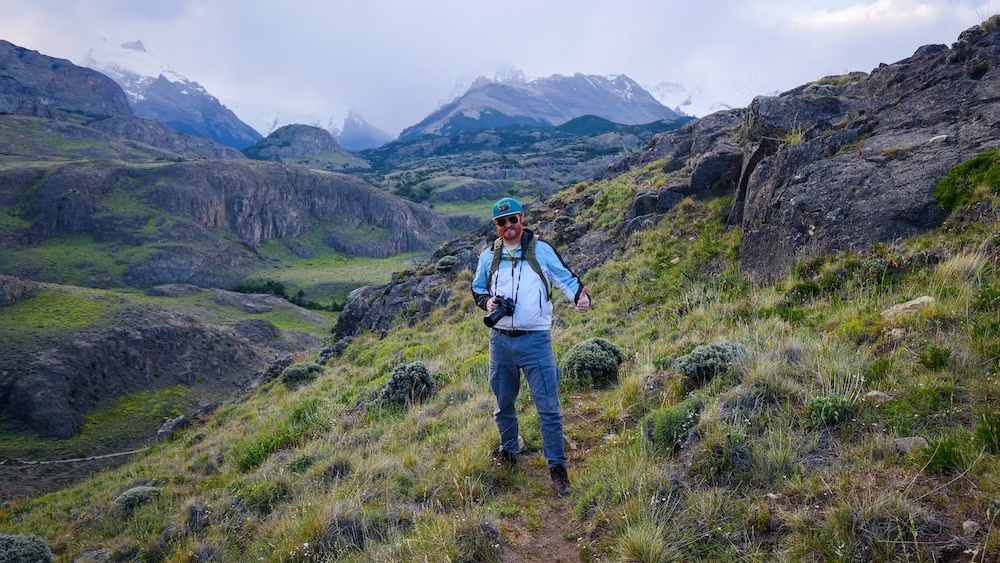
It’s short. It’s steep. It’s close to town. It delivers a ridiculous panoramic payoff for a small investment of sweat. And if you’re in El Chaltén in summer, the daylight lasts so long that this hike becomes the ultimate late-start, “we still have time,” buzzer-beater mission.
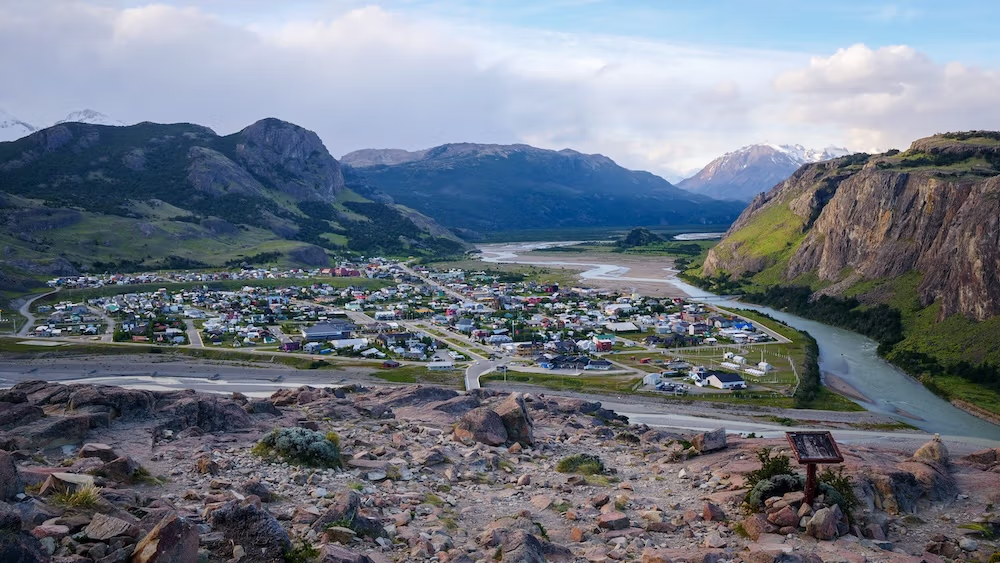
Audrey and I did it on our first evening in town—after a long travel day, a very necessary meal, and the mild chaos of trying to buy groceries in a place where the mountains are enormous and the selection of fresh produce can feel…very limited. We huffed up the trail, joined a whole parade of other last-minute optimists, and watched El Chaltén turn into a colorful little frontier postcard beneath the peaks.
If you’re looking for the best easy hike in El Chaltén that still feels like you earned the view, this is it.
Mirador de los Cóndores at a glance
| Quick Fact | What to expect |
|---|---|
| Overall vibe | Short, steep, scenic, and very “worth it” |
| Time needed | 45–90 minutes for Cóndores alone; 2–3 hours if you add Mirador de las Águilas |
| Typical distance + gain | Cóndores only: ~2–3 km return, ~130–160 m gain (varies by route/GPS). With Águilas: ~5–6 km return, ~180–300 m gain |
| Difficulty feel | Easy-to-moderate: the climb is short but punchy |
| Best time | Sunset for vibes; midday/afternoon for better odds of soaring birds |
| Best season | Spring through fall; winter can mean ice and mandatory traction depending on conditions |
| Why it’s famous | Big views over town + valley, plus the chance to spot Andean condors gliding on the wind |
Why this hike belongs on your El Chaltén “starter menu”
Some hikes in El Chaltén are a full relationship. You need commitment, snacks, weather luck, and ideally a meatsuit that has fully functioning knees.
Mirador de los Cóndores is not that.
This is the hike you do when:
- You arrived late and still want a “wow” moment.
- The forecast is moody and you want something short (translation: you want to be able to bail).
- Your legs are tired but your soul is demanding a view.
- You want a satisfying half-day outing without the full-day trekking production.
It’s also perfect as a confidence-builder. If Laguna de los Tres is the “boss fight,” Mirador de los Cóndores is the tutorial level—except the tutorial level has a panoramic mountain range in the background.

The sunset story: how we hiked it on day one
Audrey and I rolled into El Chaltén from El Calafate on a bus (about three hours), stopped briefly at the legendary midpoint: Hotel La Leona, and then continued into town. The first thing you notice is how compact El Chaltén is. It’s basically a small blip of human activity in a wild bowl of mountains that make your existence feel both precious and mildly insignificant.
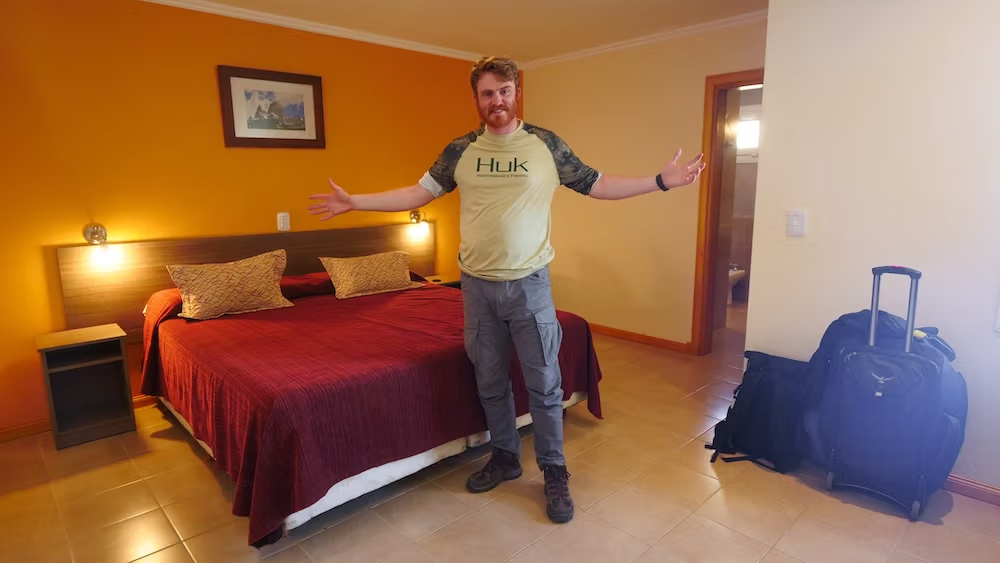
We checked into Vertical Lodge, immediately appreciated that it was bigger and better value than we expected, and learned the important detail: breakfast starts early. In El Chaltén, that matters. Your hikes are only as good as your timing and your ability to eat something before you walk into the wind.
Because we were there in summer, the daylight was absurdly generous. Sunrise was early and sunset hovered around that “why is it still bright?” hour (in late December and early January it can be close to 10:00 pm). Which meant even after a travel day, we could still do something meaningful without turning it into an expedition.
So we did the responsible thing.
We went for pizza at Patagonicus.

Then we attempted to stock up at the general store. The grocery situation in El Chaltén is one of those “welcome to Patagonia” realities: prices can be high, options can be limited, and you suddenly find yourself debating whether you truly need vegetables or if you can just live off crackers and optimism as opposed to $1 apples.
Also: don’t assume your mobile data will behave. Wi-Fi can be patchy depending on where you stay, and your phone might decide this is the moment to become a decorative rectangle. Download maps and screenshots while you can, and don’t leave your planning to “we’ll check later.” Patagonia hears that and laughs.
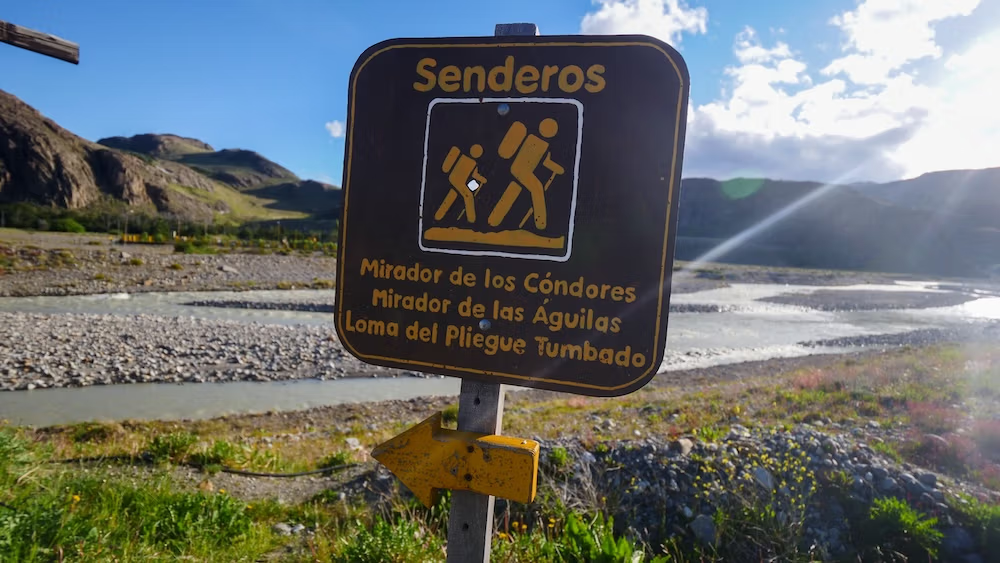
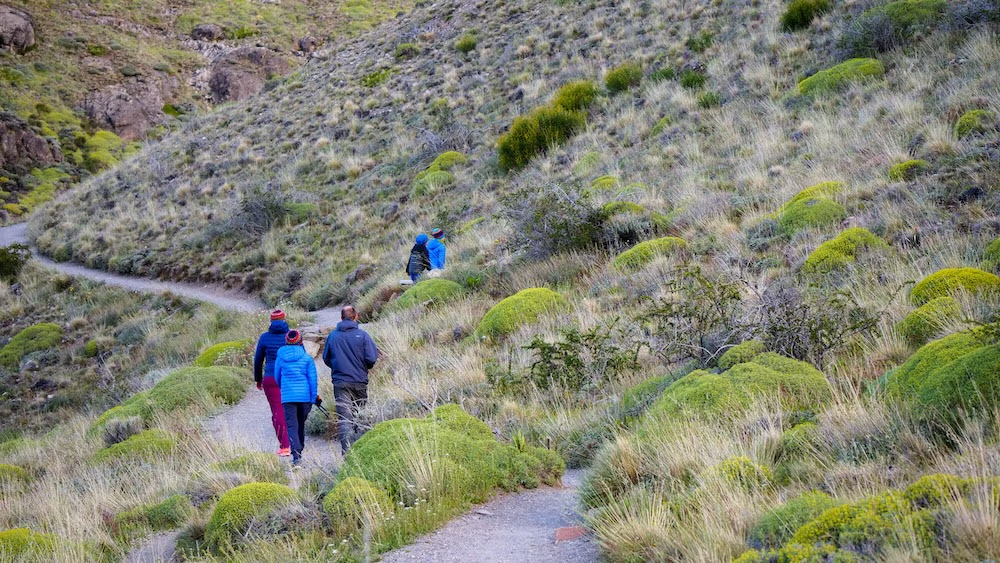
With bellies full and the sky getting dramatic, we started the hike. And we were absolutely not the only ones. A whole stream of people were doing the exact same sunset math—speeding up, slowing down, taking “quick” photos that were not quick, and pretending we weren’t racing against time.
The climb is indeed steep but short. Roughly 45 minutes later (give or take depending on your pace and how often you stop to catch your breath and pretend it’s for the view), we popped out at the mirador and… yep. It hits. Hard.
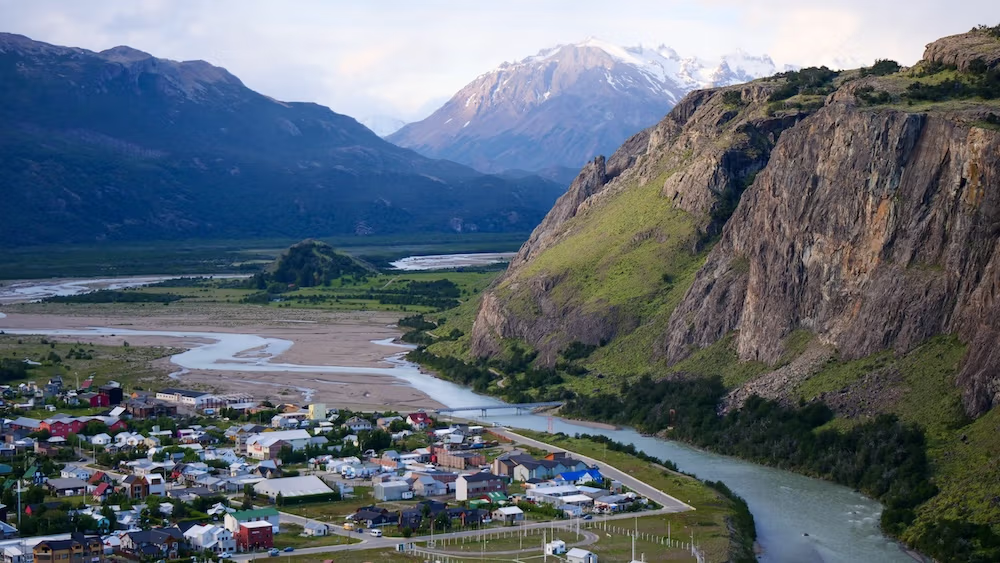
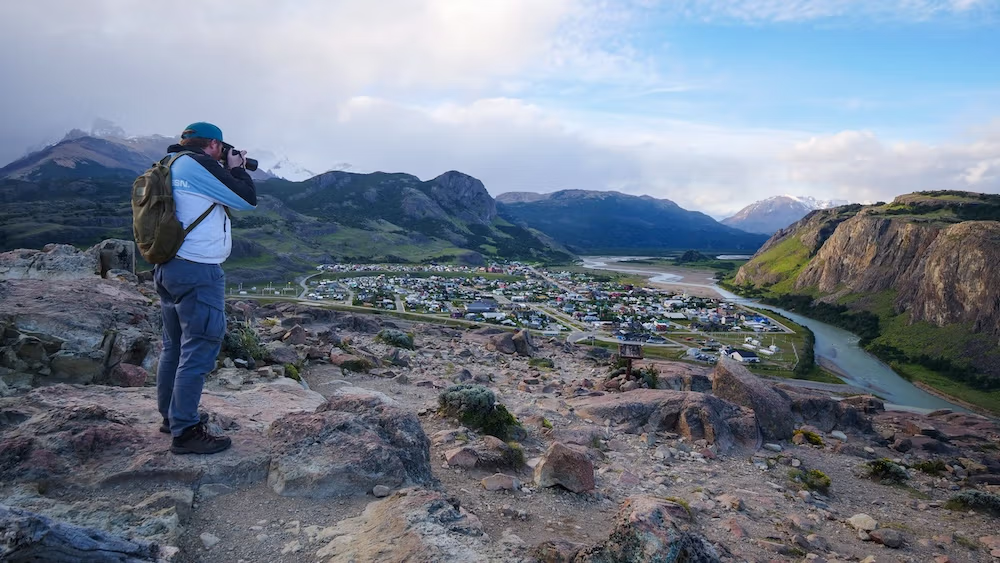
Below us, El Chaltén looked like a colorful little frontier town. Beyond it, the valley opened wide. And in every direction, jagged peaks and ridgelines reminded us we were standing at the edge of something much bigger.
That’s the magic of Mirador de los Cóndores: minimal logistics vs maximum payoff.
Trailhead and how to get there
Most people start this hike from the northern end of El Chaltén, near the national park/visitor information area at the edge of town. If you’re staying anywhere central, you can usually walk to the trailhead in minutes.
The path is well marked. Even if your sense of direction is abysmal. The hike is popular. And you’ll almost always see other people heading the same way.
If you’re starting from the middle of town, budget a little extra time to walk to the trailhead—especially if you’re doing it at sunset and want to avoid doing the final uphill section in a frantic jog.
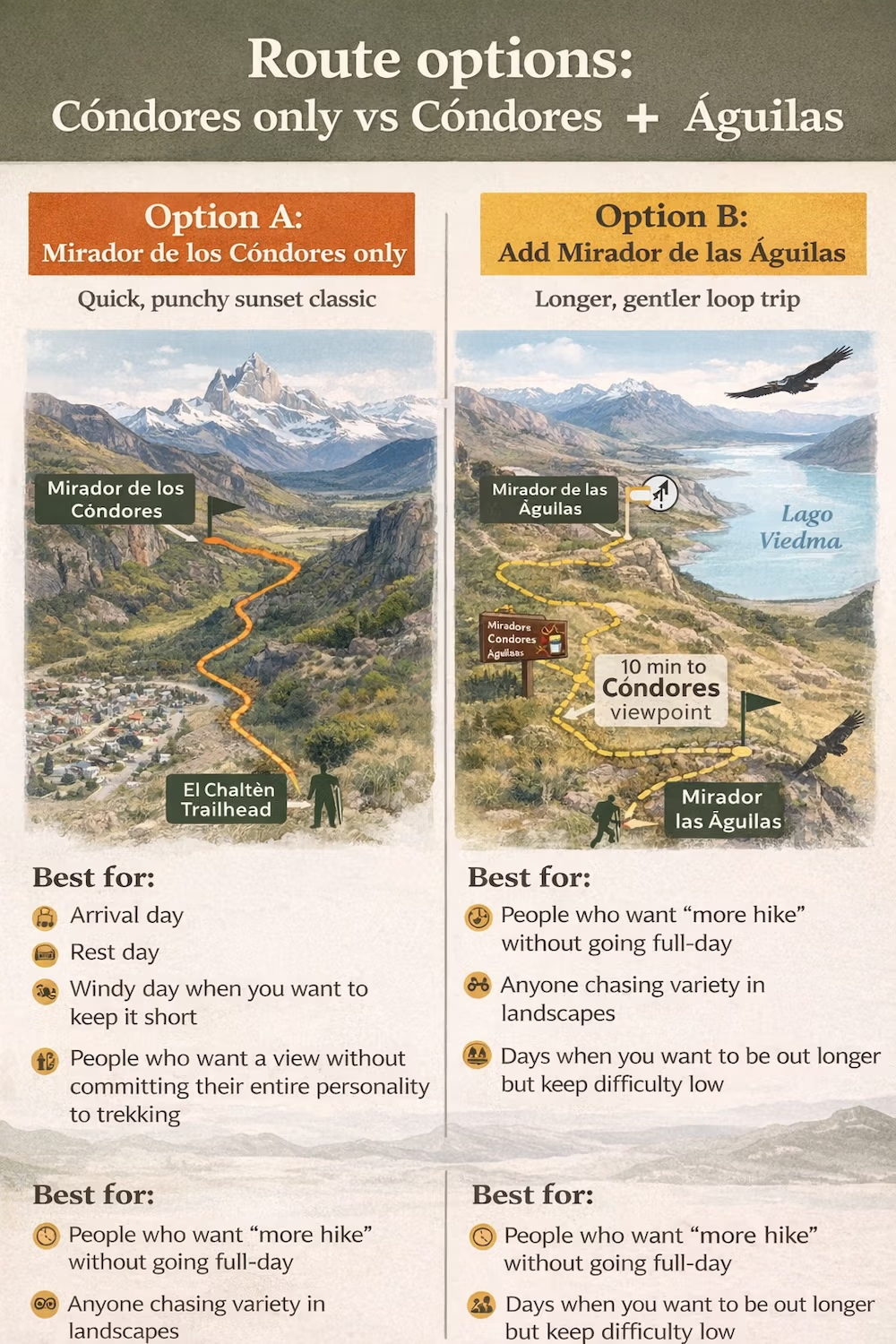
Route options: Cóndores only vs Cóndores + Águilas
You’ve got two main plays here:
Option A: Mirador de los Cóndores only
This is the quick-hit sunset classic. Short out-and-back, steep climb, big view, done.
Best for:
- Arrival day
- Rest day
- Windy day when you want to keep it short
- People who want a view without committing their entire personality to trekking
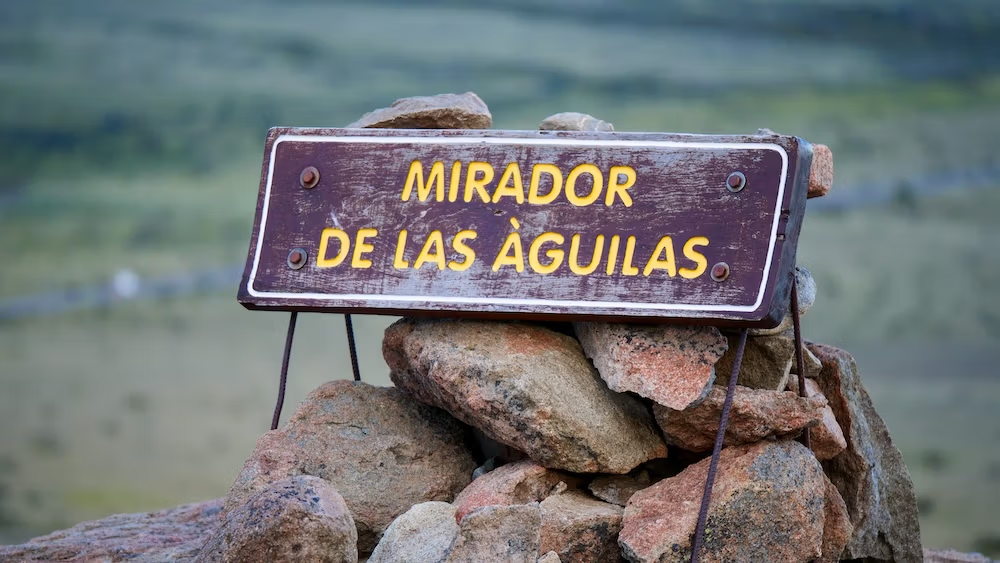
Option B: Add Mirador de las Águilas
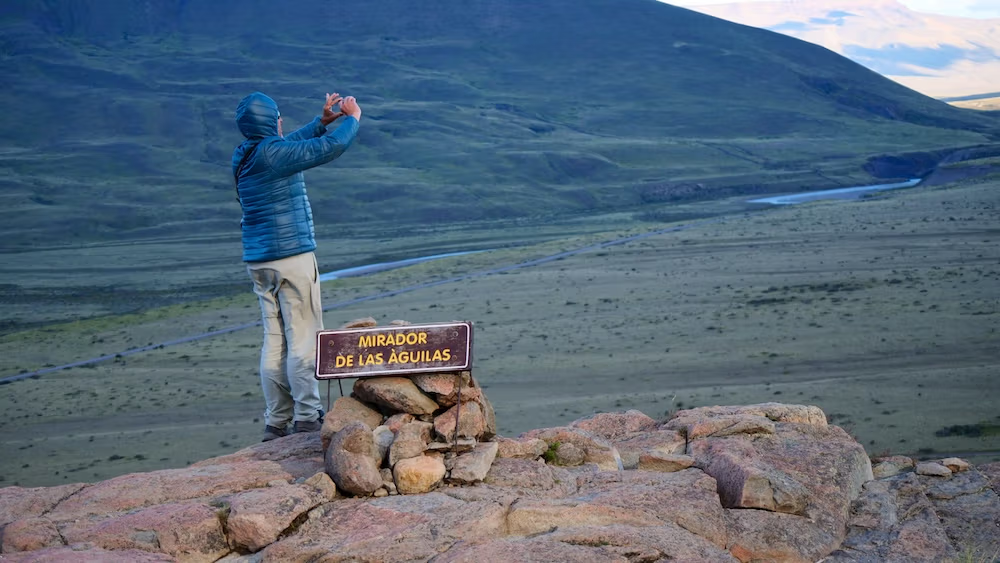
This turns the outing into a longer loop-style experience (depending on your exact route and backtracking). The walking after Cóndores is gentler, and the viewpoint shifts your perspective toward the steppe and Lago Viedma.
The fork to Mirador de las Águilas is signposted and shows up shortly before the main Cóndores viewpoint (roughly a 10-minute walk before it, at a normal pace), so it’s easy to decide in the moment whether you’re committing to the add-on.
Best for:
- People who want “more hike” without going full-day
- Anyone chasing variety in landscapes
- Days when you want to be out longer but keep difficulty low
Decision matrix: should you add Mirador de las Águilas?
| Your situation | Do Cóndores only | Add Águilas too |
|---|---|---|
| You’re doing sunset and want the best light | ✅ | ✅ (but start earlier) |
| You arrived late / low energy | ✅ | ❌ |
| You want a quick confidence-boost hike | ✅ | ❌ |
| You want more walking without more suffering | ❌ | ✅ |
| You’ve already hiked Laguna Torre / Fitz Roy and want a chill day | ✅ | ✅ |
| You’re chasing condors specifically | ✅ (spend time scanning the sky) | ✅ (more time outside = more chances) |
| Weather looks unstable | ✅ | ❌ (keep it short) |
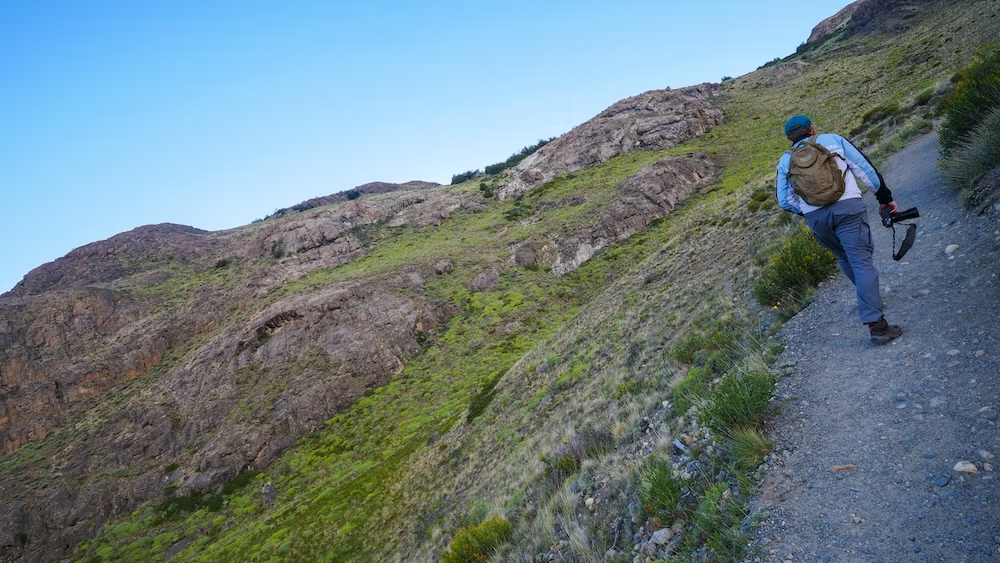
What the trail is like (honest version)
Think of this hike as a short stair master session with an incredible view at the top.
You’ll be climbing on a well-used dirt trail with some rocky sections. It’s not technical, but it can feel steep—especially if you’re:
- fresh off a bus ride
- slightly dehydrated
- carrying a full camera setup
- emotionally attached to breathing normally
The wind can be the real difficulty amplifier. If it’s calm, the hike feels easy. If it’s gusty, you’ll arrive at the viewpoint looking like you’ve just been told there’s free cake somewhere uphill.
The viewpoints: what you actually see
Mirador de los Cóndores
This is the main event. You get:
- A wide panorama over El Chaltén and the valley
- Mountain ridgelines framing the scene
- Big sky (which matters because… condors)
On a clear day, this is the kind of view that makes you stop mid-sentence and do that involuntary little “whoa” noise.
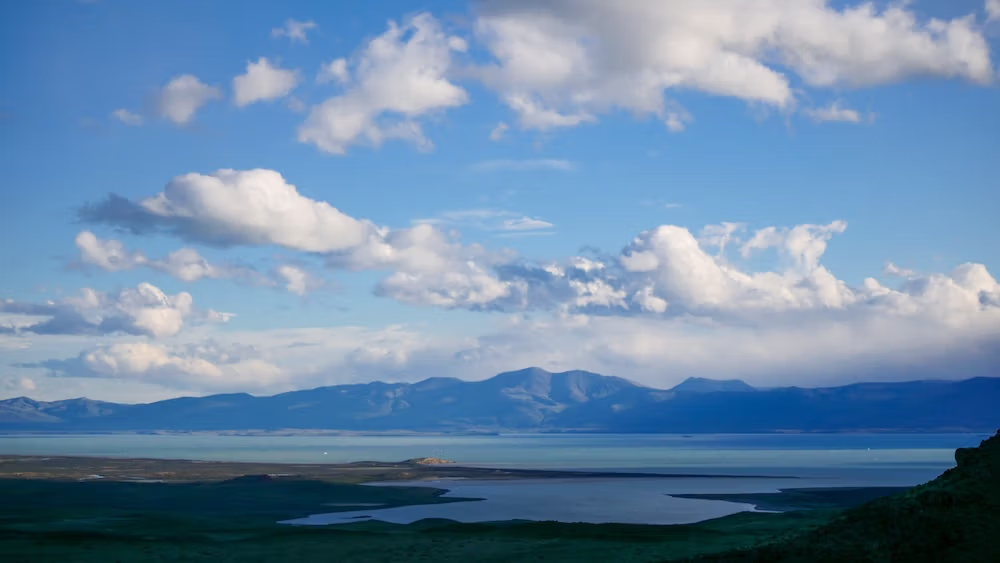
Mirador de las Águilas
This viewpoint is a different mood:
- More open landscape
- Steppe vibes
- Lago Viedma showing up on the horizon
- A sense of scale that feels less “peaks towering over you” and more “Patagonia is enormous and does not care about your schedule”
If you like landscape variety, this add-on is worth it.
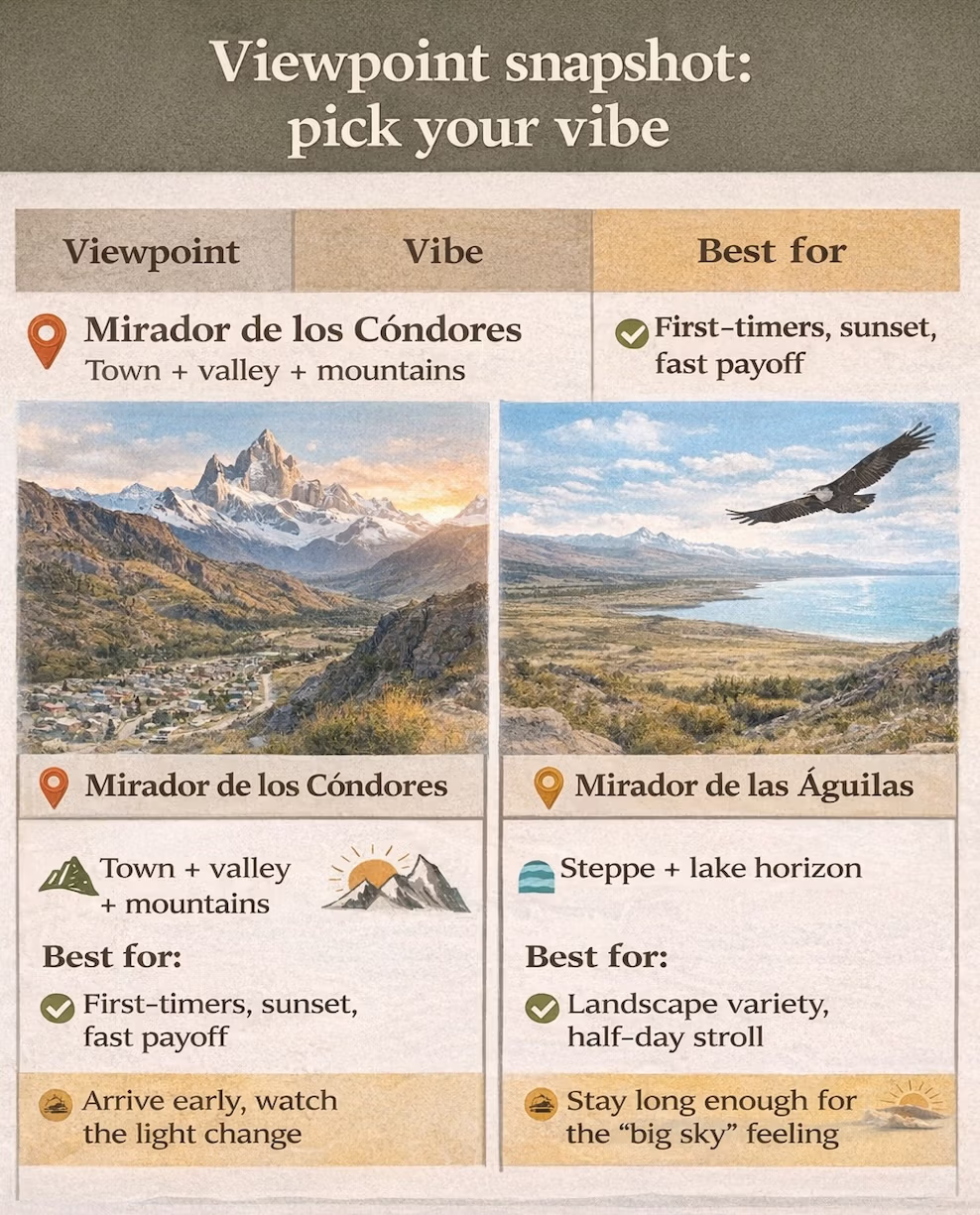
Viewpoint snapshot: pick your vibe
| Viewpoint | Vibe | Best for | Don’t miss |
|---|---|---|---|
| Mirador de los Cóndores | Town + valley + mountains | First-timers, sunset, fast payoff | Arrive early, watch the light change |
| Mirador de las Águilas | Steppe + lake horizon | Landscape variety, half-day stroll | Stay long enough for the “big sky” feeling |
Condor spotting: set expectations, then get excited
Let’s be honest: the name Mirador de los Cóndores is slightly rude because it makes you feel like the birds signed a contract.
They did not.
You might see condors. You might see smaller raptors. You might see a cloud shaped like a dinosaur and decide that counts.
Still, this is a good place to look because condors love wind and rising air. They’re built for gliding—massive wings, minimal flapping, just floating around like they own the atmosphere (because they kind of do).
How to improve your odds
- Go when the air is moving. A little wind can be helpful for soaring birds.
- Midday to afternoon often has stronger thermals than early morning.
- Bring binoculars if you care about wildlife. It turns “tiny dot” into “holy wingspan.”
- When you reach the viewpoint, don’t immediately leave. Give it 10–20 minutes of scanning time.
And if you don’t see one? You still got one of the best quick views in El Chaltén. That’s a solid trade.
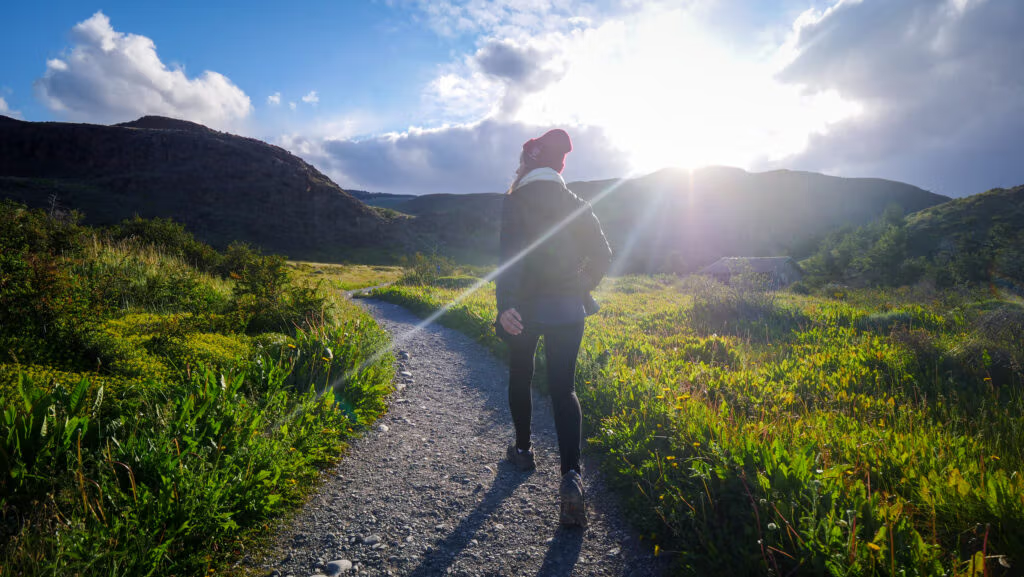
Best time to hike: sunrise, midday, or sunset?
Sunset: the classic
Sunset is the headline act because:
- the town glows
- the valley softens
- the sky does the dramatic Patagonia thing
The key is timing. In peak summer, sunset can be around 10:00 pm, and twilight lingers. That’s awesome for photos… and dangerous for people who assume “it’s still light” equals “I don’t need a headlamp.”
If you’re doing sunset, bring a headlamp anyway. It weighs nothing and turns a potentially sketchy descent into a normal walk.
Midday/afternoon: the bird-watching play
If your priority is condors and soaring birds, midday and afternoon can be a better bet. More thermals, more lift, more “big bird doing big bird things.”
Sunrise: quiet and moody
Sunrise gives you:
- fewer people
- cooler temperatures
- moody light
But you’ll be waking up early, and if you’re in El Chaltén you probably have bigger sunrise ambitions (hello, Fitz Roy). For most travelers, sunrise here is a bonus, not the priority.
Timing plans: choose your own adventure
| Plan | Start time | Total time | Who it’s perfect for |
|---|---|---|---|
| The “I just got here” sunset sprint | 60–90 min before sunset | 1–1.5 hrs | Arrival day, low energy, high reward |
| The relaxed golden hour | 2 hrs before sunset | 2 hrs | People who want photos + time to chill |
| The combo platter (Cóndores + Águilas) | Morning or early afternoon | 2–3 hrs | Half-day hikers, scenery collectors |
| The winter reality check | Midday, only in safe conditions | Varies | Winter visitors with traction + caution |

Seasons and trail conditions
El Chaltén doesn’t have “bad seasons,” but it does have “this is not the day to pretend you’re invincible” seasons.
Spring to fall (roughly Oct–Apr)
This is the easiest window:
- trail is generally clear
- daylight is long (especially in Dec–Feb)
- the hike feels friendly and accessible
Winter (roughly May–Sep)
Winter can turn simple trails into slippery problems. Depending on conditions, you may need traction and poles, and some park guidance recommends (or requires) them during icy periods. The main point: don’t underestimate winter just because the hike is short.
If you’re not confident walking on ice with a steep drop of embarrassment behind you, don’t force it. El Chaltén will still be there tomorrow, and your knees would like to remain part of your life.
Gear matrix: what changes by season
| Item | Summer (Dec–Feb) | Shoulder (Oct–Nov / Mar–Apr) | Winter (May–Sep) |
|---|---|---|---|
| Wind layer | Essential | Essential | Essential |
| Warm mid-layer | Nice to have (sunset) | Essential | Essential |
| Gloves/hat | Optional | Often needed | Always |
| Headlamp | Recommended (sunset) | Recommended | Recommended |
| Traction + poles | Rare | Sometimes | Often/required in icy conditions |
What to pack (because Patagonia is dramatic)
The basics
- Water (even for short hikes)
- Windproof layer (Patagonia’s love language is gusts)
- Warm layer (especially for sunset)
- Hat and gloves in shoulder season
- Sunglasses (bright sky + snow in winter can be brutal)
- Sunscreen (yes, even when it’s cloudy)
- Snack (you’ll feel smug eating it at the viewpoint)
The “sunset” extras
- Headlamp
- A little patience for crowds
- A plan for getting back to town without sprinting downhill like a frightened goat
Footwear
You don’t need mountaineering boots, but you do want real shoes with grip. This trail is steep enough that slick soles will make you question your past decisions.
Costs and tickets (quick update)
A lot of older El Chaltén info says “free.” That’s outdated now: Los Glaciares NP (El Chaltén / Zona Norte portals) uses paid entry and tickets for the North Zone trailheads are obtained online (or by scanning a QR), with card payment only (no cash).
Current official tariffs (listed as valid from 6 January 2025):
- General: ARS 45,000
- National residents: ARS 15,000
- Provincial residents: ARS 5,000
- Students: ARS 7,000
If you’re hiking multiple days, the official promos to look at:
- Flexipass 3 days: ARS 90,000 / 30,000 / 10,000 (General / National / Provincial)
- Flexipass 7 days: ARS 157,500 / 52,500 / 17,500 (General / National / Provincial)
- Annual pass: ARS 225,000
Exemptions exist (e.g., kids 0–5, retirees/pensioners, people with disability, local residents, and others—documentation rules apply), so it’s worth checking if you qualify.
Best practice: buy online close to your hiking date (rules/prices can change), and keep your QR/ticket handy on your phone.
The practical approach:
- Assume you now need a park ticket.
- Check the official park tariff page and ticket portal close to your hiking date.
- If you’re staying multiple days and doing multiple hikes, look into multi-day passes if available.
Patagonia evolves. So do fees. Unfortunately.
Crowd levels and how to enjoy it anyway
This hike is popular for a reason: it’s good.
At sunset in summer, expect:
- lots of people
- lots of phones held overhead
- lots of “quick picture” lies
Here’s how to keep your joy intact:
- Start earlier than you think you need. The best light often happens before the actual sunset moment.
- Walk a few steps away from the main cluster at the viewpoint if the terrain allows.
- Stay 10 minutes longer than everyone else. The crowd thins fast once people decide dinner is calling.
Photography notes: how to make it look as good as it felt
- Wide angle works well for the valley + town panorama.
- If you have a zoom lens, it’s fun for picking out details in the peaks and for bird silhouettes.
- Wind is the enemy of tripod stability. If you bring one, keep it low and steady.
- Don’t over-edit the sunset. Patagonia is already doing the most.
Accessibility, kids, and “is it family-friendly?”
This hike is “family-friendly” in the sense that it’s short and close to town. But it’s not at all stroller-friendly. The slope and surface are better suited to:
- older kids who can walk steadily uphill
- adults who don’t mind a steep section
- parents who are comfortable carrying younger kids in a carrier up steep sections
If you’re traveling as a family, the move is to treat it like a short adventure: go slow, bring a snack, and make the viewpoint the goal rather than the speed.
The classic mistakes to avoid
- Starting too late for sunset
In summer, you have long daylight… but you still want time to enjoy the view without stress. - Dressing for town, not for wind
Town can feel calm. The viewpoint can feel like a wind tunnel with feelings. - Forgetting water because “it’s short”
Short hikes still make you thirsty, especially when you’re climbing. - Assuming you’ll have mobile data to navigate
Download what you need in advance. El Chaltén is not obligated to provide you with signal. - Treating winter like a casual stroll
Ice + steep trail = accidental comedy you don’t want filmed.
How this hike fits into a bigger El Chaltén itinerary
If you’re building a realistic El Chaltén plan, Mirador de los Cóndores slots in beautifully:
1–2 days in El Chaltén
- Day 1: Arrive + Mirador de los Cóndores at sunset
- Day 2: Laguna Torre or Laguna Capri (depending on weather)
3–4 days in El Chaltén
- One big hike day (Laguna de los Tres) on the best forecast window
- One moderate day (Laguna Torre)
- One easy recovery day (Cóndores + Águilas, or Chorrillo del Salto)
5+ days in El Chaltén
Now you’re playing the weather game properly:
- big hikes only on good forecast days
- short hikes and viewpoints for “meh” days
- repeat Mirador de los Cóndores if the first sunset was cloudy (you’ll be shocked how different it feels)
This is how El Chaltén rewards patience: you don’t fight the weather—you flirt with it.
Our honest verdict
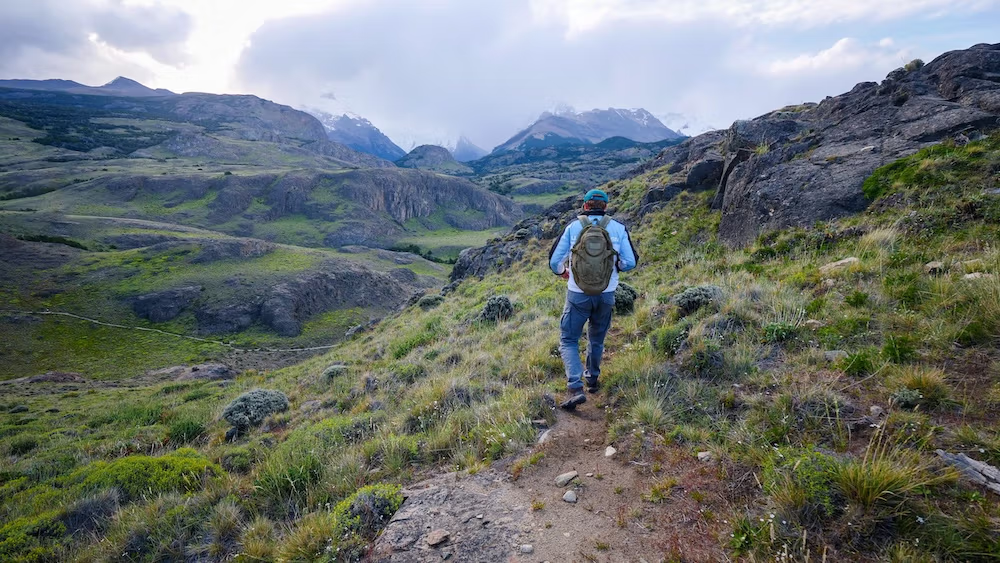
Mirador de los Cóndores is the kind of hike we wish every famous hiking town had: low barrier, high payoff, and just enough steepness to make you feel like you earned your dinner.
It’s not the grand epic of El Chaltén. It’s not going to replace Laguna de los Tres or Laguna Torre. But it will absolutely become one of those “remember that first night?” moments—the one where you realized you were in Patagonia, the sky was doing theatre, and the mountains were very casually changing your brain chemistry. If it’s your first hike in El Chaltén it’ll be the moment you truly understand the layout of the town and how insignificant it is versus the vast nature that surrounds it.
If you only have time for one easy hike in El Chaltén, this is the safest bet.
Plan-your-hike checklist
- Check sunset time (especially outside peak summer)
- Bring a wind layer and a warm layer
- Carry water and a snack
- Wear shoes with grip
- If hiking near dusk: headlamp in your pocket
- If wintery/icy: traction + poles (or choose a safer plan)
- Give yourself time at the viewpoint to watch the sky
Mirador de los Cóndores Hike FAQ: Real-World Timing, Sunset Strategy, Condor Odds, and Practical Tips
Is Mirador de los Cóndores worth it if we only have one day in El Chaltén?
Yes. It’s one of the fastest ways to get a true “El Chaltén panorama” without sacrificing your whole day.
How hard is the hike, really?
Short but spicy. The climb is steep enough to feel it, but it’s over quickly.
How long does it take to hike Mirador de los Cóndores?
Most people can do the out-and-back in about 45–90 minutes depending on stops and pace.
Can we do it for sunset without hiking in the dark?
Yep. Start early enough, and carry a headlamp anyway. Twilight can fade faster than you expect once you’re descending.
What time should we start if we want sunset photos?
Aim to arrive at the viewpoint 30–60 minutes before sunset, then linger. The best light often happens before the sun actually drops.
Are there condors every day?
Nope. You might see them, you might not. Treat it as a bonus, not a guarantee.
What’s the best time of day to spot condors?
Midday to afternoon can be a better bet because rising air and wind can help birds soar.
Should we also hike Mirador de las Águilas?
If you want more walking and a different landscape view, yes. If you’re tired or short on time, skip it.
Is the trail safe in windy weather?
It’s generally safe, but wind can make the viewpoint feel intense. Dress warmly, keep your footing, and don’t do anything dramatic for a photo.
Is this hike good for kids?
Yes for kids who can handle an uphill walk. Not ideal for strollers. A carrier works well for younger ones.
Do we need hiking boots?
Not necessarily, but you want grippy shoes. The slope makes slippery footwear a bad idea.
Do we need a park ticket for this hike?
Now. Yes. Fees and enforcement can change, so check the official park information close to your travel date.
Can we hike Mirador de los Cóndores in winter?
Sometimes, but conditions can be icy and may require traction and poles. If it looks slick, don’t force it.
Is there phone signal on the trail?
Sometimes, sometimes not. Download offline maps before you go and don’t depend on data.
What should we do after the hike?
Eat dinner like you just summited Everest. You earned it. (Also: warm drink, because sunset wind is real.)
English Post Bottom: Project 23 Argentina: This guide is also available in Spanish. [Lea la versión en castellano: Guía de trekking Mirador de los Cóndores: el clásico corto y empinado del atardecer]
Further Reading, Sources & Resources
If you want to double-check the details, plan your timing, or confirm the latest rules before you hit the trail, these are great resources to check out. We’ve prioritized official park information first (fees, regulations, safety guidance), then local El Chaltén tourism pages for on-the-ground trail specifics, and finally a sunrise/sunset planner to help you nail your golden-hour game plan.
Argentina National Parks (official): Los Glaciares – Tariffs and tickets
https://www.argentina.gob.ar/interior/ambiente/parquesnacionales/losglaciares/tarifas
Argentina National Parks (official): Recommendations for visiting Los Glaciares (North Zone tips, winter traction guidance)
https://www.argentina.gob.ar/parquesnacionales/patagonia-austral/recomendaciones-para-visitar-el-parque-nacional-los-glaciares
El Chaltén tourism (local): Viewpoints Los Cóndores and Las Águilas (trail junction detail and viewpoint descriptions)
https://elchalten.com/v4/en/los-condores-las-aguilas-viewpoints-el-chalten.php
https://elchalten.com/v4/es/mirador-los-condores-las-aguilas-el-chalten.php
Sunrise/sunset reference (planning tool)
https://www.timeanddate.com/sun/@6690180?month=12
Notes on accuracy
- Trail times and difficulty vary by fitness, wind, and how long you stay at the viewpoints.
- Park fees and ticketing rules can change; always verify on official park pages close to your hiking date.