
El Chaltén is the kind of place that lures you in with convenience. You finish breakfast, step outside, and the trailhead is basically right there. No complicated logistics. No shuttle drama. Just a signpost at the edge of town and a mountain skyline that looks like it’s auditioning for your wallpaper. That accessibility is the magic. It’s also the trap.
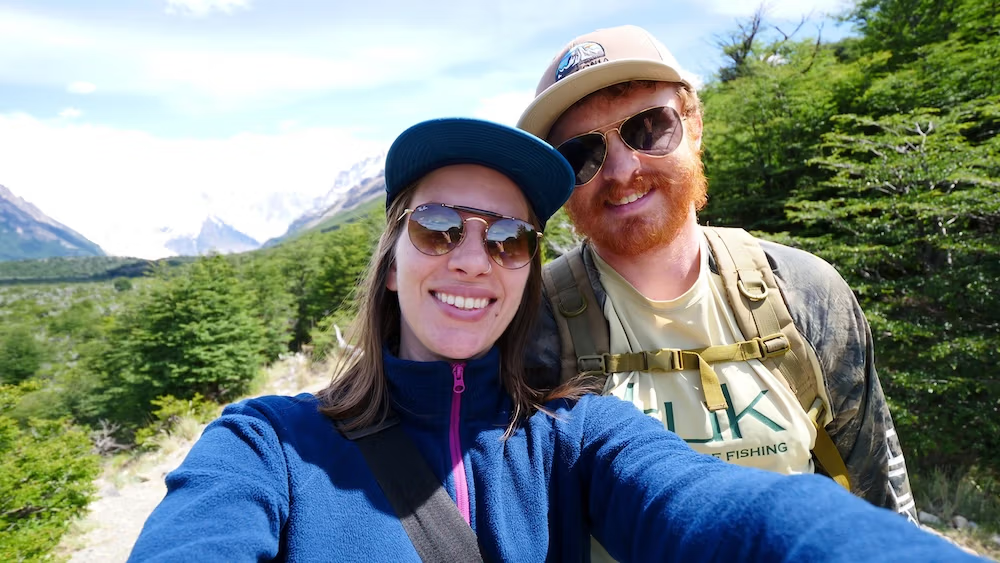
Because Patagonia doesn’t care that your weather app showed a cute little sun icon. It doesn’t care that you packed “a light jacket” (translation: a decorative cardigan that will lose a fight with a strong breeze). And it definitely doesn’t care that you’re only here for a few days and you feel morally obligated to “get the iconic shot.” When Audrey and I hiked here together, we got the full range: calm forest sections that felt like a gentle nature documentary, and exposed viewpoints where the wind tried to sandblast our faces and push us sideways, like it was personally offended by our hiking plans. We had a day where the wind was so bad we couldn’t hit the trails at all.
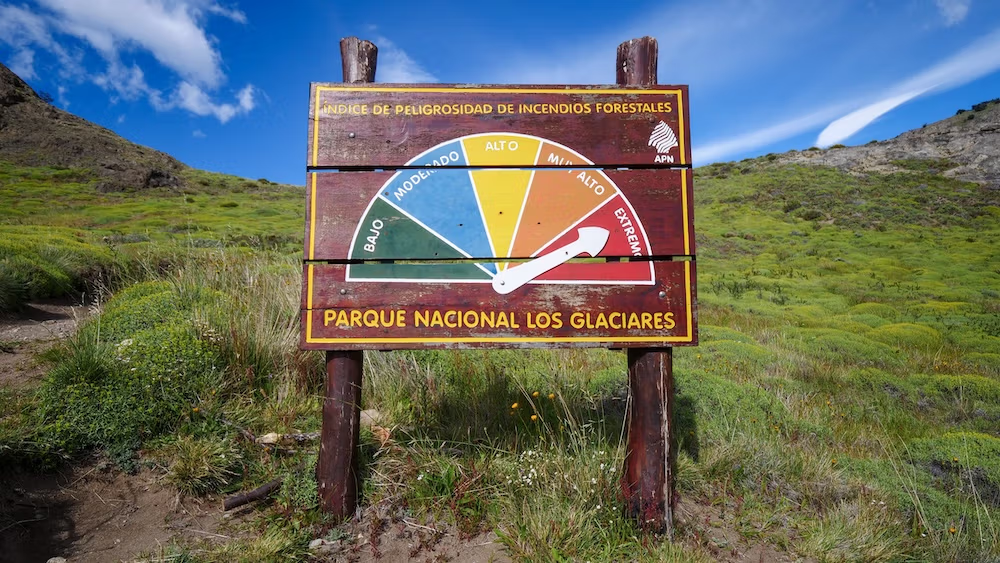
Also: we did a classic rookie move. We had a trail map. We felt responsible. We then left it on the nightstand and started our biggest day already behind schedule. Add in camera distractions, “just one more viewpoint” energy, and the strange confidence of Patagonian summer daylight (sunset can feel hilariously late), and you have the perfect recipe for time creep. Time creep is where most “incidents” are born—not with drama, but with slow math that turns against you while you’re busy being dazzled.
So this guide is a combo of real experience + practical systems. We’ll talk weather (and why wind is the main character), navigation (even on “well-marked” trails), pacing (because time creep is sneaky), and the most important skill in El Chaltén: knowing when to turn around without turning it into a personal identity crisis.
If you take one idea from this: turning around isn’t failure. It’s the skill that lets you hike again tomorrow.
El Chaltén safety snapshot: the “what can actually get you” table
| Risk | What it looks like in El Chaltén | Why it matters | Best counter-move |
|---|---|---|---|
| Sudden weather swings | Blue sky in town, chaos in the mountains | Wet + wind drains heat fast | Pack layers like a pessimist; check hourly gusts |
| Wind (the main character) | Gusts strong enough to change your walking style | Balance risk + windchill | Avoid exposed ridges on gusty days; bring a shell + warm layer |
| Navigation gaps | Limited signal + fog wipes landmarks | “We’ll check the phone” becomes “we are the phone” | Offline map + screenshots + regroup rules |
| Time creep | Crowds + photo stops + snack stops | Late return, fatigue, higher slip risk | Set a turnaround time; track pace by markers |
| Descent fatigue | Legs wobble; attention drifts | Mishaps happen tired | Slow down on gravel; snack early; consider poles |
| Under-fueling | “We’ll just snack a little” optimism | Cold + bad decisions | Treat food like safety gear; pack extra |
| Shoulder season surprises | Mud/snow patches + early darkness | Difficulty spikes | Earlier starts; simplify goals; traction if icy |
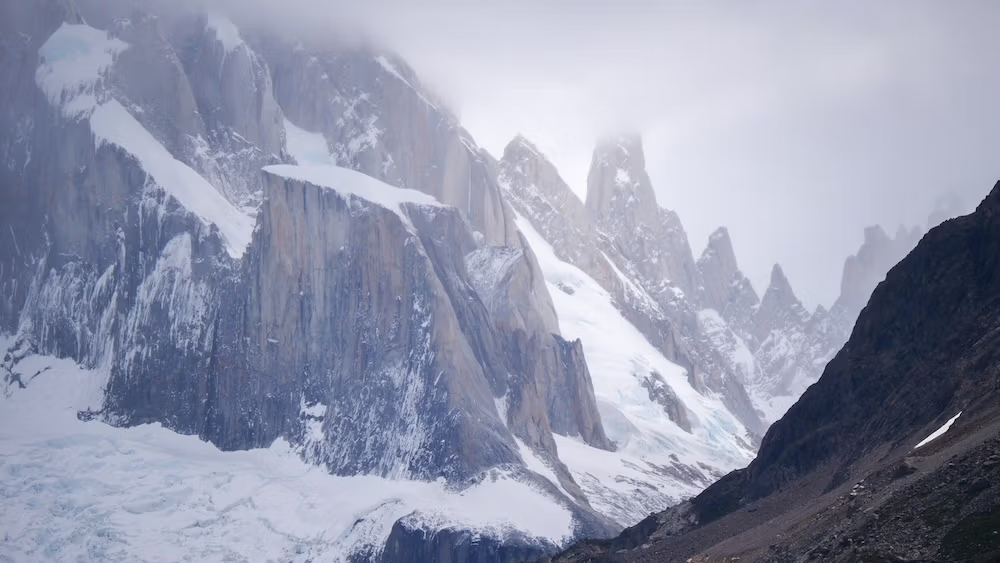
Weather in El Chaltén: forecasts help, humility helps more
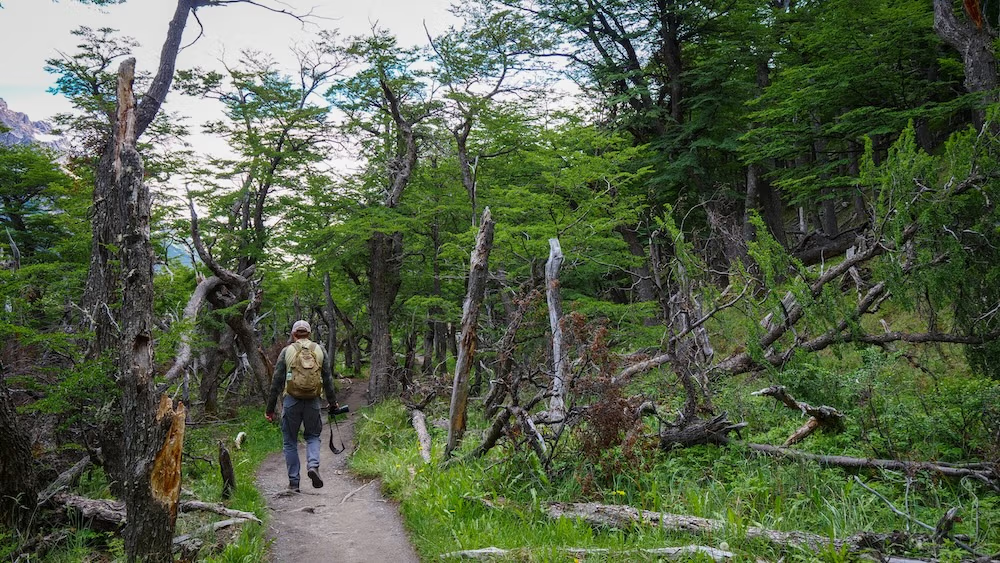
Patagonia weather is less like a schedule and more like a mood. It doesn’t just change; it pivots on a dime. The key mindset shift is to plan for mountain conditions, not town conditions. A calm morning in El Chaltén can be wildly misleading once you’re higher, more exposed, and farther from shelter. And the reverse can happen too: it can feel windy in town, then you duck into the forest and everything becomes strangely calm, like the mountains are messing with your confidence on purpose.
A lot of people “check the weather” once and treat it like a verdict. In El Chaltén, it’s more like monitoring a living creature. What matters most for safety isn’t whether it’s 12°C or 18°C. What matters is what the wind is doing, what the clouds are doing, and whether you’ll be exposed when the forecast is at its worst. The mountain doesn’t have to be extreme to be dangerous—it only has to make you cold, slow, and slightly confused.
The 3-check forecast routine that actually works
Night before (trend check): look for the shape of the day. Is wind building? Is precipitation increasing? Does the forecast show a “fine until suddenly not fine” window? Note the worst part of the day, not just the best. A safe plan is one where your most exposed terrain isn’t scheduled for the ugliest hours.
Morning of (hourly check): focus on wind gusts, precipitation, “feels like,” and visibility/low cloud. Gusts matter more than average wind because gusts are what hit you at viewpoints and on ridgelines. If gusts are high, choose objectives with shelter and quick exits. If rain is coming, ask yourself if you want to descend steep, rocky terrain when everything is slick.
Local/trailhead check: El Chaltén is a trekking town. Staff, guides, and other hikers often have a better sense of what’s happening than a generic forecast. On borderline days, it’s normal to ask and adjust. In Patagonia, “downgrade the plan” is not a defeat—it’s competence.
Wind: the El Chaltén difficulty multiplier
Wind here isn’t “a little annoying.” It changes the hike. Or it prevents you from going at all. It increases fall risk on exposed viewpoints and loose slopes. It drains warmth fast through windchill. And it slows you down when you least want to be slowed down, because you start bracing, you stop to regain balance, and you spend more time exposed.
On our Laguna de los Tres day, the wind up top was fierce. That scene is funny in hindsight, but it’s also a safety lesson: wind makes everything take longer, and when you’re slower, you’re out there longer, and when you’re out there longer, small problems grow teeth.
A simple rule: if wind gusts are strong enough that you’re changing how you walk (wider stance, leaning, “wind surfing” with your arms), treat that as a yellow flag. If you can’t reliably keep balance in exposed spots, treat it as a red flag. Patagonia is not the place to discover you have a special relationship with gravity.
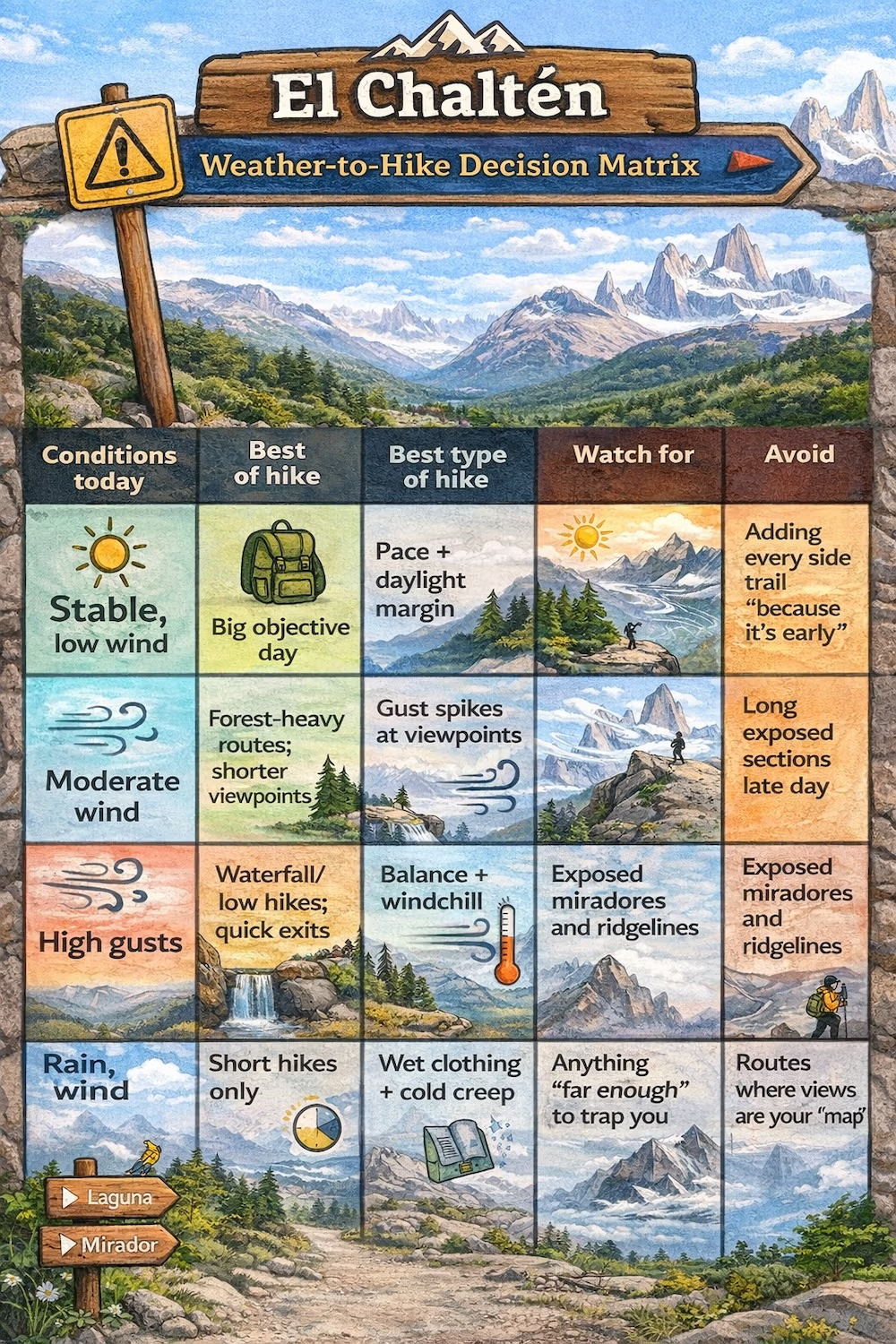
Weather-to-hike decision matrix
| Conditions today | Best type of hike | Watch for | Avoid |
|---|---|---|---|
| Stable, low wind | Big objective day | Pace + daylight margin | Adding every side trail “because it’s early” |
| Moderate wind | Forest-heavy routes; shorter viewpoints | Gust spikes at viewpoints | Long exposed sections late day |
| High gusts | Waterfall/low hikes; quick exits | Balance + windchill | Exposed miradores and ridgelines |
| Rain + wind | Short hikes only | Wet clothing + cold creep | Anything “far enough” to trap you |
| Low visibility | Short, obvious routes | Navigation certainty | Routes where views are your “map” |
Layering: the simple Patagonia system (not bulky)
You don’t need expedition gear for day hikes, but you do need a system. The goal is to adjust quickly as you move between sheltered forest, exposed viewpoints, and sweaty climbing. A base layer that dries quickly, a warm mid-layer, and a real windproof/waterproof shell will cover most days. Add “pocket insurance” (hat, gloves, buff) because the part of you that gets cold first is always the part you need to function—hands for poles, phones, zippers, and navigation.
If you only upgrade one thing for El Chaltén, make it your shell. Patagonia wind will find every zipper gap in your life.
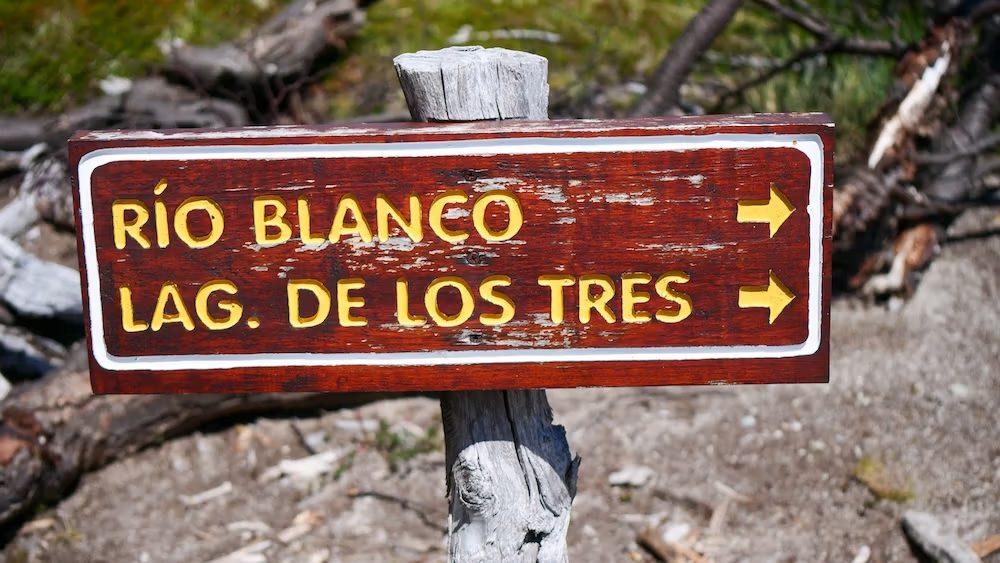
Navigation: great trails, limited signal, and the nightstand map problem
El Chaltén’s classic trails are well used and generally well marked. That’s true… and still not the whole truth. Navigation matters because signal can be unreliable when you actually need it, fog can erase landmarks, and small mistakes become big time drains. Most people don’t get “lost” in a cinematic way; they get slightly confused, take the wrong fork, wander for 20 minutes, and suddenly their daylight margin is gone.
Our “we’re professional adults” moment (spoiler: we were not)
We had a trail map. We felt responsible. Then we left it on the nightstand and started our biggest day already behind schedule. That one tiny mistake changed the start of the day: more wandering, a less efficient approach, and less margin for later when the trail got steeper and the crowds got thicker. Our bad. It’s a good reminder that navigation safety is time safety.
A simple navigation setup that’s hard to break
Before you leave your accommodation, download an offline map and test it in airplane mode. Screenshot the main trail map and the key junctions. Make sure two people have it (or two devices), because one dying phone shouldn’t become a group crisis. Bring a low-tech backup if you can—a printed map, or at least a photo of the park map. It sounds old-school until your battery is at 12% and your hands are cold and suddenly you’re a fan of old-school.
Then add two group rules:
- Junction rule: nobody passes a junction until everyone arrives and you confirm direction together.
- Separation rule: if you lose sight, stop and regroup at the last known point.
If you’re hiking solo, the “rules” become even simpler: slow down at junctions, double-check your map, and don’t push into low visibility where you’re guessing. Solo hiking can be amazing in El Chaltén, but your margin for error is smaller, so your decision-making needs to be calmer, not bolder.
Navigation reality matrix (what to do when things get weird)
| Situation | Worst move | Best move |
|---|---|---|
| Battery draining | Keep screen bright “for photos” | Airplane mode + low power + power bank |
| Fog rolls in | “We’ll keep going, it’s probably fine” | Slow down; confirm markers; consider turning |
| Missed turn | Continue to avoid embarrassment | Stop early; backtrack to last clear marker |
| Junction confusion | Follow strangers blindly | Regroup; check map/screenshots; decide deliberately |
Kilometer markers: the underrated safety feature
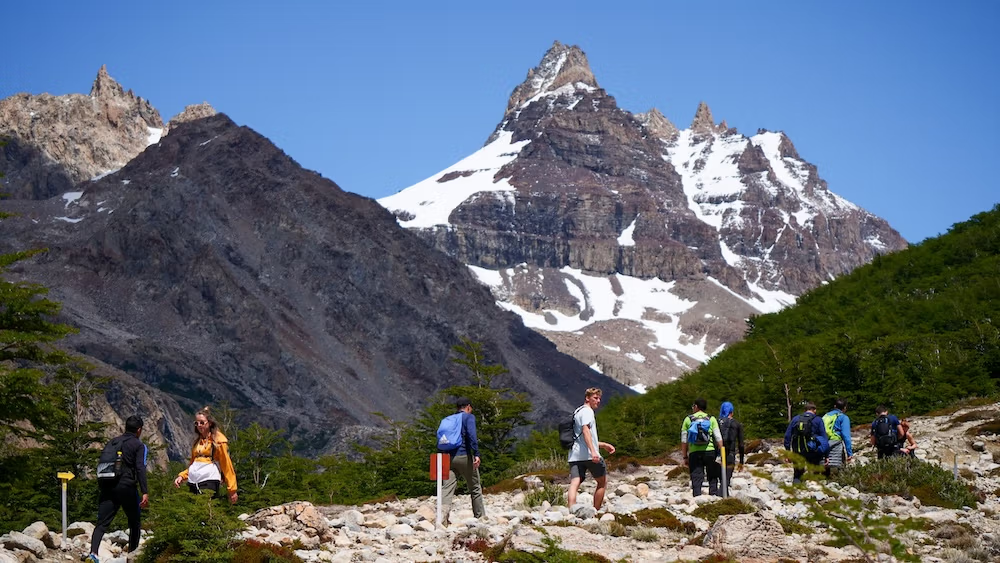
Many El Chaltén trails have kilometer markers. They’re not just motivational décor. They make time management honest. If you’re ahead, you can add a side trail. If you’re behind, you can skip the “bonus viewpoint” and still have a safe margin. When you’re hiking with cameras (and we were very distracted), those markers help you keep the day from quietly turning into “we’ll just see how it goes.”
Time, pace, and the art of not turning your hike into a math emergency
Most hiking incidents aren’t dramatic. They’re slow-burn: a late start, too many stops early, crowds compressing the steep bits, and then “making up time” in the sketchiest terrain. El Chaltén tempts you to stack add-ons like you’re building a buffet plate: a mirador, then another mirador, then “we’re already here so we might as well…” That’s fine when conditions are stable and you have margin. It’s dangerous when weather shifts or your group’s energy drops.
Audrey and I learned this in a very practical way. Even getting to the correct trailhead can take longer than you expect if your accommodation is on the opposite side of town—or if you do what we did and add a little “where exactly is this sign?” wandering to the morning. Then you stop for views (because how could you not), and suddenly your “early start” becomes “we’re starting, but with a headwind of inefficiency.”
Turnaround time: your best anti-drama tool
A turnaround time is a pre-decided moment you turn back no matter what. Not “unless we’re close.” Not “unless the mountain is flirting with us.” On popular hikes, the steep final sections can be slow because crowds move carefully, people stop to breathe, and passing is awkward on loose terrain. A time buffer stops being “planning” and becomes “ankle insurance.”
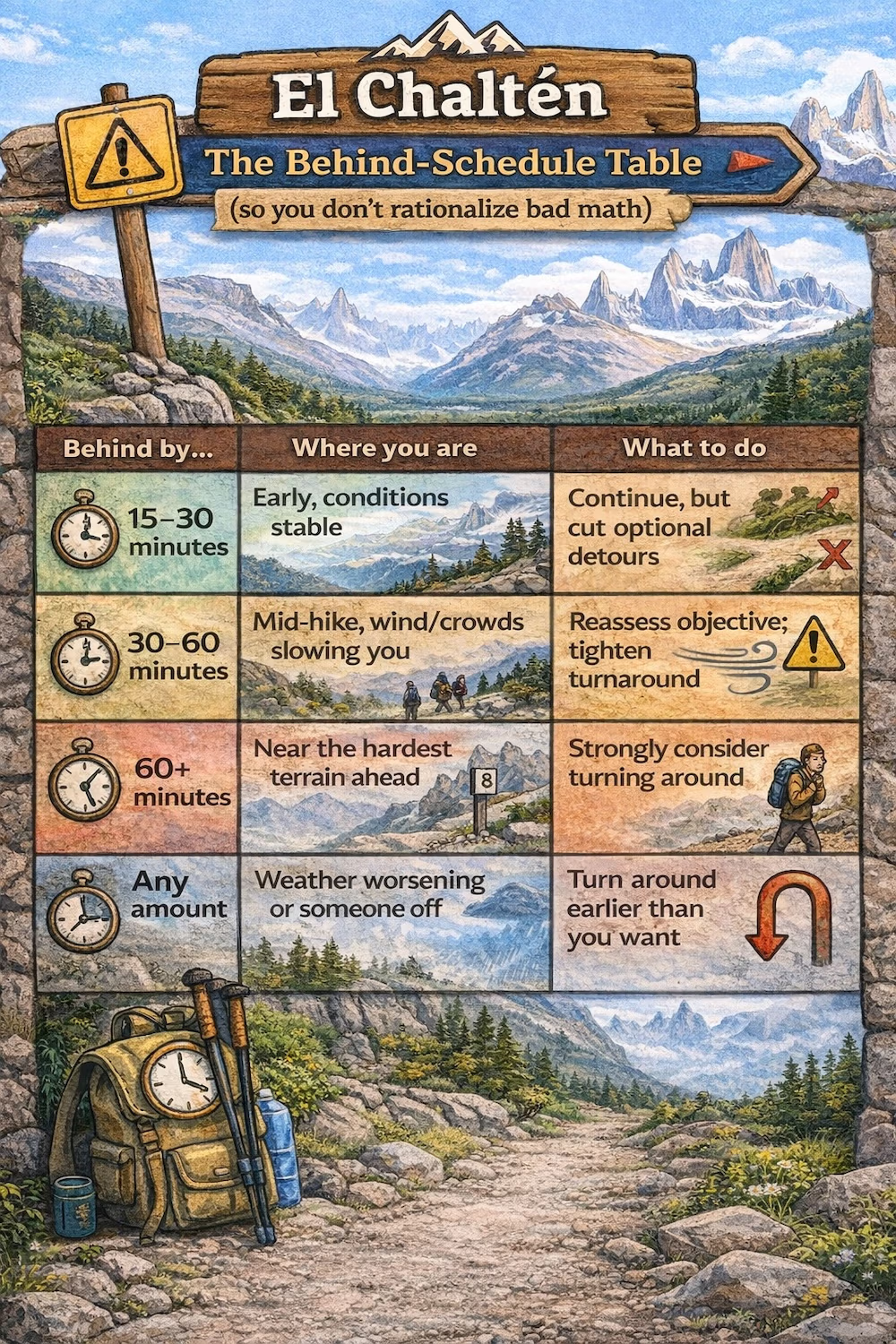
The behind-schedule table (so you don’t rationalize bad math)
| Behind by… | Where you are | What to do |
|---|---|---|
| 15–30 minutes | Early, conditions stable | Continue, but cut optional detours |
| 30–60 minutes | Mid-hike, wind/crowds slowing you | Reassess objective; tighten turnaround |
| 60+ minutes | Near the hardest terrain ahead | Strongly consider turning around |
| Any amount | Weather worsening or someone off | Turn around earlier than you want |
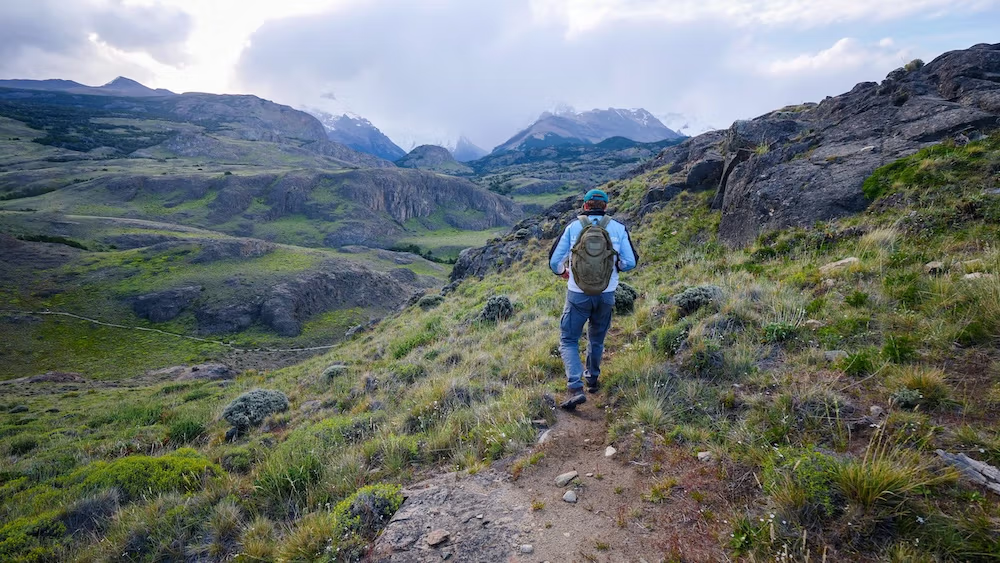
When to turn around: the skill that separates hikers from “stories”
This is the classic El Chaltén moment: you’re tired, the goal feels close, and your brain whispers, “It’d be embarrassing to bail now.” We had it too. Audrey and I were at a decision point on the Fitz Roy route, we knew continuing would be a long trek, and we’d been warned that the final kilometer was brutal. But it felt too early to turn around, we weren’t that tired yet, and the daylight felt endless. So we went for it. We became “trekkers,” apparently, and Fitz Roy got exactly what it wanted: our effort, our time, and a little slice of our soul. And honestly? Fair trade.
We made it. The view was unreal—so majestic it almost didn’t look real. And then we had to walk back. You’re tired and have less to look forward to. That’s the part people forget when they’re being seduced by iconic scenery: the summit is the middle of the day, not the end. The safest hikers aren’t the ones who never turn around. They’re the ones who turn around early when the math stops working.
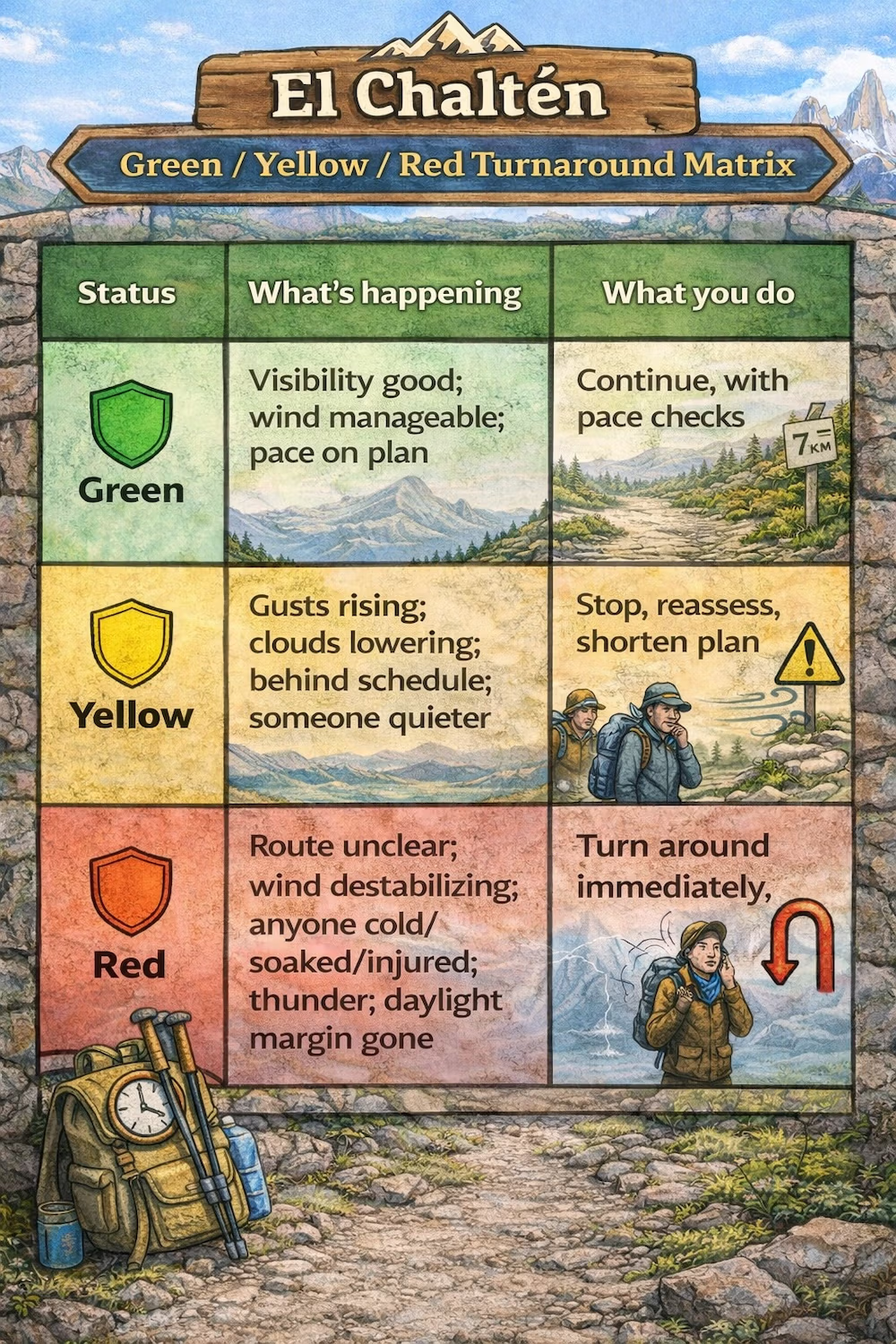
Green / yellow / red turnaround matrix
| Status | What’s happening | What you do |
|---|---|---|
| Green | Visibility good; wind manageable; pace on plan | Continue, with pace checks |
| Yellow | Gusts rising; clouds lowering; behind schedule; someone quieter | Stop, reassess, shorten plan |
| Red | Route unclear; wind destabilizing; anyone cold/soaked/injured; thunder; daylight margin gone | Turn around immediately |
“No negotiation” turnaround triggers (the boring rules that prevent drama)
| Trigger | What it means | The smart move |
|---|---|---|
| Balance feels sketchy | Gusts are controlling you | Turn back before exposure increases |
| Visibility turns the route into guessing | You can’t confirm landmarks | Stop, backtrack, or turn around |
| You’re behind schedule before the hardest terrain | The day is shrinking | Turn around earlier than you want |
| Anyone is cold, wet, or under-fueled | Decisions will degrade | Add layers + eat; downgrade or bail |
| Thunder nearby and you’re exposed | Lightning risk | Get lower and end the objective |
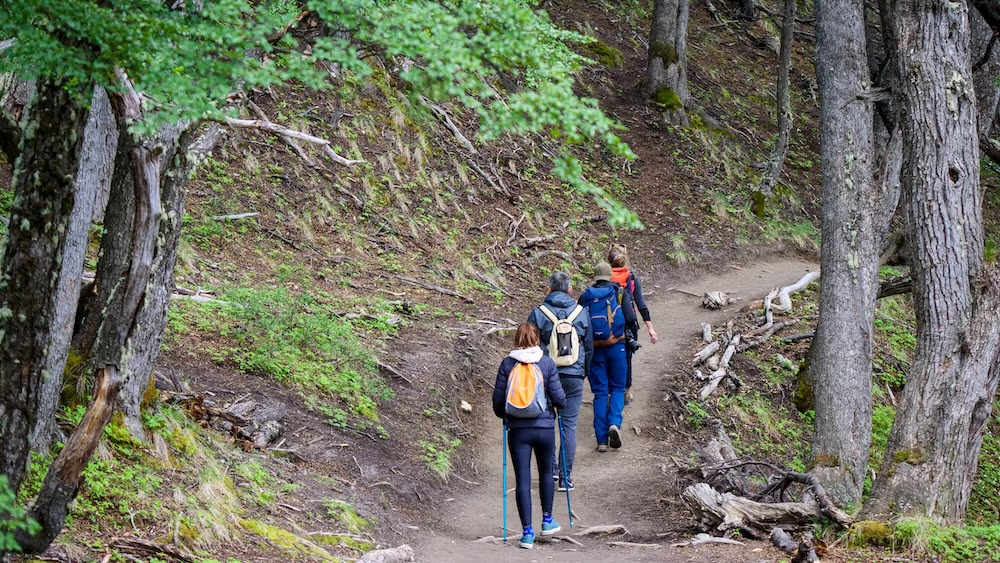
The summit-fever reality check (five questions)
- If the view vanished right now (fog), would I still go?
- If someone slipped on the way down, do we have margin?
- Are we warm and fed enough to descend safely?
- Are we choosing with logic, or being carried by “we’re so close” energy?
- Would I make the same call if I was alone?
If your answers get squirmy, that’s your answer.
Food and water: safety gear for people who think in snacks
El Chaltén is great for hikers because many accommodations understand the early-start culture. Breakfast often begins ridiculously early, and you can frequently order lunch boxes the night before and grab them in the morning. It’s convenient. That’s what we did. And it’s also a sneaky safety upgrade: you start the day with a plan instead of rummaging for crumbs and hoping for the best.
Our main lesson wasn’t “bring food.” Our main lesson was “don’t be a greedy guts.” I ate most of my lunch at 9 a.m. because I was hungry and apparently lacked discipline. Later, at the top, we were ravenous and down to a granola bar and candy. That is not the fueling arc of a wise person. It’s also extremely common. Wind and distance burn energy faster than travelers expect, and under-fueling makes you colder, slower, and more error-prone.
| Planned hike time | Minimum plan | Better plan |
|---|---|---|
| 1–2 hours | 1 snack | 2 snacks |
| 3–5 hours | 2–3 snacks | Light lunch + snacks |
| 6–8 hours | Lunch + 3–4 snacks | Lunch + 5+ snacks |
| 8–10+ hours | Lunch + 5+ snacks | Lunch + 7+ snacks |
Hydration doesn’t need to be heroic. Steady sipping beats chugging. If you’re getting a headache or feeling weirdly cranky, you’re probably late to the water party. On longer days, a small electrolyte option can help, especially if you’re sweating under layers while the wind dries you out so efficiently you don’t notice.
The day-hike kit: what matters most in El Chaltén
El Chaltén has “walk from town” vibes, but your bag should have “mountain day” vibes. You don’t need an expedition pack; you do need a few items that prevent small discomfort from turning into unsafe decisions—especially when wind and delays show up.
| Item | Why it matters | The moment it saves you from |
|---|---|---|
| Shell (wind/rain) | Weather pivots fast | Cold spiral from wind + damp |
| Warm layer | Windchill at viewpoints | Photo stops turning into shiver stops |
| Hat + gloves | Hands get cold first | Numb fingers while navigating/descending |
| Headlamp | Delays happen | Finishing late because crowds slowed you |
| Offline map + screenshots | Signal is unreliable | Junction confusion + time loss |
| Power bank | Cold drains batteries | Phone dying when you need it most |
| First aid + blister care | Feet decide your pace | Limping the last hours over one hotspot |
| Extra snacks | Fuel = decisions | Bad calls made on empty |
If you’re doing a big hike with a steep, loose finish (hello, the infamous “hard kilometer”), trekking poles can be a huge upgrade—especially on the descent. We could have used them. Even if you don’t normally carry poles, El Chaltén is one of those places where they can feel like cheating in the best possible way.
The descent: where legs get honest and gravel gets personal
The climb gets the glory. The descent gets the injuries. On the way down, legs are tired, attention fades, and loose gravel becomes a slip-and-slide you didn’t consent to. This is where people rush because they want dinner, warmth, or the psychological relief of being “almost done.” And this is exactly when ankles roll.
On our big day, we were so spent we joked about being carried out on a sedan chair. That joke has two layers: it’s funny, and it’s also an honest description of fatigue. When you’re that tired, your foot placement gets sloppier, your balance is worse, and your patience disappears—three ingredients that don’t belong on steep gravel.
Descent rules that save knees and ankles:
- Slow down on loose gravel and give people space on steep sections.
- Stop in stable spots (not mid-steps) when you need a break.
- Eat and drink before you feel desperate; low fuel makes you clumsy.
- Keep your “focus face” on until you’re back on easy terrain.
A small but real trick: on loose gravel, shorter steps and a slightly wider stance often feel more stable than long strides. You don’t need to race the mountain. You need to get home.
Seasonality, wildlife, and a few local realities
Summer is the easiest season for classic day hikes, but shoulder season adds mud, snow patches, and earlier darkness. Winter can be spectacular, but it raises the difficulty level and the consequences of mistakes. If you’re new to snow/ice travel, keep objectives modest and conservative. El Chaltén is still impressive at “not full boss level,” and you’ll enjoy it more if you’re not clenching your jaw the whole time.
One local rule that’s both ethical and practical: don’t let town dogs follow you onto trails. Rangers warned us about this because the park protects huemul (an endangered deer), and dogs can disturb wildlife. Enjoy friendly dog vibes in town, then keep a firm boundary on the trail.
Finally, safety includes recovery. If you smash a huge hike and wake up stiff, don’t immediately schedule another brutal day. Fatigue stacks quietly, and tired legs make descents riskier. A shorter hike or rest day can be the difference between “great trip” and “why does my knee sound like popcorn?”
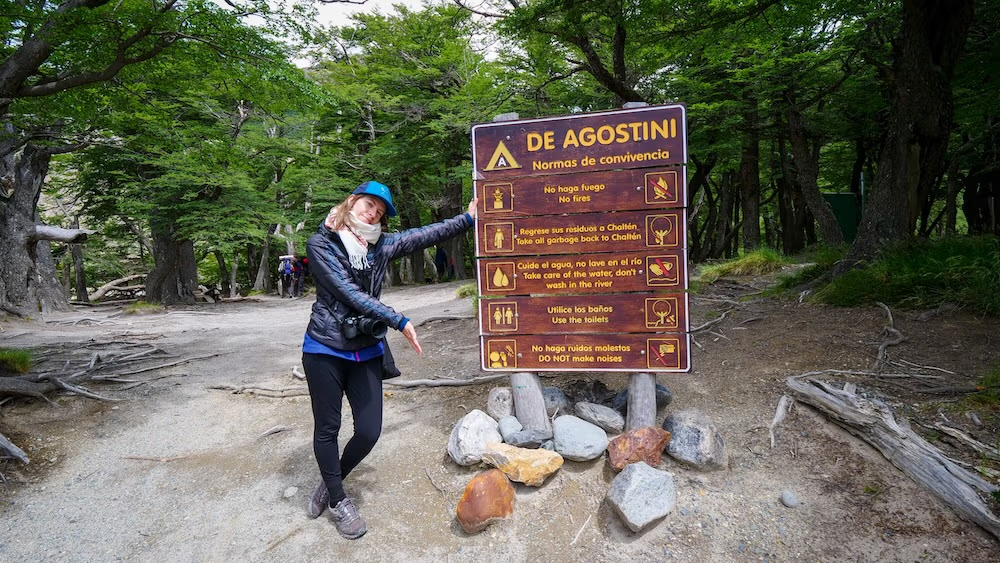
The simple emergency plan (so you don’t improvise under stress)
You don’t need to be paranoid; you do need a plan that works when signal and energy are limited. Before a bigger hike, tell your accommodation (or a friend) where you’re going and when you expect to be back. If your plan changes mid-hike, update it if you can. If you can’t, keep your turnaround time conservative so “late” never becomes “where are they?”
If someone is injured:
- Stop in a safe spot, add layers immediately, and keep them warm.
- Give food and water if they can safely take it.
- Decide whether you can assist a slow walk-out or need outside help.
If you’re lost or unsure:
- Stop early. Don’t wander.
- Backtrack to the last confirmed marker or junction.
- Stick together and slow down.
- If navigation becomes guessing, turning around is the smart move.
If you do need to call for help, this is what you want to be able to say:
| Tell them | Why it matters |
|---|---|
| Trail name + starting point | Narrows the search quickly |
| Last confirmed marker/junction | Gives a real anchor point |
| Group size + condition | Helps them scale response |
| Current weather | Determines response strategy |
| Your plan | “Staying put” vs “moving to X point” |
Rescuers can’t work with vibes. They need coordinates—human-style.
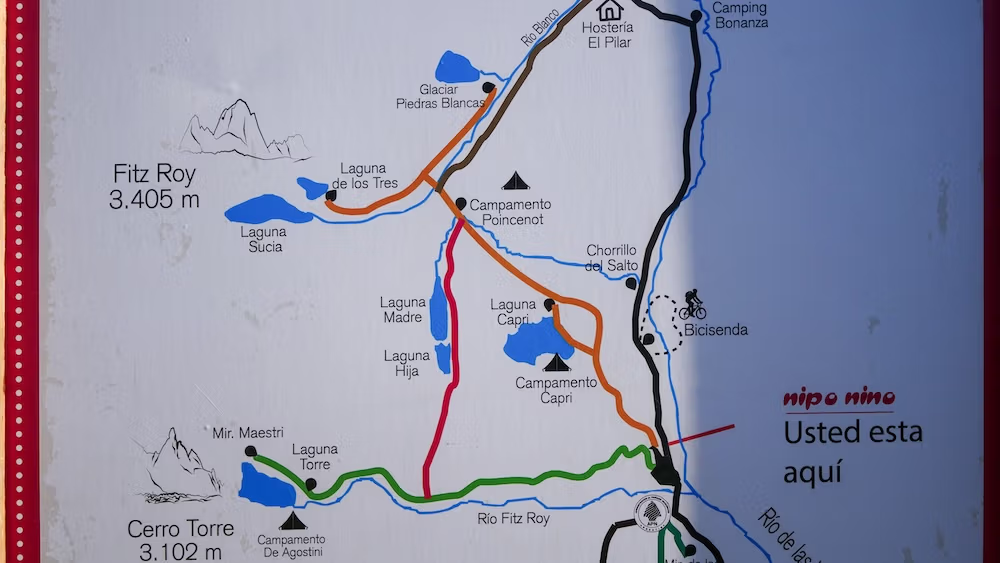
A “hike smart” system for El Chaltén
Before leaving:
- Offline map tested in airplane mode
- Shell + warm layer packed (even if town feels calm)
- Snacks: more than seems reasonable
- Turnaround time set and agreed
At the trailhead:
- Photo of the sign/map
- Quick check: weather trend + group energy + pace goal
On trail:
- Junction regroup rule
- Two pace checks minimum (use kilometer markers)
- If conditions worsen: downgrade the plan without drama
Final word: El Chaltén rewards flexible hikers
You don’t need to “win” El Chaltén. You need to hike it in a way that lets you hike again tomorrow. Some days, the best move is the big objective. Some days, the best move is the waterfall. And some days, the best move is a café window seat while the wind tries to rearrange the town’s signage.
Turning around isn’t quitting. It’s choosing a longer hiking career.
El Chaltén hiking safety FAQ for Patagonia day hikes
Is El Chaltén safe for beginner hikers?
Yes—if you start with shorter trails, choose sheltered objectives on windy days, and treat time and weather seriously. The classic danger isn’t technical terrain; it’s underestimating wind, cold, and how long the descent takes when you’re tired.
What’s the #1 thing people underestimate in El Chaltén?
Wind. It affects balance, increases chill, and slows you down in exposed areas. Plan around gusts, not just temperature, and avoid ridgelines or exposed miradores on high-wind days.
Do I need a guide for Laguna de los Tres or Laguna Torre?
Most people hike these self-guided on marked trails, but you still need strong planning: early start, offline maps, layers, food, and a turnaround time. If weather is questionable or you’re not confident, a guide can be a smart call.
Will I have cell service on the trails?
Sometimes near town, often not where you want it. Plan for zero signal: offline maps, screenshots, and a power bank. Treat service as a bonus, not a safety plan.
What’s a good turnaround rule?
Pick a time before you start and treat it as non-negotiable. Turn earlier if wind increases, visibility drops, anyone gets cold or under-fueled, or you’re behind schedule before the hardest terrain.
When do the trails feel most dangerous?
On steep, loose descents when people are tired and crowds compress movement—especially after the “payoff” viewpoint. Slow down, keep space, and don’t rush because you can smell dinner.
Are trekking poles worth it?
For many hikers, yes—especially on long hikes with gravelly or rocky sections. Poles reduce fatigue and add stability on descents, which is where many slips happen.
How much food should I bring?
More than you think. A real lunch plus several snacks, with extras for wind, delays, and the long walk back. Under-fueling makes you colder and clumsier.
What should I do if fog rolls in?
Slow down, confirm markers, regroup at junctions, and backtrack to your last known point if you’re unsure. If navigation becomes guessing, turning around is the smart call.
What about dogs on the trail?
Don’t let town dogs follow you. Rangers warn hikers about this to protect wildlife, including endangered huemul. Enjoy the dogs in town, keep boundaries on the trail.
Is it okay to hike in shoulder season?
Yes, but keep objectives conservative and start earlier. Expect muddier trails, occasional snow/ice patches, and shorter daylight. The biggest shoulder-season risk is getting slowed down and finishing late with tired legs on slippery terrain.
What should I do on a windy day if I still want to hike?
Choose forest-heavy routes, shorter objectives, or waterfall hikes with quick bail options. Wind is often more intense at exposed viewpoints than in the trees. Save the big exposed payoff for a calmer day.
Project 23 Argentina: This guide is also available in Spanish. [Lea la versión en castellano: Seguridad en Trekking en El Chaltén: Clima, Orientación y Cuándo Pegar la Vuelta]
Further Reading, Sources & Resources
If you want to double-check details, go deeper on regulations, or build your own “trusted sources” stack for El Chaltén planning, these are the references worth checking out before you hit the trail.
Official park & government sources (Argentina)
https://www.argentina.gob.ar/parquesnacionales/patagonia-austral/recomendaciones-para-visitar-el-parque-nacional-los-glaciares
Official park guidance on visiting Los Glaciares (including the El Chaltén/Zona Norte area), with practical safety framing around conditions and preparedness.
https://www.argentina.gob.ar/sites/default/files/2019/06/folleto_senderos_zona_norte_pnlg_espanol.pdf
The official “Zona Norte” trails brochure (maps, trail notes, cautions, and key visitor information). This is one of the best primary sources for trail context.
https://www.argentina.gob.ar/tema/emergencias
Argentina’s official emergency info hub (helpful for national-level emergency numbers and references).
Local El Chaltén resources (useful for on-the-ground context)
https://elchalten.com/v4/en/parque-nacional-los-glaciares.php
Local overview page with practical visitor context for the national park near El Chaltén.
https://elchalten.com/v4/en/instituciones.php
Local institutions directory (useful for locating/confirming local services and contacts while in town).
https://elchalten.com/v4/en/clima.php
Local climate framing that matches the lived reality of wind and fast-changing Patagonia conditions.
Mountain safety best practices (decision-making, turnaround rules, and preparedness)
https://www.nps.gov/articles/hiking-safety.htm
U.S. National Park Service hiking safety fundamentals (planning, preparedness, and conservative decision-making).
https://www.mountaineers.org/blog/the-importance-of-turnaround-times
A practical discussion of turnaround times and “summit fever” psychology—very relevant to El Chaltén’s iconic payoffs.
https://www.redcross.org/take-a-class/resources/learn-first-aid/hypothermia
Red Cross overview of hypothermia (signs/symptoms and why cold + wind + wetness deserves respect).
Notes on accuracy
- Park rules, registration requirements, trail access, and fees can change. Always confirm the latest details via official Parques Nacionales pages and/or the visitor center when you arrive.
- Weather forecasts are inherently uncertain in Patagonia; treat them as risk signals, not guarantees. Wind and visibility often matter more than temperature.
- Local sites are excellent for practical context, but when there’s any conflict, default to official government/park sources as the authority.