
El Chaltén is the kind of place that makes you say ridiculous sentences out loud—like, “Is that mountain real?” and “Why are my calves on fire?” and “If we survive this wind, I’m ordering dessert twice.”
Audrey and I showed up with that classic traveler confidence: we hike sometimes; we’ll be fine. El Chaltén responded by lovingly handing us Patagonia’s greatest hits playlist: sunshine, rain, sideways mist, moody clouds, and wind with the personality of a toddler on espresso.
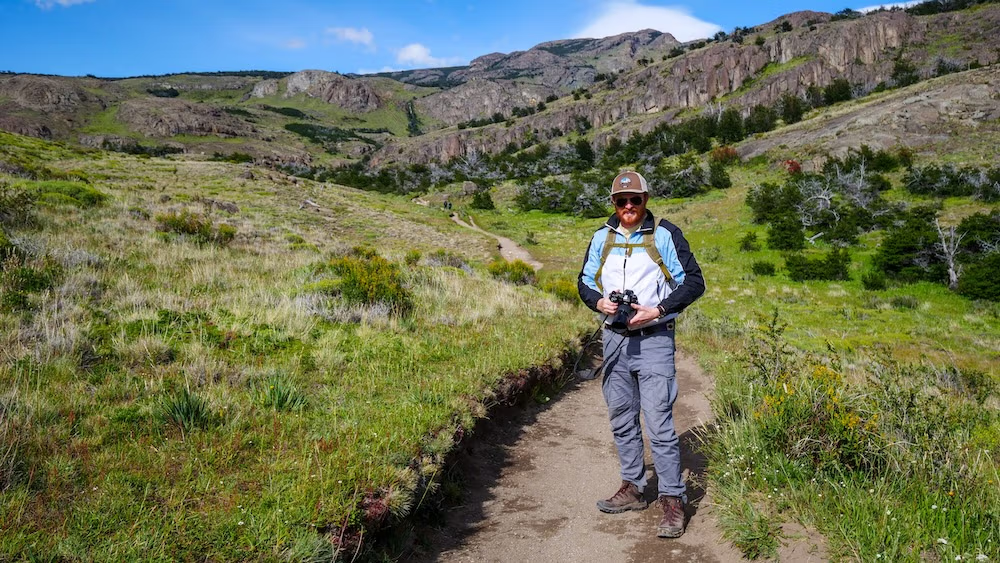
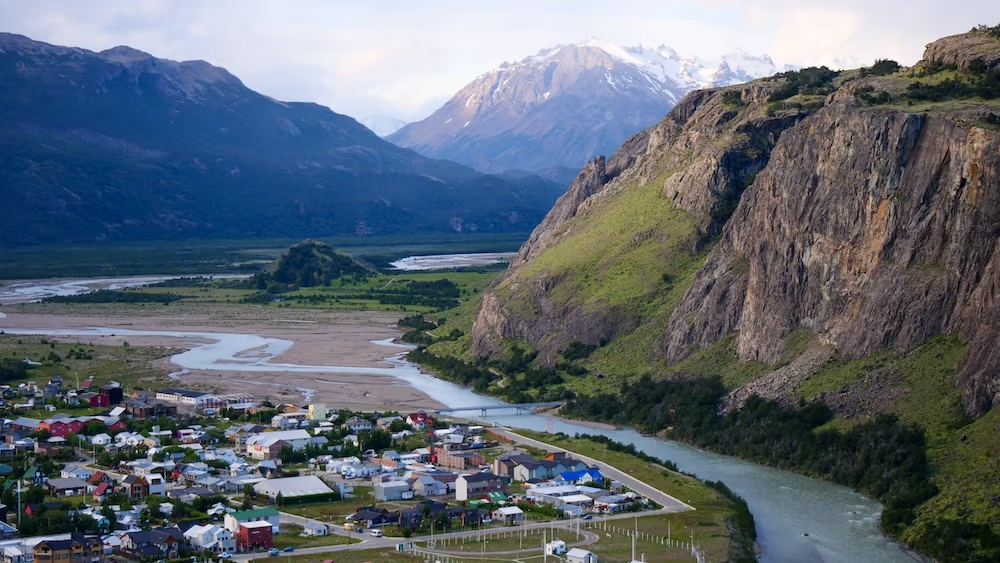
El Chaltén is also wonderfully simple: it’s basically a compact grid of a few streets, a handful of cafés and bakeries, gear shops that look like they were invented for last-minute panic, and a whole lot of trailheads. That simplicity is what makes it brilliant—there’s very little friction between you and the mountains. But it also means the town runs on one Patagonia-specific currency: weather windows. When the sky opens up, everybody sprints for Fitz Roy or Cerro Torre like it’s a limited-time sale. When the clouds roll in, the town pivots to hot chocolate, pastries, and the collective ritual of hitting refresh on the forecast.
And honestly? We loved it. Because when Patagonia decides to cooperate for even five minutes, it looks like someone turned the saturation slider to “unfair.”
This is your planning guide to the question every would-be Fitz Roy pilgrim asks:
When is the best time to visit El Chaltén?
Plus the far more important follow-up: what should you know before you go so your trip feels epic—not chaotic?
- Best time at a glance
- Season-by-season vibe check
- Month-by-month planning
- Best time based on your travel style
- Weather, wind, and daylight (aka Patagonia’s mood swings)
- Crowds, costs, and booking timing
- Trails, park fees, tickets, camping rules
- How long to stay + itinerary game plans
- Packing, family travel tips, and common mistakes
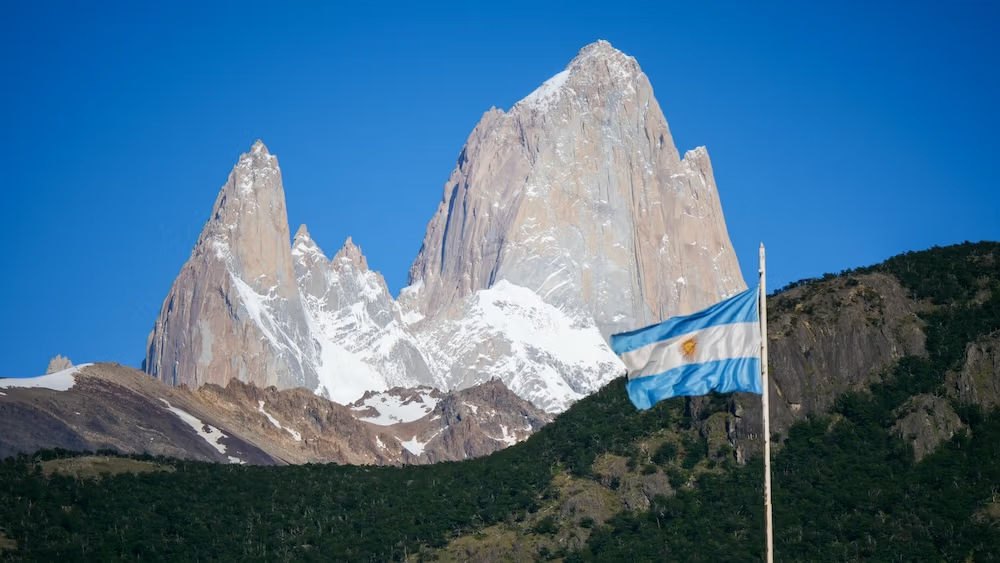
Best time at a glance
If you want the headline answer without reading a novel (I respect your boundaries):
The best overall time to visit El Chaltén is late October through early April.
Within that window, most travelers have two “sweet spot” options:
- Late November to early December: long daylight, strong hiking conditions, slightly less intense than peak summer.
- March: still great hiking, good daylight, and crowds often feel a bit more breathable.
If you want the maximum daylight cheat code for big hikes:
December through February has the longest days—hugely helpful for Laguna de los Tres (Fitz Roy) and Laguna Torre. Around the December solstice, El Chaltén gets about 16 hours of daylight.
If you’re the kind of traveler who likes certainty, here’s the reality check: El Chaltén doesn’t do certainty. It does probabilities. Your job is to stack the odds in your favor by choosing a season that matches your goals and giving yourself enough days to wait out the inevitable plot twists.
And if you’re reading this thinking, “But I can only go in January because my boss is allergic to PTO”: don’t panic. December through February delivers the most daylight, the most services, and the classic postcard look—just with more crowds and more wind. The wind is not a metaphor; it’s basically a local resident.
🧾 Quick Booking: Your El Chaltén Travel Essentials 🥾✨
🎒 Your Travel Toolkit (Book These 4 Things)
| ✅ What to book | 💡 Why it’s worth it | 🔗 Quick link |
|---|---|---|
| 🥾 Tours & experiences | Easy way to lock in a glacier day, a Lago del Desierto adventure, or a guided option when weather turns moody | Browse El Chaltén tours on Viator |
| 🏨 Hotels & stays | El Chaltén sells out fast in peak season — booking early = better locations + fewer “only the priciest rooms left” moments | Find El Chaltén hotels on Booking.com |
| 🚗 Car rentals (optional) | Best for freedom days: Ruta 40 viewpoints, flexible timing, photo stops, and a smoother Lago del Desierto run | Compare car rentals in El Calafate (gateway to El Chaltén) on DiscoverCars |
| 🚌 Bus tickets | The classic El Calafate ↔ El Chaltén route is simple — but popular departure times fill up | Book El Calafate → El Chaltén buses on Busbud |
👉 One-click backup (reverse direction): Book El Chaltén → El Calafate buses on Busbud
Destination Snapshot: Pick your vibe
| Time | Vibe | Best for | What you’ll love | What will test you |
|---|---|---|---|---|
| Late Oct–Nov | Shoulder season awakening | Flexible hikers | Fewer crowds, crisp air, strong hiking | Weather roulette |
| Dec–Feb | Peak Patagonia summer | Iconic hikes + long days | Maximum daylight, mild temps | Bookings + crowds + wind |
| Mar–early Apr | Shoulder season glow | “Smart” planners | Great trails, calmer town | Shorter days, cooler nights |
| May–Sep | Winter mode | Quiet seekers + snow vibes | Solitude, moody scenes | Ice/snow complexity + short daylight Argentina+1 |
Seasons: what each one feels like
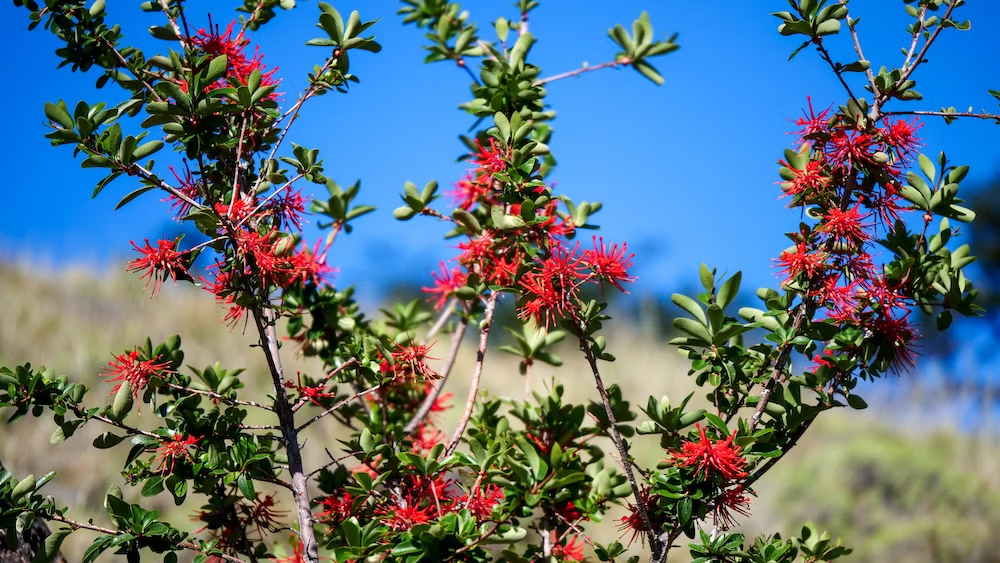
El Chaltén doesn’t do seasons the way your brain wants it to. Your brain wants: summer = shorts, winter = snowman, spring = flowers. Patagonia wants: four seasons before lunch, plus wind commentary.
So instead of “average weather” promises (lies), here’s what each season feels like and how it changes the trip.
Spring (October–November)
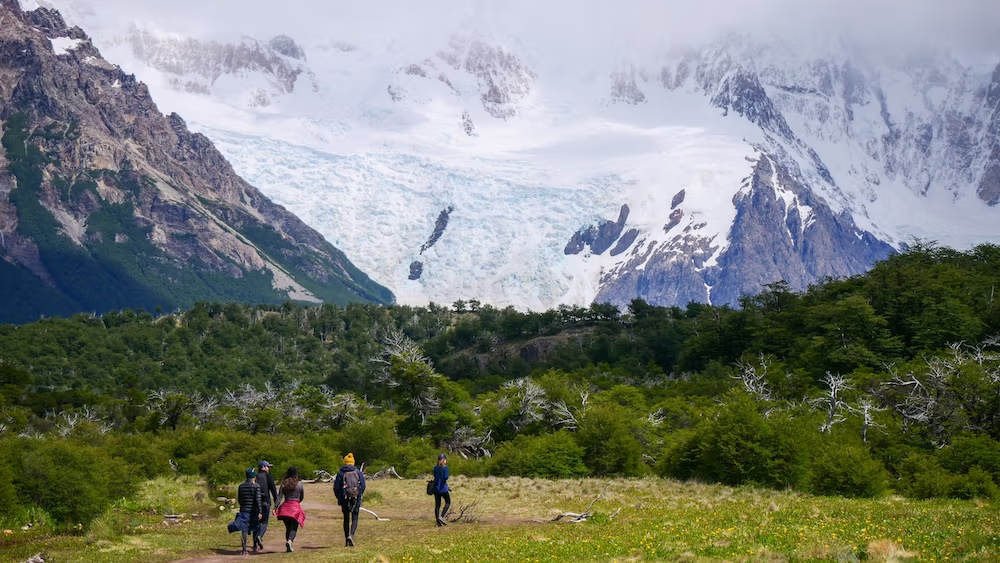
Spring in El Chaltén is when the town starts stretching after winter. Restaurants open longer hours, trekking agencies sharpen their pencils, and hikers return with fresh calves and big dreams. The trails are generally in good shape, but conditions can still swing wildly. One day you’ll be hiking in sunshine, the next you’ll be watching low clouds cling to the peaks like a clingy ex.
The big advantage is space. You can still get that “I have Patagonia all to myself” feeling on popular trails if you start early, and you’re less likely to need a second mortgage for a basic room at Vertical Lodge. Spring can be windier, and temperatures can feel more “cool and crisp” than “shorts and freedom,” so pack like you’re going on a hike and a mild emotional journey.
Why it’s great
- Trails are usually in good shape and improving quickly.
- Crowds exist, but they’re not yet operating at full “trail bottleneck” capacity.
- The town feels lively without feeling overwhelmed.
What to plan for
- Weather is still unpredictable—Patagonia does not do consistent.
- Wind can be punchy.
- Nights stay cool; layers matter.
Summer (December–February)
This is the version of El Chaltén most people imagine: long daylight, lots of people, and trails that feel like they were designed for cinematic montages. The days are extremely long—late December has around 16 hours of daylight, with sunrise around 5:47 and sunset close to 22:00.
That daylight is a superpower. It means you can do ambitious day hikes (Laguna de los Tres, Laguna Torre, Pliegue Tumbado) with plenty of time—if you start early and don’t treat the trail like a brunch reservation. But summer is also when the wind really commits to the bit. Local resources literally say that between October and March, wind is an “inevitable companion,” and in the austral summer, days without wind are rare.
If you’re visiting in peak season, plan ahead: book accommodation early, build at least one “weather buffer” day, and accept that sometimes Fitz Roy will ghost you behind clouds. Patagonia is allergic to guarantees.
Why this is peak season
- Daylight is a genuine superpower (especially for long hikes).
- Temperatures are the most comfortable for hiking, with mild days and chilly nights.
- Classic trails are at their most accessible for average hikers.
What to plan for
- It’s busy. El Chaltén is small, so the town fills up.
- If you’re doing Laguna de los Tres, start early to avoid traffic jams on the final steep section.
Fall (March–April)
Autumn is where El Chaltén starts getting poetic. The crowds thin, the nights get cooler, and the lenga forests shift into gold and orange. Trails can feel calmer without being empty, and you can still enjoy full-on day hikes—just with a bit more urgency about daylight.
This is the season where planning gets rewarded. If you’re trying to “do it all” in three days, summer daylight makes life easier. But if you can stay a little longer and build flexibility into your schedule, autumn can feel like a cheat code: quieter trails, better sleep, and that crisp air that makes everything taste better (including your end-of-hike pastry that you absolutely earned).
Why people love it
- Excellent hiking in March, often with fewer crowds than mid-summer.
- Cooler air can feel nicer for long climbs.
- It’s easier to find accommodation compared to peak months.
What to plan for
- Days shorten and nights get colder.
- Weather windows can tighten, so flexibility matters.
Winter (May–September)
El Chaltén in winter is a different destination. Many businesses reduce hours or close. Transportation options can be limited. Trails can be snowy, icy, muddy, and just generally more serious. Even the official trails brochure notes that in winter, conditions change due to snow and mud, increasing difficulty.
This doesn’t mean “don’t go.” It means go with the right expectations. Winter is for travelers who value solitude and scenery over convenience, and for hikers who know what they’re doing (or are hiring someone who does). If you’re brand new to hiking, winter probably isn’t your learning-to-love-Patagonia moment unless you keep it to short, safe viewpoints and treat the big trails with respect.
Why people go
- Solitude and dramatic landscapes.
- A completely different Patagonia vibe.
Why it’s not the default
- Short daylight makes long hikes harder to time safely.
- Trail conditions can require winter hiking experience and gear.
Month-by-month planning
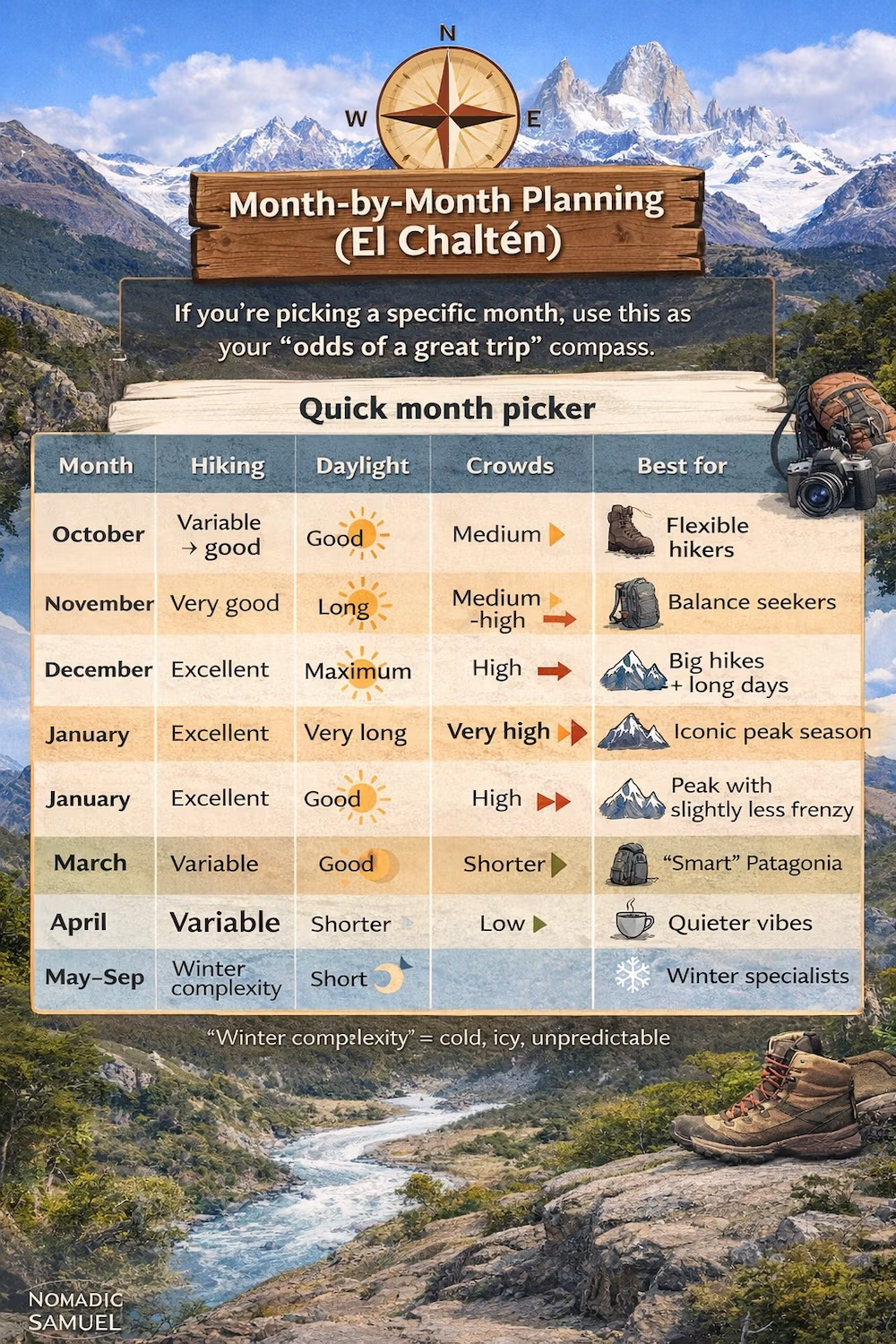
If you’re picking a specific month, use this as your “odds of a great trip” compass.
Quick month picker
| Month | Hiking | Daylight | Crowds | Best for |
|---|---|---|---|---|
| October | Variable → good | Good | Medium | Flexible hikers |
| November | Very good | Long | Medium-high | Balance seekers |
| December | Excellent | Maximum | High | Big hikes + long days |
| January | Excellent | Very long | Very high | Iconic peak season |
| February | Excellent | Very long | Very high | Peak with slightly less frenzy |
| March | Excellent | Good | Medium-high | “Smart” Patagonia |
| April | Variable | Shorter | Medium-low | Quieter vibes |
| May–Sep | Winter complexity | Short | Low | Winter specialists |
October: the season starts sharpening
October is often the start of the main trekking season window (commonly framed as October–April).
If you can stay 4–6 nights, October can be fantastic: one day gets sacrificed to weather, and you still have enough time to win.
November: the near-perfect compromise
If you want my slightly aggressive recommendation: November is one of the best value months. Good trails, long days, and fewer peak-summer pressures.
December: the daylight cheat code (our month)
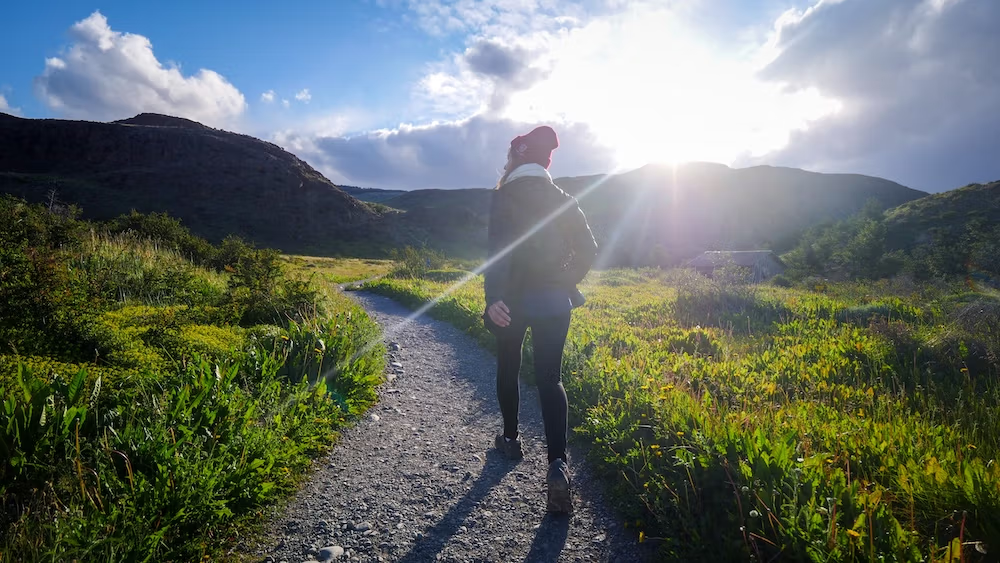
We traveled in December and kept noticing the same hilarious Patagonia math: it’s evening… but it’s still basically daytime.
At one point we looked at the clock—about 6:45 p.m.—and realized we still had roughly three hours of usable light for a viewpoint hike. That kind of daylight is why December feels forgiving.
January–February: iconic, intense, worth it
These are the peak months. Expect:
- fuller buses and restaurants,
- more competition for the best rooms,
- more people on the iconic trails,
- and (usually) the highest prices.
The upside is the same: long days and strong hiking conditions.
March: the calm genius month
March is a favorite answer for travelers who want:
- excellent hiking,
- a calmer town,
- and still enough daylight to do big days safely with good timing.
April: quieter, cooler, less predictable
April can be beautiful if your goal is atmosphere and fewer people. If your goal is “I must see Fitz Roy in perfect light,” you want more buffer days.
May–September
Winter mode. Expect snow on higher trails, fewer open restaurants, and more logistics planning. Stunning in a quiet way—if you’re prepared.
Best time for your travel style
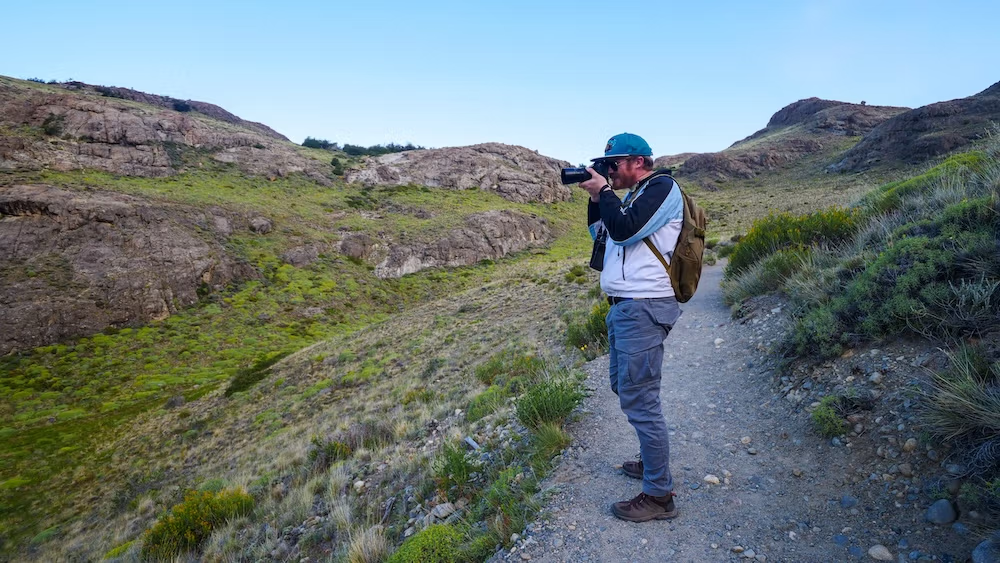
Because “best time” depends on what you want to do and how you like to travel.
Decision matrix: best time by traveler type
| You are… | Best window | Why it works | Watch-outs |
|---|---|---|---|
| First-timer chasing Fitz Roy + Torre | Dec–Feb | Longest daylight, best odds | Book early; accept crowds |
| Photographer chasing drama light | Nov or Mar | Great light + calmer trails | Clouds still do what they want |
| Budget traveler who hates crowds | Oct or Apr | Lower demand | Less consistency |
| Camper / multi-day trekker | Nov–Mar | Better nights + access | Camping may require reservations |
| Winter vibes person | Jun–Aug | Snowy solitude | Traction + short daylight |
| Family traveler | Nov–Mar | Daylight buffer + options | Wind is still a menace |
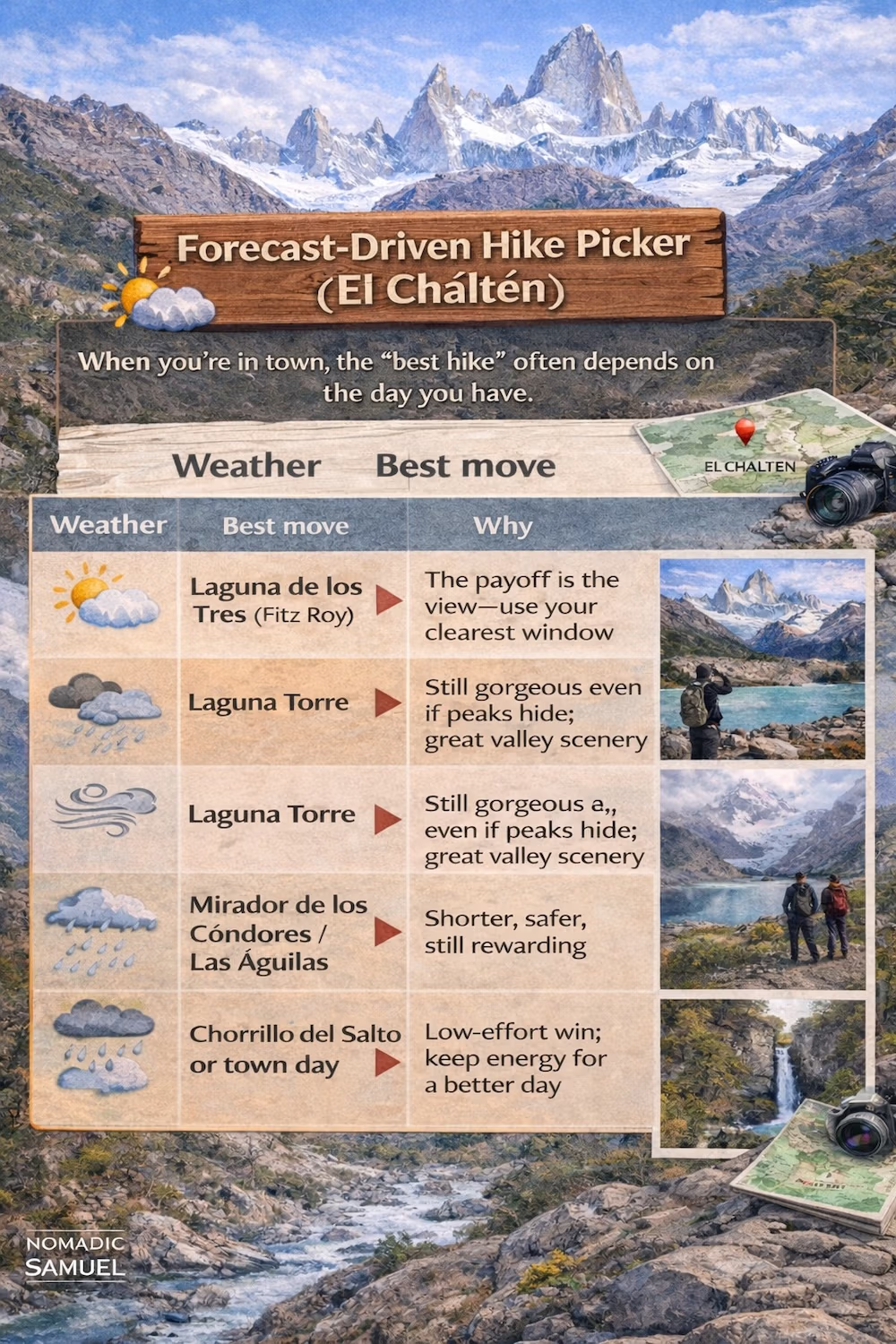
Forecast-driven hike picker
When you’re in town, the “best hike” often depends on the day you have.
| Forecast vibe | Best move | Why |
|---|---|---|
| Clear/mostly clear | Laguna de los Tres (Fitz Roy) | The payoff is the view—use your clearest window |
| Cloudy but stable | Laguna Torre | Still gorgeous even if peaks hide; great valley scenery |
| Windy + mixed | Mirador de los Cóndores / Las Águilas | Shorter, safer, still rewarding |
| Drizzly/low visibility | Chorrillo del Salto or town day | Low-effort win; keep energy for a better day |
Weather, wind and daylight
The only accurate forecast is “maybe”
El Chaltén’s weather is famously unpredictable, and the practical guidance you’ll find again and again is basically: pack for chaos.
One minute you’re hiking in sunshine, the next minute you’re in full shell mode wondering if your eyebrows are waterproof.
Temperatures: mild days, cold nights
Even in peak season, nights can be cold. Local climate summaries note summer lows around 5°C (41°F) and winter lows near or below freezing.
Translation: layers are not optional.
Wind: your unofficial tour guide
Wind is part of Patagonia’s identity. Sometimes it’s background noise. Sometimes it’s a full-body experience.
On our Fitz Roy day, the final ascent felt like Patagonia asking, “Do you deserve this view?” and at the top we ate lunch tucked behind rocks like nervous lizards. Not glamorous—very real.
Daylight: why summer feels like a superpower
Daylight is safety and flexibility. Around late December, El Chaltén gets about 16 hours and 19 minutes of daylight. That’s why December–February is so forgiving: you can start early, take breaks, get delayed, and still have enough light to get down without panic.
Crowds, costs and booking timing
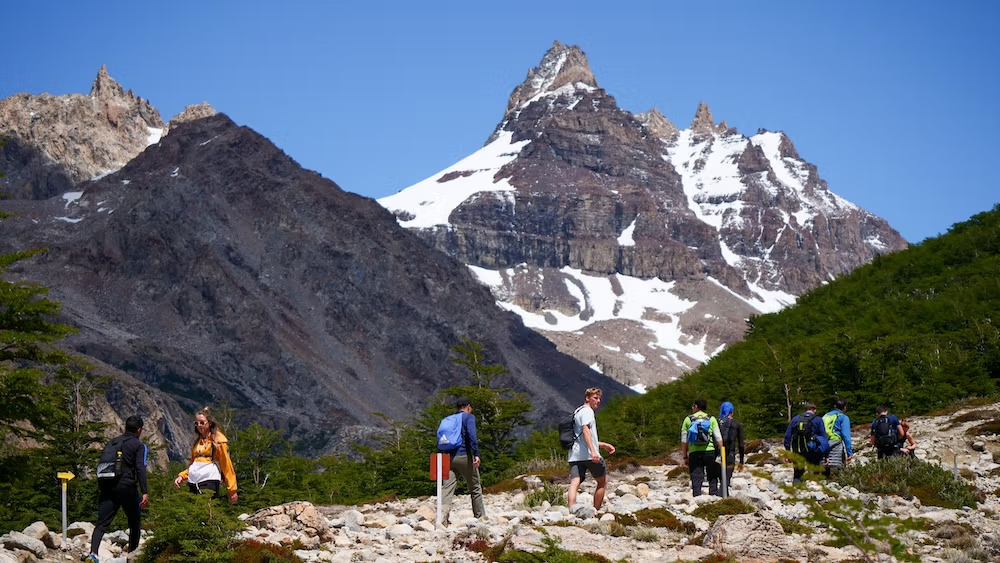
El Chaltén is small. That’s the charm—and also why peak season can feel crowded fast.
Crowd reality check
| Season | Crowd level | Town vibe |
|---|---|---|
| Oct–Nov | Medium → high | Busy but manageable |
| Dec–Feb | High → very high | Peak, book-everything energy |
| Mar–Apr | Medium → low | Calmer, cozier |
| May–Sep | Low | Quiet, limited services |
👉 Check out El Chaltén hotels, resorts and lodges on Booking.com
Booking timing
If you’re going in:
- January/February: book accommodation early if you care about quality/comfort.
- December: still book early, especially around holidays.
- November/March: more options, but don’t assume you can wing it on a weekend.
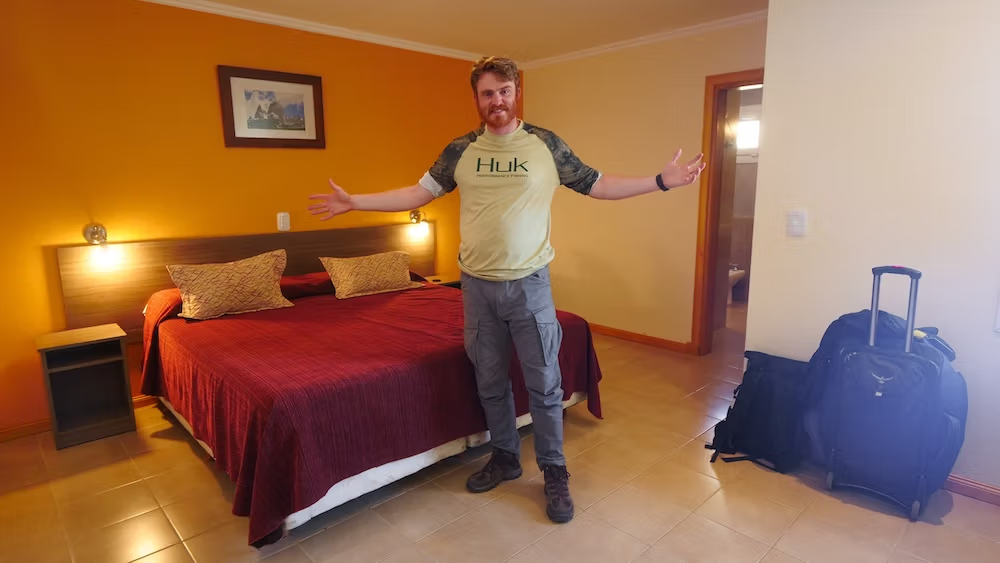
On our trip we stayed at Vertical Lodge, and having a comfortable base mattered—space to spread out, decent storage, and the kind of “home away from home” feeling that makes recovery days actually restorative.
👉 Browse El Chaltén tours (plus nearby Patagonia options) on Viator
Getting there (and getting around)
The classic route: El Calafate → El Chaltén by bus
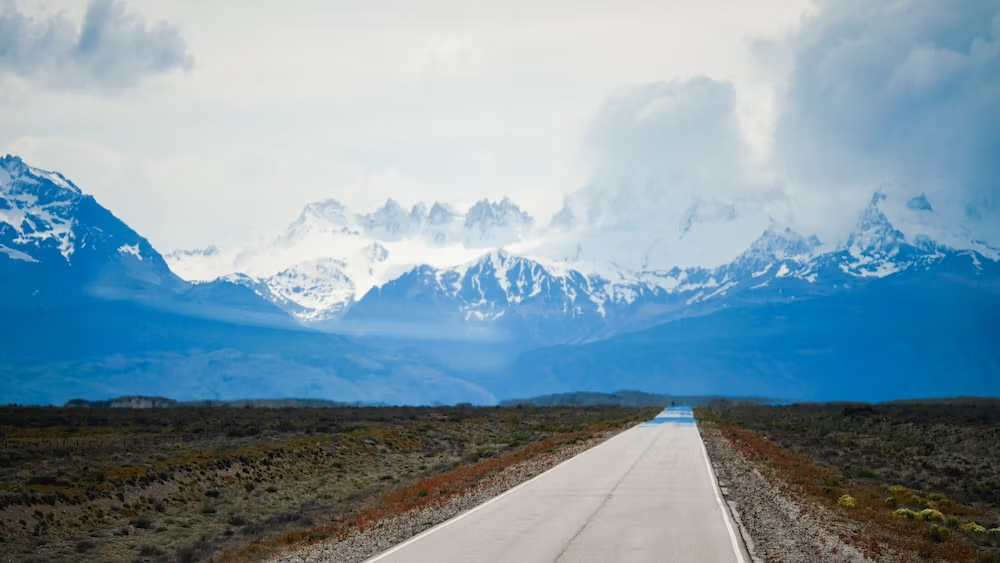
El Chaltén is reached by road via El Calafate, on a trip of about 3 hours along RN40 and RP41.
As of December 1, 2025, a commonly cited schedule lists multiple daily departures in both directions, with more frequency in the October–April season.
Also as of that same update:
- Price per one-way bus ticket: AR$ 50.000
- Municipal terminal fee in El Chaltén: AR$ 2.000 (paid at the terminal)
(These prices WILL change. Patagonia will always find a way to surprise you.)
Town logistics: small, walkable, and snack-driven
El Chaltén is compact. You can walk most places, which is great—unless it’s windy, in which case you’ll walk like a cartoon character leaning into an invisible wall.
We did a classic arrival routine:
- check in,
- grab groceries,
- find coffee,
- and immediately discover that good Wi-Fi in Patagonia can feel like a rare commodity worth celebrating.
Trails, park fees, tickets and camping rules
This part matters, because systems and rules around El Chaltén trails have evolved.
Trail menu: what’s actually available
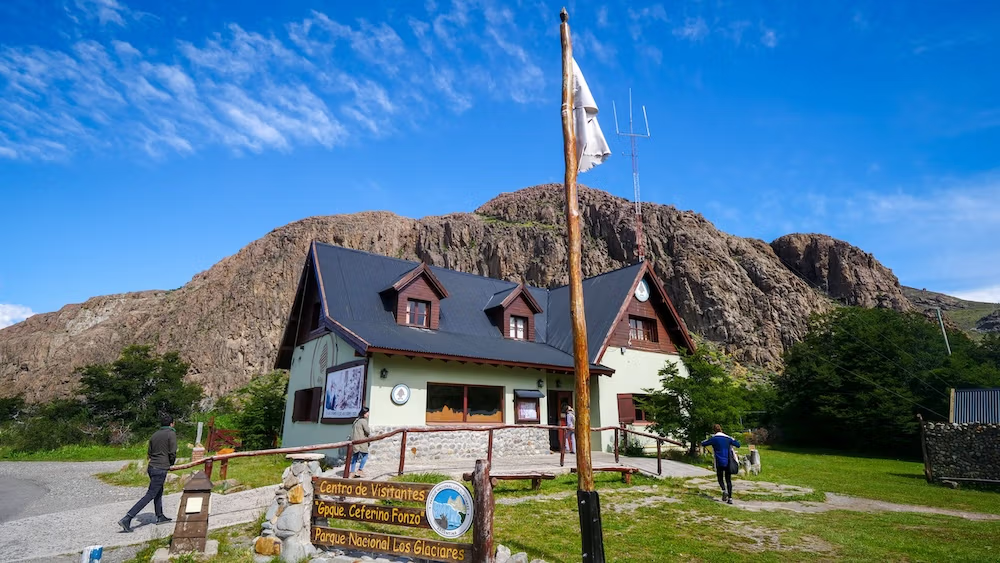
The official Zone Norte brochure lays out the main classic trails and highlights the “easy wins” too—like Mirador de los Cóndores (short and accessible, with views of El Chaltén and the valleys) and the quick walk to Chorrillo del Salto (a waterfall option that works even when you have limited time).
It also flags routes that are more serious, like Laguna Toro, which is described as an unmarked trail with mandatory registration.
Park entrance fees (Los Glaciares – Portada El Chaltén)
Los Glaciares National Park has an official fee table that includes “Los Glaciares – Portada El Chaltén.” As shown on Argentina’s official tariffs page, the general entry fee is listed as AR$ 45.000 (with discounted categories for residents and students).
That same page lists multi-day “Flexipass” options (3-day and 7-day) for Los Glaciares and Portada El Chaltén.
Check the current official fee page right before your trip—Argentina prices move fast.
Ticketing: online + card (no cash)
Official Zone Norte instructions state that access tickets are obtained only online (web or QR) and paid with credit/debit only—cash is not accepted.
Practical takeaway:
- buy tickets ahead when you can,
- have a backup payment method,
- and don’t assume you can solve it with cash at the trailhead.
Camping: reservations and limited capacity
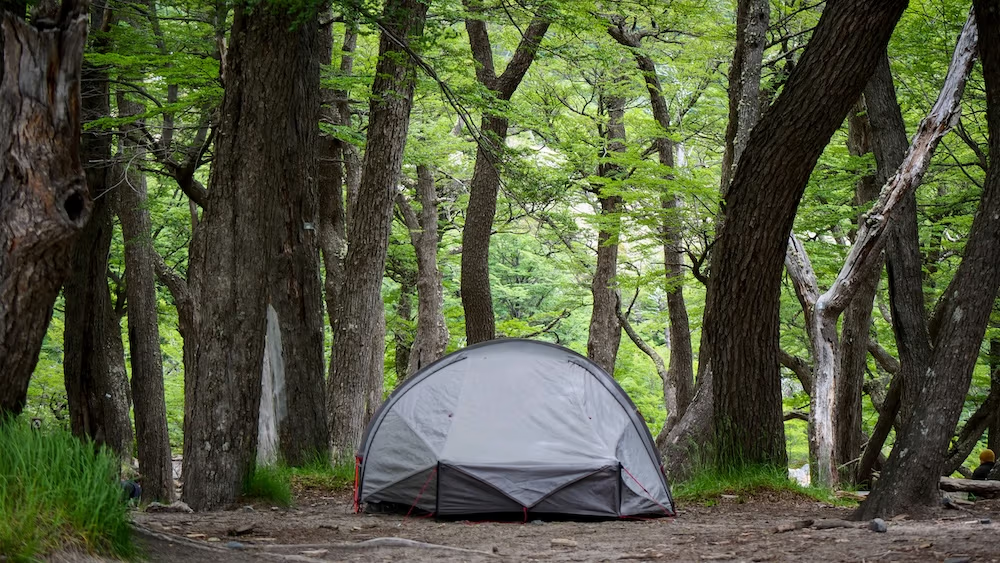
If you’re planning an overnight near Fitz Roy or Torre, key Zone Norte camps (Laguna Capri, Poincenot, De Agostini) are run with limited capacity and a reservation system, with pricing shown on the camp management site.
Even if you’re not camping, it affects you: it changes how many people are moving on the trails and how “busy” those routes feel.
Fires and stoves
Fire restrictions are common in Patagonia. Official park recommendations note that fire is only allowed in authorized fire pits where permitted, and you must bring the wood you’ll use.
Our December family trip: what it felt like on the ground
El Chaltén planning is one thing. El Chaltén reality is: you arrive, you inhale the mountain air, and then you immediately start thinking about snacks.
Arrival day: bus, check-in, sunset hustle
We bussed in from El Calafate, checked in, and did what we always do in a trekking town:
- snack inventory,
- “where is the supermarket,”
- “where is the coffee,”
- “how much daylight do we have left?”
In December, the answer to that last one is usually: enough to justify one more hike.
We squeezed in a sunset walk to Mirador de los Cóndores, which is one of the best quick wins in town—short distance, big perspective, and (if you’re lucky) an actual condor overhead.
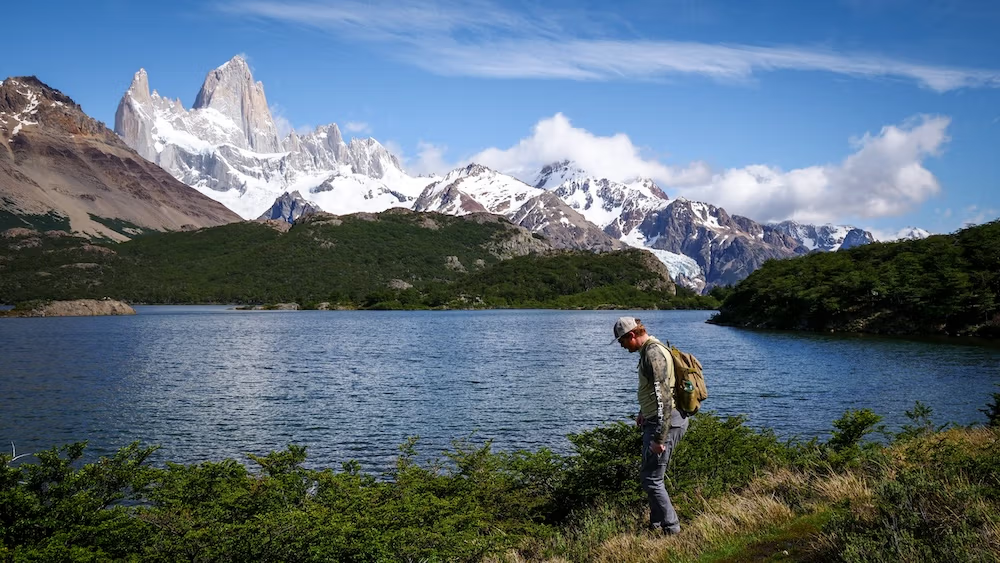
Big hike day: Laguna de los Tres (Fitz Roy)
This hike is iconic for a reason: the scenery builds like a movie trailer. Forest, rivers, viewpoints—and then Patagonia hits you with the finale.
The last kilometer is steep and rocky. It’s not technical climbing, but it’s the section where most people go quiet and start bargaining with their hamstrings.
We got our Fitz Roy moment. Then we got our wind moment. Then we got our “hide behind rocks and eat lunch like goblins” moment. And yes, it counts as a core memory.
Recovery day: because we are not immortal
After a big Fitz Roy day, a lighter day is not “wasted.” It’s smart. El Chaltén is better when your legs aren’t staging a protest.
Second classic: Laguna Torre
Laguna Torre is a different kind of satisfaction: long valley views, river scenery, and a trail that still feels rewarding even if the peaks decide to stay shy behind clouds.
It’s also an excellent “plan B” hike when the forecast isn’t perfectly clear.
How long to stay + itinerary game plans
If you want El Chaltén to feel relaxed, not frantic:
Best stay length for first-timers: 4 to 6 nights
That gives you:
- one Fitz Roy day,
- one Torre day,
- one buffer day for weather,
- one lighter day for viewpoints/rest,
- and time to enjoy the town without speed-running your own vacation.
Itinerary decision matrix
| Time in El Chaltén | Best approach | What you can do | Who it’s for |
|---|---|---|---|
| 2 nights | One classic + a viewpoint | Fitz Roy or Torre + Cóndores | Tight schedules |
| 3 nights | Two classics (if weather cooperates) | Fitz Roy + Torre | Efficient hikers |
| 5 nights | Buffer + variety | Fitz Roy, Torre, rest day, extras | Most people |
| 7+ nights | Deep Patagonia | Add Lago del Desierto, photo missions, buffers | Slow travelers |
5-night sample plan (the “do it properly” version)
Day 1: arrival + groceries + Mirador de los Cóndores
Day 2: Laguna de los Tres (Fitz Roy)
Day 3: rest / town / short trail (or Chorrillo del Salto)
Day 4: Laguna Torre
Day 5: flex day (Lago del Desierto, another hike, or weather redo)
Packing, gear and what we’d do differently
El Chaltén’s dress code is: layers and humility. Official and local guidance consistently emphasizes being prepared for sudden changes and bringing waterproof layers.
Packing by season
| Item | Oct–Apr | May–Sep | Why it matters |
|---|---|---|---|
| Waterproof shell | ✅ | ✅ | Wind + sudden rain |
| Warm mid-layer | ✅ | ✅✅ | Nights stay cold El Chaltén |
| Hat + gloves | ✅ | ✅✅ | Wind chill is real |
| Sunglasses + sunscreen | ✅ | ✅ | UV can be strong El Chaltén |
| Good footwear | ✅ | ✅ | Grip + comfort |
| Trekking poles | Helpful | Strongly recommended | Steep descents + stability |
| Traction (microspikes) | Rarely | Often | Ice/snow on trails Argentina |
| Headlamp | ✅ | ✅ | Safety buffer |
| Offline maps | ✅ | ✅ | Signal can be inconsistent |
What we’d change next time
- Bring trekking poles for the Fitz Roy finale (and the descent, when your knees start negotiating).
- Buy more staples in El Calafate if you cook and care about price/selection.
- Add one extra buffer day if views are your priority.
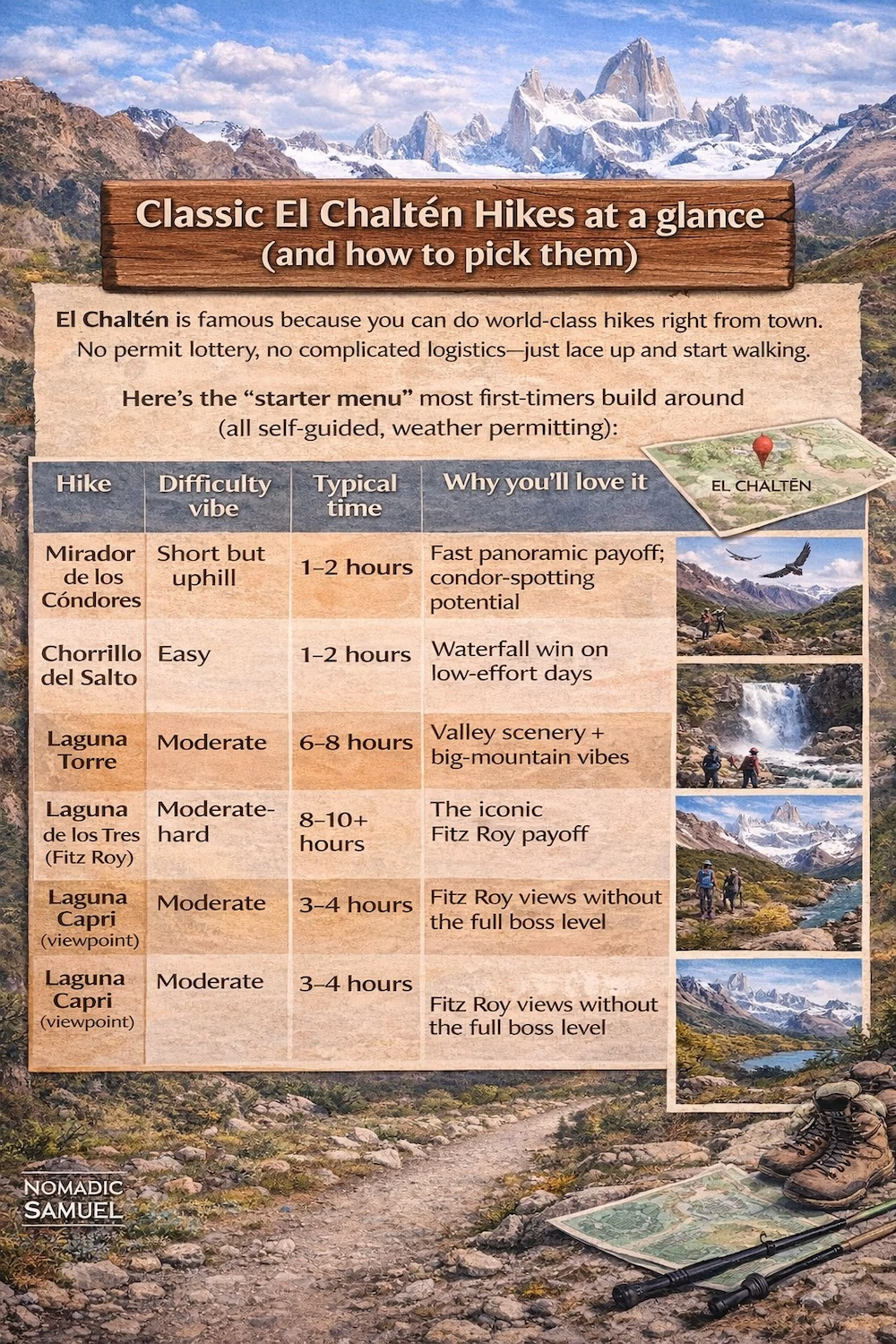
Classic hikes at a glance (and how to pick them)
El Chaltén is famous because you can do world-class hikes right from town. No permit lottery, no complicated logistics—just lace up and start walking.
Here’s the “starter menu” most first-timers build around (all self-guided, weather permitting):
| Hike | Difficulty vibe | Typical time | Why you’ll love it | Best season |
|---|---|---|---|---|
| Mirador de los Cóndores | Short but uphill | 1–2 hours | Fast panoramic payoff; condor-spotting potential | Oct–Apr |
| Chorrillo del Salto | Easy | 1–2 hours | Waterfall win on low-effort days | Oct–Apr |
| Laguna Torre | Moderate | 6–8 hours | Valley scenery + big-mountain vibes | Nov–Mar |
| Laguna de los Tres (Fitz Roy) | Moderate-hard | 8–10+ hours | The iconic Fitz Roy payoff | Nov–Mar |
| Laguna Capri (viewpoint) | Moderate | 3–4 hours | Fitz Roy views without the full boss level | Nov–Mar |
Tip: if you’re torn, prioritize Fitz Roy for your clearest forecast window (because the view is the whole point), and use Torre as your “cloudy-but-stable” classic day.
Costs and budgeting (Patagonia price reality)
El Chaltén is not a bargain destination. It’s remote, seasonal, and popular—so you’ll feel it in your wallet. The best budgeting strategy is to decide where you want to splurge:
| Category | Cheapest move | Comfort move | Splurge move |
|---|---|---|---|
| Accommodation | Hostel / basic room | Lodge/hotel with breakfast | Boutique place with views |
| Food | Groceries + packed lunches | Mix of groceries + dinners out | Eat out often + treats daily |
| Transport | Bus from El Calafate | Bus + flexible times | Private transfer |
| Hiking add-ons | Self-guided day hikes | Occasional guided day | Multi-day guided trek |
Our personal “sanity splurge” was accommodation comfort. After long hiking days, having a cozy base (and not playing nightly “where do we dry these clothes?” Tetris) made the trip feel easy.
Family travel in El Chaltén (yes, it’s doable)
El Chaltén isn’t just for ultralight trail runners who speak exclusively in elevation gain. With a family, the planning just shifts:
- Aim for November–March for longer daylight and easier logistics.
- Build in a rest day after the big hike—your future self will send a thank-you note.
- Pick one “short win” (Mirador de los Cóndores or Chorrillo del Salto) for a day when everyone’s energy is… complicated.
- Overpack snacks. Patagonia hunger is a different species.
Family-friendly day picker:
| If the day feels like… | Do this | Why it works |
|---|---|---|
| Everyone is fresh | Laguna Capri | Fitz Roy vibes without the full grind |
| Energy is medium | Mirador de los Cóndores | Short, scenic, rewarding |
| Energy is low | Chorrillo del Salto | Waterfall reward with minimal fuss |
| Weather is questionable | Town day + bakery mission | Save your legs for a better window |
Mistakes to avoid
| Mistake | Why it hurts | Better move |
|---|---|---|
| Packing for “summer only” | Nights get cold; wind cools you fast | Pack layers + shell |
| Scheduling zero buffer days | Patagonia ignores your itinerary | Add 1–2 flex days |
| Starting Fitz Roy late | Bottlenecks + fatigue | Early start + snacks |
| Assuming cash works for park access | Zone Norte is online/card | Buy online ahead |
| Treating winter like shoulder season | Ice/snow changes everything | Winter gear + conservative plans |
Final “best time” recommendation
- Best overall balance: November or March
- Best for iconic hikes with maximum daylight: December to February
- Best for fewer crowds (with more weather risk): October or April
- Best for winter solitude: June to August, but plan like it’s a different sport
El Chaltén is worth it when you can safely move around—because the mountains don’t just look good. They reset your brain. They make you forget emails exist. They also make you say, “Let’s do another hike tomorrow,” which is a sentence you will regret at 7:00 a.m. but cherish by lunch.
✨ Ready to lock in your El Chaltén plan?
- 🥾 Browse El Chaltén tours on Viator
- 🏨 Find El Chaltén hotels on Booking.com
- 🚗 Compare El Calafate car rentals on DiscoverCars
- 🚌 Book El Calafate → El Chaltén buses on Busbud
El Chaltén Best Time to Visit FAQ: Real Traveler Questions With Straight Answers
Is El Chaltén worth visiting if I can only stay two days?
Yes. Pick one classic hike (Fitz Roy or Torre), add Mirador de los Cóndores, and accept that this will be a preview—not a full Patagonia conquest.
What’s the single best month for first-time hikers?
December or January for maximum daylight, but November and March are often the best balance if you want fewer crowds.
Do I need a park ticket to hike from El Chaltén?
Often, yes—many major trailheads are within Los Glaciares (Zone Norte), and the official tariffs include “Los Glaciares – Portada El Chaltén.”
Can I pay the entrance fee in cash at the trailhead?
No. Zone Norte ticketing is handled online/QR and paid by card; cash is not accepted currently.
How early should I start Laguna de los Tres?
Early. If you’re walking by 7–8 a.m. in peak season, you’ll avoid crowds and have a safer daylight buffer.
Is Laguna Torre easier than Laguna de los Tres?
For most people, yes. Torre is a steadier day; Fitz Roy’s last kilometer is the “boss level.”
How many days should I stay for a first visit?
Five nights is a sweet spot: Fitz Roy, Torre, a rest day, a buffer day, and one flex day.
Is March still great for hiking?
Yes—March is one of the best “smart season” months with strong trails and a calmer vibe.
What’s the deal with camping reservations?
Some major Zone Norte camps operate with limited capacity and reservations, so check the current system before you hike in.
Are campfires allowed?
Fire restrictions are common; use only authorized fire pits where permitted and follow current rules.
Do I need microspikes in winter?
Often, yes. Winter trail conditions can include significant ice/snow, and park communications recommend traction and extra caution.
How do I get from El Calafate to El Chaltén?
Most travelers take the bus (about 3 hours). As of Dec 1, 2025, published schedules show multiple daily departures year-round.
What’s the biggest mistake people make?
Assuming Patagonia will follow your plan. Build buffer days, pack layers, and choose your big hike based on the clearest forecast window.
Is Mirador de los Cóndores worth it if I’m short on time?
Absolutely. It’s one of the most accessible scenic payoffs near town, with panoramic views and a chance to spot condors.
Project 23 Argentina: This guide is also available in Spanish. [Lea la versión en castellano: ¿Cuál es la mejor época para visitar El Chaltén, Argentina? ¡Lo que tenés que saber antes de ir!]
Further Reading, Sources & Resources
You can use a mix of official tourism + national park sources, plus high-quality local planning resources and daylight data to double-check details that can change (fees, rules, seasons, trail guidance).
Argentina tourism overview
https://www.argentina.travel/en/news/el-chalten-the-capital-of-trekking-in-argentina
A friendly, high-level overview from Argentina’s official tourism platform that frames El Chaltén as a trekking hub and helps confirm the big-picture seasonal story and why the destination is known for self-guided hiking.
Park fees and official pricing
https://www.argentina.gob.ar/interior/ambiente/parquesnacionales/losglaciares/tarifas
The official Los Glaciares National Park tariff page. Use this to verify current entrance fees, category discounts/exemptions, and any multi-day pass options that may apply to El Chaltén / Zona Norte access (these numbers can change).
Safety, rules, and park-wide recommendations
https://www.argentina.gob.ar/parquesnacionales/patagonia-austral/recomendaciones-para-visitar-el-parque-nacional-los-glaciares
Official visitor recommendations for Los Glaciares that cover park conduct, safety guidance, seasonal cautions, and general rules that matter when you’re hiking in Patagonia conditions.
Official trail maps and hiking guidance (Zona Norte)
https://www.argentina.gob.ar/sites/default/files/2019/06/folleto_senderos_zona_norte_pnlg_espanol_2024.pdf
The official Zona Norte trail brochure (PDF) for El Chaltén. This is the most useful “planning document” for hikers: it outlines the trail network, highlights classic hikes and short viewpoints, and includes seasonal warnings (including winter difficulty changes) and any special notes (like registration requirements for certain routes).
Services, amenities, and practical park logistics
https://www.argentina.gob.ar/parquesnacionales/patagonia-austral/parque-nacional-los-glaciares/servicios
Official park services info: useful for confirming practical details like available amenities, services in the area, general visitor infrastructure, and logistics that can affect planning (especially if you’re trying to understand what’s available in/around El Chaltén versus elsewhere in the park).
Local weather deep-dive (El Chaltén specific)
https://elchalten.com/v4/en/the-weather-in-el-chalten.php
A detailed local-style guide to El Chaltén weather patterns, including the reality of wind, sudden shifts, and how conditions can vary between town and higher elevations. Great for setting expectations beyond simple “average temperature” charts.
Daylight and sunrise/sunset planning
https://www.timeanddate.com/sun/@6690180?month=12
A practical tool for verifying sunrise, sunset, and day length (we used this to confirm why summer—especially late December—feels like a daylight cheat code). It’s especially helpful for planning long hikes safely.
Notes on accuracy
- Prices, fees, and rules change often in Argentina (and in national parks), so treat anything involving money, passes, or ticketing as “verify right before your trip.” The official tariff and recommendations pages above are the best place to confirm the current situation.
- Weather claims are inherently probabilistic in Patagonia. We lean on official guidance plus detailed local summaries to describe patterns (windy season, variability), but your actual day-to-day experience will still depend on short-term forecasts.
- Trail conditions change by season (especially in winter). If you’re going outside the typical October–April trekking window, prioritize official park recommendations and the Zona Norte trail brochure, and plan conservatively.