
El Chaltén has a funny way of turning normal, snack-loving humans into “serious hikers” for a week. You wake up early, you promise yourself you’ll eat a hearty breakfast, and then—somewhere around kilometer nine—you realize you’re basically a hungry wind-sail with legs. Audrey and I went to El Chaltén expecting epic views (delivered), great food (also delivered), and a few “pleasant hikes”.
And yet… here we are, writing the trekking poles article.
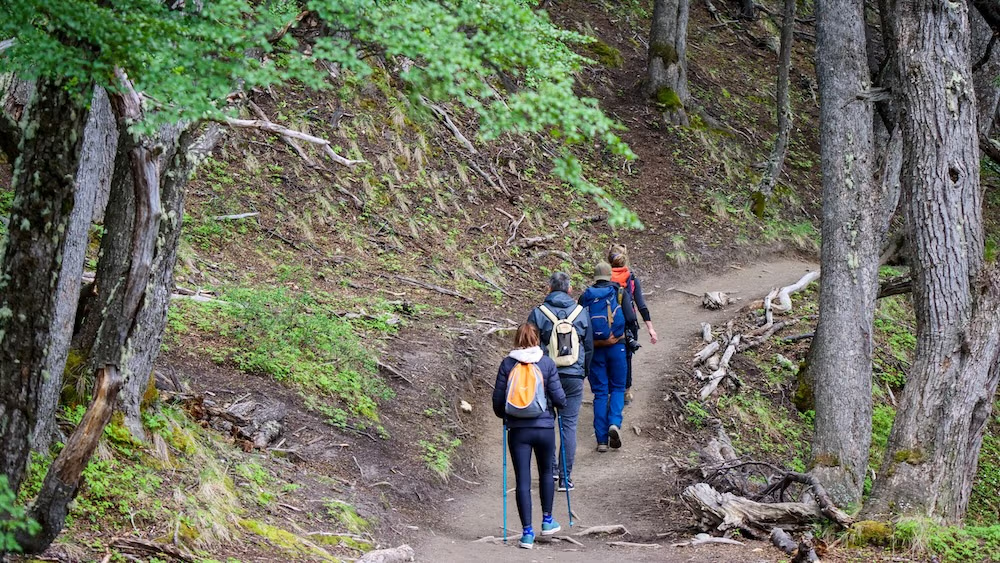
Because the question isn’t really “Do you need trekking poles in El Chaltén?” The question is: Do you want to feel steadier, safer, and less demolished on the descents—especially on the big-ticket hikes—without turning your arms into instant ramen? If you’re stacking big days back-to-back (hello, Fitz Roy and Torre), trekking poles can be the difference between “We’re doing another hike tomorrow!” and “Please airlift me directly to La Waflería.”
This guide is part science, part practical gear advice, and part “we learned this the hard way.” We’ll tell you when poles are genuinely worth it, when they’re optional, how to use them so they actually help, and how El Chaltén’s specific terrain and weather make this decision different than, say, a friendly stroll in a polite national park that doesn’t try to wind-slap you into another dimension.
The short answer
Let’s get one thing straight. Most hikers in El Chaltén don’t strictly need trekking poles for every trail. But for the hikes most people travel across the planet to do—especially Laguna de los Tres (Fitz Roy viewpoint) and Loma del Pliegue Tumbado—poles are a smart tool for steep, rocky sections, long descents, and tired legs. Official trail guidance also warns about snow or mud near the end of some routes in autumn/spring, with a steep rocky slope where it can be dangerous to progress safely.
If you’re only doing short viewpoints and easy half-day walks, poles are optional. If you’re doing the big hikes (or you’ve got sensitive knees, a heavier pack, or shoulder-season conditions), poles are a “rent them and thank yourself later” item.
For context: I had six nights in town and still needed a full recovery day after Fitz Roy, plus one day where the wind made hiking feel like an extreme sport nobody consented to. That mix—big hikes + fatigue + conditions—is exactly why poles go from “optional accessory” to “smart decision.”
Our El Chaltén origin story: KM 9 made believers out of foodies
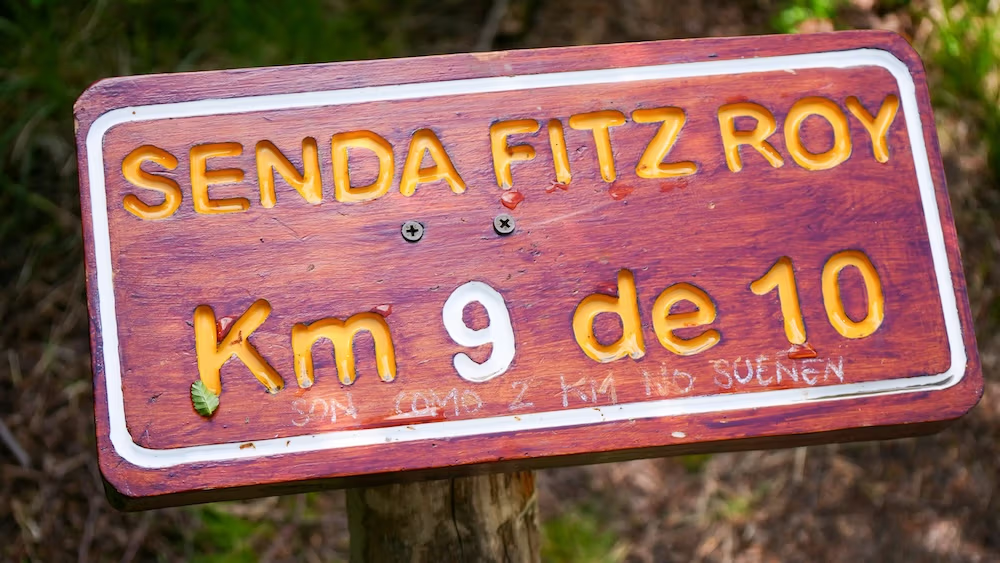
We spent six nights in El Chaltén with one goal: hike hard, eat harder, repeat until our legs capsized. We tracked hikes by kilometer markers like it was a video game, which is great for morale… until you realize that kilometer nine has its own personality.
On our Fitz Roy day, breakfast was early (El Chaltén accommodations understand hikers), the sky was clear, and we immediately did something very on-brand: we forgot our trail map on the nightstand. So we wandered around town, found the trailhead anyway, and got moving.
Seriously folks, Audrey and I left our trail map behind, which turned “early start” into “urban orienteering.” Nothing like beginning Patagonia’s most iconic hike with a 45-minute scavenger hunt for the trailhead.
Somewhere around 9 a.m. we were already eating our lunch. I was being piggy. I ate my sandwich. Audrey was the responsible one with a rice salad situation—big chunks of cheese, lots of egg, the kind of meal that says, “Yes, I plan.”
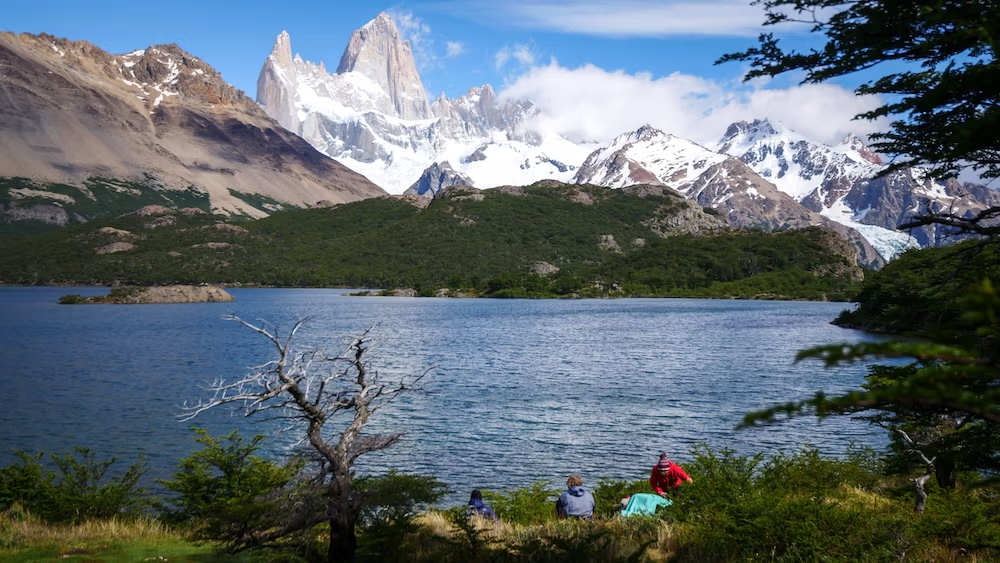
At Laguna Capri we had the classic fork-in-the-road debate: loop back toward town, or keep going to Laguna de los Tres. The weather was good, it was still early, and the daylight felt endless—so we went for the crown jewel, fully aware that the last kilometer had a reputation.
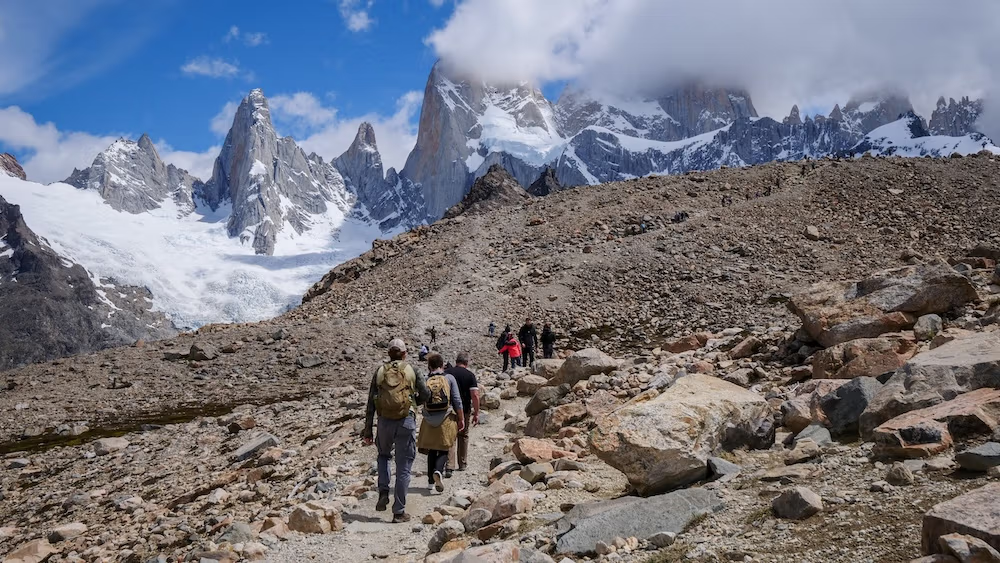
You’ve done the long approach, crossed rivers, admired granite peaks doing their best CGI impression… and suddenly the trail narrows, the slope kicks up, the surface gets rockier and looser, and the wind turns up like it’s trying to win an argument.
That’s kilometer nine. The longest and toughest kilometer of the whole trek.
KM 9 was also where the trail turned into a little bottleneck of shared suffering: tired hikers, steeper terrain, loose rock, and that feeling that your quads are all kinds of toast. If there’s one place in El Chaltén where poles feel like a cheat code, it’s that stretch.
We kept going partly because hikers coming down kept saying, “Keep going! The views are insane!” They were not lying. Reaching Laguna de los Tres was the most impressive view of our entire week of trekking in El Chaltén.
It was windy beyond belief and we were ravenous, so we literally hid behind a rock like frightened snacks on legs. Our gourmet summit meal was: one granola bar, some candy, and pure gratitude—then we started the long descent back down.
That’s why trekking poles are worth discussing.
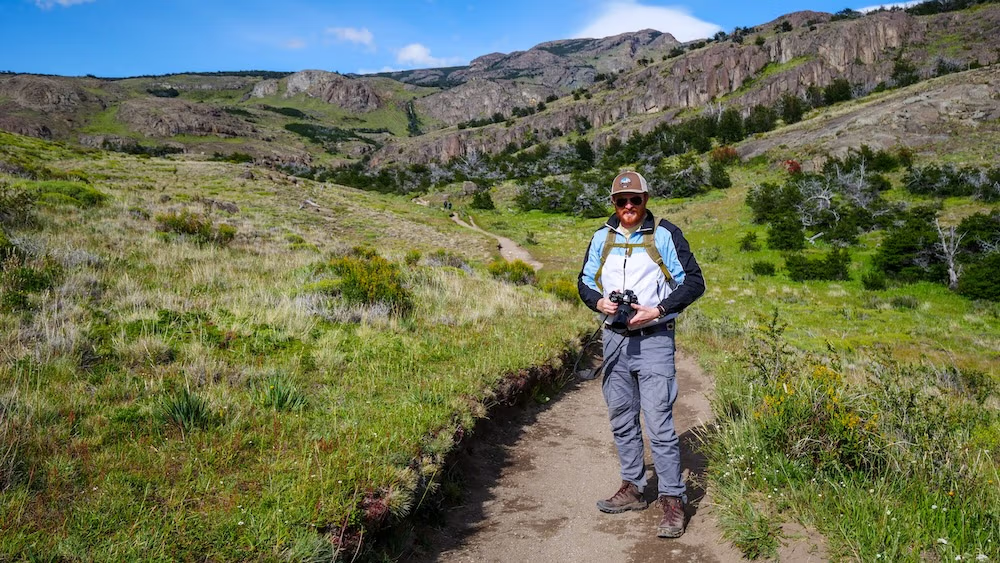
What makes El Chaltén different (and why poles are unusually helpful here)
El Chaltén is famous because the hiking is spectacular and accessible. It’s also… not gentle.
The “long descent back to town” reality
Many of the iconic routes are out-and-back. You don’t finish at a cozy shuttle stop; you finish by turning around and walking back the same distance. That means you often do the hardest/steepest section when you’re already tired, and then you still have hours of descending and rolling terrain after the “payoff.”
Poles shine on the way down because they can help reduce load on the lower body and make you feel more stable when your legs are wobbling like newborn deer.
Patagonia wind and fast-changing conditions
Patagonia is famous for changeable weather and strong winds. You can have sun, gusts, clouds, and “why is my face frozen?” in the same day. Poles can help with balance in wind and uneven terrain, but they can also be annoying if you’re constantly adjusting your grip or trying to keep your hands free for layers, photos, and snacks (a critical system).
Audrey and I had one day where the wind basically vetoed our hiking ambitions. We tried going out and immediately got that cartoon feeling of being pushed sideways—so we pivoted to a café day and saved our energy (and dignity) for a better window.
Rocky finishes, loose gravel, and steep sections
Some of the classic hikes have steep, rocky final sections (Laguna de los Tres and Pliegue Tumbado are the usual suspects). If those are wet, muddy, or snow-covered (common in shoulder season), they get more serious. Official trail descriptions explicitly warn about snow/mud toward the end and a rocky steep slope where it can be dangerous to progress safely.
Multi-day hiking fatigue
El Chaltén trips often involve stacking big hikes: Fitz Roy one day, Torre the next, then you get ambitious and start eyeballing another viewpoint like you’re invincible. Poles can help you manage cumulative fatigue by spreading some work to the upper body and helping reduce muscle damage after big mountain days.
We learned quickly that we’re “foodies” first and hikers second. Six nights gave us room for a full recovery day after Fitz Roy (12 hours of sleep, stiff legs, and dramatic hobbling), plus flexibility when Patagonia decided to throw a weather tantrum.
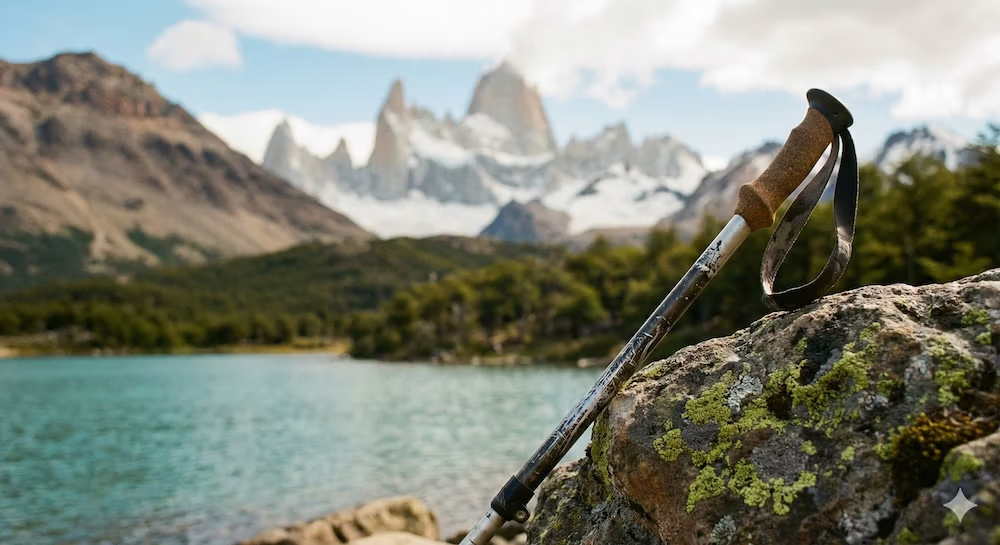
What trekking poles actually do
Think of trekking poles as a multi-tool with four jobs:
1) Extra points of contact (stability)
Two feet good. Two feet plus two poles is… often better. Poles can help with balance on uneven ground, loose rock, and slippery sections. Reviews of the research generally find poles can increase balance and stability, particularly when carrying a larger external load.
2) Brakes on descents (knee-friendlier returns)
Downhill is where many hikers feel the biggest benefit. Biomechanics research has measured knee joint forces during downhill walking with and without poles, and this is the core reason poles are beloved by people with cranky knees: they let you share some of the load.
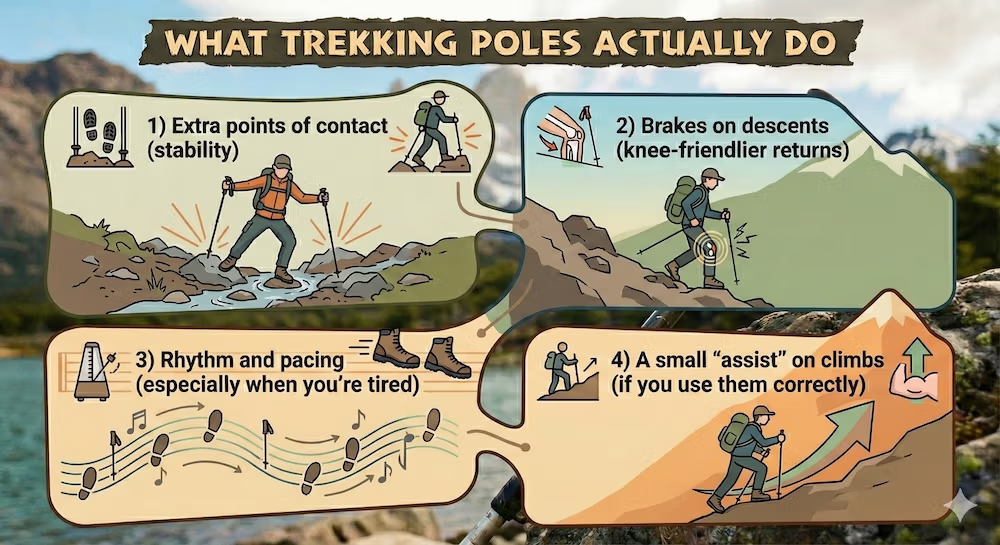
3) Rhythm and pacing (especially when you’re tired)
Poles can help you keep a steady cadence. On long days, they can act like metronomes for your legs. This sounds silly until you’re seven hours into a hike and your brain is negotiating with gravity.
4) A small “assist” on climbs (if you use them correctly)
Poles can help on steep climbs by letting you push a bit with your arms, keeping your torso more upright, and distributing effort. But this is not Nordic walking; you don’t need to turn it into a full-body ski workout unless you want the extra exertion.
The tradeoff: poles can increase cardiovascular demand
Poles can make hiking feel easier on joints and stability, but they can also increase cardiovascular demand because you’re involving more of your body. For many people, that tradeoff is worth it—especially when the goal is to finish strong and hike again tomorrow.
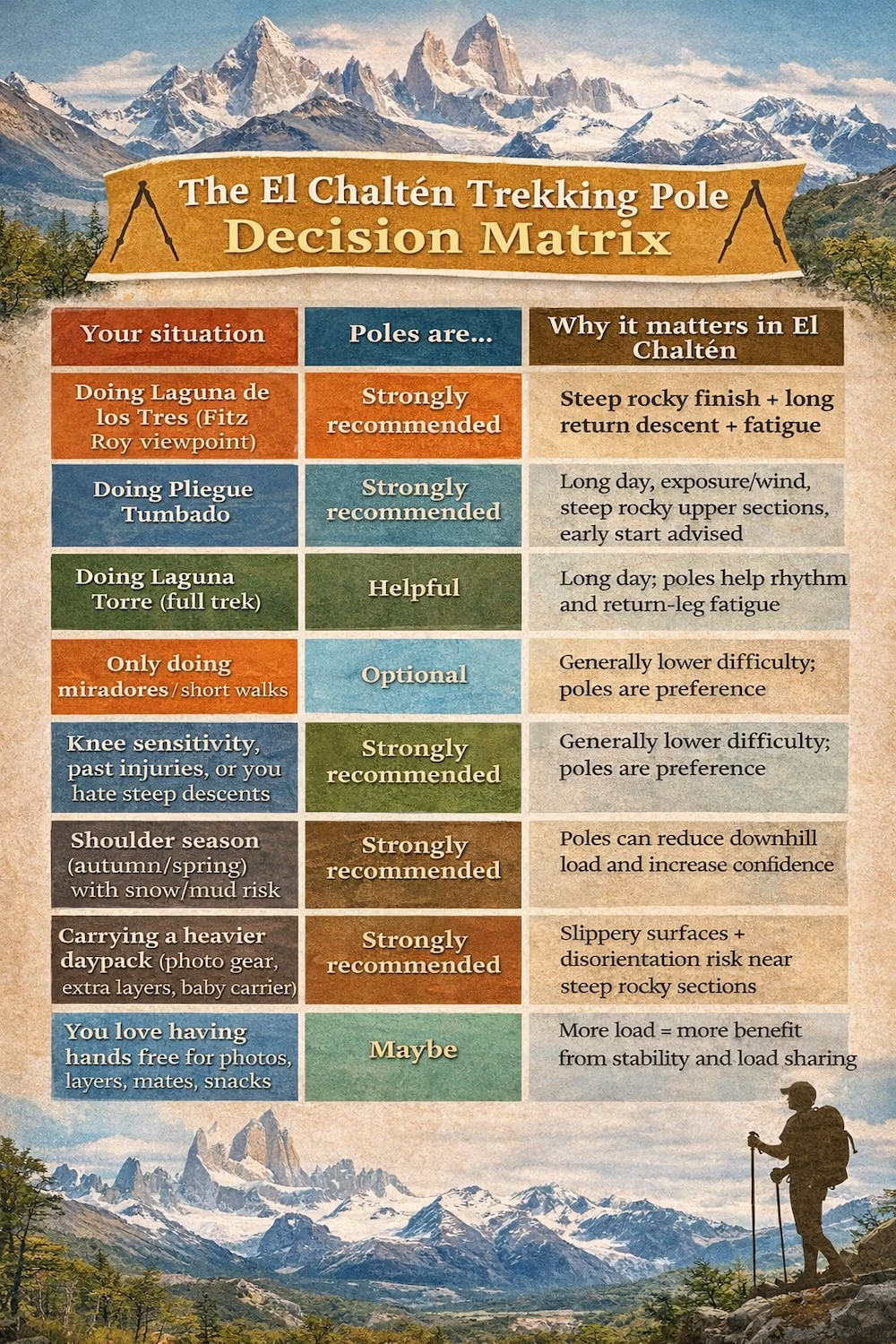
The El Chaltén Trekking Pole Decision Matrix
Use this like a quick diagnosis. Read across, find yourself, and you’ll know whether to bring poles, rent them, or skip them.
| Your situationPoles are…Why it matters in El Chaltén | ||
|---|---|---|
| Doing Laguna de los Tres (Fitz Roy viewpoint) | Strongly recommended | Steep rocky finish + long return descent + fatigue |
| Doing Pliegue Tumbado | Strongly recommended | Long day, exposure/wind, steep rocky upper sections, early start advised |
| Doing Laguna Torre (full trek) | Helpful | Long day; poles help rhythm and return-leg fatigue |
| Only doing miradores / short walks | Optional | Generally lower difficulty; poles are preference |
| Knee sensitivity, past injuries, or you hate steep descents | Strongly recommended | Poles can reduce downhill load and increase confidence |
| Shoulder season (autumn/spring) with snow/mud risk | Strongly recommended | Slippery surfaces + disorientation risk near steep rocky sections |
| Carrying a heavier daypack (photo gear, extra layers, baby carrier) | Strongly recommended | More load = more benefit from stability and load sharing |
| You love having hands free for photos, layers, mates, snacks | Maybe | Poles can be annoying; consider renting just for big hikes |
Trail-by-trail: where poles pay off the most
El Chaltén has a mix of “wow, that’s approachable” and “why are my calves on freakin’ fire?.” Here’s how poles fit into the main hits.
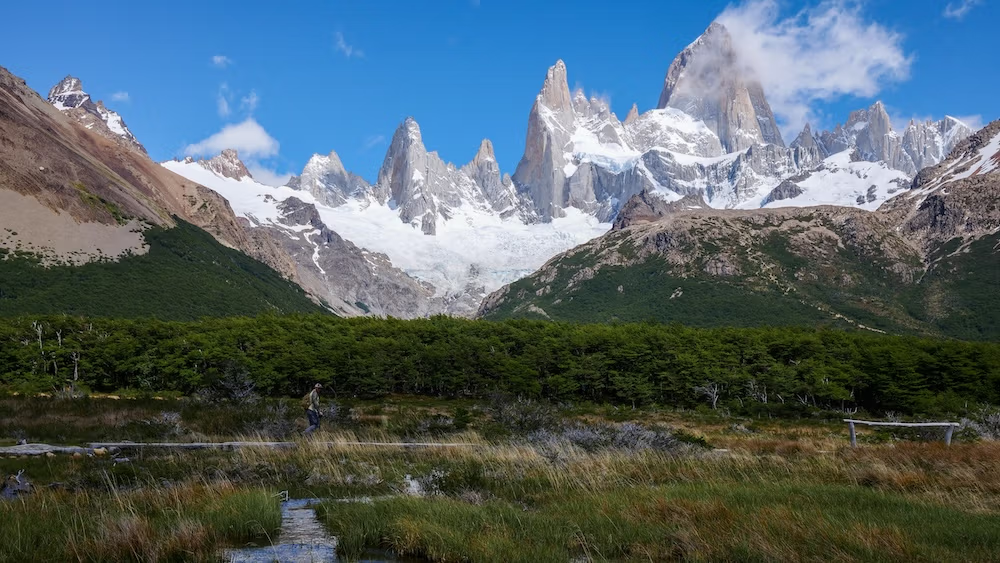
Laguna de los Tres (Fitz Roy viewpoint): the classic “yes, poles” hike
This is the hike that turns tourists into quasi-hikers. The approach is beautiful, the scenery escalates, and then the final section asks: “How do you feel about steep rock and gravel, while tired?”
In autumn or spring there may be snow or mud toward the end where the trail crosses a rocky area with a steep slope, and that it can be dangerous to progress safely and easy to become disoriented. That’s the precise kind of terrain where poles are not a luxury. They are a safety and comfort upgrade.
Where poles help most on this hike:
- The steep final climb (especially if loose or slick)
- The descent back down that same steep section (this is where knees beg for mercy)
- Any windy, uneven traverses where you want extra stability
Our personal lesson:
- The first 9 km felt “intermediate.” The last kilometer is where it tests you. That’s where poles earn their keep.
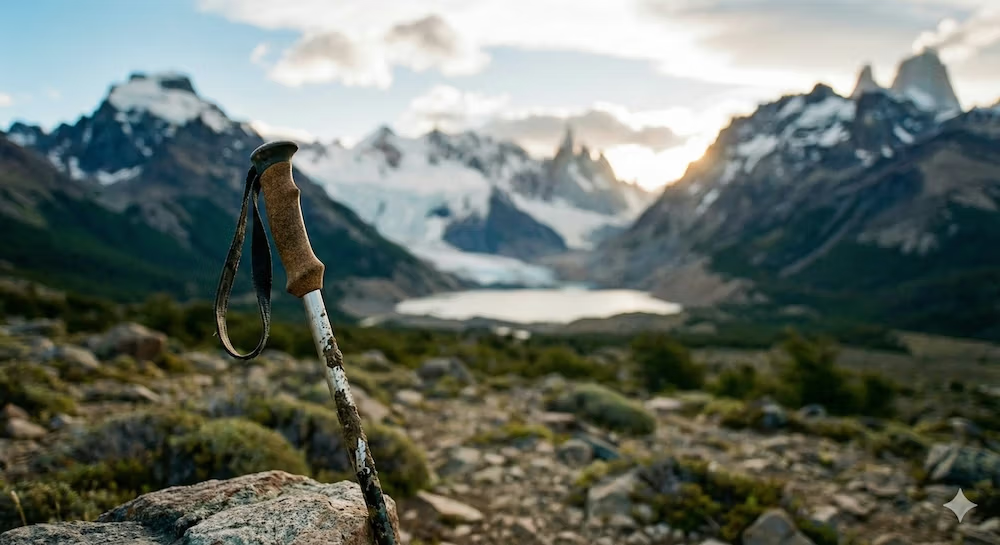
Loma del Pliegue Tumbado: long, exposed, and proud of it
This hike is a full-day commitment and often recommended to start very early, ideally at first light, paying attention to daylight and carrying a flashlight. If you’re a “we’ll just see how it goes” person, this is the hike that gently turns that personality trait into planning.
There is potential snow or mud toward the end, again with a rocky steep slope where it can be dangerous to progress safely and easy to become disoriented. Combine that with exposure and wind, and poles make a lot of sense.
Where poles help most:
- Long sustained climbs (rhythm)
- Windy, open sections (stability)
- Fatigue management late in the day (you still have to get back)
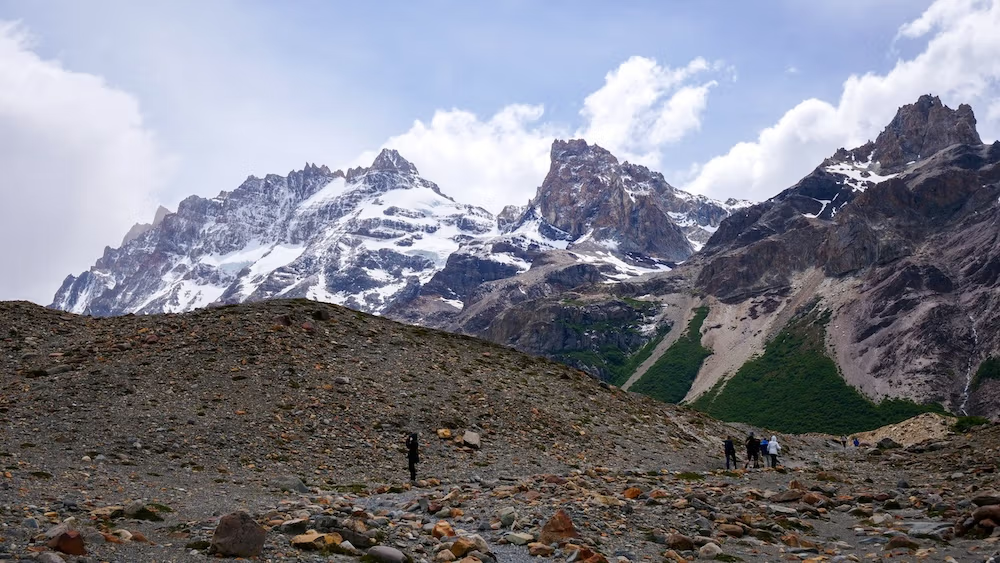
Laguna Torre: the “maybe yes” hike that can feel better than Fitz Roy
Laguna Torre is a long day, but it often feels less punishing than Fitz Roy because the grade is more forgiving after the early elevation, and the route offers a lot of variety along the way. It’s also a great example of how Patagonia can change: it might be windy in town and calmer in the forest.
Laguna Torre was actually our most comfortable long day in El Chaltén. We finished it without feeling wrecked the way Fitz Roy wrecked us, which is a nice reminder that not all “big hikes” hit your body the same—and your pole decision can change depending on what you did yesterday.
If you’re someone who likes rhythm, poles can make this a smoother day. If you’re a confident hiker with good knees and you hate extra gear in your hands, you can absolutely do it without poles.
Where poles help most:
- Keeping cadence on long, rolling terrain
- Smoothing out tired return legs
- Stability if conditions are muddy or slick
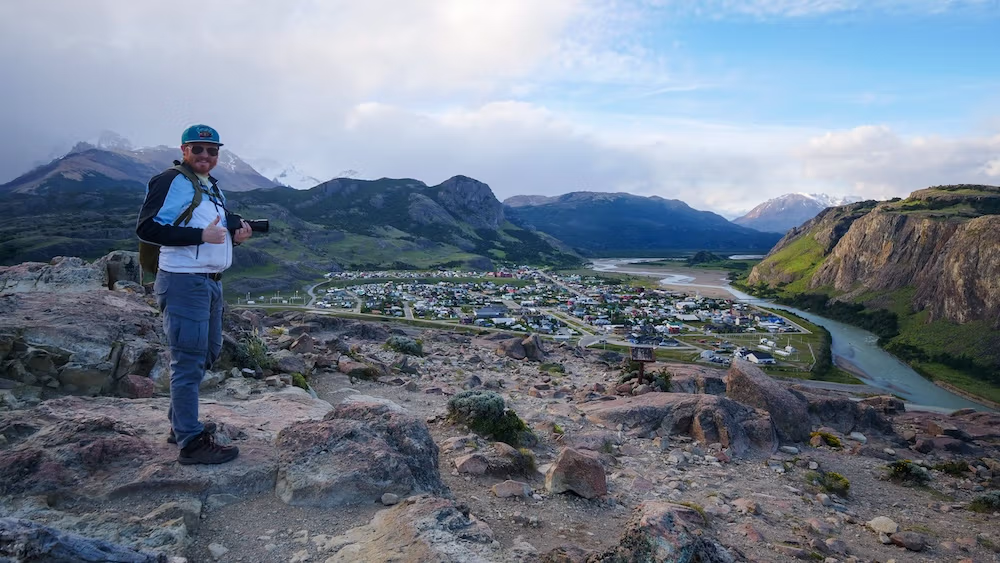
Los Cóndores / Las Águilas viewpoints: great, quick, and pole-optional
These are low-difficulty viewpoints often done in a couple hours, with short distances and big views over town and the surrounding landscape. This is the “I want El Chaltén energy without committing my entire skeleton to it” option.
I did Mirador de los Cóndores on our first evening and it was the perfect “welcome to El Chaltén” hike: short, steep, and wildly rewarding. We were absolutely buzzer-beating the daylight like half the town, and within 45 minutes the valley opened up into those panoramic views that make you forget you’re sweating.
Poles are optional unless:
- It’s muddy or icy
- You’re using poles for knee confidence
- You’re carrying extra load and like the stability
The “wildcard” factor: conditions (Patagonia laughs at your plans)
Conditions change everything. The same hike can feel easy, moderate, or “why is this happening” depending on wind, mud, snow, and visibility.
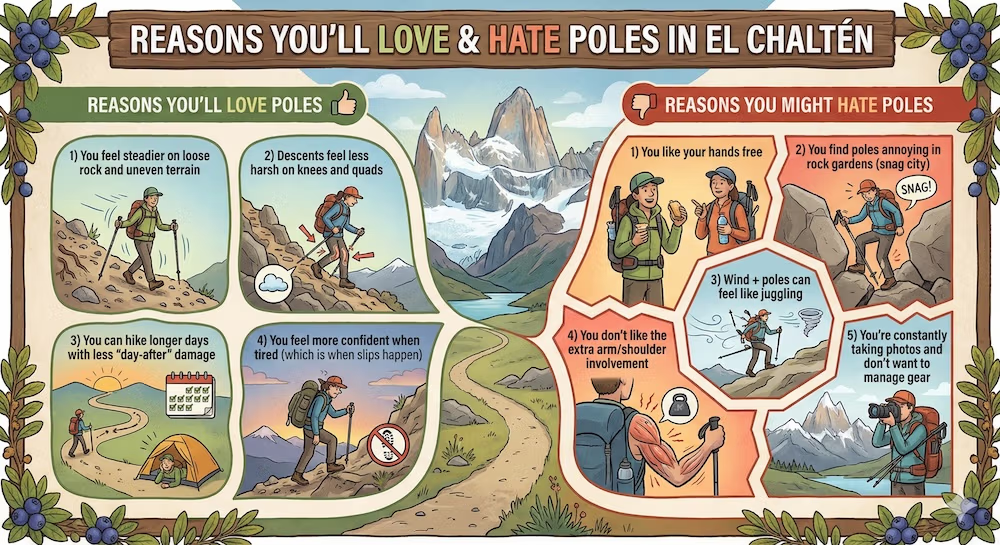
Poles vs. no poles: the real tradeoffs (no shame either way)
Let’s make this honest. There are real reasons people love poles, and real reasons people leave them behind.
Reasons you’ll love poles in El Chaltén
- You feel steadier on loose rock and uneven terrain
- Descents feel less harsh on knees and quads
- You can hike longer days with less “day-after” damage
- You feel more confident when tired (which is when slips happen)
Reasons you might hate poles
- You like your hands free
- You find poles annoying in rock gardens (snag city)
- Wind + poles can feel like juggling
- You don’t like the extra arm/shoulder involvement
- You’re constantly taking photos and don’t want to manage gear
This isn’t a moral decision. It’s a tool decision. If poles help you enjoy the hike more and reduce risk, use them. If poles make you annoyed and clumsy, skip them—or rent them only for the biggest day.
Buying or renting: what to choose for El Chaltén
If you’re flying internationally and trying to keep life simple, renting in El Chaltén is common and easy. If you hike often and know you like poles, bringing your own can be more comfortable and reliable.
Also, El Chaltén is wonderfully compact. Our guesthouse (Vertical Lodge) was a short walk from the bus terminal, which made everything—from gear errands to trailhead starts—ridiculously easy. If you’re on the fence, renting poles for just your biggest day is a low-effort experiment.
Quick pick guide
| You are… | Best option | Why |
|---|---|---|
| Only hiking in El Chaltén once | Rent | No need to travel with poles |
| Doing multiple Patagonia trips | Bring/buy | Better fit, reliability, familiarity |
| Unsure if you like poles | Rent for big hikes only | Test-drive before committing |
| Hiking in shoulder season | Rent or bring + consider traction | Snow/mud changes the stakes |
| Carrying extra gear | Bring/rent | Stability and load sharing matter more |
Renting in town (what to look for)
El Chaltén has multiple rental shops offering trekking poles and other mountain gear, and local resources explicitly mention renting trekking poles as a common solution to lighten your travel load. You’ll find one-piece poles and LEKI three-piece poles as separate rentals (priced per pole), which makes “rent for the big day” pretty straightforward.
Before you walk out the door:
- Check the locks (flick locks or twist locks should hold firmly)
- Extend and compress a few times to ensure they don’t slip
- Confirm tips and baskets (ask for baskets if there’s any snow/mud chance)
- Make sure straps are comfortable and adjustable
- If you’re tall/short, confirm the poles extend to your needed length
Prices change fast. Confirm locally.
How to choose trekking poles (without falling into gear rabbit holes)
If you buy poles, you don’t need the lightest carbon unicorn pole forged by mountain elves. You need something reliable that fits your hiking style.
The big choice: adjustable vs fixed
For El Chaltén, adjustable poles are usually the best call because you can shorten for climbs and lengthen for descents.
Folding “Z” poles vs telescoping poles
- Folding poles pack smaller and deploy fast, great for travel and stashing in a daypack.
- Telescoping poles are often more adjustable and can feel sturdier for some users.
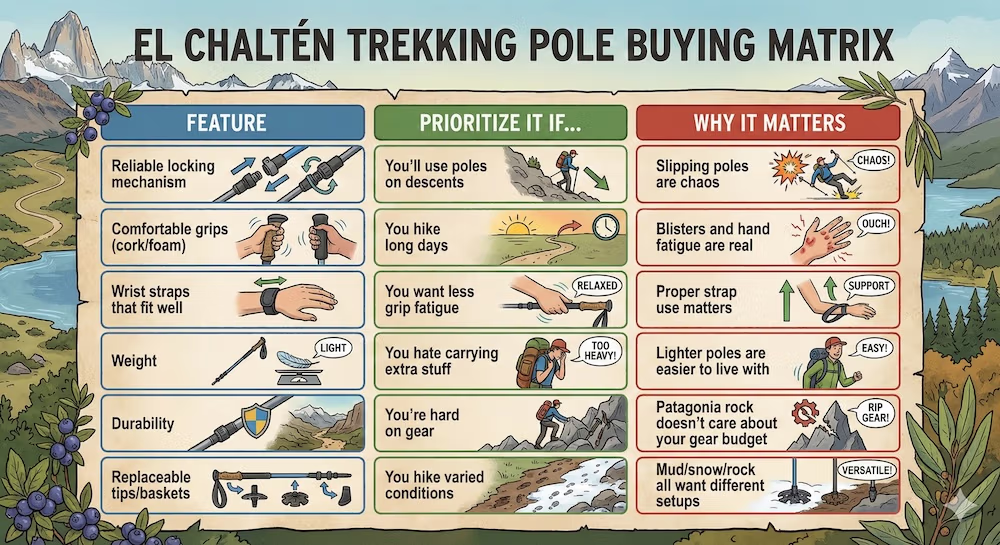
A quick buying matrix
| Feature | Prioritize it if… | Why it matters |
|---|---|---|
| Reliable locking mechanism | You’ll use poles on descents | Slipping poles are chaos |
| Comfortable grips (cork/foam) | You hike long days | Blisters and hand fatigue are real |
| Wrist straps that fit well | You want less grip fatigue | Proper strap use matters |
| Weight | You hate carrying extra stuff | Lighter poles are easier to live with |
| Durability | You’re hard on gear | Patagonia rock doesn’t care about your gear budget |
| Replaceable tips/baskets | You hike varied conditions | Mud/snow/rock all want different setups |
Pole sizing: the simple rule
A common fit guideline is that when the pole tip is on the ground near your feet, your elbow should be around a 90-degree bend and the handle sits near waist/hip height. This is your starting point, not a rigid law.
How to adjust poles for El Chaltén terrain
Small changes make a big difference.
| Terrain | Adjust poles | What you’re aiming for |
|---|---|---|
| Flat/rolling trail | Baseline 90-degree elbow | Rhythm and stability |
| Steep uphill | Slightly shorter | Keep shoulders relaxed, plant close |
| Steep downhill | Slightly longer | Extra “brakes” and balance points |
| Rock gardens / boulders | Often shorter | Control and quick placement |
| Mud / slick trail | Normal or slightly longer | Stability without overreaching |
| Windy exposed areas | Normal/shorter | Quick, stable plants near the body |
The two-minute “pole sanity check” before a big hike
- Walk 30 seconds on flat ground and make sure your elbows feel relaxed (not shrugged up like you’re doing a stress workout).
- Flick your wrists and confirm the straps are supporting your hands so you can loosen your grip.
- Plant the poles beside your feet a few times; if you keep overreaching, shorten slightly and keep plants closer.
- Do three “mini descents” on a small slope near the trailhead: lengthen a touch, plant, step down, repeat.
- If your poles slip even a little when you load them, fix the locks now.
How to use poles so they actually help (and don’t just become metal annoyances)
Use the straps correctly (this matters more than people think)
If you’re death-gripping the handles, you’ll tire your forearms and hate poles. The strap is there so your hand can relax.
If you do straps wrong, you’ll spend the day white-knuckling the grips and wondering why your forearms feel like you’ve been churning butter since breakfast. When straps are set right, your hands relax—and that’s when poles stop being annoying and start being helpful.
A common approach:
- Put your hand up through the strap from below
- Let the strap support your wrist/palm
- Grip the handle lightly, not like it owes you money
You want “supported grip,” not “stress squeeze.”
Plant close, not far
Plant the pole tips roughly beside your feet, not way out front. Overreaching makes poles less stable and more likely to snag.
On descents: think “two extra feet”
Downhill is where poles shine. Place them slightly ahead and to the side, then step down. You’re creating a stable triangle with your body. This helps on steep rocky sections where footing is less predictable.
On climbs: use poles for balance, not brute force
On steep climbs, poles can help you keep an upright posture and steady rhythm. You don’t need to pull yourself up the mountain like you’re rowing. Think “support and cadence,” not “arm-powered summit attack.”
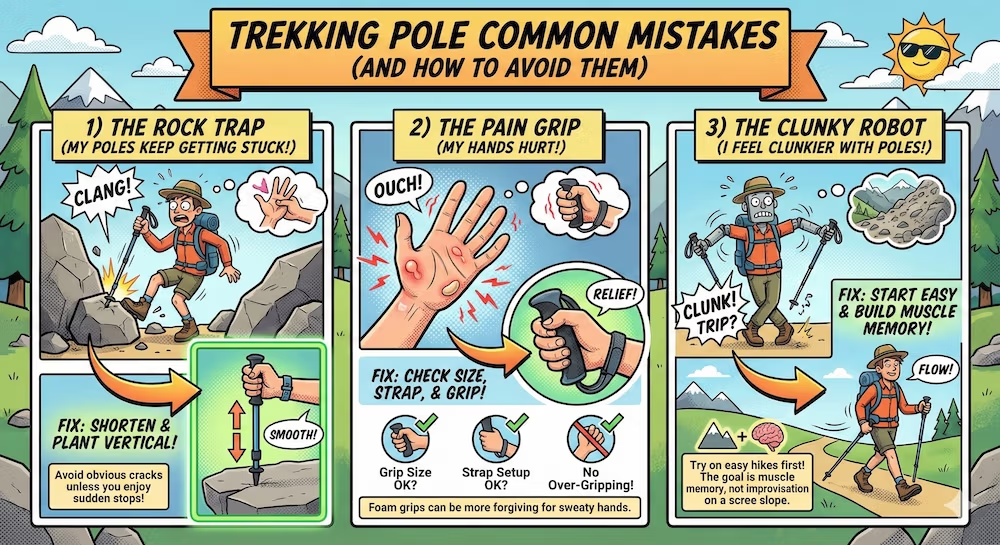
Common mistakes (and how to avoid them)
“My poles keep getting stuck between rocks”
Shorten them slightly in rock gardens and plant more vertically. Also: don’t plant in obvious cracks unless you enjoy sudden stops.
“My hands hurt”
Check grip size, strap setup, and whether you’re over-gripping. Foam grips can be more forgiving for sweaty hands.
“I feel clunkier with poles”
Try poles on an easy hike or viewpoint trail before using them on the steepest day. The goal is muscle memory, not improvisation on a scree slope.
What about trekking poles and Leave No Trace?
Poles are useful. They can also scar rocks, poke holes in fragile vegetation, and chew up muddy trails if you’re not mindful. Leave No Trace guidance emphasizes minimizing impact, especially on wet and muddy trails, and using rubber tips when appropriate to reduce scarring on rock.
El Chaltén is stunning because it’s still wild. Keep it that way:
- Use rubber tips where they reduce scarring (especially on rock-heavy sections)
- Stay on established trails
- If the trail is very muddy, step through the mud instead of widening the trail around it
- Be mindful passing others (poles swing; knees do not enjoy surprise jabs)
Poles + shoulder season: when they jump from “nice” to “smart”
If you’re hiking in autumn or spring, you may encounter snow, mud, or icy patches—especially near higher viewpoints and steep final sections. Local trail guidance explicitly warns that these conditions can appear toward the end of routes like Laguna de los Tres and Pliegue Tumbado, where steep rocky slopes can become dangerous.
In those conditions, poles do two important things:
- Provide additional stability on slick terrain
- Help you move more deliberately, especially when visibility is poor
Can you fly with trekking poles?
Rules vary by country and by how security interprets your pole tips. In the U.S., TSA guidance states blunt-tipped hiking poles are allowed in carry-on or checked bags, while sharp-tipped hiking poles are not allowed in carry-on luggage.
Internationally, enforcement can differ. If you want to avoid drama:
- Pack poles in checked luggage when possible
- Use tip protectors
- If you’re traveling light, renting in El Chaltén is the simplest path
The “we’re just being honest” verdict
So… do you need trekking poles in El Chaltén?
Yes… for some hikes and some bodies.
No… for other hikes and other bodies.
And “maybe” for everyone who thinks they’re fine until kilometer nine reminds them gravity is undefeated.
If you’re doing the biggest hikes (Fitz Roy / Pliegue Tumbado), if you’re hiking in shoulder season, if your knees have opinions, or if you’re stacking multiple big days, poles are a smart call. If you’re keeping it mellow with viewpoints and shorter trails, poles are optional.
Our biggest lesson from El Chaltén is simple: bring the tools that help you stay safe and enjoy the day. Nobody gets a prize for suffering unnecessarily—except maybe a personal sense of pride and a bigger appetite at Senderos.
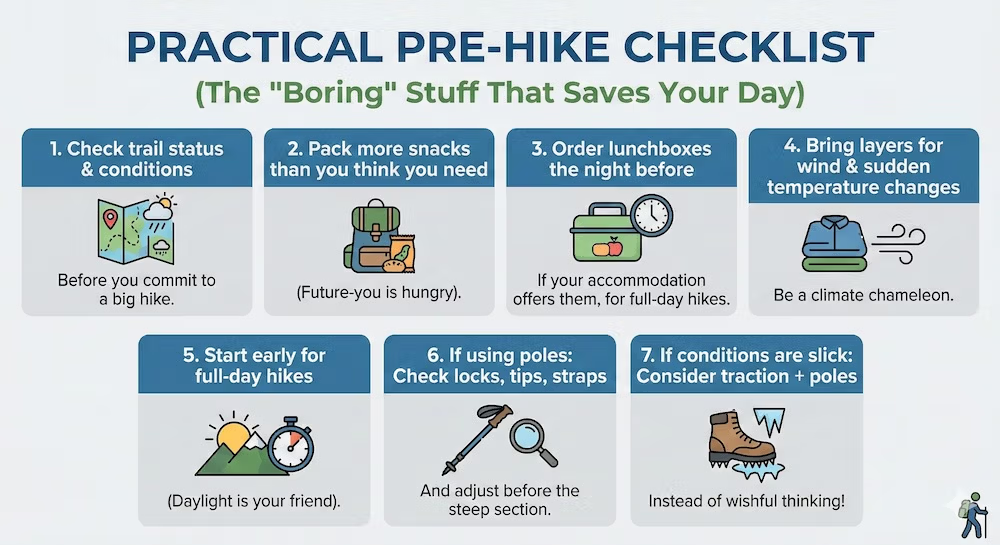
Quick pre-hike checklist (the boring stuff that saves your day)
- Check trail status and conditions before you commit to a big hike
- Pack more snacks than you think you need (future-you is hungry)
- If your accommodation offers lunchboxes, order the night before for full-day hikes
- Bring layers for wind and sudden temperature changes
- Start early for full-day hikes (daylight is your friend)
- If using poles: check locks, tips, straps, and adjust before the steep section
- If conditions are slick: consider traction + poles instead of wishful thinking
Trekking Poles in El Chaltén FAQ: What to Bring, When You’ll Want Them, and How to Use Them Without Looking Like a Baby Giraffe
Do I need trekking poles for Laguna de los Tres (Fitz Roy)?
Maybe. Not because it’s impossible without them, but because the steep, rocky final section and the long descent are exactly where poles shine—especially if you’re tired, it’s slick, or your knees have strong feelings.
Do I need trekking poles for Laguna Torre?
Maybe. If you like steady rhythm, want help on the return leg, or you’re hiking after another big day, poles are helpful. If you’re confident on uneven trails and prefer free hands, you can skip them.
Are trekking poles worth it if I’m only doing Los Cóndores / Las Águilas?
Probably not necessary. Those trails are short and low difficulty. But if it’s muddy/icy or you want extra knee confidence, poles can still be nice.
Do trekking poles actually help your knees on descents?
Yes. The main benefit many hikers feel is on downhill sections, where poles act like extra brakes and help reduce load on the lower body.
Will trekking poles make me hike faster?
They can, but that’s not always good. Poles can give you rhythm and confidence, which can push your pace. If you go too fast early, you’ll pay later. Patagonia always collects.
Are poles annoying in strong Patagonian wind?
Sometimes. If the wind is wild and you’re constantly adjusting layers, poles can feel like juggling. The trick is planting close to your body and using poles mainly for stability, not speed.
Should I use one pole or two?
Two. Using a pair gives you symmetry, stability, and better downhill support. One pole can help, but two is the real upgrade.
What’s the best way to adjust poles for downhill?
Slightly longer than your flat-trail setting. You want extra reach so the poles can act as brakes without forcing you to hunch.
How do I use the wrist straps correctly?
Think “strap supports the hand, hand lightly grips the handle.” If you’re death-gripping, you’ll tire fast and wonder why poles exist. Adjust straps so they carry some of the load.
Can I rent trekking poles in El Chaltén?
Yes. Multiple local rental shops offer trekking poles, and it’s a common way to avoid traveling with gear.
Should I bring poles from home or rent locally?
If you hike often and love your poles, bring them. If you’re unsure, renting is the easiest test. If you’re traveling light, renting is the simplest plan.
What kind of pole is best: carbon or aluminum?
It depends. Carbon is lighter but can be less forgiving in certain impacts. Aluminum is often more durable for rough handling. For most travelers, reliable locks and comfort matter more than material.
Do trekking poles damage trails?
They can. Be mindful on muddy trails, avoid widening trails, and consider rubber tips where they reduce rock scarring. Use poles as tools, not spears.
What if I don’t want poles—what can I do instead?
Nope. You’re not doomed. Prioritize good footwear, pace yourself, take breaks, and be extra careful on steep descents. In shoulder season, traction devices can matter more than poles—but poles still help balance.
Project 23 Argentina: This guide is also available in Spanish. [Lea la versión en castellano: ¿Necesitás bastones de trekking en El Chaltén? Lecciones reales de nuestras caminatas]