
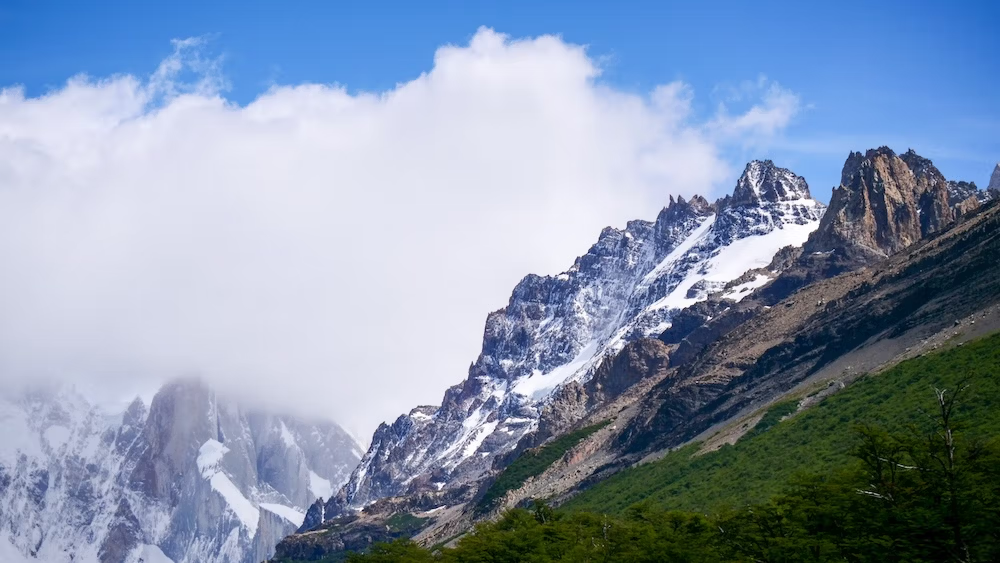
We didn’t arrive in the trekking capital of Argentina as hardened alpinists. We arrived in “full foodie mode”. My wife, Audrey, was wearing leggings every single day strictly because her jeans no longer fit after a few too many empanadas and hearty meals across Patagonia. I was personally sporting what I affectionately called a “bulbous plumptitude”. We desperately needed to move our skeletons. And yet, here we were in El Chaltén, a colorful frontier town nestled inside Los Glaciares National Park, staring down some of the most famous, rugged granite peaks on the planet.
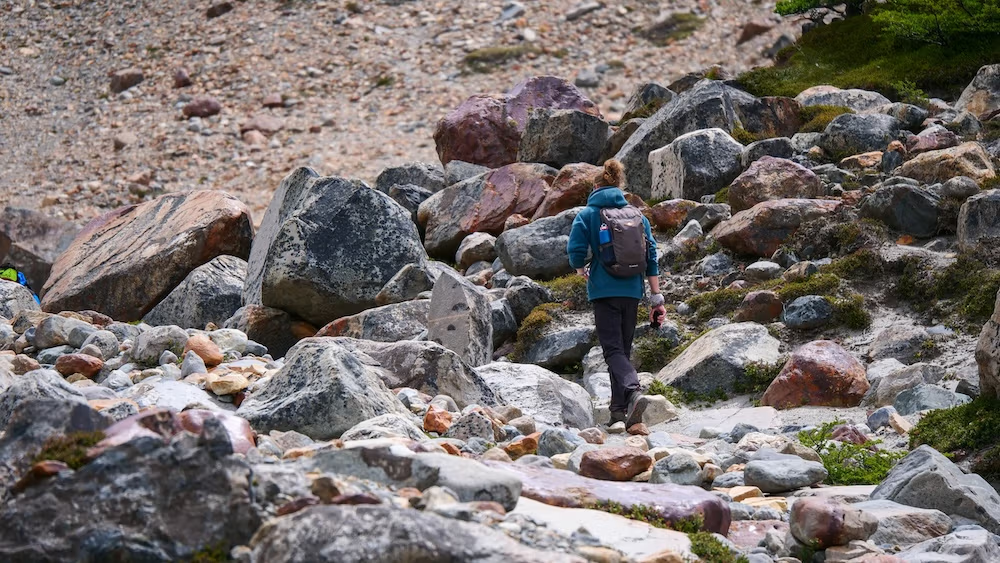
We booked six nights at the Vertical Lodge ($54 USD per night with breakfast included), thinking we had all the time in the world to casually conquer the mountains. The truth about Patagonia, however, is that your itinerary is merely a polite suggestion to the wind gods. The weather here dictates everything, shifting dramatically from one day to the next. Furthermore, you can have the most meticulously crafted morning hiking strategy, but it won’t help you if, like us, you leave your essential trail map on the hotel nightstand and spend 45 minutes wandering the wrong end of town before you even find the trailhead.
If you’ve watched the hiking guides on our YouTube channel, you know we value honesty. So here is the unvarnished reality of hiking in El Chaltén for the 2026 season: the free ride is over, the trail bottlenecks are real, and timing your departure isn’t just about getting a pretty photo—it’s about preserving your sanity and your kneecaps. Let’s break down exactly when to leave, what it costs, and how to survive the micro-logistics of Argentina’s most famous trails.
The 2026 Financial Reality Check: The End of the Free Ride
For years, travel blogs have proudly proclaimed that the northern sector of Los Glaciares National Park is completely free. We even marveled at the lack of an entrance fee compared to the southern side during our initial arrival. But if you are traveling in 2026, you must erase that outdated advice from your memory. As of recent updates, foreign visitors must now pay a steep 45,000 ARS (roughly $30-$40 USD) for a daily entry ticket.
This isn’t an honor system. Tickets are actively checked at three newly manned portals (including the main Fitz Roy and Torre trailheads), and the rangers occupy these booths from 7:00 AM until 6:30 PM.
[Samuel’s Wi-Fi Warning] Do not wait until you are standing at the trailhead at 8:30 AM to buy your ticket. The physical booths are strictly card-only, and the cell signal at the edge of town is virtually non-existent. During our trip, the town’s Wi-Fi went down so constantly that it took us multiple attempts over an entire afternoon just to process a simple credit card payment for our hotel room. Imagine watching a spinning loading wheel on a ranger’s payment terminal while fifty angry hikers are queued up behind you in the freezing morning air. Buy the 3-Day Flexipass (90,000 ARS) online via the official ventaweb.apn.gob.ar portal using your hotel Wi-Fi the night before, screenshot the QR code, and walk right past the bottleneck.
The financial friction also extends to camping. The era of just pitching a tent for free is gone. If you plan to stay at the Poincenot campground to catch the Fitz Roy sunrise, you must secure a strict online reservation via the Amigos PNL portal for 15,000 ARS per night.
The Great Timing Debate: Morning Grinds vs. Afternoon Winds
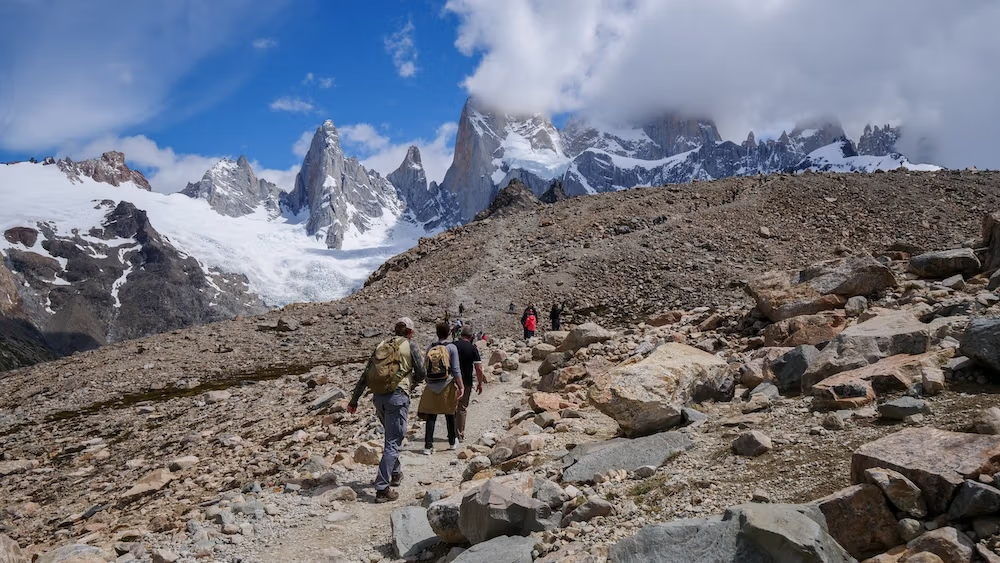
The central question every hiker faces in El Chaltén is exactly when their boots should hit the dirt. In the peak summer months (December through February), the Patagonian sun grants you endless daylight, with sunrises around 5:00 AM and sunsets lingering as late as 10:30 PM. This wide window creates a dangerous false sense of security.
The Morning Strategy (Start: 5:00 AM – 7:00 AM) Starting early is the undisputed champion of El Chaltén logistics. First, you bypass the massive wave of tour bus day-trippers that flood the trailheads between 8:30 AM and 10:00 AM. Second, Patagonia’s notoriously volatile microclimates are generally much calmer in the early morning. You have the highest statistical probability of getting a cloudless, computer-generated view of the Fitz Roy massif before the thermal heating creates cloud cover.
The Afternoon Risk (Start: 11:00 AM – 1:00 PM) If you start late, you aren’t just battling the fading light; you are hiking directly into Patagonia’s brutal afternoon winds. We experienced this firsthand on Day 4 of our trip, which turned into a total “cafe day” write-off. The winds were so horrendous and insane that we could barely stand on our feet in town, let alone balance on an exposed mountain ridge. Furthermore, if you hike the popular trails in the afternoon, you will be walking against the grain of descending traffic, leading to highly frustrating bottlenecks on narrow scree paths.
High-Density Trailhead Timeline Matrix
| Start Time | Crowd Density | Weather/Wind Probability | Trailhead Gate Status | The Faux Trekker Reality |
| 5:00 AM – 6:30 AM | Empty to Light | Calmest, best chance for clear peaks. | Rangers not yet present (Must have pre-bought QR pass for spot checks). | You are sleep-deprived but smug. You will likely eat your packed lunch by 9:00 AM. |
| 8:30 AM – 10:00 AM | Peak Gridlock | Winds beginning to pick up. | Fully manned, massive lines for card processing. | You are stuck behind trekking poles and matching windbreakers. |
| 11:30 AM – 1:00 PM | Moderate (Against Traffic) | High risk of gale-force afternoon winds. | Fully manned, short lines. | You will spend an hour yielding to descending hikers on steep scree. |
| After 2:00 PM | Emptying Out | Brutal gusts (50km/h+), high cloud cover risk. | Fully manned. | Dangerous. You risk getting blown off exposed trails. |
Navigating the Laguna de los Tres Meatgrinder
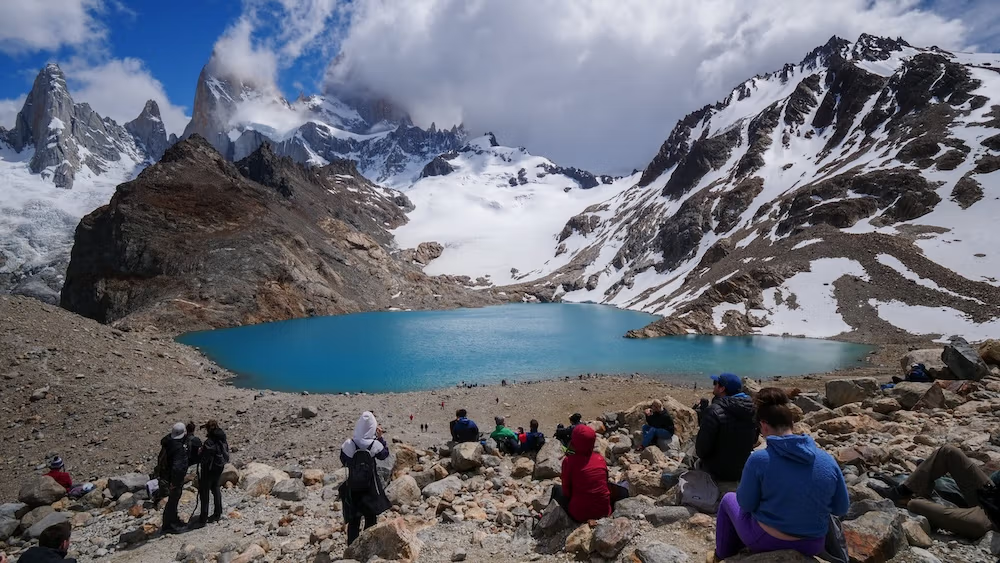
Our big hike on the best weather day was Laguna de los Tres, the crown jewel of the park that brings you face-to-face with Mount Fitz Roy. It is roughly a 25.4-kilometer round trip from town, with a nearly 1,000-meter elevation gain.
The first nine kilometers are a delightful, intermediate stroll through paradise. We passed the Mirador Rio de las Vueltas, admired condors circling overhead, and stopped at Laguna Capri for postcard-perfect views. In fact, we were feeling so confident that by 9:00 AM, barely an hour and a half into our day, I had already ravenously consumed almost my entire $10 packed lunch. Our hotel lunchbox was an absolute feast: a rice and veggie salad, a peanut bar, an apple, a muffin, and assorted candies. The only hiccup was that Audrey’s plastic salad bowl actually broke inside her backpack during the ascent, forcing us to eat it before it spilled everywhere.
And then, we hit Kilometer 9.
Here begins the longest, toughest, and most infamous kilometer in all of Patagonia. The trail transforms from a walk in the park into a brutal 22% grade incline over loose scree and massive granite boulders. This is the true bottleneck. If you arrive at the base of this climb between 10:30 AM and 1:30 PM, the fresh morning wave meets the exhausted afternoon wave. Because the trail is single-file, uphill hikers are forced to stand to the side, burning precious energy just yielding to the slipping masses coming down.
[The Sedan Chair Reality Check] Reaching the cerulean waters of Laguna de los Tres was an astonishing, wind-whipped triumph. But the descent? It broke us. The steep, gravelly scramble down felt infinitely more strenuous than the first nine kilometers combined. My feet were throbbing so violently that I spent the entire trek back fantasizing about what it would be like to be carried out on a colonial sedan chair, or if I could somehow call an emergency number to be airlifted back to our hotel. We were totally spent. The next day, Day 3 of our trip, was an absolute write-off. We were so painfully stiff we barely left our room, sleeping for 10 to 12 hours straight.
The El Pilar Loophole: A Point-to-Point Alternative
If you want to avoid the monotonous “out-and-back” route and skip the steep initial incline out of town, many hikers take transport to Hostería El Pilar and hike back to El Chaltén. But here is the micro-logistical catch: the standard shared shuttles cost around 38,000 ARS but operate on rigid morning schedules (typically 8:00 AM or 9:30 AM) and sell out days in advance.
The fix: Have your accommodation book a private local taxi the night before. Yes, it costs roughly 58,000 ARS, but split between two people, it’s highly cost-effective, leaves on your exact schedule, takes only 26 minutes to reach the trailhead, and keeps you out of the rigid shuttle trap.
The “Easy” Alternative: Cruising Laguna Torre
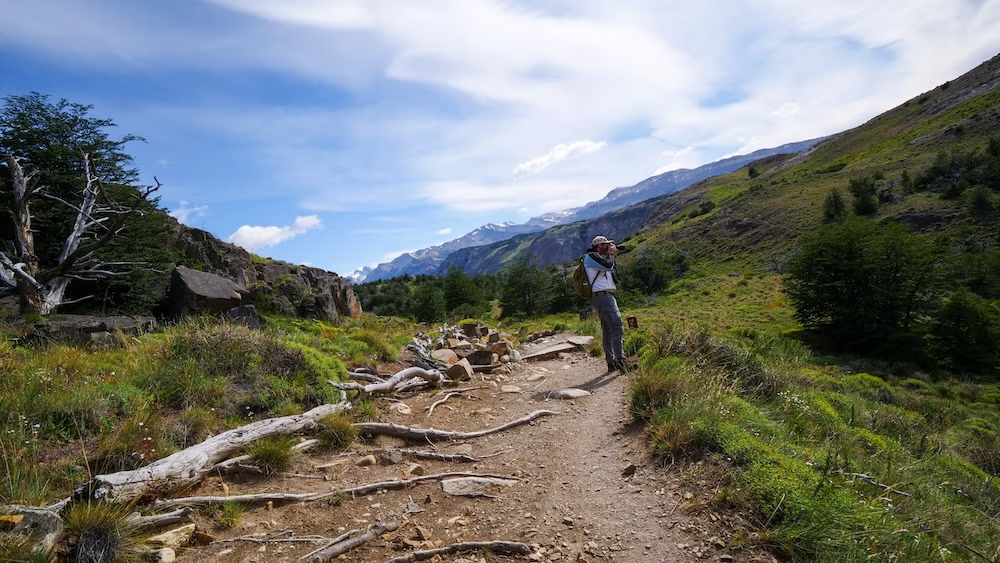
By Day 5, our legs had somewhat recovered, so we tackled the Laguna Torre trail. Billed as an 18-kilometer loop with only about 250 meters of total elevation gain, it is widely considered the easier, more forgiving sibling to Fitz Roy.
This trail was a revelation. After the initial 3-kilometer climb past the stunning, crashing Cascada Margarita waterfall, the path flattens out into a wide, spectacular valley. We hiked through a haunted-looking forest section, walked alongside winding rivers, and stared down a magnificent hanging glacier on the horizon. Because we knew there was no grueling final kilometer waiting to ambush us, there was absolutely no sense of urgency. We felt relaxed, taking frequent breaks and just soaking in the profound, untouched silence of the park.
However, the Patagonian weather reality struck again. By the time we reached Laguna Torre, the iconic Cerro Torre peaks were entirely obscured by dense cloud cover. Without the piercing sunlight illuminating the glacial melt, the lagoon water didn’t look vibrant; it looked murky, like a giant bowl of cafe au lait, complete with a few small icebergs bobbing near the shore. It lacked the monumental “wow factor” of our Fitz Roy day, but as an overall hiking experience, the journey was far more enjoyable.
The Laguna Master Stats Matrix
| Trail Profile | Laguna de los Tres (Fitz Roy) | Laguna Torre (Cerro Torre) |
| Distance (Round Trip) | ~25.4 km (15.8 miles) | ~18.3 km (11.4 miles) |
| Elevation Gain | ~1,000m (3,280 ft) | ~250m (820 ft) |
| Effort vs. Reward | Maximum Pain / God-Tier Views. | Relaxed Cruise / High Weather Dependency. |
| Key Bottleneck | The 22% grade final kilometer (KM 9). | The initial incline (KM 0-3). |
| Post-Hike Triage Priority | 12 hours of sleep + Emergency Carbs. | You will actually have energy for a beer. |

The Faux Trekker’s Post-Hike Triage: Where to Eat
We didn’t come all the way to Argentina just to eat squished peanut bars on a rock. The true reward of a 20-kilometer day is the unadulterated gluttony that follows.
Let’s look at the Laguna Torre return trip as a prime example. The park signs say the hike back to town should take three hours. We did it in two hours and twenty minutes. How? We put our cameras away, put our heads down, and let the primal, overpowering hunger for a bacon burger guide us through the forest.
We practically sprinted into La Zorra, an absolute haven for bottom-feeding, glorious comfort food. We devoured gourmet, Shake Shack-level burgers—one spicy Mexican style with guacamole and jalapeños, and another loaded heavily with bacon. We paired this with mountainous plates of cheesy bacon fries and full pints of local golden ale craft beer. It was a high-calorie triumph, immediately followed by a mandatory stop for artisanal ice cream waffle cones (Super Dulce de Leche and Pistachio) on the main drive.
But El Chaltén also hides incredible gourmet gems for when you want to feel civilized rather than feral. Tucked away near the bus terminal is a tiny, six-table boutique restaurant called Senderos. It’s located inside a high-end guesthouse, and the culinary attention to detail is staggering. I ordered a decadent blue cheese risotto topped with walnuts and sun-dried tomatoes, while Audrey had a hearty, soul-warming lentil casserole. We paired the meal with a full bottle of Syrah (taking a rare break from Malbec) and finished with an apple pancake (panqueque de manzana) and chocolate mousse.
The El Chaltén Food Matrix
| Venue | The Vibe | Menu Standouts & Experiences | Our Verdict |
| La Zorra | Bustling, greasy-spoon taproom. | Spicy Guacamole Burger; Loaded Cheesy Bacon Fries; Golden Ale Craft Beer. | The ultimate post-hike calorie bomb. Pure comfort. |
| Senderos | Intimate, 6-table boutique dining. | Blue Cheese & Walnut Risotto; Lentil Casserole; Gourmet Pastas. | Elegant, belt-busting gourmet. A hidden culinary gem. |
| Olivia’s Bagel Shop (El Calafate) | Cozy cafe with fast Wi-Fi. | Salmon, Cream Cheese & Avocado Bagel; Avocado Toast; Tea & Cake. | This is in El Calafate. Essential layover stop before boarding the 3-hour bus to El Chaltén. |
| Artisanal Ice Cream (Main Drive) | Classic Argentine Heladería. | Super Dulce de Leche; Mascarpone; Pistachio Waffle Cones. | Mandatory second dinner to soothe the hiking pain. |
Frontier Town Friction: Groceries, Wi-Fi, and Reality
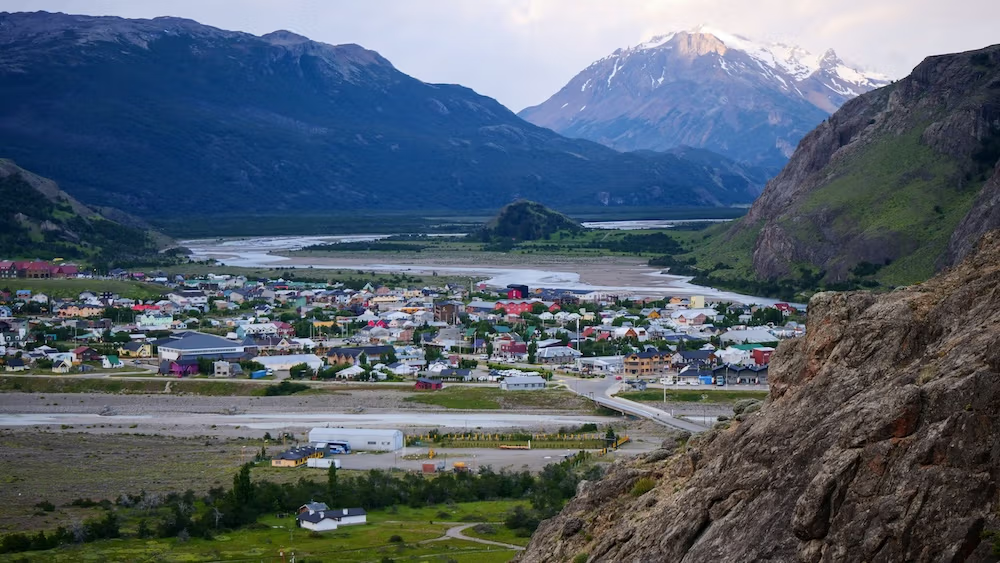
As much as we adore El Chaltén, it is crucial to manage your logistical expectations. This town is a remote outpost, and it acts exactly like one.
If you plan on self-catering to save money on the new park entrance fees, brace yourself for the reality of the local economy. The local supermarkets feel more like sparsely stocked general stores. The selection of fresh produce is beyond limited, and it is painfully expensive. We suffered severe sticker shock paying roughly $1 USD for a single, basic apple. If possible, buy your heavy groceries in El Calafate before making the 1,000-peso (approx. $16 USD) bus ride with Chaltén Travel.
Furthermore, do not rely on cloud-based documents. There is basically zero mobile data coverage once you leave your hotel, and the town’s central Wi-Fi network regularly collapses under the weight of thousands of tourists. Download your offline maps, take physical screenshots of your park entrance QR codes, and carry emergency cash (ideally crisp USD for the “Blue Dollar” discount) for when the restaurant card machines inevitably freeze.
We spent six nights in El Chaltén, and given that we required full days off just to recover from the physical exertion, we needed every single one of them. Trying to rush this destination in two or three days is a recipe for wind-blown misery. Whether you tackle the brutal scree of Laguna de los Tres or cruise the tranquil valleys of Laguna Torre, the key is respecting the environment. Start early to beat the bottlenecks, pay the new park fees online to avoid the card-reader chaos, and pack a heavy lunch. You’re going to need it.
FAQ: El Chaltén Morning vs. Afternoon Hikes: When to Leave to Avoid the Trail Bottlenecks
Do I need to hire a guide for the Fitz Roy or Laguna Torre hikes?
Nope. The trails in Los Glaciares National Park are incredibly well-marked, with clear signs at every kilometer keeping you on track. You can absolutely do this DIY. Just don’t forget your trail map on the hotel nightstand like we did, or you’ll spend 45 minutes wandering the wrong end of town before you even start your trek.
Is Los Glaciares National Park (El Chaltén sector) still free to enter?
Not anymore. As of recent updates for the 2025/2026 season, foreign visitors must now pay 45,000 ARS for a daily entry ticket. The ranger booths at the main trailheads are manned from 7:00 AM to 6:30 PM and are strictly card-only. Buy the 3-Day Flexipass online before you leave your hotel so you don’t get stuck behind a spinning credit card terminal when the town’s Wi-Fi inevitably drops.
Can I just show up and camp at Poincenot for the sunrise?
Absolutely not. The days of free, walk-in camping at the base of Fitz Roy are over. You now have to book your spot at campsites like Poincenot online through the Amigos PNL portal for 15,000 ARS per night. If you show up without a reservation, you’ll be hiking all the way back down to town in the dark.
How bad is the final kilometer to Laguna de los Tres really?
Brutal. You gain 400 meters of elevation in a single kilometer over loose scree and massive granite boulders. It’s a 22% grade incline that had me actively fantasizing about calling an emergency helicopter to airlift me out. Bring trekking poles, because scrambling back down is even worse on the knees.
What happens if I get injured on the trail? Is there cell service?
Zero. Once you walk 15 minutes outside the borders of El Chaltén, your phone becomes a brick. There is absolutely no cell service on the Laguna de los Tres or Laguna Torre trails. If there is an emergency, you have to rely on a passing guide with a satellite radio. Always download offline maps and screenshot your park tickets while you’re still on your hotel Wi-Fi.
Should I take the shuttle to Hostería El Pilar to save time?
Depends. Taking transport to El Pilar and hiking point-to-point back to town is a great way to avoid an out-and-back route, but the shared shuttles are rigid and often sell out during peak season. Instead of stressing over an 8:00 AM bus, have your accommodation book a private local taxi the night before. It takes 26 minutes, costs roughly 58,000 ARS (which is highly cost-effective split between two people), and runs on your exact schedule.
Can I hike in the afternoon if I just want to sleep in?
Highly discouraged. If you start the Fitz Roy hike at noon, you will hit the final steep kilometer right when hundreds of morning hikers are coming down, forcing you into a massive, frustrating pedestrian traffic jam. Worse, you’ll be fully exposed to Patagonia’s notorious 3:00 PM gale-force winds, which are strong enough to literally knock you off your feet.
What is the food situation like on the trails?
BYO everything. There are no cafes, restaurants, or snack stands once you leave town. Most hotels offer a $10 USD packed lunch (you usually need to order it the night before). Just try to pace yourself and not eat your entire sandwich by 9:00 AM like I did. And definitely leave room for a massive bacon burger and loaded fries at La Zorra when you drag yourself back into town.
Project 23 Argentina: This guide is also available in Spanish. [Lea la versión en castellano: Trekking en El Chaltén a la Mañana vs. a la Tarde: Cuándo Salir para Evitar los Embotellamientos en los Senderos]