
Picture this: you’ve just rolled into the undisputed trekking capital of Argentina. Everywhere you look, there are chiseled, elite mountaineers strutting around in technical gear, looking like they chew on carabiners for breakfast.
And then… there’s us.
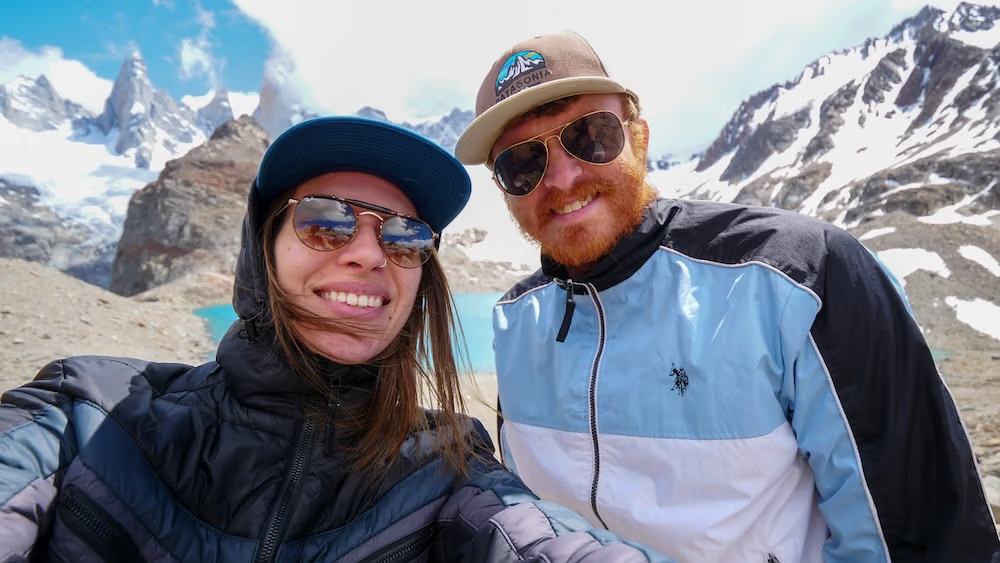
Audrey and I didn’t step off the bus looking to conquer alpine peaks. We arrived in what I can only describe as full-blown “Gordo Supremo Mode”. We had spent the previous weeks on an absolute culinary rampage across Argentina, stuffing our beaks with medialunas, devouring empanadas, and practically bathing in Malbec. It was a glorious feast, but we had successfully achieved a state of peak “bulbous plumptitude”.
Things had reached a wardrobe-altering emergency. Audrey realized with sheer horror that her jeans had officially given up the ghost, forcing a permanent, non-negotiable pivot to stretchy leggings for the rest of the trip. Meanwhile, I was steadily rotunding right alongside her. We weren’t elite athletes; we were faux-trekkers who desperately needed to move our skeletons before we turned into human empanadas.
So, we booked six nights at the Vertical Lodge, figuring the legendary Patagonian trails would magically whip us into shape. Spoiler alert: it doesn’t work like that. Surviving El Chaltén when you’re carrying a bit of extra foodie weight is a grueling masterclass in pain management, trail triage, and feral caloric recovery.
If you’re reading this while secretly wondering if you can hike to a glacier without giving up your bacon burgers, you are my people. Welcome to the official “Faux Trekker” survival guide to El Chaltén.
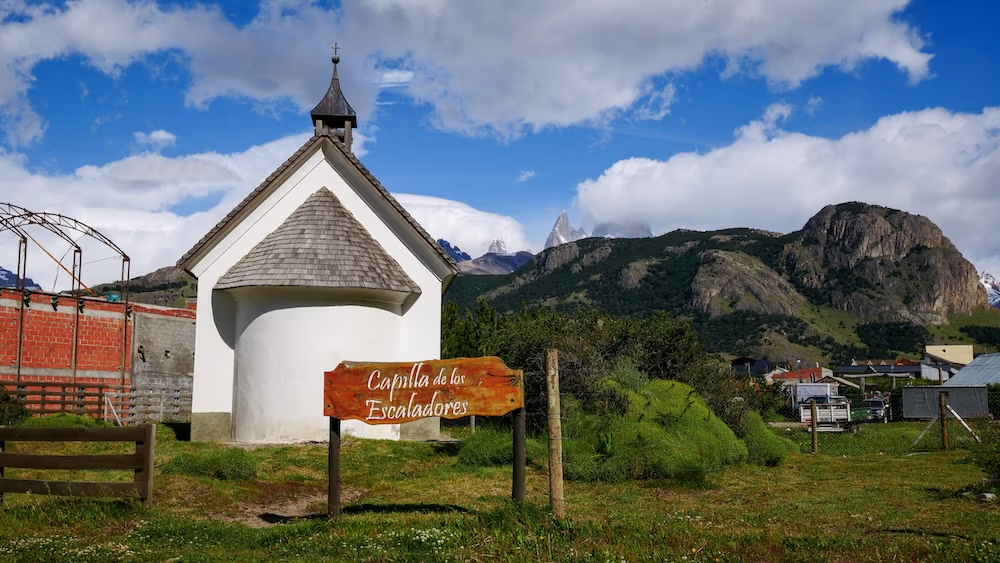
Part 1: Frontier Logistics and Surviving Town Life
Before you even step foot on a trail, you need to understand the infrastructure of this rugged little oasis. El Chaltén has a distinct, isolated frontier feel compared to the developed luxury of El Calafate. You must adapt to the town’s unique rhythms, or it will chew you up before you even lace up your hiking boots.
The Connectivity Black Hole
Do not expect to check your weather app every five minutes. Mobile data out here is virtually non-existent, and hotel Wi-Fi goes down constantly. We spent hours just trying to get the credit card machine to process our payment when we arrived. If you desperately need a signal to send a proof-of-life message back home, you have to huddle in the central plaza and pray for a spotty connection. Embrace the disconnection; it forces you to look at the mountains instead of your screen.
The $1 Apple and Grocery Shock
If you plan to wait out the rain by cooking elaborate meals in your hostel to save money, brace your wallet. The grocery selection is beyond limited, feeling more like a sparse general store. Fresh produce is an absolute luxury. We balked at paying 40 pesos (about $1 USD at the time) for a single apple. Bring your specialty snacks from El Calafate if you can, because the variety here is scarce and the prices reflect the town’s sheer isolation.
The Brilliant $10 Hotel Lunchbox Hack
When you are waking up early to beat a storm front, the last thing you want to do is scramble for trail food. Almost every hotel and guesthouse in town offers a pre-packed lunchbox. You order it the night before, and it’s waiting for you at breakfast. We paid the equivalent of $10 USD for ours, which felt a bit pricey, but the convenience is unmatched. Our standard haul included a hearty rice salad loaded with carrots, eggs, tomatoes, cabbage, and big chunks of cheese, plus an apple, a granola peanut bar, a mini muffin, and candies.
The Crucial Warning: Pack your lunchbox carefully. On our way up the trail, my plastic salad bowl shattered inside my backpack. Eating a mayonnaise-based rice salad out of a cracked plastic shard while shielding yourself from the Patagonian wind is a character-building experience you probably want to avoid. Always transfer your hotel salad into a durable Tupperware container before you leave your room.
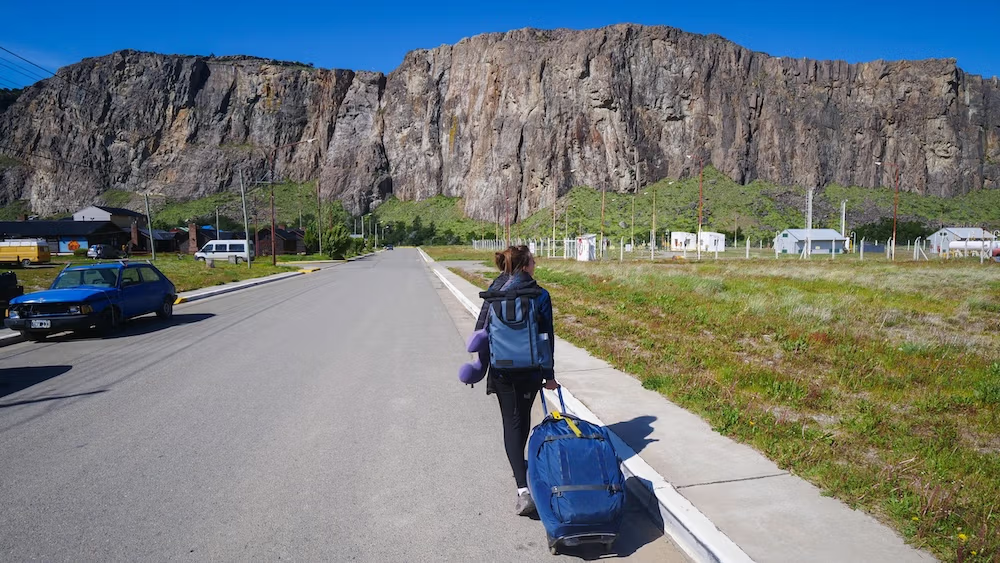
Part 2: The Unglamorous “Sink Laundromat” & Gear for the Unprepared
Instagram shows hikers standing triumphantly on mountain peaks. It completely edits out what happens inside the hotel bathroom at 6:00 AM. Packing light for Patagonia usually means bringing only two pairs of high-quality merino wool hiking socks and a couple of moisture-wicking shirts.
The faux-trekker reality involves spending your evenings hand-washing filthy, dust-caked socks in the hotel bathroom sink—or the bidet, which our spacious room at the Vertical Lodge delightfully featured. Desperately trying to dry your gear over a radiator before the 6:30 AM breakfast is not glamorous, but it is a fundamental part of the Patagonian rhythm.
The “Onion” Strategy
Patagonian weather humbles you. You can experience blistering sun, sideways rain, and hurricane-force winds in a single afternoon. The survival secret is dressing like an onion in highly efficient layers. Start with moisture-wicking thermal layers. Cotton is the enemy because it stays wet and makes you freeze when the wind hits. You need a high-quality windproof and waterproof outer shell. The winds swirling through the valley can be so horrendous that you can barely stand up.
The Joint Savers
For anyone carrying a little extra “bulbous plumptitude” or dealing with bad knees, trekking poles are non-negotiable. I used to think they were just an accessory for elite mountaineers, but they take so much pressure off your knees on those steep descents. They were a mandatory lifeline that we foolishly left in our hotel room during our hardest hike, a mistake we paid for dearly.
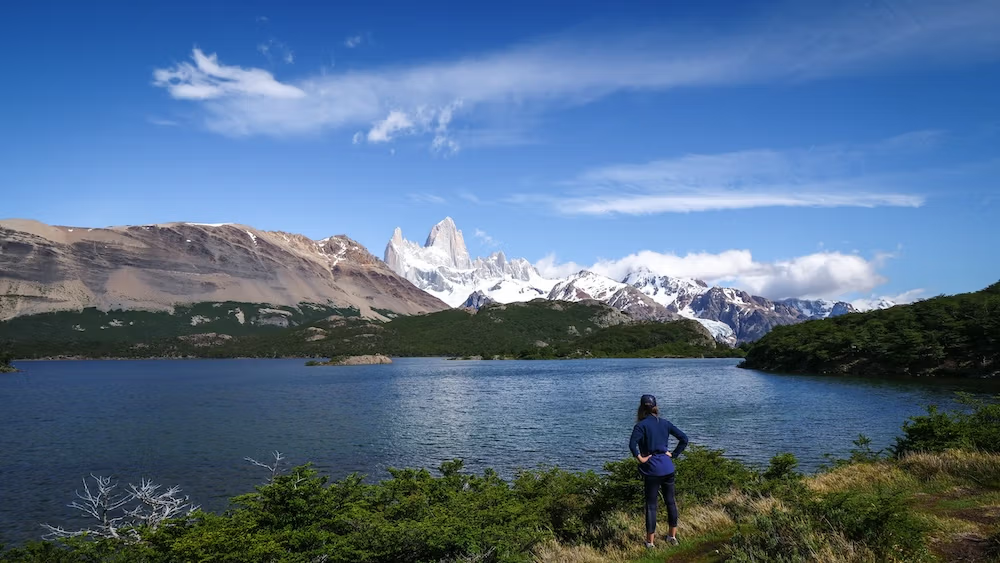
Part 3: Trail Triage and “Bottleneck Politics”
You cannot conquer El Chaltén without a strategic approach to the trails. It is all about managing your energy, protecting your joints, and navigating the social dynamics of the mountain.
The Beast: Laguna de los Tres (Mount Fitz Roy)
This is a grueling 20-plus kilometer round trip. The psychological warfare begins with the pacing. For the first eight to nine kilometers, the trail is generally considered intermediate, passing the stunning viewpoints at Laguna Capri. You are making excellent time, your breathing is regulated, and you are likely thinking, “I was born to do this! A cakewalk! Natural born-hiker, I am!”.
Then, you hit kilometer nine. Here begins the longest, toughest, and most brutal kilometer of the entire trek—an incredibly steep, punishing scramble over loose rock and slippery gravel.
Bottleneck Politics and Trail Envy
The physical exertion is only half the battle; the mental frustration hits its peak because of the inevitable trail bottleneck. Because the path is so heavily trafficked and the terrain is so difficult, you cannot simply power past slower hikers. You are forced to move at the speed of the crowd, constantly stopping and starting on steep inclines, which is agonizing on bad knees.
This is where “Trail Envy” sets in. There is nothing more psychologically damaging than taking a desperate, breathless break on a steep incline, only to be effortlessly passed by a 20-year-old local hiking the trail in denim jeans and old sneakers. You must swallow your pride and keep moving.
The Reward: Laguna Torre
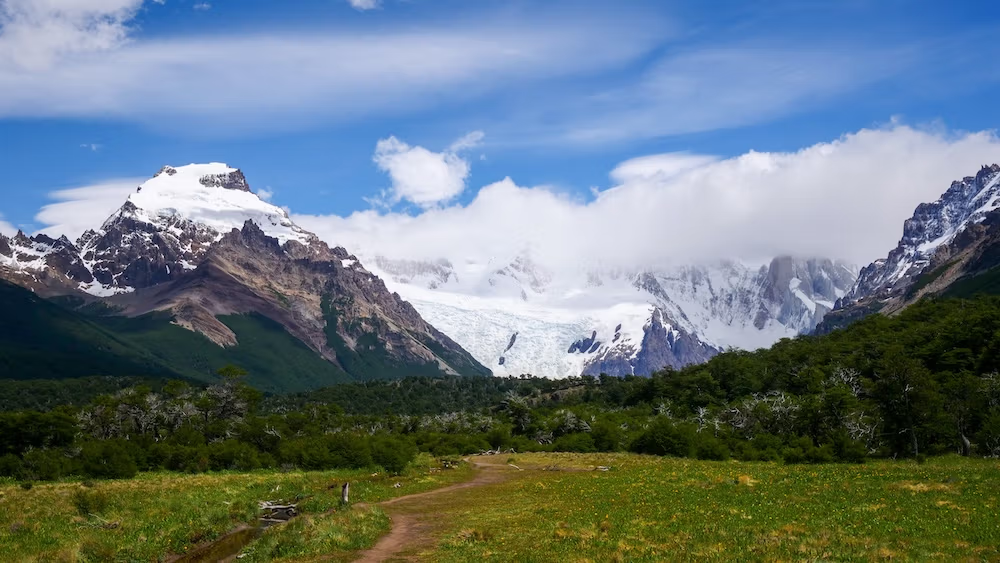
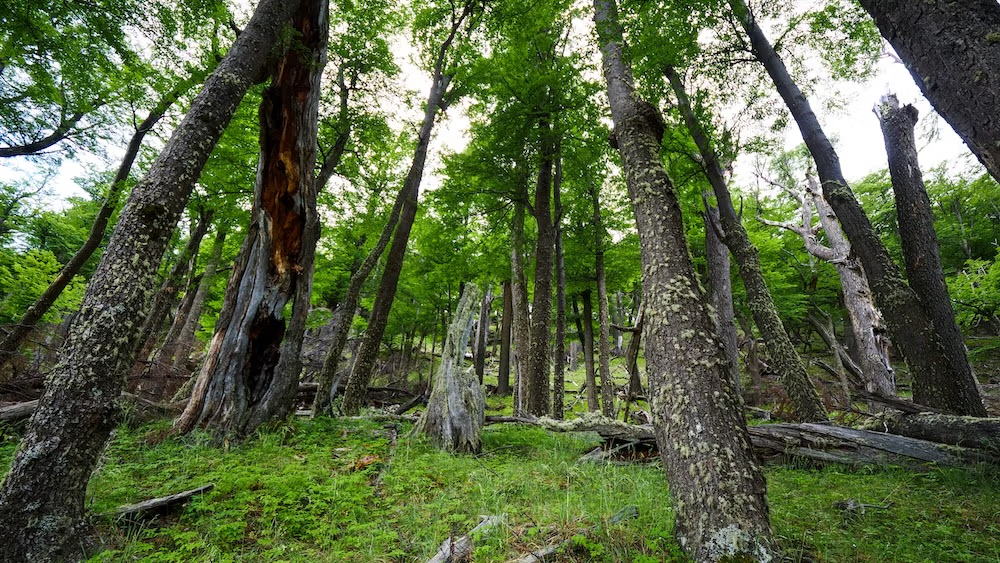
If you survive Fitz Roy, Laguna Torre is your redemption. It is an 18-kilometer loop that leads to the base of Cerro Torre. After the soul-crushing final kilometer of the Fitz Roy hike, Laguna Torre felt like an absolute walk in the park. The first three kilometers involve some moderate climbing, but after that, it flattens out entirely into a sweeping valley where you can pick up serious speed. We tackled this on a cloudy day, and while the lagoon itself looked like a murky, milky café au lait and the glacier looked black and muted, the hike was spectacularly diverse. We passed through dense, ancient groves of trees that looked genuinely spooky and mystical, a true “haunted forest”.
Part 4: The “Camera Surrender Index”
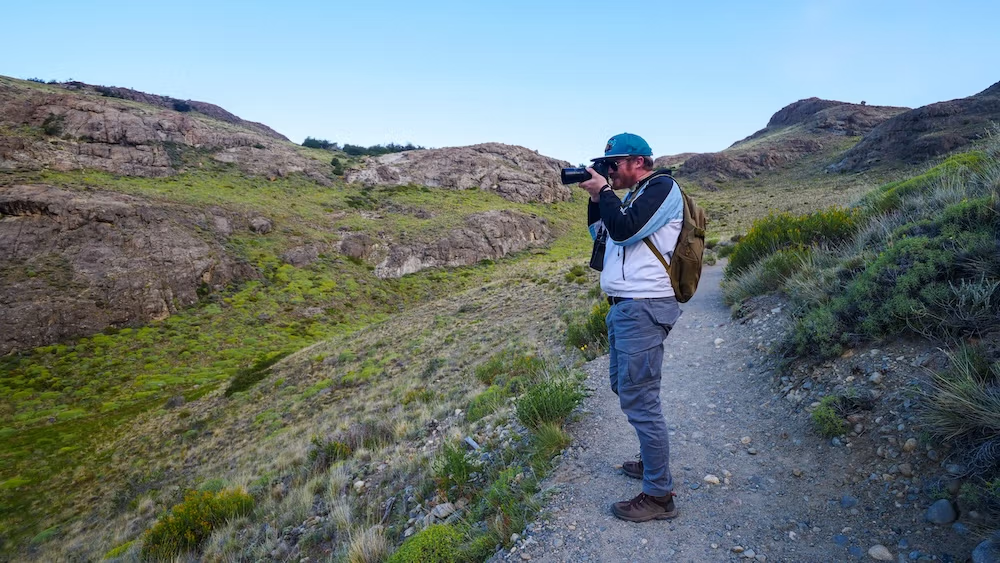
Forget elevation charts; the true measure of a Patagonian trail’s brutality is the “Camera Surrender Index.”
When you start your hike, you are a joyful tourist. You stop every five minutes to take photos of babbling brooks and point in awe at majestic Andean condors circling above your heads. You reach the summit, duck behind rocks to shield yourself from the ferocious wind, and snap the iconic photos of Mount Fitz Roy.
But the descent is where the mind breaks. Walking down a steep, 400-meter elevation drop over a single kilometer puts an unbelievable amount of loading on your quadriceps and patellar tendons. By kilometer 16, the Camera Surrender is complete. We had put our cameras away entirely. We were no longer stopping to admire nature; we were taking breaks strictly out of utter exhaustion and deep muscle soreness. Our feet were actively throbbing with every single step.
The pain was so profound that during the final few kilometers, my mind began to actively hallucinate rescue scenarios. I genuinely caught myself fantasizing about what it would feel like to be carried out of the forest on a royal sedan chair. I literally wondered what the response would be if we simply called the local emergency number, admitted defeat, and requested to be airlifted out of the park. When your camera goes away, survival mode begins.
Matrix 1: The Faux-Trekker Camera Surrender Index
| Trail Marker | Faux-Trekker Mental State | Photography Status | Internal Monologue |
| Km 1 – 4 | Joyful, energetic tourist. | Taking 50 photos of a single lenga tree. | “I am a natural mountaineer. Look at that bird!” |
| Km 9 (The Wall) | Lungs burning, regretting past empanadas. | Camera safely holstered to use hands for scrambling. | “Why is that teenager in jeans passing me?” |
| Km 10 (Summit) | Awe-struck, triumphant, freezing. | Snapping epic landscape shots while shivering. | “This looks like CGI. Worth every step.” |
| Km 16 (Descent) | Total system failure. Throbbing feet. | CAMERA SURRENDER. Safely zipped in the bag. | “If my salad bowl is broken, I will cry.” |
| Km 19 (The End) | Hallucinating rescue scenarios. | Refusing to look at anything but the dirt path. | “How much does a helicopter airlift cost?” |
Part 5: The Trekker Time Warp and Feral Gastronomy
Living in Argentina, you learn the rhythm of the country: dinners rarely start before 9:30 or 10:00 PM. El Chaltén, however, operates in a bizarre “Trekker Time Warp” dictated by extreme caloric deficits and endless Patagonian summer daylight (where the sun rises around 5:00 AM and doesn’t set until 10:30 PM).
The Feral Hunger
When you burn thousands of calories fighting alpine winds and scree fields, you do not return to town craving steamed veggies. You return with an enraged primal hunger. On the day we hiked Laguna Torre, we had originally planned to have a classy, refined Argentine meal with a nice bottle of wine. However, about five minutes into our walk back through town, the feral hunger completely took over. The idea of sitting upright in a nice restaurant felt impossible.
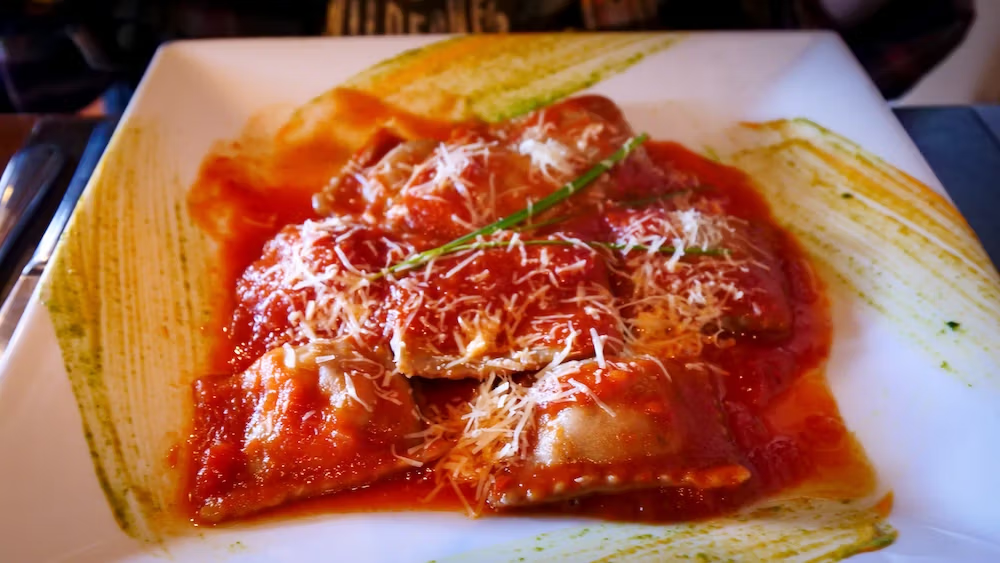
We pivoted hard and aggressively toward La Zorra, a lively tavern known for its incredible craft beer menu and bottom-feeding, indulgent comfort food. We ordered Shake Shack-level gourmet burgers. I had a spicy burger loaded with hot sauce and guacamole, while Audrey got a massive bacon burger. We paired these monsters with decadent cheesy fries buried under crispy bacon bits, washing it all down with massive pints.
Even after consuming our body weight in cheese and beef, the hunger wasn’t fully satisfied. We immediately waddled down the main drive to an artisanal ice cream shop, ordering waffle cones stacked high with super dulce de leche, coconut, mascarpone, and pistachio. It was a gonzo supremo rotund-o binge of epic proportions.
The 12-Hour System Shutdown
When you combine 20 kilometers of alpine hiking with two pounds of bacon, cheese, and craft beer, your body initiates a forced shutdown. We waddled back to the Vertical Lodge in a profound food coma and were completely passed out in bed by 8:30 PM.
Passing out before the sun has even set feels like a betrayal of Argentine culture, but it is a Patagonian biological mandate. We slept for 10 to 12 hours straight. Your muscles require this massive restorative rest to flush lactic acid and begin repairing tissue.
Boutique Recovery at Senderos
When you are finally ready for a refined evening, seek out Senderos. Located off the main street near the bus terminal, it’s a tiny hidden gem inside a high-end guesthouse with only six or seven tables. I devoured a rich blue cheese and walnut risotto with sun-dried tomatoes, while Audrey warmed up with a hearty lentil and veggie casserole. We split a full bottle of Syrah, taking a rare break from Malbec, and finished with an apple pancake and decadent chocolate mousse.
Matrix 2: The Caloric Resuscitation Guide
| The Establishment | The Vibe & Setting | The Required State of Mind | The Faux-Trekker Prescription |
| La Zorra | Lively, loud, craft beer tavern. | Feral hunger. Immediate need for grease, salt, and calories. | The Bacon Burger, loaded cheesy bacon fries, and a pint of Golden Ale. |
| Senderos | Intimate, hidden 6-table boutique restaurant. | Recovered, showered, seeking classy indulgence. | Blue cheese and walnut risotto, lentil casserole, and a full bottle of Syrah. |
| La Waflería | Cozy cafe perfect for lingering. | “Write-Off” day stiffness. Hiding from the Patagonian wind. | Sweet and savory gourmet waffles, hot lattes, and endless games of cards. |
| Cúrcuma | Healthy, earthy, restorative. | Guilt-trip reset. Attempting to reverse the “bulbous plumptitude.” | Massive quinoa bowls, beautifully roasted vegetables, and fresh sprouts. |
Part 6: Defending the “Write-Off” Rebellion
In a town filled with elite mountaineers, choosing to do absolutely nothing takes a surprising amount of psychological courage. The hostels of El Chaltén are filled with competitive backpackers asking each other, “What did you summit today?
You must empower yourself to proudly own your “Write-Off Day.”
The day after our grueling Fitz Roy trek was an absolute, unmitigated write-off. The Delayed Onset Muscle Soreness (DOMS) hit us with rigor mortis-level stiffness. We were both so incredibly stiff that we hardly left our hotel room. The simple act of walking down the hallway felt grueling beyond belief.
Knowing that you have a built-in recovery day dedicated entirely to resting removes the anxiety of having to “push through the pain” again the next morning. On a write-off day, you are allowed to hide indoors, limp to a cafe like La Waflería, and spend hours playing cards, drinking hot lattes, and eating gourmet sweet and savory waffles without an ounce of guilt.
Defending your right to be lazy in the trekking capital of the world is the ultimate faux-trekker rebellion. Let the elite mountaineers fight the 70 mph winds; you have a date with a berry waffle and caramel sauce.
Final Thoughts: Embracing the Patagonian Unpredictability
Let’s be real: we didn’t roll into El Chaltén as elite mountaineers; we waddled in heavily reliant on our foodie instincts and carrying weeks of accumulated empanada weight. But by aggressively pacing ourselves, embracing the mandatory 12-hour rigor-mortis slumbers, and treating our joint pain with a strict medical regimen of gourmet bacon burgers and craft beer, a funny thing happened. We evolved. We arrived as slightly rotund tourists and left as victorious, battle-tested faux-trekkers with surprisingly strong legs.
Patagonian weather does not care about your carefully planned, color-coded itinerary. The winds will absolutely batter you, the clouds will stubbornly hide the world-famous peaks, and yes, your flimsy plastic salad bowl will inevitably shatter into a dozen pieces inside your daypack. But survival out here is all about the pivot. If you know when to retreat to the flat, haunted-looking forests of Laguna Torre, when to buzzer-beat a sunset at Mirador de los Cóndores, and when to declare a tactical “write-off day” dedicated entirely to eating waffles and playing cards, you win the game. El Chaltén is spectacular, even when it’s actively trying to blow you over.
Your knees are going to scream, your feet will undoubtedly throb, and your mind will actively hallucinate rescue helicopters and royal sedan chairs. But I promise you this: when you finally stand beneath those towering, jagged granite spires of Mount Fitz Roy, shivering in the alpine wind while desperately eating a mayonnaise-based rice salad out of a cracked plastic shard, you’ll have a profound realization. Every single agonizing, joint-crushing step was absolutely, unequivocally worth it.
Frequently Asked Questions: Surviving El Chaltén as a Faux-Trekker
1. Do I really need to be super fit to hike in El Chaltén? Honestly, no! We rolled into town after eating our weight in empanadas and pizzas across Argentina. Audrey even had to permanently switch to leggings because her jeans straight-up gave up on her. You don’t need to be an elite athlete; just pace yourself, use trekking poles, and reward your pain with ice cream. You’ll survive!
2. What’s the deal with the $10 hotel lunchboxes? Are they worth it? Yes, but with a massive warning label! Groceries in town are super limited (we’re talking $1 for a single apple), so ordering the $10 hotel lunchboxes the night before is a total lifesaver. BUT, please transfer your food into a real Tupperware container. My flimsy plastic salad bowl shattered inside my backpack on the trail. Eating mayo-based rice salad out of broken plastic on a freezing mountain is a total buzzkill.
3. How bad is the wind, really? It will literally humble you. We had a day where the wind was so horrendous we could barely stand on our own two feet. Dress like an onion (layers, layers, layers!) and invest in a really good windbreaker because Patagonian weather does whatever it wants.
4. Which trail should I do if my knees are already screaming? Skip Fitz Roy and hit Laguna Torre. It’s an 18-kilometer loop, but after the first three kilometers, it flattens out into this gorgeous, sweeping valley. It’s an absolute breeze compared to the brutal scree scrambles on the other trails, and you can really pick up some speed.
5. What is a “Write-Off Day” and do I actually need one? Oh, you 100% need one. After hiking 20 kilometers, your muscles will hit rigor-mortis levels of stiffness. A write-off day is your official permission to do absolutely nothing. We literally hid in La Waflería, ate gourmet sweet waffles, and played cards all day while we recovered. No guilt allowed.
6. Where is the best place to stuff my face after a massive hike? When that feral, primal hunger hits, waddle directly to La Zorra. We inhaled massive gourmet bacon burgers, loaded cheesy bacon fries, and pints of craft beer. It’s the ultimate high-calorie reward for your suffering.
7. Will my cell phone work on the trails? Not a chance! Mobile data out here is practically non-existent, and even the hotel Wi-Fi goes down constantly. Download your trail maps offline before you arrive, tell your family you love them, and embrace the forced digital detox.
8. Is the final climb to Mount Fitz Roy really that hard? Look, the first 9 kilometers are a totally fine, beautiful walk through the forest. But that last kilometer? It’s a brutal, steep scramble over loose rocks that will absolutely shred your legs. By the descent, we were actively hallucinating about being carried down on a royal sedan chair. Just take your time, expect a bottleneck of other exhausted hikers, and keep pushing. It’s worth the pain!
Project 23 Argentina: This guide is also available in Spanish. [Lea la versión en castellano: La Guía de Supervivencia del “Falso Trekker” para hacer Trekking en El Chaltén, Patagonia]