
There is a beautiful, highly romanticized myth surrounding the trekking capital of Argentina. It is a myth perpetuated by elite mountaineers, sponsored outdoor athletes, and beautifully curated Instagram feeds. The myth suggests that when you arrive in El Chaltén, the crisp Patagonian air will immediately fill your lungs with boundless energy, your legs will miraculously transform into pistons of pure steel, and you will effortlessly bound up the granite slopes of Los Glaciares National Park like a high performance gazelle.
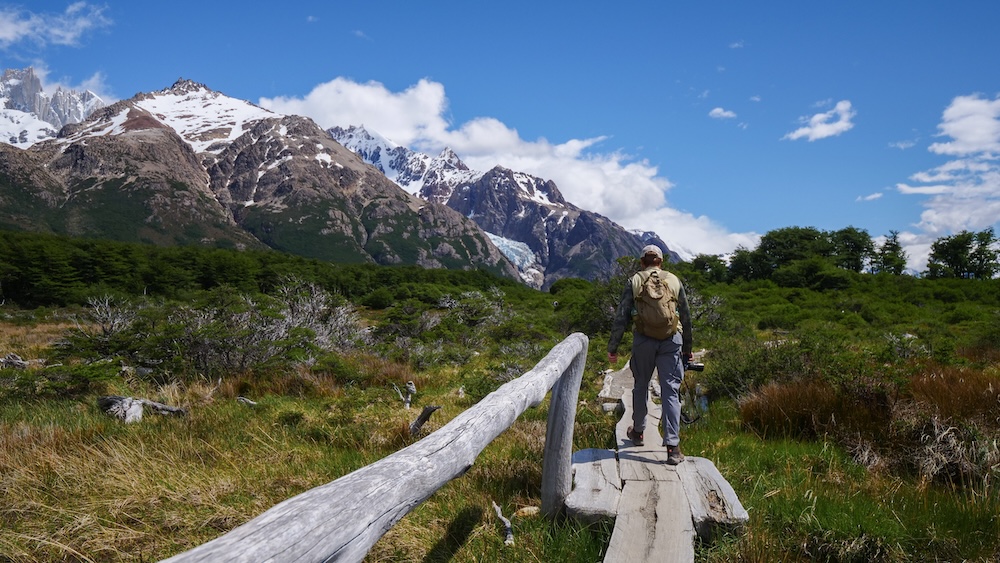
Let us be brutally, hilariously honest for a second. That is not reality.
The reality of trekking in Patagonia is that it is not just a test of your cardiovascular endurance; it is an absolute, uncompromising battlefield for your joints. It is a place where bad knees are exposed, where the soles of your feet will actively throb, and where the physical breakdown inevitably triggers a profound mental game.
Audrey and I arrived in El Chaltén completely unprepared for this reality. We had spent the previous weeks in “Gordo Supremo Mode,” eating our way across Argentina with wanton abandon. We had been drinking Malbec, eating empanadas, stuffing our beaks with medialunas and indulging in so much local cuisine that we had gained what I affectionately refer to as some serious “bulbous plumptitude”. The culinary indulgence reached a critical mass where Audrey realized with absolute horror that her jeans no longer fit, forcing a permanent, non-negotiable pivot to leggings for the remainder of the trip. I was steadily rotunding right alongside her.
We were not the best versions of ourselves in terms of fitness. We were faux trekkers who desperately needed to hit the trails hard. We had booked six nights at the Vertical Lodge, assuming we would simply crush the world-famous mountain trails every single day under perfect, endless bluebird skies. Nope. That didn’t happen.
What we actually discovered was a grueling test of willpower, a masterclass in pain management, and a series of desperate mental negotiations. If you are heading to Patagonia with less-than-perfect joints, a questionable fitness baseline, or a penchant for gourmet food over grueling exercise, this is your ultimate survival guide. This is the unvarnished truth about hiking in El Chaltén with bad knees and sore feet, and exactly how to win the mental game.
The Physical Trap: The Anatomy of a Patagonian Trail
To win the mental game, you first have to understand the physical trap you are walking into. El Chaltén’s trails are deceiving. They are masterfully designed to lull you into a false sense of security before unleashing their true brutality.
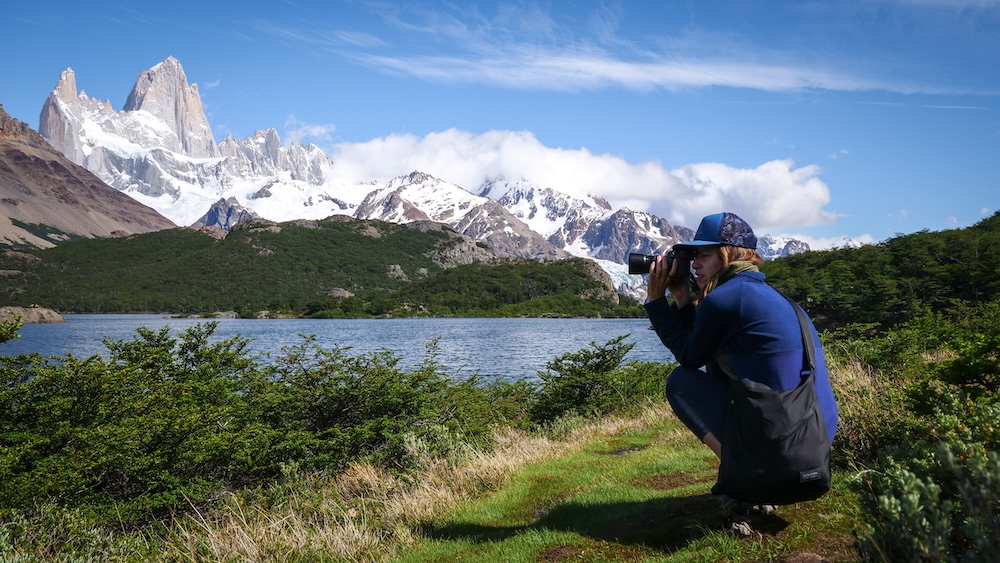
When you set out to hike the crown jewel of the park—the Laguna de los Tres trek to Mount Fitz Roy—you are signing up for a grueling 20-plus kilometer round trip. The psychological warfare begins with the pacing. For the first eight to nine kilometers, the trail is generally considered intermediate. You are walking through beautiful, enchanted lenga forests, passing the stunning viewpoints at Laguna Capri, and marveling at the majestic Fitz Roy skyline that looks so perfect it feels surreal. You are making excellent time, your breathing is regulated, and you are likely thinking, “This ain’t bad at all! Damn, son. I’m a natural-born hiker!”
This is the Patagonian trap.

The Kilometer 9 Wall
Then, you hit kilometer nine. Up until this exact point, you might not find the trail overly difficult, but this final ascent is where everything changes. Here begins the longest, toughest, and most brutal kilometer of the entire trek.
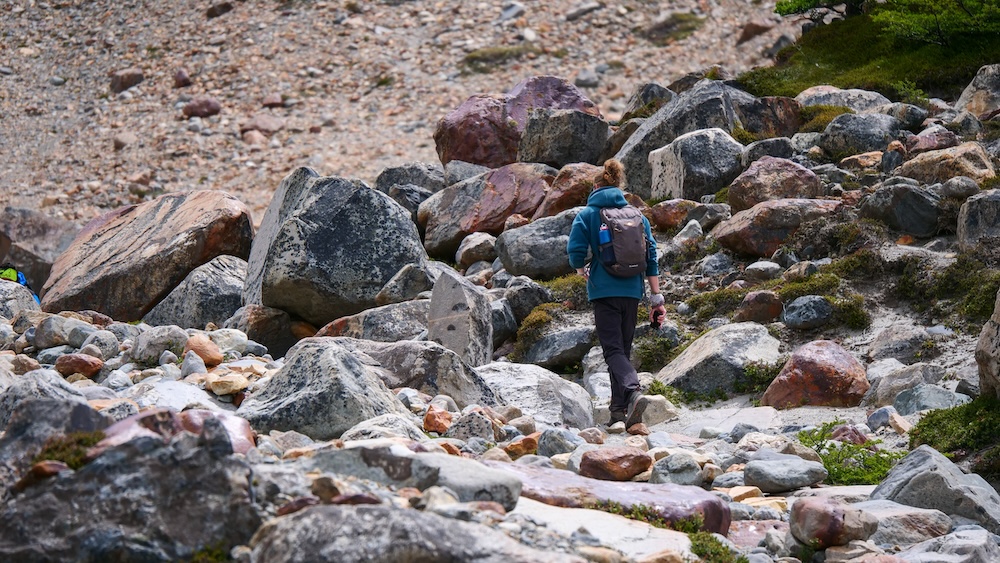
It is an incredibly steep, punishing scramble over loose rock and slippery gravel. You are stepping up onto massive boulders and navigating narrow, precarious paths. But the physical exertion is only half the battle; the mental frustration hits its peak because of the inevitable trail bottleneck.
Because the path is so heavily trafficked and the terrain is so difficult, you cannot simply power past slower hikers or maintain your own rhythm. You are forced to move at the speed of the crowd. Everyone is tired, everyone is carefully navigating the loose scree, and your calculated pace goes entirely out the window. When you have bad knees, this constant stopping, starting, and holding awkward lunges on steep inclines while waiting for someone to pass is agonizing.
This is where the regret usually sets in. This is where you realize that trekking poles were not just an optional accessory for hardcore mountaineers; they were a mandatory lifeline that you foolishly left in your hotel room. You push through sheer agony, fueled only by the encouragement of descending hikers promising that the views at the top are worth it.
And they are. Just me. Reaching Laguna de los Tres and seeing the cerulean waters nestled beneath the towering granite spires is a life-changing, awe-inspiring moment.
But then, you have to go back down.

The “Sedan Chair” Descent: When the Mind Breaks
The cardiovascular exhaustion happens on the way up. But the true destruction of your joints happens on the descent. Walking down a steep, 400-meter elevation drop over a single kilometer puts an unbelievable amount of loading on your quadriceps, patellar tendons, and ankles. By the time you navigate back down the scree field and hit the relatively flat forest trails for the 9-kilometer march back to town, your body enters a new phase of trauma.
This is the “Throbbing Feet” phase.
We consider ourselves to be relatively capable travelers, but the descent from Laguna de los Tres kicked our arse and took our names. We were pushed way out of our element, out of our league, and completely out of our baseline fitness level. The walk back to town was an absolute struggle.
When the body starts to fail, the mind does strange things. Earlier in the day, we were joyful tourists, stopping every five minutes to take photos of babbling brooks and pointing in awe at majestic Andean condors circling above our heads. By kilometer 16, we had put our cameras away entirely. We were no longer stopping to admire nature; we were taking breaks strictly out of utter exhaustion and deep muscle soreness. Our feet were actively throbbing with every single step.
The pain was so profound that during the final few kilometers, my mind began to actively hallucinate rescue scenarios. I genuinely caught myself fantasizing about what it would feel like to be carried out of the forest on a royal sedan chair. Wouldn’t that be grand? I literally wondered what the response would be if we simply called the local emergency number, admitted defeat, and requested to be airlifted out of the park. LOL.

The Art of “Chunking” (A Survival Tactic)
When your mind is descending into sedan-chair hallucinations, you have to rely on mental tricks to survive. One of the greatest features of the trails in El Chaltén is that they are marked with wooden posts every single kilometer.
When your knees are screaming, you cannot think about the 8 kilometers you have left. That number will crush your spirit. You must practice the art of “chunking.” You focus your entire mental energy solely on finding the next wooden post. You are not hiking to El Chaltén; you are hiking to kilometer marker 5. Once you reach it, you celebrate, take a sip of water, and then hike to kilometer marker 4. It is a micro-game of survival that keeps the overwhelming distance manageable. Bit by bit. Step by step. Little by little. You march forward.
The “Shattered Salad Bowl” Effect: Gear and Mental Resilience
When you are already physically drained and managing severe joint pain, your mental resilience is paper-thin. In this fragile state, small logistical failures can cause a total psychological break.
Because the grocery stores in El Chaltén are highly limited and surprisingly expensive (we balked at paying $1 USD for a single apple), almost every hotel and guesthouse in town offers a pre-packed lunchbox. You order it the night before, and for the equivalent of $10 USD, you are handed a hefty brown bag the next morning before hitting the trail.
Our standard lunchbox haul included an apple, a granola peanut bar (turrón), a mini muffin, a handful of candies, bottled water, and a hearty, mayonnaise-based rice salad loaded with carrots, eggs, tomatoes, cabbage, and big chunks of cheese.
It is a fantastic, convenient service, but it comes with a massive caveat that tests your mental fortitude. On our way up the trail, my plastic salad bowl shattered inside my backpack.
Imagine the scene: Your legs are burning, you are shivering from the ferocious Patagonian wind, and you finally find a sheltered rock to sit behind. You are desperate for calories. You unzip your backpack, dreaming of that hearty rice salad, only to find that the thin plastic container has cracked into multiple pieces. Eating a mayonnaise-based rice salad out of a cracked plastic shard while shielding yourself from the cold is a character-building experience that borders on tragicomedy.
When your feet throb, gear failures feel catastrophic. This is why investing in proper support—both for your knees and your lunch—is vital. If you are bringing a hotel lunchbox, transfer the contents to a durable Tupperware container before you leave town. Bring trekking poles. Wear boots that accommodate the inevitable foot swelling that occurs after 15 kilometers. Protect your mental state by bulletproofing your logistics.

The Feral Recovery Protocol: Rewarding the Suffering
The mental game of surviving sore knees relies entirely on the promise of a massive, unhinged caloric reward at the finish line. When you burn thousands of calories fighting alpine winds and scree fields, you do not return to town craving a light, sensible salad. You return with a enraged primal hunger.
On the day we hiked the 18-kilometer Laguna Torre trail, we had originally planned to have a classy, refined Argentine meal with a nice bottle of wine to celebrate. However, about five minutes into our walk back through town, the feral hunger completely took over. The idea of sitting upright in a nice restaurant felt impossible. We pivoted hard and aggressively toward La Zorra, a lively spot known for its incredible craft beer menu and bottom-feeding, indulgent comfort food.
We ordered what I can only describe as gourmet burgers. We paired these monsters with decadent cheesy fries buried under crispy bacon bits, washing it all down with massive pints. We didn’t want to know the calorie count; we just knew we desperately needed it to heal our broken bodies.
Even after consuming our body weight in cheese and beef, the hunger wasn’t fully satisfied. We immediately waddled down the main drive to an artisanal ice cream shop, ordering waffle cones stacked high with super dulce de leche, coconut, mascarpone, and pistachio. It was a gonzo supremo rotund-o binge of epic proportions.
The 12-Hour System Shutdown
When you combine 20 kilometers of alpine hiking with two pounds of bacon, cheese, and craft beer, your body initiates a forced shutdown. We waddled back to the Vertical Lodge in a profound food coma and were completely passed out in bed by 8:30 PM.
This is not a sign of weakness; this is the Patagonian biological mandate. We slept for 10 to 12 hours straight. Your muscles require this massive restorative rest to flush lactic acid and begin repairing tissue.

The Mandatory “Write-Off” Day
The ultimate mental strategy for hikers with bad knees is granting yourself permission to have a “Write-Off” Day.
The day after our grueling Fitz Roy trek was an absolute, unmitigated write-off. The Delayed Onset Muscle Soreness (DOMS) hit us with rigor mortis-level stiffness. We were both so incredibly stiff that we hardly left our hotel room. The simple act of walking down the hallway felt gruelling beyond belief.
Knowing that you have a built-in recovery day dedicated entirely to resting removes the anxiety of having to “push through the pain” again the next morning. On a write-off day, you are allowed to hide indoors, limp to a cafe like La Waflería, and spend hours playing cards, drinking hot lattes, and eating gourmet sweet and savory waffles without an ounce of guilt.
The Ultimate Decision Matrices for the Faux-Trekker
To help you manage your physical limits and plan your survival strategy in El Chaltén, utilize these highly specialized, battle-tested decision matrices.
Matrix 1: The Faux-Trekker Joint Pain Index (Trail by Trail)
| Trail Name | Total Distance | Elevation Gain | The Knee-Buster Rating | The Mental Game Strategy |
| Laguna de los Tres (Fitz Roy) | 20+ km | 800+ meters | Extreme (Code Red). The final 1 km descent is a brutal scree scramble that will absolutely shred your patellar tendons. | Bring trekking poles. Utilize the “chunking” method between kilometer markers. Pre-plan your sedan chair fantasy. |
| Laguna Torre | 18 km | 250 meters | Moderate. The first 3 km have some climbing, but the rest is a brilliantly flat, sweeping river valley. | Let your mind wander. Enjoy the haunted forest sections and the lack of steep, jarring descents. |
| Mirador de los Cóndores | 2 km | 100 meters | Low. A short, sharp 45-minute push, but over quickly. | Perfect for an arrival evening to stretch the legs without causing lasting DOMS. |
| Chorrillo del Salto | 6-8 km | Minimal | Zero. Completely flat dirt path. | The ultimate “active recovery” walk for the day after a major hike. |
Matrix 2: The Mental Breakdown Timeline (Laguna de los Tres)
| Trail Marker | Physical State | Psychological State | The Internal Monologue |
| Km 1 – 4 | Fresh, energetic. | Joyful tourist. Pointing at birds. | “I am a natural mountaineer. This is a breeze!” |
| Km 8 (Base) | Sweaty, fatigued. | Nervous anticipation. | “Okay, here is the steep part. I can do this.” |
| Km 9 (Ascent) | Burning lungs, screaming quads. | Frustrated by the trail bottleneck. | “Why is that person in jeans passing me? Keep moving.” |
| Km 10 (Summit) | Wind-battered, freezing. | Awe-struck, triumphant. | “This is the most beautiful CGI mountain I have ever seen.” |
| Km 15 (Descent) | Throbbing feet, jelly knees. | Desperate, feral hunger setting in. | “If this salad bowl is broken, I am going to cry.” |
| Km 18 (The Final Push) | Total system failure. | Hallucinating rescue scenarios. | “What is the exact dialing code for an emergency helicopter airlift?” |
Matrix 3: The Caloric Resuscitation Guide (Where to eat when you want to cry)
| The Establishment | The Vibe & Setting | The Required State of Mind | The Faux-Trekker Prescription |
| La Zorra | Lively, loud, craft beer tavern. | Feral hunger. Immediate need for grease, salt, and calories. | The Bacon Burger, loaded cheesy bacon fries, and a pint of Golden Ale. |
| Senderos | Intimate, hidden 6-table boutique restaurant. | Recovered, showered, seeking classy indulgence. | Blue cheese and walnut risotto, lentil casserole, and a full bottle of Syrah. |
| La Waflería | Cozy cafe perfect for lingering. | “Write-Off” day stiffness. Hiding from the Patagonian wind. | Sweet and savory gourmet waffles, hot lattes, and endless games of cards. |
| Cúrcuma | Healthy, earthy, restorative. | Guilt-trip reset. Attempting to reverse the “bulbous plumptitude.” | Massive quinoa bowls, beautifully roasted vegetables, and fresh sprouts. |
The Redemption Trail: Why Laguna Torre Saves Your Mind
If you have bad knees, the idea of doing a second massive hike after surviving Fitz Roy sounds like pure masochism. However, understanding the topography of the park allows you to experience epic views without the joint destruction.
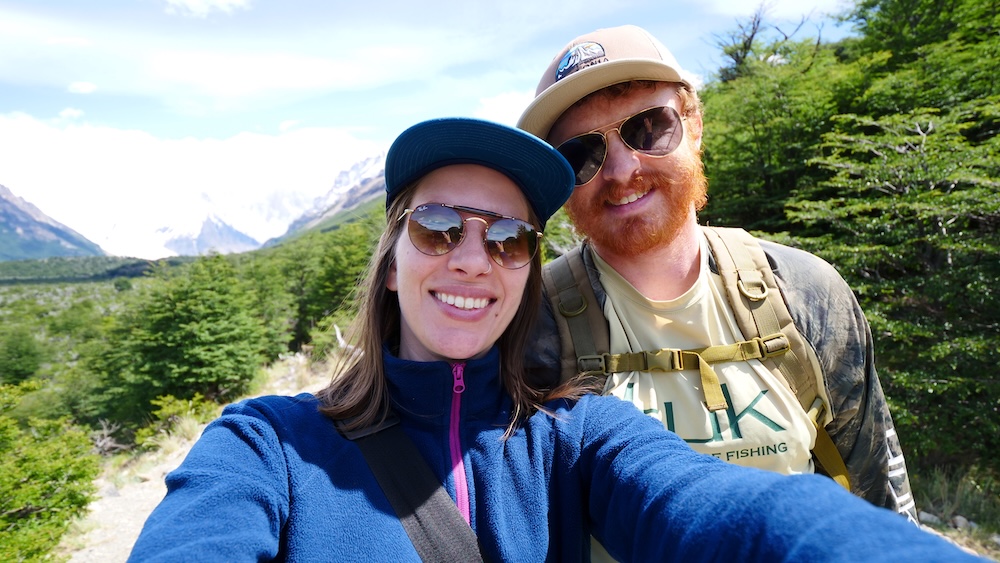
This brings us to the Laguna Torre trek. It is an 18-kilometer loop that leads to the base of Cerro Torre. We tackled this trail on day five of our itinerary, and I can confidently say that it is the ultimate “high reward, low impact” redemption trail.
After the soul-crushing final kilometer of the Fitz Roy hike, Laguna Torre felt like an absolute walk in the park. It is firmly an intermediate trail with only about 250 meters of total elevation gain. The first three kilometers involve some moderate climbing, but after that, it flattens out entirely. You are walking through a wide, sweeping valley where you can really pick up some serious speed.
The Psychological Ease of the Flat Valley
When you don’t have a brutal, steep climb looming over you at the end of the trail, your mental state shifts dramatically. On the Laguna Torre hike, there was simply no sense of urgency. We felt completely relaxed. We had the mental bandwidth to appreciate the incredible variety of the trail: the roaring Cascada Margarita waterfall, the moody, twisted trees of the “haunted forest,” and the sweeping views of the glacier.
Because we were motivated by food and unhindered by severe knee pain, we absolutely blasted through the flat valley on the return trip. We crushed what was supposed to be a three-hour descent in just 2 hours and 20 minutes. We didn’t come back feeling nearly as sore or as tired as we did after Fitz Roy.
Laguna Torre proves that you do not have to endure absolute agony to experience the grandeur of Los Glaciares National Park. It is the perfect counterbalance to the physical trauma of Laguna de los Tres.

The Final Word: Evolving from Foodie to Faux-Trekker
Hiking in El Chaltén with a baseline fitness level of “recently consumed a dozen empanadas” is a daunting prospect. The trails here demand respect. The wind will batter you, the scree will test your balance, and the distance will challenge every joint in your lower body.
But winning the mental game is entirely possible if you approach the trekking capital of Argentina with the right strategy.
You must accept that you are going to hurt. You must embrace the use of trekking poles to save your knees on the descents. You must practice “chunking” your way from one trail marker to the next when your mind starts dreaming of helicopter rescues. And above all, you must fiercely protect your logistical sanity by packing your $10 lunchbox in shatter-proof containers.
We arrived in El Chaltén out of shape, slightly rotund, and heavily reliant on our foodie instincts. But by pacing ourselves, front-loading our itinerary, embracing the 12-hour recovery slumbers, and rewarding our pain with gourmet bacon burgers, we evolved. We left as victorious faux-trekkers having experienced the raw, undeniable awe of the Patagonian wilderness.
Your knees might scream, your feet will undoubtedly throb, and your mind will play tricks on you. But when you stand beneath the towering granite spires of Mount Fitz Roy, shivering in the wind with a cracked plastic bowl of rice salad in your hands, you will realize that every agonizing step was absolutely worth it.
Frequently Asked Questions: Surviving El Chaltén with Bad Knees
1. Is the Fitz Roy hike actually going to destroy my knees? Look, I’m not going to sugarcoat it. The first 9 kilometers are totally fine, but that last kilometer is a brutal, steep rock scramble. The descent is what really gets you—it is pure agony on the joints. Bring trekking poles, seriously!
2. What’s the best trail if my legs are already screaming? Laguna Torre is your best friend. It’s 18 kilometers, which sounds like a lot, but after the first 3 kilometers, it flattens out into this gorgeous, sweeping valley. It’s an absolute breeze and super easy on the knees compared to Fitz Roy.
3. How do I survive the mental breakdown on the trail? We call it the art of “chunking”. El Chaltén’s trails have markers every single kilometer. Don’t think about the 10 kilometers you have left; just focus your entire soul on making it to the next wooden post. It’s a lifesaver when you’re literally hallucinating about being carried out on a sedan chair.
4. Should I bring my own lunch on these long hikes? Yes, but here is a major warning! Order the $10 lunchbox from your hotel, but put the food in a real, durable container. My plastic salad bowl shattered inside my backpack. Eating mayo-based rice salad out of broken plastic while freezing in the Patagonian wind is a low point you definitely want to avoid.
5. Is it okay to just take a day off and do nothing? Oh, it is absolutely mandatory. We call it the “Write-Off Day”. After a massive hike, your muscles will hit rigor-mortis levels of stiffness. Give yourself full permission to hide in a cafe, eat gourmet waffles at La Waflería, and play cards all day without an ounce of guilt.
6. Where is the best place to stuff my face after a grueling hike? When that feral, primal hunger hits, run—don’t walk—to La Zorra. We inhaled massive gourmet bacon burgers, loaded cheesy fries, and pints of craft beer. It is the ultimate high-calorie reward for your suffering.
7. I’m not super fit. Can I still hike in El Chaltén? 100%! We arrived in full foodie mode after eating our weight in empanadas across Argentina. My pants didn’t even fit anymore. Just pace yourself, don’t force the hardest trails on your last day, and reward every bit of pain with artisanal ice cream.
8. Do I really need trekking poles? Yes. A thousand times, yes. I used to think they were just an accessory for elite mountaineers, but they take so much pressure off your knees on those steep descents. Rent them in town or bring them from home; your patellar tendons will thank you.
Project 23 Argentina: This guide is also available in Spanish. [Lea la versión en castellano: Hacer trekking en El Chaltén con malas rodillas y dolor de pies: El juego mental]