
Let’s get one thing straight right out of the gate: you do not need a guide to hike in El Chaltén. The “Trekking Capital of Argentina” was practically built for the independent DIY hiker. The trailheads start right at the edge of town, the paths are idiot-proofed with frequent kilometer markers, and during the summer months, you have a built-in safety net of fellow hikers.
Logistically, it is an absolute breeze. Physically? Well, that is an entirely different story.
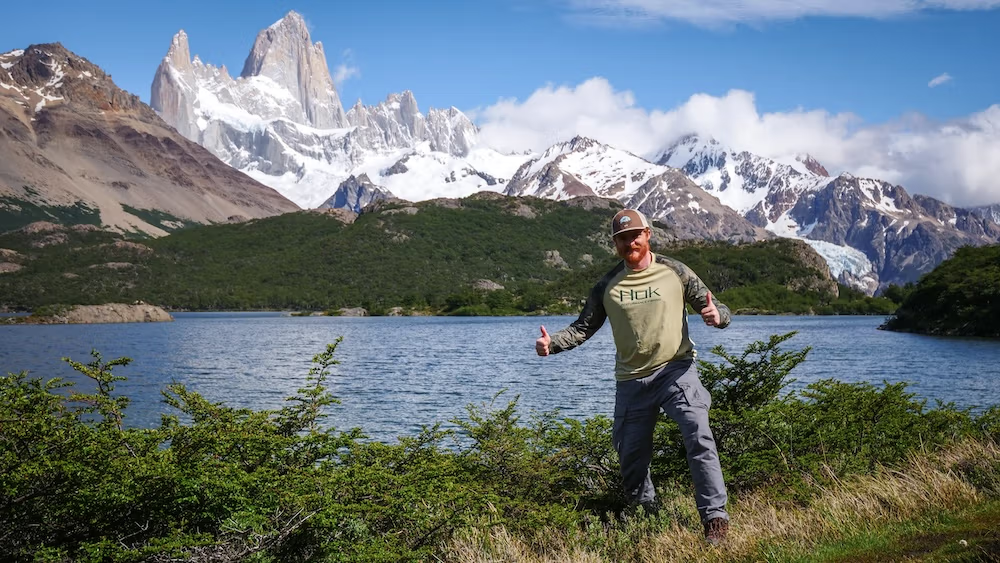
When Audrey and I rolled into Los Glaciares National Park for a six-night stay, we did not arrive as seasoned mountaineers with perfectly broken-in gear. We arrived as two people who had spent the previous weeks prioritizing empanadas and craft beer over cardio. In fact, Audrey’s jeans no longer fit, so she was strictly wearing stretchy leggings. I was embracing a state of pure, rotund “bulbous plumptitude”. We had been eating like little piggies our way through Patagonia, and we desperately needed to move our skeletons.
This isn’t your standard, sterile trail guide written by an ultra-marathoner who bounds up mountains before breakfast. This is a DIY survival dossier from two self-proclaimed “faux trekkers”. We learned the hard way that there is a massive difference between a hike being easy to navigate and being easy to survive.
If you want to know what it really takes to conquer Mount Fitz Roy and Cerro Torre on your own terms—including the brutal Patagonian winds, the trailside mishaps, and the absolute necessity of scheduling high-calorie recovery days—you are in the right place.
Arriving in the Trekking Capital
Before you even step foot on a trail, you have to get to El Chaltén. The journey itself is a visual feast that builds your anticipation by the minute.
Logistics and First Impressions
We made the journey from El Calafate to El Chaltén by bus. We traveled with a company called Chaltén Travel, paying 1,000 pesos (which was roughly $16 USD at the time) per person for the three-hour ride. The drive is stupendous, offering picture-perfect postcard views of turquoise waters and rugged landscapes that make you feel like you are on a premium sightseeing tour. It was insane to the membrane.
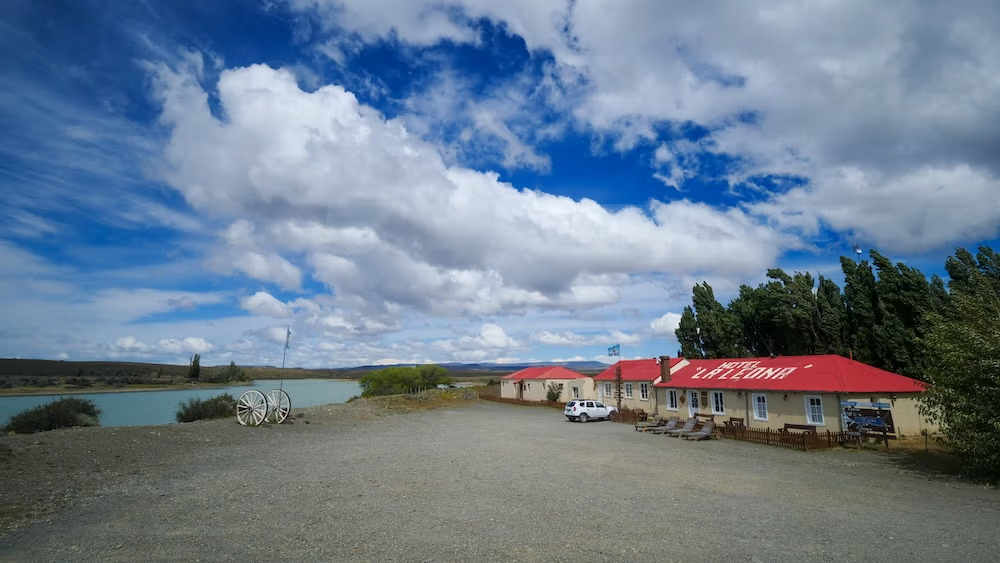
About halfway through the journey, the bus makes a convenient stop at Hotel La Leona. This historic roadhouse is the perfect place to stretch your legs, use the restroom (which is free if you make a purchase, or requires a small fee otherwise), and grab a quick snack before tackling the rest of the drive.
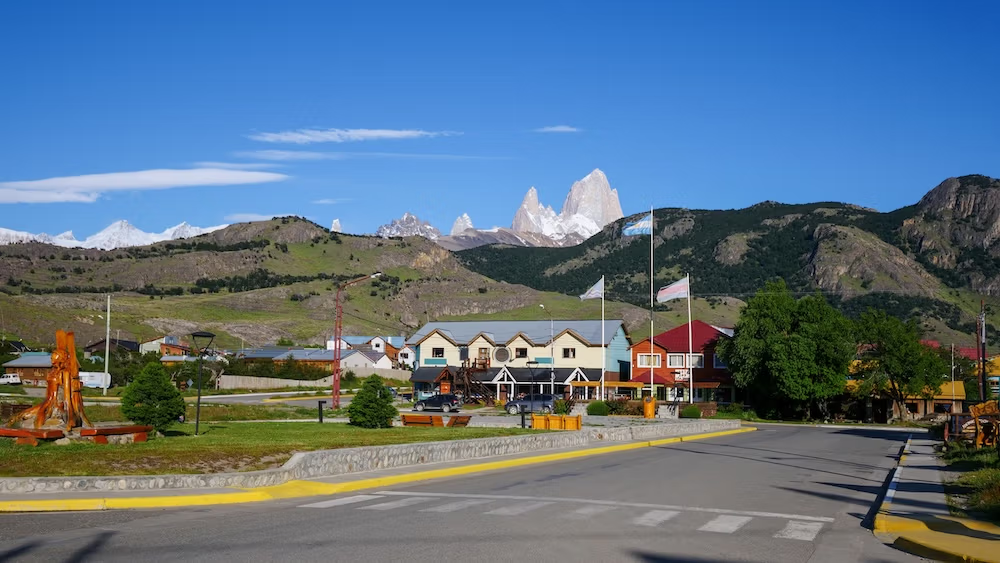
When you pull into El Chaltén, the first thing you notice is how compact and vibrant it is. It has a distinct frontier feel, acting like a little colorful oasis surrounded by towering mountains. Unlike the more developed hub of El Calafate, El Chaltén feels wilder. Because the town is located directly inside Los Glaciares National Park, our bus actually stopped at the park information center before dropping us at the terminal. Here, park rangers give you the rundown on the rules and provide the maps you need so you can head off and hike completely on your own.
Our basecamp for the week was Vertical Lodge, located just a short walk down the street from the bus terminal. For $54 USD a night, which included breakfast, it far exceeded our expectations. The room was massive, featuring a king-sized bed, a work desk for video editing, and a spacious bathroom with a bidet and a tub—an absolute godsend for soaking sore hiker legs.
The Digital Disconnect & Grocery Sticker Shock
If you are doing the DIY route, you need to be prepared for two harsh logistical realities in El Chaltén: the grocery situation and the internet.
Do not expect to find sprawling supermarkets here. The food selection is beyond limited and aggressively expensive. We paid roughly a dollar per apple, which was about 40 pesos at the time. If you are deeply attached to fresh fruits and vegetables, you will find the pickings slim. Many travelers recommend buying your food supplies in El Calafate and bringing them with you on the bus, a tip we wish we had taken more seriously.
Secondly, the internet is basically a myth out here. Mobile data does not work, and the Wi-Fi in hotels goes down constantly. We had to try multiple times over an entire afternoon just to process a basic credit card payment for our room. There is free Wi-Fi in the central plaza if you have the patience to sit there and connect, but honestly, you came out here to hike and enjoy nature. Consider the lack of connectivity a mandatory digital detox.
The El Chaltén Trail Decision Matrix
To help you plan your DIY itinerary, here is a quick breakdown of how to approach hiking in the area based on your goals and fitness levels.
| Trail / Activity | Distance / Time | Difficulty Level | Guide Required? | Best For… |
| Mirador de los Cóndores | 1 km (45 mins up) | Easy (but steep) | No | Arrival day, sunset views, warming up your legs. |
| Laguna Torre (Cerro Torre) | 18 km loop | Intermediate | No | A scenic, varied, and relatively flat long-distance hike. |
| Laguna de los Tres (Fitz Roy) | 20+ km | Hard (Final KM is brutal) | No | The ultimate Patagonian bucket-list view. Demands high fitness. |
Trail 1: The Warm-Up at Mirador de los Cóndores
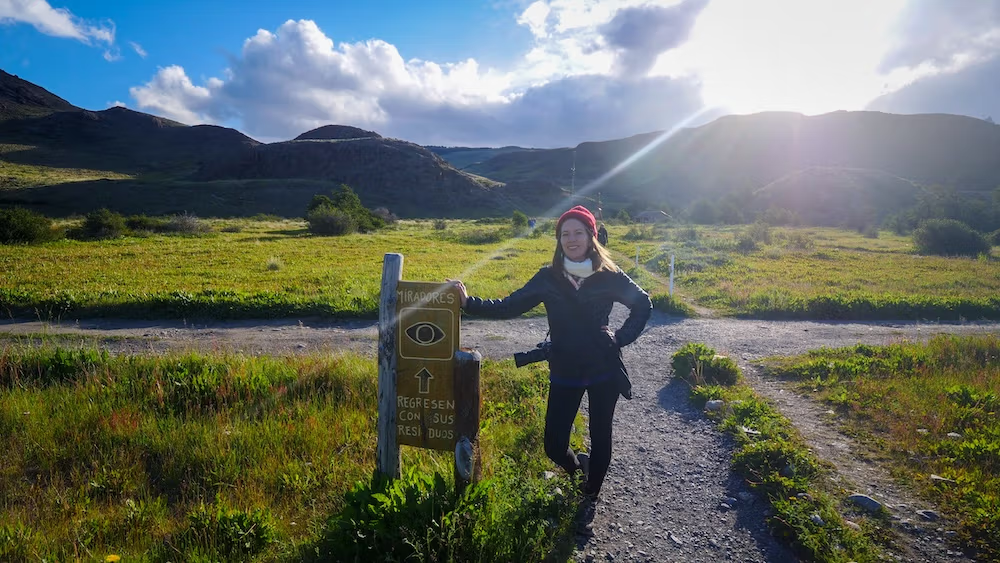
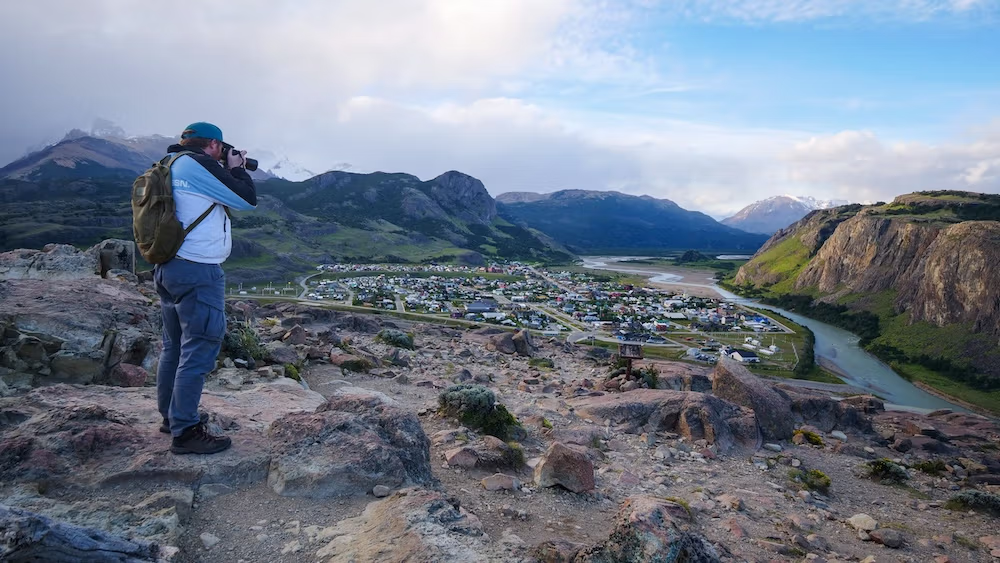
Eager to make the most of our first evening, we decided to tackle Mirador de los Cóndores, a short, steep hike right at the entrance of town.
If you visit in December like we did, you are blessed with endless Patagonian summer daylight. Sunrise hits around 5:00 AM, and the sun doesn’t fully set until 10:00 or 10:30 PM. This gives you an incredible window to tackle trails.
We set off around 6:47 PM, knowing sunset wasn’t officially until 9:45 PM. The trail takes about 45 minutes to reach the top from the center of town. It is only a kilometer long, but do not let the distance fool you—it is a wee bit steep, and Audrey was feeling the burn immediately.
However, the payoff is spectacular. The higher we climbed, the more the surrounding mountain ranges revealed themselves. You get panoramic, birds-eye views of the brightly painted town below, glowing in the late Patagonian light. It is the perfect, rewarding introduction to El Chaltén and a tremendous first impression of what the area has to offer.
Trail 2: The Boss Fight – Laguna de los Tres (Mount Fitz Roy)
After our warm-up hike, we woke up to a day with hardly a cloud in the sky. Even from town, our first glimpse of Mount Fitz Roy looked absolutely magical. It was time to tackle the crown jewel of El Chaltén: Laguna de los Tres.
This hike challenged us big time. We knew it was going to be an epic, 20-plus kilometer day, so we fueled up at our hotel’s 6:30 AM breakfast (most accommodations serve early because they know trekkers need to be on their way). Pro tip: Do not make the newbie mistake we did and leave your trail map on your hotel nightstand. It took us a while to find the trailhead as a result, realizing too late we needed to walk north along San Martin until we saw signage. It ended up taking us almost 45 minutes just to walk from our hotel to the start of the trail at the opposite end of town.
The Logistics of Trail Fuel: The $10 Lunchbox
One of the best pieces of DIY infrastructure in El Chaltén is that almost all hotels and guesthouses offer pre-made lunchboxes for hikers. Because there was no communal kitchen or mini-fridge where we stayed, this was incredibly convenient.
You typically place your order the night before, and for the equivalent of $10 USD (a bit pricey for Argentina, but worth it for the convenience), your food is ready the following morning. My lunchbox was packed with an apple, a granola bar, a muffin, and a whole bunch of candies. Audrey ordered a hearty rice salad loaded with carrots, egg, cabbage, tomato, and big chunks of cheese.
Of course, I was being piggy and ate most of my sandwich just 20 minutes into the hike, at 9:00 AM. When you are out on the trails, the foodie hunger strikes early!
The Journey to Laguna Capri
One of the greatest things about trekking in El Chaltén is the signage. There are markers at every single kilometer. This gives you a constant, reassuring gauge of your progress. If you are making good time, you can detour to additional lookouts; if you are struggling, you know exactly how far the agony stretches back to town.
The trek up to Laguna Capri (around kilometer four) is simply stunning. Along the way, we even spotted three majestic condors circling above our heads. Once you reach the campground at Laguna Capri, you are greeted with postcard-perfect, monumental views of Mount Fitz Roy. The mountain rises up so perfectly it almost looks like CGI—hands down the most magnificent mountain we have ever laid eyes on.
At this point, you have a choice. You can head back to town via the mirador loop, or continue towards Laguna de los Tres. But Mount Fitz Roy was right in front of us, calling our names. We declared ourselves true trekkers for the day, and decided to push forward.
The Nightmare of Kilometer 9
We were making fantastic time. The trail from Laguna Capri through kilometer eight is super scenic, surprisingly flat, and generally considered intermediate. As long as you are reasonably fit, it is a highly enjoyable walk.
Then, you hit Kilometer 9.
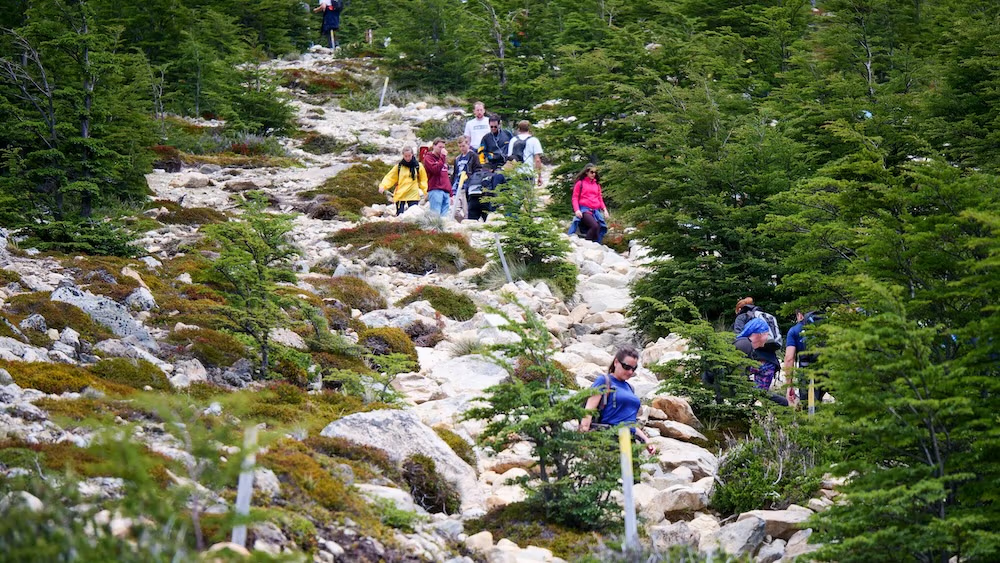
This is the longest, toughest, most brutal kilometer of the entire trek. The easy paths vanish, replaced by a steep, rocky, and gravelly ascent. This is where the bottleneck happens. Everyone is exhausted, the footing is loose, and you need to be highly alert. If you are doing this DIY, trekking poles are an incredibly good idea here.
Our legs were burning. The only thing that kept us moving was the sheer encouragement from the hikers coming back down, promising us that the views at the top were worth the suffering.
The Summit and the Sedan Chair Descent
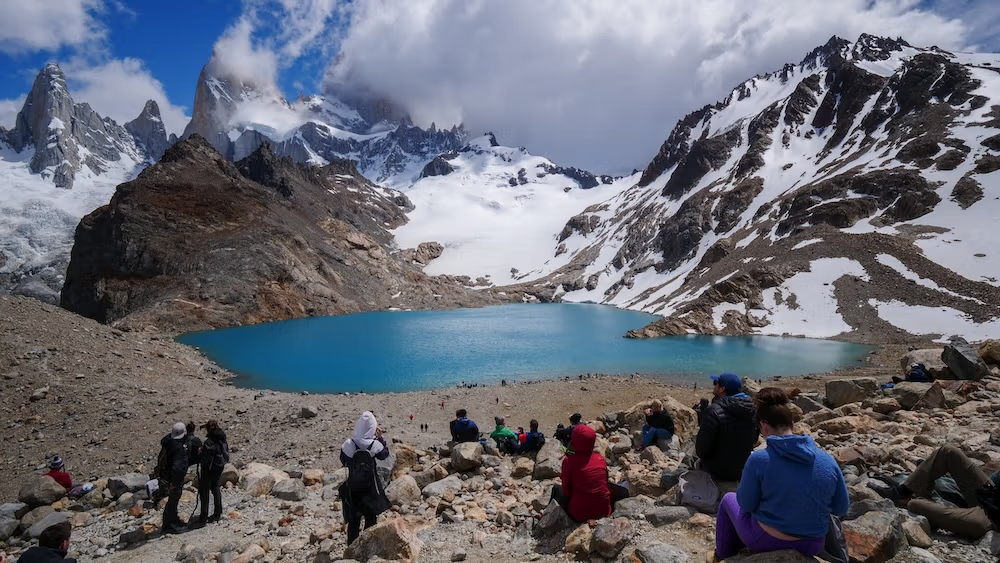
Exhausted, exhilarated, and ravenous, we finally crested the top to behold Laguna de los Tres. The cerulean waters nestled at the foot of Fitz Roy’s dramatic towers provided hands down the most impressive view of our entire week.
The reality of Patagonian hiking, however, quickly set in. The wind at the summit was ferocious—beyond belief. We had to literally duck behind a large rock to shield ourselves from the gales just so we could devour our final granola bar and candies.
Then came the descent. If you are not a regular hiker who jogs or trains your legs, this is where the mountain breaks you. That single kilometer up and down felt more strenuous than the first nine kilometers combined. On the way back down, we were completely spent. Our feet were throbbing and aching so badly that we had to take breaks out of sheer soreness.
At one point, I legitimately began fantasizing about what it would be like to be carried down the mountain on a sedan chair. We joked about calling the emergency number just to see if they would airlift us out. We were out of our element, out of our league, and out of our fitness level—but we survived.
The Mandatory Recovery Day
If you are a faux trekker like us, do not plan back-to-back major hikes. The day after the 20-plus kilometer Fitz Roy trek was an absolute write-off. We were so impossibly stiff that we hardly left our hotel room. We slept for 10 to 12 hours straight, needing a complete break from hiking, from cameras, and basically from life. Day four brought horrific, insane winds where we could barely stand on our feet anyway, forcing a very welcome café day.
Fitz Roy vs. Laguna Torre: A DIY Comparison
After recovering, we tackled the second most famous trail: Laguna Torre. Here is how the two heavyweights compare.
| Feature | Laguna de los Tres (Fitz Roy) | Laguna Torre (Cerro Torre) |
| Total Distance | 20+ km | 18 km |
| Elevation Gain | Massive (Steep climb at KM 9) | 250m (Mostly in the first 3 km) |
| Trail Vibe | Crowded bottleneck, physically demanding. | Relaxed, varied landscapes, fast-paced. |
| The Final View | Unbeatable, dramatic CGI-like factor. | Beautiful, but heavily dependent on clear weather. |
| Our Verdict | The coolest hike we’ve ever done. | The most enjoyable overall hiking experience. |
Trail 3: The Enjoyable Stroll to Laguna Torre
On day five, with our legs somewhat recovered and the perfect weather returning, we geared up for the 18-kilometer loop to Laguna Torre. Knowing we wanted to feel good after this trek, we promised ourselves we wouldn’t push beyond the main lagoon.
This hike was a completely different beast, offering an absolute walk in the park compared to the grueling Fitz Roy.
The Haunted Forest and the Broken Lunchbox
The trail to Laguna Torre features a remarkably low elevation gain of only 250 meters. The vast majority of this climbing happens in the first three kilometers, but it is heavily punctuated by stunning lookouts. Early on, we were treated to views of Cascada Margarita, a grand waterfall crashing down into the river below in sections with immense force. It was so photogenic we simply couldn’t put our cameras down.
By kilometer two, it was time for another “mini-lunch”. Unfortunately, trail logistics struck again: our plastic salad bowl broke inside the backpack. To prevent an egg-and-rice disaster from spilling all over our gear, we were forced to eat our salads right then and there.
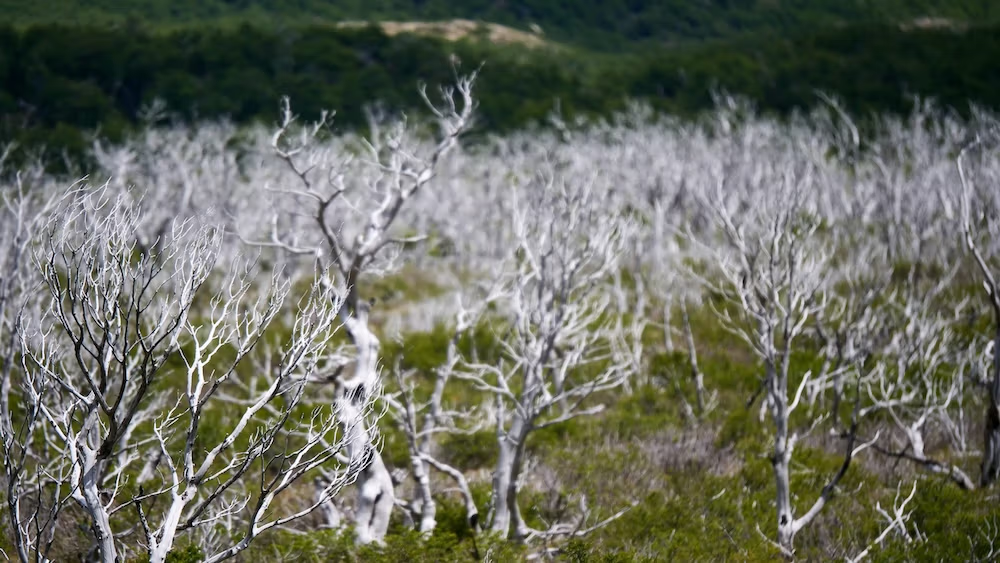
Once you push past kilometer three or four, the trail levels out entirely. You find yourself walking through an expansive, flat valley with a hanging glacier visible on the horizon, keeping you wildly motivated. We hiked through what looked like a haunted forest, then transitioned into areas with massive trees and dense cover.
A Journey Over Destination
What makes Laguna Torre so special for the DIY hiker is the tranquility. It is not nearly as crowded as the Fitz Roy trail. There are sections where you don’t see another soul, allowing you to just be out in nature.
Because we knew there wasn’t a brutal kilometer 9 waiting to destroy our knees, there was absolutely no sense of urgency. We were relaxed, taking our time, jumping like silly goats over sticks on the ground, and just experiencing pure joy.
We made incredible time through the flat valley. When we arrived at Laguna Torre, however, Patagonia delivered a harsh reality check: the iconic mountain peaks of Cerro Torre were completely covered by dense cloud. Without the sunlight, the lagoon’s waters looked murky, like a giant bowl of cafe au lait, with a few small icebergs floating near the shore.
It lacked the absolute “wow factor” of Fitz Roy. But we didn’t care. As a pure hiking experience, Laguna Torre was infinitely more enjoyable. It was about the journey rather than the destination.
We peeked at the nearby De Agostini campground, watched people cooking up ramen noodles on little camp stoves, and suddenly realized we were starving. Motivated entirely by our hunger and the prospect of a massive dinner, we blasted through the 9-kilometer return trek in just two hours and twenty minutes. Nothing was getting in our way; we put the cameras down and went on a pure foodie mission. We didn’t even feel sore after that one.

The Faux Trekker’s Foodie Recovery Guide
If you are hiking 18 to 22 kilometers a day, you are going to burn an obscene amount of calories. The best part of finishing a DIY trek in El Chaltén is the culinary reward waiting for you in town. Here is exactly where we went to refuel our battered bodies.
1. Senderos (For High-End Comfort)
Tucked away off the main street near the bus terminal, Senderos is a hidden gem located inside a high-end boutique guesthouse. It is tiny—only about six or seven tables—and offers spectacular gourmet food. After surviving Fitz Roy, we stumbled in here. I devoured an unbelievable blue cheese risotto topped with walnuts and sun-dried tomatoes, while Audrey had a hearty, comforting lentil casserole. We split a full bottle of Syrah (taking a rare break from our beloved Malbec) and finished with decadent desserts, including a stunning panqueque de manzana (apple pancake) and chocolate mousse. It was belt-buckle busting. We basically waddled back to our hotel and passed out by 8:30 PM.
2. La Zorra (For Pure Hiker Cravings)
On the hike back from Laguna Torre, we both had a simultaneous realization: we needed burgers and beer. La Zorra delivers Shake Shack-level gourmet burgers. I ordered a Mexican-style spicy burger loaded with jalapeno peppers, hot sauce, and guacamole, while Audrey opted for the bacon burger. We paired this with cheesy loaded fries smothered in bacon bits and pints of amazing craft beer (I highly recommend the Golden Ale). We didn’t want to know the calorie count, and we didn’t care.
3. Sweet Treats & Artisanal Ice Cream
Even after the massive burgers at La Zorra, we marched straight to an artisanal ice cream shop on the main drive. You cannot hike in Argentina without treating yourself to ice cream. We ordered waffle cones loaded with super dulce de leche, coconut, mascarpone, and pistachio.
4. La Waflería & Cúrcuma
On our slower days, we found ourselves at La Waflería, where the gourmet waffles were so delicious we purposely played cards and sipped lattes just to linger long enough to order a second round. Eventually, the guilt of our expanding waistlines caught up to us, leading us to Cúrcuma. This became our go-to spot for the opposite of hiker junk food, offering fantastic quinoa dishes, roasted vegetables, and low-sugar desserts.
Final Thoughts: The DIY Verdict
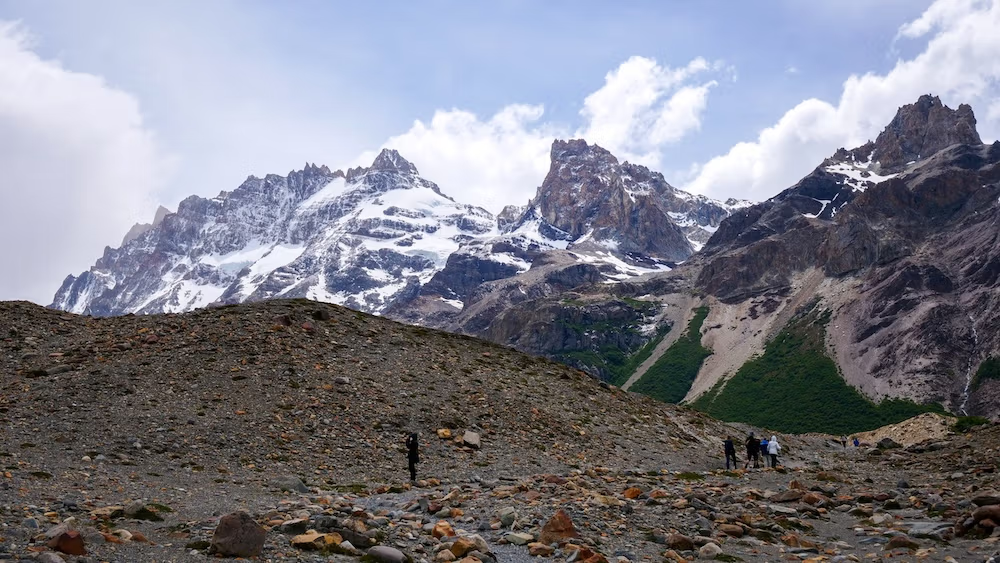
Hiking in El Chaltén without a guide is not only incredibly easy to organize, but it is the absolute best way to experience the trekking capital of Patagonia. You have the freedom to set your own pace, eat your lunchbox early when your foodie cravings hit, and push yourself to the absolute brink on the final ascent to Laguna de los Tres.
If we have one major piece of advice, it is this: Do not arrive in full foodie mode. If you plan on doing the major treks like Laguna de los Tres, do some jogging beforehand, train your legs, and arrive as the best version of yourself.
But even if you arrive as a faux trekker like we did, the raw beauty, the sheer scale of the mountains, and the incredible post-hike meals make every ounce of stiffness completely worth it. We did the treks, we did the pain, and we earned our burgers. And we would do it all over again in a heartbeat.
FAQ: Frequently Asked Questions About Hiking In El Chalten
Do I actually need a guide to hike Mount Fitz Roy or Cerro Torre?
Absolutely not. The “Trekking Capital of Argentina” is practically built for the independent DIY hiker. The trails start right at the edge of town, and the paths are idiot-proofed with frequent kilometer markers. During the summer, there are enough people around that getting lost is nearly impossible. Save your guide money and spend it on post-hike gourmet burgers and craft beer instead.
Are there any places to buy food or drinks on the trails?
Nope. Once you step foot into the national park, you are completely on your own. There are no cafes, vending machines, or snack stands along the paths. Thankfully, almost all hotels in El Chaltén offer pre-made hiker lunchboxes you can order the night before for about $10 USD. Grab one, stuff it in your backpack, and try not to eat your sandwich 20 minutes into the hike like I did.
How bad is the internet and Wi-Fi really?
Virtually non-existent. Mobile data basically does not work, and the Wi-Fi in the hotels goes down constantly. We had to try multiple times over an entire afternoon just to process a basic credit card payment for our room. Consider this trip a mandatory digital detox. If you desperately need to send a message, sit in the central plaza and pray to the connectivity gods.
Should I bring my own food or buy groceries in El Chaltén?
Bring it. The supermarket selection in town is beyond limited and aggressively expensive. We paid roughly a dollar for a single apple. Many travelers recommend stocking up on your trail snacks in El Calafate and bringing them with you on the bus. If you don’t, you’ll be relying on the $10 hotel lunchboxes—which are highly convenient, but do add up.
Can I drink the water from the streams on the trails?
100%. The glacial meltwater in the park is famously pristine and safe to drink. Just make sure you fill your bottle from fast-flowing streams higher up the trails, away from the immediate campgrounds. It saves you from having to carry three heavy liters of water in your backpack all day.
How hard is the hike to Laguna de los Tres (Mount Fitz Roy)?
Brutal. The first eight kilometers are a surprisingly flat, highly enjoyable walk. But Kilometer 9 is a steep, rocky, gravelly nightmare that will make you question your life choices. If you haven’t been doing your cardio, the steep descent back down will make your feet throb and have you fantasizing about being carried out on a sedan chair. Bring trekking poles.
When is the best time of year to visit El Chaltén?
Peak summer. December through February is the Patagonian summer, and you get blessed with endless daylight. Sunrise hits around 5:00 AM and the sun doesn’t fully set until past 10:00 PM. This gives you a massive window to tackle the 20-kilometer trails at your own pace without worrying about hiking in the dark.
Do I need cash, or do restaurants accept credit cards?
Cash is king. While higher-end spots like Senderos or La Zorra might take credit cards, the terminal connections are notoriously unreliable because of the terrible internet infrastructure. Bring enough Argentine pesos with you from El Calafate to cover your meals, bus tickets, and emergency artisanal ice cream cravings.
Project 23 Argentina: This guide is also available in Spanish. [Lea la versión en castellano: Trekking en El Chaltén sin guía: ¿Qué tan fácil es la ruta por tu cuenta?]