
There is a widely accepted, romanticized rule in the world of travel: save the best for last. It is the classic itinerary strategy. You build anticipation, you start with the smaller attractions, you acclimatize, and then, on the eve of your departure, you tackle the grand finale. You summit the highest peak, you take the iconic photograph, and you leave the destination on the ultimate high note.
It sounds like a foolproof, cinematic way to structure a vacation.
In Patagonia, this strategy will absolutely destroy you.
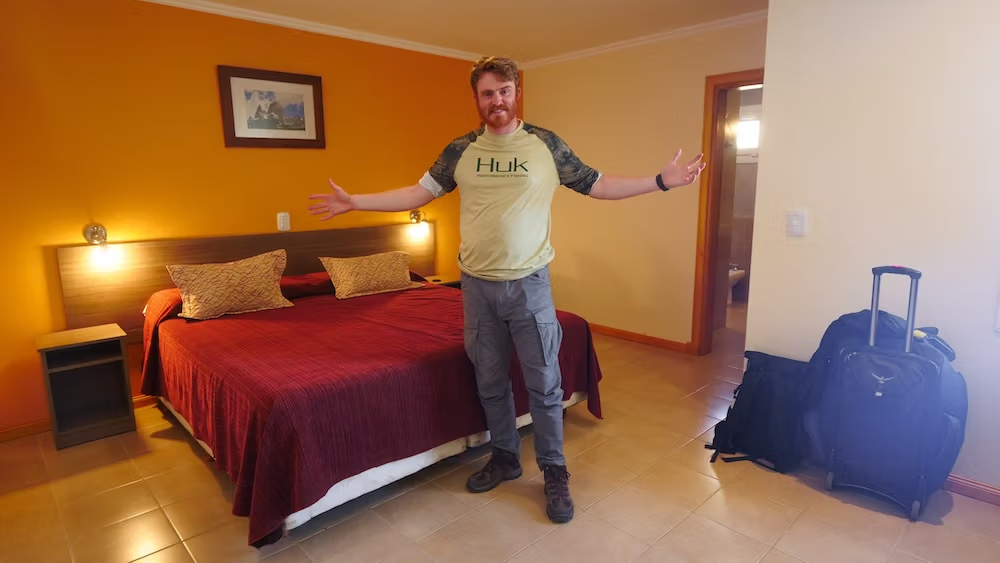
Audrey and I arrived in the trekking capital of Argentina in what can only be described as full, unrepentant foodie mode. We had spent the previous weeks eating our way across the country with joyous yet wanton abandon, gaining what I affectionately refer to as some serious “bulbous plumptitude”. The culinary indulgence had reached a critical mass where Audrey realized with absolute horror that her jeans no longer fit, forcing a permanent, non-negotiable pivot to leggings for the remainder of the trip. Yet, I was steadily rotunding right alongside her.
I think you get it. We were not hardened, elite mountaineers arriving at peak physical fitness. We were faux trekkers who desperately needed to move our skeletons. We had booked six nights in El Chaltén, assuming we would simply crush the world-famous mountain trails every single day under perfect, endless bluebird skies.
What we quickly learned—through physical agony, immense caloric intake, and the sheer, unpredictable violence of the Patagonian weather—is that El Chaltén plays by its own set of rules.
If you are currently drafting your El Chaltén itinerary and you have penciled in the legendary Mount Fitz Roy (Laguna de los Tres) or the 18-kilometer Laguna Torre loop for your final day in town, grab an eraser immediately.
This is our comprehensive, battle-tested guide on exactly why planning a massive hike on your departure day is the single biggest rookie mistake you can make in Patagonia, and how to structure a “Smart Itinerary” instead.
The Logistical Trap: The “Buzzer Beater” Descent
To understand why a last-day major hike is a terrible idea, you first have to understand the logistics of moving through Los Glaciares National Park.
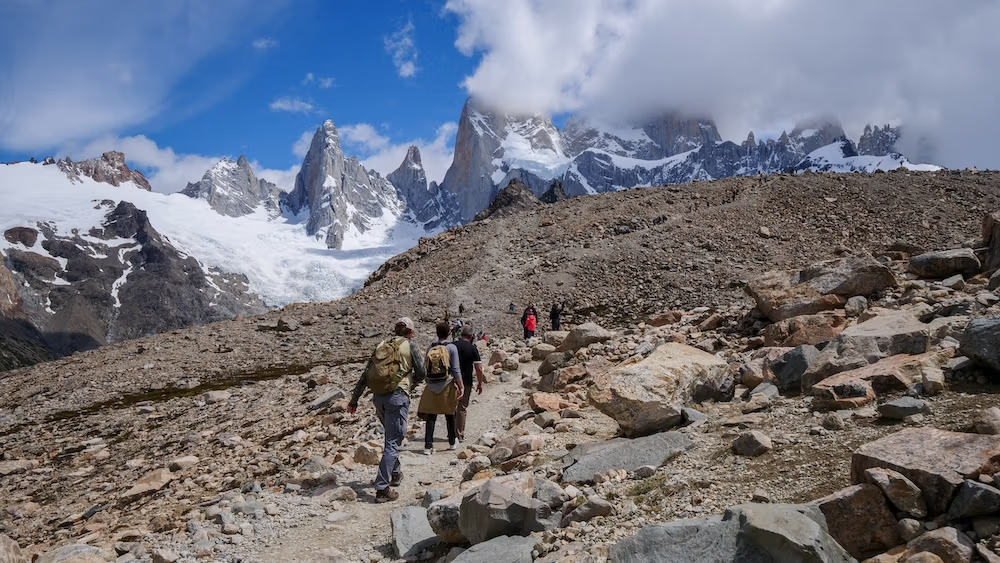
Let’s look at the crown jewel: the Laguna de los Tres trek. This is the hike that brings everyone to El Chaltén. It is a grueling 20-plus kilometer round trip that promises to bring you face-to-face with the jagged, awe-inspiring granite towers of Mount Fitz Roy.
If you plan this hike for the same day you hold a bus ticket out of town, you are immediately putting yourself under a massive, artificial time constraint. Trail times in Patagonia are wildly unpredictable. You cannot simply look at a map, see “10 kilometers each way,” and calculate your exact return time.
The Kilometer 9 Bottleneck
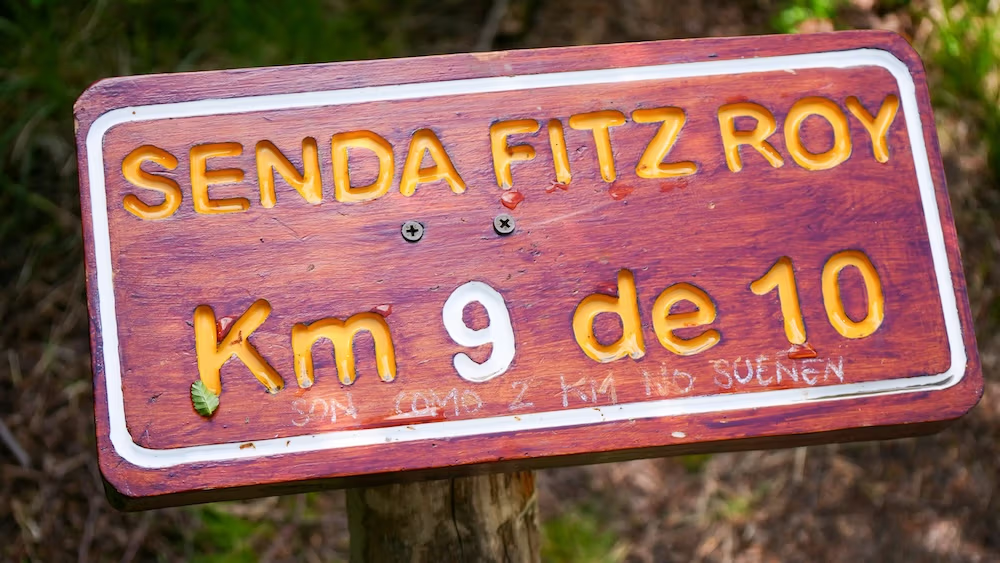
The first nine kilometers of the Laguna de los Tres trail are generally considered intermediate. You are walking through beautiful lenga forests, passing the stunning viewpoints at Laguna Capri, and generally making excellent time. It lulls you into a false sense of security.
Then, you hit kilometer nine.
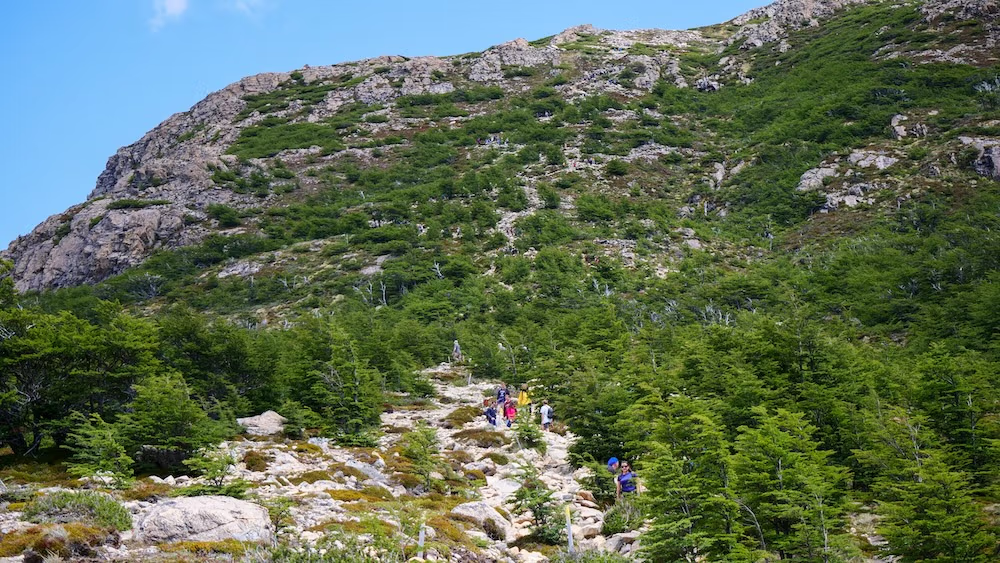
Here begins the longest, toughest, and most brutal kilometer of the entire trek. Up until this exact point, you might not find the trail overly difficult, but this final ascent is where everything changes. It is an incredibly steep, punishing scramble over loose rock and slippery gravel.
More importantly, this is where you encounter the inevitable trail bottleneck. Because the path is narrow, precarious, and heavily trafficked, you cannot simply power past slower hikers. You are forced to move at the speed of the crowd. Everyone is tired, everyone is carefully navigating the loose scree, and your calculated “pace” goes entirely out the window.
The Anxiety of the Clock
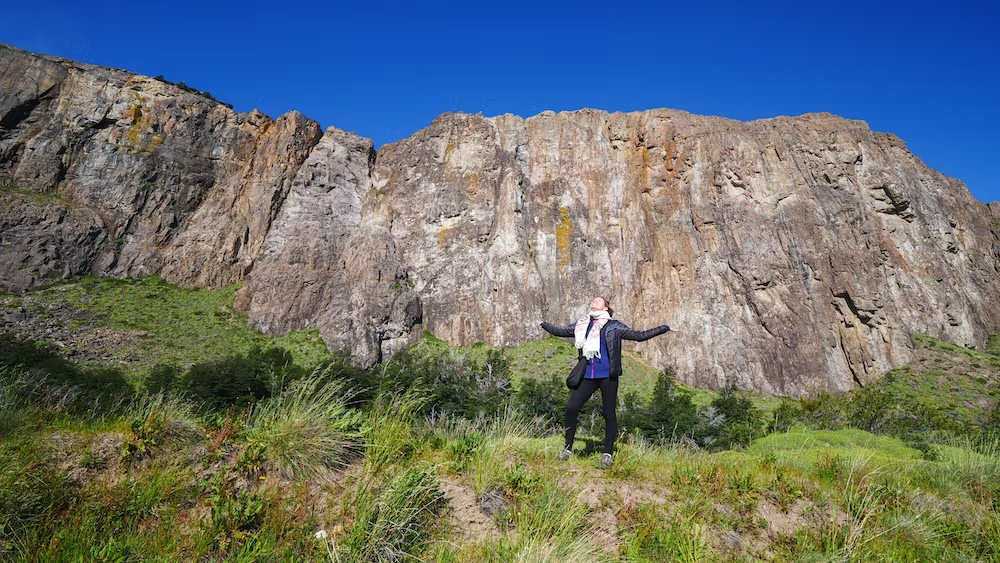
When you finally reach the summit, greeted by the cerulean waters of Laguna de los Tres and the majestic Fitz Roy skyline, you should be able to sit down, pull out your $10 hotel lunchbox, and soak in the magnitude of your achievement.
If you have a bus to catch that afternoon, you cannot do this.
Instead of being completely present in one of the most beautiful environments on the planet, you will be frantically checking your watch. You will eat your mayonnaise-based rice salad in a state of sheer panic, terrified of missing your connection. The long descent back to town—which is often harder on your knees than the climb up—becomes a frantic, stressful race against daylight and departure times. You strip all the joy and mindfulness out of the trek, turning a life-changing outdoor experience into a frantic airport-style sprint.
The Physical Reality: The “Sedan Chair” Level of Exhaustion
Even if you have an evening bus and plenty of time to finish the trail, the physical aftermath of a major Patagonian hike is the second reason you must avoid doing it on your final day.
We consider ourselves to be relatively capable travelers, but the descent from Laguna de los Tres completely broke us. We were pushed way out of our element, out of our league, and completely out of our baseline fitness level.
The walk back to town was an absolute struggle. We eventually had to put our cameras down entirely. We were no longer stopping to admire the babbling brooks or the circling Andean condors; we were taking breaks strictly out of utter exhaustion and deep muscle soreness. Our feet were actively throbbing with every single step.
The pain was so profound that during the final few kilometers, my mind began to actively hallucinate rescue scenarios. I genuinely caught myself fantasizing about what it would feel like to be carried out of the forest on a royal sedan chair. I wondered what the response would be if we simply called the local emergency number and requested to be airlifted out of the park.
The Agony of the Next Morning
When you hike 20 demanding kilometers, the true physical toll does not hit you when you reach your hotel room; it hits you the next morning. Delayed Onset Muscle Soreness (DOMS) in Patagonia is a different breed of stiffness. Rigor mortis levels.
The day after our Fitz Roy trek was an absolute, unmitigated write-off. We were both so incredibly stiff that we hardly left our room at the Vertical Lodge. The simple act of walking down the hallway felt like navigating a minefield.
If you hike Laguna de los Tres on your final day, you will wake up the next morning in this exact state of full-body stiffness. The absolute last thing a battered, sore hiker wants to do is pack their heavy luggage, drag it down the street to the bus terminal, and fold their aching skeleton into a cramped bus seat for a 3.5-hour ride back to El Calafate. Traveling with severe DOMS is a freakin’ miserable experience. It’ll instantly sour the memory of your grand finale. You simply gotta have a built-in recovery day.

The Feral Food Coma: Robbing Yourself of the Culinary Reward
El Chaltén is deeply unique because it is not just a rugged frontier outpost; it is a phenomenal culinary destination. The town punches way above its weight class when it comes to gastronomy, and a massive part of the trekking experience is the glorious, high-calorie reward that comes after you step off the trail.
If you hike on your last day, you rob yourself of the ultimate faux-trekker foodie recovery.
The Feral Hunger
When you burn thousands of calories fighting Patagonian winds, you do not return to town craving a light, sensible salad. You return with a feral, primal hunger.
On the day we hiked the 18-kilometer Laguna Torre trail, we had originally planned to have a classy, refined Argentine meal with a nice bottle of wine to celebrate. However, about five minutes into our walk back through town, a feral hunger completely took over. We pivoted hard and aggressively toward La Zorra, a lively tavern known for its incredible craft beer menu and bottom-feeding, indulgent comfort food.
We ordered what I can only describe as Shake Shack-level gourmet burgers. We paired these monsters with decadent cheesy fries buried under crispy bacon bits, washing it all down with massive pints. Screw the calorie count. We needed it.
Even after that, the hunger wasn’t fully satisfied. We immediately waddled down the main drive to an artisanal ice cream shop, ordering waffle cones stacked high with super dulce de leche, coconut, mascarpone, and pistachio. Gonzo supremo.
The 12-Hour Slumber
When you combine 20 kilometers of alpine hiking with two pounds of bacon, cheese, and craft beer, your body initiates a forced shutdown. We waddled back to our lodge in a profound food coma and were completely passed out in bed by 8:30 PM. We slept for 10 to 12 hours straight.
If you hike on your final day, you cannot fully lean into this glorious indulgence. You cannot linger over pints of Chaltén Cerveza Artesanal at La Cerveceria or spend hours playing cards and drinking lattes at La Waflería because you will be too busy stressing about packing your bags, setting your alarm, and organizing your departure logistics. You will be rushed, anxious, and cheating yourself out of the ultimate post-hike celebration.
The Patagonian Weather Roulette: The 30% Rule
Perhaps the most critical, non-negotiable reason to never save your biggest hike for your final day is the sheer violence and unpredictability of the Patagonian weather.
You don’t schedule nature.
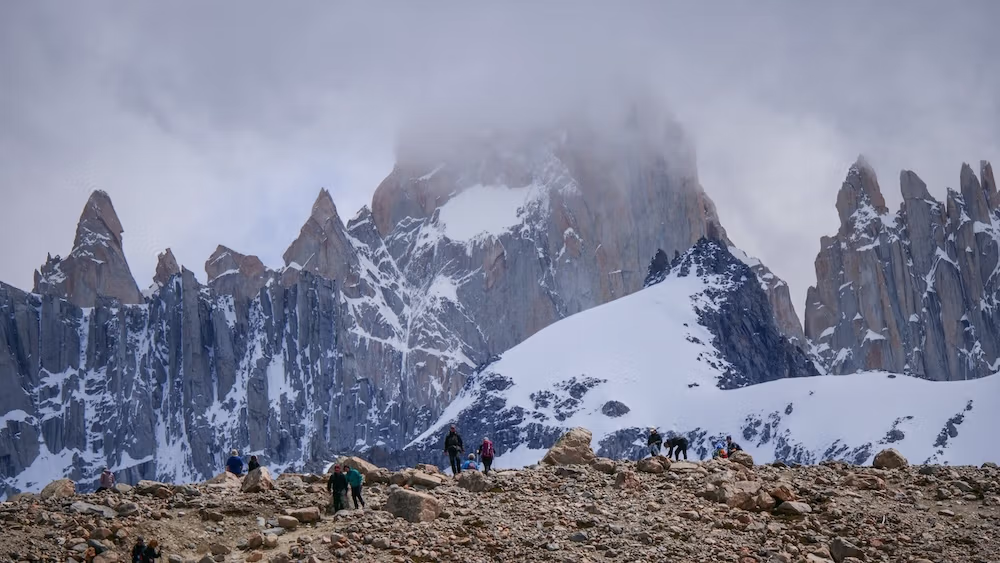
Travelers often arrive in El Chaltén with a rigid, laminated itinerary. They plan to do short hikes on days one and two, saving the epic Fitz Roy trek for day three. This is a fatal error. The iconic Fitz Roy massif is notoriously shy. It is estimated to be fully visible and clear of clouds only about 30% of the time. Crystal-clear bluebird days are the rare exception, not the rule.
If you lock your hardest, most rewarding hike into your final day, you are placing your entire Patagonian dream at the absolute mercy of that single 24-hour weather window.
The “Horrendous” Weather Day
During our six-night stay, we experienced the full spectrum of Patagonian extremes. We were blessed with one glorious, sun-drenched day with hardly a cloud in the sky—a day where Fitz Roy looked so majestic from town it almost looked like CGI. We immediately capitalized on this and tackled the Laguna de los Tres trek.
Two days later, the weather completely turned on us. Day four of our trip brought horrendous weather conditions. The winds swirling through the valley were so utterly insane that when we tried to go outside, we could barely stand on our own two feet. Hiking was completely impossible, and it was deemed a total “cafe day” where we hid indoors to survive.
Imagine if we had rigidly stuck to a “save the best for last” itinerary, and that day of hurricane-force winds happened to be our final day in town. We would have traveled all the way to the trekking capital of Argentina, endured the buses and the expensive groceries, and left without ever standing at the base of the mountain.
You must play the weather roulette smartly. The very first moment you see a clear weather window—even if it is your very first morning in town—you drop everything, grab your gear, and tackle your priority hike. The rest of your itinerary must act as a flexible buffer.

The Boutique Dining Buffer: Why You Need Extra Evenings
When you front-load your itinerary and knock out your major hikes early, your final days in El Chaltén transform into a luxurious, relaxed buffer zone. This allows you to truly explore the hidden gems of the town without the looming pressure of a massive alpine ascent.
Because we survived the Fitz Roy trek early in our trip, we had the energy and the time to discover Senderos. Tucked away off the main street near the bus terminal, this restaurant is a true hidden gem located inside a high-end guesthouse. It is a tiny, intimate boutique space with only six or seven tables.
Because we weren’t rushed to pack our bags or sleep for 12 hours, we enjoyed an incredibly decadent, lingering meal. I devoured a rich blue cheese and walnut risotto studded with sun-dried tomatoes, while Audrey warmed her soul with a hearty, comforting lentil and vegetable casserole. We split a full bottle of fine Argentine Syrah, taking a brief, necessary break from Malbec.
We finished the evening with otherworldly desserts that almost looked too pretty to eat: a rich chocolate mousse and a traditional panqueque de manzana (apple pancake).
This level of slow, intentional enjoyment is only possible when the physical pressure of the mountain has already been lifted off your shoulders. When you save the big hikes for the end, you sacrifice these slow, beautiful evenings to exhaustion and preparation.
The Ultimate El Chaltén Decision Matrices
To help you perfectly structure your time in the trekking capital without falling into the “last day” trap, utilize these strategic matrices.
Matrix 1: The “Last Day Hike” Disaster Scale
| Trail Selection for Final Day | The Physical Toll | The Logistical Risk | The Verdict |
| Laguna de los Tres (Fitz Roy) | 20+ km. Severe DOMS. Throbbing feet. | Extreme. High risk of missing afternoon bus due to the km 9 bottleneck. | Absolute Disaster. Do not attempt on departure day. |
| Laguna Torre | 18 km. Moderate fatigue. | Medium. Flat valley makes for a faster return, but still a long time commitment. | High Risk. Only attempt if you have a late evening or next-day departure. |
| Mirador de los Cóndores | 2 km. Minimal fatigue. | Very Low. Only 45 minutes to the top from the edge of town. | Excellent Choice. Perfect for a quick morning stretch before a bus. |
| Chorrillo del Salto | 6-8 km. Zero fatigue. | Very Low. Completely flat, easy to time exactly. | The Champion. The ultimate relaxed, stress-free final morning walk. |
Matrix 2: The Patagonian Weather Roulette Strategy
| Morning Weather Forecast | The Strategic Action Plan | The “Faux-Trekker” Reality |
| Clear Skies / Minimal Wind | STRIKE IMMEDIATELY. Drop everything and hike Laguna de los Tres, regardless of what day it is. | You will be sore, you will cry, but you will see the mountain. |
| Overcast / Medium Wind | Pivot to the valley. Hike Laguna Torre. The haunted forests offer great wind protection. | The lake will look like milky coffee, but the hike is a breeze. |
| Severe Wind / Sideways Rain | Retreat. Do not attempt alpine trails. Walk to a local cafe. | The ultimate write-off day. Order waffles. Play cards. Stay alive. |
Matrix 3: The Feral Hunger Recovery Timeline
| Post-Hike Timeline | The Faux-Trekker Physical State | The Mandatory Action |
| Hour 0 (Trail Finish) | Feet actively throbbing. Fantasizing about sedan chairs. | Stumble directly to La Zorra. Do not pass hotel. Do not shower. |
| Hour 1 (The Binge) | Feral, primal hunger. | Consume bacon burgers, loaded cheesy fries, and Golden Ale craft beer. |
| Hour 2 (The Sugar Hit) | Temporary energy spike. | Walk to main drive for super dulce de leche artisanal ice cream. |
| Hour 3 (The Crash) | Total systemic shutdown. | Collapse into hotel bed by 8:30 PM. |
| Hours 4-16 (The Slumber) | Deep food coma. Muscle stiffness setting in. | Sleep for 10-12 hours straight. Do not set an alarm. |
What to ACTUALLY Do on Your Last Day in El Chaltén
If you have successfully front-loaded your itinerary, survived the grueling 20-kilometer ascents, and enjoyed your feral food comas, your final day in Patagonia should be a victory lap, not a punishment.
You wake up slowly. You enjoy your final hotel breakfast without the rush of beating the trail crowds. You pack your bags at a leisurely pace. Then, to get one last breath of crisp Patagonian air, you tackle the “Backup Trails.
On our final day, with heavy, stiff legs but very full hearts, we chose the perfect send-off. We took the completely flat, relaxing stroll out to Chorrillo del Salto, a beautiful 20-meter waterfall heavily protected by native lenga forests. It requires absolutely zero mountain visibility and barely any physical effort.
Afterward, we pushed ourselves just a little bit to conquer Mirador de los Cóndores and continued further along the ridge to Mirador de las Águilas. Because these viewpoints are located right at the edge of town, they only take about 45 minutes to scale. From the rocky summit, we looked out over the colorful buildings of El Chaltén, nestled like a bright little oasis deep in the valley, and the sweeping, S-shaped curves of the Río de las Vueltas.
It was the perfect, low-stakes farewell.
The Final Word
El Chaltén is a destination that demands respect. You must respect the wind. You must respect the elevation. And above all, you must respect your own physical limits.
Do not fall for the myth of the grand finale. The best way to experience the raw, majestic beauty of Los Glaciares National Park is to seize the weather windows the exact moment they open, leaving your final days free for deep recovery, boutique dinners, and slow walks through the frontier town.
We arrived as out-of-shape foodies, but by pacing ourselves, front-loading our itinerary, and accepting the mandatory rest days, we left as victorious faux-trekkers with memories to last a lifetime.
Plan smart, pack your $10 lunchboxes carefully, and whatever you do, leave your last day entirely open. Your feet will thank you.
Frequently Asked Questions (El Chaltén Itinerary Planning)
1. Why shouldn’t I hike Mount Fitz Roy on my last day in El Chaltén? Let’s be real, Patagonian weather does whatever it wants! If a nasty storm rolls in on your last day, you’ll completely miss seeing the mountain. Plus, that 20-kilometer trek will leave your legs feeling like absolute jelly, making a cramped bus ride the next morning total torture.
2. What is the weather actually like in El Chaltén? It’s wild! It literally changes by the hour. You can wake up to crystal clear blue skies and be fighting hurricane-force winds by lunchtime. During our trip, we had one perfect, sunny day, and another where the wind was so intense we could barely stand up straight.
3. How hard is the Laguna de los Tres (Fitz Roy) trek? The first 9 kilometers are a totally manageable walk, but that final kilometer? It’s a brutal, super steep scramble over loose rocks and gravel. It’ll absolutely shred your legs and have you daydreaming about someone carrying you back down on a royal sedan chair.
4. What is the best trail to do on a departure day? Definitely stick to the easy, flat walks! Chorrillo del Salto is a super relaxing stroll to a gorgeous waterfall. If you want a bit of elevation, the quick 45-minute push up to Mirador de los Cóndores gives you awesome panoramic views of the town before you hop on your bus.
5. Do I need a rest day after hiking Laguna de los Tres? Oh, absolutely! We were totally out of our element, and our feet were literally throbbing by the end. We spent the entire next day as a “write-off,” basically refusing to leave our hotel room and sleeping for 12 hours straight just to recover.
6. What is a “write-off” day in Patagonia? A “write-off” day is basically a forced rest day. It happens when your legs are way too stiff to move, or the weather is just too ferocious to safely hike in. It’s honestly the perfect excuse to hide out in a local cafe, eat gourmet waffles, and play cards until the storm passes.
7. Where is the best place to eat after a long hike in El Chaltén? When that feral post-hike hunger hits, run straight to La Zorra for massive bacon burgers, cheesy fries, and craft beer. If you’re craving a more refined, foodie-style recovery, Senderos is this amazing boutique hidden gem with killer blue cheese walnut risotto and Argentine wine.
8. Should I bring my own lunch on the trails? Yes, but keep in mind that the grocery stores in town are pretty limited and weirdly expensive. Our favorite hack? Order a $10 pre-packed lunchbox from your hotel the night before. Just pack it carefully so the plastic salad bowl doesn’t shatter in your backpack like mine did!
Project 23 Argentina: This guide is also available in Spanish. [Lea la versión en castellano: Por qué nunca deberías planear un trekking importante en tu último día en El Chaltén]