
We did not arrive in El Chaltén as elite mountaineers. We arrived as unrepentant foodies who had enthusiastically eaten our way through Argentina to the point of what I can only describe as “bulbous plumptitude”. Audrey was strictly wearing leggings on the trails because her jeans simply no longer fit. We desperately needed to move our skeletons. But right now, my legs felt like they were cast in setting concrete.
The day prior, we had pushed our severely underqualified bodies through the grueling 20-plus kilometer trek to Laguna de los Tres. During that brutal, bottlenecked descent, as my feet throbbed uncontrollably, I had legitimately fantasized about calling an emergency number just to be airlifted out, or perhaps carried down the mountain on a regal sedan chair. A joke, mostly. But the physical pain was searing. The day after was an absolute write-off. We were functionally comatose, sleeping for 10 to 12 hours straight, refusing to leave our spacious room at the Vertical Lodge for anything other than basic, immediate sustenance.
But today was Day 5 in the trekking capital of Argentina. The notoriously unpredictable Patagonian weather, which had battered us with insane winds just days before, had finally cleared, gifting us a gorgeous, sunny window. It was time to tackle the famous Laguna Torre hike. We wanted redemption. But more importantly, we wanted a hike that wouldn’t make us want to cry.
The Trailhead Reality: Maps, Mutts, and Mobile Tolls
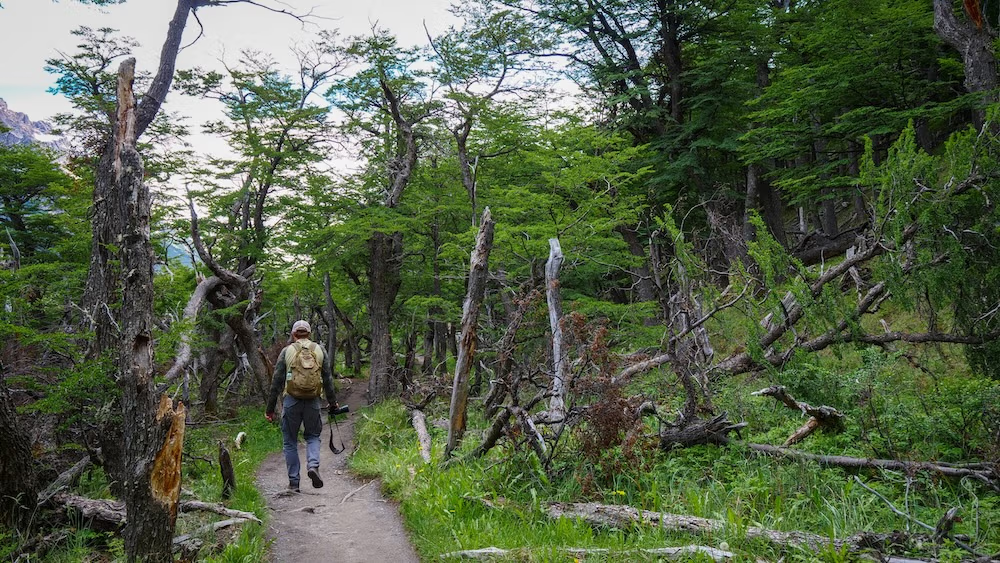
Rule number one of Patagonian trekking: do not leave your trail map on the hotel nightstand. Because we did exactly that, it took us 45 minutes of wandering from the opposite end of town just to find the start of the trail. Once we finally located the trailhead at the end of Los Charitos street, we were immediately confronted by the new logistical reality of El Chaltén.
When we first arrived in town, we had a very specific, memorable interaction with the park rangers. They gave us a firm warning about the local street dogs. The dogs in El Chaltén are incredibly friendly and will happily try to follow you out of town and up into the mountains. You must not let them. Los Glaciares National Park is home to the Huemul, a type of native, endangered deer. A pack of friendly stray dogs roaming the trails is a direct threat to the deer population, so if a pup tries to befriend you at the trailhead, you have to play the bad guy and tell them to stay behind.
[The 2026 Logistical Shift] While the dogs haven’t changed, the pricing structure absolutely has. For years, the north side of Los Glaciares National Park was famous for being a completely free trekking paradise. Those days are definitively over. If you are planning this trip for 2026, you must know about the new cashless toll.
The National Park fee is now 45,000 ARS (roughly $31 USD) for a standard 1-day foreign visitor pass. Furthermore, you cannot simply hand cash to a ranger at a wooden booth. The payment method is strictly online via a QR code system. If you show up to the Sendero Fitz Roy Car Park trailhead with a wad of pesos and no cellular data, you will be turned away. Additionally, the local municipality has recently implemented an “eco-tax” of roughly 3,000 ARS targeting day-trippers who do not stay overnight in local accommodations. Since we were comfortably booked at the Vertical Lodge for six nights, we absorbed the costs differently, but it is a massive shift for the budget backpacker crowd.
The “Faux-Trekker” Trail Baselines
| Trail Metric | The Brochure Expectation | Our Physical Reality |
| Total Distance | 18 to 19 km round trip. | Felt incredibly manageable after surviving the 20+ km Fitz Roy nightmare. |
| Elevation Gain | Approx. 420m to 475m. | Only 250 meters of serious, noticeable gain right at the very beginning. |
| Effort Level | Intermediate. | A literal walk in the park; deeply relaxing with zero sense of urgency. |
| Average Time | 6 to 8 hours. | Highly dependent on how fast you hike when motivated by cheeseburgers. |
The Waypoint Density Matrix: Effort vs. Visual Payoff
This table helps travelers manage their energy and expectations as they move from the trailhead into the heart of the “Haunted Forest.”
| Trail Waypoint | Distance (KM) | Physical Effort | Visual “Moat” Detail | Why It Matters for Photography |
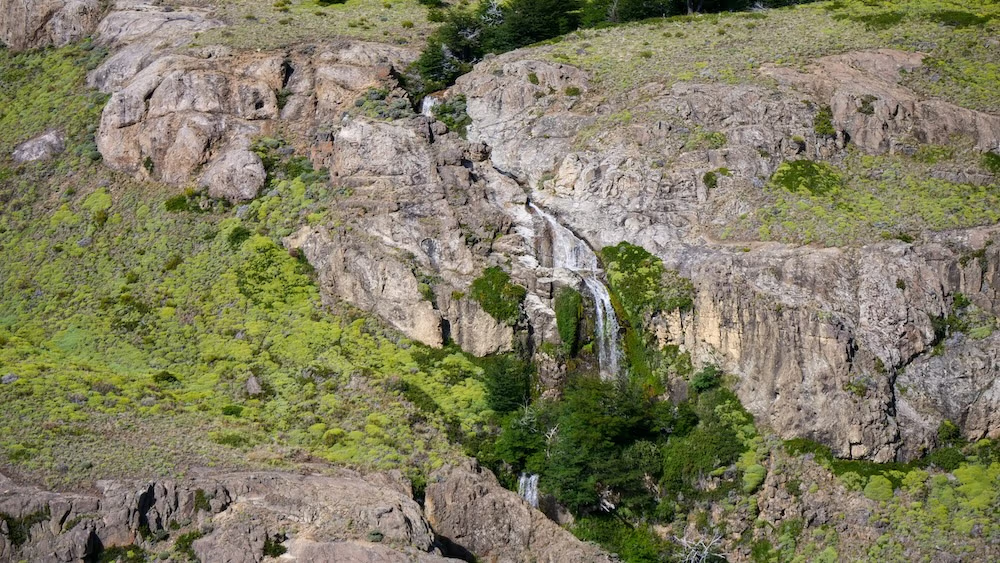
| Cascada Margarita | 0.7 km | Medium | Powerful, multi-tiered waterfall crashing into the river. | Best “quick win” shot; shielded from the wind even on bad days. |
| Mirador del Torre | 2.5 km | Medium-High | First sweep of jagged peaks and glacier views. | Critical “Plan B” shot in case the summit (Km 9) is clouded out. |
| The Hidden Pond | ~3.5 km | Low (Flat) | A tranquil, glass-like pond revealed after a sharp bend. | Perfect for reflections of Fitz Roy (to the right) or nearby trees. |
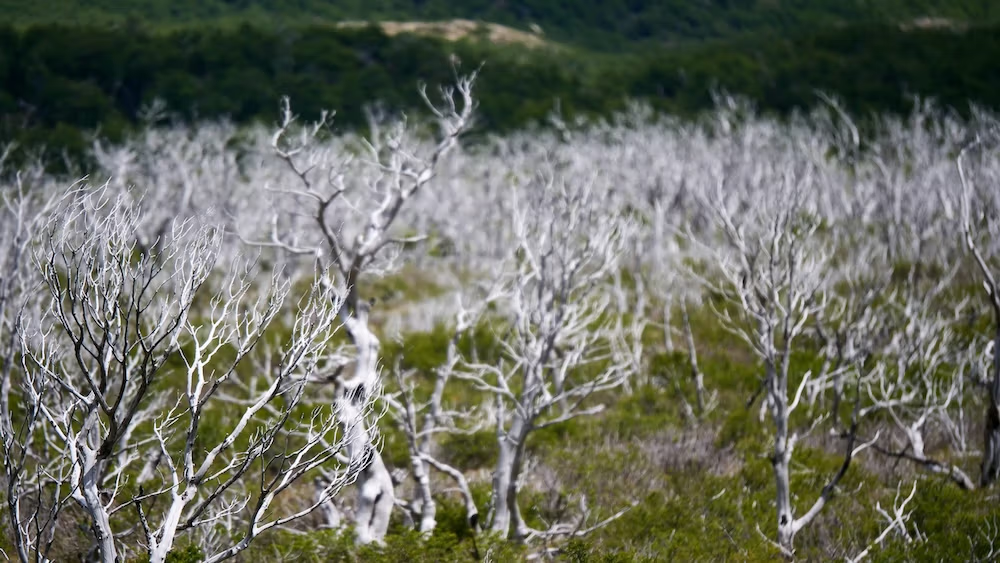
| The Haunted Forest | 5.0 – 7.0 km | Low (Flat) | Skeletal, bone-white “drowned” forest of Lenga and Ñire. | Provides the ultimate high-contrast foreground anchor for telephoto shots. |
| De Agostini Camp | 8.0 km | Low (Flat) | Tent city where you’ll likely smell campers’ ramen noodles. | Last chance for sheltered gear changes or using the bathroom. |
Kilometer 0 to 3: Waterfalls and The 9:00 AM Catastrophe
We started the ascent moving slower than a turtle. Our legs were still incredibly tight from the Fitz Roy trek, and the initial climb out of the El Chaltén valley is where this trail demands the most from your cardiovascular system.
Thankfully, the Laguna Torre trail is exceptionally forgiving in its pacing. Before you can even register the burn in your calves, you are rewarded with sweeping, elevated views of the Río de las Vueltas winding through the valley floor. By Kilometer 0.7, we hit our first major distraction: the Margarita Waterfall. The cascade was shockingly grand, tumbling down the rock face in powerful sections and crashing violently into the river below. It was so photogenic that we simply couldn’t put our cameras down, completely destroying whatever meager hiking pace we had managed to establish.
But the real drama occurred just slightly past Kilometer 2.
[The Foodie Reality: The Plastic Bowl Crisis] To fuel our long days in the mountains, we took advantage of a brilliant local service: almost every hotel and guesthouse in El Chaltén offers a pre-packed lunchbox for trekkers. You place your order the night before, and it is ready to be stuffed into your backpack before the 6:30 AM breakfast service. We happily paid the equivalent of $10 USD per lunchbox—a bit pricey for Argentina, but undeniably convenient. Our boxes were loaded with a peanut bar, an apple, bottled water, mini muffins, candies, and a massive portion of rice and veggie salad packed with egg, carrots, tomatoes, cabbage, and big chunks of cheese.
There was just one minor issue. The cheap plastic bowl holding my loaded rice salad completely shattered inside my backpack as we hiked.
There is no glamorous or dignified way to eat a packed lunch when the structural integrity of the container has failed. It was barely 9:00 AM. We had been walking for perhaps an hour. But to save my camera gear from being covered in mayonnaise and egg yolk, we were forced to immediately call a “mini-lunch” stop. I sat by the side of the trail and ravenously consumed almost my entire lunch before the morning dew had even evaporated. I was being a total piggy, but the salad was genuinely delicious.
Kilometer 3 to 8: The Haunted Forest and The Photography Walk
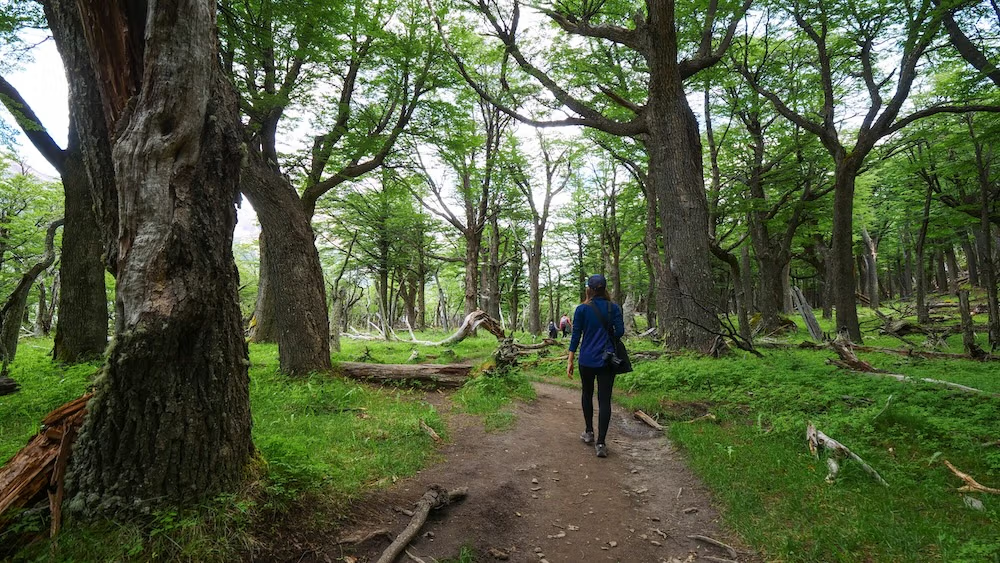
If you can survive the initial climb and the temptation to eat all your rations by 9:00 AM, the Laguna Torre trail opens up and becomes pure, unadulterated joy. Around Kilometer 3.5, the elevation profile flattens out dramatically as you enter a wide, sweeping valley.
This is where the hike transforms from a physical workout into a profound, meditative nature walk. I found myself practically jumping like a silly goat over sticks on the ground, filled with a sense of pure joy. Unlike the chaotic, bottlenecked crowds all fighting for the same summit path on the Fitz Roy trail, this route felt remarkably quiet. It was not a constant flow of humans. We had long sections of the trail entirely to ourselves, allowing us to just soak up the silence and the wild, remote feel of Patagonia.
Just past Kilometer 3, the trail revealed a hidden gem: a perfectly tranquil, glassy pond that seemed to appear out of nowhere as we rounded a bend. It was the perfect place to pause and reflect on the sheer variety of the landscape.
And then, we entered the “Haunted Forest.”
As the trail meanders along the river, you transition from sun-dappled groves of massive, towering trees with thick, green canopies into a sprawling graveyard of bleached, skeletal wood. This “bosque muerto” (dead forest) is composed of ancient Lenga and Ñire trees, their twisted, jagged branches reaching up toward the sky like pale, arthritic fingers. The contrast between the lively green forests we had just walked through and this eerie, silent stretch of dead wood was absolutely fascinating.
The Tactical Photography Loadout
If you are a photographer, the “Haunted Forest” is not just a transit zone; it is a primary subject. General travel brochures often completely ignore this section, focusing only on the final lagoon. Do not make that mistake. The bleached wood provides the ultimate foreground anchor for your wide-angle shots.
| Photography Factor | Our Tactical Advice for the Forest & Valley |
| Lens Selection | You need a dual setup. Keep a wide-angle (14mm-24mm) mounted for the forest canopy and to capture the scale of the dead trees. Keep a telephoto (70mm-200mm) ready in your bag to compress the background and isolate the distant hanging glaciers. |
| Lighting Strategy | The valley is highly shielded. While the peaks get the famous sunrise alpenglow, the mid-morning light filtering through the dead branches of the Haunted Forest creates incredible, high-contrast shadows. |
| Weather Protection | The valley floor is essentially a wind tunnel for glacial dust. Even on a “calm” day, microscopic grit is violently blown around. Do not change lenses out in the open unless you want a sensor full of rock dust. A weather-sealed body is mandatory here. |
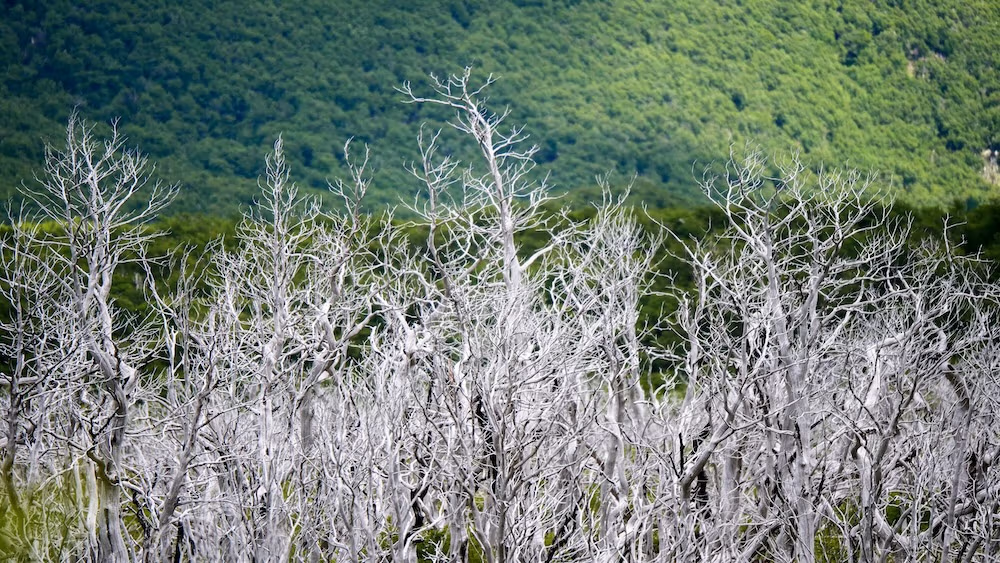
The Science of the Skeleton Trees: What Actually Killed the Forest?
You do not simply stumble into a sprawling, eerie graveyard of bone-white timber without wondering what kind of localized apocalyptic event took place. As you transition out of the lush, green canopy and into the “Haunted Forest,” the temperature seems to drop. The sound of the wind changes as it whistles through the dead, jagged branches instead of rustling through leaves.
It feels unnatural. But the reality is a brutal masterclass in Patagonian glacial dynamics.
To understand why this specific stretch of the valley floor looks like a bleached boneyard, you have to look at the water. The Laguna Torre trail closely follows the Río Fitz Roy (often fed by the Torre watershed). These are not standard, predictable rivers. They are highly volatile conduits for glacial meltwater. Glaciers are massive, grinding bulldozers of ice that constantly shift, dam up water, and eventually break. When a glacial lake suddenly drains—a phenomenon scientists call a Glacial Lake Outburst Flood (GLOF)—or when the river simply shifts its course due to massive sediment buildup, the valley floor floods.
This is what killed the forest. The trees native to this specific valley are predominantly Nothofagus pumilio (Lenga) and Nothofagus antarctica (Ñire), robust species of Southern Beech adapted to freezing temperatures and high winds. But they cannot survive drowning. When the glacial meltwater flooded this low-lying basin, it saturated the soil, creating an anoxic (oxygen-deprived) environment. The root systems suffocated. The trees drowned exactly where they stood.
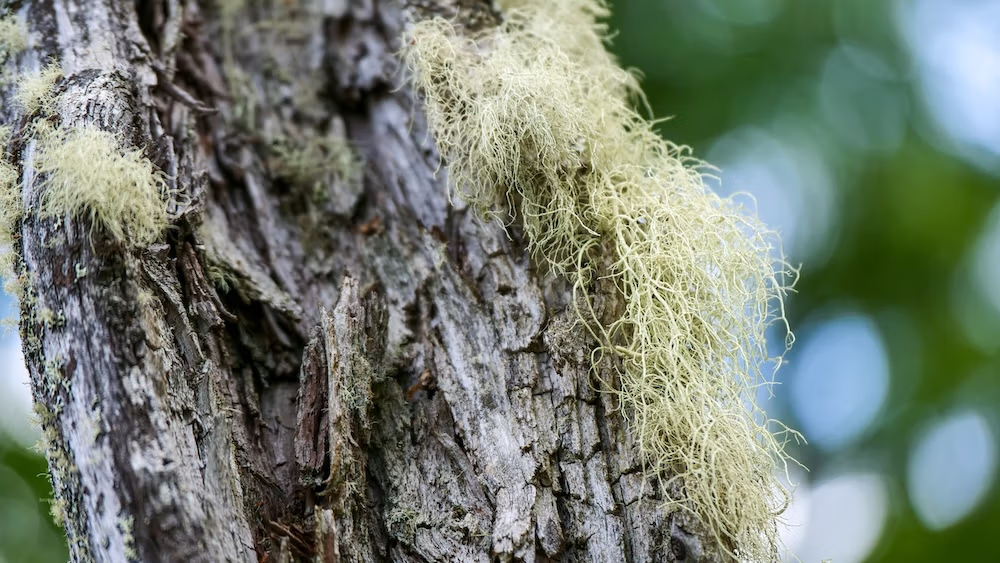
The “Skeleton Tree” Identification Guide
| Feature | Nothofagus pumilio (Lenga) | Nothofagus antarctica (Ñire) | “Nomadic Samuel” Field Note |
| Visual Signature | Thick, vertical pillars; the “Spires” of the graveyard. | Gnarled, winding, and chaotic “arthritic” branches. | Use Lenga for vertical composition; use Ñire for abstract, messy foreground textures. |
| Living State | Dominates the high, sun-dappled canopy. | Lower, shrub-like, and incredibly hardy. | You can see the transition from living Lenga to “skeleton” Lenga at Km 4. |
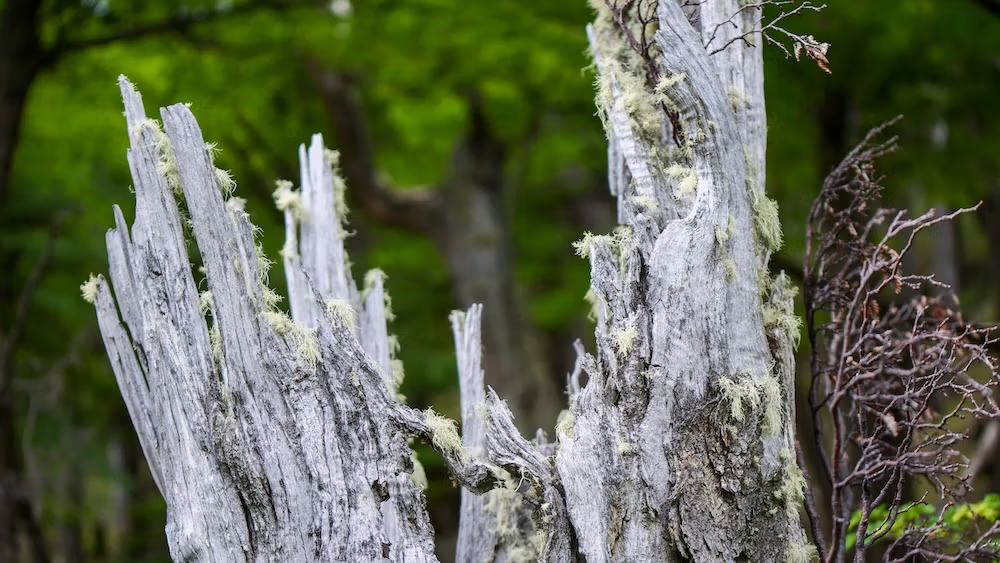
| Dead State | Often stripped of bark by mechanical wind weathering. | Remains incredibly flexible and aerodynamic even when dead. | The Lenga trunks look like pale concrete; the Ñire looks like silver wire. |
| Ecological Role | Massive trunks provide micro-habitats for decades. | Decomposes slower; provides shelter for the endangered Huemul deer. | Remind readers: DO NOT snap these for walking sticks; it’s protected biomass. |
[Samuel’s Side-Note: The Urge to Touch]
When you walk through here, the dead branches look like the perfect, readymade trekking poles. Do not snap them. This wood is highly protected. It provides essential micro-habitats for insects and fungi, and eventually, over decades, breaks down to supply the incredibly sparse Patagonian soil with the nutrients required for the next generation of plant life. Look, photograph, but leave the skeletons intact.
But why do they look so pristine? In a humid, tropical environment, a dead tree rots and collapses into a mossy pile of mush within a few years. Patagonia, however, operates like a giant, natural freeze-drier.
Once the trees died, the legendary Patagonian winds took over. The relentless gales act as a form of mechanical weathering, essentially sandblasting the dead trees with microscopic glacial grit (rock flour) and violently stripping away the protective bark. Once the bark is gone, the intense, high-altitude UV radiation from the sun bleaches the exposed bare wood. The climate is too cold and the wind is too dry to support rapid fungal decay. The result is a forest of “skeleton trees”—bone-white, twisted, and perfectly preserved in a state of suspended animation for decades.
The Ecological Autopsy: Lenga vs. Ñire
If you want to impress your hiking partner or accurately caption your photography, you need to know exactly what you are looking at. Here is the scientific reality of the dead timber surrounding you:
| Botanical Metric | Nothofagus pumilio (Lenga) | Nothofagus antarctica (Ñire) | The Preservation Factor |
| Growth Habit | Grows tall and straight in sheltered areas; creates the high canopy in the living sections of the trail. | Naturally twisted, shrub-like, and highly adaptable to poor soil. | The Lenga trees provide the towering, vertical “spires” of dead wood, while the Ñire create the gnarled, tangled underbrush. |
| Wind Resistance | Susceptible to being snapped by severe gales once dead and brittle. | Highly aerodynamic; its twisted structure survives the wind tunnel effect of the valley floor. | The intense winds prevent moisture buildup, stopping standard rot and decay dead in its tracks. |
| The Visual Signature | Thick, massive trunks that look like pale concrete pillars. | Thin, winding branches that look like arthritic fingers grabbing at the sky. | Decades of UV radiation strip the pigments, leaving only the bleached cellulose structure. |
Understanding the violent, flooded history of this basin completely changes how you walk through it. It isn’t just a spooky photo opportunity or a dead zone. It is a frozen monument to the sheer, unstoppable power of the glaciers hanging just a few kilometers ahead of you.
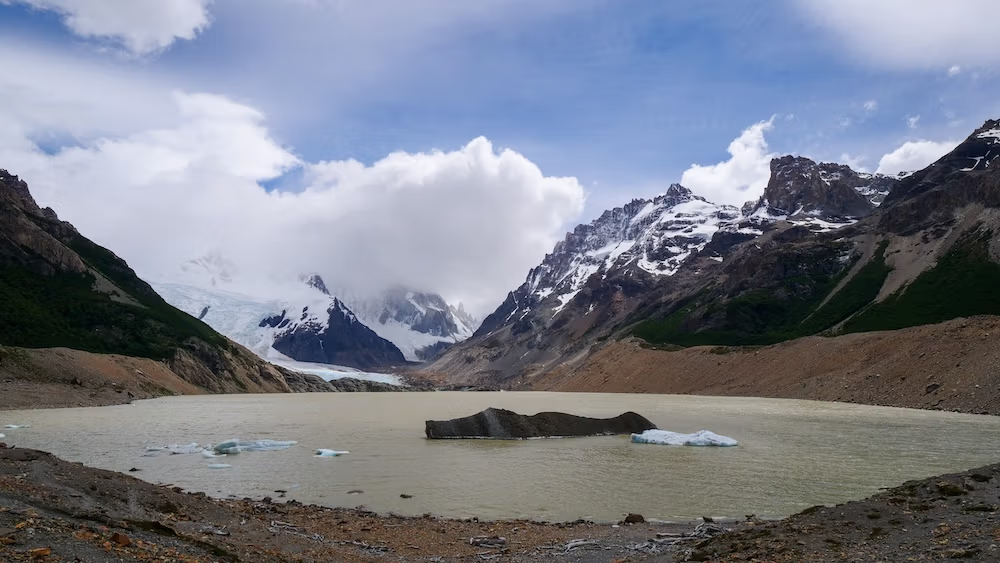
Kilometer 9: The “Café-au-Lait” Climax and Ramen Envy
We finally reached Kilometer 9. This is the terminus of the main trail, the spot where the valley opens up to reveal Laguna Torre, the floating icebergs, and the towering, jagged spire of Cerro Torre.
Except, on this particular day, it didn’t.
[The Expectation vs. Reality Check] Instagram leads you to believe that every hike in Patagonia ends with a piercingly blue, pristine glacial lagoon reflecting a perfectly clear granite spire. Reality is rarely that accommodating. When we arrived at the rocky shores of Laguna Torre, the iconic mountain peaks were entirely shrouded in a dense, impenetrable layer of gray cloud. We couldn’t even see the tip of Cerro Torre. Furthermore, the relentless Patagonian winds had churned up the glacial silt—known as rock flour—from the bottom of the lake. Instead of a vibrant turquoise, the waters of the lagoon were a murky, cold, milky brown. It looked exactly like a massive bowl of café-au-lait.
The nearby glacier looked black and muted under the overcast sky. Did it match the jaw-dropping, CGI-level “wow factor” of seeing Mount Fitz Roy on a perfectly clear day? No. But that is the fundamental truth of trekking in this region: the weather dictates your payoff. Even with the clouds, the wild, remote atmosphere, the surrounding mountain ranges stretching in all directions, and the little icebergs bobbing in the murky water made it a spectacular achievement.
We set down our bags, shielding ourselves from the chill, to eat what was left of our picnic. But our meager remaining rations (mostly candies and an apple) suddenly felt woefully inadequate.
We had taken a quick detour to visit the nearby Campamento De Agostini, the designated overnight campsite at Kilometer 8. As we walked past the colorful tents to use their rustic bathroom facilities, the wind carried a scent that completely derailed my brain: cheap, boiling ramen noodles. The campers were huddled over their tiny gas stoves, cooking hot noodles, and I was suddenly hit with a wave of primal, ravenous hunger. Those instant noodles smelled like a Michelin-starred feast.
I looked at Audrey. We had nine flat kilometers standing between us and civilization. It was time to go back.
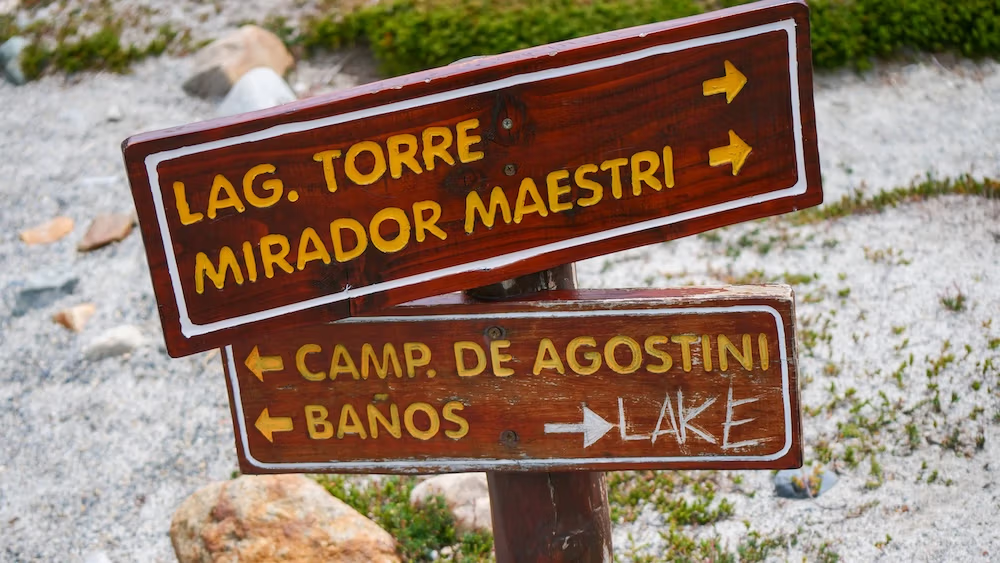
What We Missed: The Tripod Death Trap at Mirador Maestri
Because we were entirely consumed by the thought of food, we skipped the final, optional extension of the trail: Mirador Maestri. For the true experts and landscape photographers, this 2-kilometer extension along the right side of the lagoon’s crater rim is where you get the elevated, unobstructed views of Glacier Grande.
However, if you attempt Maestri, you must understand the logistical reality. You are walking along a narrow, crumbly glacial moraine that acts as a natural wind tunnel. If you bring a standard carbon-fiber travel tripod and fail to weight it down with a heavy stone bag, the wind will literally blow your rig off the cliff. Tripod stability is severely compromised here. Many professional photographers abandon their tripods entirely at this stage, opting to shoot handheld with a high ISO or physically wedging their camera body between heavy rocks for stability.
The Ultimate Comparison: Torre vs. Fitz Roy
| Factor | Fitz Roy (Laguna de los Tres) | Cerro Torre (Laguna Torre) |
| The Final Kilometer | A brutal, rocky, vertical nightmare that will make you question your life choices. | Completely flat. A literal breeze. |
| The “Wow” Factor | Unmatched. The most magnificent mountain view we have ever seen. | Highly weather-dependent. Without the sun, it can feel a bit muted. |
| The Hiking Experience | A grueling test of endurance. You hike for the destination. | Deeply enjoyable, varied landscapes. You hike for the journey. |
| The Aftermath | 12 hours of sleep, extreme stiffness, refusing to leave the hotel. | Hungry, happy, and fully capable of walking to the pub. |

The Descent: A 9-Kilometer Sprint for Burgers
“It’s amazing how fast you can hike when you are visualizing a bacon burger.”
That should have been the official motto for our return trip. When we began the hike that morning, we spent almost half of our time just getting through the first three kilometers, stopping constantly to admire every single leaf and waterfall. On the way back, fueled by the memory of those campsite ramen noodles, we became machines.
We put our cameras away. We abandoned all scenic appreciation. We hit the flat valley floor and blasted through the “Haunted Forest” like we were being chased by actual ghosts. The trail guide suggested the return trek from Kilometer 9 should take roughly three hours. Motivated entirely by our churning stomachs, we devoured the distance in an astonishing two hours and twenty minutes.
Nothing was getting in the way of our dinner.
About five minutes before we physically stepped off the trail and back onto the paved streets of El Chaltén, Audrey and I experienced a simultaneous psychic connection. Originally, we had planned to find a nice, upscale restaurant, perhaps order a classy Argentine stew, and split a full bottle of Syrah, just like we had done at the boutique Senderos restaurant a few nights prior.
We looked at each other.
“Burgers?”
“Burgers.”
We didn’t want gourmet risotto. We didn’t want delicate, low-sugar quinoa bowls from Cúrcuma. We wanted to dive headfirst into the bottom-feeding barrel of high-calorie comfort food. We wanted La Zorra.
The Recovery Potential Matrix (Torre vs. Fitz Roy)
| Metric | Laguna de los Tres (Fitz Roy) | Laguna Torre (Cerro Torre) | The “Foodie” Verdict |
| Elevation Profile | 1,000m+ with a “brutal” final KM. | 250m gain; mostly flat after Km 3. | Torre is a “piece of cake” for sore legs. |
| Physical Toll | Requires a “write-off” day; stiff legs and 12-hour sleep. | Felt good after the trek; ready for beer and ice cream. | Torre allows for a same-night celebratory dinner. |
| Crowd Levels | Often bottlenecked at Kilometer 9. | Quieter; sections with no other hikers for long periods. | More “peaceful” and closer to nature. |
| Pace Potential | “Slower than a turtle” due to steepness. | Can 2X or 3X your speed on the return flat. | You can sprint home when motivated by burgers. |
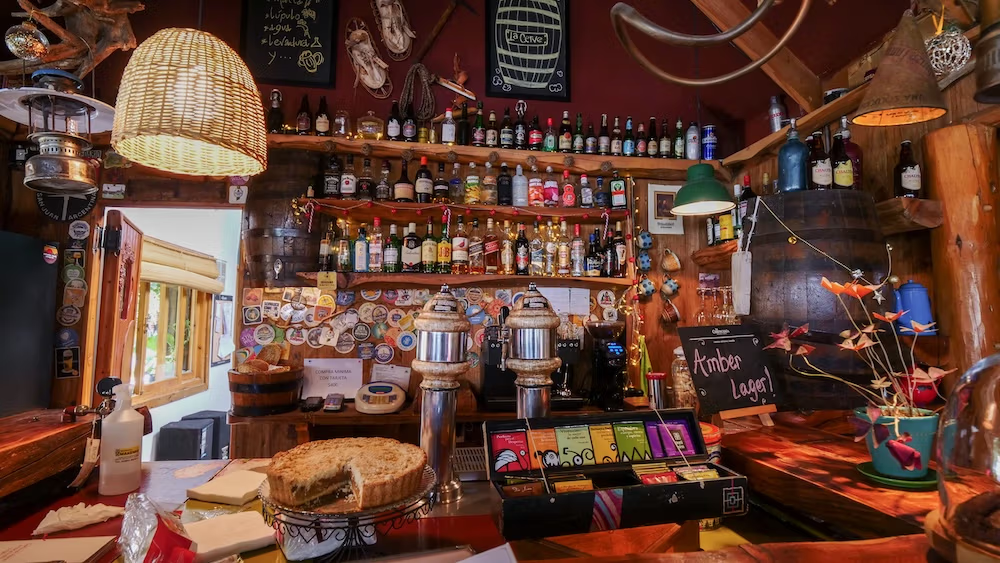
The Foodie Recovery Room
La Zorra (The Foxy Lady) is a local institution, and for good reason. After burning thousands of calories in the Patagonian wind, this place feels like a mirage. They specialize in absolutely massive, “Shake Shack level” gourmet burgers, an extensive menu of craft beer, and an unapologetic disregard for dietary restrictions.
We practically kicked the doors open. We were foodies at heart who had successfully pretended to be trekkers for the day, and it was time to collect our reward.
I ordered a towering, spicy Mexican-style burger loaded with guacamole, fiery jalapeño peppers, and hot sauce. Audrey went straight for the heavy hitter: a massive burger piled high with thick, crispy bacon. To guarantee maximum caloric intake, we split an order of loaded cheesy fries completely smothered in bacon bits. We washed it all down with pints of cold, golden craft beer, securing the happy hour pricing where a half-pint purchase miraculously yielded a full pint glass.
I don’t know what the calorie count was for that table, and I aggressively did not want to know. We had earned every single bite.
But, because our commitment to the “bulbous plumptitude” lifestyle is unwavering, the burgers were merely phase one. Leaving La Zorra, we waddled down the main drive until we spotted a sign that simply read “Artisanal Ice Cream”. We marched inside and ordered massive waffle cones. I doubled down with a scoop of coconut and a rich, heavy scoop of “super dulce de leche,” while Audrey opted for the sophisticated pairing of mascarpone and pistachio.
The El Chaltén Caloric Replenishment Guide
If you are following in our footsteps, here is exactly where you need to take your exhausted, aching legs when you get back to town:
| Cravings & Pain Level | Where to Go | What to Order |
| Primal, Unapologetic Hunger | La Zorra | The Bacon Burger, loaded cheesy bacon fries, and a pint of Golden Ale. Unbeatable post-hike comfort. |
| The “I Need Real Food” Ache | Senderos | A boutique experience. Order the Blue Cheese Risotto with walnuts or the hearty Lentil Casserole, paired with a full bottle of Syrah. |
| The Mid-Afternoon Slump | La Waflería | Gourmet waffles and lattes. Perfect for lingering, playing cards, and hiding from the Patagonian wind. |
| The Post-Gluttony Guilt | Cúrcuma | When your leggings are tight. Go here for clean, restorative quinoa bowls and roasted vegetables. |
By 8:30 PM, the food coma had fully set in. The sun wouldn’t officially set over Patagonia for another two hours, but we didn’t care. We collapsed into our massive king-sized bed at the Vertical Lodge, completely exhausted, thoroughly stuffed, and incredibly happy.
The Laguna Torre trek didn’t hand us a perfect, cloudless view of the jagged granite spires. It handed us cracked plastic salad bowls, murky brown water, and a grueling test of our willpower when smelling other people’s instant noodles. But in terms of the pure, unadulterated joy of the hiking experience itself, the haunted forests, the sweeping valleys, and the relaxed pace made it our favorite trail in El Chaltén.
We arrived as foodies. We left with strong legs, incredible memories, and a profound appreciation for a really good bacon burger. Worth it.
FAQ: The Unique “Haunted Forest” of Laguna Torre: A Photography Walk
Is the Laguna Torre hike hard?
Highly manageable. Compared to the knee-destroying vertical nightmare of Laguna de los Tres, this 18km round-trip trail is a literal walk in the park. Most of the 250-meter elevation gain happens in the first three kilometers as you climb out of the El Chaltén valley. After that, you are walking through a flat, beautiful basin. If we can do it with our “bulbous plumptitude,” you can too.
Do I need to buy tickets in advance for the Laguna Torre trek?
100%. The days of free trekking in El Chaltén are officially over. As of 2026, you must pay a 45,000 ARS National Park fee (about $31 USD) strictly via an online QR code system. Do not show up at the trailhead with cash expecting to pay a ranger, because you will be turned away. There is also a newly implemented municipal eco-tax for day-trippers.
Can I bring my dog or let the town dogs follow me?
Absolutely not. The local park rangers are incredibly strict about this because Los Glaciares National Park is home to the endangered Huemul deer. The stray dogs in El Chaltén are super friendly and will happily try to follow you up the trail, but you have to play the bad guy and tell them to stay behind to protect the local wildlife.
Is the water at Laguna Torre always bright blue?
Nope. Instagram lies. The relentless Patagonian winds regularly churn up the glacial silt (rock flour) from the bottom of the lake. When we arrived, the water was a murky, milky brown that looked exactly like a massive bowl of café-au-lait, and the peaks were completely swallowed by clouds. It’s highly weather-dependent, so adjust your expectations.
Where should I eat in El Chaltén after the hike?
La Zorra. If you want a delicate, low-calorie salad, go elsewhere. If you want a massive, spicy Mexican-style burger, loaded cheesy bacon fries, and a pint of golden craft beer to replenish the thousands of calories you just burned in the wind, this is the absolute best post-hike reward in town.
Do I need to hire a guide for the Laguna Torre hike?
Nope. It’s uncessary. The trail is incredibly well-marked with kilometer signs keeping you on track the entire way. It’s a very popular, straightforward out-and-back route. Unless you are booking a highly specialized ice-trekking tour to actually walk on the glacier itself, you can easily do this trail DIY.
Are there bathrooms on the Laguna Torre trail?
Barely. There is a very rustic, outhouse-style facility near the Campamento De Agostini campsite at Kilometer 8, right before you reach the lagoon. Aside from that, you are relying on nature. Bring your own toilet paper, pack out absolutely all of your trash, and leave no trace.
What camera gear is essential for the Haunted Forest?
Dual lenses. Bring a wide-angle (14mm-24mm) to capture the sweeping scale of the skeletal trees and the lagoon, and keep a telephoto (70mm-200mm) handy to compress the distant hanging glaciers. More importantly, a weather-sealed camera body is mandatory—the valley floor acts as a violent wind tunnel for glacial dust, which will ruin an exposed sensor.
Project 23 Argentina: This guide is also available in Spanish. [Lea la versión en castellano: El “bosque embrujado” de Laguna Torre: Un paseo fotográfico único]