
I stepped off the bus in Puerto Madryn after 19 hours—which included a casual two-hour delay—and wandered the terminal in a complete, disoriented haze. I had slept, theoretically, but my body felt like it had been run through an industrial rock tumbler. I stumbled out of the terminal, desperate for a coffee and a shower, and foolishly decided to deploy my trusty travel umbrella against a sudden Patagonian rainstorm.
It survived exactly four seconds.
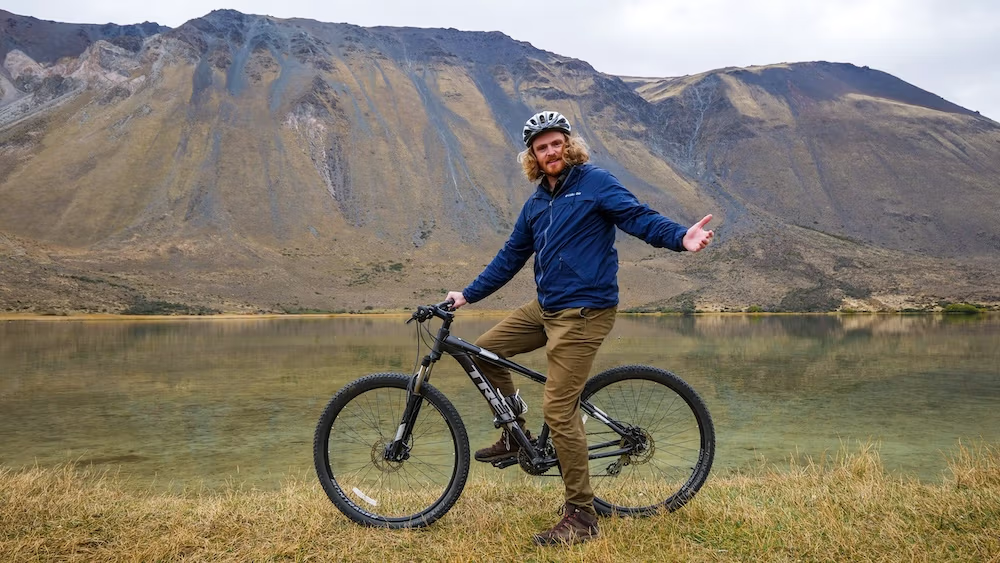
A single gust of wind violently inverted it, bent the metal framing into a modern art sculpture, and left me soaking wet on the pavement. That was the exact moment I realized: You do not casually stroll into Patagonia. The map lies to you. Patagonia is not a national park. It is not a single mountain. It is a massive, wildly diverse, 1-million-square-kilometer region shared by Chile and Argentina that spans 2,500 kilometers from north to south. If it’s your first time planning a trip down here, the sheer scale of the logistics—the border crossings, the micro-climates, the cash rules—can easily overwhelm you. We’ve documented the highs and extreme lows on our YouTube channel, but today, we are stripping away the brochure gloss.
This is the unvarnished, hyper-specific geographic guide to surviving, navigating, and actually eating well in the two Patagonias.
The Geographic Reality Check: By The Numbers
Before we break down the specific regional hubs, you need to understand the mathematical reality of the landscape you are about to navigate. When we say “the map lies to you,” this is exactly what we mean. Here is the true scale of the Patagonian Time Tax.
| The Metric | The Hard Statistical Data | The “Real World” Translation |
| Total Landmass | 1,043,076 km² (approx. 402,734 sq mi) | Roughly 1.5 times the size of Texas, or more than four times the size of the United Kingdom. You cannot simply “do” Patagonia in a week. |
| North to South Distance | 2,500 km (1,553 miles) | Roughly the driving distance from New York City to Miami, except the highways frequently turn into tire-shredding gravel and cross strict international borders. |
| West to East Distance | 800 km (500 miles) at its widest point | The entire width of Germany, but bisected right down the middle by the jagged, impassable peaks of the Andes Mountains. |
| Population Density | 1.9 people per square kilometer | Outside of the major hubs, you are statistically more likely to encounter a guanaco, a roaming sheep, or a Magellanic penguin than another human being. |
| Total Population | Roughly 1.99 million people | Fewer people than the population of Houston, Texas, spread across a landmass larger than Egypt. If you break down on a rural backroad, you are entirely on your own. |
This massive void is exactly why you cannot rely on casual, last-minute planning. Now, let’s look at how this giant landmass is actually split.
Dividing the Giants: The Wild West vs. The Windy East
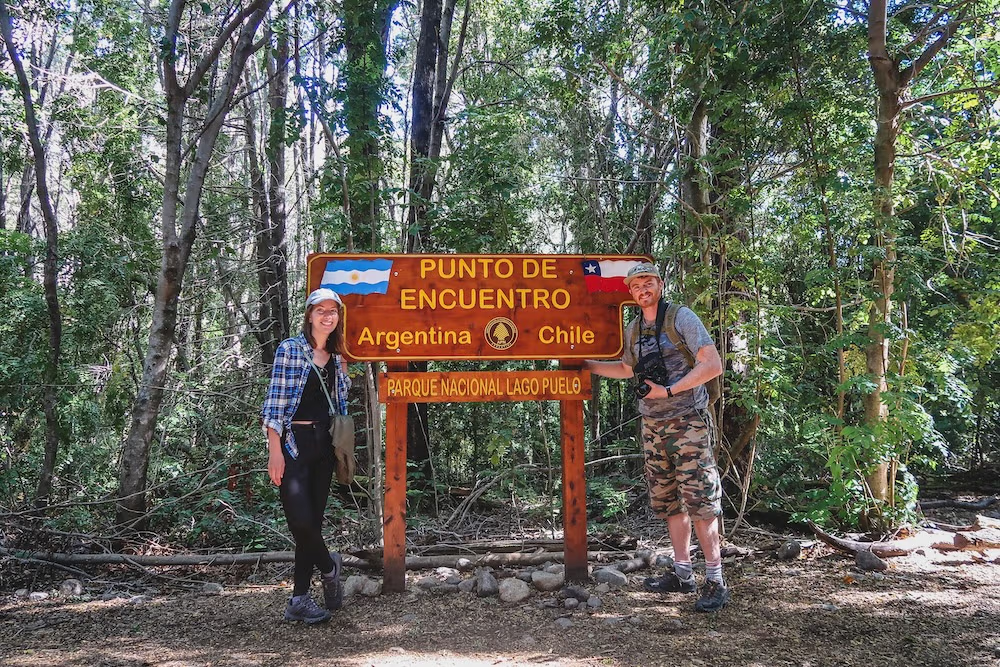
If you only have two weeks, you must choose a side. The Andes Mountains slice this region right down the middle, creating two entirely different topographical and logistical realities.
Chilean Patagonia (The West) is defined by its fjords, temperate rainforests, and rugged, maritime seclusion. The infrastructure here relies heavily on ferries and the unpaved Carretera Austral. It is “Wild & Wet.”
Argentine Patagonia (The East) is the land of vast steppes, dry plateaus, and massive, accessible glaciers. Route 40 is largely paved, the bus network is infinitely superior, and the vibe is “Grand & Windy.”
The Geographic Matrix: East vs. West
| Feature | Chilean Patagonia (The West) | Argentine Patagonia (The East) |
| Topography | Fjord-heavy, lush rainforests, craggy alpine peaks. | Arid steppes, massive glaciers, dry plateaus. |
| Key Hubs | Puerto Natales, Punta Arenas, Puerto Varas. | El Calafate, El Chaltén, Bariloche, Ushuaia. |
| Transit Reality | Ferry-dependent; heavily reliant on the Carretera Austral. | Route 40 (mostly paved); robust long-haul bus network. |
| The Vibe | Secluded, maritime, intensely green. | Accessible, hiking-centric, vast and wide-open. |
[Samuel’s “Time Tax” Reality Check]
Do not look at Google Maps and think, “Oh, El Calafate and Torres del Paine are right next to each other.” They aren’t. That “short” jump is a 5 to 6-hour grueling overland journey. We call this the Patagonian Time Tax. Your luggage will be forcefully unloaded, put through an airport-style X-ray scanner in the dirt, and manually reloaded. If you bring hard-shell, non-wheeled luggage, you will be physically carrying it across gravel parking lots.
The Big Three: Navigating the Golden Triangle
Most first-time visitors focus their energy on the “Golden Triangle” of the deep south. It is spectacular, but the friction points are very real.
El Calafate and the Noon Glacier Strategy
El Calafate in Argentina is your gateway to the Perito Moreno Glacier—one of the few glaciers on earth that is actually advancing rather than retreating. The town itself is an 80km (about 1.5-hour) drive to Los Glaciares National Park. The paved road is smooth, but gas within the park is non-existent. Fill up in town.
Current park entry will run you 45,000 ARS (approx. $32 USD), but here is the trick: your second consecutive day is 50% off. Most tour buses dump hundreds of tourists onto the central viewing balconies between 11:00 AM and 2:00 PM, creating a shoulder-to-shoulder nightmare where you can barely hear the ice cracking over the sound of selfie-sticks.
Instead of fighting the crowd, do the “Coastal Trail” (Sendero de la Costa) first thing in the morning. It’s a 2.5km path from the lower parking lot that the buses entirely skip. But for the main event, use our Noon Strategy. While the crowds are at lunch, we grabbed a coffee and walked the steep 1km path to the upper balconies right at midday. Why? Because the midday heat is exactly what causes the most spectacular ice-calving action. We sat there, highly caffeinated, watching massive chunks of ice explode into the lake while the tour groups were busy eating packed sandwiches in the cafeteria.
El Chaltén and the “Empty ATM” Crisis
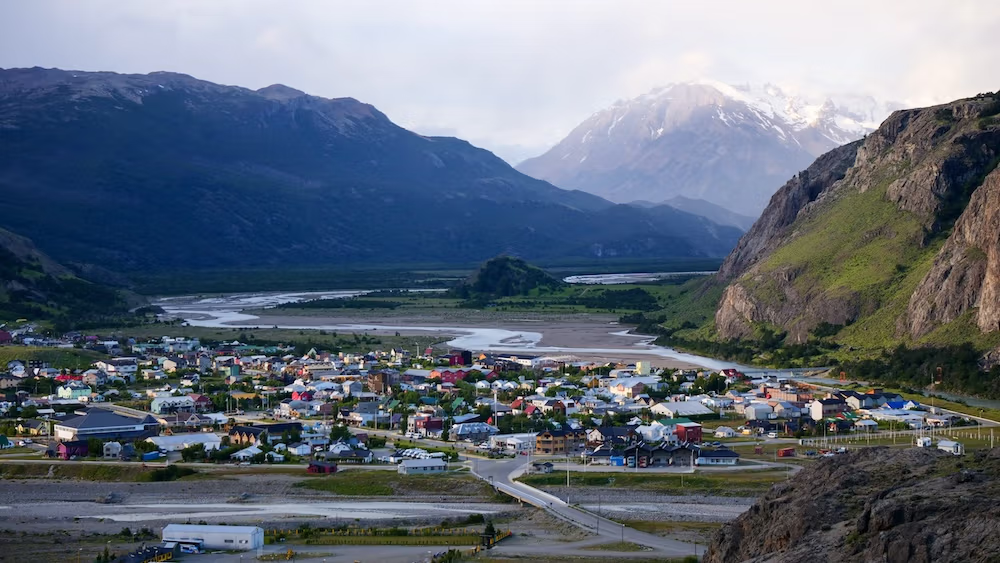
Just a few hours north sits El Chaltén, the undisputed “Hiking Capital” of Argentina. It sits at the base of the Mount Fitz Roy massif. The beautiful thing about El Chaltén is that the trailheads for the Northern Sector of Los Glaciares (like the grueling but stunning Laguna de los Tres) start literally at the edge of town, and entry is completely free.
The nightmare, however, is the local economy.
There are only three ATMs in El Chaltén, all located at the bus station. By Friday afternoon in high season, they are completely emptied of cash. If you try to withdraw money, you’ll be hit with exorbitant $5–$10 USD fees for a maximum equivalent of $100.
[Samuel’s Cash-in-Hand Warning]
Do not arrive in El Chaltén expecting to hit the ATM. You need to bring crisp, untorn $100 USD bills to exchange at your hotel at the highly favorable “Blue/MEP” rate, or pull cash via Western Union back in El Calafate. Credit cards are becoming more accepted (and currently process at the favorable MEP rate), but for remote refugios and small bakeries, cash is the only lubricant that works.
Torres del Paine and the Catamaran Trap
Crossing over into Chile, Torres del Paine is the crown jewel. If you plan to do the famous “W” or “O” treks during the 2026 high season (December-February), you must book your refugios 6 to 9 months in advance. Park entry is roughly $45–$50 USD for a 3-day pass.
But the biggest logistical trap is the Pudeto Catamaran on Lake Pehoé. This boat is the mandatory access point to Paine Grande (the start of the W-Trek). You cannot pre-book tickets online. The boat has no Wi-Fi, meaning they cannot process credit cards.
You must physically board the boat and hand the crew exact cash: 26,000 CLP one-way (approx. $26 USD), or you don’t ride. If you arrive late and the boat hits capacity, you are standing on a windy dock for 2+ hours waiting for the next one. Arrive 45 minutes early, cash in hand.
Hub Logistics & Friction Matrix
| Venue / Hub | Exact Current Price | The Invisible Friction Point | The Actionable Fix |
| Los Glaciares (Perito Moreno) | 45,000 ARS ($32 USD). Minitrekking is 464,000 ARS. | Central balconies are un-walkable from 11 AM – 2 PM due to tour buses. | Walk the 2.5km Coastal Trail early; hit the main balconies exactly at noon when the heat causes the ice to calve. |
| Pudeto Catamaran (Lake Pehoé) | 26,000 CLP one-way ($26 USD). Extra bag fee over 50kg. | No online booking; no credit cards accepted on board. | Bring exact Chilean Pesos (CLP) in cash. Arrive 45 mins before the 8:30 AM or 10:30 AM departures. |
| El Chaltén Trailheads | Free (Los Glaciares North). | ATMs run completely out of cash by Friday afternoon. | Bring crisp USD bills to exchange, or use Western Union in Calafate before driving up. |
Crossing Borders and the SAG Honey Trap
If you are weaving between these hubs, you will likely cross the Paso Don Guillermo border. Let’s talk about Chile’s Servicio Agrícola y Ganadero (SAG). They are arguably the strictest agricultural border force on the planet.
If you bring a half-eaten bag of unsealed nuts, a piece of fruit, or a jar of local honey from Argentina across the border, they will find it, they will confiscate it, and they will hand you a non-negotiable fine of $250–$400 USD. Everything must be declared.
Furthermore, if you arrive at this border behind just two commercial tour buses, your wait time to get your passport stamped jumps from 10 minutes to 1.5 hours. If you are driving a rental car, arrive exactly at 8:00 AM when the gates open, or try the 1:30 PM “lunch lull.”
[The Wind Shutoff Reality Check]
When navigating southern Chile, especially the Strait of Magellan ferry (Punta Delgada), you are at the mercy of the wind. In 2026, increased wind volatility means the maritime authorities will trigger a “Wind Shutoff,” halting all ferries for 12+ hours with zero notice. Never book a flight out of Punta Arenas on the same day you are relying on a ferry crossing.

The Hidden East: Welsh Tea and Gas Station Oases
While the deep south gets the glory, the eastern coast of Argentine Patagonia holds some of the strangest, most wonderful cultural anomalies on the continent. We took the bus up the coast to explore the Welsh Corridor—towns like Trelew, Gaiman, and Dolavon, where Welsh immigrants settled in the late 1800s.
Our grand plan was to explore the tiny, remote village of Dolavon. We checked Google Maps—blank. We took a local bus out there on a Monday. What we learned the hard way is the absolute rule of the Patagonian siesta and the “Monday/Tuesday Dead Zone.” Literally every restaurant, flour mill, and museum was bolted shut. We spent the afternoon sitting on the curb at the local gas station, drinking grapefruit Paso de los Toros soda and eating alfajores.
When you do time it right, it’s glorious. In Gaiman, we hiked 40 minutes out of town in blazing 38°C (100°F) heat. Sweaty, breathless, and wearing inappropriate flannel, we stumbled into Ty Te Caerdyd—the exact tea house where Princess Diana drank when she visited Argentina. Almost all tea houses strictly operate from 2:00 PM to 7:00 PM. Do not show up at noon expecting a scone.
The Budget, The 21% Hack, and $12 Wheelbarrow Dreams
Let’s talk money and food. The food in Patagonia is heavy, rich, and deeply comforting after a cold hike.
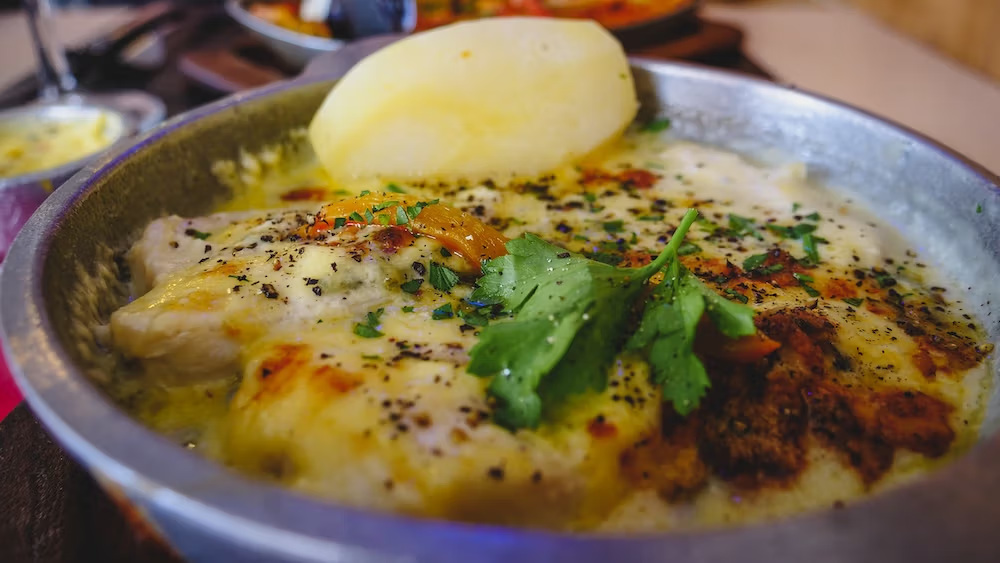
In Puerto Madryn, we sat down at Cantina el Nautico and ordered an ungodly amount of seafood: squid, massive portions of Roquefort salmon (yes, they put blue cheese on everything down here, and it works), and flan. The bill? Under $30 USD for two people. I literally asked the waiter if I could rent a wheelbarrow to roll us back to the hotel.
But if you want to optimize your budget in Argentina, you need to know about The 21% VAT Hack. Foreign tourists are legally exempt from the 21% VAT (IVA) on hotel stays if they pay with a foreign credit card. However, many small boutique hotels “forget” to apply this. You must explicitly ask for the “Exención de IVA para extranjeros” at checkout and show your passport.
The Dining & Budget Survival Matrix
| The Item / Hack | Location | The Reality & Cost | Effort vs. Reward |
| Cantina el Nautico Feast | Puerto Madryn | Massive portions of Roquefort salmon & squid. ~$12-$15 USD per person. | Low Effort / High Reward. Prepare for a food coma. |
| Gaucho Asado (Cordero) | El Bolsón | Cross-roasted lamb with local gauchos. | High Reward. But be warned: if they partied the night before, lunch might be delayed by hangovers. |
| The 21% VAT Exemption | All of Argentina | 21% off your hotel bill when paying with a foreign credit card. | Medium Effort. You must explicitly ask the front desk to apply it; it is rarely automatic. |
| The Toilet Paper Rule | Long-Haul Buses | Bus terminals and onboard bathrooms frequently run out. | Mandatory Survival. Always carry your own roll in your daypack. |
The Atlantic Gateway and the Wildlife Logistics
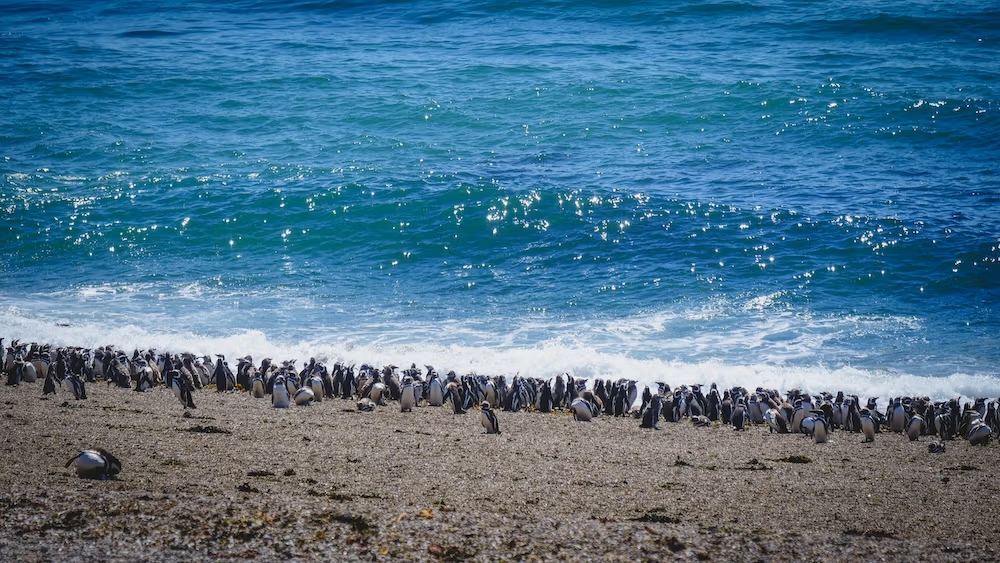
When people think of Patagonia, they picture glaciers. They rarely picture 600,000 screaming penguins. The eastern coast of Argentina, specifically Chubut Province, is a flat, dry, salt-scrubbed steppe that drops abruptly into the Atlantic Ocean. The crown jewel here is Peninsula Valdés, a UNESCO World Heritage site and the premier marine wildlife viewing destination on the continent.
To access the peninsula, you must pass through a heavily monitored gate. For 2026, the foreigner entrance fee is a strict 30,000 ARS (roughly $25 USD). You are paying for access to one of the most protected ecosystems on earth, but do not expect a manicured safari park. The distances between wildlife colonies on the peninsula are vast, and the roads are brutal, tire-shredding gravel.
The Coastal Wildlife Matrix
| The Location | The Wildlife Draw | The 2026 Logistic Reality | The “Friction & Fix” |
| Estancia San Lorenzo | Magellanic Penguins (600,000+ strong). | Private estancia access; penguins always have the legal right of way. | Friction: Tourists try to take selfies too close. Fix: Keep a strict 1-meter distance, or guides will remove you. |
| Punta Norte | Elephant Seals & Orcas. | Viewing is strictly limited to high cliff boardwalks to protect the beaches. | Friction: Orcas beaching themselves to hunt is incredibly rare. Do not expect a BBC documentary moment on command. |
| Puerto Pirámides | The only actual town inside the reserve. | Whale-watching boat departures (in season). | Friction: The town literally dies at 4:30 PM. Fix: Plan around the siesta; do not expect to buy water or food mid-afternoon. |
[Samuel’s “Dead Town” Reality Check]
After surviving our highway death march, Audrey and I stumbled into Puerto Pirámides at 4:30 PM, desperate for cold water and a snack. The town was a ghost town. It felt like walking through an abandoned movie set. Why? Because the siesta here is not a cute cultural suggestion; it is a hard, bolted-door reality. If you are not on a boat or at the beach by mid-afternoon, you are out of luck until 7:30 PM.
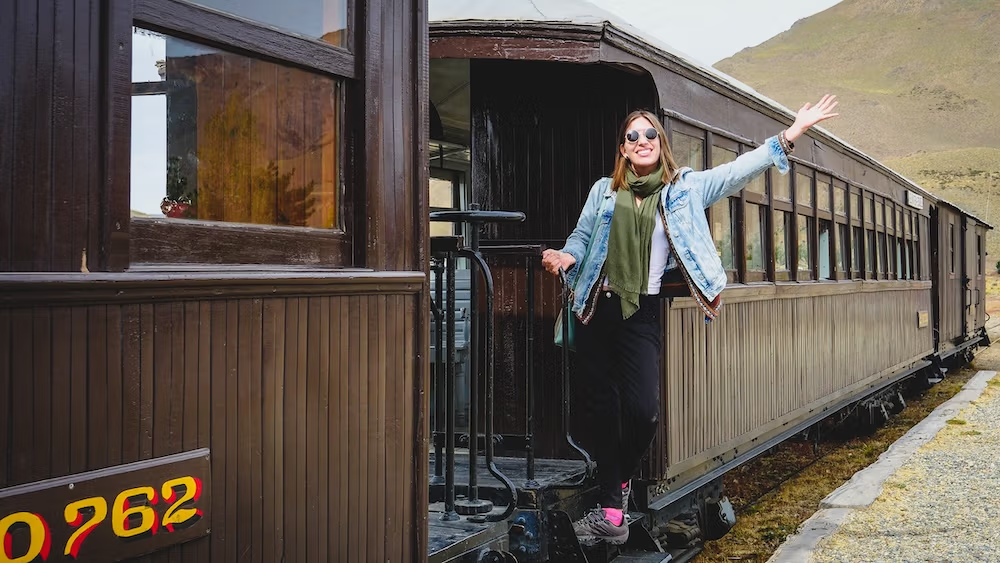
The Mountain Heartland: Esquel and the 75cm Gauge
If you head directly west from the coast into the Andes, you hit Esquel. This is not a polished tourist hub like El Calafate; it is a working-class mountain town that serves as the gateway to two massive, often-overlooked logistical marvels.
The first is La Trochita (The Old Patagonian Express). Made famous by Paul Theroux in 1979, this is a fully operational steam train running on an absurdly narrow 75-centimeter gauge. It is pulled by original Baldwin and Henschel engines, and the wooden wagons (originally shipped from Belgium) still feature the tiny wood-burning stoves installed to keep passengers from freezing during the Patagonian winters.
In 2026, the foreigner ticket for the 1-hour journey to the Nahuel Pan settlement will run you 136,000 ARS (roughly $130 USD). It is expensive, but it is a rolling museum.
The second marvel is Los Alerces National Park, home to ancient forests where the Alerce trees are up to 2,700 years old. The water here is a shocking, unfiltered glacial turquoise. But getting in requires navigating local transit quirks.
The Esquel & Transit Survival Matrix
| The Venue / Hub | The 2026 Cost | The Signature Feature | The Hidden Friction |
| La Trochita Train | 136,000 ARS (Foreigner Ticket). | Authentic narrow-gauge steam travel. | Trains only run on specific days depending on the season. You must book online days in advance. |
| Los Alerces NP | Approx $10 USD (Foreigner Fee) paid at the gate. | 2,700-year-old ancient forests. | There is no gas station inside the park. You must fill your tank in Esquel before entering. |
| The Esquel Bus | Varies by company. | The only way in without a rental car. | The Trap: During low season, there is only one daily bus into the park. You must buy a round-trip ticket from the driver immediately, or you will be physically stranded. |
The Gaucho Asado and the Hangover Delay
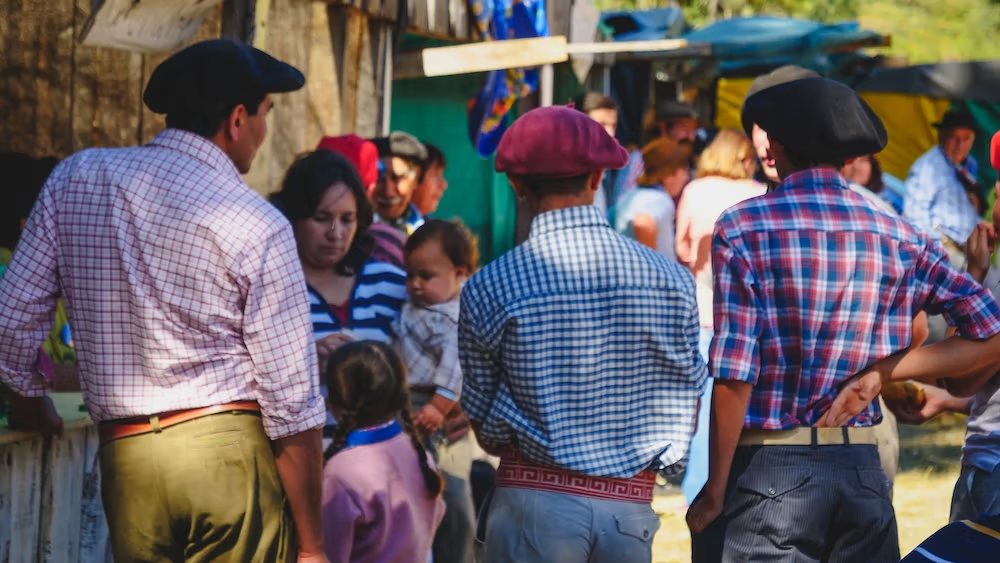
Continuing north along Route 40, the harsh steppes give way to El Bolsón—a charming, laid-back mountain town known for its artisanal markets and nature trails. But we weren’t here just for the hiking; we were here for the meat.
Our local host, Valentin, invited us to an authentic Gaucho asado (barbecue) just outside the city limits. This wasn’t a sterilized dinner show for tourists; this was the real deal. We arrived eager to eat cordero (Patagonian lamb) slow-roasted on an iron cross over an open wood fire.
We waited. And we waited.
The fire was barely lit. Why? Because the gauchos had thrown a massive party the night before, and literally every single one of them was nursing a catastrophic hangover. We sat around for hours, laughing, drinking mate, and watching them slowly piece themselves back together before the meat finally hit the cross.
[The Cultural Patience Rule]
When you leave the highly polished hubs of Torres del Paine or El Calafate and step into rural Argentine Patagonia, you must surrender your watch. You cannot rush an asado, and you cannot rush a hungover Gaucho. The meat will be ready when the meat is ready. Embrace the wait.
Bariloche: The “Circuito Chico” Reality
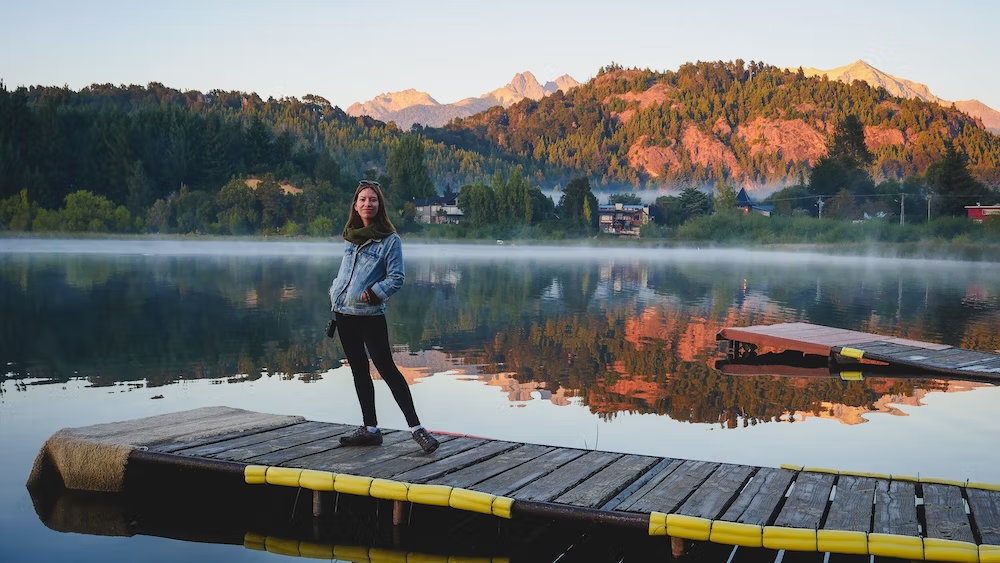
At the northern edge of Patagonia lies San Carlos de Bariloche. If the deep south feels like the end of the world, Bariloche feels like a transplanted Swiss alpine colony. It sits on the shores of the massive Nahuel Huapi Lake and is famous for three things: chocolate, craft beer, and the Circuito Chico.
The Circuito Chico is a 27-kilometer (17-mile) loop that winds through the Llao Llao Peninsula, offering some of the most jaw-dropping panoramic views on the continent. The standard advice is to rent a bicycle and pedal the route.
Here is the un-sugarcoated physical reality of that advice.
It is not a casual Sunday cruise. The route is entirely paved, but it is defined by brutal, lung-busting inclines and terrifyingly steep descents on roads shared with aggressive local tour buses. My wife Audrey and I consider ourselves fairly active, but within the first three kilometers, we were drenched in sweat and questioning our life choices.
For 2026, bike rentals at reputable local shops like Oeste Bikes will cost you 30,000 ARS if you pay in crisp cash, or 36,000 ARS if you use a credit card. (Always carry cash in Argentina; the discount for paper money is omnipresent).
The Bariloche Alpine Matrix
| The Activity | Exact 2026 Cost | The Reality Check | Post-Hike/Ride Triage Priority |
| Circuito Chico Bike Rental | 30,000 ARS (Cash) / 36,000 ARS (Card). | The hills are relentless. Rent an e-bike ($77,000 ARS) if you want to actually enjoy the scenery. | High. You will immediately need a massive steak and an ibuprofen. |
| Cerro Campanario Chairlift | Approx $15 USD equivalent. | The best panoramic view in the region, taking exactly 7 minutes to reach the top. | Low. Let the vintage chairlift do the heavy lifting. |
| Nahuel Huapi NP Entry | 20,000 ARS (Foreigner). | Required if you step off the main roads to do the deeper forest trails. | Medium. Keep the physical ticket; rangers do check them at trailheads. |

The Sweaty Princess Diana Tea
I cannot write a master guide to Patagonia without circling back to the sheer absurdity of the Welsh Corridor.
In the town of Gaiman, located just west of Trelew, the Welsh immigrants built a network of irrigation canals and established a thriving agricultural community. Today, it is famous for its traditional Welsh Tea Houses (Casas de Té).
On a 38°C afternoon, having completely misjudged the distance, Audrey and I hiked 40 minutes along a dusty road. We arrived at Ty Te Caerdyd—the exact tea house where Princess Diana drank when she visited Argentina in 1995. We stumbled into the pristine, air-conditioned parlor completely drenched in sweat, breathless, and wearing inappropriate flannel.
We were seated in quiet luxury and promptly served an astonishing spread of eight different cakes, scones with homemade jams, and a bottomless pot of black tea.
So You Want To Visit Ushuaia
You look at a map of Patagonia and think, “I’m already in El Calafate looking at the glacier. I’ll just take a bus down to Ushuaia and see the southernmost city in the world.”
What the map doesn’t tell you is that there is no direct road.
That “quick” bus journey south is actually a multi-stage endurance test. First, you have to cross the desolate Patagonian steppe to Río Gallegos. From there, you board another bus, cross the international border into Chile, drive to the Strait of Magellan, unload to take a ferry across the freezing water to the island of Tierra del Fuego, drive across the Chilean side of the island, cross back over a second international border into Argentina, and then finally cross the Garibaldi Pass into Ushuaia.
If everything goes perfectly and the wind doesn’t shut down the ferry, it is a 12 to 16-hour ordeal.
This is where the “Time Tax” we talked about earlier hits its absolute peak. If you are short on time, do not try to be a hero. Book a direct flight from El Calafate (FTE) to Ushuaia (USH). For 2026, a one-way ticket on Aerolíneas Argentinas or Flybondi takes exactly 1 hour and 20 minutes and will run you roughly 95,000 to 135,000 ARS (around $100–$140 USD). Spend your time exploring the End of the World, not staring at a dirt road from a bus window.
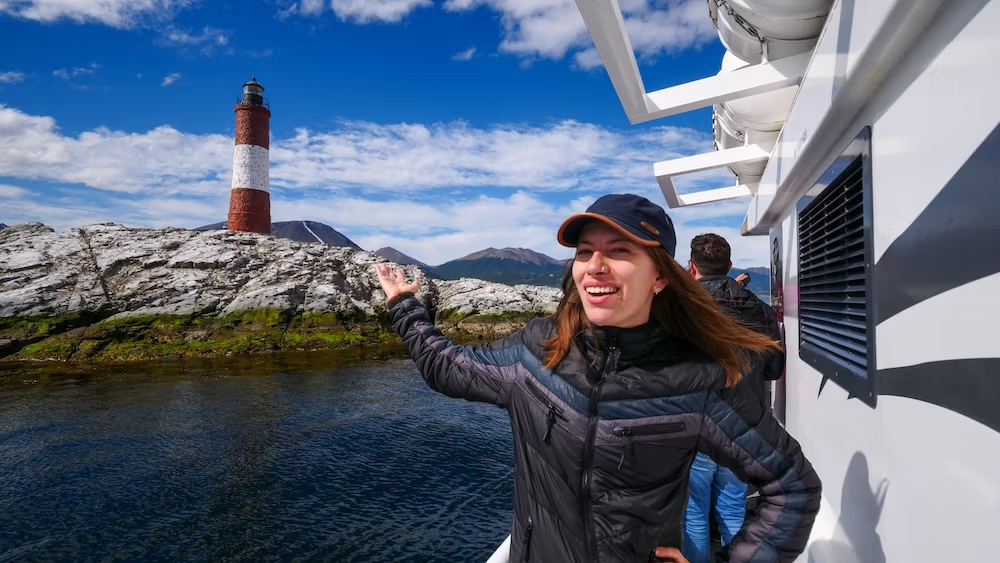
The End of the World and the Beagle Channel Reality
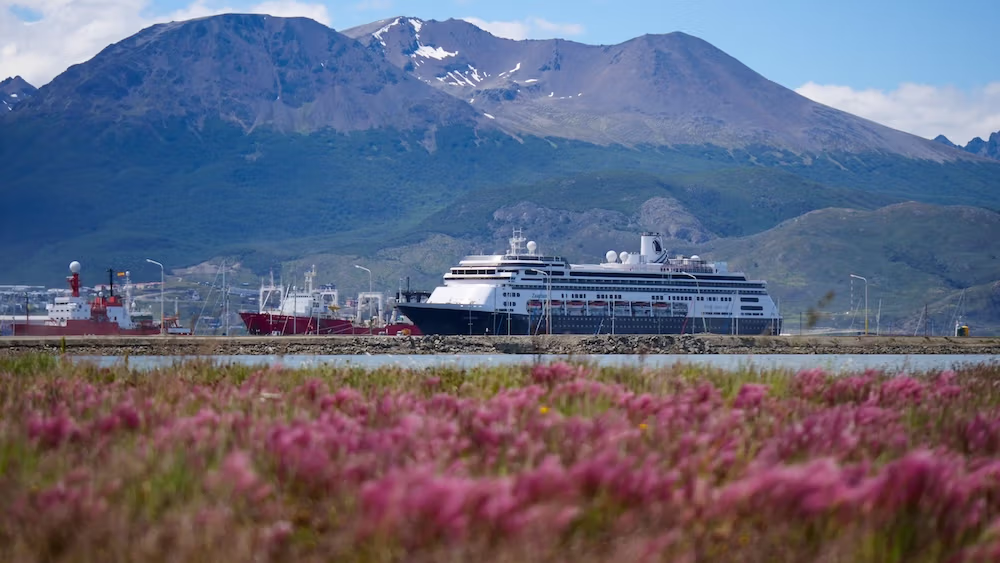
When you finally arrive in Ushuaia, you are immediately struck by how raw it feels. The city clings to the side of the martial mountains, staring out at the Beagle Channel. The wind here doesn’t just blow; it howls off the Antarctic currents, biting through whatever high-tech fleece you thought was sufficient.
The primary reason to come this far south, aside from the bragging rights, is to get on the water. The Beagle Channel is the historic waterway that Charles Darwin navigated, and it is teeming with marine life.
However, you need to understand the hierarchy of the boat tours. The standard catamaran tours depart right from the tourist pier in the center of town. They take you past the famous Les Éclaireurs Lighthouse (often misnamed the “Lighthouse at the End of the World”), Bird Island, and Sea Lion Island. These boats are large, heated, and comfortable.
If you want to actually walk among the penguins, you need to book a highly specific tour that heads further east to Martillo Island.
The Tierra del Fuego Marine & Park Matrix
| The Excursion / Venue | 2026 Price (ARS / USD) | The Reality Check | Effort vs. Reward |
| Standard Beagle Channel Catamaran | ~120,200 ARS ($100 USD) | 3-hour cruise. You see the lighthouse and sea lions from the deck. | Low Effort / High Reward. Great photos, but you do not step foot on the islands. |
| Martillo Island Penguin Walk | ~190,000 to 220,000 ARS | This is the only tour authorized to actually disembark and walk with Magellanic penguins. | High Reward. Sells out quickly; you must pre-book this specific upgraded route. |
| Tierra del Fuego National Park | 40,000 ARS ($30 USD) | The foreigner entry fee at the gate. It is the southernmost national park on the continent. | Medium Effort. Stunning coastal forest trails, but weather changes by the minute. |
[Samuel’s “Southernmost Mailman” Tip]
When you enter Tierra del Fuego National Park, hike down to the shores of Bahía Ensenada Zaratiegui. Sitting right on a wooden pier over the water is the Correo del Fin del Mundo (The End of the World Post Office). It is a tiny corrugated metal shack run by the most famous postal worker in Argentina. For roughly 2,500 ARS (about $2.50 USD), he will stamp your physical passport with a massive, multi-colored penguin and map stamp proving you made it to the bottom of the map. Just remember to bring crisp, small bills.
Reaching Ushuaia feels like a monumental accomplishment because it is one. You are standing at the absolute edge of the South American continent. The logistics to get here—whether it’s the 16-hour double-border bus marathon or coughing up the cash for the flight—are heavy. But the moment you stand on the edge of the Beagle Channel, looking south toward Antarctica with your passport freshly stamped, the Patagonian friction entirely disappears.
How to Think About Patagonia Before You Go
By the time most first-time visitors reach this point, they usually realize something important:
Patagonia is not just a destination.
It is a region you have to think about properly if you want the trip to feel rewarding instead of chaotic.
That does not mean you need to plan every second. In fact, Patagonia often punishes overplanning. But it does mean you need the right mental map before you arrive. Once you understand that this is a huge, two-country region shaped by distance, weather, transport gaps, and wildly different sub-regions, a lot of Patagonia suddenly starts making more sense.
A Simple Mental Map of Patagonia
The easiest way to picture Patagonia is not as one place, but as a series of distinct travel zones.
| Zone | What It Feels Like | What It Means for Your Trip |
|---|---|---|
| Chilean Patagonia | Wet, fjord-filled, remote, ferry-linked | Slower, more weather-sensitive, and often more complicated to move through |
| Argentine Patagonia | Dry, windy, open, distance-heavy | Easier to picture on a map, but often longer and harsher in real travel time |
| Southern Patagonia | Glaciers, trekking towns, famous landmarks | Best for classic first-time highlights, but also where people underestimate logistics most |
| Lake District Patagonia | Forests, lakes, chocolate, beer, alpine towns | A softer and more comfortable entry point into Patagonia |
| Atlantic Patagonia | Wildlife, cliffs, beaches, marine life, wind | Less famous internationally, but full of payoff and personality |
| Tierra del Fuego | Stark, remote, maritime, symbolic | Expensive, far-flung, and deeply satisfying if you want that end-of-the-world feeling |
This is why two travelers can both say they “went to Patagonia” and then describe experiences that sound almost unrelated.
One person is talking about glaciers, hiking trails, and mountain weather.
The other is talking about Welsh tea, penguins, windblown beaches, and long coastal drives.
Both are describing Patagonia accurately.
The Biggest First-Time Mistake
The biggest mistake people make is trying to treat Patagonia like a single trip instead of a giant region made up of different clusters.
That is usually where the trouble starts.
A lot of first-time visitors try to combine too much: Ushuaia, El Chaltén, Torres del Paine, Bariloche, Puerto Madryn, maybe a little Carretera Austral energy for extra chaos. On a map, it can look ambitious but possible. On the ground, it often becomes a blur of transit, timing stress, missed flexibility, and too many one-night stops.
Patagonia gets better when you stop trying to conquer it.
It gets better when you choose one slice of it and let that part breathe.
If You Only Have 7 to 10 Days
If your trip is one week to ten days, the smartest move is usually to pick one Patagonia cluster and stay there.
Here are a few combinations that make more sense than trying to stitch the whole region together:
El Calafate + El Chaltén
This is one of the strongest first-time combinations because it gives you glaciers, iconic mountain scenery, and a travel structure that is relatively straightforward by Patagonian standards.
Puerto Natales + Torres del Paine
A great choice for travelers whose dream is built around the park itself. This option works best if you are comfortable planning around transport schedules and weather windows.
Bariloche + the Lake District
A gentler introduction to Patagonia with mountains, lakes, scenic drives, great food, and easier infrastructure than some of the more punishing corners of the region.
Puerto Madryn + Peninsula Valdés + Gaiman/Trelew
An underrated option for travelers who care more about wildlife, coastal scenery, and cultural texture than famous trekking routes.
The real strategy is simple: move less, stay longer, and stop pretending Patagonia is designed for fast travel.
It is not.
Time vs Money: Pick Your Pain
Patagonia forces trade-offs.
Usually, you are choosing between saving money and saving time, and the region is very creative about making sure you pay one way or another.
| Travel Style | Main Advantage | Main Cost |
|---|---|---|
| Flights | Big time savings | Higher price, baggage rules, less flexibility |
| Buses | Lower cost | Long travel days and serious energy drain |
| Rental car | Freedom and spontaneity | Fuel costs, gravel roads, paperwork, border complications |
| Tours | Easy logistics | Less independence and fixed timing |
| Ferries/Catamarans | Essential in some places | Schedule dependence and weather exposure |
This is why Patagonia can feel expensive even when you are trying to travel cheaply.
You may save money on transport, but lose a full day in the process. Or you may spend more upfront and preserve the kind of time and energy that makes the trip feel much better.
There is no perfect answer. There is only the answer that best matches your style of travel.
A Final Patagonia Reality Check
Before you go, it helps to accept a few things.
- Patagonia is bigger than you think.
- Distances are longer than they look.
- Weather matters more than you want it to.
- Transit does not always connect neatly.
- Border crossings add friction.
- Cash still matters more often than it should.
- The reward is real, but convenience is not.
That is not a flaw in the region.
That is part of its personality.
And honestly, it is also part of what makes Patagonia feel so memorable. The scenery is spectacular, of course, but the deeper reason people become obsessed with Patagonia is that the trip usually feels earned. You do not just drift through it. You negotiate with it a little.
That combination of scale, friction, beauty, weirdness, and reward is exactly what makes Patagonia different from almost anywhere else.
This is the ultimate lesson of Patagonia, and the reason we keep filming here for the Samuel & Audrey channel. You can spend the morning getting battered by wind on a glacier, the afternoon getting a sunburn on a gravel highway, and the evening eating imported cheese and drinking tea in a parlor built by 19th-century Welsh farmers.
The geography is vast. The logistics are frequently a nightmare. But if you carry exact cash, respect the siesta, and expect the unexpected, Patagonia will reward you with the most authentic travel experience on earth.
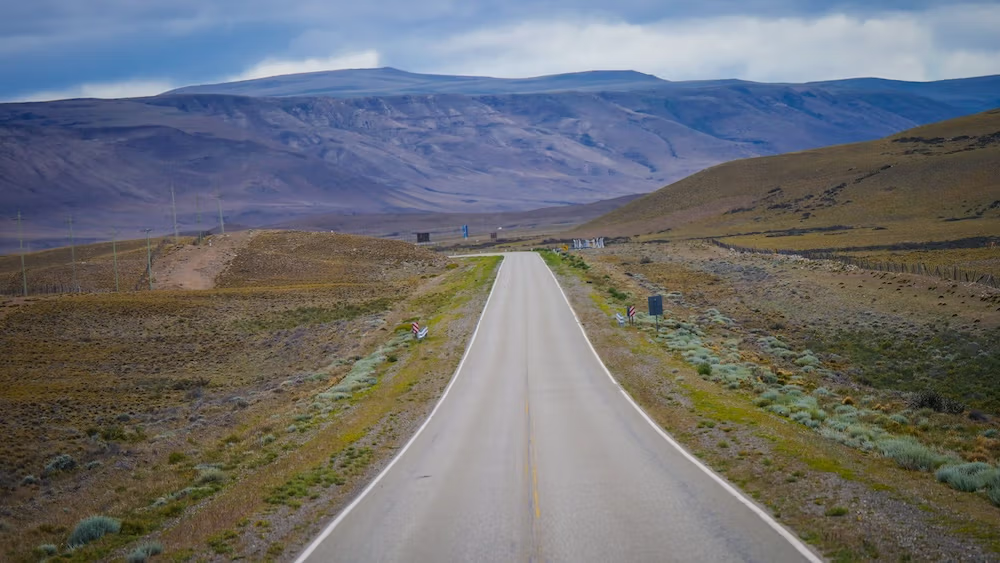
FAQ: What is Patagonia
Is Patagonia its own country?
Nope. Patagonia is a massive geographic region shared by two entirely different countries: Argentina to the east and Chile to the west. You’ll be crossing international borders (and dealing with strict agricultural checkpoints) if you plan to see both sides.
Do I need a visa to visit Patagonia?
Usually, no. Citizens of the US, UK, Canada, and Australia generally do not need a visa for tourist stays up to 90 days in either Argentina or Chile. However, entry requirements and digital permit rules frequently change, so always verify with your government’s travel advisory site a month before your flight.
What is the best month to visit Patagonia?
November through March. This is the Austral Summer. You will get the warmest weather, the most accessible trails, and the longest daylight hours for hiking. Just know that “summer” down here still means you can experience freezing winds, heavy rain, and scorching sun all in the exact same afternoon.
Can I drink the tap water in Patagonia?
Absolutely. The tap water in almost all major Patagonian hubs (like Bariloche, El Calafate, and El Chaltén) comes directly from glacial runoff and is incredibly clean and safe to drink. Bring a reusable bottle and save your money for the local craft beer.
Are there mosquitoes or dangerous bugs in Patagonia?
Rarely. The infamous Patagonian wind and cooler temperatures keep the mosquito population practically non-existent compared to the rest of South America. You might encounter some annoying horseflies (called tábanos) in the northern lake districts during January, but tropical bug-borne illnesses are not a concern down here.
Can I use US dollars everywhere in Patagonia?
Depends. In Argentina, crisp, untorn $100 US bills are incredibly valuable for exchanging at the highly favorable “Blue/MEP” rate, but you can’t just slap a twenty down at a rural grocery store. In Chile, you strictly need local Chilean Pesos (CLP) for essentials like the Lake Pehoé catamaran. Always carry local cash for the day-to-day friction.
Is it safe to rent a car and drive in Patagonia?
100%. Renting a car gives you the ultimate freedom to avoid the crowded tour buses, especially for the Carretera Austral in Chile or the Lake District in Argentina. Just be fully prepared for long stretches of tire-shredding gravel, zero cell service, and massive distances between gas stations.
How many days do I actually need for a Patagonia trip?
Ten minimum. Fourteen is much better. Do not try to cram Torres del Paine, the Perito Moreno Glacier, and Ushuaia into a one-week vacation. The transit “Time Tax” between these hubs will eat up half your trip. Pick one or two regions, travel slowly, and respect the distances.
Project 23 Argentina: This guide is also available in Spanish. [Lea la versión en castellano: ¿Qué es la Patagonia? La guía geográfica para tu primer viaje]