
Audrey and I thought the bus from Trelew to Gaiman would be a breezy 15-minute zip. We had our daypacks, our cameras, and completely empty stomachs, fully prepared to conquer a legendary Patagonian tea house. Forty-five minutes later, bumping along the dusty, sun-blasted tarmac of Route 7, I realized the Patagonian steppe doesn’t do “quick zips.”
Getting on that bus had already been a humbling traveler moment. We had marched up to the driver with a fistful of pesos, only to be met with a confused stare. You can’t just pay cash for the 28 de Julio local bus. First, you have to find a kiosk selling the physical SUBE transit card (around 85 pesos at the time of our original filming, though drastically adjusted in the recent economy), load it with credit, and then tap your way to the promised land of scones and jam.
By the time we actually rolled into Gaiman, a lush, green agricultural oasis carving its way through the harsh Chubut desert, we were ravenous. Which was exactly the plan. We were here to experience Y Wladfa—the Welsh settlement in Argentina—and specifically, the Té Galés.
If you’ve watched the Patagonia series on our YouTube channel, you know Audrey and I are no strangers to massive meals. But nothing, and I mean nothing, could have prepared us for the caloric endurance test we were about to face.

The Y Wladfa Rosetta Stone: Your 4,000-Calorie Roadmap
If you are going to survive the Patagonian Té Galés, you need to know exactly what you are up against. This is not a menu where you pick one or two items; you are served everything on this list. To help you pace yourself, navigate the linguistic gymnastics of Chubut, and avoid filling up on the wrong carbohydrates, we built the ultimate bilingual (technically trilingual) Welsh Tea Matrix.
Memorize this before you sit down.
| The Tier | English (What it is) | Cymraeg (The Welsh Name) | Castellano (The Argentine Name) | The “Nomadic Samuel” Tasting Notes & Warning |
| The Foundation | Homemade Bread & Salted Butter | Bara Menyn | Pan Casero con Mantequilla | The Fluffy Trap. You will be served a massive basket of warm, pillowy white and whole wheat bread milled locally. It is delicious. Do not eat more than one slice, or you will fail the mission before the sugar even arrives. |
| The Savory Lifeline | Crustless Tea Sandwiches | Brechdanau | Sánguiches de Miga | The Palate Cleanser. Incredibly thin, airy, crustless sandwiches. In Gaiman, these are typically filled with ham and cheese. In the Andean town of Trevelin, you might score smoked mountain trout. This is your final savory bite before the sugar onslaught. |
| The Delivery Vehicle | Warm Scones | Sgons | Escones | The Blank Canvas. Dense, buttery, and baked fresh daily. They are served warm and are strictly designed to be split open and aggressively loaded with butter and regional jams. |
| The Secret Weapon | Citrón Melon Jam | Difyrion Citrón (Jam) | Dulce de Citrón | The Gaiman Exclusive. Generic guides just say “jam.” This is the jam. Made from a hard, green melon that grows in the local irrigation ditches, boiled for hours until it becomes a sweet, slightly tangy, translucent masterpiece. |
| The Mountain Alternative | Calafate Berry Jam | Difyrion Calafate | Dulce de Calafate | The Andean Staple. If you are having tea in Trevelin instead of Gaiman, expect to slather your scones in this deep-purple, slightly tart preserve made from the iconic Patagonian berry. |
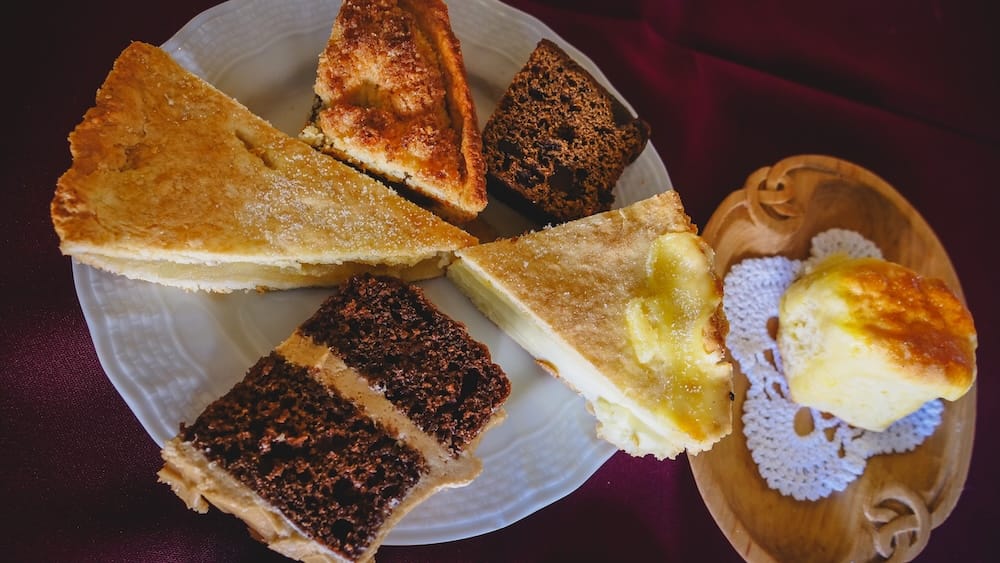
| The Heavy Dairy | Welsh Cream Pie | Tarten Hufen | Torta de Crema | The Rich Hit. Imagine sweet, heavy clotted cream poured directly into a delicate pastry crust and baked until it sets. It is incredibly rich. Cut your slice in half to survive. |
| The Cloud | Welsh Sponge Cake | Cacen Sbwng | Bizcocho a Lo | The Deceiver. It towers over the plate, looking like a massive commitment. But true Bizcocho a lo is delightfully airy and spongy, topped with a crackling sugar crust. It dissolves in your mouth. |
| The Tangy Pivot | Apple & Lemon Tarts | Tarten Afal / Lemwn | Tarta de Manzana / Limón | The Acidic Break. Hidden among the heavy creams and dense breads, these fruit tarts provide a much-needed hit of citrus and tart apple to wake your palate back up. |
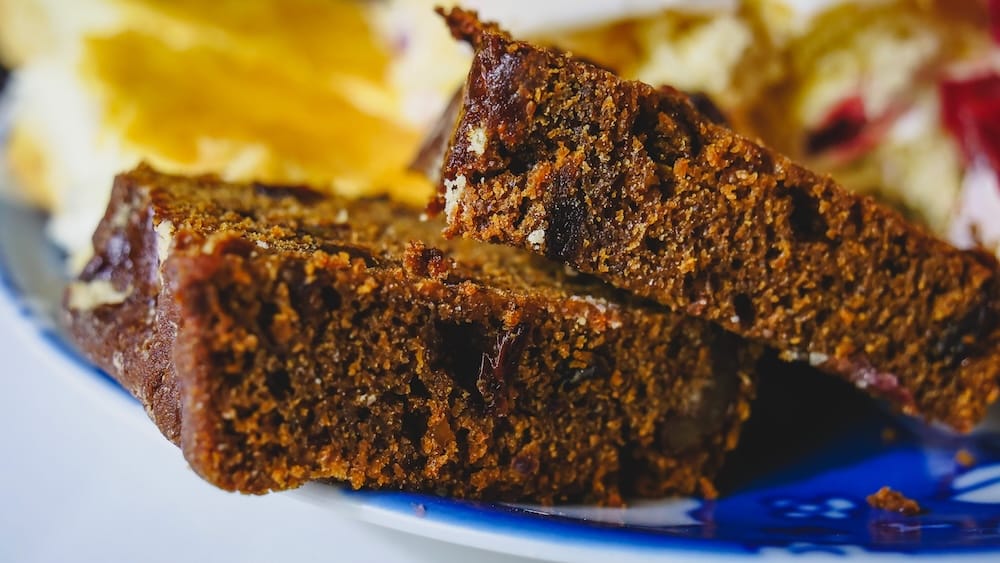
| The Final Boss | Welsh Black Cake | Cacen Ddu (or Bara Brith) | Torta Negra | The King of the Table. It looks exactly like a moist chocolate cake. It is not. It is a wildly dense, heavy masterclass in brown sugar, nuts, and rum-macerated fruits. The best houses age this cake for up to a month before serving. |
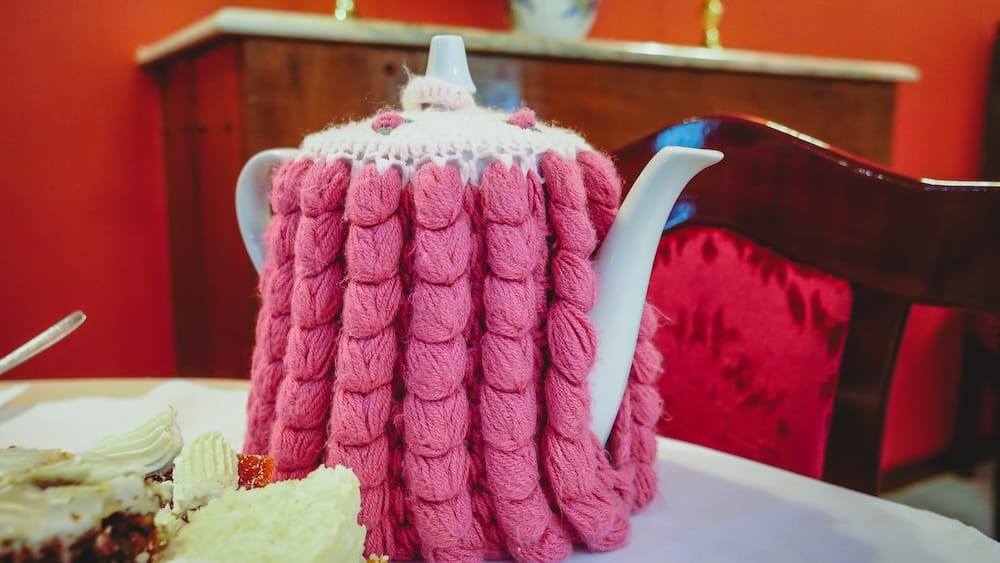
| The Fuel | Bottomless Black Tea | Te Du | Té Negro (en hebras) | The Engine. Served loose-leaf in massive porcelain pots wrapped in hand-knitted tea cozies. If you are in Trevelin, wait for the host to teach you the “Cold Milk Cut” to perfectly mellow the aggressive tannins. |
Desert Oases and the Tehuelche Lifeline
Before we talk about the butter, we need to talk about the desert. It is incredibly jarring to be in the middle of South America, surrounded by arid shrubland, only to stumble upon red-brick chapels, rose gardens, and street signs in a Celtic language.
In 1865, a group of Welsh settlers fleeing poverty, famine, and the suppression of their native language by the English boarded a ship called the Mimosa. They landed on the shores of what is now Puerto Madryn (you can still walk down a little boardwalk near the Eco Centro to see the caves where they first took temporary shelter). They expected a green, fertile valley similar to home. Instead, they got the wind-whipped Patagonian coast.
The Indigenous Lifeline and the Move Inland
They nearly starved. The only reason this opulent tea culture exists today is because of the Tehuelche people, the Indigenous inhabitants of the region. The Tehuelche taught the struggling Welsh settlers how to hunt guanaco, shared their meat, and established a peaceful coexistence that allowed the colony to survive their first brutal winters.
Eventually, the settlers moved inland along the Chubut River, digging complex irrigation canals that turned dusty outposts like Gaiman and Dolavon into fertile hubs capable of growing wheat, apples, and the all-important tea-time fruits.
Why Tea? The Working-Class Roots of Te y prynhawn
But why tea? To understand the sheer, overwhelming volume of the Patagonian Té Galés, you have to understand what tea actually meant in 19th-century Wales. If you picture a traditional “High Tea,” you probably imagine English aristocrats in London drawing rooms nibbling delicately on cucumber sandwiches. Welsh tea culture was the exact opposite.
The Historic Tea Culture Matrix
| Culture Origin | The Vibe & Purpose | The Carbohydrate Payload |
| English High Tea | Aristocratic leisure. A delicate bridge between a light lunch and a late dinner. | Crustless cucumber sandwiches, tiny petit fours, and delicate light sponges. |
| Welsh Te y prynhawn | Working-class survival. A massive caloric refuel for slate quarry workers and farmers. | Thick slabs of Bara Brith (speckled bread), heavy scones cooked on cast-iron bakestones, and massive blocks of salted butter. |
Back in the motherland, Te y prynhawn (afternoon tea) was a crucial caloric bridge designed to refuel laborers returning from a grueling day. It wasn’t about dainty bites; it was about cheap, dense, immediately accessible energy.
The Teapot as a Social Anchor
When these working-class Welsh families crossed the Atlantic and nearly died in the Chubut desert, that daily tea ritual took on a profound new gravity.
In a hostile, isolated frontier, the simple act of boiling water wasn’t just about brewing a beverage—it was a baseline necessity for safe hydration. More importantly, tea became the ultimate social anchor. In a sprawling agricultural colony where your nearest Welsh-speaking neighbor might live miles away across harsh, unpaved steppe, the teapot was the beacon of community. It was the equalizer that bound the settlers together, and the universal gesture of hospitality they could offer the Tehuelche people who had saved them.
The Ultimate Flex of Agricultural Triumph
This history is exactly why your table at Ty Gwyn or Ty Te Caerdydd is physically groaning under the weight of six different cakes today. Once those historical irrigation canals finally worked and the Chubut valley bloomed, the Welsh settlers didn’t just bake a cake to celebrate; they baked everything.
[Samuel’s Cultural Reality Check]
The modern Patagonian Welsh tea service is not just a meal. It is a defiant, edible monument to their own survival. Every massive slice of Torta Negra, every mountain of Bizcocho a lo, and every jar of Citrón jam is a literal flex of agricultural triumph over the desert.
When a host drops a towering plate of scones in front of you today, they are participating in a 160-year-old tradition of radical hospitality. They are showing you that the famine is over, the valley provides, and no one—absolutely no one—leaves Y Wladfa hungry.
The Welsh Tea House Experience Matrix (Gaiman vs Trevelin)
Not all Welsh tea houses feel the same. The experience changes dramatically depending on where you go.
| Location | Vibe | Setting | Food Style | Tea Style | Best For | Watch Out |
|---|---|---|---|---|---|---|
| Gaiman | Historic, social, structured | Flat valley, canals, old brick streets | Classic spreads, Citrón jam, cream cakes, scones | Endless black tea, traditional service | First-time visitors, cultural immersion | Timing around siesta, cash issues |
| Trevelin | Cozy, personal, alpine | Near Andes, cooler climate, garden homes | Homemade, fruit-driven, Calafate jam, lighter cakes | Tea often paired with milk, more relaxed pacing | Slow travelers, intimate experiences | Fewer options, slower service |
| Bariloche (contrast) | Upscale, refined | Lakeside, resort-style | Elegant pastries, plated desserts | Tea, coffee, even sparkling wine | Luxury version of merienda | Less “Welsh,” more global |
The Great Gaiman Siesta Trap
Audrey and I stepped off the bus in Gaiman around 1:00 PM, ready to eat our body weight in carbohydrates. The town was entirely, completely, and unapologetically dead.
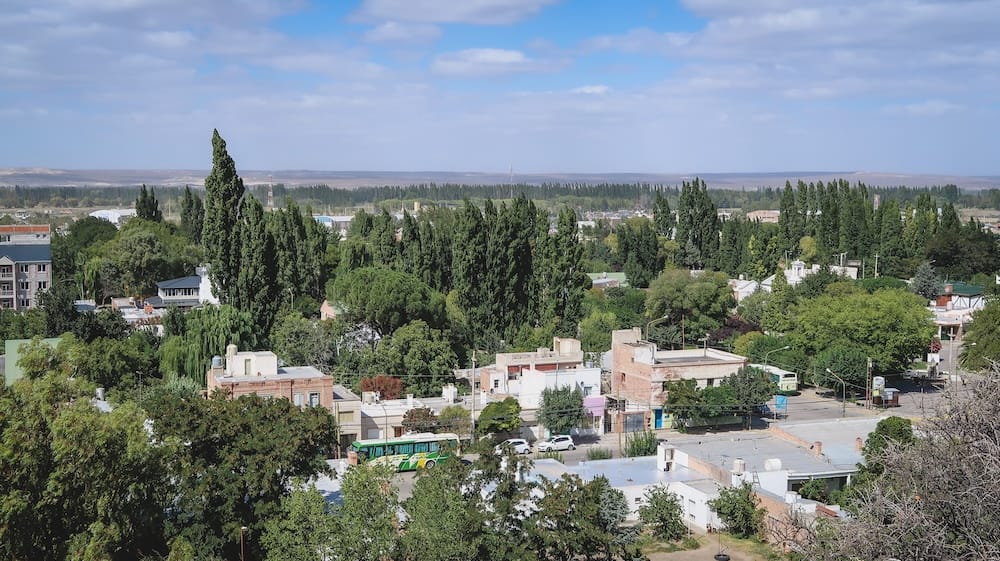
Gaiman is highly walkable, but it consists largely of unpaved side streets, uneven historic brick sidewalks, and deep irrigation ditches (canales) that you have to actively step over. It is not a manicured resort town; it’s a working agricultural hub. And like many working Argentine hubs, it fiercely protects its afternoon rest.
[Samuel’s Logistical Reality Check] Do not arrive in Gaiman at 1:00 PM expecting lunch. The entire town—shops, museums, and cafes—shuts down from 12:30 PM until at least 3:30 PM. There is virtually nowhere to sit indoors. If you arrive early, you will be walking the dusty Parque Paleontológico or sitting on a park bench until the tea houses unbolt their doors at 3:00 PM. Plan your transit accordingly.
The Wardrobe Panic at Ty Te Caerdydd
When the clock finally struck three, we made our way to Ty Te Caerdydd. We chose this specific house because it is Patagonian royalty. In 1995, Princess Diana visited Argentina and came all the way out to Gaiman to have her afternoon tea right here.
There is a very specific type of panic that sets in when you walk into a sprawling, manicured estate filled with antique porcelain, delicate tea cozies, and formal gardens, look down, and realize you are wearing your dusty travel fleece and hiking pants. We were wildly underdressed. The staff, however, didn’t bat an eye. Patagonian hospitality overrides formal dress codes.
The host sat us down and asked a crucial question: “Have you already had lunch?”
We shook our heads no. She smiled, a look of profound pity and challenge in her eyes. “Good.”
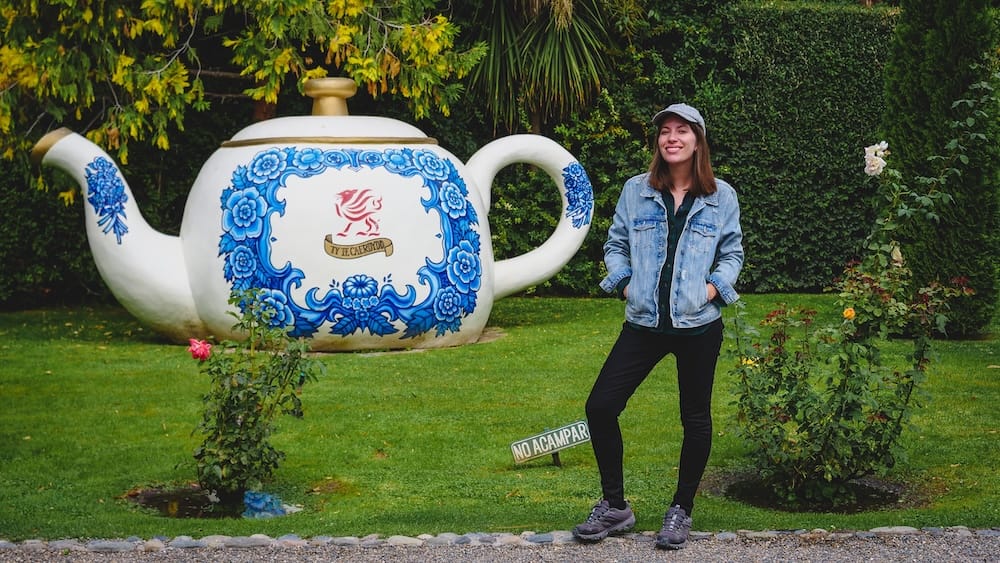
The Anatomy of an Endurance Test
A standard Té Galés is not a delicate little snack to tide you over until dinner. It is a multi-course, carbohydrate-heavy marathon that usually costs around $25,000 to $35,000 ARS ($20–$28 USD) in today’s economy.
Here is exactly what hit our table, in the order you are expected to consume it:
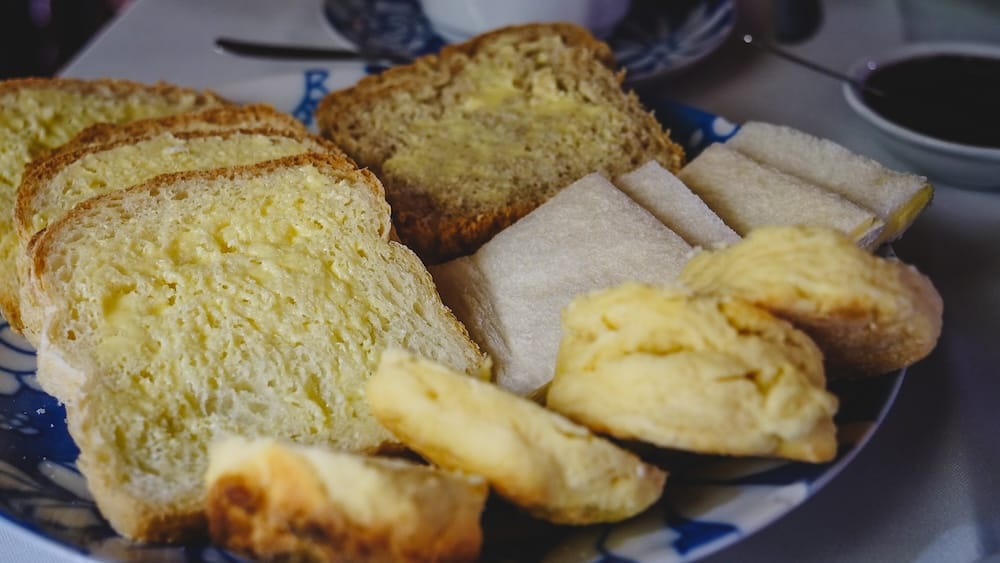
The Welsh Tea Matrix: The Standard Spread
| Service Tier | Specific Items | The “Nomadic Samuel” Tasting Notes |
| Phase 1: The Savory Foundation | Homemade white and whole wheat breads, salted butter. | You must pace yourself here. The bread is pillowy and warm, but it is a trap. If you fill up on buttered bread, you will fail the mission. |
| Phase 2: The Sándwiches | Sánguiches de miga (crustless, airy sandwiches). | Fluffy, slightly puffy bread usually filled with ham and cheese. Light, savory, and necessary before the sugar hits. |
| Phase 3: The Scone Protocol | Warm scones served with regional jams. | This is where the magic happens. Do not skip the local preserves. (See “The Citrón Secret” below). |
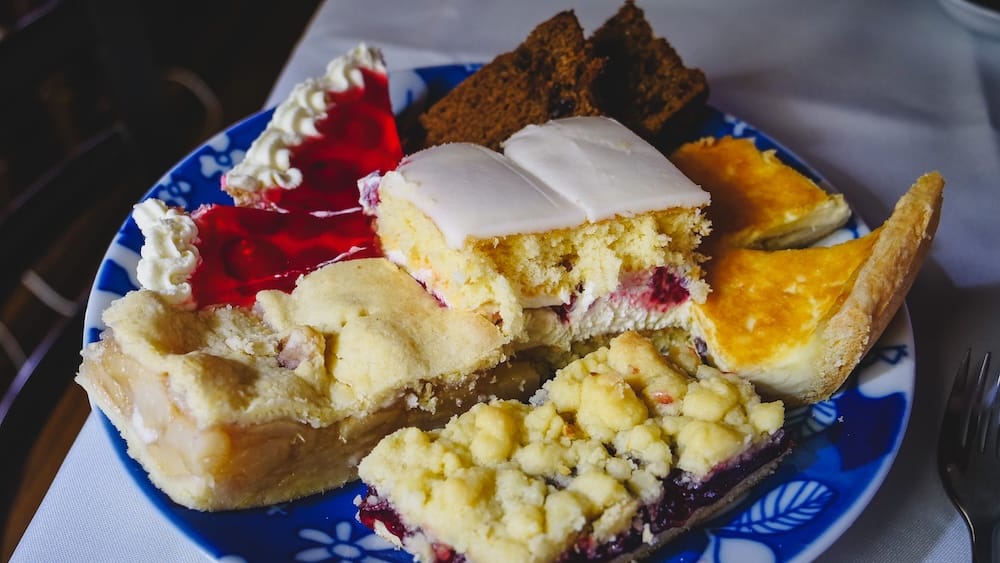
| Phase 4: The Cream & Sponge | Bizcocho a lo and Torta de crema (Cream Pie). | The Bizcocho a lo is a delightfully airy Welsh sponge cake with a sugar crust. The cream pie tastes like sweet clotted cream baked directly into a pastry shell. |
| Phase 5: The Heavy Hitters | Apple tart, lemon cake, chocolate cake. | By the time you reach this tier, your vision will start to blur. |
| Phase 6: The Boss Level | Torta Negra (The famous Welsh Black Cake). | The undisputed king of the table. Requires strategy. |
The Citrón Secret
When the scones arrived, they came with an array of jams. Generic guides will tell you to try the “local fruit preserves.” What they fail to mention is the Citrón.
If you look in the irrigation ditches around Gaiman, you might spot what looks like a rogue watermelon. It is hard, green, and completely inedible raw. This is the citrón melon. It only becomes palatable after being boiled for hours with sugar until it breaks down into a sweet, slightly tangy, translucent jam. It is the defining flavor of the Chubut colony, and slathering it on a warm scone is a mandatory experience.
The Torta Negra Deception
Eventually, you must face the Torta Negra. Sitting innocently on the tiered tray, it looks exactly like a dense, moist slice of chocolate cake.
I took a massive bite, expecting rich cocoa. I was immediately hit with a heavy, spiced wave of brown sugar, rum, nuts, and macerated fruits. It is a sensory shock. The best Torta Negra isn’t even served fresh. The most traditional houses in Gaiman age their cakes in cool, dry storage for two weeks to a month before serving them, allowing the rum and spices to mature. It is incredibly heavy, undeniably delicious, and the absolute nail in the coffin of your appetite.
[Samuel’s Payment & Cubierto Warning]
In the past, backpackers would often order one tea service and split it between two people to save cash and stomach space. Now, due to intense inflation and economic shifts, this is largely forbidden. Most houses now enforce a strict “one service per person” rule. Those that do allow sharing will slap you with a “Cubierto” (sharing fee) that equates to roughly 40% of a full service price. Budget for your own teapot.
The White Flag and the Leftover Protocol
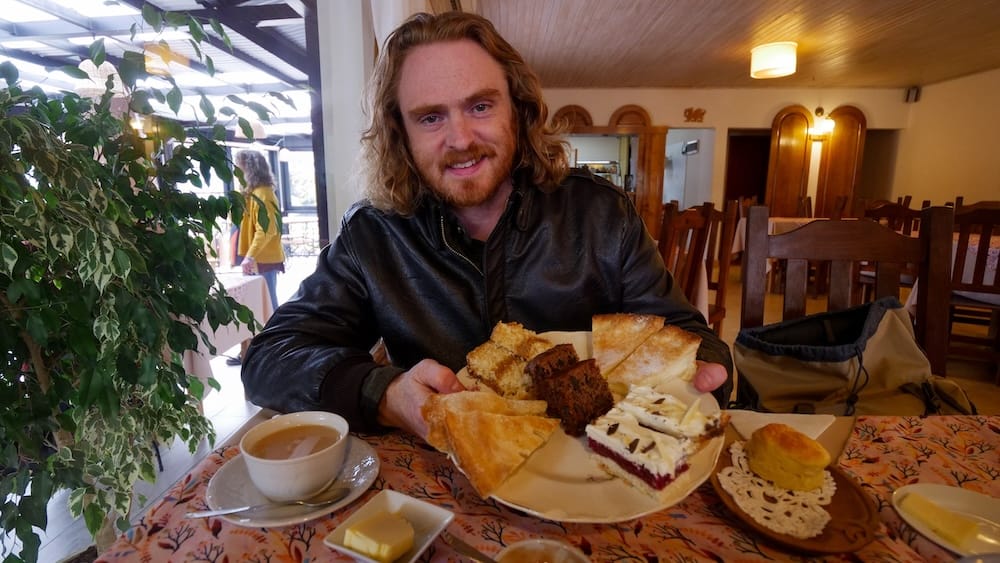
Forty-five minutes into our session at Ty Gwyn (another incredible, older tea house in Gaiman with a more casual, “grandmother’s living room” vibe), we hit the wall. We were drowning in cream, scones, and tea.
There is a palpable cultural friction point here for tourists. You want to be polite. You want to clear your plate to show respect to the hosts who baked everything from scratch. Do not do this. You will make yourself violently ill.
The sheer volume of food is intentional. It is a historical flex—a display of abundance from a community that once survived a famine in a desert. You are not expected to finish it. In fact, it is culturally expected that you will ask for a bolsita (a takeaway bag). Audrey and I shamelessly waved the white flag, asked for our bolsita, and carried a box of Bizcocho a lo out into the Patagonian evening like a trophy.
The Gaiman vs Trevelin Flavor Divide
| Category | Gaiman | Trevelin |
|---|---|---|
| Signature jam | Citrón | Calafate |
| Dessert style | Heavier, more classic | Lighter, fruit-forward |
| Atmosphere | Busier, structured | Slower, intimate |
| Tea ritual | Formal, repeated | Relaxed, personal |
| Identity feel | Historic colony | Living mountain community |
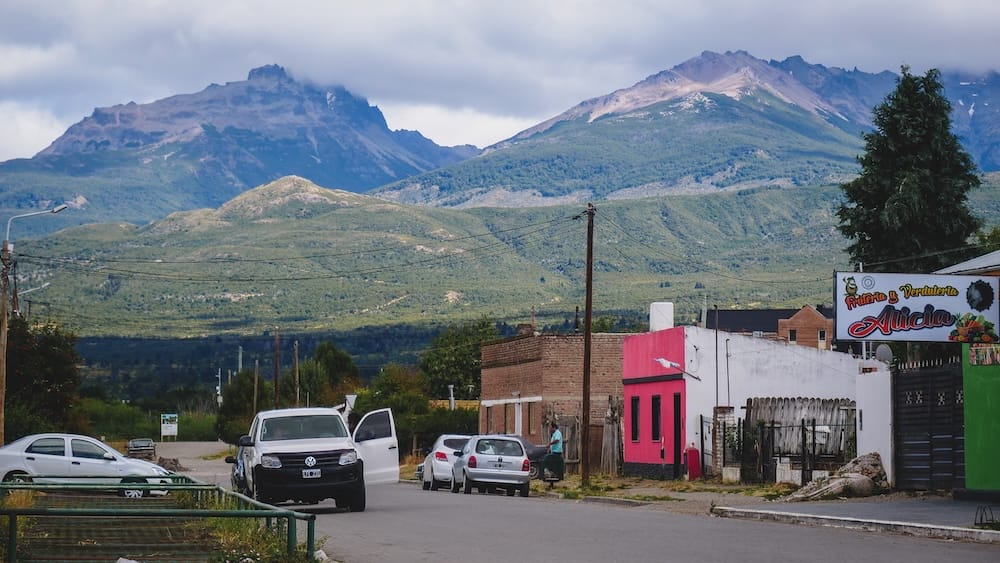
Trevelin: The Andean Counterpart
While Gaiman is the coastal desert hub, you haven’t seen the complete picture of Y Wladfa until you head west to the Andes. In our upcoming comprehensive guide to Chubut Province, we dive deep into the differences, but here is the essential comparison for your tea-planning logistics.
Trevelin translates literally to “Mill Town.” It is an alpine village nestled in the mountains, a 25-minute drive from the city of Esquel. The vibe here trades red-brick desert aesthetic for lush, mountain-cabin coziness.
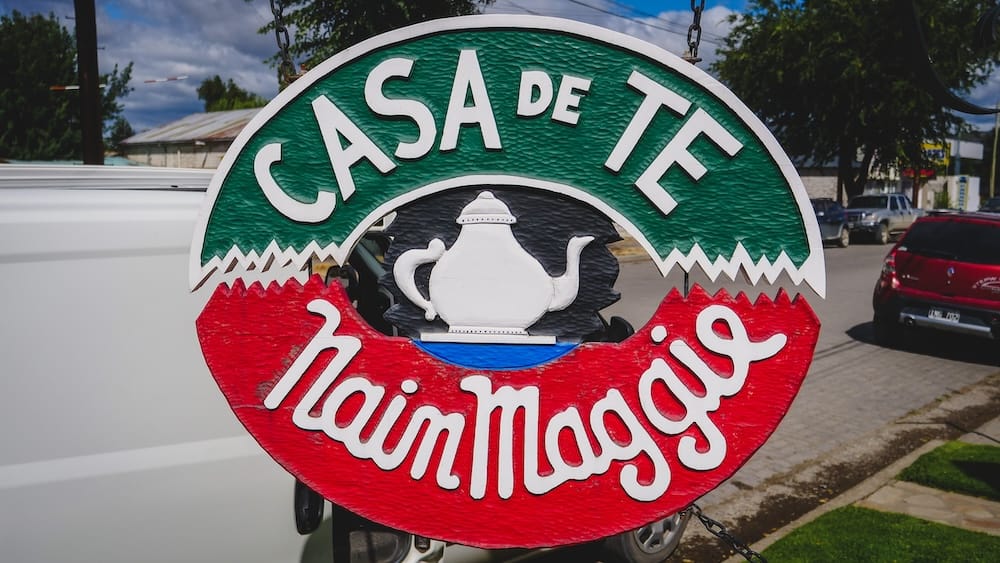
Audrey and I had our tea here at Nain Maggie (Grandmother Margaret’s), a venue famous not just for its food, but for the massive, fire-breathing dragon statue out front that makes it a chaotic, joyous hub for families around 6:00 PM.
The Coastal vs. Andean Welsh Hubs
| Feature | Gaiman (The Coastal Valley) | Trevelin (The Andean Frontier) |
| The Landscape | Dusty, flat, irrigated river oasis. | Steep inclines, alpine forests, dramatic weather shifts. |
| Signature Jam | Citrón (Irrigation melon). | Calafate berry (Andean mountain berry). |
| Savory Twist | Ham and cheese miga sandwiches. | Smoked local mountain trout sandwiches. |
| The Tea Etiquette | Poured straight black. | The “Cold Milk Cut” (Locals instructed us to add a splash of cold milk to the loose-leaf tea to mellow the tannins). |
| Transit Reality | Easily accessible via cheap local bus from Trelew. | Requires a winding 25-minute mountain drive from Esquel; rental car highly recommended. |
The Un-Sugarcoated Transit Ledger
You cannot rely on standard Google Maps transit times in Patagonia. Wi-Fi drops, cash machines empty out on weekends, and local bus schedules are treated as light suggestions. If you are planning to execute this day trip from Puerto Madryn or Trelew, you must memorize these specific friction points.
1. The Trelew Terminal Transfer Trap:
If you take a long-distance coach from Puerto Madryn down to Trelew, you must transfer to the local 28 de Julio bus to reach Gaiman. Do not stand inside the main terminal staring at the digital departure boards. The local provincial lines do not always show up there. As soon as you arrive, walk directly to the information desk and ask for the “Plataforma local para Gaiman.” It is often tucked away in a poorly marked bay.
2. Cash is Still King:
Indeed. Yes, most tea houses have MercadoPago stickers on the door. Ignore them. The internet infrastructure in the Gaiman valley is notoriously unstable. When the 5:30 PM rush hits and the card terminals lose connection, you do not want to be the tourist scrambling to find Gaiman’s only ATM (which is frequently empty by Saturday afternoon). Carry the exact total of your expected bill in physical Argentine Pesos before you leave your basecamp.
3. Stranded After Dark:
Tea houses strictly close between 8:00 PM and 8:30 PM. By 8:45 PM, Gaiman is asleep. If you missed the last 28 de Julio bus back to Trelew and you didn’t rent a car, you are in trouble. Taxis do not roam the streets of Gaiman at night. If you plan to stay late, you must ask your tea house host to call and pre-book a Remís (private taxi) back to Trelew by 6:00 PM. It will cost you roughly $30,000 ARS ($25 USD), but it guarantees you won’t be sleeping in an irrigation ditch.
The Post-Tea Triage: Burning Off the Butter
You cannot simply board a bouncing Patagonian local bus immediately after consuming your body weight in clotted cream and Torta Negra. Your stomach will stage a violent rebellion somewhere around kilometer twenty of Route 7. You need a triage plan.
Once you’ve successfully secured your bolsita (takeaway bag) and paid the bill, you must force yourself to walk. Fortunately, the historical layout of Gaiman is essentially a built-in treadmill designed by 19th-century farmers.
- The Canal Route (Low Effort, High History): Step right out of the tea house and walk the banks of the historical irrigation canals (canales). These were hand-dug by the original Welsh settlers using water diverted from the Chubut River. It’s a flat, dusty, and fascinating stroll right through the center of town. Watch your step—there are very few guardrails, and rolling an ankle on the uneven brickwork is a rite of passage.
- The Parque Paleontológico Climb (Medium Effort, High Reward): If you need to burn off the heavy hit of the Bizcocho a lo, head towards the town’s paleontology park. It requires navigating a slight incline away from the river valley, but the payoff is a sprawling, elevated view of the green oasis cutting starkly through the arid steppe. Time this for the golden hour (around 6:30 PM to 7:00 PM), right before the tea houses close and the sun dips behind the desert scrub.
- The Old Railway Tunnel (High Effort, Maximum Cool): Track down the Túnel del Ferrocarril, the historic 1914 railway tunnel carved straight through the rock. It’s cool, damp, and echoes with the ghosts of Patagonia’s industrial boom. It’s about a 20-minute walk from the main cluster of tea houses—exactly the distance required to process four scones.
The “A La Carte” Loophole (For the Strict Backpacker)
[Samuel’s Budget Warning & Hack]
Let’s talk about the elephant in the room: inflation. At $20 to $28 USD per person, a formal Welsh tea service is a massive chunk of a backpacker’s daily budget. And because the economy has forced many tea houses to implement a 40% “Cubierto” (shared service fee), the old trick of splitting one tray between two people is dead. But there is a loophole. If you want the authentic taste without the porcelain price tag, bypass the formal estates entirely. Walk into a local panadería (bakery) in Gaiman or Trelew. You can buy a massive, authentic slice of Torta Negra or a bag of fresh scones for roughly $2 to $3 USD. Take your bakery haul to the main plaza, brew your own thermos of yerba mate or black tea, and enjoy the exact same historic recipes on a dirtbag budget.
The Y Wladfa Decision Matrix
Choice paralysis is real when every red-brick building in town claims to have the most authentic recipe. We’ve done the heavy lifting so you don’t have to waste your pesos guessing. Find your travel style below, and book your table.
| Your Travel Persona | The Undisputed Winner | The “Nomadic Samuel” Reality Check | Exact Price & Peak Time |
| The History & Luxury Flex (High Budget, Aesthetically Driven) | Ty Te Caerdydd (Gaiman) | This is where Princess Diana dined. Manicured gardens, hyper-formal porcelain, and strict reservation rules during whale season. Pack a collared shirt in your daypack so you don’t feel like a dusty scrub. | ~$28 USD. Peak: 4:30 PM. |
| The Ravenous Backpacker (Value & Volume Focused) | Ty Gwyn (Gaiman) | The ultimate “grandmother’s living room” vibe. The sheer volume of sánguiches de miga here is staggering. They don’t care about the aesthetic; they care that you leave stuffed. | ~$22 USD. Peak: 5:00 PM (Get there early, they run out of fresh scones). |
| The Family Chaos Coordinator (Traveling with Kids/Groups) | Nain Maggie (Trevelin) | Located in the Andes, this place has a literal fire-breathing dragon statue outside. It is loud, chaotic, and incredibly welcoming to families. | ~$25 USD. Peak: 6:00 PM (Heavy family rush). |
| The Deep History Nerd (Intimate & Authentic) | Plas y Coed (Gaiman) | Situated in the very first brick house built in Gaiman (1874). It is physically smaller, dense with history, and lacks the commercial polish of the bigger estates. | ~$24 USD. Peak: 4:00 PM. |
The Contraband Cake: Surviving Patagonian Customs
You are going to want to take the Torta Negra home. It is inevitable. But Patagonian border logistics are unforgiving. If you are continuing your trip by crossing the Andes into Chile, you will face the Chilean SAG (Servicio Agrícola y Ganadero)—some of the strictest agricultural border agents on the planet.
Here is what survives transit and what gets thrown in the border confiscation bin:
- The Torta Negra (The Ultimate Survivor): Because traditional Torta Negra is essentially cured in rum and brown sugar, and aged for weeks before serving, it is basically a brick of 19th-century survival rations. It travels exceptionally well. Wrap it tightly in foil, put it in a hard Tupperware container (to prevent backpack squishing), and declare it as “baked goods.” It usually sails right through airport security and land borders because it contains no fresh fruit or raw dairy.
- The Citrón Jam (High Risk, High Reward): You can buy jars of the famous green melon jam to take home. However, you are putting glass jars into a backpack that will be subjected to unpaved Patagonian ripio (gravel) roads. Wrap the jar securely in your thickest hiking socks and bury it in the center of your pack. Crucial Note: If crossing into Chile, declare it loudly. Commercially sealed and labeled jars usually pass, but homemade, unlabelled jars bought at a local farm stand will be aggressively confiscated and destroyed by Chilean customs.
- The Scones & Sandwiches (Do Not Attempt): Eat your bolsita leftovers on the bus the next day. The cheese and meats in the sánguiches de miga will rapidly become a biohazard in a hot transit terminal, and border agents will instantly confiscate them.
The Desk-Bound Taste Test: The Trevelin “Cold Milk Cut”
If you are reading this while sitting at a desk thousands of miles from the Argentine steppe, grinding away to fund your upcoming South American adventure, you can test drive a piece of this culture right now.
When Audrey and I sat down at Nain Maggie in the Andean town of Trevelin, the host noticed us hesitating over the teapot. She stepped in and taught us a hyper-specific, regional quirk of the mountain colony: The Cold Milk Cut. Standard British etiquette often dictates pouring hot tea and perhaps adding warm milk. In Trevelin, they brew the loose-leaf black tea aggressively strong. The host instructed us to pour the dark, highly tannic tea, and then immediately “cut” it with a fast splash of ice-cold milk directly into the cup. The temperature shock instantly mellows the bitterness of the over-steeped leaves and creates a beautifully smooth, highly drinkable cup designed to warm you up after a freezing Andean hike.
Go brew the strongest, darkest cup of black tea you have in your kitchen. Hit it with a splash of fridge-cold milk. Close your eyes, ignore your inbox, and pretend you can hear the Patagonian wind rattling the windows.
The Merienda Food Pyramid (How the Table Is Structured)
| Tier | What It Is | Examples | Role |
|---|---|---|---|
| Foundation | Bread + butter + simple carbs | Homemade bread, butter, scones | Stabilizes your stomach |
| Support Layer | Savory bites | Tea sandwiches, trout sandwiches | Slows sugar absorption |
| Mid-Tier Sweets | Light desserts | Sponge cakes, jam slices | Warm-up phase |
| Heavy Hitters | Dense desserts | Cream pie, chocolate cake, apple tart | Where things escalate |
| Final Boss | Legacy desserts | Torta Negra, Bara Brith | Endurance test |
| Liquid System | Tea (and variations) | Black tea, milk cut, coffee | Survival mechanism |
The Patagonia Tea Survival Protocol (Read Before You Order)
This is not optional. This is how you make it through.
Step 1: Do NOT skip the foundation
Eat bread, butter, or scones first.
Going straight to cake is a mistake.
Step 2: Pace your intake
You are not trying everything. You are choosing battles.
Step 3: Use tea strategically
Tea is not decoration — it’s a reset tool.
Step 4: Accept defeat early
If you feel full halfway through, you are doing it right.
Step 5: Deploy the bolsita
Leftovers are normal. Bring them home.
The Sweet Taste of Survival
Drinking perfectly brewed black tea from a porcelain cup while staring out at the harsh expanse of the Patagonian steppe is a jarring, beautiful contradiction. It’s a testament to stubborn human endurance, cross-cultural survival, and the profound power of a really, really good slice of cake.
Just remember to pack your stretchy pants, bring physical pesos, and for the love of all things holy—do not eat lunch beforehand.
FAQ: Welsh Tea in Patagonia
Do I need to book a tea house in advance?
Depends. If you are visiting during the peak whale-watching season (September to November) and want to experience the royal treatment at Ty Te Caerdydd, you should absolutely message them on WhatsApp for a reservation. For places like Ty Gwyn or Nain Maggie, you can usually just walk in, but get there right when they open around 3:00 PM before the fresh scones run out.
Can two people share one Welsh tea service?
Nope. Or at least, not without paying for it. Due to the recent economic realities in Argentina, most tea houses now enforce a strict one-service-per-person rule. If they do let you share one tray, they will hit you with a “Cubierto” (sharing fee) that equals about 40% of the full price. Just budget for your own teapot.
Are there vegetarian or gluten-free options at the tea houses?
Honestly, it’s tough. The traditional Welsh tea was built on a survival foundation of wheat flour, butter, and cream. While the spread is mostly vegetarian by default (just skip the ham in the sánguiches de miga), gluten-free is a massive hurdle. Some houses might scramble to offer a fruit plate if you ask nicely, but this is not a culture built around dietary restrictions.
How much does a Welsh tea cost in Patagonia?
Around $20 to $28 USD. That translates to roughly 25,000 to 35,000 Argentine Pesos depending on the ever-fluctuating Dólar Blue exchange rate. It sounds pricey for a mid-afternoon snack, but remember, this is essentially a three-course carbohydrate marathon that replaces your dinner.
Do people actually speak Welsh in Patagonia today?
Yes. It blew my mind, but you will still hear fluent Welsh spoken in the streets of Gaiman and Trevelin. There are bilingual schools, youth choirs, and the massive annual Eisteddfod poetry and music festival keeping the language very much alive 160 years after the first settlers arrived on the Mimosa.
What is the best time of year to visit Gaiman and Trevelin?
October to November. This is the absolute sweet spot. The weather in Chubut is finally warming up, the spring flowers are blooming in the valleys, and it perfectly overlaps with both the peak penguin and whale-watching season on the coast, as well as the annual Eisteddfod del Chubut festival.
Can I pay with a credit card at the tea houses?
Don’t risk it. While they technically have MercadoPago and credit card stickers on the door, the internet infrastructure in the Chubut valley drops constantly. When the 5:00 PM tea rush hits, the machines freeze up. Bring physical Argentine Pesos to cover your exact bill, or you will be sprinting to an empty ATM.
Is it considered rude if I can’t finish all the food?
Absolutely not. In fact, it is expected. The sheer volume of food is an intentional display of abundance and Patagonian hospitality. If you actually clean your plate, they might just bring you more. Shamelessly ask for a “bolsita” (a takeaway bag) and eat the leftover Torta Negra for breakfast the next day.
Project 23 Argentina: This guide is also available in Spanish. [Lea la versión en castellano: Cultura del Té en Y Wladfa: Por Qué las Casas de Té Galesas Prosperan en la Patagonia]