
There is a specific kind of physical disorientation that sets in around hour fourteen of what was supposed to be a fourteen-hour overnight bus ride. When our bus from Mar del Plata to Puerto Madryn finally rolled into the terminal with a grueling two-hour delay slapped on top of it, Audrey and I stepped onto the Patagonian pavement feeling entirely separated from reality. We were exhausted, running on fumes, and carrying luggage that suddenly felt filled with lead.
Audrey and I didn’t immediately seek out history. We sought out survival, which in Puerto Madryn means walking straight into Cantina El Náutico the minute they unlock the doors and letting massive, life-affirming plates of local calamari bring you back from the dead.
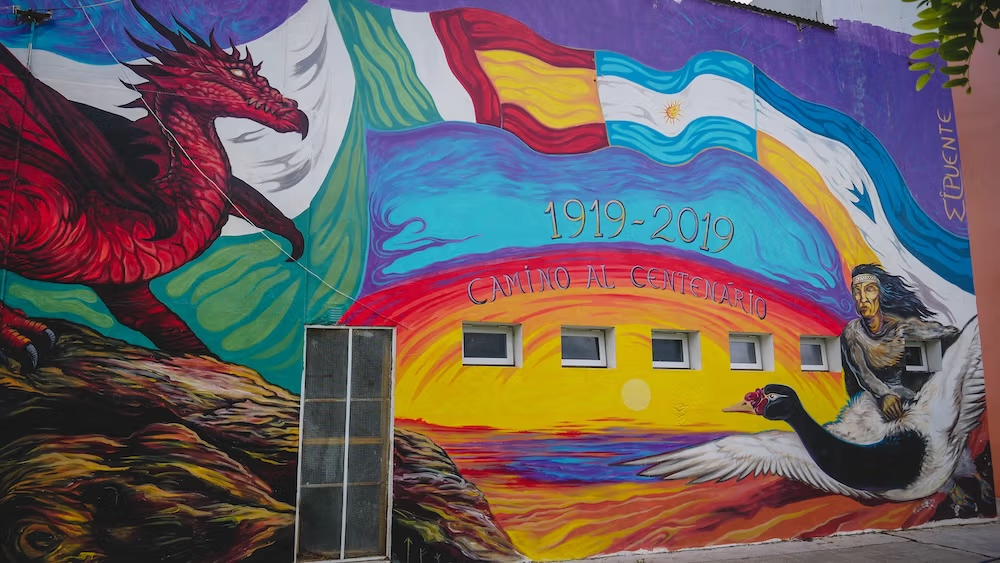
It was over that mountain of seafood that the sheer geographic absurdity of our mission actually hit me. We were sitting on the edge of the arid, wind-blasted Argentine desert, preparing to journey inland to eat scones, drink steeped loose-leaf tea, and listen to a Celtic language that has stubbornly survived here since 1865. The Welsh settlement of Patagonia—Y Wladfa—isn’t just a historical footnote. It is a living, breathing, and wildly carb-heavy reality. But getting to the heart of it, and experiencing it without falling into a series of highly specific logistical traps, requires throwing the glossy travel brochures directly into the trash.
If you’ve spent any time watching the travel guides on our Samuel and Audrey YouTube channel, you know we prioritize the raw reality of the road. We are here for the culture and the food, but we refuse to sugarcoat the friction. Here is the unvarnished truth about navigating the Welsh valleys of Chubut, complete with the microscopic details, the hidden sunk costs, and the exact tactical ordering strategies you need to survive the legendary Patagonian tea houses.
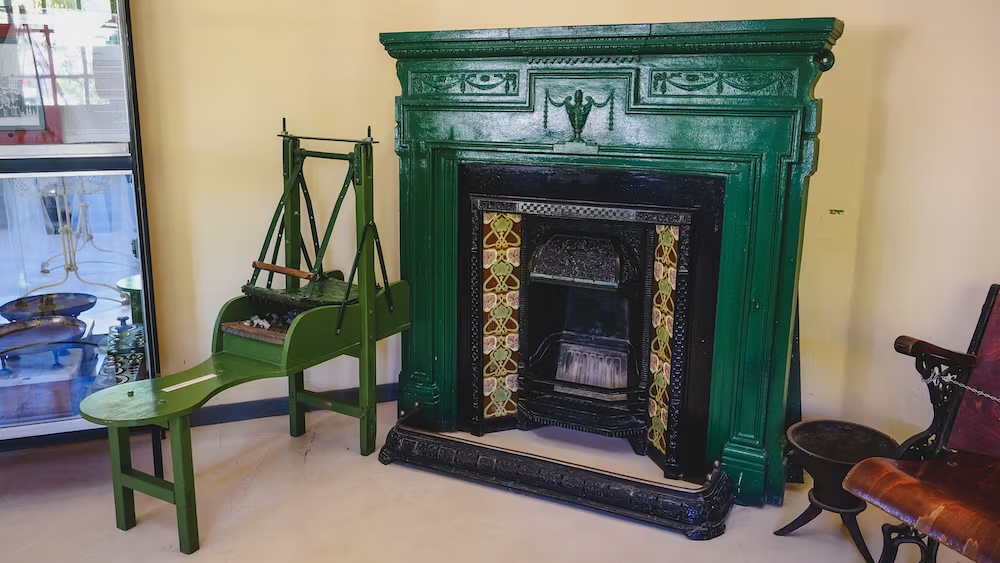
The “Mimosa” Manifest: A Blueprint for Desperation
Standing on the windswept shoreline of Puerto Madryn, staring out at the notoriously temperamental Atlantic, I couldn’t help but think about how genuinely desperate you would have to be to make this crossing in 1865. The origin story of Y Wladfa isn’t a romantic tale of seasoned explorers conquering a new frontier. It’s a story of tailors and cobblers who had never farmed a day in their lives, fleeing cultural erasure, only to get dropped into an unforgiving desert.
When the converted tea-clipper Mimosa departed Liverpool on May 28, 1865, it carried 153 Welsh passengers. They were lured by the promise of a “Little Wales beyond Wales,” pitched by founders Michael D. Jones and Lewis Jones (the namesake of Trelew). But when they finally disembarked two months later at what is now Puerto Madryn, they found no houses, no fresh water, and no infrastructure. They were forced to dig temporary shelters into the coastal cliffs—caves you can still hike out to see today near the Fundación Ecocentro.
This specific historical reality is exactly why the surviving culture is so fiercely guarded. They didn’t just build a town; they survived an existential threat by the skin of their teeth.
The 1865 Settlement Survival Matrix
| The Pioneer Reality | The Historical Friction | The Evidence |
| The Passenger Skill Gap | Barely any of the original 153 passengers were experienced farmers. They were tradesmen facing a brutal, arid steppe. | The sheer over-engineering of the Gaiman irrigation canals, born out of absolute necessity to avoid starvation. |
| The Coastal Landing | Disembarking in winter (July in Patagonia) with zero shelter. | The raw, un-restored shoreline caves just south of the Puerto Madryn Eco-center. |
| The Trelew Hub | The coastal desert was too harsh for a capital, so the population pushed inland. | Trelew (“Town of Lew”) remains the commercial and transit epicenter of the region, housing the main bus terminals and airport. |
The Ancestral Gamble: How a Desert Became a Celtic Stronghold
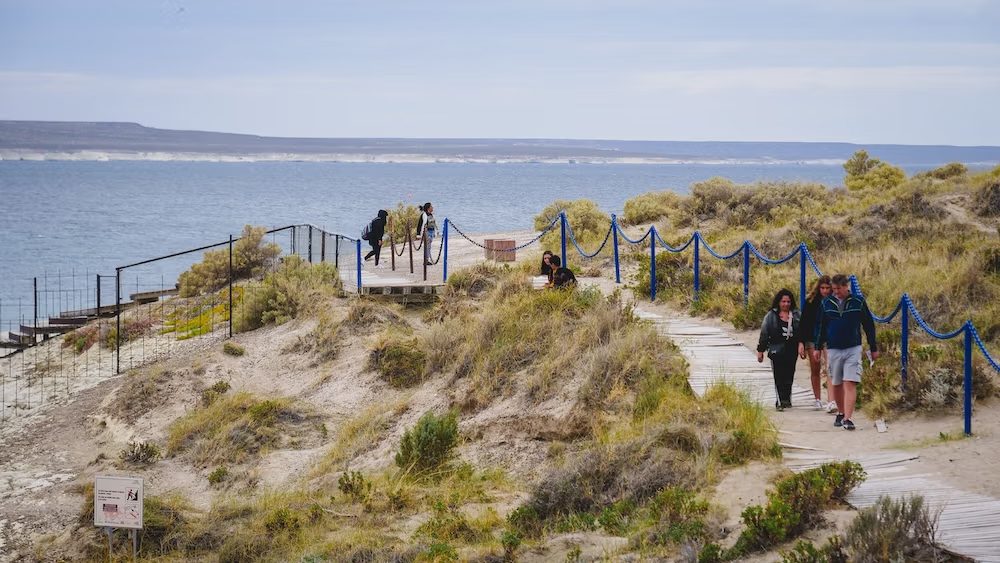
To understand why you can order a perfect Torta de Crema in a dusty town at the bottom of South America, you have to understand the sheer desperation and engineering willpower of the original 1865 settlers. They didn’t arrive in a lush paradise. When the ship Mimosa dropped anchor, the 153 Welsh passengers sought initial shelter in the crude shoreline caves near present-day Puerto Madryn.
They were seeking cultural isolation to protect their language from English dominance, but they almost starved in the process. The lower Chubut valley was a semi-arid steppe. Early crops catastrophically failed. It wasn’t until they began hand-digging massive irrigation canals that the brown desert bloomed into the lush green oasis of Gaiman you can still see on satellite maps today.
Today, there are an estimated 5,500 active Welsh speakers in the Chubut province. It remains the only place outside of Wales where the language is a living, breathing community tongue. This survival was cemented by a crucial alliance with the Indigenous Tehuelche people—who taught the struggling settlers how to hunt guanaco and survive the bitter winters—and a fierce loyalty to their new home. When a border dispute flared up in 1902, the Welsh residents of Trevelin overwhelmingly voted to stay with Argentina over Chile, cementing their permanent legacy in the Andes.
The Survival Matrix: Historical Legacy Meets Reality
| Cultural Pillar | The 1865 Historical Context | The Lived Reality & Logistics |
| Agricultural Engineering | Settlers hand-dug canals after early wheat crops failed in the arid desert. | The Gaiman valley is a literal green corridor. You can view original 19th-century farming tools at the Museo Regional Gaiman (located in the old railway station). |
| The Tehuelche Alliance | Peaceful trade and survival skills taught by the nomadic Indigenous tribes. | Celebrated locally; the cultural blending is a massive point of pride rather than a typical colonial conquest narrative. |
| Language Preservation | Escaping the English language to build isolated chapels and schools. | ~5,500 active speakers today. You will see bilingual Spanish/Welsh street signs in Gaiman and Trevelin. |
| The 1902 Plebiscite | Trevelin residents voted to remain Argentine, securing the Andean border. | The border culture is fiercely Argentine, but heavily steeped in Welsh pride. The Tomb of Malacara remains a massive historical pilgrimage site. |
The Gaiman Transit Trap and the Sunk Cost of the SUBE Card
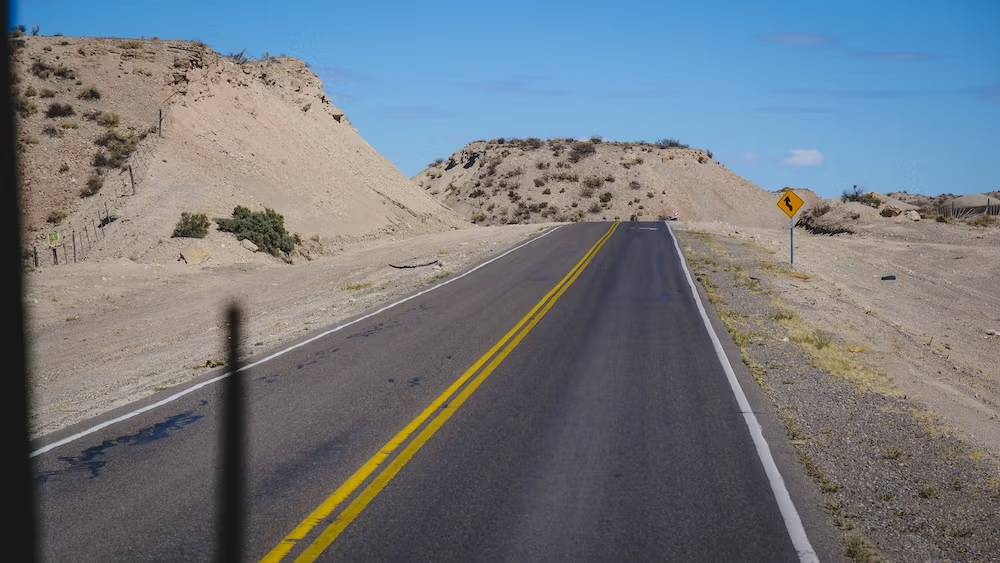
The map is a liar. If you look at Google Maps while sitting in Trelew, the coastal hub of the region, the Welsh stronghold of Gaiman looks like a quick 15-minute zip down the highway.
We walked to the Trelew terminal, deeply underestimating the Patagonian sprawl, and attempted to board the Línea 28 de Julio bus. Here is where the first massive friction point of travel rears its head. You absolutely cannot pay cash on this bus. Dozens of tourists are turned away at the doors every day because they assume they can just hand the driver a few pesos.
To make the journey, you must possess an Argentine SUBE transit card. If you don’t have one from Buenos Aires, you have to buy the physical plastic card at the Trelew terminal kiosk. As of recently, the physical card alone costs over $2,000 ARS (roughly $1.45 USD at the Dólar Blue rate of 1,425), which is nearly as much as the $2,055 ARS one-way fare itself. It is a sunk cost you simply have to swallow.

[Samuel’s Logistical Reality Check]
Do not attempt to buy or reload your SUBE card in Gaiman. Finding an open kiosk with an active terminal to load funds in that small town is like finding a mirage. Load at least $5,000 ARS onto your card at the main Trelew Bus Terminal before you ever attempt to board the bus out to the valley.
Once you finally tap that freshly loaded card, settle in. The ride to Gaiman is not a 15-minute zip. It is a bumpy, dusty, 45-minute journey through unshaded, rural farmland. The bus is a standard regional commuter—often lacking air conditioning and packed shoulder-to-shoulder with locals. It’s incredibly scenic, offering a beautiful look at the irrigation canals that saved the original settlers, but you need to adjust your internal clock.
Gaiman itself is flat, heavily paved with rough cobblestones, and visually fascinating. We walked past the 1874 stone-and-mud house built by David Roberts, the first house in town, which originally sported a straw roof. If you walk out to the Bryn Gwyn Paleontological Park (8 kilometers outside of town), prepare to walk in a completely unshaded, arid desert environment. Bring water. There are no convenience stores out in the scrub brush.
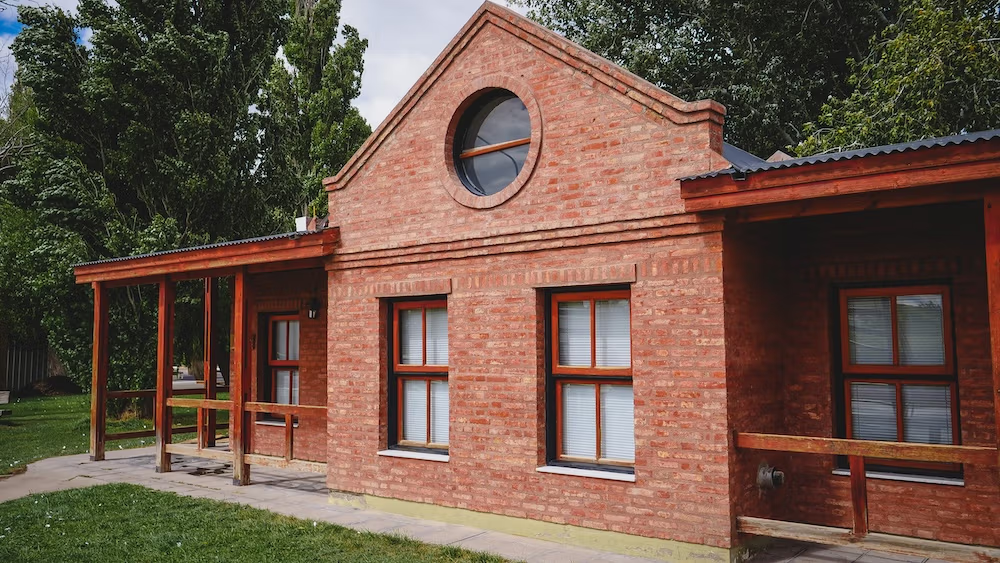
The Red Brick: Identifying the “Chubut Style”
Wandering the flat grids of Gaiman, it takes about ten seconds to realize you are not looking at traditional Argentine architecture. It looks like someone took a rural 19th-century Welsh farming village, hit copy, and pasted it directly into the Patagonian scrub brush.
As the settlers transitioned from their initial survival phase of building mud-and-straw huts (like the 1874 David Roberts house), they began to construct their utopia using a very specific “Gaiman Red Brick.” You will see this exposed brick everywhere, but it is most prominent in the local Capillas (chapels). These chapels were the absolute center of the community, serving as spiritual hubs, schools, and the primary defense mechanism against the encroaching Spanish language.
If you are walking off the heavy carbs from the tea houses, skip the generic souvenir shops and go on a self-guided architectural hunt.
[Samuel’s Walking Tour Triage] Don’t just look at the buildings; look at the ground. As you walk the perimeters of Gaiman and Dolavon, keep your eyes peeled for the original compuertas (wooden and iron irrigation sluice gates). These aren’t museum pieces; they are still actively managing the water flow that keeps the valley green today.
The Chubut Architectural Field Guide
| Architectural Feature | Where to Find It | The Historical Significance |
| Capilla Bethel | Gaiman (Downtown Grid) | The largest and most iconic red-brick chapel. It symbolizes the shift from sheer survival to established prosperity in the valley. |
| Capilla Seion | Trevelin (Andean Frontier) | Built later (1910) as the Welsh pushed into the mountains. A stark white-and-red contrast against the Andes. |
| The Dolavon Waterwheels | Dolavon (Along the main canal) | A testament to early industrial engineering. Even when the town is shut down on a Tuesday, the historic wheels are visible and highly photogenic. |
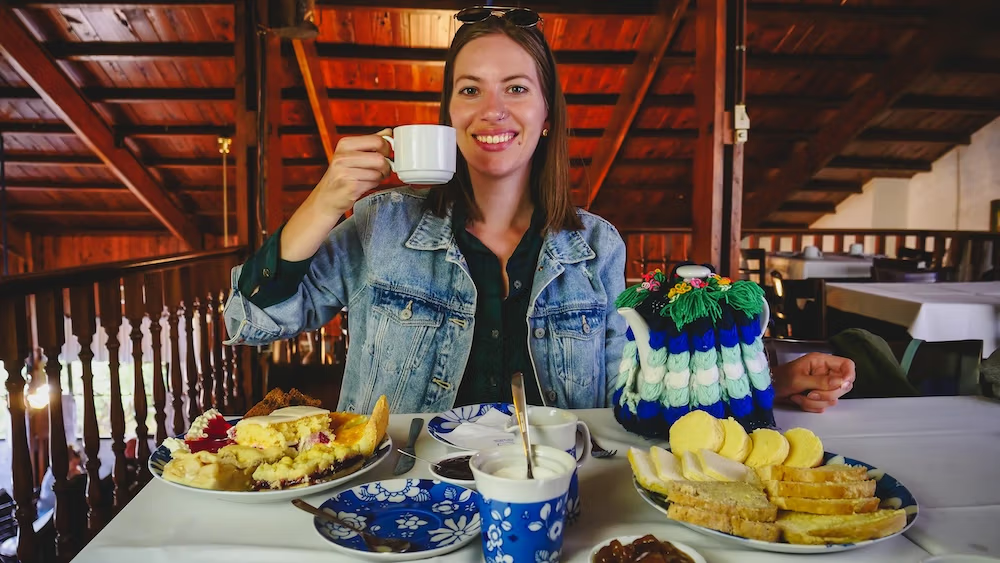
The Ty Gwyn Sugar Coma and the Tactical Tea Pivot
You do not come to Gaiman to diet. You come to sit in a beautifully appointed parlor and consume your body weight in carbohydrates. But if you aren’t careful, you will absolutely destroy your daily travel budget and leave half a bakery on the table.
We arrived at Ty Gwyn, a legendary Gaiman institution (the name translates to “White House”), feeling ambitious. We sat down, marveled at the Welsh napkins, and ordered a full tea service. At $25,000 ARS (about $17.50 USD) per person, it is a spectacular deal compared to the 50 pounds you might spend for a similar spread in Cardiff, Wales. But the sheer volume of food that arrives is a structural engineering marvel.
Plates upon plates of homemade breads, scones, regional jams, and the legendary Torta Negra (Welsh Black Cake). The Black Cake is a heavy, fruit-dense survival food originally baked to last for months on the Mimosa voyage. It is delicious, rich, and sits in your stomach like a delightful brick. We also held an impromptu taste test, and the towering slice of apple pie emerged as the undisputed champion of the table.
But we were completely defeated. We couldn’t finish it. Two full tea services amount to $50,000 ARS (~$35 USD) of food designed for a family of four, not two travelers.
By the time we moved our expedition to Trevelin—the alpine Welsh outpost nestled in the Andes—we had learned our lesson. Walking into Casa de Te Nain Maggie (Grandmother Margaret’s Tea House), we executed a flawless tactical pivot. We politely ordered exactly one full set of Welsh tea to share.
Most tea houses frown on splitting a single set without compensation, but there is a widely accepted workaround. You order the single “Completo” set ($32,000 ARS) and simply pay the “sharing fee”—usually around $5,000 ARS—for the second person to receive their own unlimited pot of Té Negro en Hebras (steeped black tea). You save nearly twenty dollars, you avoid a massive food waste guilt-trip, and they still give you a doggy bag for the leftover scones.
The Welsh Tea Battleground Matrix
| Venue & Location | Price (ARS / USD) | Signature Items & Standouts | Current Operating Hours & Peak Times |
| Ty Gwyn (Gaiman) | $25,000 ARS (~$17.50 USD) per person | The towering Apple Pie, traditional Torta Negra, and unlimited loose-leaf black tea. | Wed–Mon: 2:00 PM – 8:00 PM (Closed Tuesdays). Peak rush hits right at 4:30 PM. |
| Nain Maggie (Trevelin) | $32,000 ARS (~$22.50 USD) per person | Legendary homemade scones, bread boards, and the impossibly rich Torta de Crema. | Daily: 9:00 AM – 11:00 AM & 3:30 PM – 8:00 PM. Strictly closed during the afternoon Siesta. |
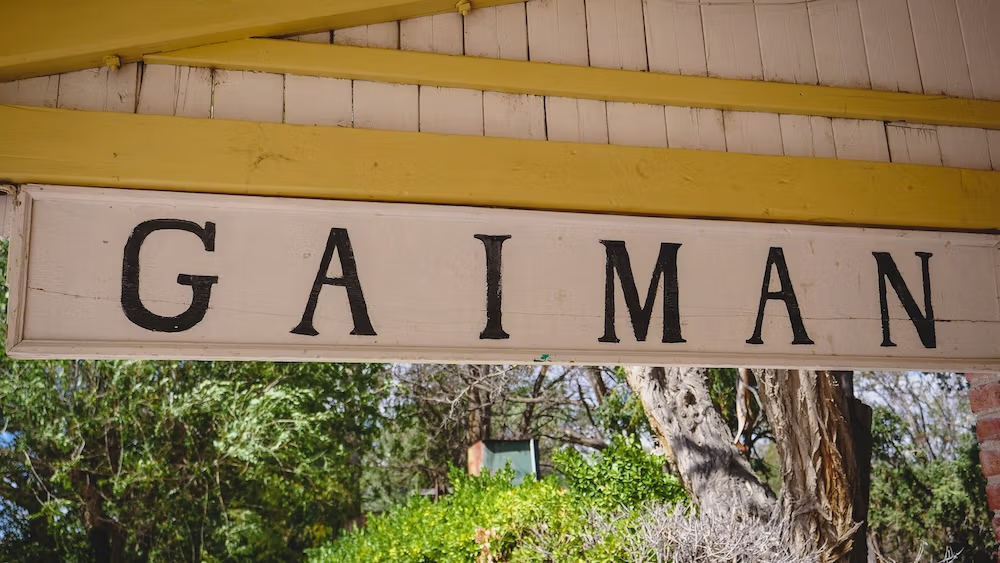
Surviving the Savory Side: Beyond the Welsh Tea Coma
Look, I’ve already confessed to being absolutely defeated by the towering sweets at Ty Gwyn, but the Welsh culinary footprint goes much deeper than just afternoon tea and scones. If you are burned out on sugar, you need to pivot to the savory underbelly of Patagonian Welsh cuisine.
Because the settlers had to adapt to the local Argentine livestock and dairy realities, they inadvertently created a hybrid menu that you cannot find in Cardiff. While filming our food guides for the YouTube channel, Audrey and I made it a mission to hunt down the savory staples that the locals actually eat when the tourists aren’t looking.
The crown jewel of this is the local Caws (Welsh Cheese). The Chubut Valley produces a distinct, semi-hard, mildly tangy cheese that pairs perfectly with the regional Malbecs. But the real heavy hitter is the Welsh-Patagonian lamb. While traditional Argentine Asado de Cordero relies strictly on salt and open flame, the Welsh descendants often incorporate marinades of mint, rosemary, and garlic, creating a flavor profile that perfectly bridges the gap between a British Sunday roast and a Patagonian gaucho barbecue.
The Savory Welsh Triage Menu
| Savory Staple | What It Actually Is | Where to Source It | Effort vs. Reward |
| Chubut “Caws” (Cheese) | A semi-hard, Gouda-adjacent cheese developed by the original dairy farmers. | Local fiambrerías (delis) in Trelew or Gaiman. | Low Effort / High Reward. Buy a block for a cheap, high-protein bus snack. |
| Cwm Hyfryd Butter | Rich, yellow butter churned from cows grazing in the high-alpine Andes. | Served at Nain Maggie in Trevelin, or found in local Esquel markets. | Zero Effort. You will automatically slather this on your scones. |
| Welsh-Style Cordero | Patagonian lamb roasted with heavy herbs (mint/rosemary) rather than just coarse salt. | Specialty Estancias or pre-booked rural farm lunches outside of Trevelin. | High Effort. Requires booking a private rural lunch, but absolutely worth the logistical friction. |
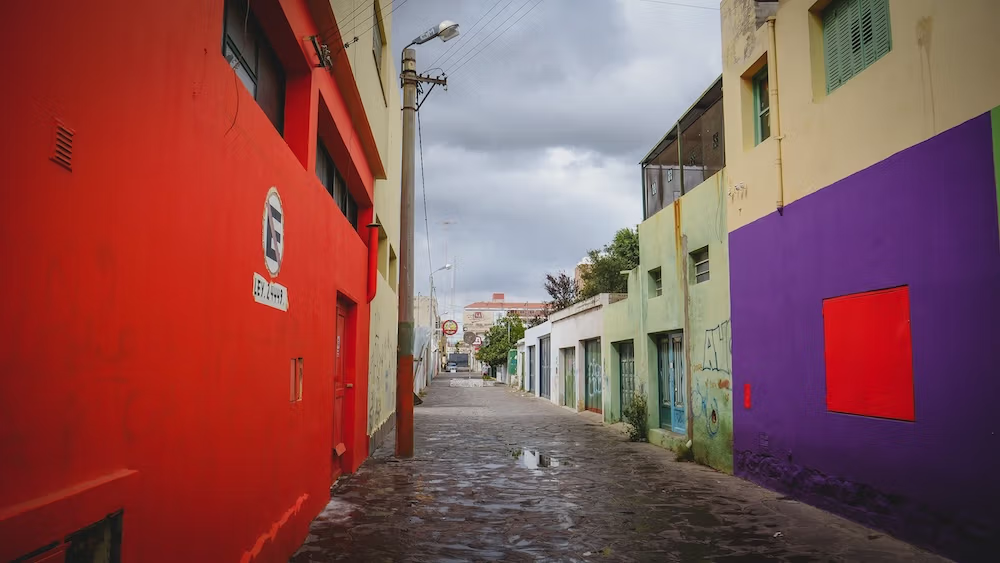
Ghost Towns and Gas Stations: The Harsh Reality of Rural Hours
If there is one non-negotiable lesson you take from this entire guide, let it be this: rural Patagonia operates on a schedule that actively resents your tightly planned travel itinerary.
Our first brutal lesson in this came on a Sunday in Trelew. We stepped out of our accommodation, cameras ready, fully intending to dive deep into local history. Instead, we found ourselves standing in a desolate ghost town. The streets were empty. The heritage sites were locked tight. In Argentina, Sunday is sacred, and in provincial hubs like Trelew, that means a total, systemic shutdown of commerce.
We completely abandoned our quest for Welsh heritage that afternoon. Survival meant pivoting to whatever had an open door and a working kitchen, which led us to Raíces, a fantastic local spot where we ate giant plates of Italian pasta instead of scones. You have to be willing to roll with the punches.
But Trelew was a minor inconvenience compared to the great Dolavon Gas Station Exile.
Dolavon is a tiny, beautiful village further up the valley from Gaiman, famous for its historic waterwheels along the river. We arrived on a Tuesday, ready to film and explore. We walked to the local bakery. Locked. We pulled up our Google Maps and hiked over to Sabores del Valle, the only major restaurant in town. We peered through the windows into a dark, lifeless kitchen.
We retraced our steps, walked into a small corner store begging for suggestions, and eventually had to accept our fate. Monday and Tuesday in Dolavon are a total tourism blackout. We spent the afternoon sitting on the concrete curb of the local gas station, eating whatever snacks we could scavenge. It was hilarious, humbling, and a stark reminder that you cannot force a rural town to cater to your schedule.
[Samuel’s Itinerary Triage Warning]
The Trevelin Siesta is not a suggestion; it is a law. Do not arrive in Trevelin at 1:00 PM expecting to grab a quick lunch or early tea. Entire blocks of the town, including Nain Maggie, strictly board up their windows between 11:00 AM and 3:30 PM. Use this dead window to drive out to the Ruta 259 attractions (like the waterfalls or the old mills) which stay open, then return to town precisely at 4:00 PM when the tea houses fire up the kettles.
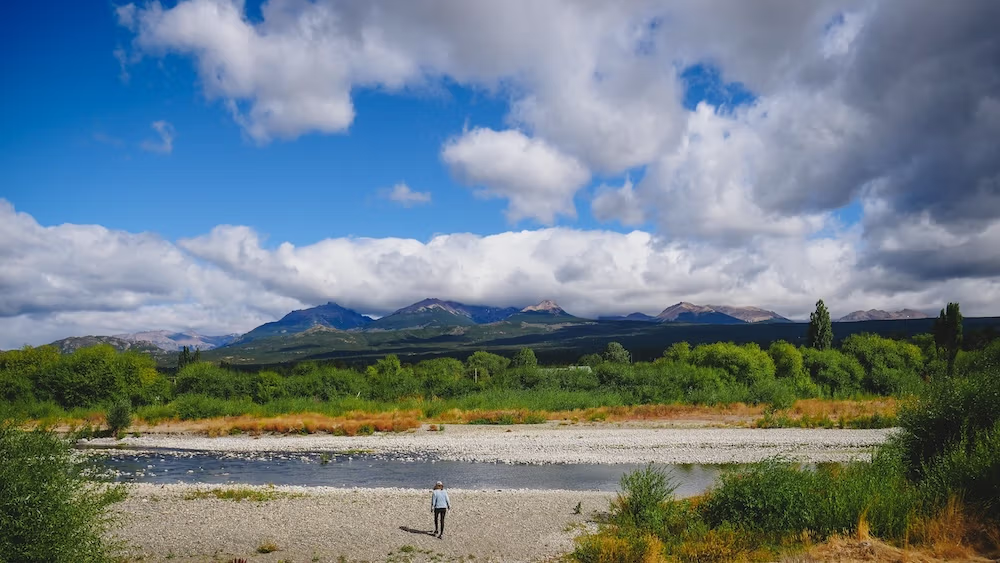
Trevelin, Ruta 259, and the Locked Gates of the Andes
While Gaiman represents the coastal desert reality of the Welsh settlement, Trevelin (which literally translates to “Mill Town”) is the alpine frontier. The terrain changes drastically. You leave the flat, dusty grids behind for expansive, sprawling mountain highways, specifically Ruta 259, a gravel-and-dirt road that winds toward the Chilean border.
Trevelin is not a compact, walkable European hamlet. The best Welsh heritage sites are strung out for miles along this highway. Walking between them is impossible.
Our biggest heartbreak of the trip happened out on this road. We made the long trek to visit the tomb of Malacara. Malacara was a legendary horse that saved the life of a Welsh settler by leaping down a massive cliffside to escape an ambush. It is a vital piece of the 1902 border-survival lore. We arrived, exhausted and eager, only to stare at a heavy, padlocked gate. Hours fluctuate wildly in the off-season.
What we missed, you absolutely shouldn’t. If you have a rental car (which is highly recommended for Trevelin), you must push further down Ruta 259 to the Molino Harinero Nant Fach. For roughly $8,000 ARS (~$5.60 USD), you can explore a fully functioning 19th-century water wheel flour mill that serves as a monument to the agricultural grit of those early settlers.
If you are traveling in October, Trevelin explodes into color with the blooming of the Campo de Tulipanes (Tulip Fields). Three million tulips set against the snow-capped Andes. Entry is $32,000 ARS, but the transportation logistics are a nightmare if you don’t have a car. Taxis will extort you for the 13-kilometer ride from town. Your only viable workaround is the official seasonal shuttle from Plaza Coronel Fontana ($8,400 ARS each way). Crucial tip: You must book your return shuttle time the second your boots hit the dirt at the fields, or you will be stranded when the fields close at 7:00 PM.
Trevelin & Ruta 259 Effort vs. Reward Matrix
| Attraction | Physical Reality & Transit Effort | The Reward & Context | Triage Priority |
| Molino Nant Fach | High Effort without a car. Located down the expansive gravel of Ruta 259. Uneven dirt and grass terrain (leave the white sneakers at the hotel). | Exploring the 1st floor of the museum packed with original 19th-century farming equipment and tools that built the valley. | Essential. The definitive look at how the Welsh physically survived the landscape. |
| Tomb of Malacara | Moderate Effort. Requires checking local municipal pages for updated opening hours to avoid the locked gates we faced. | A deep dive into the 1902 plebiscite era and the sheer ruggedness of the early Patagonian frontier. | High, but call ahead. |
| Campo de Tulipanes | High Logistical Friction (October Only). Requires locking in the $8,400 ARS seasonal shuttle to avoid a $20k+ private Remise fee. | Unbeatable photography. 3 million tulips framing the Andean peaks. Peak lighting hits around 3:00 PM. | Unmissable if traveling in October. Skip otherwise. |
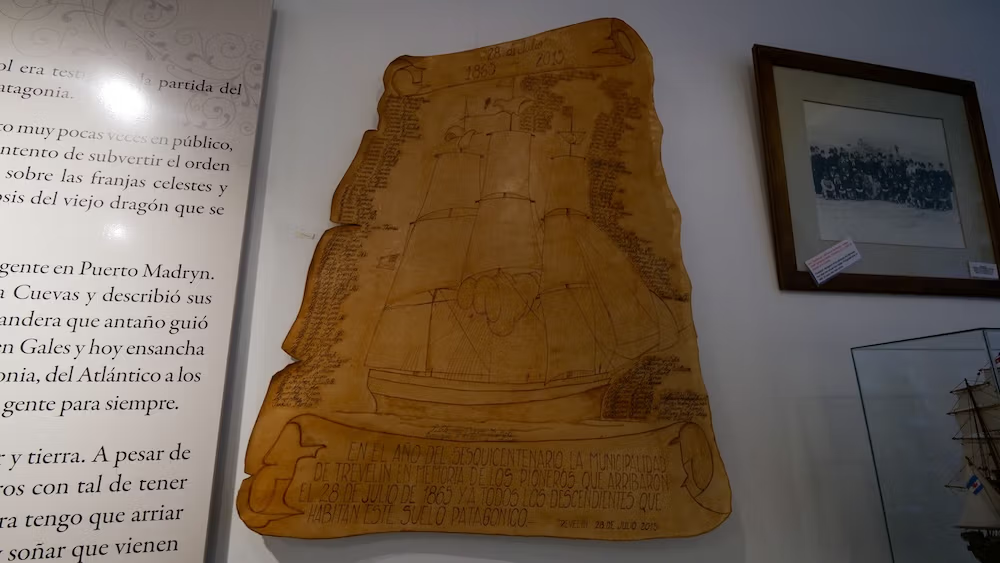
The Linguistic Time Capsule of the Chubut Valley
Eavesdropping in Trevelin is a surreal experience. You will hear locals rapid-firing a conversation that sounds distinctly Celtic, only to seamlessly drop in modern Argentine slang.
The Welsh spoken here, known as Patagonian Welsh, is a literal linguistic time capsule. Because the region was so isolated for decades, the language didn’t evolve exactly the way it did back in the UK. The locals use 19th-century Welsh terminology for farming and agriculture, but because the language lacked words for modern technology, they simply borrow from Argentine Spanish. It is a beautiful, hybrid vernacular.
To ensure the language doesn’t die out with the older generation, the British Council launched the Welsh Language Project in 1997, actively sending teachers from Wales to Patagonia every single year. Today, bilingual Spanish-Welsh schools are thriving, and the street signs in Gaiman and Trevelin proudly display both languages.
The Eisteddfod: Where Welsh Poetry is a Blood Sport
If you think the cultural preservation here is limited to baking black cakes and pouring tea, you have fundamentally misunderstood the Welsh spirit. To see the culture at its most fiercely competitive, you have to look at the Eisteddfod.
Dating back to 1865, the Eisteddfod is a massive festival of music, literature, and performance. It is the heartbeat of Y Wladfa. While tourists are busy taking photos of red-brick chapels, the locals are intensely preparing their choirs and writing poetry for the ultimate prize: The Chairing of the Bard.
The highest honor at the provincial Eisteddfod isn’t a trophy; it’s a hand-carved wooden chair awarded to the best poet. It is treated with the kind of reverence most countries reserve for a World Cup victory.
- Eisteddfod Mimosa (July – Puerto Madryn): Commemorates the harsh winter landing of the original settlers.
- Eisteddfod de la Juventud (September – Gaiman): Specifically focused on the youth, ensuring the next generation carries the torch.
- The Provincial Eisteddfod (October – Trelew): The absolute main event. If you are traveling in October, booking accommodation in Trelew during this week requires months of advance planning.
The Final Logistical Reality Check
The Welsh culture in Patagonia hasn’t just survived; it has dug its heels into the gravel and flourished on its own terms. It doesn’t exist just for tourists. It exists because David Roberts built a mud house in 1874, because engineers forced a river to water a desert, and because grandmothers refused to stop baking Torta Negra.
But exploring it requires you to respect the environment. As of recently, Argentina strictly mandates that all incoming travelers carry travel insurance that explicitly covers general health emergencies. You need to budget an extra $3 to $5 a day for this policy before you even cross the border.
Furthermore, if you are relying on public transit, you must beware the Sunday Transit Evaporation. The Transporte Jacobsen buses that connect the Esquel airport hub to Trevelin operate on a skeleton crew on Sundays. Multi-hour gaps between buses will eat half your itinerary if you don’t pre-book a private transfer.
Patagonia will always make you work for it. It will delay your 16-hour overnight buses. It will shut down its bakeries on a Tuesday. It will cover your luggage in fine, white dust. But when you finally sit down in that parlor, exhausted and triumphant, and the proprietor sets down a steaming pot of black tea and a mountain of warm scones, you will realize exactly why this culture survived at the end of the world.
If you want to see our live reactions to the massive portions at Ty Gwyn, or watch us wander the empty streets of Dolavon, be sure to check out our full video archive on the Samuel and Audrey YouTube channel. And stay tuned for our upcoming destination guides, where we break down exactly how to tackle the glaciers further south without destroying your budget.
Until then, load your SUBE card, pack your patience, and go secure your table. The tea is getting cold.
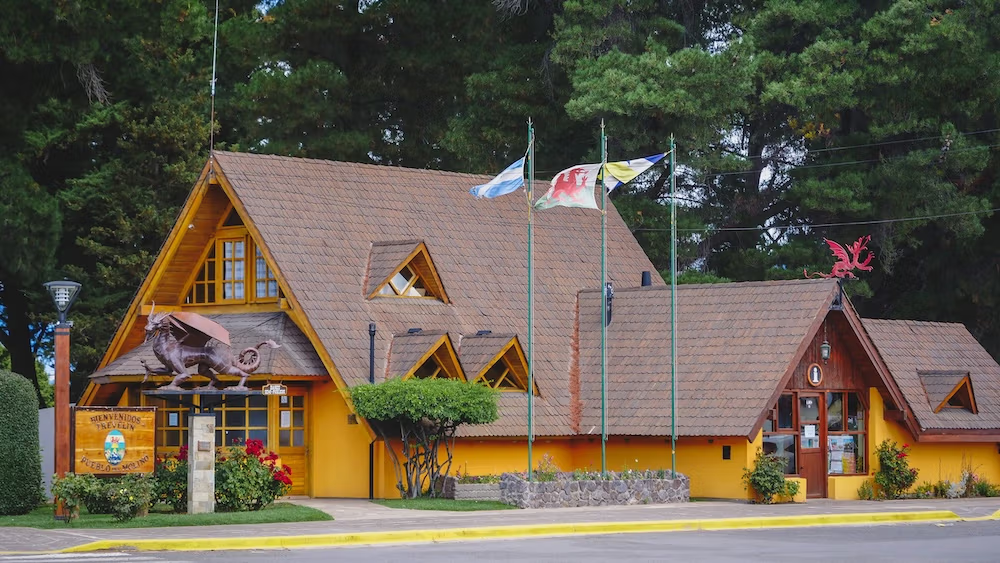
FAQ: Why Welsh Culture Has Survived In Patagonia
Do people still speak Welsh in Patagonia?
Absolutely. There are around 5,500 active speakers in the Chubut province today. It is not just a tourist gimmick cooked up to sell tea. There are bilingual Spanish-Welsh schools, bilingual street signs, and the British Council actively sends teachers over every year through the Welsh Language Project to ensure the language continues to thrive with the next generation.
How much does a Welsh tea service actually cost?
Budget appropriately. As of recently, a full tea service at an institution like Ty Gwyn in Gaiman runs about $25,000 ARS (roughly $17.50 USD). However, you get a massive mountain of food. Our biggest tip is to order one “Completo” set to share, and just pay the small sharing fee (around $5,000 ARS) for a second pot of tea. You will save money and avoid a massive sugar crash.
Can I do a day trip to Gaiman from Puerto Madryn?
Technically, yes. But it is a very long day of transit. You have to catch a bus from Puerto Madryn down to the Trelew terminal (about an hour), and then transfer to the Línea 28 de Julio bus out to Gaiman (another 45 minutes). If you do this, start early, and remember that you absolutely must have a pre-loaded physical SUBE card before you leave Trelew.
What is the best time of year to visit Trevelin?
October. Without a doubt, October is the undisputed champion. That is when the Campo de Tulipanes blooms, giving you three million vibrant tulips framed perfectly by the snow-capped Andes mountains. If you miss October, November through March offers excellent Patagonian summer weather, but you will miss the region’s biggest visual draw.
Is it easy to get around the Chubut Valley without a rental car?
Nope. It requires serious patience and a high tolerance for logistical friction. While local buses link the main hubs of Trelew and Gaiman, getting out to the alpine sites around Trevelin (like the Nant Fach mill or the tulip fields on Ruta 259) via public transit is a nightmare. If it fits your budget, renting a car in Esquel or Trelew will save you hours of waiting on dusty curbs.
Are the Patagonian Welsh tea houses open every day?
Definitely not. Rural Patagonian operating hours will break your heart if you aren’t prepared. In Gaiman, places like Ty Gwyn are usually closed on Tuesdays. In Trevelin, the strict afternoon siesta means doors are dead-bolted from 11:00 AM to 3:30 PM. Always double-check local business pages, and assume almost everything will be shuttered on a Sunday.
Do I need to book the tea houses in advance?
Usually, no. On a standard weekday in Gaiman or Trevelin, you can comfortably just walk in. However, if you are visiting Trelew in October during the Provincial Eisteddfod festival, or Trevelin during the absolute peak of the tulip bloom, tables fill up fast. In those rare peak windows, shoot the tea house a WhatsApp message a day prior just to be safe.
What exactly is the traditional Welsh Black Cake (Torta Negra)?
Survival food. Originally baked to last for months in the damp hull of the 1865 Mimosa voyage, this dense, fruit-heavy cake is the absolute cornerstone of the Patagonia tea service. It is rich, incredibly heavy, and delicious, but pace yourself—it sits in your stomach like a brick.
Project 23 Argentina: This guide is also available in Spanish. [Lea la versión en castellano: Por qué la cultura galesa sobrevivió y prosperó en la Patagonia]