
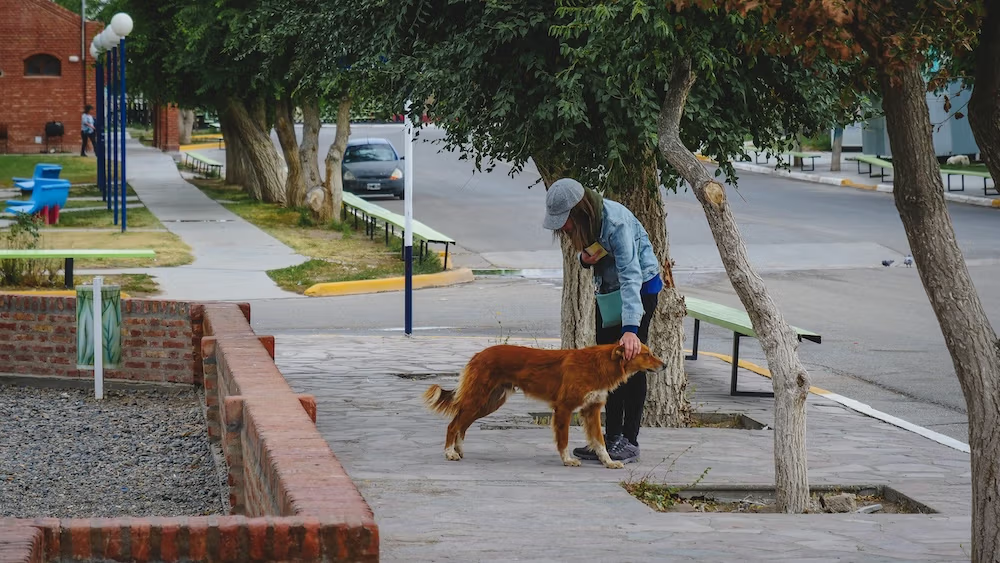
Audrey and I were sitting on a dusty curb in the remote Welsh-Patagonian town of Dolavon, washing down a packaged gas station alfajor with a plastic bottle of Paso de los Toros pomelo soda, when the reality of Patagonian pacing finally hit me. We had arrived at 2:00 PM on a Monday, aggressively hungry and ready for a deeply authentic cultural meal, only to discover that the entire region had completely shut down. There is no skeleton crew in rural Chubut.
When Patagonia decides it is time to rest, your itinerary ceases to matter. This is exactly why the modern iteration of “Slow Travel” belongs in Patagonia. The internet loves to frame slow travel as a deliberate, mindful aesthetic choice—a desire to sip artisan coffee in an eco-lodge and watch the clouds roll over the Andes. But down here at the bottom of the world, slow travel is not an aesthetic choice. It is a mandatory logistical survival mechanism. Patagonia’s pacing is dictated by furious winds, unpaved gravel roads, complex maritime bypasses, and the arbitrary whims of provincial bureaucrats.
If you try to rush this landscape, it will break your itinerary, snap your umbrella in half, and leave you stranded on the side of a highway. But if you yield to the friction—if you learn to read the invisible timetables, carry the right denominations of physical cash, and build multi-day buffers into your transit plans—you unlock a level of cultural immersion and raw, un-fakeable geographic reward that simply doesn’t exist on the standard two-week vacation circuit.
Here is the un-sugarcoated, microscopic reality of navigating Patagonia at the speed it demands.
Are You Actually Suited for Slow Travel in Patagonia?
Patagonia’s version of slow travel is not just spending longer in one place. It is accepting closures, delays, exact-cash problems, fragmented transit, and the fact that your ideal plan may lose a fight with the wind.
| Traveler Type | Patagonia Slow Travel Verdict | Why |
|---|---|---|
| Flexible traveler who enjoys uncertainty | Excellent fit | Patagonia rewards people who can adapt when ferries shift, towns close, or wind destroys the original plan. |
| Efficiency-driven traveler trying to see everything fast | Poor fit | This region punishes tight connections, rushed transitions, and overpacked itineraries. |
| Overland traveler who loves the journey | Strong fit | Long buses, gravel roads, ferry chains, and rural stops are part of the experience here, not inconveniences to eliminate. |
| Luxury traveler who expects seamless service | Mixed fit | You can absolutely travel comfortably, but the underlying infrastructure still imposes friction in ways money does not always solve. |
| Cultural traveler interested in regional identity | Excellent fit | Places like Gaiman, Trevelin, and Dolavon become far richer when you understand their rhythms, closures, and local pacing. |
| Traveler with zero buffer days | Bad idea | Patagonia’s wind, water crossings, and low-frequency transport regularly break aggressive schedules. |
| Hiker willing to treat the trip like a physical protocol | Strong fit | The region rewards people who think in terms of stamina, recovery, gear, and fuel rather than romantic “adventure vibes.” |

The Illusion of Spontaneity and the Patagonian Pacing Dictator
The defining myth of the slow travel movement is that you can just “go with the flow.” You imagine renting a battered 4×4, driving down Ruta 40, and stopping at whichever rustic town catches your eye for a spontaneous, farm-to-table lunch.
The reality looks much more like our arrival in the remote Welsh-Patagonian town of Dolavon.
We had been tracing the historical Welsh route, fascinated by the communities of Trelew, Gaiman, and Dolavon, built by settlers who fled poverty and language suppression in the UK to forge a new life in the dusty Argentine steppe. We arrived in Dolavon around 2:00 PM on a Monday, aggressively hungry and ready for a deeply authentic cultural meal. Instead, we found a ghost town. In these remote pockets of Chubut province, virtually all restaurants completely shut down on Mondays and Tuesdays. The town was closed.
[Samuel’s Pacing Reality Check]
You cannot hack the seasons or the siestas here. When we walked into the Trevelin tourist office to ask how to access the region’s world-famous tulip fields, the staff member didn’t offer a map or a sympathetic smile. She just deadpanned: “It’s not springtime.” The fields were dirt. Spontaneity in Patagonia is a luxury paid for with meticulous, microscopic advance planning.
To actually travel slowly and successfully, you have to build your days around the hard, unforgiving timetables of local life. If you want the incredible 14 USD-per-person afternoon tea spread at Ty Gwyn in Gaiman—a sprawling table drowning in white bread, whole wheat, cheese sandwiches, scones, and dense, brown-sugar Welsh cakes—you have to time your arrival for the mid-afternoon operational window on the correct day of the week.

The Provincial Pacing & Seasonal Reality Check
| Location / Region | The Draw (Signature Item) | The Logistical Friction | The Slow Travel Fix | Exact Price Baseline (USD) |
| Dolavon / Gaiman (Welsh Route) | Historic afternoon tea spreads; Welsh chapels. | Total regional restaurant blackout on Mondays & Tuesdays. | Stockpile calories in Trelew; visit Wednesday–Sunday only. | ~$14 USD (Full Ty Gwyn Tea Spread) |
| Trevelin (Chubut) | Vibrant Patagonian tulip fields. | Micro-seasonal window. Blooming only occurs in October. | Do not attempt out of season. Tourist offices will turn you away. | Free to view from roads; ~$5 USD farm entry. |
| El Bolson / Lago Puelo | Patagonian hippie culture; massive artisanal markets. | The Invisible Border Switch: Transit stops cold at the Río Negro/Chubut border. | Factor in a 30-minute delay; you must physically disembark and switch buses. | ~$2 – $4 USD (Inter-provincial bus fare) |
| Esquel (Los Alerces N.P.) | 2,700-year-old ancient forests; pristine lake cruises. | Low-season bus schedules are reduced to a single daily departure with no digital booking. | Execute the “Hostage Hack” (buy round-trip instantly at the station). | ~$15 – $20 USD (Round trip terminal cash) |
The Carretera Austral Endurance Test and the Bimodal Trap
If you have watched our YouTube channel, you know we are deeply motivated by the journey as much as the destination. But plotting an overland route down Chile’s Ruta 7, the legendary Carretera Austral, requires a complete recalibration of what a “driving day” looks like.
Spanning 1,247 kilometers from Puerto Montt down to the literal dead-end of Villa O’Higgins, the Carretera Austral is the ultimate slow-travel canvas. It weaves through temperate rainforests, skirts hanging glaciers like the Ventisquero Colgante in Queulat National Park, and hugs the brilliant turquoise waters of General Carrera Lake.
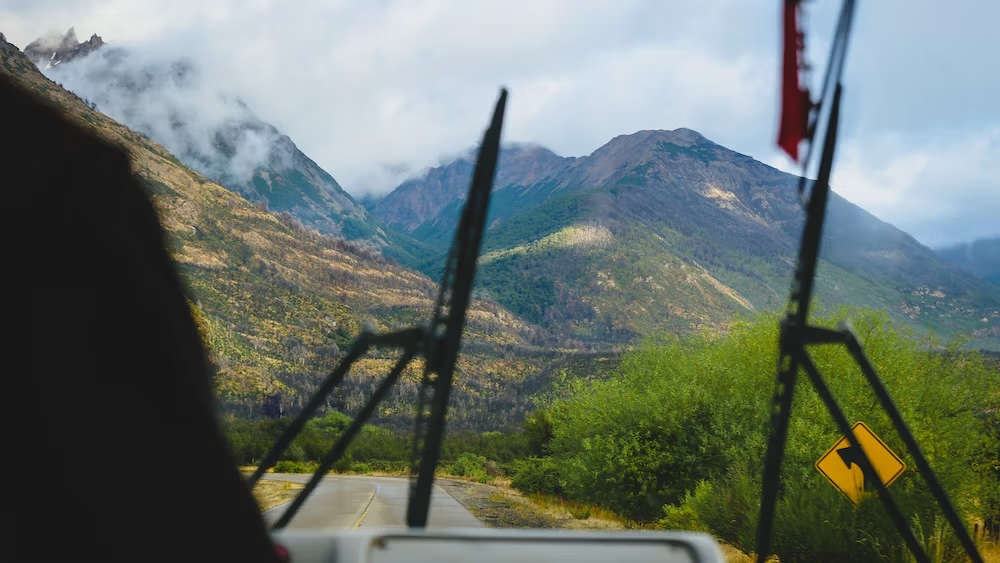
But a driving map is highly deceptive here. South of Villa Cerro Castillo, the road violently transitions from smooth pavement to heavy gravel (ripio). A casual 100-kilometer stretch on a map can easily take three and a half hours. Vehicles constantly throw large rocks, frequently cracking windshields, and the punishing “washboard” ruts will rattle your teeth and completely exhaust the driver. You must mentally prepare for maximum speeds of 40 km/h for days on end.
Furthermore, you literally cannot drive the entirety of Route 7 continuously. The route is physically severed by the Pacific fjords.
This brings us to the ultimate friction point: The Bimodal Ferry Trap. Between the towns of Hornopirén and Caleta Gonzalo, the road just ends. To continue south, you must book a strict two-part maritime bypass. First, you take a three-and-a-half-hour ferry to Leptepú. Then, you disembark, drive 15 minutes across a tiny gravel land bridge to Fiordo Largo, and immediately catch a second 45-minute ferry to Caleta Gonzalo. If you do not book this exact maritime link months in advance during the summer peak, your overland slow travel comes to a dead, unceremonious stop.
[Samuel’s Luggage Reality Check]
Further south lies Caleta Tortel, a town with absolutely zero paved streets, constructed entirely of elevated Guaitecas cypress boardwalks. Hard-shell, four-wheeled luggage is completely useless here. We watched tourists dragging spinning suitcases over wet, slippery wood under a dense tree canopy, ruining their wheels and their backs. Transition to a travel backpack, or pay a local porter with a wheelbarrow at the parking roundabout.
The Ruta 7 / Carretera Austral Transit Ledger
| Transit Leg / Friction Point | Exact Current Price (Local & USD Equivalent) | Operating Hours / Peak Times | The Physical Reality & Effort Required |
| La Arena to Puelche Ferry | Pedestrians: Free Vehicles: ~$15,450 CLP (~$16 USD) | Frequent daily departures. No reservation needed. | 45-minute crossing. Easy onboarding, high wind exposure on the top deck. |
| Hornopirén to Caleta Gonzalo (Bimodal) | Vehicles: ~$34,300 CLP (~$35 USD) | 10:30 AM daily (Summer). Advance booking mandatory. | 4+ hour total multi-step maritime bypass. High stress if connections are tight. |
| Puerto Ibáñez to Chile Chico | Vehicles: ~$19,750 CLP (~$20 USD) | 2 hours 15 mins. Advance booking required via Barcazas. | Bridges General Carrera Lake. Frequently delayed by massive wind swells. |
| Puerto Yungay to Río Bravo | Free of charge | 2-4 times daily depending on season. No booking. | 45-minute crossing connecting the deep south. Long queues in peak season. |
| Coyhaique to Cochrane (Overland Bus) | 19,500 – 20,000 CLP (~$20 USD) | Usually 1 departure daily at 8:00 AM (Buses Don Carlos). | 7-8 hours of brutal, dusty, washboard ripio roads. Bring motion sickness pills. |
The 2026 Torres del Paine Lock-In and the “Missing Link”
Torres del Paine is the crown jewel of Chilean Patagonia. It is also the most heavily regulated, bureaucratically complex hiking destination in South America. If you are planning a slow, immersive trek through the legendary W Trek or the O Circuit for the 2026 season, you are stepping into a massive systemic overhaul.
Starting in May 2026, CONAF (the Chilean National Forest Corporation) is completely abolishing the flexible “length-of-stay” park pass. They are implementing a hyper-strict Route-Based Ticket System via pasesparques.cl. You can no longer just show up and wander. You must commit to a specific route—Day Access, the W Trek, or the O Circuit—upon purchase. Once inside, you cannot change your itinerary mid-trek.
This bureaucratic rigidity extends to the physical hiking trails. The legendary 7-to-9-day O Circuit is governed by a strict “Counterclockwise Law.” You can only hike it in one direction, starting from Laguna Amarga, to prevent trail bottlenecks on dangerous sections like the John Gardner Pass. Day 4 of this circuit involves summiting an 1,200-meter elevation pass where the wind can literally knock a grown adult off their feet, followed by a punishing, knee-destroying scramble over loose rocks toward Glacier Grey. Slow travel here does not mean easy travel; it means methodical, exhausted survival.
But the most frustrating friction point in Torres del Paine isn’t the elevation; it’s the invisible micro-logistics.
Imagine meticulously booking your flights, securing your premium Vértice refugio slots six months in advance, and prepaying your main bus from Puerto Natales online with your credit card. You arrive at the Laguna Amarga park entrance, ready to hike. The bus drops you off. But to actually reach the Las Torres Welcome Center to begin the W Trek, you need a 15-minute shuttle ride.
This shuttle is the “Missing Link.” It runs continuously with arriving buses, but it cannot be booked in advance, and they do not accept cards. You must have exactly 4,500 CLP (about $4.60 USD) in physical cash per person. There are no ATMs at the park entrance. If you do not have the paper currency, you are walking an extra hour and a half down a dusty road before your hike even begins.
Torres del Paine 2026 Micro-Logistics & Friction Matrix
| Accommodation / Logistics | Manager / Provider | Estimated Cost | Amenities & Harsh Realities | Post-Hike Triage Priority |
| Park Entrance (Multi-Day O/W) | CONAF (PasesParques.cl) | 48,500 CLP (~$50 USD) | Strict route lock-in. Cannot alter direction. Buy 3-6 months ahead. | N/A (Administrative) |
| Basic Camping | CONAF (Italiano, Torres) | Free (Reservation required) | Drop toilets, zero refugio access. You carry out all trash. | Very Low (Survival Mode) |
| Premium Camping | Vértice / Fantástico Sur | $80 – $120 USD (Per Night) | Tents/bags provided. Electricity Curfew: Plugs in common areas die when generators cut off at night. | High (Hot shower access) |
| Shared Refugios | Vértice / Fantástico Sur | $150 – $250 USD (Per Night) | 4-8 bunk beds. Indoor dining. High density, intense snoring. | Maximum (Indoor heating) |
| The Missing Link Shuttle | Local Co-op at Gates | 4,500 CLP (~$4.60 USD) | CASH ONLY. No ATMs on site. 15-minute drive. | Critical (Saves 90 mins walking) |
The Elements, The Cash Famine, and The Esquel Hostage Hack
You haven’t truly experienced Patagonia until you’ve watched a cheap travel umbrella get mathematically disassembled by the wind in under ten seconds.
I learned this the hard way in the Argentine town of Esquel. Audrey and I were attempting to walk 10 blocks to the bus terminal in the freezing rain. The legendary Patagonian wind—which routinely exceeds 100 km/h—whipped around a street corner, caught the lip of my umbrella, and instantly inverted and snapped the metal framing, leaving me holding a useless, spiky nylon bat while getting completely soaked.
This is the physical reality of the “Wind Grounding Cascade.” The weather here doesn’t just ruin your outfit; it actively dismantles the regional infrastructure. When those massive winds roll in, the Pehoé Catamaran in Torres del Paine stops running. The ferries across Lake General Carrera drop anchor. If you have booked a tight connecting flight out of Balmaceda or Punta Arenas the day after a ferry crossing, you will miss it. True slow travel requires an enforced 24-to-48-hour buffer built into every single water-based transit leg.
When you aren’t fighting the wind, you are fighting the digital infrastructure. Across the border in El Chaltén, Argentina’s trekking capital, travelers are constantly blindsided by the “Cash Famine.
Despite credit cards becoming more common, the reality is that the town’s internet is notoriously unstable. When the satellite internet drops, the card machines spin endlessly and fail. Furthermore, many restaurants quietly apply a 10% premium if you insist on paying with plastic. The two solitary ATMs in town frequently run completely dry during peak summer weekends. The fix? You must arrive with pristine, flawless $100 USD bills to exchange at favorable local rates, or proactively send yourself cash via Western Union to pick up in the larger hub of El Calafate before you ever board the bus to El Chaltén.
[Samuel’s Transit Survival Warning]
During the low season, accessing Los Alerces National Park from Esquel requires playing hardball with the transit system. There is only one daily public bus, and you cannot reserve tickets online. We woke up at 6:45 AM to stand in line at the terminal. The hack? You must buy a round-trip ticket immediately. Not to save a few pesos, but because it is the only way to force the driver to physically guard a seat for you on the evening return trip. We watched disorganized tourists get stranded in the 2,700-year-old forest overnight because the bus filled up.
If you are expanding your itinerary to include the legendary Perito Moreno Glacier—something we narrowly missed on our first pass but remains an absolute must-do—you have to navigate similar micro-logistics. The foreigner entrance fee currently sits at a steep 45,000 ARS (roughly $32 USD). However, the hidden pro-tip is asking for the “Flexipass” at the gate. For 90,000 ARS, you gain three days of access, allowing you to view the glacier from the boardwalks on day one, book an ice-trekking expedition on day two, and return for a quiet morning photography session on day three, completely bypassing the massive tour bus crowds that swamp the park between 10:30 AM and 2:00 PM.
The Physical Longevity and Trail Triage Protocol
There is a specific, deeply humbling kind of leg-quivering fatigue that sets in halfway down the descent of the John Gardner Pass on the O-Circuit. As you scramble over loose roots and glacial scree, fighting against a 50 km/h headwind, you realize that navigating Patagonia isn’t actually a vacation. It is a grueling, multi-week physical protocol.
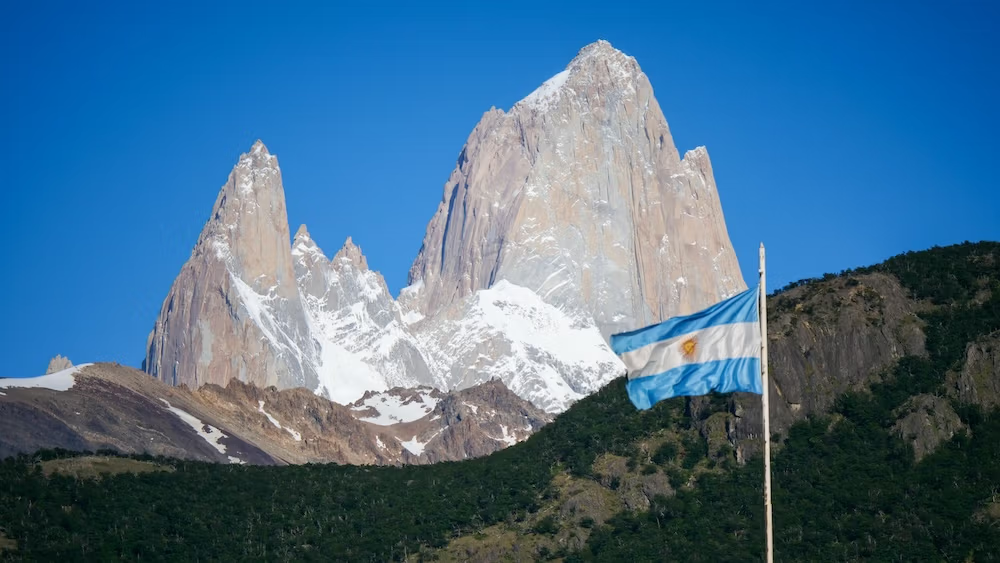
The internet is flooded with aesthetic photos of travelers standing triumphantly before the jagged spires of Mount Fitz Roy or the Cuernos del Paine. What those photos deliberately omit is the staggering physiological toll required to get there. If you want to survive a slow-travel itinerary through the deep south without blowing out a knee or spending three days bedridden in a hostel, you must treat your body like an endurance machine. You are operating in a landscape defined by massive caloric deficits, extreme temperature fluctuations, and an unforgiving pharmaceutical supply chain.
The “Farmacia” Mirage and the Triage Kit
When you land in major hubs like Bariloche, El Calafate, or Punta Arenas, the local farmacias are brilliantly stocked, glowing beacons of modern medicine. But the moment you venture onto the Carretera Austral or board the bus to El Chaltén, the supply chain evaporates.
Many hikers arrive in remote Patagonian outposts assuming they can easily pick up blister tape, high-grade ibuprofen, or altitude medication at a local shop. The reality? That remote pharmacy might be closed for a three-hour siesta, waiting on a delayed supply truck, or charging a 400% “isolation markup” on a basic pack of band-aids. Furthermore, while the jagged Andes look imposing, the actual trekking elevations in Patagonia are surprisingly low (the John Gardner Pass peaks around 1,200 meters). You don’t generally need altitude sickness medication here; what you are feeling is sheer, unadulterated physical exhaustion masked as altitude sickness.
You must build and carry your own micro-apothecary before leaving the transit hubs.
- The Hub Hoard: Stockpile 600mg Ibuprofen, Leukotape (far superior to standard moleskin for blister prevention), and broad-spectrum magnesium (to prevent nocturnal calf cramps in freezing tents) while still in Puerto Montt or El Calafate.
- The Hydration Fallacy: Do not drink directly from the streams.
[Samuel’s Backcountry Reality Check]
There is a persistent, dangerous myth that Patagonian glacial streams are so pristine you can just dip your bottle in and drink. Do not do this. Between the omnipresent guanaco feces and the sheer volume of international hikers on the W-Trek, the lower streams are a Giardia lottery. We watched purists spend three days violently ill in a refugio bathroom. Always carry a Sawyer Squeeze or LifeStraw, and filter everything.
Caloric Deficits and the Asado Recovery
A full day of trekking in Torres del Paine or Los Glaciares National Park will easily torch between 4,000 and 6,000 calories. Your body is not just burning energy to move; it is burning a massive amount of fuel simply to maintain your core temperature against the freezing, relentless wind.
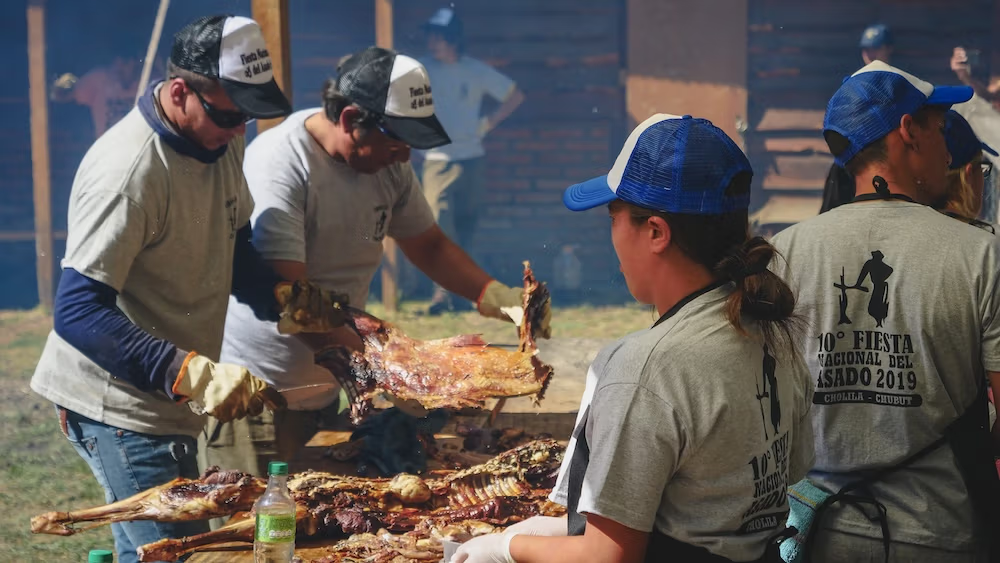
This is where the slow travel pacing becomes your greatest physical asset. We don’t just endure the hikes; we systematically plan our culinary recoveries. When you drag yourself off the trail, shivering and depleted, the regional cuisine suddenly shifts from “cultural experience” to literal physical rehabilitation. The sheer density of a Cordero al Asador—a full Patagonian lamb slow-roasted over an open wood fire for six hours—delivers the exact high-fat, high-protein shock your torn muscle fibers are screaming for. We learned to time our most brutal hiking days so they ended near local parrillas (steakhouses), treating massive plates of cross-roasted meat and iron-rich Patagonian Malbec as mandatory medical triage.
The Refugio Blackout Routine
Eventually, the Patagonian weather will ground you. The wind will hit 100 km/h, the rain will turn horizontal, and you will find yourself trapped inside a Vértice refugio or a tiny wooden cabin on the Carretera Austral.
At 10:00 PM, the diesel generators cut out. The lights die, the wall outlets stop charging your devices, and the cold begins to seep through the floorboards. This is when your physical baseline routines matter most. When you cannot hike, you must recover. Our mandatory blackout routine involved using a hard plastic Nalgene bottle filled with hot water as a makeshift foam roller to iron out the lactic acid in our IT bands and calves by headlamp. It is wildly unglamorous, slightly painful, and entirely necessary if you want your legs to function the next morning.
The Patagonian Physiological Protocol Matrix
| The Physical Friction | The Caloric / Bodily Toll | The Supply Chain Reality | The “Nomadic” Fix & Triage Strategy |
|---|---|---|---|
| John Gardner Pass (O-Circuit) | ~5,000+ Calorie burn. Severe quad/knee degradation on the steep, loose-rock descent. | No medical support between Camp Los Perros and Camp Grey. You are entirely on your own. | Pre-tape knees with Leukotape. Use a hard Nalgene bottle as a makeshift foam roller in the tent. |
| Glacial Stream Hydration | High risk of Giardia or waterborne illness from heavy trail traffic. | Medical evacuations for dehydration/dysentery are slow and cost thousands of dollars. | Mandatory Filtration: Pack a Sawyer Squeeze. Never trust “pristine” looking water below the tree line. |
| The “Ripio” Road Fatigue | 8 hours of driving washboard gravel violently rattles the spine and tightens the lower back. | Remote clinics on the Carretera Austral are understaffed and strictly for severe trauma. | The Asado Recovery Protocol: Offset the physical beating with heavy, iron-rich Cordero al Asador upon arrival. |
| Refugio Generator Blackouts | Freezing temperatures set in quickly, leading to nocturnal muscle cramping. | Heating ceases at 10 PM. No hot water until the generators fire up at 6 AM. | Pack broad-spectrum magnesium supplements from major city hubs. Sleep with your base layers inside your sleeping bag to pre-warm them. |
The Ultimate Payoff: Salty Lamb, Gaucho Hangovers, and Corner Store Malbec
Why do we endure the 19-hour buses, the snapped umbrellas, and the cash panics? Because the physical friction of Patagonia is directly correlated to the depth of the reward. The harder the landscape pushes you, the better the recovery feels.
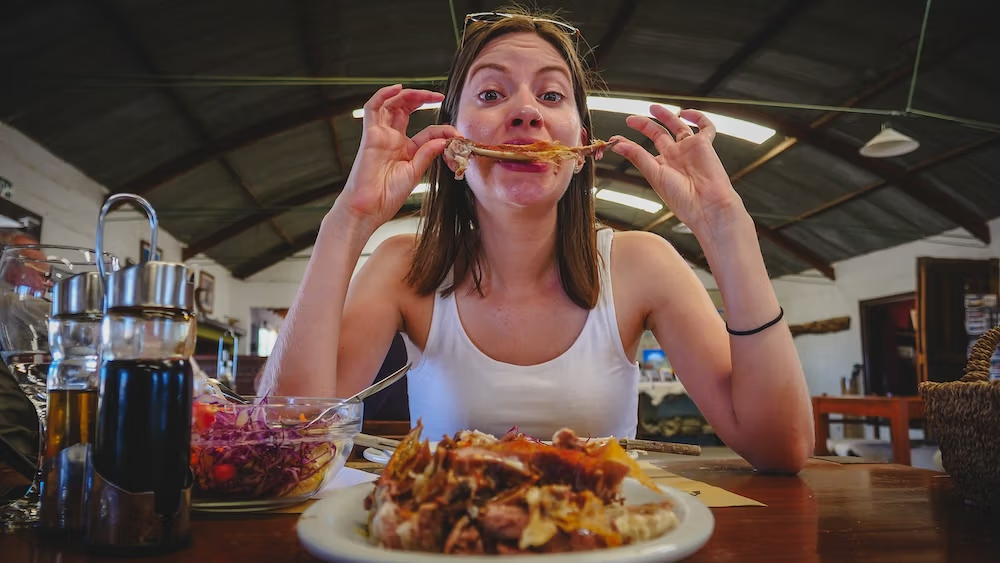
In an upcoming video on our channel, you will see exactly how we offset the physical toll of these transits with the region’s incredible culinary weight. After spending hours tracking penguins and elephant seals on the arid, wind-blasted Peninsula Valdes, we sat down to eat Patagonian lamb. But generic travel guides miss the hyper-specific flavor profile here. The lamb from the peninsula has a distinct, naturally salty flavor because the local sheep graze on coastal shrubs that are permanently coated in heavy marine salinity. You are quite literally tasting the geography of the coastline in the meat.
Or consider our attempt to integrate into local culture at a Gaucho festival near El Bolson. We were promised a massive Cordero al Asador (a whole lamb splayed on an iron cross over open coals) and world-class horsemanship. We arrived right at 1:00 PM, starving and eager. But the party was barely moving. The authentic, un-sugarcoated reality? The local gauchos had partied incredibly hard the night before and were collectively, visibly hungover. The horsemanship demonstrations were sluggish, the music was quiet, and we ended up laughing over massive cuts of cross-roasted meat, realizing that real cultural immersion is messy and human, not a polished performance put on for tourists.
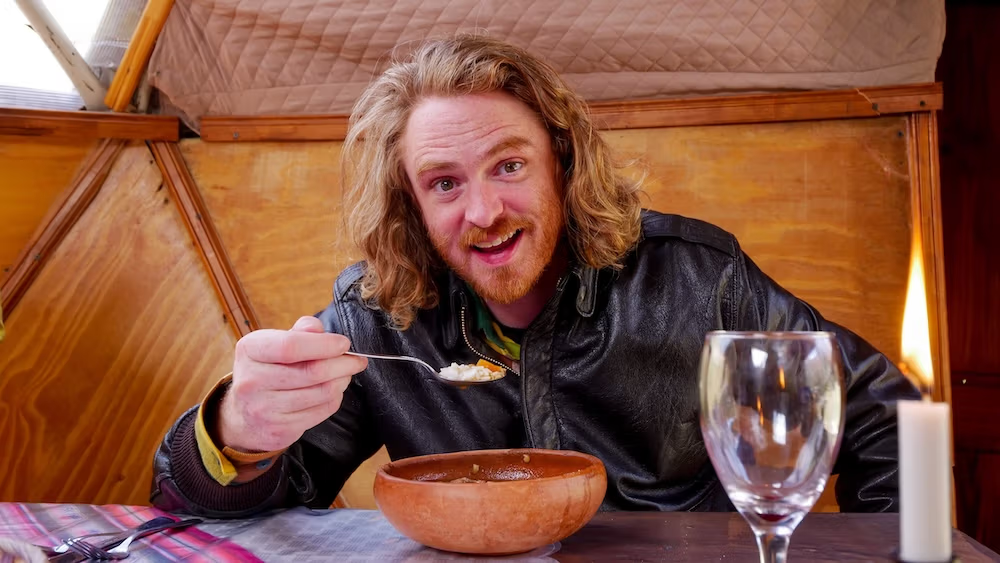
This is the essence of Patagonian slow travel. It’s about walking the wrong way down a blistering highway in Puerto Piramides after missing a trailhead, getting slightly sunburned, and recovering an hour later with a massive, cheese-oozing Patagonian lamb burger that costs less than $10 USD. It’s about realizing that you don’t need to visit a fancy vinoteca to drink world-class wine; the best, cheapest vintage bottles—like a dusty 2003 Malbec blend—are often found sitting on the bottom shelf of a random corner minimarket in Chubut, perfectly preserved by the cold southern air.
The Patagonian Caloric Recovery Index
| The Meal / Reward | Location Found | The Friction Required to Earn It | Sensory Profile & Vibe | Exact Price Baseline |
| “Salty” Patagonian Lamb | Peninsula Valdes / Puerto Piramides | Enduring 38.5°C heat and dusty steppe winds on wildlife tours. | Naturally briny, rich, slow-roasted meat paired with local red wine. | ~$15 – $20 USD (Steakhouse portion) |
| Cordero al Asador | El Manso / El Bolson Gaucho Fests | Navigating inter-provincial bus borders and hungover hosts. | Smoky, crispy fat, cooked for 6 hours on an iron cross. | ~$10 – $15 USD (Festival plate) |
| Vintage Corner-Store Malbec | Chubut / Río Negro Minimarkets | Scouring dusty bottom shelves while dodging stray dogs. | Bold, oaky, aged perfectly in unheated local convenience stores. | ~$6 – $12 USD (For a 15-year vintage) |
| Massive Lamb Burger | Puerto Piramides | Surviving a sun-exposed highway hike after missing the trail. | Oozing local cheese, thick-cut fries, deeply satisfying post-hike triage. | ~$8 – $10 USD |
| Entel Pre-Pago SIM Data | Punta Arenas / Puerto Montt hubs | Standing in chaotic telecom lines before heading into the wild. | The pure dopamine hit of getting 4G service deep in the Carretera Austral. | 5,000 – 10,000 CLP (~$5 – $10 USD) |
Patagonia is not a destination you conquer. It is a massive, indifferent ecosystem that you negotiate with. You pay your tolls in exact cash, you guard your bus seats, you yield to the wind, and you eat everything they put on the table. If you can embrace the friction, slow travel here isn’t just a pacing choice—it is the greatest adventure at the end of the earth.
FAQ: Slow Travel In Patagonia
Is Patagonia always freezing cold?
Nope. We stepped off a bus in Puerto Madryn into a 101°F (38.5°C) heatwave that completely shattered our internal clocks. While the deep south and the mountains are notoriously chilly and the wind is freezing year-round, the northern steppe and coastal regions get blisteringly hot in the peak summer (January and February). Pack layers, not just parkas.
Do I really need to book Torres del Paine campsites in advance?
100%. Starting in May 2026, CONAF is enforcing a strict route-based ticket system. You can no longer just show up and wander. You have to lock in your exact route months ahead of time via their online portal, and once you purchase it, you cannot change your itinerary mid-trek. If you show up in peak season without a reservation, you will be turned away at the gate.
Can I rent a standard car for the Carretera Austral, or do I need a 4×4?
Depends. If you are sticking strictly to the paved northern sections, a standard high-clearance 2WD will survive. But if you are doing the true slow travel route down to Caleta Tortel or Villa O’Higgins, you want a 4×4. The heavy ripio (gravel) washboards will violently rattle a standard sedan to pieces, and you will likely crack a windshield from flying rocks regardless of what you drive.
How much cash should I carry in Patagonia?
More than you think. While credit cards are increasingly accepted, remote towns like El Chaltén frequently run completely out of ATM cash, and internet blackouts cause card machines to spin and fail. Plus, you need physical cash for hyper-specific micro-logistics, like the 4,500 CLP exact-change shuttle at the Laguna Amarga entrance. Bring flawless $100 USD bills to exchange locally or use Western Union in the major hubs before heading into the wild.
Can I bring fresh snacks across the Chile and Argentina border?
Absolutely not. The agricultural checkpoints (especially entering Chile) are famously ruthless. They use sniffing dogs to check every single bag. If you have a stray apple, a block of cheese, or an open bag of nuts in your daypack, they will find it, confiscate it, and potentially fine you. Eat your fresh produce before you hit the border and stick to sealed, processed snacks for the crossing itself.
Is it safe to drink the water from the glacial streams?
Never. There is a persistent myth that Patagonian backcountry water is so pristine you can drink it straight from the source. Don’t do it. Between the guanaco herds and the sheer volume of international hikers on the main trails, drinking unfiltered stream water is a massive Giardia risk. Always pack a water filter to process everything below the tree line.
Are restaurants in Patagonia open every day during peak season?
Not a chance. We arrived in the Welsh-Patagonian town of Dolavon on a Monday afternoon and discovered that literally every restaurant in the region had shut down. Our lunch consisted of gas station alfajores and pomelo soda. Small towns rigidly enforce their siestas (usually 1:00 PM to 5:00 PM) and often close entirely on Mondays or Tuesdays. Always have a backup meal in your backpack.
Do public buses run frequently in the low season?
Barely. During the shoulder or low seasons, remote stretches often drop to a single bus per day. We literally had to wake up at dawn in Esquel just to buy a round-trip ticket to Los Alerces National Park—not to save money, but to legally force the driver to save a seat for us on the evening return trip. If you don’t book your exit ticket immediately, you run the risk of getting stranded.
The Patagonian Friction Forecast
Not all Patagonia friction feels the same. Some parts are cultural, some are bureaucratic, some are physical, and some are purely infrastructural.
| Friction Type | What It Looks Like on the Ground | Where It Hits Hardest | Best Response |
|---|---|---|---|
| Cultural pacing | Entire towns closing on Mondays, Tuesdays, or during long siestas | Dolavon, Gaiman, smaller Chubut towns | Carry a backup meal, time arrivals carefully, and never assume peak hunger will coincide with open kitchens |
| Transport fragmentation | Bus changes, ferry links, border transfers, schedule collapses | Carretera Austral, Lago Puelo / El Bolsón corridor, Los Alerces access | Build buffers, confirm every leg separately, and never rely on one seamless through-route |
| Bureaucratic friction | Route lock-ins, exact ticket categories, border inspections, cash-only shuttles | Torres del Paine, border crossings, park entrances | Print confirmations, carry local currency, and read official rules like they are part of the route |
| Physical punishment | Wind, washboard roads, steep descents, accumulated fatigue | Torres del Paine, Carretera Austral, exposed hikes | Pace harder days, plan recovery meals, and treat the trip like an endurance event |
| Digital failure | ATMs empty, card machines fail, internet drops out | El Chaltén, remote hubs, bus terminals | Bring cash, exchange early, and do not assume your phone can solve things in real time |
Project 23 Argentina: This guide is also available in Spanish. [Lea la versión en castellano: Por qué la Patagonia es el destino definitivo para el movimiento del viaje lento]