
Nothing quite prepares you for the 6:30 AM Patagonian wind hitting your face when you’re running on two hours of restless bus-sleep and wearing a summer wardrobe meant for the sweltering streets of Buenos Aires.
Standing outside the Esquel bus terminal in the predawn darkness, shivering violently while watching locals stroll past in t-shirts and tank tops, the illusion of the “perfect travel blogger” shattered completely. We were in zombie mode. We needed winter hats. We needed thick socks. And above all, we needed to completely rethink our approach to this region.
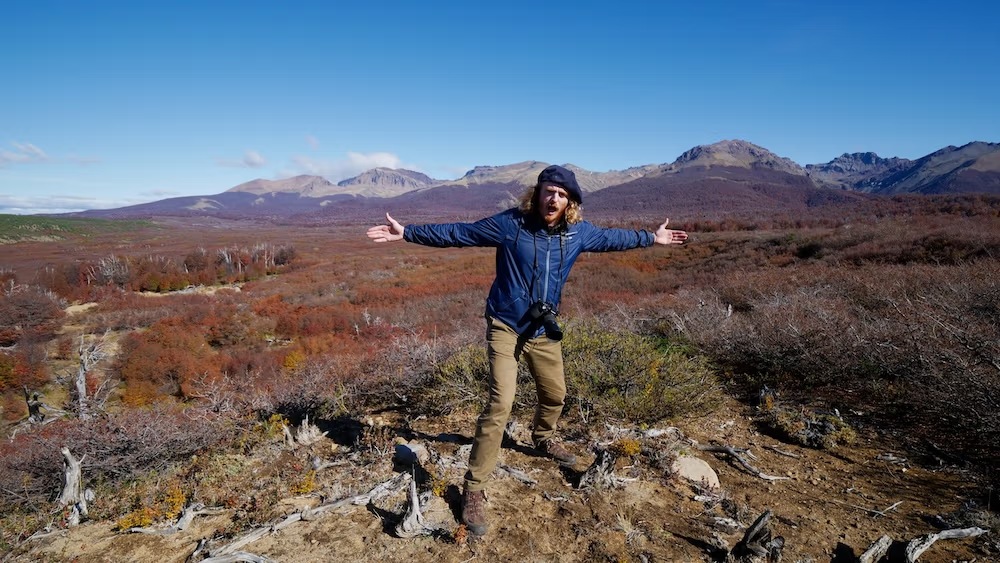
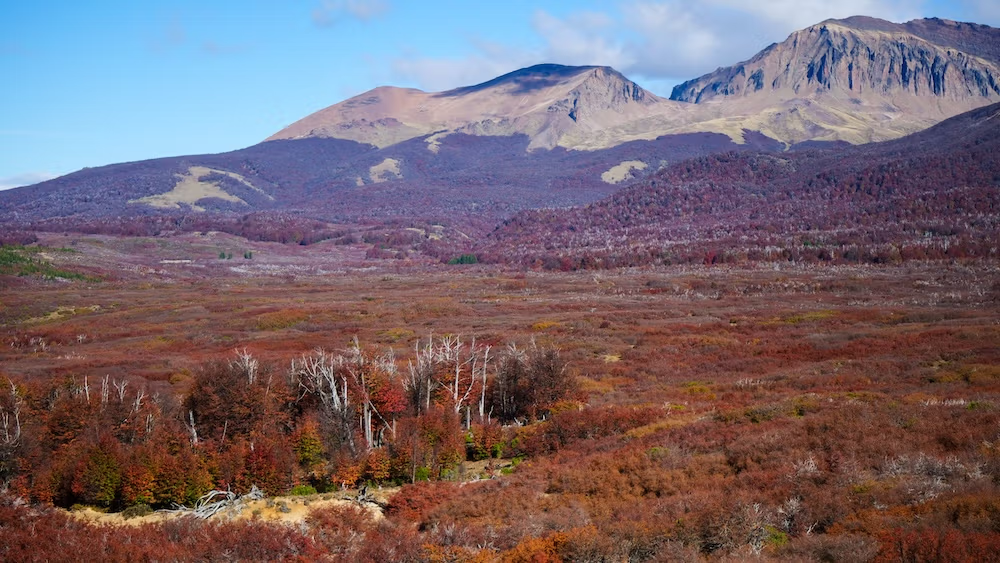
If you search the internet for advice on traveling to Patagonia in the autumn (March through May), you will find a lot of poetic waxing about the lenga and ñire trees turning fire-red, the absence of summer crowds, and the magical, glassy lakes. And all of that is true. Autumn in Patagonia is, without a doubt, the most visually spectacular time to visit the bottom of the world.
But what the glossy brochures and top-ranking internet guides conveniently omit is the sheer logistical friction of the shoulder season. The infrastructure literally packs up and leaves. The buses stop running. The trails turn to ice. And the entrance systems change without warning.
We’ve navigated this majestic, chaotic transition firsthand—and documented the triumphs and the blunders on our YouTube channel. Now, we are breaking down the microscopic realities of Patagonian autumn travel. This is the ultimate, un-sugarcoated guide to the most underrated season nobody talks about.
Should You Visit Patagonia in Autumn? A Quick Reality Check
Patagonia in autumn is not the best season for every traveler. It is the best season for a very specific kind of traveler: someone who values atmosphere, solitude, and dramatic light more than convenience, warmth, or schedule flexibility.
| Traveler Type | Autumn Verdict | Why |
|---|---|---|
| First-time Patagonia visitor who wants easy logistics | Proceed with caution | The scenery is incredible, but reduced buses, changing permits, and seasonal closures can make a first trip feel harder than expected. |
| Photographer chasing foliage and soft light | Excellent choice | April is arguably the most rewarding month for color, long golden hour, and calmer lake reflections. |
| Hiker who wants maximum trail access | Not ideal | Autumn is beautiful, but access tightens fast. The O-Circuit closes, refugios scale back, and ice becomes a real factor. |
| Budget traveler | Good, but not automatically cheap | Accommodation drops, but transport inefficiencies, taxis, and pre-booked logistics can offset those savings. |
| Wildlife-focused traveler | Strong choice | Fewer crowds and shifting guanaco movement can make autumn excellent for wildlife watching, especially in Torres del Paine. |
| Traveler who hates wind, cold, and uncertainty | Bad fit | This season rewards flexibility and patience. If you want dependable conditions, summer is the safer bet. |
| Non-morning person who still wants dramatic light | Surprisingly great | One of autumn’s secret superpowers is the later sunrise and much more civilized alpenglow timing. |
The Autumn Almanac: Decoding the “Shift” with Hard Data
If you’re the kind of traveler who likes to wing it, Patagonia in the fall will eat you alive. I say that with love, and from the perspective of someone who once arrived in Esquel in “zombie mode” with nothing but a light hoodie and a dream.
The transition from the frenetic energy of summer (January/February) to the quiet, icy resolve of winter (June) is a massive atmospheric shift. It’s not just “getting a bit cooler”—the entire biological and economic rhythm of the region changes. To navigate this, you need more than just a sense of adventure; you need a spreadsheet.
Here is the un-sugarcoated breakdown of the metrics that actually matter when you’re on the ground.
The Macro-Metrics of the Shoulder Season
| Metric | March (The Transition) | April (The Sweet Spot) | May (The Winter Gate) |
| Avg. Temp (Day/Night) | 15°C / 5°C (59°F / 41°F) | 10°C / 2°C (50°F / 35°F) | 5°C / -3°C (41°F / 27°F) |
| Daylight Hours | ~13.5 Hours | ~11 Hours | ~9.5 Hours |
| Wind Speed | 60-80 km/h (The “Cool Down”) | 40-60 km/h (The “Lull”) | 30-50 km/h (The “Crisp”) |
| Crowd Density | 60% (Moderate) | 30% (Peaceful) | 10% (Ghost Town) |
| Accommodation Price | High Season Rates | Shoulder Season (-20%) | Low Season (-40%+) |
[The Foodie Reality Check]
In March, you can still walk into a restaurant like Maffia in El Chaltén and expect a table within 30 minutes. By May? Many of the best spots have boarded up their windows for the winter. If you’re traveling in late autumn, your “Platter Diet” skills become a survival necessity. Always check Google Maps reviews from the last two weeks to see if a place is actually still open, because the “Closed for Season” signs don’t always make it onto the official websites.
The Foliage & Wildlife Calendar
One of the biggest mistakes travelers make is thinking “Autumn” is a monolithic block of time. In reality, the landscape undergoes a hyper-speed evolution every two weeks. If you show up in early March, everything is still green. If you show up in late May, everything is brown and skeletal.
- Mid-March to Early April: This is the “Yellow Phase.” The high-altitude lenga forests start to turn a deep ochre. The Guanacos are still high in the mountains, and the O-Circuit in Torres del Paine is still buzzing with the final hikers of the season.
- Mid-April to Early May: This is the “Crimson Peak.” The ñire trees on the valley floors turn a violent, fire-engine red. This is also peak Puma-spotting season in Torres del Paine; as the snow line creeps down the peaks, the Guanacos move into the valleys to graze, and the predators follow them like a shadow.
- Mid-May Onward: The “Skeletal Phase.” The leaves are gone, the winds pick up a biting, Antarctic edge, and the first “permanent” snow begins to settle on the trails. This is for the hardcore only.
The Financial Friction: Budgeting Realities
Let’s talk about the money. Patagonia is expensive, and the pricing systems in Argentina and Chile are currently in a state of flux. While you might save on a hotel room in April, you’ll likely spend more on logistics because public transit frequencies plummet.
[Samuel’s Cash-in-Hand Warning]
While the “Dólar Blue” hustle in Argentina is largely a thing of the past thanks to the MEP credit card rate, you still need physical cash for the “Low Season Tax.” Small-town taxis (like our $13 ride to Trevelin) and rural bakeries often have “broken” card machines when the tourist volume drops. Keep at least $100 USD worth of local pesos in small denominations tucked in your wallet for emergencies.
Infrastructure & Fee Matrix
| Venue / Service | Status | Current Fee (Est.) | The “Friction” Point |
| Los Alerces (ARG) | Limited Transit | 45,000 ARS | Only one bus daily in May. If you miss it, you’re camping. |
| Old Patagonian Express | Restricted Schedule | $32 USD | Usually only runs Saturdays/Tuesdays in the shoulder season. |
| CONAF Route Permits (CHI) | STRICT | $40 – $50 USD | You must book the specific route online. No “upgrading” at the gate. |
| Refugio Dorms | 50% Closure | $80 – $120 USD | Many “W-Trek” refugios close their kitchens by April 30th. |
The hard data tells us one thing: Autumn is the season of the “Calculated Risk.” You trade the predictable (but crowded) warmth of summer for a shorter, colder, but infinitely more beautiful window of time. Just remember to pack the micro-spikes and double-check those bus schedules before you leave the hostel.
The Myth of the “Calm” Patagonian Autumn
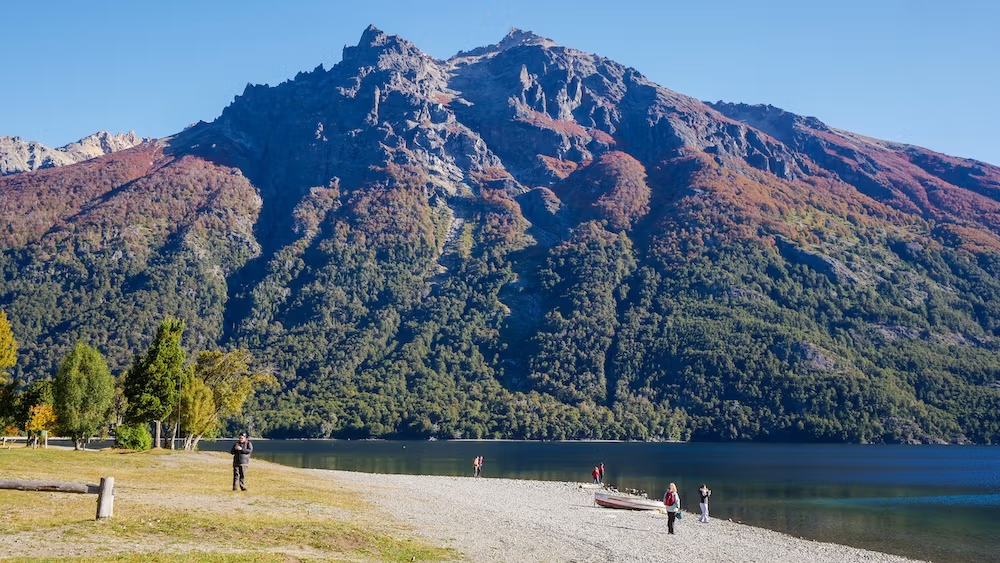
The first thing every guide will tell you is that the infamous Patagonian summer winds—which routinely clock in at 120 km/h (75 mph)—finally die down in the autumn. While technically accurate, this statistic is wildly misleading without context.
We learned this the hard way at Lago Gutierrez, just outside of Bariloche. We had planned a serene day of lakeside horseback riding and outdoor filming. Instead, we woke up to the “Most Patagonian Day Ever.” The winds, though perhaps mathematically slower than in January, were still ferocious enough to turn the calm lake into a raging, white-capped ocean. All outdoor activities were instantly canceled. The next day we were fine. That’s Patagonia for you. You’ve gotta be flexible.
Furthermore, the ambient temperature in late April and May drops to around 2°C to 5°C (35°F–41°F). A 50 km/h wind gust at those temperatures feels like a physical assault.
[Samuel’s Wardrobe Reality Check]
Do not bring a hard-shell rolling suitcase to El Chaltén. The roads from the bus terminal to the guesthouses are unpaved dirt and heavy gravel. Your wheels will break within the first three blocks. A durable duffel or a proper backpack is strictly non-negotiable. And while you might get lucky with daytime sunshine, your outer layer must be a serious, windproof hard-shell. A standard fleece will do absolutely nothing when the wind chill hits the Fitz Roy valley.
The Non-Negotiable Autumn Packing List
If you are arriving between late March and May, your kit needs to pivot from summer trekking to active winter survival:
- Micro-spikes (Crampons): You don’t need to fly with these, but you must rent them in El Chaltén (about $5 USD/day) if you plan on doing high-elevation hikes in late April.
- Windproof Hard-shell: Gore-Tex or equivalent. It must block wind entirely.
- Merino Wool Base Layers: Essential for managing sweat during the strenuous ascents and preventing hypothermia when you stop moving and the wind hits you.
- Headlamp: Daylight shrinks drastically. Sunrise isn’t until 7:30 AM, and it is pitch black by 6:00 PM.
The Disappearing Infrastructure: Why Winging It Will Strand You
The single biggest trap travelers fall into during the Patagonian autumn is assuming that summer transit schedules apply in April and May. They do not. The transition is brutal and immediate.
During our time in Esquel, we woke up on a Sunday craving Welsh cakes and decided to take a spontaneous day trip to the nearby Welsh settlement of Trevelin. We walked to the terminal, expecting to just hop on a bus. We had forgotten it was Sunday in the low season. The buses were practically non-existent. We ended up having to pay a $13 USD “taxi tax” for the 20-kilometer ride just to buy ourselves an extra hour and a half of exploring time.
That was a minor inconvenience, but the mid-April squeeze has far higher stakes in the major national parks. We watched fellow tourists get completely stranded at Los Alerces National Park because there was only one daily bus returning to town, and they hadn’t purchased a return ticket in advance.
If you are planning your transit connections, here is the unvarnished reality of the autumn drop-off.
Transit & Accessibility Matrix: Summer vs. Autumn
| Transit Route / Venue | Summer Baseline (Dec-Feb) | The Autumn Reality (March-May) |
| El Calafate to El Chaltén Bus | 6+ daily departures (Caltur, Chaltén Travel). | Plummets to just 1 or 2 daily frequencies (e.g., 8:00 AM & 6:00 PM). Never rely on a same-day flight connection. |
| Lake Pehoé Catamaran (Chile) | Frequent crossings linking Pudeto to the W-Trek. | Radically reduced. Leaves Pudeto at 10:30 AM. Final return from Paine Grande is strictly at 5:30 PM. |
| O-Circuit Access (Torres) | Fully open and heavily trafficked. | Closes entirely. The backside of the park shuts down by mid-April due to snow and safety hazards. |
| Park Drive Times (Torres) | Roads are dusty but passable. | Roads become slick, corrugated mud. Factor in 45-60 minutes just to drive from the park gates to the trailheads. |
[The Catamaran Stranding Trap]
If you are attempting a day hike on the W-Trek via the Pehoé Catamaran, set a strict, non-negotiable turnaround alarm for 2:30 PM on your phone. If you underestimate the hiking time and miss that 5:30 PM return boat, you are sleeping on the floor of Refugio Paine Grande. Also, buy your catamaran ticket (approx. $40 USD) online in advance; they board passengers with QR codes first, and space is heavily limited in autumn.
The Hiking Reality Check: From Meat Comas to Ice Walls
Patagonia is synonymous with legendary trekking, but the physical toll of these trails is rarely discussed with honesty. Travel guides tend to gloss over the pain, presenting every hike as a breezy walk culminating in a perfect photo op.
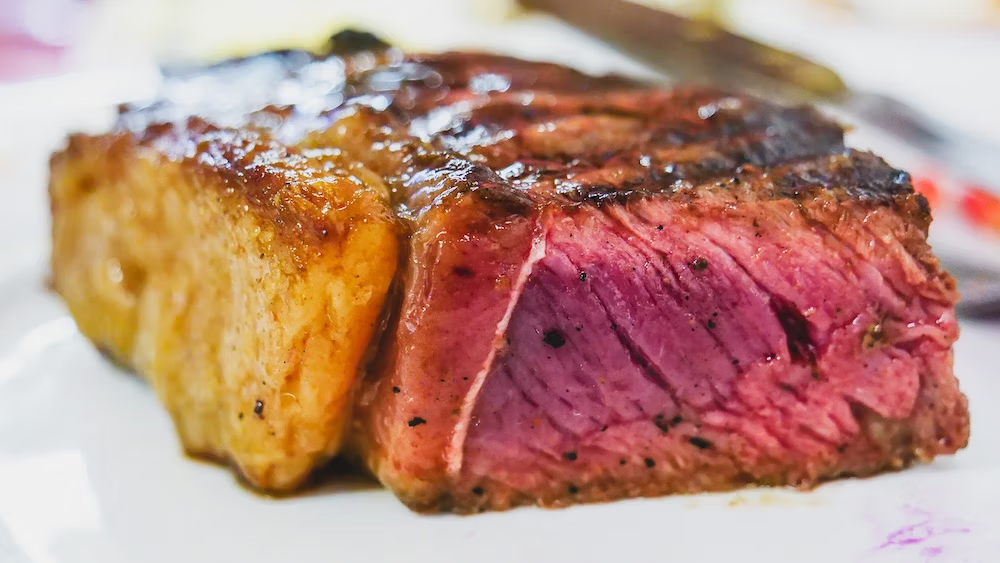
We are not immune to hubris. In Esquel, after devouring a massive, incredibly heavy lunch of bife de chorizo at a local parrilla called De Maria, we decided we needed to “walk it off.” Locals had advised us to take a taxi up to Laguna La Zeta or the trailhead for Cerro de la Cruz and walk down. We ignored them, thinking it was the “lazy” way.
We set out on foot, our bellies full of heavy red meat. We got lost almost immediately. We veered off onto the wrong path. We hit a wall of relentless wind. Halfway up the mountain, a French couple coming down looked at us and said, “You still have an hour to go.”
We looked at each other, looked at the wind, and happily surrendered. We turned around, went back to our cottage, and cracked open a bottle of wine. And you know what? That is completely fine. You do not have to summit every mountain.
However, if you are attempting the “Big Two”—Laguna de los Tres in El Chaltén and the Base of the Towers in Torres del Paine—surrendering halfway is usually not on the agenda. You need to know exactly what you are walking into.
The Granular Trail Truths
- Laguna de los Tres (El Chaltén): The first 8 kilometers are stunning, rolling through forests and past glaciers. But the final kilometer is a brutal, soul-crushing 400-meter vertical climb over loose scree and boulders. It is essentially a stair-master from hell. In late April and May, overnight temperatures drop below freezing. That loose scree turns into a literal ice slide before the morning sun hits it. This is where those $5 micro-spikes we mentioned earlier save your life. You will blow past dozens of miserable, slipping hikers in standard running shoes.
- Base of the Towers (Torres del Paine): You are racing the daylight in autumn. Because the sun doesn’t rise until 7:30 AM, and the trail takes roughly 4 to 4.5 hours up, you cannot start at a leisurely 10:00 AM. You will be hiking the final descent in pitch darkness. Bring a headlamp, and start hiking the moment there is enough ambient light to see your boots.
The Bureaucracy Shift: Ticket Overhauls and Fees
Crossing borders and entering national parks in Patagonia is an exercise in patience, but the rules are actively changing season by season. If you show up armed with advice from a 2023 blog post, you will be denied entry.
The biggest shockwave for independent travelers this autumn is the May Torres del Paine Permit Overhaul.
Historically, you could pay a flat daily or multi-day entrance fee at the gate and figure out your hiking itinerary later. That era is dead. CONAF (Chile’s National Forest Corporation) is enforcing a strict Route-Based Entrance Fee. You must financially commit to your exact route—whether that is a Day Access pass, a specific Base Torres ticket, or a full W-Trek permit—at the time of purchase. Walk-ups are strictly forbidden. You must book this on pasesparques.cl weeks, if not months, in advance. CONAF rangers will check your specific trail permit on the trail, and if you decided to “wing it” and hike a route you aren’t ticketed for, you will be turned around.
Argentina, thankfully, is a bit more straightforward, though the prices have adjusted to the current economic reality.
Park Entrances & Logistical Fees Matrix
| Location / Service | Exact Current Price | Operational Realities & Hacks |
| Los Glaciares National Park (ARG) | 45,000 ARS (~$32 USD) | The Flexipass: Buy one day, get 50% off the second day (must be used within 72 hours). A 3-day pass is 90,000 ARS. Peak tour bus crowds hit Perito Moreno at 10:30 AM. |
| Torres del Paine Entrance (CHI) | Est. $40–$50 USD | May Overhaul: Route-based tickets only. Must buy via pasesparques.cl. No flat-rate tickets. No walk-ups. |
| Old Patagonian Express (Esquel) | $32 USD per person | Arrive 30 mins before the 9:30 AM departure. 1-hour out, 45-min museum stop, 1-hour back. Brilliant nostalgic value. |
The Patagonian Platter Diet & Financial Friction
By day three of our Patagonian adventure, the exhaustion of the wind and the trails had fundamentally altered our culinary priorities. Forget the fancy restaurant reservations. Our greatest culinary triumph became what we lovingly dubbed the “Platter Diet.”
Instead of fighting the evening cold and the aggressive mosquitoes, we would hit a local grocery store, buy a massive spread of salami, green apples, parmesan cheese, green olives, and salted almonds, and retreat to our cottage. Paired with a velvety, $5 bottle of 2017 Mendoza Malbec, it was absolute perfection.
If you do want to eat out, prepare for the reality of the Patagonian breakfast. You will not find scrambled eggs, bacon, or baked beans. The Argentine breakfast is a celebration of pure sugar. We survived our mornings on café con leche paired with medialunas (sweet croissants), rich chocolate and dulce de leche cakes, and alfajores de maicena .
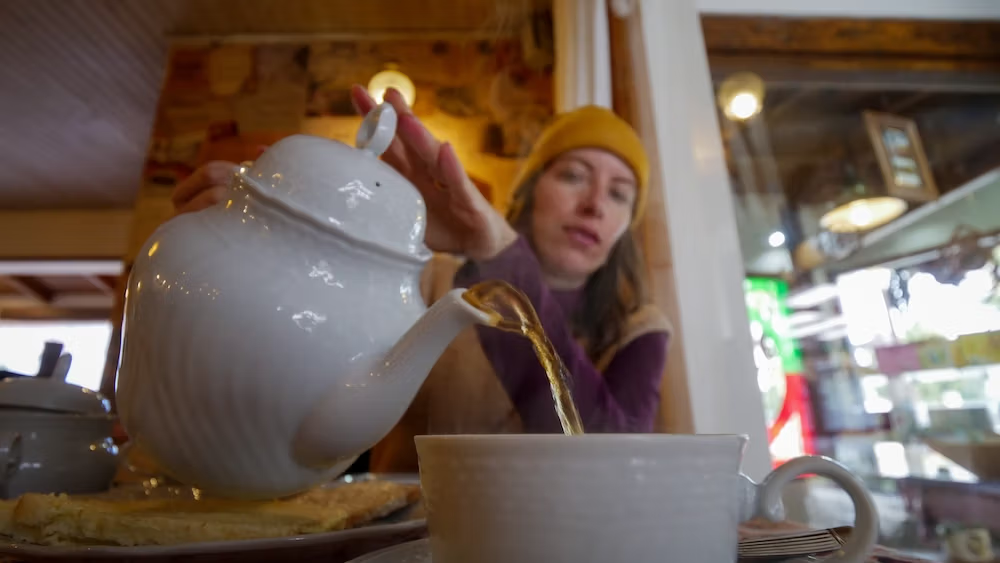
When we visited the Welsh town of Trevelin, we fully leaned into this cultural quirk, sitting down at Casa de Te Nain Maggie in the middle of the morning for a massive, $13 USD spread of traditional Welsh tea, scones, and black cake. (We later wandered into the local tourist office, high on sugar, asking where we could see the region’s famous tulip farms. The worker looked at us deadpan and replied, “It’s not springtime.” The shoulder season strikes again).
If you are looking for specific, highly rewarding meals after a brutal hike, El Chaltén has a few hidden gems that require strategic timing:
- Maffia (El Chaltén): Famous for hand-rolled regional pasta, specifically the Patagonian lamb ragu and trout ravioli. A plate will cost you around 18,000 ARS (~$13 USD). They do not take reservations, and the line starts forming in the freezing cold at 5:45 PM. Be there at 5:30 PM.
- Josh Aike (El Chaltén): The ultimate post-hike triage center. They serve incredible artisanal alfajores and thick hot chocolate for about 5,000 ARS (~$3.50 USD).
The Death of the “Dólar Blue” Hustle
This brings us to the most critical piece of financial friction for the season. Almost every Patagonia blog currently ranking on Google will tell you to bring wads of crisp, uncreased $100 bills to exchange in sketchy Argentine cuevas for the “Dólar Blue” street rate.
Now, this is terrible advice.
The economic gap between the Dólar Blue and the MEP rate (the tourist exchange rate automatically applied to foreign Visa and Mastercards) has shrunk to almost zero. Carrying stacks of depreciating Argentine pesos is a liability.
The smartest move for modern travelers is to pay for your hotels, massive bife de chorizo lunches, and long-distance buses with a credit card to automatically get the MEP rate.
[Samuel’s Cash-in-Hand Warning]
Do not assume the ATM in El Chaltén will save you. It is notorious for running out of cash for days at a time during long autumn weekends, and it charges massive flat withdrawal fees. Use your credit card for 90% of your purchases. Only bring physical USD cash to exchange in El Calafate (not Chaltén) to have small bills for tipping, rural bakeries, and buying those $5 micro-spikes.
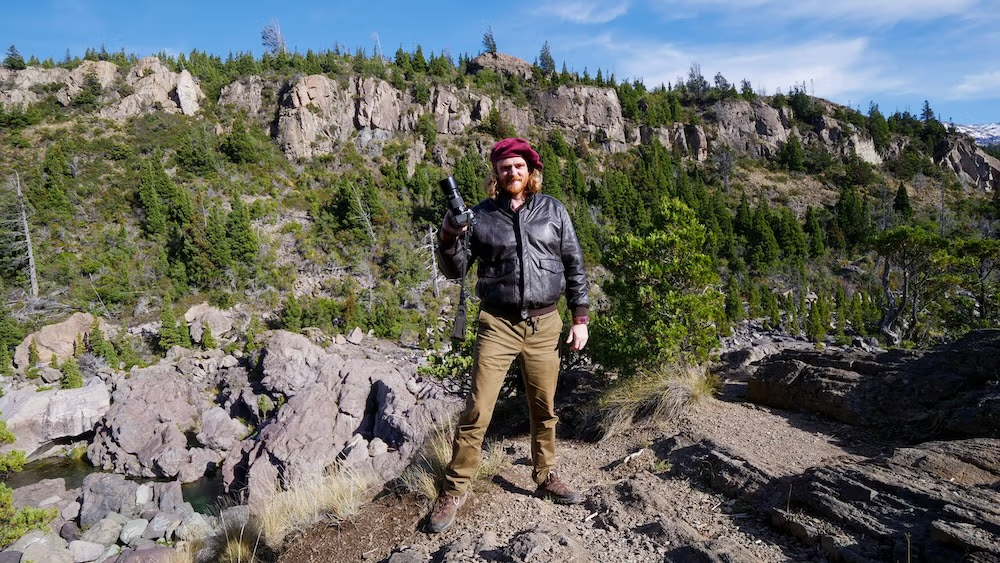
The Physics of the Patagonian Glow: Why Your 7:45 AM Alarm is the Ultimate Win
If you’ve spent any time researching Patagonia, you’ve seen the “Money Shot”: the granite spires of Fitz Roy or the Torres del Paine glowing like embers in the predawn light. In the summer, getting that shot is a form of physical penance. It requires a 4:00 AM wake-up call, a frantic hike in pitch darkness, and enough caffeine to jumpstart a dead tractor.
But in autumn? Patagonia offers a rare gift to the sleep-deprived traveler. Because of the earth’s tilt and the region’s extreme southern latitude, the sun takes a much lazier path across the sky.
In April, the “Alpenglow”—that magical moment where the peaks turn neon orange—doesn’t hit until around 7:45 AM or even 8:00 AM. For those of us still operating in “zombie mode” from the overnight bus, this is a monumental victory. You can actually sleep until 6:30 AM, have a quick café con leche, and still make it to a viewpoint before the light show starts.
[Samuel’s Shutter-Speed Reality Check]
I’ve spent years hauling heavy lenses and tripods up trails that would make a mountain goat think twice. In the summer, you’re racing the sun. In the autumn, you’re racing the wind. While the light is more forgiving, the low-angle sun means shadows are longer and deeper. If you’re shooting the foliage, you need a fast shutter speed. Even a “calm” autumn breeze will turn those fire-red lenga leaves into a blurry mess in a long exposure. Crank your ISO and keep that shutter speed above 1/200th if you want those leaves to look sharp.
The Statistical Window for “The Burn”
The fire-red foliage everyone comes for is not a season; it’s a fleeting event. Based on years of data and our own experiences on the ground, there is a very specific statistical window where the colors peak before the fierce Patagonian winter winds literally strip the trees bare.
- The Prime Window: April 2nd to April 25th.
- The “Goldilocks” Zone: April 10th to April 20th. This is when the lenga trees (high elevation) and ñire trees (valley floor) usually overlap in their color transition.
- The Risk Factor: High. You can have a perfect Tuesday of crimson forests, followed by a Wednesday “Most Patagonian Day Ever” windstorm that leaves every branch naked by Thursday.
The Photographer’s Autumn Survival Matrix
To get the most out of the autumn light, you have to look beyond the famous viewpoints and understand how the sun’s lower trajectory interacts with the landscape. Here is how to prioritize your shooting schedule:
| Location | Autumn Lighting Profile | Best Time (April/May) | The “Effort” Factor |
| Laguna Sucia (Chaltén) | The “Deep Glow.” Because it’s tucked into a cirque, the low sun hits the hanging glaciers at a sharp angle, creating intense blue/orange contrast. | 8:15 AM – 9:45 AM | High. Requires a scramble over boulders that are often slick with morning frost. |
| Cerro Torre River Crossing | The “Golden Tunnel.” The lenga trees lining the Fitz Roy river turn bright gold. The low sun backlights the leaves, making the whole forest feel like it’s glowing from within. | 3:30 PM – 5:30 PM (Long Golden Hour) | Low. Just a 15-minute walk from the edge of El Chaltén town. Perfect for a post-parrilla stroll. |
| Mirador Cuernos (Torres) | The “Mirror Effect.” With calmer autumn winds, Lake Nordenskjöld often turns into a literal mirror. The low-angle sun illuminates the “horns” without the harsh overhead shadows of summer. | 7:45 AM (Sunrise) | Medium. A flat but wind-exposed 2-hour round trip from the Salto Grande parking area. |
| Rio de las Vueltas Bend | The “Panoramic Burn.” The entire valley floor turns shades of rust and copper. The low sun emphasizes the texture of the winding river. | 5:00 PM (Pre-Sunset) | Zero. You can shoot this right from the side of the road on the way into El Chaltén. |
The “Extended” Golden Hour Physics
In the northern hemisphere, “Golden Hour” is often a frantic twenty-minute window where you’re desperately adjusting your tripod. In Patagonian autumn, the sun doesn’t just “set”—it lazily skims the horizon for hours.
Because the sun never reaches a high vertical point in the sky during late April, the light remains soft, warm, and directional for nearly the entire afternoon. This is why our photos from this trip look so “expensive”—it’s not the gear; it’s the physics. You can shoot at 2:00 PM in April and get the kind of long, dramatic shadows and warm skin tones that you’d only get at 8:00 PM in December.
[Samuel’s “Lazy” Pro-Tip]
If you’re not a morning person, autumn is your season. The “Blue Hour” after sunset in May lasts forever. We found that some of our best shots of the Fitz Roy massif weren’t taken at sunrise at all, but rather at 6:15 PM, sitting on a rock with a thermos of mate, watching the sky turn a deep, bruised purple while the peaks held onto the last vestige of light. No hiking in the dark required.
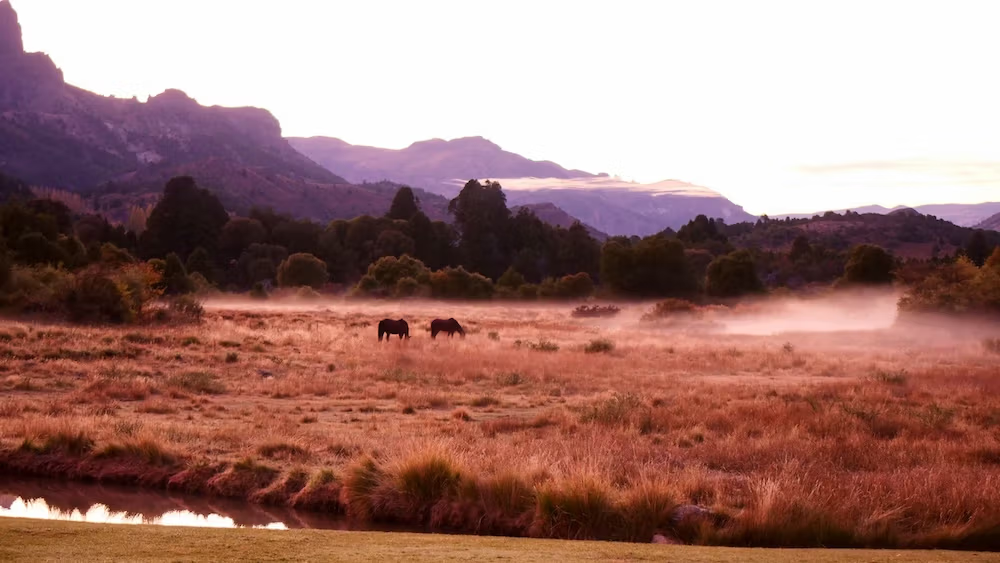
Best Month in Patagonia in Autumn by Travel Style
March, April, and May may all fall under the same seasonal umbrella, but on the ground they feel like three different trips.
| Travel Goal | Best Month | Why It Wins | Main Trade-Off |
|---|---|---|---|
| Easier logistics | March | More transport, more open restaurants, more summer infrastructure still hanging on | More people and less dramatic foliage |
| Peak autumn color | April | Best overlap of red ñire, golden lenga, lower crowds, and photogenic light | Shorter days and rising risk of closures |
| Deep solitude | May | Quiet trails, low-season atmosphere, dramatic end-of-season mood | Much colder, more closures, more fragile logistics |
| Photography | Mid-April | The sweet spot for color, mirror-like lakes, and forgiving sunrise times | Conditions can change violently in a day |
| Trekking flexibility | Early March to early April | More trail options still open before ice and shutdowns become dominant | Less intense “end of the world” shoulder-season feel |
| Cheapest stays | Late April to May | The biggest accommodation discounts tend to appear here | You may pay the savings back in taxis, food limitations, or transport hassle |
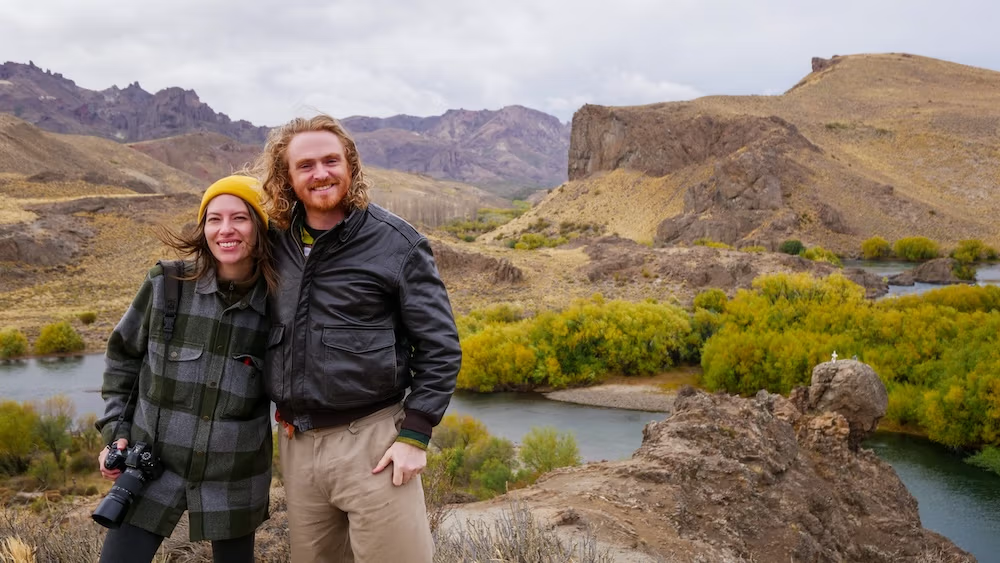
The 7 Autumn Patagonia Mistakes That Blow Up Otherwise Good Trips
The shoulder season punishes small mistakes much harder than summer does. These are the failure points to take seriously.
1. Treating autumn like a cheaper version of summer
It isn’t. It’s a different operating system. Fewer buses, fewer open kitchens, stricter booking windows, and colder trails change the entire rhythm of the trip.
2. Booking tight same-day transport connections
In summer, you might gamble on a bus-to-flight connection and get away with it. In autumn, one delayed departure or one reduced schedule can wreck the whole chain.
3. Packing for “cool weather” instead of active cold
A cute sweater, casual sneakers, and a city jacket are not enough. Patagonia in autumn demands a proper windproof shell, layers, and footwear that can handle mud, frost, and gravel.
4. Assuming the best foliage lasts all season
It doesn’t. The color window is short, location-dependent, and highly vulnerable to one major wind event.
5. Underestimating how early darkness affects hikes
Autumn’s shorter days make timing non-negotiable. A late start on a major trail can turn into a cold descent in darkness surprisingly fast.
6. Trusting old blog posts for fees and permits
Patagonia changes. Entrance systems, route rules, transport schedules, and seasonal operations can all shift faster than the internet updates.
7. Assuming food options stay plentiful
By late autumn, a lot of travelers end up simplifying. That can mean earlier dinners, grocery-store platters, limited breakfast choices, or fewer open restaurants than expected.
Embracing the Chaos of the Shoulder Season
Traveling through Patagonia in the autumn is not for the faint of heart. It requires a level of flexibility and logistical preparation that a standard summer vacation simply does not demand. You will likely get blasted by the wind. You will almost certainly find a trail closed or a bus schedule canceled. You might end up eating salami and cheese in your room because you are too exhausted to move.
But if you can handle the friction—if you can secure your route-based permits, rent the crampons, pre-book your transit, and accept that the elements are ultimately in charge—you will experience a version of Patagonia that most people never see.
You will witness the Fitz Roy valley burning red and gold. You will hike for hours without hearing another human voice. And when you finally sit down with a glass of Mendoza Malbec after a brutal, icy descent, you will know you actually earned it.
We have documented all of these trails, transit rides, and culinary misadventures over on our YouTube channel, so be sure to check out our video series to see these autumn realities in vivid detail. Pack your windbreaker, double-check your bus schedules, and welcome to the end of the world.
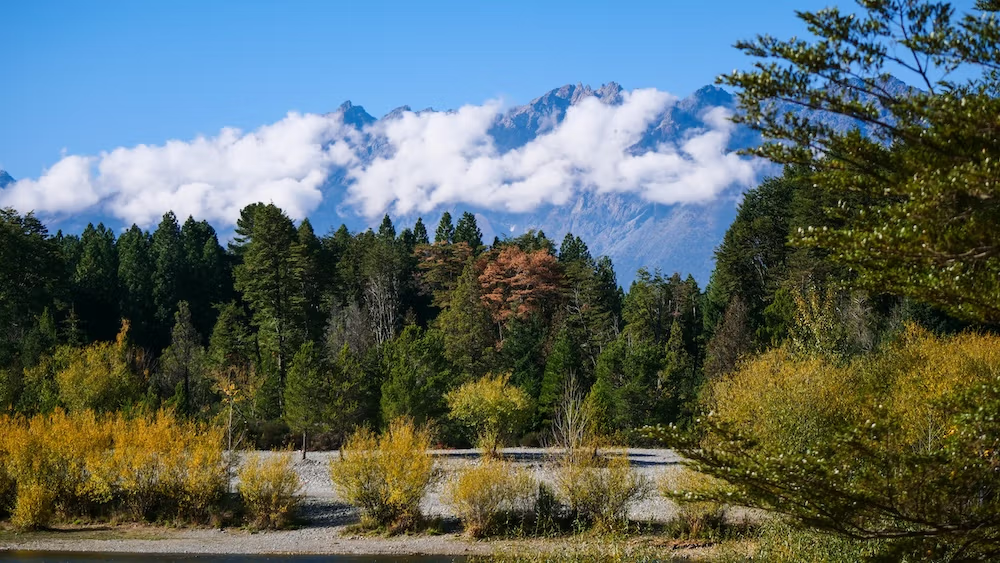
FAQ: Autumn In Patagonia
Is everything closed in Patagonia during the autumn months?
Mostly no. While the famous O-Circuit in Torres del Paine officially boards up in mid-April, the majority of the region’s best day hikes remain open until the heavy snow hits in June. That said, small trekking hubs like El Chaltén begin a “seasonal hibernation” in late May. You’ll find fewer open restaurants and reduced hostel staff, so always check Google Maps reviews from the last week to ensure a business hasn’t shuttered for the winter.
Do I really need to bring stacks of US Dollars to Argentina?
Nope. For years, the “Dólar Blue” street exchange was the only way to survive, but the game has changed. Now, the MEP rate (the rate automatically applied to foreign credit cards) is almost identical to the street rate. Use your Visa or Mastercard for 90% of your expenses to avoid the stress of carrying wads of cash. Just keep about $100 USD worth of local pesos tucked away for those “broken” card machines at rural bakeries or for small-town taxis.
Can I still see pumas in Torres del Paine during the fall?
Absolutely. In fact, autumn is arguably the best time for wildlife tracking. As the snow line creeps down the mountains in April and May, the guanacos (the puma’s favorite snack) migrate to the lower valleys to graze. The pumas follow them like shadows. Because there are fewer hikers on the trails, the cats are often more visible. Just remember that off-trail hiking is a massive legal no-no, so consider a local tracking guide if you’re serious about a sighting.
Is the wind really “better” in autumn than in summer?
Usually. Statistically, those legendary 120 km/h summer gusts die down, which is why photographers flock here in April for those perfectly still, “glassy lake” reflections. However, don’t get overconfident. We’ve experienced “The Most Patagonian Day Ever” in Bariloche during the autumn where the wind was so violent it turned the lake into a raging ocean and canceled every boat excursion. Always pack a dedicated windproof hard-shell.
What is the biggest mistake travelers make in the shoulder season?
Underestimating transit. In January, you might have five buses a day between El Calafate and El Chaltén; in May, you might have one. If you miss that 8:00 AM departure, your entire itinerary collapses. We’ve seen plenty of travelers get stranded because they assumed they could “wing it” like they did in summer. Never attempt to connect a regional bus and a departing flight on the same day during the autumn months.
How cold does it actually get on the trails in April and May?
Freezing. While the sun feels warm at midday, the temperature drops off a cliff the moment it disappears behind a peak. Expect daytime highs around 10°C (50°F), but nighttime lows frequently dip below zero. We arrived in Esquel at 6:30 AM in “zombie mode” and realized our summer wardrobe was a total failure. If you’re hiking the final ascent to Fitz Roy in late April, expect ice on the rocks and a biting wind that cuts through standard fleece.
Is it still worth visiting if I can’t do the O-Circuit?
100%. You might lose access to the backside of the towers, but you gain the fire-red lenga forests and a sense of solitude you’ll never find in the summer. The W-Trek usually stays operational through late April (weather permitting), and the day hikes are often more dramatic with a fresh dusting of “powdered sugar” snow on the granite spires. Plus, the 7:45 AM sunrise is a much kinder wake-up call for non-morning people.
Can I see the famous Trevelin tulip fields in autumn?
Nope. “It’s not springtime,” as a local tourist office worker once deadpanned to us. The iconic tulip bloom in Trevelin is strictly an October event. If you visit in the fall, you’ll be looking at empty, brown fields. However, the town is still worth the trip for a massive, calorie-heavy Welsh tea at Casa de Te Nain Maggie—it’s the perfect way to warm up after a chilly morning of exploring.
Project 23 Argentina: This guide is also available in Spanish. [Lea la versión en castellano: Patagonia en otoño — La temporada subestimada de la que nadie habla]